
In short
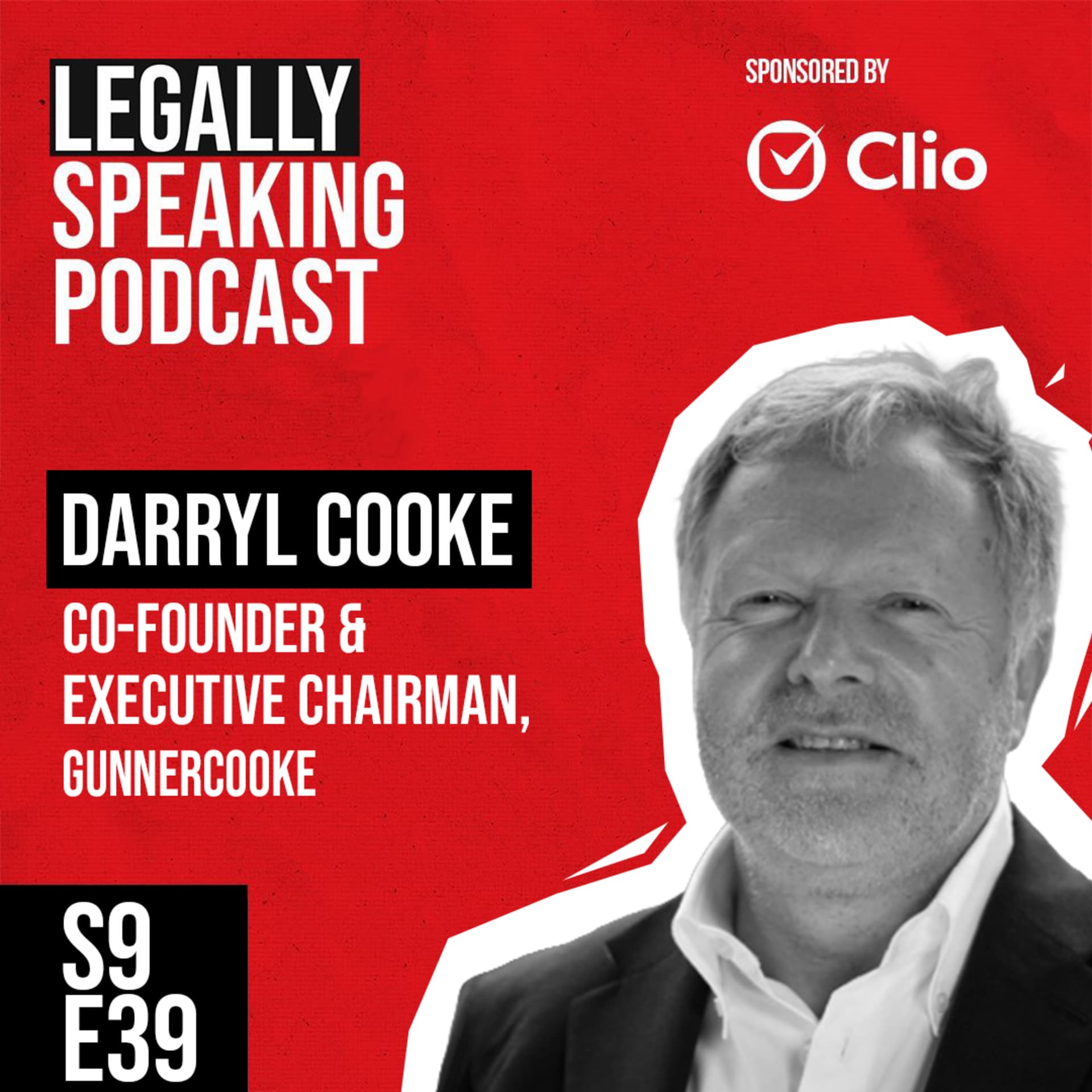
Darryl Cooke explains how to reinvent a law firm through leadership-driven culture and a fee-share model, arguing that traditional “profits per partner” and hourly billing harm lawyers’ lives and client/service focus. He also covers trust-based/servant leadership, how they measure client service and lawyer happiness, and how Gunna Cook’s foundation tackles loneliness and grief via community bookshops and opportunity programs.
Guest background
Darryl Cooke is co-founder and executive chairman of Gunnar Cook LLP, an award-winning international UK law firm. He previously led commercial chambers and criminal chambers at the bar, worked in corporate roles at Herx, and held leadership roles including head of private equity at Addleshaw Goddard and head of corporate at Hill Dickinson. He also played semi-professional football in Australia.
Key claims
Culture must be intentionally built (not “words on a wall”); leadership must create followers by serving and convincing people; fee-share changes mindsets and enables lifestyle flexibility; traditional law firm metrics are “damaging.”
Notable examples
Suits rated 5–6/10 for legal realism; NPS stays above 90 and lawyers’ happiness is measured monthly; foundation bookshops in Manchester and planned in 16+ cities; “University of Opportunity” matching disadvantaged students with internships; Gunnar Cook Sport and crypto institute expansion.
Written by AI. May contain mistakes. Listen to the episode to check what was said.
Chapters
Tap a time to open that second in VOThe Importance of Leadership in Law
0:00 to 0:45
Learn why leadership is essential for creating a positive law firm culture.
“Our main purpose is to create an infrastructure that will help that lawyer to be happy.”
Daryl's Early Influences and Career Path
1:22 to 1:56
Discover Daryl's journey into law and how popular culture influenced his career choice.
“Well, I mean, when I first saw that you asked that question, Rob, I thought, well, that seems a bit daft.”
Transitioning from Law to Business
1:56 to 4:38
Explore Daryl's switch from practicing law to focusing on business and entrepreneurship.
“So it isn't such a daft question after all.”
Founding Gunnar Cook LLP
4:38 to 5:27
Learn about the founding of Gunnar Cook LLP and its innovative approach to law.
Challenges in Traditional Law Firms
5:27 to 6:41
Understand the issues Daryl faced in traditional law firms that led to his innovative approach.
“But I think the traditional law firm, as we all know, is built on the model of profits per capital.”
The Fee-Share Model Explained
6:41 to 8:00
Gain insights into the fee-share model and how it differs from traditional law firm structures.
Creating a Supportive Infrastructure
8:00 to 12:40
Learn how Gunnar Cook LLP builds an infrastructure that supports lawyer happiness and success.
“So maybe could you share one or two that have really been challenging moments for you and how you've been able to overcome them to the huge success that, as we all know, it is today?”
Flexibility and Work-Life Balance
12:40 to 13:30
Explore how the firm promotes flexibility and a better work-life balance for its lawyers.
“who've made a significant move when joining us.”
The Role of Leadership in Business Success
13:30 to 14:00
Discuss the importance of leadership in fostering a successful culture in business.
“I'd like to just add that, because so many people talk about firms like as being a platform firm.”
Importance of Freedom in Work-Life Balance
14:00 to 14:56
Learn how freedom in work arrangements can enhance personal life and family time.
“Clearly, I'm actually very, very helpful for them.”
Show all 22 chapters
Building a Strong Firm Culture
14:56 to 17:34
Discover how establishing a strong culture can lead to successful law firm operations.
The Role of Trust in Leadership
17:34 to 20:59
Understand the principles of trust-based leadership and its impact on team dynamics.
“As we lead or properly lead, then the trust comes back.”
Challenges of Traditional Law Firm Models
21:52 to 23:26
Explore the limitations of traditional law firms and shifts towards more flexible models.
“The more deep thinking you can do and focus, then obviously the better your outputs will be.”
Measuring Happiness and Client Satisfaction
23:26 to 25:01
Learn how measuring happiness and client satisfaction can improve firm performance.
“So, you know, in terms of, I guess, flexibility and client service, how is flexible, human-centered approach transforming both client service, but also employee happiness from what you've been seeing?”
The Gonna Cook Foundation and Community Impact
25:01 to 28:04
Discover how the Gonna Cook Foundation addresses loneliness and promotes opportunity.
“listeners about it and how is the foundation tackling loneliness and grief through community bookshops i'm pleased you'd ask me that often gets ignored actually and it's really really important to us.”
The University of Opportunity and Its Impact
28:04 to 29:13
Learn about the initiatives that aim to provide opportunities for diverse individuals.
“So we're now collaborating with lots of companies, lots of other people to kind of drive something that gives them that university opportunity as they leave school.”
Publications and Their Purpose
29:13 to 30:29
Explore the motivations behind the guest's publications and their focus on innovation.
“can you tell us a bit about your books and the inspiration behind them well the card of equity book was simply to build my career it's now in its eighth edition so i could argue they did do bad.”
Launching Gunna Cook Sport
30:34 to 31:55
Discover the creation of a specialized sports division within Gunna Cook.
“Okay, another thing, you don't sit still.”
The Future of the Consultancy Model
31:55 to 33:31
Understand the evolving consultancy model and its implications for firms.
“And I encourage our listeners to go back and listen to our episode with David Jones from Sky Sports, who does Monday Night Football and Super Sunday.”
Legacy and Impact as a Leader
33:31 to 34:19
Hear about the legacy the guest wishes to leave as a leader in the legal field.
“I touched on it briefly, but I want your words because it's your legacy, Darrell.”
Advice for Aspiring Founders
34:19 to 35:19
Gain insights on how to structure a law firm with a focus on culture and communication.
“And you absolutely have provided a wonderful alternative.”
Promoting the Inspiring Leadership Podcast
35:19 to 35:36
Learn about the guest's own podcast and its focus on leadership and inspiration.
“This has been an absolute masterclass that I really enjoyed and really appreciate you taking the time to talk to us today.”
Transcript
Automatic transcript. May contain errors.0:00Our main purpose is to create an infrastructure that will help that lawyer to be happy. My belief is that leadership is everything in an organisation. It does set the vision, it does set the values, it does set the culture, but you need followers. You don't have followers, you're just going for a walk. You've got to somehow work out how you bring those followers and telling them what you want doesn't work. You have to convince them that what you're doing is good for them to follow you. Once I started to develop the vision, I got incredibly excited by it and what could be achieved. And I developed myself 10 years forward to see what it would look like.
0:37But of course, no one's with you at that point. I was working on how we would build the practice by attracting people into the business. On today's Legally Speaking podcast, I'm delighted to be joined by Daryl Cook. Daryl is the co-founder and executive chairman of Gunnar Cook LLP, an award-winning international law firm. Daryl's firm is known for redefining what it means to lead and innovate in professional services. A successful corporate lawyer, Daryl has built one of the UK's most disruptive law firms and is on a mission to change the legal model, putting people and purpose at the core of the business.
1:10So a very big warm welcome to the show, Daryl. Thank you so much, Rob. Thank you for having me. Oh, it's an absolute pleasure to have you on the show and really appreciate you taking the time to be with us today. Before we get into all the amazing things you have been doing in and around the world of law, we do have a customary icebreaker question here on the Legally Speaking podcast, which is, on the scale of 1 to 10, with 10 being very real, what would you rate the hit TV series Suits in terms of its reality of the law if you've seen it? Well, I mean, when I first saw that you asked that question, Rob, I thought, well, that seems a bit daft.
1:47But then when I thought about it, I thought actually, you know, and it is probably one of the reasons that I joined the law was through watching programs like that when I was very young. So it isn't such a daft question after all. So to answer your question is there's a lot of this, you know, there's some great stuff in there. You see how hard lawyers work. You see some of the issues that they get involved with, et cetera, et cetera. But the reality is it does glamorize it. It does make it a lot more glamorous than it actually is. So I probably have to say it's about five or six edges, 10 on my brain.
2:21That was a very justified answer, says the man who sat in the south of France with a beautiful backdrop at the moment. It can't be that bad. But no, I take your point. And with that, we'll move swiftly on to talk all about your amazing career. So to begin with, Daryl, would you mind telling our listeners just a bit about your background and career journey? um yes well i had uh as is obvious from the first answer i have no family or friends in the law um you know i'd love rock to say i wanted to change the world and fight for injustice but that just wouldn't be true um though i think i did develop a strong sense of justice as time went by but but i i i realized the law was a good professional career um so i went to university I studied and then I had no idea which discipline to go into so I started off at the bar in this year I'm leading commercial chambers in London and then I'm leading criminal chambers because I as I said I didn't really know what I wanted to do and actually it was very interesting that during that time I've had an opportunity to play semi-professional football in Australia while also working in business and that I think began my interest in business which is just as strong as my interest in ball.
3:36When I came home from that I went back to the bar but I soon decided I wanted to leave and I joined what was a company called Herx which was the fourth largest company in the world at the time. So I could couple of hundred thousand employees and a thousand companies and I joined the legal team but I got cut on to a number of the companies as a kind of board level as a company secretary and I just loved how these people used to think and challenge themselves and think about business so that got my interest in business um I think at the time they were trying to move me more into management and I was reluctant because I still felt I had wanted to be a lawyer and I moved back into private practice and then my journey private practice really started yeah absolutely we're going to dive into that and obviously your entrepreneurial pursuits but I just want to ask semi-professional football in Australia what was life like then and did you ever have aspirations to go fully pro?
4:37I would loved it but it was at the time I'm really honest when it's not like now it was very very different and I remember my father used to say you know if you end up in professional football you'll end up in the sports shop or a fish and ship shop at the end of it and that didn't seem how appealing so it did yeah I loved it but it didn't seem like a career at the time. No so let's talk about what has been a very successful career in your entrepreneurial journey which of course was setting up Gunna Cook so you set that up I believe in 2010 to challenge the way professional services are delivered so could you talk us through how you set up the firm and to where it is today?
5:15I think what was really interesting actually Rob was I suspect my kind of I did move around through quite a few firms I I always thought that the grass was green and never probably quite understood what I thought was the real challenge of a problem with it. But I think the traditional law firm, as we all know, is built on the model of profits per capital. I think it was the American law in 1985 that actually started that. And every top 50 law firm just kind of competes on that particular metric. And I realized probably, you know, that drives a certain, and that measuring you by the hour drives a certain mentality, particularly when you're a corporate lawyer, working very long, very overnight quite often, can have a real toll on your family and your own lifestyle.
6:06And then I was on the board of a top 10 or so firm, and I do remember the discussion being on improving profits, to Preparative Partner because that was what the Managing Partner did. That was all they were really interested about. And they brought in a top four accountants in practice who can remember it to this day. They kind of stood up and said, well, if you get rid of 20 partners, your profits will go to here. If you get rid of 40 partners, your profits will go to here. And I remember sitting there, and everybody just went with it. I remember sitting there thinking, but there's no discussion of service to clients.
6:44there's no discussion of business development there's no discussion of our people it was just a very cross metric as to how we could increase our focus of the partners so I think I became pretty disillusioned at that point but I had no idea what to do Rob and I went around talking to lots of people and asking them you know, I remember asking lots of cheap businesses, you know, what would you do if you set up your own law firm and it was very little answers the very even it wasn't it wasn't very much coming back I mean because I came before it said you would ask the customer would it just have faster horses and so it took quite a long while for me to really latch on to kind of this particular model I think what really happened at the time actually was my father I mean I think actually what was happening started to happen was I realized that the barrister's chambers and how they operate had something that was a little bit different and that's when I started to focus on that but I remember talking to my father whose nickname was Gona and he was in a he was in a hospice at the time with cancer he said I remember him saying to me because I was getting greater solutions and he said well you've either got to leave completely and do something else or you've got to change it and I didn't know what else to do so I thought I would have to change it and then my thought process started to change what is it the barista chambers do or why can't we do it in the private practice i i love that and it's just the entrepreneur in you you know because so many people can identify problems and run away from them or you know find a problem or find an opportunity and lean into it and you've absolutely lent into it and i was going to ask you actually where the name gala cook comes from you kind of answered that in the previous question so thanks for that and but entrepreneurship also isn't easy and you know we always welcome people to share as vulnerably as they like in terms of challenges you faced whilst building your businesses.
8:41So maybe could you share one or two that have really been challenging moments for you and how you've been able to overcome them to the huge success that, as we all know, it is today? Yeah, it is a good question because I think at the time, once I started to develop the vision, I got incredibly excited by it. So what could be achieved? And I developed myself 10 years forward and see what it would look like. But of course, no one's with you at that point. And I do remember having a discussion with a journalist in a hotel. And I thought she was going to write this amazing story about how we were going to change the world, et cetera.
9:16And she wrote this story, which I really didn't like. It was all about a virtual law firm. I really didn't understand the concept of the virtual law firm. And that was the kind of phrasing that we used to get used. And I thought it was really damaging, I think, at that time. So it became a challenging moment because I suddenly realized, actually I had to convince not just people joining us but I had to convince the world as well that there was a role for someone like us and so we came away I retracted from doing any sort of things with journalists etc and just really focused really hard on what we were trying to achieve and it was all about I used to have in my head but once we get 10 partners in there were you know we've got a bit of momentum then we're 25 partners in and then get 50 partners in but all the time I was working on how we would build the practice by attracting people into the business.
10:10Yeah and it's been hugely successful as I say I mean we have a range of listeners so for those that might be less familiar with the fee share law firm model because that's unique to obviously Gunna Cook could you tell us what that means to be a fee share law firm and how that perhaps is different from traditional law firms and how it impacts lawyers? Yeah, sure, Rob. In one way, the only way that we're different is how we remunerate. But the reality is it changes everything. It completely changes mindsets and how people live their lives. So what we do is you don't get a regular monthly income, but in effect you'll get a share of the revenues that you generate.
10:55And it completely changes the mindset of the individual. in lots of positive ways, I think. So we always say, look, you don't want to get to the end of your life and wish you designed it differently. So what this model does is allow you to design the life that you want to live. So if you want to take Friday off, take Friday off. You want to take six weeks off in the summer, take six weeks off in the summer. You want to work to your 90, work to your 90. So it gives that freedom for people to do that. Well, we also say, Google journey, you're not a lawyer anymore. you're a lawyer and you're a business person so what we have to do is create a really good infrastructure to help people to grow as a business person and our main purpose is to create an infrastructure that will help that lawyer to be happy and we know that everyone's kind of happy we read about all the things we do you've got a purpose then you get happier so building your own business gives you a purpose and we help you to do that through our coaching programs through all the support we give etc etc you're also happy you've got good relationships so we work very hard in helping people to build those relationships within the firm often business relationships but they quite often move beyond that as well and you're also happy you can give back you can encourage so we try and encourage those that want to work in our extensive foundation now to give back and get involved in other things as well.
12:24I think as I described, we've got a value which we call nudge, which basically means that we put fruit at high level, but we don't ban junk food. So it's all about the infrastructure that we create to back up and support the lawyer who've made a significant move when joining us. So we have to put everything in place to help them to really grow and see about. And you make such a good point about purpose because if people really find that purpose, they'll bring in energy, they'll bring in enthusiasm, they'll find a way almost because they're so bought into the purpose and they're passionate about it that it will work.
13:02And I love that you gave so many examples of the freedom there and flexibility because also lifestyles are changing. And we do live in a world now where we've got the cloud and AI where you can literally plug up to a laptop. And if you want to be on a beach for a week, then you can go and do it and you can do your work and so forth because I think we need to be alive to, you know, that we're not just necessarily sat in one place forever for the next 50 years and we don't move around or have other opportunities or things to fit family time and lifestyle. And this just gives you that level of freedom as you share.
13:29So thank you for that. I'd like to just add that, because so many people talk about firms like as being a platform firm. That is a phrase that's often used. And yes, we have a really, really good platform that people can connect and engage with. But that's not the driver of the firm. It is what the things that you said, that culture, that culture of freedom and how we support people to have it develop, not just the businesses, but the law. Because actually from the reality is that 95 % of our lawyers will earn more than they've done previously. Clearly, I'm actually very, very helpful for them.
14:03But far and away, the most important thing is the freedom of the deals. I've spoken to a lawyer the other day who was saying that he picks up his little girl every Thursday afternoon from school and takes him to afternoon tea. Just something he's put into his life. But he had to do that in a firm other than a firm like ours. Yeah, and it wasn't something that crossed my own mind before being in a role in starting a family. But the sort of stake in the ground that I had is I wanted to be as present as I can. So, you know, I take pride in the fact that I get to do 300 out of 365 bath times of the year, you know, because that's time you won't ever get back.
14:42And so, you know, you can make a lot of dough, but if you don't spend it along the way, then, you know, I think this option gives you the real chance to have a sustainable career with family or other interests you may have or both. And I think it's brilliant and hence the success you've been having. I want to talk about leadership now because it's so important across all areas of business. this how did you scale a global law firm by prioritizing basically lawyer well-being right from the outset and i don't know what it was in my background but i realize i think i've always been in teams or it's in football or forever but i always thought that culture was the key and i remember having a discussion very early on with one lawyer who was looking to join us and i was trying to work values and she said don't talk to me about values don't talk to me about values and you know I could see the pain that she'd gone through in her firm where people talked about values and just stuck them up on the wall but didn't really lift them but I knew we were going to create something really substantial we had to create that culture and it was really interesting actually kind of looking at the barrisers model as barrisers don't have a strong culture don't have a strong team culture but I do know even the chambers I was every afternoon those barristers used to get together at three o 'clock for a coffee you know so they did it in their own way so i always knew that we had to really focus on culture and i talk about culture all the time within the organization uh and now and and culture you know as long as you talk to ceos about culture they kind of it's a little bit like smoke or something that floats around the office and that but it isn't you know there's no desire uh thing about culture so there's some really we have a culture book and there's some really specific things that we do to kind of encourage our culture it's different for everybody so we do lots of different things in order to kind of support them and actually what we really do i mean i read all the time i'm looking to learn from organizations with strong cultures but we have a group at the top of the organization who get together regularly to to think they have to be readers to be on that group and they have to be thinkers and we talk very very carefully about how we can just keep improving the culture as we go forward i love that because most organizations just have words you know determined motive whatever it is and you're actually very intentional with what you're doing and building your culture and actually putting actions in place and you mentioned about specific i say all the time on the show specific is terrific the more focused you can be and really lean into that and value the people they will then bring their best selves if there's a safe space they'll bring their innovation to the organization there's so many great things when you actually really start doubling down on this in the culture and so again congratulations to what you have been doing and being very intentional around that i want to talk about trust-based leadership again for folks who may be less familiar what is trust-based leadership in your opinion well i kind of describe it as serve leadership i suppose is that at my role and our role in gc trust that runs the organization is all the time we are there to serve them all yes to provide them the service we do so um our job is service-based.
18:04As we lead or properly lead, then the trust comes back. You know, when people see that we're servicing them, that we're helping them, we're challenging them, then they will start to trust us. And so the trust-based leadership, I think, is a manifestation of what we try to do. What we try to do is to be service-based. Yeah. And again, doing very, very well with what you're doing and I wonder do any of the skills that you've picked up from previous roles have they helped you in building Gunna Cook because you were head of private equity at Adolfo Goddard DLA and head of corporate at Hill Dickinson you know these are huge successful firms did any of the skills that you picked up along the way help contribute to building Gunna Cook and if so any in particular yeah it is a thing I'm sure my whole background has helped me Rob I think I think when I moved back from perks I went into an area of law private equity which combines law with business and I do remember I'm I'm I probably did up some like over a hundred buyers but there were like five or six really strong CEOs and I used to they became quite close friends and so they became good mentors and things like art and they they really helped me I think it's the later stage when I begin to become disillusioned with the law, I began also to be a real avid reader of business books, you know, not reading a lot of business books.
19:30Before that stage, I then started to read really good business books. And there's a few books that I kind of go to time and time again. And that really helped to form my thinking. But I think my belief is that leadership is everything in an organization. It does set the vision, it does set the values, it does set the culture, but you need followers you don't have followers you're just going for a walk you've got to somehow work out how you bring those followers and telling them what you want doesn't work so it has to be servant-based it has to be very collaborative and you have to convince them that what you're doing is good for them to follow you so um yeah i'm i think i've learned a little bit of that from i I think in particular, when I was in Herx, as I say, I was a young 23, 24-year-old or something, and I sat on some of these amazing boards because I was a government secretary.
20:25I used to just listen to these people, generally German leadership at the time, really great thinkers. Someone would ask a question, and they would have a pipe, and they'd just pop on the pipe for about two minutes before they gave the answer. And they were really good thinkers. And I began to understand, actually, leadership is about thinking. A friend of mine talks about kicking leads, always getting time away from the office and kick leads and think about it. And I think that is absolutely right. You know, you do need to do the thinking that other people are doing, but you're there to bring people with you.
21:00Today's episode is brought to you by Clio. Are you frustrated with your current legal management software? You're not alone and thousands of solicitors across the UK feel your pain. However, the hassle of moving all their existing client and case data holds most back from switching prolonging the frustration. Clio is here to help. Their dedicated migration team will be with you every step of the way while you transfer your information and if you have any questions you'll get award-winning support available 24-5 by live chat, phone and email. So help is always there when you need it most. It's no wonder Clio is consistently receiving 5-star ratings for its ease of use and top not service.
21:40If you're ready to leave frustration behind, visit clio.com forward slash UK to learn more and see why Clio continues to be the go-to choice for solicitors across the UK. Now back to the show. The more deep thinking you can do and focus, then obviously the better your outputs will be. A little throwaway question now, and you can take this in whichever direction you would like. Why are traditional law firm models broken? Or are they? Wow. Look, I would say I think there is room for all of us. So I'm not here to put down traditional law firm. And it's been very, very successful. But we are moving into a different world where people are far more conscious of their lifestyles, of their families.
22:25You know, they're not driven in the same way that they used to have driven probably when I joined. The pet model, as I say, which began to be, I think it was a very good lawyer in August 85, began to bring that comparison. I think it's been really, really damaging because the managing partner does not, that's the biggest message because he retains his lawyers. He gets a high pet. He goes and gets new lawyers coming from other firms and get a high pet, et cetera. So it completely drives their model. And it's really, really damaging. Yeah, I think, is it broken? It seems to be working. It seems to be holding together.
23:04I think there are better ways of working. Well, as a mentor said to me before setting up businesses, Rob, nothing changes if nothing changes. And, you know, we are in a world, like you say, to your point now, where people really are being intentional about trying to match a career with their lifestyle, with their family commitments, with whatever it might be. And if there are other choices available to them, then people are absolutely going to go in that direction. So, you know, in terms of, I guess, flexibility and client service, how is flexible, human-centered approach transforming both client service, but also employee happiness from what you've been seeing?
23:39Well, yeah, I think like everything, it's not just a stick a finger in the air and hold for the best. It is, as I say, it is well-armed. And in both those, we do have specific measures which we really work on. So we do work on NPS as a measure. So every month we measure what's called net promoter score, which can go from minus 100 to plus 100. I think the industry average, sorry, the world class is huge to be above 80. I've not known ours to be less than 90 for a couple of years. It's a very, very high score. So that's kind of the importance and that drives how we service and how we think about our clients and responding to them.
24:20At the same time, we measure our lawyers' happiness every month. so we send a happiness service it's a very simple question how happy are you on a scale of one to ten and we give a box reply to us we constantly run listening projects so we're very attentive we spend a lot of time learning and then we have then we spend a lot of time thinking and how can we improve things and that's what i love and what i was saying before you're very intentional you know you're not just putting words on the wall you're generally working at it day in day out and giving people a voice as well and actually if they do have constructive um ideas you're only going to develop and nurture your culture and so everyone stays happy and feels included which is important i want to switch now to talk about the gonna cook foundation because could you tell our listeners about it and how is the foundation tackling loneliness and grief through community bookshops i'm pleased you'd ask me that often gets ignored actually and it's really really important to us.
25:17We don't want to be known for that. We want to be known for our culture, and we want to be known also on how we positively impact the world. We actually refer to it as being a deeply responsible business. That's a phrase that we've coined from a Harvard professor, Jeffrey Jones, and we do lots of different things to support that. So the first thing we did was to set up a charity called Inspire, and Inspire actually has 175 small charities in it, and we working lots of different ways to what we call enhance the effectiveness of the CEOs to support their leadership and help them to grow and there's things that have been grown out of that so for instance we have a BFG program where we help some of those small charities through projects to create profits that they can then put back into their courses and one of the other things that we spoke so one of the things that we also started to do was to really work on on our own charity and it was born out of the pandemic and i was doing a lot of reading around loneliness and the issues around loneliness and social isolation and it kept coming back to me that he's actually a bigger killer than obesity you know i don't just mean depression or anything like that but if you've got a cancer you've got a chicken illness you're more likely to die earlier it is social isolated so we decided what could we do about that um and we felt we needed to have a physical communication spot so we built this sorry we've bought this great bookshop uh we started from scratch a great bookshop in manchester just had a large bookshop with a coffee shop running through it we focus all the profits go to fights and social isolation we connect we collaborate with lots of people and help in helping to do that and we've made a commitment and said i think we've got some like 16 offices around the world now and that's growing we said we want to put one of these bookshops in every one of these cities.
27:12So that is a real driver for us. Other things that came out of that, though, we also started to think about, you know, every law firm gets asked to take on interns. So the chief executive will say, you know, my son, Adolf, so can they come and do an intern at your law firm? We said, we always want to say yes. We'd always say yes, but we'd say it's a matching programme. So if we do that, we also go to an inner city school, we find someone who doesn't have the same duty, the same privilege, and we put them on the same program. And that has developed over the last three or four years, become quite a strong program, and we've now developed it into the University of Opportunity, where we're looking at and saying there's lots of children, disadvantaged children, who do all sorts of things.
27:57It may be through poverty, but it may be through some form of trauma or disability or parental addiction or something, doesn't have that same opportunity. So we're now collaborating with lots of companies, lots of other people to kind of drive something that gives them that university opportunity as they leave school. So there's lots of things around our foundation. It's a very exciting part of the firm. We try and engage. I think we have a target of engaging 75 % of our people in the foundation. But it's up to them, I believe, what's involved in it. And thank you for the work that you're doing.
28:33And, you know, again, to the point I made before around, you know, you don't just sit on a problem, loneliness, and you've created things. And I love that I was going to ask you about the University of Opportunity. I think it's magical what you're doing because people and diversity are everywhere, but opportunity is not. And I think organizations like you that are giving that chance to people, it's wonderful. And, you know, it really means, you know, it shows that you genuinely care. And like you said, every law firm, you know, yes, of course, there are for profits, but it's always how do you want to be remembered?
29:01you know what's that legacy and that attachment to it and i can tell from this interview that everything that you do comes with real compassion and genuinely caring and wants people to have fulfilling careers okay i want to talk a little bit now more about publications because your publications have included to innovate or not to innovate and private equity law and practice so can you tell us a bit about your books and the inspiration behind them well the card of equity book was simply to build my career it's now in its eighth edition so i could argue they did do bad. I think the eighth edition comes out in January so that was the complete purpose behind it.
29:36To innovate was when we started off and I think you know I am a great believer in reading and then putting it into your own thoughts and it helped me as we started the firm to write that book. It's all about innovation, all about reading things differently, a lot of it on leadership as well and other things and it helped me and my thinking as we were developing the firm. I think it's actually, I'm writing another book at the moment, which is really about our individual lawyers and businesses building their own businesses, building their own careers and the purpose behind what they're trying to achieve.
30:10So when I do them, they are me getting my thoughts down on paper. So they're helping me as much as anything else. If people buy them, fantastic. But it's about me getting my thoughts down. And I always say to people, like, it's great that you do that because you're sharing your thoughts. It's almost, I always say, look at it the other way. It's selfish not to share. If you have these ideas and you can share them with people and they can get benefit for it, then I'm all for it. Okay, another thing, you don't sit still. Earlier this year, Gunna Cook launched Gunna Cook Sport. So a specialist sport division, the division's expertise includes football, NFL, tennis, cricket, leaders who've built global football clubs.
30:47So what impact has Gunna Sport had since the launch earlier this year? Well, it is early days, Rob, but actually I think we have made it. Sport is such an immense earning. It's firm and exciting and there's lots of revenues in it and it's great. And we thought that it was somewhere we could really excel at. Yeah. But what we wanted to do, we brought in a business leader, a chief executive from a football club, and we put support behind them to help develop it. And I just was noticing this morning that we're now going to launch a new Institute crypto because I think we're one of the leading firms on crypto so we're linking that into our sport division I think there's lots of innovative ways that we will look to develop so the aim for it is it is early days but the aim is to be really high quality but at the same time to be very innovative and I think the opportunity within sports I know it sounds interesting when you look at some industries I think you know when I look to the legal industry.
31:47I think sports is one of those industries that is so much potential and is still not in touch. I agree. And we're sport fans, myself a sport fan here as well. And I encourage our listeners to go back and listen to our episode with David Jones from Sky Sports, who does Monday Night Football and Super Sunday. Fabulous episode. Or go and check out Georgie Twigg, who was an Olympic gold medalist and hockey player and also top international lawyer. We're all for sports. I think it's an exciting space. Okay, let's talk about the future now. And that could mean literally a minute after putting this podcast down, given the rates of knots in the world of AI, which I haven't even mentioned yet, is happening.
32:24What are your thoughts on the future of the consultancy model? Well, the consultancy model is clearly here to say now. I think it's proven itself. I think I'd like to think we are either the leading or at least one of the leading players in that model. But there are some to like, I think in the UK, something like a 19 and everyone else where definitely here to stay but I would say as I say the truth for all of us I don't think we have to worry too much about each other it just suits some people and it doesn't suit others I mean I kind of I do look at it and think if you've got confidence so you want to have more control of your life then it's almost a no-brainer and you'd be an idiot not to do it size of our firm means that you've got all the benefits It's a major firm and boy, but most of all, you've got the freedom with that to make you happy.
33:19So I think you definitely owe it to yourself to look into it. Yeah. And as I always say to people who are probably listening to this, that are on that edge of maybe I should do it. The magic you're looking for is in the work you're avoiding. I think going to a platform like this, having that freedom opportunity, you probably wouldn't look backwards and probably thank yourself and all the things around your life for it. I touched on it briefly, but I want your words because it's your legacy, Darrell. What legacy would you like to leave as the co-founder and CEO? I'm sorry, executive chairman of Gunna Cup.
33:49I guess probably it is that really, that I created an authority, that I created something that if you look into it, can give you much better and happier lifestyle. And not just you. I mean, we work, you know, I think it's families. It definitely isn't just about you. It's about your families and creating something for your families. So I do get, I get lots of lovely texts pretty much every week and emails saying that we've done that. So I think that's kind of rewarding itself. And that's all I'm lucky for real. Yeah, well, it's been tremendous what you've achieved. And you absolutely have provided a wonderful alternative.
Read the full transcript
34:24And I know lots of lawyers at a part of Gunnar Cook that speak very, very positively as well. So congratulations on everything you've built. Before I let you go, what advice would you give to other founders who are looking to structure their firm similarly to the likes of a Gunner Cooks model? I think it's that that I said earlier, Rock. It's don't forget the culture. Make sure you bring the culture with you. And that is a lot from early stages, talking to everyone, collaborating with everyone. And communicating your vision on a regular weekly basis. It's, you know, variations of your vision will keep by bringing you, if people start to believe in your vision, then it makes it such a lot easier.
35:06Yeah, I love that. And I always say sort of mission-led companies and people with a vision, people can actually see that direct contribution to that vision if it's communicated to them, gives that intrinsic value on top of obviously going out and making a living. This has been an absolute masterclass that I really enjoyed and really appreciate you taking the time to talk to us today. If our listeners want to follow you or indeed learn more about Gonna Cook or grab some of your books, where's the best place for them to go? Feel free to share any websites or any social media handles. We'll also share them in this episode for you, too.
35:35Well, that's good. Well, I guess the easiest thing is to come to me directly, which is daryl.cook.com. So feel free to do that or find me on the website. actually just before we came on we mentioned about the I Now Do a podcast which I hope you don't mind plugging in. Please do, yeah it's great you have some incredible guests called the Inspiring Leadership Podcast which is all about getting our message out to good leaders, good distance leaders we recently did one as we said with John Amici the British basketball player who went over to the US from a superstar over there then came back into psychology we did it to talk to university so I was in Vosian recently and I think that it is on YouTube it's on Spotify I have never seen so many tears in an audience it was fascinating to watch so I would encourage people if they want to watch something too and watch that but yeah please feel free to contact me directly well yeah absolutely encourage people to go and check out that podcast phenomenal and phenomenal discussion it just needs me to say thanks again Daryl for your time it's been an absolute pleasure hosting you on the League's Bean podcast sponsored by Clio But from all of us here, wishing you lots of continued success with Gunna Cook and indeed your future pursuits.
36:48But for now, over and out. Thank you for listening to this week's episode. If you like the content here, why not check out our world leading content and collaboration of the Legally Speaking Club over on Discord. Go to our website, www.legallyspeakingpodcast.com. There's a link to join our community there. Over and out.
From the publisher
On today’s Legally Speaking Podcast, I'm delighted to be joined by Darryl Cooke. Darryl is the Co-Founder and Executive Chairman of Gunnercooke LLP, an award-winning international law firm. Darryl’s firm is known for redefining what it means to lead and innovate in professional services. A successful corporate lawyer, Darryl has built one of the UK’s most disruptive legal firms - and is on a mission to change the legal model, putting people and purpose at the core of business.
So why should you be listening in?
You can hear Rob and Darryl discussing:
- Creating a Revolutionary Fee-Share Model
- How to Live Through Values, Not Just Words
- Methods of Empowering Leadership
- Making the Most of Community-Driven Impact
- Designing Your Life, Your Way
Connect with Darryl Cooke here - https://uk.linkedin.com/in/darryljcooke