
In short
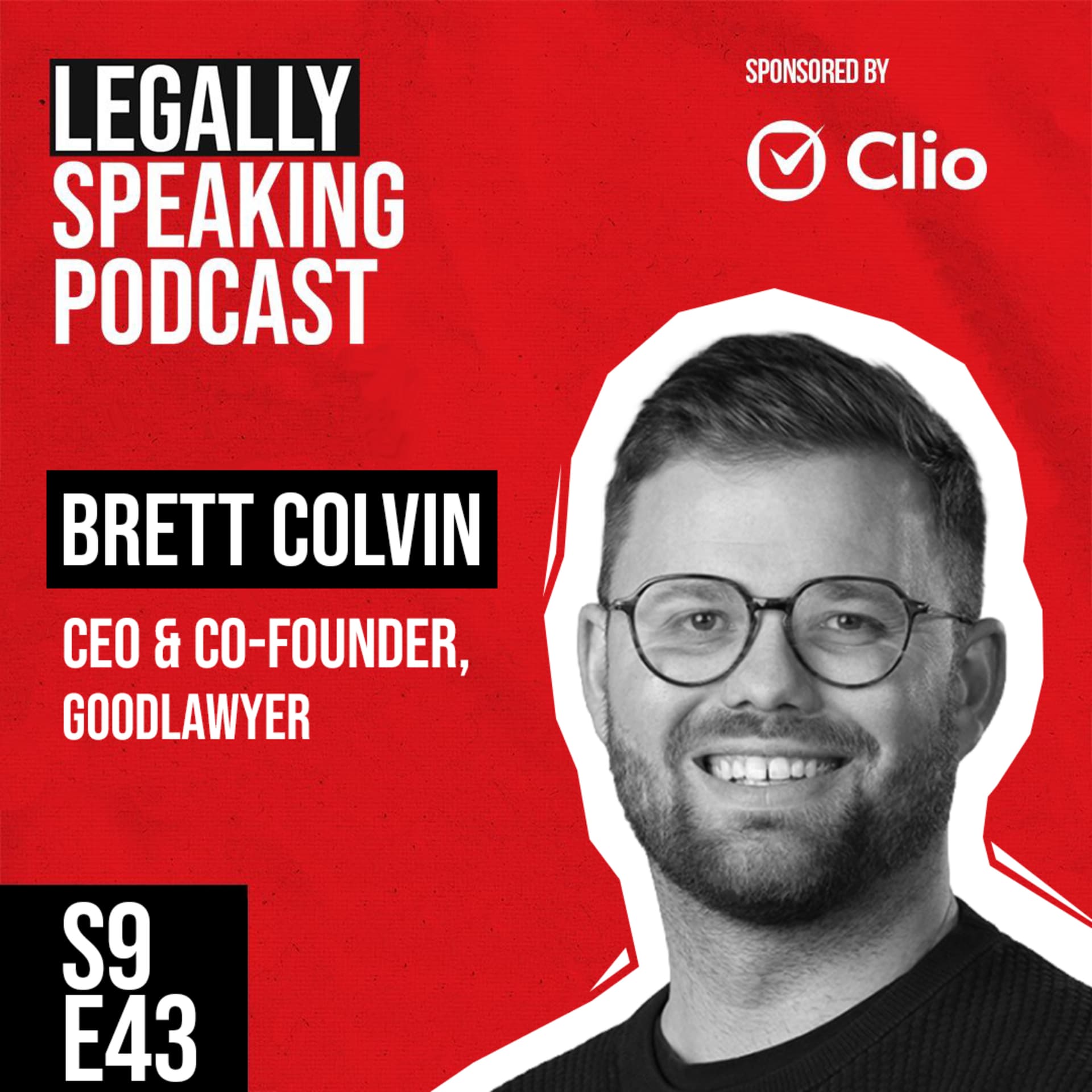
Episode topic: Brett Colvin (Good Lawyer) discusses redefining legal careers through value-based pricing, iteration, and “fractional law,” arguing traditional law firms risk failing due to inertia and the billable-hour model under AI-driven automation.
Guest backgrounds
Brett Colvin is CEO and co-founder of GoodLawyer, a Canada-based in-house counsel network providing cost-effective legal solutions to 5,000+ businesses. He previously worked ~4.5 years at a large national law firm, then left in early 2019 to start GoodLawyer. He built the company after feeling both clients lacked access and lawyers were unhappy.
Key claims
- Legal value should be priced for client value, not junior associates hitting 2,000 billable hours.
- GoodLawyer’s customer focus evolved from fixed-fee “Airbnb-like” corporate law to subscription in-house legal teams.
- Fractional portfolios let lawyers avoid all-or-nothing career tracks and retain flexibility.
- Law firms face “inertia” as AI increases pressure on leverage and billable-hour economics.
- Leadership requires focus, clear ICP, empowering leaders, and shared incentives (equity).
Notable examples
- Sherry Hozaki (former GC of Indigo Canada; GC of Cadbury UK) uses fractional work for flexibility while maintaining substantial income.
- GoodLawyer hosts the Future of Law Summit and launched inaugural Future of Law Awards for in-house lawyers.
Written by AI. May contain mistakes. Listen to the episode to check what was said.
Chapters
Tap a time to open that second in VOIntroduction to Legal Evolution
0:00 to 0:38
Explore the need for lawyers to adapt and the future of the legal profession.
“The willingness to iterate and continue evolving, I think has been a really critical part of our journey.”
Icebreaker and Personal Insights
1:00 to 2:14
Brett shares his favorite beverage and footwear, revealing his personality.
“I've been following this one for a long time, so it's a pleasure to be here.”
Brett's Journey into Law
2:14 to 4:21
Brett discusses his unexpected path to law school following his father's death.
“So would you mind telling us a bit about your background and career journey to start with?”
Inspiration Behind Good Lawyer
4:21 to 6:04
Brett reveals the motivations and inspirations that led to the founding of Good Lawyer.
“And there's always a moment, isn't there?”
Challenges of Entrepreneurship
6:04 to 8:00
Discussing the hardships and lessons learned while building Good Lawyer.
“And it all came back to this old coffee guy I had from business school.”
Building a Customer-Centric Business
8:00 to 12:39
Understanding the importance of knowing your ideal customer and iterating based on their needs.
“And I think every step of that journey, really understanding who our ideal customer was, step one.”
Attracting Talent and Building Culture
12:39 to 14:01
Brett shares strategies for attracting and retaining talent aligned with Good Lawyer's mission.
“You do need to understand that things are going to happen.”
Building a Committed Team
14:01 to 14:50
Learn how to foster a dedicated team culture through shared vision and sacrifice.
The Role of Mental Health in Team Dynamics
14:50 to 16:15
Discover the impact of mental health support on team performance and interpersonal relationships.
“I would say that if I had one other sneaky sort of trick that we've used at Good Lawyer, it's been to bring on board a fractional psychologist that for the last two years has done.”
Belief as a Key to Achievement
16:15 to 16:38
Explore the concept of 'believe to achieve' as a driving force in overcoming challenges.
“values on a wall, you know, you're putting things in place because people are humans.”
Show all 28 chapters
Leadership Challenges in Legal Tech
16:38 to 19:10
Understand the leadership challenges in the evolving legal tech industry and how to navigate them.
“You know, it was not in the dictionary despite the fact that it is such an influential, like legal is so influential on our world generally, but it's definitely getting traction now, as I'm sure you're extremely aware.”
Maintaining Focus Amidst Distractions
19:10 to 21:06
Learn strategies to maintain focus and avoid distractions in a rapidly changing industry.
“in a very traditional market is not easy to do.”
Empowering Teams and Preserving Culture
21:06 to 23:29
Explore how empowering teams can preserve company culture and drive innovation.
“it was six nine months ago where you know we've been serving in-house legal teams for a really long time, but we were also serving CFOs, you know, founders, and we were still spread very, very thin.”
Risks for Traditional Law Firms
23:29 to 26:44
Examine the risks traditional law firms face in adapting to modern technology and innovation.
“And when you put one of these lawyers into one of these big enterprises to do a leave coverage to managing an AI portfolio that nobody in that enterprise had experience with before, it's clear as day.”
Reflections on Growth Strategy
26:44 to 28:00
Reflect on growth strategies and the importance of identifying ideal customer personas.
“The bubble will burst is the way I look at it, particularly over here in the UK with associate salaries soaring and the pressure on billable hours.”
Aligning Supply and Demand in Legal Services
28:00 to 31:16
Explore how Goodlawyer connects in-house legal teams with suitable lawyers.
“And ultimately, we're building tools that help us and help the lawyers manage all of these mandates simultaneously.”
Emerging Career Paths for Lawyers
31:16 to 35:30
Discuss the rise of fractional legal work and its impact on legal careers.
“And yeah, you've just been really good at executing it, it has to be said.”
The Future of Law: Fractional Work and AI
36:21 to 42:00
Insights on how AI and fractional roles are transforming the legal industry.
“I've been very fortunate to speak at the Festival of Entrepreneurs, which is a large entrepreneurial event over here in the UK.”
Unmet Legal Needs in Organizations
42:00 to 43:15
Discussing the overwhelming unmet legal needs within organizations and their importance.
“And the amount of unmet legal need, not just the access to justice crisis, not just small businesses that can't afford a lawyer, so they're just whipping up contracts on ChatTBT, but even inside large organizations.”
The Future of Law Summit
43:15 to 45:22
Exploring the Future of Law Summit and its role in empowering legal professionals.
“I've been to my fair share of CPD or CLE over the years.”
The Inaugural Future of Law Awards
45:22 to 46:29
Details about the first Future of Law Awards and celebrating in-house lawyers.
“You know, that's why we make it free and virtual every year, but also very meaningful for folks that, you know, participate and tune in.”
Innovation and AI in Legal Careers
46:29 to 48:02
Discussing the positive outlook for legal careers amidst AI advancements.
“Yeah, I mean, we did have the Future of Law Awards for the first time, our inaugural Future of Law Awards.”
Utilizing Social Media for Goodlawyer
48:02 to 48:56
How Goodlawyer uses social media platforms to showcase its journey.
“And if there's any law students listening, like I wouldn't be freaking out about AI.”
Leadership and Decision Making
48:56 to 53:39
Insights into leadership challenges and decision-making processes.
“And so, you know, it kind of gives you a more holistic perception or feeling about what we're, you know, what good lawyer is all about.”
Future Plans for Goodlawyer
53:39 to 56:06
Discussing future growth and plans for Goodlawyer over the next five years.
“And, and fortunately I've got the memory of a goldfish, so I can move past them pretty quickly.”
Future of Law Predictions and AI Impact
56:06 to 1:02:56
Explore the future transformations in legal services driven by AI and changing business models.
“So I don't know what 500 in-house lawyers on a boat is going to do, but I really hope you can make it there.”
Career Advice for Aspiring In-House Lawyers
1:02:56 to 1:06:01
Learn actionable tips for breaking into in-house legal teams and the importance of networking.
“And again, I love that you talked about value based pricing.”
Closing Remarks and Resources
1:06:01 to 1:07:16
Discover resources and how to connect with Brett Colvin and Good Lawyer for further engagement.
“It could be getting connected through someone in Brett's network.”
Transcript
Automatic transcript. May contain errors.0:00The willingness to iterate and continue evolving, I think has been a really critical part of our journey. You really need to look hard in the mirror, try to understand where the true value is that you're delivering for clients and double down on that and try to find ways to price for that value. That isn't just relying on junior associates hitting 2000 billable hours and you trying to mitigate your write downs as much as possible. Our whole business is predicated on the future needing good lawyers. So if we're in a world where we don't need good lawyers anymore, we're living in a pretty crazy future state.
0:38On today's Legally Speaking podcast, I'm delighted to be joined by Brett Colvin. Brett is the CEO and co-founder of Good Lawyer. Branded Canada's most trusted in-house counsel network, Good Lawyer provides cost-effective in-house legal solutions. Good Lawyer has helped over 5 ,000 businesses and they're just at the start of their venture. So a very big warm welcome to the show, Brett. Rob, thanks for having me, my friend. I've been following this one for a long time, so it's a pleasure to be here. Oh, it's an absolute pleasure to have you on the show. And obviously, you and I have collaborated on a few things over the years, but I'm really looking forward to today's discussion.
1:13And before we get into that, I do have a customary icebreaker question for you, which is, what is your favorite beverage and what is your preferred choice of footwear on a typical workday? oh um beverage are we talking the uh the alcoholic or the non-alcoholic you could take any direction you like i uh i have grown pretty fond of old fashions in my uh ever since catching madmen uh a few years ago so i would say if i had to pick a beverage i'd pick an old and in terms of footwear I mean I'm rocking those on clouds or those Adidas running running shoes pretty frequently these days occasionally I'll bust out the boots but yeah most of my day I can get by with the comfy footwear I like that I like that and then I think there's got running in it this year I've got the bug so I'm here for it on clouds and old fashions my friend there we go So very, very happy with that.
2:13And with that, we need to move swiftly on to talk all about you in a professional context. So would you mind telling us a bit about your background and career journey to start with? Sure. I mean, my story in law began sort of tail end of undergrad. I was wrapping up business school, wasn't exactly sure if I wanted to start a business or where I wanted to take my career next. And my dad had always really been pushing law school and he was a stockbroker and he was always pushing a slightly more conservative, safe path for me. And I wasn't totally sold on it. But unfortunately, when I was 22, he passed away pretty suddenly.
2:57And that really kind of put a halt on my big sort of world domination plans at the time. And going to law school was one of the things I'd been considering. And it certainly kept mama happy at that time. So I kind of stumbled my way into law school without a whole bunch of planning. And, you know, from there, just got sucked into the rigmarole that is, you know, on campus interviews, as we call them, at least in North America. and you know next thing I know finishing law school ending up at one of the big national firms and spent about four and a half years there before sort of getting um to be honest I was getting a little fed up just because I couldn't really implement any ideas have any sort of real impact beyond you know building the hours and it was about yeah four and a half years and I was a fourth year associate when one of the senior guys in my group came in one day slammed the door and said, Brett, keep coming up with your ideas, just keep to yourself.
4:01And that was kind of the final straw for me. So I spent the next six months, didn't leave immediately, but spent the next six months finding my co-founders, raising a little bit of dough. And in early 2019, made the leap, stepped away from the firm and started GoodLawyer the next day. I love that. And there's always a moment, isn't there? And thank you for sharing that moment with us where that partner came in and said that for you because you know I say this a lot in my talks you know you're not a tree move if you're not happy with that environment you know it's very easy to um to really sort of double down on being unhappy but you actually kind of said you know what okay fine I've got more fire in my belly I've got entrepreneurial flair that's it I'm gonna do it so let's move to that then what sort of inspired you to co-found GoodLawyer I appreciate obviously you're wanting to do more but is there any real sense of inspiration that inspired you to go all in on GoodLawyer?
4:53I mean, I think for me, it's always come back to this lingering feeling in the belly, as you put it, that there was something broken, that there was something not quite right about the way that the firm was set up. And, you know, for me, I think it was sort of the duality of both a lot of businesses not getting the services they needed or, you know, certainly in the early days of GoodLawyer, a lot of these smaller businesses not being able to access any legal services at all. Coupled with the fact that when I looked around, I saw a lot of unhappiness, discontentment amongst the lawyers. And so for me, I was always kind of confused as to how can this feel sort of broken for both sides of the equation.
5:40And really that's what was the seed of Good Lawyer was how can we build a better bridge between clients and lawyers in a way that you know gives lawyers more flexibility more freedom more ownership over their careers allowing them to build more intentionally and at the same time how can we unlock these incredibly talented lawyers to service businesses in a slightly different way than they had been historically i love that because you come at this from a place of doing good for legal and i just know the passion from knowing good lawyer like the positive energy and the creativity and things that you put together and again don't be around drainers of your energy be around radiators of your energy and i think what you're building with good lawyer and the energy and everything you're putting it's just really good for the um the broader industry okay well it's funny it's funny you say that because i mean just one little more anecdote is um i bought i came up with the name and bought the domains in first year law school before the firm, before I had any idea what good lawyer would be.
6:42And it all came back to this old coffee guy I had from business school. I stayed up at U of A for law school. And when I went back to see him, when I got back for law school, he was very jovial, this old Lebanese guy named Mo. And we got to talking. He remembered me. And we were just having this lovely conversation. And then he asked me, what am I doing back? And I said, I'm in law school now. And as soon as I said I was in law school, he just looked at me and he pointed and he said, be a good lawyer. Be a good lawyer. And it just like sunk in. And I do think he was trying to touch on what you were just alluding to, which is, you know, he wasn't talking about being a competent lawyer.
7:23I don't think all of that is important. I really think it was about, you know, try to be a good person and try to do good in this world. So that really was, you know, thanks, Mo, for the foundation of what would become this company. Absolutely. And I love that story. And shout out to Mo. And look, you and I were talking off air before we went live, actually. Entrepreneurs, super easy, right? Entrepreneurship, no problems, never put out fires. It's a typical walk in the park, all that good stuff. Of course, I joke, but let's get into the building of Good Lawyer because what you've built today is incredible.
7:55But could you talk us through the process of building GoodLawyer and any sort of entrepreneurial lessons you've had from those early days to where it sits today? Oh, yeah. I mean, lessons of so many. I'd say first and foremost, something that I've learned and something that has evolved dramatically over the course of Good Lawyer's history, and we've been building this thing for almost six years now, has been to equally understand who your customer is, who your ICP, we call it, ideal customer persona. And, you know, for GoodLawyer, that ICP has evolved dramatically over time from the early days where, you know, we were really set up to facilitate fixed fee legal services, almost like an online Airbnb for corporate law for small businesses and startups, all the way to today where, you know, the vast majority of the business is predicated on subscription services for in-house legal teams, ranging from sort of midsize all the way up to the biggest enterprises that you can think of.
8:59And I think every step of that journey, really understanding who our ideal customer was, step one. And then the other piece of it is just this willingness to iterate over time and follow the direction of your customers and follow the polls. You can't listen to every crazy idea for features or that, something like that. But really the willingness to iterate and continue evolving, I think, has been a really critical part of our journey. And I think that's pretty common for a lot of entrepreneurs. And what I love about that is you're exceptionally client-centered throughout, you know, and that is super important.
9:42And, you know, I've spoken to a lot of vice presidents and, you know, chief product officers and stuff. And like to your point about you can't necessarily go to every little feature they want, but the good businesses are asking the why behind it. because actually there might be a different why behind they want that feature that could be somewhere else in the process or could be something else that actually they need, but through some good understanding and being client-centered and asking the right questions and delving down, maybe you can get further forward. So I love that. And again, let's go deeper then because it is tough entrepreneurship, getting anything off the ground.
10:14My late grandfather was a very successful lawyer in his own right. He used to say, Rob, anyone can be successful. It's far harder to stay successful. Like you said, you've been building this for six years. What have been some of the challenges and obstacles you faced while building GoodLawyer and how have you been able to overcome them and keep coming back to what it is now? Yeah, I mean, I think at the end of the day, the most important thing is the people that you're building with. You know, I said that as a company, we're extremely, you know, customer oriented and, you know, really trying to drive value and continue iterating, not getting sort of stuck where we are for the sake of it.
10:50But But when I really think about what a business is, a business is just a wrapping around a group of people with a shared mission or direction. And so, you know, whether it was the early days when my original co-founder left the business to go back to private practice, he's now, you know, very successful lawyer at a big firm partner going through the traditional route. And, you know, we're still on very good terms. But that was a really painful moment in the early days of the business. and you know if I think back to that moment the thing that kept me going and kept me so inspired was the fact that my other two co-founders didn't skip a beat and you know we were all sad to see him go but at the same time none of us felt like the journey was even close to over and you know it would it's impossible to predict as an entrepreneur especially if you're trying to build this highly scalable growth machine where the future is exactly going to take you.
11:51Couldn't have predicted this AI revolution five, six years ago. But I do think that being surrounded by folks that share your ambition, share the general theme of the mission, and even ours has evolved over time in the early days, it was making legal services more accessible. Today, it's to build the most desirable way to practice law and has become just sort of obsessed around the talent in our network. I really do think that fundamentally having those people around you is what keeps you going and is fundamentally what building a business is all about. It's bringing these good people together that share the mission and you can build something greater as a collective than you ever could individually.
12:37And yeah, I'd say that's the secret sauce my friend i i love that and again i talk about this very openly that we is greater than me if you surround yourself with good people you come together you can achieve hugely successful things just out of interest when your co-founder left did you say to him uh in jest be a good lawyer how much do you think you're keeping yeah the more honest the honest point yeah absolutely and you're right though but in business the only constant is change right you do need to pivot you You do need to move. You do need to understand that things are going to happen. Yes, you can have the overarching mission or a mission to go to.
13:11But inevitably, there is going to be change along the way. And I think if you have those good source of people around you, also you have talents, you have, you know, all the mindsets, all of that good stuff, you can come through it. So, you know, you frequently and that leads quite nicely on, actually, because you frequently share on social media about the growth, you know, teams and talent at Good Lawyer. How do you go about attracting and keeping individuals who thrive in a culture that you're building today? You got to get them aligned, both with the mission, but also from a compensation standpoint.
13:41You know, I'm a big believer in the power of, you know, equity and sharing the pie with folks that are going to be really key to the journey long term, which, you know, comes with it. It's risks for both the company and the folks that are jumping on hopefully the rocket ship. So that's a key piece. but but i think fundamentally it's been about you know who are we bringing on board why are they choosing to do this throughout the journey just about every key player i've added to the team could be making more cash elsewhere and so they are taking this you know huge risk and material sort of personal sacrifice and so they really have to be on board with what we're trying to do They have to be really forward thinking and they have to believe that we can build something important, something that matters and something that is going to change the lives of thousands of lawyers one day and ourselves.
14:50I would say that if I had one other sneaky sort of trick that we've used at Good Lawyer, it's been to bring on board a fractional psychologist that for the last two years has done. And it's all opt in from the team, but has done one on one sessions with just about everybody on the team. And then in a quite funny state of affairs, does group therapy effectively. We call it group coaching, but it's effectively group therapy with the executive team every two to three weeks. And that has been this insane unlock. I'm not sure if you've seen Billions, but it's kind of like my Tuesday, Wendy Rhodes. and doing that those sessions with with the executive team has been extremely powerful just in terms of unblocking interpersonal issues that can often quietly get in the way of progress and I think also just allowed all of us as sort of people to grow and get more comfortable with being vulnerable and really striving for you know what what our guy says is uh assertive communication, which is sort of the Goldilocks in terms of not being too passive or aggressive.
16:03Really, it's all about, can you be an assertive communicator? And I think that's what Josh touched on a lot in his keynote, The Summit. Yeah. And what I'm gleaming there is you genuinely care about your people. So you invest in your people, you know, and that's, you know, rather than just values on a wall, you know, you're putting things in place because people are humans. They do have emotions. They do have a life, you know, whilst, yes, of course, we want to come to work and give everything to good lawyer maybe one day they just can't do that because life has happened let's talk through that let's be there let's support you let's see what we can do so we can get you the best out of you through this i really admire that and i love the word that you use that belief i remember just before starting one of my businesses and just before even starting the podcast i wrote bta which is believe to achieve like whatever happens whatever gets chucked at me whatever goes wrong whichever fire i'm putting out trying to you've still got to believe to achieve because once you get over the other side of it it can be incredible so i absolutely love that and yeah i guess this leads nicely to some more leadership lessons from from your side because what you're building is is fantastic but what's been the biggest leadership challenge in the legal tech industry right now you think for people that are trying to to move the needle i think it's trying to take stock of what's working and not getting overly excited or drawn into all the headlines obviously legal tech wasn't even really a defined class of venture assets until hilariously recently.
17:31You know, it was not in the dictionary despite the fact that it is such an influential, like legal is so influential on our world generally, but it's definitely getting traction now, as I'm sure you're extremely aware. The VC rounds in the legal tech space, you know, when it comes to the new sort of legal AI companies they're coming out are truly jaw-dropping and there is definitely you know I think a part of me and you know I would say a lot of entrepreneurs in in similar shoes to me that is just like can't help but notice it and so I think you know not getting too distracted by the the buzzwords and the huge funding rounds and really trying to stay core to our mission not trying to like blind them out um but really trying to understand you know where are our differentiators where are our strengths are their partners out in the ecosystem that we should be talking with to supplement the strengths that we have um that to me i would say is is the core challenge i think um you know the team that we have is is truly excellent and unbelievably committed we are long past our good lawyer communist wages days.
18:45We're sitting in a very good place now, but I think just trying to stay focused and intentional with what we're doing and not getting pulled into areas that are exciting because we read a tabloid or we read a funding announcement, that's a real key part of what I'm trying to focus on going into next year because I think we are on the right track. And I think where we've come to to build a brand in a very traditional market is not easy to do. And yeah, I just think we've got to keep doing what we're doing and hopefully we'll get a little smarter next year. Yeah, and it's an incredible brand that you have built.
19:26And I love that you talk about Focus because I went to an event maybe a couple of years ago and one of the speakers, it just landed with me. I forget them now. They said with the headlines everywhere, he said, the one smartest thing you can all do if you're running a business is be forensically focused. And that just really landed with me in terms of to your point, you know, you just need to be so fixed on this is the mission. This is what we're doing. Yes, we might need to ideate. Yes, we might need to pivot. Yes, we might need to move. Yes, we might need to shape things. But that focus, like you need to block out the other noise and keep delivering through that forensic focus.
19:56And it's something I've been doubling down on intentionally. so on the things that I've been involved in. It's really helped me because I think, like you say, you could get so lost in the amount of headlines. Even as we record this podcast, there's probably been something that's about to happen. Oh, definitely. You know, and so it is impossible to keep up. So you kind of need to run your own race at your own pace, so to speak. So let's double down on that question then. So I think it is impressive what you are doing at GoodLawyer. How do you balance scaling a business and sort of preserving identity and culture, which makes your company so unique and gives you that differentiator over other perhaps service providers out there?
20:27I mean, I think ultimately it comes down to, I've always had sort of a delegation lean and I don't mean to sort of, you know, let the business run wild while I'm out hanging on the beach. Like that doesn't happen. I can't remember the last vacation I took. But I think it really does come back to, you know, trying to empower the folks on my team, especially the leaders on my team and you know ultimately trying to tie it back and be as crystal clear as i can which sometimes can be challenging to what you were you know just discussing there which is the focus and to me again that starts with who the customer is and so you know i think it was six nine months ago where you know we've been serving in-house legal teams for a really long time, but we were also serving CFOs, you know, founders, and we were still spread very, very thin.
21:21And a lot of that was relics from, you know, where GoodLawyer came from, but it was, you know, six, nine months ago where we just, I stated very clearly, you know, a good example would be like events. We're not going to events unless there's a room full of in-house counsel. And that's who we're focused on today. And so trying to provide sort of the casing of where ideas can live, which is within the sort of ICP bucket, I think has been, you know, probably one of the most impactful things that I've done is just sort of drawing the lines and letting folks on the team play inside those, come up with innovations and ideas on how to drive further value for, you know, ICP for these in-house counsel in that bucket, GCs in particular.
22:09But But really, I think it is about empowering your team while being as clear as you possibly can be on who you're serving. And then ultimately, you know, I'm just constantly trying to connect the dots, remove sort of blockers, make sure that, you know, the left hand is talking to the right constantly in the business. And yeah, I think just, again, pulling everything back to who are we serving? Why are we serving them? and the mission is a good example. Building the most desirable way to practice law really resonates with my team and I think provides some clarity. And then the other thing that comes up in every all hands we have as a team, we always have a slide or two, which is win the talent, win the game.
22:55And from that perspective, we're talking about lawyers that decide to start building their careers intentionally with us. And when you see the caliber of lawyers coming in the door that want to practice in a slightly different way, have a little bit more of that flexibility, freedom, control over their career, it's not hard to sell them because they're unbelievable. And so just trying to reiterate that to the team constantly, that if we win the talent, if we serve the lawyers that work with us better than anybody else, the revenue, the growth will come because these lawyers are undeniable. And when you put one of these lawyers into one of these big enterprises to do a leave coverage to managing an AI portfolio that nobody in that enterprise had experience with before, it's clear as day.
23:42And when you get the perfect good lawyer inside of a business, account management retention becomes really easy because they're that good. They're that good of a fit. Again, I just love listening to how you approach things. And again, I love your way of sort of empowering people because if you do empower people and you do give them that genuine empowerment innovation thrives you know they'll come up with creative ideas solutions they'll really want to work hard for you and yeah like you say really getting close to understanding what your your avatar is and you know sometimes it's better to be clear than it isn't overly clever i think people try to be overly complex and again if you go out there and send all these various signals you kind of lose your your direction so i love how you're doubling down on that.
24:26And I guess let's flip to the other side then, away from in-house counsel just for a minute, because you've worked in a law firm and probably have views on this. I want to talk about law firm risks. What do you believe is the biggest risk for traditional law firms failing to keep up with the current times, particularly when I'm referencing sort of technology and innovation? Yeah, I mean, I think inertia is what will ultimately kill law firms that, you know, don't make a conscious effort to adapt and try to do things differently. You know, they've been, I know it is a little bit of the situation of like, the boy called Wolf and, you know, the boy in this case is like, society yelling at firms that the billable hour is going to die, that automation is going to take over because it truly has been getting shouted at firms since I entered the profession, you know, over 10 years ago.
25:17I do think this time is different. I really do think that the power of these new tools truly is going to put more pressure on the traditional billable hour business model, just the way that firms are structured, the leverage model that I don't think is going to survive in the same way that it exists today. And so when I'm, you know, if I was consulting with firms, which I am not, I would say you really need to look hard in the mirror, try to understand where the true value is that you're delivering for clients and double down on that and try to find ways to price for that value that isn't just relying on junior associates hitting 2 ,000 billable hours and you trying to mitigate your write-downs as much as possible.
26:25Because I do feel like the firms that just, and this will likely be a lot of them, just ride that inertia to the very end, will ride it off a cliff. I do think that there will be fewer big firms in 10 years than there are today. The bubble will burst is the way I look at it, particularly over here in the UK with associate salaries soaring and the pressure on billable hours. To your point, I think that model probably needs looking at in the age of tech and innovation that we're in currently. I want to talk a little bit more about the, I'll talk at some point about the Future of Law Summit. But before then, I want to talk about strategy for growth because you've referred to that strategy for growth at Good Lawyer.
27:08So what has been, I guess, what would you do differently if you could go back in time when you referenced strategy for growth? I would have found Chad sooner. Yeah, yeah. Chief Commercial Officer. And I would have isolated that ideal customer persona a lot earlier. I think one of the sort of magic moments for me when we, you know, after five plus years sort of made our way all the way up to the top of the chain and started serving, you know, these small to very large in-house legal teams was this moment where I realized, you know, because at the end of the day, we have a marketplace business model.
27:52I've got close to 500 lawyers on the supply side of the business and then hundreds of clients on the other side or our customers on the other side of the business. And ultimately, we're building tools that help us and help the lawyers manage all of these mandates simultaneously. But ultimately, we're delivering value to the customers by embedding these incredible lawyers inside their business. And the magic moment for me was when I realized that for the first time ever, our ICP on the supply side looked a hell of a lot like our ICP on the demand side. And, you know, I'm stealing a line that Chad likes to use, you know, when we're trying to sell to the GC of this big enterprise, you know, one of the things we often say, because it's so true, is like, what if you could hire you?
28:45hire you today or hire you five, 10 years ago. But what if you could hire a version of you? Because obviously, you know, if we're talking to the GC of the big enterprise, they've been incredibly successful. They're a damn good lawyer, no doubts about it. And really it is like, can we embed a lawyer just like you from whatever stage of your journey you're looking to add to your team right now. And when you have two sides of a marketplace that you're trying to service, it is the most complex sort of business model because you're never sort of focused on one persona. You inherently have to be focused on multiple personas, which then strains your resources and pulls you in different directions.
29:32But now that we've moved up marketing, our core customer are these in-house legal teams, it really is like, it's been so simplifying for the business because when we throw the Future of Law Summit, we're inviting our customers and we're inviting our good lawyers. When we host a dinner, you know, everybody has, you know, been at the same law schools, worked in similar environments. Everything is so relatable. And it, you know, it's also why there's so many, you know, former in-house lawyers on like Good Lawyer HQ team, because we all get it. We're all living in that sort of same world. And frankly, that's an area where, you know, I have to lean even more heavily than ever on folks like Chad, like Pauline, like Josh on my team who have been in the lawyer's shoes longer than I was because I really resonate with those folks that have that like, you know, little crazy founder energy.
30:27And that was really important in our early days when we were selling to founders. but that energy is a lot different than you know the 45 year old in-house lawyer who's trying to figure out how to run her team and manage soccer practices and do it all and so I'd say that for me has been um like I said kind of like this magic moment in the last six months or so where it was like oh my god this all just got so aligned we're able to double down in a way that benefits both sides of our marketplace equation and has been a huge boon for the business coming back again to just like focus what are we doing and who are we serving yeah and i love the lessons you shared there and i would just give a shout out to chatterboot folks can actually go and listen to his episode he featured on the show a while back now but still so many lessons in there and he's just a a great guy and doing good things obviously for you over at um good lawyer as well and yeah to your point again inch wide mile deep really understand that marketplace and your core avatar that you're trying to service.
31:28I love that. And yeah, you've just been really good at executing it, it has to be said. And I'm excited to see how it continues to go from strength to strength. But let's talk about another interview that you had now around sort of, again, looking at new career paths and journeys ahead. Because in your Avenue Magazine Calgary, you share the biggest impact we are having was on changing the lives of lawyers that we were working with by giving them this totally new sort of career path that didn't really exist before. So tell us more about the new career path and why it's becoming even more prevalent, particularly nowadays.
32:01Yeah. So, I mean, you know, since that article, the business has continued to evolve a little bit, but where I would have been referring to is, you know, a portion of what we do today, which is this ability to build a fractional portfolio as a lawyer, where I would say it fit sort of in between the full-time in-house roles. You know, all the lawyers that we're bringing into the network these days have been in the in-house chair. I think that's really critical and what really differentiates us from, you know, a big firm succumbent where you get a highly capable lawyer, but someone who's never sat in the in-house seat before, which looks a lot different than the private practice seat that, you know, I started my career in.
Read the full transcript
32:46and the ability for a lot of these lawyers to build something that is very material from a compensation and sort of purpose perspective, like challenging work, good compensation, but isn't all or nothing as it would be certainly in the case of you're pursuing partnership in a big firm. And likewise, if you were continuing to sort of march up the ladder within a large enterprise on the in-house legal side of things. Fractional has been this sort of alternative world for lawyers that want the benefits of a little variety, like similar to private practice. But you get to work on sort of the closest to the metal legal problems that really move the business forward.
33:40And you get to do it on your own terms. and I think you know one lawyer that just jumps to mind immediately is this woman who you know has been with us I don't know close to a year now I believe uh in the Good Lawyer Network Sherry Hozaki who you know prior to Good Lawyer was the GC if I'm not mistaken of Indigo Canada and then was the general counsel of Cadbury UK she was the chocolate queen and you know Sherry can do anything she wants you know she's not that late in her career she really could do anything she wants. And she chooses to work with good lawyer because that's what she wants. She wants the flexibility to work with a couple sophisticated clients, but still have time to spend with her family and travel.
34:25And, you know, she's not looking for a full plate. She's looking for, you know, a two thirds, three quarter plate that still gives her tremendous flexibility while also generating her a pretty sizable income. So that to me, I would say is one example of there should be more ways to skin the cat as a lawyer. It shouldn't be all or nothing. We see the stats of how many lawyers just leave the profession entirely. I know how challenging it is for lawyers just to stand up their own solo shop and attempt to do this fractional thing on themselves. And that's really where good lawyer originated and where we continue to go is how do we facilitate these lawyers who want to build more intentional careers, which could be full time.
35:13It could be covering leaves. So then you get to get some new variety next year, or it could be building this portfolio fractional practice. I'm not too fussed. If any good lawyers are listening that want to build their careers more intentionally, like this is the place to do it. Today's episode is brought to you by Clio. Are you frustrated with your current legal management software? You're not alone, and thousands of solicitors across the UK feel your pain. However, the hassle of moving all their existing client and case data holds most back from switching, prolonging the frustration. Clio is here to help.
35:49Their dedicated migration team will be with you every step of the way while you transfer your information, and if you have any questions, you'll get award-winning support available 24-5 by live chat, phone, and email. So help is always there when you need it most. It's no wonder Clio is consistently receiving five-star ratings with ease of use and top-notch service. If you're ready to leave frustration behind, visit clio.com forward slash UK to learn more and see why Clio continues to be the go-to choice for solicitors across the UK. Now back to the show. Look, I've sat on panels this year. I've been very fortunate to speak at the Festival of Entrepreneurs, which is a large entrepreneurial event over here in the UK.
36:31and one of the co-founders and founder of an organization called Connected said a great line, which is the future is fractional. I don't think it's so true. You know, you look at that because intentional and, you know, time is our greatest commodity is the one thing none of us can get back. We can all make more cash. You know, we can all go out there and make things happen, but protecting your time and actually delivering on those moments that maybe you've had to forego before. Maybe it is going to see a relative or, you know, a spouse or whatever it might be. That time is is precious and so having this fractional opportunity now and it means you can play the game on your terms i think that's super exciting and i think that that changes the game completely i think it's awesome why good lawyer exists and you're giving these options to people so they can have really enriched and they also don't get suffer from burnout and all the other things that we've seen which have been real issues over the years as well um and yeah i also just just just to touch on that for a second.
37:24I also think that it really aligns with a lot of the technology advances that we're seeing. Like when I think of what AI, just to put that out there, is going to do to the legal industry, it's very hard for me, and I know that a lot of the firms are already struggling with this to see a world where you can keep just trying to find leverage with more folks at the bottom of the pyramid when so many of these sort of rote tasks that you know we would have started our careers doing that was kind of how you learned the game and like you know the number of documents I have reviewed is like tremendous um but it's really hard for you to imagine a world five, 10 years down the line where we haven't automated those tasks away because clients, especially the big, juicy enterprise clients with tremendous leverage in those conversations are demanding it.
38:30I don't know how that business model continues to thrive in the way that it has for the past hundred years. Whereas fractional, if you can give a Sherry Hozaki the power of 100 digital associates that can run through all of this sort of rote commoditized work, you still need a Sherry Hozaki. You still need somebody at that sort of executive level or ring down that can, you know, guide the workflow, ensure the product is what you need. And so for me, I view AI as this tremendous tailwind on this more flexible, fractional, whatever you want to call it, movement in law and other professional services.
39:14So for me, I think AI is a boon in a way that I'm sure there are a lot of folks, you know, at some of the bigger, more traditional shops that, you know, are scratching their heads saying, how can we implement this? And, you know, you know, it's a little bit of an innovator's dilemma for folks at the firms. And yeah, I mean, I reference this quite regularly, but it's worth repeating just to build on what you're saying there. Yeah, and we've had Piers Linney, who was a former Shark Tank investor, Dragonstone investor over here in the UK, former lawyer come on the show. And he talks a lot about a value pyramid.
39:46And it's related to professional services. It could be a lawyer. It could be an accountant. It could be an insurance. It doesn't matter what you are. But basically, technology is coming in and innovation. The AI ship has left the harder. It's only exponentially going to get faster and better and better and better. It's still in the dial-up stage. So you, as a service provider, need to ensure that you're staying ahead of this pyramid. like you say, the mundane is getting automated. So you still need that top quality expert, that human insight to maybe execute or oversee. But really, these organizations need to think about how can we actually stay relevant and give that strategic or whatever that human to human insight to clients to be valuable.
40:22Otherwise, AI will eat your lunch. And I think that's why a lot of organizations need to get their head around. And another insight that I found fascinating was from Jess Bezos, obviously the founder of Amazon. And he talks a lot about in a world of change you know we're in a constant world of change what are some of the things amazon should be thinking about that are never going to change and he said it'll be hard for him to wake up in a world where he would expect his customers to be happy to wait longer for the delivery of their products he would find it harder to make on customers want to pay higher prices he would find and so you see actually when we're in this world of constant change what are some of the points like you've been saying you've been doubling down on your ideal customer persona what are some of the things that are probably likely never to change or very unlikely and really double down on those.
41:06And I think that's a really good lesson for people to think about when they're really going to try to innovate and find solutions to problems. Yeah. I mean, you know, and I think that, you know, just kind of like paraphrasing that in the legal context, it's hard for me to imagine, you know, a business partner within an organization that's working with the in-house team, you know, getting too much clarity around what the legal requirements are around the legal experts understanding the business as best they can. And, you know, having some of that human interaction so that everybody has the peace of mind, we're making the right decision.
41:47And, you know, for me, the other piece of the puzzle has always been, you know, I think this shout out to Clio, pulled this out of the Clio Trends report years and years ago. I've got Clio Trends in my first investor deck a few times. And the amount of unmet legal need, not just the access to justice crisis, not just small businesses that can't afford a lawyer, so they're just whipping up contracts on ChatTBT, but even inside large organizations. The amount of unmet legal need is unbelievable. Like there's so much more legal support and guidance and risk assessment and all of these things that can be provided inside even the largest organizations.
42:30And, you know, to the Bezos point, like no business partner is going to be upset that they're getting more clarity and have a better sort of, you know, a greater belief that their legal partners understand the true business and what's at stake for, you know, the bottom line and also the people there. So, yeah, I think that there's a lot of room to move up that Maslow's hierarchy or whatever you kind of called it before. so I'm not worried I mean our whole business is predicated on the future needing good lawyers so you know if we're in a world where we don't need good lawyers anymore like okay we're living in a pretty we're living in a pretty crazy future state yeah well that leads nicely I did say we'll talk about it to the the future of law summit which um you know I think is absolutely fantastic you hosted it once again this year um it's all about empowering legal professionals with tools obviously to navigate thrive rapidly in the evolving industry which we've been touching on obviously throughout this conversation so how did the idea come about to start with one of our strengths historically has definitely been um on both the content and the event side of the equation that's certainly been those two pieces have been very critical to you know good lawyers growth and especially that sort of brand recognition you know not just across canada but across north america and you know, more and more folks from around the world that see what we're doing, especially on LinkedIn.
44:01And so doing something bigger than a webinar and more thought leadership oriented than a giant yacht party, which we've also become fairly known for, that was sort of the, the meeting of the minds on that was how do we do something big that, you know, isn't just fun, but also opens the door to some conversations that we don't hear a lot in the legal industry. I've been to my fair share of CPD or CLE over the years. The vast majority of it is highly technical and there's a place for that, but I think there's a shortage of more sort of human-esque content, conversations that, you know, are a lot more vulnerable than most lawyers are open to on a typical basis.
44:56And, you know, I think, you know, for me, that was just a gap that we were able to fill, especially when you have personalities like Chad and Pauline who are able to run a show like that and, you know, just truly wear their hearts on their sleeves. So, So, yeah, I think it was sort of melding our strengths with some gaps that we saw in the market and really trying to bring something that, you know, was highly accessible. You know, that's why we make it free and virtual every year, but also very meaningful for folks that, you know, participate and tune in. Yeah. And you deliver on what I call to people and I speak to a lot of people is about CC, constant community.
45:36I think the community that you're building with GoodLawyer through everything you're putting on, it's just authentic. I had the pleasure of being involved in this year's 2025 Future of Law Summit and listened to many of the sessions before me. And these are very accomplished professionals that maybe 10, 20 years would not be sharing so vulnerably or openly about some of the challenges, some of the frustrations. And I think it's so much richer for it that you put on these safe spaces where you allow people to authentically share. I think the level of innovation, the level of, and I think I even said it in my talk, maybe we're drowning in information, but craving wisdom, the amount of wisdom that share through the future of law summit and what you're putting on is tremendous.
46:16And so I'd encourage people to definitely check it out. And was there a favorite moment for you this year for the future of law summits? I think there was a awards. Tell us a little bit more for folks who may not been able to sort of get around it. And is there going to be one in next year as well? Yeah, I mean, we did have the Future of Law Awards for the first time, our inaugural Future of Law Awards. And that was the in-person component following the summit where we celebrated, you know, five outstanding in-house lawyers. I mean, we had probably about 15 to 20 finalists there in person in Toronto, all exceptional.
46:53And, you know, we brought on an independent, also highly distinguished board of, you know, GCs from across the country that, you know, were the ultimate judges to vote on these awards. So unfortunately, I could not move the needle on those at all. But it really was a special night just celebrating in-house leadership across a few different sort of spectrums, ranging from community builder to, you know, most innovative legal team of the year. And it was very inspiring and also quite enlightening to hear the stories of these folks and what they're doing inside of their organizations and in the legal community at large.
47:35and yeah it gave me a lot of belief on you know where the profession is going because you know i don't know if it's sort of standard or par for the course across most organizations yet but there are some that are sort of out in the lead when it comes to innovation and they are truly moving the lead needle for their businesses and their teams and um yeah i think you know case in point like the the future of law is is very bright as far as i'm concerned and And if there's any law students listening, like I wouldn't be freaking out about AI. Like I think that there's going to be a great future of law for folks coming into the profession now that probably, you know, doesn't involve weeks of doc review, which I think would be really nice for folks coming up.
48:19Yeah, exactly. You know, they get to get involved in some of the stuff that perhaps many before them really didn't want to do so much of. We've touched on it, but I want to ask more about it because it's so important now, particularly as a business. It's just social media, because how are you utilizing social media platforms like LinkedIn to show what Good Lawyer is all about? LinkedIn is pretty much the only one that I would say that we're using on a regular basis. And, you know, fundamentally, I think one of the advantages that we have are, you know, a lot of organizations might have one voice, often the CEO who's sort of sharing their story and talking about what's going on in the company or the organization.
49:00and you know we've got a lot more voices than just mine i am certainly a very loud one on linkedin but uh you know we've got four five six people that are telling the story from you know different perspectives with different leans and um i'm not sure if you ever saw the the show i think it was on netflix um the playlist did you ever see the playlist i didn't but i feel like you gotta check got the playlist yeah it's it's it's the it's the spotify story oh okay nice um but it's the spotify story from six or seven different perspectives one of which is the first lawyer at spotify and every episode it sort of follows the path of a different character in that story and you know that was a discrete sort of seven episode series or something like that but i feel like you know good lawyer on social media is somewhat similar, just more ongoing in the sense that you keep seeing different parts of the good lawyer journey, the mission, you know, what we're up to from slightly different characters.
50:04And so, you know, it kind of gives you a more holistic perception or feeling about what we're, you know, what good lawyer is all about. That isn't just, you know, one crazy founder who, you know, took his ideas elsewhere. So I think that's what's really special about, you know, our brand journey, especially on LinkedIn and social media more broadly is you get to see the good lawyer world from a few different vantage points. Yeah. And that's what makes it so authentic. And, you know, I love the stories that are shared, you know, again, facts tell, but the stories really do sell and connect. And I think, you know, you've also done a recent post, which is, I really liked actually, it said it's wild because I think it's so authentic and true.
50:45It's wild how isolating this role can feel, even at the top so what's the meaning behind your post and how can individuals feel less isolated when managing a business um i mean i'm putting so many out i'm trying to remember that one in particular that that line um i think ultimately you know if you're the ceo or the the managing partner, whatever, if you're, if you're the, ultimately the buck stops with somebody. And I mean, you know, one of the problems inside, you know, traditional large law firms is too frequently, the buck actually doesn't stop with anybody. It's like a collective buck. And that's what makes decision-making so problematic or challenging.
51:32But inside of a corporation, the buck stops with somebody in the case of good lawyer, the buck stops with me. And, you know, what that means is sometimes you have to make really hard decisions and there's no one else in the room in the world that can make that decision for you. Ultimately, you have to make that call. And, you know, I think that's just part of of carrying the weight of of this seat. And, you know, if you want to build something remarkable, you have to take ownership and responsibility over those really critical decisions. And, you know, I think fundamentally being sort of the engine and the energy, the promoter and the, you know, perpetual optimist is my role as CEO, coupled with the fact that, you know, from time to time, I have to make really hard decisions and no one else can make those for me.
52:25And I think the way that I sort of manage that is having a very close relationship with my key execs. And, you know, very few decisions next to no decisions I make are made in isolation, even if I have to make the final judgment call. and then surrounding myself with other founders and advisors, you know, most often informally that I can bounce ideas off of and collect as many data points as I can before making a big decision. Because I think, you know, for me, I'm always yearning and, you know, listening to your podcast has been a great way for me to do this as well for expedited learning. And there's very few decisions that I have to make that are so different than a decision someone else has made before.
53:16So the more data points from experienced folks I can gather, whether it's a founder in fintech, whether it's an advisor who built and sold their$100 million company, or it's the folks on my team who in a lot of ways are smarter than me, collecting all of those data points, that is ultimately how I get the confidence. and then ultimately, you know, you got to pull the trigger and make those hard calls. And, and fortunately I've got the memory of a goldfish, so I can move past them pretty quickly. Thank you for being so, so open about that. And, you know, I remember a mentor said to me, Rob, grow, grow as you go.
53:54You know, ultimately we're always growing up as we go along the, along the journey. And, you know, that self-accountability, I talk about it all the time. My favorite quote, if it's meant to be, it's up to me. I maybe do have to make that tough decision. It's on me to do that. And just rephrasing that mindset as well, because typically, you know, you're in a privileged position. If you're running an organization, you're that leadership. I get to make that decision. I get to make that happen. And changing that sort of narrative, I think is a really great way for people framing things in terms of rather, I've got to do this today.
54:22It's like, I get to make this real big decision and sort of framing it as a real privilege. I found that's really helped me over the years. I've loved this conversation, brett in terms of sort of good lawyer and looking forwards it's quite hard we talked a lot about headlines before and things changing every five minutes but what do you think good lawyer will look like in the next five years what future plans do you have that you can share with us as of today i mean in five years we're gonna be um in a lot more jurisdictions um i might be hanging out a little more frequently with you and welcome anytime in London.
54:59Yeah. Um, and you know, we're going to be helping thousands of lawyers build intentional careers and hopefully supporting, you know, thousands of in-house legal teams far beyond just Canada and the U S. Um, I don't see any reason why our growth can't just keep compounding year after year. um you know we've already got some exciting news to share early new year with other folks that are joining the team that i think are going to help really help us move the needle and you know i think in five months as opposed to five years i hope to see you in in toronto at uh our next legendary yacht party because that for me is going to be you know the first iteration we've done three or four yacht parties over the year.
55:53I think just picture 500 people on a boat, but that's going to be the first iteration where it has sort of been fully consumed by this new ICP. So we've had lots of in-house lawyers on the boat in years past, but this will be the first year where it is a boat entirely full of, you know, peers, both on the supply side, the good lawyers in our network and the customers that we're serving. So I don't know what 500 in-house lawyers on a boat is going to do, but I really hope you can make it there. Maybe we'll do a live pod that day, my friend. Well, people who follow the show know early this year out in Dubai, we're on yachts with Dubai Arena filming podcasts.
56:38So we are very partial to recording, and that would be with absolute pleasure. And obviously, Cleo, who sponsored our show, we're huge fans of, have officers out there. We'd love to come and see that and tie that in with a trip next year. So maybe I suspect Jack will be on the boat. I would be stunned if he wasn't. There we go. So it could all come together, guys, maybe getting a bit of exclusive here on the show. Okay, Brett, we've talked obviously a lot about the future of law, but maybe just, again, just trying to get some of your predictions, wild predictions, wherever you want to take this.
57:07You know, we've talked about future of law and new ways to practice. What are some of the key disruptions you predict are going to transform legal services in the coming years? I mean, I think the new AI tools and it will be very interesting to see like sort of who wins that race, if it's the vertical specific or how far some of the foundational models go and start encroaching on to, you know, the areas that some of the vertical players are living in. Um, but I have no doubt we're gonna figure out how to, uh, maneuver and sort of finagle the AI tools. So they drive a tremendous amount of the, the rote sort of lowest level, highest volume tasks out of the hands of lawyers.
58:00Um, that doesn't scare me at all. In fact, when I think back to my first day in law school, which was maybe a few days before I bought the Good Lawyer domain in contract class, it was foundations. And I'll never forget this professor, Professor DeCoste. I did a post about this the other day, too. The three Ds of being a lawyer, duty, deadlines, and drudgery. And I was like, I'm pretty cool with duty, deadlines. I work well under pressure. But I'm like, drudgery. I'm like, I don't like the sound of drudgery. That's not why I want to be a lawyer. And I think that is the core piece that like AI is going to strip away.
58:41It's going to strip away a lot of this drudgery. A lot of this stuff that, you know, gets billed today won't get billed tomorrow because it's just going to be instantaneous. Much, you know, and it's funny. People always freak out about it. And I've heard, you know, Jack Newton talk about this as well. when Excel came out, all the accountants were losing their minds because they, you know, had been making all their money counting chips on the ledger for years and years. And Excel, you know, eliminated that. Yeah. I'm quite certain we have more accountants today than we did then. And I don't know if you've noticed, but this whole role called the CFO has emerged that is about as strategic in the company as you get beyond the CEO.
59:25And I view a future where the CLO takes their rightful place in that same sort of hierarchy where they're not reporting into a CFO, but they're adding unbelievable strategic value with that legal lens, but far beyond it because law school taught us the law. But I think first and foremost, it taught us to be really sharp, critical thinkers. And I don't know, last time I checked, it's harder to get into law school than it is to business school. So I feel very sort of bullish on where lawyers can take their careers in the future with inside large and small organizations. And the other piece, I think, for me is the business models are going to evolve and adapt.
1:00:14You know, the iBankers figured it out a long time ago. They've been taking points for a long time. Working, I would argue, maybe harder in a moment, but less hard over the duration of a year than, you know, their compatriots at the corporate law firms that are working on the same deals. and I know for a fact that the iBankers are making a lot more dough taking points and a little bit of risk than the corporate guy the corporate legal folks are making on paper in the deals so I think that you know people are very worried that losing billable hours will be harmful for folks inside the profession I completely disagree on that on that front I think selling time is always selling time should always be a backup to a less creative option we should always be striving for more creative ways to value and sell the services the value we provide as professionals and i think that value-based billing value-based billing um will become more and more prominent as the years go by.
1:01:27And, you know, you heard it here first. I think that in five, 10 years, there will be fewer big firms in Canada. We saw one of the biggest firms in the history of Canada explode. I almost went there to article Keenan Blakey and it was gone. There's a book about it. It was gone within a week or two after, you know, some internal grumblings and there was effectively a run on the bank And I would be stunned if that doesn't happen again in the next five to 10 years, because ultimately the traditional firms are a lot less sort of secure foundationally. I wouldn't describe it fully as a house of cards, but there are links that can be pulled out that can be catastrophic incredibly quickly.
1:02:18Like when I think about what a firm is, ultimately, it's a collection of very smart, hopefully, individuals and a brand that is a bit of an umbrella on top of it. And that's it. And I would encourage firms, you know, that are tuning in to think about ways to make their business and, you know, the folks inside of it stickier for the long term. And I think getting ahead of a lot of these waves, partnering with organizations that do things a little bit differently is going to be imperative. And we'll probably see that from the leaders, because I also think there will be big firms in five to 10 years.
1:02:51I just think that there'll be more dominant and fewer in number. Yeah. And again, I love that you talked about value based pricing. We've had a few people on the show really double down on that. Sean Jardine, I think, gives a great analogy of this. He was one of the guests we've had on who wrote books on this. Imagine you've got two fake. Would you rather pay more to get the relief quicker or would you rather pay less and wait longer and stay in pain? It's the same service. It's how it's viewed. It's how it's presented. It's about a menu of options. It's how you position things. It's how you really understand and meet your clients where they're at.
1:03:23And if you can position things cleverly, I think you'll do super, super well. This has been an absolute master. My final note on that, and then I'll show you that with my friend, is what value-based pricing and just the move in that direction, what it requires. and what our profession has historically been so unreasonably adverse to is taking some risk. Yeah. That's what it requires. You are the expert. You know, even when the first version of GoodLawyer, we started the fixed fee legal services market, and, you know, lawyers told me, there's no way I could fix fee a job. It all depends. I could never do it.
1:04:02And then, you know, I say, well, would you do a shareholder's agreement for$1 ,500? bucks and they're like absolutely i'm like we just did it you just took on a little risk as the service provider the expert you gave the the client price certainty because they're not the expert you now have an incentive to drive that value more efficiently everybody wins so i think you know if there was one takeaway the future of law requires lawyers requires our profession to own a little more risk. And I think that's going to be good for everybody. Yeah. And again, it's so true. And I talk a lot about this because things are going to change.
1:04:42If nothing changes, nothing changes. And I think I may even said this in one of the years as one of the talks for you at the Future of Law Summit, the cost of inaction, like not taking action on something and maybe taking risk now could be exponentially successful for you in the future. Whereas if you stay here and you're not sure, then actually you probably could actually go the other way to your point that there may be some big firms, but maybe even one of those firms that may not be around in the future. Love it. Okay. One final piece of advice, Brett, what would you say to those interested in learning more about a career in-house within in-house legal team, given where we are today?
1:05:16Get on LinkedIn, start reaching out, take a little risk, take a chance, get outside of your comfort zone, slide into my DMs and say hello. and you know i'm always happy to chat with folks um or point them in the right direction so i would say you know get out of your comfort zone take a chance and reach out to the people who inspire you or who you want to learn from because you know if you're not going to reach out to them no action leads to no change yeah yeah the answer is always no if you don't ask right and i think yours are saying like go ahead and shoot your shot you know i say all the time shot baby yeah shoot your shot But you're one contact away, potentially away from changing your life.
1:05:58That could be an employer. It could be going to work for Good Lawyer. It could be getting connected through someone in Brett's network. It could be whatever. It could be a mentor. It could be a business partner. Could be anything. Loved it. Brett, if our listeners, which I'm sure they do, want to learn more about you or indeed follow the Good Lawyer journey, where can they go? Feel free to share any websites. Any social media handles will also include them in this very special episode for you too. Yeah, I mean, you can, if you want to check out the summit recording, just go to summit.goodlawyer.ca.
1:06:25if you're an in-house lawyer that's interested in you know building an intentional career fractional or otherwise check us out at goodlawyer.ca and you know for anybody that just wants to have a conversation you can find me uh on linkedin brett colvin simple as that well brett thank you so so much for today it's been an absolute blast having you on the uh legally speaking podcast finally sponsored by cleo uh wishing you lots of continued success with building out Good Lawyer and indeed all your future pursuits. But for now, from all of us, over and out. Thank you for listening to this week's episode.
1:06:57If you like the content here, why not check out our world-leading content and collaboration of the Legally Speaking Club over on Discord. Go to our website, www.legallyspeakingpodcast.com. There's a link to join our community there. Over and out.
From the publisher
On today’s Legally Speaking Podcast, I'm delighted to be joined by Brett Colvin. Brett is the CEO and Co-Founder of Goodlawyer, branded Canada’s most trusted in-house counsel network, Goodlawyer provides cost-effective in-house legal solutions. Goodlawyer has helped over 5,000 businesses and they are just at the start of their venture.
So why should you be listening in?
You can hear Rob and Brett discussing:
- Flexible Legal Careers with Goodlawyer
- Embracing New Legal Technology
- Leadership & Company Culture
- Strategic Customer Focus
- Community and Brand Building
Connect with Brett Colvin here - https://ca.linkedin.com/in/brettrcolvin