Ask ChatGPT

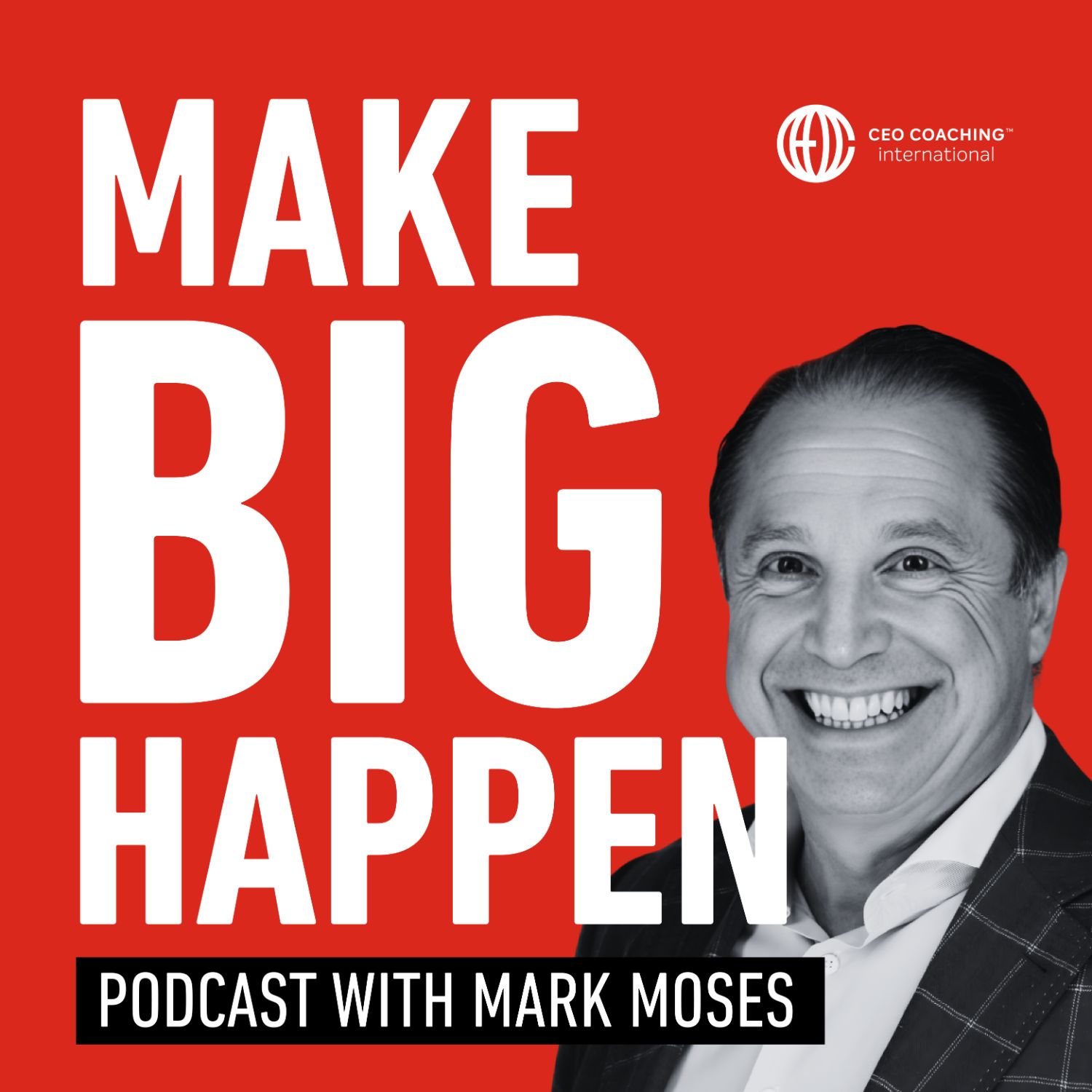
 Make BIG Happen podcast with Mark Moses
16 Sep 2026 · 39m · 21 chapters
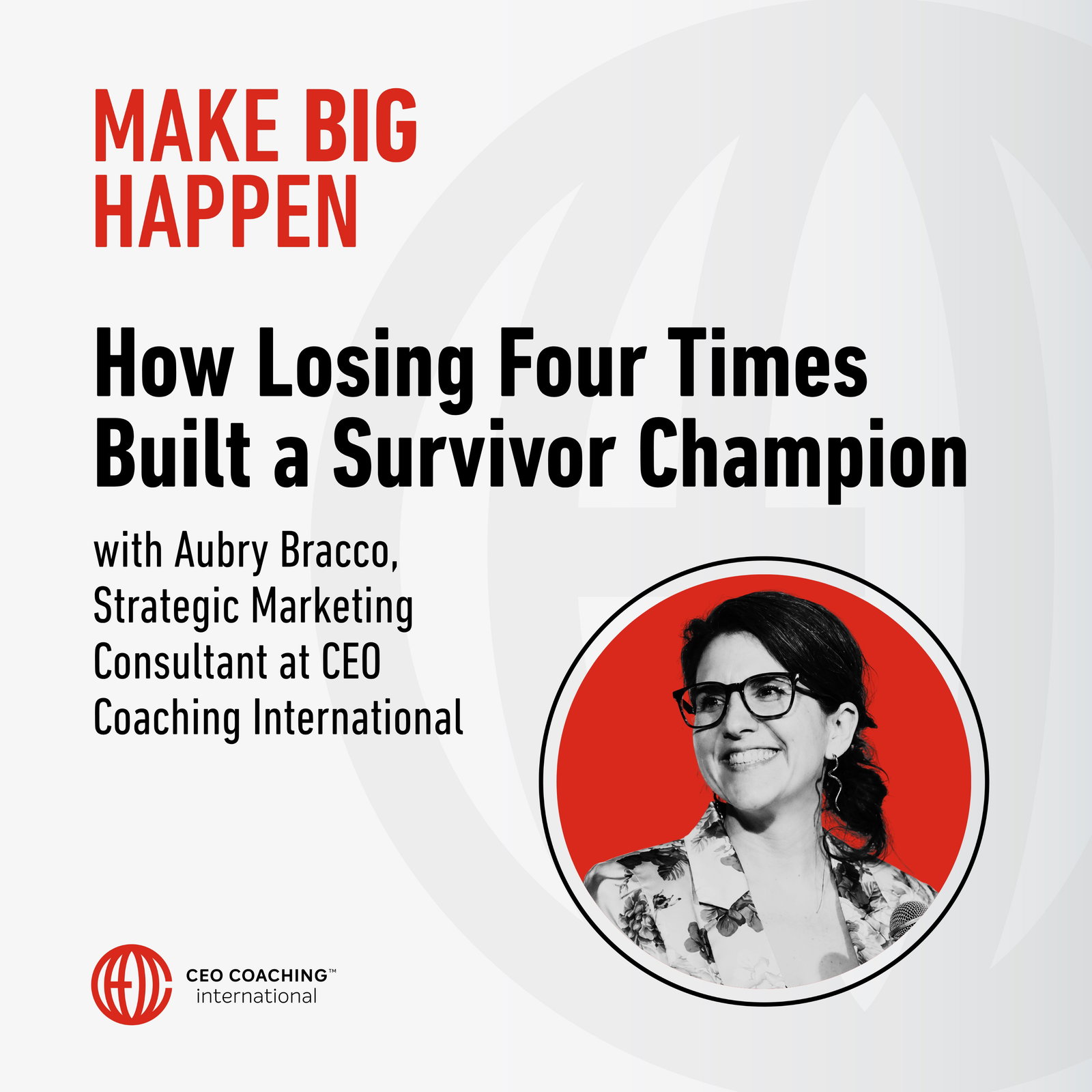
Aubry Bracco (Survivor winner) explains how repeated losses across four Survivor seasons built resilience and a decision-making process for uncertainty, then translates those lessons to CEO/business leadership: service over winning-at-all-costs, reading people/body language, combining gut/data/observation, diversifying alliances, and separating performance from identity.
losing provides “critical information” to fail fast and pivot; success is not static; uncertainty can be turned into advantage/luck through mindset; leaders must listen and create environments where others freely share counterpoints.
Aubry Bracco, Survivor 50 winner; achievement-oriented background (Phillips Exeter Academy, Brown University), played Survivor 32 (2nd), Survivor 33 (5th), Survivor 38 (earlier exit), returned for Survivor 50 and won.
Survivor 32 jury lesson about “making people feel” and not invalidating their experiences; shifting from control to “stay grounded” without micromanaging; using incomplete information; “diversification” via one-on-one relationships in alliances on Survivor 50; adapting gameplay across seasons (under the radar, self-care, restraint).
Written by AI. May contain mistakes.
Aubry discusses her initial misconceptions about winning Survivor.
“And this is, we've never done this together before.”
Aubry shares the deeper lessons learned from her losses on Survivor.
“I learned that I really, like in a nutshell, really boiling it down, it's achieving Living in life is so much more than making all the right strategic moves.”
Aubry explains how she learned to embrace uncertainty during the game.
“And I'm like, that's part of the experience, Mark.”
Aubry elaborates on the importance of diversification in decision-making.
“so many twists as there are in business.”
Aubry discusses separating her identity from her performance in Survivor.
“I had one-on-one relationships in every alliance.”
Exploring how past experiences shape future strategies.
“and what advice I should take and what I shouldn't take.”
Discussing the separation of identity from performance in competitive environments.
“And then I went ahead and I kind of studied like game tape of what I could have done better under those conditions.”
Understanding how losing can provide critical insights for winning.
“How did losing shape the person who eventually won?”
How adaptability evolves over different seasons of competition and life.
“played, I had to accept catastrophic failure.”
Identifying the fine line between persistence and the need to adapt.
“And I think you really have to, it's a body language thing.”
Discussing how emotional intelligence influences success in competition and business.
“Believing I could figure things out without having all the answers, that's the reason why I won Survivor 50.”
Reflecting on how winning reveals personal growth and hard work.
“And in those years, Between 2019 and 2005, I realized that I started putting all the work I'd done personally to the test.”
Aubry discusses how winning validates hard work and reveals personal growth.
“I'd tried enough things and I was coming out OK on the other side that I could do it.”
Exploring the common misconceptions about success being static and the role of failure.
“I mean, I could have worked really hard and then I was on season 50 with 23 other contestants.”
Aubry quotes Churchill on success and failure, emphasizing continuous effort.
“Yeah, one of my favorite, many favorite quotes, as you know, but one of them, and I think this is a Winston Churchill quote, that success is never final and failure is never fatal.”
Aubry reflects on the lessons learned from her Survivor experiences and resilience.
“And I think that sums up your continuous efforts on Survivor.”
Aubry discusses the necessity of persistence and the reality of ongoing challenges.
“And that the one way you have in your head isn't necessarily the way you're going to get where you want to go.”
Aubry offers encouragement to those feeling stuck, emphasizing the value of connection and perspective.
“And some people won't even pick up the weight.”
Aubry discusses her preparation for Survivor and the importance of understanding others.
“And nothing is as good or as bad as it seems.”
Aubry shares how winning Survivor 50 has motivated her for future challenges.
“I made sure to like do other things so I would have this fresh head so I could be creative.”
Aubry emphasizes the importance of grit and resilience, encouraging persistence.
“Because that big I just made happen was 10 years in the making.”

Get the gist, explore an idea or ask about something said.
 Claude
On Make BIG Happen podcast with Mark Moses, what are the key points of this episode?
Searching your listeningAutomatic transcript. May contain errors.
0:00Big things happen when you stay in the game long enough. Today's guest is Living Proof, and I had a front row C. I've worked with this woman for six years, and I watched the person capable of winning get built long before the world saw it happened. Today's guest is my friend Aubry Bracco. Most people know Aubry as the winner of Survivor 50. But that title only tells the last chapter. Over four seasons, Aubrey experienced heartbreaking losses, public disappointment, shifting alliances, and countless moments where the outcome seemed completely out of her control. Boy, you were fun to watch. Every setback taught her something that victory could not.
0:53And today we're going to talk about resilience, decision-making under uncertainty, adaptability, and why staying in the game long enough can change everything. So Aubrey. Mark. What a treat to have you here. I get to work with you every day. This is so fun. And this is, we've never done this together before. So this is super fun for both of us. So before you ever played Survivor. Sure. What did you think it would take to win and how wrong were you? Oh, wow. So, Mark, thank you for having me, first of all. It's very fun to kind of flip the tables. So before I ever played Survivor, I come from a very achievement-oriented background.
1:39I went to one of the best prep schools in the country, Phillips Exeter Academy, and went to Brown University. and my whole life was built on this framework that if you work hard enough and you work your hardest, you will achieve and you will arrive. So really achievement-oriented background. I went into Survivor with that mentality, get the best resume. If you have the best resume and you put every single thing you do on there, you're going to get the A. Oh, I got very close with the the achievement-oriented mindset and the best resume. But at the end, I came in second place and I lost. So how wrong was I?
2:20Mark, I was completely wrong. When I came in second place on Survivor 32, it completely destroyed everything I thought about what it took to get where I wanted to go. How so? I learned that I really, like in a nutshell, really boiling it down, it's achieving Living in life is so much more than making all the right strategic moves. It's also how you make people feel. It's about that wake that you leave when you're doing the work that you do. How do people feel around me when I'm making the moves? Do they feel good? Do they feel like I'm in service to them? And my issue at the end of Survivor 32, so for those people who haven't watched Survivor, you vote people out of the game until the end.
3:05And at the end, if you're sitting in the final three, the jury, all the people you voted out, vote for who they want to win a million or in Survivor 50s case, two million dollars. So you have to be you have to have the art down perfectly where you're crushing people's dreams and they want to reward you at the end. And that business life is hard, like sometimes to get ahead. You have to do things that don't feel great to other people, but how are you making those moves at the end of the day? Do people feel, okay, I can respect how this person made that decision or do they make me feel awful? So I really learned that you have to be in service of others and you can't invalidate their experiences in the process of trying to win.
3:49So looking at all four seasons, what's the story that people that don't know you, or even if they do, don't see? Oof. What do people not see? I think you see glimmers of it on Survivor. The immense amount of personal work and deconstruction of how I think and how I thought the first time I played to the last time I played. There was an incredible process of self-transformation. You see it in glimmers on the show, but each show is 90 minutes. You're on with commercials. It's less than that. It captures three days of an experience. So behind the scenes, when I lost and my achievement framework was destroyed, I had to grapple with all those pieces of what does that mean?
4:37What do I do? What happens? How do I achieve? How do I move forward? And all of the things I had to learn behind the scenes to overcome that. I had to learn how to stay grounded. I had to be comfortable not being in control. My first season, I was in control. I had my resume and I was going to the end. And it wasn't enough. And so I had to learn how to harness control in a way that I could still kind of massage the outcome, but I wasn't doing every single thing. I couldn't micromanage every single thing and achieve the vision that I wanted to achieve. And it felt like it's like, what is it? Counterintuitive.
5:15We're in Survivor 50. I knew there was a lot that I couldn't control. So how to figure out a stay in the pocket of having that. All right, I can't control everything, but I can control the environment a little bit better so that it works for me. Like I had to learn how to see what was in front of me and create a space where it would work for me instead of me trying to like strangle it too hard like a puppy that I love too much. So at what point did you realize that Survivor isn't really about survival? Oh, I learned that Survivor really wasn't about survival after I lost before the season aired in Cambodia in May 2015.
5:59I very quickly came home. It was very hard to come home. I went to therapy and I talked about Survivor and I thought I was talking about a TV show. And within one session, I was talking about achievement and how I was brought up to never quit and achievement will get you where you need to go. And I realized immediately that this was so much more than that. And I'd say even on the show, you realize Survivor's more than Survivor. It really is about what are you made of? It's about resilience in life. And then after you play, you start to see elements of Survivor woven throughout your life. So Survivor, I think, my perspective in watching, I was a junkie and that's how we met, right?
6:44Yeah. I watched a couple of seasons and I said, I like her. I'm going to reach out to her and see if we might be able to work together. And my wife thought I was nuts and so did you. Yeah. And you thought I cried a lot. Remember that? That made me laugh. You're like, you cried a little bit. I was a lot. I wasn't sure. And I'm like, that's part of the experience, Mark. Yes. You reached out. So Survivor, I think, is built around incomplete information. Yes. How did you make good decisions when you didn't have all the facts? Great question, Mark. So first season, I really relied on my intuition. When you're starving, I always say that certain senses turned off and intuition turned on.
7:26So I really had to go with my gut a lot in the first season. I will say I played three times in rapid succession, three times in four calendar years. And when you're in that kind of mind screw, you can lose touch with your intuition. And so I learned in the third season, I lost touch with my intuition and I was like the fifth out of the game. So I really practiced my intuition between the third and fourth times with incomplete information. And what it really was is like you have to slow down long enough, just enough to clear your head, whether you're taking a workout, a shower, whatever centers you to really listen to your inner voice and your conviction and say, this is what I feel.
8:07This is what I feel. And then kind of hone your observation skills. Like I'm an observer. I've always been on Survivor. And if you see where people are moving and who they're talking to, it can often give you enough of the information you need to understand where the flow of the game is going. A CEO deciding on an acquisition or a key hire, maybe pivot, but never has complete information either. What is your actual process in the moment? Is it gut, data, reading people, or is it something else? Gut, data, reading people. I think it's a combination. So Survivor is a game of numbers. And if you look at numbers and where different things are falling, you can kind of figure out where logically things might fall.
9:00Like if you look at historical data and Survivor will tell you if you have these numbers and those numbers, this is where it will fall. Then I look at my heart and other people's hearts. People might have the numbers and see where things might logically fall. But where are the feelings with me and other people, between other people? And then it really is that gut mark of what do I really think here? And this was very true on Survivor 50. There were so many unknown conditions. So many things that happened at the last moment. so many twists as there are in business. And I use my gut, my conviction of kind of understanding where the meta was falling or where the industry is moving or what like the big macro conditions are at the moment to kind of put the information all together.
9:47I'd say I use all three. Did you ever become comfortable with uncertainty or did you just get better, Aubrey, at operating within? Yeah, great question. So I would say I did get more comfortable operating with uncertainty. I'm never completely comfortable. I became more comfortable operating within it. But then I learned how to use uncertainty to my advantage. So when there is uncertainty in Survivor or in life, AI is completely morphing companies. I have an advantage. If I am uncertain, other people are uncertain but if I have honed my mindset toward uncertainty and I now see it as a positive thing instead of a negative I'm already at an advantage so survivor brings up the concept of you could say uncertainty but then I also think about the concept of luck people talk about luck a lot in life they talk about it in survivor and I think I have a good friend Chris Savage, who always says that the recipe for luck and good luck is persistence and the mindset that good things can happen.
10:58And I feel the same way about uncertainty. If you look at uncertainty as an opportunity to test my framing of the world and how I can handle uncertainty versus other people, if you've done the work to be more comfortable navigating in unknown conditions, you're at an advantage and you can turn that uncertainty into luck. So what's the biggest mistake people make when they feel things are uncertain? What's the biggest mistake people feel when they think things are uncertain? I would say is that they stay with what's comfortable to them. They don't try something new. When you're uncertain, you want to go with what you think is the sure thing.
11:36But in survivor-like life, the sure thing, is it ever really the sure thing? If you build your foundation and you don't diversify, you're in a rough spot. Like I saw people in Survivor that were like, I'm uncertain. I'm going to stick with my honor and integrity alliance. But I'm like, but there's so many conditions that could knock any one of them out. If you put all your eggs in that basket, you're going to be screwed. You didn't diversify. I'm all big about diversification. That's how I played Survivor 50. I had one-on-one relationships in every alliance. And it's the reason why I could swing back and forth as I needed to.
12:11But when people are uncertain, And they want to cling to what feels comfortable to them. But what happens when your assumption of what's certain is wrong and that stable foundation just gets taken out from under you? You're screwed. So you learned how to lose. So you finished second. It was impressive. I thought you were going to win that one. You didn't. So you finished second. Then you finished fifth. Then, as you mentioned earlier, you went home earlier. Most people would have said, hey, look, it's been a good survivor career. I'm good. You know, give it a good shot. So why didn't you walk away?
12:52You came back many. It looked like it was, I think if I remember the math right, Survivor 38 was your third season. Is that right? Yes, it was. And then you came back many 12 seasons later for Survivor 50. Why didn't you quit and why did you come back? Why didn't I quit, Omar? Just like you. This is why I relate to you. This is why I could sense off you from that first call when you asked me one to 10, how do you feel about your life? One being the worst, 10 being the best. And I said seven. And you say, that's my least favorite number. Much like you, I don't like to quit. I don't like to quit.
13:27I just have this like it's you could say it's my best quality or I have a screw loose. I don't like to quit. And it just bothered me for years of like I was so capable to get to the end. How do I figure this out? And I was very willing after I lost Mark to really listen to all different opinions of how other people saw me. And then I grappled with when I took in all these other people's opinions of how they saw me, that can kind of confuse you a little bit. Then I had to like reground myself and figure out what all those lessons meant to me and what advice I should take and what I shouldn't take.
14:05And so I went ahead and I decided to digest all those lessons and say, hey, I'm not a quitter. Let's see if I can reapply everything to go give this a shot again. CEOs fuse their identity with their company's performance. Oh my God. Right? You see it all the time. We work together. You see them do that all the time. And then you could have done that in the same way, Aubrey, with your placement. How did you actually separate the two practically, not philosophically? Wow, what a question. How did I practically, yeah, I love philosophy. How did I practically separate my performance from my identity?
14:52I mean, that's a great question. And that's all the work that I did in between Survivor 32 and Survivor 50. I said, this is how I performed, but it's how I performed in the conditions on that day. And then I went ahead and I kind of studied like game tape of what I could have done better under those conditions. And then I worked on within the game very practical things. I listened to the feedback of I could almost be so cagey in Survivor that people didn't feel comfortable around me. So what did I do? I came back and I was more open with people. I'm like, all right, I'll be more open with you.
15:32I got feedback that people felt so close to me when they played Survivor with me the first time that when I voted them out, it hurt too much. So I evaluated how do I make relationships and how do I make my people feel? How you make people feel is more important than what you say. So I really took a look at the feedback that I got from people. And then I tried to realize how can I shift the way I'm acting in a way that might be different. And then I'd test those theories and say, okay, you're getting too close to people. What if you have a little bit of distance, then what happens? And so I would go and I would test my hypotheses to try to kind of finesse these different elements of my business or my gameplay.
16:16And what did each season or the whole package, your whole time there, teach you that success could not? What did each season of Survivor teach me that success could not? Oh my gosh, that is hard not to get existential. I mean, the first time, the first season of Survivor where I lost taught me that losing can be the first step to winning. the second season of survivor taught me that i could really genuinely play from behind i was not in control of any decision the second time i played yet i was able to finesse my social game in a way where people were willing to take me further my third season survivor taught me that self-care is so important i really when they call me for survivor 38 my third season i said you really shouldn't play this, Aubrey.
17:11You're not in a good headspace. And I said, let's do it anyway. And it was such a lesson that you have to take care of yourself first before you take care of others. And then my fourth season of Survivor was just proof that if you stay in the game long enough and you work on yourself, good things can happen. Interesting. Which leads to my next Next question. How did losing shape the person who eventually won? Wonderful. I love this question. Losing completely changed me. It forced me to look at Survivor and my experience in this big, big macro way of, hey, I may have lost, but how many people get this opportunity?
17:51And it really taught me that losing is a gift because it gives you critical information that you need to fail fast and pivot quickly. In my case, it was 10 years, but I learned to look at losing or failing as a good thing because it means you're just closer to having more information to get the information and strategy you need to win. Yeah. As somebody that loves to watch Survivor, Survivor punishes those who refuse to adapt. it does how much did your game change over four seasons yeah that's a great great question mark um i mean my game i was the person who was making big moves bold moves i was in control the second time i played i had to play under the radar i was playing with all returning players a lot of type a high d people and i had to kind of resort to my social skills the third time i played, I had to accept catastrophic failure.
18:56And the last time I played was really like a combination of some of my best games where I waited, I observed, I showed restraint, and then I came out and made my move when I had to. So I had to adapt to the temperature of the room. Every room you step in in life, I think you have to read like, what's this person's body language? How does this person feel? What just happened the quarter before? And you have to really understand like the frame of mind people are coming from. And I adapted every single time. And the other thing I've got even better with over the years is you really need to validate other people's experiences.
19:30Other people need to feel like they're part of the story. Like we all we all go into the world thinking we're the headline. We're the hero of our own stories. And I think the more I played, the more comfortable I got with this concept of everybody's a different perception of like who the hero of the story is. So every situation I go into, I'm like, what's this person's framing? How are they seeing the situation right now? And I've gotten much better at like walking into a situation, seeing where everyone else is coming from, and then playing the role that I need to play in that room to get the outcome that I want.
20:03Like the make me happen questions came up in Survivor every day, every single day. What do I want? What could get in the way? How will I get there? How will I hold myself accountable? Because every situation is different. But if you can walk into the room, get the general emotional texture of the room, just like you would a boardroom, and you ask yourself those questions, you'll find that if you've done the work and you're willing to adapt, you can become the person that you need to be to meet the moment and do what you are required to do to win. I side with me for many years now, And I know that every CEO listening, they have a strategy.
20:39And they're often, almost always, emotionally attached to it. Because it's theirs. How do you know when you're being persistent versus when you're refusing to adapt? When you're being persistent versus, oh, how do you know that? Oh my gosh, that's a big question. Why can't you be both at the same time? You can, being persistent, all in, I'm going to go get because it's my idea, I want to do it. Yet, in the boardroom or in a CEO's leadership team, there are other good ideas that come out, but they're not yours. And so many leaders, as I mentioned earlier, they're so emotionally attached to what they believe in and they're unwilling to adapt.
21:27I think it's a listening thing, Mark. Like, I think that if you can kind of a leader or me and survivor going into an alliance, I'm walking in the room and I'm hopping up on the tribe in the water well, are people on their own willing to come up with the counterpoint, willing to share their opinion? And I think you really have to, it's a body language thing. And also like, are people freely sharing their opinion or are you having to ask them first? And if you're having to ask them first, I think you have to ask, why are you having to ask them first? Perhaps you've cultivated an environment in which people don't want to share.
22:04And maybe you're being too persistent. What you're talking about here is really a lens of you played survivor with my view of you doing it was self-awareness. So really hearing, hearing and listening to what somebody's saying, but even more so listening to what they're not saying or reading that in their body language of what they're not saying. That was my view and why I thought you excelled, especially this time. Yeah, I mean, absolutely. I think it's a body language thing. What are they not saying to me? What are they saying to me? What is the timing of what they're saying to me? You can kind of gather all these clues to understand how comfortable they are being their true selves.
22:52And you can tell when someone has a veil up with you and when the veils really come off, really paying attention to that when the energy, I call it energy, but when a room is very comfortable and people are open with you and willing to share information, that's a very different feeling than when they have their guard up. And maybe they're just like, I got to play this role for this person right now. That can kind of give you clues of how comfortable people are with you and whether they feel safe to share or not. I believe also those that win and in thinking of some of the winners from over the years, you got to have, even though you may not say this, Like when you look at Boston Rob as an example, he was one of my favorites.
23:33But despite him being rough and gruff and all that, he had strong EQ. Not as strong as me, Mark. Boston Rob and I just got in a little tiff online. I'm kidding. I mean, I'm not kidding. We kind of did. I mean, that's the thing. Boston Rob and I are actually very similar in that we have strong EQ. We understand what makes people tick. We have very strong principles. but I do think that where Boston Rob would tend to put his kind of will down the pike, so to speak, a little more forcefully than me. I'm a little bit more of like a receptive, like what's coming to me and then work what comes to me.
24:10But I agree. We both have that awareness of what's the room, how do people feel and where do I fit into that? So did your confidence in Survivor 50 come from having the answers or believing you could figure things out without all the answers? Oh, my gosh. Believing I could figure things out without having all the answers, that's the reason why I won Survivor 50. I am not someone who walks into any room and thinks I'm the smartest person, even if I've done the thing 500 times. That's what I love is I am a continuous learner. One of the five things the CEO should focus on, according to Mark Moses, CEO Coaching International.
24:52I'm always learning. I'm always gathering information. I don't think that you ever arrive anywhere. I think that in a world that's changing so fast, you have to just have the faith in your principles and how you know how to move and operate and process information and know that you are willing to take it all in and then you will make the best choice forward. I never think you have all the answers. So you helped me write this book on your spare time, right? I'm sure you're probably still thinking about it when you're on survive. I probably give you the nightmares. But you interviewed every person that was in this book.
25:29And so you guys have a really good sense for how they think and how it applies to business. So what did you learn that great leaders understand about change? I think that what I've learned from writing with you, Built to Win Big, is that it goes back to the last answer to my question. the best leaders navigate change by making sure they're not doing it by themselves like you are never the smartest person in the room you don't have all the answers you need someone to talk to you need someone who's your sounding board when you're navigating through constantly changing conditions i mean a ceo doesn't just have you know ai or the market or tariffs to worry about they have a fire on their team that's happening a changing leadership team there's always something and when there's always something, you're never going to have all the answers for how to get there because the answer in that moment is always changing.
26:26We're always operating in life, on survivor, in business, in a specific time and place. And sometimes when things move so fast, you just need someone else to talk to to figure out, am I thinking about this the right way right now? I sent you a photo over the weekend. I was out cycling with my wife's cousin. And when he took his helmet off, he had a survivor buff on. And I'm like, how ironic, right? It's like, wait a minute here. And a huge, huge Aubrey fan, his whole family is. And he's been a survivor fan since the beginning. When you look back, when did you think you actually became capable of winning?
27:12I think that I became capable of winning Survivor. I think it started when I was so willing to go back so quickly after I'd lost. But I really think that I'd done the work between my third and fourth seasons. I stopped all things Survivor. I worked on my intuition. My dad had a heart transplant. So that was a really significant thing for our family. I started working with you. I started my own small consultancy and I became a mom. And in those years, Between 2019 and 2005, I realized that I started putting all the work I'd done personally to the test. And I realized I was able to survive anything and that the conditions didn't need to be ideal.
27:56I could make it through. And I felt like at that point, my mindset was in the place that was ripe, where I'd been tested enough. I'd tried enough things and I was coming out OK on the other side that I could do it. Did winning validate you or reveal who you'd become? Winning validated me for sure in that it was nice to see that all my hard work was worth something. I mean, I could have worked really hard and then I was on season 50 with 23 other contestants. That's a lot of people. And it did validate that I had done the work that I needed to do. It had show it definitely revealed who I'd become for sure.
28:38I think we saw me get into kind of tough situations in Survivor 50, and I was able to get out of them much more quickly. I was able to conserve my energy in more appropriate ways instead of spinning out when I'd go on a spiral. But I think it did both of those things. What do you think, based on all your experience playing Survivors and working with CEOs, teach you about the biggest misconception people have about success? Oh, the biggest misconception people have about success is that it's a static thing. You might arrive. And I think entrepreneurs and CEOs realize this. But I think in general, we're like, oh, you achieve something and that's it.
29:19Let me tell you, Mark. I'm like, what do I achieve next? What do I do next? So I think that success, it's not something that comes easily. Success comes with a lot of failure. You're going to try a lot of things at your business. they're not going to work. The things you think are going to be great are catastrophic failures. It doesn't matter that they were. What matters is what you do after that. I mean, Mark, how old are you? 61 years old. I'm sure you still fail every day and you just keep going. And I think the best entrepreneurs and CEOs know this, but it's very easy to look from the outside looking in and say, oh, it's easy.
29:56You just arrive and you don't. It just keeps going. You've got to keep on your toes and you've got to keep moving and learning. Yeah, one of my favorite, many favorite quotes, as you know, but one of them, and I think this is a Winston Churchill quote, that success is never final and failure is never fatal. And I think that sums up your continuous efforts on Survivor. Sure. And so if your survivor story had ended at the end of season one, which was a massive success all the way to the end, first time out, you're what, 30 years old then? And what would the lesson have been? If I if it had ended after season 32, I think the lesson would have been you can do everything right and you still might not get the outcome you want.
30:52And from there, I probably would have really grappled with that and learned through life the lessons that I have learned the lessons through life that there's not one way to achieve something. And that the one way you have in your head isn't necessarily the way you're going to get where you want to go. You have to think creatively. When I wrote about your win, one line kept coming back to me, and it was, big things happened when you stay in the game long enough. I'm certain you believe that's true. You're a poster child for it. Why? Why do you believe that? Why do I believe that good things happen if you wait long enough?
31:34It's that whole thing that we talked about about not quitting and resilience. I mean, we always talk about how can you be resilient? How do you do that? I think it has to be the willingness to try. Like the people that succeed, there's a misconception that it's like a magical thing and it's like winning the lottery, but the people and the entrepreneurs and the leaders that succeed are taking 100 reps when And some people won't even pick up the weight. You have to take the reps. It's not like everyone wants the damn body. No one wants to do the reps to get there. You have to keep trying. You have to keep iterating.
32:10You have to keep testing your theories every single day. That's the only way you're really going to figure out what works. I talk to a lot of CEOs and they tell me like they're stuck. And they've been stuck for a while. and they're trying to get unstuck. So if someone listening here today is in the middle of their own season three, that didn't go so well, they worked hard, things haven't gone their way, it may be partly in their control, partly out of their control, and they're wondering if it's worth continuing to fight, what would you tell them? Oh, my gosh. It's so worth continuing to fight.
32:57I mean, everything we go through in life is really just a season. And nothing is as good or as bad as it seems. Sometimes all it takes is stepping back, reconnecting to what your vision was, and then talking to somebody who's maybe been in your shoes or someone in the same industry in your community to say, hey, I'm going to be vulnerable. well, this is what's happening right now. And they might be able to give you that little spark that's just thinking in a different direction. And it can be as simple as trying something new with your team that opens up a whole new world that you never even thought about.
33:33You've always been a good student, as you mentioned earlier, going to top schools. Yes. How many people do you really think studied all the tapes, studied all the facts, and really, like you knew everything about every episode about every person and you knew who you may have known who you thought you were going to play against maybe you did or maybe you didn't and you studied them and you studied how they made decisions like sports teams study plays and watch so they can anticipate and do better. What advice would you give to others that aren't willing to do that, aren't willing to do that work?
34:22Because that is an incredible amount of work to do on your spare time while you're working full time, while you're married with a new baby and living your own life. Yeah, it is a lot of work. It's funny too, because I feel like some of the best work I did with Survivor was and is that I stepped away and I was willing to do other things so that I could take the lessons from those other worlds into this Survivor experience and address problems with a fresh perspective. So it's like kind of counterintuitive. I made sure to like do other things so I would have this fresh head so I could be creative.
35:02But when I would study survivor before 50, I did hone in very particularly on the people. I was a little bit less interested in like what specifically happened on their seasons, but I would listen to all of their exit interviews and I would understand what their biggest regrets were. So I could understand how they would try to do something differently the next time, how they kind of, what made them tick? What were they looking for? What did safety look like for them? What were they most afraid of? So I really did study the people and then also took the time to live life because we all live in this world and we're all do have some similarities.
35:41So I really focused in the studying I did was really around people and what are they afraid of? What do they want? What are their dreams? What big do they want to make happen? And how does winning or how has winning Survivor 50 changed your life? Winning Survivor 50, how has it changed my life? It hasn't changed my life at all, Mark. I'm still doing my work and I'm ready for the next adventure, whatever it is. I just, I won and I was like, yes, let's celebrate this milestone. What big is happening next? Because that big I just made happen was 10 years in the making. If you think I'm going to stop, I'm not.
36:19You're wrong. So it just made me hungrier for whatever's next. I just got excited. I'm like, anything is possible. I'd like to say there are three kinds of people. Those that make big happen, those that let things happen, and those that ask what happened. Aubrey, you are clearly one of those. Thank you. That makes big happen. And if people remember one thing about Aubrey Bracco and today's conversation, what do you hope it is? Oh my gosh, just don't quit. You have so much more grit and resilience than you ever thought possible. And if you even feel like quitting, just remember that next try could be the one that changes everything.
37:02Well said. And we will leave it here with, I'll paraphrase what you just said is, never, never, never, never give up. Aubrey, what a pleasure to have you on the Make Big Happen podcast. Thank you for sharing your story, your adventure, your wins and your losses with us. And I am sure for people, no matter what they do in life, we'll take something away from this. And I thank you for sharing your story with our listeners. And thank you, Mark, for everything. Seriously, you are the person who taught me that being an underdog can be a critical advantage, not just a fun story. Aubrey, you're a good friend.
37:48This was super fun. It was. Thank you. Thanks, Mark. There are three kinds of people, those who make big happen, those who let things happen, and those who ask what happens. Don't just listen to these stories. Decide who you're going to be. Show notes and resources are available at ceocoachinginternational.com. Subscribe so you don't miss what's next. At some point, every leader faces a choice. Play it safe or go big. If you're ready to make big happen, visit ceocoachinginternational.com and learn how our been there, done that CEO coaches can help you make big happen. Thank you.
CEO Coaching International's coaching frameworks just won “Survivor 50.”
Aubry Bracco, Strategic Marketing Consultant at CEO Coaching International, put those frameworks to the test. She shares how four “Survivor” seasons taught her to lead through uncertainty.
KEY TAKEAWAYS
00:00 Longevity in the game creates the conditions for a breakthrough
01:27 A perfect résumé was not enough to win “Survivor”
02:32 How you make people feel outweighs any strategic move
05:07 Control shifts from doing everything to shaping the environment
07:05 Decisions under uncertainty blend gut instinct, data, and reading people
10:23 Reframing uncertainty as opportunity creates a real advantage
14:18 Separating identity from performance takes deliberate practice, not willpower
17:38 Losing fast delivers the information needed to pivot faster
31:30 Persistence beats talent when nobody wants to do the reps
36:50 The next attempt could be the one that changes everything
Subscribe now and be ready when the conversations begin.
RESOURCES MENTIONED
CEO Coaching International
https://ceocoachinginternational.com/
"Built to Win BIG," Mark Moses’s book co-developed with Aubry Bracco, drawing on the leadership interviews referenced in this episode:
https://www.simonandschuster.com/books/Built-to-Win-BIG/Mark-Moses/9798891884304
#MakeBIGHappen #CEOCoaching #Leadership