Ask ChatGPT

 Make BIG Happen podcast with Mark Moses
30 Sep 2026 · 46m · 22 chapters
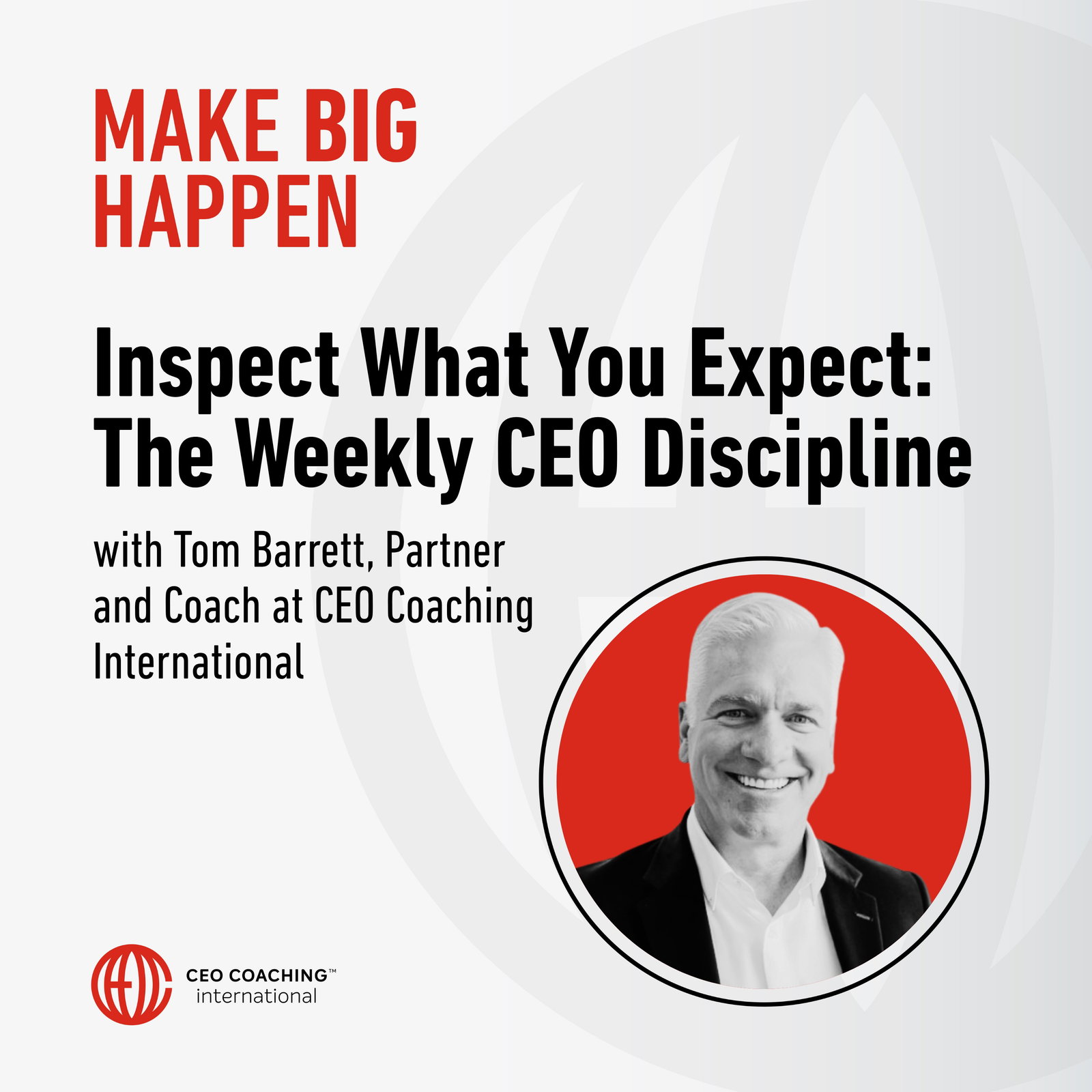
Tom Barrett shares “Inspect What You Expect” weekly CEO discipline: inspect cash, revenue, and expenses; verify data; manage sales pipeline with consistent activity; and build investor-grade, recurring, mission-critical revenue. He recounts turning around Whitehead (education management) and building 7Signal (software) and offers hiring/sales leadership rules plus practical AI uses.
Tom Barrett is an operating partner at the Riverside Company, a newest coach at CEO Coaching International, former YPO Cleveland chapter chairman, and has 30 years as CEO/chairman/investor. He built a software company from zero to $15M recurring revenue and has delivered exits from 5x to 21x EBITDA.
enrollment/revenue problems are often people/understanding problems; CEOs must inspect weekly and avoid trusting monthly lagging reports; pipeline commit needs CEO-level validation; don’t promote top reps into bad managers; always “dig your well” by recruiting continuously.
Whitehead’s daily 5-minute principal enrollment calls; fixing a $1.4M computer plan by buying ~$50K after observing only 20–30 students used laptops at a time; 7Signal shifting from hardware to SaaS selling to IBM/Nike/Meta-related and hospitals; AI automating quote/PO/invoice matching to save ~80 hours/week.
Written by AI. May contain mistakes.
Tom shares his experience of turning around a family business losing $12 million annually.
“You walked into this family business losing$12 million a year.”
The conversation shifts to the challenges of treating school enrollment as a sales process.
“You had the dynamic of making money on educating children, which, you know, is a very controversial topic.”
Tom discusses the importance of daily enrollment calls to address issues promptly.
“So convincing them that enrollment was key to any of the success in education outcomes was paramount.”
Exploring how enrollment issues often stem from underlying people problems rather than pure sales challenges.
“How often from your experience and you can use this experience that you had here, does I'll call it a sales problem.”
Tom explains the importance of verifying data and understanding the reasons behind enrollment declines.
“So when a CEO tells you that revenue is slowing, what is the first thing you want to understand?”
Discussing the need to balance financial constraints with educational investments.
“I like that you used the term inspecting what you expect.”
Tom emphasizes the significance of sales KPIs in forecasting future performance.
“So having figured that out, I went back to the CIO and I said, so what's the enrollment like at, let's pick a school, a school A.”
Mark and Tom discuss the need for consistent sales activity to maintain a healthy pipeline.
“And suddenly, if activities go down, I know that in three or four months, we're going to have a terrible month.”
Learn how to measure and predict key sales metrics effectively.
“how many appointments to a quote, how many quotes to a booking, how many bookings to quote, right?”
Explore why prospecting is often neglected and strategies to improve it.
“always the first thing that sales teams stop doing?”
Understand the importance of CEO involvement in pipeline assessments.
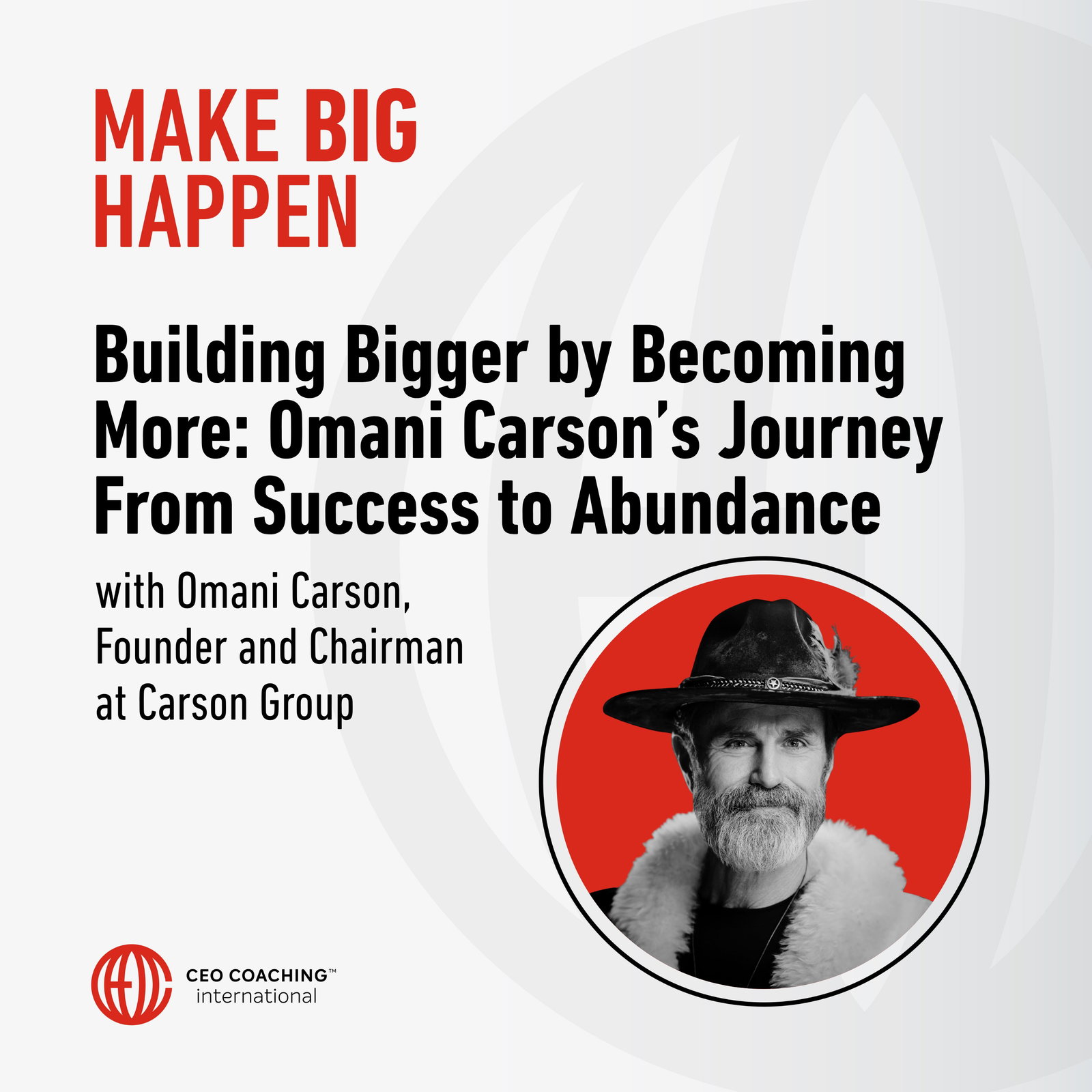
“Yeah, one of our longtime clients, Omani Carson, said, Monday to Friday, 9 to 5, you keep up with the competitions.”
Discover valuable insights gained from skip level meetings with customers.
“because if you wait till the end of the month, it's too late.”
Learn the challenges and successes of transitioning a business to SaaS.
“They are relying on somebody else to do it, and it may or may not get done.”
Examine the elements that contribute to a company's selling price.
“So that was a lot of learning, a lot of mistakes being made, trial by fire.”
Understand the dual role of CEOs as sales leaders in growing companies.
“You sound like a PE guy when you talk like that.”
Learn about the importance of consistent revenue growth and preparation for company sale.
“So that's not uncommon for a small company that's growing, usually by a founder and entrepreneur.”
Understand the consequences of delaying personnel decisions and making quick changes.
“Let's move to a word you've used a few times, people.”
Discover common pitfalls in sales leadership and the characteristics of effective leaders.
“And if you're a great sales rep, you're going to be a terrible manager just because of the way it works, right?”
Explore how AI can streamline processes and improve efficiency in sales operations.
“And I'm not sure you do, but we'll find out.”
Find out practical steps CEOs can take immediately to enhance their sales strategy.
“And I don't want to get technical on this.”
Discover how personal experiences shape coaching methodologies.
“You probably also can inspire some confidence in a salesperson that you're willing to ride shotgun with them and help them get better.”
Learn about the importance of weekly disciplines for sales success.
“This is now wearing your investor hat as if a buyer were looking at it at any time because one day they will.”

Get the gist, explore an idea or ask about something said.
 Claude
On Make BIG Happen podcast with Mark Moses, what are the key points of this episode?
Searching your listeningAutomatic transcript. May contain errors.
0:00Welcome to the Make Big Happen podcast. I'm Mark Moses. My guest today walked into a family business losing$12 million a year and turned it into one making$10 million a year in profit. He built a software company from zero to$15 million in recurring revenue. He's also an operating partner at the Riverside Company. Throughout his career, he has delivered exits for investors ranging from five times EBITDA all the way to 21 times. He has spent 30 years inside organizations as a CEO, a chairman, an investor, and he's one of our newest coaches at CEO Coaching International. He's also a 15-year member of YPO and the former chapter chairman of YPO Cleveland.
0:55Tom Barrett, welcome to the Make Big Happen podcast. Thanks, Mark. Great to be here. So take me back to Whitehead. You walked into this family business losing$12 million a year. Walk me through your first 30 days. What did you find when you looked at the sales organization? Well, the story at Whitehead is even more interesting than just the turn on the fix. That was my first time as CEO. So this company was$120 million in revenue, 2 ,000 employees, 56 locations in five states, with 2 ,200 employees that have been running their own entities for the last several years. So I was brought in as a first time CEO, and this was an education management organization to turn it around for the owner.
1:51Otherwise, he was going to close it down and move on and not even try to salvage it. So with that, I just literally started with, you know, one school at a time. What's working? What's not? And you boil the ocean one cup at a time. And that was the approach. So it was a great learning experience. You had the family office. You had the dynamic of making money on educating children, which, you know, is a very controversial topic. And it was big. It was one of the largest in the country. So let's go back to that sales organization. What did you find when you looked at it? So enrollment at a school is called the sales organization.
2:35So everybody's in sales. The principal, we have a business development team, a marketing team. And, you know, our enrollment was really within five to six miles of that location. So, you know, in the past, they did things that, you know, traditional schools would do. They would canvas the neighborhoods. They would have community days. So what we were able to do was to figure out, you know, enrollment at a school is tricky because you can get three people in first grade and 10 people in second and 30 people, 30 kids in third. But you want to take them all. So you have to get creative and figure out how to take them all without increasing your staffing.
3:13So looping grades, one and two together, three and four together. So that sales organization was it wasn't their full time job, right? Because they're teachers in an education. You know, they don't think like a salesperson would, you know, but they don't understand that every student that comes in actually helps pay their salary and their bill and all the extracurriculars that we tried to do. So convincing them that enrollment was key to any of the success in education outcomes was paramount. And what did the numbers say versus what was actually happening on the ground? So before I showed up, the numbers would come in once a month on enrollment.
3:55And then that was based on, at the end of the month, a tally that the teachers would all submit to the school. So I didn't, and throughout the month, I would go up and down. And by the end of the month, it was too late. So I went to daily calls with each principal, with my team, just a quick five-minute call, enrollment, what happened yesterday, who's here today. And then we did that for the first six months just to get a figure out, to understand where the leaky bucket was and what was going on. And a lot of times, it was your own team that was preventing enrollment because more kids means more work.
4:32Right. And that's a challenge. Right. So we're pushing enrollment in the schools like setting the doors. So we've got it. So we actually end up going to the school and, you know, doing the enrollment ourselves to make sure it actually happens. How often from your experience and you can use this experience that you had here, does I'll call it a sales problem. You may call it an enrollment problem. Turn out to be something else entirely. and what is it usually instead? It is. It's a people problem and it's an understanding of what makes the company work, right? So the people are very concerned about their domain, what's going to impact their day and not looking at the bigger picture and to understand that enrollment drives everything.
5:28You want to take the kids on a field trip. We need enrollment. We're not going to be able to fund raise for a for-profit company. You want to buy new laptops. You want to do other project-based learning. We need the enrollment to do anything. So that's how you sell. That's how we sold it to the schools because we can't be there every day. But in order to keep the enrollment and keep the doors open, you have to sell them on why it's important for the enrollment to drive all the outcomes they want for education, which didn't exist. So when a CEO tells you that revenue is slowing, what is the first thing you want to understand?
6:08Why? And so where do you look first? So you, and in general, you're looking at a combination of things, but first at your customers, in that case, your family, of who's leaving and why. Are they leaving because of things in your control? Are they leaving because of other conditions? They got a new job across town, so they can't walk to school anymore. So you figure out all the reasons that you can control, like they don't have busing, right? Or they don't have after school care. So, you know, that was one. And one of the things that I realized very quickly was they didn't have babysitting for other kids that were in the family.
6:49So I ended up putting in preschools and 13 of my buildings to take their siblings and put them into school. And that actually helped enroll them because now we have the whole family coming. We've got a preschool that will roll right into kindergarten and then actually help the engine go. So that was an inspection and really understanding what's going on and then what could we do to help it. Again, back to your experience, what are CEOs most likely to miss because they're staring at the revenue line? So I think it's probably a combination of things, but certainly what's really going on, right? And why?
7:32So when you look at this, especially a larger enterprise, you've got to rely on your team and make decisions on data. But the data has got to be correct, right? If the data tells you one thing, but my gut is telling me something else, you've got to really peel it back and try to understand, okay, why is the data telling us this? And make sure you, I call you inspect what you expect, right? So when you're getting information, you really got to, if it makes sense, do it. If it doesn't quite make sense or you don't feel right, you really need to dig into the source of it and really understand how you're getting it and why it's telling you what it is.
8:12I like that you used the term inspecting what you expect. So what should every CEO inspect every single week? Well, cash, revenue, and expenses, right? It's really a combination of those three. You manage those three things. Everything else can be managed very easily. So what was your most important meeting when you were there? Which meeting? What day? What report? Who was in the room? And I'm getting technical on you because I know you dealt with some tough stuff. And I want our listeners to really understand how you dug in to solve this issue over there. Like that place was struggling. You turned it around.
9:06Absolutely. I remember it like it was yesterday. And I came from a technology background. And the CIO came to me with part of their annual plan for next year, we need to invest$1.4 million in new computers for one of our divisions. uh we had several several divisions of of schools and we didn't have 1.4 million dollars we're losing a million dollars a month you know and if the owner is not going to fund this so and i really needed to understand why so i went out to the schools and actually talked to the principals and i'm trying to understand this and how the how the how the students were using our computers because if this was, it was an e-learning school, but on premise.
9:54So it was for dropout recovery high school kids. So in a classroom, you'd have a freshman and a senior, all different ages, all at their own pace, but a teacher helping everybody. So everybody needs their own computer. And after going to like five schools, I figured out very quickly that the schools, you know, they enroll in might be 200 kids, but there's only 20 or 30 there at a time. And so on, and they have five classrooms. And I kept trying to figure this out. Well, why? Well, some of them work. Some of them have daycare, right? So it's their own pace. So they could take three or four years to complete their high school diploma if they want.
10:29It's just, it's a matter of life going on. And it didn't matter if they skipped a day because they just pick up where they left off. So having figured that out, I went back to the CIO and I said, so what's the enrollment like at, let's pick a school, a school A. And we'd say, okay, it's 200 kids. How many laptops do they need? They need 200. I said, yeah, I don't think they need 200. There's only 20 kids there. I was just there. And so, yeah, but we've got to be prepared. I said, can we buy 30 and be prepared for a great day? And so that started the whole process of everybody looking at this business like a business and not like an education institution.
11:10So we ended up buying computers about$50 ,000 worth, not$1.4 million. And every student had a new computer, and we had plenty of capacity. If suddenly enrollment changed, we would replace more computers, not a problem. So I needed to think like that in order to preserve cash, because I needed the enrollment, I needed the students, but I didn't have any money. I totally understand having spent years on the board of a university and on the board of a hospital, I learned the same thing. And I guess these big bureaucratic, I'll call it educational organizations or put it in the medical space, treat expenses a little bit differently.
11:58So in your businesses, which three leading indicators mattered most? So mine for not to take out the charter school company and look at the rest of my business as a little more traditional. I always lead heavy, heavy into sales KPIs. And why? It's because everything else in the company you can fix, right? You need to create the fraud. You need sales. You need bookings and revenue. And then you can fix everything else as you go. But I see dials by person, phone calls, emails every single day. And I see metrics as it rolls up. Are we getting our daily metrics? And if we're not, we inspected why and very thoroughly.
12:49But if we are, then now we're able to accurately predict some revenue for one month out, two months out, three months out now. And suddenly, if activities go down, I know that in three or four months, we're going to have a terrible month. We'll be OK from the next few because we've been managing this. And as you know, the EKG of salespeople, they'll have a ton of activity and then they get busy and they work on all their deals. And then they don't have anything. And they have a ton of activity. I try to eliminate that. I want consistent activity. I'll take a double or triple of once in a while, but I don't want a grand slam and then nothing for seven months, right?
13:29I want consistent activity across the board. I get what you're saying. When I was in the mortgage business, we had the same issue. Our salespeople, one month we're building a pipeline. The next month they were closing the pipeline and then that would repeat itself every other month. So I, and consistent activity matters. So did you set minimum standards of performance? I did. And it's not only at the activity level, but then we go into how many proposals does each person. Once we figure out the data, we know how many phone calls to make to an appointment, how many appointments to a quote, how many quotes to a booking, how many bookings to quote, right?
14:09So we go through the whole life cycle, and then we measure each part of that, not just the beginning. I love it. Again, very similar to when I ran my mortgage company. I knew if I spent a million dollars a month on marketing, I knew exactly what my response rate would be, how many leads I would get, how many of those would turn into applications, how many would make it to get approved in underwriting, how many would make it to final documents and how many would close. And I like that predictive data to know what my future was going to look like. Sounds similar to what you're saying here. Identical.
14:54It is. So why is prospecting always the first thing that sales teams stop doing? And how do you make it impossible to stop? Well, it's because it's hard. In my opinion, I was a salesperson, right? So I've done all every role in sales you can imagine. I know that. That's why I'm asking you these questions, because this is an issue many of our clients struggle with. If you're a CEO and you haven't been in sales, then I think it's a lot harder to understand this and really what's going on. But in sales, prospecting, everybody does it. Everybody, not everybody, most people hate it, and it's a necessary evil.
15:37But once you get somebody interested, everybody can do that, right? They all want to work on quotes and proposals and relationships and bringing them through a value proposition. But getting that new rock turned over is difficult. And then there's strategies to not make it so monotonous so you're not a telemarketer, right? You need multiple channels to get new prospects. You need partnerships. You need speaking engagements, trade shows, cold calling, marketing campaigns, right? So you're not just doing one thing. Hopefully you've got 10 or 12 avenues that you're going to get the required people to talk to in order to get to your numbers.
16:14So, you know, that's part of what's changed. It's just not sitting there and hammering the phone all day. It's being smart when you prospect and having multiple channels. This is not a question I would ask any of my guests, but because of your background, how did you deal with salespeople complaining? I got too much busy work to do. And so I'm spending less time prospecting, too much admin work to do. Yes. And they do that. And it's me talking to the sales team is kind of interesting because they know that I've done this. Right. And my initial answer, and I take it with a grain of salt, is there's 24 hours in a day.
16:56You've got to just pick and choose how to use your day. You know, a lot of times when I do that, I would do it when I'm watching the news or at, you know, after dinner, sit on the couch, I'm entering all my CRM data, right? You've got to use the golden hours to be in front of customers. All the other busy stuff, you got to do it. You got to figure out a way to do it quickly and efficiently, but not during the eight to five mode when your customers are available. Do it early, do it late, do it on the weekends. Sales is not a meet to five job. Yeah, one of our longtime clients, Omani Carson, said, Monday to Friday, 9 to 5, you keep up with the competitions.
17:37Evenings and weekends is when you get ahead. So tell me, how evolved should or should not a CEO be involved in pipeline reviews? And where's the line between inspecting and micromanaging? I think that they need to be intimately involved in the pipeline reviews. I still do it weekly and the CEOs also do it, but it's also it's not micromanaging. It's to make sure that we have that consistent level of activity to drive the pipeline. So in the pipeline, the questions that we ask are really important because a sales rep opinion of what's in commit versus a CEO's opinion of what's in commit are very different.
18:23So, you know, and the sales rep will always try. And some, you're on one extreme or the other. They're going to tell you the very worst case number, or they'll tell you the happy years number where everything's going to close. So the CRO has got to figure out, you know, what's the right number in between based on all these personalities. So that we can make decisions based on that. So that pipeline management is critical. And it's also, you need to do it so frequently because if you wait till the end of the month, it's too late. Your experience mirrors mine in my mortgage company because I used to sit in them too and people would go, are you kidding me?
18:58A company of this size, you're sitting in in the pipeline review? I was trying to assess what discount factor I was going to apply to all the bullshit I was listening to. Right. What I've been able to at least land on is about 20%. When you blend them all together, whatever they commit comes from the head of sales, I discount 20 % and I'm usually like 80 % wrong. Yeah. Well, good. Good. I think every firm would have its own discount factors that they would apply and they would also apply them differently by person. So you did skip level meetings also, right? All the time. Yeah. And I'm a lead, I'm a lead from the front guy, right?
19:42And I'm also not only Skip Lovell, but I really want, I want to understand the business, you know, all the way down to where the, the, the client is making the buying decision. Why are they buying? What are the value props? Just to make sure I can articulate this right and bring information back for strategic reasons. And more times than not, I'll be able to talk at my executive team, what's going on at the customer level better than anybody on my team. What did you learn in the skip level meetings that never makes it into the forecast? Yeah. So the biggest challenge I think on the forecasting is the level at which we're taking the commit word from the customer.
20:27It could be a director level. Yes, we're going to sign Friday. And then you ask the question, what needs to happen between now and Friday. And they're like, I don't know. He just said, I'm going to get it Friday. So we need to understand what's going to happen. And then I, I actually went to lunch with one of these, one of these directors and the prospect and the sales rep. And I asked the question and the sales rep was squirming. Didn't believe I was that bold. So what needs to happen? You know, on Friday, I said, Oh, well, I've got to go to legal and legal is outside counsel. It takes three weeks to get a response.
21:01And then you just rattled off the whole process. I said, okay. the red light. I said, see, it's not going to close Friday. That's when he's going to start the process of probably a three to five week process. So this is not even commit. This is what you call best case. Yeah. Very interesting. I have learned, I haven't coached for 18 years, that these questions that we're talking about right now, which are more in the weeds than I normally go because this is too high level or too in the weeds for most guys um is where sales teams and revenue really lives and what enabled you to be successful in your businesses because not only did you understood it you inspected what you expected and and too many people don't do that They are relying on somebody else to do it, and it may or may not get done.
22:01These days with AI, AI can give you a report every day, every week, every month, by person, ranked in order, why they're in that spot. So a lot of firms can do that. Let's move to, you built 7Signal from zero to 15 million in AR. Very impressive. I get very impressive before the SaaS multiples fell apart and they're probably trading at more reasonable or more, one would say, more normal multiples these days. What did the sales system look like at$2 million versus$10 million and what broke along the way? Well, at the very early stages, Sudden Signal was a hardware company. They manufactured a very complicated sensor.
22:52You know, it started in England, they moved to Cleveland. And over time, you know, a very short amount of time, we figured out that that wasn't the right model. We needed to be a SaaS company and we needed to have a hardware that I literally made up a SaaS product for. I just sold it as a monthly fee and had a client that worked independently of that. So as the company transitioned into a SaaS company, they had basically HubSpot and Salesforce, a credit card and a laptop and eight salespeople. And as that evolved and changed, we were selling to the largest companies in the world. IBM, Nike, Metasport Gardens, anywhere, many hospitals, anywhere there's mission critical Wi-Fi.
23:35So we were able to change the story, show the value, and also be able to leverage what was currently an unknown solution. Everyone had the problem. They didn't know the solution existed. It was a startup. And being able to bridge that gap, you know, and there's no budget for it. There is a big need. There's a lot of pain. So being able to figure out that, address it, and sell was critical. So that was a lot of learning, a lot of mistakes being made, trial by fire. So you've had some exits. Five times even though, you've had exits at 21 times. What did the 21 times companies do that the five times companies did not?
24:25Well, it was recurring revenue. Not SaaS, but recurring revenue. All right, so you get a nice bump for recurring revenue. Okay. And they had a large addressable market. And there were a lot of small companies in the space that could be acquired and put onto this platform. So, you know, they had a great product and they had a great management team. So the management team and product, the market, and the recurring revenue all combined to be a perfect storm. You sound like a PE guy when you talk like that. I like recurring revenue. I like a platform. I like a large TAM. And I like some good management in there as well.
25:09So when you're diligent, diligencing a company, how do you know within the first week where the whether the revenue is real or delicate? That's a that's a great question. And that's a an inspection may take a little bit more than a week, I think that certainly talking to the customer and understanding the value you're providing and bringing and how mission critical are you to them? Is it a nice to have or is it a need to have? And you probably have an idea what that is going into it, but really hearing it from the customer and say, listen, I can't live without your product, right? It would cost me millions of dollars to do this a different way.
25:52That to me would be a little bit more mission critical and something that I would say is solid. So if somebody had a thousand customers, when you were diligencing, how many customers would you guys talk to? So it's probably a combination of ones that the buyer would talk to versus ones that we may use a service company doing surveys talking to the buyers. It's probably four to five facilitated by the seller to the buyer. And then it could be 100 through a company, an outsourced company that would do it blindly. So if you were wearing your investor hat, what makes, in your eyes, what makes revenue high quality in a buyer's eyes versus not?
26:49Recurring, mission critical, hard to displace. You can't just switch tomorrow, right? Switch the cost to change and the process to change being more difficult. Stickiness is another component. And, you know, from in your and hopefully in a market that's not so price sensitive that there's not opportunity to add more value and increase functionality and get more pricey as well. Have you ever looked at a company where the CEO is the best salesperson? Yes. So I'm sure we have plenty of clients like that as well. And so what's the investor view when you're looking at a company like that, when the CEO is the top salesperson?
27:38Yeah, it's certainly a risk, right? So and how do you how do you build up around them? So, you know, you do like the CEO to be customer focused, right? And prospect focused. And all the other things, do we have enough management team to pick up some of the other responsibilities? And over time, is there a path where the CEO can now be a little more broad and not so into the details of every single deal and be able to start to scale it? So that's not uncommon for a small company that's growing, usually by a founder and entrepreneur. They are the chief sales officer and the chief executive officer at the same time.
28:20But over time, that becomes harder and harder to do. It's the bigger you get. and you need a management team around you to start picking up some of the other pieces. In advising CEOs, if somebody tells you, hey, look, I'd like to transact three years from now. Hey, Tom, what should I start fixing now to make my organization look really attractive to a buyer down the road? What advice would you give them? I would probably start with revenue. Assuming you need a people, products, process, right? So if you have the right people in place, assume they do, then you look at the product and revenue. And what you want to do is you want consistency.
29:06You want the nice, consistent growth. And you don't want to be able to exit when things maybe take a blip. So forecast, consistency, repeatable, and it's proven, right? So I've done it every single year. We grow by 10, 12, 14, 18%. And it's, it's continuing to go up on that slide or going down. So revenue focus and then all the people, product and process, always making sure they're sharp. Management teams are key. And it's a, it's, it's a, a process that you should start, you know, three, four years in advance to make sure that you're, doing all the things now. So when you do sell, you've got the right track record.
29:53You've got the right historicals, all your data is organized, and you've got a great story to tell. Let's move to a word you've used a few times, people. Every CEO has had challenges with people and they knew way early on before they did something about it, they were not the right fit. So they waited. Why do they do that? And what does the waiting actually cost them? Oh, the waiting is extremely expensive. And it's and I think you would agree. I don't think I've met a CEO that said, I wish I would have kept that person longer. Right. And the the replacing of a person is difficult. And having done this a lot of times, it actually is so much better for the person and for the company when you make that decision quickly.
30:46Because they're more than likely not happy doing what they're doing anyhow, and they're not motivated to move. You're not happy with the results. You haven't totally signed up to make the change yet. Make the change. Do it fast. Do it professionally. That person is going to go on to do something great and something that they're going to love doing. And you're going to be able to get somebody in there that can do what you need them to do in a great way. So it's a hard conversation, but once you do it, it will work its way out. What's the biggest hiring mistake CEOs make with sales leaders? Well, the first one is making the best sales rep a manager.
31:25I think everybody knows that, right? They know it, but they still do it. Right. And if you're a great sales rep, you're going to be a terrible manager just because of the way it works, right? But generally, the best managers are the ones that are okay to average sales reps because they understand the process and organization and ticking in time. But your top sales rep is the one that you're constantly pushing to document stuff in Salesforce and log their calls, and they're never doing what they're supposed to be doing. And that's exactly what you want the manager to do. So you put that person in management, and it's going to be an awful experience.
32:04So that's number one. And the number two is, in my opinion, in my experience, is when you put a leader in, it could be a CRO or a VP of sales, and they're an armchair quarterback. My leaders of sales team have got to be field-facing, customer-facing executives, right along, constantly coaching, windshield time, strategy before and after a call, showing them how to do it. So you've got to lead from the front, as you can imagine. in my opinion. That's an interesting point because the other mistake many make is they'll take their best salesperson and they'll make them the producing manager. So they're still the top salesperson.
32:51They're running a large book of business. And at the same time, hey, take care of these 12 guys or gals and help them be more productive. Why does that not work? Well, now you've got two things that are not working. The person's not selling well, and he or she's not managing well. So that's a double ding. You might think you're saving money, but that's costing you. You're bleeding money left and right with all this stuff falling out the bottom of the bucket. How do you know whether the problem in the organization is the salesperson or the process? I think it's going to be done in a, it's going to be a couple of ways.
33:32If you, if you're looking at the data and they're, and they're hitting their number, their data numbers, but they're not hitting their sales numbers, then we've got a problem. Either the data is wrong, our, our KPIs aren't measuring the right activities, or we have the wrong team in place, right? So as you inspect that, you know, data's good, the market's good. They're, they're actually, you know, inspect what they're sending? Is it all marketing approved? It's good. Yes, yes, yes. So now we've got a leadership problem, right? So why isn't the team performing? They've got all the things in place, the market's there.
34:06Are we making changes on the team? Are we hiring differently? You know, how do we assess the team? How do you figure out the change management that we're going to go through? If you don't have any answers or they're not making changes, that's a clear indication that they don't have to figure on the pulse. So I hear this comment all the time. Are you still recruiting? No, I'm not recruiting. I'm fully staffed. And so I believe that that's wrong. And I'm not sure you do, but we'll find out. I do as well. You do. Oh, yeah. Dig your well before you're thirsty. So the old book is Dig Your Well Before You're Thirsty.
34:50is you're always recruiting. You're always, someone's always going to quit. Somebody's always going to get promoted or something else going on. So every time you find a great person, you're making, you may not have a job opening, but you're making a connection and you're making sure you stay close to the new players. Or maybe it's someone that you got to create a job for. This person is so good, we got to find a job. We got to figure out where we can carve out some accounts. And, you know, the sales leaders hate it because then sales leaders love their nice color-coded maps, all the territories.
35:22And then I screw it all up saying, listen, you got to hire Mark. Put him in the middle. I don't care what you give him, but he's great. And then they got to redo their maps, right? And they got to figure out accounts. I don't worry about that. It's a need to work because he's going to be a great producer. It's a very interesting point. When I hear the example of, hey, I'm fully staffed. So what's your average salesperson do per year? Well, the average person does about$3 million in sales a year. Oh, that's very good, but I'm fully staffed. Well, I go somebody working at a competitor that does$12 million a year, so you're still fully staffed now.
36:04Oh, no, I just had an opening. So that opening wouldn't happen unless we were always looking, right? Absolutely. From your perspective, what separates the outstanding sales leaders from the average ones? The best sales leaders are the ones that are in with the rep helping to close the largest deals with them. They're doing it. They're coaching us. They're selling, but they're involved with the biggest deals, and they're constantly on the road. And also, in my experience, the best salespeople have the highest expense reports. So if you're not a salesperson who's not generating a high expense report, they're probably not the right person.
36:47Let's move to AI. And I don't want to get technical on this. So you and I are a couple of sales guys. We'll skip the theory. Give me one thing you did with AI over the last few months that saved a company CEO real time or real money. Sure. So there is a process in manufacturing where you've got a quote, you've got an invoice, and you've got a PO. You've got to match all those things at the end when they get their delivery. It's a very important process because quotes change, job scopes change, and there's always adjustments going on. And there was an AI solution that was able to do all of that and come up with exception reports for people to verify.
37:41They confirmed that these six changes actually happened. And then we eliminated, I want to say, close to 80 hours a week. It's roughly two people's time of focusing on this. So what we were able to do is, and this company was growing like crazy, was to be able to take on more clients using AI without having to add staff on the back end to match quote, purchase order, and proposal. And all the change orders. So automating the PO and quote process to validate it at the end was an AI solution that was fairly simple to implement. It still takes a little bit of checking to make sure that it's truly correct.
38:29But, you know, 90 % of it was done by AI. The last 10%, we still had a lot of human involvement because it was really important stuff. But yes, that was probably the biggest impact. What have you observed either from your time as a PE guy, your time in YPO with your CEO mates? Where are CEOs and leaders overcomplicating AI right now? Yeah, I think they're trying to try it in too big of places, right? They're trying to get a big impact as opposed to small little weirdness. Start out with using it to fix your email, right? Then you figure out, hey, how can I help move this to customer support? A lot of similar questions.
39:12So they're looking for two bigger wins and not small ones. And getting lots of small ones and learning as they go, testing, learn, test, and learn. Then it becomes part of the culture. And I think that's probably been my biggest observation. If a CEO today has done nothing with AI in their sales organization, what's the first move you would want them to make? The first one that is probably the easiest, especially if they're using Salesforce, is to utilize AI for the pipeline and forecast. And there's tools natively in these products you can use, but that just gives them a better sense of, hey, if these seven items haven't been checked, it's not in commit.
40:01So look at all their notes, look at all their history, look at their follow-up and give me a ranking. These are the fives. Five is best case. Seven is commit. So it kind of takes the human element out of it. So pipeline and forecast management is probably the fastest win and the easiest to do because there's lots of products out there that do it. I'll give you one that I've observed, and that is using AI to listen to sales calls. Take, for example, matching up the conversion rate on all of your salespeople, rank them in order, and then have AI analyze all the calls and what are the best people doing versus the ones that have a meaningful, less successful conversion rate.
40:51and then train on it. And back months ago, and maybe a year ago, people would actually listen to those calls live. And that's a lot of listening time or manpower versus now having AI do all that stuff for an organization. Yeah, great idea. So our listeners are action people. If a CEO does one thing that Tom Barrett recommends as a result of this conversation, what should they do next week? Go visit your top three prospects with the sales rep in person. Okay. And hopefully with the outcome of bringing some of those home, right? You'll definitely learn something you didn't know before. I'm sure you'll learn something.
41:45Some good, some not so good. You'll probably learn the probability that what you've been hearing in terms of the ability to close may be better than you thought, but more likely worse than you thought. You probably also can inspire some confidence in a salesperson that you're willing to ride shotgun with them and help them get better. Let's change direction. So at this stage of your career, you decide to join CEO Coaching International to be a coach. Why did you join us? Well, you know, Mark, the coaching in my DNA started a long time ago with sports and kids and being able to do that while working and really, really enjoyed it.
42:32So as being CEO and selling and buying and private equity and venture capital and family office and taking all those experiences, I thought there's got to be a way to leverage this to help other people. in some capacity. And that's how I found you. And that's exactly what you're doing. So being able to take people that are about to make the same mistakes I've already made and be able to give them some guidance and alternatives and share some stories. But I think the success stories are great, but it's more important is the failures and what not to do and to leverage that experience. is that I think is the most interesting.
43:18And I actually thoroughly love it. It's great. And the look on their faces when you're able to help them see something in a different way is very valuable. I've never met one of our clients that didn't want to grow sales. And not every coach grew up the way you did, building sales organizations and growing sales. And so I think you'll add a lot of value to our clients that want to meaningfully grow their sales because you're willing to get dirty, get into the weeds, and help them see what they're not seeing. So I really hope that the conversation that we had today helps make a difference. and what I'm hearing you say is sustainable sales growth is built into boring weekly disciplines and inspecting what you expect so you're not surprised.
44:16And we also had a conversation about building the team before you need it and run your organization also. This is now wearing your investor hat as if a buyer were looking at it at any time because one day they will. And so thank you, Tom, very much for joining us at this stage of your career to help give back and help other CEOs be better. And also, I look forward to the impact that you will make with many of our clients over the years to come. So thank you for being here. I love doing what I'm doing, so appreciate it. It's great to be here. You can tell you got good energy about you, Tom, and we're excited to have you.
45:02So let's go out there and make big happen. Sounds great. Thanks. There are three kinds of people. Those who make big happen, those who let things happen and those who ask what happens. Don't just listen to these stories. Decide who you're going to be. Show notes and resources are available at ceocoachinginternational.com. Subscribe so you don't miss what's next. At some point, every leader faces a choice. Play it safe or go big. If you're ready to make big happen, visit CEOCoachingInternational.com and learn how our been there, done that CEO coaches can help you make big happen.
Most CEOs chase revenue. The best inspect it every single week. Tom Barrett, Partner and Coach at CEO Coaching International, unpacks sales, hiring, and knowing when to let someone go.
Discover the practical leadership habits and hard-earned lessons that separate consistently growing companies from those that plateau.
KEY TAKEAWAYS
00:00 Inspecting the business weekly prevents problems that monthly reports catch too late
01:15 A struggling business is usually a people problem, not a numbers problem
04:09 Daily five-minute check-ins catch problems long before month-end reports do
08:25 Every CEO should inspect cash, revenue, and expenses every single week
12:07 Consistent daily sales activity beats sporadic bursts of prospecting
15:04 Prospecting slips first because it is the hardest, least comfortable sales activity
19:12 Discount every sales forecast, then trust your own inspected number instead
24:25 Recurring, mission-critical revenue commands the highest multiples at exit
30:20 Waiting to remove the wrong person always costs more than acting fast
31:21 Promoting your best salesperson into management rarely works out
Subscribe now and be ready when the conversations begin.
RESOURCES MENTIONED
CEO Coaching International
https://ceocoachinginternational.com/
YPO (Young Presidents' Organization)
#MakeBIGHappen #CEOCoaching #Leadership