
 Ask ChatGPT

- Podcasts
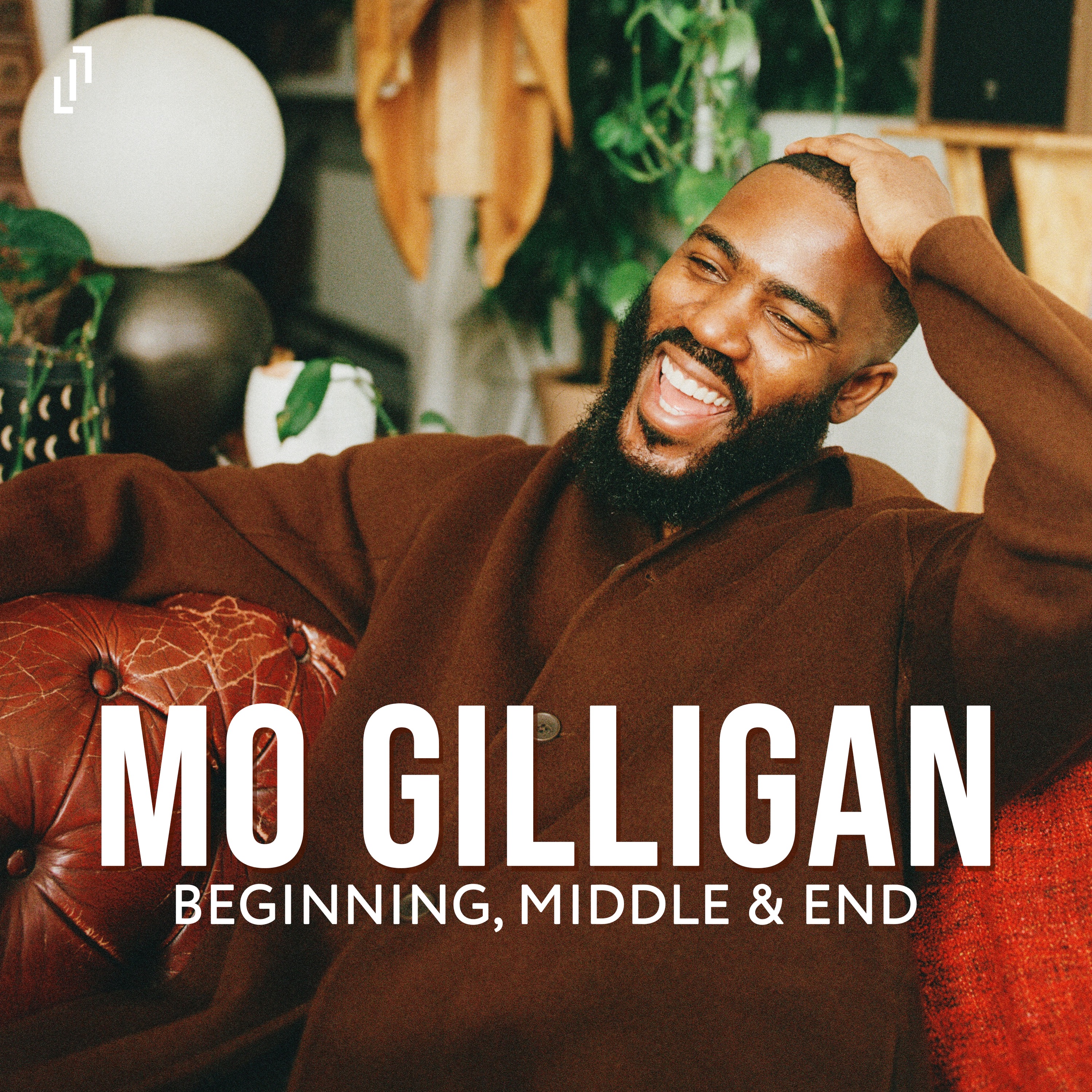
- Mo Gilligan: Beginning, Middle & End
- Andi Osho on Creativity, Control & Letting Go
Mo Gilligan: Beginning, Middle & End4 Feb 2026 · 1h · 30 chapters
Andi Osho on Creativity, Control & Letting Go
In short
In this episode of Beginning, Middle & End, comedian Mo Gilligan speaks with Andi Osho, a trailblazing actor, author, and former stand-up comedian. Their discussion revolves around Osho's journey in the entertainment industry, her experiences with creativity, fame, burnout, and the essence of storytelling. Osho reflects on her life, from growing up in East London to her current pursuits, including her new satirical novel, Most Wanted.
Written by AI. May contain mistakes.
Chapters
0:45
Growing Up in East London
Andi shares her experiences growing up in East London and the cultural landscape of the 1970s.
“I used to live in East London when I first rented.”
2:27
The Working-Class Background
Discussion about the working-class community and the immigrant mentality of hard work.
4:24
Education and Early Career Choices
Andi reflects on her education at Ravensbourne and her initial steps in TV post-production.
“So if you were, but from a technical perspective mainly.”
6:40
The Turning Point: Embracing Creativity
Andi discusses her realization that she wanted to pursue acting after years in production.
“ITV created this soap that unfortunately, God rest his soul, died a death after a couple of years.”
9:38
Transitioning to Stand-Up Comedy
Andi describes her journey into stand-up comedy and how it provided her with creative ownership.
“And then, so I started Googling, like, people that I really respected, like Tameka and stuff like that.”
12:44
Acting vs. Stand-Up: Personal Reflections
Discussion on the differences between acting and stand-up comedy and their respective challenges.
“But afterwards, someone comes up to me and he goes, you should enter Funny Women.”
14:02
The Journey of Stand-Up and Acting
Explore the balance between comedy and acting, and the control each offers.
16:44
First Steps into Comedy and Getting Paid
Learn about the initial experiences and feelings of getting paid for comedy.
“I mean, I don't know if there's a simple question, a simple answer, and I'm still sort of making sense of it myself.”
20:32
The Shift Away from Stand-Up
Understand the personal struggles that led to the decision to stop doing stand-up comedy.
“And then I started getting, you know, depression.”
23:52
The Comedy World and Its Challenges
Delve into the pressures and challenges faced in the comedy industry.
“And it's really, it is, but actually him, Chris Addison, I was on an episode with him.”
Show all 30 chapters
26:28
Experiences in America as a Black British Comic
Discuss the unique experiences of being a Black British comedian in Los Angeles.
“Well, they'd just stay in, wouldn't they?”
28:00
Traffic Stops and Cultural Differences
Andi shares a humorous and tense experience with law enforcement in the US.
“and then came back the other way, ran the same stop sign, because sometimes there's four on a junction.”
28:30
Missing the Familiar: Food and Architecture
Andi discusses what she missed about the UK while living in the US, including food and architecture.
“Did they put it out of a gun or anything?”
29:50
Deciding to Return Home
Andi reflects on her decision to move back to the UK after living in LA.
“sort of stuff so yeah I think that's why I sort of stayed in the vicinity of people that were sort of culturally similar.”
31:20
Navigating Career Challenges in the US
She discusses the challenges faced in her career while in the US, including management issues.
“I mean, I can't say it's all on them, but I think it's about relationships, isn't it?”
32:50
Acting Credits and Opportunities
The conversation shifts to Andi's diverse acting credits and her thoughts on past roles.
“In Footballers Wives, that show, if you could get a chance and bring that back, that show was so good, you know.”
34:00
The Journey of an Artist
Andi discusses her journey of embracing her identity as an artist.
“But then, you know, you put Angela Parker in Sea of Souls as well.”
35:30
Finding Inspiration and Creativity
She shares how she finds inspiration and the excitement of generating creative ideas.
“Because I remember seeing some photos that had been taken by the actor Dennis Hopper, who's dead now.”
37:10
The Role of Stand-Up in Idea Creation
Andi reflects on how performing stand-up influences her creative process.
“I love telling stories and I just want to get better and better at it.”
39:00
The Challenges of Writing Fiction
The discussion turns to the difficulties of writing fiction compared to other forms of storytelling.
42:00
The Challenge of Writing Fiction
Learn about the complexities and challenges of writing fiction compared to screenplay writing.
“Whereas when you're writing, you're doing everything.”
43:36
The Long Journey of Book Writing
Discuss the time and effort required to write and edit a book, including personal experiences.
“If only it took how long they show it on film and TV.”
45:17
The Joy of Authorship
Explore the emotional fulfillment of authorship and the personal connection to one's work.
“And I know, you know, obviously AI has become a thing now.”
46:40
Navigating a Diverse Career
Examine the multifaceted career of Andi Osho and her experiences in different roles.
“here we go and action I'll tell you because it wasn't a bio it wasn't a biography because I was too young at that point.”
49:10
The Challenges of Representation
Discuss the unique challenges faced by black women in television and the industry dynamics.
“So realizing, you know, just stay out of all those sort of conversations.”
51:33
The Reality of the LA Scene
Delve into the contrasting realities of pursuing a career in LA versus the UK entertainment scene.
“So there is that attitude that people won't necessarily say it out loud.”
53:52
Writing with a Social Conscience
Discover Andi's approach to writing novels that address social issues through humor and satire.
“that's going to make me broke for the vibes, if that makes sense.”
56:05
Exploring Themes of Social Conscience in Storytelling
Discuss the deeper meanings behind narratives focusing on social issues.
“stuff that's got a social conscience to it.”
56:58
Celebrating Andi Osho's Career and Impact
Reflect on Andi Osho's journey in comedy and television representation.
“Andy, man, it's been such a pleasure to have you on the show.”
58:54
The Potential for Adaptation in Andi's Work
Discuss the excitement surrounding the adaptation of creative works to screen.
“I'm so excited to see where it goes because already I feel like this is a Netflix limited series to come or a film.”

Ask about this episode
Get the gist, explore an idea or ask about something said.
 Claude
On Mo Gilligan: Beginning, Middle & End, what are the key points of this episode?
Searching your listeningTranscript
Automatic transcript. May contain errors.
0:00Mo Gilligan: Hey, what's up, people? My name is Mo Gilligan. This is my podcast beginning, middle and ends. Now, my guest in this episode is many things. A British actress who has had one of the most versatile careers from the RSC to footballers' wives to DC's Shazam, a former stand-up who is widely regarded as a trailblazer for women and performers of colour in UK comedy. She's also a successful novelist, here talking about her drive to tell stories and her new comedic novel, Most Wanted. Please welcome to the podcast, Andy Osho.
0:33Andi Osho: Welcome to the podcast.
0:34Mo Gilligan: I really appreciate you coming on. Oh, well, thank you for having me. Really, really appreciate you coming on, man. You grew up in Plasto, right?
0:39Andi Osho: Yeah, well, I mean, I think of it more West Ham. I was sort of a little bit further over from... Yeah, yeah, yeah. Even though it's like literally a quarter of a mile difference or something, it's like, no, West Ham.
0:48Mo Gilligan: Yeah, yeah, yeah. I used to live in East London when I first rented. East London is interesting because for me anyway, being from South London, it's a bit like South how everywhere is right next to each other. You mean it's cramped. Yeah, but I found East London very much like South London almost. Yeah, yeah. It was almost like, oh, right. Like how I feel like in South London you have areas where in Peckham got a massive African community, predominantly a lot of Nigerian people in Peckham. Whereas it's kind of the same where you drive down the road, you're in Ilford, massive Asian community. it's very very very similar do you know what i mean what what was it like for you growing up in
1:26Andi Osho: east london well son let me tell you what it was like in the 1970s
1:36Mo Gilligan: no because i feel like east london is so different now you've got half of east london which is kind of change it's got this like gentrification yeah to it like even when where i lived in east london and i go through there now and or even again i i think i moved there in 2018 and it's built up so much that i'm like oh my god this area has changed yeah even in 2018 yeah so i can't imagine what the landscape would have been like like when you was there and you was raised there in eastern because i feel like eastland has always been like yeah you know you got you got to do your old graft in east london that was what it was like that's my recollection of it like i grew
2:12Andi Osho: up in the 70s in um in Stratford and West Ham that that was you know my area and it was quite a white area at the time my school pictures you know there would have been I guess let's say in a class of 30 there would have been like two black kids three black kids a couple of Asian kids mainly white and it was very like pull yourself up by your bootstraps and you know like we had street parties for the Queen's one of the Queen's Jubilees I can't remember which one and West Ham won the FA Cup so there was a street party for it it was proper like East End so we had a rag and bone man I remember that Jesus I'm aging myself but literally a guy with a cart with a bell just wanting your old crap
3:01Mo Gilligan: I know with East London because it has this like it's very like back in the day it was very like industrial you talk about where it's houses and when boats are coming in and stuff and you have such a working class hub there of of the east end what was it like being surrounded by that kind of community as such because i feel like when you're in that kind of community it makes you just want to work hard i grew up in south london as a kid in the 90s and again like everyone was pretty much working class which is i feel like the landscape of london in itself has changed a bit now because people kind of go further and further out a little bit everyone's kind of getting pushed out but i can't imagine what that would have been like growing up in the 70s where you know you've got you're still quite marginalized as a group of like asian people and black people but was there a sense of togetherness because everyone was kind of in the same thing does
3:58Andi Osho: that make sense yes you know what to be honest it's hard for me to say because i was a kid so i wasn't necessarily aware of that i know that you know as my mom was um an immigrant yeah the and as is common with immigrant families the mentality was just work hard so that's maybe more where that came from rather than necessarily the community around me is just like get a good education get a good job you know get security because yeah if you when you come from another country you don't have any of those things and that's the first thing that you want to set up for yourself which is why you know when you know african parents have kids who want to go into the arts they're just like what are you doing did i come here yeah yeah you know how did your mom react
4:45Mo Gilligan: once you did start kind of delving am i correct in saying you kind of started behind yeah the
4:50Andi Osho: camera yeah yeah yeah so i went to a college called ravensbourne it's a it's a uni now but they basically focus on design and the art so they had like a fashion school 3d graphics and fine art and they had a TV school and it had a really good reputation and it taught people basically how to make TV programs. So if you were, but from a technical perspective mainly. So like if you wanted to be a camera operator, Ravensbourne was the place you wanted to go. If you wanted to be a sound designer, you know, that was the place that you went. And we had a meet up actually of my class group, you know, my year group and everyone was doing pretty much what they did at college.
5:29Andi Osho: and I realised I was so in the wrong course. Like I should not have been there. But I did. I did that. And then I had like 10 years working in TV post-production because it sets you up. Once you can say, I don't know what the situation is now, but back then if you could say you'd been to Ravensbourne, you know, you could leapfrog a couple of levels of, you know, being a runner and all this sort of stuff because you'd had such good training. So I, yeah, obviously I didn't pay attention at all when I was there and I just squandered the time. So I didn't quite get as many leapfrogs as maybe some of my peers.
6:01Andi Osho: But yeah, I ended up working in TV post-production and broadcast technology for about 10 years.
6:08Mo Gilligan: And then I was like, this isn't ever what I wanted to do. That's so interesting because I feel like a lot of people are very much,
6:16Andi Osho: they want to be front and centre of when it comes to television
6:20Mo Gilligan: or whatever they do. And you hear people's stories like, well, I went to stage school and I was singing and this was always going to be the natural progression. because I feel like whenever I meet people now and they're behind the camera there are people that are like no no no I couldn't do what you done I don't mind being a producer or a director and doing all the heavy lifting which I look at from someone who's on the camera I'm like I don't know how like the producers I don't know how people do that that looks like the most stressful job in entertainment like directing to some degree where you're like oh okay but sometimes directors do look quite cool you know when they've got their DOP and then they're looking and like okay okay all right if you can do that and I'll sit there I'm like right this looks quite all right you know but but producers yeah I sit there they're like okay great um yeah um guys can we have a meeting after set because um yeah we're just talking about the budget and you sit there and you're like I can't imagine how stressful this is yeah being a producer so with that 10 years of experience When was the kind of the light bulb moment where you would kind of say to yourself, do you know what?
7:28I kind of want to change from this.
7:31Mo Gilligan: Do you know what I mean?
7:34Andi Osho: So light bulb moment was probably so I ended the last sort of proper job I did in that world was post-production supervisor, which is basically organizing all the editing and everything that happens once the stuff's been shot. And I was working on a job. ITV created this soap that unfortunately, God rest his soul, died a death after a couple of years. But we were all on the same site. And so I got to meet a lot of the actors and spend time with them and become friends with them and stuff. And just over time, I realised it wasn't that I wanted to suddenly start acting. It's what I'd always wanted to do.
8:09Andi Osho: But I'd never allowed myself to believe that that was possible. And I was becoming aware of that. It all must have been packed away. And you're talking about like the culturally what was surrounding me in the East End growing up. Well, one of the things was a belief that I took in was someone like me can't do something like that. It just didn't compute that, you know, you can come from this background and then go off and do something like that. So I just I just dismissed it and thought, all right, well, Ravensbourne and being behind the cameras, that's kind of close. but you can have a sensible, secure job and all the rest of it.
8:48Andi Osho: So I'll try that. Anyway, so it got to like 10 years down the line of doing that and hanging out with these actors and just found myself asking them more and more about how did you get into it and how do you actually become an actor? Then they're like, drama school. And I'm like, well, I'm not going to do full-time drama school. At 29, I told myself I was too old. It's like, okay, okay. And so I thought, all right, I'll do lots of short courses and I'll treat every job that I do as an apprenticeship and then just go from there. So that's basically what I did. So it was that, there was, it wasn't that I wasn't enjoying what I was doing, but I could just feel that it wasn't, you know, like a pinball machine where everything lights up.
9:29Andi Osho: Like only some of me was lighting up, whereas I had the sense that being a creative was going to get the whole pinball machine lit up. Does that make sense?
9:39Mo Gilligan: What's so interesting, I think the first time I seen you on television, was doing stand-up i definitely vividly remember you on live at the apollo uh-huh because i feel like you was on live at the apollo during the glory days i vividly remember you on that but i know you've done stand-up before that how did you make the transition to being on the screen because you know you do a lot of stuff you're an author you're an actress you're a you know you're a stand-up comic there's a lot of you know you lot you have a lot of strings to your boat which at a time i feel like in television you know seeing a seeing a black woman on television you'd be like oh like this person does stand up but knowing i guess for yourself where you're like well no i have to try and do a bit of everything i couldn't just be just this one thing do you know i mean yeah yeah um
10:26Andi Osho: how did you get into stand-up good question um so i was you know acting and i was getting a little bit of telly here and there and I was doing a lot of theatre and I and then over time the auditions started drying up and so it'd be fewer fewer further in between before I'd be going on stage or being in front of a casting director and then when I was I was getting stage fright and I was saying to myself like this this is just going to compound you know I mean it's just going to get worse and worse what can I do to give myself ownership where I'm not waiting for somebody to give me permission so that I can just perform and just be out there.
11:08Andi Osho: And then, so I started Googling, like, people that I really respected, like Tameka and stuff like that. It's like, what did they do? Jocelyn? It's like, what did they do? They were all stand-ups. Nah, I'm not doing that. I'm not doing that. And then it just gained momentum. And then a mate of mine, there was a, what do they call it? Comedy Idol. Jimmy Carr's Comedy Idol at the Comedy Store. And it wasn't broadcast, but, you know, people could enter and, you know, there was a final. so we went to support a friend and he won and I don't know but the buzz from that and me having googled all these other comedy actresses and then someone goes oh you know there's a course that you can do oh yeah my friend who'd won this thing he'd done the Amuse Moose course
11:53Mo Gilligan: oh yeah I've done that yeah I didn't do the course I'd done the composition okay yeah so he
11:58Andi Osho: and I was like okay alright let me just try the course I'll do the course so I did the 12 weeks and I was finding my groove with it. But then the night of the, you know, this showcase or whatever, I could barely speak. I remember pacing the back of the room. As I was pacing, I just had this moment of clarity. It's just like, why are you doing this if it's making you feel like this? Either stop feeling like this or don't do it. So I went on. I remember I did a routine about Arsenal because I was stewarding there at the time. And five minutes went by like that. And afterwards, I was just like, in my head, I'm like, I'm hooked.
12:34Andi Osho: I didn't think I was going to do it again after that, but I was hooked.
12:36Mo Gilligan: Did it go well?
12:38Andi Osho: Yeah.
12:38Mo Gilligan: You got the laughs.
12:39Andi Osho: Yeah. But I'm going to say, yeah, I smashed it, but it was a warm audience. You know what I mean? It was all friends and family. But afterwards, someone comes up to me and he goes, you should enter Funny Women. And I was like, all right, mate. I've just literally, because for me, when I heard Funny Women Award, I thought that was like the Oscars. I didn't realise it's a competition. you know what I mean so when someone came up to me after my first gig and said that I was just like okay calm yourself but actually he was just saying enter a competition yeah yeah so yeah so that that
13:12Mo Gilligan: was the start of it so getting that bug that bug of doing stand-up how was that different for you to to acting because I feel like for me it was probably the opposite where I'd done a bit of acting and not anything on television well a few bits like cbbc for example but i was always doing stand-up but for me stand-up was always the thing that i was like ah this thing though is just different like i liked acting but i didn't get that rush and that bug the first time i got to go on the screen i didn't get that because i think acting for me it was such an ensemble cast and you've got everyone that brings something to it and and i love working in the team but stand up gave me this oh i can try that again and perfect it and keep perfecting it until i'm happy with it and even when i'm happy with it then i can change it even again and acting had a feeling for me was that you do it on stage sometimes you mess up your line and in your head you know i want to do it again be like that's it stage play's done now yeah yeah yeah so i think i was probably the opposite in terms of comedy was the one that i've really stuck with and i just looked at acting i was like oh we'll get to you once that thing happens do you know what i mean so for you of getting that bug where you're like oh i really enjoy this what was the what was it like where you're looking at this other thing of acting like this acting thing isn't working but it's comedy it's comedy thing is but i also like acting what is your is your favorite when it comes to both crafts because i think they both bring something different yeah 100 and i think you're right in the with acting you've got there's so much that's outside of your
15:05Andi Osho: control and there's so much outside of your control but with comedy you get to write it you get to decide how it's performed you get to decide pretty much when you perform it you get immediate feedback which is immediately gratifying if it's good feedback you know whereas acting people if you're in something great as an actor you know people go oh my god the writing and you're like yeah but also i don't know did you see me in it because you know who wrote that playing hey what about that seed man what about that first maid she was i don't know about that but yeah so so you've got so much more control with stand-up um but i don't have a favorite it's just they're different things i mean i don't do stand-up anymore um but at the time i didn't feel like i was choosing i felt like i was supplementing like because because acting was so sparse.
16:07Andi Osho: I just wanted to just be doing something and so I had something I could do and I could do it all in the evening so it didn't affect the sort of survival job that I was doing and I treated it it almost felt like a game because I don't know how the scene is now but a lot of stuff I was doing wasn't paid it was a lot of open mics and whatever. So it was just kind of a game how much, how many gigs can I get? How can I go from five you know when you're starting out and people ask you how many gigs you've done that's when you count the gigs yeah i'm on my 20th gig i know and i remember saying to um when daniel um lawrence taylor was still doing um stand-up and i remember him asking me like how many gigs you've done and i was like 25 like it was a lot but um yeah so you just i just felt like it was a game like let me see how many i can get let me see how good i can get let me see if i can get that killer 10 minutes or 5 minutes to start with then 10 then 20 and then someone paid me and it was like honestly it was like 20 quid or something like that but I just felt like
17:10Mo Gilligan: I think that the craziest thing when it comes to stand up is you do it especially when you do it and you enjoy it you just do it because you just want to see how better I can get at this thing and different audiences but that moment when you get paid feels a bit for me anyway it felt a bit like oh I feel a bit bad
17:28Andi Osho: i'm taking this money but also like yeah because i i've done a i've done a show which was a
17:33Mo Gilligan: competition which was called your mom competition yeah and i've done a little bit of stand-up before then but it was this competition where you'd go on and you'd say something about another comedian's mom so your mom is this and your mom is that i won the competition and i got 50 pounds and i was like oh my god i felt like i've cheated the system because like i've just said some stuff do you know what I mean like and it was funny stuff but I've just said some stuff but there was the first time getting paid and holding the money in my hand cash in hand where you're like oh that was this is quite cool man to get paid for it but I do feel like I'm kind of like
18:10Andi Osho: don't really feel like I've earned this if that makes it I had no such guilt
18:14Mo Gilligan: yeah oh no no don't get me wrong we went and got pizza and the whole facade was like I want to do this again tomorrow yeah yeah and next week but why I wanted to ask why don't you do stand-up anymore? What made you stop? So, let's see.
18:30Andi Osho: I mean, I don't know if there's a simple question, a simple answer, and I'm still sort of making sense of it myself. So, like, I look back recently on my stand-up career and I realised that I burned very brightly for a very short amount of time. I thought, you know, because basically my first proper good telly was Mock the Week. And that was 2010.
18:52Mo Gilligan: Yeah.
18:52Andi Osho: And my second live at the Apollo was 2012. And I remember at that point I'd had enough.
19:00Mo Gilligan: And I didn't realise that it was only those two, three years was my time on TV.
19:06Andi Osho: And I was doing panel shows and all the rest of it. I did Mock the Week five times or something. But I was aware that it was a weird feeling. like I was starting to there was a distance starting to open up between who I was on stage and who I was as a person and I even like at times referred to her in the third person like how she dressed and all the rest of it it was becoming not me and because I always felt as a comic he was very stylish on stage oh thanks babes yeah no no
19:36Mo Gilligan: he was very very stylish I always remember that
19:38Andi Osho: thank you well there was a bit of contribution to that and not to say that I didn't love how I looked and I was participating in that but like I did I was in the first season of Stand Up for the Week and did you ever meet Addison Cresswell?
19:53Mo Gilligan: No, I don't think I met Addison Cresswell.
19:54Andi Osho: But you know who he is. So Addison Cresswell was kind of the visionary behind Open Mic and Off the Curb who make a lot of the stand up we see on telly and he passed a few years ago but he was very clear on how to shape a comedy persona sort of thing and infamously he always used to get people in a headlock so i did the i did the um what do you call it the we did like a what do you call it a pilot episode like a non i think it was a non-broadcast pilot episode to stand up for the week and i wasn't sure if i had the job or not so i went and i i don't know i wasn't i was just wearing stuff that i had at home and he got me in this headlock and he's like do you reckon you can handle 10 episodes i was like yeah i can't have somebody kind of choking me and it's like yeah i want to see that hackney girl come out of you and i was like i'm from strapped it's like yeah let's see that hackney girl and he's like had all these ideas about how he wanted me to dress and you know the persona that so that's where the hair and the this and the da da da and the short skirts and all that it was sort of we collaborated to create it so i don't
20:57Mo Gilligan: want it to sound like he told me what to wear yeah yeah i really loved it and you know they got a
21:03Andi Osho: stylist in and i was like yay or nay and stuff so you know i was very much in control of it but But that persona, that kind of fiery, take no nonsense, you know, alpha female kind of persona, I started to just there was a distance opening up. And I'm still not really sure why. And then I started getting, you know, depression. It just like properly kicked in. I was like, I'm not sure. It's very hard to go on stage when you're actually in the in the midst of like acute depression. so you know the sort of you know people talk about struggling to get out of bed that type of thing that's where I was at it was a difficult time and I came through the other side and I went to live in the states and just to free myself up a little bit and not not be be in on the rails that I was on because that's what I felt like like my life was on rails and I didn't really have any say and I sort of took myself off to the states just for a break yeah and um realized that actually I think I might be done with stand-up.
22:05Andi Osho: Oh, wow. So, yeah. I navigate by heart, you know, like if it doesn't feel right anymore, then I'm setting it aside. And, you know, some of my friends were like, you're at the peak of your career as a stand-up. Like, you know, the world's your oyster almost. And you're walking away from it. But I was like, yeah, it doesn't work for me anymore. And actually, in hindsight, I can see it's not necessarily stand-up. It's the comedy world.
22:32Mo Gilligan: Yeah.
22:32Andi Osho: So all the panel show business, all that, that was what was getting me down, actually. And all the hoops you have to jump through and all the conversations with commissioners, like when you pitch something and it's like, we really love what you're doing. We would really love to work with you. But we are developing something like that. What else have you got? It's just like the amount of times I've had that conversation. It was just too much. It was too much.
22:52Mo Gilligan: And I guess as well, like being in the space you was in and you're doing these very big exposing shows, Mock the Week, which was on every week. I felt like any time there was a big comic who was huge in Edinburgh, you know, you'd kind of go on that show, you'd be on the panel and you could become a huge star just from the back of television shows. And that's why I mentioned, you know, doing Live at the Apollo during those kind of glory days, because I would see someone and before I know it, they're on tour, you know, like, you know, there's a repeat, there's people in the audience. did you feel like you had a lot of support in people like like in terms of like within your industry other comics you could reach out to and and speak to did you feel quite alone or was there people that you was able to kind of connect with and how you felt that had a similar experience
23:47Andi Osho: that's a good question i i'm i'm gonna say not really but not because I that was probably more on me than anything anybody you know I don't I don't really feel like that I mean there were some people you start to get a sense I don't know if you you must have experienced this of other people's jealousy and you get and it's not even like the weird thing about jealousy is it's nothing to do with you it's not really about what you're doing or it's about them but they project it onto you yeah so i've had people who i guess maybe think because we're from a similar background or something like that that they've directed stuff at me and even like loki tried to sabotage at times and stuff and it's like that's that's jarring because you're just like wow i revered you and it is true like sometimes never meet you're heroes you know but um yeah i i don't i yeah i don't know it's a it's an interesting thing because i i definitely couldn't blame the comedy world and say i had no support and there was because when i did have interactions with people and i was honest there was definitely support and actually i mock the week i my first mock the week was literally the week after frankie
25:10Mo Gilligan: Boyle left and I
25:12Andi Osho: think that as brilliant as Frankie is I think that his persona took up a lot of air in the room and so there was more air there was more available and so there was a bit more free flowing I remember going for the you know when you have to sort of step into the middle and do the like I remember one I think it was Andy Parsons he went after you so I don't think that energy would have been there previously so as much as people say like it's all combative and you know and stuff like that. And it's really, it is, but actually him, Chris Addison, I was on an episode with him. They were really lovely about the episode.
25:47Andi Osho: They were like, really well done. We know this is tough, but you know, you did a good job. So where, where it was possible, people were supportive, but I didn't go looking, I guess. I think maybe that's it. I didn't go looking for support. Yeah, yeah. Maybe I should have.
26:02Mo Gilligan: You went to, you said you went to America. Where did you go in America when you went to?
26:06Andi Osho: LA.
26:06Mo Gilligan: Oh, you went to LA? Yeah, is there other, other parts? if you're a comedian
26:10Andi Osho: I know some people
26:11Mo Gilligan: go to New York yes that's true yeah so what was LA like for you as a black British comic and actress being in LA at that time what was it was it just escapism was it to work was it to kind of re-find yourself in some aspects yeah all of that yeah I mean
26:29Andi Osho: at first I went just as a break and then I got a job so I could go out there to work and be and I had a green card visa so I got to stay but my thing was I am not here for the lifestyle you know if I don't work I'm going home I'm not going to become a nurse or something just to be able to stay as sunny as it is
26:54Mo Gilligan: it's beautiful and it really was
26:57Andi Osho: every day
26:59Mo Gilligan: like no rain no rain at all and even when it did rain it would be like what is raining I know. Why?
27:06Andi Osho: Well, they'd just stay in, wouldn't they? Because they're just like, I can't drive in this. So they would stay in and not, which I'm about really strange. But anyway, yeah. So, but as a black British woman out there, I mean, obviously you're a novelty. I, you know, you work that angle. But also for auditions, I think for the most part, I was auditioning with an American accent. So I, you know, you're sort of having to tread a line. I got pulled over by the police. I did what it turns out was two very legal moves in my car because I was lost. But as soon as they heard my accent, they were just like, I was coming back from this club called Flappers and I ended up in Griffith Park.
27:53Andi Osho: Oh, the comedy club. Yeah, yeah. And I ended up in Griffith Park. And obviously at night it's dead. And I ran two stop signs. Like, yeah, I went one way, didn't see the stop sign, and then came back the other way, ran the same stop sign, because sometimes there's four on a junction. And I was like, whoop, whoop, whoop, behind me. And you know the thing about they say, oh, you know, hands on the steering wheel, don't go into the glove compartment, all that sort of stuff. Well, I didn't know any of that. So that's exactly, I did all the opposite things. I was like rummaging in the glove compartment thinking, oh, they're going to want to see the rental papers for the car.
28:29Andi Osho: hands weren't on the steering wheel. Yeah. I mean, yeah.
28:33Mo Gilligan: Did they put it out of a gun or anything?
28:35Andi Osho: No, but I have had like attitude from, like they, almost like they wanted to. It was such a weird thing. I had my brother and sister-in-law in the car one time and they pulled me over and he was just like, have you been drinking tonight? I was like, no, I wasn't drinking at the time. And they asked me a bunch of questions. How much have you had to drink tonight? I was like, are you deaf? Obviously I didn't say that.
28:56Mo Gilligan: You want to say that. You want to say it because it was so aggy.
28:59Andi Osho: And I was just like, what's this? Can't you hear? I'm from the United Kingdom. This shall not pass.
29:11Mo Gilligan: How long was you in the States for? How long did you live out there for?
29:13Andi Osho: So on and off for six years. The culture is very different from Europe. I'm going to say Europe, not just the UK, but from Europe. Like, I missed architecture. it sounds like so random a thing to miss but I missed architecture I missed men dressing well because it was so hot you dressed for practicality
29:39Mo Gilligan: how can I survive
29:40Andi Osho: 120 degree heat what can I wear and also go inside somewhere that's freezing cold because
29:46Mo Gilligan: everywhere has got AC
29:49Andi Osho: so I missed all that sort of stuff so yeah I think that's why I sort of stayed in the vicinity of people that were sort of culturally similar.
29:56Mo Gilligan: Did you miss the food?
29:59Andi Osho: Yeah, kind of, because actually, you know, one thing I noticed, I didn't realise with the supermarkets how, you know, poisonous, basically, American food is, essentially. You know, I bought a... I remember buying a tin of tomatoes and looking on the ingredients and there was sugar in it. I was like, why?
30:20Mo Gilligan: What are you planning? Why is it so sweet? is this for cakes or like
30:25Andi Osho: it was really weird like sugar there's sugar in everything basically when you go shopping you have to stay around the outside that's where the healthy stuff is and everything inside
30:33Mo Gilligan: is in the inside and it's so colourful because there's supermarkets yeah they're good at that it's like a day out whenever I'm there and I'm in Target I'm like this is so fun you can like you know go to my friends and there's a basketball and then we're throwing around the ball it's not like you go to like a Sainsbury's or Tesco and say sorry Scott can you stop doing that it's like You can play the music on the speaker as loud as you want. And it feels like a whole day out experience. When you was over there, what was the changing point of coming back? Was it the work? Because I know you said you kind of was out there for work and you missed things like architecture and stuff.
31:13Mo Gilligan: But was it also like, I want to come back because that's home is where the heart is, but there's also work there? there because I feel like LA can kind of swallow people up where you're either going to stay for the vibes or you're like I'm going to come home and unless you I think if you if you don't marry someone out there then you're like well I'm just going to come back you know yeah that's it
31:38Andi Osho: Lord knows I tried yeah I mean it was exactly that I uh I my management weren't quite getting me where I wanted to get to. I mean, I can't say it's all on them, but I think it's about relationships, isn't it? It's like, who do your people know? It's not just about getting you in the room actually over there. It's really about, you know, what can they do behind the scenes? So I thought, all right, I'm going to do, look at this ballsy move. I'm going to do this. I'm going to leave them. And with the power of intention alone, manifest like great management. So I left them, could not get arrested.
32:16Andi Osho: like could not get arrested nobody was interested and so i was there no reps so no auditions yeah and actually i was writing my first book so that was the only job i had and which was fine because it meant i could focus on that but i could see that my world was getting smaller my life was getting smaller and smaller and smaller and like got to the point where i was just seeing only hanging out with a few people not really not really engaging and i just had this moment of clarity oh it's time to go home yeah and it feels good when you feel like i'm ready to go home rather than i have to like you run out of money or you just you know whatever so it felt good to make that choice and the other thing is like you say like there was um a lot going on in the uk sort of like casting wise and they and this is pre-covid so they weren't into self-tapes i.e people uh you know actors making their own taping their own auditions at home and sending them in they wanted to see people in person and so i was one of the few people sending in tapes and i was losing out to people that were in the room i was like if i'm not getting auditions here and i can't get a look in there because i'm self-taping obviously you know i have to go home yeah and uh thank god because that was 2019 and then covid hit the following year so it's almost
33:35Mo Gilligan: like it just it properly worked out for you oh yeah even at that time yeah because as an actress your credits are, you know, from Casualty to, you know, Dr. Rogers. In Footballers Wives, that show, if you could get a chance and bring that back, that show was so good, you know.
33:53Andi Osho: Do you want me to have a word?
33:54Mo Gilligan: Yeah, I used to love that show, you know. My mum used to let me watch it.
33:57Andi Osho: Even though it was like, I was like, all right, mum, are you sure I should be watching this? Okay.
34:02Mo Gilligan: But then, you know, you put Angela Parker in Sea of Souls as well. You also appeared in The Walking Dead at EastEnders.
34:09Andi Osho: Awaking the Dead I wish it was The Walking Dead yeah dyslexia
34:12Mo Gilligan: no no you're alright
34:14Andi Osho: but I just wish it was The Walking Dead I love that show
34:18Mo Gilligan: but then like you've got such a vast like you know you've got such vast credits as an actress and it's interesting how like you leave stand up and then you pursue you pursue acting but you know you also have I guess which feels like your passion project as an author as well. What's the thing that makes you wake up in the morning to want to do this? Because it's so interesting here, you say that comedy was like, I don't want to go back on stage, but what does it take to still have that passion and have that get up and go to, okay, I want to audition for this, do a sub tape for that, I'm going to move to America, I'm going to write a book.
35:03Mo Gilligan: And if anyone's ever written a book, you know how hard it is. And if anyone hasn't, anyone listening, I feel like it is one of the hardest things you can do to put what's here on paper to make sense with said publisher being like yeah if you say that say that you're like yo I can't I can't yeah so how how what does make you wake up you know every day to continue doing what you do that
35:30Andi Osho: you love well I think one of the things that I discovered about myself in America that I was sort of almost embarrassed to say before I left was that I'm an artist you know I love creating and I was embarrassed because you know the comedy or comedian persona is so strong and declaring yourself an artist is doesn't align with it take yourself a bit seriously you say you're an artist oh an artist are you doing the craft of comedy okay so so I was embarrassed to say that about myself even though I felt it and going to the States I didn't realize but actually part of that journey was about giving myself permission to call myself an artist to allow myself to express myself as an artist as a creative and to know that because I've done that for myself it doesn't matter what medium I'm working in creativity comes out in all directions.
36:32Andi Osho: Because I remember seeing some photos that had been taken by the actor Dennis Hopper, who's dead now. He's passed, but he was a prolific actor, very well respected, but it turns out he was a photographer too. Very, very accomplished photographer. And I was like, huh? Oh! You don't have to just do one thing. You can do... Your creativity is the fuel and you can use it to power anything. So as soon as I had that sort of moment of clarity, I was just like, oh, I remember as a kid always wanting to write. Let me see how that goes. It's fucking hard, actually. But like, yeah, but I still I still did it.
37:11Andi Osho: I wanted to express myself in that way. I love telling stories and I just want to get better and better at it. And you can tell stories through your acting. You can tell stories through your stand up as well or, you know, whatever, whatever it is. And so now I and actually from my time in America, I never felt constrained about like where that would get expressed. And so that's what wakes me up in the morning is like, how can I tell stories that can change humanity? What you know, what stories can I tell today? And I and I love the feeling of an idea coming that you just I don't know if you have the same thing, but you're just watching somebody go about their business.
37:49Andi Osho: And you have a like, what if what if you mean? And I and I love zombie movies. And I'm like, how can I write my own zombie movie? be oh what if you know like so yeah so it's like that and it's just it's just constant and it and it sounds like oh woe is me like i'm bombarded by ideas but it's actually a really beautiful feeling of ideas coming and you're so excited about them and the challenge i have is not running away with that one before i finish with this one so that's and i've realized you know as a creative you're going to die with ideas untold yeah unexpressed or whatever but that's that's part of you know being an artist being a creative as well anyways so that's yeah that that's kind of where my head's at in terms of what gets me out of bed how can i realize all the ideas that i'm having yeah do you
38:34Mo Gilligan: think you'll ever go back to the stage because it seems like you have so many ideas and having a little taste of going on the stage has that changed anytime soon like in terms of like oh you know what you know maybe might want to go back on that on that stage again one day because i guess it's like you have these ideas but then i guess is there other ways that you want to tell do you know what i mean some of these ideas as well where you ever look at stand up and like oh you know what i'm like is the mic on
39:08Andi Osho: oh gosh do you know i have this theory that ideas are like entities and they go where they feel like they can exist and so i used to get a lot of stand-up come to me like has feels like moments of inspiration where i'm just like let me just note down what's coming sometimes i would have to actively write it sometimes it would i would just be dictating these ideas that would come and it was like that for a really long time and then i stopped doing stand-up and they stopped coming and i thought oh that sort of that fits because they know that through me they're not gonna exist these jokes aren't gonna have a life and then they've started coming again i feel like your your life is so you know it's so interesting but it's it's clearly very vivid of
40:01Mo Gilligan: you know of someone that works in this industry but is also very front-facing that does you know is an author can act and do stand up which as as a as a comedian that's perfect you've got everything in your arsenal almost to the point where sometimes it feels like you can just talk and people just listen and before you know it it's like oh oh right that's really really funny it's really interesting which I've had at times where I've been on stage and I might speak about therapy and it's just me like I don't really know where this is going there's no joke in this but I'm going to tell you about how traumatic this was of telling my therapist and my audience sitting there like this is deep but it's kind of funny to have this spin on it but also I think I know I'm also at a point now in my career where I kind of know what my audience wants a little bit so I like to give them what they want as opposed to let me just do this new thing because the new thing I'll try on something different if I'm trying to write you know um because i think writing is is getting that onto paper um how do you how do you deal with the challenges of that because i know trying to write a book myself which was about me hardest thing i've ever tried to do ever and i sat there and i i worked with the publisher and we're typing it and i was like this is hard just trying to do this for me how is it how is it for you because you know like you've got your your novel which is asking for a friend a rom-com you know and that came out in 2021 yeah so what is that like because you're creating you know you're creating fiction and which i don't know if it has some truth to it but it's almost like okay i have to create this thing that you know you're not gonna see which is a bit different for film
41:58Andi Osho: and television because you're like we can cast a person that's it yeah you don't be like you know
42:03Mo Gilligan: when you sit in their room and you're like
42:04Andi Osho: thanks for coming in here yeah
42:06Mo Gilligan: no it's not the right yes like what is that like when you're writing like like because I've always wanted to write fiction but I think I'm so used to writing facts with comedy sure and I think a lot of people are like well I'm going to write from my experience
42:22Andi Osho: when you're doing stuff for screen the script is just a blueprint it's just a direction of travel but loads of people are going to make a contribution makeup, hair, cameras blah blah blah Everyone's going to make a contribution. Whereas when you're writing, you're doing everything. You're setting the camera angles, as it were, i.e. telling the audience where to focus. You're directing, you're casting, you're painting, you're the designer, you're painting the whole picture. And I think that's why it's so much harder than just writing a screenplay, for example. But I, you know, trial and error. I call it naive arrogance in the sense of I go into things thinking how hard can it be and then it turns out it's fucking hard but like i just keep going anyway because i'm in now do you know what i mean even though i tried to get out i i even said to my agent i was like what what's the process of returning the advance like how does that work but i didn't in the end yeah and my friends were like because i was like i'm never doing that again i can't so when i started like book two they were like girl let's what's the thing you're saying
43:28Mo Gilligan: about never doing that again because i i watched mikaela coles i may destroy you and you know it's about someone writing a book you're in that as well i am yeah i'm a therapist yeah and you look at that and you sit there and you go oh my god i didn't know it was that stressful writing a book was it interesting being part of that knowing that you're like well this is kind of like not my world in some ways but i am you know i'm an actress i'm a comedian i'm writing the novel was there a sense of like i don't know what's the word is it i don't know the word you know like when you're in something and it's you're like oh this is like meta or something yeah yes
44:06Andi Osho: yeah yeah yeah to be honest with you my character doesn't really interact with um arabella as an author she's just more in the trauma of her life experiences but i do often feel not necessarily with i may destroy but it's kind of funny how like being an author is portrayed on tv you know on tv and film because people write books very quickly. You know, a couple of weeks are done. And I'm just like, oh, my God. If only it took how long they show it on film and TV. How long does it take? I mean, I think I might be a slow writer. So it took me all in. Each book has taken about two and a half years.
44:46Andi Osho: Oh, wow. But I'm doing other stuff in between. And I think maybe that's because I'm doing other stuff in between. It's taken two and a half years. So maybe if I was just flat out on it, a year and a half, it would take me. But I know like Lee Child, who writes the Reacher novels, he takes a year. But he's pretty much, I guess, working full time on that. So, yeah, it's a slow process because it's not just getting the words down is one thing, but just editing the crafting of the story and making those cuts where, you know, you're killing your darlings, getting rid of the stuff that doesn't work or isn't necessary, all that sort of stuff.
45:21Andi Osho: It all takes time. And you just, you can't fast track it. And I know, you know, obviously AI has become a thing now. When I was writing my first books, there was no meaningful AI options. And now people do have the choice of that. But I think art comes from the hard yards. It's not about trying to find a fast track. Use it as a tool for sure. I'm not a Luddite, but like, yeah, there's no substitute for just putting in the time.
45:45Mo Gilligan: and I guess that's the thing with sitting down and putting the words on paper as such you know typing it there must feel a much I don't know it's like a sense of joy when you're like well I sat and wrote those words that are in that book exactly and I when I got the chance to do my own book it was sitting there and seeing someone buy the book I went to buy the book and one guy was like oh it was you and I was like yeah yeah and I'm looking at my book because I was taking a picture of it and then I was like oh this is a good one and he goes oh yeah I'm going to buy it man he's like can you sign it
46:24Andi Osho: I said yeah why not
46:25Mo Gilligan: and I had this joy of like I didn't get I didn't get someone to be like yeah like just make up some stuff about me and chuck it in the book and then I'll proofread it it was like I sat down with someone I was like this is here we go and action I'll tell you because it wasn't a bio it wasn't a biography because I was too young at that point. But it was, this is me telling the story of me.
46:51Andi Osho: Yeah.
46:51Mo Gilligan: And I didn't know that. I think I realized that there are some people that have books that are not even written by them. This blew my mind. I'm like, this is a great book, man. I'm like, what?
47:04Andi Osho: He had nothing to do with it, man.
47:07Mo Gilligan: Yeah. So where you are now in your career where, you know, you're an actress you're an author you're you know you're a stand-up comic um where do you start seeing you know the the future of andy where you get to a point in your career where you you kind of not so much get to your end but you look at where you want to take your career and you say oh you know like i really like this thing and i wanted to stick to that or are you still in a place where you're like i want to like explore so much more to what this has to offer are you just comfortable where you are and what you do now if that makes sense because I feel like you've had a really eclectic life of growing up in East London and being behind the camera which still blows my mind because I don't meet that many people that started off behind the camera because you get to see everything like you really get to be like okay this is how it all works yeah that was it was super useful because yeah and sometimes it's you know a lot of times the other way around where I got on screen and I just wanted to sit in the office and be like okay cool so what would you do so I'm a researcher is it so what do you research everything and again I was a sponge to that but starting off behind the camera is so beneficial because you're like well I know how this all works yeah you know if I'm a presenter I know whether I'm gonna have open or closed talkback like it's those things what do you have whenever you used to present like back in the day like did you ever open or closed talkback?
48:33Andi Osho: I never really did any presenting.
48:35Mo Gilligan: But you had your own show, no? You had like a pilot? Yeah.
48:38Andi Osho: I mean, that was not a sketch thing.
48:40Mo Gilligan: Oh, okay.
48:41Andi Osho: Yeah, so I was never... Yeah, I never had to...
48:44Mo Gilligan: Yeah, yeah, yeah. Although, actually,
48:46Andi Osho: we did do a show called Tonightly. It was a sort of a trial thing. Yes, yeah, yeah, yeah. Yeah, it was a few episodes of it. I think it was 16 episodes over the summer, every night for like three weeks or four weeks or something like that. What do we have then? But yeah, I mean, it... Yeah. It was... it just did those four weeks and that was it never came back and i remember the the sun did like a a full page article about how much they hated us easy yeah because i feel like the tabloids
49:14Mo Gilligan: were like really like that's where people really got their news from tabloids and magazines at that
49:19Andi Osho: time yeah because i mean when would that have been but 2008 so yeah there wasn't really socials and stuff like that social media so yeah it would have been you know maybe uh gossip like on online websites and stuff like that but generally like i think the magazines were still big like heat and nuts yeah all that sort of stuff so yeah people read like was there a fear sometimes
49:43Mo Gilligan: because it was so front-facing of being a black woman on television yeah i mean i i don't know
49:49Andi Osho: how much i was thinking about that sort of stuff at the time because i'm just sort of head down I'm trying to be great at my job, put a career together, realizing that actually, because I remember getting into some things with people on Twitter at times and slowly realizing like you can, that's an unwinnable battle. So realizing, you know, just stay out of all those sort of conversations. It took a long time for me to learn that. But yeah, I sort of, I am and I'm not thinking about that, if that makes sense. like there's some time because i i just think just let me just be as good as i can rather than focusing on what i'm not getting but then sometimes it does hit you and just think well like that we've never had you know black women doing this in comedy or you know there's never been a you know black female presenter until like chizzy on i'm sorry i didn't know so those sorts of things
50:40Mo Gilligan: sometimes it hits you just like wow yeah i try not to think about it too much because otherwise
50:45Andi Osho: it'll just pull you under
50:47Mo Gilligan: yeah because I think you know whenever you get to this space of being on television it can sometimes have this it's like no one says it but it's almost like oh you know it's a privilege to be where you are
51:00Andi Osho: and it's like
51:01Mo Gilligan: no I'm very good at what I do yeah that's it let's just stop that whole privilege like this is being gifted to me yeah like someone
51:09Andi Osho: this is a space that should have been occupied by somebody else so lucky you
51:13Mo Gilligan: yes yeah yeah
51:14Andi Osho: Because I think sometimes as well, I remember being in L.A., going to like an agent Q &A or something. And in their mind, they were feeling like the diversity that they were seeing in certain shows was taking from some of their white actors. So there is that attitude that people won't necessarily say it out loud. that will be the quiet part but that some people do have that thought as though that that was the entitlement and that redressing that balance is taking from somebody who was entitled to it rather than that maybe there were people from different demographics that could that are equally qualified
51:56Mo Gilligan: for whatever the job is yeah it's interesting you saying that because i feel like la has always sometimes been a little bit of this mirage of this promised land for black entertainment a little bit do you know what i mean especially within the world of acting of like go out there and you know you'll you'll be a success out there because there's some success stories and i think even when i've been out there and i've experienced it you you know you do the meetings that what's it called the water bottle tour or whatever it is right you know you do it and everyone is like oh my god man i love your stuff bro like amazing you're so funny oh my god i was like watching you like like like like literally last night yeah like i was on youtube and like you're and it's interesting because i feel like sometimes people can have this perception that that is the promised land that the grass is greener on that side and because you can see someone that's in a massive hit show yeah and you know i've gone out there and luckily when you go out there there's other Brits that are out there and you can kind of form a community but it's it's such a small percentage I think when you think of like people that have made a success out of there and I think that's why it's so interesting asking you of you know did you want to stay out there for the vibes because the vibes are vibing and you hear these I've heard stories of I went to this place and I met that person and then we became friends and worked on this and that does happen over there and I just don't think that happens over here you know you can't go to an event and be like oh my god dumped into David Beckham turns out he loves comedy I'm only doing the David Beckham comedy show that I don't think that would ever happen personally over here it can happen in America if you meet a basketball player Shaq and he's got his show you hear of those stories but it's really I guess refreshing hearing it from your take of like yeah do you know what come back home I ain't got that much pride to kind of put myself in a position that's going to make me broke for the vibes, if that makes sense.
53:58Andi Osho: Right.
53:58Mo Gilligan: You know what I mean?
53:59Andi Osho: Yeah, I mean, for me, it was very piecemeal. It was never, there was never a sense of flow to it. I'd get a job and then there'd be crickets for a little bit. And then again, and even like, you know, with the stand-ups and my agents were quite connected in that respect. They could get me gigs and that. I would do them. but the scene out there is so different from the UK scene. So much of it's not paid. They'll bounce you because Kevin Hart needs to try a 10 or something. And so, you know, you don't even know if you actually get to go on or you have to bring people to these things. It's just like, listen, I'm bringing jokes.
54:37Andi Osho: Why do I have to bring an audience as well? I might as well just bring them to my house. So, you know, so it was hard. It was really hard. but I'm not look there's also a lot of people in LA that will tell you how to do being in LA and you have to not listen to them because obviously they're telling you what to do based on their failures I think all I can say is what my experience was but you may be one of those lucky people that goes out and does bump into Shaq and does end up doing such and such and getting on you know all these great venues and stuff but yeah my experience wasn't that so at the end of the day you just have to make a judgement call and just go I suspect there will be a global pandemic.
55:19Andi Osho: I think I'm going to head home.
55:21Mo Gilligan: Bye. Bye. Sorry, I digress. I went off topic. But where do you, in terms of your end, where do you start, how do you start kind of painting that picture a little bit now? As you know, as you, because you've got another novel coming out, which is March, which is March 12th, which is, which is a comedic novel as well.
55:43Andi Osho: Yeah. I mean, all three of them have got comedy through the spine of them but the first two were more rom-coms they were actually more like the first one was more friendship rom-com and then the next one was more like about family it was about a blended family but it's also based on my sort of stand-up experience as well but this one is a crime caper it's sort of a satirical crime caper and i i think i found the kind of genre that i really like not necessarily crime caper but stuff that's got a social conscience to it. Because this is about a couple who were trying to get on the housing ladder.
56:18Andi Osho: They're having no joy. They can't understand why they're getting priced out continually. So they decide to start a crime wave to tank house prices so that they can finally buy. And as much as on the surface, it's a superficial, silly story about people taking matters into their own hands in a really absurd way. It's really about, for me anyways, how unfair the whole housing market is. how we're in a housing crisis. How do people of a certain age, like millennials, how do they even get a foothold, let alone get anywhere above the first rung on the housing ladder? It just seems so unfair to me. Yes, it's about social fairness as well.
56:58Mo Gilligan: Andy, man, it's been such a pleasure to have you on the show. I feel like this is the first time we've properly met as well. Yeah, yeah. Do you know what I mean? Normally I kind of meet someone in passing if it's like an event and stuff. And especially if I'm in the room and I just see other black people, I'm just like hey it was yeah
57:12Andi Osho: yeah that's it yeah yeah or even across the room you're just like yeah you're like
57:17Mo Gilligan: hey it was good man yeah hey good night yeah no I'll catch you hello hello you alright yeah nice to meet you nice to meet you hey good luck but no it's properly nice to like properly sit down and meet you but also it's super inspiring how you know like your career is is spanned in a sense of behind the camera on the camera stand up comedy and comedy I felt like when it really was in its heyday like those shows live at the Apollo and you know seeing a black woman on tv looking very stylish and like being like a forefront of mainstream comedy where the only other black faces that I would ever probably see is maybe like Nina Benjamin um and uh who else would it be in terms of stand-up comedy Nina Ben Lenny Henry in terms of television Little Miss Jocelyn they're the the focal people I would see on television at a time where I felt like you know when you look back at it and they say oh yeah television it's evolving you know we've got BBC 3 now and we're doing all this stuff and E4 and you look at like reality television of like oh we had Big Brother at this time and things were progressive but you're like I don't think it was you know I think you guys thought it was because the show was live and we had some random contestants that would go on the show but I just don't feel like the art of it was diverse and it was very rare to see people that look like myself on television.
58:46Mo Gilligan: Do you know what I mean? And for that, you're a true pioneer and to see you in a space now of writing novels, I'm so excited to see where it goes because already I feel like this is a Netflix limited series to come or a film. Do you know what I mean? already I'm invested I'm like yeah I want to see this couple man I want to see them start doing some crime and shorten some weed it's the stuff I I really want to see so um it's a massive pleasure to just have you on the podcast oh thank you and this has been your beginning middle and end thank you very much Andy appreciate you man thank you so much man
59:20Andi Osho: hey what's up thank you so much for listening to the podcast today
59:24Mo Gilligan: now a lot goes in to making each episode I know you hear my voice but there's a team behind the scenes who helped make it and if you did enjoy it I'd really really appreciate if you could show the love to them by giving us five stars and if you also have the time please leave us a review it's always appreciated and we love reading the comments and of course we want to keep making it better thank you for listening and have a great day peace
From the publisher
On this episode of Beginning, Middle & End, Mo Gilligan sits down with trailblazing actor, author, and former stand-up Andi Osho for a rare, expansive conversation about creativity, courage, and knowing when to walk away.
From growing up in East London to working behind the camera before stepping into the spotlight, Andi opens up about her rise through stand-up comedy, appearing on Live at the Apollo during its golden era, navigating fame, burnout, and depression — and why she ultimately left comedy at its peak. She also talks candidly about life in LA, returning home, embracing her identity as an artist, and finding freedom through writing.
With her new satirical novel Most Wanted on the way, Andi reflects on storytelling, success, and what it really means to follow your instincts — even when it means starting again.
Honest, funny, and deeply human, this is a conversation about reinvention, ownership, and creating on your own terms.
More from Mo Gilligan: Beginning, Middle & End
All episodesWe use cookies.They keep VO running smoothly and help us improve it. Privacy policy