
 Ask ChatGPT

- Podcasts
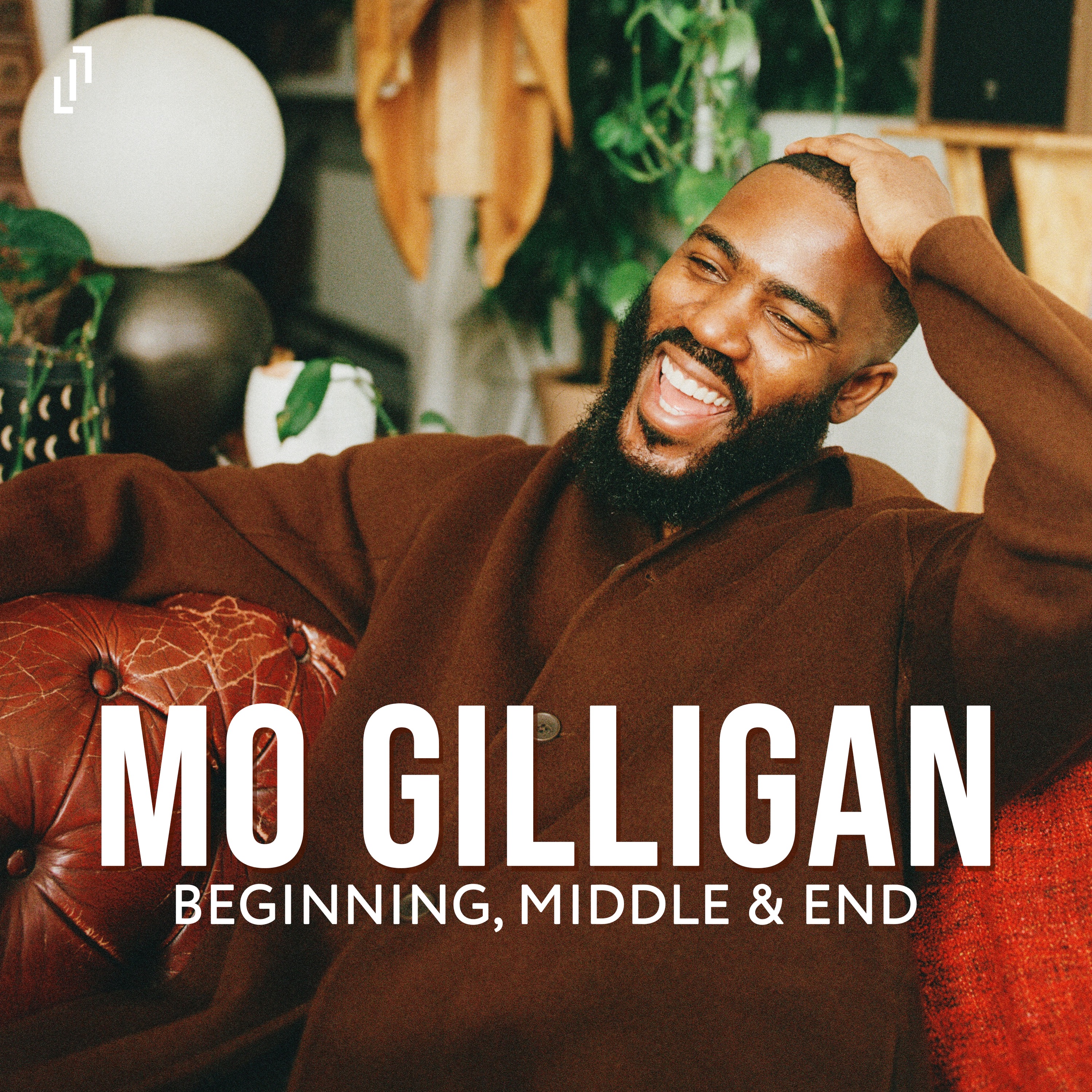
- Mo Gilligan: Beginning, Middle & End
- Ep 102 - Nina Conti: The Puppet That Changed My Life
Mo Gilligan: Beginning, Middle & End29 Jul 2026 · 54m · 23 chapters
Ep 102 - Nina Conti: The Puppet That Changed My Life
In short
Nina Conti discusses how ventriloquism shaped her life and career, from acting-family pressure and early confidence issues to building a “monkey” persona, writing material, and performing in live venues and on TV/streaming. She also talks about anxiety around screenings, the craft mechanics of speaking with lips still, and her film’s unusual path to BBC/Prime.
Guest background
Nina Conti is a British Comedy Award winner, BAFTA-nominated filmmaker, and a top ventriloquist who has sold out the Sydney Opera House. She grew up with an actor father (musical theatre), later gravitated to comedy/Edinburgh Fringe, and learned ventriloquism after a suggestion from Kevin Campbell.
Key claims
The puppet lets her express parts of herself and “find her voice” without the usual self-consciousness. Her material is easier because she narrates a constant situation rather than performing alone. Ventriloquism is “magic” because lips don’t move.
Notable examples
Her Prime documentary/film about Ken Campbell’s puppets at a ventriloquist resting place in Kentucky; her early Edinburgh set (20 minutes, then 30); a screening anxiety story; a “lazy slag” line from the monkey character; and her son’s role in Beetlejuice.
Written by AI. May contain mistakes.
Chapters
0:29
Nina's Journey and Film Release
Nina discusses her background in comedy, her film's journey to Prime, and the anxiety of screenings.
“Now I've got, I'm like, oh, new, new stuff, new stimulus package.”
2:18
The Impact of Audience Reactions
Mo and Nina reflect on the varying audience reactions to their performances and screenings.
“too slick and i was like is that how people are saying it that's not how it looks anyway but no I went to every screening.”
3:15
Growing Up in an Acting Household
Nina shares her experience growing up in a family of actors and the pressures of auditions.
“I've done an animated film once and they showed it at Sundance.”
4:36
The Journey to Comedy and Ventriloquism
Nina talks about her transition from acting to comedy and her passion for ventriloquism.
“Well, it's a bit different from my normal work because I can watch that quite happily, but I don't actually appear very much because I'm inside a big monkey suit.”
5:39
The Art of Performance and Physicality
The duo discusses the uniqueness of performance art and the physicality involved in comedy.
“So I could just on a school night go and do.”
7:02
The Challenge of Ventriloquism
Nina explains the complexities and challenges of being a ventriloquist on stage.
“And I probably, you know, I've got to prove myself and I, never mind, sorry, I'll go.”
8:30
Creating Comedy with Characters
Nina and Mo discuss the process of creating comedic material and the role of characters.
“So, I mean, that's really what happened.”
14:00
The Creative Process: Music and Writing
Explore how music influences creativity and the writing process in comedy.
“It's just like a, it doesn't need to be backed up.”
16:43
Journey into Ventriloquism
Nina Conti shares her early experiences and reflections on ventriloquism.
“And sometimes it'll just be one track on loop all the time.”
19:31
Developing a Puppet's Character
The process of creating a voice and character for a puppet in performance.
“And sometimes I've spent a few thousand pounds getting a proper puppet made that can move its eyebrows.”
Show all 23 chapters
22:26
Acting vs. Ventriloquism
Nina discusses the differences between ventriloquism and traditional acting.
“because I'm like, even though I know what's going on, I'm still like questioning like, right, is that, is that right?”
25:56
Nina's Edinburgh Experience
Nina reflects on her early performances at the Edinburgh Festival and the challenges faced.
“I've got a show now and I'm in Edinburgh and I'm now selling tickets.”
28:00
The Journey to TV Performance
Learn about the transition from live performances to television and the impact of a personal documentary.
“But I just remember audiences really responding and thinking, I'm definitely doing, I'm on the right path here because the other stuff I was doing wasn't getting that.”
30:10
Ventriloquism and Community
Explore the global ventriloquism community and its unique characteristics compared to stand-up comedy.
“I've not really entered the world of television.”
33:30
Younger Generations and Inspiration
Hear about the influence of social media on young ventriloquists and the challenges of finding one's voice.
“It's a bit different in America, I think.”
35:51
The Complexity of Identity in Comedy
Discuss the complexities of personal identity and expression through the character of Nina.
38:31
Performing in the Monkey Suit
Insights into the challenges and experiences of performing in a costume, drawing parallels to other performances.
“It was very, there wasn't much oxygen and peepholes.”
41:35
Behind the Mask: The Masked Singer
A lighthearted discussion about the challenges of performing in a costume on 'The Masked Singer'.
42:00
The Masked Singer Insights
Learn about the experiences and challenges of performing on 'The Masked Singer'.
“And yeah, like the kids, they go for the costume.”
44:10
Nina's Son: Rising Actor
Explore Nina Conti's pride and concerns as her son pursues acting.
46:08
Transitioning from Teenager to Actor
Discover Nina's own journey in acting and her son's serious approach to his craft.
“So I was kind of into things that was a bit more of my liking and stuff.”
50:08
Legacy and Communication
Discuss the concept of legacy and the importance of finding one's voice.
“And I wonder what the hell I would have to say if I put down all the toys and gave my verdict on things.”
51:58
Closing Thoughts and Appreciation
Reflect on the challenges of ventriloquism and the admiration for Nina's craft.
“than if you've just got a monologue for my own thinking.”

Ask about this episode
Get the gist, explore an idea or ask about something said.
 Claude
On Mo Gilligan: Beginning, Middle & End, what are the key points of this episode?
Searching your listeningTranscript
Automatic transcript. May contain errors.
0:00Mo Gilligan: Hey, what's up, people? My name is Mo Gilligan, and right now you're listening to my podcast, Beginning, Middle and End. Now, my next guest is part of an acting dynasty, but ended up as the funniest ventriloquist on the planet, people. She is a British Comedy Award winner, a BAFTA-nominated filmmaker, and has even sold out the Sydney Opera House, all without moving her lips. Please welcome to the podcast, the one and only Nina Conti. you can always though you like to think that you can always find something new to say it I know the older you get you know yeah that's how I feel yeah I've definitely felt that as a comic I've definitely felt the older I've I've got the more experience I get to have to speak about stuff because in my in my 20s Nina I was I was talking about nonsense man I didn't it's until you get older and you're like is that what I was talking about also if you become a parent yeah you suddenly that's a learning curve that deepens you as a human.
1:00Mo Gilligan: That's where I'm at now. Right. Now I've got, I'm like, oh, new, new stuff, new stimulus package. I'm in, I'm in, I'm in, I'm in, I'm in. So, so yeah, yeah, yeah. How you been otherwise though? Otherwise? Oh God, it's the question I always blank when I think, how have I been? Other than stand up and all of this stuff. Living in a state of kind of continual anxiety. Do you know what I mean? Are you gardening right now? What's your vibe, Nina? My film just got onto prime and that's been like a seven year journey. Congratulations. Thank you. That is big. It was the biggest thing I've done and I'll put my heart and soul into that.
1:43So that's like, that's lovely. And it's nice to see people watching it and responding to it and stuff like that. But it's really independent route I went. Yeah, oh, congratulations. It went around the houses, cap in hand to fund it.
1:56Mo Gilligan: so when you have you watched it on prime like is it that i'm just gonna watch it i've seen i know you've probably seen it but like wow i'm gonna press it and you're right i should i watched it for a second and i was like no no tv's like on sport mode or something and it looks do you know how sometimes yeah things can look like that icky way where everyone's like a bit too slick and i was like is that how people are saying it that's not how it looks anyway but no I went to every screening. I did kind of enjoy sitting amongst people and seeing where they laugh. Oh, yeah. And as a comedian, I don't know, you might have had this experience as well.
2:35It's weird because you get used to it when you're on stage where the laughs are. And you can understand what sometimes people will laugh at different places. But when you're playing the same film to different audiences and they laugh in different places, you're like, what the setup was the same why did you guys laugh at this bit and those guys laughed at that
2:58Mo Gilligan: it's weird i get very anxious if i've ever been to a screening for a thing that i'm in um stand up for it so for example um when i brought my special out earlier this year we done a screening for it right and i was like i know you don't really you know you don't really do them for stand-up i was like oh you know we've spent so much time and it's really for everyone else who's worked on it you know i mean and plus you get to do it in like a nice cinema really nice thing to do yeah i can't i obviously we've done a q a before because i was like i'd rather do one before than afterwards and um i couldn't stay in the room i was like i watched it in the room but it's got this small little balcony bit at the top that's hidden away so i just watched it there while everyone was downstairs watching it and i i've never been so anxious it's so weird you know so weird i know so so weird it must feel like puppeteering yourself as well a little bit when or what if you're just like, oh, is he gonna, is he gonna land it?
3:52Mo Gilligan: Yeah, no, it is. I've done an animated film once and they showed it at Sundance. Again, I've never been to Sundance, so I didn't really know what the hype was until I got there. That's very cool. I didn't know what it was until I got there and they showed the film and I'm sitting there and I'm like, oh. And you're seeing people's reaction to a thing that you've done, which is so different to stand up because when you're on stage, you're like, I'm going to do the thing. and at the end I get a laugh. And even if I don't get a laugh, I can react off the fact I didn't get a laugh. Yes, yes, yes. Whereas this was like, oh, this is, no, you didn't like that.
4:29Mo Gilligan: So, yeah, I get very, very anxious. Yeah. Any kind of screening, I find it very, but congratulations, that's huge. Well, it's a bit different from my normal work because I can watch that quite happily, but I don't actually appear very much because I'm inside a big monkey suit. So I don't have to look at my stupid face And I'm quite happy But I don't like watching myself back on other things It's a terrible sort of torture See, I don't mind watching myself back But I see that more as like how I might take notes It's just when everyone's in the room And they're seeing it for the first time I'm like, oh guys, come on, we don't need to watch this We don't But then if they're like, oh, you like that bit?
5:12Mo Gilligan: All right, but um You know, it's actually crazy Quite good, actually. Yeah. You know, you do that figure, I was actually going to cut that scene. Yeah, yeah. Glad you liked it. Glad you liked it. Then you could start liking it again. But like, it's interesting you say that though, where, you know, in terms of showing people stuff, because your dad was an actor as well, right? Yeah. So what was it like growing up in a household where, you know, like performance was, I guess, almost the core a little bit in some ways? well it always seemed more fun than what was going on at school that's for sure I seemed like everyone was having fun yeah and I thought that's like uh like my dad was in a musical when I was five and I went to 23 times I don't know the story goes that I went 23 times that number changes I went a lot yeah yeah and it was a musical and it was like all singing and dancing and I would get to sit in this box because they didn't always sell the boxes.
6:10So I could just on a school night go and do. And that made me a little bit strange. You know, I was like, well, I belong here. Who are all these other kids? What are these children? I don't.
6:29So I didn't get school. I was like, what am I doing here? But so I don't know. I don't think it was altogether healthy for me socially. But I did like it. And then I went to university. I think I also was really scared that I wasn't going to be good at it. I think I was right too because I was like when it came to trying to get acting work and auditions, I went in with a big apology all over me. You know, like, I don't really, I'm only here because my dad's an actor and, you know, you probably think that. And I probably, you know, I've got to prove myself and I, never mind, sorry, I'll go. That was how I auditioned and it didn't go well for me.
7:15Mo Gilligan: Did it feel like pressure, though, going into the room? Like, like you're saying, did it felt like you had to live up to an expectation? because, you know, I've been quite fortunate enough to be in a room and know what it's like when you have to cast somebody, for example, and the decision solely isn't mine, but there might be a few other people and they would say, oh, it's okay. Coming in now is a person. Oh my God, he's been in this and he's been in that. And I'm like, oh, wicked. We're all excited. Right. And I already know it's like, we're excited. So there is now a pressure for that person to deliver as opposed to the other person who was like, oh, okay, great.
7:52Okay, cool.
7:53Mo Gilligan: Wicked. Yes. So was that like that for you? Yeah, it may have been. It may have been, but the thing is the opportunity was, I got into the room without even got auditions because a lot of people, that's a long way to get to, to getting the audition. Yeah, of course. So I was just sort of blowing that opportunity again and just like feeling unworthy and confused and not in charge of my life and all of this stuff. and I had all, you know, I definitely had a chip on my shoulder about it. I was, but not enough to change my name and like, but not enough to, I didn't get the work. So, I mean, that's really what happened.
8:33I loved comedy. I'd always been going to the Edinburgh Festival. My grandparents lived up there and I went to loads of comedy when I was a teenager and I just thought these guys are so like, so much more kind of vibrant than the acting world actually and they're all saying their stuff. And I thought I could never dream to join that. But then when I started learning ventriloquism, that's why I grabbed it with both hands. I was just like, this can be mine. This could be like something. I could even maybe even join that cool club with this. Yeah, yeah, yeah. I mean, I'll always be a special act. That's what, you know, when I started 20 years ago, that's what everyone was calling me.
9:15Mo Gilligan: One, you know, you're the first ventriloquist I've ever met. Oh, right, really? I have never met one before. Very, very, yeah, we're almost extinct. No, but like it is, when I think of performance, I, to this day, don't know. I know how it's done, but I'm so in awe of it as someone that goes on stage because I'm like, it's one thing to go on stage. It's another thing to go on stage and be the same person, but another person. but then also you have to handle something and like i remember once we'd done performing arts and we'd done this art form called comedia dell 'arte where you've got to put a mask on and the mask is basically telling the story so you've got to use your your physicality yeah and i struggled in that massively when i was at uni really i massively struggled were you making your own masks or were they like handed down that this is these special masks that are made in italy We had someone come over.
10:14Mo Gilligan: I massively struggled. But the one thing I was able to do, and I still try to do to this day, is still use my physicality. And I know how much of when I do a show, I'm like, I've got to get my body prepared because I like to move around. I want to make sure that I'm not overly sweaty. I don't know what that is like for someone like yourself. Hence why I'm so in awe of it, because, you know, as a performer, like as a comic the only thing i feel like can never go wrong for me is the mic not working so if the mic goes and there's a i've had times where like the mic lead isn't and i'm like telling a joke and it's cutting out oh this is my only thing yeah if it gets to the i have to project but it will never be the same um everything else i can kind of be in control of if the light ain't working i'll just go close to the audience maybe do you know what i mean yeah um but for what you do it is 10 10 it is so good like i i have such a i swear to you i really appreciate what you guys do because it is so good it's so funny but also like there's still a part of me is like how did you do that man how'd you come up how'd you come up with that material because it's one thing to do the voice but the second thing you're like okay cool as much as I've got the voice.
11:33Mo Gilligan: I've got a few other bits coming as well. I mean, I created a situation where you can't help but find something to say. You know, if I was just alone there with a microphone and I had to come, no, I couldn't. I've like concocted a thing where there's someone there and something's happening like all the time. And all I have to do is like narrate live what I see. So it's kind of, it's easier than just thinking of just like going out there and being funny on your own. I mean, with nothing. Like it's different from crowd work. I mean, that's something. But you do crowd work as well. Yeah. No, that's also reacting off something.
12:22Yeah, yeah. That's hard.
12:25Mo Gilligan: Come on, Nina, man. Give yourself some props, man. It's very hard, you know. It is hard, but it's like, it's always about saying every thought that comes into your head. You know, you've got to veto a few, but like, as long as, I also don't veto many because I've got a second thing that's the one that all the accountability is going to go on. Obviously, you know, it's me, but I don't necessarily stand by whatever that says. I mean, that monkey puppet, I am sometimes really misogynistic to women. I mean, it's terrible. And there's this, the last gig I did, this woman said, I said, what do you do?
13:07I'm a housewife. You lazy slag, the monkey says. The monkey said, I quote him like it wasn't me. But I'm just like, always like in a state of endless apology going, I'm sorry. But like she's laughing because she knows I mean it. And, you know, but and I don't think you're a lazy slag. You're just a harsh. I'm so in awe of ventriloquist.
13:31Mo Gilligan: I really am. I think it's it's always been like because within my own within my own set, like I like music, for example. Yeah. So I've always tried my best to how can I bring this bit of material to life? Like whenever I'm writing, I sit there and I've got an old MacBook, basically. and it's got all my music that I've ever had on there. Oh, nice. There's no Spotify on there or anything. It's just got all my, and having updated it. Where's it safe? Is it backed up? Oh, no, no. It's just like a, it doesn't need to be backed up. It's just like, because it's like an old one basically, isn't it? So I don't ever connect to the internet.
14:06Mo Gilligan: But when I write, I bring that out because I've got everything on there from classical to rock to stuff that, you know, I don't want to do the whole stuff, stuff you can't get anywhere. It's not that, but it's just got the stuff I had on there from when I first started stand-up. So if I'm like, I need a track that's like this. So when I do write, I'm like, what can bring it to life? Oh, I've got that classical stuff on that laptop. Let me go through that. And it's the one thing that helps, you know, just bring it to life, you know. What is that for you? Because I know with, you know, you have the characters, but is there like times where you're like, okay cool like you know we're gonna do an hour show for example and is there is there also like harm in having you know where you're like I've got the you know the monkey's saying the thing and I know you're laughing in the first 15 but you're gonna laugh at 45 minutes still much you know what I mean though you're gonna still have that because that's my danger of like using the music to bring the joke but I'm like I don't want that to be the gimmick I've got more stuff but is the music going to come to a point where you're like come on mate we just want to hear some jokes do you know what i mean yeah but you're talking about when you're right you're not talking about playing that music underneath your stand-up a mixture of both a bit of both yeah a mixture of both yeah that's nice i mean it's weird some days you and they're rare do you get those days when it's just a feeling like of possibility that you could be creative you can't like drum up one of those days from nothing but like if you have space or sometimes you're away or you're on a train or you know you have like space for reflection and you go I think I've got to buy a notebook today I've got you know that it's lovely that and it sort of comes out of nowhere and I'm grateful whenever it happens but um I mean that that sort of two-thirds of the way through a show mark is is tricky up for me.
16:08Also, I don't know. I sometimes have a bit of a show that's just a little bit shit in the middle. Do you know what I mean? It's a little bit of an interval. I'm thinking, I'm just resting because my brain's tired and I can't spin these plates. So I'm going to just do a little bit. I know it's a bit boring, but I'll be back again in the end.
16:34Mo Gilligan: Don't worry, the end bit, though. You're going to really like that last bit. You're going to look like we're all just taking a bit of a rest. But no, I mean, I use music as well. I definitely use music for creating. And sometimes it'll just be one track on loop all the time. I did it recently because I was writing a synopsis for a film idea that I had, and I just had this Aphex twin track on a loop and they did it it was like four hours or something but it was helping me it was like putting me in a hypnotic state after a while but I mean I don't actually don't concentrate that was a really rare occurrence how did it start though like in terms of like ventriloquism because I is it you know that you can do the voice is it knowing that like oh I've got this this fun puppet and I can try and try a ting with it and see how it works do you know what I mean because Kevin Campbell gave you he was he gave you the first suggestion to do ventriloquism he did and he bought me one of these creepy old things like a wooden mannequin and I I started talking to that in front of a camera um you know I had like a little dv camera we're talking in the 90s this is like 90 I suppose seven or something and I had a little dv camera and I started talking I was just an actress it's actually unwatchable i've got some of these videos i am all weird i don't know i'm like i'm like flirting with it or something and it's really uncomfortable and it's been horrible saying when i was just like i can't watch this woman it's horrific this is never seen the light of day and i remember because he was like oh i was like sort of cheeky chappy and i was it's just a bad vibe like that horrible kind of I don't know is it 80s that old British seaside awful I did not like this puppet and I did not like anything that I looked at him that I could think of for him to say I couldn't make it any good and then I thought that little monkey puppet that I have which I just sort of stolen from a mate it was a lovely little thing I thought I wonder if that couldn't open its mouth and then it could it's not meant to it's meant to be like a you know just a hand puppet that you do the arms oh okay and so I got it and then I I just loved his face and then I so put my hand in and got his mouth moving and I was like okay this I could this I like yeah I this and and And he's got a nicer expression.
19:18It's more like things I love, like Sesame Street or, you know, like it's just a better vibe. Yeah, yeah. And so I never look back after that. And I've just used the monkey. And sometimes I've spent a few thousand pounds getting a proper puppet made that can move its eyebrows. And I get it out and I go, no, I like the little guy. Really?
19:40Mo Gilligan: Yeah, I like the simple guy that, you know. It costs that much to get them made? If you get a proper one, yeah. If it's like carved or latex, the mould, the design and everything. And then, yeah. Yeah, they're expensive. But I've only wasted money on them because I always return to that little guy who came from Woolworths. Yeah. So like, do you think of the voice first? Does that make sense? Because are you like looking in the mirror being like, I need to give you a voice. I need to give you like a character before the character. That's not me. because I'm asking because you having to separate yourself.
20:17Mo Gilligan: Of course you do. But is it like I need to really separate myself from this character because is it like I'm the straight person and you're funny? Yeah, yeah. I guess it's almost a bit like a double act in some ways. Do you know what I mean? Yeah, definitely. And, well, with the monkey, I don't want him to have a little squeaky voice. That sounds awful. And I've got a squeak enough. I mean, I'm just sort of wherever I am in the middle. And I could go up there, but like, nah. So I wish I had like a really proper deep low voice, but it's as low as I go. Yeah, yeah, yeah. And like I just thought, because he's so small, it would be funny if he had a deep voice.
20:59So I think it probably has got deeper over the years. And he just said, oh, no. It was really slow.
21:11I said hello like that, slowly, and a few times, hello. And then I was like, what the hell's going on? This guy knows something about me.
21:26Mo Gilligan: Like, how do you, because you, the way you do that, when your teeth are shut, so do you have to practice to speak with your teeth shut? Does that make sense? Yeah, yeah, yeah. Well, there's a little gap. You don't, oh, can I do it with my teeth shot? Yes, I can. But there's a little gap. Yeah. It's about relaxing your face rather than going like that. Because sometimes people think ventriloquism is like, you know, and that's, well, you just look strange as well. Yeah, yeah, yeah. So it's relaxing your face and then finding, I don't know, finding somewhere in the back of your mouth that makes the same, does the same shapes that your lips would normally do.
22:10Mo Gilligan: Yeah, because that's the beautiful thing about the art form is that the lips don't move. And even though you know what's going on and as I watch, I'm like, wait, the lips are just not moving. Like they're not moving at all. Like, I think that's why I love it so much when it comes to like a performance aspect, because I'm like, even though I know what's going on, I'm still like questioning like, right, is that, is that right? You kind of want to see evidence of it being the person. Yeah, it's like magic, where you see magic happening. You're like, I know this is magic, but I know that you've done the card trick by doing some trickery, but how did I not see that?
22:48Mo Gilligan: But I can see it. Does that make sense? Yes, yes, yes. I know that's kind of how I feel. But I do watch, yeah, if I'm watching a ventriloquist, which I never do. I mean, when I don't see any, but I do kind of look at the technique, I suppose. But the fun is with the puppet. And so when I do a gig, I know the mouthwatches are out there, but it's like you have to not think about yourself and just put it all on, make that lively. And you can be a bad ventriloquist and have a funny puppet, and I'd much rather that than your lips were very still, but it wasn't fun. Yeah, yeah. But yeah, it's a funny, it's a funny thing that is now second nature.
23:31So I don't remember that I'm doing it or not doing it. So sometimes I can get to the end of a show and go, did I remember to do the ventriloquism? And thankfully I did, but it's like not, it's not something I think of remembering to do. Yeah, yeah, yeah, of course.
23:49Mo Gilligan: It's so interesting though, though, how like, you know, you auditioned for stuff that was like acting and stuff. And now you do, it's, it's kind of, well, you are acting really. It is acting. It is still acting, but you're doing a different kind of performance. Do you know what I mean? Yes. Do you ever look at that and be like, oh, right. I could have, I could have really been on the West end doing Lion King. Like I could have really been doing Les Mis right now, you know? I would feel so silly acting now. And I did a thing recently at the Park Theatre in Finsbury Park. They do a thing called Whodunit.
24:33And every night they get a different act on to play the sheriff. And with this earpiece, you wear an earpiece and you say the lines. So you don't know what the show is. And I went on in that. So I was suddenly on stage in like a play and you know what your lines are. But there were bits where I'm not getting any lines and other people are talking. And I was thinking, oh, I should be doing my acting now. I should be listening. Oh, man. There was something about trying to. I couldn't do it. I just thought this is fake as hell. I can't.
25:10Mo Gilligan: Yeah, the acting is. And I feel like with acting, though, that don't get me wrong. If anyone's watching this, I'm here for some acting roles. But there are some times where I do watch some things I didn't get. And I'm like, oh, that was not for me. I would have butchered that role up. I also don't want to talk myself out of any acting roles. Oh, yeah, yeah, yeah. Me and Nina are definitely here. Star Wars, if you're watching. Yeah, we're up for it. I'm here for it. Yeah. Yeah, this is false bashfulness. No, but I think that it's just a feeling of fraudulence when you're used to not having a fourth wall and you just reach right through it and you're talking to people and then pretending, like when you're on stage, pretending that there's no one there feels so different.
25:55Mo Gilligan: What was the first show like, you know, when you was like, I've got a show now and I'm in Edinburgh and I'm now selling tickets. What was that feeling like? Because you're someone that was able to go to Edinburgh early on and now you're like, you're in the place, you know. Edinburgh, I know. I know I had a lucky ride with Edinburgh and I know it's not always the case, it can be brutal. I had a brutal year the first year though, oh boy. Was you doing the ventriloquist? Yeah, the first year because I was in a sort of ventriloquist play. It was a one-woman show but it was kind of a play. So I had puppets but I wasn't speaking directly to the audience and it was very complicated.
26:39and I had lots of puppets and, you know, five people in the audience kind of just watching all this effort. It was horrible, yeah.
26:47Mo Gilligan: Yeah. But there was like one, I went to promote the show on one of these sort of pick of the fringe interview shows and I took the monkey puppet with me and started making jokes with him and that was when I thought I should be doing this as stand-up, not as acting. this ventriloquism i should just be talking to the audience so that was a big big light bulb moment yeah but um yeah well i've forgotten the question what did you say first show in edinburgh first show in edinburgh i did 20 minutes um with pat monaghan and carl spain and that we were at the pleasance and it was a kind of a it's called the comedy it was like It was like that one Avalon do where you've got three acts.
27:37You know, we shared an hour. And it was fun. It was fun. I was barely scraping 20 minutes. I remember that at the time and the kind of obsession with getting to 20. It's funny. It never leaves me. I still feel the sort of minute tyranny. Are you going to do your time and all of that?
28:00Mo Gilligan: Yeah. But I just remember audiences really responding and thinking, I'm definitely doing, I'm on the right path here because the other stuff I was doing wasn't getting that. And so it was just, you just follow, okay, I'll just keep following this, this is working. And then I ended up going up the next year and going to 30 minutes, earning those minutes hard. Yeah, yeah. Because this is before I would go off script, like everything was a britain monkey jokes you know why did the monkey fall out of the tree because he was dead and i'd be like oh you know that's like okay so i got 20 seconds did it did it feel like it was an easier or harder transition once you started doing more stuff on tv like for example like lively apollo did that feel a bit easier because you're like well this is going to work better for TV maybe than it might in the room or you can clip it up maybe.
29:04I don't know. No, I think it was still very much live, you know, basing everything on live work. And then, yeah, it felt a little bit like it wouldn't belong on television. I wasn't getting much television for a while until I made my documentary about I took some, when Ken Campbell died, he left me his puppets in his will. These puppets from this guy that are looking at me like, what are you going to do with us?
29:34Mo Gilligan: Yeah, yeah. And I took them to this weird resting place in Kentucky where the ventriloquists leave their puppets when they die. And I made a documentary about it, taking his puppets there and talking to them. And there was a puppet of him that I was talking to the whole way. And anyway, so I made this documentary just myself with my own money and then it ended up getting on, the BBC bought it and it ended up going on BBC. And after that, I started getting TV gigs. But it was only because I'd done that and sort of proved it worked on TV. Oh, wow. And that was when I got live at the Apollo was then.
30:12So, yeah. But it's a funny one, TV. I've not really entered the world of television. I'm really grateful for like Instagram and all those things.
30:22Mo Gilligan: Yeah, for social media being probably better for you than television. Much better. much better and then the middlemen it's just straight yeah i'm relieved and i guess you can put something out there and it goes obviously you know when your clips go viral but also it goes to parts of the world where you're like this maybe if this is on tv it might not have been translated into another language in yeah exactly yeah japan exactly it's so nice or Spanish or whatever. So I mean, that's the cool thing that I've always, you know, had an appreciation for social media for in some ways. Was that also a big part of, you know, why you made your film as well?
31:03I mean, the film I just had to make because it's so weird to be left something in someone's will. It always feels like a, well, always. What am I talking about? It hasn't happened before or since. But it felt very much like a, it felt very much like you've got to, do something with it, especially puppets. You just put them away forever. Yeah. I don't know. I just felt like I had to do that. I had to finish that story. And, yeah, I don't know if I was thinking of my, I probably was thinking of my career at the time, but it just seemed like a cool thing to do something about a ventriloquist convention in Kentucky.
31:46I mean, so random.
31:48Mo Gilligan: how small how small or big is the community because for the majority of us we would never know like i know the comedy community is big but also weirdly it's quite small when you're in the room of more than maybe 10 comics because someone will say oh i was with this person oh yeah that person i know that person i was with this person yeah so you realize how small it really is yeah You know, sometimes I've met comics. I've gone to New York, for example, and a comic has said, hey, what's up? You know, my friend from London. Oh, yeah, I do. Oh, my God. How are you? You're right. And already I'm like, oh, wow, this is quite a small circuit.
32:27Mo Gilligan: But it's big because I guess it's a global thing, if that makes sense. You can have comedy in any language. Is it the same for ventriloquism? Like, is it like, oh, I know you. Yeah. Do you know what I mean? Maybe. A bit. But the, we don't, no one puts two vents on the same neck. Oh, yeah. You know what I mean? I see. I rarely see other ventriloquists. Yeah. And, yeah, a couple of young ones I've met recently. There was one who did Britain's Got Talent and then there's, yeah. But no, it's not a circuit. No. Do you know what I mean? It's just not. So everyone in like locked in with each other, like, Because I'm thinking, is there someone who makes the puppets?
33:16Mo Gilligan: Is there like a, if you're getting up, you must go to this person, Sean in Peterborough. Do you know what I mean? Is it that close where like everyone knows the people that might do the puppets? Or do you know what I mean? It's a bit different in America, I think. It's a bit more like that in America. Britain isn't that kind of community. But when I went to this convention in Kentucky, there is a sort of a thing called a dealer's room where they have all kinds of, all the puppets on shelves and all these little booklets and they sell material, little books of material. For that puppet? For any puppet, but like, you know, and then things that, then there's like puppets in the pulpit for church gigs.
33:58You know, here's a little piece of dialogue that you can use and they're big in the church, ventriloquists. Really? They're big in the church in America, isn't that wild? Oh, wow. And that's not really the same here at all. Yeah, yeah, yeah. But, I mean, yeah, that was a real eye-opener. Or they also have things like little wrist sticks. It's like a band that you put on to move your puppet's arm around. Or they'll have tabletop things that you can screw onto a standing mic stand for your puppet to sit on. They had, like, little hip, like people have with their babies. They had a little thing that you could wear, like a belt with a platform at the side that you could rest your puppet on your hip.
34:42They were like, I was just like, oh, this is niche stuff. It's not really the same here. No, I'm only on with other comedians. You know, that's kind of the world I'm in. And I'll say I'm grateful for that.
35:00Mo Gilligan: Do you get a lot of younger audience members reaching out to you with social media now because, you know, they're like, well, I've seen the success you've had. And, you know, you're someone I look up to in some ways. I, yeah, I, I got a couple of young ventriloquists that have written and said that, and it's really sweet. It's really nice. I wish them well. It's a hard, it's a funny, it's a funny thing to end up doing. It's a really weird thing to end up doing. And I must have had, I think some real, I don't know. issues with confidence and finding my voice and all of that that made it like the right pen for me you know yeah um working out who you are a very hard thing to do i didn't just enter the world knowing that at all and so i've taken this very weird scenic route where i've ended up creating you know this other character and this voice and reflecting back and going okay Nina I know you're you know I'm put into a well-behaved woman's body but I'm not that really but when I walk around as me that's who I am it's not really me I'm I'm just always very feel very contained um so is the monkey give you the kind of the license to kind of break free from yeah in some ways but i think a lot of comics we we all have that it's the same in many ways isn't it yeah i have that where if i do a big show i guess there's stuff out loud that i don't normally say but also it's the comedy talking it's not really me in some ways where i'm not a comic that punches is down um but also my life has changed and I'm going to talk about some of the cool things I've been able to do but also realizing that I'm like I'm not where I think I am in that in that do you mean you're not where you think you are yeah so you know I had this bit of material talking about going to a club in LA and you know getting drinks for everyone and till the bill came I was like life got really real but I've also realized that my audience from what I've gathered anyway like when I meet people they're like oh like I relate to that I've done that maybe not on that scale but I've done that I bought the car that I couldn't really afford and it looked really cool but I got a compliment so I just kind of kept the car now a lot of my material isn't always like that right but I've realized that on stage I have that license a little bit so does does that is is it the same for you in some ways where it's like oh I get the license to really express myself with this character and it gives me the license to break free from what the average person all passing the street would have no idea yeah do you know what i mean again it's like a huge relief yeah and yeah it really is and that and then 20 years long time to be doing this and this little guy coming out with stuff and and the stuff that i hadn't planned and then you go hang on he's me what is this like i don't i'm not sure about this this is like this is a compromise to suit society this is feels like me when i'm not worried about anything yeah so and when but that's what led me to like get him made full size to get into him and get rid of nina yeah yeah and i just thought that's like that's we have to get rid of the fake one and weirdly the fake one isn't the puppet it's a nasty thing to find out did it feel different though getting into the costume where you're like right I'm so used to it's me but it's not me whereas now it's like you've immersed yourself and you're like I'm now in the monkey I am I was I was quite shocked how uncomfortable the actual suit was.
39:24It was very, there wasn't much oxygen and peepholes. And I couldn't really, you know, like I was like, oh, right, okay. This is how like those creatures in Star Wars, those actors, they're very well trained in those suits. They can go for however long. But also they're doing it on film for like a short take and then they can take it off. Whereas I was trying to do a whole hour show to begin with on stage in that thing. I thought I'm like, I'm perishing here. This is really difficult. But at the same time, it was just nice. It was just nice to be hidden and it was nice. And I did like an hour at Soho Theatre without, again, without a script, just the monkey doing kind of crowd work and I'm in there and it's a little bit like the sound of scuba diving like i can kind of hear my breath it's very enclosed i'm like in a really personal space and i'm like i don't know i'm doing this other thing behind this and it felt like secretive and kind of good i liked it and i'm assuming when you're in the suit you staying
40:38Mo Gilligan: in character for the whole time do you ever break it but you know like before you go out you're like yeah stay in the costume or are you like full method are you like i'm not changing my voice i was a little bit method yeah i was a bit method and i and and it was hot and i was just standing in the wings and i can hear the music i'm about to go on and i was just like dropped down and thought like you have to do this like a yogic master because otherwise you're gonna run out of there you know like minimum amount of words that you need yeah go slow stay steady you know it's like there's a lot or there's too much at stake i'll just have to cancel or come out or then it's going to be a mess but so i did that once and it worked the second time i did it i think i did panic and i was it was terrible actually that was really like the worst gig of my life you know what's gonna come next though isn't it what's that my singer this is what's gonna happen oh my god you can't you can't go on stage in a costume and say this and be like without the repercussions of icv being like hey we seen you on mo's uh podcast sorry to be so ignorant the mask singer yeah they actually singing in there yeah yeah they're probably singing in there but they must have so much trouble with oxygen do they not all I don't know I'm on the panel I just gotta guess I've got the best job in the game I'm just like I think it's Lenny Henry no anyway shoot in next week where it might be Ainsley Harriet like but um from like people that have been on the show i know they make them practice in before so they do rehearsals in it yeah they would get well um major props you know to to the production because i know i couldn't tell you how they do because we don't we generally don't get to see how you don't yeah you're not but they are actually singing it's not like i've got a track and stuff yeah and it's really interesting because when a lot of people come out of the mask you know some reasons why people say they do it they're like it's just nice to perform without anyone seeing that it's me and I can be this character and you know and some people want to do it for their kids some people you know so so there's a lot of cool reasons why people get to do it and it's funny because every time I watch people and it's also different in the room as well when you hear someone singing you're like oh i feel like i can make that person out until we watch it back it's like oh that sounds totally different because we've got the acoustics it's in a big like almost like a i want to say like it's almost like an airplane hangar type yeah big big studio studios the lights you've got the singing the dance you've got the audience the kids so many screaming kids and they make they really sway the vote so if you get the we get a lot of kids on the Fridays and Saturdays and Sundays.
43:46Mo Gilligan: And yeah, like the kids, they go for the costume. So if there's a cool costume, the kids are like, I'm going with that one. And then you've got some proper, like real singer who's like, I can't believe I'm out. I really wanted to be in this competition. I'm like, well, blame the four year old who likes the starfish. Yeah, right. Yeah. Speaking of kids, though, your son's a rising actor. He was in Beetlejuice, right? Yeah. it was in Beetlejuice yeah how how did you find that as a as a mum obviously you must be super proud but you know feel like you know your dad you know being an actor and yourself you know you're an actor you're a comedian you know and then your son going in the same footpaths um was there any kind of industry parent like advice that you had to give him or anything well he he's been like really keen on acting from a really really young age and i watched him in the play like age six and was like wow he's really stepped up to the thing you know and he was like really audible and really secure and i was just like okay that's you know here comes trouble it's going to be here comes another one he's like he did a lot of plays and then he didn't do his a levels he did like a drama thing instead and and that was a bit like okay all right we're making an early decision that this is going to be your thing and i hope this is the right decision and and i think it was i mean he's done he's done a lot of work he takes it so seriously and he did loads of courses as well he did lots of like dramas courses in the summer always and then he would do he did like clown courses and he did stand-up courses and he just did he was just learning learning learning so he took it really seriously i think i personally when i was young wanted to be an actor i didn't take it seriously yeah yeah i know you mean like when i look back at the job I do now when I was a teenager I wasn't going to acting classes or theatre groups or anything I joined one theatre group and I was like the same for me yeah they're embarrassing sometimes as well plus there's people you don't know and I was like nah yeah I didn't want to do anything where you had to like stand in a circle and do you know what I mean or like let's all now let's all imagine we're holding it I was just like yeah I always wanted to just get to the thing and I think once I joined a drama group I was like we're not doing the thing there's a lot of stuff we're doing we're probably spending too much time warming up who am I at that age do I mean I was like probably I think I was like 19 and I was just like nah this ain't this ain't for me but I was also quite one of my I was quite cocky as a sense of I had this one teacher drama teacher and he sent me this message uh probably about four or five years ago he's our congratulations and all your success i knew you'd be successful because when we had to learn um shakespeare said i don't need to learn this because i'm going to be a star anyway i can't believe i i see it and i felt so bad but so embarrassed but also i was like oh right did i say that oh my god i i didn't know i said that you know but i think for me i just i used to just love the stand-up like but i wasn't like a i go to all the gigs i was just i just like doing the fun stuff Hence why I think anything that felt serious, like acting wise, you know, I always shied away from like, you know, like a Shakespeare because I didn't really understand the text.
47:29Mo Gilligan: So I was kind of into things that was a bit more of my liking and stuff. The same, in fact, though, I like the fun stuff. Like I remember when the Richard Pryor special dropped and my mum was talking about it like nonstop the next day and let me watch it. And I would have been, I think I would have been eight. I know I was young because I know what house we were in. I was under 10 and I watched it and thought, what is that? That is like a whole new life force. You know what I mean? Yeah, yeah. that's that's more fun yeah yeah and then and then i can't i mean just thinking back to comedy i liked also i like the young ones that was also we're talking 80 this is 1980s or even 79 it could even have been like 79 80 anyway it was just there wasn't much around and you only had few channels and what was on you know what I mean?
48:38But I do remember thinking about that and learning it, you know learning that Richard quoting that bit, you know You would know everything
48:47Mo Gilligan: You know everything because you watch again and again and yeah, you get VHS of the thing That was me, I used to watch all like anything Eddie Murphy back in the day I know all the lines To this day, I'm like please don't put Coming to America on when I'm there because I'm going to say all the lines before they happen yeah but also I'm that person where so when I met my girlfriend she's not from here she's from Brazil so I was like hey do you want to watch this film no Annette is coming to America and she hasn't really seen it and I was like oh it's all right check it out what do you think about it and I'm saying all the lines and she's like have you seen this before I was like have I seen it before I know every line but then almost like do you like it she's like oh it's all right and I'm like oh man how do you not know about this film man um your family's really successful you know and you know your son is now you know an actor and like you're saying he's training yeah you know you've got very talented family and you know what do you want your legacy to be in some ways because if someone's putting you on in their will as someone that has an amount of trust but also a huge amount of admiration for you in some ways so do you look at your legacy in the same way where you've got you know people writing to you and you know you are you know an icon for a lot of comics out there but also young ventriloquists that you might want to go down that path and say listen make sure you put this in the same museum in in kentucky for be you know like you're in the wheel now you know no i don't know what the legacy i don't know i mean i think like to broaden it you'd want it to be broad your legacy rather than to just for ventriloquists you know what i mean in a way i don't know i would just say for anyone who struggles to communicate themselves as themselves or find their voice or fully integrate your personality so that you know who you are.
50:53That's so hard. That's like a lifetime's work. And so taking a weird route where you're doing something where you're putting bits of your voice in this and that and this and that, it's like whether it's writing or whatever it is, a character, an animation, a puppet, whether you're on stage with it or not, It's just nice to like spread the paint around and not have to like work on yourself so hard because you can find out that way rather than just, I don't know. I don't know. I'm still working on it. And I wonder what the hell I would have to say if I put down all the toys and gave my verdict on things.
51:39I would find that really hard.
51:41Mo Gilligan: Yeah. Because I think I find my own truth in the midst of the conversation rather than just one thing. You know, I always feel like it's best if you've got two sides talking a little bit and you might get further than if you've just got a monologue for my own thinking. So I always panic and think, well, hang on, but is the other thing also true? I don't know. I might be talking shit right now. I think maybe some things are true Are you going to put monkey in the same museum? Monkey's coming in the coffin
52:25No, no, no, no He's coming with me into the afterlife Taking him forever for infinity
52:39Mo Gilligan: Dina it's been such a pleasure to have you on the podcast Thank you so much for having me Especially because it's the first time we've properly met as well I know Do you know what I mean So yeah I'm a big fan honestly I think what you do is so cool It's always been one of the things that Personally I would love to be able to do But I don't think I'd be able to execute it So whenever I see it I'm just in so much admiration for what it is I'm like it's so cool but also the fact of like i don't know it's more than just comedy i think it's one of the hardest jobs in you know within you know if you want to call in in theater but just in entertainment like you know you're sitting here saying like you know it's a dying format i i don't think it is i just think it's too hard for people to do you know i mean i generally think that i think stand-up has become really cool where you're like oh i can go and do some crowd work and stuff and and you know after a while if you find your thing it's cool but that is yeah like it's just a different level in my opinion oh i mean so it's a big pleasure to have you on the podcast thank you so much and this has been your beginning middle and end thank you very much thank you hey what's up thank you so much for listening to the podcast today now a lot goes in to making each episode i know you hear my voice but there's a team behind the scenes who helped make it and if you did enjoy it I'd really, really appreciate if you could show the love to them by giving us five stars.
54:07Mo Gilligan: And if you also have the time, please leave us a review. It's always appreciated and we love reading the comments. And of course, we want to keep making it better. Thank you for listening and have a great day. Peace.
From the publisher
This week, Mo sits down with one of the most unique minds in comedy – the incredible Nina Conti.
From growing up in an acting dynasty to becoming one of the world’s most celebrated ventriloquists, Nina opens up about the unexpected journey that led her to comedy, the struggles of finding her true voice, and why her puppet monkey might actually know her better than she knows herself.
The pair dive into the pressures of following in famous footsteps, bombing in Edinburgh, creating comedy that feels authentic, and the strange freedom that comes from hiding behind a character. Nina also reveals the emotional story behind her award-winning film, her experiences performing inside a giant monkey suit, and why she plans on taking Monkey with her into the afterlife.
Hosted on Acast. See acast.com/privacy for more information.
More from Mo Gilligan: Beginning, Middle & End
All episodesWe use cookies.They keep VO running smoothly and help us improve it. Privacy policy