
 Ask ChatGPT

- Podcasts
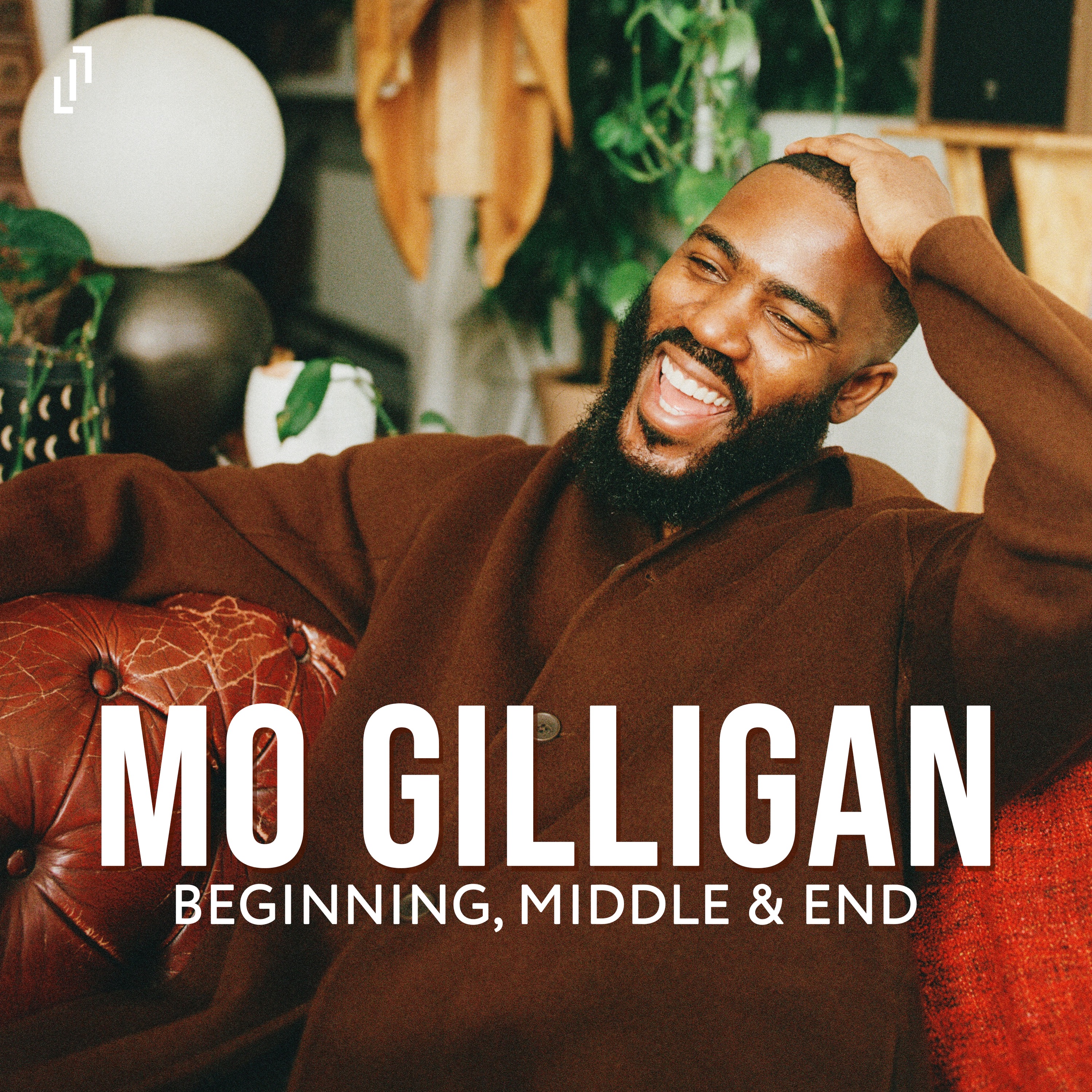
- Mo Gilligan: Beginning, Middle & End
- EP 109 - Mr Motivator - How Mr Motivator Changed British Television Forever
Mo Gilligan: Beginning, Middle & End16 Sep 2026 · 27 chapters
EP 109 - Mr Motivator - How Mr Motivator Changed British Television Forever
In short
Derek Evans, aka “Mr Motivator,” reflects on how he pioneered fitness TV in the UK, built a brand through entrepreneurship and distinctive styling, and uses “seasons”/resilience lessons from his life to encourage health and hope. He also discusses early life in Jamaica, immigration challenges, and later media/business milestones.
Guests
The episode is a conversation with Derek Evans (“Mr Motivator”). The other speaker is the host (Mo), who grew up watching Evans on TV and interviews him.
Guest background (Evans)
Born in Jamaica (1952). Moved to the UK in 1962. Worked multiple jobs to support his daughter, including office work, stock control, retail/cleaning, and building a concession-based accessory business. Became a fitness-TV personality after starting classes and breaking barriers as a Black male fitness presenter.
Key claims
Podcast trust is compared to TV-era influence; fitness basics and small-muscle stabilization matter; life’s “bad moments” are seasons, not permanent winters; he was blocked by advertisers for months due to race/appearance, then got a breakthrough on GMTV (starting 23 Aug 1993).
Notable examples
Training Lorraine Kelly; appearing on GMTV with jammed phone lines; selling ~1.2M copies of a Vegas-launched fitness video; concession shops in Oxford Street (Jane Norman) starting in 1978; “Bounce Kids” trials in schools; earlier “pop mobility” inspiration; Saga ship chair-exercise sessions for older adults.
Written by AI. May contain mistakes.
Chapters
0:35
Early Morning Routines and Health
A discussion on the importance of health and fitness routines.
“And he said why do you want to bring in these things that look like guns into the country?”
3:00
Lessons from Jamaica
Reflecting on the simplicity and lessons from life in Jamaica.
“But you're right, the basics are important.”
5:00
Arriving in the UK and First Impressions
Experiences and challenges faced upon arriving in the UK.
“And when my adopted daughter decided to come to the UK and left us behind, we came up in 1962 after the wind rush and stuff like that.”
8:00
Overcoming Prejudice and Building a New Life
Discussing challenges of prejudice and personal growth in a new country.
“It kind of, again, dictates how your life's going to be.”
11:30
The Seasons of Life
A metaphorical discussion on life's ups and downs and resilience.
12:00
Work, Family, and Responsibility
Reflections on balancing work and family responsibilities.
“What was the weather like for you when you first came over here?”
14:00
Struggles of Parenthood and Responsibility
Exploring the challenges of parenting and the sacrifices made for children.
“And it was, in those days, the computer room occupied the whole basement.”
17:04
Lessons from Upbringing and Parenting
Discussing the impact of upbringing on parenting styles and the importance of love.
“The most important person in any company is the cleaner.”
19:06
Changing Social Norms and Respect
Examining how societal changes affect respect for authority and personal behavior.
“Because I know what it's like to put food on the table but this don't seem like a thing that I feel like it can even put food on the table let alone provide you with an income do you know what I mean?”
21:08
Entrepreneurial Journey: Starting a Jewelry Business
Sharing the story of starting a jewelry business and early entrepreneurial efforts.
“It's changed in a way in which we, the kids don't know where the boundaries are.”
Show all 27 chapters
23:20
Entrepreneurial Journey: Starting a Jewelry Business
Sharing the story of starting a jewelry business and early entrepreneurial efforts.
“Do you keep hearing podcast ads like this one, for example, but always wonder how you actually get involved with them for your own brand or organization?”
23:57
Innovative Business Ventures and Trends
Discussing innovative business ideas and predicting market trends.
“Well, why don't we try in the store, putting one downstairs by the counter checkout point downstairs?”
28:01
The Early Ventures of Mr. Motivator
Explore the initial ideas and challenges faced by Mr. Motivator in the fitness industry.
29:17
Breaking into Television Fitness
Learn about the journey of Mr. Motivator from local classes to national television.
“And the supplier messed up the delivery.”
33:09
Challenges and Triumphs on Screen
Discover the hurdles Mr. Motivator faced in gaining acceptance on television.
“And about 11 o 'clock when I finished training the presenters, I came back and knocked his door and said, Mr.”
36:42
The Impact of Television on Fitness Culture
Understand how Mr. Motivator shaped fitness culture through television.
“Because the thing is, there was no, listen, in terms of black people on television, I think it was Trevor MacDonald, Maura, I think that was, and Lenny Henry.”
40:02
Global Influence and Legacy of Mr. Motivator
Reflect on the global reach and lasting legacy created by Mr. Motivator.
“and part of the deal was any fitness video I did had to be done on location.”
42:00
The Birth of Mr. Motivator
Learn how the iconic persona of Mr. Motivator was created and evolved.
“You know, Disney World, no matter where.”
44:40
Connecting with Fans and Impacting Lives
Discover Mr. Motivator's experiences with fans and his impact on their lives.
“But at the same time, it's like, I don't know if you're on holiday, if you want to be left alone.”
46:36
Resurgence During Lockdown
Explore how Mr. Motivator adapted his approach during the COVID-19 lockdown.
“I want to go back to what you were saying about lockdown because, you know, I felt like lockdown was, for many people, you know, whether, you know, you're losing family members or your job.”
48:50
Recognizing Contributions to Health
Hear about the recognition and accolades Mr. Motivator received for his work.
“saying, listen, we want some of what you were doing recently.”
50:32
Legacy and Future Aspirations
Reflect on Mr. Motivator's legacy and his vision for the future.
“and got my MBE during that time as well.”
53:16
Life Experiences and Encounters
Listen to Mr. Motivator's stories about encounters with notable figures.
“And we've been disappointed by so many people we grew up with who have really kind of pulled the rug from under us because they've disappointed us.”
56:04
Mo's Unforgettable Life Journey
Discover Mo's incredible life experiences and interactions with celebrities and politicians.
“There's these massive doors about 15 feet high.”
58:22
Raising Awareness for Bed Poverty
Learn about Mo's charity initiative focused on addressing bed poverty among children.
“is a charity we launched six months ago.”
59:09
Inspiring the Next Generation
Mo emphasizes the importance of hard work and setting a positive example for youth.
“But I'm going to have you say right now that you're going to come on my podcast.”
1:01:47
Inspiring the Next Generation
Mo emphasizes the importance of hard work and setting a positive example for youth.
“Do you keep hearing podcast ads like this one, for example, but always wonder how you actually get involved with them for your own brand or organization?”

Ask about this episode
Get the gist, explore an idea or ask about something said.
 Claude
On Mo Gilligan: Beginning, Middle & End, what are the key points of this episode?
Searching your listeningTranscript
Automatic transcript. May contain errors.
0:00Mo Gilligan: While every other channel is fighting for your customer's attention, podcasts are where they've already given it. No one accidentally listens to a podcast for 45 minutes. They choose to be here. They trust the voice in their ears. And when that voice talks about your brand, it doesn't sound like advertising. It sounds like a recommendation from a friend. Acast gives you that trust at scale. Digital precision, post-read authenticity, and performance data that proves it worked. Don't fight for attention. Buy it with Acast. Learn more by visiting ACAST.com slash advertise
0:35And he said why do you want to bring in these things that look like guns into the country? Why don't you have a slingshot and do the same thing? I said it's not the same thing
0:49I like just hit me with anything you like I have nothing to hide
0:53Mo Gilligan: Yeah Nothing to hide But I like to be prepared I like to I do a lot of prep before You never did no prep on me. 100%, I swear on my life. Yeah, well, you can swear as much as you like. This conversation's got to go all the way down the road. You're going to talk about anything you like, right? Those questions, you might as well chuck them out the window. No, I've got some good ones here, you know. It doesn't matter. Probably some simple answers to those. I've got some good questions. Do you really wake up at 5 a.m. every day? Yeah, I actually only survive on five hours a night. Any more than that.
1:21I've got a headache all day. Yeah. So I generally don't go to bed until around half, 11, 12 o 'clock. and then I'm up at about 5.15 and at 5.15 I get ready for training because I do a lot of online classes my wife and I we work out every single
1:37Mo Gilligan: day and that's you know that is critical Mo for every single person I mean you are a younger guy and there's nothing better you can do for yourself forget earning money than look after your health too many people leave it miles down the road and when they arrive wherever they arrive they're looking around they're thinking where's my health and then they're playing catch up yeah and so i've always employed it as part of my life before television this was always part of my life yeah i i think as i've got older you know for me it's the small things where recently you know my daughter was in um was it like like a baby carrier yeah and i was holding it a certain way which normally is fine and i felt this at the bottom of my back yeah and my back was mashed and i was like i need to one i need to be stretching and i do work out but i think it's i think sometimes you do a thing where and i'm only speaking for like me and some of my friends where we'll be like yeah you know we're doing pull-ups because it's the thing or yeah you know everyone's running now whereas it's like i'm like i gotta do the foundation stuff i gotta go back to stretching yeah because Because, see, men, the one thing that happens is that we all get influenced by the surroundings, right?
2:52So when you go to a gym and the guys are lifting heavy weights, what do we want to do? We want to lift heavy weights. If everything's to do with chin-ups and stuff, we all want to do it. But you're right, the basics are important. If you're doing weight training and you're using heavy weights, those smaller muscles don't get used. Because they can't manage the heavier weight. So you use the major muscle. And I say to people, if you really want to get definition in your body, you really want to look good, use small weights, loss of repetition, because that way you engage those smaller muscles, which supports your body better.
3:25So, for example, when you're carrying that baby carrier, right, it would not be a problem, right, because those smaller muscles are there, stabilizers, and they keep you upright. But a lot of men won't do that because they want to lift it heavy. They want to break a muscle. They want to, you know, want to walk out, rip big arms, and they walk like they're flipping on steroids.
3:47Mo Gilligan: So you're born 1950, right? 52, mate. Is it 52? Yeah. 1952 in Jamaica. Yes. Now, when you think back to growing up, what do you like? What was life like in Jamaica in 1950s? Well, you know, there's a simplicity in life that existed in those years. And the simplicity was, you'd see my adopted father going off to the field to go and plant his yam and banana and everything else. And my role was to actually put the chickens out and the goat and the cow and stuff. Simplicity. But the foundation stone for what makes you who you are. And we all look back and we go, boy, it was tough in those days doing that.
4:28Actually, you know what? It was simpler and easier. Nowadays it's tough because you've got so many things hitting you from different angles, whether it's internet, social media, don't have close friends. So what you did in those days, you had so many people around you who you could call the support mechanism, the extended family. They would look after you, right, and make sure that you're, you couldn't go out and be naughty. You couldn't go out and do anything wrong, right? And so for me, right, that was a foundation stone for what made me who I am. But you don't know where those days are going to lead anyhow.
5:01And when my adopted daughter decided to come to the UK and left us behind, we came up in 1962 after the wind rush and stuff like that. We came up, right? And when we came up, I met white people. I didn't you know I didn't have television don't forget in those days right radio was almost non-existent right so all you read was in the paper you'd say white people in England the streets of London or England are paved with gold you come up under your expectation is a white sheet of paper and it wasn't like that but also people were really kind of curious about you when you arrive curious because you know all they'd ever seen was what was in newspapers and here you are now on their doorsteps right and so it was for me jamaica was just a wonderful time i look back at jamaica fondly i went back there to live later on in my life we lived there for about on and off for about 10-15 years right but honestly i was glad to come back here yeah because there's an organized way life is there is uh it's not shoot from the hip there's a way in which people listen to you there's a way in which people give you opportunities right and those opportunities can lead you down a road and so that's how my life was you know it was the foundation stone for what makes me who i am
6:14Mo Gilligan: yeah and you and you say that you left there to then come here yes and you speak about like what i guess you know you thought your expectations were yeah did they live up to your expectations or did it or was it very underwhelming right i don't know whether i had so many expectations i think what it is right coming here because of the vision you've created nine years old i'm guessing I was nearly 10 when I came here. Because in your mind, right, is all these images that you've created based on the information that you've read. You paint a picture, don't you? And it's never the same when you arrive anywhere.
6:50I think my expectations started developing after I had to deal with so many issues when you arrive here. Prejudices was quite rife. But the wonderful thing about it is that people would say, why didn't you tell me you were black, right, before they meet you? and uh you know they would say well we wouldn't employ a black person in this position and stuff like that so you had all those things to deal with and you realize ignorance was was there and it's because people didn't know any better um and so rising above all that was really kind of difficult especially when no one gave me the ammunition i didn't have any examples i could follow i couldn't go well let me you know put my life uh get my life to follow that certain person out there because don't forget we had no television no radio so you really didn't have any examples to live by nowadays youngsters can go you know what i want to be like bruce willis i want to be like you know jane fonda i never had any of that i had to almost create this person who did i rely on me i relied on me and so when survival became something that i had to really put in place and when i say survival when you become a one-parent family and you're the one left with looking after your daughter.
8:00It kind of, again, dictates how your life's going to be. But here's the interesting thing. All the getting up early in Jamaica, all the putting out the goats and looking after pigs and stuff like that became the foundation stone for when I'm looking after my daughter, because what do I have to do? Get up early, get her ready, right? Drop her off with a child minder, go and pick her up. You see what I mean? So life has a way of kind of taking you around in the circle, but you realize that if we embrace those things that we go through and don't go me no one do it do it because there are lessons to be learned yeah and i and i guess like life is
8:33Mo Gilligan: you know life is ups and downs but i guess it's the the ups are gonna come down and the downs always so you have to be i always look at it as like a roller coaster yeah even like you got work wise you got career but life is like you're gonna have times you're like wow it's flying it's like when you're first on that plane where you're like wow this is great taking off i can see everything and look down on it. You're like, wow, everything looks so small, so high, but then get that turbulence. And I, you know, I fly a lot, but the one time I'm ever scared on a plane is when I'm landing. Sure. And I think that's the thing of like, oh, it's so fun seeing the clouds.
9:09Mo Gilligan: But something about landing for me is when I start to, oh, let me tighten the seatbelt. It gets real. Yeah. It never worries me. But you see, I say to people, listen, the one thing I'm able to do is I do a lot of public speaking and stuff like that. is to talk about the seasons in our lives, right? Every one of us is going to have a winter that we're going to have to deal with. When the weather's not good, when you can't get anywhere easy, that's part of the seasons of our lives. And, but then you come to the spring and we'll start flowering again. So I say to people, if you're close to the edge and you feel you can't go on, and we know what has happened with lots of people dying by suicide and stuff like that, because they get to the point where they can't go on.
9:50There are little lessons you can put in place to remind yourself of how important you are. And a visual thing I always say to people is, listen, imagine those trees out there. Every autumn, they lose their leaves, don't they? They color change, but it's still beautiful. And then when all the leaves have gone, those trees still stand up tall. Why do they stand up tall? It's because they know that in the spring, they're going to flower again, right? That is the same thing with us. what we're going through in life right is only not it's not a bad life it's a bad moment that's all it is and that is part of the seasons of our lives and summer will come spring will come and when autumn come it can still all be beautiful yeah right so if we look at life like that you'll realize that and i've said this many times difference between school and life a school they teach you a lesson and then they give you a test but life has a way of testing you that then teaches you a lesson.
10:51And if we look at our lives, we go, you know what? There's so many things I've got to be grateful for. I've got to stay here. There's so many people who depend on me, who love me. I've got to stay here, right? All the kids and all those people out there whose lives I've touched, they rely on me. So I'm going to stay here. But on top of that, every day I'm going to look in that mirror and I'm going to go, you know what? I'm doing all right. And we all need to do that because people nowadays don't turn around and say, you're doing great, Mo. they don't do it we see it in the line in terms of our the reaction to a post that we've made but it's not the same as someone looking in the eye and going you know what mo you're great you're brilliant i love what you're doing and best guess what because of you mo i've changed direction because of you i feel so much better and i keep telling people that the one thing we should strive for in terms of how people should view us isn't it great if someone comes up to you and go because of something you said because of something you did notice those words because of if everyone said that to us because of you I've changed direction because of you I feel better because of something you said you did and I feel better isn't that great what a legacy to leave
12:04Mo Gilligan: yeah yeah yeah I'm going on no but it's true so nice feel everyone likes it when you feel good there's no better there's no better thing than we all know what it's like when a random person in the street gives you a compliment. Oh, it comes and cuddle you and go. Yeah, it could make you a whole day. Oh, for sure. Someone liked my shoes. Thank you so much. You speak about the weather, right? Yeah. What was the weather like for you when you first came over here? Was that a culture shock? Oh, tell me about it. You know, don't forget, you can talk about snow, but until you've felt it and seen it, right, it doesn't mean anything, does it?
12:37Right? And seeing that and people wrapping up and your hands burning away and no one warned you, don't wash your hands under hot water when they're cold because the hot takes, right, really hit you. All those experiences, it's almost a bit like I imagine that if you hadn't seen anything and because your eyes are closed, you've never seen a person. So when someone says to you, that's black, that's white, that's red, it means nothing to you. And then all of a sudden, right, your eyes are opened and you're looking at that white person and someone has to tell you that's a white person because that's not what you imagined.
13:13And I think that's the same thing with everything in life. We are having to almost learn again or learn a different language to be able to go, oh, that's what snow looks like. Oh, that's what in the freezer looked like. Because don't forget, in Jamaica, we never had a fridge. What you did was you corn your food, man, you put some salt on it, right, to make sure you keep. And if you had the pork sitting on the table, right, and there was a bit you didn't put any salt on, and a fly landed on it, right, you see the maggots, what do we do? We take it inside, right, we scrape it off, right? we put some hot some heat against it get rid of the magnet and you cook it and they reckon that's the sweetest pork in the world i don't eat meat now because i know better yeah you've had a lot
13:56Mo Gilligan: of jobs haven't you before yeah you do what you know what were some of those jobs you know what when you're surviving and this is it i took responsibility for my daughter right because number one my ex-wife couldn't manage at the time we were both young we had a daughter at age 20 couldn't manage so i said i would look after her even though it would mean my giving up on all my experiences that most 20 year old want go out partying clubbing all that kind of stuff i gave up on all that because i wanted to put around my daughter exactly what i didn't get because i was given away at three months of age so i wanted at least a father i could look up to or a mother if both can't be together one so i did whatever i had to do yeah i remember one of the first jobs i got after the careers officer told me, Evans, all you got me good for is to work in an office.
14:45My first job was in an office. And it was, in those days, the computer room occupied the whole basement. So if the office was 100 feet long, in the basement was a computer room occupying 100 feet, right? It was incredible. Those big mainframes and stuff like that. So I did that for a while. And then I learned about stock control and I was working for a company doing stock control. But I did whatever I had to do to put food on the table because what I never wanted was my daughter to be ever hungry. There were nights when, in fact, yes, I had to make a decision, feed her or feed me. And there was a point at which we were homeless, right?
15:21We were outside an Arsenal Stadium up the road from, that was the homeless family unit. And I'd be up there with her waiting to be given somewhere to stay and they'd give us a bed and breakfast for the evening where you'd be sharing, you know, five or six families sharing the same kitchen, bathroom. And that was our life. that's what we had to do right so i did whatever i had to do i mean i'm working for tesco stacking shelves next minute i'm in cna cleaning the toilets it didn't matter i did whatever i had to do i had a building business right i honestly i did every single thing to make sure that we had
15:56Mo Gilligan: bread on the table and that was important for me did that come from a an instinct of fear in a sense of, you know, you've come from a country where you know what it takes to survive. So was there an initial fear of like, I need to just do whatever it takes. One, to provide for your family. Sure. But two, like, I know I've experienced the bare minimum of life. You know, once you've been down there, right, there's only one way to go. You can't go any further down. It's up. So how am I going to get up? And the one thing I'll always remember is I read some things about Maya Angelou and Maya Angelou said, people may forget what you say and forget what you did, but they won't forget how you made them feel.
16:42And that's always remained with me. But also I knew from that day one that if you work hard, if you're considerate and kind, amazing things can happen in your life. And those things resonated with me all along. So therefore, Martin Luther King said, if you're going to be a dustman, be the best dustman out of the world. So when I'm cleaning the bins, I'm not thinking how dirty this job is. But guess what? The most important person in any company is the cleaner. When the cleaner's away, no one will go and empty the bin. But when the MD's away, everybody wants to be the MD. So I say to myself, if I meet a cleaner, I want to know their name.
17:17I'm always, I want to say hello to them. Are you all right? Because everyone ignores them. But that's how important our role is out there. Everything we do is important in the scheme of things. so whatever i did i did it to the best of my ability someone could go he's lazy and he doesn't really complete the job he's not neat he's not tidy no no no for me that was important where did that go back to upbringing in jamaica yeah because my dad would reprimand me he'd sometimes beat me before i did something wrong and i go what are you beating me for he said just in case you go and do something wrong that's what you grew up with did it did it harm me no i tell you what i gain from it it meant that with my children i am so loving to them because i don't remember my adopted dad ever holding me on his knee and going i love you so what i do with my kids tell them i love them often cuddle them often yeah right i think it's important that every single child sees the love from a parent and because that's the fuel that keeps me going till now my youngest daughter who's 30 works for me now right you know it's great you know my eldest son my only son actually he's in LA he's doing really well you know and he's totally independent now so for me it's so important that what we do is we do what we need to do but parenting is critical and Mo if there's a parent out there who's not looking after their kids and giving them the ammunition I'm not just talking about food and education I'm talking about love and attention and your time that is so important and unfortunately we as a race i'm not very good at that we're good at reprimanding
18:55Mo Gilligan: but we're not good at showing the love yeah yeah i agree i mean did your parents ever i mean they probably do now because they're younger parents but in my day look my parents never never never call me in and go you know what i love you never look me in the face and go you know what derek i really think you're amazing never did but i do it to my kids only yesterday i sent a message to my my daughter i said you know uh your brother i just heard from yesterday he's doing really great in the great space i'm so proud of him and i'm proud of you yeah that's that's deep no that's very deep man i think it's a tough love thing i guess it's this learned behavior in some ways yeah and i again like what you know even with my parents with the job i do doing comedy I think there was always a fear behind it of like Can you make a living?
19:47Mo Gilligan: Yeah, can you pay the bills off this? Because I know what it's like to put food on the table but this don't seem like a thing that I feel like it can even put food on the table let alone provide you with an income do you know what I mean? And I think that's where that tough love comes because I guess this is learnt behaviour from past parents Yeah, we are influenced by our total surroundings come on, you know But here's the opposite of that. You can still live in a house with a murderer and you don't have to be a murderer. You can live in a house where there's no love and you don't have to be the person who don't give love.
20:22Because we know better. There's so much information on this little thing called a phone and stuff like that, that we can readily tomorrow go, if I can look that up. So our behavior pattern, right, is something that we can control. We can definitely control how we are, unless there's a screw loose. But in general, we can. And I think respect of law and order, teachers. I mean, come on, in my day, if the teacher saw me down the road, I'd have to say, yes, sir, how are you, sir? Nowadays, you walk by the teacher. Nowadays, parents go into school to beat up the teacher. What kind of nonsense is that?
20:57Yeah, some kids call the teachers by their first name. Yeah, no, it could never happen. The police, the police was like a god in our day, but he was always on the beat. It was walking by. You'd seen walking by. So we have changed. Societies change, not for the better. It's changed in a way in which we, the kids don't know where the boundaries are. We don't have to, when they've committed the crime, go, there was the boundary. It was before. We knew it. Because guess what? If you're outside and you made a mess of things, before you got home, your parents knew, boy, that you're up to something.
21:30Mo Gilligan: Yeah, there was no, no, you couldn't even text him. Straight landline. I heard a really interesting fact that you owned like, is it something like 17 like, like jewelry shops? Is that true? Yeah. What I used to do, I was one of the first people to have what's called an accessory shop. So you see the exception shops out there. I learned through a company called Baggage in General, the importance of costume jewelry. And so I set up my own costume jewelry business. And I remember going into Oxford Street, there was a company called Jane Norman. Yeah. Right. Now the guy who ran Jane Norman is a guy called Norman Freed, the owner.
22:08And I went down to see him one day and I said to him, listen, I've got this idea for doing a concession business and I'd love to start it in your stores. He said, what would you be selling? So I had this tray full of hair combs, necklaces, right? Belts and bags and socks and scars. And I said to him, I want to set up a unit within your store selling exactly that. Would you rent the space to me? yeah he said i haven't got a clue what you mean but we've got three shops in oxford street one at 171 we'll give you that it's the smallest shop you can have a small area at the front of the shop you have to get your own um display cabinet and stuff like and set it up yourself i said fine so i went away got the display unit set it up and the first week we took a thousand pounds
22:51Mo Gilligan: he went that's brilliant so what year is this then this is going way back to 1978 38. So I said to me, listen, on the basis of how well you're doing here, right, I've got another shop which is just by Selfridges. 388 Oxer Street. He said, that one is going to be amazing. You can have a bigger stand in there. Went down there, set it up. The very first week, we took like two and a half thousand pounds. Really? Yeah. He said, okay, listen, this is going so. Do you keep hearing podcast ads like this one, for example, but always wonder how you actually get involved with them for your own brand or organization?
23:29Well, it's easier than you think. We're Acast, and we give you the platform to do it all yourself. Browse thousands of popular podcasts, choose the shows that match your perfect audience, set your budget and launch. And if you want a hand, our podcast specialists are there to help you launch with confidence. This is podcast advertising without barriers. Get started at acast.com slash advertise. Well, why don't we try in the store, putting one downstairs by the counter checkout point downstairs? We did that. And we took almost the same money as upstairs. So word started spreading about what I was doing with concessions.
24:11And I used to not have, I used to have a sprinkling of fashion items and fashion colors. But all of it was, I'd go to the old warehouses that supply a costume jewelry, which was Berwick Street. And I'd go into their warehouse and buy all the old stock, Diamante and black and gold. And I set sections up on the counter with a sprinkling of the fashion colors. And that's what I did. And before you knew it, Topshop was opening in Brent Cross, big unit. so i spent thousands set up a big unit i've got all the pictures at home of it so big unit in top shop before i knew they wanted me to actually go into other stores they had then there was a chain called snob snob was actually in oxford street back in oxford street so at one time i had four units in oxford street and then set out by um knightsbridge had jay norman by knightsbridge top shop down by brent cross out of london in lewisham and place like that and i made one mistake was a mistake this is all instinct that drove the business and the lesson i learned is to thine own self be true don't be distracted by what other people say i got fancy we're taking a load of money so i thought okay there were some people called fashion forecasters and they produced a booklet which indicates what the fashion's gonna be like for next year so i commissioned them to do this thing and they came back with a book with all the samples of fabrics and colors and stuff like that and they said look next year is gonna be khaki and green is gonna be the main colors uh so i went off to france which i used to buy all my hair accessories from bought a load of combs following those colors went to italy which we had got all my belts from spent 30 000 pounds buying buying belts for all the shops and this is what in the 80s right this is a late 90s late late 70s yeah yeah but all the stock 30 000 pounds so in today's money a lot of money
26:03Mo Gilligan: that's almost like let's say like the equivalent of like a hundred grand I would think so yeah I think so bought all the stock brought it in right and guess what I was a year too early right France the fashion forecasters which I paid attention instead of going by my instincts I went followed them and the stock didn't sell because accessories go with whatever is in fashion and so if the colours are not khaki and green the colours aren't going to work whereas before as I said I was playing it safe if I used to buy diamante and it was silver and black and some gold, and I used to have a fashion color sprinkled in, that killed me.
26:40The business went broke. And from there, you saw these accessory shops. I was well before accessory shops because I was into concessions, shop within shop.
26:49Mo Gilligan: So you could have been like accessory. Oh, yeah, yeah. Wow. Oh, yeah. I was there before all of them. So that's like some real early entrepreneurial stuff. But that's me. Do you know what I mean? like because from what you're saying before of like well i had to do whatever it takes to put like food on the table but like having 17 shops but like on oakford street i don't think people realize it's not i don't feel like it's not the oakford street of now i feel like oakford street now is a lot of american candy stores and it's just every big shop is there now where i think even if you went 10 years ago it still felt like 11 yeah there was a lot of smaller shops and stuff around right no no no i listen i i'm really good at reading what is the trend is going to be i mean when i went to jamaica for example i set up a miniature go ape before go ape we had zip lines we had four-wheel bikes right we had paintballing yeah we had to jump through hoops to get paint balling in the country because no one was doing it and the government said you're glorifying gun crime i'll always remember right we did a pitch to um the tourism officer and he said why do you want to bring in these things that look like guns into the country why don't you have a slingshot and do it it's not the same thing so we had to produce this massive report went to america looked at all their paintballing facilities produces massive report this thick and i dropped it off at the um prime minister's residence and said look i keep getting get getting turned down by the tourist board three weeks later they gave me my tourist board license zip line they said to me why do you want to take people up in the air traveling across a valley no one was doing this i can hear it you know you hear it can't you right well i mean ziplane i was ahead of my time and in this country for example when i when i started on gmtv in 93 there were loads of things that i came up with which was ahead of this time one was miniature bouncers right i wanted to put that into schools because i felt that this could be a way of getting kids to have fun bouncing right without and thinking this is exercise right and we did trials in member in harzland i got the deputy head to try it out she lost 17 pounds in three weeks of weight teaching the classes just bouncing on the bouncing is brilliant right so we went to the education show and we set up the education and i came away with 670 schools who wanted my bounces on it was called mr motivator It wasn't Mr.
29:18Motiver then. It was called Bounce Kids.
29:20Mo Gilligan: Oh, wow. Bounce Kids. And the supplier messed up the delivery. When the bouncers came in, the legs were splaying out every time you bounce on them after too much usage. And so it killed my business. But then you say, because you've always been ahead of the time, but I feel like, you know, if we go back to what you were saying, you know, was it 93 on GMTV? You're live to the nation. like what's going through your mind at that time? Because, you know, I don't feel, again, I grew up watching you on television, you know, and that for me, it was the norm, you know, watching, you know, before I go to school and seeing some fitness on the TV from, for me growing up, it was, it was the norm.
30:03Mo Gilligan: But what was that like for you? Like, you know, when you're pitching that to, you know, whether it's GMTV or ITV and convincing them, you're like, listen, I want to do fitness. Yeah. Well, you know what, my driving force, Mo, was that number one, I saw people before doing things on television in the 80s. In the 80s, you had the Green Goddess, you had Mad Lizzy. Yeah. Right. And for 10 years, I used to go down to the TVM studios down in Camden Lock. And I'd say to Bill Ludford, who was the editor, I said, look, having me do fitness on television is going to be different. When it's a woman doing it, you critique her thighs, her butt.
30:36When it's a man, you don't critique it at all. He said, no, no, no. We have an agreement with Mad Lizzy and blah, blah, blah. It won't work. It didn't stop me. This went on for 10 years. tvm disappeared and then gm tv took over when gm tv took over they had all kinds of people doing little bits of fitness but nothing really yeah so i was determined now of all the luck that have it i walked into a leisure center in harrow where they were i heard this noise coming from the corridor went down the corridor and there were all these people doing what was called pop mobility and i was transfixed so every tuesday i was back there sitting at the back of the room watching these ladies doing pop mobility.
31:14And at the end of the evening, one evening, I said to two ladies at the front who I saw were doing really well, would you like to do some classes for me? And they said yes. I didn't have a hall, but I went to Kneesden, found a church hall, set up my classes, learned what they were doing, and very quickly I got rid of them. Word started spreading about Mr. Motivator's classes. I was having classes in Mill Hill where 125 people would turn up regularly, twice a week, right? Right. Men and women, we do tough. We'd be doing an hour and a half classes right there. But that spread. Before I knew it, the British Heart Foundation said to me, would I like to go around the country teaching people about the importance of exercise?
31:53So I said, yes, they created these posters with exercise for life with Derek Evans. right so i started going around the country teaching people only what i'd learned right by researching i went to the states went to the international dance and exercise association learned a lot about exercise come back with that ammunition and then i turned it into my pitch with these people so my classes and everything and then i get a call one day from lorraine kelly not lorraine kelly from um glory honeyford saying we've got a program that's happening on a sunday They call Sunday Sunday. Would you like to come on here and get some men working out?
32:29I said, yeah. So I got 12 guys together. I dressed as a sergeant major, went on there, drilled them, star jumps, burpees, press ups, a whole lot with me telling them, get up, you. Don't eyeball me. At the end of it, right? Gloria Honeyford said, would you like to come and train me? And I said, yes. Not realizing, I lived in Mill Hill at the time, that she lived all the way in Kent. And three times a week, I had to travel for an hour and 15 minutes to go to her home to train her. but I felt like there was something fueling me and after I started training her she said you need to be on television and one day and this is the opening thing that got me on television I get invited by Chris Tarrant who's doing a show up north called the main event and he wanted three fitness people on it they'd heard about me I was one the green goddess and mad lizzie and we're on the airplane going north and I'm sitting next door to Eamon Holmes and Eamon said to me I've heard about you they're both from Ireland he and Gloria Hunford would you like to come and train me I said yes so that would see me down at GMTV most mornings at nine o 'clock waiting for them to come off air and I'll start training airmen and before I knew it Lorraine Kelly was to come down the weather people just come down so I had all the presenters working out with me and they said would you like to you know I said look they said there's every opportunity if you're getting on television but we don't know when and one day i'm sitting in the reception waiting for them to come down and i see this guy walking in big belly i walked over to him i prodded him belly i said listen mate you need to sort that out i didn't know that he was a program controller of gmtv so in those days you know you could wander around the buildings anyhow so i found out he was on the fifth floor yeah the next day i got my exercise bike wheeled it into his office and ran away and Left it.
34:15Yeah. And about 11 o 'clock when I finished training the presenters, I came back and knocked his door and said, Mr. McHugh, God bless his soul, he's no longer with us. You need to start training.
34:25Mo Gilligan: And he did. Oh, wow. And then he said, we need to get you on television. Anyone who can convince me to exercise can convince the nation to be doing something. But trust me, the advertiser said, no, we won't advertise around a black man doing fitness on television. It has to be a blonde lady with two kids. That's what they said. Oh my God. So for about six months, they kept saying no. And then one day, I'm waiting for the guys to come in. I just wandered upstairs, right, onto the main production floor. And as I'm walking by this lady going down to the studio, I heard her say, and her name was Lollingham, I heard her say, is that the Key Fit Association of Great Britain?
35:02And she said, look, I want to talk to you about covering for our lady who's going on holiday. And I found myself kneeling down by the side of her. And I said, give me a chance. And she said, I've heard about you, but the advertisers won't advertise around a black person doing fitness. So she said, well, things have a way of changing. Leave it with me. Two weeks later, she called me up and she said, listen, we've decided we want to give you a go. Come in, we want to find out what you're going to do. So I walked in right to the studio and she said, you've got to rehearse it. I said, I don't rehearse, I freestyle teach.
35:37She said, but the directors need to know when, I said, listen, let me speak to the camera and I'll tell the camera biceps I'm working my legs I'm working and he'll follow my instruction he says well we've never done that before we'll try it 23rd of August 1993 that's when it began and the phone lines were jammed
35:57Mo Gilligan: and they were jammed what was people being like people calling up saying what more oh wow and so all week on the Thursday on the Friday I remember I did the last slot and I used a Bob Marley track when I worked out and when I came upstairs the whole production office. There was about 100 people and they stood up and applauded me. And Mr. McHugh says, can you come into my office, Derek? I thought they were saying goodbye. He said, we want to give you a contract to work with us. I said, no, I'm not interested. I said, no, I'm only kidding. Wow. And that was it. So, you know, we're talking, this is 93.
36:31Mo Gilligan: Yeah. And like the phone lines are jammed. Yeah. When you get that contract, what's going through your mind at that time? Is that, is that realizing that, oh my God, my life is going to change now forever. I didn't know in what way. Because the thing is, there was no, listen, in terms of black people on television, I think it was Trevor MacDonald, Maura, I think that was, and Lenny Henry. Yeah. That was about it. I was breaking the mold because there's the way in which black people were perceived in those days. You're either a comedian or you're a newsreader. Yeah. And I was breaking the mold.
37:02And trust me, I had loads of problems because I never expected the level of popularity.
37:07Mo Gilligan: Yeah. I never expected till this day that I'll have the same, that I can't go anywhere, right? Because there was no one to really, really follow. But you realize that growing up with people through those formative years and all the kids who used to grow up with me, they're now the decision makers out there. And so they go, we've got a music festival. We'd like to come and do the music festival. So when I do music festivals and I open the main stage, you know, like I did one on Sunday at Camper Calling, 15 ,000 people are moving. but we're not doing a workout all i'm doing is i'm just doing some fun movement to music right and it's just amazing all the music festivals i go there and normally open main stage to bring people in right and we get from the cradle to the grave taking part and it's brilliant it's great when you start you know being a face on national tv yeah you know in the night and i always think back at the the 90s for me is my childhood as well so when i think of when I look back now and you think of like Britpop, you know, you've got the change of also like government from Fat Char to Tony Blair.
38:11Mo Gilligan: And also you just think of like when it comes to film and media wise, and you're in the forefront of that and you're doing fitness as well. You know, what was also that time like for you? Because I guess there must've been approaches, you know, that must've like, in terms of your expectations, you're like, It was off the charts. In fact, I tell you what happened was I lost so much weight because I was being sent everywhere. The station was at the bottom of the ratings when I joined them. And automatically they were beating Channel 5, which had Johnny Vaughan on there. They had... Oh, Channel 4, Big Breakfast?
38:51Big Breakfast. Yeah, yeah, yeah. And so my whole thing went through the roof. I brought up my...
39:00Mo Gilligan: I started Ornod in 2013 and we make bike apparel. The best part of Shopify for me is our ability to run the business as essentially non-technical people. We're able to admin everything on the back end, front end, and sell things online easily. If Shopify were a bike accessory, I think it would actually be the bicycle. It's the thing that you do the thing on. We run the business on Shopify. Start your free trial on Shopify.com.
39:56Mo Gilligan: Shop now at QVC.com Our first video in 1993, which we filmed in Jamaica, and part of the deal was any fitness video I did had to be done on location. I didn't want to do it in the studio. So all my six fitness videos were shot in different islands or in Australia. And I remember doing my first video, coming back, and to launch it, the station said, look, we've got an idea to launch it. Why don't we fly you to Vegas? So I went down on the strip in Vegas. and they closed off an area of it. There were police all around. And I did a live transmission at 2 o 'clock in the morning because of the time difference into the station here, right, to launch the video.
40:37That video went on to sell about 1.2 million copies. I still have the record for the most amount of videos ever sold on fitness video. At that time, it was Unforgiven by Clint Eastwood came out and video couldn't touch it. There was people like Jane Fonda, Cindy Crawford. Couldn't touch me. And people are buying this.
40:59Mo Gilligan: Are they buying this like all around the world? Mainly UK. I mean, because the VHS was really here. Yeah. Mainly here was this country. And till this day, there are people who say I have that video because we did a whole range called BLT. And every one we released, 250 ,000 copies. Now, I think how powerful that is. We didn't have social media. Yeah, yeah, yeah. But it proves how powerful television was because people would be watching television. And I was part of their breakfast cereal. I was part of kids would say to me, you presented Power Rangers program. Now, that was an interesting thing.
41:34I used to fly around the world doing these items. So we go to Singapore, we do eight, two and a half minute items on the history and the culture of the place. And then that would slot in before Power Rangers. Oh, my God.
41:48Mo Gilligan: I fucking I'm so I remember that. Oh my God. So I say, remember those guys are experts. Yes. Don't copy them. Oh my God. That is such a throwback. Yeah. And it's time out with Mr. Motivator. Yes. That's what it was called. Yes. Yeah. We went everywhere. Mexico, Italy, doesn't matter. Or around the world. Wow. We did loads of them. You know, Disney World, no matter where. And don't forget, no matter where I went around the world, it was like open door for me to come in. Right. Which is great, you know. But no one can prepare you for that. because we had to have two or three people at GMTV answering the mail that came in the mailbox.
42:24Yeah. Right. It was everything from, you know, people sending lucky coins or their knitted jumpers and cardigans and little dolls with me on it. That's how it was in those days.
42:36Mo Gilligan: Your look is so iconic as well. And I guess that also comes into play with when you talk about, you know, how you had an accessory shop as well. Was that also part of the makeup as well when it came to like my image? yeah that was really important right because i looked at what had gone on before and the only thing you remember about the previous fitness person the only one you really remember was a green goddess why do you remember her she was green and she had blonde hair so i spent some time working for a company where in the marketing department and they exposed me to what was called the essentials of um marketing and it was a course that covered production distribution marketing and that marketing element fascinated me because Henry Ford said that the man who doesn't advertise himself is like the man who turns off the light because he thinks he'll save money.
43:26You've got to advertise. You've got to advertise. Right. So how do I advertise myself? Well, let me tap into what I know. Colors matter. Right. Attitude matter. Music matters a lot. Because if you get the right music, people are tapping their feet and don't realize they're buying into exactly what you want them to buy into. So I incorporated all that. And the image of Mr. Motivator, the name came about purely because I did a slot on this morning and Judy Finnegan, who was a presenter, I heard her say in my ear, let's go over to the man who motivates everybody. And that straight away made me think Mr.
44:01Motivator.
44:01Mo Gilligan: And so I registered it straight away. And so Mr. Motivator was born, but he evolved. And initially it was the tight unitard was because I just felt that would be a good look, but initially it was black. Colors came in and then started wearing the odd socks. Then I wore the bum bag. The reason why I wore the bum bag is because the mic used to be in my back. So if I was doing fitness on television and I was doing the sit-ups, it was in my back, it was really uncomfortable. So I came up with this bum bag, which meant that you could put the mic in the bum bag and there were two little areas at the back where the wires come out.
44:38And that way it was never in the way. And that's how that was born. The cap was born And I've evolved from then But colours Makes me feel good mate
44:46Mo Gilligan: No because even When we first met So for anyone listening We first met on a He was on a flight Of going to New Orleans And I think I remember seeing you Going on the flight And I've said to my friend Who you met as well My friend Jovan And we go everywhere together And I was like Hey bro It's the motor vehicle And that was purely because Of how you dress as well And I was like Hey hey I want to meet him Because I got a bit starstruck because you're someone that, again, I've grown up watching that I massively respect. But at the same time, it's like, I don't know if you're on holiday, if you want to be left alone.
45:19Mo Gilligan: I'm not sure. Go to the same place as you. Do you know what I mean? So, but at the same time, I was like, I really want to meet him. But at the same time, I don't know if he's working or is he not and stuff. But then because you were dressed so like colourfully, I was like, it's so inviting. Do you know what I mean? Yeah. How do you find like people's reaction? Because, you know, you must get stopped all the time. This is how you, you haven't put this on for anyone listening you didn't get changed this is how you dress today you must get stopped all the time all the time but it doesn't really matter because during lockdown I tried going out shopping dressed in dark colours with my mask on and as soon as I open my mouth people go that's Mr Motivator right it doesn't matter and I always say to people make time I'll make time for you I'll never say no right in fact when we met I was joining the Saga ship I'd actually yes I'd actually sailed on it I sailed on it from England to the Caribbean it was then leaving the caribbean going over to southern america and stuff like that so i flew back to the uk to work for a couple of weeks and then i flew back down to meet it in new orleans i remember you told me this and it was wasn't it like a free month yeah it was a long cruise but i can never give them that much time i still work with them now because to be honest mo the older person in this society needs as much help advice and everything else we neglect them and during lockdown we did we neglected them badly yeah and i believe that i can enrich their lives because i can be an example to them 73 years of age and i can press up 73 times in one go right i mean that's me you know and i want to continue setting an example to every older person out there so saga is really good for me because it gives me a big audience and also on ship when we do we have the biggest room on the ship we'll get 200 people queuing up to get in every single morning i'm in there we do exercise from a chair teaching them to come from sitting to standing balance improving their independence, their dignity as they go along.
47:09And that's a real big thing for me.
47:11Mo Gilligan: Oh, that's amazing. I want to go back to what you were saying about lockdown because, you know, I felt like lockdown was, for many people, you know, whether, you know, you're losing family members or your job. And again, we was all searching for whatever we could find. And fitness became such a boom for so many people. You know, we had to really work out in our house. Yes. You know, you couldn't go outside. But you had a massive resurgence during that time. What was that like for you? It was a good time. I mean, look, I'd come back in 2009. I'd come back and join GMTV. And I thought, no, that was a bad mistake.
47:52It's a bit like a relationship go wrong. Don't go back to it. And then I got a call. I'd been very busy anyhow. But in 2020, I got a call from the BBC saying, look, we'd love to talk to you about doing a show with us that we're developing. It's called Health Check UK. and um and so during lockdown um i got a call from i think the first call was from talk talk who said look we're really estranged from our staff the only communication we have with them is via the internet would you could you think of an idea that we could really use so i came up with this idea of why don't we do a 10 minute of movement done on zoom or teams or whatever with a 10 minute talk about the importance of them and why they should look after themselves and why they should keep the faith and realize that they're appreciated by the company.
48:43So I did it. They loved it. And they booked me for a number of slots. And then before I knew it, Google got in touch through their offices in Ireland saying, listen, we want some of what you were doing recently. But the deal is that you've got to do a five o 'clock to the Far East, right? Where you're doing Singapore, India, Australia at five o 'clock. Then at 11 o 'clock, we want you to do Europe. and then in the evening we want you to america to our offices so they give me a list of all their offices and people to shout out managers sales managers and whilst i'm working out i'll shout out to all these people and at the same time i would talk about them looking after your health you know making sure that you're in you know you are important treating yourself right and it mushroomed from there there was a i remember one stage i went to do one in london where they created a big studio for me to come in with um i couldn't bring my motivators i had to do on my own in the studio, but it's transmitting to 15 ,000 people in their offices around the world.
49:43The BBC said, look, they'd like me to, I should do a workout. We should go out to all their foreign, in fact, every element of the BBC. It went out to them because they were all over the place. And it was a talk and movement. So I did that for the BBC. One of the commissioning editors got in touch with me. And it was all about uplifting them, making them feel good about themselves. Right. And, uh, and that's what happened during lockdown. So lockdown was a kind of, wow. You know, it's a bit like the guy who sells umbrellas in the summer, he can't sell umbrella, apart from a few people who don't want the sun on them.
50:16But as soon as it rains, right, everybody wants an umbrella. That's what it was like with me, right? Everybody wanted a bit of what I had to offer. And it was a, it was a great time. And then I got recognized by the queen, for my services to the health and well-being of the nation and got my MBE during that time as well.
50:35Mo Gilligan: Did you really feel noticed during that time? Because I guess it's like, you know, with everything that's going on and you're in such high demand, was there almost this thing of like, wow, I invested so much in myself during, you know, the 90s and being on television and what I do that, you know, we hit a moment of pause and everyone wants to see. It's like you're saying with your analogy with umbrellas that you felt like, oh, I am loved. I am, you know, it's not, yes, there is. And I make people fit and feel good, but like people are actively seeking me out from whether they're saying, you know, I've just watched some of your old DVDs, you know, how did that make you feel?
51:18Mo Gilligan: Besides from everything, because that must feel, because you make so many people feel good. You know, you know what, you know what it's like, come on, you use laughter. right and laughter reaches everybody yeah everybody whether you're on stage or whether you open up the stage to someone else tell a joke right i mean i remember watching you giving the mics and i thought he was just so stupidly funny right and i just think so so my kind of when i do any presentation i go movement and laughter is the best medicine in the world before it used to be just movement is the best medicine but you put laughter in there i guess where everybody leaves with a smile on their face same thing with you yeah right they come to you and you give them a good evening where they've had a good laughter mate the jaws are aching you leave with that feeling that doesn't just stay with you for the time of your show it stays with them for hours and days afterwards they even try and recall the jokes that you told them but it's never the same is it yeah the same thing with my movement and laughter because i've always incorporated that but I never put the laughter into my talk with people.
52:23But I realise now that's what I do. I make people laugh whilst they're exercising. I make them have fun when they're exercising. And that way it's not just for the period I'm on there. Because you think about it, on television, I was doing nothing more than five minutes twice in the morning. And yes, still, it impacted on people more than the news of the day. And it remained with them to the point where they'll go, I was with you in the 90s. you used to make me late for school right yeah i've done stuff like and i think that remember i said to you because of you are those words which are really important right and so someone will say one day because of a joke you told because of the way you made me feel right i now feel better i've changed direction i'm now doing this and i think we should all strive for that but so how do i feel i'm blessed and that's why i have no intention of abusing that audience out there And we've been disappointed by so many people we grew up with who have really kind of pulled the rug from under us because they've disappointed us.
53:23You won't get that from me because that's why there's never been anything bad written about me yet. And I want to be always held in that esteem.
53:34Mo Gilligan: I think, listen, man, you're definitely one of the people I always wanted to meet. Thank you. When we was able to meet on that flight and have a connection. Even though you didn't actually return my call. No, but honestly, because I was. I'm going to make sure you do. No, but sometimes I get quite shy. If I meet someone that - You know, I swear on my life, I swear, you can ask Lenny Henry, I said the same thing to him. When I met Lenny, I was like, right, that's Lenny Henry. Because I don't think that I grew up as like, you were someone that I would just see on television to the point where I was like, does this, I know you exist, but you exist in my mind of like my childhood.
54:07Mo Gilligan: So even like meeting someone like yourself, I'm like, I go back to my childhood self where I'm like, wow, I remember going on TV and seeing you on television and being like, wow, that is someone that is on TV. It's weird how, I guess, I don't know if other people can relate. Maybe you can leave it in the comments, but when you meet someone from your childhood, and as an adult, it's almost like, oh my God, this person is real. So you go back to your childhood self where it wasn't about getting a selfie, it was an autograph. Does that make sense? Oh yeah. Or even like a picture of like a shop opening.
54:42Mo Gilligan: I remember meeting once Chris Agabusi, he opened up the Happy Shopper. And I used to tell that story to everybody. And I was like, hey, I met, every time I see him on TV, I'm like, I met this guy, you know? And I haven't met him since. But when I do, I'm going to be like, oh my God, you don't even know what you've done for me in the sense of, I used to tell all my friends, like, I met Chris Agabusi. He opened up the shop and he signed my shirt. And I think it's the same affection for someone like yourself. And when you start to look at your legacy now, where you've created so much, you've helped so many people all around the world, you know, and you're, you know, you're, you're honored, you know, by the queen getting like an MBE and stuff.
55:20Mo Gilligan: Like, is there a part of you that starts to look at life where you're like, wow, I really want to do this until I can't. Or is there a point where you're like, I, I do have my cutoff date where I say, do you know what? Like, I'm going to find other ways where you're like, you're saying, I know your daughter helps out your son, you know, and passing the baton on. Like, how do you start to look at, you know, your legacy in that way? You know what? I have every intention of being around until I'm 114. So I've got to visualize for a moment, right? Here's my lycra on me is stretched. So can you imagine 114, the lycra would be hanging off.
55:59But I will never, ever stop moving because honestly, I just love movement. That's number one. but you know here is a young man who was given away at three months of age who ran around bare footed in jamaica right who was brought to this country by his adopted parents right who then left him here at age 17 and yesterday my life have taken me down some pathways which are amazing i mean i've worked with three prime ministers i've been invited down to down the street so many times to go and play with you the gordon brown's kids right i remember going over to the foreign office right and it was the 50 years of wind rush and i'm at the foreign office for there's some presentation going on by robin cook and my wife and i got bored so we walked out right and as we looked down the staircase there's tony blair walking up and he shouts out hey mo how you doing me he called me bro and as he got to the top of the stairs he said listen i hate robin cook i said what do you mean he says he's got a bigger office than me he said really he said come with me and He took me around the corridor and we got around there.
57:01There's these massive doors about 15 feet high. He opened up and he said, look at the state of his office. Look how big it is. And I sat at Robin Cook's desk, put my feet up on the desk. And I said to Tony, sit down in front of me. And I did a mock interview with him saying, what makes you think you're good enough to be prime minister? That's what we did. Who would have thought that? For me. Every star who came into GMTV you want to work out with me, whether it was Meatloaf, whether it was Luther Vandross, Every time he came in, he wanted to be in the same dressing room as me. And we sit there talking about life, right?
57:33Cindy Crawford did a whole week with me. I mean, every star that came in, they want to work out with Motivator. I've got a book at home this thick with all these different stars wrote in it. I worked out with Mr. Motivator and loved it. Or they go, I thought about working. In fact, the funniest one was Stefan Grappelli, the violinist. He goes, I thought about working out with Mr. Motivator, but I decided that discretion had to be in place, something like that, inside it. That's my life. And I never expect, come on, you can't plan that, Mo. You can't plan that. But all I know is, right, that I've had the time of my life, and I'm having the time of my life now.
58:14And at 73, I'm 74 this year. There's so many areas I want to go. This charity, you see me wearing this T-shirt, Mr. Motive Ed's Bed Bank, is a charity we launched six months ago. Right. One million children tonight go to sleep without a bed in this country. That's a crime. That's terrible. And there are kids at school who in the afternoon get punished by the teacher because they think he's lazy. When in fact that child probably just didn't have a good night's sleep. so I'm trying to create awareness of bed poverty to make people understand the situation and also to get them to make donations to my charity and what we do is we don't provide beds but we provide donations then onto charities that are in that space who can ensure that a child gets a bed that's our charity and that's what I'm about right at the moment and that is really important to me together with public speaking and that's my life bit of television here and there but I haven't I arrived until I came on here.
59:10I mean, this is it now. I've arrived, haven't it?
59:11Mo Gilligan: Oh, man. This has been one of my favourites. But I'm going to have you say right now that you're going to come on my podcast. Oh, no, I'm definitely going to come on your podcast. You know what? Mine is called On Your Bike. Yeah. No, I've seen some of them. You'll see them. Come to you with two bikes. You can ride a bike? Yeah, I can ride a bike. Is that ideal? You're coming to mine? 100%. You're right. Good. You have my word, Mr. Motivator. I'm going to double check your number because I know you have a habit to give people your wrong number. the original mo you have my words okay how are we doing for time no so you do have a train to catch so i just wanted to say thank you so much for coming on the podcast it's an absolute pleasure thank you um and yeah this is and i'm not saying it because you're on here but this is generally one of my favorite episodes man um and let me just say listen i i appreciate the course you have charted and i've followed you and i've seen all the things you do your presentation and stuff like that.
1:00:02Those are all great. That's up here. And we need more individuals like yourself to speak to our, the younger kids out there, black and white, that you, you can get where you want to be, right? You do not have to give in to the temptation. There was a time I tell you this, I remember one friend of mine coming around and give me a black bag and say, would I look after this black bag for him? Big bag. I said, what's in it? He said, you can open it if you like. I went open, it was full of money. And I said to him know. So we've got to set an example to every single child out there that, listen, work hard, be considerate and kind and amazing things will happen in your life.
1:00:40And that's what you have done. And there's a different bag, you know, and it's not black.
1:00:46Mo Gilligan: But it's been a pleasure. Honestly, I know you've got a train to catch. So this has been your beginning, middle and end. Thank you so much. Thank you, my brother. I appreciate you, man. Hey, what's up, people? My name is Mo Gilligan. I just want to thank Thank you so much for listening and watching my podcast. Now, a lot goes into making this podcast, as you can imagine. I might be the person that's in front of the screen, but it's really about the people that are behind the cameras. And what I'd really appreciate what you could do for them is one, give this a like. That'll be great. Hype it up.
1:01:15Mo Gilligan: That'll be amazing. But most importantly, if you could subscribe, if you could just hit that little bit just there and subscribe. um the reason why that helps is it helps us build a community what people like what they want to see more of and most importantly it gets these podcasts straight to you so you don't even have to look for them anymore and how cool is that now listen if you do want to watch any other episodes you can check out this episode down here and this episode just down here i need you mo gilligan take care peace
1:01:47Do you keep hearing podcast ads like this one, for example, but always wonder how you actually get involved with them for your own brand or organization? Well, it's easier than you think. We're Acast, and we give you the platform to do it all yourself. Browse thousands of popular podcasts, choose the shows that match your perfect audience, set your budget and launch. And if you want a hand, our podcast specialists are there to help you launch with confidence. This is podcast advertising without barriers. Get started at Acast.com slash advertise.
From the publisher
From being given away at just three months old in Jamaica to becoming one of the most recognisable faces on British television, Mr Motivator’s story is much bigger than Lycra and morning workouts.
In this episode of Beginning Middle End, Mo Gilligan sits down with the legendary Mr Motivator — Derrick Evans — for an incredible conversation about resilience, fatherhood, ambition, health and the extraordinary journey that made him a household name.
Mr Motivator opens up about arriving in Britain as a child, facing prejudice, becoming a single father, experiencing homelessness and taking whatever jobs he could to keep food on the table. He also reveals the entrepreneurial ventures that came before television, the business mistake that cost him everything, and the TEN-YEAR pursuit that eventually led to his breakthrough on GMTV.
He shares the remarkable story of advertisers initially refusing to back a Black man doing fitness on breakfast television — before viewers jammed the phone lines demanding more.
From selling 1.2 MILLION copies of his first fitness video and working out with some of the world’s biggest stars, to his incredible resurgence during lockdown, receiving an MBE and now tackling bed poverty through Mr Motivator’s Bed Bank, this is a story about refusing to stop moving — whatever life throws at you.
At 73, Mr Motivator says he plans on making it to 114. After hearing this conversation, you might believe him.
Watch to the end for some brilliant stories involving Tony Blair, Luther Vandross, Cindy Crawford and why Mo finally has to promise Mr Motivator he’ll get on a bike.
👇 What’s YOUR earliest memory of Mr Motivator? Let us know in the comments.
👍 Like the episode, subscribe and share it with someone who needs a little motivation today.
Hosted on Acast. See acast.com/privacy for more information.
More from Mo Gilligan: Beginning, Middle & End
All episodesWe use cookies.They keep VO running smoothly and help us improve it. Privacy policy