
 Ask ChatGPT

- Podcasts
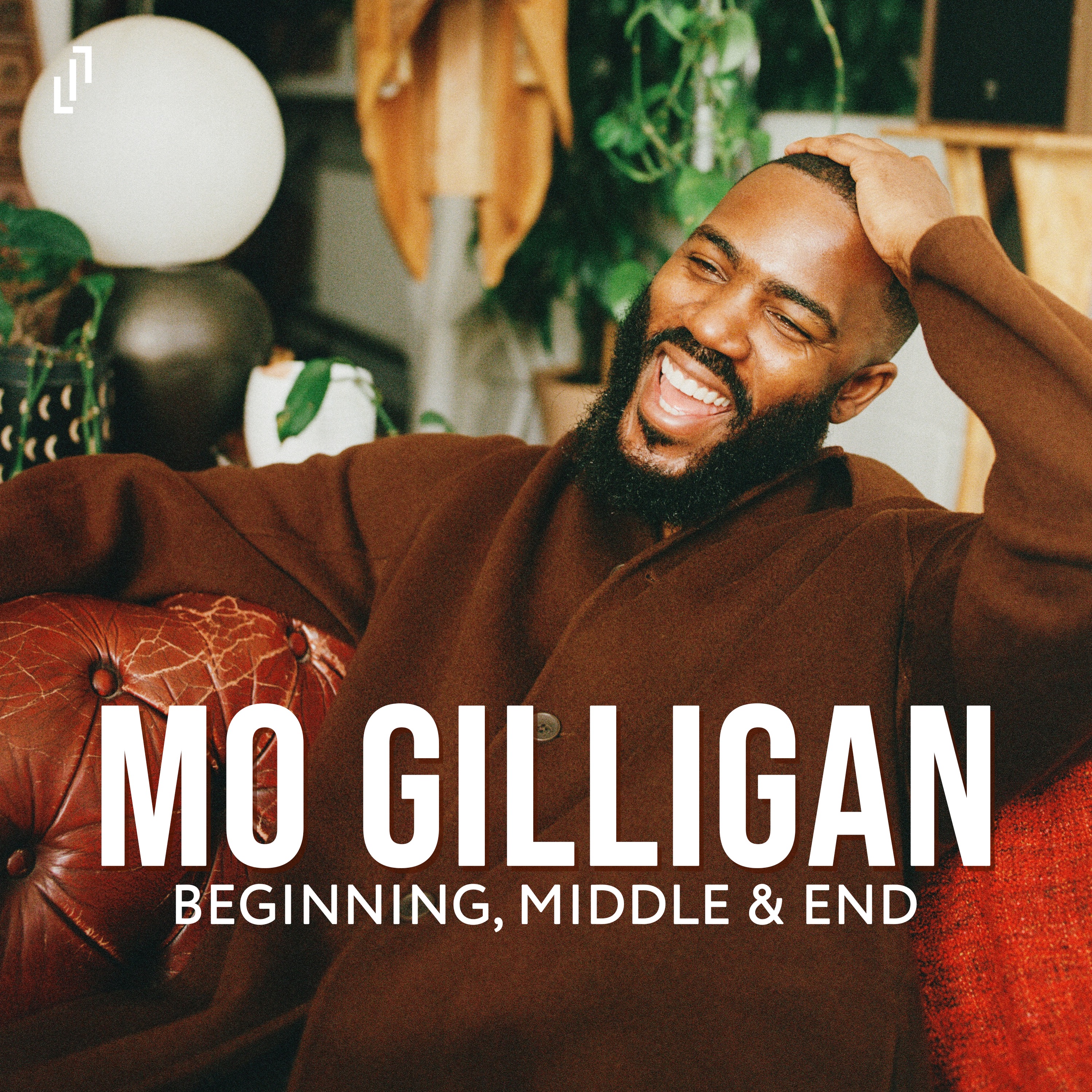
- Mo Gilligan: Beginning, Middle & End
- From Harry Potter to Shakespeare’s King
Mo Gilligan: Beginning, Middle & End18 Mar 2026 · 56m · 25 chapters
From Harry Potter to Shakespeare’s King | Alfred Enoch
In short
Alfred Enoch discusses his acting journey from Harry Potter (Dean Thomas at age 11) to TV stardom (Wes Gibbons on How to Get Away with Murder) and his current lead role as Henry V with the Royal Shakespeare Company, plus themes of rehearsal, live performance, arts funding, representation, and identity (Brazilian heritage and learning Portuguese).
Guest backgrounds
Alfred Enoch is a British actor. He broke through at 11 in Harry Potter, later joined the American legal drama How to Get Away with Murder, and is now starring in RSC’s Henry V. His father is an actor who performed Shakespeare; his mother is Brazilian.
Key claims
Live theatre is “pure” because there’s no screen between storyteller and audience. Arts funding cuts threaten theatre survival. Representation affects belonging (“twice as hard” vs feeling represented). He learned an American accent for three years for his TV role.
Notable examples
rehearsals with Natalie Kymling (Catherine) and a comic “hand-kissing” moment; his school casting as “wild boars” at the Globe; speaking Portuguese with Duolingo and Deliveroo drivers; meeting Viola Davis on set and a bathroom scene that became a GIF.
Written by AI. May contain mistakes.
Chapters
0:45
The Creative Process in Comedy and Acting
Mo and Alfred discuss the similarities between rehearsals in acting and work-in-progress shows in comedy.
“They must be, you know, I'm sure I'm preaching to the choir.”
2:55
Performing at the Royal Shakespeare Company
Alfred shares his experiences and feelings about performing Henry V at the RSC.
“So as a comic, I'm like, cool, when this show starts, I'm going to do 10 minutes of crowd work, but then I'm going to get into it.”
5:03
The Connection of Theater and Audience
Alfred reflects on the unique relationship between actors and live audiences during performances.
“Because you go, this, I'm doing the thing that I've always loved.”
7:21
The Importance of Live Performance
They delve into the significance of live theater and the growing demand for genuine human connection.
“So you need to cast man from the TV or whoever, some famous so-and-so.”
10:30
Alfred's Childhood in Theater
Alfred recounts his first experience at the Globe Theatre and a memorable childhood performance.
“Part of me was like, just trying to get my head off.”
13:20
Challenges in Contemporary Theater
The conversation shifts to the challenges faced by theater professionals today, particularly funding issues.
“great the 90s were the 90s though but oh man we can't let the 90s off the hook just because of that.”
14:00
Theatre's Space and Audience Perception
Explore the barriers to access in Shakespearean theatre and its historical context.
“It's about the space that you're allowed to occupy and the kind of perception of who gets to occupy what's space.”
15:02
Rehearsing for Royalty
Alfred shares experiences from rehearsals for his role as a king, highlighting dynamics with fellow actors.
“It was something, it was kind of mass entertainment.”
17:30
Balancing Acting and Life
Discusses the importance of balance in life and creativity as an actor.
“I need to try and find balance, I think, with my life.”
18:38
Race and Representation in Acting
Alfred reflects on race, representation, and the personal impact of his upbringing.
“Growing up, we didn't see people like us on TV.”
Show all 25 chapters
20:54
Language Learning Struggles
Humorous anecdotes about learning Portuguese and cultural connections.
“i knew i was gonna get to that moment you know it was good but you said and I was like, I'm going to come to the edge soon, but I'm going to go there all the same.”
23:14
Brazil's Cultural Identity
A deep dive into Brazil's black population and cultural representation.
“They're like, oh, can I just get the quad?”
26:02
Personal Histories and Theatre
Alfred discusses his family's history and its impact on his acting career.
“So people speak Yoruba in the Northeast.”
28:00
Understanding Racism in Different Contexts
Discussing how personal experiences shape perceptions of racism.
28:50
Harry Potter: Catching Up on a Cultural Phenomenon
Exploring the journey of discovering Harry Potter late and the feeling of FOMO.
“I love it when I meet people who haven't seen it.”
30:20
The Excitement of Being in a Phenomenon
Recounting the experience of being part of the Harry Potter film as a young actor.
“So I always felt like I was playing catch up.”
32:10
The Impact of Representation in Media
Discussing how representation in Harry Potter affected young audiences, especially actors of color.
“Did you know that that would be what it was going to be?”
33:50
The Audition Process for Harry Potter
Sharing insights into the audition process and the importance of the character Dean Thomas.
“But also, like, you're one of the mandem in Harry Potter, though, that's just the thing, innit?”
35:30
Residuals and the Reality of Acting
Discussing the concept of residuals in acting and personal experiences with them.
“But that thing that you're saying is, you know, when it's your own experience, you don't realize maybe, but over time I started really like, people have said that to me.”
37:50
Transitioning to Hollywood: A New Experience
Reflecting on the transition from Harry Potter to working in Hollywood and the surprises it brought.
“I did 10 years of Harry Potter that's not that easy do you know what I mean it's better than a kick in the teeth sometimes the funny thing with residuals maybe this is a dreadful thing It's like, I'm so ignorant.”
40:10
Navigating American Television
Exploring the unfamiliarity with American television and adapting to new roles.
“But then when they were actually massive, I was like, but how to get away with murder, I had no idea.”
42:01
Alfred's Journey to America: Overcoming Audition Fears
Learn about Alfred Enoch's initial anxiety and preparation for acting in an American accent during his first major role.
“I'd never even done it at play at like uni or at school.”
46:06
Working with Viola Davis: A Unique Experience
Discover Alfred's insights on collaborating with Viola Davis and the creative process on set.
“and there was, you know, those kind of movie director chairs things and there's like Viola Davis and they just had my name, Alfredino.”
49:09
The Importance of Experience in Acting
Explore Alfred's thoughts on the significance of practical experience versus formal training in acting.
“to when I do stand-up where it's like I'm gigging four times a week for like two, three months and I'm like, oh my God, I don't know when I'll get the chance to do it like this in this intense environment.”
52:34
Advice for Aspiring Actors: Finding Your Path
Hear Alfred's recommendations for young actors on building their careers and finding opportunities.
“But the truth is that agents are the kind of gatekeepers.”

Ask about this episode
Get the gist, explore an idea or ask about something said.
 Claude
On Mo Gilligan: Beginning, Middle & End, what are the key points of this episode?
Searching your listeningTranscript
Automatic transcript. May contain errors.
0:00Mo Gilligan: Hey, what's up, people? My name is Mo Gilligan, and right now you're listening to my podcast, Beginning, Middle and End. Now, my guest this week had his breakthrough role at just age 11 as Dean Thomas in the Harry Potter franchise. He has gone on from child actor to play Wes Gibbons in How to Get Away with Murder and is now about to star in the RSC's production of Henry V. That's right. He might just be the first Brazilian to be the king. Now we talk about the full circle moments in him taking the role, how he spoke with an American accent for three years and meeting the legend herself, Viola Davis.
0:39Mo Gilligan: Please, welcome to the podcast, the amazing Alfred Enoch. How you been yourself though? You alright, bro? Yeah, man, I'm good. Yeah? Full on at the minute. Is it? Yeah, rehearsals. Oh, okay. They must be, you know, I'm sure I'm preaching to the choir. I'm sure you have like... No, man, listen, I'm intrigued. Listen, I'm a big fan of the process, if that makes sense. Because as a stand-up, I enjoy, when I'm doing my work-in-progress shows, it's just like, let me try this idea. That don't work, let me try this idea. And you just get the, it's the one chance that you get to make it really, you just get to enjoy what you get to do without it being critiqued, judged.
1:21Mo Gilligan: But it's the waking up the next day of like, let's just change that, let's take that. because when it's showtime now I'm like cool I've got to deliver the show I've got to do the I've got to show it like it's the finish article whereas if I'm doing a work in progress show especially for stand up I don't really look at my notes on stage but I'm like eh this one might bang so do you not feel that do you not feel that pressure of the audience being there that's something that really interests me because basically you'll make it sound like what rehearsals are for actors if you're working on stage yeah and you're rehearsing with an audience of people who are there who bought tickets and are basically like let's see but you know what it is I feel like with the work in progress shows that I do so I do about maybe 20 25 of them leading up before I do a tour okay so I'll do probably like four in a month so I'll do them like every Monday for a month for the next I don't know let's say 1, 2, 3, 4 for the next four months maybe I'll chuck in maybe two as well so I might do two a month two a week sorry same venues different venues same venues most of the time okay because it's just muscle memory of just like okay cool I need to work on that bit and that bit because all my thing is I just need the laugh that's all I'm looking for is the laugh do you know what I mean we'll get into the bits after when I'm on tour I'm like I like when they got quiet there I liked when they was a bit shocked there I liked when they laughed and it was a bit that's what I look for But that comes later.
2:53That's kind of detail. That's polishing.
2:54Mo Gilligan: Yeah, yeah, yeah. So the architecture thing makes sense. The first thing is like, is it funny? Are people going to laugh? Because I need my big hitters. So as a comic, I'm like, cool, when this show starts, I'm going to do 10 minutes of crowd work, but then I'm going to get into it. But I need to let them know where we're starting. What's the journey? Yeah, yeah, sure. And then I'm like, this is a big hitter. That's the big hitter. And that's the big hitter. Don't get me wrong, on tour, I'm still critiquing it. That's so fascinating. So yeah, that's why I think I'm always a fan of like actors when they're like yeah we've got rehearsals and like you know I've done performing arts and stuff at school and theater production but I think on a scale that where you're right at the moment you know you're doing RSC right do you know what I mean that is it's a different it's a different turkey bro it's kind of the problem with it it comes with this big Royal Shakespeare company there we go that's a big acronym how you feeling about it because you're playing the Henry V right yeah I am yeah yeah I'm feeling good I'm feeling really good, actually.
3:53You know, it's one of those things where there is a part of it that looms large, and you're like, oh, my days, the RSC, Henry V. It's like canon. Do you know what I mean? There's something so, I was going to say establishment about it, but I suppose there's something that it's so baked into our public consciousness, right? Shakespeare and the RSC is the home of Shakespeare, and literally the town he was born and all of this stuff.
4:19Mo Gilligan: Stratford-upon-Haven. Stratford-upon-Haven. which is genuinely a really lovely, a really lovely town. But, so there is that side of it, but when you get into a room with a company of actors and you start playing, do you know, that thing is the same everywhere, you know? And I think there's something also that happens, the kind of ultimate example of that is before an audience. You get before an audience and you can be in a black box theater, you can be in the Royal Shakespeare Theater, which is, you know, almost a thousand people, but ultimately, it's the same thing that we all have as performers, we're telling a story, we're making a connection.
4:54Mo Gilligan: Yeah, yeah. Do you know what I mean? We're playing a game together with the audience. So, yeah, that side of it dissipates the nerves. Because you go, this, I'm doing the thing that I've always loved. Yeah, yeah. I've always wanted to do. As an actor, would you say like, when you're on stage, is that where you really get to like flex your muscles? Because, and what I mean by that is, as a comic, I love doing TV. but I'm on an autocue. Do you know what I mean? I love, do you know what I mean? Being like part of a, I don't know, a cast in a sense of doing a panel show, but you're like, cool, you've got your bit, your bit, your bit.
5:33Mo Gilligan: Stand up for me is like, this is where I am. My ultimate showman in it. Like, this is my realm. Do you know what I mean? And what is it about that? I think it's because it's like, it's one is the pressure of, it's all on me. Yeah. And I work better under pressure. So, but also there is that like, all right, cool. They, I also have an ego in a sense of like, yeah, man, make some noise for me when I come out, you know, cause I need to feed off that. And if I don't get it, then I'm like, okay, cool. They're not feeding it. Now I have to really work because maybe I don't know what the tempo has happened, but it is that like, it is where I'm working at my highest capacity.
6:19Mo Gilligan: Yes. what is that is that the same for yourself as an actor yes when you're on when you're on stage 100 um there's something so total about it you know you're on a set and you're shooting something and you can go again and it may be high pressure because of this that and the other and there's time and there's you know 500 background artists and there are horses and there's fire and you know we only have this time to get the shot or whatever that can be intense in its own way but there's something just so focused about the direct interaction between you as an actor and the audience you know yeah yeah it's the thing i think that theater that that live performance there's nothing like it because there's nothing between you and the story if you're in the audience or the storyteller do you know i mean like you you feel that energy like you're saying you want that energy you feel that energy and you feed off it because you're not going to get that if there's a screen if there's a camera in the way so there's something so pure and so direct and ultimately I think all storytelling is meeting probably all art is meeting it's encounter right and so to have that encounter in the moment that you're making it because really it doesn't exist you can't be like let me pull out this great performance I did in a run through in rehearsals you know what I mean that's not how it is or like oh yesterday's show let me show you yesterday a bit from yesterday's gig I was great that's not it's this moment and there's something about that that is so I think of it as being pure in a sense not in a kind of moral like it's kind of higher and better and elevated but just so like it's the thing itself it's so undiluted yeah yeah and the energy that I get from that and the excitement that it gives me is and I think it's freeing ultimately because there's a lot of actors now performing a big you know big shows whether it's you know like here in the West End and you know going back to stage why do you think that is at the moment alright I'll get it's funny I had an answer and then I had a more cynical answer came into my head so I'll give you that one first I mean the cynical answer and it speaks to a kind of difficulty that we're experiencing across society right but it's funding funding for the arts funding for theater you know we have the theater we have in this country because we have a subsidized theater theater sector um and without that subsidy kind of amazing work that gets more gets made wouldn't be able to be made yeah that funding is getting progressively cut it's harder and harder for theaters to survive it's more and more important to have something that's a sure bet.
9:06So you need to cast man from the TV or whoever, some famous so-and-so. So I think a lot of approaches are going out to Hollywood actors, which is not to say that that's inherently bad. You know, it's fantastic to see people whose work you know from a different context in the space with you. That's amazing. But I think that's part of it. It's a big necessity just to be able to sell enough tickets, just to be able to generate enough interest to make it viable. But another thing is, I think as we get used to consuming more of our content through screens and as more of our engagements come through screens, we feel the absence in some kind of deep way of proper connection.
9:56The pleasure that I'm having right now just to get to sit down with you and talk like this. You know when you have to do an interview and it's through Zoom and it's like, Yeah, yeah, 100%. And, you know, great. Sitting in your boxes, bro. Calm, fantastic.
10:06Mo Gilligan: Let's say it how it is, bro. But when you can be with someone in the space, it's just different. It's just different. So I think we all, we need that as human beings inherently. It offers you different possibilities, you know, working on stage to working on stage. Because it's a bit of a full circle moment because you watched your dad on stage play Henry V as well, right? No, he was in Henry V. He played the King of France. Ah, okay. This was at the Globe Theatre? Yeah, it was at the Globe. Yes. It was at the Globe. this was maybe the first play i ever saw oh really certainly the first play i remember seeing i mean my dad was an actor so it's it's maybe it's unlikely that i saw my first play at the age of eight um quite possibly they would have taken me to see something before then but that's the first one i remember and i was really like into history and my dad was telling me about this new theater they were building which was like being built with all the materials and in the way they built this theater 400 years ago.
11:02Mo Gilligan: I was like, what? You know what I mean? Part of me was like, just trying to get my head off. I went with my school back in the day. Was it good? I'm loving that laugh already. I'm a full day. We were all... Tell me about this. It is. We had this thing, right? I think it might be World Book Day. And our school got to perform at a Glow Theater, right? You got to perform. Yeah, listen to this. Oh, this is great, Oren. This is great. We had this play at the Glue Theatre. World Book Day, there's a bunch of schools. Every school's getting like five minutes, yeah? So then, I don't think I've ever told no one this.
11:44Mo Gilligan: It's so embarrassing. So then, they were like, they're casting. Do you know what I mean? They're like, oh, okay, cool. And I can't remember way. It wasn't Romeo and Juliet, but it was some Shakespearean play. I can't remember. And then they were like casting, like, yeah, you're going to be that person. the main person all the middle class kids are getting the premium roles yeah never forget this big up my girl Lauren Lauren girl yeah she me and her they cast us as as the pigs yeah hey bro the pigs the pigs bro you know when you're a kid yeah you just do anything you're like yeah yeah but the teacher was like yes you're a pig but you're not anything you're a Shakespearean pig so you know when the people are looking at you there and she sold this to us.
12:32Mo Gilligan: She said, no, we weren't picked. We were wild boars. Two black kids. And she said, when they're there in the globe, you want to get your... And me and this girl, Lauren Gale, she will notice, we are going to the people. You know that? Because you have the bit where you stand. Everyone's standing. So then they said the lines and the wild boars roared. Me and Lauren. listen there was a picture South London Press we was on the front page let me tell you something it's only until I got older and I was like if that was my child I would be fuming you made him a wild boar and told him to snore people great the 90s were the 90s though but oh man we can't let the 90s off the hook just because of that.
13:29Genuinely, that is mad to me.
13:32Mo Gilligan: At the time though, I was fully in character. I wasn't playing around. I took it serious, man. Which is also the problem, right? Because you're there doing your best work. You've gone deep dive. You've probably gone to some city farm, study the pigs, get the movements. You're doing some Marlon Brando work and they're just putting you... But I said, no way you could do that to kids now. My mum turns up and she's like, what's my son then? So what, he's Timon and Pumbaa? No, no, no. Oh man, cut this out, man. It's about the space that you're allowed to occupy and the kind of perception of who gets to occupy what's space.
14:09Mo Gilligan: Yeah, yeah, yeah. And that's a massive problem in Shakespeare. To me, it's like a doubly sad irony that that happened at the Globe because this is one of the problems we're up against in theatre. Yeah. And certainly with Shakespeare, the people go, it's not for me and people go it's not for me i think short of anything else because they're kind of getting told that that you have to look a certain way sound a certain way i've had a education the globe when shakespeare was writing his plays was filled with everyone yeah do you know i mean that space in the bottom was you know i'm not saying it was a sort of better time that God knows that society was kind of even more unequal and stratified than ours.
14:52But the plays were for everyone. Do you know what I mean? And it was a space for everyone because it was what used to be movies, but I suppose now TV for us, right? It was something, it was kind of mass entertainment. And I think the plays deal with that. But I think when you live with this, again, it goes back to that thing we were saying of the RSC. when it kind of looms large people just go no no that's that's not for me does it does it feel you
15:18Mo Gilligan: have a little bit of power though now that you know like you're leading such a an important play at the rsc is there uh does it come with like a level of confidence or is it like i have to work twice as hard uh that twice as hard question is an interesting one um yeah i think i think yeah look it feels if short of anything else it feels powerful because we're rehearsing this play i'm playing the king and you know basically if i do something in a run people kind of have to do what i say or if i get too close to someone in the well as we're as we're running the play someone kind of has to back off yeah you know get away from me he hasn't oh sorry sire actually we kind of we genuinely had that yesterday in rehearsals this was kind of an absolutely hilarious moment there's this moment we were playing with you know how do you greet the king how do you recognize the king there's this moment of um that kind of people pay their respects basically right um and we've been talking about that but then we moved on and we went to another little bit of the scene and we sort of started we started the scene and what natalie kimling who is fantastic she plays catherine the princess of france um came in and in this scene she's playing just like you know someone at the english court like you know i don't know you know office bod five in kind of a medieval context i guess so she comes in and we'd been talking about oh we're playing with a kind of greeting where you kiss the king's hand and she sort of came up to me and i'm you know well being all serious and kingly and sort of grabs my hand and goes to kiss it and i'm just looking at her like why why are you touching my hand and then she was like oh i'm so sorry i I thought that was the other bit, but there was something so interesting about that, about the dynamic of like, I turned to her with this kind of, who are you and why are you interrupting me?
17:14Mo Gilligan: Why are you touching the king? Yeah, who are you touching the king? So, you know, that was, we had a laugh about it, but the first, my first reaction was sort of, I suppose, in character was like, who's this and why are you interrupting me? Do you stay in character? Are you like a method actor where you just, you don't break at all? I can't, I can't do that. I can't do that. I need to try and find balance, I think, with my life. And I think we, probably all of us who are creatives do. And when you have something that you love, that takes up a lot of your time anyway, I think that becomes doubly important.
17:49I mean, short of anything else, I think it's when I'm not doing it that probably I discover stuff.
17:55Mo Gilligan: If I don't have rest, if I don't step away, things aren't going to settle. Do you know what I mean? If you're always kind of creating, creating, creating, I often find like even something simple as learning lines if I learn lines and then I go to sleep the next day I have a chance to know them better because they've just kind of settled in me in some kind of way yeah yeah as opposed to like reading and learning and learning exactly so there's something about what you receive as well as what you put out and I feel like if I were working in a way that I was constantly kind of doing the character whatever that means yeah that I wouldn't make the discoveries that come when you're just like having lunch and you're like that scene that do you know i mean when something just kind of emerges you give yourself a chance to get something kind of from an unconscious place um but yeah they're going me do you know what going back to what you said about working twice was hard i had a really interesting conversation with a friend of mine years ago now and he was saying we were in la at the time i was shooting this uh tv show out there how to get away with murder which was this kind of american network television show which totally changed my life and career um and he was out in la he's he's still out there and he was saying man you know we we were talking about we were talking about this we were talking about getting cast as the wild boars we were talking about the space that you're allowed to occupy as a black actor or a black creative in any kind of way um and he was saying, you know, it goes back to that thing.
19:24Growing up, we didn't see people like us on TV. And I looked at him and I said, you know what? I'm in a different position to you on that one. Because growing up, I saw my dad on TV. Now, my dad was white, but I used to watch films he'd been in. He was in The Great Escape.
19:42Mo Gilligan: Do you know what I mean? He used to do Shakespeare. He went to uni at Oxford. He got sent to a public school when he was white. So he was this tall white Oxford educated actor who spoke kind of perfect RP. And he was my dad. So I didn't feel outside in a way that I think a lot of people do. A lot of black actors do. Because I felt represented in that way. Even though people wouldn't look at me and think that necessarily. So I was so kind of that twice as hard thing i didn't this is an enormous privilege on my part and a kind of very specific kind of quirk of my upbringing that i didn't feel that pressure in that same way i felt i had license because my mom's brazilian um and so my my kind of model for being in this country in a way was from my dad okay so i kind of absorbed all of that that's my sense of belonging and i didn't i didn't perceive myself outside even when people perceived me outside you speak portuguese yeah yeah yeah i knew i was gonna get to that moment you know it was good but you said and I was like, I'm going to come to the edge soon, but I'm going to go there all the same.
21:13Just to give you the chance. I was fighting for my life there. I said, hey, let's just got this.
21:21Mo Gilligan: My girlfriend is Brazilian, isn't it? Really? Yeah, she's from me to genies. But I tried to learn it. How's the Duolingo going? I was Duolingo. I had lessons one-on-one. Oh, you did it proper. Fighting for my life in that lesson. I'm not ready. I'm not ready. He said, I can't do the first lesson, yeah? The first time, because I was doing it over Zoom. You know, the teacher was lovely. Boom, like imagine introductory, go on Zoom. This woman's talking Portuguese off the dome. Just like, just straight away. I said, what? Whoa, whoa, whoa, whoa. You got to slow this down, bro. I was at the Zoom like, oh, hello.
22:07Mo Gilligan: English, can we establish that at first? Didn't even manage English. Hey, listen. And then she gave me some homework. She said, you need to learn the numbers one to 10. Oh my God, man. I was fighting uphill battle, bruv. I was running uphill backwards, bro. I had to write. I wrote it down on post-it notes, yeah? I stuck it on the Zoom screen. And she's like, so, can you do the numbers? I said, yeah, test me. She goes, okay. number three I'm looking at it I'm looking at the screen three tres tres yes well done and I'm looking at the post-it note yeah yeah then she goes okay what about a different number 17 I said yo you said what's it said I said say cheat say cheat what I said come on man help me out here so I'll take you you're not doing your classes oh bro I had to quit that man I said it's been good.
23:08It's been good, you know. What a special time we've had. Thank you for the memories.
23:11Mo Gilligan: Thanks a lot, man. Look after yourself, man. Obrigado. That's when you got your part in. You know what's mad though, yeah? Whenever I get... Whenever I get Deliveroo, innit? A lot of the drivers... Yeah. Yeah, yeah, yeah. Are always Brazilian, innit? So they will give me the stuff. They're like, oh, can I just get the quad? I said, yeah, man, quad is 24. Every time they leave, I go, obrigado. They go, ah, Portuguese. I go, no, thank you very much. Bang, slam the door in their face. No thanks. Bye bye. See you later. No thanks. Nah. Not today. Not for me. Not today. Thank you. Have you been? Have you been to Brazil?
23:46No, I haven't been. I haven't been. I need to go. No, man.
23:50Mo Gilligan: The music, the food. Yeah. Obviously, the food I have a lot. The food is good. So what do you have at home? So at home, my girlfriend always makes the, I forgot what it's called. She's going to kill me. Visual ad then. black bean stew. Yeah, yeah, yeah. She makes that with that bit of pork sometimes. Yeah, yeah, yeah. And then there's those little cheese cheese ball things. Yeah, ponche ques. Oh my God, bro. Those? That is good. I said, that consistency. Ponche ques, yeah? Yeah, yeah, yeah. Those ones? And then she goes, yeah, you have it with a coffee and a tea. I said, nah, forget that, man.
24:23Mo Gilligan: Get a little hummus. Yeah, that's what I'm trying to remix the ting, man. Oh, that's quite good. Yeah, yeah, yeah, yeah. I like the side of that. But the food? Yeah, them beans? Yeah, that's good. You know. Man, the food in the northeast. So if you go, you obviously have to go to Mianaj. Go to Rio. Rio is just like, I mean, I'm obviously biased. Do you go there a lot? Every year. Oh, nice. I commit myself to going every year. You do look Brazilian, though, you know. You do look Brazilian. That is a very high compliment. I will take that. But that's a funny one. What does Brazilian look like? No, but you look like one of them black Brazilians, bruv.
25:00Mo Gilligan: that's on the moped with the flip flops. Hey man, you're from London? Come on, man. Like, I can see you in Sea of God. I can see you in there still. I like that. That's a huge compliment. I will take that. That film is so good. Oh, amazing. That film is so good. It's funny. When I met my girlfriend, that was like the first thing I said. I said, oh, I'm from Brazil. City of God. She said, what? No? All right. That's it, you know? That's all I've got. It's funny the things that travel. do you know what I mean it's funny also you say that thing about about lucky Brazilian because there was a time people said and this is partly also how Brazil kind of markets itself that people occasionally would be like oh there are black people in Brazil who says that people used to I think people had this notion that Brazil was all Gisele Bundchen oh really do you know what I mean oh that's wild and it's like Brazil is the country with more black people in it than any other country in the world outside of Nigeria yes yeah yeah yeah That's how big the population is.
26:00Mo Gilligan: There's a massive Nigerian community in Brazil. So people speak Yoruba in the Northeast. And the food is all kind of West African, but like palm oil curries and that. So there's this huge connection and it's a huge part of Brazilian society. But this is something that very deliberately in the kind of early 20th century, Brazilian governments tried to whiten the population to try and encourage kind of immigration from Italy and other parts of Europe to incentivize people to come and to whiten the population. And in the way that Brazil also puts itself out there, there's a lot of instances, as you get in any kind of post-colonial country, right?
26:46But there's a lot of appropriation of certain things and credit's not always not always given to the where things come from, the roots of things I mean everything, you think of Brazil, you think of Samba you think of Futsalball you can't think of these things without thinking of thinking of the black population of Brazil
27:05Mo Gilligan: yeah yeah of course man but it's which is another thing that is kind of amazing in terms of my own going back to that twice as hard thing you said that and it's just it's funny it's lodged in my head because you know my mom grew up in in rio in the you know 50s and 60s during a military dictatorship and rio's probably brazil's like one of the most like along racial lines very divided city because my mom went at the time that she was going to uni she was one of the only black students who studying as a medical doctor um she would go to her friend's apartments in like copacabona and you know the door people would be like that's the service entrance so she she grew up with that but didn't somehow and i've sort of talked to her about it a bit i was like it's amazing that you didn't put that on me yeah and i don't mean that with any kind of blame but just that her own experience didn't so um kind of shape her concerns for my maybe it's that she was in a different context right because i was born here and grew up here yeah maybe it's just her own perception of what racism looked like in the uk was just totally different so she you know she wasn't trying to she wasn't she wasn't trying to she wasn't good to doing the work twice as hard to get half as much kind of thing um but yeah so it's funny all these things sort of sort of play a part when you start asking about what is it to to be at the rsc yeah play henry v i'm like there's there's a side with me that goes well yeah my dad was an actor he was doing shakespeare like it feels like a natural progression do you know i mean i see the kid who's sitting in the globe watching his dad play the king of france and i'm like cool now it's my turn yeah yeah yeah that's you say what what what is it like to be, but what is it like to be also like part of, you know, because using Harry Potter is like 11 years old.
29:10Mo Gilligan: And I'll give you a confession. Yeah. I only watch Harry Potter this year. I love this. I love it when I meet people who haven't seen it. I swear to you. Or like, so I tell you why, yeah, is because one, I always felt like I was playing catch So I was almost like, oh, it's the franchise is kind of... It's too late, I missed it. I missed the wave, do you know what I mean? Like even from the books, because I remember where like, I think it was, I might have been Peckham, where there was a bookshop, maybe a Waterstones, I don't know. But then even when the books was out, I got to a place with a book, so I was like, I don't want to read.
29:50Mo Gilligan: You know what I mean? Everyone's on the fourth book, man. You don't want to be the one reading. You're like, oh, you're on this one. Especially the middle class kids, because they would camp out. Do you know what I mean? The middle class kids are like, we're camping. Come on, Rupert. Let's get our cloaks and get our stars. We're camping for the book. Is that what I'm on? We can leave little Mo behind. He hasn't even read the first one. Them posh kids would read the book in one setting, you know? Are you ready already? I've got this. I'm on page 59. Three weeks in, bro. Slow down. Slow down, Agatha.
30:26Mo Gilligan: Slow down, man. That was me. So I always felt like I was playing catch up. And then weirdly enough, I went to Universal Studios and we're going on the rides and some of the people with us there said, oh my God, oh my God, we're going on the bikes. You know, have you seen the film, right? And I've never felt FOMO lacking, you know? But it's mad because we're getting all the passes. And I was like, I don't feel, I feel bad because I've not read none of the books. I've watched the film like once but I said nah this ain't right man and then we've gone into this ride and I'm talking that the queue was so long and then we get this mad queue jump and we get on this ride and it's one of the best rides I've ever been on and I'm like oh okay I know the world I know what I know I know what the golden snitch is and everything but we're on this ride and everyone's like oh my god look it's Dolores and everyone's excited and I said I don't know this woman is you dude.
31:27Mo Gilligan: I've never felt so stupid in my life. And everyone's like, you haven't watched it? What? So I said, I need to watch like, I'm talking about, I banged out all the films and it. Eight films. I've done it like in a proper setting. And I think it was that finally, it was that I wish I would have watched it and read the books in the same settings. Do you know what I mean? Yeah, yeah. What as in, as you were doing it? Like, watch the first film. It reminds me of, let's say, how Stranger Things is now. For a generation, we're like, oh, the film's coming out. And I guess it's a bit different now because we get it.
32:01Mo Gilligan: Boom, it's just there. But I guess at the time, it's the fanfare that I don't really feel like exists. It's the anticipation, isn't it? It's the excitement. You're so right. But what was it like for you as an 11-year-old being part of, you know, you're in the Philosopher's Stone. Yeah, man, that was amazing. Did you know that that would be what it was going to be? I didn't know, but I thought I knew. because it was big to me. So I'd read, I'd read, when they kind of announced they were making a film, I'd already read the first book. And maybe the second, the second by the time I got the part, I think.
32:35And, you know, my school was the place where we were reading it all
32:40Mo Gilligan: in like one sitting. Everyone's there, everyone's got their book. I remember we did a school trip. We went to like, I don't know, like Ben Nevis or somewhere. And we're, you know, meant to be walking up this mountain. And I've never seen like a group of kids so committed to getting up and down a mountain because basically everyone was like, let's get back and read Harry Potter. And everyone sat in silence. Everyone with their own copy just reading because the book had come out like the day before. Yeah, yeah, yeah. People were upset. Like it was a phenomenon. Yeah, it was amazing. Which was kind of amazing, which was obviously amazing to be part of.
33:13In a way, I felt that I was I stopped being part of that once I was in the film slightly because I had skin in the game. do you know i mean before i was coming at it as like just a reader someone who just loved those stories and then it was i was a bit like am i gonna have anything to do do you know i mean like i'm flicking through the book like yeah yeah of course like thinking about it from that perspective it became a different thing um but man it was it was like i i loved those books so to to get to be in it was amazing it was absolutely amazing and sort of kind of happened kind of entirely by chance, really.
33:50Mo Gilligan: But also, like, you're one of the mandem in Harry Potter, though, that's just the thing, innit? Like, you just say it how it is, innit? Because I've seen The Philosopher's Zone a bag of times, but I never finished all of them, innit? But even watching, you're like, hey, we've got some of the mandem in here. Oh, alright. Alright, bruv. We're ripping our ting, man. This is such a thing. And actually, that's what I thought. So they came and did auditions at my school probably because you know the same principal that like got the middle class kids doing all the shakespearean part they were like oh there's a nice posh school that we should probably find some actors there you know that bad awful association that exists so all the kids in my school auditioned and i didn't audition and i'd already you know my dad was an actor i'd already decided i wanted to be an actor i'd already done a play at the globe like you actually funnily enough um but i did an audition and one the reason i gave myself i think also it was about i didn't want to put myself out there and get a no with something that i knew already is what i wanted to do with my life as much as it's possible to know that at the age of like 10 or 11 but um the other thing was i was like there's one black character lee jordan i was like there's one black character i was like and he's older so there's not a part for me already i was thinking on that kind of level.
35:13And then I remember having this thought that I was like, but there's this character, Dean Thomas. And like, everyone else is described as like having freckles or red hair or being pale. And they don't really say anything about him. So I guess he could be black. And that's the character I ended up playing. But that thing that you're saying is, you know, when it's your own experience, you don't realize maybe, but over time I started really like, people have said that to me. It was like, it meant so much to me growing up and i was a bit like when people start talking like that i was like you you know i
35:47Mo Gilligan: was like i had like one line of film you know i mean like i'm partly waiting for them to like really like them to tell me they were talking about someone else or something right but they're like no no no no no because you know you were there and i saw someone who looked like me yeah and so that that is an that's that's an amazing thing how many auditions did you have to do how many auditions did i do i did two i think that i remember that was it they saw me in a play i was doing okay so they came to my school asked people to audition i was like there's no part for me didn't audition all the rest of my friends from school did no one got a part obviously i was like it's a massive film what do you what do you think's gonna how you thought they were gonna cast you and then as i'm doing this play i then get a phone call they call my parents up then how they got our number as i remember we weren't even at home so that uh warner brothers right they can reach into every dark corner um and they got this call saying we've seen your son in this play we'd like him to audition for harry potter and i was like wow so i think that maybe gave me a bit of credit that maybe i missed other rounds of auditions as it were yeah because they'd seen me do something someone for the casting team had seen me do something and thought oh he's good um so then i did an audition on denmark street um just off charing cross road um and then went to the studio and auditioned for chris columbus for the director and then i got the part it was mad it was it was mad i need to ask this do you still get residual checks is that a thing because i've heard this through the grapevine it's funny yeah it's funny that you asked this but dealing with residuals last night in a very unglamorous way I'm not going to go into but chasing things up but yeah yeah yeah that's a real thing are they healthy?
37:44it's a nice
37:47Mo Gilligan: it was a good thing that happened to me that at 11 years old I did 10 years of Harry Potter that's not that easy do you know what I mean it's better than a kick in the teeth sometimes the funny thing with residuals maybe this is a dreadful thing It's like, I'm so ignorant. I'm so ignorant. I don't understand how it's calculated. Sometimes you're just like, oh, that's nice. And sometimes, and it's still nice, you'll be like, oh, episode of Broadchurch I did in 2012. 52p. Cool. Back in the day, man, they used to post these things. You're like, you paid more for the stamp. For the stamp and the envelope.
38:24You're like, 52p, you've got to go to HSBC.
38:27Mo Gilligan: Be like, hey, let me cash that. How many days? five days to clear all right fair enough fair enough but no I had to ask because I did hear I think it was there's another actor who's in it and he mentioned and it was always this like you know like when you go on like Instagram and they have these like swipe posts yeah and it's like this is you know this person said one line and da da da da but I just had to ask well I think they said one line and they got paid this much yeah but you know when you're like I don't know if like now because of social media those things get inflated in a sense of like look I'm I couldn't I don't it's not it's not like a lifetime wage but the way I see it is like wow I did this thing and I'm still getting paid for it like that that is amazing do you know just just the fact that I can I just thought of it this way support my theater habit is kind of amazing because it's funny I bumped into someone in Stratford and he was like oh that's fantastic.
39:28You're playing Henry V. That's a big old part. That must be good. You know, financially as well. I was like, not so much. That's not really the economics of theatre. Do you know what I mean? But, yeah, just the fact that I get to do what I love for a living. Do you know what I mean? Get paid and get paid well. But especially that, you know,
39:46Mo Gilligan: you started from such a young age as well. Do you know what I mean? To still be in a place where, you know, you planted your seed at such a young age and it's still, do you know what I mean? Prospering. like yeah yeah i mean that's that's kind of like what you kind of do it for in some ways where you're like well yeah i'm part of this film like the goal wasn't to get residual checks yeah do you know i mean when you get older but you're like oh wow okay cool i'm part of something that is living beyond me and people like you say come up to you and tell you that oh man i've seen you in this speaking of seeing you in this you you know you're in um had to get away with murder oh what's like working alongside viola davis man because she's one of the best in the game man she's amazing do you know what i mean how was how was that experience because you say you're in hollywood as well yeah you know and that's probably such a juxtaposition of do you know i mean we're talking about harry potter when you was 11 to now being an adult and you're in hollywood and you know you're working alongside viola davis how was all that stuff it was mad it was mad because i didn't i had no kind of opposite to the harry potter thing because i'd read those books and i was Like to me, they were massive.
40:52So I thought they would be massive. But then when they were actually massive, I was like, but how to get away with murder, I had no idea. I had no idea about anything. I didn't, I'd never really watched American TV. Yeah. Like I was always confused when people would like talk about SNL. I'd be like, why are you watching this? I only have five channels.
41:09Mo Gilligan: Do you know what I mean? Is that on channel five? Like late night or something? Like truly. I never, we didn't have lights. No, Brits didn't say that. I'm like, come on, man. You're watching it like that, man. because we it wasn't I don't know how you consumed it yes now with YouTube exactly that yeah man someone said this the other day yeah man I remember watching Eddie back in the day man on the SN no way how how did you do this bro I really need an answer someone must have sent you tapes and sent them over because we weren't getting that we weren't getting that back in the day truly it wasn't yeah yeah yeah so I knew I kind of didn't grow up with that I didn't really know anything about American Network television and I had no idea what I was getting into and I had friends at the time who this friend who i mentioned before who's working out in the states who had said oh i you know we didn't see people like us growing up he and other friends of mine were like i'm going to go to america there's going to be more opportunity for me there and you know high profile black british actors had done that already like david a yellow and idris elba i think the wire was kind of coming when was that like kind of late noughties maybe the wire so so there was this kind of sense but i hadn't got to that point yet i hadn't started thinking about that so i had no plan to go to the states i knew nothing about anything and this thing suddenly happened and i'm on this business class flight to philadelphia and i am breaking it because i'm like no man i was i'd never worked in the states before um i had never worked more importantly i'd never worked in an American accent before.
42:41I'd never even done it at play at like uni or at school. I'd never done it. I'd only ever auditioned and not got the part.
42:49Mo Gilligan: So I was like... You got the self-tapes, boy. 1am. And this was kind of even before self-tapes. Okay. It was 2014. Okay, okay. So I was flying out there to do it and I had auditioned entirely remotely on Skype. This was before self-tapes were a thing. So I went into a casting director. So throw back there, boy. How about that? I was on Skype. And because the quality wasn't good enough that you couldn't do the audition on that, the casting director was taping me, but I was getting directed from what they could see on Skype. But then later they would get the actual footage. So anyway, for some mad reason, they decided to give me this part.
43:28And I sort of couldn't really believe it. I genuinely, after I did the first audition, I was like, I'm never going to hear back about that. But, you know, they'll cast an American to play an American actor in an American TV show, obviously. and I'm on this plane and all I'm doing is talking to myself the whole flight in an American accent
43:46Mo Gilligan: I'm like I have got to get this right that's like that's like the first you know it's hard enough you do a job in your own accent yeah do you know what I mean there's all that there's all sorts of stuff that like our work as actors involves that's outside just getting the accent right and I was like so that is like entry level I was like I have to be watertight so anyway I'm talking to myself doing the accent I was like I'm going to keep doing it I'm just going to keep doing it this was my kind of flirt with it was a method but I was like I'm just going to have to keep doing the accent the first person I met I went hello I just like immediately dropped that shit because I was just terrified I was like this is stupid there's a lot of British actors they say that they stay in the accent yeah until like they probably rap filming sometimes so you just went back to your regular accent and then on set like would you then no no So that was only because I'd just arrived and I was scared, basically.
44:41So then I was obviously like, I'm going to work with these people. I'm not going to, I've got to just talk as me. I just didn't have the conviction in the accident at that point. But we were going to start shooting in three days. And it got to one evening that I was just like, I'm going to have to do this. I'm just going to have to do this. And I was talking to my ex. She was like, look, if you think it's going to help you, you just have to rip off the bandaid. Because you want to do this when they say action on the first scene. And then you've got to do it. no one's heard it so i went down to breakfast and it was so awkward because i've been talking like this and all of a sudden i'm doing this american accent and i'm like i sound awful and everyone's
45:14Mo Gilligan: just like okay i was like i just want to acknowledge i'm doing the accent now and i'm expecting them all to tell me it's awful and i used to go to dunkin donuts to get some breakfast in the morning and i would count the coins i needed exactly to minimize interaction with the person with the person at the store because i didn't because i was terrified i was terrified that so i was like i need to work through this because i'm about i'm about to be shooting a tv show and eventually just with time you just got more confident and i started when i was there i spoke in the accent the whole time yeah so over that but going back to viola then on like day two or something all of a sudden we're shooting this group scene and then everyone else goes and it's this scene with just me and her.
46:00And at that point, I feel a bit more settled in the accent and I've enjoyed the kind of early process of shooting. And I just had this moment where I looked to the left and there was, you know, those kind of movie director chairs things and there's like Viola Davis and they just had my name, Alfredino. And I was just like, this is a trip.
46:18Mo Gilligan: I was like, this is a trip. And we shot, I think it was the third day of shooting of the pilot and we shot this scene where like we're in this bathroom. she comes into the bathroom after me to like sort of threaten me blackmail me i can't even truly remember but it got made into like a gif so i've so vaguely seen it again because she sort of rubs her hands on my chest and everyone's like what's she doing there playing her mind games and all the rest of it but shooting that scene was so so satisfying the scene was rich and she's just such a fun person to play with there's so much going on you can just do you know i mean it's like it's like playing tennis with you know federer but like you know not every ball is going out but it's a game you're playing together right it's sort of competitive but it's also collaborative exactly yeah yeah you're both good when you're like this is a good rally exactly the ball is just singing and the crowd is entertained ah ah just felt good exactly yes you can feel the kind of energy in the place and i was just like goodness what a luxury to get to do this and working with her she's she's a good time man it's funny everyone's like she's scary she she knows i would say the extent to which she's scary slash imposing like she has a presence yeah she has that presence and she has that gravitas and she has that authority and she'll she'll lean into it sometime and i basically spent all my time just just basically needling it and then if you just push it a little bit she just bursts out laughing.
47:50Do you know what I mean? She was... Which is one of the kind of most joyous things, because you've got this,
47:56Mo Gilligan: and she's sort of looking at you, and then she goes... And then she... She's... Yeah, all of that cast, and that... Doing that job with those people, fantastic actors. Yeah, and it was such a pleasure, because I was working on something like I'd never worked before, seven months of the year, also speaking in this accent the whole time, which over those three years, I spoke more in that American accent than I spoke in my own voice. We'd get to the end of the season and I would say, I'd shoot the last scene and I'd be like, I'm stopping doing the accent now. I'd wake up in the morning, I'd be speaking American again because it became default.
48:33Yeah, yeah. So it was such a kind of, it was an extraordinary experience and on like kind of every level. It was really, and it changed my career. From a work perspective, just to be going in, shooting every day, 14 hour days, lots of material lots of scenes working with lots of amazing people just that thing of do you know
48:54Mo Gilligan: i mean it's just flexing your muscles you're i guess it's like that kind of like intense training in some ways where you're like all i'm doing is work yes which is all i've ever wanted to do but in a in an intense environment at a high scale where you're like oh my god this is just because it's like those things don't happen do you know i mean i even i i can only compare it to when I do stand-up where it's like I'm gigging four times a week for like two, three months and I'm like, oh my God, I don't know when I'll get the chance to do it like this in this intense environment. Stresses and tiredness but then you're like, got to hang on.
49:32Mo Gilligan: You learn so much from that. Yeah, man. You learn so much from just the repetition, the kind of ritual of the repetition, the kind of commitment to doing it, being there, doing the thing all the time. You know, People sometimes come to me and they're like, oh, I want to be an actor. I was like, do it. Spend as much time as you can doing the thing. You can go away and be like, oh, what do I want my career to look like and how am I going to market myself and I need social media and I need this. And it was like, do the thing you love. If you're doing it, you're learning. For me, it was a training.
50:03I didn't go to drama school. Yeah, you didn't go to drama school? Yeah, no. I find that so interesting, man. Because so many actors I know,
50:11Mo Gilligan: they trained at drama schools. sometimes I've always felt that it's like you must go there to get to that next level because I've heard how intense the training is and you know as an actor who you know you do stage you're in film you know you've been in big tv shows big films your dad's an actor as you look towards like you know where you are now in life you'll be 38 how do you start to like kind of start building in terms of what you essentially leave behind but what you tell to the next you know the next person coming into this world in this industry that is like oh i've watched you on harry potter bro you're like one of my idols because i've seen myself but also you know you you say to them like i don't know if you say but it almost like you don't need to go drama school or maybe you do or do you know you know i it's it's a weird one because usually when people say to me what do i do aside from that thing i say go to drama school i don't say that because i feel like i had all sorts of insecurity around that for a long period of time probably still do on some level i should have gone you know i missed the kind of secret it's a transformative society moment wherever you're a different actor and you know all the things yes yeah and i but But I guess I was able, I got lucky because I was working as a kid.
51:36I had an agent and I was in a position where people took a punt on me. But the work that, basically I got really fortunate. And I don't think you can really replicate that. So short of anything else I say to people, go to drama school. Because there are many paths up the mountain. But that's probably as narrow as it is because it's so hard to get in. And then so hard from there to get an agent. It's probably the widest one. or at least the surest one. What am I going to say to someone, you know? Well, get cast in a multi-million pound film that goes for 10 years, get an agent, and so people kind of know you, but, you know, not too much, but a little bit, and then, you know, hopefully things will happen.
52:18That's not a strategy. Do you know what I mean? That's not something I can... That's something I was fortunate to experience, but I can't give that as advice to anyone else, if you see what I mean. so that's one of the reasons i say to people to to go to drum school the other thing is it gives
52:34Mo Gilligan: you a context in which you can be working all the time you can be doing your you could be working on your craft um so that's one of the things i i recommend to people because because how you know i don't know what else to suggest in that regard the other thing i say is go enjoy find a find a theater company and join it like an amateur company a youth company lots of theaters have youth companies, you know, look that up, find it, find a way to be doing it, doing it, doing it, doing it. And maybe an agent will come. But the truth is that agents are the kind of gatekeepers. They're your bridge between you and the jobs you want to get.
53:09So if you don't get one, how, and agents go and watch the showcases that drama, final year drama school students do.
53:16Mo Gilligan: The next actor and actresses. They're not going to be walking around the street, like, be like, do you have an audition piece? Do you want to act? Do you know what I mean? I had a young guy ask me the other day. He's like, yeah, I want to act. Well, I said, me? Acting contact? I'm trying to find it for myself, bro. I said, join the theatre group, man. And he was like, that's all long, man. That's all long, man. And I guess it's that thing where, for most people, they don't know where to find the thing. Do you know what I mean? Yeah. And it's that saying where, I think it's different, where stand-up is, okay, I want to be a stand-up.
53:50Mo Gilligan: Go to the clubs, try the thing. If not, you can try on social media, but you want to go in the clubs and do it. It's the same with acting where it's like, great, you can do this on your screen and put it on social media and stuff, but you want to get out there in a place where you, I always say, you perform with people, it makes you work 10 times harder, but also like, oh, we're in this together. Yes. What you're struggling with, I am as well, but also building that community. Yeah, but that's such an important thing. That's another thing the drama school gives you, or like, as you say, going to, going and working clubs and doing the open mic nights or whatever, whatever that hustle is, You meet other people in that situation and that's how you make a community around you.
54:31That's what you need. Or you get lucky and you start working. These things form over time. But that's so important. Do you know what I mean? It's so important to kind of bolster you, to share knowledge, to develop you and your craft in itself. Do you know what I mean? All of these things are fundamental, I think.
54:49Mo Gilligan: Alfred, man, it's been a vibe, man. Honestly, thank you so much for coming in. I think you're one of our best actors of our generation, if I'm being completely honest with you, bro. That's very, very kind of you, man. And it's probably nice to meet you in person, do you know what I mean? Rather than just me catching up early this year of watching all the Harry Potter.
55:13To me, this has been a more meaningful encounter to me.
55:15Mo Gilligan: So, bro, I really look forward to everything you've got coming up, man. Yes, man, thank you so much. And people can find, when does Henry V start? So Henry V, we have our first preview on the 14th of March. Oh, sick. So it's soon. And then we have opening night proper on the 24th of March. And we run until the 25th of April. So it's six weeks. It's up at the RSE in Stratford-upon-Avon. And yeah, come along because... Come on, bro. We've got a black Brazilian king, bro. Are you all right? There we go. Exactly. When was the last time you saw that? Let's see how it is, bro. We've got a black Brazilian king, bro.
55:53Mo Gilligan: but this my friend has been your beginning middle and end thank you very much bro really really appreciate you man hey what's up thank you so much for listening to the podcast today now a lot goes in to making each episode i know you hear my voice but there's a team behind the scenes who help make it and if you did enjoy it i'd really really appreciate if you could show the love to them by giving us five stars and if you also have the time please leave us a review it's always appreciate and we love reading the comments and of course we want to keep making it better thank you for listening and have a great day peace
From the publisher
From child wizard to Shakespearean king.
This week on Beginning, Middle & End, Mo sits down with Alfred Enoch — the actor many first met as Dean Thomas inHarry Potter and the Philosopher’s Stone — to talk about the wild journey from childhood fame to leading the Royal Shakespeare Company.
They dive into the reality of growing up inside one of the biggest film franchises in history, the surreal moment Alfred realised people saw themselves in his character, and how landing How to Get Away with Murder changed his life overnight.
It’s a funny, thoughtful conversation about identity, craft, and what it means to take your place on stage.
More from Mo Gilligan: Beginning, Middle & End
All episodesWe use cookies.They keep VO running smoothly and help us improve it. Privacy policy