In short
Ed Zitron argues that today’s foundation-model AI (OpenAI, Anthropic) is a financial “con” rather than a proven, scalable product—driven by subsidized pricing, unrealistic ROI narratives, and hype/“cult of personality.”
Guest
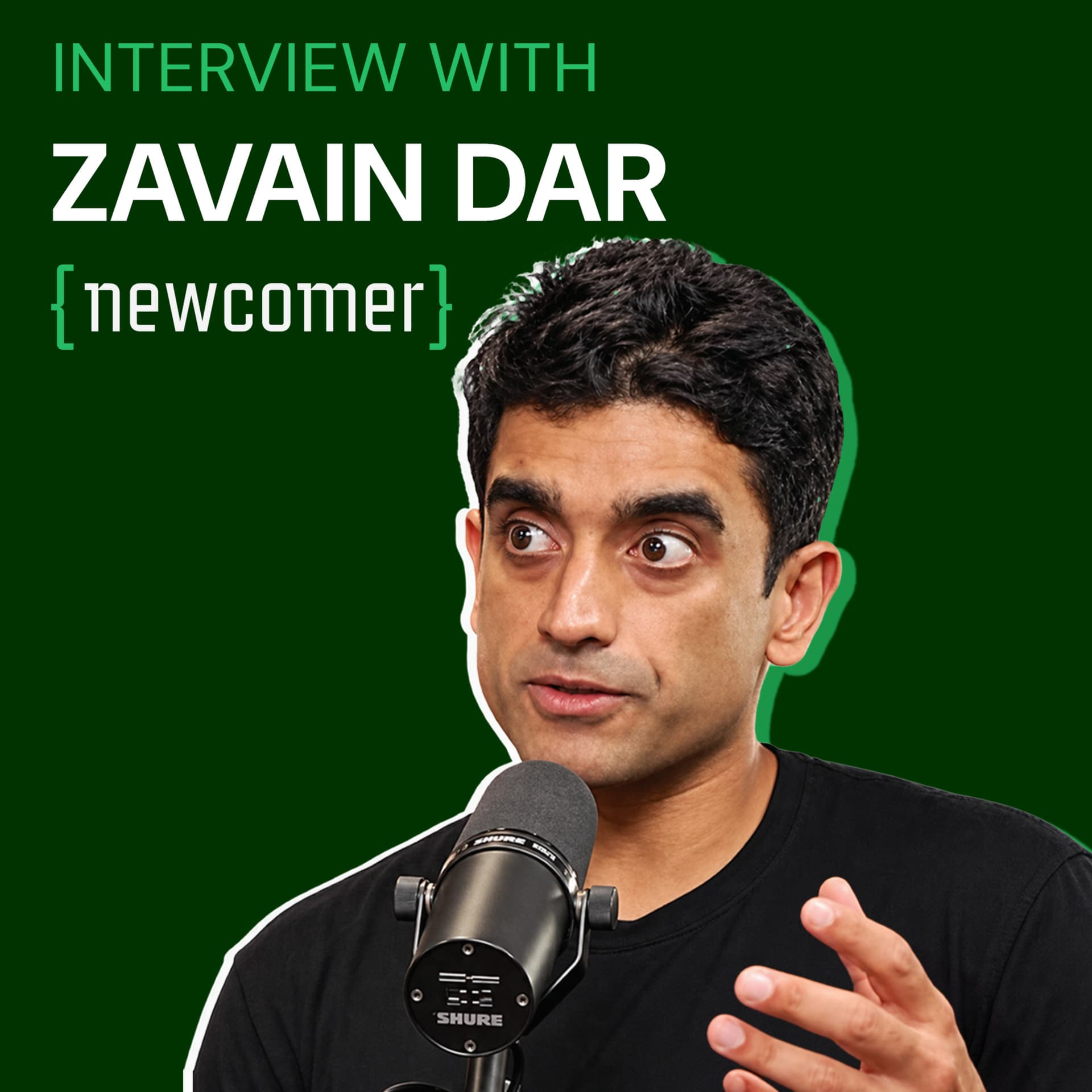
Ed Zitron is a prominent AI skeptic and journalist/newsletter writer known for long-form takedowns (described as ~18,000 words). He runs a critical AI commentary platform and frequently challenges AI company claims.
Key claims
- No real ROI: companies talk about theoretical future potential, not present value.
- Cost deception: consumer subscriptions hide true per-token costs; token-based billing will expose the economics.
- Token “unit of work” is unmeasurable for users; enterprises are already “token maxing” (e.g., Uber limiting engineers; GitHub Copilot moving to token billing triggers backlash).
- IPOs are risky/shouldn’t be allowed; losses and accounting narratives will be revealed in filings (S-1).
- AI adoption is partly “manufactured consent” via media/product pressure and executive demos.
Notable examples
Uber’s token burn and COO quote about ROI; GitHub Copilot token-billing complaints; Anthropic profitability tied to Elon Musk compute discounts (Colossus); SpaceX IPO as a valuation stress test; “Claude slop” as a quality critique.
Written by AI. May contain mistakes. Listen to the episode to check what was said.
Chapters
Tap a time to open that second in VOEd Zitron's Perspective on AI
0:44 to 2:44
Ed discusses his critical views on AI, referring to it as a bubble and sharing his unique monikers.
“Ed Zitron, welcome back to the Newcomer Podcast, round two.”
Debating the Value of AI
2:44 to 4:50
Eric and Ed explore the perceived value of AI technology and the expectations set by companies.
“To give context to people coming to this episode, I host an AI conference.”
The Illusion of ROI in AI
4:50 to 7:20
Ed argues the lack of real return on investment in AI and how costs are obscured from users.
“Like, where are you right now on the like it sucks, nobody wants it versus these numbers are made up or like what is your core case against the foundation model companies today?”
Regulatory Concerns and IPO Speculation
7:20 to 11:20
The discussion shifts to concerns about regulatory oversight and the potential for AI companies like Anthropic and OpenAI to go public.
“And so the experience of AI, the value judgments of AI are all based on phony metrics, an outright con about the costs, and quite frankly, a very weird psyop.”
Comparing Uber's Financial Journey to AI
11:20 to 14:02
They compare Uber's financial strategies and challenges to those faced by AI companies, highlighting lessons learned.
“And, you know, we'll talk about the Uber analogy because I covered Uber very closely.”
The Hidden Costs of AI
14:02 to 15:12
Discusses the lack of understanding users have regarding the cost of AI services.
“But I do – the specific – one major contradiction that seems to appear to me in your argument is that people see the cost being high and they freak out because they want the product desperately.”
Value vs. Price in AI
15:12 to 17:45
Explores the discrepancies between perceived value and true costs of AI products.
“I'm saying that the value they get out of it is based on the idea of subsidies.”
Token-Based Billing Debates
17:45 to 19:32
Analyzes the implications of token-based billing models in AI.
“That would be if like Uber rides were$5 and then became$1 ,500 or$300.”
Model Complexity and Costs
19:32 to 22:21
Examines how the complexity of AI models leads to increased costs for users.
“Well, but before we get on from the token thing, there is an important distinction I need to make, which is models are burning more tokens.”
Incentives in AI Development
22:21 to 23:51
Discusses the incentives (or lack thereof) for AI companies to improve efficiency.
“It gets more expensive because people get more ambitious about what tasks they're going to do.”
Show all 24 chapters
Predictions on AI IPOs
23:51 to 27:44
Speculates on the future of AI companies regarding public offerings and market reactions.
“You can, people will say, oh, we're just picking out a few edge examples.”
Concluding Thoughts on AI's Future
27:44 to 28:00
Wraps up by emphasizing concerns over AI's sustainability and market strategies.
“I think that there is going to be a reaction based on the SpaceX IPO.”
Concerns About SpaceX and AI Valuations
28:00 to 29:00
Discussion on the limitations of SpaceX and the speculative nature of valuing AI companies like OpenAI and Anthropic.
“I mean, to be clear, I think the SpaceX IPO to me is uniquely worrying.”
The Flaws of Annualized Revenue Reporting
29:00 to 30:50
Critique of annualized revenue as a metric and its potential for manipulation in the tech industry.
“I think that, I don't know about Anthropic, but the fact that - Dario Amadei, I have to give him credit.”
Debt and Growth in the Tech Sector
30:50 to 34:20
Examination of the need for significant debt in the tech sector to sustain growth, particularly for companies like NVIDIA.
Consumer Receptivity to AI Models
34:20 to 37:50
Discussion on the varying consumer experiences with AI models and the perceived value they provide.
“Then why are we only really talking about code?”
The Marketing of AI Technologies
37:50 to 42:00
Debate on how AI companies market their products and the societal pressure to adopt AI technologies.
“I sold 4 million of them in the first year, man.”
The Perception of AI in Business
42:01 to 43:30
Discussion about how executives perceive AI and the implications for their businesses.
“And these people, they get this tool, and they're able – AI, so Mobitar, fantastic.”
Skepticism of AI's Future
43:31 to 45:38
Exploration of doubts regarding AI's advancement and the future of human jobs.
“Point is, these people don't experience problems, so they have no idea.”
The Limitations of AI Models
45:39 to 48:03
Discussion on the limitations of AI models and the misconception of their capabilities.
“Right, but there are related techniques involved.”
The Standards for AI Performance
48:04 to 49:58
Debate on the standards expected from AI systems versus human performance.
“And I think the problem is, is that people conflate those things.”
Critique of AI Marketing
49:59 to 53:05
Criticism of how AI is marketed and the disconnect with public perception.
“Based on what they've been talking about.”
The Value of AI Today
53:06 to 56:00
Discussion on whether current AI technology justifies its trillion-dollar valuation.
“I'm not saying I wasn't talking about you, man.”
Valuing AI: The Trillion-Dollar Question
56:00 to 57:33
Explore the worth of current AI technology and the investments behind it.
“I'm just saying, the critique of negativity is we need some sort of like, if not this, what are you proposing?”
Transcript
Automatic transcript. May contain errors.0:00Eric Newcomer:Today on the podcast, I finally bring Ed Zitron around on AI. Lifeless, it's empty, gonna look like a dog's asshole on Thanksgiving. You stupid, you moron, why don't you like data centers? Okay, maybe not quite, but I do have a lively debate with tech's loudest AI skeptic. So how are you gonna get around to the return on investment thing? He's like, yeah, somebody will work it out. Sammy, clammy Sammy, this is your job. From his podcast, his newsletter, and his 18 ,000 word takedowns, He has made one thing very clear. AI is a bubble that's about to burst. I'm Eric Newcomer, author of the Newcomer Substack.
0:36Eric Newcomer:Let's get into it.
0:44Eric Newcomer:Ed Zitron, welcome back to the Newcomer Podcast, round two. Thanks for having me. We're live, in person, just you and me, mano y mano. I asked Claude for, I don't know, what did I say? give some monikers for you all right we've got the hater laureate cassandra of compute the doom sommelier tech's designated mourner the bard of the burn rate chief bubble officer uh the last honest man it's that that's a charitable one i guess i just like i asked the dog would it give me just i'd be just as excited as good though the dog wouldn't I would care. I would have more respect for it. It's just like those are things that you get people saying in your mentions every so often.
1:32It's like a regular person, like, good on you, like a normie. But it's like Claude Slop. Okay. Hey, Talorea. Okay. Just like such – it's so unexceptional. That's the thing. It's not just mediocre in all these different ways. It's just like you read the text and it just feels lifeless. And if you go on Substack, I think it's mostly Claude written. all subsac yes so many we saw yeah there i forget the company's name but there's some pancrum right yeah yeah yeah and it's just it's very depressing and so it's lifeless it's empty even human written linkedin slop evokes some kind of reaction even even if it's just reminded of the feeling of being at a conference you still there's still something human about it even if it's quite boring but you read the claude slop it's not just this it's it's this and that That was the twist.
2:22That was the turning point. There's these little linguistic tropes. It's just sad. It's not even good. It's not like we're still in this. Years in, we're still like, look, yay. It can kind of write like a person and it sucks and you can tell every time. It's just so boring.
2:40Eric Newcomer:That gives us a taste of where you're coming from. To give context to people coming to this episode, I host an AI conference. I write in Substack newsletter that is not AI sloppy written. That I pay for. Thank you. That's great. Big fan of your newsletter as well. And though it obviously has a point of view we will get into here. Yeah. We did one episode before nine months ago, sort of disagreed. For context, for the viewer on me, I feel like I'm somewhere. I host an AI conference. I wrote a case against OpenAI's valuation at, I think it was$157 billion, which is March past. I sometimes report data that you're happy to have.
3:27Eric Newcomer:So I feel like I sit in some middle ground where sometimes we're allied, sometimes we're clashing heads. And here's the thing with you. I know we don't agree on everything, but you published Tom Dottin, who's a fantastic journalist, who is also quite critical. You yourself are one of the few people who's been even positive you are still willing to critique Anthropic. The co-to date. Where they said, oh, we think it'll be worth$1.99 trillion. I don't want to say two. That would be ludicrous. We couldn't possibly value a company that burns billions of dollars that much. And then Elon Musk comes along and is like, oh, watch this.
4:04It's so based. And it's, but you at least try. You at least try and find some middle ground of, okay, you think that this will work, I don't, whatever. But you at least try and found that in something. And even then you bring in some critical. And I think that's healthy. I think it's the healthier way of approaching this for someone who is going to be pro-AI or at least willing to accept a pro-AI opinion.
4:26Eric Newcomer:I never want to have a shtick. I feel like my disposition is sort of I always like to poke and prod at things. So I think this, you know, we'll get into it and I'm sure we'll push back. But at first, I just sort of want to give you a chance, like lay out your case for a couple of minutes. Like, where are you today? Like what is there? There's sort of this like. It's a fraud. It doesn't work. Nobody likes it. You know, there's sort of the self-dealing aspect. There are lots of pieces to it. Like, where are you right now on the like it sucks, nobody wants it versus these numbers are made up or like what is your core case against the foundation model companies today?
5:04Eric Newcomer:So we're really talking about like open AI anthropic, like the case against them. So fundamentally, there is no ROI in AI. You can dress it up however you want. Look at how anthropic and open AI discuss their products in the sense that they don't. They're always talking in theoreticals in, well, the potential's there. Everyone's always talking about the fact that we are still having a conversation about AI's value and whether AI is real or not is kind of the foundation of my argument. in that if this was real, we would definitively know. We wouldn't have people saying emphatically like, AI is here and it's real.
5:39You don't need to say that. You don't need to say that if something is real. So I have never disputed that LLMs can do some code, but I think people have become a little overwrought about what kind of coding they can do and how reliable or stable or functional that coding is. But the biggest thing by far is that the con is the financial side. The con is the fact that most people's experience of AI is unrealistic when it comes to the cost. So you using ChatGPT, I believe the subscriptions will go away. I think we are just at the dawn of token-based billing, meaning that most people's use of clawed code, for example, is based on a relatively unlimited, you can burn between$8 and$13.5 for every dollar of your subscription in tokens.
6:27So, most people's experience of AI is separate from the cost, divorced from the cost. And this was a deliberate con on the part of Sam Altman and Dario Amadei, because they both knew that if they actually made people pay on a per million token basis to use these things, they go, wait, how much? Whoa, this thing messed up and I still had to pay. And you're kind of seeing that already with the enterprise customers, the Ubers and Walmarts of the world who are starting to have to pull back. This is the token maxing soul searching we're seeing going on right now. The thing is, Uber wasn't token maxing.
6:58I don't think they had a leaderboard. I think they might have at some point, but they burned through their entire annual token budget in four months, in the space of the first quarter. And then their COO, Andrew McDonald, said, it's getting hard to justify because you can't connect it to outcomes. This is, we are years in. Why are we all acting like this is going well? It isn't. And so the experience of AI, the value judgments of AI are all based on phony metrics, an outright con about the costs, and quite frankly, a very weird psyop. The whole thing is a psyop, the cult of personality around AI, the very much if you are in the out group and you don't like it, you're othered, you're different, you're a hater, you're a skeptic.
7:46and it's frustrating because silicon valley is meant to be a place of meritocracy it's meant to be a place where you're evaluated based on your value theoretically speaking remember the i don't know if you ever saw the github thing the meritocracy doormat they had no i remember when
8:02Eric Newcomer:they had like a white house yeah it looked like a cia thing which is also good we love that but the thing is silicon valley is meant to be a meritocracy yeah everyone coddles these things Everyone talks about these things like a gifted child. Like they're afraid that they'll get turned into an ear of corn, like that Twilight Zone episode for saying the wrong thing. I know. Oh, I watched your Bloomberg interview recently. And, you know, I used to work at Bloomberg. I'm very sympathetic to them. But their response to some of your criticism was very, but there are smart people who believe this. Like surely it can.
8:33Yeah.
8:34Eric Newcomer:I felt a little bit like, is that the best AI defense they're going to muster? So I just want to make sure – I mean I think argument number one is that the AI companies talk about what they can do in the future, not what they can do today. Your assessment of what they can do today is not that exciting to the extent companies are using it. It's often subsidized and or there's sort of this delusional sense of like clearly we're supposed to get some value out of it. We're going to spend – that that's going to come to a stop. What's your view? You know, Anthropic has now confidentially filed to go public.
9:09Eric Newcomer:I think you said in our last conversation there wouldn't be exits is now the view that they're going to try to exit, but they're going to pull one over on us. Like, what's your view on, I guess, when does this all come to an end? Like, does it survive an IPO? So I said this on Bloomberg. I don't think regulatory bodies should let Anthropica or OpenAI go public. I think that they are both irresponsibly run companies run by craven liars, both Dario Amadei and Sam Orman, sell their products based on what they might do, theoretically, rather than what they can do. Every time anyone asks Sam Orman how this will work out on CNBC, David Faber was like, so how are you going to get around to the return on investment thing?
9:47And he's like, yeah, somebody will work it out. Sammy, clammy Sammy, this is your job. You are the AI industry. But to your greater point, I think one of them is going to try and go public. I think they're going to bull rush this thing. I think it's inevitable opening eye files to go public. And based on some stuff I might have read recently, they sure shouldn't. They're losing too much money. Anthropic, on the other hand, is also losing just as much money. They had this, one of the most disgusting things I've seen done by these companies outside of the environmental damage, the stealing, the CSAM that Grog generated.
10:19Putting all that aside, Anthropic leaking that they are profitable in the two months that Elon Musk discounted their compute. do we not have an SEC anymore? Do we not have any kind of regulatory body? We certainly don't have a conscience in the Valley because everyone was like...
10:36Eric Newcomer:Your view is that they made a profit because Elon gave them a deal on their compute. Yes, and that's in the SpaceX S1. Specifically, the May and June in Q2, Anthropic will become profitable. Will, because it's June now. It was not when that story came out. And mysteriously, those are the two months, May and June when Elon Musk discounted Colossus 1 and 2 for Anthropic. It's just like, and what sucks is that's publicly available information. This is in the S1 for SpaceX. And people are still like, they're profitable now. It's like, yeah, you're profitable as long as you don't count the costs. And so it's - I mean, my view on this is we will get the answers when the S1 comes public.
11:19Eric Newcomer:Yes, I'm looking forward to it. And, you know, we'll talk about the Uber analogy because I covered Uber very closely. And you were actually one of the few people who are really critical of them. I was very critical. But in some ways, I learned the opposite lesson that you did, which is they ended up turning a profit. People over extrapolated from some of the private financials and drew these complicated models that, sure, like Uber was spending more aggressively. And they were like Uber pool never worked, right? So there were things about Uber that didn't work. They were worthy of criticism. but there are just limits to how much you can sort of do financial calculuses off of these like limited private numbers that we see.
12:00Eric Newcomer:Do you want to wait to discuss that? No, I don't. Let's talk about the Uber case because it forms both of our views. Exactly. So with Uber, for example, a lot of their money was marketing and R &D. I like to equate Uber to Groupon more than anything. Heavy, heavy marketing. And that was where they did the subsidies for the rides and all that. Also, R &D efforts within autonomous driving that I think went nowhere. Forgive me if you're not having looked recently. Also, the burn rate on Uber was just a different planet. I think they burned. Way lower. It was scary then, but now it seems like a joke.
12:31$32 billion in history. And Anthropic has raised over$75 billion in the last six months. So I think that that's altogether different. And also, the level of burn, the scale of burn, and the linear reality of it. it's a word I think basically as Anthropics revenue increases so do its costs except the costs are always up here same with OpenAI. Uber had a messy cost structure but they was they didn't change the unit of work the unit of um revenue so they didn't have a thing where it wasn't they tried the ride pass where you could just pay one fee and drive as much as you want but you still paid for a ride a customer was still paying to go from point A to point B.
13:11with the subsidized AI Labs subscriptions, they are training people and they've trained millions of people to use these things in a way that does not make sense and they pay the costs. The reason that you're seeing companies burn so much money is, imagine if you were driving your car and you just never really had to think about fuel. Fuel was just included with it perfectly. And then one day, and so you, actually no, let's reframe this. Use a cab service and it will drive you as much as you want. You get 300 rides a month. You could drive from LA to San Francisco. you can drive from just the upper west side to the upper east side no matter what it's always the same costs then suddenly one day they say actually gonna have to pay on a mile per mile basis you would have no idea how to plan your life you had planned your life around this subsidized unlimited thing and perhaps you could say that the other ride point to point from the original uber was like that no this is like if every uber ride used to cost three dollars and new ones cost 300 500 a thousand dollars people do not know how much their ai costs they have no idea how to measure a unit of work because they never had to think about it like if you were used to just loading up clawed going fix these bugs and it kind of does it and then it messes some stuff up and you poke it bonk it on the head a few times maybe it gets it right maybe you mess around with it but you don't know what it costs and you weren't paying the cost suddenly doing that would give you cte look at the people so github copilot which is microsoft's coding tool they just moved from a premium request model to a token-based billing go on the subreddit people are screaming like they're being stung to death by bees because they are fine they're finding they're burning through their entire monthly allotment which is just the price of tokens in like a day there's someone who did it in three prompts there's so much i want to respond to this So I'd like to take a move.
14:59Sorry.
14:59Eric Newcomer:But I do – the specific – one major contradiction that seems to appear to me in your argument is that people see the cost being high and they freak out because they want the product desperately. Like how do you reconcile with the idea that it's like people who are bullish on AI see the fact that people want to spend money on it, want access to it as evidence that it is doing well, that they see some value in it. Like do you not see that? I do see value in it. I'm not disputing that. I'm saying that the value they get out of it is based on the idea of subsidies. Because they have evaluated it based on it not costing what it really does.
15:35So if you use the product and you could do all this stuff with it, however accurate or inaccurate it is, you can say, well, that's a great deal at$200 a month. Is it a good deal at$300 a week? Probably not. You wouldn't be able to do as much. And I also think psychologically, you look at it differently. If something costs 200 bucks for a month and you run up against rate limits, fine, you can accept that.
15:56Eric Newcomer:So I want to talk through the Uber analogy as I see it. I mean, yes, I think Uber was a similar case where people felt like, oh, it might work at one price, but it won't work at another. And I think what happened was people got really upset in this amazing period where Uber was overpaying drivers relative to what they needed to pay them to get them to do the work, discounting rides to keep the riders from going to Lyft. And basically we had this like free giveaway and there was like a crowd of people online who were like very angry about this even though they were getting stuff at a big discount.
16:35Eric Newcomer:My treats. Right. They were getting it. And so then that period ends. Basically Uber and Lyft sort of come to a sort of equilibrium where it's I don't know. It's probably 85-15 or even more aggressive in Uber's side. And yeah, I mean basically they have to squeeze drivers more especially on airport trips. But there is a price where people take Uber. It works. It's not like the insane Google-level business that people thought. And things like Uber Pool, which we're supposed to allow it to sort of like get to scale, don't work. So there are pieces. I just don't think there's this like something's valuable at one – it's sort of a sliding scale.
17:12Eric Newcomer:And I feel like we didn't learn the lesson from Uber that this sort of like big hustle was had on us. Right. But here's the thing. When you take from Brooklyn to Grand Central, 50, 60 bucks, it's still within the realm of what you would pay for a cap. I am saying that what's happening with AI now is people went from, just for the GitHub Copilot example, this is not hyperbole. There were people who were paying 39 bucks a month and being able to burn$1 ,500 to$3 ,000 worth of tokens. That is not the same. That's not the same at all. That would be if like Uber rides were$5 and then became$1 ,500 or$300.
17:50dollars it's just a different economic scale and also you can plan around that still even though it's more expensive you can say okay this ride was 10 bucks damn i wish it was still 10 bucks but it's 50 bucks now with ai it's you don't know how to measure a unit of work that's the biggest thing like it's tough across models across harnesses use open code code using a deep seek model using jpt 5.5x high plus alpha you're using whatever you're using each prompt oh what are you having it do, it might act differently because hallucinations are a mathematical guarantee per open AI. So you don't know how to measure the unit of work.
18:27You also pay regardless of whether there is a mistake or not. If it gets it right, if it doesn't get it right, you are still paying on a per million token basis. So it's not like you can say, well, okay, I was spending 200 bucks a month. Now I'm spending 500 bucks a month. You're unaware. You have no idea. The more complex the work you do and because ai code is very verbose the more ai you use the more convoluted things are going to become and the more reliant you are on the machine to kind of work out what it's doing and those costs are dramatic they are unrealistic for most people they're unrealistic for most
19:02Eric Newcomer:organizations the models that we have today will be cheaper in the future right that we see that over and over again. What do you mean? Like the models of 12 months ago fall in price. The new models obviously are new, have new prices, but you're able, the old models become either offerings from Anthropic and OpenAI themselves and or open source competitors basically copy versions of that model and offer them at a discount. So I can see the argument that, and you've talked about this, sort of like the CapEx expenditure, The situation with Uber and OpenAI and Anthropoc are very different in the sense that OpenAI's costs are because they're spending a lot training a new model.
19:47Well, but before we get on from the token thing, there is an important distinction I need to make, which is models are burning more tokens. So even if the cost of intelligence comes down, the biggest myth of it all, even if a model might be cheaper in general, they are burning more tokens. Opus 4.8, but more tokens than ever. it's making and every time anthropic has released a new model it seems to get worse don't know if you noticed that they seem to be more convoluted they do things differently again burning tokens you're saying every anthropic model is getting worse if you go and look at twitter right now and see how people are reacting to 4.8 see how they react but they're comparing it to codex no they're comparing it to opus 4.6 man like they're literally comparing it they've and but this is the thing good example actually even if it's better it is still different which means you have an adjustment to it which means you are going to burn tokens but anyway they are burning more tokens chain of thought reasoning models burn more tokens so even if the model is cheaper on a per million token basis you're still burning way more tokens so you're burning more tokens and spending more money same thing with open source models this has been a consistent problem it's a problem with grog it's a problem with all of them and the thing is but you can bring if if you're happy as a company
20:59Eric Newcomer:with the model today, you can basically find a version of that model. You can make a version of that model yourself. What do you mean to make a version? People can build their own models. There are open source models that people use that they sort of fine tune themselves. There are companies that really build their in-house models. It's not like you're forced by Anthropic and OpenAI to shift off the model architecture that you like. The thing is, you're speaking in generalities here. Who has successfully done that? Microsoft just farted out six new models from Gooner himself, Mustafa Suleiman, who is apparently quite a horrible boss.
21:36I hear he goes nuts on Slack. But putting all my gossip aside. Going all over. Gossip about Kimmy and DeepSeek. Obviously, there are a lot of Chinese companies that have produced models. DeepSeek is running the Chinese wear them down process. They discounted permanently just to drag down American models. That's tactical. I love that. It's just funny to watch them do that because it's the kind of thing American AI labs have no idea how to do, which is political rat effing. I'm not going to swear today. But back to the core thing, which is it's kind of like the mileage thing. Okay, gas is cheaper, but you're driving an extra 50 miles, so it's not.
22:07It's still the cost of the journey is more expensive. So every model is burning more because the more complex they get, the whole mixture of experts thing that was meant to bring costs down.
22:18Eric Newcomer:It is not more expensive to do the same task. It gets more expensive because people get more ambitious about what tasks they're going to do. No, it's actually that because everything I've read is that go on the Claude Code. I love going on these subreddits because you can get a real taste test for it. They will find these things, new models going in crazy loops. The things that they could do before magically don't work. This is a common experience with large language models. Speak to these users. Certainly, it is true that when new models come out, they have like all these different edge cases and their personalities change, their sycophancy level changes.
22:54Eric Newcomer:So there is clearly a reaction where people are like, I used it for this one thing. It doesn't deliver on this anymore. But the companies clearly have every incentive and are measuring their models to make them better over time. Like they score them. I mean, just pushing back there, are they? Are they incentivized or are they delivering? I don't either because I don't think they're incentivized to. I actually don't think Anthropic has any incentive to make their models more efficient. Same with OpenAI. the markets are rewarding them for being big lossy messy companies and on top of that they have the various business idiots and various companies who will zillow i've been talking to people at zillow for a few weeks crazy ai psychosis over there burning over a million dollars a month in tokens but the thing is these companies are not incentivized to be more efficient and they're not incentivized to bring costs down because people anthropic believes that they have the mandate of heaven i believe that they're a deeply cynical organization and also they're burning more tokens.
Read the full transcript
23:53Like they obviously are doing it. You can, people will say, oh, we're just picking out a few edge examples. Are any of the people who are not, who are excited about this actually talking about the real cost? Probably not. And it's frustrating.
24:06Eric Newcomer:I agree with you that there's, you know, public companies, all sorts of companies have an incentive to show that they're getting the most out of AI. Yeah. And therefore they have a reason to spend aggressively independent of what they're delivering. I think you underestimate that companies do find value in AI. Like I feel like you. When? Well, literally my own company. My own company, you know, our ticketing infrastructure was vibe coded. Like we could have paid, you know, for HubSpot or whatever, some SaaS product. And you build your own version so that you can quickly change it. Quick question.
24:41Did you pay on a per token basis?
24:45Eric Newcomer:No, I doubt it. You're like, it's just not. That's the thing. You are living in a dream, but who is the dreamer here? This is the thing. You are experiencing it through the larger con, which is, yeah, it burped out some open source software. It burped out a copy of an open source CRM. You have it privately, so there's not really... I mean, I would make sure it's checked by a real coder, but you also did not pay for it. You paid for the subsidized rate. I'm guessing the$20 a month plan, maybe the$100 a month plan. I'm sure it's$100 a month. But that's the thing, though. This is my point. You didn't experience the reality of AI.
25:21You're the victim of a con. You have been convinced that something is a price that it is not. And Anthropic only moved companies to token-based billing, along with OpenAI, who do it much quieter. About three months ago, it was announced by the information in April, but it's been happening longer. And already they're screaming. They're like, I don't know about this. because it's one thing to say wow i'm spending 200 bucks a head and they get rate limits and they can go nuts nuts bananas on this it's another when you have people spending 1500 two thousand dollars a month uber just had to limit their engineers to 1500 a month which makes me wonder how much were they burning before because that's the thing at 200 bucks a month very different product to one that is a variable cost of 100 bucks a day 200 bucks a Anthropic's own documentation says that they think that people spend an average of 13 bucks a day in tokens on clawed code.
26:15That's not sustainable for the average person. And I think, ethically speaking, any journalist writing about AI should not use the subscriptions. I think they should only use tokens. No, no. Why are you laughing? I'm not even being aggressive here. I'm saying, why aren't they doing that? Because to have a realistic perspective on the actual efficacy of these models, you have to experience the horrors of this thing just went on a little loop and burned five bucks.
26:44Eric Newcomer:Yeah, most consumers are not going to want, consumers don't want an experience where the product could accidentally, you know, way overspend. And they'll, and they - Enterprises are sophisticated. I mean, enterprises are not sophisticated. Not always, but at least it's - I mean, in general, I mean, but the point I'm making is I think token-based billing is coming for everyone. I think it is an inevitability. The economics do not make sense for subscriptions. Everyone does this funny fusion dance of, oh, inference is profitable. No one has proof of that. Maybe if they didn't pay any training, there would be economics that may be lined up.
27:18But in truth, inference and training are one and the same at this point. You have to keep post-training. You cannot stop.
27:25Eric Newcomer:I mean, we're going to see the number. Do you think these IPOs are not going to happen? They're going to fail? Make a specific prediction. Oh, man. The thing is, things are so wacky. Because Anthropoc is like, we've confidentially, as they announced it, filed a S1. But we're not going to say when we're doing it. OpenAI, the journal, reported a few weeks ago since Burbogen, was like, oh, they're going to file soon. But they haven't yet. I think that there is going to be a reaction based on the SpaceX IPO. If it rips, OpenAI lists. If it doesn't, OpenAI slow rolls. But also I could see Sam Orton getting real mad and saying, I got to get this, screaming at Sarah Fryer.
28:04Eric Newcomer:Right. I mean, to be clear, I think the SpaceX IPO to me is uniquely worrying. It's a dog. To me, it's like the problem with SpaceX is it has failed to be the AI company it wants to be. And the space company has a limited ups. You know, there's just like you can value the space business and it doesn't reach, you know,$2 trillion. dollars. But so where we differ is, well, I don't know what the correct price of OpenAI and Anthropik is. I mean, but that's not my job. You know, it is not to pull the Bloomberg, but it is sort of the business of investors to speculate about the price and make bets and have sort of this competitive dynamic.
28:42Eric Newcomer:And that is ultimately what sets prices. So I think whoever goes public out of Anthropik and OpenAI stops the other one. I think that - You think it's so bad? Oh, I'm confident OpenAI is really bad. Very confident. And I think that - Like the numbers will appear and it's like, this is so abysmal. I think that the losses for OpenAI are going to look like a dog's asshole on Thanksgiving. I think that, I don't know about Anthropic, but the fact that - Dario Amadei, I have to give him credit. He is one of the best media manipulators in history. He's better than Jobs. He just, he knows how to do the financial stuff with the annualized revenue.
29:16He's so good at it.
29:17Eric Newcomer:But you complain about this a lot. Annualized revenue is useful to convey if your revenue is growing. It's not useful for something like API calls, though. Those are not monthly recurring expenses. There was some numbnuts who spent$500 million on Claude in April, I think it was, reported by Matty Mills. Your point of view, right? So if I report my ARR this month and then I have a problem next month, I'm going to be screwed if that number comes out because I'm going to go from a great number to a bad number. So you've been complaining about the ARR over and over and over again, but the revenue keeps going up.
30:01Eric Newcomer:Yes. The problem with using ARR is that the chickens can come home to roost at some point. The problem with ARR is not that they can come home. It's that you can manipulate it in any which way you like. Like, Anthropic has never defined what they mean by run rate. Not once. And I've read every single story. The information, I think, Sri over there, reported that they do it by taking the day's subscriptions, like the monthly subscriptions they have times 12, then their API revenue for the last four weeks times 13. API revenue is a really weird one to do on a recurring basis because that is going to flow.
30:34And as you see these cost cuts happening, yeah, that's coming down. so it's just like revenue is how you should report revenue and you should all of also all of these things are non-gap it's the non-gapiest non-gap that's ever non-gapped and it's frustrating because they share the run rate so that it's a really simple manipulative trick you meant to go oh 47 billion dollars of run rate that's how much they made this if they made 47 billion dollars that it's meant it is but these are i mean they're sophisticated investors doing it right i mean
31:09Eric Newcomer:what i'm sorry mate no i'm just saying like to a regular person the idea that it's like forward looking revenue might seem unusual but investors are very aware of what like 2025 revenue is versus like taking are they yes i mean are they getting audited financials or are they getting a powerpoint deck that darryama they do in the elizabeth home ceo voice shows good look at this do you think the books are cooked i don't think the books are cooked i think that at the end of every presentation is like the like a font size three series of disclosures that are like on a non-gap basis yeah if they even show i mean they're gonna go public so they will have to reveal gap financials i cannot wait because my god would it be nice to to stop having no i i don't mean this one but you know what i mean it's constantly defending this but here's the thing what you have been saying that we are in a bubble since at least 2024 right i mean what have you gotten wrong like there you have been negative in a period where everybody else has gotten more positive oh i i definitely flubbed how quickly it would end i will fully admit like 2024 i was like it'll end in three quarters i'm just wrong so what like like over and over again you're like this is the peak this is the yeah right and then early in 2025 i very specifically was like i'm not going to call the you just did call the peak again right didn't you do like it's a bubble the top is the ipos 100 i mean paul kudruski agrees with me he's excellent like you just had him on the show like the google equity raise google raising 84 billion dollars on the public markets like a goddamn middle low tier cap company come on man but the thing that is i agree with you that is a potential bubble sign i think though but not in the cynical way you're putting it's or like google's like wow people really think we're worth a lot of money like let's get some cash no i mean it's their share price they're allowed to get money you know to raise money i mean they're allowed to do it that's perfectly legal i'm just saying that they're doing it because the credit markets are drying up that's 100 what's happening well their equity is super inflated i guess we'd both say so they can get a good deal raising money at a high equity price sure but also the credit markets are running like that's what's happening here and that's one of the big things that people really don't want to talk about which is let's say nvidia does the thing they're meant to which is they're meant to sell a trillion dollars of gpus by the end of 2027 yeah sell by which i mean put in a warehouse that would i think that's like 15 or something gigawatts of capacity data centers aren't being built at that scale we are watching one of the biggest kickstarters a pre-order campaign of all time for there to be a trillion dollars of sales we're going to need like 800 billion dollars worth of debt we're going to putting aside cynicism or anything just dollars to donuts we're going to need$800 billion worth of debt.
33:51And for NVIDIA to keep growing at their current rate, in a couple of years, they're going to have to be selling quarter of a trillion dollars worth of GPUs in a quarter,$250 billion in a quarter. And again, the cash flow required to do this is so severe that Microsoft, Google, Amazon, and Meta all having to raise debt, all having to do dodgy little, what's called like off-balance sheet deals. Putting aside however we feel about AI, that is more money than I think is out there. People will say, oh, the money's on the sideline. there was a story in the ft saying banks are worried about choking on data center debt for this to continue requires an astronomical amount of money and then there's the messy little question of why what does building more capacity do does open if open ai had 10 gigawatts more capacity today what would they do what did anthropic do when they got access to colossus one from elon musk oh they are up the rate limits on claude yay like i mean the model the consensus is certainly that the models have improved yeah most people think the scaling laws
34:53Eric Newcomer:are holding true that the more the larger training runs you run the better output you get i mean you might severely pulled back on pre-training isn't it more the training i mean there are scaling still the training runs obviously there's like they're scaling on inference with chain of thought reasoning and also pre-training has got it's still happening right it's all of the above they are coming up with new techniques to improve the models in addition to trying to run right larger models Well, then why, here's the thing though. Then why are we only really talking about code? Like that's, that's a very, like we really only talk about code and there's, it's because there's a ton of training data for code.
35:26There's a lot of people that can post train the models.
35:29Eric Newcomer:I mean, I do think like a key, there's clearly a receptivity among like consumers to the argument you're making. And my view on it is that AI requires like proactive work. You know, you have to go out, you have to use the models, you have to find things you want from them. Still, I mean, when we talked last time, you were really emphasizing that OpenAI was like the only one. And now the top three apps, I believe, are like ChachiBetit, Claude, and Gemini in some order. So it's not just one like you've argued in the past. So that is another thing that changed. But the core issue is that there's a large audience of people that are like, I'm not – it's stupid.
36:07Eric Newcomer:I used it a couple months ago. It like hallucinated. And they're not like investing like the energy and time to like get value out of the models. To the extent they experience it, they get it through Google and they underestimate the extent that they're getting LLM answers in the first place. So they're sort of using Google results, forgetting how the product used to work, how it is now. And sort of it's pretty easy if you don't pick up the app, use it and spend time on it to say nothing's happening. And so people like this story of they don't derive any value. But then I feel like I'm using a fairly like it's not like I'm building, you know, like I have like my own server at home.
36:42Eric Newcomer:I'm using Claude in a pretty straightforward way. And I find that I derive a lot of value from it. From the subsidized thing. But also, this is not an insult. Were you describing - I'm bracing. No, no, no, no. I really want to be clear. This is not - Sure. Doesn't sound very intelligent. You're front loading this by saying, well, they haven't made the effort to make these things useful. That doesn't sound like AI to me. That sounds like a kind of scam. It sounds like something that someone on these model companies would say because they know that they can't just give you something and use it. When I used the first iPhone, I was one of the first people to buy it.
37:18It was in State College, Pennsylvania. Singular, wireless. That thing immediately, we were like, holy crap. This is the future. Using AI to this day, and I've played around with it. I've used it. I've really tried. I've thrown a few models in it. Messes things up all the time. Still does it.
37:34Eric Newcomer:This is the same fight we had last time where, I mean, you sort of presented AI as if it had been sold to the world and we've been like conned into it. Yes. But the iPhone was significantly marketed. Like it took the world a long time. Like most people did not use the first iPhone. I sold 4 million of them in the first year, man. Most of the. Yeah, because it was limited to a single carrier. I mean, I'm sure ChatGPT has more users than the first iPhone. Yes, but it was limited to a single carrier, singular wireless, and didn't come to Verizon, I think, for at least six months to a year. But Apple is the great marketing company.
38:07Eric Newcomer:The iPhone was sold to America in a way that the AI providers are fairly clumsy marketers. What are you talking about? Do you think the AI companies are good marketers? My man, what are you talking about? Everyone has been talking about AI nonstop for three years. Because as a culture, we're interested in it. No. Because it is the stuff of science fiction. Come on, man. It is not the companies forcing us to do this. It is something that humanity is in every country in the world is interrogating this. Since 2023, we have stories in mainstream media saying we should be scared of these things. We've had stories in the New York Times saying, turn it off, because it conned a task rabbit when it didn't actually do it.
38:45We have had it shoved in Google. We've had it shoved in every app we use, every single goddamn app, summaries, generations where we don't need them. Shoved. It's taken over Google search. It's been crammed in everything. Every company has been saying, well, if AI is coming along, it's going to take your job. Every news outlet has been talking about AI, AI, AI. And it's been done on the terms of the company. Every product is forcing you to Apple intelligence. That was not a consensual delivery of technology.
39:12Eric Newcomer:Apple intelligence, I'm negative on. Certainly, I'm not disagreeing with you on that. They forced chat GPT on people. They forced AI on people. Google. Microsoft puts CoPilot everywhere. where how how can you say with a straight face that this was a consensual exploration of this tech people were not told take your nokia 3210 throw it in the trash you'll lose your job take the iphone you pig that never happened there was no pressure campaign like there has been there's been this thing of but my point is that it is a sort of certainly there's pressure like bosses want employees to use aibs they see value but it is to me when you you say it's sort of like a marketing effort on the part of the companies.
39:49Eric Newcomer:Like, I think this is an organic idea that people are excited about something. I think you are ignoring things. I think you are ignoring the fact that both Altman and Amadei have - Like, the Super Bowl ads that they ran, like, Anthropic Super Bowl ad was, like, not effective. It was, like, one of the worst ads that has ever been run. Like, they're bad marketers. Except they managed to pretend they weren't involved in the war in Iran. And then managed to get Katy Perry and a bunch of other people to say, je suis claude because nobody paid attention to the fact they've been working with the government since 2024 but the point i'm making is altman i that was a pretty big severe i i mean that's what happened but that's we can get back to that in a second the point i'm making is altman has been doing the big scary technology thing mira marati was on the daily show in november 2022 like this is not something where this is manufactured consent at scale iphone didn't happen i promise you because i remember being a pc zone magazine and turning to my editor and go we should write about apps on smartphones he went ah mate it's not gonna happen i'm serious i don't push back on this because i'm just being a hater i like i i push back on it because it is it is manufactured consent for a technology and an anti-labor technology at that and more importantly the media fell for it for it to be anti-labor it needs to work no it doesn't why it just needs to be an excuse but if the jobs weren't needed in the first place then what do you mean the jobs weren't needed i'm saying excuse to fire people that the companies were not finding value from how do you know they weren't no i'm asking you it's an excuse to do what it is an excuse to start chopping off some people arbitrarily in a way that's damaging the companies because they are for companies to decide like that companies hire and fire based on the value like i mean i advise you speak to people from Meta and Oracle right now.
41:36Oracle right now, I think like 40 % of their renewals aren't happening because they fired the people and forgot to reassign them. You have jobs that aren't getting done across data centers. They're just hiring and firing. Executive AI psychosis, basically. It is. So think of it like this. You are a guy who makes $50 million of RSCs and cash a year, probably more on the stock side. And you have this chatbot. Every idea you've ever had, it's like you're the smartest man. That's exactly right. You should fire all of them. You don't need HR. And these people, they get this tool, and they're able – AI, so Mobitar, fantastic.
42:09He likes AI. Fantastic YouTube guy. Has a good point, though. AI is really good at a demo. It's good at making a very rough thingy, and that's all it takes to brainwash an executive. Nick Suresh quote. All you need for an executive is to cobble something together that looks close enough, and these people don't do work. Most CEOs go to lunch, leave lunch, and barely read their emails.
42:29Eric Newcomer:You know, one thing I – self-driving cars are obviously very relevant. they're interesting yeah and so you know self-driving cars the industry tried to get us very excited you know like a decade ago and they weren't ready because there were a lot of edge cases i think there's similarity to what you're saying with you know the demo idea which is basically a demo it's like it's mostly there and then people way underestimate how much it takes but imagine it all the way imagine if they used waymo and just they just fired all the cab drives every single one it's like that's good enough and then you just every time it rained you would just have the Waymo's jumping in.
43:02Eric Newcomer:But then it'll be a great opportunity for every business that doesn't. That's just like competitive dynamics in business. What business? What do you mean? What do you mean? Like businesses that hold on to their... If your case is that all these companies are going to find that they needed those employees, the companies that don't react this way will outmaneuver them. Like that's competition. Yeah, that's in fact, in the ERP space of the Oracle, they're finding a bunch of churn to other ERP, enterprise resource planning companies. That's happening. I think Meta could die in 10 or 15 years because of the things that Zuckerberg has done to it.
43:29I think Microsoft, people at Microsoft are miserable because Copilot, Copilot, Copilot. Satya Nadella, MBA. Sundar Pichai at Google, MBA. McKinsey. Mark Zuckerberg ran on MBA. Tim Cook, MBA. I think John Ternus is MBA. Point is, these people don't experience problems, so they have no idea.
43:47Eric Newcomer:Sorry, you're saying Zuckerberg has an MBA? He doesn't have an MBA. He hasn't written a line of code since 2006, apparently. Okay. Which is really funny. But getting back to the main point, which is I think people credit CEOs with way more intelligence than they have. I also think they think that these guys at the top, like Google, for example, they'd never make a big mistake. Go and use Google right now and tell me if that looks like a good product or it looks like if a startup released a search engine that randomly responded like a weirdo to you in 2014, Michael Arrington would have them shot.
44:17Eric Newcomer:I just I don't get the like moral lens. Like if these people are wrong, they're going to lose a bunch of money. And like if you don't like them, you can be happy about that. Like what's the issue? Like they're trying. The tens of thousands of people losing their jobs. The people across the world who have spent three years being scared, being told this thing that cannot do it. But regardless, still as if it could, being fired, being threatened. They open the newspaper every day. There's a completely fictitious story. But which is your strategy for them? Like are you long like just like human heavy businesses?
44:49I'm not long humans. I don't invest in the market. it i people have this weird thing like oh what are you showing i'm not i like writing i actually care about this stuff and i think people love love but i'm just saying what's like the positive
45:01Eric Newcomer:vision for for the world what do you mean well i'm just saying it's very focused on on sort of like the negative like my view of the ai industry is that people are building interesting stuff that they think i mean i do think it will help with drug discovery research all sorts of not really generative though you're you're mushing there are there are different tech some of the techniques are thing though but there are different techniques like that's the marketing technique though they want you to think all ai is one blob when ai is many different things and the thing everyone's so your your criticism is specifically text generative generative ai so video video but like the techniques that like allow for alpha go and alpha fold i do not believe is generative Right, but there are related techniques involved.
45:46Eric Newcomer:Certainly Demis, who is creating them, is across all this stuff. Are you skeptical of him? Yes. So Demis, no about all science, but chemistry. And also, AI techniques within chemistry, not generative. Every time I see him on stage, he's like, I think that in 10 years, the computer is going to wake up. And irresponsible, disgusting. I think it's disgraceful to constantly do this thing of AGI is just 10 years away. You want to know why they're talking about AGI? Because the current stuff isn't good enough. I don't find a lot of coders who don't. Like coders seem to believe that this is impacting their career.
46:26Eric Newcomer:Like do you disagree with that? Some are. Carl Brown, the Internet of Bugs, puts it where it's like it makes the easy things easier, the hard things harder. There are people that use it who just ignore the outputs. And the thing is, you can make really clumsy, fudge software that sort of kind of works until it doesn't before LLMs. There was a bunch of software within major hyperscalers that just didn't work. This has compounded that problem. The problem with LLMs, one of the most dangerous things about them, is they can make an incompetent imbecile seem semi-competent. They can hang around and do more damage.
46:59It's far more damaging to have someone with an LLM who can't code or can barely code, who is able to pretend they can and get responsibility than it is for that person to just not be able to do that.
47:11Eric Newcomer:Not to sound like a tech person, but what you're describing is, you know, democratizing intelligence. You're saying that there's someone who doesn't know how to code, that you're giving them more capability than they had before, and that there's something wrong about that because you want to keep it as the reserve of the super intelligent coder. You are crediting the models with intelligence they don't have. You're not giving these people intelligence. You're giving them a very complex autocomplete, which is still what it is. And people love that when I say that. You are giving them something that can do things that it's seen before.
47:41It can do shit off of Stack Overflow or what have you. It can do things from its training data. And it can, when you hit it enough, produce something that will work. Work does not mean stable. Work does not mean functional even. Work means functional enough that no one gets on their back. It is not democratizing coding to give an imbecile something that is as dumb as it, but able to do a better impression of someone who can do their job. And I think the problem is, is that people conflate those things. If these models were literally perfect, if they never made mistakes, if they were always good, we'd be talking about something else.
48:15What would it take to change your point of view?
48:18Eric Newcomer:Like, what could come true? They would have to solve all hallucinations forever, which they are completely incapable of. But humans make tons of mistakes. Like, it is very inherent to reasoning, like, one of us is engaged in logical fallacies here. Like, it is normal for human beings to think incorrectly. The mistakes a human being makes, they learn from. When a human being makes a mistake, even if they don't know they've made it, when they find out the error of their ways through trial and error, they can fix it. Some imbeciles don't. Some people don't. But they can learn. Models have no capacity for learning.
48:49They have none. The mistakes they make are mathematical certainties. they are not the mistakes a human being can make can be mitigated they can be learned from they can be trained into in a way that models cannot we do not learn just from having knowledge your
49:04Eric Newcomer:bar is no hallucination like none no mistakes of any kind why should that this just seems like humans make mistakes like even the best mathematician this is meant to be artificial intelligence they've sold this is the most powerful thing ever that's going to replace 50 percent of white collar workers why do i have to lower my standards when they keep raising them This just seems like you don't want to have machines involved. Like, it seems like a truly impossible bar. I use the computer all the time. Then what's the problem with AI? Why do I have to accept mediocrity? Like, that's my question.
49:35Eric Newcomer:This just is, I'm so dug in that nothing could change my point of view. We're talking about artificial intelligence, man. And you're saying, can't it be a little stupid? You're saying, can it be perfect? You're saying the date is perfect, I will accept it. They're talking about replacing 50 % of workers. But most of those workers, myself included, make many mistakes. Like the bar for perfect just seems like totally outlandish to me. It should be best. Based on their promises, no, it doesn't. Based on what they've been talking about. If they had solved this from the beginning, it's like, hey. Who is they?
50:04Open AI. These companies disagree.
50:06Eric Newcomer:They dislike each other. They're competing. Yeah, and they're all talking about some theoretical future. Demis, Sam Altman, Dario, they're all doing the same crock of crap where they're just saying this will do, this will do. when it does this if it like they're all talking in theoreticals if they have from the beginning solve this as a kind of experimental project that we need to be really careful with because it can make so many mistakes and they were like that's basically in 2023 that's how it was that's not there were people who didn't want to release man go back and read the stories i'm so sorry i mean there were people who are optimistic the employees themselves are true believers like there's a whole you know but it was it was called gpt3 like it wasn't branded in the most like Like in this amazing, I feel like you tell this story of like great marketing.
50:53Eric Newcomer:They're bad marketers generally. In the system card of GPT 3.5, I believe, there was a story that a task rabbit had been manipulated by the model autonomously. But when you click down into the meter study, it turns out that they had actually prompted it, asked it what it would say, preferentially chosen the responses. And then they intimated that they never did the experiment at all. They used that and allowed multiple different stories, 14 different stories, to talk about how ChatGBT 3.5 had convinced, maybe four actually, it was the 2023 era, had convinced the task of it and blackmailed them.
51:27Anthropic has multiple times done these stories saying Claude blackmailed someone. And what actually happened was they trained it to do something and it did it. It escaped a sandbox. Actually, it wasn't in the sandbox. They didn't escape it at all. So, yeah.
51:40Eric Newcomer:Actually, I don't you want them running safety tests like the tests are meant to see if they get the models can be manipulated to be running safety tests. Why do they keep doing weird manipulative things about them? Blackmailing when they're not white paper like just most Americans. Nobody is reading these white papers. Journalists are reading them and then reporting them in the most preferential way possible, which then informs regular people. So, yeah, actually, I do think my standards of most American like Americans are largely skeptical. It's the practical of AI. They've failed, right? Don't you agree?
52:13Eric Newcomer:The polling is negative. Americans don't believe in AI. Most Americans don't run companies and most CEOs believe this because most CEOs are disconnected from labor. That's the problem. Venture capital has predominantly funded AI because of things like this. Venture capital has failed to do the due diligence necessary because venture capital has Uber brain. Venture capital thinks that burning money is good. And I think it's perfectly reasonable to ask for perfection because that's how they're selling it. They are selling it as autonomous intelligence. This is the opposite. In your view, a bunch of rich people who are deluding themselves are lighting their money on fire.
52:47Eric Newcomer:Yes. What's the problem? You don't like the rich people who are lighting their money on fire. Because they're covering our country in data centers, ruining local environments, gas belching turbines that are ruining black neighborhoods. They are stealing from everyone. They are threatening everyone constantly in the media. And when people say they don't like this stuff, someone in the media will condescendingly say, oh, you just don't get it. You haven't used it. You need to do this. You're so stupid. You moron. Why don't you like data centers? Yeah, I think that that's pretty bad. You're the one.
53:20Eric Newcomer:You call people imbeciles, morons. Like, I'm not the one doing that. I'm not saying I wasn't talking about you, man. I was talking in general. But journalists are much more measured, I'd say. Go read the New York Times, mate. Go read other Times talks to people when they don't like AI. Come on. Where? When? Casey Newell and Kevin Roos, mate. Come on. Look at them on Twitter. Oh, yeah. You're engaged. I actually don't thought. I'm not doing the horse. That is a personality. I'm genuinely not doing horse trading here. I'm just saying it happens. And that has a real effect on people. And I think the tech media needs more empathy for regular folks, but also a genuine connection with how this has been sold.
53:58This has been sold as autonomous. It is not. it's been sold as intelligent it is not like it's sold on a life and it's now inflated the markets
54:09Eric Newcomer:when we talked nine months ago yeah you were very negative my view is that the models have only continued to improve i think the funny dynamic is that your crowd continues to not see that anything is happening like you're who is my crowd i don't know i don't know anonymous youtube fans like you're a very popular guy right right yeah you think you are selling something to a media consumer that they want to hear that nothing is happening but you've been doing it year after year after year i think what is strange is that optimism is framed as never not saying yours here the optimism which i actually don't think most of the ai industry is doing blind hope in technology and appreciation of capitalism is framed as a moral good that all investment is progress and skepticism and scrutiny is framed as other and different yeah the fact that you say your people but you can't even designate the group makes me wonder who that actually refers to regular folks who am i i don't i don't know you know your audience better than me you use the term no no i'm like who are your i just see them online they're a bunch of anonymous accounts i talk to a ton of people in the tech industry.
55:21I have a ton of tech works. I have janitors, line cooks. I have teachers, ton of teachers, ton of people in academia. I talk to people in the industry all the time. So yeah, man, I think the thing I represent is a person who loves technology watching the tech industry ruin it.
55:39Eric Newcomer:I just think we hunger for what are we creating as a society? What is our society moving towards in a world that is post-religion for the most part? is unsure of what Armenia is supposed to be, is looking for some sort of forward direction. I don't think AI is perfect. Society isn't post-religion? What are you talking about? I think... Church going is down, but there are many spiritual people. Tons of them. What is your... Anthropic just meant the Pope, man. What are you talking about? Like, here's the thing. I'm just saying, the critique of negativity is we need some sort of like, if not this, what are you proposing?
56:13Do you think that the AI industry is a hopeful thing? We're going to... Yes, yes. Dotting the world with data centers for a product, ruining local environments, spending more money than there's ever been spent on anything for a still theoretical outcome, for a still wholly theoretical outcome. Do you think that what we have today with large language models is worth a trillion dollars? God's honest truth.
56:34Eric Newcomer:Worth a trillion dollars. The thing, because that's what it's cost. All of AI? What we have got today with, yes, with large language models specifically, because that's where the trillion dollars went. Yeah. Yeah. I mean, we have, I mean, multiple companies that are going to get valued, certainly. So strictly on an equity basis, you believe. Right, right, right. Yeah, that's how things are valued. What are you asking me? Like, are they going to be valued over the next five years for more than a trillion dollars? It seems very likely. Okay, but that's not where the trillion dollars are. The trillion dollars of CapEx, like the trillion dollar, it's more than a trillion when you include investments via venture capital.
57:11You include the debt as well. Right, right, right.
57:12Eric Newcomer:Obviously, I'm saying the market is saying it's worth way more than a trillion. Okay, I don't care about the market. So I'm saying a trillion is easy. Yeah. You think that this is worth it. Say it stopped today and this was where we did. This is theoretical. Say nothing else happened. Would you say that this was worth it? The trillion dollars that's been spent. What we have today. Forget the air. That it was good. That it was money well spent. Is that what you're asking? Yeah. Yes. Thanks for sticking around with our second face off with Ed Zitron. I think he held too high of a bar for perfection there at the end.
57:42Eric Newcomer:This is the Newcomer podcast. If you want more, please check out the sub stack, newcomer.co. If you really want more, I have another show, Cerebral Valley Show, where I chop it up on AI with my Cerebral Valley co-hosts. It's on YouTube and everywhere else you get your podcasts. Like, comment, subscribe. We're building this channel out. Tell us who you want to hear from next. Tell them to come on the pod. Thanks so much. We'll see you next week.
From the publisher
Ed Zitron is back, and he's making his strongest case yet that OpenAI and Anthropic are running a deliberate con on the public.
In his second appearance on the Newcomer Podcast, Ed Zitron sits down with Eric Newcomer to break down why he believes there is no real ROI in AI, how Sam Altman and Dario Amodei have hidden the true cost of their products behind subscription pricing, and why enterprises like Uber are already pulling back. Ed also makes the case that the entire culture around AI is a psyop designed to silence skeptics and protect a trillion-dollar house of cards.
Eric pushes back throughout, defending the long-term potential of AI and pressing Ed on whether pure skepticism is its own kind of shtick. The result is one of the most honest and combative conversations about AI you'll find anywhere.