
In short
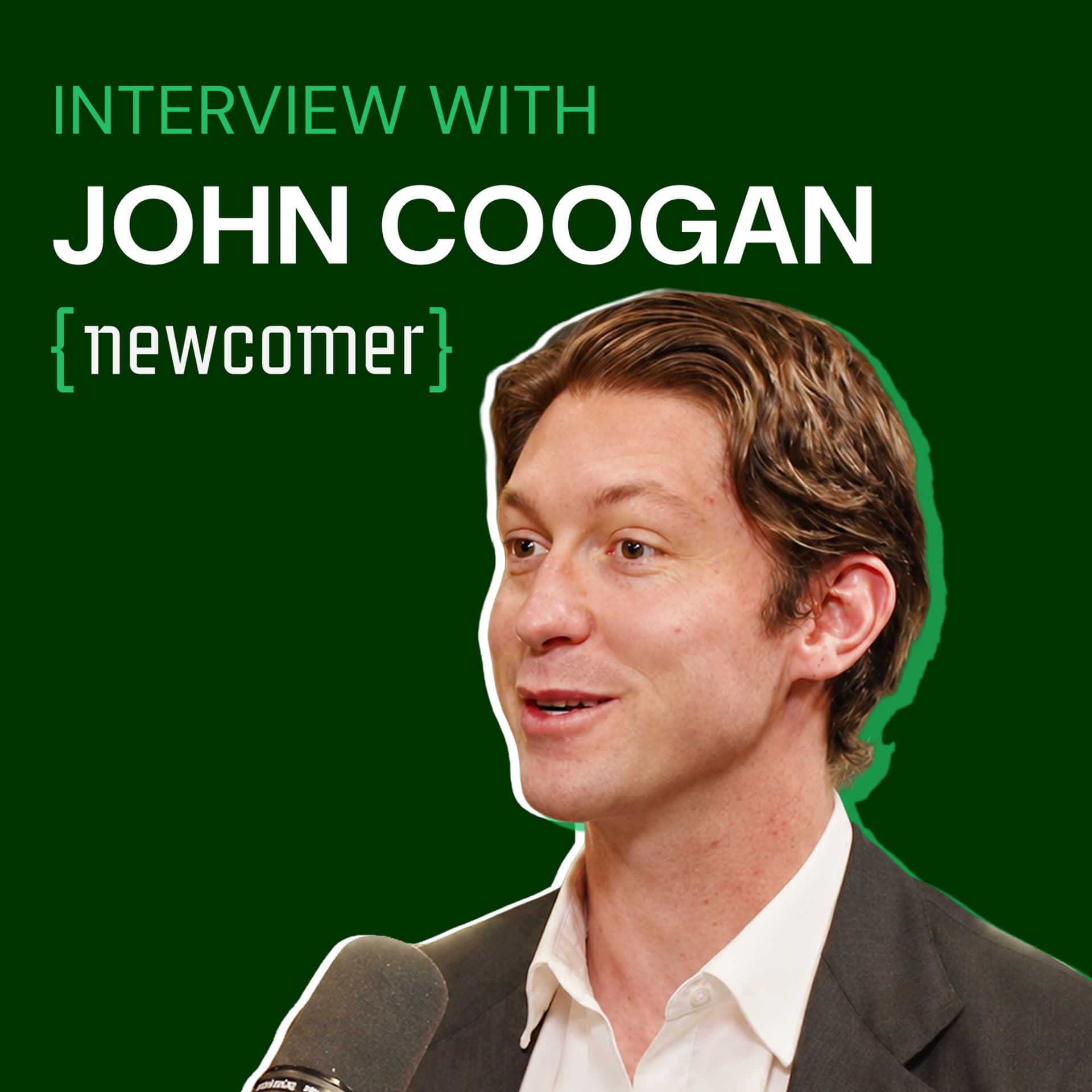
John Coogan (TBPN co-host) explains TBPN’s “going direct” media philosophy, how podcast comedy/characters shape debate, and why OpenAI acquired TBPN—plus what that means for tech media and Sam Altman-style messaging.
Guest backgrounds
John Coogan is a co-host of TBPN (“Technology Brothers”), a tech/AI podcast built like a media brand/network (two equal business partners, producer Ben). He previously worked at Founders Fund as an EIR and has done advertising/marketing-focused work (e.g., Ramp).
Key claims
- TBPN avoided becoming a “media company” with talent managers; it positioned itself like a network brand and sold distribution/partnership value.
- The OpenAI deal price wasn’t publicly confirmed; Coogan says it’s “hundreds of millions,” with no official comment.
- TBPN helped OpenAI via marketing/go-to-market expertise and access to enterprise/CEO audiences; editorial independence was protected.
- They use “suits/helmets” to stage steelman/strawman debates and keep conversations adversarial but informative.
Notable examples
- TBPN’s maximalist Ramp advertising (logos on frames; even a Zuckerberg Ramp read).
- Interviewing Lisa Su (AMD CEO) in a suit; joking with Max Hodak (eye-implant scientist).
- Coogan compares media strategy to “yes-and” coverage: founders should do CNBC/Bloomberg/WSJ/NYT plus social/video, not just one channel.
Written by AI. May contain mistakes. Listen to the episode to check what was said.
Chapters
Tap a time to open that second in VOThe Origins of TBPN
0:54 to 2:09
Discussion on the beginnings and evolution of TBPN and its creators.
“And we had this idea that there's this barbell effect in media where you either want to be a platform like Spotify, YouTube, Instagram Reels, or you want to be a creator, an independent influencer.”
The Barbell Effect in Media
2:09 to 5:50
Exploration of the dynamics between platforms and independent creators in media.
“I mean, some of it I'm sure you can take credit for in retrospect in some of it.”
Navigating Guest Appearances
5:50 to 7:58
Insights on how TBPN approaches guest booking and the importance of content quality.
“TBPN is born in this era of like going direct.”
Silicon Valley and Media Relationships
7:58 to 10:24
Analysis of the complex relationships between tech companies and the media.
“I think people, if they come on the show, they're trying to reach a different audience.”
The Decision to Sell to OpenAI
10:24 to 12:54
Discussion surrounding the decision to sell TBPN to OpenAI and its implications.
“Because it feels like I should be telling all my competitors, like, don't get earned media and then get the most earned media.”
Reflecting on the Acquisition Announcement
12:54 to 14:00
Reflections on the timing and context of announcing the acquisition by OpenAI.
“I mean, you haven't done a ton of interviews.”
Transitioning to a Media Business
14:00 to 15:11
Explore the decision-making process behind treating TBPN like a business.
“And we were starting to treat it a little bit more like a business and a startup, but we were very anti building a media company.”
The Role of Advertising in Media
15:12 to 17:46
Learn about the unconventional approach to advertising and its benefits for TBPN.
“But after that deal ends, like you retain the rights.”
The OpenAI Deal: Insights and Revenue
17:47 to 19:18
Gain insight into the financial aspects surrounding the deal with OpenAI.
“And we actually do like advertising as a business model.”
Advertising Strategy and Relationship with OpenAI
19:19 to 21:20
Discover the dynamics of working with OpenAI and its impact on advertising.
“I mean, basically, we'd done maximalist advertising.”
Show all 22 chapters
Collaborations and Market Strategies
21:21 to 23:38
Understand how TBPN collaborates with OpenAI on marketing strategies.
“But we're really happy with the folks that we're working with.”
Navigating Public Relations for Tech CEOs
23:39 to 28:00
Examine the challenges of public communication for tech leaders like Sam Altman.
“then we have time to talk to anyone at OpenAI about marketing and do the same thing that we were doing with all of those sponsors.”
Navigating OpenAI's Influence
28:00 to 31:02
Learn how the relationship with OpenAI changes perceptions in media.
“Just keep grinding and like just deal with it.”
Maintaining Authenticity in Podcasting
31:02 to 34:29
Explore the importance of authentic conversations in podcasting.
“Were you surprised by the reaction to the deal?”
Competition in the Podcasting Space
34:29 to 38:23
Understand the competitive landscape of tech podcasts and how differentiation matters.
“It's like everyone's like, yeah, like feeling that.”
Building and Sustaining a Podcast Routine
38:23 to 42:00
Discover strategies for maintaining a consistent and enjoyable podcast production schedule.
“And we're going to be bigger in certain places.”
Creating Engaging Content and Consistency
42:00 to 44:47
Learn how to produce consistent content that resonates with audiences.
“Uh, there were a lot of podcasts and there were a lot of newsletters.”
Navigating the Silicon Valley Media Landscape
44:47 to 47:02
Explore how media personalities interact and differentiate in Silicon Valley.
“I'm pretty sure – I thought turpentine was after that whole thing.”
Interpersonal Dynamics in Tech Media
47:02 to 49:56
Understand the importance of relationships and interpersonal dynamics in tech media.
“And I'm trying to understand them and then come away with some sort of understanding of like, okay, what is actually going on with this company?”
The Balance Between Critique and Support
49:56 to 55:10
Learn how to critique startups while maintaining a supportive tone.
“Like, it's hard to say how much we're pulling from that because aesthetically we're pulling a lot.”
Understanding Media Relationships and the Audience
55:10 to 56:00
Discover the impact of media relationships on audience perception and engagement.
“And like, I'm pretty sure we like dressed up like James Bond when the deal spy thing happened.”
Navigating Media in Silicon Valley
56:00 to 1:01:11
Learn about the dynamics of media relationships and launch strategies in tech.
“And so like that discussion is also important.”
Transcript
Automatic transcript. May contain errors.0:00Eric Newcomer:People keep saying this is around a 200 million-ish deal. Is that right? We haven't commented.
0:05John Coogan:I don't think we ever will.
0:06Eric Newcomer:It's hundreds of millions?
0:06John Coogan:I don't know.
0:07Eric Newcomer:God! I don't know. I was trying to do it on April 1st.
0:10John Coogan:What? I was trying to do it on April 1st. No, you weren't. Yes, yes. On TBPN.
0:14Eric Newcomer:Yeah. Are you playing a character or is that the person that your family and friends would meet? Where are you on the make Sam Altman sound more human effort? We are live from the newcomer newsroom, the sanctum of scoops, the cathedral of cap tables, the last honest man in venture capital. I didn't write that tagline. I'll take it though. We're here with John Coogan, one of the co-hosts of TBPN. To understand why the heck OpenAI wanted to buy his podcast for a couple hundred million dollars. What can I learn?
0:45John Coogan:Welcome to Technology Brothers, the most profitable podcast in the world.
0:49Eric Newcomer:We have a great conversation about media, tech, and all things AI model companies. This is the Newcomer Podcast.
1:03Eric Newcomer:do you think you would do a separate style show under tbpn so yeah the we would not uh we've
1:13John Coogan:thought about like line extensions we can talk more about that generally of like where the rest of the stuff goes but in general when we started the show it was called technology brothers and it was just me and jordy in a room i mean we had one producer producer ben who's still with us but there was an episode where Ben was traveling and it was just me pushing the record button, me and Jordy. So it was just us. And we had this idea that there's this barbell effect in media where you either want to be a platform like Spotify, YouTube, Instagram Reels, or you want
1:47Eric Newcomer:to be a creator, an independent influencer.
1:50John Coogan:For some reason, we still sort of violated that by having two people, but it worked out because we were equal business partners on this thing. And then once we had two people.
2:00Eric Newcomer:It's very Silicon Valley because you're co-founders. Yeah. Which is such a Silicon Valley thing. Yeah. And then the fact that you treat the whole show like it's really a company that you're building. Yes. Which then allows you to lean into marketing. Yes. I mean, some of it I'm sure you can take credit for in retrospect in some of it. Yes.
2:15John Coogan:Yeah, yeah, yeah. Some of it's a happy accident. I mean, the suits are a great example. These were put on originally, sort of ironically, as just like a funny thing. Like who dresses up in a suit for their podcast, for tech podcasts? certainly not tech podcasts because tech people don't wear suits. They wear t-shirts, right? And so we put them on just as like, oh, this will be a fun sort of gag. Like we're almost like poking fun at the tech people that we're talking about. And then yesterday we interviewed Lisa Su, the CEO of AMD. And it was very good that I was in a suit because otherwise I would look like an unprofessional interviewer.
2:48Eric Newcomer:I wanted to, that's actually gets us to where I really intended to start this interview, which is on TBPN. Are you playing a character or is that the person that you're like family and friends would meet?
3:01John Coogan:I am playing a character for sure in the level of energy that I'm bringing to things. That's for sure real. When I'm off air, I'm tired.
3:10Eric Newcomer:I'm on my phone. I'm distracted.
3:12John Coogan:When I'm on the show, I'm locked in and there's no dead air because that's broadcasting 101. And so if Jordy's looking something up or a guest is, you know, long-winded in a question, I might try and jump in and keep the conversation moving, add more context, justifying like how much context I need to add for the listener in the question. You know this stuff, but it's still interesting.
3:36Eric Newcomer:I'm a, you know, newsletter print guy, figuring out broadcasts. You really mastered it. And so, yeah, it's certain audience members. You play a character because definitely on a podcast there's energy. Yes. And the question is once you say, okay, admit to yourself, it is not your natural being. Yes. Then how much do you sort of find a character is layered on top of that or not?
3:57John Coogan:I think probably the deeper question less about like the performance is like, is the comedy a character? And I think it's absolutely not.
4:08Eric Newcomer:Like it leaks out from the real personality and it needs to be controlled down sometimes. Sometimes you're like less comedy. Yeah. I mean, we had Max Hodak on the show.
4:17John Coogan:Like the guy is doing, you know, eye ocular implants to cure blindness. Like very, very serious scientist, extremely well-respected. And like, I'm just having fun asking him like, so will this cure double vision if I'm drunk? Yeah. It's like, and he's like, come on guys.
4:33Eric Newcomer:But that's how you get viewers in. Yeah.
4:35John Coogan:And so we have an Overton window for sure on like what is permissible to joke about and what's funny and who, and is the joke on us or them? And with the jokes that you would make in an interview with Mark Benioff are different than the jokes that you'd make it with a series, a founder or something like that. You know, there's you have to adjust these things. And also, even the best comics in the world can't do three hours of great comedy a day. So it's more just like there's jokes and caricatures and exaggerated takes that happen from time to time. And that's one tool in the tool chest. Another is the steel man and the straw man.
5:10John Coogan:We have these physical helmets that we put on every once in a while. because it's very useful if we're going to have a discussion here. And maybe we agree that like YouTube is the best platform or Spotify is the best platform to grow your podcast. Like that's boring if we're just like, yeah, we agree on this. No.
5:27Eric Newcomer:So instead, one of us will don the suit, play the character, play the character.
5:31John Coogan:And it allows you to actually have more of an more of a aggressive adversarial conversation that the listener can sort of pick a side on. And they're not just listening to something that's being delivered as like, this is the fact. It's like, well, there are two sides of this discussion often. Those are the most interesting discussions. Let's try and illuminate both of those, even if one of us is sort of just playing the steel man. TBPN is born in this era of like going direct.
5:58Eric Newcomer:Or the idea that people in the technology industry and corporations generally should cut out the media and announce their own news. which I've sort of come to accept, is just sort of the reality of changing platforms. The question here is when you're booking a guest, and obviously for people who aren't close students to the show, one of the smart things you did early on was you didn't depend on guests. You built the spirit of the show pre-guest. So it wasn't just like a runaround.
6:27John Coogan:Yeah, we did a couple hundred hours of podcasting over a few months of just me and Jordy doing basically a few different formats. One was a reaction stream where we would pull up random tweets and news articles and just react to them. So here's the headline. What do you think? What do I think? And then we would do some other like deep dives, reading whole articles, providing context. Sometimes we do our own research and tell like the story of DJI or the story of something.
6:51Eric Newcomer:The guests definitely sort of gave it life.
6:53John Coogan:The guests really amplified it because then they will share the clips and they will share the news.
6:58Eric Newcomer:And part of your genius is like holding up the tweets and really making all shareable and making sure that the guests are engaged in sharing their own clips. But the question is, when the guests come on, do you think they're debating between like, I would have gone on CNBC or is it I would have done the announcement myself or it's just sort of an all of the above strategy? Or who do you think you're sort of competing with in terms of booking the guests?
7:21John Coogan:It's interesting. I generally recommend a yes and strategy for the founders that I talked to. Mostly because for the first year, we were the only weird like tech live stream thing.
7:36Eric Newcomer:So you have your own little category.
7:37John Coogan:And so I would say like absolutely go on CNBC. Absolutely go on CNBC and Bloomberg and get a Wall Street Journal exclusive and then a New Yorker profile and then a New York Times piece. Like get as much media as you can and then also do a tweet thread and a video and do everything. Just make sure everything is of high quality. Don't put out some slop thread or some like weird video that gets backlash. But if you can tell your story in multiple places, I'm all for that. I think people, if they come on the show, they're trying to reach a different audience. I think that our audience is different than CNBC and Bloomberg in terms of when it airs, we're much later.
8:16John Coogan:We're almost towards the market close. And so that drives different public market. Yeah. And just, and the, and the language that we use, we're very focused on Silicon Valley and tech, even though we branch out and talk about markets every once in a while, but we're not like, I don't know if you borrowed, I don't think you borrowed it from me, but you
8:31Eric Newcomer:love to say, uh, we don't want to explain who AMD is or whatever. And I launched, I think saying, I don't want to explain who like Bill Gurley and Mark Andreson are. I probably did.
8:40John Coogan:I unconsciously steal that from you.
8:41Eric Newcomer:So no, but I mean, I think TBPN and newcomer want many of the, you think it's one-to-one audience or?
Read the full transcript
8:48John Coogan:it's similar. I don't know. Would you explain who like Leopold is or Rune or, you know,
8:55Eric Newcomer:I definitely explained probably who Rune is. Like in some ways I'm bringing along the financial LP type who isn't sitting on Twitter, doesn't want to watch your show. And I'm like, here's the cliff notes of all that stuff you didn't have time for.
9:08John Coogan:Yeah. So I think if we, if we can use like signal on a first name basis for something like a non, that is probably a little bit more of the flavor of the early show. Now things are sort of like growing and changing as they always do. We're a lot, we're still, we're still online in, in the sense of like being on X, but we're, we have big audiences on other platforms and those are very exciting and very interesting to us. So it's been less of like try and be in like the teapot thing because we were never really silicate. We were never living in San Francisco. We were always sort of like in LA doing our own thing.
9:45Eric Newcomer:Teapot is this part of Twitter.
9:46John Coogan:This part of Twitter. It's like the, it's the deepest level of like tech Twitter.
9:53John Coogan:Very, the memes just move very, very quickly. So we would, we would sort of bring, we were friendly to that community adjacent and like would react or platform in some cases, like have some folks from that community on the show. Whereas I don't think those folks are getting called from CNBC, Bloomberg, 60 minutes. But maybe they should.
10:13Eric Newcomer:What is your read on Silicon Valley's relationship with the media today?
10:20John Coogan:Yeah. I think it's really mixed. It's easy to boil it down as like, oh, like never talk to a journalist. But what's a journalist? And also, is this just game theory? Because it feels like I should be telling all my competitors, like, don't get earned media and then get the most earned media.
10:37Eric Newcomer:Well, Lulu, Chang, Mercer, you've got on your show, we both like. Like, you know, she advocates for talking to the New York Times.
10:43John Coogan:Yeah, she pretty quickly said like, this is the going direct playbook. But and it's framed in, you know, a little bit of like, this is the greatest thing ever. But she was quick to, you know, explain that it's a yes and strategy. I think that the, like everyone in tech has good relationships with like some segment of the media. It just depends on, are you with CNBC? Are you a Kramer guy or you're a Sorkin guy? Like, what type of CEO are you? Well, like build real relationships, know their style. Yeah. Or even just like who would get you excited. There's certain, there's certain CEOs that would be like super excited to talk to one person and then less excited about another, usually because of the context.
11:25John Coogan:But sometimes there is just like an adversarial relationship where you're just like, oh, that reporter doesn't like me, doesn't like my business, doesn't like my, their audience doesn't like my company or my industry. And so we should be very careful to work with them. And that's probably reasonable. But I think that the general advice on going direct, I mean, it's rough for a lot of founders because I would have loved to have the ability to go direct on a few companies. I should be so lucky to have the New York Times hammering my door, being like, we want to write about your company. And I'm like, no, I won't do it.
12:04John Coogan:You know, not many founders are in that position.
12:06Eric Newcomer:I had Aaron D'Souza on this podcast. He was in the Founders Fund orbit. And he's a genius at building companies that are so provocative. Totally. In their posture. You know, he has enhanced games. Now he has this sort of anti-media one. And the ideas themselves just sort of contain such a like, oh, you hate me, but I want to talk about it so much. And most ideas, you know, you're like, you know, SaaS, whatever. Now it's an agent company. It doesn't really deliver the idea that people just can't avoid. And so then you need people with existing channels and the media has existing channels. We'll talk more about this.
12:47Eric Newcomer:I want to go head on on obviously the big topic, the decision to sell to open AI. You've been asked, but not a ton. I mean, you haven't done a ton of interviews. There was the Wall Street Journal article. Do you regret that it was on April 12th?
13:01John Coogan:April 2nd.
13:02Eric Newcomer:Oh, sorry. you do it live i'll do it live i messed it up not april i was trying to do it on april 1st
13:13John Coogan:what i was trying to do it on april 1st yes yes i thought that would be so funny it was confusing oh it was so confusing but the whole show is a bit it's a you know this like experimental
13:24Eric Newcomer:but don't you think it highlighted the ridiculousness of everything but that's the
13:28John Coogan:whole point of the show we're two podcasters that wear suits and talk for 15 hours a week Like we didn't want to take ourselves too seriously. And so, you know, at the biggest moment ever, the crazy plot twist. It's fun to have a little humor in that moment. On April 2nd, you announced that OpenAI had acquired the company TBPN, which was not really a company for a long time. It was just me and Jordy. And then we had set up an LLC and eventually C Corp. And we were starting to treat it a little bit more like a business and a startup, but we were very anti building a media company. We said we don't want to be talent managers.
14:10John Coogan:We looked at Hollywood and saw that there are incredible actors and there are incredible producers. And they actually have very separate roles, like a Spielberg and a Tom Hanks or Tom Cruise or whoever your favorite actor is. Like they play different roles. And some people can cross over, but we were like, well, I don't know if we can cross over anytime soon, maybe never. So let's just spend as much time as we can on the microphones in front of the camera, be effectively talent and take that as far as it will go and not build the company that would be hiring and poaching from different outlets and trying to build a newsroom, trying to build a stable of hosts.
14:53John Coogan:We always said like we are a show that has the brand of a network. And the TBPN, it sounds like ESPN, CNBC. There's a lot of benefits to that. It's just like novel because not many people.
15:06Eric Newcomer:So if it's a show, sell it to NBC or whatever or CNBC or whoever.
15:10John Coogan:That's the thing. You can't sell. You don't really sell the show usually. You sell distribution rights. So like Joe Rogan has a show. He's the talent. And then they do a distribution deal. But after that deal ends, like you retain the rights. This was a different thing because we sort of got, you know, drag kicking and screaming into like building a company. And the open AI thing was just a weird way to like work with us basically at a significant scale. The story of how it came together is sort of funny and interesting. uh we had again this this goes back to like the suits and like the where's the line on the irony and the jokes like we had been over the moon celebratory about the fact that chat gpt was going to have ads right which is something that no one was supportive of you guys love ads we love
16:05Eric Newcomer:which i think is genius like the fact i literally you know when i think about trying to get advertising myself i'm like i need an ad that i can bear hug the way you guys talk about ramp Yep.
16:13John Coogan:So we were doing ramp ads before they even paid us. We were like, this is the funniest thing to just be all in on advertising, all in on ramp, make everything look like an F1 car. We have logos on every clip, on every frame. It is maximalist in its monetization. Do you have a lot of ramp equity? No, not really. You were an EIR at Founders Fund? Yes, but I wasn't investing when I was at Founders Fund.
16:42Eric Newcomer:That wasn't based on like, oh, I've done reporting on that. That was just at all. I was just curious if you were doing stuff before they even paid you as an advertiser, if you had like - No.
16:50John Coogan:So before I, when I worked at Founders Fund, I made a whole documentary about RAMP for the love of the game. Didn't get any equity. But like that was the point of that role was to like meet people, learn about the business. I really understood the business. So when I went to them and was like, hey, I do want you to pay enough cash to fund the basically the full operation and the team that we built out that first deal that we did with them. We were tiny and they took the leap of faith because we really knew the business. We built a relationship with them and we were going to go above and beyond to deliver.
17:26John Coogan:And so that instantiated itself in like us renting a yellow Lamborghini or Ferrari and filming a whole video about it and putting ramp all over the place. I read Mark Zuckerberg ramp ad before he came on the show, which is something that like doesn't happen in podcast advertising typically. So we were like very, very creative with the advertising. And that led to just the natural follow through. And we actually do like advertising as a business model. I'm a huge fan of Eric Suford at Mobile Dev Memo. And I think the real intelligent trace through of the value creation from advertising is good.
18:02John Coogan:I think it's a good thing that it allows great products to be available and more free.
18:05Eric Newcomer:We got onto this with the point just that OpenAI has a reason to like you. You like ads. They want to be more of an ad business. Yes. Here are people who can be great evangelists for ads.
18:13John Coogan:So at a time when a lot of people were taking shots at OpenAI for various reasons, we had this sort of weird contrarian positivity around the company. And that led to doing interviews that weren't super hostile because if someone from OpenAI comes on, we're not like, what's the problem with you putting ads in LLMs? Like, this is bad. We were like, oh, cool. That's exciting. Can you hit the numbers? How big is this going to scale? What are the tradeoffs? And we sort of a priori agree on the strategy. And so then we can have a conversation. So I think it was a more elevated discussion with them.
18:50John Coogan:So that was always just like we had a more friendly relationship because we weren't adversarial in the way that somebody who doesn't like advertising might be. If that makes sense.
18:59Eric Newcomer:People keep saying this is around a 200 million-ish deal. Is that right? We haven't commented.
19:04John Coogan:I don't think we ever will. It's hundreds of millions?
19:06Eric Newcomer:I don't know.
19:07John Coogan:I don't know.
19:08Eric Newcomer:You won't say anything.
19:09John Coogan:I don't know. That's something I would want to talk to the team about and see. You have to know.
19:15Eric Newcomer:So you know the journalist. I don't know. He's going to bully me about the numbers.
19:18John Coogan:I'll tell you about the philosophy of the deal. I mean, basically, we'd done maximalist advertising. We'd done a lot of deals to sponsor the show and bring advertisers with us everywhere we go across all the different platforms. And that sort of underwrote the deal. And so we were a small team with a lot of revenue.
19:41Eric Newcomer:You were going to make$30 million in revenue in 2026?
19:44John Coogan:Something around there, I think that was reported. and the team was small. Like it was, it was a small team and there's not a lot of cost in media in general. And so that drives a multiple because they're like, we didn't run a bidding process where we were like, okay, we want to bid people off, but there was no like, well, we know they're going to run out of runway in six months. And so like, if the VCs don't come in and save them, like they're going to have to take our deal or let's come back to them in six months. Or, oh, if we don't do this, somebody else will. It was just like, look, we're happy to doing what we're doing.
20:20John Coogan:We like what we're doing. If you want to work with us, you have to offer a price that makes sense.
20:26Eric Newcomer:And how much are they buying the show versus your strategic advice around their sort of comm shop?
20:31John Coogan:So the show is still profitable. So like you can look at like the high price and be like, okay, yeah, it'll pay back over X number of years, right?
20:38Eric Newcomer:For a second, the next day when you announced that you had no advertising. Yeah, we can talk about that.
20:43John Coogan:Yeah. But advertisers are back. The business is great.
20:46Eric Newcomer:Did OpenAI originally not want you to have ads or you needed to go to all of them and make sure they were comfortable?
20:50John Coogan:Because it's like a plot twist.
20:52Eric Newcomer:And we're not just going to be like, hey, you're coming along for this ride.
20:56John Coogan:Right? We're going to be like, hey, let's reset, make sure that we're okay. We have this big editorial independence clause where they can't tell us anything. And so we can just do whatever we want on the show. But everyone's like, okay, I've got to watch the show before I believe that. Right? And so we had some time to actually walk that walk and talk that talk. And then advertisers were like, yeah, this makes sense. Did they all come back? No, we brought back like 10, which is still like a fair amount. But we're really happy with the folks that we're working with. Ramp is back. Ramp is back. Ramp is back, front and the top left.
21:27Eric Newcomer:But I was asking about sort of the show versus you guys sort of being comms strategists.
21:33John Coogan:Yeah, when we announced it, the tweet, normally we'd go direct and our tweets or our posts about whatever we're doing do well. But this story was so timeline dominant that I don't think we broke through with this one. But we posted from the official account, like we're very excited to be partnering with OpenAI to like do back office rationalization, like increase EBITDA margins and made it sound like, you know, it's like a private equity buyout. It's not, obviously. That's not what they're in the business of. They didn't buy us for the revenue specifically. or the profit specifically, but the profit stream does underwrite everything there.
22:06John Coogan:The real advantage to working with us is basically with every advertiser that we'd been working with, again, real package view, sort of 360 deal. Everyone was on an annual contract. Everyone was sponsoring every single show. So there was no, I just want to sponsor Wednesdays or, oh, I'll come on for the Mark Zuckerberg episode, but not the next episode. And as part of that, we would make ourselves available to talk about marketing strategies, podcast distribution strategies, all sorts of different go-to-market strategies for those companies. Because we have our own network. You see how many influencers we interview.
22:47We have a lot of people that we can help with a brand, like distribute their marketing materials across, do deals with.
22:56John Coogan:You're super connected, but what's the thing you're helping open AI with? So specifically like marketing and go to market. For chat, YouTube. Well, a lot more codecs now and like enterprise and because that's who we're talking to. So there's like, there's a few different buckets, obviously a huge company. But we're talking to Fortune 500 CEOs all day long, enterprise CEOs, scale up, startups. And the more that we can do to help OpenAI win in that arena through their marketing across all sorts of services. I mean, we run Codex ads during the show. I think that that will provide like complete justification for the deal.
23:37Eric Newcomer:From people watching, executives watching the show and deciding to. No, no, no, off the show.
23:42John Coogan:Sorry, off the show. So there's a separate piece. We do the show.
23:46Eric Newcomer:Yeah.
23:46John Coogan:We get off at 2 p.m. then we have time to talk to anyone at OpenAI about marketing and do the same thing that we were doing with all of those sponsors. We have less sponsors now. And so we have more time to help OpenAI specifically.
23:58Eric Newcomer:But they'll create their own content to reach those people? No, no, no. Or who the people are? So I don't mean to be obtuse. I'm just trying to understand it. Yeah, yeah.
24:05John Coogan:I mean, there's a whole variety of projects. We can't talk about everything that we're launching and everything we're working on. We're only three months into this. But you can think about all the different marketing spend that OpenAI is working on. We are available to help try and bring our expertise to bear across any projects that they're working on as needed.
24:26Eric Newcomer:Where are you on the make Sam Altman sound more human effort? I mean, you guys, I think you have talked on the show about Steve Jobs being like a great spokesman for the Valley. I'm not saying Sam's like terrible. I do think both Sam and Dario have the problem. Dario may be a little more naive about it. We're like one clip is all it takes. You know, it's like if they ever had a clip that was sort of awkward. Yeah. The internet holds onto that. And then it goes viral again. And then people are like, what? Like, why would they do it again? It's like, no, that's an old clip that keeps like going viral over and over again.
24:57Eric Newcomer:But still, Dario, you know, gave that. Yeah.
25:00John Coogan:So Dario goes viral for something he said like two years ago or something. And it's like, it's a, you know, it's a prediction. It played out slightly differently. He's backed off of it. Like, it seems totally reasonable. I agree with you. the sam one that goes viral is crazy because he's like ai will create a bunch of great businesses in the short term but in the long term it'll destroy humanity he said that like the month before he started open ai so it was like very clear that it was like this is a problem and i'm going to try and work on this and and it was said as like i've been thinking about this problem it's like being like oh like i think climate change is going to be a problem so i'm going to start an
25:35Eric Newcomer:electric car company but he had one that was more recent than that the testimony we're just i when he compares ai to like an electric company yeah you know i max our mutual friend who i go to i think on our he's like i don't want to pay the bell right exactly on our cerebral valley show which is where i chat show and like he's just making the point like nobody likes like people don't want monopolies i don't know it's a weird comparison that's not that's not making more human which is what i was saying provocatively but yeah i do think he can feel a little like
26:04John Coogan:i feel like not all the utilities need to be monopolies like some of them are competitive No, but nobody likes paying them. Nobody likes the sense they're like, oh, yeah, add another thing you could never escape.
26:13Eric Newcomer:I feel like, I don't know, it's a hard thing to sell AI. But are you involved in figuring out how open AI?
26:20John Coogan:Only, I mean, for that type of stuff, it probably filters through the show. Like, for example, that Steve Jobs post, that's been read internally, of course, because it's public. And I don't know. CEO comps is tough. It's a hard, it's so unique to each situation and the right context. And the context collapse is crazy right now where you can say you have like legitimate questions being asked of you from consumers, politicians, investors, governments. It's just all over the place and it's hard to come up with a one size fits all for answer for everything. And so I don't know. Like my default would be like figure out a way to – if you're going to talk to a politician, talk to a politician on like a really nerdy politician show and talk to technologists on like AI researchers.
27:25John Coogan:because a lot of AI researchers like do want to engage with a question of P-Doom or some, you know, some sort of philosophical discussion. But that's not going to resonate with a consumer. Like a consumer just wants to know like, does this app work? Like, what can I use it for? Like you're saying it's so cool, but like what does it do?
27:42Eric Newcomer:But the challenge is that niche stuff can get repurposed. I mean, J.D. Vance just went on Rogan. Yeah.
27:46John Coogan:And now, you know, my leftist podcaster is having a field day.
27:50Eric Newcomer:It's like great, great stuff, you know?
27:52John Coogan:Yeah. And so I don't know. But you don't want to retreat because then it looks like you're in this super defensive posture. So I don't know. I think it's just like you got to just out of the frying pan into the fire. Just keep grinding and like just deal with it.
28:05Eric Newcomer:But it's not a big priority of yours. No, no, no, no, no, no, no, no. Because when you announced it, you're like, oh, I know Sam Altman.
28:12John Coogan:Yeah, yeah, yeah. I mean, that was more just like it was sort of a contrarian move to like work with him at the time. And I was like, just based on my experiences, like we've had good, we've had a good working relationship throughout my career. Yeah. And that's what that was. That wasn't like, now I'm going to like be his, what's it called? Like executive comms coach or something. There's some term for like CEO comms. It's like its own thing. But yeah.
28:39Eric Newcomer:I understand. Well, if it's, you know, $102 million, I get that you're like, we had real revenue, you know, it's a reasonable multiple. Still, it's a pretty good deal. So I get it. What I don't understand on the open AI side is just if you have someone singing your praises, isn't it better that you don't pay them, right? Like it's nice if you guys were already natural defenders of them. Yeah. Why do they need you on sort of the payroll?
29:07John Coogan:Yeah, that was like the Ben Thompson take. It's a good one. I don't know.
29:11Eric Newcomer:I thought I had it right here. You're like, I'm kidding. No, no, no.
29:16John Coogan:That's just like the way I read it. I think it's just like the value add should outweigh that. Like there will always be like, yeah, some sort of criticism about like, is this particular opinion that they have because of their relationship with OpenAI or not? Is it independent or not? A lot of times if we're discussing something about OpenAI, we'll just bring on someone else to talk about it. Like during the trial, like it was really, really soon after the deal closed, OpenAI was in everyone's mind. And so we had Mike Isaac on from the New York Times. Everyone knows that he's independent and can give like a play-by-play.
29:50Eric Newcomer:You're not, whenever you bring up Boba Nei, being like, they own us, right?
29:54John Coogan:No.
29:55Eric Newcomer:Do you say it at all on air?
29:57John Coogan:Yeah, yeah. But I don't know.
30:00Eric Newcomer:I watch the top of the most recent episode. What would you recommend? Well, you know Casey Newton, a platformer? Yeah. I mean, I think it's insane what he does. But at the beginning of every platformer, he's like, my boyfriend, now I think they're his fiancee, works in Anthropic. It's like the lead, you know, I understand he expects people to skip ahead. And we're also suing OpenAI. It's like everyone. So I don't think you need to be that self-flagellating. I think Casey has gone overboard, but I don't know. I do. Well, there's almost an argument just like why not have the logo like, you know.
30:33Eric Newcomer:It's on the ticker.
30:34John Coogan:Oh, yeah. But it's Codex. It's not like, oh, it's Codex. Yeah, yeah, yeah.
30:38Eric Newcomer:It doesn't have the feel of like it's owned by OpenAI. Sure, sure, sure. maybe isn't very strategic to do. But yeah, I do wonder if you're signaling enough, like the ownership, but you're not journalism. I don't know.
30:51John Coogan:Yeah, I mean, I think we went, like the announcement went pretty viral. Like it was a huge deal. You're like, everybody knows. That's how I process it. It was like, because I was doing that and everyone was like, yeah, we get it.
31:02Eric Newcomer:Were you surprised by the reaction to the deal?
31:08John Coogan:Not really. I was surprised. It was hard because it was like, it was sort of like a hectic weekend. Just, I had a lot of stuff going on. And so. With the deal? No, no, no. Like after the deal closed, it was hectic. But that's when like the timeline was going really, really crazy. But I just had like birthday parties and stuff. So I was like, not as online to like digest it, but also probably like good. Yeah. Cause you're like, I don't know. You're saying after the deal,
31:34Eric Newcomer:you just were like, whatever, let it play out and don't. Yeah.
31:36John Coogan:But I was acutely aware that it like took over the timeline. It was the current thing, right?
31:40Eric Newcomer:Definitely. I mean, I think it was somewhat negative, but it was warning the fact that people were worried the show that they believed in and were excited about was sort of like calling it.
31:48John Coogan:There's also this thing with the current take where – with the current thing where every possible take sort of gets enumerated because once someone says one thing, there's not any more alpha. And so there has to be the contrarian take and the contrarian contrarian take and then back and forth. And so you just kind of let all that work itself out. And then the proof's in the pudding. You got to go just make the product. And I think the product's still really good.
32:10Eric Newcomer:And you guys are committed.
32:12John Coogan:Yeah.
32:12Eric Newcomer:I mean, it feels like. We love it. Like we genuinely love it. It's fun. It seems like part of the reason you're here is like, we're still doing it. We didn't like, I think there was this period of freak out of like, is this all going away now that it's OpenAI? And it's sort of like, you're still in the, you're still doing the show. Oh yeah. What is your big ambition for this show at the moment?
32:31John Coogan:That's a good question. The big ambition is to.
32:35Eric Newcomer:Sell it for hundreds of millions. No.
32:37John Coogan:no that i don't know i'm never gonna beat that allegation i guess uh but really like we were just like let's just start a podcast this is a lifestyle business we're we're doing like the low status thing right if not starting the startup that you're like grow i wish i could sell this thing uh and then you get what you like i've started two companies that where it was like it was like oh we're raising money for venture capitalists we got to raise more money and if we ever get an offer to sell that'd be great you know that's like the plan you know you're either
33:03Eric Newcomer:Are you growing or you're dying? Are you growing? Like what is your –
33:06John Coogan:So we're definitely growing. All the metrics are good. The ambition is to probably two things. One is keep the – like just keep that spark of the first hour, me and Jordy hanging out, having a conversation. Like keep that core conversation really high quality for the community that really enjoys that. That's really important. and you have to protect that in a bunch of different ways. You can't be on the road all the time. You can't be, you can't have a full show full of guests because then you don't have the time. You have to be prepping and talking and having conversations off air so you can have the conversation on air.
33:46John Coogan:So that is like a product that we really like and that's what we don't wanna die. The guest booking can change. Like sometimes we'll be doing more early stage stuff. Then we'll be doing more late stage public company stuff. Then we'll be interviewing people outside of the tech industry. Like there's a big moment in bio right now. Are we going to be interviewing more people in biotech soon? Like that all can change. But I think that first, you know, core conversation between me and Jordy, the banter between the hosts is what's most important to protect. And so it's not this like grand ambition of do something completely new.
34:25John Coogan:It's like, don't let it die because that's exactly the expectation that you're touching on. It's like everyone's like, yeah, like feeling that. So in terms of actual ambitions, like outside of that, there's still people I'd like to interview who haven't been on the show. And over the next 10 years. Have you had Elon on? We haven't had Elon on. He would be interesting to have on.
34:56John Coogan:He's someone that has done podcasts though.
34:58Eric Newcomer:right and uh do you have a yeah a person in mind or i don't i don't even know that i have like you've
35:05John Coogan:had so many of them we've had a lot but there's also like the quantity of of conversations with people and then how you're actually set up like there's always people that come on the show and like ah like we got their news done but i know that if we were just hanging out i could have really learned something from that person uh like just yesterday we were interviewing uh he's somebody who worked on image gen at google and now is running ideogram and we got to talk about the business you know and do 10 minutes of like yeah how are things growing what's the market what's your opinion on open source all the takes um but there's some there's a part of me that's just like i want to know like i want i want you to just be a professor for a minute and just like give me a little mini lecture and like advance my knowledge of your field and we don't always have space for that and so there's just like different puzzle pieces like you can check the box on someone without fully getting everything that you want.
35:56Eric Newcomer:Well, yeah, it's always a balance of doing it for the audience and doing it for yourself.
35:59John Coogan:Yeah. So you got to balance that. And then also, but I mean, in general, we've always leaned towards like, just do whatever we want, but there are two hosts. So if one of us board, you can tell. And then we do have a little bit more flexibility on that because we don't need to, like, we We don't have some absolute mandate on like grow the top line impressions number because we have advertisers and the advertisers were always like, we're coming along for the ride across all these different surfaces. It was never like, oh, like if we can get 10 ,000 more views, we can make 50 Bomer Bucks. Like it was never CPM driven.
36:37John Coogan:So in terms of other like goals, I do, I would like to be able to go and go and see certain events. And you see this on the calendar of the big milk in Davos, Sun Valley. Like there's a way to get there. Have you done any of those? What have we done? We've done a few. The problem is that a lot of the – Sun Valley obviously would be epic. Sun Valley would be epic. Davos would be really cool too. And I think it was on an upswing this year. It was a really, really cool event. Yeah, it felt like people were really excited. It felt like really important conversations were having there related to tech specifically, which was cool.
37:16John Coogan:but really, really hard from a production perspective. And how do you underwrite it? And then are you spending all this money? And then the audience is like, I don't really know. So like, it's not just, again, it's not just check the box. It's like, how do you do it in a way that the audience is like, yeah, this was better than just you guys hanging out in the studio talking shop like always. So there's that, there's, there's other things, there's other pieces of the media business puzzle. I'd like to do something like an event, but I don't exactly know the shape of it. But we've kicked around ideas.
37:48Eric Newcomer:Do you see all in as a competitor?
37:51John Coogan:That's interesting.
37:53Eric Newcomer:Because they got into events. Yeah. And I think of them and they're very different in some ways. They're similar in the sense that it's like –
37:59John Coogan:Do they come up a lot on the show or like how much do you see it as – I mean I love – yeah, we've had a few of them on the show. Actually, we've only had Friedberg on the show. But I worked with Friedberg years ago. Oh, I didn't know that. I really like them. At Climate Corp?
38:11Eric Newcomer:No, he was on the board of Soylent.
38:12John Coogan:Oh, interesting. We were both board members at the same time. But yeah, there's – I mean with all this competition, there's going to be overlaps and then there's going to be different things and there's going to be different audiences and they're going to be bigger in certain places. And we're going to be bigger in certain places. There's a lot to be learned from them. I mean they're like fantastic. But it's not like – yeah. Uh, it's, I mean, the, the, the really funny thing was like the, the, the, there, there was this flavor at the beginning, which was like, if you started a podcast that was not a one person interviewing another person, you were an all in clone.
38:46John Coogan:This was like sort of in the ether. It was like, don't be an all in clone. And we were like, oh, well, we only have two people. And, but like, still we were like kind of doing weekly kind of takey. It was like. You avoided that obviously by the time. Over time we did. But at the start, it was like, no one ever called us out for it. But like if somebody had, they would have had like a seed of something there that would have been like, yeah, there's a little bit of all in in that in the sense that it's like tech insiders talking about business on a podcast. But like one of the jokes we had was like, oh, yeah, like the problem with all in is because people have all sorts of problems with all in, of course, because people have problems with everything.
39:25John Coogan:But the people, but we would say like the problem, the thing that no one's going to say out loud is that All In doesn't have ads. We got to have ads. And so it's like, if you could call us an All In clone, but our differentiator is that we have ads. And it was just like a silly joke. Right. But yeah, I mean, we said that on the show early. And then, and then of course the show like completely mutated because with any of these properties, it's very hard to actually clone. Like if we had said, oh, yes, instead of trying to constantly create differentiation from all in across having advertisements, having a ton of 12 guests a day, being live, being three hours, traveling and having a gong and doing all this different stuff.
40:03John Coogan:So now you look at the show and you're like, oh, it looks very different. It's a very different thing, different audience, different product, different platforms even. if we instead had been like, no, they are successful, we need to copy them,
40:16Eric Newcomer:I think we would have been way less
40:19John Coogan:successful across every metric.
40:20Eric Newcomer:Even to the extent you pump it up, people read the authenticity. They know where you're really sort of in your element. If you're doing somebody else's thing, it's never going to work.
40:29John Coogan:Yeah, Silicon Valley specifically loves like a new shtick.
40:33Eric Newcomer:I know, well that is, when I started the newsletter, I mean, I think one of the amazing things is people are game, they want to be an early adopter. And so it's a great place to start.
40:41John Coogan:Was Dead Cat an all-in clone? Three, four people?
40:45Eric Newcomer:Dead Cat, this is like the earliest version of the newcomer podcast. When did it all in start? I don't even remember. Is Dead Cat - Is all in a Dead Cat clone?
40:53John Coogan:I wouldn't claim that. I can't remember the timeline.
40:56Eric Newcomer:They must have been before. I don't know. Yeah. I mean, there were a lot of COVID bots. There were a lot of shit. There were a lot of COVID Zoom bots. Zoom chat shows. Yeah, anyway. I love them. One of them really, and I want to learn from you and envious about, it seems from the outside like your daily production you have a lot of joy in it like you guys do the workout you have the whole i feel like i'm really extremely terrible at doing the same thing that i'm good at over and over again like i just like stories i always want to be able to like oh i did it this way you know once i start having to sort of do it the same way even if yeah the content is new because it's a new topic i don't know i'm just really bad at like the day of the week that I publish is this?
41:36Eric Newcomer:Or like, how did you build this routine that you still like find energy from? And is the story the reality? Or like, do you still find joy in this actual production of the show?
41:47John Coogan:100 % on that. I'm trying to think of like where that rhythm came from. You could go back really far and find traces of it. The first one was probably on my YouTube channel, which was my COVID pod effectively 2020. Uh, there were a lot of podcasts and there were a lot of newsletters. I don't want to compete with you. So I started a YouTube channel where I do video essays, basically a blog. Yeah. They're great. And then you read them into a teleprompter and then you do the voiceover and then you add B roll over the front, over the top. And I really geek out about that stuff. I love after effects and cinema 4d and all these like nerdy tools to build motion graphics and charts and stuff and uh editing so that that was really fun and i don't know where i got the idea but i was like i'm just going to publish weekly and i'm going to stick to it no matter what and no matter what happened i would always post no matter what even if it was like a five minute video with content people do say it's just like keep doing it is the number one thing like most podcasts just sort of give in uh and relent yeah I mean, there's a few things.
42:53John Coogan:There's like time, like progress is like time spent in the correct direction of travel. And so becoming a broadcaster, basically being able to talk on the microphone and on camera relatively effectively and not have dead air is something that just builds up over time. If you're doing a live show once a week for an hour and I'm doing it for 20 hours a week live, I'm just going to make 20 times the amount of progress in terms of like reps. So I think we identified that as a potential benefit. Then there was just our advice from David Senra, our close friend who is a huge advocate for podcasting and the power of podcasting and the influence that they can have.
43:38John Coogan:and he just told us like you should take this deadly seriously like you should treat this like it's a startup you should be working on this all the time you should and we were fortunately in a good place to be able to put everything else to the side and so it wasn't like we had a newsletter and an events series and then we started this and then it was getting traction we had to like cut everything else we were really in a good place to be able to step back from everything else and just focus on this um but a lot of it's just like i don't know like time honored adages right of like work consistently hard, right?
44:12John Coogan:And you just like do it.
44:13Eric Newcomer:I'm curious, this sort of goes back to the go direct conversation, but specifically, you know, Andreessen Horror, it's brought on Eric Tornbrun. Yeah, yeah. You come out of like Founders Fund doing those videos.
44:25John Coogan:We swapped the day, the same day. Oh, really? This was a funny post. Like I posted like, I'm leaving Founders Fund. I'm done with the EIR program to be full-time on TBPN. And that same day, he announced that he was – he'd sold turpentine to Andreessen and was going in-house at Andreessen. I didn't realize this was –
44:47Eric Newcomer:I'm pretty sure – I thought turpentine was after that whole thing. Was it the same period? I think it was the same day because people were doing this meme of like the conservation of energy.
44:56John Coogan:Like there always must be one in – it's like a funny bit. And he came on the show that day and talked to him about it.
45:02Eric Newcomer:and uh yeah oh you left the eir thing after you've been you've been doing i've been doing tbp for
45:08John Coogan:like six months which was sort of a funny thing it was just like that was the last day on the job did they fund tbpn at all the the uh the eir program doesn't it was just like a job yeah so and did you raise money for tbpn we never did a round we didn't we didn't do we didn't treat it like a startup.
45:28Eric Newcomer:So you didn't raise money or?
45:30John Coogan:We didn't, we didn't raise money.
45:33Eric Newcomer:Feels like there's a little bit of shading on that or I'm confused. You're being particular. Yeah. We're not really commenting on the default thing,
45:40John Coogan:but like basically we, we, we never, we never went out and like raised around.
45:44Eric Newcomer:What, what do you make of, yeah, Andreessen's like marketing efforts?
45:49John Coogan:Um, I raised my first series A from Andreessen.
45:53Eric Newcomer:Really?
45:53John Coogan:Oh, obviously. Yeah. Yeah. Um, I don't know. It seems like they've done a really good job with a bunch of different projects. They're really fast to try different things.
46:05Eric Newcomer:Are you annoyed by monitoring the situation?
46:09John Coogan:I think that that's something that the world reads into it as these are direct competitors. But I think to go back to the all-in thing is if they're direct clones, it won't work. The default is to find space and differentiation. and once they're differentiated, they'll both be successful and no one will be like, ah, it's a clone. Right.
46:31Eric Newcomer:Yeah. Do you fight much on the show?
46:35John Coogan:You mean like Steel Man?
46:36Eric Newcomer:Like you're not inclined. You're not like looking. Like I feel like most media personalities are almost like looking for an enemy, conflict, tension. That's interesting. Or like I think about how like Mark Cuban would like feel like the, I don't know, angles. Like you're not like digging for like combatants. your your relationship with like silicon valley like where are the things you're like i'm poking at this like do you have people you poke at at all like where you you're like mostly trying to play nice i don't think about it like that okay um i don't yeah i don't think about it like that how
47:13John Coogan:do you think about it or what what's i think about it as like as like there are these there are different businesses and technologies and things that are happening in Silicon Valley. And I'm trying to understand them and then come away with some sort of understanding of like, okay, what is actually going on with this company? Is it real? Is it optimistic? Is it going to be a monopoly?
47:40Eric Newcomer:You're very comfortable in like the Ben Thompson level, like the strategic. I think my view of the world is often that it's very like interpersonal in Silicon Valley. Like there, it's a fairly small set of people. The actual like relationships between people matter. Yeah, that's true. And I guess I'm sort of asking, like you don't expose that as much on air. Right? Like you avoid this sort of like, oh, what is your view on like this firm? And like who really doesn't get along with who and who does get along?
48:07John Coogan:Yeah, we talked about this when you came on the show. You were like, which is the worst venture capital firm? Right. You sort of steered me away even though that was like a spicy.
48:15Eric Newcomer:That's what I don't understand. Like why avoid the drama of the interpersonal piece? And that is sort of what – when Andreessen Horowitz launched Future, one of the things they wanted was like to talk about ideas and not to really get into this like people-oriented thing that so much of the media environment wants. And obviously you have people on, but you mostly I guess let them talk about their products and avoid what I'm trying to do in media, which is understand everybody's like relationship with each other. Do you see what I'm getting at? A little bit, yeah.
48:46John Coogan:So there's always, I think this is a natural outgrowth of media fracturing into so many different niches where there can be a show about tech that's apolitical and doesn't really talk about the politics of tech. There's the same thing about like you can have a show that doesn't talk about the actual code or the actual technology that's written. And you can have a focus on the commentary, the branding of what's going on. You can sort of talk about the personal, which is a different angle. um i don't know how i don't know exactly what that would look like for us i feel like we do talk about like some of the drama that's on the timeline that's maybe interpersonal that fits in
49:42Eric Newcomer:that bucket but because like sports center like how much do you admire like are you trying to borrow from like sports center in the espn style because they like yeah it was like you know destroy Royce, an athlete one day.
49:56John Coogan:Yeah. Do you subscribe to that? It's hard to say. Like, it's hard to say how much we're pulling from that because aesthetically we're pulling a lot. But at the same time, it's not like we're sitting there studying it and like watching it. And we're not huge sports watchers before. Yeah. It was more just like a stylistic reference that was outside of the normal world. So a lot of people would be like, oh, I'm doing a tech podcast. I'll brand it like Apple or something. And, you know, instead of stealing from Apple, like you should steal from something like outside of your worldview. So I don't exactly know.
50:35John Coogan:I know that there's, you know, a line on ESPN between commentary and journalism. Like there's like someone who's getting scoops and then there's someone who's contextualizing it. And I see us as the latter for sure. We focus on commentary and breaking things down. understanding the history of these things. It's a lot of what I talked about on my YouTube channel, just sort of like contextualizing what's happening with this company, where this person's been. But I don't know. It's hard to think about. I don't know exactly like destroy people.
51:11Eric Newcomer:I'm not saying you need to destroy. I said poke at them.
51:15John Coogan:I don't know. You said destroy in the context of like ESPN. Oh, when I was talking about that.
51:20Eric Newcomer:Yeah, that's more the performative sort of like, oh, you know, like we're going to really light up this person this week.
51:25John Coogan:I mean, if I did. So we have this idea of like the, you know, golden retriever mode, like being like friendly and like not trying to be like too smart for anyone. Interesting. Like trying to just be like we always just wanted to go out and put out like positivity through the show. Okay, this gets to what I was asking about. We were definitely getting to that idea because we've been entrepreneurs. We know how hard it is. And so if a series A founder comes on and we're like, yeah, that didn't really make sense. That's a weird pitch.
51:55Eric Newcomer:You're trying to help them a lot, especially series A. I buy that.
51:58John Coogan:And so we might, the way we diffuse that is instead of being like, that's the worst pitch I've ever heard. We'll be like, let's give it up for a bunch of corporate jargon.
52:11Eric Newcomer:You do say that. Yeah.
52:13John Coogan:But it's like jokey or we'll just be like, we loved this. too much and the joke's on us or something. And so we'll poke in that way. Then there are like broad Silicon Valley level critiques, like what is the appropriate level of rage baiting in your go-to-market strategy? That came to the front of the conversation with Cluely last year. I think we wrote a piece about it. We discussed it on the show. We also had Roy on the show three times. And there were different levels of poking at various points. Like some of it, it was like, performance art like he came on the show with like 20 interns behind him and he was like doing a bit and then we're sort of doing a bit and but then at a certain point we like were we we we actually narrowed down the the uh the sort of overton window of how we think about rage baiting to say uh it it might be okay to be a little rage baity in your introduction to the company and phrase something a little bit in a way that's hyperbolic to get more attention.
53:22John Coogan:But you can't build a company around rage bait. You shouldn't be building something that is just the product is actually bad. You have to deliver a great product that people like. And eventually you have to build a marketing machine. And so maybe you shouldn't judge until that actually plays out. Like everyone gets maybe like a second chance, but the, but like maybe it's okay to be a little edgy. And that came from Soylent because like we were, we were a great company.
53:51Eric Newcomer:Right. Do you think Silicon Valley, and I think this is a big theme of this conversation. Like, are we moving towards authenticity or do you think we're sort of at peak authenticity? We're going to move away. Peak authenticity? Well, not peak. That's hilarious. I worry that we haven't achieved it. Like, or like. We haven't achieved it? I just think like the All In podcast. Yeah. It frustrates me because I think what they're good at is showing real conflicts in their personalities with each other. But then they know that like their actual strategic and financial conflicts, they hide, you know. And so it's like at once the viewer is able to have this impression of authentic.
54:31Eric Newcomer:It's like, oh, they're real emotions. They fight. but the actual like history of their like feuds with various people and stuff and their incentives
54:38John Coogan:don't really come on the show and and so i i just think like yeah i i think we haven't really
54:45Eric Newcomer:reached authentic but there is this sort of like authentic yeah it's more like every once in a
54:49John Coogan:while someone takes the gloves off and you watch right you get it go back and forth with somebody
54:55Eric Newcomer:uh it's hard to be i mean we started again like yeah doing a podcast it's like you're not your
55:01John Coogan:So here's the point. Like there's a world where, yeah, there are these like crazy interpersonal dramas and they're really fun to talk about when they happen. And like, I'm pretty sure we like dressed up like James Bond when the deal spy thing happened.
55:16Eric Newcomer:Right.
55:16John Coogan:Like we were like in tuxedos for like a week talking about that drama and like definitely poking at both companies, you know, for everything that's going on, how crazy that is. But then there's another discussion, which is like, is this going to destroy a deal? Is there going to be, are they going to get through this? Like, what is the structure of this company? I think the line that I had at the time was like, I don't know how desilatory this is going to be for the business. Because if there's a controversy with your, like, if I came home and was like, oh, yeah, like you have Bridgestone tires in your car.
55:48John Coogan:Like the CEO of Bridgestone was spying on the company on Goodyear. I'm like, are they good tires? Yeah, exactly. Yeah, you'd be like, so you want me to go and get four new tires on my very busy Saturday at this time. And so like that discussion is also important. And I think we land there usually towards the end, but there might be some poking. But the poking is often like humorous. And I think that's maybe what you're getting into is that we're not destroying. And there isn't really like, I haven't built in some intentional critique here.
56:23Eric Newcomer:No, no.
56:24John Coogan:I think it is a good one to like try and define what the boundaries and parameters are. But yeah, some of them need to be like, you got to build a relationship, you know?
56:37Eric Newcomer:Well, that's all booking, right? Because you want people, do you get a lot of texts like, I can't believe you guys went on that one? Or like, how much do you feel like the Silicon Valley set is sort of trying to get on that one? No, like if you talk about deal rippling or whatever oh and then people like why do you gotta get in the muck like do you have investors like trying to be like these media we have people working the refs like i feel like working the refs you don't hear that's a good one that's definitely like yeah if i i feel like pr people are professionally paid to do this and then even the actual vcs themselves like you don't hear like
57:09John Coogan:oh you should they know they just like i think i'm protected because because you came up what oh Yeah, because we came up just like hitting record and pushing. Like we came up with no guests. So there was like no relationship to have because there's no booking. Is it? And then now it's like it happens through a team. Right. It's separate.
57:32Eric Newcomer:You don't do like requests for comments like before you post a big like screed, right? No. Because I do think one thing that could help journalists in this whole –
57:42John Coogan:We really do in the sense of like, we were talking about, I don't know, Kimmy K3. And we were like, come on the show, you know. Oh, right. You've asked.
57:51Eric Newcomer:It's like, hey, we're going to talk about it. That's sort of a rock press for the comment.
57:54John Coogan:Yeah.
57:54Eric Newcomer:Have you gotten any big like Chinese national guests? Is that somewhere where you're - I think so. You're obviously Team USA. Yeah.
58:02John Coogan:Team USA. But also, I mean, that's like deep alpha if somebody can figure that out.
58:07Eric Newcomer:Like you'd love to book them or - No, no.
58:09John Coogan:No, like a, I don't know, like the next cool media thing in tech is like someone who's like deeply tech and like can distribute in America, but can like go and get the real story in China. That's like crazy. But they like, I think they kicked, didn't they kick out like journalists? I'm not sure.
58:26Eric Newcomer:For a while, the information had a lot of strong China reporting.
58:30John Coogan:Didn't like iShowSpeed do a whole like tour there?
58:33Eric Newcomer:I don't know how gatekept that was.
58:35John Coogan:A streamer. He's a live streamer. Oh, okay. He's like a very popular live stream.
58:38Eric Newcomer:You know, did a whole like go around China and learn from them, I think.
58:41John Coogan:Wait, oh, they did a tour? Yeah, yeah, yeah. So why couldn't you live stream it?
58:45Eric Newcomer:That's a new media product. I'd love to. I don't know. Call us up.
58:48John Coogan:Maybe not. You, you're busy. You got stuff here. But like, no, I mean like that is. I need my next thing. I'm trying to figure out what my next angle is. I feel like you always need a new, you know.
58:58Eric Newcomer:Yeah. For the startup that's trying to announce today. Like, yeah, what would your playbook for them be? Are we not don't rage bait anymore or what you had to give them one piece of advice on how to get attention for what they think is the next great thing.
59:13John Coogan:Yeah. I mean, it's tough because it does seem like the standard playbook is a little dry at this point. But at the same time, it's probably still ROI positive in the sense that if you spend I actually don't know what people spend on like their launch reels. But if it was what we spent on ours, it would be totally worth it. obviously there's there's a there's like a social contract there that you shouldn't cross like you shouldn't pay people to like quote tweet your announcement that's what became like a big thing i guess um but uh just like talking about your thesis in a thread in a video going on a show getting a getting a an article written up doing as much as you can seems like probably probably probably just maths out.
1:00:00John Coogan:The beauty would be if you can do something really inspired
1:00:03Eric Newcomer:and you can be the first one to do the sit down
1:00:06John Coogan:with the nice soft lighting and the layer it over text. As soon as something gets commercialized and productized, it loses a little bit of the value in, or the alpha. Like you're instead of, like some of the earliest launch videos, they're probably produced for$10 ,000 and they probably drove like millions of dollars of value for the startups that did those. Now we're in the era where people will spend They produce them on demand. I guess that's a different question. Adam's just, you know, Travis relaunched or whatever it is. He's back. He's back.
1:00:37Eric Newcomer:He has this like sort of Hollywood style video ready to go.
1:00:41John Coogan:Yeah, the launch video. So like, I don't know what that caused.
1:00:44Eric Newcomer:Basically, you're saying you have to invent the next big thing. Either you have to do the table stakes of a good launch thing. Don't sing too much money and don't be so shameless that you pay for retweets. But ideally, you come up with something truly novel.
1:00:55John Coogan:I would just say like, if you're truly inspired in that way, or someone on the team is inspired to be like, I'm going to go find new ground for our launch strategy and do something new, then yeah, by all means, go do that. Otherwise, just don't get over your skis with the investment.
1:01:10Eric Newcomer:But if you're getting a free launch video for Andreessen, that's great. Like, just do that. Like, that's obviously ROI, positive. John, thanks so much for coming on the Newcomer Podcast. Eager, thanks for having me on TBPN a couple of weeks ago. Yeah, it's good. Come back soon. Sounds good.
1:01:23John Coogan:That's our episode.
1:01:23Eric Newcomer:This is the Newcomer Podcast, where we chop it up on all things Silicon Valley. Thanks for watching. Please like, comment, subscribe. Go read the Newcomer sub stack if you want to get really in the weeds and understand the real business of venture capital and startups at newcomer.co. If you still yearn for podcasts, I've got the Cerebral Valley Show with Max Schraud and James Wilsterman. Otherwise, probably see you in about a week. Thanks for all your support. That's our show.
From the publisher
John Coogan, co-founder of TBPN, joins Eric Newcomer to talk about the acquisition that shocked the tech media world. John breaks down how TBPN went from two guys in suits to one of the most-watched live tech shows on the internet, why OpenAI came calling, what an editorial independence clause actually means in practice, and why he and Jordy chose to sell when they didn't have to. He also gets into the mechanics of building a media brand that works, why they monetized everything from day one, and what Sam Altman actually needs to do better on comms.