
In short
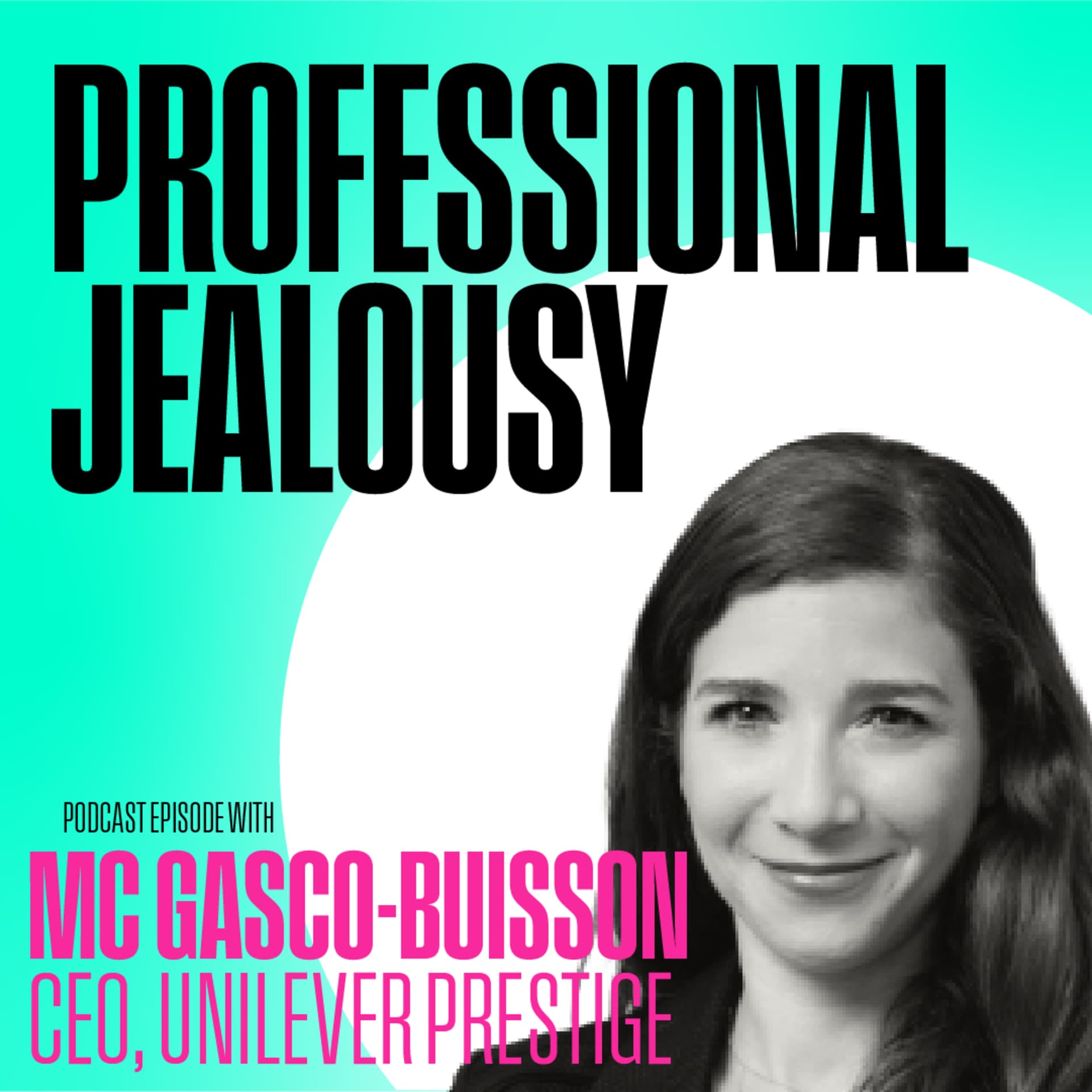
MC Gasco-Buisson, CEO of Unilever Prestige, discusses how to build brands that last—through a clear “why,” emotional storytelling plus performance, founder-friendly scaling, and disciplined use of AI.
Guest background
MC Gasco-Buisson joined Unilever Prestige as CEO 18 months ago. Unilever Prestige is a “house of companies” with prestige beauty brands including Hourglass Makeup, K18 Hair, Dermalogica, Tatcha, and Paula’s Choice. She spent ~20 years at P&G, starting in R&D (chemical engineering background) and moving through marketing and general management roles across categories (e.g., cosmetics, Head & Shoulders). She also previously worked in prestige fragrances and later at Pandora (Copenhagen-based retail).
Key claims
Brands last when they meet a real need/desire and have a human-level DNA; prestige requires higher emotional/experiential performance; manage expectations without “lowering” them; AI should be applied to problems that matter.
Notable examples
K18 (“save my hair”), Tatcha (nightly ritual as self-care), Dermalogica (founder training skin therapists), and founder-led brands like Hourglass, Paula’s Choice.
Written by AI. May contain mistakes. Listen to the episode to check what was said.
Chapters
Tap a time to open that second in VOMC Gasco-Buisson's Role at Unilever Prestige
0:45 to 2:14
MC shares insights about her role at Unilever Prestige and its unique model.
“And this is my podcast, Professional Jealousy, where I'm lucky enough to talk to founders, CEOs, and creatives that I'm impressed by.”
The Unique Business Model of Unilever Prestige
2:14 to 4:04
Discussion on how Unilever's model allows brands to maintain their identity while scaling.
“And just out of interest, what was it about it that was a dream job?”
Challenges of Incubating Brands
4:04 to 6:12
Exploration of the difficulties in developing small brands within large companies.
“It's the model that Unilever built here.”
Scaling Indie Brands Globally
6:12 to 7:40
MC explains the scaling process of indie brands in the beauty industry.
“They're not, what you and I were doing back then was very early.”
MC's Journey from Chemical Engineering to Marketing
7:40 to 12:22
MC discusses her transition from chemical engineering to a marketing career.
“So I was reading, I'm not sure I knew this, but I was reading that you did chemical engineering as a degree and then you went into P &G.”
Strategic Career Growth at P&G
12:22 to 14:01
MC reflects on her long tenure at P&G and her approach to career advancement.
“Also, to be very honest with you, it made me incredibly comfortable with numbers.”
Maximizing Impact Over Titles
14:01 to 17:16
Learn about the importance of focusing on impact rather than job titles in career progression.
“It's not like I didn't have a clear ambition.”
Lessons from Early Business Ventures
17:16 to 18:53
Discover the valuable lessons learned from attempting to start a business while employed.
“I do always think getting fixated on the title, for example.”
Shifting Focus: Product to Market Strategy
18:53 to 20:05
Understand the importance of market strategy over product quality in launching a business.
“But I also learned, and I'll be happy to tell you anytime about the things that I learned about not to do.”
Navigating Cultural Changes in Career Moves
20:05 to 22:48
Explore how adapting to new company cultures can impact career transitions.
“Like, talk to me about, you know, was there a culture shock?”
Show all 21 chapters
The Emotional Power of Prestige Marketing
22:48 to 28:01
Learn how emotional storytelling and detail-oriented execution are crucial in prestige marketing.
“So what you like, you tend to learn to do, right?”
The Importance of Brand Loyalty
28:01 to 30:45
Learn why attracting loyal customers is crucial for brand success.
“Or are you just acquiring people and licking them out endlessly?”
Foundations of a Lasting Brand
30:46 to 33:34
Discover the core elements that contribute to a brand's lasting impact.
“Well, a good brand, at the end of the day, I think has to have a reason to exist that resonates at a human level, right?”
Building Brands That Last
33:35 to 36:43
Explore how to create a timeless brand that meets real consumer needs.
“of disposable brands and products, like they're just there, they're not even meant to be that.”
The Role of AI in Marketing
36:44 to 39:49
Understand how AI is transforming consumer shopping and marketing strategies.
“So in a way, I tell you, I did the same mistake when I started my other company.”
Quickfire Questions and Final Thoughts
39:50 to 42:01
Get insights from rapid-fire questions about beauty products and career advice.
“I think it's a bit like the need for the brand in the first place, isn't it?”
Managing Expectations and Self-Improvement
42:01 to 44:14
Learn how to effectively manage expectations while striving for personal growth.
“And I know that that person benefited from doing that.”
Lessons Learned from Career Experiences
44:15 to 46:04
Discover the importance of market definition and the value of micro failures.
“And yeah, and I'm really building that muscle in the last few years, I would say.”
The Balance of Promotion and Substance
46:05 to 47:11
Understand the need to balance self-promotion with genuine work in business.
“Like, that's the other thing is you have to go through this micro failure so that you can have the big win.”
Admiration for Founders and Lasting Brands
47:12 to 48:26
Explore the speaker's respect for founders who create lasting and meaningful brands.
“grateful and we've got the last question um all right who or what are you professionally jealous of?”
Inspiration and Career Insights
48:27 to 48:54
Gain inspiration from insights on building a meaningful career and lifelong learning.
Transcript
Automatic transcript. May contain errors.0:00MC Gasco-Buisson:Coming up in this episode of Professional Jealousy. People don't remember what you said. They don't remember what you did. They remember how you made them feel. The way I look at it is I have one life and I want to spend that life in a way that makes a difference, right? You move from a world where people are very data-driven to a world where opinions rule. Oh my God, what have you done? Somebody told me, set low expectations so that you can over-deliver. But if you consistently are focused on lowering the expectations, you lower your own expectations and those of your team. To build a brand that lasts, it has to meet a need.
0:37MC Gasco-Buisson:So it starts to meet, why are you building it?
0:44Natasha:Hello, I'm Natasha Jakubowski, Chief Innovation Officer at Anomaly, a global marketing agency. And this is my podcast, Professional Jealousy, where I'm lucky enough to talk to founders, CEOs, and creatives that I'm impressed by. And yes, just a little bit envious of. So today I'm talking with MC Gasco Buisson, the CEO of Unilever Prestige. Hello, MC.
1:12MC Gasco-Buisson:Hi, Natasha. Thank you for having me here.
1:16Natasha:Thank you. It's so good to see you. So for anyone that doesn't know you, can you just give us a quick overview of your current role and what you do?
1:28MC Gasco-Buisson:So, yes, 18 months ago, I joined Unilever Prestige as their CEO. Unilever Prestige is what we call a house of companies. We have a portfolio of prestige beauty brands. Some of the names you may recognize, Hourglass Makeup, K18 Hair, Dermalogica, Tatcha, Paula's Choice. So we have a portfolio of beauty prestige businesses, and we belong to the Unilever group. So we're part of Unilever. and I joined this role 18 months ago. Frankly, it's kind of one of those dream jobs. And so I'm super excited to be here with you and share a little bit about how we got to here and what this is like, but I'm having a great time, I can say that.
2:13Natasha:Amazing. And just out of interest, what was it about it that was a dream job? I mean, I can imagine like a portfolio of companies, a CEO role, you are the boss, But tell me, what was it that was Dream Job about it?
2:28MC Gasco-Buisson:It's a lot of things. One is I really believe that we have an incredible model, something that P &G, when I was in P &G Ventures, which is when we met, I dreamt about, frankly. And at that time, we were doing something different there. But I started to see what Unilever was doing here, which was Unilever created this group of companies. They basically acquired these companies, but never integrated them. And what's really cool about the model is that basically we acquired this indie company with a founder, and we do not centralize. So we keep the company running, ideally with the founder for as long as the founder wants to stay, but we don't integrate.
3:22MC Gasco-Buisson:So what we do is we allow that company to continue to grow and develop and scale, but maintaining its independent DNA, its vision, its passion, its purpose, right? So I think that I already had a love for ventures and new companies when we met and I was working in P &G Ventures. But this is a whole nother level of scale that I saw Unilever doing at that time. And so very cool model in that you benefit from being part of a big company. You benefit from being part of the group. But it is really a place where founders can continue to grow their brands and maintain that insurgent spirit and that DNA that makes the brand unique.
4:04MC Gasco-Buisson:So that's one. It's the model that Unilever built here. The second one is, I mean, it's beauty. It's prestige beauty. So these are brands that I love, that I am the customer of. So, you know, I've worked in all kinds of things in my career, some things that I never used as a consumer. But these are brands that I really am a customer of and my friends are customers on. So I have a deep connection, not just as a business, but also as a woman. And the whole idea of really running a portfolio fits really well with my skills, my strengths. So I grew up first in the R &D and then in the marketing function.
4:45MC Gasco-Buisson:But at P &G, we learned to be general managers. And I really feel that this role brings all those skills together. So the innovation, the marketing skills, the brand building, but also the operational discipline of a business end to end. And this role allows me to play across that breadth of skills in beauty and in a model that I have a lot of respect for. So there's so many reasons. And it's in London, which is, I have to, I must say, my favorite city in the world.
5:13Natasha:Amazing. Yeah, it's so interesting because I've actually worked with, I mean, I've worked with P &G and Unilever. with with png creating brands and products um yeah and you know so obvious that it's so hard to incubate a small brand in a massive system like the only one out of seven years of brand creation with png i think the only one that really made it out alive and succeeded was zivo in a big way yes yes um and then with unilever it still breaks my heart like we created gorgeous beauty brands actually uh melee and fervor which were both great ideas but again couldn't be handled within the system they have to get to a certain size and i think what you're talking about just makes so much more sense uh acquiring them and then almost treating you're almost like the vc kind of managing and giving skills and weighing in when they need it?
6:15Natasha:Is that more like the model?
6:18MC Gasco-Buisson:Yeah, it's a model. They're not, what you and I were doing back then was very early. It was from zero. And that is very different. It's very hard. But it has some commonalities in the sense that you're really building something. You want something that lasts. You want something, you know, because it's when P &G or Unilever build the brand, we're trying to build something for the future. So there's commonalities and you're trying to build something that has a real consumer value, that it connects in a meaningful human way, that has longevity. What's different is that these brands are not as small.
6:57MC Gasco-Buisson:So they are already at a certain level of scale. They're kind of what we call indie in the industry. They already have proven themselves. They know. We know that these are strong brands. What we are doing is scaling them globally. Yeah. So while the VC experience that you and I might have had at that time was more in the very early stages, this is later in the journey of a brand, but there's still no scaled all the way. And so they are, you know, ideally around 100 plus million. They already are proven in their market. and we can bring the power of the Unilever company to really help them scale and globalize in a sustainable manner.
7:39MC Gasco-Buisson:So, yeah.
7:40Natasha:Amazing. So I was reading, I'm not sure I knew this, but I was reading that you did chemical engineering as a degree and then you went into P &G. What was, so that feels like, you know, you started in chemical engineering and you've ended up in like beauty marketing. Talk to me about how did that all happen? It was more about getting into PhD or, yeah, tell me about... Not at all, not at all. How did it happen? What did you bring from that mindset that helped you in the start of your career?
8:16MC Gasco-Buisson:Well, so first I studied chemical engineering for probably all the wrong reasons, but it worked out. I did it because I was growing up and I was very good in math and science. I actually was probably better at philosophy and reading and writing. I was actually a writer at that time when I was younger. But when you're young back then, when you were a girl and you were very good at math and science, people were like, oh, you must go into physics. You must do math because I was literally the only girl in the physics club, you know? Yeah. And so I got steered that way and I thought, why not? what?
8:56MC Gasco-Buisson:This is kind of like where the boys play. So I'm going. So I picked chemical engineering because I knew I could do it, but also because it would give me a really good foundation. I figured as an engineer, after one degree, I can go work and make some money versus if I try to be a lawyer, it's going to take forever. If I try to be a doctor, which I was very interested in, that's going to take forever too. So, and I needed money. So I was like, okay, I'm going to do a degree that I can for sure get a good job. And, you know, and then I got introduced to P &G and I ended up there. But what was really fortunate for me is that, and even throughout my chemical engineering, I always took economics, I took this, I took that.
9:36MC Gasco-Buisson:I was always interested in business. But what was really fortunate about me joining P &G is that, well, first is a fantastic education for marketing and general management, I started in R &D. And P &G, four or five years in, realized that maybe I could be in the business side of things. And so they asked me if I was interested in moving to the marketing side. And I had done an MBA on the side, again, because I was very curious about business. So it all lined up. They came and said, we're looking for assistant brand managers, is what they used to call it, assistant brand managers, ABMs. In cosmetics, are you interested?
10:13MC Gasco-Buisson:And I say, hell yeah. I mean, what's the worst that can happen, right? Like I could fail and then they'll take me back over here. And so that's what they say. Go. And if you hate it, you can come back. So I moved to the East Coast. At that time, I was in Cincinnati. I moved to Baltimore and I joined the cosmetics business. And that was an incredible experience. Honestly, I never looked back from that because first I recognized very quickly, oh, my God, I love marketing. Now, that was a few weeks after. The first couple of weeks, I was like, what have you done? What have you done? You moved from a world where people are very data-driven to a world where opinions rule.
10:51MC Gasco-Buisson:Oh, my God, what have you done? But quickly, I realized that I had a knack for it, and I really enjoyed it. And I made some incredible leaders, some of the people that I still to this day admire the most I met in that business. So that was how that ended up being. So chemical engineering was an indirect path. But you also asked me, what skills do you bring? Yeah. In chemical engineering, there's a few things that you need to really learn quickly. One of them is to know how to diagnose a problem. And the chemical engineering problems are not, they're often conceptual and physical. So there is a, could be a, you know, a flow problem, like you're building a dam and there's water flow and all like all stuff like that.
11:36MC Gasco-Buisson:Definitely not my area of interest, but there's that. And you take classes on that. You also take classes on thermodynamics where you can't see the thing, but you need to envision or quantum mechanics or whatever. So you build this ability to diagnose things that are both physical but also conceptual.
11:53Natasha:Yeah, amazing.
11:54MC Gasco-Buisson:And I think I really have a good ability to diagnose situations. What's going on here? And then to think systems-wide. So instead of seeing the parts of the thing, to then be able to step back and say, okay, what are the correlations? How is this impacting that? How does the whole puzzle come together? And those skills, in my opinion, have been foundational for me in my business career, right? So gave me a strong foundation. Also, to be very honest with you, it made me incredibly comfortable with numbers.
12:25Natasha:Yeah. I'm just not scared of any number.
12:28MC Gasco-Buisson:You can throw any number at me. I'm not scared of it. You can throw any supply chain issue at me. I'm not scared. So it gives you a certain comfort with the different functions in a business that maybe if I had studied art, I would have gotten something else. But I would have gotten that. You know what I mean? So it was very good, very helpful.
12:48Natasha:I do think that also, you know, something like a P &G where you actually do move around functions is also another one of those good foundational. You get a bit of a bit of everything, you know, you have exposure and and and an understanding of the job functions in a way that actually a lot of companies keep them much more siloed. Mm hmm. Yes. I'm curious, you did spend, as someone that has been in her day job for a long time, you spent kind of 20 years at P &G. And, you know, in a time when job hopping is often the way that people, it's almost the default way that people think about progression.
13:36Natasha:What was your strategy? Like, I feel like, how did you continually kind of ascend and grow and get to the next level?
13:48MC Gasco-Buisson:Yeah. You know, I have never really chased titles or even money. I mean, I knew I wanted to have a certain level of impact in my life. So let me be clear. It's not like I didn't have a clear ambition. You even mentioned it when you introduced me. I've always been ambitious. I always wanted to have impact. I always wanted to, the way I look at it is I have one life and I want to spend that life in a way that makes a difference, right? So I've always wanted increasing levels of impact. So that was something I was maximizing for. But I wasn't necessarily maximizing for the title or not even necessarily the money.
14:27MC Gasco-Buisson:Although, of course, as you increase impact, you tend to get bigger titles and more money. But because I was optimizing for impact and influence, I was actually more focused on what is going to give me growth. So my career is very nonlinear. I started, as I said to you, in chemical engineering. I spent four and a half years in R &D, half of that in a lab where nobody even saw me, doing experiments and then qualifying equipment in manufacturing, like very invisible, right? If you're in the business world. But I learned a ton there. Then I get this opportunity to, and I learned comfort with supply chain and R &D and how innovation works and all that.
15:15MC Gasco-Buisson:Then I moved into marketing and I went into makeup. So I went from Pringles to makeup. and I learned a whole new world where a lot of it was driven by fashion trends and color theory and stuff that I had never encountered before. So learned that world and I was in a global role. So I was working on global strategy and global innovation. Then it was time to change assignments and as you said, P &G is very good at moving you around. So they moved me to a North America business role. So I was now literally working with the retailers on head and shoulders. So I'm going from Pringles to cosmetics, to head and shoulders, from global to North America only or U.S.
15:59Natasha:only, dealing with customers, to hair, to dandruff.
16:04MC Gasco-Buisson:I didn't know the first thing about dandruff. So I learned there. Then I went into LA and I was doing global again. And then I went And then I went into the business again. So every role gave me something. And so as long as there was a moment in my career, Natasha, when I thought, OK, maybe now it's time to leave because I'm not progressing the way I want to be. And so I said to PNG, look, you can't progress me. Then you need to give me something to learn. It's either one. And they gave me a portfolio role in a category that was really in decline in a North America business. And I learned a ton.
16:39MC Gasco-Buisson:It's the first time in my career that I had dealt with like huge media budgets, portfolio responsibility. So again, I learned a ton. So I didn't get the title. I didn't get, but I learned, right? And then I kept going. So I guess what I'll say is I could have jumped. It's not that I didn't have the, for a while I didn't want to because my family was in Cincinnati, blah, blah, blah. But eventually I could have. But I stayed for as long as I thought I could continue to really grow and maximize my impact there. The minute I didn't think that was the case, then I did move on. But I was there 23 years almost.
17:14Natasha:Yeah. I do. I mean, I do think it's interesting thinking about like advice for people moving. I do always think getting fixated on the title, for example.
17:27MC Gasco-Buisson:Yeah.
17:27Natasha:It just doesn't serve you. It's like, think about what you want out of it and how you're going to progress to the next thing you want to do versus just purely the title. I've seen people take titles over a job that they would actually, you know, thrive in, get third. Super interesting. Yeah. Have you ever thought about starting your own business? I have.
17:56MC Gasco-Buisson:And I actually did. Years ago, when I was living in Geneva, I was working in the P &G prestige fragrances business. It was the first time in my married life where we didn't have children because my husband's children had grown and they were in the U.S. And we took an opportunity to move to Geneva. So we were married. We didn't have any children with us. So I found myself with some extra energy. You had a lot of energy. Yeah. Yeah, so I call ego. I mean, not to mention I had a crazy job, but hey, I like work. So a friend of mine and I started a business on the side. And that was, look, it didn't financially scale.
18:36MC Gasco-Buisson:We couldn't scale it financially. And we still had the job. So we were both working while we did this. So it was insane. And financially at the end, we couldn't make a scale. So we lost our own money. But I will tell you, I don't regret it for one second.
Read the full transcript
18:49Natasha:Yeah, what did you learn? Oh, how much I learned. A lot of it was not to do.
18:55MC Gasco-Buisson:But I also learned, and I'll be happy to tell you anytime about the things that I learned about not to do. But one of the things I learned was that when, you know, when I set my head up to something, even if I don't know anything about it, I can figure it out. So it was really affirming. But we also learned a lot around, you know, I always, probably because I grew up in a big organization like P &G, I always focused so much on the product. and making sure the product was great, I should have started with the go-to-market instead.
19:28Natasha:Yeah.
19:28MC Gasco-Buisson:And looking back now, all those years later, that's like obvious, right? But it wasn't obvious to me at that time. And on top of that, we were working on a category that we were not experts at because, of course, we didn't want to do anything that was conflicting with P &G. So two learnings there. One, start with the go-to-market. it and second make sure that you are working on something that you know that you really know because I think that's when you have the big the founder has the biggest power actually I think one of the people in your podcast were talking about that recently like do what you love yeah and what
20:05Natasha:you know and I think it's spot on advice frankly yeah yeah interesting it reminds me I spoke to someone yesterday I spoke to a man yesterday who was working on a female healthcare startup just thinking about ideas and I was like I don't know I I'm not sure I'd be there but it's just harder I yeah it's it is it's just harder um I so what you just talked about in terms of focus on the go-to-market it it strikes me that when you moved from like more FMCG or CPG world of PNG to something like Pandora and something more about lifestyle, that's almost the difference. Like, that's a big difference. Like, talk to me about, you know, was there a culture shock?
20:53Or how do you think about moving from something that's much more about product
20:59Natasha:to something more lifestyle and aspiration and quality, et cetera?
21:06MC Gasco-Buisson:You know, I actually, somebody asked me that recently, And it's funny because I didn't find it a difficult move.
21:12Natasha:Yeah.
21:14MC Gasco-Buisson:Perhaps because I have been loving, watching, wearing, and shopping for jewelry my whole life. I love it. Like beauty. Yeah. But jewelry, like if you were to look, I mean, I'm wearing like 50 ,000 bracelets. My mother used to call me Lolita when I was young because I had so many bracelets. So I've become a bit more reduced. But I'm passionate about jewelry, like you said, like beauty.
21:45Natasha:So I could connect. But from a business standpoint, I had to, of course, I had to step back and learn.
21:51MC Gasco-Buisson:I remember the biggest areas where I realized I quickly had to learn were, one, Pandora mostly has its own retail.
21:58Natasha:So it's end-to-end.
21:59MC Gasco-Buisson:And that's actually what attracted me to it is I had never worked in a company that had its own go-to market, right? So that was fascinating learning for me. It had its own retail. The second one was, yeah, it was a different category. So even though I love jewelry as a consumer, I didn't know jewelry as a manufacturer or as a marketeer of it. So I had to learn those things. And then culturally, the company is based in Copenhagen. So I've never worked in the Nordics. I've never worked in Copenhagen. So I had to learn the culture as well. So there was a lot of learning. But for me, one of my strengths, Natasha, probably from my upbringing, is I'm quite adaptable.
22:34MC Gasco-Buisson:I've moved a lot in my life as a child, as an adult, and I get a thrill out of change. Change is fun for me. So when I encountered that, when I had to learn all these things, that was for me fun. So what you like, you tend to learn to do, right? So I would say that the change wasn't as difficult. What was more difficult for me, surprise, surprise, is that growing up in P &G and then at Unilever, And I always, because I went to Unilever before I went to Pandora, right? So P &G, the Unilever, I was more used to marketing being at the center of the business strategy.
23:16Natasha:Yeah.
23:17MC Gasco-Buisson:And at Pandora, historically, marketing was not at the center of the business strategy, either retail or design where. Marketing was almost a support function. Yeah, yeah, yeah. And that was a big change. And why the role was interesting to me, however, was because the CEO who hired me, Alexander LASIK, he was the CEO at the time, he came from P &G and Racket. So he understood the role of marketing. And so I said, OK, the company may see the role of marketing differently than I do, but at least the CEO gets it. So I'm going to be able to impact beyond just marketing. I mean, when I showed up there, some people literally said, oh, you guys are the pretty picture people.
24:01Natasha:Yeah, yeah, yeah.
24:02MC Gasco-Buisson:I was like, oh, just wait and see. I'm going to show you what we're about.
24:05Natasha:Yeah. Everything is media. Everything is media.
24:09MC Gasco-Buisson:Nothing like a challenge, guys. Nothing like a challenge.
24:12Natasha:Yeah. No, amazing. So I'm curious. I mean, for me, what's interesting about someone like P &G is that I almost think of them as more product focused than marketing. And I know that sounds crazy, but like Unilever is more marketing to me. But like now that you're moving into more kind of luxury prestige space, there is more less, you know, rational product differentiation. Like, how do you think about the transition or moving into those kind of more lifestyle kind of marketing roles? And what needs to change? Or does it need to change? Maybe the same principles are like, how do you market a brand in the luxury space versus the CPG space?
25:05MC Gasco-Buisson:Yeah. Yeah. So first of all, I think your observation around P &G being very product focused is true. It's also a fantastic brand building company. And Unilever, similarly, also another fantastic brand building and product company. I do think that they tend to lean one way or another. I do agree with you that I think Unilever is more naturally inclined to marketing and culture. Where B &G, my experience of it from when I was there, was a bit more leaning towards product. But they both, I think they both do extremely well on both things. But they lean a little different.
25:41Natasha:Yeah.
25:42MC Gasco-Buisson:But most people don't observe that. So I think you're very astute, actually. Yeah.
25:46Natasha:No, I think they're very different approaches. But yeah.
25:49MC Gasco-Buisson:Yeah. But it's very interesting. And I've definitely learned from both, right? Yeah. Luxury. So my first prestige experience was when I went to Prestige Fragrances. in P &G many years ago. This is right before I met you, the role I had in Geneva before we met. And actually, you can see the range, right? I've sold dandruff shampoo, 50-cent barrel soap, Prestige fragrances. I did ventures with you from zero to nothing. And then I'm doing this. So really building a range of experiences. But back to your question about what sticks. So when I first encountered Prestige, one of the biggest ahas that I had was that now emotion played a much bigger role.
26:34MC Gasco-Buisson:So we know from neuroscience that emotion plays a huge role in all decisions we make, right? We think we're more rational than we are. And, you know, there's loads of economists that have written on this. Daniel Kahneman and many of them that we know that. But what I saw was that at the prestige world, that was even on steroids. That was even more so because the value equation is not just driven by do you perform, do you do what you say, but do you make me feel that I belong to a certain identity? There's a lot more identity in fragrances than there may be in a, you know, that there is in a 50 cent barrel soap, okay?
27:17MC Gasco-Buisson:And that's just by the nature of the product and how we use it and everything else. So I learned that importance, therefore, the importance of storytelling and brilliant execution, the attention to detail. I remember I used to be in shock at my team in Fragrances. They would spend hours retouching one image, but hours and hours and hours to a level that I had not really encountered before. So I learned the emotional storytelling executional excellence. But what I also learned is that a lot of the fundamentals still matter. So are you building a brand that has longevity and means something, or are you just building a product?
28:00MC Gasco-Buisson:Are you building a, are you attracting people to a product that they are not only going to buy, but love and come back to and create a repeat loop? Or are you just acquiring people and licking them out endlessly? Because it all matters, right? So are you innovating in a way that really makes a difference and adds value to the category that you're in? Or you're just adding noise? Those things are fundamental, and they are true in all the businesses that I've been in. Let it be jewelry. Let it be soap. Let it be fragrances. Let it be lipstick or, you know, hair treatments. So a lot of the fundamentals that Unilever and P &G and companies like those two master are still really relevant.
28:46MC Gasco-Buisson:But there's just a whole other level of value in the performance expectation, in the sensorial expectation, and in the storytelling that prestige must master that, you know, simply because you are paying more for this. So it needs to perform at a higher level in every kind of sense of the equation. so efficacy but also experience and how I feel by using this product so but honestly I'd say that it's easier to go from in my opinion easier to go from CPG to prestige than the other way around
29:19Natasha:that would be my experience interesting I'm sure luxury people would would disagree but
29:24MC Gasco-Buisson:yeah I'm sure they would and I will tell you and the one caveat where they would be right is that there are some people just cannot do it.
29:33Natasha:Yeah. Why do they do this? What don't they have?
29:35MC Gasco-Buisson:I mean, I hate to say that because I'm a believer in human spirit and the humans can do anything they want, right? But if you are not appreciative of the art of storytelling and if you don't appreciate that cerulean blue is different than indigo, than teal, you know, you got to really appreciate those things because that is important in prestige and in luxury, or just the way something sounds when you open it, or just the depth of story and heritage and history and craftsmanship. If you don't have appreciation for that, then you can't make that move. But what I'm saying is if you're a person who can appreciate those things, I think it's easier to move from CPG to luxury than the other way around, because later in life, if you haven't learned some of those foundations, it's really hard.
30:27Natasha:But that's my opinion. I'm sure lots of people disagree with me. I think that's right. It's interesting thinking, is it just storytelling? But yeah, I'd love to hear some of those, a quick thing on what are the foundations that you think makes a good brand or good storytelling? Well, a good brand, at the end of the day, I think has to have a reason to exist that resonates at a human level, right?
30:54MC Gasco-Buisson:And ideally, that is universal. Because when I talk about a good brand, I'm talking about brands that have the right to scale, okay? I'm not talking about a brand that is okay at 100 million forever. I'm talking it's my world. I want brands that scale, right? So with my lens, it has to have a reason to exist, a DNA that is making an impact at a human level. It could be an emotional impact or it could be a performance impact. So if you look at K-18, for example.
31:21Natasha:Yeah, amazing.
31:24MC Gasco-Buisson:I mean, I owe my healthy hair to K-18. The mask is an incredible, incredible product. And that's just the beginning of what they do. They're amazing products. But that's it for me, my relationship with K18 is, oh, my God, you really save my hair. You make my hair like new, which is what they promised me. And I love this brand for that. On the other hand, we also have the brand Tatcha. Tatcha has incredible products. But what I can't resist is the way I feel. Yeah. When I do my nightly ritual with the essence.
32:01Natasha:Yeah, yeah, yeah.
32:01MC Gasco-Buisson:And the rice wash and then the essence and the dewy cream. I mean, the feeling I get, I literally feel like I'm self-caring. And I'm nurturing my skin, but I'm also nurturing myself. And you can see those two relationships are quite, quite different. But they both connect with me in a deep level, and they add value to my life. So I think the brand has to do that. I have to be differentiated. So otherwise you get lost in a sea of new. There's always new stuff coming. So I still have a differentiated point of view. Those are two fundamental things. And then, you know, the game of brand building is a daily game.
32:41MC Gasco-Buisson:It is like you got to have an organization that just will not stop innovating and learning and growing. Because how we go to market, how we reach customers is changing constantly.
32:55Natasha:Yeah.
32:56MC Gasco-Buisson:Right? The standards of luxury are changing. The channels are changing. So you've got to have a real strong DNA, real, you know, consumer value proposition. You need to deliver that. And then you need to constantly grow, learn, and adapt to the environment that you're in. And then we could go on and many other things that you have to do as part of that. But I think it's foundational that the brand has those elements and that the team has that, you know, agility and ability to navigate what is a very, very dynamic place.
33:26Natasha:Yeah. Yeah, yeah. It's a crazy landscape. like just thinking about ignoring AI for a second, you know, I do think there are more and more kind of disposable brands and products, like they're just there, they're not even meant to be that. They're just like, especially in beauty, you know, beauty, probably one of the most noisy, you know, things into niche trends and niche segments. And then, you know, some, you know, something's just drop shipped made for kind of tiktok it's it's a crazy environment so having that kind of anchor of who you are i think is is important how do you think um brands that are starting out should think about creating that brand you know that the fundamental like thing that's going to help it stay, have longevity versus be a disposable brand?
34:30MC Gasco-Buisson:I mean, I think nobody sets out to build a disposable brand, but it does happen. I mean, it does happen that people build brands that are just, they don't have enough depth to withstand the pressure of the categories. I would say it goes back to why are you building this brand in the first place. Are you building this brand because you happen to, you want to work for yourself and, you know, you like, you know, pink and blue and nice fragrances and that's, and you can't, you can't afford to do it. You can get money either from yourself, your parents or some VC. That's not a good enough reason. You know, to build a brand that lasts, it has to meet a need or a desire that is not being met already in a better way.
35:24MC Gasco-Buisson:So it starts to me, why are you building it? Some of the best brands are built from the founder feeling a need. There's something is missing in the market that I think could make a difference for people like me or for people like my mother or my friend. So it needs to start from the right reason for existing. And, you know, we hear the story of Dermalogica. I don't know if you ever heard the story of Jane, the founder of Dermalogica. It's one of the most exceptional women I know. And Jane built Dermalogica because she was a skin therapist and she was committed to empowering skin therapists in the U.S.
36:03MC Gasco-Buisson:to have their own business. So she started training them. And then she realized, oh, they need product to be able to have their business. That why is so big and so impactful that this brand is thriving and loved all those years later. And she built a brand based on values of how do we support this community and Dermalogica remains a leader in supporting, you know, skin therapists globally. That's a big why, you know, and we could tell you the stories of all the founders that I have the privilege of working with. That's a big why. That's why she did that. And so I think that's the beginning, I would say.
36:42MC Gasco-Buisson:Really, really interrogate yourself on why you're doing it and make sure you attach yourself to something that. So in a way, I tell you, I did the same mistake when I started my other company. I did it because I wanted to start a business. And I saw a need, to be honest. I saw a need. But I didn't dig enough to make sure that what I was doing was a need that I could meet better. Funny. Right? And there was many, many reasons. I learned a lot of lessons from that. But I really think it's important to make sure that the need that you are going to meet is truly something you can do better than the other options already out there.
37:16MC Gasco-Buisson:Otherwise, it's going to be an uphill battle, you know?
37:18Natasha:Yeah, yeah, yeah. Just quickly, and we don't need to spend too long because I'm going to go on to the – we're already running out of time. I am curious. So I'm thinking a lot about AI at the moment, partly because I have a big presentation to give in a few weeks in Seattle. But yeah, I'm curious how you're thinking about AI and its use in marketing. I think in business, like there are so many obvious great uses. How are you thinking about it in terms of how do you think it will impact how consumers shop or how retail works?
38:03MC Gasco-Buisson:I mean, I think everybody says this, but it's impacting everything. If you think about the way consumers shop. So I really now search for everything on Claude or Charged EBT, okay, or one of them. We have several in the company that we use them. But I'm always now researching there. And I am very happy to shop straight from there. Because by the time I click that link, I've already decided this is right. So it saves me a ton of time. And I, you know, I trusted enough because it starts to know me. So I think it's definitely disrupting that in a big way. And we see it. It's still emerging, the amount of conversion happening.
38:46MC Gasco-Buisson:But it's going to really, I believe it's going to take off because it makes life better for us. Talk about why you launched something. It makes life better for a certain consumer. So that's what is going to disrupt that massively already is. In terms of business, there's so many places, you know, supply chain inventory, so planning, marketing, creativity, testing, life testing, you know, research, how we do research, how do we edit for different languages. It's changing all of that. So I fundamentally think that the trick is going to be like any big technology is to make sure that you apply it to something that matters, that you're solving a problem that matters to you, that is really central to your strategy versus just like throwing it at everything.
39:29MC Gasco-Buisson:Yeah, yeah, yeah. Because that's the danger is that we get excited about it, we start throwing it at everything, and then it just creates distraction and noise. What we want to do is say, okay, which big problem can this technology help us solve?
39:41Natasha:Yeah.
39:41MC Gasco-Buisson:And then we go after that. So we're focusing it right now in a couple specific areas for that reason. But hey, it's early days. We're all learning, right? Yeah.
39:51Natasha:I think it's a bit like the need for the brand in the first place, isn't it? It's like, can you use it to actually make it a process better or to help a consumer experience it? I mean, I think, yeah, versus just doing something because you can.
40:10MC Gasco-Buisson:Yes, exactly. Okay.
40:12Natasha:All right. Last, we're going to go into quickfire questions. I've missed out hundreds, hundreds of questions I had written down for you. Very overly optimistic. What would be your desert island beauty product?
40:33MC Gasco-Buisson:Desert island beauty product. So if I'm stuck in a desert island.
40:37Natasha:Yeah. What's the one thing that you have?
40:39MC Gasco-Buisson:It would be hourglass concealer.
40:46MC Gasco-Buisson:Quickly followed by the mask from K18, but it's hourglass concealer.
40:52Natasha:That's amazing. Amazing. Okay. Best career advice, worst career advice you've ever had? The best or the worst? Both.
41:03MC Gasco-Buisson:The best and the worst. Yeah. Wow, the best. I've got so many incredible pieces. Okay, one, it's a guy that I don't know if you ever came across, but he was my general manager when I was in LA. He said to me, and it's actually, I think it comes from Mario Angelo or one of the poets, the big poets. He said to me, people don't remember what you said. They don't remember what you did. They remember how you made them feel. That really has altered the flavor of my leadership. and how I lead. So that I think is the best. In terms of the worst,
41:45MC Gasco-Buisson:worst career advice. You know, this is one that I am very, very torn about. But I will still use it as an example. Somebody told me, set low expectations so that you can over-deliver. And I know that that person benefited from doing that. So the advice was given to me in good spirit. And there is some truth to it. You have to carefully manage expectations. But if you consistently are focused on lowering the expectations, you lower your own expectations and those of your team. And I do not think that's the way to live.
42:28Natasha:Yeah. Oh, my God. It sounds the anti-MC to me. Sort of, yeah.
42:33MC Gasco-Buisson:But I do know that there was some good intention because if you don't manage expectations, you can end up in a situation where people don't give you the time to do what you need to do. You know, because they don't understand that maybe instead of taking six months, it's going to take a year. So you do have to manage expectations, but I don't believe it's about lowering expectations just so that you can always look good. I don't think that works.
42:56Natasha:Is there anything that you're trying to work on and get better at? I mean, yes.
43:04MC Gasco-Buisson:The obvious one is I, like most people my age at this point, you always feel like, wow, marketing is moving so fast. AI is coming. How do I keep up with this? So I'm trying to become better at staying connected to key things that matter while still managing my job, my family, my, you know, all my health, all of that. So trying to get better at figuring out what are the one or two things that I need to stay on top of and not worry about the others because I can't keep up with everything. You know, I can't spend the whole weekend reading business like I used to be for my child. You know, so that's one.
43:45MC Gasco-Buisson:And then the other one is I have learned as I get into more senior roles that there is something in my approach which I'm extremely adaptable and collaborative. I like to collaborate. I like to adapt to things. There are times when you need to be a bit unreasonable and say no. That's not going to work. Yeah. And obviously, I can do that in many, many, many places. But there is a couple of situations where that has been harder for me. And yeah, and I'm really building that muscle in the last few years, I would say. So, yeah.
44:25Natasha:I guess especially as you move into a CEO role.
44:28MC Gasco-Buisson:Yes.
44:29Natasha:That's where actually saying no probably becomes even more important.
44:34MC Gasco-Buisson:Yeah, and I'm talking, you know, you say no a million times a day in things. But there are some things that the no is a big no. It's a strategic no. When that way, we're not going that way. And these are much more difficult conversations. And I think I've been practicing that over the last few years and it does get easier with practice.
44:58Natasha:What's the biggest misconception you think there is about marketing luxury? That only people who grew up in it can do it? Yeah, ex-PNG personal Chanel now as well. It's Unilever. Oh, it's Unilever. Ex-Unilever. Okay. Yes.
45:18MC Gasco-Buisson:Lina, Unilever through and through, and we're very, very proud of her.
45:22Natasha:I love that. I love that. Yeah. Let me know if you can introduce me to see if I can interview her. I'm sure she gets one or two requests. I'm sure she's being asked a lot. Anything that you wish you'd learned earlier in your career? I mean, yes. Like the whole thing with the startup.
45:46MC Gasco-Buisson:So maybe I would have been able to scale it. Yes, I think that the importance of having your market defined and how you're going to reach your customer in a cost-effective manner, that would have saved me some pain. But of course, you know, that was, that needed to, you know, sometimes we have to go through these things. Like, that's the other thing is you have to go through this micro failure so that you can have the big win. So that was a micro failure. And here we go. I have no regrets, but I had to go through that. So that was one. What else would I like to learn earlier in my career? You know, I would say this may sound weird, but a bit more spending more time promoting what I do.
46:32MC Gasco-Buisson:I am such an engineer on this, Natasha. Like I was telling you last year, I didn't want to talk to anybody about anything. I had my head down. And I'm like, until the business is a double-digit growth, I don't want to look at anything. I just want to do this. And what happens is that everybody around you is doing all the promotion tours. And I think there's a balance. And, you know, I'm never going to be a self-promoter. It's not who I am. I'm never going to do it. It's counter. I believe in substance. but at some point it is important also because you attract talent so me doing these kind of things is part of the role as well so so balancing those two things better I think probably would serve me well but hey here we are I'm doing it here I'm talking to you okay amazing I'm so
47:16Natasha:grateful and we've got the last question um all right who or what are you professionally jealous of?
47:25MC Gasco-Buisson:So it wasn't hard to think of this, Natasha, I'll tell you, because I am most jealous in a positive way of founders who have built a brand that has lasting power and that we love. And I tell you, I am so lucky. I work with several of those founders. I mentioned Jane earlier, Vicky from Tatcha, Carissa from Hourglass, Subin from K18, Paula from Paula's Choice. I mean, those are the people that for me are the ultimate heroes. They build something that matters, that lasts, that makes us happy and that they themselves love. And so there's a bit of a founder in me that is still unfulfilled. Do you think you'll ever do something?
48:13MC Gasco-Buisson:it would have to be after I stepped down from these careers you know this kind of job because these jobs are all consuming but you know we're living long so maybe I'll be the oldest 75 year old founder
48:25Natasha:love it I'm looking forward to it thank you so much for your time I think there's so much so much in our conversation that I think people can learn from I think it's a masterclass in creating a career that builds and you've figured out what you need, what you want, what you want to learn and how to get there. And I think it's so inspiring, you know, making sure that you actually start learning many parts of the business, being open and empathetic and strategic. yeah and I'm looking forward to seeing your late stage founding idea
49:16MC Gasco-Buisson:hey maybe you can help me grab the strategy for that I remember your superpowers
49:21Natasha:anytime anytime all right we've run out of time so thank you so much to anyone listening watching please do share subscribe you can find the professional jealousy podcast wherever you get podcasts get in touch if you have any questions feedback or anyone that you would like featured thank you
From the publisher
MC Gasco-Buisson spent 23 years at P&G before becoming CEO of Pandora's design business, and now leads Unilever Prestige — the house of beauty brands behind Hourglass, K18, Dermalogica, Tatcha, and Paula's Choice.
Natasha talks with MC about what actually makes a brand worth scaling, why emotion and storytelling matter even more in luxury than in CPG, how founder-led brands like Dermalogica get built right, and where she's applying AI in the business (and where she's deliberately not).
They also get into MC's own career philosophy, and how she spent 23 years at one company without job-hopping, moving from chemical engineering into marketing, and the side business that didn't work out but taught her the most.
Plus: her desert island beauty product, the best and worst career advice she's ever received, and who she's still professionally jealous of.
Professional Jealousy is hosted by Natasha Jakubowski, Chief Innovation Officer at Anomaly. New episodes feature founders, CEOs, and creatives she admires — and is a little jealous of.