
In short
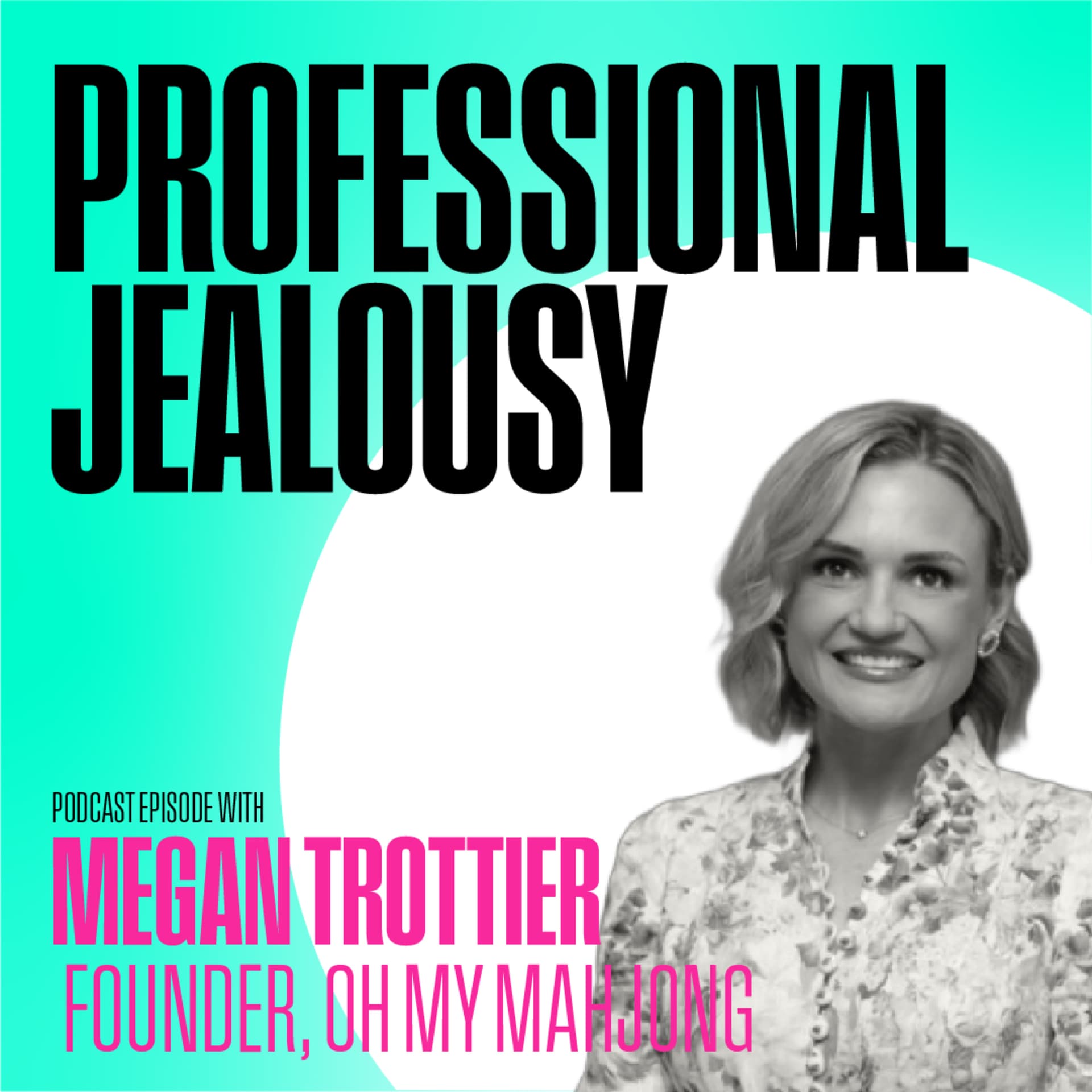
Megan Trottier, founder/CEO of Oh My Mahjong, explains how she bootstrapped a modern Mahjong brand from garage-made acrylic accessories into a $40M business (2025/2026 growth), and why Mahjong’s resurgence is driven by connection, focus, and multi-generational play. She details pivots, brand building, and scaling via education and wholesale partnerships.
Guest background
Megan has a sales background (medical/copier sales). During COVID she started an art business from her garage, then shifted to Mahjong accessories after early sales. She and her husband co-own the company; he handles legal/back-end and hiring structure.
Key claims
Mahjong boomed because people craved phone-free connection and a game that demands concentration. Success came from constant pivoting, fast iteration, and educating new players. The brand modernizes without “reinventing” tradition.
Notable examples
acrylic trays/mats sold after initial prototypes; a “pool mat” pivot (stopped, then relaunched when demand returned); wholesale markets required in-store Mahjong lessons by independent teachers who became a word-of-mouth flywheel. Tile design constraints: bamboo must be green, dots circular, characters authentic; creative director designs layers of color.
Written by AI. May contain mistakes. Listen to the episode to check what was said.
Chapters
Tap a time to open that second in VOUnderstanding Mahjong's Resurgence
1:00 to 3:17
Megan explains the history and recent popularity of Mahjong.
“So today I'm so excited that I'm talking with Megan Trottier, the founder and CEO of Oh My Mahjong, a company launched in 2022 that designs modern, fabulous looking Mahjong sets.”
Personal Connections Through Mahjong
3:18 to 5:34
Discussion on how Mahjong fosters connections across generations.
“I feel like you've given a good overview of mahjong.”
From Idea to Business: Launching Oh My Mahjong
5:35 to 7:42
Megan shares the journey of starting her business from an idea.
“So a mother and a daughter, a grandmother and her granddaughter, a great grandmother, like all generations can sit at a table and play one game together.”
The Importance of Pivoting in Business
7:43 to 9:39
Megan discusses the significance of adaptability in her business growth.
“And each year I feel like I exceed all expectations that I had of what that year was going to be.”
Market Potential and Brand Growth
9:40 to 13:06
Exploration of the market size and potential for Mahjong and the brand.
“one of the key things was always being able to pivot.”
Marketing Strategies for Rapid Scaling
13:07 to 14:00
Megan describes her marketing tactics that contributed to brand success.
“interesting thinking about yeah i don't know how what how many people do you think play mahjong today?”
Targeting Younger Audiences
14:00 to 14:48
Learn how the brand is expanding its reach to younger demographics.
“However, we're starting to really get into younger too.”
Initial Marketing Strategies
14:48 to 15:48
Discover the early social media strategies used to grow the brand.
“So in the beginning, I had this really small Instagram page that I sold my art on and that's where it started.”
Wholesale Partnerships and Education
15:48 to 17:44
Understand the importance of education and partnerships in scaling the brand.
“just like simple, like boosting posts and things like that.”
Creating a Lifestyle Around Mahjong
17:44 to 19:32
Explore how the brand has transformed Mahjong into a lifestyle choice.
“It's almost like, so they're almost like, like independent sales slash brand ambassadors.”
Show all 26 chapters
The Art and Craft of Mahjong Sets
19:32 to 21:26
Learn about the craftsmanship and pricing of Mahjong sets.
“So maybe they have, you know, a set they use during the holidays or a set they use in its spring and they want really bright colors and maybe fall, they bring out their darker colored set.”
Collaborating with Designers
21:26 to 23:11
Hear how the founder partnered with a designer to create unique tiles.
“I found a woman when I start, you know, had this idea.”
Key Decisions and Growth Milestones
23:11 to 26:24
Uncover pivotal decisions that contributed to the brand's success.
“Like, what was your, like, How did you explain the kind of look, feel, and personality that you wanted for this brand?”
Bootstrapping a Business
26:24 to 28:00
Learn about the advantages and challenges of bootstrapping a brand.
“But it kind of putting one foot in front of the other and not thinking too much about it and just doing more and more action.”
The Roller Coaster of Entrepreneurship
28:00 to 29:54
Megan shares the emotional highs and lows of building her brand.
“And then the next day it would be some good day in sales.”
Working Together: Family and Business
29:54 to 31:36
Megan discusses the dynamics of building her brand with her husband.
“Um, because he knows that what me and the team have is really good.”
Sales Skills and Entrepreneurial Success
31:36 to 33:41
Megan reflects on her sales background and its impact on her business.
“And so you develop really tough skin and then you would, you know, make cold calls and get hung up on or get yelled at.”
Growth Mindset in Business
33:41 to 35:30
Megan talks about the importance of a growth mindset in entrepreneurship.
“come over the past three years and the growth we've had.”
Overcoming Self-Doubt as a Founder
35:30 to 37:57
Megan addresses the issue of self-doubt and imposter syndrome among women in business.
“I think I have, it's, it's, my husband's always like you, you know, when you're operating the business on a day to day basis, you have so much confidence and you're such like, a boss and like, not a bad way.”
Starting Small and Building a Brand
37:57 to 39:28
Megan emphasizes the importance of starting small and taking action in business.
“But I think if you truly feel like you've got something, even if everyone tells you you don't, which people would be like, Mahjong?”
Goals for Expanding Mahjong's Reach
39:28 to 41:20
Megan outlines her vision for expanding the reach of Mahjong in the U.S.
“wise playing mahjong what are your goals in the near near and long term um i mean i have a lot but i think the most immediate like the lowest hanging one is spreading mahjong far and wide across the U.S.”
Balancing Life as a Business Owner and Parent
41:20 to 42:00
Megan talks about her busy life as a mom and entrepreneur.
“um i have looped my husband into playing some with me like on the weekends we'll play just want like Siamese Mahjong where it's just two people playing.”
Lessons Learned and Daily Habits
42:00 to 43:40
Megan discusses important lessons learned in business and her grounding habits.
“in another stage of life, I will have more time to do other things like maybe cook dinner or play tennis or hang out with girlfriends more.”
Superpowers and Mentorship
43:40 to 46:21
Megan shares her superpowers in decision-making and highlights her mentor.
“And as a mom, sometimes I feel like you can feel guilty for going and hiding in your room and like taking a moment for yourself, which that does.”
Hiring Tips and Personality Fit
46:21 to 47:39
Megan offers insights on hiring the right people and assessing personality fit.
“you're going to start having wild success.”
Inspiration from Sarah Blakely
47:39 to 49:23
Megan expresses professional jealousy towards Sarah Blakely and shares her insights.
“Just out of interest, which system do you use?”
Transcript
Automatic transcript. May contain errors.0:00Coming up in this episode of Professional Jealousy. As a woman, sometimes you've, I definitely feel like I have imposter syndrome sometimes, but I do feel like sometimes less than where what has been built is really incredible. One of the most important skills I think, especially entrepreneurs can have, but people in life, is being able to pivot. People would be like, Mahjong? What in the world? Like, who's playing Mahjong? And I'm like, well, they will. I would describe myself as like a leaf going down the river. And if you hit a rock, you're going to go with where the water takes you. If you overthink stuff, you're just going to stay paralyzed.
0:42Natasha Jakubowski:Hi, I'm Natasha Jakubowski, Chief Innovation Officer at Anomaly, a global marketing agency in New York. And this is my podcast, Professional Jealousy, where I am lucky enough to talk to founders, CEOs and creatives that I'm impressed by. And yes, a little envious of. So today I'm so excited that I'm talking with Megan Trottier, the founder and CEO of Oh My Mahjong, a company launched in 2022 that designs modern, fabulous looking Mahjong sets. I'm looking forward to talking to her about how she's turned a passion into a business, her approach to creating a design and personality-led brand, and her theories about why Mahjong is on the ascendance.
1:32Natasha Jakubowski:Megan, thank you so much for coming on. For people who don't know the Oh My Mahjong brand, can you give us the elevator pitch? Yeah, so Mahjong is an ancient Chinese game that came over to the United States and around the 1920s, 1930s, it was standardized by a group of Jewish women. They created the National Mahjong League and then it was really historically passed down through the group of women. Around 2020, it's had this massive resurgence and continues to grow. So what is Mahjong? It is, like I said, an ancient Chinese tile game. It is tiles. Think tiles, kind of like cards. You have suits and numbers and you're trying to make hands out of those tiles.
2:18So you're trying to make order out of chaos. You're sitting around a table with four people and the first person to get their hand wins. That's what the game is. And then what's happened since 2020 is OMM or Oh My Mahjong was started in 2022 to start bringing and adding some color and funk and modernizing the accessories and all the things that go with Mahjong. So Oh My Mahjong stays true to the traditional Chinese imagery, but then we've just added a bunch of new designs and not reinvented it, but made it beautiful in all kinds of ways that still honor tradition. And it's really, it's wild what it's, what's happened to Mahjong, I would say in the past three years.
3:07It has become a cultural kind of phenomenon across the U.S. Everyone is learning and wanting to play. And that was definitely longer than an elevator pitch. I apologize.
3:18Natasha Jakubowski:But all in all, that is what it is. I feel like you've given a good overview of mahjong. I was saying before we started that I am trying, you know, I've been learning mahjong in classes with friends, which I think the with friends part has made it slow. But do you think it was COVID that brought it on? Or why do you think it started back on the scene? how it went from, you know, a few grandmothers playing it to actually becoming culturally relevant. Yeah, so my personal journey is I learned 20 years ago in college and no one played. And then during COVID, which I think happened to a ton of people, a girlfriend said, hey, my aunt plays this game.
4:00Do y 'all want to play Mahjong? And I was like, yes, absolutely. I've carried a game around with me for 20 years. So I think people were craving connection. I think they were craving a way to get together and put their phones down. They were craving something that they could share with one another, which I think is why it's continued to take off and continues to spread and grow. As you know, it's super difficult to play. Like you have to be really focused. So you can't be on your phone. You can't be distracted. Like you have to be sitting there engaged with the people at your table.
4:33Natasha Jakubowski:Yeah. I mean, I definitely am still getting the hang of it. You know, one of the reasons I want to start playing was because a really good friend of mine who grew up playing it says that she loves playing it with her mother because they can't really talk that much. And, but they can still spend time together without arguing, which I thought was an amazing, It's an amazing thing, like a way to connect, but actually you can really focus and you don't need to talk all the time. And I think my problem has been I've just been talking all the time. The talking makes it hard. I feel like it's harder to pick up when you talk.
5:16But I like that, what your friend says, because it is really cool. So even if it's someone that you would normally get in arguments with or, you know, have disagreements with, If you're sitting playing Mahjong, you don't really have time to do that or the mental capacity because you're so focused on what you're playing. So I think that and also I think what's really neat about Mahjong is that it transcends generations. Right. So a mother and a daughter, a grandmother and her granddaughter, a great grandmother, like all generations can sit at a table and play one game together.
5:47Natasha Jakubowski:Weirdly, it's a little bit like, although it's probably, it goes even older than like, you know, I feel like pickleball has been quite, you know, multi-generational, not necessarily playing against each other, but you see, you know, a range of, it's a similar thing in a weird way. um the classes that i've been to have been literally from seems like 80 to like teenagers which is kind of amazing there's not many things you can kind of see that uh no even like we see like in schools and elementaries they have mahjong clubs for after school so agreed like it's just really neat how anyone from really young to really old can play this game So when did the idea for the brand, for the business, change from fun thought to I'm actually going to create this thing?
6:43Natasha Jakubowski:I'm going to actually create a business. Yeah, so it was interesting because it started as just this concept with my weekly group of why don't you make a box that we could put our tiles in? I had a manufacturer overseas doing some other acrylic, like really small things. Um, and so I tried it and it sold and then it was, why don't you make a mat? And this was, you know, three and a half years ago before there were mats, tons of mats with different instructions. There was nothing. There were, there were barely even any mats. And it was, why don't you make a mat with all the nuances of Mahjong of American Mahjong to help?
7:21So I did that and it sold. And so that's when like my brain started ticking. This actually could be something. And then I thought, I want to design a set of tiles that are based on the traditional, what really like have a design element to them. And I did that and they sold. And so it was, it kind of was a snowball effect. And I think it was in the spring of 23 that I thought, oh, this is truly could be something. And each year I feel like I exceed all expectations that I had of what that year was going to be. and it just keeps on getting bigger and bigger.
7:58Natasha Jakubowski:So what were you doing before? Like what, yeah, what were you doing before? You said that you were making acrylic kind of boxes or, yeah, what were you doing before? Yeah, so I have a background in sales. So prior to the art thing, which I'll get into a second, I was in medical sales, copier sales in my 20s. I've always been a seller, someone that loves to sell and be active. But during COVID, I started an art business. I'm out of my garage. I have three boys. I needed something to do creatively that could get my mind away from the current situation. So I started making art and I thought, how can I make this reproducible that I'm not having to touch every single piece to sell?
8:43so I got some of my artwork and manipulated it and did some different stuff with it and found a manufacturer overseas to make acrylic trays with my art so that was where the whole kind of entrepreneurial journey started and I got these trays made but not a lot like they sold but not it wasn't anything crazy and I thought this is gonna be something else I just don't know what it is. But I kept like always being really open to things. And then that's where the acrylic box came in as my friend said, hey, make a box. You have a manufacturer, make it for our tiles so we can show them off.
9:19Natasha Jakubowski:That's amazing. And I was reading that you've hit like 40 million. Yep. So we did 40 million in 2025. So we've had just incredible growth, but it's been because of a ton of hard work, a ton of amazing team members that I think, especially in the beginning, one of the key things was always being able to pivot. I tell my kids this, I stand by, stand by it is one of the most important skills I think, especially entrepreneurs can have, but people in life is being able to pivot. Like if something works, don't get stuck on it, just try a different way. And so that was the whole, you know, we tried a lot of things in the company in the early stages and it didn't work and we pivoted and went to the next thing.
10:09And so we never hung up on something and it was just constant, like working fast, producing things quickly, I think is a huge component of how we got to where we are now.
10:22Natasha Jakubowski:What are some of the biggest pivots you had to make in the learning process, to kind of test and learn and see what works? Yeah, that's a great question. Like, so I think there's like been different areas, right? Like product wise, I think we've always been really honed in on like what the right products are, but actually there have been some things. It's, this is a really good example. So two years ago, we came out with a pool mat and a Mahjong pool mat so you can sit in your pool and you can play mahjong well two years ago mahjong wasn't what it is in 2026 so they barely sold i couldn't get rid of the dang things and i was like we're not reordering these we are not making any more pool mats they're 50 off like take a mat anyone gets a pool mat well then a year later so we pivoted we're like we're not doing a pool mat anymore last year everyone was like why don't you make pool mats we came out with a pool mat this year And we've sold so many pool mats in January of 2026 because everyone wants a pool mat.
11:24So it's we pivoted, we didn't do it. And then we came back to it because then the demand was there two years later.
11:31Natasha Jakubowski:Yeah, it's interesting. I mean, I feel like you're kind of creating a category and you're, you know, you're both creating the demand and you're riding on this interesting growth of a game slash sport. I don't know. Like, it's interesting. How do you think about that in terms of the way you grow your brand, the way you market your brand? It's a good question because I feel like that's when people ask, what's the market size of Mahjong? If you look at what the market size is right now, that's nowhere what it'll be in six months or a year. There's so much growth to be had. If we look at a map of our business, it is primarily in the southeast right now.
12:23And it shows that there's like in the Midwest and the West and the East Coast, like Northeast Coast. so we're creating it we're introducing people to it we're developing this whole new marketplace that didn't exist but then there is a reason that the people who have played mahjong for so long continue to play because once you start playing it's something you never want to give up um i equate it kind of like a chess because it really works your brain it's not it's not a simple game it takes concentration it takes strategy so people become really hooked on it and they don't they don't want to give it up like they're never they're going to play it throughout their whole life but it's introducing all these new people to it yeah yeah it's
13:10Natasha Jakubowski:interesting thinking about yeah i don't know how what how many people do you think play mahjong today? Like what's the penetration of in the States? I mean, very small, like 3%. I mean, I think maybe a million people, a couple of million, but I think if you look at who the market can be, right, there's, it's really anyone. Like you can play, like it's not limited to a certain demographic of people. I know who our main demographic is, but I also think that that's what's so neat about it is that anyone can play it just like cards or... Yeah, I feel like with your kind of look and feel, I can kind of guess your main demographic, but who are you designing for?
13:55Natasha Jakubowski:Who are you mostly selling to? I mean, I think it's 30 to 65 year old women. However, we're starting to really get into younger too. So we've done a lot of really intentional designs and intentional products that target more, they like skew to younger. We have some potential partnerships that could really skew to younger to get, you know, the junior high to college. We're doing college game day stuff, sorority events. So, but really it's at 30 to 65, but we even have manjong and we have things for men. Like it's just all kinds of, you know, it's becoming a new thing for couples to do. For a husband and wife to have a date night with another husband and wife and play mahjong.
14:42So there's a ton of different avenues for us to grow. Yeah, so many ways to grow.
14:46Natasha Jakubowski:So how do you market? Like how have you scaled so quickly? So in the beginning, I had this really small Instagram page that I sold my art on and that's where it started. And so I would every day make some kind of social content that would go up and post about the art. And then it was the trays and then it was the mats. And then for a really long time, it was just social media. And I had no clue what I was doing. I would boost the ads and do all, there was no analytics behind it. Um, I will say we've gotten much more sophisticated in the way we operate that now. the girl that is just so smart and does so much of our stuff she's been with me since the beginning she's our marketing officer she is doing a ton of google things like google ads and a ton of she has a ton of like email things that she does through klavio and all these different processes now to bring people in but in the beginning it was just social media and it was just like simple, like boosting posts and things like that.
15:51Natasha Jakubowski:Yeah. I feel like, um, do you, I assume that people get people into it. It's that kind of brand and category as well. Is that, is that true? Is, is that something you incentivize? Yeah. So I think one of the huge growth factors that has also propelled Oh My Mahjong is in the beginning, um, I took the brand wholesale. So I went to these wholesale markets where other brands were only direct to consumer. Well, I wanted to get it into stores. So I would go to these markets and these stores would come up to potentially buy a product for their stores. And they would say, this is great and cute, but no one in Meridian, Mississippi or Augusta, Georgia, or these small towns, no one in my city even knows how to play mahjong.
16:37So how in the heck am I going to bring it into my store and people are going to buy it? And so what we realized was that it wasn't just only a product. We also had to educate people on Mahjong. And so there were teachers in Dallas that were teaching Mahjong. So we got them to come and in a way partner. So they're not they're not a paid employee of Oh My Mahjong. They're their own independent. business, but then they would work with the store and they would fly to all these different cities across the U.S. and host Mahjong lessons for these stores to host. Well, when they would do that, you know, 8, 12, 20 people would learn and then they would become addicted and then their friends, they would make them go to the next set of lessons.
17:25And so it was turning, you know, a city that no one knew how to play by the lessons and word of mouth. Hundreds of women all of a sudden within a couple of weeks are all playing Mahjong and hosting at everyone's home. So it becomes this very like snowball effect of everyone wanting to learn and play and be in on it.
17:43Natasha Jakubowski:I love that. It's almost like, so they're almost like, like independent sales slash brand ambassadors. Like brand ambassadors. Yeah. Like it's their, their, you know, they get an affiliate code where they are able to give a discount to their students. They charge for their lessons. They teach on our product. And so then, I mean, as you know, when you learn Mahjong, it's a lot. Like it's so much. Your brain feels like it's exploding. And usually the tiles you learn on are the tiles you're going to go by. Because you're like, I can't figure out something else in this complexity of Mahjong. and like it just is it totally makes sure you makes you feel really stupid in the beginning I feel like um and so they're teaching on the tiles people are buying the tiles everyone and then everyone wants to get on in on it because they're everything's so pretty and so there's tons of customers that are like I have no idea how to play but I've purchased everything I'm committing to it because it's all so pretty and I want to have it in my home yeah I I love how you've kind of gone from a product to almost like a lifestyle so you can all the accessories that you've expanded into um is interesting because i'm assuming people don't buy multiple mahjong sets so it's about accessorizing and creating an incremental kind of purchase opportunities yeah and that well i so a couple of notes on that you would be surprised how many people do on multiple sets so it's almost become like i equate it or compare it to like handbags like do you need four black handbags no like you don't but or do you need four different sets of china or different entertaining pieces no but like do you want to have them because they're beautiful and they bring you joy yes um so people have i would say a much a very good share of people own multiple sets.
19:41So maybe they have, you know, a set they use during the holidays or a set they use in its spring and they want really bright colors and maybe fall, they bring out their darker colored set. The mats they have, I would say people are collecting the mats for it, depending on who they're hosting and what they're hosting for. But it is all the accessories, right? It's the bags, it's the mats. It's, it's becomes this whole statement piece where let's say four different friends have their own setup well they could all have the same tiles but they could have different accessories and so when they're hosting it's a totally different aesthetic feel than the other friend who has the exact same tiles and so it's a really way to almost express yourself like clothes or home decor and be able to express who you are through your mahjong choices no it's very
20:32Natasha Jakubowski:similar to home decor in that way so changing out the the the pillows and you know the foot by season and no that's so interesting because these are they're they're expensive like how much is if to get the the kind of all over set it's pretty so to get the tiles um ranges like we have some of our like plastic tiles that are around 300 and then if you're getting the acrylic tiles it's four to five hundred um so it's definitely an investment that there's no doubt about that but i think once you get the tiles and you see them and how beautiful they are and the detail in them um they are handmade they are by artisans overseas like it's truly incredible the art and the craftsmanship that goes into these um but they're they're almost like little tiny pieces of art each tile.
21:26Yeah.
21:26Natasha Jakubowski:I love that. So you were doing art before. So you designed all of them? No. So I actually am not the designer. I found, it's a funny story. I found a woman when I start, you know, had this idea. I found her on Etsy and she was currently kind of like semi-retired raising kids at home. She was a graphic designer and she had some stuff on Etsy that was Mahjong related. And so I reached out to her blindly and said, I would love to speak to you. Cause I had, I have no idea how to operate anything like Adobe or any of that stuff. Um, reached out and I said, I had this idea. I want you to help me design Mahjong tiles.
22:06Um, and she is, she is Filipino. Her husband's Vietnamese. So they, you know, Mahjong was part of her and she, her grandparents played and her parents played, but she was like, no one plays Mahjong. Like that's what she told me on the phone. I said, no, no, I promise this is going to be something. Can you just help me? And she was like, I'll help you. Sure. So she, he designed the first set and it was, you know, it started really small where I was like, I can afford X amount of dollars for you to design the set this month. And then like a month or two later, I would call and say, can we do another design?
22:38Now she's our creative director who does all the designs and she's brilliant. Um, but it's also really neat because she has gone from a stage in life where she was raising her children and now they're older to then Oh My Mahjong kind of came in at the most perfect time and gave her this new sense of self, I think, too, of having this really cool design job where she gets to do all these beautiful designs that she's getting to see all over the place. Yeah, that's amazing.
23:12Natasha Jakubowski:So how did you brief her? Like, what was your, like, How did you explain the kind of look, feel, and personality that you wanted for this brand? So I think in the beginning, it's always been important or always been key to all of our designs for the tiles to stick true to traditional Chinese. So I said everything, a bamboo needs to be a bam. A dot always needs to be some form of circle. A crap always needs to be the Chinese character. So I said, you have full creative freedom, just it has to stick within that. So do the bamboo however you want, but it needs to be a green bamboo. That was the first thing.
23:54And then once we started getting into the design of the mats, now if you look at, you know, our first mats to where we are now, they're too, I mean, they've come so far. But it was all, like I told her, I was like layers upon layers upon layers. More is more. I want color. I want happy. I want cheerful like it needs to be almost like a grand millennial southern vibe of color explosion where everything mixes and matches and it's just a really fun like a fun home that you walk into and there's just different patterns everywhere is my design like your background like my background
24:35Natasha Jakubowski:Yeah, that's amazing. Are there any early decisions that felt risky that ended up kind of defining how you do things? I mean, it sounds like you grew a bit, you know, iteratively. So, like, talk to me about some of the most important kind of milestones or decisions that have kind of helped build this over time. yeah so i think um i think one of the really key parts that has made us successful was everything we did was based upon like what we had learned from before um and like i remember moving into our first warehouse space everything was operated out of our garage my husband and i's garage the worker would come in and out of our front door and pack boxes getting our first warehouse space was the most petrifying thing to me because it was like oh this is real uh yeah that huge decision and then moving into a much larger warehouse space felt petrifying which now we've gotten two of those spaces because we've grown so much um when you think of other things i think in the very beginning wiring my first large payment kind of felt petrifying But I remember my husband, who's been an entrepreneur, entrepreneur his whole life, said if you're in, you've got to do it.
26:01Like you're either in 100 percent or you're out. So you just got to commit to it and see what happens. And so that's where I was like, OK, I'm just I'm going to do it. And I'm going to hold my breath and hope everything works out. And that was definitely one of the scarier moments. But I think if I thought about everything to it, like fully thought through it, I would probably want to crawl under my desk and say, what am I doing? But it kind of putting one foot in front of the other and not thinking too much about it and just doing more and more action.
26:35Natasha Jakubowski:Do you have any advice for anyone thinking about starting a brand in an emerging category like you have? Yeah, I have actually several things. So I think one, there's a really good chance where you start is not going to be where you end. You know, I started thinking I was going to make acrylic boxes or first I thought I was going to be doing art. And now I'm making all things Mahjong. So I think the ability to be flexible in your thinking and being able to pivot when something works, go for it. If it doesn't work, pivot and try something else. Acting quickly, like things will never be perfect.
27:13And so getting it out there in the universe and then doing new versions of it, I feel like is a much better way than having analysis paralysis and getting stuck and scared to do something. I think, you know, I, I listen, I love listening to entrepreneurial stories and it's the action. Like it's just constantly taking action that I think is where you're going to come. There's going to be mistakes. There's going to be walls that you run into, but it's just constantly doing action to move forward is really what propels you and the, whatever brand you're starting. You have to have thick skin. Like it's, it's not, it's not for the faint of heart.
Read the full transcript
27:55my husband would laugh because some days I would be like, we're shutting the whole thing down. Sales were horrible today. Like, this is just, this is a joke. What are we doing? And then the next day it would be some good day in sales. And I would be back on the wagon that OMM is going to be amazing. So, I mean, it's just these highs and lows that trying, attempting to stay level through is really important, but to know that you're going to feel like you're on a roller coaster all the time.
28:22Natasha Jakubowski:Yeah, totally. I see it even with my husband looking at the sales every morning as soon as he wakes up, which it is. It's so up and down. Have you had to raise money or have you been kind of bootstrapping and building as you go? No. So we've never raised a dollar. My husband and I own it completely. It's bootstrapped itself. There's never been any money raised. Um, so yeah, it's, it's given us a lot of freedom, which has been great. And I think, I think it's put a lot of, it was scary, right? Like when my husband, this was actually probably, I forgot about this moment when you were talking about like kind of those scary moments.
29:06He quit his job at one point. He was in, um, he was an entrepreneur and then ran businesses in private equity. And he wasn't, he was in a place in his job that he wasn't loving. And I said, well, come work for OMM. And so he called me the next day and he said, when do I start? I just quit.
29:24Natasha Jakubowski:And I was like, oh, OK, we have three kids. We have a mortgage. We've got to make sure we have health insurance. Like it was like, oh, hell, we're really doing this. Like we are all in. That was like one of the probably scarier moments for us. And it was like we have to make it work. But also, if we don't, we can go get another job. Like, so I, it was not too catastrophic in my mind, but, um, yeah, that was, that was a big moment. Yeah. How is it working with your husband? It's interesting. No, some days it's really good. He really does stay out of a lot of it. Um, because he knows that what me and the team have is really good.
30:06So he helps with a lot of like, he really was instrumental in like building more of the structure for the company to continue to grow. Um, what sort of things? like the organization chart and making sure we had the right employees in the right places. He's really good at hiring. He's got an amazing read on people where he can talk to them instantly and be like, that's not the right fit personality for this job. I think giving us, he's really key and more of like my mentor because he has so much business knowledge of his past. So he's my sounding board for a lot of things. He does a lot of like the legal stuff, a lot of like the back end stuff that's not fun, but needs to be done.
30:50But, you know, he hired an employee. It was actually really interesting, who is my assistant now. And I've never spoken to her. And he was like, she's going to be good. I try like and I was like, I trust you. And so when she started her first day, she said, I find it fascinating. I never spoke to you and I'm going to be your personal assistant. And I was like, I didn't I don't need to talk to you. Like, I trust Kevin so much and his decision that if he thought you were a good fit, then I knew you were going to be a good fit.
31:19Natasha Jakubowski:Amazing. I love that. And also showing the importance of having, well, someone you can trust, but also different skills. You have the stuff that you focus on and he has the stuff that he focused on. You both trust each other, I guess is the way to make it work. um yeah you talked about you're in you loved sales I feel like how do you do you think sales has been a an important part of why you're good at an entrepreneur why you're good at telling this story for Omar Marjol I think so because I think you get used to rejection a ton and so you know hearing no multiple times does not mean stop it means you just keep trying um I remember in my 20s, I was in copier sales and I would go hide in the bathroom when you're like canvassing floors, handing out your business card.
32:10And so you develop really tough skin and then you would, you know, make cold calls and get hung up on or get yelled at. And so I think it just becomes part of like the normal day to day. And so when you, you know, starting this company, being told no didn't beat me down. It just made me more excited to keep going. um i do think it's really it's fascinating because the bigger we've gotten the more i realize i don't sell the brand as well as some of the people on my team and i think it's because there's a personal connection and i've poured so much into it now that i could sell ice to an eskimo but if someone's like i'm really not into mahjong i don't think my my customer base says i'm like okay well i'll see you in a year it's I don't have the past there's something I don't know what it is that kind of inhibits me a bit but I think in the very beginning of the company it was key to to all the no's I was
33:09Natasha Jakubowski:told to get us to where we are now yeah looking back what do you wish you'd known when you started
33:21um i don't like i i truly i believe that everything like the knowledge that i had prior to starting a company was paramount to getting me to where i am i think if i would have known too much i maybe would have been too scared to actually do what we've done um so i i don't think I would change anything. I think, um, that it's been the journey of Oh My Mahjong and where we've come over the past three years and the growth we've had. If I would have known too much, I probably would have not done it. Um, so I think, I don't think I would like want to know something in particular. It's, I think the path was necessary to be where we are.
34:02Natasha Jakubowski:Yeah. Yeah. Amazing. Um, and actually, you know, it's interesting. I've spoken to quite a lot of founders now and and I I think that is you know I think that's a trait that uh a lot of founders seem to have you know there's no point worrying about the past everything that you've done has got you where you are it's very kind of growth mindset do you think that's part of why you've been able to do this why you've succeeded yeah I mean one thousand percent I think if you if you overthink are you like if you overthink stuff you're just going to stay paralyzed um and so i remember especially in the beginning um when i you know had no idea i would have never imagined that we would be where we are um but it was i would describe myself as like a leaf going down the river and if you hit a if you hit a rock you have to like you're going to go with where the water takes you.
35:01And so that led me to where we are today. But I think being open and not having this really clear cut, this is what's going to happen, allows for so much more to happen than if you are really set in a particular path. Yeah.
35:22Natasha Jakubowski:Is there anything that you still feel insecure about as a founder? Um, oh, 1000%. I think I have, it's, it's, my husband's always like you, you know, when you're operating the business on a day to day basis, you have so much confidence and you're such like, a boss and like, not a bad way. But like, I'm very like, I make decisions quickly. I don't, I don't hesitate. I am very direct and upfront. but then I think too and this sounds trivial but like as a woman sometimes you like I feel I don't know like it I definitely feel like I have imposter syndrome sometimes and or that I'm not I can't speak the fancy talk um but I have the like so I do feel like sometimes less fan where what has been built is really incredible but then I feel like I am you know there be in a room where I'm like, I don't feel like I'm up to their standards or whatever.
36:29Natasha Jakubowski:Yeah. I mean, what you have built is incredible. Um, and, and I wonder for, again, for, I feel like there are so many people out there that have, you know, reasons why they, they have an idea, but they don't do it. Um, I think especially, especially women, um, like any, any insights or a mentor or I don't know, like what would you say to those people? No, I agree. I think women, especially, and it's, it's an interesting thing in our like thought process because working with all these really amazing women, I'm like women, it's, it's wild what women can do. And it is wild, the multitasking and the level of productivity that they can get out in a day.
37:19But I think we doubt ourselves a lot. And so I think a lot of this self-doubt, which kind of pulls into what I said a second ago, like there's always this doubt in the back of our mind that we're not good enough or we're not smart enough. But I think just taking that action. So if you have an idea, start it small. It doesn't have to be some massive thing that you have some massive investment. Like the capital that I started OMM with was tiny. and then it just kept being reinvested. So it's start small and just take daily action and do the grind and don't give up because it's a lot of work. But I think if you truly feel like you've got something, even if everyone tells you you don't, which people would be like, Mahjong?
38:07What in the world? Like, who's playing Mahjong? And I'm like, well, they will. And now those are the people coming back to buy from us from you know at the different markets but it's it's if you believe in it and you think it's there
38:20Natasha Jakubowski:start small and do it yeah try it um out of interest what what do you think your initial outlay was to start like end game what do you mean in terms of how much do you think you had to put in to begin starting your business in terms of oh sorry um i mean a couple of thousand dollars probably. And then it was, I mean, the sales we did then, you know, it would, we would pre-sell things. We would do all kinds of different stuff, but it was not much. Like it was very small compared to even the tiles. I think my first tile purchase was, I don't know, in the low, low thousands, like single digit thousands of dollars, which seemed, that was petrifying to me.
39:09The other things were a bit smaller and not as petrifying, but it wasn't anything wild.
39:17Natasha Jakubowski:Yeah, I love that. I mean, it's insane that you've gone from, you know, an outlay of a few thousand to over 40 in a few years. That's pretty impressive. um you've done so much already but i do feel like you know with barely anyone you know population wise playing mahjong what are your goals in the near near and long term um i mean i have a lot but i think the most immediate like the lowest hanging one is spreading mahjong far and wide across the U.S. like there's just so much growth and potential. Something else that we're really big on is that we keep coming out with new. So our tile designs, our mat designs, our bag designs, nothing stays stale.
40:06So even if you think you have all the stuff you could ever want from Oh My Mahjong six months later, you may have a major crush on some of our new products that you have to have. So I think continuing to come out with new and then expansion across the U.S. and making these these places that no one's heard of Mahjong or they've only seen it on a TV show or a movie, making them become in love, fall in love with the game is like our most, you know, are the things that are highest on our list. And then outside of that, we have a lot of other really neat ideas that we hope to be implementing um that can just it'll just help spread mahjong yeah yeah i feel like that's the interesting thing like the the growth the education the community um they're all so intertwined aren't they it's a really fascinating flywheel of a business
41:06Natasha Jakubowski:totally totally um yeah no it's amazing um what do you do outside of building on my mahjong do you have do you do anything else or you do how often do you play mahjong still that is a great question uh i do play weekly or try to play weekly i play on wednesday night um i have looped my husband into playing some with me like on the weekends we'll play just want like Siamese Mahjong where it's just two people playing. Um, I feel like I have been in, you know, it's, it's, I have three kids, um, two of which are small that are eight and 10. And so life is filled with sports and practices and all of the different things.
41:51Um, so I feel like being a mom and being a business owner consumes most of my time. In this stage of life, I think in another stage of life, I will have more time to do other things like maybe cook dinner or play tennis or hang out with girlfriends more. But it's pretty limited right now.
42:11Natasha Jakubowski:Okay. All right. I'm going to get to the last section of some quick fire, more frivolous questions. go ahead what is uh one lesson that you've learned the hard way oh hold on oh i think there's been lots of lessons that i have learned um i think trust your gut right like there were and take action like i know i keep saying that but Like if something's not a fit, don't try to make it a fit. I think, you know, employee, like figuring out the employment, how to employ people and how to find the right people has been, it's hard to do. And that it's not personal. It's if they're not, if it's not a fit, it's not a fit.
43:06That's been something that is hard. But for, yeah.
43:11Natasha Jakubowski:What's a daily habit that grounds you? if anything. Well, I worked out this morning and so I feel like that is a success and that's the first time I've done that in a very long time. But I do know that working out does ground me. It is just something I've gotten away from. I do require like, so I feel like, you know, it's meeting after meeting and it's all this stuff, but having like a good amount of alone time just to like decompress is definitely necessary. And as a mom, sometimes I feel like you can feel guilty for going and hiding in your room and like taking a moment for yourself, which that does.
43:51I feel bad about it, but then I also feel really good because it makes me be able to function.
43:56Natasha Jakubowski:Yeah, I can empathize with that. What do you think your superpowers are that have helped you be successful? I think I think fast and I don't doubt myself. I make a decision and I stick with it. There's no like contemplation. I go with what my gut is. If you asked me business decisions right now, I'd give you an answer on how we're going to proceed. If anything ever takes me longer than a couple of minutes to decide, usually I'll be like, let me give you an answer tomorrow. But most things, decisions are made on the fly and it's what feels right to me. And I think that's been really, it's something that the more I see, I don't think it's like a, I think a lot of people hesitate a ton.
44:44But the confidence and the answers I give, I just stick by it and I never really doubt it for the most part.
44:51Natasha Jakubowski:Do you have any mentors? So I really like, this sounds cliche, but I think my husband, like he has so much business knowledge And he's done all these different programs and stuff where he is my confidant. He's my mentor. Like, he's the one that I really, like, talk through all my business problems with. And I'm sure he gets tired of it. He tells me at night sometimes, like, we cannot talk about work. But I feel like that he is my mentor in business. Amazing. um do you have a favorite play on the mahjong card oh yeah I love wins they're so straightforward and easy and I feel like they're the most under thoughts like no one goes to them um I even had someone tell me our teacher a teacher told me not to go for wins and I'm like what wins are my favorite because it because an n is an n and e is an e like there's no confusion on which tile you have to use.
45:54And so if I'm really tired, if I've had too many cocktails, I'm always going for the win section and people always get rid of wins for the most part.
46:03Natasha Jakubowski:I'm pretty sure I was told to go for wins. It's fascinating. And I'm like, those are the most straightforward. I feel like that should be the one that all beginners go towards because it's just very easy. Yeah. Yeah. And everyone gives them away. They always do. It's fascinating. So go for the wins and maybe you're going to start having wild success. Going to try that next. Anything you wish you'd learned earlier in your career? I mean, I do think like the managing people, like I will say, that's, I think, the hardest part of the business, of a business, is managing people and hiring the right people.
46:41But there could have been some growth from that for sure.
46:46Natasha Jakubowski:Any kind of tip or advice for how you pick the right person. You have my husband interview. I'm just kidding. No, I mean, so we're really big on making sure the personality fit is like the personality type. So we do do now like personality testing to make sure that like, you know, that that you the type of personality you are is going to fit within this role and you're OK with, you know, the same thing being done every single day. Are you someone that needs a lot of challenges and changes? So making sure that their personality is a fit for the role that we're hiring for, I think is something that we have found to be one of the biggest indicators.
47:29And now it's like, well, clearly this person was not a right fit because look at how they are. Like nothing's wrong with how they are. They can excel in another area within the company, but maybe not the position we hired them for.
47:42Natasha Jakubowski:Yeah. Just out of interest, which system do you use? um that's a great question i have no idea kevin and our team handles it all right um i'm very big on like giving i'm like y 'all just go do this you're in charge of it i don't need to know the details just tell me the results oh megan i'm gonna reach the last question um so tell me someone uh that you're professionally jealous of um sarah blakely with spanks i feel like what she's created her mentality, something that I've taken, you know, I've passed along to my kids that she said in a book or something that I listened to of hers was fail. Like her dad always like pushed them to try something and fail.
48:29And I think that's the most important thing, like trying things and it's okay if you fail. Where she said her dad would ask their weekly failures, what did they try and fail at. And that's really stuck with me because it's, everyone's going to fail. Like it's, it's key to be able to learn and grow. Um, but I think her, the, what she's done and created is remarkable and talk about someone, you know, being told no so much and she rose above it and created something incredible.
49:02Natasha Jakubowski:Amazing. I mean, it's funny cause she popped to mind when you were talking about all the no's in the beginning. Yeah. Yeah. I think there's very similar, similar elements in terms of growing and just persevering and creating something different and new and just thinking, no, people are going to love this. They're going to love it. Yeah. And so she's, she's just really an incredible person with an incredible, like positive outlook on life. I feel like. Yeah. Similar to you. Thank you. So, uh, yeah, your story is just so interesting and amazing in terms of how quickly it's all happened. I'm so grateful for you, uh, coming on.
49:46Natasha Jakubowski:Well, thank you. All right. Well, thank you for listening. Please like subscribe, take a look at some of the other episodes too. You can find them on all the normal, platforms, Spotify, Apple, YouTube. Get in touch if you have any questions, feedback, or would like to recommend anyone to be on the podcast. Thank you so much to Shimmy, my producer. And yeah, hopefully I'll see you next time.
From the publisher
How do you turn a traditional tile game into a $40,000,000 business without taking a single dollar of venture capital? In this episode of Professional Jealousy, Natasha Jakubowski (Chief Innovation Officer at Anomaly) chats with Megan Trottier, the entrepreneurial force behind Oh My Mahjong (OMM). Megan shares her blueprint for scaling an ultra-fast-growing consumer brand. From realizing a product failed because it was ahead of its time, to building an army of local brand ambassadors that unlocked the wholesale market, this is a masterclass in modern brand building, marketing, and the art of the business pivot. If you are a founder, creator, or marketeer looking to understand how to build authentic demand and a lifestyle category from scratch, this episode is for you. 🔔 Subscribe for more deep dives into business innovation and founder stories! Check out Oh My Mahjong: https://ohmymahjong.com/