
In short
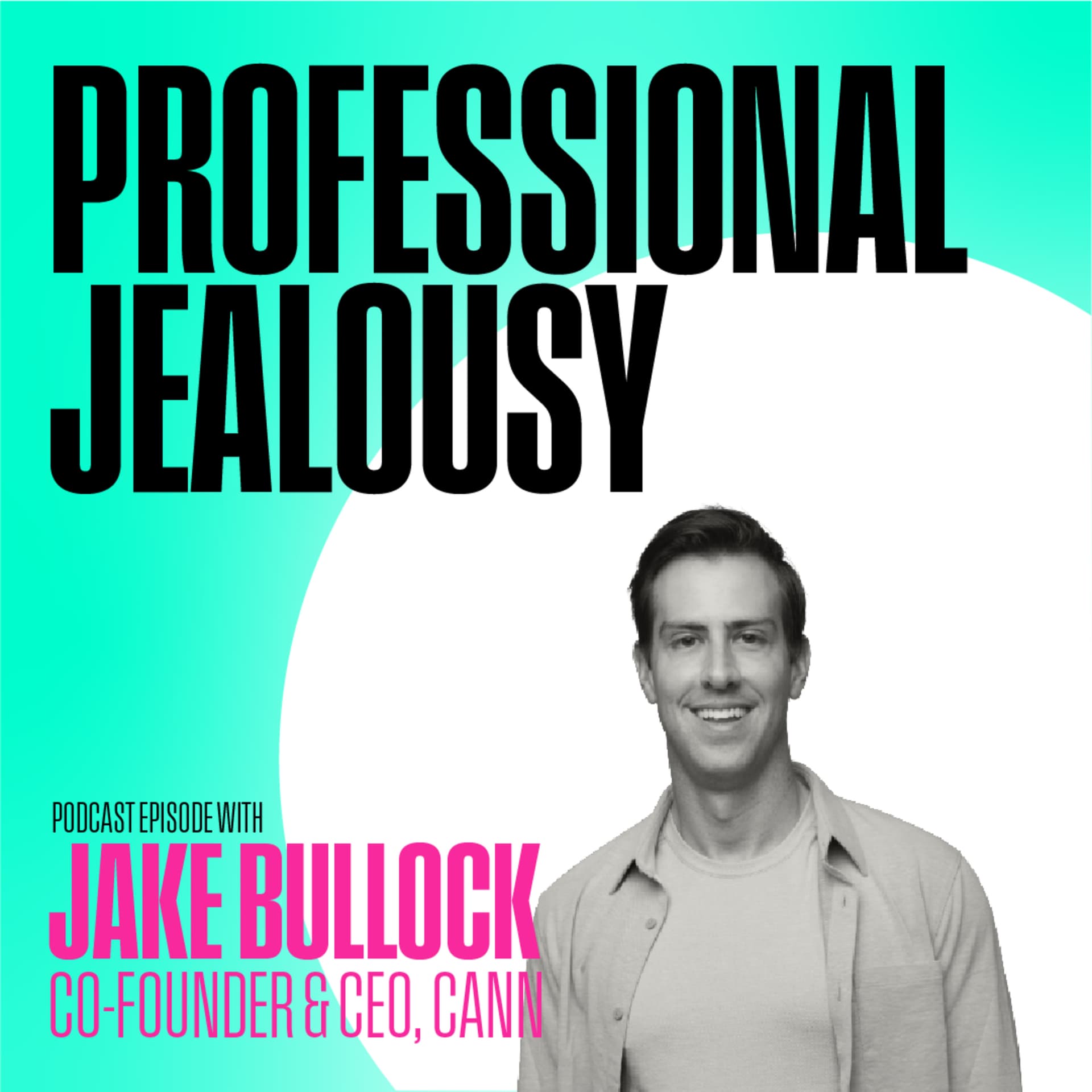
Episode Notes: Ep. 17 - The Founder Disrupting How Millennials & Gen Z Socialize Without Alcohol
Podcast Overview Title: Professional Jealousy Podcast Host: Natasha Jakubowski, Chief Innovation Officer at Anomaly Description: A series of conversations with impressive founders, innovators, and creatives, aimed at exploring their journeys and achievements.
Episode Summary Guest: Jake Bullock, Co-Founder & CEO of Cann Focus: Cann is a THC-infused social beverage company aimed at providing alcohol alternatives through microdosed beverages made with natural ingredients.
Key Topics Discussed
- Disruption of Social Beverage Monoculture
- Cann's mission to provide a viable alternative to alcohol.
- The rise of non-alcoholic beverages among Millennials and Gen Z.
- Changing Socialization Trends
- The shift in how people socialize, especially among younger generations.
- Cann’s role as a facilitator of social experiences without the negative aspects of alcohol consumption.
- Challenges in a Regulated Market
- The complexity of innovating within a heavily regulated industry.
- Compliance with evolving regulations for cannabis products.
- Learnings from Private Equity
- Leveraging experience from Bain Capital to build the Cann brand.
- Importance of understanding consumer behavior and market dynamics.
- Quality and Innovation Over Replication
- The emphasis on creating high-quality, innovative products rather than imitating existing offerings.
- The importance of a brand identity that resonates with consumers.
- Modern Fundraising Insights
- Navigating the fundraising landscape as a startup founder.
- Adapting strategies to current economic conditions.
Detailed Discussion Points
Disrupting the Monoculture of Alcohol
- Jake's Personal Journey
- Transitioning from heavy alcohol consumption to seeking healthier alternatives.
- The realization that many people, especially in their 30s, desire a social experience without the downsides of alcohol.
- Product Development
- Designing beverages that mimic the social effects of alcohol without the hangovers.
- Targeting consumers who are looking for alternatives to traditional alcoholic drinks.
Market Dynamics and Challenges
- Early Market Conditions
- The initial environment for cannabis products was marked by uncertainty and complexity.
- Many brands struggled to navigate the regulatory landscape.
- Pivotal Moments
- Gaining consumer trust and proving product efficacy through feedback.
- Adapting to regulatory changes, particularly around hemp-derived products.
Brand Building and Marketing Strategies
- Brand Guidelines
- Establishing principles that prioritize natural ingredients and social responsibility.
- Balancing an approachable brand image with premium product positioning.
- Consumer Engagement
- Utilizing humor and storytelling to connect with consumers.
- Keeping marketing efforts aligned with brand values, focusing on education and engagement.
- Target Demographics
- Identifying key consumer segments such as young parents and empty nesters.
- Understanding the shift in alcohol consumption behaviors among Gen Z.
Future Aspirations
- Long-term Vision for Cann
- Aim to become a household name in the social beverage category.
- Expansion into mainstream retail and a focus on increasing brand visibility.
- Advice for Aspiring Entrepreneurs
- Importance of innovation over imitation as a driving force for new brands.
- Emphasizing the need for a solid understanding of unit economics and profitability.
---
Key Takeaways
- Innovation is Crucial: Authenticity and innovation are essential for success in emerging markets.
- Consumer-Centric Approach: Understanding and addressing consumer pain points can drive demand for new products.
- Adaptability is Key: Successful brands must pivot strategies based on market conditions and regulatory changes.
- Build Relationships: Networking and maintaining relationships are vital for business growth and support.
---
Conclusion This episode of the Professional Jealousy Podcast offers an insightful look into the journey of Jake Bullock and the evolution of Cann in the cannabis beverage industry. With a focus on innovation, quality, and consumer engagement, Cann exemplifies how new brands can disrupt traditional markets by meeting the changing needs of consumers.
Written by AI. May contain mistakes. Listen to the episode to check what was said.
Chapters
Tap a time to open that second in VOThe Concept Behind CANN
0:45 to 2:25
Jake Bullock explains why he created CANN as an alcohol alternative for socializing.
“and someone being incredibly proud that they literally carried in their luggage from california some can and i was like oh my gosh this really is pretty groundbreaking an amazing alternative to alcohol.”
From Banking to Entrepreneurship
2:25 to 4:55
Jake shares his transition from Bain Capital to becoming a founder in the cannabis industry.
“And so for me, it was obvious it was beverage.”
Challenges of Building a Beverage Brand
4:55 to 7:36
Insight into the hurdles faced when creating a natural, cannabis-infused beverage.
“and go build something that can answer that question.”
Consumer Demand and Market Reality
7:36 to 10:08
Discussion about the unexpected challenges and consumer demand for CANN products.
“Moving the product around is more challenging.”
Changing Social Norms and Behaviors
10:08 to 12:21
Exploration of how CANN aims to disrupt traditional social drinking norms.
“And just going back to those folks, those friends that sort of said, we need these products.”
Navigating Market Development
12:21 to 14:00
Jake reflects on the slow progress of the cannabis market and its complexities.
“So we're starting to see some of the shifts, right?”
Navigating the Regulatory Landscape of Cannabis
14:00 to 16:40
Discussion on the complexities of cannabis regulation and its impact on business.
“I think, you know, it would have, like I said, it would never have imagined.”
Innovative Approaches to Hemp Products
16:40 to 19:40
Exploration of how the hemp market has been shaped by state-level regulations and business pivots.
“There's something much more mainstream when you can get it at the, you know, at the liquor store versus having to go into a dispensary.”
Maintaining Brand Integrity Amidst Competition
19:40 to 23:20
Insights on how the company focuses on brand values and product quality amidst growing competition.
“I actually get a kick out of seeing folks pairing citrus fruits and, and more adventurous herbal extracts because no one was doing that before we launched Canon.”
Balancing Premium and Accessible Brand Messaging
23:20 to 26:10
Discussion on how to create a brand that feels both premium and approachable.
“We also don't take ourselves too seriously.”
Show all 21 chapters
Evolving Marketing Strategies in the Cannabis Industry
26:10 to 28:00
Overview of the shifts in marketing strategies from dispensaries to mainstream retail channels.
“process that's going to keep us from, you know, trying to rip or copy something that someone else has done, but find our own way through it.”
Marketing Strategies for Non-Alcoholic Beverages
28:00 to 29:18
Learn how the brand uses innovative marketing strategies to capture consumer interest.
“opportunities have opened up, you're right.”
Targeting Key Market Opportunities
29:18 to 30:55
Discover how the brand positions itself during key alcohol-free events throughout the year.
“So what do you think is your secret advantage in terms of outperforming your spend?”
Understanding Consumer Segments
30:55 to 33:48
Explore the different consumer segments that are shifting away from alcohol and how to engage them.
“Maybe we're going to win on that, you know, Sunday, whereas alcohol wins on the Friday.”
The Ambition of Building a Household Brand
33:48 to 35:49
Learn about the aspirations to make the brand a staple in social gatherings.
“Now, is some of that going to revert back?”
Advice for New Entrepreneurs
35:49 to 38:11
Understand the key insights for founders looking to innovate in a new category.
“They want to have four and can's going to help them do that.”
Navigating Fundraising Challenges
38:11 to 40:59
Gain insights on the evolving landscape of fundraising for new ventures and how to adapt.
“Well, what about, I mean, it can't have been a super, I mean, maybe it helps coming from a background like Bain.”
Team Dynamics in Startups
40:59 to 42:00
Explore the complementary roles and dynamics that exist within startup co-founders.
“Do not fall into the trap of getting DTC e-commerce margins, making it work there, thinking that that's how you're going to grow the business.”
Founder's Journey and Team Structure
42:00 to 43:44
Learn about the evolution of a business and team dynamics.
“And I would take on the stuff that like, you actually should take your time to get this right.”
Quickfire Insights: Career Advice and Superpowers
43:45 to 46:21
Discover key career advice and personal superpowers that drive success.
“I always say grapefruit rosemary because it doesn't always get appreciated.”
Personal Reflections and Professional Jealousy
46:22 to 49:35
Explore personal growth, challenges, and what fuels professional jealousy.
“it's even possible to learn this early on but i think so much of the early part of my career is just like gaining skills you're teaching myself educating learning fast and going that you miss on the relationship piece.”
Transcript
Automatic transcript. May contain errors.0:04Yesterday I'm talking with Jake Bullock the Co-founder and CEO of CANN the the THC infused social beverage company revolutionizing the way people socialize. Can offers a range of microdose beverages that serve as alcohol alternatives made with simple all-natural delicious tasting ingredients. Prior to launching Can, Jake was an associate at Bain Capital evaluating potential investment opportunities with a specific focus in the consumer space. um hello jake it's great to have you as a guest um i actually remember during covid going to dinner and someone being incredibly proud that they literally carried in their luggage from california some can and i was like oh my gosh this really is pretty groundbreaking an amazing alternative to alcohol.
1:05For people who don't know the brand, can you give us the elevator pitch? Yes. So first off, thank you for having me. I'm excited to be here. And we really started Can as an alcohol alternative, even though it has THC and CBD in it and it comes sort of from the broader cannabis industry. The goal was not to get folks high. The goal was to get them to drink a little bit less booze. And we designed it largely for people like me who were getting into the 30s and realizing they couldn't drink alcohol, anything like I could in my 20s. And the sort of concept of a two day debilitating hangover became viscerally real.
1:45And we need an alternative, you know, for a lot of people, that alternative is, well, you slow down and you move to the suburbs, you have a family and you stop drinking as much. But that wasn't really what my journey was going to be. I wanted to still be social. I wasn't going to give up on that part yet, at least. And so it kind of created this dilemma of, well, how do I socialize now in this new world? Or my body's telling me alcohol is not the only option or it can't be the entire option. And I had grown up in Colorado and I'd followed the legal cannabis industry there. And, you know, it always confused me a little bit because you had these gummy candies.
2:16And if you ate the head of the gummy bear, you would be fine. But if you ate the whole thing, you know, you would have a miserable experience. It's like this. This probably is not where we're headed here. if we're going to be successful at normalizing cannabis and using these new ingredients coming into the fold in social ways. And so for me, it was obvious it was beverage. And we decided, well, can we take THC and CBD and put it in a drink? You make it kind of similar to alcohol in terms of its strength and potency. And if it tastes delicious and feels like a special treat, can we actually develop something that really is a one-to-one substitute for an alcoholic beverage?
2:51and we did just that yeah amazing I mean it's interesting we do a ton of work with a very very large alcohol global company and I do remember you know I do strategy and we did a big project where we were thinking of things that could disrupt the business multiple brands and you You know, there was this provocation that, you know, this is so long ago, like pre-can, pre a lot of the sort of cannabis market growth. But where we did say that if, you know, if things like cannabis and other nootropics start becoming mainstream, like what if you can get it from Walmart? And that was a little bit far.
3:39But, you know, alcohol, the calories, the hangover. I mean, when I saw it for the first time, I really was like, shit, I wish I'd done that. So at the time you were at Bain or, yeah, like talk to me about how did it go from, wow, that's a smart opportunity to I'm actually going to do this. I'm going to make the leap. I'm going to leave my big job with benefits and become a founder. Yeah, yeah. Yeah, so I'll try to set the stage to some degree. I think the initial environment in which I started thinking about this was at Bank Apple doing private equity. And I had seen these companies, you know, at sort of their fullest expression, right?
4:25These are real businesses that have demonstrated growth and are of a certain size. And it was interesting because we were making decisions whether to invest in them or partner with, in many cases, the founders of those businesses. And the question was, is this brand going to grow? or is it still cool? And it's kind of an amazing experience sitting around the table trying to figure that out. And there's all sorts of ways you could think about it, but you kind of boil down to those questions. And I was excited by that prospect. I was like, I want, knowing kind of what it looks like at its fullest expression, I want to go back to the very beginning and go build something that can answer that question.
4:58Yes, it's going to grow. And yes, it's still a cool brand. And so that was really motivating to me. I actually went to business school at Stanford. I applied there with the intention of starting a company in the cannabis space. I put it in my application. I wasn't exactly sure what that looked like, but I thought I might go back to Colorado and do it there because at the time you had legal adult use recreational marijuana in Washington, Oregon, and Colorado. And so I'd grown up in Colorado. I thought that might make sense. When I got to Sanford, California had passed its law, essentially rolling out a similar program for adults.
5:33Obviously, California had a long history on the medical side, but this would be the first time you could go into a dispensary with an ID and purchase these products. So I said, okay, well, let's spend the two years here at school really figuring this question out and talking to hundreds of people, whoever would meet with me from the industry, which is kind of an exciting time to do that because it was all new. So you didn't have this sort of like a set of incumbents and credibility. Everything was kind of happening in a fluid, exciting, dynamic way. Now, because of that, it was also really challenging.
6:01And I think many brands that started out in that environment found it challenging to grow or to grab hold. There's all sorts of other structural issues with that program from a tax regulation standpoint. There a few have survived over the last sort of six or seven years. But it was a great learning experience. And it helped me, to answer your original question, get a little bit more down the road, a little bit more comfortable. You're not going to go back into private equity and you're going to turn down these sort of crazy salaries and benefits. And one of the things I joke about being really challenging about starting a company seems sort of obvious and simple, but it's figuring out your healthcare, right?
6:41In this country, it was me buying healthcare on the exchange. And that was not an easy process. I'm like, how does anybody do this? And you forget these little things that, you know, kind of help support the culture around taking a job and staying in a job, right? And so having to shake that off was really challenging, even at a place like Stanford, right, where the business school is geared towards, you know, founders, and there's such an entrepreneurial element to it. Everyone tells you, you know, there's two kinds of people in the world. There's people that can start companies and people that can't.
7:11And, you know, which one are you? And, you know, it's obviously not that black and white. But that culture really does kind of help support you as well. So I think that was the other thing I had. I had time to really think about it, to get a little bit of space away from the corporate world. And I had a really supportive environment in that school. Even then, it was really hard to imagine, you know, graduating without a job and saying, I'm going to work on this full time. yeah i mean it really yeah so interesting we actually so my day job is at a company called anomaly i'm a partner their chief innovation officer and we actually created um dosist um which obviously was similarly an early kind of mover within the medicinal cannabis space um starting out in also in California and then Colorado but it really was the wild wild west what what was the most surprising element of becoming a founder and moving into this market because I feel like it's not whereas you know alcohol and beverages two massive fragmented you know hugely competitive markets you're creating a category like there's so many red flags and like you know from regulations to literally creating new behaviors like talk to me about the most daunting or the things that surprised you most about the process yeah we definitely had our work cut out for us i mean one beverages is just hard in cpg it's structurally harder because of the sort of weight of the product, the logistics, the freight, all those things means your margins are lower.
8:55Moving the product around is more challenging. Then we added on top of that natural, it's a natural product. There's no preservatives in our product, right? That makes things even more challenging. It narrows dramatically where you can manufacture the product, how it can move. Maybe it opens up a few places where you can sell, which is exciting, but it's also what we believed in. We were consumers of natural products, so we weren't going to make something that wasn't. And then we add on top of that a highly regulated active ingredient, right? And so one that is even has like pretty unclear regulations at the federal level.
9:25And so a combination of those things made it really, really challenging. Just looking at the business that we were getting into. And people told me this, right? Like I kind of like had these early conversations and they're like, well, you know, it's gonna be really hard for this reason and that reason. I think what drove us to do it were consumers. We were actual people that we tested prototypes of this product on that one were blown away by the fact that they actually enjoyed what it tasted like and the effect of it was exactly what they wanted. Even to the point where we would have friends that would look me in the eye and say, Jake, please tell me you're doing this.
10:03I need these products to exist. And it was those moments, those interactions I think that were that kind of were our North Star when we had those tough times in the beginning. Things were difficult. Can you make this a business? Does this actually make sense? And just going back to those folks, those friends that sort of said, we need these products. We knew that there was going to be some consumer demand for it. We had no idea how challenging it was going to be. And I mean, I would have told you six years ago that we would have launched in the regulated dispensary market in California. And by three to five years, we would have some sort of federal legalization of cannabis that would allow these products to be sold in more places than, you know, a few hundred dispensaries in various states.
10:43That obviously has not happened. I think I've updated my thinking that will probably not happen, at least not while I'm running can or maybe in business at all. But we other avenues have opened up. Right. And we think of it. So I think, you know, there's something you need that sort of driving force. There has to be a why. I wouldn't say that you have to be like unreasonably passionate and like so much so that you aren't able to understand like important things about the business and economics and how it works. But I do think that there needs to be that driving force, that North Star that says, OK, why am I doing this?
11:15And am I still right about that? And if that hasn't changed, then let's keep moving forward. Do you have that why articulated? Is it actually a statement? We do. It's about changing the way people socialize. It seems kind of like a simple concept, but when you when you peel it back a few layers, it's actually a really big idea. Right. We have seen the monoculture disrupted in so many other parts of society. Right. I mean, we're talking about Gen Z a lot these days. And the idea that everyone would be listening to the same top 40 songs, you know, that wasn't that long ago that that's what we did.
11:47Right. And now your phone is delivering you every any type of music you want, you know, from around the world instantly. It's incredible. And so I think we're seeing a similar thing, right? We had a monoculture around how we socialize. Yes, alcohol, but all of the things that alcohol enabled, the way it was built in our bars and our restaurants. And one of my favorite things about being in this business today is going to restaurants and seeing how their drinks venues have changed. And they're changing. And they're changing pretty amazingly to the point where there's, you know, dedicated sections, in some cases, entire pages for no and low alcohol options.
12:21And that's like really exciting. So we're starting to see some of the shifts, right? maybe if we're not all drinking alcohol all the time, the bars don't need to be loud and dark. You know, maybe they look a little bit different. Maybe the way we interact is different. So I think there's all sorts of really exciting things that come into the fold when we think about how we socialize. And really what we're doing at CAN is we're providing consumers another option. And what we found is whether it's CAN or it's other THC products, or it's adaptogenic products, or it's wider access to, you know, controlled substances like psilocybin, which is more in our communities now than it was 20, 30 years ago.
12:55Consumers, when presented at other options, will choose those other options. Not all the time, right? Our best customers still drink alcohol. Yeah. But we're helping them moderate that and we're giving them choices. And those choices are really exciting.
13:11Yeah, I think, I mean, so many, in so many ways, I feel like you've been very smart and have kind of whether intentionally a lot kind of leaned into quite a few different trends uh whether it's people drinking less or being more concerned about mind body or you know artificial ingredients um the kind of rise of things like microdosing and stuff i yeah so smart and you've also pivoted and been pretty nimble. So starting with a small amount, moving to the kind of hemp version so you can go into retail from dispensaries, you made it look pretty easy. I mean, are you surprised how long the market is taking to develop?
14:07In some ways, yes. I think, you know, it would have, like I said, it would never have imagined. It would have not seen some real progress on sort of federal legalization of marijuana. But I think as we've been in this business for, you know, almost a decade now, one of the things that we've seen is just how the politics, you know, both at the national level but also at the state level work. And, you know, for better or for worse, I'm learning quite a lot about it. And there's just so many more complexities than we would have ever imagined, right? As much as we like to think that products that consumers love ultimately become available, it's not really the case.
14:43We saw this with folks that were in the nicotine vape category. They're an amazing product that consumers loved. It was banned somewhat silly, I think, by the government. And now everyone uses these very dangerous Chinese imports. It's like, how did we get into a worse situation that's more dangerous for consumers with products that aren't American? It's kind of wild. And so these things can happen. There are bad examples of how policymakers screw this up. And I think they have been screwing up for a while. But there's also a lot of bright spots, right? One of the things that happened because there was so little federal action on this issue is states took into their own hands the regulation of hemp.
15:23And they did it in a way that allows, largely allows safe access to low potency hemp products and particularly drinks. would have never happened. Had the federal government acted, the prior administration to legalize marijuana, we wouldn't have the same, I think, effort and energy around what's happening on the ground in various states as it relates to hemp. And that's really unlocked our business because what it's allowed us to do is extract the THC and CBD from hemp, sell under those regulatory rules, and get products into liquor stores, which is where alcohol is sold. And so here startups pivoting by taking some sort of ip or work that had been done and changing the market or its application to a different segment we actually kept the product to the you know from the consumer's perspective identically the same you know there's no difference but we changed we pivoted our active ingredient and we pivoted our regulatory framework that opened up all these new distribution channels to get to that that same product to the same consumer yeah it's kind of unorthodox but is really working and is providing a new model for states that don't want to stand up a California style, you know, Department of Candidates Control and all the challenges that we faced in that market.
16:32Yeah. And I feel like it opened up. Yeah. So you could be distributed, A, widely, like without stigma, not necessarily. There's something much more mainstream when you can get it at the, you know, at the liquor store versus having to go into a dispensary. Yeah. Kind of amazing. in terms of can you see yourself going into psilocybin and other types of actives i guess we get asked this question all the time i you know my my common response is we've got enough on our hands with our our currently you know unclearly regulated active ingredient the idea of taking on another one with maybe even um more challenging dynamics doesn't make a ton of sense.
17:21It's definitely alluring though, right? It's, it's in our, you know, when we think about ourselves as a social beverage company that doesn't restrict us to THC or CBD only. Um, there, I absolutely believe there are social beverages of the future that will incorporate, you know, different types of, of adaptogenic or, or in some cases, you know, um, psilocybin, it could be in that mix. Right. Um, but there's also ongoing clinical trials for psilocybin, It could be very easily approved as a drug. I think one of the weird things about marijuana is despite its ubiquity, has had a prohibition on any medical research unless it's to research the harms.
18:00And so that has kind of created a dynamic where there are no drugs outside of a seizure medication that incorporates CBD and Marinol, which is used, I think, on the appetite side for folks dealing with cancer. outside and that's a synthetic THC. So you don't really have the, you know, what should have happened here, I think, is probably a robust set of research around how this can be used either as a supplement over the counter or as a prescribed drug and it hasn't happened. And so that's, again, because of the lack of that structure, you're seeing states step up and really develop and be on the front lines of good policy in this space.
18:40Yet I'm hoping for the sake of Americans, that doesn't happen to these other compounds, but it very well may. We'll see. Yeah. Yeah, I think you've got, there's so much to grow within cannabis without having to figure out a whole new level of active. I do think it's interesting. I mean, like you did create a market and now that you've kind of helped establish a kind of behavior in a market, Can you talk to me about how you think about your brand and how you make sure that you stay elevated and leading versus all of the potential kind of copycats coming in? Because it is still, yeah, I feel like you've opened the door to a whole new category of beverages.
19:31Yes. It's always fun for us to see the new versions of whether they're copycats or fast followers or whatever it is. you know, some cases using our same flavors. I actually get a kick out of seeing folks pairing citrus fruits and, and more adventurous herbal extracts because no one was doing that before we launched Canon. And, you know, we've somehow gotten people to drink things like cardamom and lavender and rosemary. And that's pretty cool to me. That kind of, you know, formulation and innovation around the product is, is, is infectious and consumers love it. And so it doesn't surprise me that folks are jumping on, although I sometimes wonder about their combinations.
20:10We have to stay disciplined, right, to answer your question. We had set out these brand guidelines, both sort of values around the brand and who we are as a company and what we care about, but also around the product, right? It's like we don't use concentrated juices. We don't use preserves. We use all natural herbal extracts, not with other natural flavors. Those things really matter. They matter to the taste of the product and consumers, whether they're keenly aware of them or not, are benefiting from the quality of the product, you know, and the decisions that we make around it. So we stay disciplined to those values as well.
20:44And, and, you know, even when you see pressure from others, and there's, there's brands that are getting, gaining traction in this market or that market, or they're doing this thing or that thing, you know, we pay attention to it, but we don't let it distract us from sort of fundamental goal, right? Our, our job isn't really to outcompete other cannabis beverages, right? Our job is to convince an average person walking down the street that's going to have two glasses of wine tonight that maybe they should only have one and have a can as well, right? That's kind of a different proposition. But I think it's one that we're well positioned to succeed in.
21:17And so we're more focused there than we are on, you know, who's launching a blood orange flavor this week or whenever. Yeah, you're very generous to all these copycats. But I do love that you hit on something that I think is does seem very key to your brand which is you've modeled more on you know you haven't looked to the cannabis category you've looked to premium natural gourmet flavors that you see activated whether it's mixology or premium alcohols and beverages so that's part of how you've kind of thought about your brand can you tell me as a brand strategist any other kind of key pillars have been important to making can the kind of brand that you uh you know aspire to yeah so we um you know if you remember and i think you will being with with doses in those early days there were a lot of first movers that wanted to be ultra premium it was like the barneys for weed and and um you know it was the brand was a font um and and we kind of were like well that doesn't seem right either so we had to figure out some sort of value set of principles to help guide us through, we knew we weren't going to be, you know, rolling out old tropes from sort of the like stigmatized stoner culture, right?
22:32We also knew we weren't going to be the Barneys for weed. And so how do you think about that? And we wanted to make sure that we were approachable. That was really important that we weren't, we didn't feel so out of reach, but we were still communicating the premiumness of the product, the ingredient choices we were making that it was elevated in that sense right we wanted to take a stand like we often talk about being editorial as a brand and there's certain issues where we would really take kind of like a vocal stance line in the sand whether that was on social justice issues right which are really important to the brand or on preservatives or stevia right we get actually a lot of uh of folks fight us on the stevia issue and i i you know they they they're convinced they like it i think they've somehow habituated themselves to it it's it's awful and has a bad mouth taste and we don't use it in our products And that kind of that sort of helped us right as we as we chart territory of that that balance sticking to those principles.
23:26We also don't take ourselves too seriously. Right. I think one of the other traps brands can fall into is they become so co-opted by the environment that we're in, which is often very scary and and and uncomfortable. We we sort of take the offbeat. Right. We're going to be a little bit irreverent about what's happening. We're going to try to find the humor in these situations and show up in a way that's maybe a little bit more quirky. At the end of the day, we're selling drugs. This is going to change the way you experience the world. It's mild, right? And one of the lowest potencies, lowest strength, lowest risks products on the market.
24:00But we are kind of shy away from the silliness of that. And it's a social product. We're not trying to cure any of your illnesses, although folks use these products for all sorts of, you know, kind of reasons that kind of can include those. But it's a social product. And so we also, you know, tried to imbue the brand with that character and that humor, which I think also helps balance some of those questions of how do you make this thing feel approachable to a new customer? You don't want them to feel like it's out of reach and also not something that's going to kind of, you know, make them feel uncomfortable either.
24:34Yeah. Yeah. No, it's so many balances. The premium and the accessible is definitely one that I think you've done a great job. on. It's interesting. What I mean, do you have what are your favorite brands? Like, what makes a good brand for you? Yeah, it's funny, because I, as a result of starting this company has spent a lot of time following brands. And, you know, that's not a normal thing, right? I have to keep reminding myself that like, most people don't follow brands, they aren't like actively engaging with brand content, they don't like go through the motions of on TikTok or Instagram, you know, like adding this brand to the content that they want to see.
25:17And that matters, right? Because I think sometimes we get so into our branded world that we're like, you know, constantly focused on it. We're saying, oh, what is this brand doing? What is that brand doing? Right. And, and it can affect us in not a good way, right? That then we start behaving like in a way that, um, take it too seriously. Yeah. Taking it too seriously. And almost like I feeling like the urge to copycat something successful. We love, for example, liquid death. They do like the most amazing collaborations with brands. They make us laugh. There's a quirkiness. There's an irreverence.
25:43There's like a very strong sense of brand and voice and who they are. So that's one that we're always looking at. And I have to remind myself like, okay, you can't, you're not doing a, you're not going to do the canned version of this, but it is also fun to have that inspiration because we will take ideas and we'll say, okay, this was cool. What was cool about it? Let's identify the, the sort of like salient motivating that emotional thing behind it. And then take that emotional thing and say, okay, well, how does Can show up on this point, right? And that's a great way of driving a creative process that's going to keep us from, you know, trying to rip or copy something that someone else has done, but find our own way through it.
26:17And what's really cool about this brand is we have license to do that in some ways because of how we built the brand and also in some ways because of the nature of the product, right? I joke, we're not selling toothpaste. You know, this is actually something interesting that people want to have in their lives or understand and talk about. And that's an advantage as well yeah how do you fit the kind of there is something you know there has to be something fun and uh about socializing about you know being a lubricator literally of of a situation um i'm curious you know you've also i feel like you've done so many different stages of types of brands and business from from you know state-specific dispensary to DTC to moving into kind of more mass retail presumably a lot of your marketing is a little more kind of normal alcohol playbook of in-store sampling like talk to me about how you think about marketing and growing the brand now yeah yeah it's a good question I mean six years ago when we're in the dispensaries, right?
27:25We're highly restricted. We can't really do anything digitally. We can't really do anything in the dispensaries. For the most part, they had their own sort of ambitions and aesthetics. And so we were stuck going out into the community and doing kind of old school word of mouth, like event-based marketing. We had a, I know Dosis had its Abbot Kinney location. We did like a pop-up down the street and that was great. And it was right next to the MedMen and we sent people there to buy the product. So, you know, we did creative things like that, that was really all we could do to try to drive that sort of word of mouth and virality in a geography.
Read the full transcript
27:58As we've gotten bigger and more distribution channels and opportunities have opened up, you're right. The business looks a lot like alcohol in terms of how we can market, right? We're doing a lot of stuff in store and displays, raising the visibility of the brand, whether that's, you know, with like a center aisle display or case stack somewhere in the store on the end cap of an aisle and figuring out how to bring the right balance of the brand and education and what consumers want or need in order to try the product for the first time. That's actually where most people encounter can today. Whereas if you think about six years ago, it was probably through our Instagram where we couldn't even sell you any product.
28:34And we still can't sell you product from our Instagram, but you see some sort of funny meme that we would create and you would laugh and share it with your friends. And that was how you interact with the brand six years ago. Now we can run ads. So there's, there's a little bit more of a digital presence. You'll find us, you know, probably harassing you with reels and things like that. Um, uh, on, on Instagram, but there's restrictions on a lot of these platforms. So it's, it's not really easy to do that. Um, and, and, uh, you know, we built up an email list as well. So we do kind of like traditional e-commerce email marketing.
29:03That's another area where we can, you know, keep folks involved in the brand and telling our story. Uh, but it really has changed relative to where we were six years ago. And for the better, I mean, we're competing for a shelf share with the biggest alcohol brands in the world. And trying our best to hold our own. Yeah, I feel like you've gone from one set of really tough market conditions in terms of marketing, well, in terms of everything, to now competing with some of the biggest brands and presumably not having similar marketing spends. So what do you think is your secret advantage in terms of outperforming your spend?
29:43Yeah, you know, one of the things we think a lot about is there are places where alcohol is going to win and that's okay. We're going to let them win. Like I said, our best customers. Yeah, so where do you win? And then exactly the places where we can win are where we're going to focus. So everyone in alcohol is really gearing up for holiday, October, November, December, right? There's all sorts of energy around that. We'll do our own sort of thing there, But really, we wait and we say dry January is our Super Bowl. Let's focus there. That's when everyone's coming off of their holiday alcohol binges and they're trying to get a little bit healthy for the new year and they're looking for alternatives.
30:17We will show up that. And that's when we want to be doing our biggest activations in stores, raising visibility of the brand, you know, trying to get folks to try the product for the first time, digital marketing, activations, partnerships, all that stuff. So we think about it that way. October, we love because there's a sober October movement. People are doing that. So we're gearing up for sober October right now. Those are places we can win. There are, you know, even within some of these occasions, there's differences, right? A college football game on Saturday night, alcohol might win that.
30:45But the last game on Sunday, maybe Cannes win sale, right? A concert festival over the weekend where, you know, you're out for three days and you're going to get really tired. Maybe we're going to win on that, you know, Sunday, whereas alcohol wins on the Friday. there's examples like that where we can kind of play you know that game and find places where can is really you know going to serve people best yeah and I feel like there's also something interesting about you know alcohol industry is kind of you know they've segmented the different occasions and demand spaces so you know the whiskey brand's going to do this the beer brand's going to do this the wine brands for this time of or you know the tequila brands for this kind of person and actually you can kind of talk to all of those people you're not trying to replace them you're just trying to give them another option within their repertoire which is super interesting so strategically kind of do you have key kind of personas or yeah how do you think about your consumers yeah we do it's interesting i mean one of the challenges you you sort of identify is that alcohol has really trotted these lines very effectively over decades.
31:59And so, you know, whether that was a real thing, a sort of a consumer, a salient emotional consumer need that they built a strategy around or the strategy kind of created that emotion. Yeah, I don't know, but they've had so much time to do it where we, you know, we're still wading through that environment and in some ways believe that anyone that has a frustration with alcohol is a potential conversation for the brand. And that those points of frustration bubble up. So we found there are times when people are maybe better primed for it. Young parents, you have a kid, this changes how you think about everything, but particularly about your alcohol consumption.
32:35And I think it's large, I'm not a parent yet. But what I've heard from, from my parent friends is that it's actually the parenting hum over thing that like, it's like, hangovers are bad. Now try to parent while, the wall um and so getting up in the middle of the night yes exactly so then you know two glasses of wine on a tuesday night starts looking like a bad strategy not a good one um so we do really well with that that customer demographic weirdly um your your kids leaving the home and and going off and to college or or to to the real world um you you forget how much of the sort of structure that socially was built around their presence.
33:14And so I joke every night's a Friday night in an empty nesters home and they've got to figure that out, right? Like they need new rules for consumption of alcohol and our product actually helps them moderate their alcohol consumption. So we find that folks will maybe go a little off the rails those first couple months after the audit and then they discover cancer. So that's another, a really good one. I don't know how to explain what's happening with Gen Z, but I will tell you something is happening. Yeah, I mean, yeah. It's incredible. They're eschewing alcohol in rates that I think no one would have imagined possible.
33:51Now, is some of that going to revert back? I mean, I think there will be an effect of that. I do think the alcohol industry likes to talk a lot about economic pressures and inflation causing the cost of this stuff to rise. I would buy that if we saw beer doing relatively better than the other alcohols, but we don't. We actually see it doing worse. So, you know, beer is what you drink when alcohol is expensive. So that's not really happening. I think fitness trackers, people all have all these fitness trackers now. The links to sleep, longevity, overall brain health. I mean, yes, that was pretty.
34:22Yeah, I think that's I think that the data piece is a structural change that that's going to persist. And who knows? Like, I think like, you know, these things happen on the margin. So the net effect, it's not like people are stopping drinking alcohol. Right. that's continuing to be the most common social beverage and will be, I think, for my entire lifetime. But what's happening on the margin is really where we're building this business. And I think it's where, you know, my advice to entrepreneurs when they look at these big melting ice cubes is actually pay attention to the melt. That's where all that opportunity is.
34:53That's where we're going to see big changes over a 10 or 20 year, you know, business life cycle. Yeah. What's Pan's ambition? Like, where do you want to be in five years? we're building a mainstream global brand i think that is something we we constantly talk about as a company it's a social beverage brand it's one that you know is is sitting at the intersection of of sober curiosity and cannabis curiosity but but really our ambition is to be a household name we named the company can because it's cannabis in a can and it's on the nose it tells you what it is um we wanted that that three or that sort of like word that describes the category right you have beer, you have wine, you can, it kind of all hangs together.
35:34And so I would love to see when I know we've been successful is when folks have a party and it's no longer just beer and wine, it's beer, wine, and can. You got all three. And you have to have that on offer because there's going to be people that are going to come to your party and they don't want to drink alcohol. And you've got that option for them. And there's going to be people that are going to come and they don't want to have 10 beers. They want to have four and can's going to help them do that. Right. And so we're getting closer to that. I think that the big things we need to do over the next five years are really win over grocery retail uh we need to get the mass market chains into this space uh we need to get the major alcohol distributors get these products on their trucks um and then the on-premise it's starting to change but it's it's going to be kind of the slowest and that's our average because you really need on-premise to drive trial uh you got your heart you try for the first time it costs you eight bucks instead of you know 20 bucks and you love it and so you buy it or you hate it and you don't buy it but that's an important uh element of how it's not playing trial yeah and And what sort of advice would you give first-time founders or founders trying to create something pretty new?
36:40I mean, I feel like emerging category, new kind of idea, what kind of advice would you give them? Yeah, well, we thought a lot about this concept of creating a new category and what does it actually mean to be innovative? and there's so many temptations to say, oh, well, we'll do LaCroix, but with THC in it, or let's make a beer, but with THC. And we avoided the temptation to do that. And I think it was because we were creating something new. We wanted this to be innovative in and of itself. And so part of what drove our formulation, what drove the brand expression identity was all, this is something new.
37:13We can be inspired by things around us, but we're not going to replicate them and swap stuff out. That was really important. I think it's important for anybody that's looking to start something that really feels like a new category or a new frontier space and edge to something is really keep yourself from getting pulled back into that culture. And there's forces that will do it. I mean, we had so many beverage formulators that we fired them all and did it ourselves because they would try to put us into these boxes. Oh, you should use this because you can say natural flavors on the label, but, you know, it costs you 10 cents less.
37:46And it's like, you know, don't be so caught up in the commercialization and the unit economics. It is more important, we think, to fail creating something amazing that you love, that feels innovative and new, and realize that that thing is not commercializable than it is to go create a mass sort of commercial product that you know is going to have good unit economics at scale. And then people are kind of just like, meh about it. Don't fail that way. That's too common and boring. Yeah. Well, what about, I mean, it can't have been a super, I mean, maybe it helps coming from a background like Bain.
38:20but what about fundraising kind of being that easy at the beginning especially thoughts on fundraising we thought it was hard in the beginning one of your tricks what are your hacks how do you tell your story in a way that uh gets you some money yeah so it's funny because we now i've spanned two um interest rate environments i would say that we thought it was hard in the beginning and we have now realized that it was it was actually quite easy then um and now it is virtually impossible. But I think that the lessons still apply. I think that maybe the one big change is six, seven years ago when we were raising the first capital into the business, people wanted to know that you understood that there was a thing called union economics, but they didn't really care what they were.
39:04They cared. Now more profit focused. Yes. Now I would lead with that. And it doesn't mean you have to be profitable from day one on the first order, but it does mean that you have to understand how you're going to get profitable and how profitability and operating cash flow is going to be a part of your financing strategy, right? The good news is, is that so many amazing tools have been developed over the last five years that will help you do that, right? You don't need a team of 10 or 20 people to scale a CPG beverage brand, right? Now, you probably didn't need it six years ago, but the investors put pressure on you to grow so fast, so you'd hire really now.
39:36What sort of tools? What are you referring to? Yeah, so I'm thinking about, especially for brands, right? There's so much that you can do from a marketing standpoint that's automated now, right? I mean, our core activities really start with generating content, that content can be generated by machines, it's kind of scary what we're seeing. I mean, we use some of this, like, instead of spending a bunch of money on a photographer to shoot blood orange slices, computers can make beautiful blood orange slices, we use those right. Now, there's times where we do lean into creative professionals and photographers to bring things to life and video.
40:06And, you know, there's like really special moments that are speaking the brand. So it's a combination strategy, I think, but so much of just even sending emails and segmentation and that, you know, what's happening on websites with advertising landing pages, we're getting very close to where we can just, the ads can, we'll just be made by the machine, like, you know, to the person that's looking at them. So those are all great signs for folks building businesses, even outside of CPG, right? With Vibe coding and Copilot and these things, you know, you just don't need the same kind of teams that you used to need.
40:36So I would lead with those types of things. Make sure you're aware in your conversations with investors about how you're going to build the company in a way that makes sense in this world, right? Which is a world where there is automation, where you're probably not raising as much money initially. And that's a good thing because you're going to own more of the company. So there's a lot of, I think, positives, but you really are leading with a different economic model. You're going to get profitable. The other thing I would say is for folks that are building businesses in CPG, food and beverage, build it for retail.
41:02Do not fall into the trap of getting DTC e-commerce margins, making it work there, thinking that that's how you're going to grow the business. That still happens, but that is not how it works. Okay, interesting. I'm going to go – I'm running out of time. So I'm going to go a little more into kind of quick-fire questions. I am wondering, what do you focus on versus your co-founder? I'm just curious, like how you're complimentary. Yes. In the early days. From business school? Yeah, we actually met at Bain & Company on the very first day. So we both sort of had like the strategy consultant piece and both went to business school.
41:46Although very different sort of emotionally in terms of like what we gravitated towards in our energy level. So he tended to take on the sales stuff and a lot of the like things that needed to be done fast. You could make some mistakes along the way. he would take that on. And I would take on the stuff that like, you actually should take your time to get this right. You know, the operations and the finance and the legal things like that. So that was a good balance. Although there are elements of both in each right there sometimes where there was a marketing task that actually we needed to get right, like packaging design, for example, that needs to be done a certain way.
42:19About two and a half years ago, my co-founder transitioned out of the business and started a creative agency in Hollywood. So he's doing that now and and and loves it's called juxtapose oh i know you work with okay you know big brands like you know dunkin donuts and and dick sporting goods arby's things like that to bring video content to life and in a culturally relevant way so um you took a lot of i think learnings from from what we were able to do with the business and in some of those early years um and and i think uh is pretty happy doing that now how many uh and this isn't going into the quickfire yet But talk to me, just give me a quick overview of your kind of how many people, key functions.
43:00I'm just curious, like size, et cetera. Yeah, we have about 40 people. Half those are sales reps, you know, folks in the field, field marketers. There's an ops team that's, you know, sort of exactly who you'd expect, production, supply chain, logistics. And then we've been big believers from the very beginning in in-house marketing and brand. So our first hire was actually a designer. We've always had a full-time design talent at a huge advantage. And just doing a lot of that, being able to do a lot of the brand and marketing and content creation in house. Obviously, we work with partners and we've brought folks in along the way and they've been great.
43:35But having that core creative capability live inside the house means we have a slightly larger marketing team, but one that's really brought the brand to life and carried it through each of its chapters. All right. We'll go to Quickfire. What's your favorite can skew? Oh, wow. I always say grapefruit rosemary because it doesn't always get appreciated. I think some people can't have grapefruit because of their medication or something, but it is really lovely. And if you like grapefruit, it's amazing. All right. Best career advice, worst career advice? Oh, wow. Gosh, I mean, I think the best advice I got was that life is really about the stories and it's about, you know, having those experiences and being able to tell those stories, not losing sight of that.
44:17I think that's helped me through a lot of the ups and downs of some of these things that have happened to us, whether it's in this business or in other businesses, where like, oh, gosh, you feel really low or really high. And it's really all about stories that you can tell. Worst career advice? Gosh, I don't know. I've gotten a lot of good career advice. I think at one point I had gotten advice to never apologize. I think that's pretty bad advice. There's often a lot of times where you should be apologizing, especially as a leader and a CEO like myself, I make mistakes all the time. And people really appreciate it when you say, hey, this is actually this one was on me.
44:48I made this mistake. And I apologize for that. Love it. What do you think your superpowers are that have helped you be successful? Yeah, I think I think there's I have a view that like are the things that we're really good at are also in some ways also the things we're bad at. And so you kind of have to take the good and with the bad. Um, and, and for me, that means I can be, you know, really methodical about things. It probably means I'm a little slower than I should be to make a decision. Um, I think I can tell a story of, and, and, and share a vision and really generate excitement about like, what is at stake in what we're doing?
45:26Even if that thing is a really small thing that doesn't seem like it's that important. Um, and I think that sometimes means that like, I will spend over index on telling the story and under index on rolling up my sleeves and helping you actually create that vision right um i think that like i use humor a lot i think the humor is an underrated uh skill that that people um you know miss it just it just helps it like helps bring you closer to people it helps sometimes deflect or de-escalate meetings that could otherwise feel intense or situations where you're like oh gosh this is this is all going to be bad news and it's like okay well if we can actually find the humor in this uh then maybe we'll just help us get through what would otherwise have been a really tough uncomfortable meeting um and so you know i think that's also something that gets lost but i i've been able to use somewhat effectively i hope anything you wish you'd learned earlier in your career hmm um gosh i think that the you it's hard to know whether it's even possible to learn this early on but i think so much of the early part of my career is just like gaining skills you're teaching myself educating learning fast and going that you miss on the relationship piece.
46:35You miss on the like, I should stay in touch with that person, or I really enjoyed, you know, working with so-and-so over this period of time. And I think that I just like am constantly reminded about how quickly I've moved through the first sort of part of my career. And the sad part about that is you just lose touch with folks and you just continue to move means you move on often. I wish I would have done a better job of appreciating those interactions and trying to keep those folks in my orbit. Yeah, I love that. I'm just curious, do you have mentors? I'm not necessarily official, but do you have people that you would consider mentors?
47:12I do. I mean, I think in a business, there's some formal capacities where these folks come up, like advisors and our board. And I would say both board members and advisors of this company have really become mentors to me. I think about this as people you call when, not only are things bad, but you don't even know what to do about it. You know, it's like those situations, like who are you picking up the phone to call? And also I would say like, there's, you know, there's a little bit of a blurring of the lines between personal and professional too, right? Like my parents, I tap often in these situations.
47:44I'm having a tough issue here. I don't know how to handle this HR issue, right? I'm not calling a lawyer. I'm not calling an advisor. I'm not calling a board member. I'm calling my mall. And it's because I think that that's actually where I'm going to get the best advice or support in that moment. Oh my God. I am just sitting here thinking, I hope my son does that. Are you an introvert or an extrovert when it comes to socializing and stuff like, and work and, you know, life? I'm definitely an introvert. I think best introverts figure out how to make it work socially and in those situations, but I hate doing the thing.
48:19It drains me showing up to these, you know, happy hours. Thank God I started a company about not drinking alcohol because I can use that as an excuse. But I have to recharge. I have to be by myself to build back up the strength to go do it again the next day. Interesting. Anything that you're trying to work on and get better at? I think the biggest thing, I've been working on this for a while, but I actually think, you know, to my other point where our greatest strengths are also our greatest weaknesses, you should probably be always working on the same things is probably how it goes. But I have an inclination, I think, to jump into situations and be like, okay, I'm gonna figure this out.
48:56And it can sometimes be like, very interrogative is maybe the right word. And I'm trying to do a better job of just like, sending the having information flow the other way towards me, right? Like, how can I be really curious? There's a great book, I think it's called the scouts mindset, I'm forgetting the author. But like, what is that? Like, you're scouting for information, you're trying to create the circumstance and environment, so that the folks that you're working with, are open to sharing as much information about the situation as possible, You know, the goal is not to figure it out as fast as possible, which I think sometimes I have the inclination to be like, I'm going to get the answer really quickly here by like digging in.
49:28And it's actually the opposite. Let's let this information come out. It's actually part of the process that will get us to a good decision. Listening, patience. Yeah. Last question. Tell me about someone or something that you're professionally jealous of. I'm professionally jealous of negative working capital. I can tell you that like starting a business with inventory is especially a physical business like a beverage. I don't understand why anyone does it. I like understood, you know, conceptually in accounting, like how this stuff works. But actually living the business on a daily basis, like sign me up for a software company next because it is unbelievably challenging.
50:10And I just have so much respect for people that have been in this business for a long period of time and have been able to figure out how to make it work. because not all businesses are created equal. And these products that you're selling, the physical product, especially a heavy product, it's incredible what folks have done to bring these things to life. It's not easy. Amazing. Jake, thank you so much for the time. This was so much fun. Thanks so much for listening. Please do look at some of the other episodes we've done too. You can find them on Spotify, Apple, professionaljealousy.com, YouTube.
50:44Get in touch if you have any questions, feedback, or importantly, anyone you'd like to see featured on the podcast. A quick thank you to Unreasonable Studios and to the talented producer, Shimmy Boyle. You can follow me on LinkedIn, professionaljealousy.com or on Instagram, etc. Please subscribe, leave a review, tell others. It'll help a lot. Catch you soon.
51:16Thank you.
From the publisher
Jake Bullock is the Co-Founder & CEO of Cann, the THC-infused social beverage company revolutionizing the way people socialize by providing a range of microdosed beverages that serve as alcohol alternatives made with simple, all-natural ingredients.
Before taking his entrepreneurial leap, Jake was an associate at Bain Capital’s North American Private Equity fund evaluating potential investment opportunities with a specific focus in the consumer space.
Our conversation included:
Disrupting the social beverage monoculture a new alternative to alcohol
The changing ways people are socializing
The challenges of innovating in a regulated market
Using learnings from his private equity background building the Cann brand from the ground up
Prioritizing product quality and a strong d
The importance of building a brand for retail vs. ecommerce
Focus on innovation over replication as it’s better to fail with something innovative rather than "boring"
Insights into modern fundraising as a startup founder