
In short
Professional Jealousy Podcast - Episode 20 Summary
Episode Title
Cleaning Up the Beauty Industry with Annie Jackson, Founder of Credo Beauty
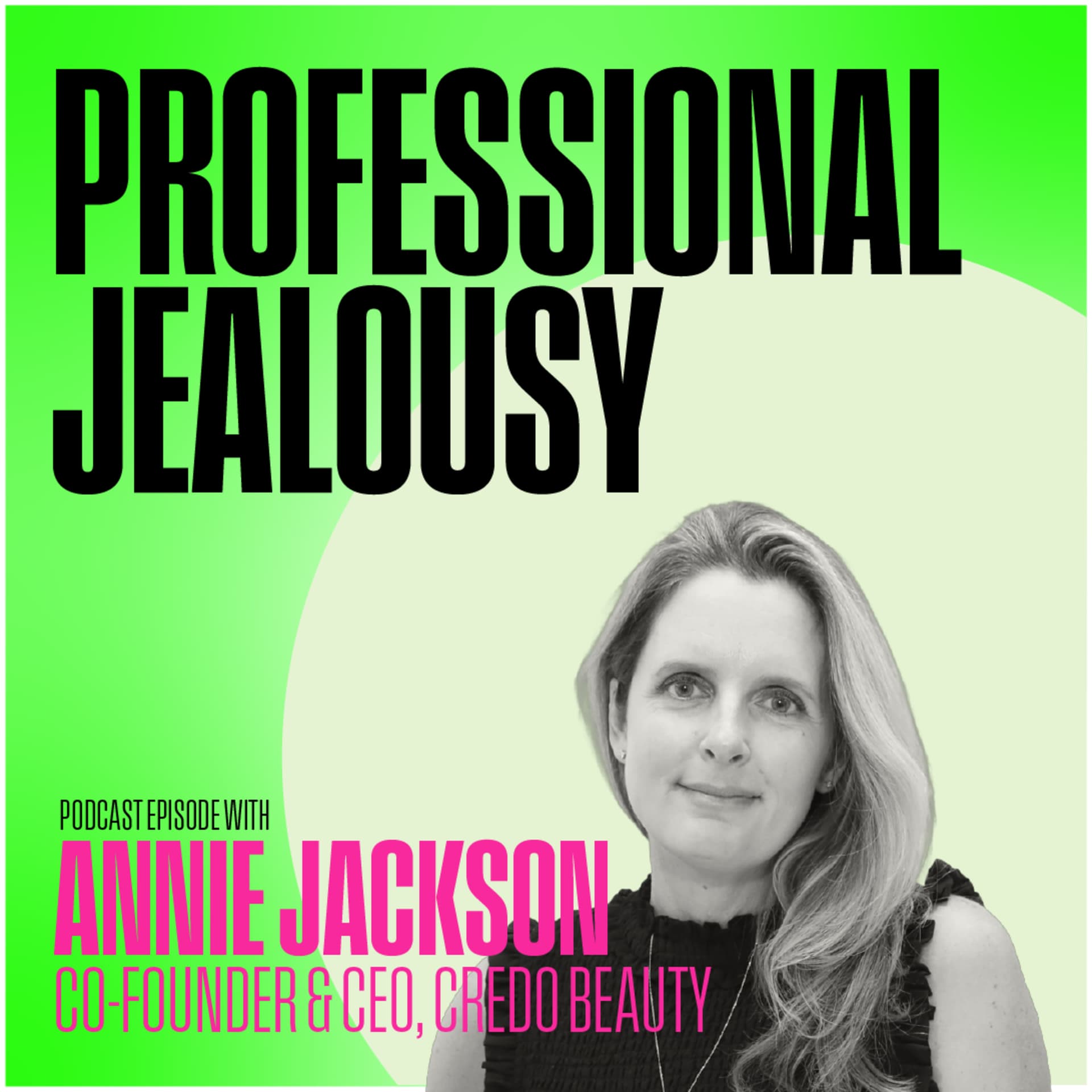
Host: Natasha Jakubowski Guest: Annie Jackson, Co-Founder & CEO of Credo Beauty
---
Episode Overview
In this episode, Natasha speaks with Annie Jackson, a significant figure in the clean beauty movement and co-founder of Credo Beauty. The discussion revolves around Annie's journey in the beauty industry, her motivations for founding Credo, the importance of ingredient transparency, and the challenges faced while building a business amidst personal loss and industry shifts.
---
Key Discussion Points
Origins of Credo Beauty
- Credo was founded to provide a clean beauty shopping experience, emphasizing ingredient transparency and sustainable practices.
- Annie and her co-founder recognized a gap in the market for retailers committed to clean products, which led to the establishment of the Credo Clean Standard.
Ingredient Transparency
- Annie discusses the alarming levels of chronic low-dose exposure to harmful chemicals found in many beauty products.
- Credo’s "dirty list" includes 2,700 restricted ingredients, highlighting the need for better regulation in the beauty industry.
Journey from Corporate to Entrepreneurship
- Annie transitioned from corporate roles in Estee Lauder and Sephora to co-founding Credo, driven by a desire to create a positive impact in the beauty industry.
- The duo aimed to challenge conventional practices and foster a supportive, non-toxic company culture.
Navigating Challenges
- Annie discusses the emotional and operational challenges faced after the unexpected death of her co-founder, Shashi.
- Maintaining a healthy company culture became imperative during tough times, emphasizing the importance of communication and support.
Advice for Founders
- Annie shares insights on hiring and company culture, stressing the importance of asking the right questions during interviews and ensuring a good cultural fit.
- She also highlights the importance of resilience and the ability to learn from setbacks.
Social Media and Beauty Standards
- The conversation touches on the impact of social media on beauty standards, with Annie expressing concerns over unrealistic portrayals and the pressure on young people.
- Credo aims to promote a more natural, authentic representation of beauty.
Future of Beauty Retail
- Annie reflects on the evolving landscape of beauty retail, including the potential of AI and technology to enhance customer experiences.
- Despite the challenges posed by competition and market saturation, Credo aims to continue expanding and providing value-driven beauty options.
---
Key Takeaways
- Ingredient Transparency: A crucial element in the clean beauty movement that consumers are increasingly demanding.
- Company Culture: Essential for fostering creativity, productivity, and employee satisfaction, especially in tough times.
- Navigating Loss: The importance of support and resilience when facing unexpected personal and professional challenges.
- Social Impact: The need to challenge traditional beauty standards and promote authenticity in the industry.
- Future Innovations: Keeping pace with technological advancements while maintaining a focus on customer needs and ethical practices.
---
Final Thoughts Annie Jackson's journey is a testament to the power of resilience and the importance of creating a supportive culture in the face of adversity. Credo Beauty stands as a beacon for clean beauty, advocating for both consumer health and industry change.
For further episodes, check out the Professional Jealousy Podcast on Spotify, YouTube, or their official website.
Written by AI. May contain mistakes. Listen to the episode to check what was said.
Chapters
Tap a time to open that second in VOCredo Beauty: An Overview
0:45 to 2:30
Annie explains what Credo Beauty stands for and its clean beauty standards.
“So Annie, I'm so happy to have you as a guest.”
Toxic Ingredients in Beauty Products
2:30 to 4:30
Discussion on the shocking ingredients commonly found in beauty products and their health impacts.
“that are committed to this and asking tough questions and challenging conventional practices.”
Inspiration Behind Credo's Creation
4:30 to 7:30
Annie shares the inspiration and motivations behind starting Credo Beauty.
“I mean, that was a big part of it was like, where can we like create a company that's doing good stuff and hires nice people?”
Building a Clean Beauty Movement
7:30 to 10:00
Exploration of the challenges and beliefs that fueled the clean beauty movement.
“packaging all of that how did you um i mean obviously sephora i think potentially after you left started doing the kind of clean list or clean beauty um how did you know that this was a big enough idea?”
Raising Capital for Credo
10:00 to 12:35
Annie discusses the fundraising journey and advice for startups in the beauty industry.
“To be candid, we were ultimately looking for a capital partner that, you know, had come from beauty and or retail because it is, to your point, capital intensive.”
Cultural Shifts in Startup Environments
12:35 to 14:09
Annie reflects on the cultural changes necessary when transitioning from corporate to startup life.
“And I think a couple of things that I realized, um, uh, in maybe, or maybe not, I mean, it's not, not intentional.”
Addressing Toxic Workplace Culture
14:09 to 15:36
Learn about the impact of toxic behaviors on employee contributions and company culture.
“and not addressing that bad behavior when it happens and kind of let it letting it permeate as a culture.”
Hiring for Cultural Fit
15:36 to 17:45
Discover effective strategies for hiring employees that align with company culture.
The Challenges of Early Leadership
17:45 to 19:26
Hear about the struggles of transitioning from a merchant to a CEO and the lessons learned.
“He was working with our board and our capital partners.”
Navigating Company Loss and Culture
19:26 to 21:09
Understand how to maintain company culture during difficult times, including loss and grief.
“They were all thinking that for a really long time.”
Show all 26 chapters
Finding the Right CEO
21:09 to 24:18
Explore the process and considerations in finding an effective CEO for a growing company.
“So, I mean, the first thing that we did was, again, thanks to our, you know, majority investors, our owners.”
The Evolving Beauty Industry Landscape
24:18 to 27:56
Examine how the beauty industry has changed and what it takes to succeed today.
“Um, talk to me about, and again, you're, you're such a pioneer and I'm sure you've, there are a lot of beauty brands that basically got their big break at Credo.”
Exciting New Brand Launch: Bonjour
28:00 to 29:20
Learn about the innovative beauty brand Bonjour and its unique products.
“So she has created a serum and a compact and it is stacked with skin loving ingredients, but she is a French pharmacist.”
Favorite Brands Beyond Beauty
29:20 to 31:20
Explore various brands loved by the founders outside the beauty sector.
“And I love brands like, I mean, this is going to sound nuts, but like Aloha, protein powders and things like that and Applegate Meats.”
The Challenges of Sustainable Beauty
31:20 to 33:50
Discuss the difficulties of balancing sustainability with customer expectations in beauty.
Cultural Shifts in Beauty Standards
33:50 to 35:50
Examine the impact of social media and beauty standards on today's youth.
“I feel like our kind of general ethos at Credo is like, you know, we're definitely the no makeup makeup girl.”
Technology's Role in Beauty Retail
35:50 to 37:00
Analyze how technology and innovation are shaping the future of beauty retail.
“And you mentioned AI and, you know, agentic shopping and everything going on.”
Finding Balance in Work and Life
37:00 to 39:20
Discover personal strategies for maintaining balance between work and life.
“I think we're, we're pretty entrepreneurial when we, when we think about any opportunity.”
Growth Ambitions for Credo Beauty
39:20 to 41:20
Learn about the future goals and growth aspirations for Credo Beauty.
“And I think, you know, I want to be very cognizant of that.”
Quickfire Beauty Round
41:20 to 42:01
Enjoy a rapid-fire session discussing favorite beauty products and advice.
“Credo to grow and have more locations because I feel like, first of all, our brand partners need a partner that's aligned with their values to be able to scale.”
Navigating Time Perception in Life
42:01 to 42:38
Explore how the pandemic has altered our perception of time.
Career Insights and Personal Growth
42:39 to 44:46
Annie shares key career lessons and her personal growth journey.
Skincare Habits and Recommendations
44:47 to 45:58
Discuss common skincare mistakes and essential habits for healthy skin.
“people that I thought they must, they must know something.”
Influential Mentorship Experiences
45:59 to 47:04
Annie reflects on the impact of her mentors and pivotal career moments.
“So I have a gentleman by the name of Steve Bach.”
The Reality of Being a Founder
47:05 to 47:57
Debunking myths about the glamorous lifestyle of business founders.
“What is the biggest misconception about being a founder?”
Admiration and Professional Jealousy
47:58 to 48:36
Annie discusses brands she admires and her feelings of professional jealousy.
Transcript
Automatic transcript. May contain errors.0:04Today I'm talking with Annie Jackson, a beauty veteran. She's been a player in successes across so many different beauty companies. She began her career at Estee Lauder. She helped launch Sephora USA and Japan. But importantly, she co-founded Credo, which reflects her unwavering commitment to change the way people think about what they put on the skin. I think this quest for kind of cleaner options has really not, you know, not just the development of Credo and its retail store, but really kind of ushered in a whole new generation of beauty brands and the clean beauty movement. So Annie, I'm so happy to have you as a guest.
0:55I'm so happy to be here. Thank you for having me. I was saying that I live near the Prince Street store in Soho and I love it and everyone I've mentioned that I'm going to be talking to you has has just been you know so passionate like beyond normal like oh that's an interesting founder so I'm really really uh happy that you're here for anyone that doesn't know Credo can you just give us a quick elevator pitch for the brand? Yes, we're what's called a clean beauty retailer, and we have 16 locations across the US. We have created something called the Credo Clean Standard, which really follows things like ingredient transparency, not formulating any products that have ingredients on our, what we call our dirty list or our restricted substance list, following sustainable packaging guidelines, working with contract manufacturers that follow good manufacturing practices.
2:02You know, I could go on and on, but I think you're getting the gist. And I think really in a bite-sized way, it's honestly what a normal regulatory framework should be. That's what a brand should go through to launch a product today in any market, but it just doesn't exist in the US. It's a very under-regulated space. And so we just thought we could find brands that are committed to this and asking tough questions and challenging conventional practices. So that's Creo. Amazing. And it is interesting, kind of you're bringing some expertise and some transparency and some actual kind of rules into the space.
2:52What are the, just out of interest, like what are the most shocking things that you think people are putting on their faces at the moment or all over their body? Well, I think, you know, over time, what we've all learned, I just finished a book called Cleaning House by Lindsay Dahl, who's a good friend of Credo and someone that we really admire all the work she's doing. She's at Ritual now. But it's really, I think the realization for us is just this chronic low dose exposure to a multitude of chemicals. And so I think the most shocking thing that we learned for us was, yes, you've got a host of bad actor ingredients out there with hazard data around them.
3:40but you know there's lots of people out there that believe you know that that kind of I believe an older way of thinking that's like the dose makes the poison there's nothing to see here like everyone needs to just relax your beauty products aren't killing you I disagree I disagree I don't think it says you know your beauty products are killing you I think cleaning products beauty products food you know certain chemicals at a low dose chronically ingested into your body have an impact on your health and um you know for us to answer your question we have 2700 ingredients on our dirty list so it's a pretty long list amazing um was there a trigger for for starting credo what what was that you know what was that inspiration what was that trigger the real trigger was myself and my co-founder wanting to start a company and work together first of all and wear our jeans and sneaks every day honestly i left felt like well i had this chronic condition and i felt like i had to do something like the classic dtc founder nope we're like having a partner because we've we had worked together for he was my boss actually when we were at Sephora and starting that we had such an awesome time we just like you know when you meet someone in your life and you're like you're my person we're gonna have a great time together and we're gonna do all kinds of cool stuff together and we did we did at Sephora we just like that experience was next level so fun and so I've learned so much but we We were also just kids, kids given like this, like, like plethora of huge responsibilities, like, you know, weighing in on store design, store location, merchandising mix.
5:34It was nuts. It was so fun. But yeah, so he and I started Credo. I mean, that was a big part of it was like, where can we like create a company that's doing good stuff and hires nice people? And we all just like do the work and have a really good time doing it at the same time. There's no toxic culture, culture, you know, there's no, you know, asshole throwing people under the bus. Like, it's just, it's just, we're doing good stuff together because, you know, you only get one life to live and how do we want to spend it? Um, so that's, that's how we went into it. Um, and, uh, you know, it's been, it's been a journey.
6:13I'll say we're, we're 11 or 12 years in at this point and we've been through a lot, but, And really the true business model or, you know, kind of impetus of Credo and why we exist was really Shashi, my co-founder. He and I both, you know, are from San Francisco. We started the company there. He, in particular, he was really the visionary at this entire concept. And he was so inspired by how progressive San Francisco is and how, like, just people in San Francisco kind of questioned everything. You know, like, could this be done differently? How are we going to leave this planet when we're not on it anymore?
6:54You know, like all of that was very front of mind for him. And so and we were both beauty people. So the thesis was really like, can we do something in beauty that's like meeting people's demands in terms of efficacy and, you know, be on the high streets of shopping areas where people are living a healthy lifestyle and investing in their health. but also find like the next generation of founders like these cool people that are inspired to like yes do all of that but also be very um health forward in terms of ingredient selection packaging all of that how did you um i mean obviously sephora i think potentially after you left started doing the kind of clean list or clean beauty um how did you know that this was a big enough idea?
7:50How did you kind of gauge this is not just a niche idea? There's going to be, there's going to be a, you know, a market for it beyond San Francisco. And, you know, because I think 12 years ago, it was, it was a little less mainstream. Yeah. Yeah. I mean, we honestly, we didn't know, you know, we had a good gut. And I think that I'll be honest, when we started this, all our peers were telling us retail was dead. You know, did that terrify us? Yes. We're out there signing 10-year leases and expensive real estate. But I think the hypothesis was really like, could you turn this into a movement? Because we really believed it.
8:38We really believe that you could do things better or different. And it's evolving. I think like, you know, when I, we onboarded a new copywriter yesterday and I said to her, you know, like our tone of voice at Credo must always be approachable. And hey, we're taking you along on the ride because we're learning as we go to. There's so much complexity to making products. We don't have it all figured out and we don't, we don't position ourselves that way. But what we are saying is question everything, you know, and, and, My old life and conventional beauty before we started Credo, for a time I was in product development and products and you never asked what's in here and why and what impact on human health it has or the environment.
9:28It was always like, does it work in the component? Is it the shade we need it to be? Does it stay on your face? We ask those questions. and so and I think you know both Shashi and I always had this kind of David and Goliath thing like wanting to kind of poke at something so massive because it hadn't changed for so long um so the challenge of that was really fired us up because we knew it was going to be hard so we're like okay I haven't heard something that's like really inspiring because you know this is not going to be easy yeah um yeah i love that it's uh i mean presumably well because you had to you know you started as a a retailer uh presumably you had to raise money pretty quickly to yeah this how like how was that experience any advice what was the hardest thing to kind to convince people that this was this was going to work yeah we got um very lucky and very unusual situation that we found ourselves in um shashi had a had a personal friend that was um doing incredible work both um on a on the philanthropic side but also um was investing um had just created an evergreen fund where he was um you know really starting to invest in mission-driven companies and And so we share the business plan of Credo with him.
10:55To be candid, we were ultimately looking for a capital partner that, you know, had come from beauty and or retail because it is, to your point, capital intensive. It is. It's very challenging to build retail stores. And so, you know, we thought it was important that someone have that, you know, kind of that stomach, I guess, for this. But Seb from Next World, Next World Evergreen, our partners, I have been for 12 years, and he really got very fired up about this concept. And it's because it's really ingrained in him too. And that's where I think, like, when I look back on this journey, God, we got so lucky with them.
11:41Because, you know, the things that we've wanted to do that are impacts driven often come with a price tag in the reverse direction. It's not necessarily revenue driving, it's revenue removing. Like when we remove single use packaging from our stores, and that meant sheet masks and all the things that drive a lot of business typically in duty. And I think we kissed off somewhere between five, 600 ,000 in revenue. And he was like, you know, when we explained it to them, our board, they were like, makes total sense. you know I don't get pushback like that from them and that's yeah that's great and that comes from a buy-in to the brand to the the credo yeah that you're building yeah um I'm just curious so you have come from you know big corporate you know jobs how do you change like what i'm always amazed when i work with startups then i suddenly don't need to do massive decks i don't do really in-depth brand frameworks i can just like focus on the you know the core three things uh what are key shifts that you made going from corporate big beauty brands to actually running this thing i feel like people jettison quite a lot of the stuff they just don't need um do you have any like what are the sorts of things that that you feel like you know you gained by dropping yeah culture culture oh my gosh how much time do you have all right things well i think the sephora experience is probably a good um answer to that because we started without a store i started at sephora before we opened our first store in soho and then you know stayed to watch it grow over time.
13:36And I think a couple of things that I realized, um, uh, in maybe, or maybe not, I mean, it's not, not intentional. I think, I think the haste in which you need to hire people, um, when you're growing a business, um, it's overwhelming and feels alike a lot. So I think, you know, that's probably been my biggest takeaway from not just Sephora about other companies where there's kind of this underground allowance of bad behavior and not addressing that bad behavior when it happens and kind of let it letting it permeate as a culture. I think that companies really suffer from that. And, you know, that's not Yeah, not dealing with it and letting it kind of drive, you know, an inability to get the most out of people.
14:31Like, I think I worked in so many places where there's like a, you know, just kind of a toxic behaviors or just an undercurrent of kind of fear that I watched very talented coworkers not talk up in meetings or say their real point of view or really contribute in a very meaningful way to a company just because they felt like they couldn't. and so you know that's probably the most thing we work on um or the thing that we work on most at credo is our culture because it can get away from you and um you know have we had moments where i'm like this isn't the company i recognize absolutely and have we had to work really hard to get back to where we wanted to be yes and it's painful and hard but um you know it's so meaningful because it's like you can you can get good ideas from anywhere and I think if you're really lighting your people up and making sure that they're as comfortable in a zoom like Mingi as they are sitting down at dinner with their family that's so awesome yeah it's so awesome you'll get such great things out of those people yeah um any advice for founders you know I think there's often that kind of stereotype of founder mode and and it's you know brutal and but like this you know any advice for for making sure that culture and creating a less you know a non-toxic environment like what what is what are your kind of key tips or advice for for making sure that that stays you know a core part of what you're building yeah it's really an easy and about took me a long time to figure out honestly it's so you're gonna be like well duh but um you know beauty industry is pretty small and we we typically try to hire people that come from the beauty industry just because you know there's an understanding and a passion about what we're doing typically um but uh back channel references you know find someone that knows that person that can truly because you know providing references i always think that's such a dumb exercise like of course okay Natasha say something great about Sally okay she's going to call you in two days you know I think it's such a silly exercise so finding someone that can give you unfiltered feedback about that person but also we started adopting something called filtering questions in the interview process like figure out what really means the most to you and your department and what you're working on that is like just not going to work if you get that you know if that scoots by you in an interview think about what those are like for me my filtering questions so for anyone that's watching this yeah if you interview with me i'm gonna ask you this question you know if you live near a store i'm gonna ask you um if you visited the store i can't tell you nine times out of ten people say no see yeah that's insane to me that one would interview especially with you and not have been to the store oh all the time all the time and in my mind i'm like oh god how am i gonna get the 30 minutes back that i have booked for this interview so it's not so obvious that i'm ditching out now um and uh and if you don't live near a store spend some time on our website order a couple products you know go through the experience to show me you're even like the slightest bit interested in what we're doing yeah yeah okay um is there anything that you wish you'd known when you started like what do you wish you'd known oh my gosh well so much I mean um when we started the company so we started like officially started we started kind of sleuthing around on stuff in 2013 um and opened our first store in 2015 um and Shashi passed away in 2017 so he was really the um kind of you know forward-thinking visionary.
18:29He was working with our board and our capital partners. And I was a merchant. And I was finding brands and filling the store and building out the stores. So I mean, I had to learn so much of what I didn't know, you know, how to understand what we needed in terms of capital, and how to, you know, do a board deck. I mean, stuff that I did as a very little slice as a merchant and how to suddenly lead a company. And so lead a company that had four stores under construction at the time. And, you know, we had like three people working for us. So, I mean, I think when I go back and think about that time, it's, it was one of the toughest times in my life ever.
19:18And on top of, on top of grieving someone. Yeah. Yeah. I mean, I can't even imagine um gosh um yeah that's uh that's sounds very intense transforming your role growing a business and dealing with the loss of someone that you decided to go all in on um and that was part of why yeah I mean we wanted to do this together but I think also you know what what people often forget in times like this is when culture is so important to you even with three people 30 people 300 people it doesn't really matter but when culture is so important and something like this happens what do you think everybody does they freak out you know like what's going to happen you know and there's this there's this kind of pall over everybody of certainly it's jarring and and traumatic because someone we love and care for has just passed away at way too young of an age.
20:25But also what's going to happen? What's going to happen to me? What's going to happen to my job? What's going to happen to the company? They were all thinking that for a really long time. And so to get yourself back kind of with defeat under you again, it took time. And it's like, that's all it took was time. And you want time to go by so fast because you just want people to feel comfortable and okay again. But it just doesn't. So how did you do it? How did you get through it, learn everything that you weren't necessarily, you know, doing before? Like, how did, did you ever wonder if Credo was going to make it?
21:05How did you deal? A hundred kinds. I mean, I think, I think anybody does as you're growing a company. So, I mean, the first thing that we did was, again, thanks to our, you know, majority investors, our owners. Next World, they gave me the time and space to like, just kind of get our feet back under us again. And I think I would think anybody else would be like, you know, she doesn't know what she's doing, you know, get somebody in here quick. And that would have been so damaging. You know, I think it was hard enough as it was when we, you know, I was, my desire for creator to succeed really knows no bounds.
21:48And so I was with the first one to say like, Hey, I don't, I don't want to screw this up for us because I don't know what I'm doing. You know, like I've never been a CEO before. I want this company to be successful. So let's together find someone ultimately to come in and be the CEO. And so, um, we did that twice. Um, and it didn't, it didn't unfortunately work out for, for different reasons. Um, but I think that part for me was very valuable to watch two other people, um, come in and try to run a very complex business. And, and, you know, it didn't work out for, you know, whatever reasons, but it, you know, when people say, God, I'm so sorry, you had to go through that when it should have always been you, but you know, I could have never done it had I not gone through it.
22:38if that makes sense yeah yeah no that makes total sense um curious what would your filtering questions be for a ceo knowing that you've kind of obviously you don't need one now but like thinking about what you were looking for it's so funny um i feel like in my next place i feel like i could have just have a consulting business talk to founders that want to bring in a ceo because my my so it's rough for everyone nothing it is the hardest thing my filtering question would be both for the founder and for the ceo so for the ceo i would say please tell me what your approach is going to be for the first four weeks you're here for the founder i would say you need to go away for the weekend without your phone and just take your head with you and ask yourself and be honest with yourself, are you ready for a CEO?
23:38Really answer that question. And if you are, you need to make sure you give that person the runway to do what they're hired to do. Because we have this ecosystem of 130-ish brands and over the years, some have come, some have gone. So like moral of the story is, I've worked with hundreds of founders. and over time as they scale I've seen them kind of you know like I just want to do product development so we hired a CEO and two years later we're like so the CEO left and um many times it's because that founder won't move out of the way and let them do what they're hired to do yeah yeah yeah I see that a lot um and what about so what are your preferred for first four weeks well I don't know that I have a preferred but I think them uh being more if they'll be transparent about their approach yeah it helped me understand just for me personally yeah and how they hear up how this is gonna go yeah you know um and and if if we can actually just like I said ask ask ourselves the hard question of like are we are we gelling are we am I going to be able to be alongside you while you do this.
24:54Yeah. Um, talk to me about, and again, you're, you're such a pioneer and I'm sure you've, there are a lot of beauty brands that basically got their big break at Credo. Um, what, how, how has beauty evolved since you started? Like, um, what is, what's changed? What's beauty like today versus 2013 or, you know, or a while ago? Oh, gosh, it's, it's much harder to be successful. I would say just from a, you know, a consumer point of view, they want it all. You know, they want you, they want you, founder, person to be front and center, be dynamic, be inspirational, don't say anything dumb that's going to piss somebody off.
25:42and they want your product to be sustainable, good for you, efficacious, cool, price friendly. It's a high, high bar. And so I think people really want it all. And so then on the flip side, to be a founder today and running a beauty brand, you really do need to show success at scale. You need to show success on your DTC site. You need to be profitable and you need to show success in kind of like a smaller scale retailer. Usually why people tend to, you know, get their feet wet at Credo is because, you know, we're very contained and we're also very, we really pride ourselves on, you know, kind of, I always say we're co-piloting this plane together brand.
26:37you know we're in this together we're going to support you because if you just if you just write a po and ship the product and like what's the point you think if it doesn't fail you know or if it doesn't succeed that's that's your fault you know i think you have to both work on this together but it's hard i mean it is so hard and the market's so saturated that i think to cut through the noise it's really really challenging social media and keyboard warriors are prevalent and working 24-7. So you got to be able to shut that out too because if you start to gain popularity and traction, all the haters come out.
27:14And I've watched brand founders really suffer with that. And so I think you have to really have the ability to shut it out. It's hard. It's really hard. I think it's one of the craziest categories. I mean, like I was saying maybe beverages yeah kind of as cluttered you know there's just thousands of brands yeah each with their little niche a lot of which you know I've created beauty ideas and products and brands for often big companies and you know there's not much difference really when it comes to some of the stuff in the in the pots so it's such a what what makes a good beauty brand for you um I mean we just want we just launched one to me that's like still gives me chicken skin bonjour is the name of the brand um and the reason is she's done something um phenomenal where it's like unheard of because it is so crowded and it's like kind of what's done is done and as a merchant it's hard to get excited about.
28:25Oh my God, this is so different. Now, what is it? So she has created a serum and a compact and it is stacked with skin loving ingredients, but she is a French pharmacist. So she comes from this by trade and by expertise. The packaging is like, I mean, it's called bonjour, but it might as well be called Hermes. I mean, it's the most forwardiest thing you've ever seen. She nailed the scent. She nailed the formula. She herself is not only, you know, an expert and knows what she's doing. She's absolutely stunning. So it's like the whole, you know, it's all that in a bag of chips. And it's like, as a merchant, you see that and you're like, oh my God.
29:13And it happens so rarely that um it's really exciting when it does all right i'm gonna pop over and uh take look i mean it's like a serum in a in a solid in a beautiful solid yeah they kind of like you know dig it out almost um but i can't i have very dry skin so i can't even tell you that yeah right you know me too i'm gonna go i'll go and try that today um any other like what are other brands that you love just generally doesn't have to be in beauty um well i mean if outside of beauty it's funny because you know whenever we're looking at new store locations and the broker is like and this person's moving in and that person's moving in i'm like unless it's beauty i'm like i've never you're not interested yeah um yeah i think in in um outside of beauty um i love caddis the I wear a company that I'm wearing today.
30:10I wear them every day. And I love brands like, I mean, this is going to sound nuts, but like Aloha, protein powders and things like that and Applegate Meats. I love companies that in an inspirational way can convey their mission because I think it's really hard to do to be cool and crunchy at the same time. And I say crunchy in a lighthearted way because it's like, you know, that's where it's kind of born from people that are you know inherently like more cognizant of conscientious product formulation but um I think it's it's really hard to do yeah no totally I I I think the cool but crunchy is a is a real yeah it's it's hard but when it works it it's kind of amazing um I'm Period.
31:00It's a funny thing. Yeah. Yeah. I'll tell you one little story and interrupt you, but it's kind of a funny one because it encapsulates what we were just talking about is in our store. So we're in, you know, high streets. So Soho, Pacific Heights, Newbury Street in Boston. And that's because, you know, we were looking for high foot traffic and people that are investing in their health. and that often means it's a more you know affluent neighborhood and people with more purchasing power and um we always say uh they want it all like i was saying earlier like shampoo bars for example i can't tell you how many shampoo bars i've been pitched i don't even know a hundred but i'm like in my mind i'm like it's never ever ever gonna work it's never gonna work for our customer yeah i applaud their their want to do this because it is the way that the that the world should be going but our customer wants it to be you know a sustainable package and and great for you ingredients but also look amazing in her shower feel amazing yeah yeah some of these no studs the no suds no smell it's hard never gonna work for her never gonna work for her i mean she wants it to suds up and be really foamy and smell amazing and come out looking incredible and i think you know it's so it's it's tough it's really yeah um what do you make of the whole uh i have a 13 year old daughter and um yeah i mean i if i showed you her vanity it's insane i mean like yeah i mean what do you make of it i i i am a self-confessed beauty addict and I even I am a little disturbed by how many lotions and I literally asked her was she stealing stuff because I just can't even understand how she has so many products and she just sits there and plays with them and like what do you make of I feel like there's been a big shift in culture not just with young people but in how people look and and you know the rise of like the med spas and the injectable bars and like what do you make of beauty today yeah it's harrowing to be honest and I mean I I Natasha I feel for you having a 13 year old right now because are you okay first of all I'll ask you yeah yeah I would say but my son is definitely easier my kids are now fully adulting so um I you know I can look back at this and think like wow to have a kid and right now at that age is it's yeah wow it's a lot um I beauty I think it's interesting yeah I think it's harrowing I think um social media and uh everyone looking like a Kardashian is is kind of terrifying honestly like just I really feel like celebrating who you are just as you are without changing yourself is really how things should be.
34:15I just, I'm old. I feel that way. I feel like our kind of general ethos at Credo is like, you know, we're definitely the no makeup makeup girl. We are all about, you know, celebrating who people are and how they're coming into the store. But I think in a weird way, like AI and all this plastic surgery and injectables and all this stuff, that's taking the beauty industry one way. And I always say to our team, we're just going to stay on our path over here. And what's happening is our path is becoming less and less traffic filled. And we're kind of starting to sit alone, you know, and I think it really laid itself bare on election day.
35:04I happened to be in New York in our store in Soho. And that was a tough day, you know, and our customers were coming in in droves and which I did not expect not to shop, just to hang out. Yeah. Just to hang out and be there because they felt like it was a place that would make them feel better. And, you know, I walked home to my hotel that night energized and I thought I was going to walk home fried, you know. And I actually walked home like, wow, like we built something really special here that people key into because it made them feel good. And that that was everything. I was I wish, you know, Shashi knew that.
35:45Yeah. Amazing. Any thoughts on the, you know, I feel like the future of beauty retail is evolving. And you mentioned AI and, you know, agentic shopping and everything going on. Like, how do you think about the near future? Are you using AI? Do you, you know, how do you think about those sorts of evolving and how you shop and how you sell and how you make, create and market? it. Yeah, I think technology is interesting. I think we look at it right now and it's kind of nascent stage is how can we find tools that maybe unburden us from like heavier tools that are, have always been kind of a, you know, dinosaur feeling to allow our team to do their job better and faster.
36:43But I think from a shopping experience at retail, you always have to keep innovating. You always have to keep testing and changing things or else you're going to die. So, but how much technology has an, on an influence on how Credo does that is kind of remains to be seen. I think we're, we're pretty entrepreneurial when we, when we think about any opportunity. And, you know, I am, I have learned over the years that we have to say no to almost everything And yes, to very few things, just because we'll get off our game and we'll get distracted and we'll have our hands in a lot of different things.
37:27And so what we try to do is just stay very close to our customer, understand where they're going and provide the most exceptional experience to them that we possibly can. But it can't be standing still. It absolutely cannot. So one day, you know, if we talk in a year, I might say, oh, my God, Natasha, we implemented contactless, you know, shopping and they just walk out the door now and nobody even talks to them. Who knows?
37:55Your credo AI spokesperson that shows you and does all your content. Yeah. Okay. um I'm just wondering uh yeah how do you you feel you seem very grounded and maybe that's experience um but like how do you how do you stay like what do you do above and beyond work to just stay two things up and in culture but also you know so calm and reasonable as a fam I know it's so rare isn't it I always say when I introduce people I'm always like you know Kristen meet Ken you're both normal you guys should know tell her like um because it is kind of rare you're nice normal you're not vapid at being like meet one another go forward um no I so I live at the beach I live in Santa Cruz um with my family and um we spend a ton of time at the beach.
38:58We spend a ton of time outdoors. And, you know, we spend a ton of time with our friends. We have a great friend group here. And I think that's really what keeps me realizing that there is there's life and meaning behind work. I think work, especially in the early days of Credo, is all consuming and it can really be become your identity. And I think, you know, I want to be very cognizant of that. We're also totally remote now, which means my office is in my house. And so it's like, it's so easy to just kind of work 24 seven. So I'm much more, I have a ton of discipline with myself now. Like I think all of us are seeing all the, you know, stop drinking, get eight hours of sleep, buy an aura ring, you know, like it's all cracking at you.
39:49And so I, I really do. I try to set my phone down at seven at night and never pick it up again. I'm trying to read more and just really occupy my thoughts of things other than Credo. Amazing. You've done so much. What are your goals in the near and long term? Well, I think, you know, as I shared a little bit, Credo's gone through a lot. You know, we lost our co-founder.
40:23oh i i've lost sound but shimmy is that just me
40:34yeah i can hear you not annie
Read the full transcript
40:39can you hear me now oh yes oh good how strange it just popped up my that's never happened I don't know why hopefully you can edit that out yes okay I'll shake it it's very yeah yes I think so um but anyway I was saying uh that Credo's been through a lot um and so right after Shashi passed essentially you know we had COVID hit and then it took a while to recover from that so really over the course of 12 years we've opened 16 stores, we wanted to open 100. You know, that's what our business plan stated. So I would love for Credo to grow and have more locations because I feel like, first of all, our brand partners need a partner that's aligned with their values to be able to scale.
41:34And I would love to be that partner for them. But I also would love to get these brands in front of more people. And I think that they're doing these brands are really rolling up their sleeves and doing the hard work and um you know getting them in front of people that don't even know they exist is um would be really rewarding to me amazing all right uh yeah we didn't even talk about being a retailer during covid gosh we don't have to i know i know almost it's like it never happens i mean sort of and like it's it's morphed into like everything is one day like it's like it's all just like I know concept of time did I do that last year last month I don't know I know yeah I feel like I'm that way I I was thinking that that's just getting old like literally I have no sense time i'm blaming for that yeah yeah yeah um all right we're gonna go quick fire um what's your desert island beauty product oh god easy josh rosebrook hydrating mist i have like seven of them currently and you can just use during the day all throughout yeah it's amazing saying all right best career advice worst career advice you've ever had um best career advice i would say is um i think i just said it earlier say no to everything um worst career advice is um someone telling me i needed to address a little bit more revealing for a job interview off this is a long time ago and I'll leave the company out of it but yeah that was I mean so many questions uh I want to get the job I could stop dressing like a tomboy I think is exactly the issue though okay um yes I feel like I feel like I've heard that before as well um yeah uh what are your superpowers what what do you think has helped you be successful um I think I I've learned I didn't realize this honestly until I went through some of the things I've gone through I'm really resilient I feel like I can be like you know curled up in fetal position one day like oh my god like how do we go forward and the next day I'm like okay we got this let's go you know I think I I don't know how I possess that um if I didn't uh Credo would have been a four-year-old company and that would have been it um what do you wish you'd learned earlier in your career oh to trust myself I think I I know a lot more than I think I do and I think that I always um tend to feel like someone else is going to do a better job and I just need to kind of be their their wingman wingwoman and and so I feel like this isn't my personal therapy sessions, but I do feel like me not trusting myself potentially put our team through more than they needed to go through because we cycled through people that I thought they must, they must know something.
44:54I don't know. They must be able to do this better than me. What do I know? You know, I didn't even go to college. So like, let's, let's, let's get somebody in here that knows what they're doing. And that was not only hard for me, that was really really hard for our team and that weighs on me interesting um what what do you wish that people would stop doing to their skin oh stop doing for their skin I think um probably fillers would be like I've seen some of the most uh beautiful that would age this naturally beautiful to turn into something like well it's like a science experiment I wish they would stop doing it all they look like is some crazy person that has their face filled with fillers i don't know the point of it i know yeah no it's super worrying what about what should people start doing apart from sunscreen and really i mean i am a melanoma survivor so i and sunscreen is probably when people ask me it's a boring answer what's the best anti-aging product you've got it's sunscreen and a baseball hat or a big wide grim hat yeah yeah um how do Do you have mentors?
46:08I do have mentors. So I have a gentleman by the name of Steve Bach. So he was at Shashi and my first boss at Sephora. And then he went on to do incredible things like running Shinola and Filson and Avon. But he is like, if you met him, I wish you could meet him. And he's South African. He's funny. He's got this like wry smile, but he doesn't take shit from anyone. And he taught me a lot about just go do it, you know, go for it. And even as a kid, like I was just 26 at Sephora and he just like threw me out into Japan and was like, go open some stores. And when I was like, they don't even like talking to women here.
46:57Like, I don't know what I'm doing. And he was like, you know, that smile of his go do it. You can do this. It's pretty awesome. What is the biggest misconception about being a founder? Oh, I mean, I think, but I think it's probably got some reality to it. I think the founder life, you know, has become this like, oh, look at me. I'm at the one hotel in West Hollywood. Look at me. I'm in Paris. I'm at this cool event now. I mean, I don't know. I always look at that and think, how do they do that? You know, like I'm working every day. I am like, you know driving to the airport I'm on southwest going to LA I mean it's like it's that's not reality and if it is you're not really running your company um so I think I think people think like oh my gosh it must be so glamorous and you're in beauty it must be so glamorous I'm like half the time I'm eating a salad that's sitting on my lap as I'm driving to the airport so it's it's really not it's really not it's great but it's not glamour amazing um all right last question tell me someone or something that you're professionally jealous of i think the brand mother denim is the one brand i absolutely love and the reason i love it is because they're so unapologetic in their tone and they're just like this is who we are we're going to say whatever we want to say and I don't care if you like it or not and I think we're credo is very driven by me very kind of you know stay the course stay in the middle lame try not to piss anybody off today and I I feel like if we could do that a little bit more how freeing it would be I really um I really envy them Annie thank you so much for your time thanks so much for listening uh please do look at some of the other episodes we've done too you can find them on spotify youtube wherever you get your podcasts or professional jealousy.com uh get in touch if you have any questions feedback or importantly if there's anyone you want to me to meet slash talk to on the podcast a quick thank you to the unreasonable studios and shimmy our a talented producer.
49:17You can follow me on LinkedIn or Instagram or wherever. Thank you so much. Please share and subscribe.
From the publisher
In this episode, I chat with Annie Jackson, the Co-Founder & CEO of Credo Beauty, a trailblazing retailer that helped pioneer the clean beauty category offering the largest clean beauty assortment in skincare and makeup. Credo is a trusted voice in an under-regulated beauty industry, known for its deep commitment to healthy beauty, challenging conventional ingredient standard, and helping consumers find options that don’t make them sacrifice health for substance.
I was blown away by how smart and humble Annie was. As well as leading the clean beauty charge, she’s also responsible for giving distribution opportunities to many now established beauty brands. Her journey career journey and founding story was both inspiring and interesting.
This conversation included:
The origin of Credo Beauty and why the consumers deserved this idea
The importance of ingredient transparency in beauty products
Her journey from corporate beauty to entrepreneurship
Dealing with unexpected death of her co-founder
Growing the business and team, and the importance of company culture
Learning how to be not just a founder, but a CEO
Filtering questions for founders picking a CEO
Social media and its impact on beauty standards
The future of beauty retail and technology
That working in beauty as a founder isn’t as glamorous as it may sound!