
In short
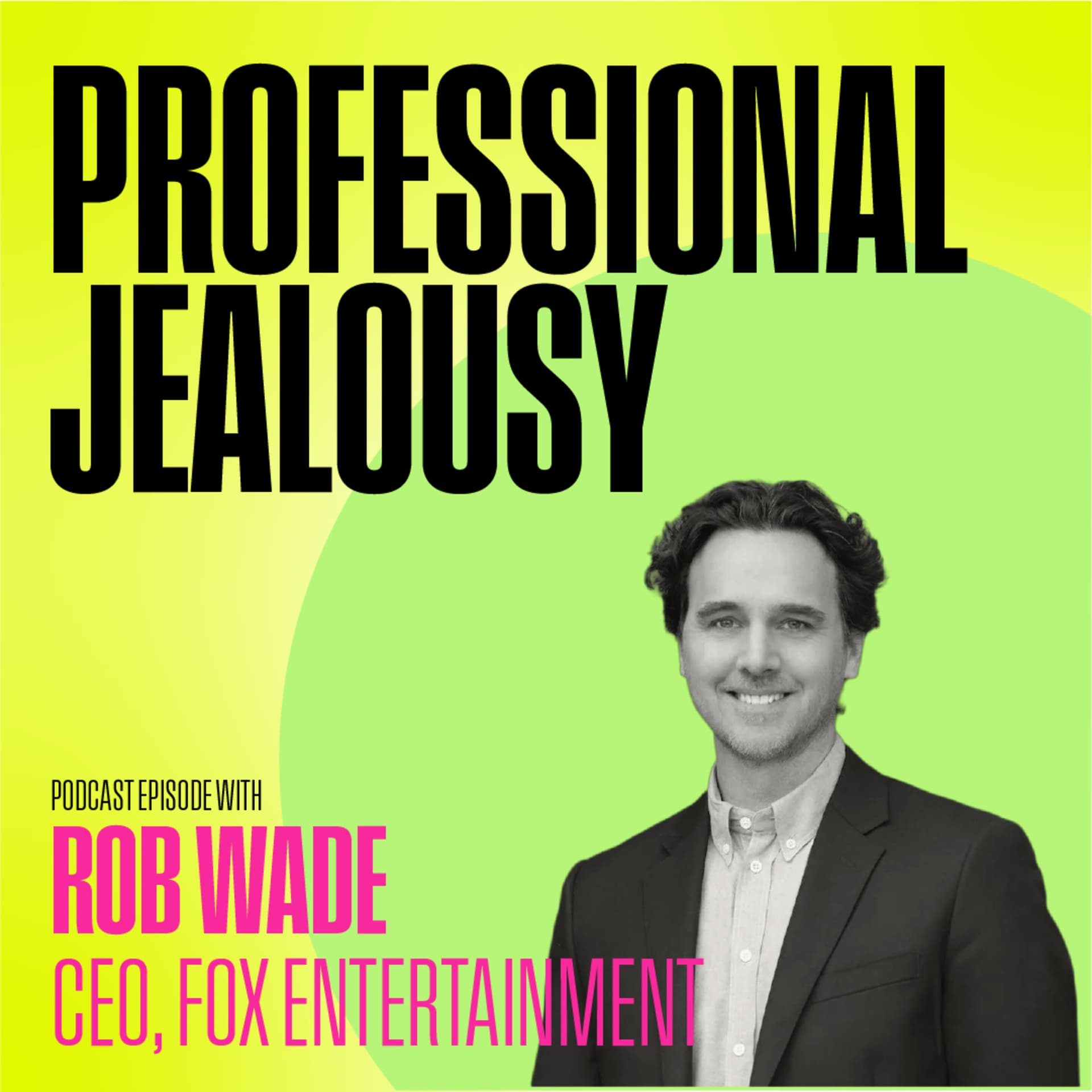
Podcast Notes: Professional Jealousy Podcast - Ep.21
Episode Title
Creating Content that Inspires Culture and Community
Host and Guest
- Host: Natasha Jakubowski, Chief Innovation Officer at Anomaly
- Guest: Rob Wade, CEO of Fox Entertainment
Episode Overview
- In this episode, Natasha converses with Rob Wade about his extensive career in media and entertainment, reflecting on his journey from his early days as a runner at Virgin Radio to becoming the CEO of Fox Entertainment.
- The discussion centers on the changing landscape of media, the influence of technology and AI, and strategies for creating compelling content that resonates with audiences.
Key Discussion Points
Media and Entertainment Landscape
- Current State: The media industry is undergoing significant transformations due to:
- The rise of the internet, allowing wider distribution of content (e.g., streaming platforms like Hulu and Netflix).
- The emergence of AI, which democratizes content creation, making it accessible to anyone, anywhere.
Challenges and Strategic Response
- Challenges: Navigating a rapidly changing landscape filled with competition from user-generated content.
- Fox's Strategy: Emphasizing strong existing assets (like sports and news) to maintain relevance and attract audiences in a fragmented market.
Career Insights
- Path to Success: Rob attributes his success to a combination of hard work and luck:
- Emphasizes the importance of hard work and perseverance.
- Acknowledges the role of mentorship and learning from experienced professionals.
Handling Big Personalities
- Advice: When dealing with individuals with strong egos and creative personalities, it’s essential to understand their motivations, which are often fear-based, and to maintain open communication.
Ikigai Concept
- Definition: A Japanese philosophy that emphasizes finding joy in life through a balance of what you love, what you’re good at, what the world needs, and what you can be compensated for.
- Rob uses this framework to evaluate happiness and career fulfillment.
Key Takeaways
- Adaptability: The importance of adapting content creation strategies to align with changing audience behaviors (e.g., preferences for shorter content).
- Community Engagement: Building fandoms involves creating worlds around shows that extend beyond mere viewership, promoting engagement and authenticity.
- Future of Content: The industry must figure out how to monetize user-generated content effectively while leveraging marketing strategies across platforms.
Personal Reflections
- Rob shares personal anecdotes about his journey, including the challenges of transitioning from creative roles to executive leadership.
- He highlights the fulfillment derived from entertaining large audiences and the passion that drives many in the industry.
Quickfire Questions
- Favorite TV Shows: Includes "Love on the Spectrum" and shows featuring Gordon Ramsay.
- Superpower: Being a good listener and constantly learning from others.
- Best Career Advice: "Get stuck in" – actively engage and immerse yourself in your work.
- Worst Career Advice: To instill fear by firing someone immediately upon starting a new job.
- Professional Jealousy: Rob admires David Attenborough for balancing passion, skill, and positive impact on the world.
Conclusion
- The episode concludes with Rob sharing insights about finding one’s ikigai and the continuous journey of striving for balance in career and personal fulfillment.
Additional Notes
- Rob's journey illustrates that success in the competitive media landscape requires a blend of creativity, strategic thinking, and strong interpersonal skills.
- Natasha encourages listeners to subscribe and engage with the podcast for more insightful discussions.
---
This information can provide a structured understanding of the episode's content while also highlighting the key insights shared by Rob Wade, making it a valuable resource for those interested in media and content creation.
Written by AI. May contain mistakes. Listen to the episode to check what was said.
Chapters
Tap a time to open that second in VOUnderstanding the CEO Role in Media
0:46 to 2:59
Rob explains his role as CEO and how he would describe it to a child.
“Hi thank you wow what an intro well read well read indeed yes I'm very flattered by the way and for you to want to speak to me well not just speak to me but speak to me on camera that's very very flattering.”
Disruptions in the Media Landscape
3:00 to 5:10
Discussion on how streaming and AI are disrupting traditional media.
“um yeah it is i mean why don't we jump straight to that turbulent uh turbulent landscape I mean, it's interesting.”
The Future of Content Creation
5:11 to 11:10
Rob discusses the impact of user-generated content and AI on media production.
“is the next disruption, which is the proliferation of creator content.”
Adapting to Changing Consumer Behaviors
11:11 to 14:04
Rob shares insights on how Fox adapts its content to meet new consumer preferences.
“So, you know, at Fox, we've got a really strong brand of entertainment content.”
Monetizing Content in the Digital Age
14:04 to 16:46
Explore the challenges of monetizing content in today's creator economy and the disparity in earnings among creators.
Building Fandoms and Communities Around Content
16:46 to 18:45
Learn about strategies for fostering fandoms and creating engaging communities around television shows.
“So, for example, we have obviously a very strong food brand.”
Navigating Big Personalities in the Industry
18:45 to 22:43
Gain insights on managing and working with creative individuals and their egos in the entertainment industry.
“I'm just curious, cause I feel like you must be very good at that, getting to going through kind of producing and show running and, you know, dealing with talent to getting to the top of a big corporation.”
The Journey into the Entertainment Industry
22:43 to 28:00
Discover the speaker's personal journey into the entertainment industry and the various experiences that shaped their career.
“So I enjoyed like the whole of that, the entertainment business.”
Navigating Career Changes: From UK to US
28:00 to 29:10
Learn about the speaker's career journey from the UK to the US and the challenges faced.
“How did you what was how did you get out here?”
Cultural Differences in Entertainment
29:10 to 31:30
Explore the cultural differences between the UK and US entertainment industries.
“over to the US and Strictly Come Dancing, Dancing with the Stars here was brought over, but they didn't want to bring the whole team over from the UK.”
Show all 17 chapters
The Evolution of TV Production Roles
31:30 to 34:30
Discuss how roles in TV production differ between the UK and US, and the impact of these differences.
Advice for Aspiring Entertainment Professionals
34:30 to 40:00
Gain insights on pursuing a career in the entertainment industry and the importance of passion.
“So that's, you know, I really enjoy this sort of, the, you know, being here as well.”
Challenges of Transitioning to Leadership
40:00 to 42:02
Understand the difficulties of moving from a creative role to a leadership position in entertainment.
“It's still expected that you are going to be someone who can direct a creative organization to find the content that is going to ultimately make us successful.”
The Journey of Learning and Confidence
42:02 to 43:30
Discover the parallel between language learning and building confidence in professional skills.
“That would have been a better thing for me to say to a five-year-old, by the way.”
Quickfire Questions and Insights
43:30 to 46:00
Get quick insights into favorite shows, superpowers, and career advice.
“From my own shows and obviously, you know, I'd have to say Gordon Ramsay's Secret Service is a really, really fun show.”
The Concept of Ikigai and Professional Jealousy
46:00 to 49:58
Learn about the Japanese concept of ikigai and how it relates to career fulfillment.
“You know, cause we've got those people that we know if I drop out and do that.”
Striving for Balance in Life
49:58 to 50:29
Explore the continuous quest for balance among passions and profession.
Transcript
Automatic transcript. May contain errors.0:04Rob Wade:Today I'm talking to Rob Wade, CEO of Fox Entertainment, one of the most recognizable media brands and content producers of shows such as Gordon Ramsay Kitchen Nightmares, The Masked Singer, MasterChef, Lego Masters, The Simpsons, 9-1-1 and many other scripted shows. animation studios like Bento Box that makes Bob's Burgers. And this is a fun one because I have actually known Rob since university. So that's a long time. In fact, I think I knew you when you started in media as a runner at Virgin Radio in the UK. so I'm blown away to see where he is today as the head of a global corporation and based in LA so hello Rob.
0:56Hi thank you wow what an intro well read well read indeed yes I'm very flattered by the way and for you to want to speak to me well not just speak to me but speak to me on camera that's very very flattering.
1:11Rob Wade:I would speak to you because we're friends but on camera I guess. yeah exactly well i think your pr department are definitely wondering why on earth your work you're coming on this small podcast but i am uh very they're very supportive because i refuse to do any sort of podcast usually so they were like why and i'm like well it's a it's an old friend so yeah they're they're very supportive they love getting me out there so they're very supportive All right. Well, thank you. I thought we'd start with something easy. So you have a pretty impressive job title. I'm just wondering, you know, what exactly you do as CEO of Vox End Statement and how would you tell like a five year old what your job involves?
1:58that's a great as a five-year-old well I've got a few kids so and they haven't who have no interest in what I do so um I oversee the I just listen I'm trying to think of words that a five-year-old would understand how about 12 years it's just an easy yeah I run Fox Entertainment which is a network on which you put television shows, a studio which makes the majority or at least some of those shows and distribution company which takes those shows and sells them around the world and my job is to have creative oversight all of the over those divisions and then a strategic uh oversight of really what the future of the company is reacting to what is now obviously an incredibly turbulent and fast changing landscape and then over five year i would have understood
2:57Rob Wade:all that but i think i was close right i i think that was pretty good i think that was pretty good um yeah it is i mean why don't we jump straight to that turbulent uh turbulent landscape I mean, it's interesting. Yeah, I worked, I think I mentioned that I worked with companies like NBC Reversal and Amazon Prime and things like that. So it's interesting thinking about streaming has really upended the industry. And now you've got AI coming in, reshaping the landscape. um where do you see the biggest shifts happening uh for your business like what are the biggest challenges yeah well so those who aren't sort of familiar with the the media business television film business really there's been a kind of series of different disruptions throughout the decades the most recent of those was really the internet which allowed uh you to distribute your your your programming uh obviously to anybody anywhere uh the control of those distribution outlets like channels uh you know like for example fox has owned a license from the government which is the reason we're allowed to broadcast television on a network that obviously changed um with the advent of the internet and the internet fast you know fast better access to the internet and faster the internet so that's why you saw it was no sort of coincidence that it was around 2010 2012 that you started to see the likes of hulu and netflix arises because there was technological capability and to be able to not only deliver shows across the internet but to do that at speed so that is that was the previous disruption that's why you've seen um all these changes happen in the landscape since then.
5:07And I won't go through all of them because there's too many. What's about to happen and what's happening now is the next disruption, which is the proliferation of creator content. So if you see the rise of YouTube, which has been, again, steadily happening over many, many years, but in particular in the last two years, has accelerated the increase in user-generated content, or at least the increase in viewing of that content. The amount of user-generated content, which is watched on YouTube and other social media platforms, is now greater than the amount of viewing that takes place on the broadcast networks.
5:53And the other thing that's happening simultaneously to that those habits, if you will, of watching content like that is that AI is coming. So what AI is going to do is it's going to democratize the ability to create that content. At the moment, there are barriers to entry in making premium content, mainly cost, right? Sometimes language, right? You can say cost, language, there's other things that make it more difficult. But what's going to happen now is whether you are a kid who lives in Singapore or like, you know, or Yugoslavia, you know, Slovenia or wherever, you will be able to create premium content using AI tools.
6:41It could be animated. It could be, you know, recreate, recreation documentary. It could be dramas, movies, series, whatever you want to do, you are going to be able to do that at a much lower cost with a much smaller footprint and tell your stories as you want to and then distribute them as you want to and nobody knows what the effect of that's going to be what does obviously a kind
7:09Rob Wade:of legacy network um think about this you know what the challenges with linear tv you know evolving the not just the habits of people watching but also the types of content that people watch are changing it's huge change for someone like you presumably what are the things that you think about putting in place to safeguard the future well so the first things to do is is to look after the current business so I think there is um you know it goes back to the phrase you know don't panic right the broadcast television is still incredibly strong there are things about the linear business and uh the old business that was so good it i think what's going to come out of all of this is is it's going to prove that the cable bundle was the most efficient most profitable most economical for consumers version of of of of media right you could watch what you wanted where you wanted it um and you had um you know a relatively economical you know monthly cable bill to do that now it's obviously proliferated the competition's massive for entertainment and sports and news rights and that is increasing the cost for the customers It's making it increasingly difficult to find out, to find where to go.
8:42You don't know where to watch, what to watch. And so there are all these headwinds happening at the moment. And what we have on broadcast television is still a very large, and network television in particular, as opposed to cable television. If you take like linear television, it's network television and cable television. And if you take the network television portion of that, that is doing incredibly well. because it is not a fragmented or niche service like a lot of the cable channels were. It's a broad service. We have incredibly powerful sports, NFL, MLB, IndyCar, and we have very obviously powerful station groups, which is part of our company as well, which is the local news, which is obviously spread across the country.
9:31And then we have our primetime entertainment offering as well. with a lot of favorite hits and that is still a very attractive proposition for broadcasters because although the audience share is is less the the ability to reach a large group of people at a single time this it is still the best place to do that because of the live nature of of the networks so bottom line is we're still in a very very strong position particularly for me as i'm across Fox Entertainment, our bosses, my bosses had the incredible foresight to sell the cable channels and the studio to Disney in 2019 at the height of the market.
10:20So that has left us with an incredibly powerful group of assets which focus around live sports and live news, which is why you see at the moment the fox dog price did incredibly well we also have to be which is a an avod platform as well it's not under me it's a separate division as well and actually today we just launched fox one which is the um which is our subscription service which carries all
10:47Rob Wade:our content on that as well so um yeah i'm again i promise you i wouldn't do long answers but uh that was quite a long answer so i guess what i'm saying to you in a short way is you've got to look after your business and we're in a good place with that and then you've got to look to the future and assess how you're strategically going to be positioned for a changing marketplace as well so you're kind of you're yeah you're doing both things at the same time yeah um has it changed the kind of content that you are making uh to to meet new consumer behaviors or desires like we were talking the other day that you know kids don't seem to watch anything longer than I don't know a couple of minutes um and obviously you know with the amount of kind of AI slop on social media like I think there is a kind of veering back to live events and thinking about some of those things that can can pull it apart from just the kind of like what how How has it impacted how you think about the kind of content you want to make?
11:57So, you know, at Fox, we've got a really strong brand of entertainment content. It's very unforgettable. It's, you know, we describe our characters, our lead characters as like sexy rebels. You've got the Gordon Ramsay's, the Simon Cowell's, you know, House from House. You know, like these are the shows that work always are unexpected and very original. And so we have to try and remain on that. When we think of making a show, I think of, you know, is this a Fox show? Is this something surprising? Is this something someone else could do? And if it is, then why are we doing it? Right. Um, I think we also are very broad family oriented network, like all networks.
12:42Like, so we, you know, the shows we make are supposed to be watched and co-viewed. And we have very, very high co-viewing. then we have the best co-viewership of any network and that as well as a goal is to bring entertainment that people can watch together as a family um so so those are kind of like the strongest tenets of what we do now i suppose what's interesting and we've and we try to make premium content and premium content is proofed at work you know it's still incredibly popular when you get it right i suppose what's interesting is is what's happening outside of that content And that is more where you're seeing us change and adapt to the new way of consuming.
13:29So it's very difficult to move people who are from social media or direct-to-consumer platforms like YouTube to a network that has to be paid for. So if you want to grow your brands and your reach and your audience reach, you have to meet them where they are, which is on those platforms. And you not only have to do that, but you have to reach them in the form in which they want to consume that content. So how we take our animated shows, or particularly our new ones, because those are the ones we're trying to build brands around, how we take those those animated shows or unscripted shows and how we you know cut and try and create engagement on those platforms with fandoms is something that we talk about a lot the unfortunate piece of all of this is you will hear a narrative which is you know creators are taking over oh everyone's watching my social media oh I don't watch tv fine but just know and that that is a much worse place to monetize content and that's the piece of the puzzle that has not been figured out yet and so when you you know even for you know you hear about all the creators like Mr Beast or Ryan Trahan are making 20 30 40 million bucks a year but there are the majority of creators are not they're making a hundred grand a year of that and they're having to push out videos every single day and all they want and all their hope you know think about is how can i get like a regular job you know how i can get a job that sustains and i don't have to feel like i'm literally living hand to mouth on content because it's so hard to monetize and the adsense on on youtube is just not not favorable for them so i guess that's aware of me saying like we we are obviously thinking incredibly hard about that piece but it's not just about how to reach audiences it's about also how to monetize there so we're not moving audiences to a place where we're money we can't that we can't monetize right we yeah which again and of course there is an element of that because we we do use that for marketing as well so you want to market there as well but it's becoming increasingly obvious increasingly difficult as i say to move audiences directly through marketing for places they want to watch content and places you want to want them
16:02Rob Wade:to want what content i think the idea i mean it's it's funny i remember trying to sell in a strategy of focusing on creating and really creating flywheels for fandoms with NBC Universal with IP and thinking you know that and how do you think how do you feel fandoms because I think it's such an interesting thing that both media companies and brands are trying to kind of get a handle of How do you, you know, fuel those fandoms marketing wise? So I think from that perspective, I mean, this is a bigger question for my CMO, but, and he thinks about this a lot, but when we think about fandoms and communities, we are trying to think of worlds that we can create around shows, which may not just include the consumption of the content, but also could lead to other beneficial financial returns.
17:10So, for example, we have obviously a very strong food brand. We have the three or four biggest food shows on networks driven by Gordon Ramsay. So we have something called Bite of Fox, which is what we call the umbrella brand for our food business, which doesn't just of course the television shows hell's kitchen master chef next level chef you know kitchen nightmares all these are part of that but really it's how we take that content how we then monetize that content after it's been on the network how we put products how we bring sponsors in around that and how we bring other creators in to benefit from that ecosystem and then uh in you know make money from that um so we that's like a community i i think from a fandom point of view which is more i think what you're talking about it you have to you have to reach obviously communities with an authentic voice um there are incredible agencies out there who who do that who just understand how to serve content but what we're really hoping for and looking for in all of this is engagement and for those communities to actually fuel themselves right that's when you've you've hit the jackpot and I think you have to provide them with pieces of content and the toolkit to be able to do that and I think again this is a question from my CMO as you can hear I'm not it's not my area of expertise but this is kind of how we approach it
18:45Rob Wade:yeah um I love that you have kind of thrived in an industry full of massive personalities um whether it's I mean all of your tenant um and I'm sure a lot of the um people internally too I'm just curious if you've got any advice or thoughts on how to manage people with big egos or creative people, idiosyncratic characters. uh, characters. I'm just curious, cause I feel like you must be very good at that, getting to going through kind of producing and show running and, you know, dealing with talent to getting to the top of a big corporation. Yeah. Well, I, I don't know. I, I think it's, I don't know if I'm really good at that.
19:43I think I have to deal with it a lot. I think when most people are angry or upset about something, it's usually fear-based. So I think you have to identify what they're scared about. And then that either that might not help you find a solution, but at least it gives you a it gives you as a human kind of the ability to give them a leeway to be behaving in that way, which then helps you cope with it and react to it. so you know if you if someone's really upset it's like and you know or weren't something very badly was demanding something very badly you know it's it i'm not saying this has ever happened to me but imagine you're on set and someone is furious about their dressing room and like they're saying well you know i wanted to have the white orchids not the red orchids or whatever it might be like what what's that actually about you you know you know that's not a rational thing so you're like well this is this is a control thing this and then usually you sit down with them and again and you'll say well it was a red orchestra but also earlier my car was and also you know like the script wasn't there and then suddenly this cascade of effect happens and you you get to the root issue of whatever that problem might be um i think as well like you know when you're dealing with representation um you have to understand that they are at the whim of their clients so they they will often be irrational like you know you know demands or whatever and you're like well and and you have to sort of get to a point where there's always a point where you have to draw a line in the sand i think as well and and say well this is it and and be willing to walk away i think that that's that's an important part of this job as well because i think you have to be willing to that and if you're not willing to walk away then just be honest like i just need this so badly and then you just have to to eat whatever you have to eat i guess but yeah i mean it's it's um it's you know dealing with it with with i don't think hollywood i mean you say hollywood but like the music industry the media business in general is obviously for the very very creative people and um they've got very very passionate about their projects and i think you have to respect that i think you'd get the quality of work if they weren't passionate about the project so you have to you have to deal with the byproduct of that passion i would say but um
22:32Rob Wade:what drew you into it way back way back when um it's a great question i i don't know is it's a truth i mean i think about it sometimes especially particularly when i get asked this questions like this i was a um definitely as a kid i definitely loved um i loved and this sounds so basic i love watching tv but like really loved watching tv like really really loved it like you know I found that was my my comfort if you will you know um and and and lots of kids growing up in the 70s and 80s would not have had that same same passion you know with like three channels of television but um you know I loved I love watching movies and all of that which I'm sure a lot of people did as well but then I started to, I also enjoyed plays and I enjoyed being in plays.
23:29So I enjoyed like the whole of that, the entertainment business. And then I think I left university. I really didn't know what I wanted to do. And, um, what I felt I wanted to, I, I don't know. I knew that I, I knew what I didn't want to do, I guess is what happened. And so there was a lot of jobs, which I said no no no no to and I think it was well I did I did a stint as a like at Tullet and Tokyo like as like banking so like I went and saw that I went to an internship in an ad agency there's a lot of talk of banking and business my parents run a school so they're teachers so there was a lot of talk of teaching that was a big that was that was I was a hair's breadth from that a couple of times um and then and then yeah I don't I felt just drawn to it and I I don't know why it was uh and it was tough because because I was quite old I did a I was I was I did a four year course at university and I took a year off so it was like five years or so after school so I was relatively old when I entered the workforce and then it took me a long time to land any kind of jobs it was a lot of uh a lot of freelance here freelance there a lot of reception work a lot of team making and then it was tough it was it was tough I remember at one point I always remember this i remember uh being like uh 20 26 i think i was at the time and being at a uh and being i was at a reception at a radio station and having to do all the franking for the envelopes which means you took the envelope yeah posted it yeah you do like a 200 packages and it was like late on a friday night and i was there and i remember my girlfriend at the time walking in she came in from a job and she was all dressed up and she was with a friend of hers from work and I remember
25:39Rob Wade:just thinking what am I doing this is so embarrassing you know I'm here like basically putting stamps on on on uh postage but I I just that's what I wanted to do so I kept going you know yeah I feel like you literally I mean having known you when you started you really have like you started in the bottom you did amazingly you know you kind of really worked at it like I I didn't get the impression that you knew people or had like some amazing in that made it any easier you've just literally you know done the work done well and no I didn't I didn't know anybody I didn't I didn't I've literally um I mean going back to your first question like I do remember when I was about eight years old being taken up to the bbc on a school trip or eight or nine and again the teacher's sister worked on the bbc breakfast and we went up there and we walked around the back of the um you know the cameras while it was on air and we all i just remember just absolutely just mesmerized and you know being in the control room like from an early age eight years old so I was really young just being fascinated by that yeah amazing um so what do you think helped you progress and get better like any character traits or just you really wanted it or what what do you luck what do you think uh helped you kind of I think it's hard work and and luck you know it's it's the it's the old adage it's it's I I really you know really worked hard I did a lot of work at it and I think that really helped probably more than than anything else I just really committed to I made a lot of sacrifices early on in my career and and quite frankly later in my career I can you know you continue to to do that you have to make sacrifices if if you want to succeed I think and and then yeah a lot of luck along the way as well and you know working with some phenomenal people being lucky enough to be put in the same rooms as really fantastic people and then obviously having uh brilliant mentors who who would you know lift you up and raise you up um but I think the seminal kind of moment in my career in terms of luck and in terms of mentorship was was when I you know because I was I was in the UK from until about, and I was working in TV for about six or so years between 99 and 2005.
28:26But I wasn't particularly, again, I enjoyed it, but even then it was a tough business and, and it was, it was kind of the height of, you know, reality TV and it was good, but I wasn't, I still wouldn't say that I was like firmly like, this is what I want to do forever. It was still a challenging business and financially challenging and really really hard work um you know I'd be again watching my peers making a lot more money working a lot less and um and then I came to the US and that was the change uh in 2005.
29:03Rob Wade:How did you what was how did you get out here? I was I was very lucky again it's just what I'm saying about luck so it was the beginning of when shows were brought over to the US and Strictly Come Dancing, Dancing with the Stars here was brought over, but they didn't want to bring the whole team over from the UK. And because they were making the show still in the UK, I hadn't worked on the show in the UK, but they were bringing it over. And the executive producer of that show was a guy called Richard Hopkins, who was a huge mentor of mine and a huge advocate and supporter. and he I'd worked on some other shows with him again this is what I say hard work and luck he'd seen me work you know the show we'd worked on together weren't particularly big shows but I really put the hours in worked with him got to know him so he he saw that and he just thought that I was the right kind of person to be able to fit here culturally and to support and again I was lucky because in those days people never really came over so there wasn't this really understanding of like American media like now if that happened everyone on that show would be like I'm going to America because they they want to be here but then it was like oh you know this will probably go to the US and it will be one season and out anyway I was asked to come over and um I came over uh honestly honestly I came over because I wanted to come to the to LA and I was like yeah you could have told me you're gonna go and make whatever but I was like oh yeah I fancy that like that would be great like you know I mapped it out I'll leave in the I think I left at mid-April and or beginning mid-April I think I left and then I um I thought great finishes is on July 4th and then I'll go and do a holiday in in America for a few weeks and then get my next job that that that was the plan and that was how long ago that was 2005 so that's 20 20 yeah 20 years yeah amazing yeah I I definitely moved here not because of the job I did get a job here but purely just to move to the states and i think that was quite unusual like um yeah it's always amazing to me that people didn't try and get out to the states particularly i feel like back then um and then i think on the other side i don't know about you but i definitely feel like having an English accent has been helpful um you know it's almost embarrassing to to to say that but how how did you find the difference because I mean like for me even just work-wise my clients are so different they talk about and think about business so differently from from Europe slash England how did you find the differences in culture in uh work for example in what you were doing even just the idea of what is entertainment and tv is it the same I I loved it I I found it incredibly liberating I um I felt coming over here that I wasn't um not judged but I wasn't pigeonholed I was English but that was it I think in the UK you're very quickly pigeonholed as this type of person or that type of person and my personality you know I guess I feel like more attuned I don't know what's the difference in my personalities but I definitely felt like in England retrospectively there was an attempt from my peers to keep me back and to be more you know less optimistic about stuff it was like it I don't know it was that there's that attitude in that I felt was in in the media business there but but I've just felt here that people were just a lot more um first of all I felt like it felt more like a business and uh sometimes in the uk it just felt like uh it was too small and it was i don't know it was a difficult it was difficult for me to to to sort of as i said in 2005 i was like still like am i going to stay in there it didn't feel as settled as as a u.s business so so I've I've really enjoyed it um uh I've really enjoyed the people and uh the ambition um and then of course there were differences and I think there were sort of some real pluses with the UK industry um and I think one of those things was in the you in the UK you are asked to do everything so you you do a little bit of everything so it really is you know the six years I spent in the UK gave me a really brilliant grounding of skill set for all different parts of the job whereas in the US at that time and I think it's changing there was a lot more like you this is a job you did this is you you had very strict lanes going in yeah and so going in it gave us it gave us all who came I came here with a lot of English people in the show it gave us all a real advantage in our breadth of understanding of production so it just things like that really helped and and I think actually what's happened is is the two cultures if you will and two ways of working have really meshed really well now and I don't think now someone moving from the UK would feel it's as different as or from the US to the UK as as it was then but it was early days still 20 years ago so it's still relatively early days in the in the reality tv business then yeah no i i think i actually found very similar um there was a it was different like more business minded um and you know i i feel like i spent my first year or two stopping myself saying no why would you try that because it's never going to work kind of thing like literally and it's interesting that you were talking about optimism I do actually think of you as a very kind of positive optimistic person and I think looking back to when I worked in you know England I think there is a like culturally I think there's a big difference with the ambition and the optimism on on the american side that actually is interesting i'm hoping that's changing in terms of you know a lack of or more positivity coming into the english cultural and business mindset yeah yeah yeah i mean i think yeah i think so i think i think the positivity is is there but again i think maybe maybe it's not even the difference between the uk and the us maybe it was just me like maybe it's just yeah how i think you are very generally quite a growth mindset kind of positive person yeah and i think but again people are like that in the uk as well so i'm not saying it's not there but maybe i just coming over here it felt i felt more at ease yeah being more expressive and and and and i've just enjoyed the culture of it and i obviously love I love the plays as well.
36:50I love LA. I like the US as a country as well. So that's, you know, I really enjoy this sort of, the, you know, being here as well. So that helped. But, you know, again, I still go back to the UK now and I still, we shoot there. I have a lot of productions there and I work with a lot of UK producers and writers. And, you know, it's a phenomenal talent pool there.
37:17Rob Wade:Amazing. um any advice for young people trying to you know build a career in the entertainment industry um i feel like it's probably quite hard for all sorts of different functions um yeah um i i think if you've got a passion for it then you should just do it like i don't think Like, you know, I couldn't honestly tell you what to do or what not to do in terms of what avenues you want to go down. But if you are passionate about content creation, about reaching audiences, you should follow that. I got interviewed for Simon Cowell's company in 2010. I left Dancing with the Stars and went to the X Factor then.
38:09And, uh, I met him, I had the interview and he kind of asked me that question, like, why, you know, what, why are you doing this? What are you in TV for? And I, I didn't really think about it beforehand, but I just, my reply was, look, I've just always wanted to entertain mass audiences. I just find it quite thrilling. the idea that you know i'm part of a show uh that is you know watched by lots of people and it affects them and that might be a bit narcissistic i suppose or i don't know like it or but i don't know what it is about it but it definitely it definitely is what drives me at the core i love that that feeling and you know being at fock even as a ceo this idea that you've got this network and you've got people watching and you're entertaining them and you know you know you get those moments when you're on a plane or a train and someone's talking about your show you're at a dinner party and people know what you do but they're talking about your show or something that happened and it's just a very enjoyable feeling yeah the other thing that I think is interesting about the UK is as a place to begin the business as well the UK is fundamentally a place where you don't get into TV to make money.
39:26You go in because you're passionate. And I think that means that the people in there are, it's a vocation, right? Now, the US is slightly different because you can really make a lot of money. It's a much bigger market. But in the UK, I think you see a lot of people who have just got that passion. And it's sort of the secret is they do this whatever. you do this whatever the money because you just love it so much amazing so i'd say that going back to your question that's what i'd say to younger people like if you love it then you should do it
40:03Rob Wade:then just do it uh what's been the hardest thing going from you know kind of creating creating programs to running the company because that's you know from a more creative role to the business side it's it's been a it's been very hard it's you know like you you are it's for many reasons i mean it's it's an unbelievable responsibility to the employees you have for a start right so you feel that you feel that and you and it's an unbelievable responsibility for the people who've employed you've been entrusted with something that's so amazing and you feel that as well and so you just want to perform for those people right and then so that's that's kind of like and I guess that's similar in any job you could say you get a new job and you get a feeling but this is kind of felt felt felt certainly more intense to me at the time secondly I think you have got the transition of leaving behind what you loved and and still doing that but in a different place and entrusting other people with a lot of that responsibility and creative uh you know day to day influence so that's always hard which has taken me honestly three years to really really i still maybe not there but i'm certainly better than i was and then of course there is the giant learning curve of what you have to try and do so you know you you you're those two things together because you have to be very disciplined in not being drawn The reason I was brought into this job, though, was because of my executive creative background.
41:44So that is still expected. It's still expected that you are going to be someone who can direct a creative organization to find the content that is going to ultimately make us successful. So you can't lose that as a North Star. That would have been a better thing for me to say to a five-year-old, by the way. can I change my mind uh um but this time okay but but but yeah this kind of and then of course what happens over the years is as you start you're learning all this stuff and it's funny I was saying to someone yesterday it's like you've suddenly you do the work you read you read you read you learn you learn you learn you talk to people you meet people you try and learn and at a certain point it's a bit like learning a language at a certain point you say something and you're like did I just say that that I I actually I just came out with that and I understood it and it's like that when you're learning a language you suddenly have this conversation like oh my gosh I just spoke French that was great and that's kind of the feeling and then that happens and when you get that you it builds your confidence but I'm still like a million miles away but but there's I don't I don't know if that but I I guess I speak it but I'm also I understand it is is what I would say like I I feel much more I think I understand it I feel much more comfortable and that's a nicer place to be than when you're at the beginning and there was a recognition by the way when I took the job obviously people came with this job understood that I hadn't done this before so they said look you know we understand there's going to be a learning period well that's good all right i'm
43:30Rob Wade:going to running out of time so last quick fire um i promised your team that i would get you finished in time so last few questions these ones really have to be quick because otherwise you won't have any time so first one favorite tv show favorite tv show is obviously hard so at the moment I would say Love on the Spectrum is an absolutely brilliant show. Gilded Age as well. Yeah. From my own shows and obviously, you know, I'd have to say Gordon Ramsay's Secret Service is a really, really fun show. Yet another example of Gordon's kind of ability to reinvent and recreate, you know, a cooking show and then uh I just watched the first episode of the second season of Doc which we are launching in a few weeks and and and that is a really good show um at the moment those there's a few there but honestly as I said earlier I love tv so you know I find it very you know I'll watch anything um what is your superpower that you think has most helped you be successful I didn't expect that question um
44:55I listen I listen to people listen to people who know honestly it sounds so cheesy but I try and really learn and listen to people um that I feel are better you know like I you know I think of all the sort of mentors I've had and when I say mentors you think of sort of you know old people white hair they're not necessarily they could be younger people like you know the moment you know i'm learning about ai and creators my mentors in that space are in their 20s you just got to listen to them you have to listen and listen and learn and talk and and
45:32Rob Wade:you know that's that's what you have to do uh best career advice worst career advice you've ever had best career advice i'm just going to take one of my dad's phrase it's my dad's advice i mean just it's not about a career it's just get stuck in uh is what he said i'm about to get by the way the fire alarm's going on i promise only a couple more questions worst career advice worst career advice oh yeah worst career advice was one person i heard talking about like starting a new job it's like go in there and you should fire someone straight away and then and then you're you know people will fear you like i've heard that before as a thing and i just think it's a terrible terrible way to conduct yourself like to sort of yeah I I don't I don't like that I don't like I don't like sort of very hard-nosed business practices like that um what character in tv are you most like oh my gosh uh have you seen rodney and only fools and horses no that uh depends whether i'm at home or whether i'm at work uh who am i most like i don't know let me think of someone
47:10not homer simpson um far simpson i'll think of it i'll come back to in a sec okay all right um
47:20Rob Wade:well i was going to ask you the last question um tell me about someone or something you're professionally jealous of okay so professionally jealous so this is professional but it's also just jealousy because i think of life i think have you heard of ikigai do you know what that is so this is it's a japanese theory that basically you know true happiness is when you found this balance between what you love what you're good at what the world needs and what is going to make what's going to get you paid right so you so when you when you find the thing that is at the center of that i you make a bit of money you really love it it's good for the world um etc yeah you love it all of that that's where you're like a guy is so when i think about like people who i am jealous of i i look at that i look at those and it's really hard to find because we all know people who are really happy with what they're doing they're loving it are they getting paid much for it are they actually, you know, is it doing any good for the world?
48:31You know, cause we've got those people that we know if I drop out and do that. And, but then you've got people as well who make so much money and they say they love it, but you're like, again, you know, is it good? Is it good for the world? Are you that good at it? You know? So I, again, you get my point. So I think, I think when I look at that and I think about people in the world who do that in media, the person I always think of is David Attenborough, right? So David Attenborough has for over 60 years, I think 70 years nearly now, he has done something that he's obviously phenomenally good at, right?
49:14It is incredibly good for the world he's bringing up even in his 90s like points to um things that that are obviously you know global warming destruction of rainforests etc things are incredibly important to the world uh he's so good at it i mean he's just the goat you know in terms of you know his natural history documentaries his voice his tone the way he writes it's so so good um and presumably he he gets pretty well compensated or has been well compensated for it over the years um so like he is to me is is someone i look at and i am so jealous of that i'm so jealous of that he has found all those things in one in one place that's amazing kagai kugai ikigai you should find your ikigai it may be podcasting maybe is that what you're aspiring to oh absolutely absolutely that's what i think about all the time amazing i'm always made absolutely i've got it it's you're constantly got to strive to find that thing um and you and there'll always be a weakness to it you know like you know but but it's trying to find the perfect balance of all those things.
50:40Rob Wade:Well, Rob, thank you so much for your time. Thanks so much for listening. Please do take a look at some of the other episodes we've done too. You can find them on Spotify, Apple Podcasts, YouTube, or on professionaljealousy.com. Get in touch if you have any questions, feedback, or importantly, anyone that you think I should feature on the podcast. A quick thank you to Anomaly Unreasonable Studios. and producer Shimmy Boyle. You can follow me, Natasha Jakobowski on LinkedIn or on Instagram. Please don't forget to subscribe, write a review, tell others about it. It'll help a lot.
From the publisher
In this episode I chat with Rob Wade, CEO of Fox Entertainment, one of the world’s most recognizable media brands and a prolific content producer including everything from the Simpsons to Gordon Ramsay's Hells Kitchen, The Masked Singer, Bob's Burgers among other blockbuster titles.
I’ve known Rob since University, and remember when he started in media as a runner at Virgin Radio in the UK. As I think about his career trajectory, I am blown away to see him now as the head of global corporation working with the most famous talent and IP in the world.
This conversation included:
- Overview of the media and entertainment landscape
- The impact of technologies like the internet that led to streaming and a proliferation of content
- AI and the "democratization" of content creation
- Fox’s strategic response to a dynamic, fast-changing landscape
- Career path, and success built on ‘hard work and luck’- Approach to working with big egos and personalities in entertainment
- Insights and advice including getting into media, and transitioning into a first CEO role
- Ikigai - a Japanese concept that reflects his view on finding happiness as achieving a balance between what you love, what you're good at, what the world needs and what you can be paid for.