
In short
Professional Jealousy Podcast - Episode 14: Startup Lessons from Dagne Dover's Founder Story
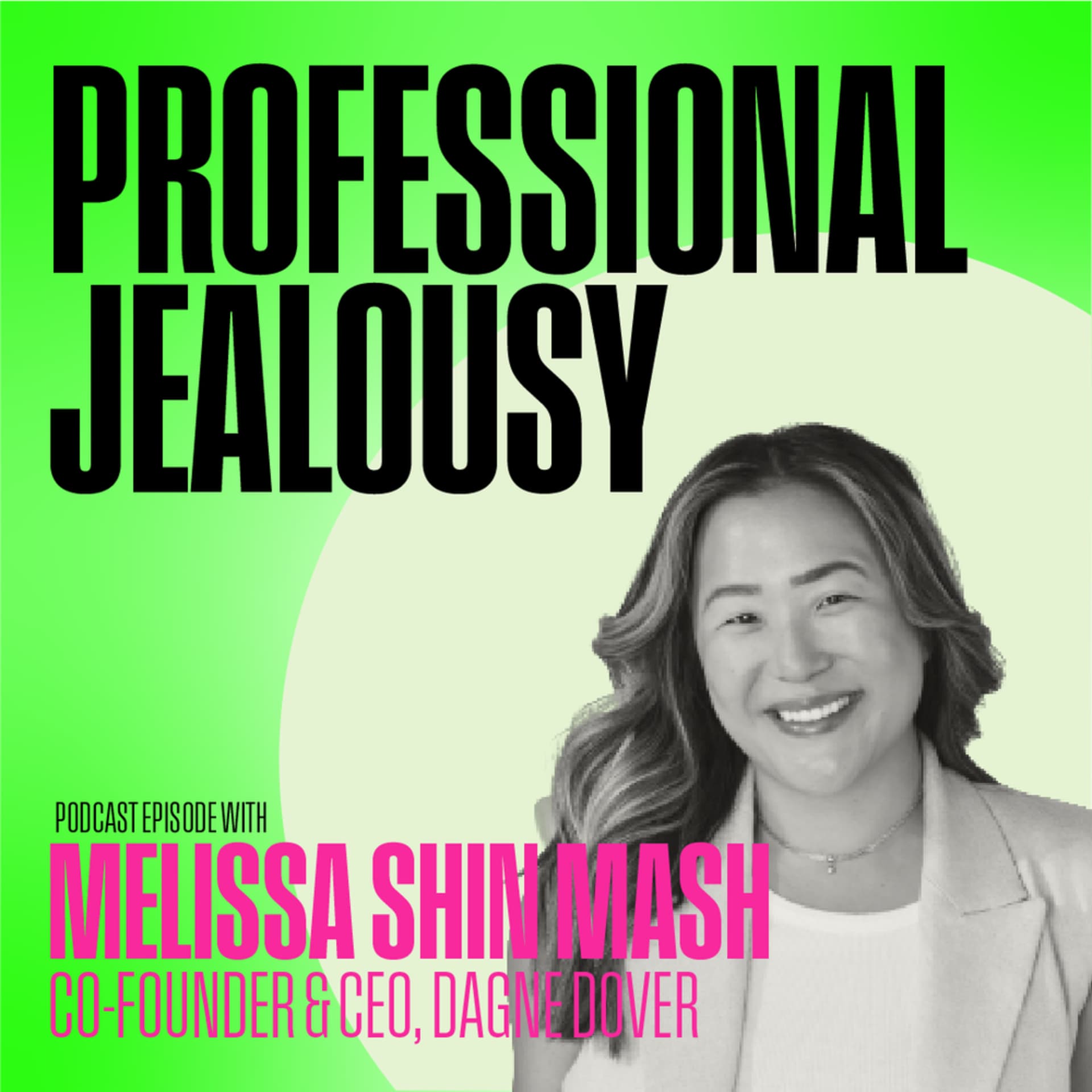
Overview In this episode, Natasha Jakubowski interviews Melissa Shin Mash, co-founder and CEO of Dagne Dover, a performance bag brand. The conversation delves into Melissa's journey from working at Coach to founding Dagne Dover, exploring the brand's unique approach to blending fashion and functionality.
Guest Profile
- Name: Melissa Shin Mash
- Role: Co-founder and CEO of Dagne Dover
- Education: BA from New York University, MBA from The Wharton School of Business
- Previous Experience: Led the turnaround at Coach's first UK/EU location.
Key Themes and Discussions
- Identifying Market Gaps
- Inception of Dagne Dover:
- Melissa realized the need for a culturally-relevant and digitally-native bag brand that combined performance materials with smart design during her time at Coach.
- Personal experiences, such as a disastrous experience with a bag while studying abroad, highlighted the gaps in the market for functional yet stylish bags.
- Innovation and Product Design
- Focus on Meaningful Innovation:
- Dagne Dover prioritizes meaningful innovation over simply producing more products. The goal is not to add to the clutter of the market but to offer best-in-class products that meet consumer needs.
- Unique Product Features:
- Features such as a detachable water bottle holder and key leashes were designed based on practical needs identified during consumer research.
- Business School Experience
- Business School as a Breeding Ground:
- Melissa found her co-founders in business school and emphasizes the importance of a well-rounded founding team that includes both analytical and creative perspectives.
- Intentional Networking:
- Building relationships with fellow students and investing time in entrepreneurship-focused events allowed her to develop a support network.
- Marketing and Growth Strategies
- Product-Centric Marketing:
- Dagne Dover emphasizes product quality as its primary marketing strategy, avoiding reliance on celebrity endorsements or influencer hype.
- Early Success:
- Initial sales came from a network of supporters within the business school community, leading to quick traction and investment opportunities.
- Building a Positive Company Culture
- Transparency and Authenticity:
- Melissa highlights the importance of a transparent company culture where leadership is approachable and employees can express their true selves.
- Empowering Employees:
- Dagne Dover aims to foster an environment where team members feel valued and have ownership over their contributions.
- Challenges in Entrepreneurship
- Reality vs. Glamorization of Founding:
- Melissa reflects on the glorification of entrepreneurship and emphasizes the hard work and resilience required to succeed.
- Importance of Asking for What You Want:
- She encourages women in business to be proactive in pursuing opportunities and advocating for themselves.
- Long-Term Vision and Community Impact
- Future Plans:
- Dagne Dover is exploring new categories and partnerships while maintaining a commitment to its core values.
- Community Engagement:
- The brand aims to be a hub for community events and discussions, emphasizing its role beyond just product distribution.
Key Takeaways
- Identify Market Gaps: Understanding consumer needs is crucial for innovation.
- Prioritize Quality: Focus on creating high-quality products rather than simply increasing product quantity.
- Build a Supportive Network: Relationships forged in business school can lead to valuable partnerships.
- Foster Transparent Culture: An authentic work environment promotes employee satisfaction and productivity.
- Stay Resilient: Entrepreneurship requires hard work and a willingness to face challenges head-on.
Conclusion Melissa’s journey with Dagne Dover serves as an inspiring example for aspiring entrepreneurs, particularly women, to embrace their unique perspectives and advocate for themselves in their professional journeys. The episode not only highlights practical strategies for building a successful brand but also underscores the importance of community and leadership in shaping a positive workplace culture.
Listener Engagement:
- For first-time customers, a discount code "JEALOUSY20" provides 20% off at Dagne Dover until November 15th, 2025.
- Follow Natasha Jakubowski on LinkedIn and Instagram for more insights and updates on future episodes.
Written by AI. May contain mistakes. Listen to the episode to check what was said.
Transcript
Automatic transcript. May contain errors.0:04Today, I'm talking with Melissa Shin Mash, co-founder and CEO of performance bag brand Dagny Dover. Melissa came up with the idea for Dagny while leading a turnaround of Coach, the first UK EU location in 2009, where she saw the opportunity for a culturally relevant digitally native bag brand that paired performance with smart design. Today, Melissa is also thinking about ways to live smarter, better, which we'll certainly talk about through products, services we use to the workplace policies that push our society forward. Melissa and her co-founders are passionate about setting a new standard of leadership, company culture and workplace norms in hope of creating a better society.
0:53Melissa is a graduate of New York University and the Wharton School of Business. Hello. Hi, how are you? I'm great. Thank you for having me today. Thank you for coming. I'm so excited. I, as I was saying, I know your brand. I love your brand. I live very close to the store on Lafayette in Manhattan. But for anyone out there that's been under a rock, can you give the quick elevator pitch for the Dagny Dover brand? Sure. So we've been in business for over 12 years. As you mentioned, we are a performance bag brand. And what that means is that we really try to be there for any part of your life in which you need a bag to depend on.
1:38So we very much are at the intersection of fashion as well as function and really just making sure that we're super thoughtful in our designs, whether it's a diaper bag, whether it's a work bag, a travel bag, a sling and everything else in between. amazing and then can you talk about the trigger like how did you come up with Dagny like was it just too many too many bags that were rubbish didn't work well yeah I had a lot of bag problems in my youth I'd say I'd say one time while I was in college I was studying abroad I had a phone that I had rented this was back in whatever it was 2004 and you know I'd rented it and of course my water bottle the cap had become loose and it had ruined the hole inside of my bag and it had broken the phone and I had to like, you know, spend thousands of euros or not thousands, hundreds of euros to replace it.
2:27And it was just a disaster. And it's like, oh, if I just had a bag that allowed a water bottle to stand upright instead of having to be on the bottom, like this wouldn't have happened, you know, or when I worked at Coach Corporate in New York, prior to moving to London, they had given me a really nice bag. It retailed for almost a thousand dollars. It was clearly meant to be for like the ultimate businesswoman, but it was six pounds without anything in it. And it couldn't even fit a laptop because of the way it was shaped. So what was the point of that? And I would wear, I would carry that. It was the nicest bag I owned, you know, so I would carry it every day.
2:58Again, I was working at the airport this time I was working, um, you know, to fix their first store in the EU, UK, and, um, it wasn't working for me, you know, and through that experience of being near all these longstanding European brands in the terminal, there was Dior, Prada, uh, Mulberry, Gucci. And then of course there was still Coors and and to me in there as well people were looking for something that didn't exist they had every option at their fingertips and it wasn't satisfying they needed something that could help them fly to you know another country endure whatever weather was happening in in London as well as wherever they were going go to the office go out for the night and and maybe even fit in a gym you know a gym session in between and there was really no brand that was catering to this lifestyle of being really on the go, having a multifaceted life.
3:46And frankly, also where a bag didn't need to cost, let's call it over a thousand dollars, like so many of these bags did. And having known this from my experience at Coach Corporate and also having seen some other inefficiencies, I guess, within just sort of standard retail practices, I knew that I could create a new brand that was really for our generation where our values were reflected, the fact that you shouldn't have to compromise between function and beauty, it can all be wrapped up into one, was born. And so Dagny actually means new day. It's a Nordic word. And Dover is the last name of one of my co-founders, Jesse, who's our chief creative officer.
4:22And so our brand is really meant to represent a new standard of what people ought to expect out of their products. Amazing. And yeah, it's amazing that there weren't, you know, you really had to choose from ugly or stylish. um so what how was there a trigger like how did you decide to leave this great glamorous sounding job at coach and actually start the brand yeah so so i i had gone there um i had moved there i wanted to move to london and they had said like actually we have a perfect job for you this is great can you please fix these problems that we have there so i was a consultant for the store and then through this experience of having this idea for this brand i was like i want to go to business school.
5:06I had never studied business in undergrad. I had a liberal arts degree and I felt like everything that I knew was from the job. And I really wanted to go and get formal business training and also have a breeding ground to be able to balance these ideas and do the appropriate studies, whether it be for pricing, whether it be for segmentation, competitive landscape, all that in an environment that would help me launch the brand as well, instead of just trying to do it on my own as someone who had never had that foundation. So I went back to business school the following year. And it was through that, that I, I was looking for my co-founding team.
5:37I definitely wanted someone on the business side with me who was much more, I'd say analytical and much more analytically driven. My background obviously was much more in front facing types of roles. Prior to leaving for my role in London, I had managed brick and mortar wholesale accounts at coaching as well as helping establish the whole wholesale and commerce channel. So I really wanted someone with a different set of experiences. And I also wanted a design partner. I wanted someone who could be the creative visionary and the face of the brand. I felt that it was important for us to be a balanced founding team.
6:10And I also thought it was important for our customers to be able to relate to not just one type of person, because our brand is so hopefully was going to become so much more than just that. And just from my own experience as a consumer, looking at all these brands where it was just one person's name or like one six year old man, you know, and it was like products for like younger women, let's say. like that I wanted to make sure that we always had appeal and that people could identify themselves in in our brand yeah so inclusive and for everyone from the beginning yeah if you meet us if you meet us myself Deepa and Jesse you'll see that like we we have a lot in common but we also have very different experiences in terms of our work in retail prior and very different sort of lenses and and and things that we do that fill our cup and things that we do that reflect our lifestyle too.
6:58And that's exactly what Dageny is. You can't define it as one type of thing, but it's someone who's busy and living with purpose. Yeah. I get a very good sense of who you're designing for. Do you do research? Like, do you do consumer research or it's more like, tell me about the kinds of ways that you kind of get inspired and understand your consumer and design for them? Yeah. So we have always believed in pull marketing where we wanted to definitely make sure that we were getting feedback before we had, I don't know, the audacity to think that we know what people want. Of course, we did. But you have to be very specific in terms of what they want in order to make sure that you really do have product market fit.
7:43So yeah, so we surveyed and focus grouped over a thousand women and men at the beginning of our journey. this was done through being at business school and having a captive community of people who were willing to not only help us um help us launch this and and produce you know first samples and all of that but really people who had a stake in it they wanted a solution too they didn't like the solutions that existed and so um so that was really valuable and once we did design our first styles we sold over forty thousand dollars worth of product in the first few months and that allowed us to kick off our fundraise for our seed round.
8:17So it was all very quick. Was that selling to business school people or generally? A lot of them. So we started selling to people who had been in our network and we said, this is what the product looks like. This is what it's priced at. Would you buy it? And a lot of people did, but then they also sent the link around to their friends, family. And, you know, after a while we didn't know, you know, every single person on the list too. So, so it really was like, Hey, finally, there's a solution for us who have been struggling with, with this problem of wanting to have a beautiful bag, but wanting it to also be organized and really functional.
8:47Amazing. So I take it business school worth it? So worth it. So worth it. But I think that, I mean, whenever people ask me if business school is worth it, I'm very specific in saying, I think it's worth it for a very specific set of circumstances. Some people need a break because, you know, their industries are, it was, you know, like you got to go for a reason. Some people just don't know what they want to do. And if that's the case, I think you have to be very intentional about the time that you're spending there. For me, I knew I was going back to start a business. So for me, I wanted to chair the entrepreneurship conference, which I did.
9:17I wanted to obviously through that, be able to make relationships with investors and other entrepreneurs. And then of course, launch this brand. So I think that it can be done really well and it can be done in a way that's just expensive. Yeah. Amazing. So you launched, you get investment. How did you grow it? Like from from friends and family and extended networks. Like what was your approach to marketing, I guess? Yeah, I mean, this was also a different era. You know, this was like 2013, 2014 at the time. So on some platforms, you know, advertising like Instagram, advertising didn't exist then.
9:52We were really part of the first wave. And so, you know, you could still have organic posts being seen by people. And, you know, so there could be sort of relatively inexpensive measures. I'd say something that was really important to us is that We knew that we were not going to be a company that raised nearly as much money from the sources of capital that so many of our competitors chose to take money from. And so we needed to do more with less. And we decided that we'd rather put more money into the product itself and hope that through word of mouth, it will drive more sales because it's just so impressively great.
10:25And also from a values perspective as well versus, hey, we need to, you know, we need to hype this up and we need to announce every raise. and we need to, you know, have like big splashy people carrying our stuff and paying celebrities and endorsements and stuff like that. We were never going to do that. We still have it to this day. But so we knew that, you know, if we're a product first company, we're putting more money in the product. Sure, there's less margin for us to be able to use for marketing, but this is a marketing strategy. Okay, interesting. Any particular product detail that you're especially proud of?
10:58You know, something I'd say, just talking about just like the beginning, people were so excited about the idea of this of this like bottle holder right this detachable it snaps in snaps out water bottle holder or beverage holder so that it was insulating you know you can have like a hot beverage or a cold beverage and it would be standing upright and it's like so genius but it didn't exist part of the tell us you know or just like the key leash right like sure we'd seen here or there like tiny like you can't you know you can't use it you have to unhook it if you're going to if you're but like the keely shouldn't become like a thing in mass you know acceptance or or or our society until we made it a standard you know and so it seems like a really tiny solution but also you got to get the measurement right you got to make it so it's actually usable or usable on your on your on your car as well so all those tiny details about what is the right drop length of this bag so that you can get it over your shoulder when you have a heavy winter coat on and you're not getting the friction point with your elbow all those things matter in terms of if someone's reaching for that bag every day and saying, I have to, I can't, I don't want to carry any other bag.
12:03Like this is the one I'm depending on almost like a personal assistant. Yeah. It's funny. I, when I've worked with female founders, there are many times where in my head, I'm like, this really only a woman could have done this, you know, like I think practically about what actually works or would make this better. What do you think? And actually a lot of times at the beginning, especially when we were raising money and pitching and stuff like that, like a lot of men really doubted the business. And part of that is that we were talking to the wrong men. They were not necessarily consumer investors, and therefore they didn't know the customer we were going after.
12:36But also it's because it wasn't their own lived experience because they had Tumi. You know, Tumi existed and it worked for them. That didn't exist for us. So yeah, I totally see there aren't a lot of women who are going to get funded. There aren't a lot of women who are going to have the particular sets of experiences is that allowed us to be successful and put something out that had product market fit. So I think the whole thing is, it led us to us being the one. What's been the hardest thing about going from more of a niche, a new brand to a kind of more mainstream brand? And I'm assuming the tools, the skills, the kind of strategies change.
13:25Like when did that happen? Do you feel like you went more mainstream and how did you do it? I still don't even know if we're mainstream, honestly. In certain circles, like in New York, we're everywhere, right? Even in LA, even though we don't have a store there, it's all over LA. Like literally, I was there like a couple of weekends ago. Every person who I mentioned who I was, they're like, they showed me their bag. You know, like literally my Uber driver is like, you mean this? Like, you know, like it's like really interesting how it's definitely in certain markets, like super strong. And then there's a whole part of the country, most of the infill that, you know, unless it's like a strong commuter city or like a major hub, like you really don't know about us yet.
14:03So I guess that's where we are right now, where it's a totally different situation. You know, we're a pretty small team. We're about 50 people. and the things that we did at the, I don't want to even say the beginning, but the first 12 years are different from where we are right now and what we need to do. So, you know, there's a team, there's individuals in terms of those who need to be, continue to be really adaptable. That's one of the things, but also like need to continue to grow in order for them to keep up with where we are as a company too. And then just getting into new categories that we haven't been into before.
14:36That's sort of what's on the horizon for 2026 and beyond. So that's really exciting. Beyond bags or still different types of bags? Still bags, but just like different types of partnerships. Yeah, amazing. I'm curious, obviously you worked on the retail side, but going into your owned retail, you know, it's both amazing because you create the environment, but a big, bold move. Do you have, like, what was the thinking behind that? And do you plan to open more retail? Um, so we had had very successful pop-ups in Soho prior and we had very flexible situations with them, but the spaces weren't necessarily reflective of what we would do if we were actually going to invest in this and have it really reflect our values, our, you know, our intention of how we want to use it and so on.
15:26So we luckily had a lot of data to support it. So it was not super scary when we signed, although it was like three months before COVID. And so that, that didn't, that was unfortunate that we had to stop work and, you know, it It took forever to actually get the store open, which is really just a sad part of being in retail during COVID. But the store, and for anyone who comes to New York, anyone who sees it, it's on Lafayette Street right at Prince. And it has beautiful light going in. And the materials that we chose on the inside are very much natural and meant to create spaciousness. And even like it's not super crowded.
15:58You know, we want to make space for wheelchairs, for strollers, for people's groups to stand in. And, you know, we have lots of different types of events from panels to book signings, private shopping events. So we're able to get, let's call it, 80 people in the space easily at any time. We also have a test drive station in our store, which allows people to take out props. So fake laptops, breast pumps, you know, fake food, Tupperware, water bottles that you might, you know, normally carry so that you don't have to bring your own stuff. When you come to our store, you can use those dummies and you can say, oh, I think I need the large versus the medium or this is how heavy it's going to be.
16:30okay I'm going to go with the size you know so people are really satisfied so we were really confident in what the store needed to be based off of our pop-up experiences and we're just glad that we can share with our communities and different groups now yeah so it's not just distribution it's community it's creating creating a bigger sense of brand behaviors um I was also you know I've been reading obviously a little bit about you and uh the company um You know, it seems like you have had an intentional kind of thought about cultivating a positive culture. Talk to me a little bit about how you do this, how you focus on it, how you try and build the kind of culture for Dagny that you want.
17:19So I think that there are a lot of things that you can do to build culture, right? I mean, you can have offsites, you can have get togethers, you can have buddy systems, you know, and we do all these things. But I think that honestly, the most impactful thing in a company having a good culture is how human and how themselves the founders are, as well as senior leadership. You know, there are a lot of organizations where they feel like they can't share certain information or they don't want to be as transparent or, you know, just like C-suite sits over there. And, you know, I think that like all of that sort of plays into what is allowed and what do I have permission to be and how can I bring my true self to work or do I have to kind of hide who I am and play a part?
18:03And I think that when people feel they can't be their true selves, that's when culture is not great, you know. But if you feel like you can be your true self, you can collaborate, you can push back where you want to and be respected and, of course, do it in a respectful way and be respected, then it feels really good to go to work and it doesn't feel so much like work. And that's really what we aim to do. I mean, Deepa Jessie and I, we all came from the retail industry, different parts of it. But we kind of saw some things that we just didn't love. And I think one of those was that just women were not at the top in an industry where they were selling primarily to women.
18:38Most of management was not. And that's not very motivating for especially women in their 20s who are entering the workforce being like, what am I working for if I don't see a place for myself here? or if women who have children are penalized from, you know, from promotions or whatever it is, like, you know, that's not a good sign to send to a young 20 something. So that was part of it. But also, can we can we just stop at the fear driven culture? Can we just stop at the top down hierarchical? I mean, obviously, there needs to be some degree of hierarchy. But like, let's be let's be realistic about what we think actually a successful organization looks and feels like, and build from there.
19:14I'm not saying that we're all family. I'm not saying that it's all kumbaya but like there is a there's a difference between what is the accepted norm in america versus what it could be yeah just being more intentional i love that it kind of sounds very much how you design you know practical intentional thinking about how it's used and felt um i'm just curious you know i obviously i'm a strategist and i'm always interested in smaller brands or in fact brands within kind of fashion um do you use kind of strategic frameworks or have articulated you know vision mission positioning and stuff like that how do you how do you articulate you know how you see the brand and communicate it and build that culture so that everyone understands um I mean so we do have certain pillars and everything like that but honestly, it's, it's more about how we operate, I'd say on a daily, weekly basis and what types of transparency we give and how frequently, and you know, the types of information that people feel pulled into instead of feeling like they don't know what's going on in the company.
20:24Like literally, you know, on every weekly call, and I don't know if every company does this or if this is standard practice by any means, but like we go through health of business and all the ways, you know, and it's, it's, we're very, you know, like everyone knows what the challenges are. Yeah. Everyone knows what the full challenges are. And everyone knows also like where we stands so no one's blind blindsided by the fact that i had no idea that you know this is happening or whatever um and i think that i feel like you know you kind of owe it to your employees to to be that transparent um so yeah i'm sorry is there a lot of noise right now yes and i don't know i think like what is that i think it might be but i we it'll we can i have no idea what that was that was so weird yeah we can tone it out uh from the yeah i don't know what it is either but we can definitely get rid of it um yeah um are there any decisions that you think you made in like the early years that had an outsized impact on where the brand is today um i do think that kind of what i said earlier about investing in the product as the marketing was one that was very atypical at the time, but has paid dividends, you know, in terms of being certainly the right strategy and certainly allowing us to have over even around 50 % of our customers who come to our site today are completely unpaid organic typing in Dagnadover.com, which is pretty incredible.
21:53So I think that just focusing on products so that it was sort of like less best, nothing else, no fluff, you know, like one of our goals is definitely that we create best in class products for each category and not try to just produce more just for the sake of producing more or be like we need to put out another bag next year what's it gonna be sure put that one out no it's like if if we can't feel like we're doing anything that's gonna make push our society you know forward in terms of that bag being like actually the best one on the market we don't need to do it um so i you know that's something that's really important to us yeah that's refreshing not just more more stuff no one needs we don't need more stuff we just need the best stuff yeah the best stuff um are there any things that you know you talked about funding and not necessarily going for some of the big numbers the big funds etc um is there anything that you wish people would talk a little bit more honestly when it comes to building brands or you know getting investment funding etc yeah I think that there's like a real glorification of founders and um you know entrepreneurship and founder culture and I wish that I wish that we just lived in a little bit less of a curated you know sort of like that's the expectation type of um society because because this is this is hard and it's not glamorous you know like like this is fun we get to work with product, we get to produce, you know, beautiful visuals and stuff to tell a story.
23:26But like, let's not fool everyone into thinking that like, this is easy, glamorous, and or even something to aspire to, like, you know, people need to find their own version of, of what is what, what will fulfill them. And I think that like, fame or attention or, you know, recognition for something doesn't necessarily need to be for being a founder. So there's just a lot that comes with that and the expectation to like always be on, always be selling and always be like a rep for the brand. Yeah. Yeah. I feel like you almost have to, it looks like once you are a founder, you almost have to be that kind of founder.
24:10You're never not a founder. In society, wherever you go, you're that person, you know? And actually, you know, some founders who just like don't do it. And it's like, I understand that because it's a lot of work and some people are not, their temperament's not suited for it, their personality, whatever the case is, or they just don't want to do it, totally understand. But also what I think makes a brand special and what I do think makes a brand successful is that personal connection with customers. So I'm, you know, again, I'm a big proponent for having multiple co-founders. I don't know how people, I just think it's so hard to do it as a solo founder because one of our biggest assets between Zipa, Jesse and I, are that we can all three split and divide and conquer for showing up at different events, which we want to go to.
24:50You know, we want founder presence there. We personally want to go and be able to meet our customers and hear the feedback and like feel the energy. Like that's important for us. But also it's really nice that we can divide and conquer amongst the three of us so we can do more. and which so you've got a design uh focus partner and jesse yes um and then deep as our coo okay deep as our coo but deep and i really really um split and you know conquer everything on the business side yeah any advice for picking founders co-founders oh so so much advice you know i've met a lot of people throughout the years who just didn't know where to find someone i totally get But I mean, like when I went when I got to business school, I had like connected with entrepreneurship groups and retail groups across like many different MBA programs being like, hey, I'm looking for a co-founder.
25:38If anyone knows anyone who would be interested in this, please let me know. And I met some people, but for the most part, I just didn't meet anyone who would be a good fit for me. And, you know, when you're looking at a co-founder, it's certainly not just based on experience. That's a part of it, for sure, for many reasons. But that is certainly not all of it. There's temperament. There's chemistry. There's, you know, just grit is another big one. And can we all play well together? Not just ourselves, but like, how do they play with others, you know? And especially because there are three of us, right?
26:09And two of us being on a business side and one of us being creative. So there's always dynamics. And sometimes dynamics are just too much for people, right? In your family or the workplace or it doesn't matter what it is. Some people just don't do well with groups and don't do well with collaboration and don't do well with stress or many other things. And so only through a period of working together for about six months, did we find that like, this is working well. All right, this is the team, let's do it, you know, but you really need that time together before you consummate anything to say, like, we all feel good about this.
26:40And, and we know what we bring to the table and like, let's go. And I think also just like not being cheap about things, you know, don't be short term oriented, like really think about what's going to incentivize the entire group to get there. This is not a short game. This is consider this a decade long, you know, decade plus long type of commitment. And we we want to be there, you know, no, it would suck for someone to give up like it would be very complicated, you know, so how do we make sure that we're set up for long term success? and then backwards engineering what's that profile look like and that's not only for your co-founding team but it's really about every part of the business from how you intend to exit if you intend to exit to backwards engineer everything that will be required in order to hit those milestones how much money you're going to need to raise from whom etc yeah amazing i mean like so so you actually kind of started almost uh before founding playing seeing if you work well together and gelled before actually founding you said for six months well it's more that we just like consummated the agreement after it's like let's just it's even works you know let's just see if we're let's see how this is going can we can we get on but I love the idea I do think having you know I advise quite a few founders um and within the founding teams I'm always amazed that you know you spend all this time together that you haven't talked about you know I mean it's amazing how many times I see someone who wants out quickly and the other that doesn't, and they haven't spoken about that.
28:11Yeah. Also, that's hard if like someone has money to fall back on and like someone doesn't, you know, like, I mean, two of us were MBAs. One of us was a designer, but no one was rich, you know, no one could not, not like this. We all needed this to work. We still do. We haven't taken, you know, we haven't taken anything out of the business. Like we are hungry and we're all equally motivated to to keep doing well um versus if you have some other you know if you have some alternatives then it changes things yeah aligning aligning your values aligning your ambitions and goals uh yeah amazing um i'm just curious what for you makes a good brand oh i think that there are so many things that make a good brand I think consistency, I think being able to evolve with society and tapping into the zeitgeist of what people want is really important.
29:06I mean, we've evolved in so many ways in our short 12 years in business from our logo to like, you know, our imagery to like the things that we really kind of, you know, sort of like going deeper into like who we are as a brand and as people. So that's really great. I think quality, you know, overhype. There are a lot of brands out there who are just about the hype, just about the sale. um i think also you know not being a one-trick pony but showing that you could diversify beyond your initial success and continuing to give people what they want um yeah yeah well and i i think that is one of the most interesting things especially in a world where things uh you know there's so many trends especially on social how do you keep the essence but still keep things new um like Dagny does partnerships to to help with things like that what are other ways that you keep your core but keep things fresh and evolve with uh culture um I mean it can be anything from like you know we're like I would definitely call ourselves like a color authority um so people love the colors that we drop the stories that we tell with them and they're hitting right at the you know at the right moment um hottest pink when the Barbie movie came out was just perfect timing but you know other other aspects as well i mean obviously we follow trend reports but it's also a little bit of creating our own point of view about what what the mood is where what are we feeling as we go into this fall what are we feeling as we go into the spring um and it's not always everything you know the same every year by any means like there's a lot culturally that's going on there's a lot of um feelings in the air you know depending depending on what's happening so it really is sort of our own point of view and our own interpretation.
Read the full transcript
30:46And, you know, we don't really do, we haven't actually done like any sort of like collab, like from a mark, from a product standpoint types of partnerships. But we have done things where we support, for example, like the U.S. Women's National Team for soccer before they went to the Olympics, they were all decked out in dagny luggage and bags, and then they won and they came home and it was so great. And, you know, it's like, there's certain things that we really want to support women's sports being one of them. But in particular, we've had longstanding relationships with a lot of those players who just love our bags and we want to support them um and so we've been able to build those sorts of relationships around cultural important cultural moments like sports and and the world cup um and many other things going on as well i'll be here yeah yeah like deep and i are both of opi heritage so like supporting different initiatives that go on around around that time of year um women just like women trailblazers there's a lot that we do around International Women's Day.
31:39So we love to show up for all sorts of occasions. Amazing. You definitely seem very practical, grounded, confident in, you know, in the way you approach stuff. Any advice for women out there to, yeah, to just be more confident and kind of grow into how they kind of approach life and career and deciding what they want to do? You know, I think in kind of not to generalize by age, but I think in your 20s, you're just learning like what the rules are and you're learning how to function as an adult in the workplace. And you're very much, I think, also rewarded for being an independent thinker and sort of like standing out of the crowd.
32:28Right. And what's really important is that you kind of develop your own point of view. And you, I mean, typically those who show that they're a leader, they think differently or like are not going to, you know, whatever, just follow the herd, like tend to be the ones who get promoted or tend to be the ones who advance in some way. But the truth is that in your 30s, especially if you're looking to start a company or if you're looking to build a team or become a manager and get to the next level, it requires a very different skill set, which is very much about team. And that is a very hard switch to make.
33:02And I think that the sooner that you can understand that that's what is required of you at that stage of your career, the better off you are. And I think just developing your own point of view and kind of being, I don't want to say unapologetic, because it makes it feel like a little bit irreverent, but just really confident in what that point of view is and being able to share it. I think that so much in my 20s, in particular, raising money for the first time and feeling like we're just like we're first time entrepreneurs. Like, you know, we're lucky if you give us a check and just feeling like we don't belong and we don't deserve to be there.
33:37You know, I wish I didn't feel that so much. I wish I did go in with a little bit more like, you know, we're going to do it. No one's done it before. We're the team to do it type of an attitude. attitude um and i you know i think also part of being a woman is that we we want certainty and we and we want to we don't want to be wrong you know we don't want to claim to be something we're not and then disappoint like and maybe again maybe it's just like me and deep in particular on the fundraising side where it's like that's a little bit of how we're trained you know a little risk averse in that way but i i think that if if we all just acted like men a bit more maybe it would help level the playing field a little bit faster and just like asking for everything whether qualified or not yeah it's funny I a lot of women that I've spoken to so far you know the just the realization that you've got to ask for it um like nothing will happen unless you ask for it I mean it sounds so idiotically simple but you know I think it it's been a theme across many of the women, I suppose.
34:39Yeah. And, you know, I think what's really important is that people have to understand that they need to take control of their career. Their career is not just going to advance without them doing things like proactively to make it advanced. So for example, when I was a coach corporate in New York, when I was 23, I asked for a promotion to the next level up to help lead the e-commerce, the wholesale e-commerce channel. And that was, that was a new channel, like, you know, this is 2008 at the time, like it was just being built out. But the truth is that like they wouldn't have considered me because I was so off mark for what they were looking for.
35:11They were looking for someone with five years of account management experience, particularly in e-commerce, but e-commerce had just existed for like a year, you know? So it's like, I was like, Hey, how about me? I would love to help build this out. And because I raised my hand and said, I would love this. I recognize I'm asking for a promotion, but like, I would love to be the one they could give me feedback. And they gave me feedback saying like, we want to see you be more present and more, be more vocal in front of senior leadership. And I said, okay, so I will. So, you know, over six months of me proving myself, Hey, thanks for the feedback.
35:38But like, this is me showing that like, I can take initiative and I can be a stronger voice in the conversation. They were like, yeah, you have the promotion. And I ended up being the youngest person who was ever in that role. Um, you know, I mean, just like generally like for account management period. And I think that really helped also me build the confidence in like, Hey, I'm going to leave now at the end of 2008, my boyfriend at the time, now my husband got a job offer to go to London. And it was like a terrible time to quit a job because like, how was I going to get another one because it was a global economic crisis?
36:07And they were like, are you sure you want to do this? I was like, I do, because I want to manage people. And I also want international experience. I don't want to do the same thing for another year. I'd rather I prioritize growth over safety. And I understand that is an extremely privileged thing to say, in particular, in that environment. But I also was like, I want to try it. I just want to give it a shot, you know, and I did. And luckily, look what came out of it is literally me working in the coach store, hearing from customers every day what their problems were and this idea for Dagby. You know, so I mean, you know, like I think you have to go for things, but also you could be not going for things and then like not realizing you have to put in additional work.
36:43You know, like you have to continue to push yourself and elevate yourself if you want to be elevated. Do you think of yourself as brave? I think I am but I never really thought I was because like I mean I mean you see someone rush into a fire and you're like oh my god I could never do that like you know like you see brave people oh my god then you know the subway saving someone from the subway like you see like bravery and you're like I can't do that but just because you can't do everything that is brave doesn't mean that you are not brave in what you do amazing all right I'm definitely running out of time um what's a success flip for you uh now like how do you kind of think about success I mean for me success has always been being fulfilled and being able to sustain yourself but hopefully not wanting for too much but also just being happy you know and I know that sounds overly simplistic which is why I say fulfilled because sometimes things are not easy but you were fulfilled by it you know so um happiness now I mean success for me now really looks like getting to do all the things I get to to do.
37:47I mean, I, I love meeting people. I love the fact that my job is so multifaceted and it's ever evolving. Um, and I just, I love being in a growth focused job as well. Amazing. All right. Last quick fire questions. Uh, any bags from other brands that you'd like to own? Absolutely not. No interest. Uh, tell me one of your guilty pleasures. um i literally don't even i mean like nothing like i'm like i i'll like indulge in like a full carby pasta i don't know like i don't i like don't have any vices i don't even really watch tv like um i don't really have any i mean i guess that's good i mean it's good to have no guilt in life i guess what's the best career advice worst career advice you've ever had um i don't know like there's no like best or worst i'd say that like when people always said like always raise more money than you think you will because like random terrible things will happen and you'll need to like have a little extra buffer once you live through some random terrible things you're like that was that i understand now that is so important you know but like a lot of people say that and it's just it's just like total everyone just needs to know that um worst advice i wouldn't call it worst advice but i would say that like there were many times in particular at the very beginning of our business when we were pitching in front of mostly like older men who were not the demo again who were just like do women who care about fashion really want anything that's organized do they care about that as if that's so god forbid god forbid you know people be multi-dimensional and it's you know so it's just like all sorts of things being like our conversation needs to end here now so that's great okay what do you think your superpowers are that have helped you uh get to where you are um my co-founders would would say the following that I'm a connector a relationship builder someone who can like put together like oh this person needs to chat with that and we could do this there um and also I'm a very excellent gift giver and sort of attuned to what people will really love and feel emotionally like touched like Like, wow, you noticed, you noticed this thing that I love.
40:02Yeah. That's amazing. I love that. Is there anything that you're trying to get better at? Oh, so many things. I think now that I'm in my 40s, you know, like creating muscle, and like, you know, just like getting stronger. Heavy weights. All the things, all the things. So I think taking care of myself. I think also like knowing the tools that I need to continue to be successful. So like, hey, putting things on my calendar that will give me life because sometimes you have a few hard days in a row, especially between children, aging parents, and then, of course, the business. And you need something to pull you out and to like fill your bucket up so that you can handle everything else.
40:47So I think just scheduling those things and just knowing and not, you know, not sort of wobbling about it. Just go ahead and do all the things because this is what you need for your machine to run. Amazing. Do you have mentors? Have you had mentors? I don't. You know, I have a lot of founder friends who are, let's call it like one or two stages ahead of us. And so we ping them a lot and they kind of help us. But I think that in general, just always having like a board of advisors for you personally, whether it be, you know, your partner or, you know, other founders or people that you just know you can pull from who have really good perspective on things is just imperative for anyone in life.
41:25Amazing. All right. Last question. Tell me about someone or something that you're professionally jealous of. So I recently met Michelle Waller, who's the founder of Beyond Yoga, and she's just a lovely, amazing person. Had Beyond Yoga for 18 years before selling it to Levi's for 400 million, completely bootstrapped. And she just played that long game of just doing something well, consistently building brick by brick. she didn't take any shortcuts she didn't take any loose fast you know easy money that would have been very different in terms of what choices she would have had and she just did it right and so I I just think that she's just fantastic and and yeah I bet everyone everyone should look up to Michelle for how to do it right amazing thank you so much for your time I'm excited to say that uh you've given us a code um I've never done one of these before so I'm gonna say for anyone so for any first time customer that would like to get uh 20 off any full price item at dagnydover.com just put in jealousy 20 for that 20 off um valid till november 15th 2025 that's uh my first my first discount coupon for a amazing brand um i'm so grateful for your time um yeah i love how both inspirational but super practical uh and uh you know just super sensible uh all of your advice has been it's been a pleasure to chat with you thank you so much this was so fun thank you natasha thank you so much for listening please do take a look at some of our other episodes we've done you can find more on spotify apple podcasts youtube um or all of them on professionaljealousy.com.
43:23Thank you to Shimmy, to Anomaly, the Unreasonable Studios. If you have any questions, feedback, or importantly, people that you'd like to see featured, let me know. You can follow me on LinkedIn or on Instagram. And of course, please subscribe, leave a review, tell others about it.
From the publisher
Designing a better approach to life:
Melissa Shin Mash, co-founder of Dagne Dover came up with the idea for Dagne Dover while leading the turn-around at Coach's first UK/EU location in 2009, where she saw the opportunity for a culturally-relevant, digitally-native bag brand that paired performance materials with smart design.
Today, Melissa is always thinking about ways to live smarter and better – through the products and services we use – to the workplace policies that push our society forward. Melissa and her co-founders are passionate about setting a new standard of leadership, company culture, and workplace norms in hopes of creating a better society. She is a graduate of New York University (BA) and The Wharton School of Business (MBA), where she net her co-founders.
This conversation included:
Identifying the market gap for Dagne Dover as a brand that offers fashion and function
Business school as a ‘breeding ground’ for ideas and where she found her co-founders
Prioritizing meaningful innovation over simply producing more ‘stuff’
Retail physical store as community hub and testing ground
Setting a new standard for leadership, company culture, and workplace norms.
The reality of being an entrepreneur vs. the trend toward glorification of founders
Melissa was professionally jealous of Melissa Waller, founder of Beyond Yoga for being a lovely, amazing person, who also just sold her business to Levis after boot-strapping for 18 years.