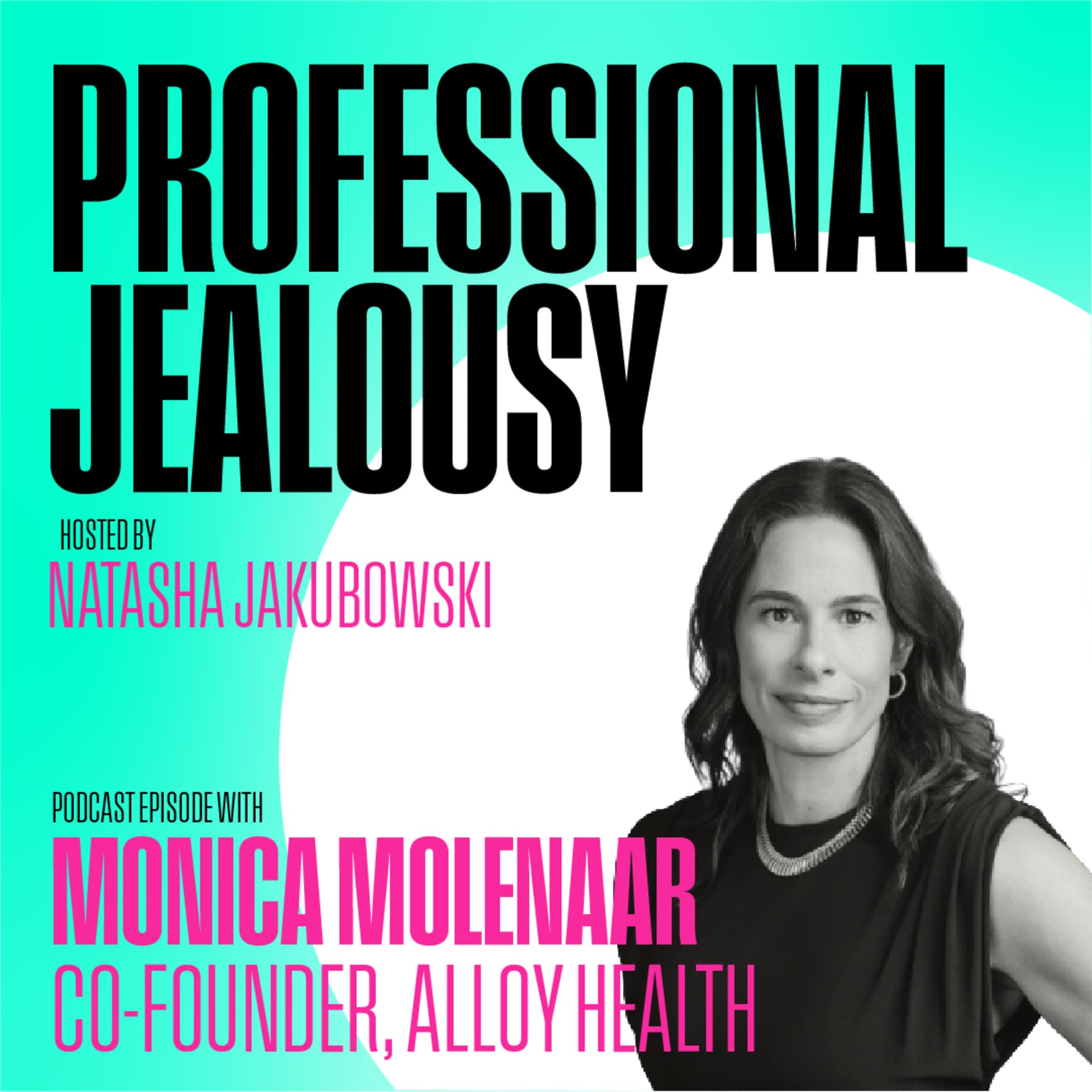

In short
Monica Molenaar (co-founder/co-CEO of Alloy Health) explains why midlife women lack validated menopause care and how Alloy provides “digital concierge” access to menopause experts plus prescription options (menopausal hormone therapy, topical estrogen for skin/vaginal health, and other midlife treatments including GLP-1-related support).
Guest backgrounds
Monica is a healthcare/women’s-health entrepreneur inspired by her own 5-year struggle to get menopause care. She previously co-founded Seed and Mill, a sesame-based food business in Chelsea Market (cult brand). Her co-founder is Ann Fulenwider (former Marie Claire editor-in-chief). Early investor: Ankur Jane (joined as first investor after interest in “friction/shame” businesses).
Key claims
Menopause care research and access were neglected (“no money in menopause”); estrogen is cardioprotective/anti-inflammatory and essential for preventing chronic disease; only 2–5% of women get menopausal hormone treatment; Alloy improves access by removing insurance/appointment friction and offering ongoing doctor messaging.
Notable examples
Monica’s BRCA-family history (mother/grandmother breast cancer) and her decision to remove ovaries before menopause without being told how to manage it; Alloy’s topical estrogen described as prophylactic in perimenopause and therapeutic in menopause.
Written by AI. May contain mistakes. Listen to the episode to check what was said.
Chapters
Tap a time to open that second in VOThe Journey to Alloy Health
0:45 to 2:36
Monica shares her personal health journey and the inception of Alloy Health.
“So think of Alloy as sort of your digital concierge doctor designed specifically to enable midlife women to thrive.”
Understanding Menopause
2:36 to 4:03
Discussion on the misconceptions and lack of information surrounding menopause.
“why you started Alloy and the experience of that such important kind of finding.”
Founding Alloy Health
4:03 to 6:06
Monica explains how she transitioned from her first startup to creating Alloy Health.
“Alloy to even get my own care under control and sort of, you know, on a set it and forget it kind of trajectory and to really understand what had happened and what I was going through and why I needed certain treatments.”
Finding Co-Founders and Investors
6:06 to 8:08
Monica recounts her serendipitous meetings and the importance of networking.
“And it really sort of took off as a small cult food brand.”
Overcoming Challenges in Entrepreneurship
8:08 to 9:41
Discussion on the challenges and mistakes in starting a business and the importance of learning.
“And by the end of the after the summer ended and all the kids had gone back to school and stuff, I reached out to her and I said, I have an idea.”
The Importance of Idea Sharing
9:41 to 14:00
Monica shares her views on sharing business ideas and overcoming fear in entrepreneurship.
“And he's an investor, and he was talking about his interest in businesses that have some sort of friction or shame, you know, associates like are solving a problem that has some sort of friction or shame.”
Overcoming Fear in Business
14:00 to 14:59
Learn about the importance of taking risks and learning from mistakes in business.
“But I've never, I've really never seen an example in my own experience of somebody taking an idea and actually like going for it.”
Navigating Business Challenges
15:00 to 17:20
Explore the challenges of finding the right partners and adapting in business growth.
“And I always laugh at the, you know, the worst day is always the best day and vice versa.”
Evolving Team Dynamics in Startups
17:21 to 20:00
Understand how team roles and responsibilities change as a business scales.
“As a business scales, what I think has been really interesting, and this has been definitely different in my experience with Alloy than with Seed & Mill because it's a different scale and sort of opportunity in a sense.”
Addressing Menopause in Healthcare
20:01 to 24:10
Discover the need for better menopause treatment and the impact of estrogen.
“One was just utter lack of validation of women and menopause and what they were going through from the medical world and doctors from other women from just people generally.”
Show all 24 chapters
The Importance of Estrogen for Women's Health
24:11 to 27:20
Learn about the critical role of estrogen in women's health and vitality.
“And then beyond that, you know, there's, there's your weight, there's your skin, which we have really pioneered the use of topical estrogen for skin health, which has been really, really exciting and gratifying.”
Empowering Women in Their Health Decisions
27:21 to 28:05
Explore how Alloy Health promotes transparency and decision-making for women.
“And so, you know, as a 51 year old woman, it's pretty nice.”
Empowering Women in Healthcare Decisions
28:05 to 29:51
Learn how Alloy Health values women's decision-making in menopause care.
“And that goes for the same with the estrogen, progesterone.”
Alloy's Approach to Menopausal Care
29:51 to 31:45
Discover Alloy's innovative model connecting women with menopause specialists.
“Yeah, no, I'm interested in this business wise, you kind of obviously the focus on women, the focus on menopause is, is, is great.”
Doctor-Patient Relationships in Menopause Care
31:45 to 33:59
Understand the importance of continuity and trust in healthcare for women.
“You know, she can start with menopausal hormone treatment.”
The Importance of Personalized Treatment
33:59 to 35:56
Explore how personalized treatment plans can enhance women's health outcomes.
“And so this is really a way to connect women directly to the doctor, which almost never happens in real life anymore.”
Reflections on Alloy's Journey
35:56 to 37:41
Hear insights on the lessons learned while building Alloy Health.
“I've had, you know, just FDA approved regular generic, the pill, the patch, the gels, the sprays.”
Future Directions for Alloy Health
37:41 to 42:05
Discover Alloy's ambitions for the future of women's health care.
“And so I don't think that I could have done anything differently to reach the same outcome.”
Understanding the Menopause Market
42:05 to 42:44
Learn about the significant market of women experiencing menopause and the lack of resources available to them.
“And the fact is that there are 85 million women in the United States alone who are in some stage of perimenopause or menopause right now.”
Challenges in Women's Healthcare
42:44 to 43:58
Explore the challenges women face when seeking healthcare solutions for menopause and related issues.
“You know, maybe we should try you on HRT first and see if that solves the problem.”
Career Reflections and Advice
43:58 to 45:21
Hear insights on career strengths, networking, and the importance of focusing on what you're good at.
Balancing Work and Wellness
45:21 to 48:09
Discover the discussion on maintaining health and wellness while managing a business remotely.
“I make and develop and maintain relationships.”
Trends in Health and Supplements
48:09 to 51:15
Dive into current trends in health supplements, including probiotics and peptides, and their implications.
“But what it means is that my working hours, which I love, start, I just sort of, I work Eastern hours.”
Inspiration from Female Entrepreneurs
51:15 to 52:58
Gain inspiration from the story of Estee Lauder and her journey as a female entrepreneur.
“jealous of um it's a great question i think i don't love the i try to not be jealous as a person So I like to find inspiration and ideas, admiration in other people.”
Transcript
Automatic transcript. May contain errors.0:00Monica Molenaar:Coming up in this episode of Professional Jealousy. I'm not going to just die quietly in the corner while I know that I could be doing much better things. It really took me five years and multiple, more than five doctors and starting Alloy to even get my own care. One doctor said to me, there is no money in menopause, so the research hasn't been done. I don't know. I can't answer your question. So you can sort of expect that at any time that you have an idea, 10 plus people around the world are having the exact same idea at the same time.
0:37Natasha Jakubowski:Hello, I'm Natasha Jakubowski and this is my podcast, Professional Jealousy, where I talk to people I'm impressed by and yes, just a little bit envious of. um today i'm talking with monica molinar co-founder and co-ceo of alloy health a digital health company focused on women's health inspired by her own personal journey um hello uh i'm so grateful that you could be on here i i do a lot of space i do a lot of work in uh kind of health care and women's health and so i've obviously known alloy for a while and it's a fascinating space for anyone that doesn't know the brand. Can you give us a quick elevator pitch?
1:21Monica Molenaar:Sure. So think of Alloy as sort of your digital concierge doctor designed specifically to enable midlife women to thrive. So we offer access to really good, credible information, fantastic doctors who are all menopause experts and really mission driven to treat women in midlife, and direct, easy, convenient access to the prescription solutions that women are looking for and need in order to thrive from here forward, whether that's menopausal hormone treatment or other things for weight, skin, sexual health, gut health, other things that we are all kind of struggling with and want to improve in midlife.
2:09Natasha Jakubowski:amazing um you you're very open uh in the press on the on on your website about the kind of aha moment um about finding out about the BRCA gene can you talk a little bit about that and I mean I I know quite a few women that have had a similar experience but you actually you know it it created this moment this aha moment like I'd love to hear a little bit about why you started Alloy and the experience of that such important kind of finding.
2:45Monica Molenaar:Yeah. Well, I always was actually treated as if I had the BRCA gene because my mother and my grandmother both had breast cancer very early. And neither of them died from it and lived many, many more years, decades after their breast cancer. So it wasn't something that I was really terrified of, but it was something that I had been kind of managing from the time that I was 25. And when I was about to turn 40, Angelina Jolie wrote her op-ed about her experience having BRCA and making her decision to have a preventive mastectomy and ovarectomy. And at the time, as I said, I was 39. I had two children already.
3:26Monica Molenaar:I made the decision that it probably would be wise to at least have my ovaries removed because my grandmother's breast cancer had also spread to her ovaries. And, you know, I had two small children. It wasn't something that I was interested in dealing with. And really all anybody told me of the doctors that I had, the surgeons, my OBGYN, like everybody only talked to me about the end of my fertility and not having more kids. But they didn't, no one ever mentioned that I was going into menopause the next day and how to manage it. So it really took me five years and multiple, more than five doctors and starting Alloy to even get my own care under control and sort of, you know, on a set it and forget it kind of trajectory and to really understand what had happened and what I was going through and why I needed certain treatments.
4:17Monica Molenaar:But nobody explained it to me. And I just kept going to doctor after doctor. I'm a sort of a relentless problem solver, which I think is also part of why I'm a good entrepreneur because, you know, I take information and then I act on it or I digest it and, you know, sort of keep trying to find and solve the problem. And I was sitting in the middle of New York City. My father is a doctor there. I had kind of every resource available and I still really couldn't find the help that I needed. And so in the meantime, I started another business, which is going to be celebrating its 10 year anniversary next week, which is exciting.
4:53Monica Molenaar:But so I sort of started to get my entrepreneurial chops going. But in the meantime, I was still really dealing with and struggling with my own menopause. And at a certain point when it was time for me to sort of move on from the business that I had started with a couple of partners in 2016, I was like, what's the next, what is the biggest problem that I want to solve here? You know, where do I think that there's a lot of white space? Where, what, what does the world need? and at that moment I really thought women need help in menopause because this shit is crazy if you don't know what's going on you know like the you know the answers that I would get from doctors like I would ask questions and literally one doctor said to me there is no money in menopause so the research hasn't been done we don't I don't know I can't answer your question and I just thought that is not something that I can accept uh just quickly what what's the what was your first startup?
5:51Monica Molenaar:My first startup was called Seed and Mill. It's a food business based in Chelsea Market in New York City. And it's all based on sesame. So tahini and halva, which is a sweet treat made from sesame paste, made from tahini, actually. And it really sort of took off as a small cult food brand. And it was very exciting and fun to work on, but very, very different from
6:16Natasha Jakubowski:what I'm doing right now very different um and so silly question you've gone from food um to uh regulated very different space like I know this sounds silly but like literally how did you go about starting like what were the first steps that you made did was it to find your co-founder was it to like how what were your first steps to creating our life?
6:45Monica Molenaar:I mean the first step is really just thinking about what you know coming up with a vision or an idea of like this this is a problem that needs to be solved and then figuring out kind of the ways to start talking about it and actually the first I started to talk to a lot of people and lots of you know different people in in different areas, some doctors, some former entrepreneurs. My initial thought actually was, how do you eat for menopause and not gain 20 pounds like I had done? So I was really trying to lose the weight and sort of keep it off. And this is obviously well pre-GLP1s. Yeah. And so I was really struggling with my weight and feeling very bad about it and feeling, you know, upset.
7:33Monica Molenaar:And so but I also didn't really know at that time all of the connections between menopause and estrogen and weight and all of the other things that happen to your body, you know, as you as you age. I did by that point already have a prescription for menopausal hormone treatment, but it was inconsistent. And so, you know, I was sort of all over the place for five years. but really the first after speaking to a lot of people it all kind of coalesced when I met my partner my co-founder Ann Fullenwider who at the time was the editor-in-chief of Marie Claire magazine and I met her sort of socially we were both on vacation in the same small town in the North Fork of Long Island and she looks very much like me and had the exact same puppy essentially and you know I kept running into her and thinking like I eventually went up to her and I said, I think we should be friends because we have kids the same age and we have these two puppies and like, I'm going to walk the dog at 630 tomorrow morning.
8:29Monica Molenaar:Would you like to join me? And she did. And so for the next week or so, we started walking the dogs every morning and just, you know, as women do talking about all the things that you're going through in your life in your mid 40s and, you know, whether it's careers or children or health and parents aging and all those things, we kind of hit every topic. And by the end of the after the summer ended and all the kids had gone back to school and stuff, I reached out to her and I said, I have an idea. I think that you should quit your job and we should fix menopause. And, you know, we kind of met a couple of times.
9:03Monica Molenaar:We didn't really have any idea how we were going to do that. But one thing led to another. And this is sort of also, I think, where it's important for people who are thinking about founding a business or getting into entrepreneurship, like talk as much as possible to as many people as you possibly can and things will start to take shape. And you'll have a lot of conversations that won't go anywhere, but some will, and that's what's important. So just don't stop talking. And eventually, we had a few conversations, and then she was actually introduced through her work to someone named Ankur Jane, who became our first investor.
9:38Monica Molenaar:He was a 29-year-old guy at the time. Now he's in his mid-30s. And he's an investor, and he was talking about his interest in businesses that have some sort of friction or shame, you know, associates like are solving a problem that has some sort of friction or shame. And she and life stage businesses. And she said, what about menopause? You know, nobody's talking about that. And he said, I've been looking for a menopause company. Yeah, there aren't any. And so, you know, she was like, well, my friend Monica wants to start one, you know, we should have a we should have a conversation. And that's really how it started.
10:15Monica Molenaar:And basically, you know, he was like, I'll give you guys some money. You know, we really needed something concrete in order for and had a full time job at that point that she was leaving. And I was obviously an entrepreneur, so I was a little bit more flexible. But what was great was that he really thought, you know, that we would be a great team to tackle this problem. And so he was like, I'll give you some money to kind of figure it out. And that was seven years ago. And they've continued to be our investors.
10:43Natasha Jakubowski:Yeah, that's amazing. I mean, I love the just the serendipity of it all, you know, randomly come friends and meet an investor. I mean, it sounds pretty, pretty magical. It's a lot of serendipity and also like seeing opportunities and going for it.
11:03Monica Molenaar:So, for example, like in that period, I obviously shortened it. But, you know, there were like other things that happened. There were like, you know, times that he said, hey, I'm going to be at this party. And I ended up going alone and was busy. I didn't really want to go, but I went because you need to keep the conversation going. And if you lose momentum or you don't seem interested or excited or engaged, then other people won't either. So it all really goes back to, I think, you know, partially my experience as an entrepreneur has been like, don't be afraid to talk about your ideas. No one's going to steal them.
11:37Monica Molenaar:Or if they do, then good for them because they executed better than you could. You know, but it really comes down to can you execute on something? And there's a lot of effort and relationship management and nurturing and development that, you know, goes into these serendipity moments. But if you're there, then it can happen. And I think that's something I've really learned.
11:58Natasha Jakubowski:Yeah. There's a couple of things you said there. Like one thing is, it's interesting. I'm working with a founder at the moment who is worried about someone stealing their idea. And it's hard because, you know, you need to share what this idea is. I love your thought about, well, if someone else takes it and does it better but any I mean like did you how did you you you sound like you're much more kind of talk out the idea get it start forming it and evolving it and getting people excited like what advice do you have for uh founders worried about you know giving too much away like talk to me about uh how they should kind of free up their thinking and be a little more confident i guess or do you just use an nda i mean that's the other i i keep wondering about all these founders trying to get people to sign ndas before they even share anything no i i don't
13:01Monica Molenaar:i mean we we hardly every once in a while we'd have somebody sign an nda but really like ideas are a dime a dozen and you can you really can expect and this is something that i've learned and seen when i'm like wait how is it you know that that sentence that i was just thinking somebody else just wrote that down, the exact words, you know, so you can sort of expect that at any time that you have an idea, 10 plus people around the world are having the exact same idea at the same time. And it really does go down to come down to, are you, do you care about that idea? Is that something that you want to work on?
13:34Monica Molenaar:Is that something that you have the expertise to, to work on? Can you find the people who have the expertise? Can you find the money to do it? Like all those, you know, there are lots of steps to being an entrepreneur, but I think that sharing the idea is the least risky, actually. You know, like that's, and for the most part, my experience has been that when you share your idea, people are either excited to work with you on it, you know, or sort of want, or give their advice or walk away or whatever. But I've never, I've really never seen an example in my own experience of somebody taking an idea and actually like going for it.
14:11Monica Molenaar:So I think the risk is very low. It's amplified in our minds,
14:14Natasha Jakubowski:but it's it's not what i would worry about yeah and interestingly so my day job is uh head of innovation i literally work with massive companies like png unilever all these companies and i can tell you i've i've created many menopause ideas and business and really ideas are easy it's actually making them happen is is much harder and i think the other part of that just
14:42Monica Molenaar:to finish the answer is don't be afraid to make mistakes. Expect that you will make mistakes and expect that things will go wrong or that, you know, you'll go down a path and you might need to sort of pivot a little bit or massage it. But it's how you learn from those mistakes and how you take the information and and use it. That's where the magic happens. And that's, I think, where, you know, sometimes it looks like serendipity or it looks like, you know, this was, you know, whatever but there's a lot of hard work and a lot of effort and and kind of determination that goes
15:15Natasha Jakubowski:into following along an idea any mistakes that you can think of that were you know terrible but actually useful in the long run i mean you know i can't everything that we've done we've had all kinds of things go right and
15:38Monica Molenaar:go wrong. Yeah, usually on the same day. And I always laugh at the, you know, the worst day is always the best day and vice versa. Like we, you know, it just kind of happens like that. But I think that one, we I'm very, very happy with where I am right now with the business with my life without, you know, and so I can't really say that there's any, anything, anything that was tragic, because if, you know, I took, I took all the mistakes or all the things that, you know, didn't And I'm not even necessarily thinking that mistakes in terms of poor choices, but sometimes, you know, there's a lot of stuff out of your control.
16:15Monica Molenaar:Or, for example, we we started down the path, you know, years ago before we launched, we spent almost two years working with a partner that definitely was not the right partner. We worked that was actually a telehealth partner. Then we also worked with a technology company that built our entire back end and we worked with them to sort of build the back end. and they went out of business overnight. And then we had to rebuild the entire thing ourselves within two months. And we had already launched by that point. So we didn't want to kill the business either or lose the customers that we already had.
16:51Monica Molenaar:So there's all kinds of stuff that just always has to kind of get worked on. And you may choose, as a business involves, you may choose partners at one point that aren't the right partners going forward. So being able to really look with kind of objective eyes at decisions that you've made and be able to say, this isn't the right decision anymore, or we need to move, we need to choose somebody else, or we need to, this person isn't right for the job anymore, for the stage of the business. As a business scales, what I think has been really interesting, and this has been definitely different in my experience with Alloy than with Seed & Mill because it's a different scale and sort of opportunity in a sense.
17:34Monica Molenaar:But the people at the beginning, like we've had, it's like a movie credits, basically of people who have been involved in Alloy at different times. And the people at the beginning aren't necessarily the right ones for now.
17:48Natasha Jakubowski:Yeah. So what sort of people do you need at the beginning versus when you're now seven years or more established? Like talk to me about the kind of the change.
17:59Monica Molenaar:um well we have almost 50 people working for us now and so you know at a certain point the roles and responsibilities become a lot more defined i think is you know and you need real expertise um we started for example our our advertising efforts with essentially like he was great at the moment but it was like a guy in a garage who was doing our media buying you know and at a certain point, that just doesn't, it's not, it's not okay anymore. You need more sophisticated tools or you need more business intelligence. Like we, for the first several years, we didn't have any data analytics. So we were kind of shooting in the dark and just making decisions based on feel or what we thought, you know, would be right.
18:43Monica Molenaar:But we didn't have the money or the resources to be able to be more data driven in our decision-making. So, you know, we've been able to really add people with very specific expertise as we've grown, which we wouldn't have been able to attract those types of people. You know, we have a CTO now, like we couldn't have had it. We were too small to have a CTO at a certain point we needed. We are our first developer who's still with us. I think he was 20 when he started. And, you know, I love him and he's been great. But his some of his his references one of his references was literally his middle school coding teacher but you know he he did what he did he got the job done and he was you know he was really perfect but now we've had to obviously build around him and and over him and yeah stuff like that so it's um some people just couldn't move as quickly as we needed to or you know there are all kinds of reasons why some people might not be right going forward lack of interest or whatever yeah um i think it's super
19:48Natasha Jakubowski:interesting like thinking about the space you're in i mean i think health and wellness is super dynamic but actually you know i think the growth of the you know it went from period care to you know things like menopause became a big kind of focus within health care um so you've gone through that kind of you know you're on the rise of that and then obviously things like whether it's gut health and microbiota and hormones and now glp1s so talk to me about how the the business or your vision for the brand and the business has evolved and how you kind of course correct like how what would you look back and think about how it's changed like what are the key evolutions of the the brand in the business well i think from the beginning the way that we've
20:45Monica Molenaar:thought about kind of the product rollout is what's the biggest problem in the space right now? And there were a few when we started. One was just utter lack of validation of women and menopause and what they were going through from the medical world and doctors from other women from just people generally. It's like, what? What's the problem? So you're tired. So you didn't sleep well last night. So you gained some weight. Who cares? Like, this is it. You know, this is aging. So your skin is wrinkling, like get over it, deal with it. And one, that's not like, that's not an answer that I can live with, you know, at this age, like I'm, I'm not going to just like die quietly in the corner while, you know, I know that I could be doing better things.
21:34Natasha Jakubowski:Yeah.
21:35Monica Molenaar:And like I'm 51, as I keep saying it, I'm literally in the best shape of my life. I'm in way better shape than I was when I was in my 30s and 40s. I'm way happier. I'm, you know, I'm really sort of doing, I'm at the top of my game in a way that, you know, I'm really kind of using the experience, the lived experience that I've had thus far, and using that to inform how I want to live the rest of my life going forward. And I have as many years potentially in front of me as I've had up until now. So that's sort of my own personal feeling. And that has informed really how we kind of have evolved the business, which is solve the biggest problem first.
22:14Monica Molenaar:That is that in menopause, women were not getting access to menopausal hormone treatment, estrogen and progesterone and also testosterone. But that's a kind of a different story that, you know, the biggest lack of access was to estrogen itself. And it's, it is the key to solving not only menopause, but really helping women prevent future chronic disease. We know that it is hugely cardioprotective. It's anti-inflammatory. Like it, you know, it saves your skin. It saves your, your, your bladder. It prevent your bones, your brain, your heart prevents diabetes and colon cancer. And like, I mean, it is really, really helpful and something that women should have.
22:58Monica Molenaar:And prior to 2002, when there was a horrible study that came out of the Women's Health Initiative that just horrible in the sense that it was it was very expensive. And it and the conclusion that was drawn was wrong or the conclusion that was that was amplified was not the conclusion that actually, you know, you would find even in the study itself. And and that basically was like women shouldn't take estrogen because it's going to cause breast cancer. That's not true. In the meantime, in the last 23 years, as women have not been given access to estrogen, the rates of breast cancer and all of the other diseases that we just mentioned have skyrocketed.
23:35Monica Molenaar:And so preventing women from having estrogen has not been helpful. But only 2 % or between 2 % and 5 % of women in the United States and around the world are being, because this was also a problem that was extended globally, have been given access to menopausal hormone treatment. And so that was really the first thing that we started with, like solve the pain and the real big problem, which is women are not being validated and given access to the right thing. Once you solve the pain, then you can start to spark the joy, as we say, and help women thrive. So, you know, the key is getting is estrogen.
Read the full transcript
24:12Monica Molenaar:And then beyond that, you know, there's, there's your weight, there's your skin, which we have really pioneered the use of topical estrogen for skin health, which has been really, really exciting and gratifying. um but you know skin weight sexual health hair all the things that women are struggling with and sort of there there are many many solutions that are just sort of out of reach for the average
24:34Natasha Jakubowski:women for some reason it says it's stopped recording oh not for me oh no for randy sorry okay no ignore me ignore me i think she's blocked off but yeah okay sorry okay just check we can
24:50Monica Molenaar:edit right yeah yeah um yeah i forgot what i was saying all the benefits of estrogen etc i think
25:00Natasha Jakubowski:uh was where you're going and i i love i mean i think one of the things that you've i would you know i've done a lot of work in skincare as well but the whole using the topical estrogen at a lower level for skin health anti-aging etc um were you one of the first people doing that i think we were
25:24Monica Molenaar:the first to really popular popularize it yeah i mean there might be using could i be using the the estrogen cream on my feet a hundred percent yeah okay yes yes yeah and in fact like really the time to start is in perimenopause or sort of mid thirties, like as you start to notice your skin changing a little bit or even post pregnancy, you know, that's a very low estrogen state as well. And your skin can dry out and get thinner. And what we've seen both in the five clinical studies that we've done through alloy through with independent labs, as well as just, you know, research on topical estrogen out there is that estrogen, it's so smart.
26:07Monica Molenaar:So it's actually really preventative in, it's prophylactic in perimenopause. So it will prevent your skin from starting to age. And really what's happening with aging and thinning and drying and sort of that loss of elasticity is that estrogen is what is responsible for hydrating cells, for inducing your body to create collagen and elasticity in the skin. It's thickness, it thickens the skin. And so as you lose estrogen, your skin just naturally gets drier and sort of more fragile. But if you think about the fact that your skin is actually your largest organ and what is here to protect us from all the outside elements and sort of keep everything else safe, you want your skin to be as healthy as possible.
26:53Monica Molenaar:Yeah, exactly. And so estrogen is really like a game changer in terms of your skin's overall health. The side benefit is that it also makes your skin look much younger and more just healthy and kind of radiant because it's hydrated, because it has collagen and it's thicker. And so the really nice side effect is that I get compliments all the time now on my skin, which I never got before. And so, you know, as a 51 year old woman, it's pretty nice. Yeah, yeah. All night.
27:27Natasha Jakubowski:People will be like, you look amazing. I know. I'm like, you should have started earlier, but we'll see.
27:33Monica Molenaar:It's okay. It's never too late. So it's prophylactic in perimenopause and it's therapeutic in menopause, which means it will prevent your skin from sort of aging if you get it at the right time, but it will work at any time, which is also the same for vaginal estrogen as well. And it works on the same principle. It's skin. And so that's something that women should know is like essential skincare and something that you can and should use forever and can start whenever. And no matter what cancers you have or whatever, like it is pretty much safe for everybody.
28:04Natasha Jakubowski:Yeah. And that goes for the same with the estrogen, progesterone. and you know if if you're just coming to alloy what are the the kind of main things that uh a woman in men reports will be kind of yeah well one thing i i want to say is
28:29Monica Molenaar:that one of our kind of principal tenets at alloy is that women are very smart and can make decisions or at least for themselves or at least should be a part of the decision-making process. And so we like to make, I think one of the things about Alloy is we're very transparent and open about what we have available, how much it costs. We don't force you to go through insurance. You don't need to go into a doctor's office. You don't need to be in front of a video screen and have a seven minute conversation or 15 minutes or whatever it is. When you come to Alloy, you get connected with a menopause specialist who is sort of like a specialist in your pocket and you have unlimited access to this same doctor for as long as you are a customer of getting something from Alloy.
29:17Monica Molenaar:So you can ask your questions whenever you have them. She will, the doctor, 99 % of them are women. So most likely she will get back to you within 12 hours and answer your question. And this is something that really does not exist in the in-person world. Um, even in the telehealth world where you have to, you know, generally kind of keep making appointments or, you know, get a copay. So, um, we really wanted to make it easy for women to get access to, um, the care that they're looking for. I think I was so long in that conversation.
29:51Natasha Jakubowski:Yeah, no, I'm interested in this business wise, you kind of obviously the focus on women, the focus on menopause is, is, is great. And, and, you know, you have your, your addressable market. And do you fit in between things like a parsley, like, or do you replace like a concierge kind of more space or an OBGYN? And like, how do you or you complement those?
30:21Monica Molenaar:I think what we we complement an OBGYN, an in-person OBGYN where you would be getting a pap smear, you know. But what we do so what we do offer is really expert doctors who understand midlife women or, you know, perimenopausal women in this transition. Most of them are OBGYNs. We have a few urogynecologists, maybe one urologist. but women doctors who really have seen women for decades yeah through this life stage and really understand what they're going through and i think you know menopausal hormone treatment is just one of many and an alloy the definition of alloy the reason why we chose our name is that an alloy is a combination of elements for strength and protection against corrosion which is really kind of a metaphor for everything that we do so everything we have female body exactly exactly And so it's not just about estrogen.
31:18Monica Molenaar:It's, as I said, it's weight care, it's skin care, it's, you know, it's sexual health, it's gut health, it's there are lots of things. And so when a woman comes to Alois, she can, she can sort of ask for a more doctor led experience where she says, here are all the problems that I'm having. Can you please give me a treatment plan that's personalized to what I am experiencing and what I would like to solve? And then she can work with the doctor to and go back and forth as many times as she needs to ask her questions without paying additional fees to get as many of the things that I just mentioned as she wants.
31:59Monica Molenaar:Yeah. You know, she can start with menopausal hormone treatment. She can start with skin care. She can start with GLP-1. She can start with, you know, and then she can add on or she can sort of move around as in consultation with the doctor as she moves forward in her own path. Yeah. You know, so we don't really we like to give women the opportunity just to be led by the doctor or to say this is what I'm looking for. Yeah. Yeah. And here are the symptoms that I'm having or here's my my medical history. And then the doctor can write the prescription or say, you know, and this happens also like I don't think that this is the right thing for you.
32:33Monica Molenaar:Maybe, you know, maybe something else. But for the most part, like with with the topical estrogen skin care, pretty much anybody can use it if they want to. So, you know, if you want to make that choice, you can. And we are here to give women that agency.
32:48Natasha Jakubowski:What do you make of, I mean, like, it's interesting. And, you know, I think it's fueled by the GLP-1 gold rush. But like, you know, my med spa now offers GLP-1's HRT. like it's pretty we've gone from you know nothing to suddenly all of these things being available everywhere yeah what do you make of the this i mean i think that that's
33:19Monica Molenaar:why we have really been very deliberate about wanting doctor care and really only having a very experienced, really mission-driven and aligned doctors who have been caring for women for decades and who want to, you know, most of our doctors are really at a point in their careers where they have aged up with their patients and are going through this themselves and don't want to be on call delivering babies overnight. And, you know, and so this provides them with a really fantastic way to kind of amplify their expertise across a much broader group of women. And, and really provide the access that they have seen is, is broken and missing because, you know, they, all of them have been in in-person care and have kind of seen the transition also to health systems and, you know, sort of away from like actually really serving women and their needs.
34:17Monica Molenaar:And so this is really a way to connect women directly to the doctor, which almost never happens in real life anymore. You know, you see some deputy of the doctor and maybe you get a few minutes with the doctor. But like, if you have another question, you're never getting back to that same doctor again. And, you know, and I think that's a real problem. And this is, you know, sort of a really innovative way to provide that kind of personal connection and care that's ongoing and can be ongoing for years. The beauty of this actually is that the doctors that work for us are so happy working at Alloy and have had such a great experience that we have zero doctor attrition.
35:03Monica Molenaar:So we keep adding doctors as our volume grows and none of them leave. So we've had, it's been years already that, you know, these doctors are on the Alloy platform. They have, you know, so many thousands of patients also that they've seen over time or communicated with that they also like their expertise has only really broadened and developed as they've kind of seen more and more women. But I think that, you know, everybody is different. I'm glad that there's access to all of these solutions. And I'm certainly glad that there's that that we've been successful in getting the story out that or the facts out that estrogen is something that women deserve access to and should have the right to choose.
35:52Monica Molenaar:I don't know that I would just take it from anywhere. Like I have tried every single type of estrogen, every form factor. I've had pellets. I've had compounded systemic hormones. I've had, you know, just FDA approved regular generic, the pill, the patch, the gels, the sprays. I've tried literally everything. At the end of the day, my choice is an oral estradiol and a micronized progesterone. Um, but you know, it, it all works. It's all the same. I just think that, you know, there's, there's a lot of misinformation. There are a lot of people who really don't understand also women's the, the health journey that they've had up until this point.
36:35Monica Molenaar:And so to have a doctor who has experience in, you know, talking to you about like, whether it's your uncontrolled diabetes or other things that you might not need to have help with and really sort of expert answers
36:49Natasha Jakubowski:about that's where we step in yeah yeah no I mean yeah every time I see the single injection that you can get it like some phone like this is crazy you know just yeah yeah I'm one-off thing
37:04Monica Molenaar:um yeah everybody's everybody has their own sort of personal risk profile and and I'm I'm willing to to push boundaries but i think you know for the most part it's important to really um or i'm willing to push boundaries for myself as i said everybody's different but but i think you know giving access to real expertise and and solutions that work and that you can stand behind that are evidence-based and grounded in science and and good studies and you know that's what's really
37:34Natasha Jakubowski:important yeah looking back is there anything that you would do differently if you were starting alloy today that I know the market is so different consumers are and I think they're a lot more uh educated or aware you know the black box is being removed from HRT and yeah looking back what would you what would you do differently or what do you wish you had known then well it's a that's
38:07Monica Molenaar:It's always an interesting question when people ask me that because I'm very, very pleased with where we are. And so I don't think that I could have done anything differently to reach the same outcome. You know, if you do something differently, then you get to a different outcome. And I don't know what that would be. And so while, as I said, there have been many things along the last seven years that, you know, went awry or launches, you know, technology that we thought was was just technology like launches that that didn't go as planned or that needed, you know, that had all kinds of bugs or whatever.
38:44Monica Molenaar:Like you just the only way sort of forward is through it. And I think we've you know, I'm really pleased with with where we've gotten. And a lot of that has been, you know, just thanks to really my relationship with with Anne and how we work together to solve problems and not not wrap our egos in it, but to, you know, really sort of put the business first and think very clearly and definitively about sort of what is what is the right thing to do here. and usually we're very much on the same page, which has been a fantastic experience. That's a gift, definitely.
39:29Natasha Jakubowski:I've spoken to quite a few people that haven't had quite the same. But you seem very kind of, you know, that answer mirrored something earlier where, you know, it's not necessarily a mistake. It's just, you know, it's something that happened and you're, you know, happy with it. I feel like that's whether it's a personality type way of thinking about life business that is definitely coming through. Where is Alloy going? Is it would you ever think about women's health generally and go younger or, you know, move into I guess you're already easily moving into longevity as you take women from menopause onwards.
40:14Natasha Jakubowski:But what's the what's your what are you hoping for in the future for Alloy? Are you hoping to sell to a big health system or what are your ambitions?
40:25Monica Molenaar:My ambition is for Alloy to be a sustainable business that that lasts and, you know, serves women for the long term, whether I'm at the helm or not. I think that it's something that is really important. I think that consumer driven health care is is the future, actually, where consumers do have more of a say and a choice in what they're getting. And I think that, you know, what we found with with insurance and health systems is that it's actually so expensive to just fit into that system that it's like it's a broken it's broken. So we wanted to create something. We had the opportunity to just create something that that's new and not broken.
41:12Monica Molenaar:And, you know, what the only thing that we're asking is that women have a little bit of sort of flexibility in how they're receiving the care, how they're communicating with a doctor. it's through messaging, which is how, you know, I speak to my children and my husband generally. So it sort of meets women where they are. And that experience will continue to evolve and improve and get even sort of more personal and easier to navigate. But I think, you know, we've tried to create something that serves us as women in this life stage. Like, what are we really looking for? Nobody has ever actually asked that question.
41:56Monica Molenaar:What do women in midlife need? It's usually, you know, what's best for women in fertility or younger women? Or, you know, like we've always been sort of pushed, like, should we go to younger women? And the fact is that there are 85 million women in the United States alone who are in some stage of perimenopause or menopause right now. And that is a huge unserved market of people who have been dismissed summarily, ignored, told like you don't matter. And so we're really focused on that woman and there are enough of them. And, you know, that like even if there are more companies or more, you know, more people trying to serve this customer or this person, like it's there still will never be enough companies to actually meet the gigantic need because there are fewer and fewer fewer OBGYNs, there are fewer who choose to deliver babies, you know, forget about menopause or women, you know, in perimenopause who don't know what's going on and are, you know, like, trying to find answers.
43:00But that is a time consuming process, in a sense, you have to,
43:05Monica Molenaar:you know, you have to go to a provider who's like, oh, you're 48, and you're having problems sleeping, and you're having heart palpitations, and you're, you have this new onset of anxiety that, you know, is making it hard for you to drive over bridges and through tunnels. These are real stories that I've heard. You know, maybe we should try you on HRT first and see if that solves the problem. And if it doesn't, then we can start doing a cardiac workup, or we can put you on an SSRI or whatever. But like, you have to actually think about look at a woman as a whole person and think about, you know, how old she is and her life stage and sort of, you know, put two and two together and that has not happened up until now um or at least for the last 25 years and i think that there's a lot more opportunity just to serve her and all of her needs and help her thrive and then you know obviously i will never say never they're all kind of you know the op they're the options are pretty much endless at this point because because it's it's not being done yet
44:03Natasha Jakubowski:yeah and i feel like for anybody that relationship over time there's so many more products and health needs yeah i i see that i can't believe we've got to almost the end so move on to there's a lot to talk about i can come back i i would love that uh some quick more quick fire um questions um what uh more frivolous questions what is your what would be your desert island health and wellness product i can kind of guess but what would it be
44:41Monica Molenaar:m4 tabula topical estrogen that's all of them yeah the skin skin health yes all right i feel
44:47Natasha Jakubowski:like i need to try that okay um i mean that's assuming that i already have systemic estrogen
44:53Monica Molenaar:you know that i have that's what i was about to say i was like hang on the topical versus the
44:59Natasha Jakubowski:no yeah i just assume i assume that the hrt is like a given like i'm never giving up the oral never giving that up okay uh what best career advice worst career advice you've ever had
45:13Monica Molenaar:i've been listening a lot to scott galloway um professor galloway and i he's said a bunch of times which i think is really good advice and actually this is not advice that i was given but i think it's great advice which is lean into what you're good at and i definitely have seen that with myself as an entrepreneur that, you know, I'm really good at having a big idea and I have, you know, a huge network of people. I love people. I'm very curious. I'm very chatty. I make and develop and maintain relationships. So I have relationships with people that I've had, you know, for like Gingy 30 years or more, you know, and lots of people.
45:57Monica Molenaar:And so what my strength is, or one of my strengths is, you know, thinking about something and then finding people who are better than me at X, Y, or Z to, you know, to sort of get engaged and do stuff because I obviously can't do everything and I'm not good at a lot of things. So I think leaning into what you're good at and sort of really finding your strength, that doesn't mean pick something that's easy, that doesn't have challenge. Anything will have challenge, but it just means, you know, think about where you can really add the most value and go for that and if there's something that is more challenging or that you're interested in but that you're not that good at make it a
46:34Natasha Jakubowski:hobby that's funny um any and that's similar i guess that's that is this i was going to ask about your superpowers that have helped you succeed but i feel like that's kind of it i um And being able and open to connect with people, being good at that, I think is a superpower as an entrepreneur.
46:56Monica Molenaar:Yeah, I think so. My son actually at my 50th birthday party, one of my sons made a toast and said that one of the things that he thinks, and this always stuck with me, is that I've taught my kids to be friendly and open. And that sometimes a step back or to the side is the right way forward, actually. And that, you know, being open about sort of how you're how you move through life is something that I I find interesting and I think a lot about and I don't always follow. I actually usually don't follow the path most traveled. OK. But I think about what's the right way to what's right for me. Where do I think, you know, the best path forward is and take that.
47:40Monica Molenaar:Anything you're trying to get better at. Sleep. Sleep. yeah not a very good sleeper I live in the Netherlands which I I think you I don't know if you know or yeah but I'm sort of I'm a New Yorker who's who who lives in Holland now I'm married to a Dutch guy and we lived in New York together for 22 years and then finally moved here five years ago to be closer to his family and and the serendipity of that was that I was able to continue to build alloy remotely you know it was during COVID and um and then beyond so we built the entire company remote. But what it means is that my working hours, which I love, start, I just sort of, I work Eastern hours.
48:24Monica Molenaar:So I start at kind of 3 p.m. local time. I work till 10 or 11. But it means that by the time I'm ready, you know, it's bedtime, I'm still kind of wired. But it gives me a lot of flexibility during the day to do the life things that I need to do, like exercise and lifting weights. And that has been a huge shift in my whole mindset of like exercise is something to that is, you know, the number one start now. Yeah, start now and never stop. You know, to think about like getting in shape when you're 70 is not really the time to start. But now is really the time to start. And it's not about getting skinny or being as little as possible or, you know, taking up as little space as possible.
49:05Monica Molenaar:It's actually getting as strong as you possibly can to protect yourself for the next 50 years yeah amazing um what vitamins or supplements do you take if any um i take the alloy symbiotic which is every night um which is i also eat a lot of fermented foods but i'm really into the microbiome and gut health um i'm taking creatine lately i'm it makes me a little bit nauseous sometimes so i'm not that good at being consistent but i read a lot about it and think that that's a really good one and i'm trying to get as much protein in as possible as we all are um but i i don't take that many supplements
49:45Natasha Jakubowski:to be honest i take magnesium at night actually that's been helping me help see my sleep yeah what's the scammiest uh health trend you've seen recently scammiest yeah um you're like that's ridiculous on tiktok or you know influences trying to sell uh i'm not on tiktok very much i'm on instagram yeah what i'm interested in is the is peptides
50:14Monica Molenaar:but they're not studied they're not and glp ones obviously but sort of all these other peptides Yeah, the new crazy ones. Yeah. Yeah. That apparently seems to be coming like directly from Chinese labs. And so I think that there's I'm sad about it, actually, because I have a feeling that there's a lot of benefit, actually, that could become from that. But because of the misinformation and sort of lack of there won't be an FDA study mostly or, you know, sort of an FDA approved version of these things because they're cheap to make. And so not that profitable for pharmaceutical companies and, you know, to do the research and get patents and stuff like that.
50:57Monica Molenaar:And so I think there will be a lot of like gray area stuff coming up that feels and sounds exciting. but you know we won't really have enough evidence to make a clearer determination on you know safety
51:14Natasha Jakubowski:and stuff so yeah that's a bummer last question who are you uh could be or what are you professionally
51:24Monica Molenaar:jealous of um it's a great question i think i don't love the i try to not be jealous as a person So I like to find inspiration and ideas, admiration in other people. I've been thinking a lot about recently Estee Lauder, actually, who really started mixing face creams at her kitchen table with her uncle, who is a chemist, and learning the science by herself. And I think it's really admirable that, especially at the time that she was doing that, I know how hard it is to be a female entrepreneur now in 2026. um 20 you know or the 2020s um so when when she was doing that to sort of get the um to build something so extraordinary through the curiosity and care and really wanting to to kind of create something for herself and other women in the same way that we are doing um is I think really sort of very inspirational um and the way that the company then went on to you know through leaders like like Evelyn Latter support causes like breast cancer and ovarian cancer and other things, like is definitely admirable.
52:41Monica Molenaar:But there are a lot of people that I, what I like to do is sort of pick and choose from, you know, things that I see and then chart my own path. Amazing. I'm not that much of a rule follower all the time.
52:58Natasha Jakubowski:Thank you so much. It was so interesting. I really feel like I could have asked so many more questions. But thank you. I would love to connect another time. I have a female founder I would love to pick your brain about. And it's actually an amazing female incontinence, very disruptive. But anyway, firstly. Female incontinence. I know all about it. Way too much. I'm going to email you about that.
53:30Monica Molenaar:but I have to thank people for listening.
53:33Natasha Jakubowski:Please take a look at other episodes we've done. You can find them on Spotify, Apple, YouTube. Get in touch if you have any questions, feedback, or people that you'd like featured. Thank you to everyone helping and hopefully I'll see you again soon.
54:01Sign ornament series This series in Web meeting
From the publisher
In this deep dive, Natasha Jakubowski chats with Monica Molenaar, serial entrepreneur and the co-founder and co-CEO of Alloy Health, a digital health platform revolutionizing how women navigate perimenopause and menopause. Monica shares her powerful personal journey—from a BRCA gene discovery and preventive surgery to the "aha moment" that led her to solve the menopause care crisis.
We discuss the critical role of estrogen in preventing chronic diseases like heart disease and osteoporosis, and why topical estrogen is the "prophylactic" skincare secret every woman over 35 needs to know about. Whether you're an entrepreneur looking to scale a mission-driven business or a woman seeking evidence-based solutions for hot flashes, weight gain, and skin health, this conversation provides the roadmap to thriving in midlife.
Video Chapters:
– Why the medical system is failing midlife women.2:15
– The BRCA discovery: How a health crisis became a business mission.7:45
– Founding Alloy: How a chance meeting while walking dogs led to a startup.12:30 – Entrepreneurial Advice: Why you shouldn't worry about people stealing your ideas.17:00
– Scaling a health-tech business: Moving from "gut feel" to data-driven growth.22:15
– The Truth about HRT: Debunking the Women's Health Initiative study.25:40
– Estrogen & Skincare: How to maintain collagen and hydration through menopause.30:20
– Alloy Health’s "Specialist in Your Pocket" model.40:00
– The Future of Consumer-Driven Healthcare.48:20
– Monica’s Longevity Stack: Strength training, protein, and microbiome health.