
In short
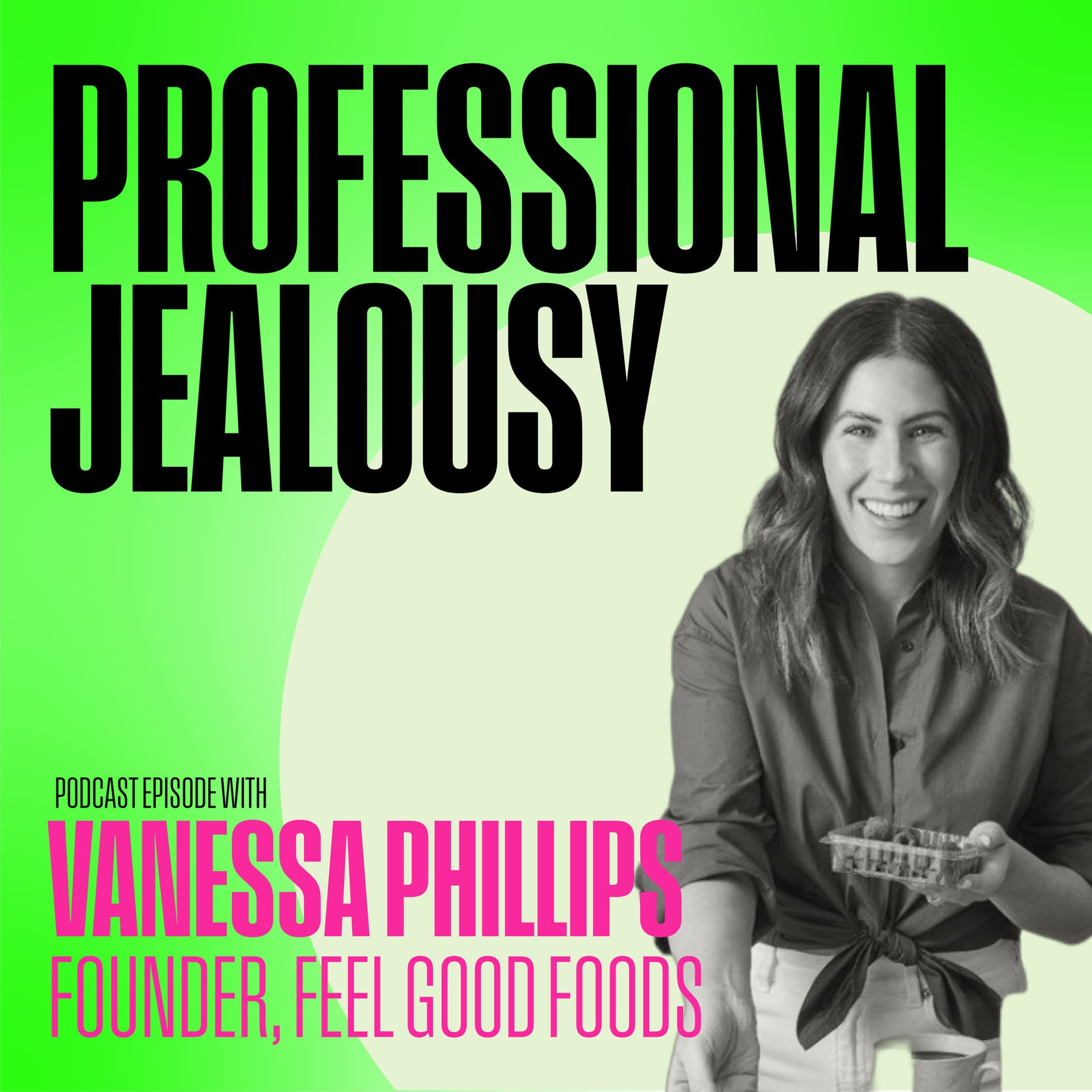
Vanessa Phillips, co-founder/CEO of Feel Good Foods, explains how a celiac diagnosis led her from running a gluten-free quick-service cafe (Friedman’s) to building a frozen gluten-free brand now sold in 18,000 grocery stores. She covers category creation, scaling a frozen product, retail/investor skepticism, and how she innovates and tests new items.
Guest background
Grew up in NYC’s restaurant industry (family bagel stores and Chinese restaurants). Diagnosed with celiac disease during sophomore year of college; told to give up hope of working in food. Later co-founded Friedman’s, a first-of-its-kind gluten-free quick-service cafe in Chelsea Market, then launched Feel Good Foods.
Key claims
“No nine-to-fives” founder mindset; belief and stubbornness against repeated “no’s.” Frozen was challenging but authentic to her nostalgic, indulgent “simple ingredients” mission. Most current customers are “curious” (many without gluten issues), buying for convenience and healthier indulgence.
Notable examples
gluten-free potstickers launched after sending Ziploc samples to Whole Foods; brand/trademark change; four months to Whole Foods launch; early production mistake—missing “cover pan with lid” caused mushy dumplings, fixed by hand-stamping 25,000 cartons.
Written by AI. May contain mistakes. Listen to the episode to check what was said.
Chapters
Tap a time to open that second in VOMeet Vanessa Phillips
0:46 to 1:18
Introduction of guest Vanessa Phillips and her brand Feel Good Foods.
“Today, I'm talking with Vanessa Phillips, the co-founder and CEO of Feel Good Foods, a lineup of gluten-free and all-natural snacks and meals in over 18 ,000 grocery stores.”
The Genesis of Feel Good Foods
1:19 to 2:00
Vanessa discusses the inspiration behind her brand after her celiac diagnosis.
“Well, first of all, thank you so much for having me.”
From Diagnosis to Brand Creation
2:01 to 2:36
Transitioning from personal challenges to creating a gluten-free restaurant.
“Can you talk about I mean, you were in the restaurant business, I was saying before we started recording that I've, I've enjoyed your restaurant Friedman's.”
Early Struggles and Challenges
2:37 to 3:08
Vanessa shares her struggles with celiac disease and the misconceptions she faced.
“My family owned bagel stores when I was a kid, as well as Chinese restaurants.”
Friedman's Experience
3:09 to 4:25
Details about her gluten-free restaurant Friedman's and its early success.
“I have, you know, all of these memories eating, you know, soft shell crabs at three years old with, you know, black bean sauce.”
The Transition to a National Brand
4:26 to 8:03
Vanessa explains how the success of Friedman's led to the creation of Feel Good Foods.
“There wasn't a ton of information at that time about gluten free diets.”
First Steps into Frozen Foods
8:04 to 8:22
Initial steps taken to launch a frozen food brand with Whole Foods.
“And I think that if I had done more research and I had known more, maybe I wouldn't have done it.”
Lessons in Branding and Marketing
8:23 to 11:21
Vanessa discusses branding decisions and the importance of customer feedback.
“We didn't know how to scale it necessarily, but we knew how to make it and we knew how to serve it on our restaurant menu.”
Funding and Growth Challenges
11:22 to 13:43
Insights into how Vanessa raised funds and scaled her business.
“You know, it was really just two very passionate founders that went all in and, you know, nobody is going to sell your brand better than you.”
Reflections on Entrepreneurship
13:44 to 14:00
Vanessa shares reflections on challenges and what she would change if starting over.
“And then many years later, once it was more established and we really had distribution that we could stand behind, we went out and did more of a formal raise.”
Show all 26 chapters
Starting Again: Lessons from the Frozen Food Category
14:00 to 15:45
Vanessa discusses the challenges and realities of starting in the frozen food sector.
“Out of all the categories, you know, I guess a fresh yogurt might be harder, maybe.”
Overcoming Obstacles in Brand Building
15:45 to 17:41
The discussion highlights the challenges faced in gaining consumer and retailer trust.
“So I wouldn't be so surprised every time there is, you know, a headwind.”
Traits of a Successful Founder
17:41 to 20:01
Vanessa shares the necessary traits and skills for founders creating new categories.
“many no's you get, no one is going to change your mind that this is the best idea in the world.”
The Impact of Upbringing on Entrepreneurial Spirit
20:01 to 22:23
Vanessa discusses how her father's encouragement shaped her entrepreneurial mindset.
“I love getting really close to my consumer.”
The Simple Mantra that Fuels Confidence
22:23 to 24:16
The importance of positive affirmations in overcoming self-doubt is emphasized.
“We're talking about this big project I have, and I don't know how I'm going to get there.”
Transitioning from Founder to CEO
24:16 to 26:07
Vanessa discusses her journey and mindset shift in scaling her business.
“that like classic grace mindset, like which you talked about before, you know, never give up, think about I'm going to show you.”
Navigating Product Development Challenges
26:07 to 28:06
The challenges of product development and market fit in scaling are explored.
“And I'm going to get out there and I'm going to sell my mission.”
Innovation in Comfort Food
28:06 to 30:08
Learn how Feel Good Foods innovates products based on consumer insights and market trends.
“But that obviously has evolved over the years.”
Evolving Consumer Base
30:08 to 33:11
Discover how Feel Good Foods' consumer base has expanded beyond gluten-free diets.
“Like, I feel like you're in a category that in many ways stays the same.”
Understanding Brand Values
33:11 to 35:14
Explore what constitutes a good brand and how Feel Good Foods aims to connect emotionally with consumers.
“don't really understand about your consumers?”
Marketing Strategies for Growth
35:14 to 38:16
Learn about Feel Good Foods' marketing strategies and community engagement methods.
“Like from my brand or when I'm shopping?”
Lessons from Mistakes
38:16 to 42:00
Hear about pivotal mistakes made during Feel Good Foods' early days and their impact on growth.
“Um, any other, um, things that you wish you'd known earlier, or I'm trying to kind of like you, you feel very intentional, very growth mindset.”
The Importance of Growth and Vulnerability
42:00 to 45:10
Learn how personal growth and vulnerability contribute to success in business.
“But it taught me the importance of slowing down and not rushing to send something to print before you proof it and then proof it again.”
Career Advice and Misconceptions
45:10 to 47:10
Explore valuable career insights and the myths surrounding overnight success.
“and you'll hear stories and you'll think that there are, but there are years and years of work that went into it before, you know, the founder or the brand is telling about that moment.”
Defining Success and Motivation
47:10 to 50:42
Discover what success means to Vanessa Phillips and her motivations for growth.
“It's kind of reminds me of my next, one of my other questions, which was, uh, what's the biggest misconception about being a founder?”
Professional Jealousy and Inspiration
50:42 to 52:16
Hear about the figures that inspire Vanessa and her aspirations for her brand.
“And the bigger Feel Good Foods gets and the more homes that I can touch, the more successful I'll feel.”
Transcript
Automatic transcript. May contain errors.0:00Vanessa Phillips:Coming up in this episode of Professional Jealousy. There's no nine to fives in being a founder. Even when I'm sleeping, I'm working. It's an extension of myself. I want to build a brand that I can grow into, not grow out of. He would say, yes, I can. Repeat after me. Yes, I can. And it's followed me through my life. I was told to really just give up any hope of ever being in the food business. I was devastated. I didn't want to accept that.
0:37Hello, I'm Natasha Jakubowski, Chief Innovation Officer at Anomaly, a marketing agency in New York. And this is my podcast, Professional Jealousy, where I'm lucky enough to talk to founders, CEOs, and creative, interesting people that I'm impressed by and want to learn from and maybe a little bit envious of. Today, I'm talking with Vanessa Phillips, the co-founder and CEO of Feel Good Foods, a lineup of gluten-free and all-natural snacks and meals in over 18 ,000 grocery stores. So good to have you here. For anyone that doesn't know Feel Good Foods, can you give us the elevator pitch?
1:23Vanessa Phillips:Sure. Well, first of all, thank you so much for having me. I'm really excited to be talking to you. Feel Good Foods is a frozen food brand that's all gluten-free and focused on all of your nostalgic favorites. It's indulgent with simple ingredients. I started it after having a diagnosis of celiac disease, and after going gluten-free, I missed a ton of foods, so became determined to recreate all of my childhood favorites, but in a way where I can enjoy them and eat them as an adult. Yeah, that's amazing. And, you know, it's that classic kind of entrepreneurial aha, I had a problem, and then I solved it and, you know, created a brand.
2:11Can you talk about I mean, you were in the restaurant business, I was saying before we started recording that I've, I've enjoyed your restaurant Friedman's. And can you talk about how you went from like the diagnosis to thinking about actually creating a brand for everyone to enjoy?
2:34Vanessa Phillips:Yeah. So I actually grew up, I grew up in New York City in the restaurant industry. My family owned bagel stores when I was a kid, as well as Chinese restaurants. So restaurants was always incredibly familiar to me. I always thought, you know, one day when I was a kid, I was like, one day I will own a restaurant. I thought it would be more fine dining than what my parents did. But it was definitely something that seemed like a really natural transition for me. And I also always loved food. Like from a very early age, I was incredibly adventurous and curious. I have, you know, all of these memories eating, you know, soft shell crabs at three years old with, you know, black bean sauce.
3:20Vanessa Phillips:I was just like this little Epicurean that would eat anything and nothing was scary. But as I went into my teenage years, I was privately struggling with a lot of symptoms that I just couldn't explain and I couldn't trace back to what I ate. I knew that I was eating something all the time that was making me feel sick, but it was very confusing and, like I said, just really hard to trace. I would eat something in the morning and then not get symptoms for, you know, sometimes 24 to 48 hours. So I had, you know, these symptoms that I was battling. And finally, when I was in my sophomore year of college, I was diagnosed with celiac disease and was told by doctors that I had to go on a very strict gluten free diet.
4:08Vanessa Phillips:But also I was told to really just give up any hope of ever being in the food business. They told me that I needed to start ordering my food with no seasoning, no flavor, just grilled chicken, steamed veggies. And that was that that was like the prescription for me for life. And I was devastated. I didn't want to accept that. And I also challenged it. There wasn't a ton of information at that time about gluten free diets. But I just knew that the ingredients that I could eat could do a lot more for me. So I, you know, started working in restaurants and I teamed up with a chef and together we opened Friedman's, which was, you know, first of its kind, gluten free, quick service cafe.
5:05Vanessa Phillips:but that really focused on a lot of favorites that were foods that I missed that I wanted to bring back to consumers. I mean, and it was early, like I feel like gluten-free suddenly entered culture and became, you know, you saw every kind of food company jump on the kind of bandwagon, suddenly everyone was gluten-free, but you started before that. And I loved, I think I read that your mission was to make food that doesn't taste like cardboard for people to enjoy. But looking back, did you think it was going to move into Feel Good Foods or how did you make that transition from Friedman's to Feel Good Foods?
5:54Vanessa Phillips:Yeah, I actually did. And, you know, when we when we opened Friedman's, I think we were surprised by how many guests were coming in and ordering gluten free food. So it exceeded our expectations from that perspective. We knew that it would be popular. We knew that it would it would resonate because it was inside Chelsea Market and it really kind of tapped into like what the Chelsea Market, you know, people who worked in Chelsea Market, what they were looking for. It was really delicious sandwiches and salads and, you know, kind of like a lot of it had a lot of like Southern influence. We did like fried green tomatoes and it was great for brunch.
6:35Vanessa Phillips:So we weren't surprised by the success of Friedman's, but the gluten free component was surprising. And we were getting people from, frankly, all over the world that were we had at the time we had a gluten free guest book. And we were getting people from all over the world that were signing the guest book saying, like, please open a gluten free restaurant where I live. And it was, you know, Des Moines and, you know, Canada, like different countries. Right. So that kind of got me thinking, like, how do I reach more people? How do I get inside people's homes? I want to be able to give a solution to what the deprivation that people are living with outside my 35 seat restaurant.
7:20Vanessa Phillips:So that was, you know, kind of like I think the light bulb moment for me that it was going to be more than just Friedman's and it was going to lead to being a national food brand. Yeah, amazing. And definitely kind of mission driven. and it's such a clear focus. And it's interesting just seeing it kind of align with getting people getting healthier. You know, I definitely thought, I don't think I am gluten intolerant, but I definitely go for those options. So it's a nice kind of confluence of different trends that you've kind of leaned into. What was the inflection point? So I did not know anything about launching a frozen food brand.
8:04Vanessa Phillips:And I think that if I had done more research and I had known more, maybe I wouldn't have done it. So I think it's great that I didn't know anything because I just went in and I just started doing. And I think also that's sometimes what it means to be an entrepreneur. I had figured out with my partner how to make gluten-free potstickers. We didn't know how to scale it necessarily, but we knew how to make it and we knew how to serve it on our restaurant menu. And we were running Friedman's and we were blown away by the demand for gluten free. So we put the potstickers in a Ziploc bag and we sent it off to Whole Foods.
8:48Vanessa Phillips:and I remember typing a word document on how to prepare them and you know put them in a pan with some oil and water and I had like a mock-up of what the packaging would look like if it ever actually became real packaging and I sent it off to Whole Foods and and I you know it's funny because looking back now I remember a lot of people in my life kind of laughing it off they were like oh you're so cute. You're so funny. But I knew that it was going to launch in Whole Foods. I didn't know how and I didn't know when, but I knew that it was going to launch and I believed in it and I was passionate about it and I believed that there was a need for it.
9:36Vanessa Phillips:So even though I blindly sent the samples in a Ziploc bag, I wasn't very surprised when we got an email back two weeks later, letting us know that it was indeed launching in the North Atlantic region of Whole Foods. But that was when I had to have a crash course on everything consumer packaged goods related. And that was, you know, when the work really began. Yeah, that's insane. So how long till that from that email to getting into Whole Foods? About four months. Oh, my God. Insane. Yeah. And that's where you did. brand name, packaging design, figuring out the how to manufacture? Yeah, we had to learn all of it and we had to learn all of it very quickly.
10:27Vanessa Phillips:The brand name, we actually, we had had another name and we found out that it was trademarked. So, you know, these were just some of the early learnings. Yeah. What was the trademark name that you first wanted? Food matters. I mean, feel good food, I think, is better. Yes, yes. And feel good foods really, it really spoke to me. You know, I was coming from this, you know, personal struggle with not feeling good for so long. And one of the foods that I missed most was what I ate growing up at my dad's restaurants, which was potstickers. so having the first product be gluten-free pot stickers it it truly made me feel so good it made me feel so good physically it made me feel so good emotionally so it would the name resonated with me right away yeah and it it kind of works on many levels it's feel good physically if it if especially if you're suffering from a gluten intolerance but it also that there's just something nice about naturals it's feel good in terms of product quality and also who wouldn't want to feel good you know even if you have none of that it's such a good name um and then um yeah did you who did you bring on to help you for a while it was just me and my co-founder um you know we were really scrappy uh we moved to boston um and demoed every single day actually twice a day at Whole Foods, just the two of us for the first four months.
12:05Vanessa Phillips:And, you know, I look back so fondly. Those were the good old days. You know, it was really just two very passionate founders that went all in and, you know, nobody is going to sell your brand better than you. And we just got so much drive and joy over standing at Whole Foods for six hours a day, telling every shopper why they needed to try a gluten-free potsticker. And from there, we scaled quickly. That was a really incredible trial for us. And I remember four months later, we came out with gluten-free egg rolls and spread nationally pretty fast. Yeah. Yeah. Amazing. Did you have to raise money?
12:54How did you get this thing up and going? We did.
12:58Vanessa Phillips:I would say the capital side of the business was another element of just my early naivete around how much it really takes to grow a frozen food brand. You know, for the first few years, we were really scrappy. We went to friends and family and strangers. And, you know, my partner was really much better at it than I was. We'd be in the elevator and he'd be like, hey, can I tell you about a really exciting frozen food brand? But yeah, we were really, really scrappy for years and really choiceful around who we partnered with. And we kind of bootstrapped it. And then many years later, once it was more established and we really had distribution that we could stand behind, we went out and did more of a formal raise.
13:54Okay. Interesting. You did say that if you'd kind of known more, you might not have gone into... Frozen sounds hard to me. Out of all the categories, you know, I guess a fresh yogurt might be harder, maybe. I don't know. Like, if you were starting again, what would you change?
14:16Vanessa Phillips:I think if I were to start again, I would probably still do Frozen because it's the most authentic to me in terms of, you know, what I miss and what I think there's a real need for. I think there's other categories in grocery stores that are probably easier. Although, you know, that saying, if you put your problems in the middle of the table, you'd probably, and you had 20 people in a room, everyone would take their problems back. So I think every category has its own challenges. But yeah, I mean, Frozen definitely is. is a challenging category for sure. The reason I think I would do it again, though, is because, you know, being gluten free or even not being gluten free, like the way I eat is like I want indulgent, nostalgic, savory, delicious foods, not so much a cracker, but like I love mozzarella sticks, right?
15:11Vanessa Phillips:I love soup dumplings and egg rolls. So these are foods that I love. They're to my son. I think that they also are foods that really bring people together. It's really fun to have a dinner party or a Super Bowl party or to give your kids something after school as a snack that's not just like a chip. So I probably would do it all over again the same way. Maybe I would just have more knowledge. So I wouldn't be so surprised every time there is, you know, a headwind. Yeah. What, what were the biggest obstacles in getting consumers, investors, you know, retailers to buy into the brand? And when we first launched the category, frozen snacks and apps wasn't even a category in natural.
16:10Vanessa Phillips:It wasn't even a door. So we had to educate retailers why gluten-free and not even just gluten-free, like why natural appetizers deserve shelf space. We were really up against very legacy established conventional brands that had an ingredient statement. I mean, they still exist today, but they had an ingredient statement of like 97 ingredients. They had a very, very low price on shelf. And we had to challenge that that is not the way, you know, just because consumers want to indulge doesn't mean that they want to indulge and not have real food. So it, it was, we were very early. We were the first brand to really go into this category and create this category.
17:03Vanessa Phillips:And it was very challenging to get not so much consumers. We knew the consumer demand was there, but it was challenging to get retailers to want to give us space because there was really no one else at that time doing what we were doing. Yeah. Especially beyond the more kind of traditional, natural, like Whole Foods type channel um any any piece of advice that you'd give someone starting a brand in that kind of emerging category literally kind of creating category i just would say you just have to believe in it i mean you have to be obsessed with it you um have to be so stubborn and no matter how many no's you get, no one is going to change your mind that this is the best idea in the world.
17:56Vanessa Phillips:If you're even slightly on the fence, it's not going to work because you will definitely receive a lot more no's than yeses. And, you know, whenever I would get a no, it would just fuel me. It would drive me. I'd be like, oh, I'm going to show them. So, but that's because I believed so deeply in what we were doing. Yeah. Yeah. And I think, you know, and that might be part of your entrepreneurial kind of, you know, personality, I guess. I mean, I've spoken to a lot of founders and there is like, I think you kind of have to have that slightly, like I'll prove them kind of mentality, like taking criticism and then backing down isn't necessarily a winning trait for a founder.
18:46What other kind of skills or traits do you think, looking back, helped you succeed as a founder?
18:54Vanessa Phillips:I think just being kind of more of this generalist and really learning so many different skill sets that are needed to build a brand. So I wasn't ever super skilled in like one area, I really tried to learn very quickly all aspects of my business. And I felt that like in order for me to really be able to build this to the scale and the ability that I wanted, I had to understand every part of this business, every single nook and cranny. So I tried to do my best very early on to learn the aspects of building a business that maybe didn't really even interest me that much or the areas that were kind of more intimidating to me that I would have probably shied away from before starting Feel Good Foods.
19:49Vanessa Phillips:But I just felt it was important that I know all of it, not just the parts of it that I liked. What are the bits that you feel like you like doing and the bits that you hated doing? I love building brands. I love getting really close to my consumer. I love intimately understanding what it is that the consumer wants and misses and what excites consumers. So, you know, the brand side was always really where my interest, you know, was like, I think that where I added the most value. I also was, it was very personal. I felt that I was my consumer. So I loved being out there and meeting our consumers and really listening to them and then using that to drive innovation, branding, and coming out with products that I was hearing that they wanted.
20:48Vanessa Phillips:The operations side of the business, you know, I did not have any experience in manufacturing. I can tell you that growing up, I was not walking a manufacturing floor. So, you know, learning the manufacturing side of the business and just everything it takes from making the product and then that entire journey to having it, you know, end up on a grocery store shelf. I mean, that is that is quite a journey. And I was intimidated by that process early on. It wasn't anything that I had any, you know, history doing. So, you know, it was something that at first I was like, oh, I'm going to leave that to the others to figure out.
21:24Vanessa Phillips:But then I just leaned in. And, you know, now today I love it. I love all the parts of what makes feel good foods feel good foods. But that was definitely the most unfamiliar part for me. Yeah. Interesting. What do you think? I'm always curious, especially having kids and what in your upbringing do you think helped you think like this, helped you with this kind of thought, I'm going to create something for myself. I'm going to be a founder. My father is an entrepreneur. And, you know, from a very early age, I have so many memories of the way that he encouraged me. And, you know, looking back now, he's incredibly profound because I used to go to him a lot with self-doubt.
22:17Vanessa Phillips:I would have you know whether it be like a project at school or you know something that I needed um his you know advice on and he would always like he would never give me like direct advice about what I was coming to him with like if I said to him oh I really need you know you to help me study for this test he wouldn't necessarily sit down and like unpack the material with me but he would always say to me just say yes I can yes I can and I'd be like well that's not what we're talking about right now? We're talking about this big project I have, and I don't know how I'm going to get there. And I really want you to go deep with me on this and figure it out.
22:53Vanessa Phillips:And he would say, yes, I can repeat after me. Yes, I can. And it followed me through my life. I mean, till this day, he's still, you know, we laugh about it now because it was totally his mantra and it resonated. And I remember going through so many different circumstances in my life where I would be walking into a room and I would have that self-doubt again and I would just repeat, yes, I can. Yes, I can. And it fueled me. It really got me through a lot of times of self-doubt. I mean that's pretty amazing and I guess as a I know you you have kids um I'm sure you think about that as you uh as you bring up your kids that's such a uh a nice and and surprisingly easy kind of thing to think about just reinforcing and creating that kind of affirmation yeah and it was so simple you know it was just three words um you know and I think a lot as a parent today I'm always trying to find these profound ways to reach my teenager um but sometimes it's just the most simple straightforward sentiment that works so yeah I think I mean like you know that really resonates with me it's Stephanie it's like how do you I think it is that like classic grace mindset, like which you talked about before, you know, never give up, think about I'm going to show you.
24:23And I think that is part of the yes, I can, you know, it's like, I can, I can do it. If I work hard, I'm going to do it. And yeah, amazing how you've kind of transitioned from like a scrappy startup founder to now scaling and really growing this business from founder to CEO? Like what have been the biggest kind of changes and ways that you've had to change?
24:52Vanessa Phillips:You know, it's so interesting because I was just having this conversation with someone the other day that I still feel like a scrappy founder. I still feel the same as I did when we were a$5 million company. Like it's the mindset actually hasn't changed that much. Um, I, you know, for better or worse, I still, a lot of times just do it myself. And I'm a huge believer in being part of the team and not outside the team. So I very much roll up my sleeves and I just get in there with everyone and do it because I, I operate very much from that place. Like there's a job that needs to get done and let's all just get it done.
25:37Vanessa Phillips:So I don't know if I feel much different now than I did five years ago. Obviously, as the company has grown, the needs have changed and the stakes are higher and it's more complex. But the fundamentals are the same. And I think my mindset is very much the same. I think that when you're a founder, you kind of are always, you know, coming from that place of like, I'm going to be a doer. And I'm going to get out there and I'm going to sell my mission. And I don't know if whether you're a$5 million brand or a$100 million brand, that that really ever changes. Yeah. Yeah. Interesting. What's the hardest scaling decision you've had to make so far?
26:24Vanessa Phillips:I think the one decision that we kind of always come back to a lot is you can have an idea for a product that tastes delicious. And, you know, you all as a team get really excited and rally behind it and you, you know, think that it would, you know, be received really well by consumers. But that's not that's not where the work stops. Right. So not every idea is an idea that we can execute on and scale and launch. And I think that that's challenging because sometimes I just fall in love with a product and I want I want to launch it so badly. But the economics don't make sense or, you know, it doesn't work with our manufacturing system or process.
27:15Vanessa Phillips:So I think it's you can for me, I've fallen in love with products before and foods and I and I've been sad that I can't bring it to life and I'll and I'll become attached to it. and you know and I'll like still dream about the bench samples like months later that I no longer have so I think just like getting attached to to products that I'm you know unable but I've had products that I have loved and we've brought them to market years later years later like five years later so it's sometimes just not the right time right now how do you uh you know I think your your brand has a really clear kind of almost you know framework for you know for innovation you you're at the in section of comfort food and specific kind of natural and dietary needs so you have a kind of you have clear guidelines but how do you think about innovation and figuring out you know do you do consumer research how do you test new products to figure out if there's product market fit like what is your process for beyond the can we make it will it be profitable etc like how do you figure out if this is going to be a something that consumers want i will the process has evolved um if i'm being completely candid the process early on was just me and my me and my partner yeah and we i would say to him i missed this and then he would make it and then i'd say now I missed this.
28:53Vanessa Phillips:And then he would make that. But that obviously has evolved over the years. We now rely a lot on data. We look at kind of the total frozen food market, and then we try and find voids and see what's missing. We take a lot of inspiration from what's happening outside grocery stores. We look at trends in restaurants. We, you know, look at, you know, behavior of, you know, how people are eating, what they're gravitating more towards these days. We pool our consumers a lot. We'll ask our social community, what do you want to see us make next? So, you know, it's a lot that goes into it. We have an in-house R &D team and we are constantly intentionally cooking up food.
29:46Vanessa Phillips:I mean, it's every day. It's like, what's for lunch? And, you know, we also get a lot of inspiration from one another. And we do a lot of roundtable conversations. We talk about food. We talk about what we like, what we don't like. And sometimes we just land on something and we're like, yes, this is it. This is it. Amazing. How has your consumer changed over the years? Like, I feel like you're in a category that in many ways stays the same. And then in other ways, you've got like, you know, the growth of gluten-free becoming mainstream. You've got GLP-1s coming in, you know, changing everything.
30:26You've got things like Maha in there. Like how do you think about your consumers and your potential consumers and how have they changed in the last few years?
30:36Vanessa Phillips:I think our consumer base has just grown significantly. When we first started, we were pretty niche and we were really speaking mostly to the gluten-free consumer, whether it was the celiac consumer or the gluten intolerant consumer. I mean, there's many reasons why someone goes on a gluten-free diet, but I would say that was our core consumer. And today, the majority of our consumers actually don't have any issues with gluten. um you know we still have that you know that very loyal consumer base that is gluten-free but um most of the consumers don't have any issues with gluten a lot of them don't even realize that it's gluten-free or they we call them the curious consumer so they are shopping the frozen aisle and they're looking for something that's convenient um you know a lot of moms will buy are foods for their kids or they're looking for, you know, a meal hack, right?
Read the full transcript
31:35Vanessa Phillips:Like there are, our foods work really well where you can make it into a meal. It's a side dish to a meal. It's, you know, before the meal. So we get a lot of curious consumers that, you know, see the packaging and they say, oh, these ingredients are very simple. Um, this looks like it's could solve a problem in my house, which is like, what's something that I can make that's quick and easy. And then from there, what keeps them coming back is that it's delicious. Yeah. Delicious, but driven by I want something healthier. So it's kind of great that it's gone beyond gluten free. That's now an equity versus the driver.
32:18Vanessa Phillips:Yeah, you know, we do not, you know, the bar for us is not like, how does this hold up to other gluten-free foods? We don't want it to taste gluten-free. And frankly, I don't think it does. You know, most of the team can eat gluten. So we are testing our mozzarella sticks against a mozzarella stick made with wheat, our jalapeno bites next to a jalapeno bite that has wheat. Um, also I, you know, I have a very good memory. So I remember what mozzarella sticks tastes like, and that is what I am getting back to like every day. Like when I, you know, come out with a gluten-free, uh, feel good foods, gluten-free product, I'm being brought back to that childhood memory of eating it as a kid.
33:07Yeah, no, totally. Um, what do you think mainstream food brands don't really understand about your consumers?
33:17Vanessa Phillips:Probably that our consumers are not that far apart and not that different. And I think that consumer behavior has changed and I think consumers are demanding more. And that's why we're resonating so well with them. I think what was once accepted is no longer accepted. Just because you're buying frozen food doesn't mean that you don't want the same experience as if you were eating out at a restaurant. So, you know, we're really, you know, I think the consumer was buying these foods before, but that didn't mean that they didn't want something better. Yeah. Is there anything in, you know, are there any trends right now that you're interested in and that are exciting?
34:02I mean, like, how do you think about the food category beyond just frozen? Like, how are you thinking about what's going on these days?
34:12Vanessa Phillips:I mean, we're all about offering something for everyone. So I, you know, I really don't like to be too focused on one trend or being niche. I really want to create a brand that is timeless and that can create legacy. And I think the best way to do that is to really pull everyone and to try and create something for everyone. So if you are, you know, gravitating towards more protein, we want to have an option for you. If it's still really important for you to, you know, be, you know, less protein, but you really want to have more of that, like, cheesy, indulgent, no meat, we're going to have something for you, too.
34:57Vanessa Phillips:If you're dairy-free or gluten-free or, you know, so like I really want to have something at the table that if there's 20 people that come into a room, you know, 20 people will be able to find something on the table from Feel Good Foods that they can enjoy. Yeah, amazing. What makes a good brand for you? What makes a good brand for me? Like from my brand or when I'm shopping? No, just generally. Yeah. When you think of a good brand, what is it that makes it good? I'd say just very transparent, authentic. I really want to connect with what I'm buying and what's inside the box. I want it to evoke a feeling for me, whether it's nostalgia or You know, it's just brings me joy.
35:55Vanessa Phillips:You know, for me, you know, a brand that gives me the, you know, like the emotional, like, ooh, this is, this looks good. Right. So like I seek that out and it's not just food. Like I can have that, that reaction to a skincare product. Right. So, but I want to have an emotional reaction to a brand. And that's what I try to do with Feel Good Foods as well. It has to speak to me. How do you market? Like, what is your main strategy, especially as you scale, especially as you're more mainstream? Like, what is your marketing strategy? We rely a lot on, you know, social, really tapping into our community, you know, really getting the product out there and, you know, getting it into people's mouths.
36:51Vanessa Phillips:So, you know, through like influencers who we think speak to the product. And again, it all has to be very authentic. I mean, honestly, we really haven't done a ton around marketing because we have really just gotten right to the source and gone to our consumers. But it's just for us always comes down to like, if you taste it, we believe that you will buy it. So as you know, we're just very focused on getting into people's mouths and getting the word out there in an authentic, organic way. Yeah. Amazing. I love that. I mean, your name, the brand name obviously is food. So can you see yourself growing into it beyond the frozen aisle?
37:36Like what are your ambitions for the brand moving forward?
37:39Vanessa Phillips:Anything's possible. You know, I love that the brand has the ability to really flex and go anywhere. I, you know, I said early on, I remember I was raising money and someone said to me, oh, you guys make potstickers. That doesn't really seem like a brand that should be called Feel Good Foods. And that was at the time all we had. And I said, well that's intentional because I want to build a brand that I can grow into not grow out of yeah so I love that it has permission to go anywhere and and we'll see I mean really like who knows I will see I mean it definitely it feels like I mean beyond the brand name which definitely can go anywhere you you know you're kind of at the inception of quite a good few, whether it's trends, headwinds, whatever you're, I mean, it's a, it's a super interesting place that you find yourself.
38:37Um, any other, um, things that you wish you'd known earlier, or I'm trying to kind of like you, you feel very intentional, very growth mindset. And I love that. And, and I'm, I'm for all the people out there that aren't quite as, uh, uh, I don't know, realized you know like what is what is stuff that you wish you'd learned earlier what are things that you know from your journey you think people can learn from i mean i could never
39:14Vanessa Phillips:count it would take me i could it would take me a long time to count all the mistakes that i've made but I learned so much from every mistake. Every single mistake got me to where I am today. So I'm incredibly grateful for how little I knew, to be honest, because I have literally witnessed over the life of this company, my brain grow. And I think about this a lot as a parent, about education and going to business school and having all of those degrees. And I didn't do that. And I literally learned on the job and I did not follow a very traditional path, but it was my path and I loved every minute of it.
40:01Yeah, that's amazing. Are there any like what's the biggest mistake that you think has actually helped your business grow?
40:10Vanessa Phillips:oh i don't know if we've had any one moment where i would say that was the moment that was that was bad i think it was a lot of um trip ups along the way um i remember early on i've told this story a lot we our first production run um so very first production run i was so excited i was like okay it's done it's out in distribution the dumplings are on grocery store shelves and um within a week we started getting a lot of consumers reaching out saying that it was turning to mush um it just wasn't it wasn't cooking in the pan and i looked at the packaging and i realized that i had left out the step and the cooking instructions to cover pan with lid, which is quite crucial when you're putting water and oil in a pan and to steam and essentially kind of like crisp up the potstickers.
41:13Vanessa Phillips:The water needs to evaporate and it's not going to do that if it's not covered with a lid. And I was absolutely shook because I, you know, knew that every single person who was buying them was not going to be able to cook them if they were going to follow the directions. But luckily, we had only shipped out, I think, like 1 ,500 cases, which at that time seemed insane. But we had a lot of product that hadn't left the factory yet. So my partner and his parents, his parents went to our manufacturer and they hand stamped probably 25 ,000 cartons with this red stamp that just said cover pan with lid.
41:56Vanessa Phillips:I remember their hands were so sore and it was just what we had to do. But it taught me the importance of slowing down and not rushing to send something to print before you proof it and then proof it again. Today, a mistake like that would obviously be a lot worse, right? Because it's more than 25 ,000. But that was within a week of launching. So those types of mistakes happened a lot in the early days, but we figured it out. Yeah. Amazing. Are there any tools or practices you do personally to kind of work on your own growth or self-discovery or just, you know, feeling grounded every day? A lot of tools.
42:44Vanessa Phillips:Not just one. I, you know, I work with a business coach, which I would say everyone should do, but find one that, you know, you can be vulnerable with. Because, you know, a lot of times I truly just don't know, you know, I just don't know. So I need to talk it out. And I sometimes just need to have that safe space to really vent. For me, like my form of meditation is movement. I, you know, have to exercise. You know, lately I've been traveling a lot and I've, even if I'm just going on the treadmill for 30 minutes, if I don't find a way to move my body almost every day, I start to really feel it in my work and in my time at home.
43:37Vanessa Phillips:So I would say that The two main, you know, for me, like the two main tools is movement and then having a safe space and having somebody that I can really be vulnerable with and share everything that I'm going through, you know, in leading and running a company. Yeah. Amazing. How long, just out of curiosity, how long have you had a business coach? Like when did you bring that into your eye? um i would say like three years ago yeah um and um do you have mentors i do i have a lot of mentors um i would say that um my my number one mentor um because it's you know industry agnostic would be my dad and so much of that is because it doesn't really matter what you do.
44:36Vanessa Phillips:It's how you show up. And, you know, the best thing that he taught me is I could do anything as long as I believe in myself and I show up. So whether it was starting a food company or if I'd gone into a different industry, it didn't really matter. It was just that belief in myself. And that has carried me through any, you know, it surpassed anything I could have learned from, you know in from an educational perspective right it's just waking up every day and just being able to say to yourself i have got this yes i can i love that um we're running out of time um i'm gonna do a few uh quick fire questions um so we'll start with a frivolous one what's your desert island food one thing blueberries i love blueberries blueberries not frozen i eat a lot of blueberries okay that sounds good um best career advice worst career advice you've ever had um the best career advice would probably be ignore all the signs and the worst career advice i ever got was go back to the drawing board why why did someone tell me to go back to the drawing board why was why was that bad it was when i was starting feel good foods interesting yeah so you're like no i'm doing this um okay um is there any uh any anything that you wish you'd learned earlier
46:25Vanessa Phillips:I would say probably I wish I learned earlier that there is really no such thing as overnight success. and you'll hear stories and you'll think that there are, but there are years and years of work that went into it before, you know, the founder or the brand is telling about that moment. And I really was very foolish in thinking that I was going to be able to accomplish everything I wanted very quickly. It takes time. And, um, I think that I would have probably, um, been kinder to myself if I had known that sooner. Yeah. It's kind of reminds me of my next, one of my other questions, which was, uh, what's the biggest misconception about being a founder?
47:24because I think there is that kind of glamour associated with it in some parts of the world. So, miscincements about being a founder.
47:34Vanessa Phillips:Well, I don't find it very glamorous at all. I, you know, it's always with you. There's no nine to five in being a founder. Even when I'm sleeping i'm working it's it's it's an extension of myself so um you know there's really no time off there's no out of office um i you know think and live and breathe this brand all day um what do you think your superpowers are that have helped you succeed i am very persuasive which has helped me i think in sales um you know i when i was younger my parents said i was stubborn um but um when i want something i i don't give up interesting um anything that you're trying to get better at I'm always trying to be a better listener.
48:42You know, I think that I, for myself,
48:47Vanessa Phillips:have found that I learn the most when I'm listening. So I try and do that more now. Interesting.
48:58Any belief about business that you think you've changed your mind on as you've progressed?
49:09Vanessa Phillips:I mean, I, you know, business in general, um, I would say just that, you know, it takes, um, an insane amount of grit, um, more than I realized. I was talking to my dad this morning, actually. And I said to him, I don't think you really appreciate how hard this is. and he and he was like no I don't think you appreciated how hard this is you know I know um so yeah I I I continue every year to just be blown away by how how much grit it takes to stay in the game amazing um what does success look like for you personally I already feel successful in what I've been able to bring to the world through our food.
50:09Vanessa Phillips:But I want to keep doing more of it. So I want, you know, every year I think like I want more. I want to be able to bring more. I want to be able to continue to excite people and, you know, give them something to feel good about. And while it makes me feel really good and makes me feel really successful to know that I've even been able to touch a small number of people through Feel Good Foods, it's not enough, right? Like, I'm like, well, what else do you want? What else can we do? It's incredibly motivating for me. And the bigger Feel Good Foods gets and the more homes that I can touch, the more successful I'll feel.
50:54Amazing. So last question. Tell me someone or something that you're professionally jealous of.
51:04Vanessa Phillips:Yeah, I would I would I would say I was going to say my dad, but like I feel like I've already talked about him a lot. I really love Emma Gurday. I think that she's done an incredible job, you know, building a brand that really speaks to women and feeling empowered in their bodies. And, you know, I think that just really being able to speak to a consumer that way so directly and making women feel powerful is, you know, something that I want to be able to do with Feel Good Foods. So that's probably a woman that I would say. okay I I love that your dad and the fan uh one of the founders of is she a founder of skims yeah yeah I mean those are two pretty pretty amazing uh pretty amazing people um Vanessa thank you so much this has been just so interesting and inspiring and I have no doubt that anything that you could put your mind to uh you're gonna get done um this has been amazing um thank you so much for uh listening watching uh please subscribe tell someone to subscribe or listen uh we have lots of other episodes with lots of other founders and creatives and innovators you can find them on spotify apple uh youtube professional jealousy.com get in touch if you have any questions feedback or importantly, want to see any people, particular people featured.
52:50Quick thank you to Shimmy, my producer. And yeah, until next time. Thank you so much.
From the publisher
Vanessa Phillips, co-founder and CEO of Feel Good Foods, joins Professional Jealousy to share how a celiac disease diagnosis in college — and a doctor's advice to give up on food entirely — became the origin story for one of the fastest-growing gluten-free frozen food brands in the country. Vanessa walks through her path from growing up in her family's New York bagel and Chinese restaurant business, to opening the gluten-free café Friedman's in Chelsea Market, to mailing homemade gluten-free pot stickers to Whole Foods in a Ziploc bag and landing a regional launch just months later.
In this conversation, Vanessa gets candid about the early bootstrapped years demoing product in Whole Foods aisles for months on end, the manufacturing mistake that nearly derailed the brand's first production run, and how she built a company culture around grit, generalist skill-building, and staying close to the consumer. She also opens up about the mentor who shaped her mindset, the tools she uses to stay grounded as a founder, and who she's most professionally jealous of today.
Whether you're building a CPG brand, working in food and beverage, or just love a founder story rooted in personal struggle turned purpose, this episode is packed with real, tactical lessons on category creation, scaling from founder to CEO, and building a brand that can grow with you instead of boxing you in.
In this episode:
- Building a gluten-free frozen food brand from a personal health diagnosis
- Creating a new grocery category from scratch
- Bootstrapping a CPG brand without outside capital
- Lessons from a costly early manufacturing mistake
- Mentorship, mindset, and staying grounded as a founder
- How the gluten-free consumer has evolved into the mainstream "curious consumer"
- Who Vanessa Phillips is professionally jealous of
Watch, subscribe, and follow Professional Jealousy on Spotify, Apple Podcasts, and YouTube for more conversations with founders, CEOs, and creatives redefining their industries.