
In short
Professional Jealousy Podcast - Episode 23 Summary
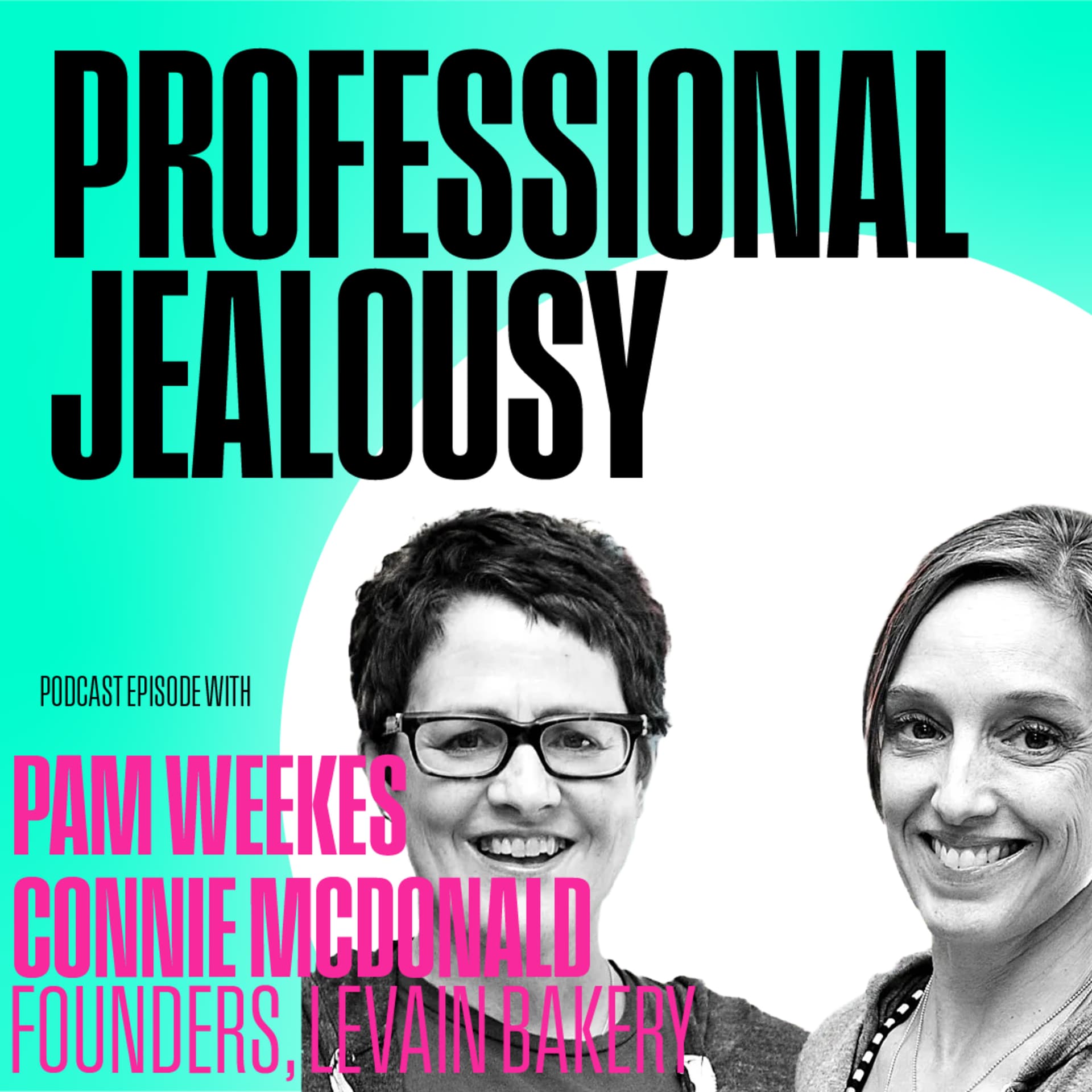
Podcast Title: Professional Jealousy Host: Natasha Jakubowski Episode Title: Ep. 23 - Scaling Authentically from One Store to World's Best Cookie Global Brand Guests: Pam Weekes and Connie McDonald, Founders of Levain Bakery
Episode Overview In this episode, Natasha Jakubowski interviews Pam Weekes and Connie McDonald, the co-founders of Levain Bakery, known for their iconic six-ounce cookies. The conversation dives into their 30-year journey from a small bakery on New York's Upper West Side to a beloved global brand, emphasizing the importance of authentic growth, community connection, and a people-first approach in business.
Key Themes and Discussions
- The Origin of Levain Bakery
- Foundation: Levain Bakery started in 1995 in a tiny location on West 74th Street.
- Initial Focus: The founders prioritized a lifestyle approach over rapid growth, focusing on community and personal fulfillment rather than just business metrics.
- Serendipity: Their journey included unexpected turns and a natural evolution rather than a strict business plan.
- Intentional Scaling
- Slow Growth Philosophy: Pam and Connie emphasize that their “overnight success” took 20 years, showcasing the value of intentional and steady scaling.
- People-First Leadership: They advocate for a people-centric approach that focuses on product quality and employee happiness, rather than purely financial metrics.
- Brand Identity
- Consistency: Levain Bakery’s brand, including its logo and core identity, has remained largely unchanged since its inception in 1995.
- Community Focus: Their decisions are made based on instinctual understanding of their brand and community needs.
- Investment and Transition
- Investment Decision: After 23 years, they decided to take on significant investment to facilitate growth, marking a shift in leadership by stepping down as co-CEOs.
- Learning Curve: The transition introduced them to a corporate environment, bringing challenges but also opportunities for growth.
- Hiring Practices
- Hiring Philosophy: The focus is on hiring people who fit the culture and values of Levain Bakery rather than just filling positions.
- Diversity and Joy: They highlight the importance of a diverse workforce and the joy of working together as a team.
- Marketing and Community Engagement
- Neighborhood Bakeries: Levain aims to maintain its identity as a neighborhood bakery even as it expands.
- Location Selection: The founders emphasize selecting locations based on instinct and community fit, rather than relying solely on data.
- Advice for Founders
- Authenticity: They advise new founders to follow their passion and create what they love, rather than merely trying to meet market demands.
- Coping with Challenges: Recognizing that challenges are part of the journey and learning from them is essential for growth.
Key Takeaways
- Growth with Identity: The importance of scaling a business while maintaining core values and community connection.
- People Before Numbers: Prioritizing employee well-being and product quality over mere financial metrics can result in a more sustainable business.
- Collaboration and Support: Having a co-founder to share experiences and challenges can significantly impact the success of a venture.
- Authentic Branding: Building a brand that resonates with personal values and community needs fosters loyalty and growth.
Conclusion This episode with Pam Weekes and Connie McDonald serves as an inspiring testament to the power of authentic growth, community focus, and the importance of staying true to one’s values in business. Their journey is a reminder that success can be built steadily over time, with an emphasis on relationships and a love for what you do.
Resources Mentioned:
- Levain Bakery’s 30th Anniversary Book
- Levain Bakery Website: [levainbakery.com](http://levainbakery.com)
Additional Notes
- Natasha's effort to connect with founders and innovators reflects the podcast's theme of professional jealousy as a means to learn from others’ journeys.
- The hosts and guests share personal anecdotes, reinforcing the human side of entrepreneurship and the emotional journey behind building a brand.
Written by AI. May contain mistakes. Listen to the episode to check what was said.
Chapters
Tap a time to open that second in VOMeet the Founders of Levin Bakery
0:45 to 1:46
Natasha introduces Pam and Connie, highlighting their bakery's background and achievements.
“It first opened on the Upper West Side in 1995.”
The Origins of Levin Bakery
1:46 to 3:36
Pam and Connie discuss how they met and the serendipitous beginnings of their bakery.
“Well, thank you so much for having us, Natasha.”
Building an Authentic Brand
3:36 to 6:10
Exploring how Pam and Connie created their brand based on personal values and experiences.
“Well, I think what we met, we were both in our mid to late 20s and we were with a group of similar people.”
Learning Through Experience
6:10 to 9:12
Pam and Connie reflect on their practical learning and gradual growth without a formal business plan.
“Like, how do you think this brand has come to be so iconic?”
Recognizing Growth Potential
9:12 to 10:40
The founders share the moment they realized their business could expand beyond its original location.
“you know, sort of internally rather than externally.”
Advice for Aspiring Founders
10:40 to 12:29
Pam and Connie offer insights on creating an authentic brand with soul and passion.
“You know, you walk down the stairs, you can pretty much see the whole space.”
Navigating Challenges Together
12:29 to 14:01
Pam and Connie discuss their challenges and the strong partnership that helps them overcome obstacles.
“And I'm not saying that you shouldn't do that, but I think first and foremost, like following what's inside of you and making that, you know.”
Navigating Business Decisions Together
14:01 to 15:40
Learn how Pam and her partner faced challenging business decisions collaboratively.
“You know what's really great about Pam and my relationship is that we did encounter some challenging things along the way and some pretty serious business decisions that we were approached with or that we encountered.”
Investment Journey and Brand Vision
15:40 to 17:46
Discover the careful considerations behind seeking investment and aligning visions.
“And most of them were honestly completely unappealing.”
Transitioning to a New Business Structure
17:46 to 20:17
Understand the challenges and learning curves of transitioning to a structured investment.
“But more pertinent right at that moment was that we had just gotten through yet another really insane holiday season.”
Show all 22 chapters
Balancing Control and Collaboration
20:17 to 24:00
Explore the dynamics of sharing decision-making and the shift in control post-investment.
“and the people from Stripes who are all amazing.”
Hiring and Building a Strong Team
24:00 to 27:54
Learn about the importance of hiring for culture and maintaining team morale.
“Well, but you don't have to have any bakery experience.”
Building a Brand That Attracts Talent
28:00 to 29:06
Learn how the Levin brand naturally attracts employees through its environment.
“How do you help them feel what the Levin brand is?”
Navigating Location Choices for Expansion
29:06 to 31:04
Discover the thoughtful approach to selecting bakery locations for growth.
“I think we also get a lot of career changes because people come into the bakeries and it feels good.”
The Importance of Personal Connections in Business
31:04 to 34:36
Understand the value of personal relationships in making significant business decisions.
“a challenge for us to kind of translate because, you know, we didn't have a lot of locations, but we picked them very thoughtfully.”
Staying True to Your Business Values
34:36 to 36:52
Explore the importance of maintaining core values amidst market changes.
Advice on Co-Founding Success
36:52 to 41:36
Gain insights on effective co-founding dynamics and decision-making strategies.
“as so comfortable and confident in who you are who are took a long time to get there natasha what advice you have would you give to your younger selves or to anyone you know uh it's so easy.”
Future Goals and Scaling Aspirations
41:36 to 42:05
Learn about the long-term vision for growing a global bakery brand while maintaining community ties.
Scaling with Identity and Culture
42:05 to 43:15
Learn how to grow a business while maintaining its core values and culture.
“it's a great point at which to say, I am going to start stepping back a bit.”
Superpowers and Mentorship
43:15 to 45:45
Discover the personal strengths and mentors that shaped their journey.
“one maybe uh what is your desert island dessert something chocolate of course yeah I'll go I'll Go with chocolate with a little mocha mixed in with it.”
Career Advice and Professional Jealousy
45:45 to 47:33
Explore valuable career advice and feelings of professional jealousy.
“I have recently, because I could go like old school too, but recently, Sailor in Brooklyn, King.”
Reflecting on Growth and Success
47:33 to 49:25
Understand the growth journey and the elements that contributed to success.
“Oh, I'm totally jealous of people who can sort of maybe segment their lives a bit better.”
Transcript
Automatic transcript. May contain errors.0:00Pam Weekes:Coming up in this episode of Professional Jealousy.
0:03Connie McDonald:Data and like AI and you know it's like that's the complete opposite of who we are and who we hopefully will continue to grow as.
0:13Pam Weekes:For me a huge challenge was like not being in charge. Not being able to just like make a decision on the spot.
0:21Connie McDonald:And then all of a sudden, like everyone who's working is all stressed out and the whole feeling of just like happiness and fun was just gone. I had my phone and I just kind of pulled it down under the table and I texted Pam, what is CPG? We started Googling, you know.
0:44Pam Weekes:hello i'm natasha jakoboski and this is my podcast professional jealousy where i talk to people that i'm impressed by and yes just a little bit envious of i'm hoping that you too will enjoy hearing about all of their enviable achievements that we can all learn from and be inspired by and today i'm talking to Pam Weeks and Connie McDonald, the founders of Levin Bakery. It first opened on the Upper West Side in 1995. And I think they've built what many call the world's best cookie brand store, or just best cookie. We'll talk about recipe that changed everything, what steady scaling and people first leadership looks like over three decades, insights for founders and marketers on how to build an authentic brand and finally uh they've just released a gorgeous gorgeous 30th anniversary book that uh i've been reading um and enjoying and it's about friendship community and cookies and celebrating everything that they've done um so hello pam connie i'm so glad to have you as guests and as i said my kids were so impressed out of everyone I've spoken to, about 20 people, this time they actually were like, oh my gosh.
2:08Pam Weekes:So thank you for coming on. Well, thank you so much for having us, Natasha. Just in case, I mean, I doubt it, but just in case someone hasn't heard of Levin, can you give me a quick elevator pitch for the brand?
2:21Connie McDonald:Sure. Okay. So Levin Bakery started, we started in 1995 and we have grown from a very small location on West 74th Street to we're opening our 19th location I think at the end of this month if all goes well and we've become very well known for our six ounce cookies that we make and that I think that somehow we've resonated with people thankfully around the world about about the cookies and everyone seems to have a story
2:56Pam Weekes:related to the cookies somehow so here we are I know amazing um I loved looking at in the book uh about you know how you met and um just this you know everything seems whereas I've spoken to a lot of founders that are like you know they have a plan they they're like very uh you know driven you're I'm not saying you're not driven but I've loved your story as kind of being a little more uh serendipity like meeting and being on a swim team uh moving in together can you talk a little bit about um you know pre pre-starting the business together and where you were in your lives Well, I think what we met, we were both in our mid to late 20s and we were with a group of similar people.
3:53Pam Weekes:We discovered we both wanted to or had dreams of having our own businesses at some point. And, you know, we chatted about that a lot and kind of talked about different ideas we had. And none of them were a bakery. um but like you said you know we were kind of open to anything and you know the opportunity to present it itself and we thought you know what do we have to lose if this doesn't work out
4:22Connie McDonald:we go get other jobs yeah and i i also think that we are a little different from a lot of people who natasha you said are like really focused on building a brand and they've got they've got like a business plan that goes from point A to point B to point C. Whereas like when Pam and I started the bakery, it was just kind of part of our life. And we kind of grew it the way that we wanted to live our lives. So it wasn't really about like building a business more than just kind of living our lives and meeting people and incorporating that into our lives.
4:59Pam Weekes:Yeah, we wanted to do something that we enjoy doing every day with people that we had fun with. You know, we were looking for sort of an enhancement to our lives, I guess. Not that they were bad, but we just, you know, we saw it as more of a lifestyle, perhaps.
5:16Connie McDonald:Right. And I'll never forget this quickly when years after this, you know, humble beginning in 1995, we were in a marketing meeting in 2018 with a company in Brooklyn. And they were, they just kind of got it with the bakery and they all loved it. And they were like, wow, this is so refreshing, like working with like a real brand, with a real story. We were like, well, what do you mean? And they were like, well, usually people just come to us with an idea and we just kind of like make up things and make up this business. We were like, wow, you can do that? Like we worked all this, we worked for 25 years, but it was just very funny and so yeah the we we may have gotten to the same place as a lot of um a lot of other businesses but with a road that um was much less traveled I guess yeah
6:10Pam Weekes:yeah I mean I too bill I'm a brand strategist and I build brands sorry and you know it's funny I do create products and brands for massive companies uh as well as working with founders um mainly on the side actually because it it's always so good working with someone with you know a genuine passion and you know an idea that grows and has soul i'm interested like you're not necessarily from the kind of brand or marketing side yet you've created this really distinctive, emotive, and resonant brand. Like, what do you put that down to? Like, how do you think this brand has come to be so iconic? Well, I think right from the beginning, we were sort of particular about the details and in focusing on things that we liked and that we thought were important.
7:11Pam Weekes:um you know and i think that we kind of created our brand based on our likes and dislikes and things that were important yeah um you know it's very i guess it was very internal in a way i mean there was no social media there was like nothing there were barely cell phones which is hard to imagine so people weren't constantly taking pictures and you know we had I guess some room to kind of experiment and figure it out and not every single thing was always documented perhaps.
7:48Connie McDonald:Right and I also think something that was always been really important to us was that we built the business on a foundation of rather than being concerned with a spreadsheet and a P &L or anything we built the business on making sure that, you know, we made a great product, that our employees were happy, that our customers were happy, that we, that we, everyone had a great experience. And then it seemed as though all things, numbers involved fell into line, even if without focusing on that.
8:24Pam Weekes:And that's not to say that we didn't pay any attention to them, because obviously they're important, but it wasn't like our focus. We focused, you know, on the people and the product And the people being, you know, our customers, our teams, our vendors, like we just enjoyed having relationships with them. We both came to love baking completely separately and completely different times and places. And, you know, it was just sort of one step at a time. We weren't in a huge hurry. We, you know, we had somebody, an accountant who used to say, oh, you're an overnight success after 20 years. you know.
9:05But, you know, we were always growing, you know, albeit slowly.
9:11Pam Weekes:You know, we focused, you know, sort of internally rather than externally. We focused on our business and our neighborhood and our community. You know, and as Connie said, like, we didn't focus on numbers at all. And we didn't have a formal business plan. Of course, we had a plan. We You know, we wrote some things down. But at the same time we were doing this, we, you know, we had friends in business school at Columbia and it was really interesting to compare notes with them because, you know, everything that we were actually doing and trying, they were just kind of talking about theoretically.
9:47Pam Weekes:basically um and i think khani and i both enjoy the process of learning from doing things ourselves like actually doing it not just you know talking about it but talking about it and then putting it into action yeah um you know our friends who went to business school the ones who have started their own businesses it took them a lot longer because i almost think they knew too much thought about it too much so they had more of a fear of fail failure whereas we weren't really afraid of failing I mean it wasn't that we thought it was an option but we just thought if for whatever reason this doesn't work out we're perfectly capable of going out and getting a job you know we're willing to do anything amazing I mean when did you realize that it was something that could actually grow that you could take that first location and then grow like what what was that moment for you what did it feel like I think it was more of the physicality of actually growing out of that space we were I don't know if you're familiar with our original location at the very tiny space on West 74th Street.
11:05Pam Weekes:You know, you walk down the stairs, you can pretty much see the whole space. And we learned to use every inch of that space in every hour of the day. And when we realized that we were sort of maxing that out, we started thinking about, you know, how to expand. Although we also did open another store in a more seasonal location prior to that. And that was based really on how our business got really slow in the summers. And we thought, we didn't realize that as many people on the Upper West Side went away during the summer as did. And so we thought, oh, we really need to generate some more income during the summer months.
11:53Pam Weekes:And it took us a couple of years to actually figure out where and find a location. but we were looking for a couple of years. I think it's interesting I mean again when I was looking at the book you know your logo when you started was basically the same logo I mean it's amazing looking at those early kind of posters and it was someone that was on your swim team that did the logo like so much of your branding actually the core has has really not changed it's just grown and been dimensionized maybe professionalized slightly but but the core is always there where how what sort of advice would you have for first-time founders or people that have been to business school that desperate to create that kind of authentic brand with a soul
12:41Connie McDonald:well I think that's it I think you just use your like your soul I think that you I think that you create something that you love and something that you think is great and something that you can get passionate about rather than trying to figure out, oh, what are other people going to, you know, how can I be successful by, you know, figuring out what other people want? And I'm not saying that you shouldn't do that, but I think first and foremost, like following what's inside of you and making that, you know.
13:14Pam Weekes:You have to believe in it. I think it's really important to like love and believe in what you're doing. I think that makes it really easy. I think Like, you know, I was in a position once where I had to do something for work that I didn't really relate to. And I found it really difficult.
13:34Connie McDonald:You should say, lucky you, once. Wow.
13:38Pam Weekes:I just couldn't bring myself to do things that I didn't, you know, love, honestly. Like, you know, every day at work is not going to be perfect and easy and fun, but you should basically enjoy it. Are there any things that you kind of missteps that you wish you'd avoided or things that didn't feel quite right for your brand?
14:01Connie McDonald:You know what's really great about Pam and my relationship is that we did encounter some challenging things along the way and some pretty serious business decisions that we were approached with or that we encountered. And, you know, what was really great is that we didn't we've never had the kind of relationship where I I wanted to like, oh, let's do we have to do this. And Pam saying, oh, no, no, no. We I have a couple of ideas in my head. I know you do, too, where both of us were just like, you know, this just doesn't feel right. And we've you know, we've pursued this for several months and we're getting, you know, and it's been really great.
14:54Connie McDonald:that we've always just kind of followed our intuitions and they always seem to coincide. And then, you know, when we were getting ahead of ourselves down the road and we did have a huge decision, we both felt great about the huge step that we took, you know, in that direction. And give me some examples.
15:17Pam Weekes:What were the things that didn't feel right? And is the decision to take investment? Yeah. Yeah. Well, yeah. As I said, that's a great thing to talk about because, you know, over the years, as we started to grow and people saw, you know, we had lines outside, you know, definitely caught the eye of various people who would then approach us with business propositions. And most of them were honestly completely unappealing. Let's take you into Walmart straight away. So, you know, we never had any disagreement about that. And then at one point we did meet somebody who was pretty amazing. And we spoke with them quite a bit.
16:02Pam Weekes:And I don't remember the details. But anyway, we revisited it a couple times with them. And the last time we really got quite involved and quite far down the road. But we ultimately realized that like our vision for the brand was quite different from theirs. And, you know, we said, you know, we're just really sorry, but we just don't agree with where you see this going. So we can't proceed.
16:30Connie McDonald:And it's ironic. We are still friendly with this person and things. But, you know, it was, you know, it was a mutual decision. Yeah.
16:39Pam Weekes:And it was a customer and, you know, who we known for a long time and, you know, that kind of thing. But anyway, you know, when we reached the point where we were really, we were actually interested in talking about taking on an investment, you know, we started looking at people who had reached out to us recently and kind of narrowing it down to who we thought would be interested in speaking with. The second we spoke with our current investor, we both agreed that they were the ones. And that is? That's Stripes. The Stripes Group. Yeah, the Stripes Group. Yeah. And so why was that? So you took investment around 2018?
17:24Pam Weekes:2018. Why was it the right time? What do you want to achieve? Well, I think, you know, we'd been doing this for quite a while. We started this when we were both in our mid-30s. So selfishly, we wanted to have some kind of exit plan at some point. But more pertinent right at that moment was that we had just gotten through yet another really insane holiday season. Even to this day, we still do a very large percentage of our business between Thanksgiving and New Year's. And that includes in the bakeries and e-comm and all of that. And it's a challenging time of year. It's a short period of time. But we were both really tired, I think.
18:13Pam Weekes:And we're like, maybe we should revisit this. And then we'd also have amazing people that we work with. And we've had amazing people all the way through. And we'd find ourselves sometimes losing people who we loved because they felt like we weren't growing fast enough. There was no place for them to advance. We had a very flat organization. We didn't have a lot of really obvious growth, I guess. And then people would say, oh, there's nowhere to go. It's you and Connie. But I was like, oh, my gosh, I'll give you anything I do that you want to take on. But it was just we struggled a bit with that.
18:57Connie McDonald:We really needed that like visible management structure that that would where people could find this path that Pam was talking about. Yeah.
19:07Pam Weekes:How was it? So, you know, you you've built this amazing brand, this business where you're seeing lines outside, you know, everything's growing. You definitely, you know, resisted common tactics to scale fast. you know, your growth was very intentional. How did it feel when you got the investment, you're suddenly board members surrounded by operators and, you know, career finance people? Like, how was that transition? I think it was a lot easier than we anticipated it might be, honestly. I mean, there were definitely challenges. For me, a huge challenge was, like, not being in charge, not being able to just, like, make a decision on the spot, you know, having to discuss it with another group of people because they were also involved.
19:58Connie McDonald:But it's also like a huge learning curve, too, about just like all of a sudden here we are, like kind of immersed into this completely different world. And I'll never forget sitting at our first board meeting. And Pam and I are sitting in there with our new CEO and our new board members and the people from Stripes who are all amazing. and the founder of Stripe starts talking about CPG. And I had my phone and I just kind of pulled it down under the table and I texted Pam, what is CPG? We started Googling, you know, because here we are. Now we've been launched into this, you know, corporate world of like AUVs and CPGs and KPIs.
20:45Connie McDonald:And I was just like, my head is spinning. and um so it was kind of it's you know we've learned so much in things but it was just kind of a funny moment of um of oh boy we've got a lot to learn here so learning great money keeping
21:01Pam Weekes:people uh you know growth um and then there were tensions about uh oh no i'm not saying tensions but like you know suddenly having to you know share responsibility and decisions what other things did you find hard um and yeah and and any nerves in terms of where the brand or business could go but i think that we learned a lot about things we obviously didn't know like i think we didn't realize um exactly what operations was and how how innately i guess we were both operators and how hard it is to find operations people who look at things the way we do that was a huge you know eye-opening and what is the way you do operators with the right way nustache i'm only kidding um i like i think that goes back to what we said at the beginning with with people first yeah um Not just numbers.
22:09Pam Weekes:Not just numbers. Yeah. Like we have never, honest to goodness, we actually let, you know, as we said, we struggled to hire, you know, kind of a management team on our own. And we once hired somebody who came from, you know, he had great, amazing New York City, like kind of luxury retail experience. And we thought, oh, he will be great because he'll get the brand. And, you know, we came highly recommended. We met him, blah, blah, blah, blah, blah. anyway like we had hard to part ways because he could not get beyond the numbers first thing and it was really and it was awful and we've never you know we always looked at our numbers every day every night every week every month but we never focused on it we never talked about it we he would
22:56Connie McDonald:start the team he would he would when we never did this like like having these like team huddles before like your shift or we have a family meal yeah family meal right we just hang around then we'd make dinner and lunch for everybody but you know he would start off by like saying that we need to meet these goals and we've got to do this we have to sell that and then all of a sudden like everyone who's working is all stressed out and the whole feeling of just like happiness and fun was just gone you know yeah um i think another thing that has been a little sometimes some big decisions that, you know, have been made, um, that maybe I get and Pam gets, um, because it's not just us anymore.
Read the full transcript
23:42Connie McDonald:And we probably would have made a different decision, um, out of just kind of like the be patient. We can get through this and we can make it work mentality. Um, you know, so that's, that's what happens. You know, you're not the boss anymore.
23:57Pam Weekes:Yeah. But we very clearly chose to not be the boss anymore and you know we were asked if we wanted to stay on as co-ceos and run the company and we've said no so that was you know that was our decision and yeah well they're not always it's funny i'm good friends with the founders of melin and gets and oh yeah you know they they also took that decision and you know it is hard actually you you want it but it's hard to
24:26Connie McDonald:let go yeah i know it's kind of right it's kind of funny now though like back in 2018 when they said you know do you guys want to be ceos i was like i have no idea how to be a ceo but now i'm like sure i could do that i could totally do that because now i get it you know it's just surround yourself with great people yeah it's like you know and that's i think that's something both from
24:49Pam Weekes:looking at uh at reading the book and um talking to laura who works with you um you know i think that's something that is really clear you know building community not just consumers in the neighborhood but you seem to hire well and build teams well both from you know you've got this range of people from people who are you know hourly presumably hourly workers washing stuff up and to right through to now this more kind of senior management like what are your how how do you do that do you have criteria do you have like things that you look for what kind of advice would you have because you have a very kind of natural instinct for people it seems well I think that we We always, we looked for people who like would enjoy working at the bakery, I guess, who were nice.
25:47Pam Weekes:Like we always said.
25:47Connie McDonald:That we would enjoy working with.
25:48Pam Weekes:Well, but you don't have to have any bakery experience. As long as you were nice and wanted to learn, we were willing to teach you anything. And we had a really, right from day one, we had a very diverse group of people. from all different places in the world, literally, all different levels of education from not finishing high school to being an attorney. So I think that that made it really fun and interesting because you had a diverse group of people working together and everybody enjoyed talking to each other and we all worked hard but you know we all had a lot of fun together
26:33Connie McDonald:um well I also think like an important thing that we always thought too was like there are times when you're short-staffed and it's like you know but we instead of just hiring just anyone because you're short-staffed and you feel like I just I just need bodies in here we would just not do that because it's just like we would just all work a little harder and keep what we had going rather than just hiring anyone because it's a pretty slippery slope when you start compromising on...
27:11Pam Weekes:Quality of people. And also, we always tried to pay people well, more than the going rate. We always tried to give bonuses when we could, even probably when we had no business doing that. We had profit sharing as soon as we could get that set up. We had medical insurance available, and basically it was free. So we tried to have benefits and just make it a really nice place to work, a place that we would enjoy working and we were enjoying working there. Yeah. No, amazing.
27:58Pam Weekes:How do you kind of help people that join understand what the brand is? How do you talk to them about it? How do you help them feel what the Levin brand is?
28:09Connie McDonald:That's a good question. You know, it's a lot of times people want to join because they feel it and they get it even before they join. Like, you know, we always used to have a lot of women who were considering reentering the workforce after having had a family, you know, and might be 45 or 50 years old. And, you know, they'd come into the bakery because they'd come in with their kids or come in after like taking a class with friends and have coffee. And then they think, wow, this is a place where I would really love to work. And we've got a woman who works for us now who's been with us for years now.
28:49And she's like, I don't know, she's got a pretty senior level and started just as that.
28:57Connie McDonald:And she's always gotten it. And we also rely on people kind of handing that down and telling people.
29:06Pam Weekes:I think we also get a lot of career changes because people come into the bakeries and it feels good. It feels happy. And people think, wow, this feels so different from where I am. I want to work somewhere like this. And people will say, can I come work with you? You know, we had somebody, he's in the book, actually. He was an attorney. And he used to just, like, hang out. And finally we were like, you can't keep hanging out here. You've got to work. We can't talk to you all day. um and you know kids of friends yeah you know now that we're at the stage where we have kids who are able to work my 13 year old is desperate to work uh oh well we would love that you know i have to say i love teenagers because most of the time or often they're working because they they want to do that they want to be there they're dying they're dying to be a part of it and their enthusiasm is so amazing and they have great energy you know as connie said then we also have the other end of the spectrum we have you know i would say you know our staff ranges from 15 to 65 probably and it's great it's nice to work with a wide range of yeah ages like and diverse like you said just kind of like New York City um I do think that's part of the power of your brand is that you just attract your people um in a very kind of uh organic way how how do you market now so you know you've got all these locations um you have a very strong brand that I presume makes it easy for them all to look the same and uh and you've built this strong culture how do you market like what actually is successful for you.
30:54Pam Weekes:That's something you can definitely talk to Lorna more about. But, you know, I think it starts with picking a great location. And, you know, that's been a challenge for us to kind of translate because, you know, we didn't have a lot of locations, but we picked them very thoughtfully. And, you know, after the transaction, as we were expanding a bit more rapidly. We were still picking them that way, but we realized we had to start trying to teach other people how we chose these locations. And we've talked to other founders about this too. You choose your locations so instinctually. It's like you find cities and neighborhoods and walk around and, you know, eventually you realize like, this is where we should be.
31:47Pam Weekes:So.
31:48Connie McDonald:Right. I think avoiding the temptation that a lot of other people might have it of just basing every real estate decision on, um, data and like AI and, you know, it's like, that's the complete opposite of who we are and who we hopefully will continue to grow as. And I think that, you know, Lorna would definitely say that she tries to market us as a neighborhood bakery no matter, you know, no matter where we are.
32:21Pam Weekes:Yeah. I mean, that's our goal. No matter how big you get.
32:23Connie McDonald:That will always be your neighborhood bakery.
32:26Pam Weekes:Right. Our goal in growing is to create a neighborhood bakery anywhere that we open, to be part of the community. I mean, obviously, I think Connie and I can speak most closely about the four locations that we were super involved in. And then the few locations after that, as they've grown faster, we haven't had the opportunity to spend as much time in each location. But when you spend time in locations, you really get to know your customers and the neighborhoods. And we've made so many amazing friends, like, from people who live in our communities, you know, and we're able to hire people who live there.
33:07Pam Weekes:We're able to give back to the schools and, you know, organizations that are nearby. And that was something that has always been really important to us. Yeah, no, so interesting. I'm sure there's, like, a business school way of picking education. and the zip code demographics and yeah yeah everything you've done seems much more about feet like what feels right uh really intentional growth are there any things that um any decisions that have uh that you've made that you wish you hadn't like any anything that uh you wish you could do a do-over or generally you've just learned and carried on well I have I've one pops into my head really quickly that um there's a something I think that and this happened it was
34:01Connie McDonald:kind of a product of of COVID and everything being done on Zoom but you know nothing takes the place of meeting someone in person and even even if you think like zoom so it's like I there's I wish that I had met a person um you know in in for big decisions you know it's great to meet someone on you know online or whatever but before a real like in my opinion before a really big decision is made meeting someone in person is um from now on is going to be uh
34:40Pam Weekes:a must yeah that feels like a kind of a non-negotiable or a never are there any other things that you feel like have helped you any other never nevers for the brand or how you do business well i i think it's really important to not jump on bandwagons of whatever is going on around you you know people have asked this over the years well what'd you do about this what'd you do about that it's like well we didn't really do anything we were just focused on like our community and our problems and our local you know rather than such a global view if that makes sense like you can't you can't solve and be there for everybody so you have to focus on what you can actually control and do and be yeah yeah and I mean over 30 years I mean even in the last couple is like the consumer is so different i mean ignoring ai and how you know the world politically things like glp1s and consumer trends in what people eat uh do you think about that sort of stuff or you just think we know no i think you're i think you're absolutely right i do i think that
35:54Connie McDonald:as pan said i think that we we've always tried to just stay focused on what we're doing but yeah sure you do think about it a little bit sometimes um because you know for the longest time maybe i don't know how many years ago this was with everyone kind of the atkins diet craze and everyone you know and maybe we saw a dip in bread sales and things but it's just kind of like as we've learned just like being patient you know and doing what we're doing and being there for people and not changing and not wavering like we didn't stop making bread because a lot of people
36:28Pam Weekes:stopped eating it for a bit and it really you know it was fine right you know changing your standards
36:33Connie McDonald:it's like it always comes back and often at a higher level than you ever would have expected
36:39Pam Weekes:i think it's good to not have sort of knee-jerk reactions to things that are going on around you because a lot of those things are going to pass and just focusing on what you do and staying true to that that's worked for us for sure yeah um i love i mean both of you uh so kind of come across as so comfortable and confident in who you are who are took a long time to get there natasha what advice you have would you give to your younger selves or to anyone you know uh it's so easy. I think it does get easier as you get older. Like I'm, I definitely feel like, God, I worried about so much stuff that was pointless.
37:24Pam Weekes:Like what sort of advice would you give people to kind of grow into their own confidence, gain confidence? I feel like there is an advantage to youth and that like, you don't know what you don't know. So that gives you like a confidence that in a certain way that you don't have as you learn more. I don't know. It's a hard question.
37:44Connie McDonald:Yeah, I know for myself that I struggled as like, especially like in my late teens and early 20s and through my 20s with like, you know, I just everything in my life was just kind of like a little bit of a, I guess, at that point, I felt like it was a mess. And I didn't know, you know, what I was doing, where I was going. And, you know, I feel so fortunate now because I do feel very comfortable. and and I also I even though I was a quote I I wouldn't I don't regret anything that I'm thankful for everything I went through because I feel as though it made me like more empathetic to every a lot of people's like struggles because I've been through a lot of them myself And I kind of feel like, you know, if you can understand what people are going through and let people know that you really do understand, you know, I think that a lot of people just want to be heard and understood.
38:52Connie McDonald:And I don't know, I just feel like.
38:54Pam Weekes:I think that an important thing is that like realizing that what you're going through at any moment is just like it's a time and a period to learn and grow from if it's challenging or to really enjoy and embrace if it's wonderful but it's just that moment and and you're going to move forward and and learn from it and grow from it no matter what it is and as long as you try to do the right thing yeah you know it's like yeah yeah i feel like um partly you know your friendship has endured and has obviously worked so well and probably given you confidence together and and stability and um any advice for uh people with co-founders uh because it doesn't always work out so any advice or tips for how to whether it's I don't know about picking a co-founder or making ways of decision making that can you you seem very aligned but are there are there things that that help well I think that we realized that we obviously both couldn't be doing the same thing we had to divide and conquer so sometimes we maybe we weren't working on what our first choice of project would be, but we were working towards a common goal.
40:17Pam Weekes:And I think it's been really helpful to have somebody to work with because if I'd done this on my own, it would have been impossible because, or not impossible, but I can't imagine it. It's so much easier to have somebody to share the highs and lows with. And, you know, usually, you know, if you're having, I don't know, a down day or a struggle, you know, the other person can really help because they're usually not in that same place at the same time. But I think in picking a business partner, it's really important to pick somebody because Connie and I are so different, you know, very different personalities, which you've probably figured out by now.
41:02Pam Weekes:But we have the same kind of common core values and i think in any kind of relationship a business partnership a friendship like a marriage probably like having that common core place that you connect on and that you agree on to kind of sets the foundation for whatever you're working on together yeah stole my answer oh values both value system and yeah actually an agreement for where where you're going right yeah um so you have done so much you've got you know this amazing book 30 years you've taken investment um you know uh what are your goals in the near and long term are you going to be riding off into the sunset or building a global empire?
41:57I think that we are at 30 years,
42:05Connie McDonald:it's a great point at which to say, I am going to start stepping back a bit. But we've also tried to set things up hopefully for things to perpetuate in a way that they've worked in the past so like our goal is to do that but also you know we'll still be around um and also to build a global empire exactly but a global empire that we're proud of yeah and that's it's it's definitely it's a challenge, but, you know, to, to do that, that, that, you know, every, every bakery is your neighborhood bakery. That's every, you know. Yeah.
42:52Pam Weekes:Somebody once said to us that we're trying to do something that no one's been able to do before. And that is to really grow and scale while maintaining your identity and brand and culture. You know, and I think you probably know by now like if you give Connie and I a challenge we really want to do it yeah so that's our goal okay um all right last few kind of quick fire questions um what we're gonna start with an easy one maybe uh what is your desert island dessert something chocolate of course yeah I'll go I'll
43:32Connie McDonald:Go with chocolate with a little mocha mixed in with it.
43:37Pam Weekes:It has to be something baked. Of course.
43:42Connie McDonald:Ice cream too, but complicated answer.
43:45Pam Weekes:Some ice cream. That feels like a CPG extension.
43:52Pam Weekes:What are both of your superpowers that have helped you be successful? I think mine is probably my attention to minute details.
44:07Connie McDonald:Yeah, Pam is very organized. And maybe I, I don't know, I don't really get very flustered about things.
44:20Connie McDonald:And I don't know, I love meeting people.
44:23Pam Weekes:Amazing. Do you have mentors or, you know, role models or mentors that have influenced you or helped you on your journey? Well, I think for me, I worked with Norma Kamali for several years, many years. And I do feel like I learned so much from her, from so many, you know, from her attention to detail, from learning that change is inevitable to constantly evolving and growing. And, you know, she's been around for much longer than we have. And she's got an amazing brand that's still evolving and growing. and amazing she's amazing yeah that's great um what is your superpower oh my superpower yeah oh
45:14Connie McDonald:i don't know like i said i i just think it's that i i i don't know i have a i don't get flustered about things i um i like to teach people things she's very very patient that might be oh yeah she's got the patience of that is i love that patience plus attention to
45:36Pam Weekes:detail is looking pretty methodical and i can see some of how this worked out um this career advice worst career advice you've ever had well the worst career advice we ever had was very early on someone told us um to get out of that lease at 74th street this business was never going to work
45:58Connie McDonald:luckily we didn't listen and i think that we're the best career advice is you know one don't walk to fix a problem because it's only the the sooner something can be fixed the better because it's only going to get worse um so as scary as something might seem to to face it head on it's much better to do it in the moment rather than down the road um what are your favorite
46:26Pam Weekes:restaurants in New York? Oh, that's such a hard question.
46:30Connie McDonald:Okay. I have recently, because I could go like old school too, but recently, Sailor in Brooklyn, King.
46:43Pam Weekes:Yeah, I love King.
46:45Connie McDonald:So that's a, that's a good old one. I meant really old but
46:54Pam Weekes:you know there used to be a restaurant on 75th street you know right around the corner from the bakery that we pretty much went every night for a while because we were working all the time and it was really like cheers it was the most amazing place you know
47:08Connie McDonald:Tom Valenti was the chef Amanda Freitag was the sous chef it was amazing
47:13Pam Weekes:it was so much fun and you know we're still in touch with those people That rendition of that restaurant is long gone, but.
47:21Connie McDonald:Not forgotten.
47:23Pam Weekes:Yeah, not forgotten. All right. I'm so sad. Last question. Tell me about someone or something you're professionally jealous of. Oh, I'm totally jealous of people who can sort of maybe segment their lives a bit better. um i'm i tend to throw myself a hundred percent into whatever i'm doing at the moment and you know like for the last 30 years that's been the bakery so more there's now now you're going to have more time to i know i'm gonna have to figure that out i know now you have no excuses all right what about you you know i have to say kind of the same thing um
48:10Connie McDonald:Um, well, well, I, I was, we're, it's funny cause I knew you were going to say when we were talking about this before and I was going to, cause we have someone specifically in mind. Um, who's a great, great, great, she's, she's Lauren Brill Castle. She's, and Hey, maybe she, this is from afar. It looks like she's got this great balance cause she might say, I have no balance, but she pulls it off really well. and she used to work for us um when she was in college and things um at the bakery on 74th street and she's built this incredible band brand called sweet laurens um and she's got a beautiful family um and we're really proud of her and i guess a little jealous amazing oh my gosh uh i
48:57Pam Weekes:don't know how the time flew um thank you so much uh thank you for having so much fun yeah just amazing i'm just like blown away by your steady folk you know growth and focus on details product people um that has just built this brand that people love and that is enduring um and amazingly you know so so many of the elements were there right from the beginning which is incredible you can find out more about their story or check out their beautiful book and visit levainbakery.com or obviously one of the neighborhood bakeries please take a look at some of the other episodes we've done you can find them on spotify apple professional jealousy dot com youtube get in touch if you have any questions feedback or importantly anyone you'd like to see uh featured um a quick thank you to anomaly unreasonable studios shimmy boil for helping me produce and you can follow me on linkedin professional jealousy podcast on instagram uh subscribe review tell others to i don't know sign up uh it'll help hope to catch you soon okay thank you
From the publisher
On this episode of Professional Jealousy, I sit down with Pam Weekes and Connie McDonald, the legendary duo behind Levain Bakery. Over the course of 30 years, they have grown from one tiny shop on New York’s Upper West Side to a globally recognized brand famous for its six-ounce cookies (and coincidentally, my son’s favorite treats).Unlike many modern startups focused on rapid growth, Pam and Connie prioritized a "lifestyle" approach for the first two decades that was all about locale and community. They said that “We grew the business the way that we wanted to live our lives”. This conversation included:- Intentional and steady scaling - it took 20 years to become an "overnight success"!- People-first leadership built with "soul" and human connection rather than spreadsheets.- Levain’s brand has remained remarkably consistent, with a logo and core identity that has barely changed since 1995.- Their neighborhood focus and making instinctual decisions that make sense for the brand and community- Why they decided to take significant investment after 23 years building - Making the decision to step down as co-CEOs and bring in ‘proper’ operators