
In short
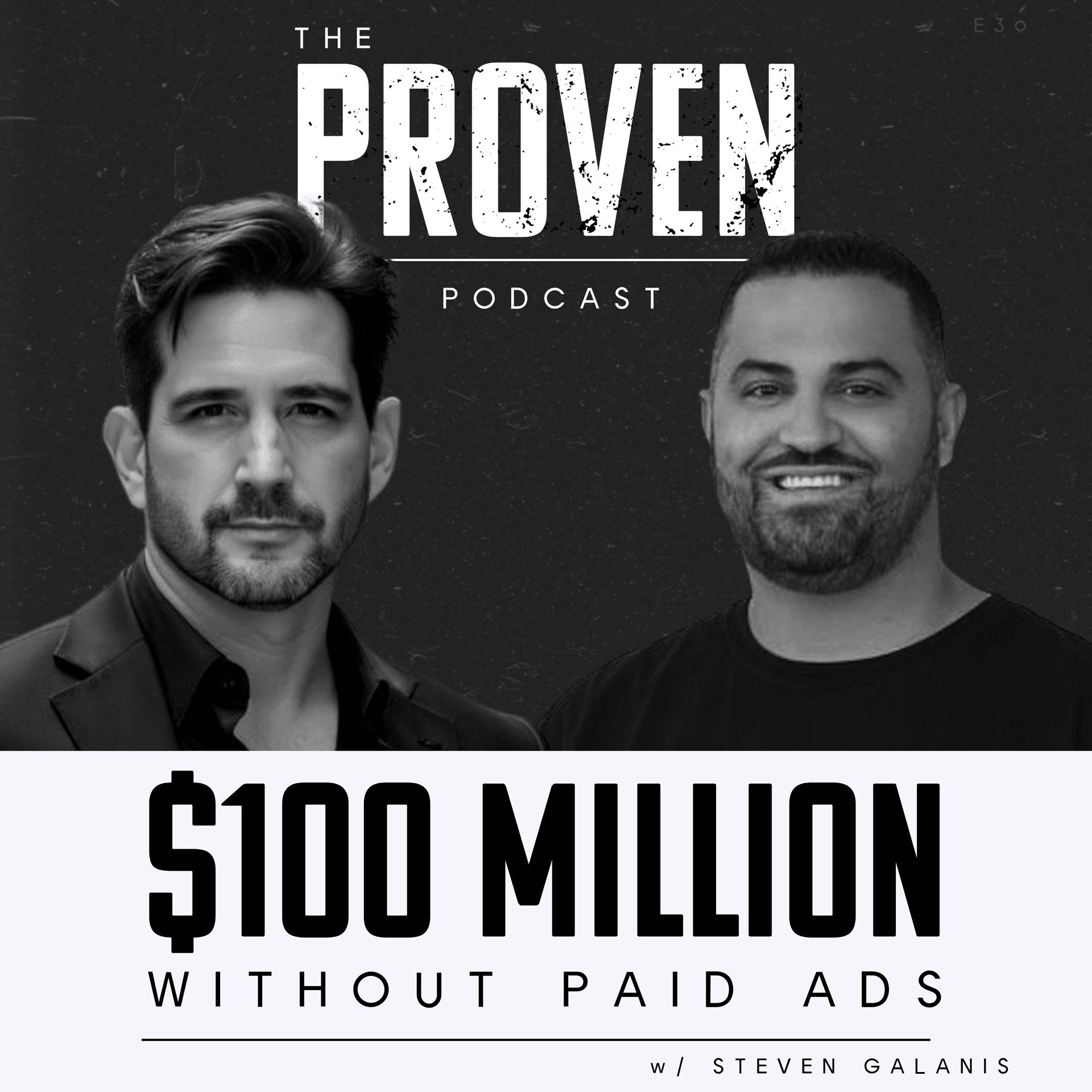
Proven Podcast Episode Summary: $100M Without Paid Ads - Steven Galanis
Episode Overview Host: Charles Guest: Steven Galanis, Co-Founder & CEO of Cameo Date: [Insert Date]
In this episode, Charles interviews Steven Galanis, who co-founded Cameo, a platform allowing fans to purchase personalized video messages from celebrities. Steven shares insights from his entrepreneurial journey, detailing how he scaled Cameo to $100 million in revenue without any paid advertising. The conversation covers themes of product-market fit, leadership, team dynamics, and navigating the evolving landscape of the creator economy.
---
Key Concepts and Discussions
- The Journey of Cameo
- Background: Cameo was created to connect fans with celebrities, leveraging direct communication channels.
- Rapid Growth: Achieved $100 million in revenue within four years without marketing expenditures.
- Innovative Approach: Focused on authentic connections between celebrities and fans, bypassing traditional agents.
- Finding Your Ikigai
- Definition: Ikigai is a Japanese concept representing the intersection of what you love, what the world needs, what you are great at, and what you can be paid for.
- Importance for Founders: Building in a space you are passionate about fosters resilience and long-term commitment.
- Product-Market Fit
- Sustainable Success: Emphasis on identifying and dominating niches rather than chasing fleeting trends.
- Market Adaptation: Cameo evolved by expanding from just athletes to internet celebrities and reality TV stars.
- Team Dynamics: Hacker, Hustler, Hipster Framework
- Roles in Founding Teams:
- Hacker: Innovator focused on creating new solutions (e.g., finding direct paths to talent).
- Hustler: The motivator who builds excitement and drives growth.
- Hipster: The creative who understands trends and positions the brand accordingly.
- Balance: Effective teams should encompass these roles to ensure comprehensive coverage of business needs.
- Leadership and Organizational Culture
- Forever OKRs: A framework for CEOs to focus on five core objectives:
- Product-Market Fit: Continuously assess and secure.
- World-Class Executive Team: Build and maintain high-caliber leadership.
- Mission, Vision, Values: Ensure alignment within the organization.
- Employee Engagement: Foster a culture where employees do their best work.
- Keeping the Lights On: Manage finances and sustainability.
- Navigating Challenges and Setbacks
- Post-Unicorn Struggles: After achieving significant growth, Cameo faced challenges when revenue dropped due to market changes.
- Restructuring: Difficult decisions led to reducing the team size to streamline focus and optimize core operations.
- Resilience: The experience solidified the culture of grit and adaptability within the team.
- The Future of Cameo
- Recapitalization: Adjustments made to the company's valuation and structure to build sustainably going forward.
- Focus on Core Business: Emphasizing quality over headcount and ensuring that all efforts align with the company's mission.
---
Key Takeaways
- Master Product-Market Fit: Prioritize understanding and meeting customer needs.
- Build Dream Teams: Assemble diverse teams that cover essential roles in innovation and growth.
- Navigate Hypergrowth: Balance scaling with sustainable practices.
- Cultivate Resilient Leadership: Establish clear objectives that drive organizational success.
---
Conclusion Steven Galanis's insights emphasize that success in entrepreneurship comes from focusing on genuine connections, resilient leadership, and a commitment to the core mission of the business. As Cameo continues to evolve, the principles shared in this podcast serve as a guiding framework for aspiring entrepreneurs.
For further learning and resources, visit the [Proven Podcast website](https://provenpodcast.com/).
Written by AI. May contain mistakes. Listen to the episode to check what was said.
Transcript
Automatic transcript. May contain errors.0:00Welcome to the Proven Podcast, where it does not matter what you think, only what you can prove. Everyone says you need massive marketing budgets to scale fast. Steven Galanis proves you just need the right idea. The co-founder and CEO of Cameo scaled from zero to$100 million in revenue in four years without spending a single dollar on marketing. The show starts now. All right, everybody. Welcome back. I'm excited for today's call. This is an individual who has done things that I don't think anyone else I know has possibly done. We'll get into it. Thank you so much for joining. Thanks for having me.
0:30So you've done things, and for the audience that don't know who you are, give a quick debrief on who you are, what you've done. I'm always been blown away by it. I'm so happy to have you on. Tell us a little bit about you. Hi, my name is Steven Galanis and I'm the co-founder and CEO of Cameo. Cameo is the world's largest marketplace where you can book first lives video messages from tens of thousands of the most exciting names in pop culture. It's amazing how you've gotten these people as well. Because there's people I grew up as a huge fan of that I was like, God, I want to give a happy birthday from him.
1:02One of them was a pitcher. and a major league ball player. And I was like, I just want to get a happy birthday from him. So the idea that you actually made that happen before we get any farther, thank you for making that dream happen for me. I really appreciate that. Getting that little birthday wish from him was huge for me. Okay, so you created something that most people haven't. The idea that to execute this on a lot of the businesses and a lot of things you do executes on ways that most people only dream of. What are some of the things that you've run into as you've created the success with Cameo that has radically changed your environment?
1:32Well, I think there's a number of those, but I think it really starts with a few things. Number one, it's really important that as a founder, you're building in a space that you want to work in in a really long time. and when I was pretty early in my career found a cameo I ended up meeting this founder in Chicago who had sold his company for a billion dollars and was kind of one of the tech luminaries here and he introduced me to a framework that I love telling founders about and it's called Ikigai and the it's a Japanese philosophy and basically imagine a Venn diagram but instead of two circles there's four.
2:12And the idea is that, you know, to really be the best in the world at something, you have to be at the intersection of what do you love to do? What does the world need? What are you great at? And what can you get paid for? And, you know, when I think about cameo and, and, you know, kind of the ups and downs and, you know, the things that get you through, you know, eight years of building something, and, you know, hopefully I can work on it another 80 years. Like, I love what I do. You know, being at that EQ guy point, it kind of gives you perpetual energy. It almost is like Iron Man's heart. And, you know, one thing I see so often is people kind of, you know, founders kind of jumping to the next top thing.
2:51And just in the last eight years, I think about the venture hype cycles that I've seen happen when we were raising money for Cameo at the beginning. If you weren't doing a micro mobility startup, you know, you weren't getting fun. This is like the bird in lime craze days. And then it was AR VR and then there was blockchain and then the creator economy got super hot, like right after, you know, companies like us and OnlyFans, you know, really exploded. And then, you know, everybody was building creator economies and it was web three, like the tide came in so hard on the creator economy and everyone was building a web three business.
3:27And, you know, today, a lot of the founders that were building web three businesses or the investors that had, you know, Web3 on their LinkedIn profile or their Twitter bio, suddenly they're all doing AI right now, right? So I've seen that and it very rarely is sustainable. And I think oftentimes, you know, that's just one of those things like finding your Iki guy point. And, you know, I thought your intro here was pretty interesting, right? You're talking about there's this picture that you loved. And that's where, like, I think of all those four buckets, you're building something that the world actually needs is the one that I think gets ignored too much, right?
4:06Like when there is one of these VC hype cycles, you know, it's, it's all about like, what's going to get funded. That's how a lot of fund founders think, but ultimately it always comes down to product market fit. Are you building something the world actually needs? So finding that product market fit along with the Iki guide to something that you love is very hard for people. There's a bunch of people like, I like to sit on the beach and want to become a shore erosion technician, just watch the ocean go in and out. That's not going to make you money. Or someone says, Hey, you know what? I really love making sandals in the Philippines.
4:38I'm like, well, that's probably not going to hit your six, seven, eight figure goals. How do you find the balance? How does someone find that thing that they love? If they don't know what they love, how do they get to that point? Well, I think, I think it comes back to like, what are you doing in your spare time? Like when nobody's watching, like, what are the things that you're doing? And, you know, I think about my career pre-starting Cameo, you know, avid sports fan. While I was an options trader, my first job out of college, I started a movie production company, right? So, you know, since kindergarten, my nickname has been the mayor.
5:14I've always been somebody that brings people together and connects them and kind of unlocks, you know, whatever experiences, whether it's in Chicago or at Duke or any of the places that I've been, you know, I like the classic guy that like opens the red velvet rope and brings people in. So I think most, if you were to go to my kindergarten teachers or my college professors or my friends from any era of my life, I don't think, you know, maybe people didn't know exactly what I was going to do, but once they found out that I was doing this, like this just made all the sense of the world, right? And it, it brought my love for social media and for fandom, um, you know, and, and, you know, It also solved a problem that maybe everybody doesn't wake up thinking about, but as somebody that went to Duke, along with one of my other co-founders, and our third co-founder was an athlete at USC, we had really good friends that played Duke basketball and won national championships.
6:10or were at USC, played on those Matt Leiner, Reggie Bush era teams. And, you know, years after selling out the Coliseum or Cameron Indoor, you know, they're basically middle school gym teachers or they're working as parapros at their old high school because, you know, the reality is unless you become like a top tier player, you're not going to make enough money to sustain yourself. And, you know, I remember right as we were starting, a documentary called Broke came out. It was a 30 for 30. And in that, it said that 85 percent NFL players go broke five years after playing their last game. And that was a staggering, staggering stat.
6:49And again, it's not the type of thing that like that that problem doesn't necessarily bother everyone. But as an athlete myself, like all of us, you know, we had our friends that were impacted by this. This is the area where college athletes couldn't get paid. So, you know, you go from selling out the Coliseum in L.A. to suddenly like, you know, not being able to make money doing anything if you didn't make the NFL or if you made it and got hurt or you made it and got cut. Right. So I think it just comes down to you have to have the passion for the problem set that you're doing. And and it's just it can't that it's it's so underrated, but it's so critical.
7:26so what and i agree with you i a former athlete i get it once it turns off you can't feed the bills you can't pay the bills on glory from like two three five years ago it just doesn't work that way you mentioned that you had multiple co-founders and that's something that as people trying to scale those relationships are dynamic and people don't understand when you have co-founders there's different type of co-founders there's silent ones there's ones that are actively involved with you there's you know ones that are operating with you how do you find that balance I've been very lucky with the people I've co-founded things with.
7:54Very, very blessed. But there's a strategy to it. I'm curious, how did you navigate that when you have multiple co-founders, multiple kitchen people in the kitchen cooking with you? How do you find that balance? There's a really smart investor that I like that I met at a Duke founder and investor forum they held on campus. His name is David Cummings. And David is a partner at Atlanta Ventures. backed a lot of, you know, the early stage companies that came out of there. And I remember hearing him talk one time and he said that in consumer, he often found that the best founding teams had these three co-founders.
8:32Now, these attributes could all be in one person, could be in two person, could be in three. But he's like, I've never seen a company that doesn't have the hacker, the hustler and the hipster. The hacker is somebody that finds a new and novel way to make things, you know, happen. And, you know, in our case, that was like, how do you go from, you know, Hollywood or NFL agents, which are the biggest gatekeepers in the world? And like, how do we cut through the agencies, cut through the noise and like go direct to talent? And, you know, it really took a hacker to go and figure that out. And in our case, it was like Instagram DM.
9:05Like we built an army of people that were DMing celebrities on Instagram and just the sheer volume and getting through. And then once they came on and liked it, we asked for referrals. Like that's how we built our business brick by brick. And today we have tens of thousands of talent on the platform, which would be bigger than all the agencies combined. Right. So that's number one. Number two, you need the hustler. The hustler is the person that can like build FOMO and hype and get people excited about it. Critical for raising the initial seed capital and getting angels excited about it. even more critical, even harder than raising capital is like, how do you get people to quit their great job to come, you know, the best people, because you really need great people to do it, to come work on your crazy idea before there's product market fit, right?
9:50Because if you don't have that, you're not going to be able to attract it. So you really need that hustler that can do that. And then lastly, this one's one I think gets forgotten about, but in consumer, it's so important. You need the hipster. The hipster is the person that's going to see like what's cool in the future. And, you know, oftentimes like as, as the hipsters kind of doing their thing in real time, it seems weird. It seems interesting. Like in our case, when we started Cameo, the Instagram, you know, aesthetic, the highly polished, you know, lights, camera, makeup, that was the in vogue, you know, aesthetic for video content.
10:26But one of the things that, you know, we had conviction about was to build authentic over high quality. So instead of having our celebrities come into a studio and like film the videos with the production crew, we're like the iPhone cam was cool. It's actually, it's even better. Like the zoom setup I have, it's more authentic, you know, even though I've got the great lights and the great camera, it's actually more authentic for what we sell, like the selfie style video, them walking around like, oh, what's that? Who's behind them? You know, what do they have? Like, what are they making? Like, what's that food on there?
11:01Like, that's the authenticity that really worked. And as TikTok has risen and promised that that authentic aesthetic actually ended up being the winning one. And even in our B2B business today, you know, we find that the brands prefer this content that looks like real videos that people are posting as opposed to the Madison Avenue glossy. So this is a long way of saying in my case is our co-founders had each of those attributes, right? Like, like, uh, you know, Devin is very clearly the hipster in the group. Martin was very clearly the hacker and I was very clearly the hipster or sorry, the hustler.
11:39So the nice thing about that is we never stepped on each other's toes. The division of labor was great. You know, Martin, you go get the talent, Devin, you go build a product, Steven, you go run the business. Right. And that's, that's how we've in. And I'm very blessed that eight years in, all the co-founders are still at the company. Obviously, roles have evolved as time's gone on, and we've hired great other people to come in. But I think at the end of the day, the conviction of the founders and all of us working on something that is our EQI, that we really care about, it's been critical. So I think one of the other things that's unique about you guys is the acquisition of either talent and or customers because I didn't know what cameo was until I got my first cameo until it was sent to me.
12:27So I was sitting there and you know, someone got this for me. All of a sudden it's this picture and it pops up. I'm like, Oh my God, this is, and I was freaking out and I love the authenticity because it was literally him just sitting on his couch. I was like, Oh my God, that's in his house. This is, and he's saying my name and he's doing, it was just this magical experience. And then I went from there and I started looking at all the other talent and I started looking at all the videos and all the other talent was like, Oh, what is this size? And it had this idea. That's a different approach than most people have to growing their audience.
12:55So when you're in that environment and you're taking this different approach and you're trying to convert differently, what are some of the ways that you found above and beyond that just, Hey, I'm going to buy it for it. And it'd be word of mouth. Cause you said word of mouth is so important of getting new talent in. What are some of the ways that you have seen that a success to creating this that people could use now to get more clients and get more clientele? yeah i i mean look i i think i think a lot of that had to do with the really unique a couple unique attributes of our uh particular product right and the lessons that i have they worked excellent for us and we understood them early and we really executed well against those but these lessons may not you know be true for every everybody whether you're building a marketplace or you're just trying to get your word out in a direct consumer brand but really the cameo fly wheel was simple.
13:45Our marketplace, unlike Uber or Airbnb or DoorDash, is particularly unique because our supply can beget their own demand. Everyone on Cameo is famous. They have hundreds of thousands or millions of followers on TikTok, on Instagram, on X, on whatever platform you care about. And one of the things they can do that an Uber driver can't do or an Airbnb host can't do is they can post and the people following them are probably the most likely people in the world to buy. Right. So that's a really interesting dynamic. So as we were starting with our marketplace, you know, the classic chicken and the egg, like there's no talent on nobody, there's no customers.
14:26We had absolute conviction that if we got the supply side on, then the demand side would follow. You know, one of the tactics that we did, and now this has become commonplace, commonplace but you know we were one of the first companies to not ever ask people hey don't don't like we never ask people to promote cameo we would create a link for everyone you know cameo.com slash steven would be like my profile and i would ask you to tweet that out that would go to your page and then once you're on your page you could go browse and see who else was there but we never asked people to like go to cameo.com we always asked them to go to their unique link and the value prop made a lot of sense.
15:03You make three times as much as we do for every sale and we take a take rate. So we're, we're completely incentivized for you to be as good as you possibly could be. And we've really worked on creating great tools that talent could share their own links out. So that's number one. Number two, our product is pretty unique in that over 80 % of them are bought for other people. So it's not you buying for yourself and watching it on your phone. It's me buying it for you and then sending it to you in a text message in a group chat, maybe posting it on your Facebook wall back in the way or tweeting it out to you or posting it on my Instagram story and tagging you in it.
15:41And then that created this phenomenon where it was getting shared. So we always say every cameo is a commercial for the next one. And one thing that we had on there, every video is watermarked. So you see this video, you're like, holy shit, how do I do that? and then you see Cameo, right? And then people watch the video, they Google Cameo, they come into our site and that's really the flywheel. So it's supply side acquisition, talent promoting, user sharing, and then the customer sharing to the recipient and then the recipient tending to share it on social, in their group chat, or just taking their phone out and being, holy shit, look what I got.
16:19There was a lot of that holy shit when I got mine. I was like, holy shit, holy shit. And then there were the other thing that happened was I literally fell down the rabbit hole. I was like, who else is on here? Who is this? Who is that? What are they doing? And it really just became this, this ran down the rabbit hole with it. People will sit there from the outside and say, okay, well, yeah, I see the end of it. Cameo just started three days ago and magically it has all these people. We make all this money and dah, dah, dah. They don't see the years of effort. They don't see the trials and the tribulations.
16:43They don't see the lessons. They don't see the hurdles. They don't see the times where you fell down. What are some of the biggest lessons that you've had as you've gone through this? And yes, you've got something that's, you know, a massive USP. when you're into this how what are some of the things you're like god i wish i could go back and talk to steven 10 years ago and say hey dude you're gonna run into this wall this is how you handle it this is what's going on how do you pivot around it yeah one of the really unique things about cameo is that we kind of found product market fit almost right away um you know we had a really disastrous launch which i can tell that story in a little bit but but shortly after that like um you know first we started just with nfl players we thought like there was this big need And then it really wasn't until we started, we, Devin, my co-founder one day was like, Hey, I think Cody, uh, his roommate, Cody Ko, who has 10 million followers on YouTube and people like Cody might do well at it.
17:34Cody tried it. He put it on a YouTube video. Like we went viral for the first time and we really found our product market fit with like ex Vine stars, TikTok, YouTube, and then reality TV became big. And, you know, while athletes still probably represent the largest number of people on the site, you know, it's maybe 14, 15 % of our total business. So we ended up finding product market fit, you know, as we expanded out. The business kind of worked right away and worked really well for the first four years. I mean, this is a business that went from zero to 100 million top line in four years with no marketing spend.
18:08There's not many businesses in the world that did that. So interestingly, our biggest problems actually happened like after massive success after we became a unicorn. And it really started when we, you know, basically, we were, we were trying to like conquer the world, not just like, you know, the core market geographically, which we did, you know, we found ourselves, you know, having Amio Japan and hiring people in the UK and Australia and all over Europe and South America. And, you know, what we also did at the same time was we were thinking about all the ways that talent could monetize and we wanted to make sure that we had an answer in every space so broadly the four ways that talent can monetize their fame on the internet they can have a subscription business so thank only fans patreon uh in 2020 we launched our answer to that called fan clubs and suddenly you know we had some of our best engineers working on you know uh basically all of the same features that you would see on OnlyFans or Patreon, you know, things like subscriptions and, you know, MassDM and all those type of products.
19:17Secondly, you know, we built a live and calls product, you know, which in during COVID, all of the, you know, meeting greets weren't happening anymore that you would see at a concert or a Comic-Con. And we felt like we could fill that in a digital way. It worked a little bit, but then when the world opened up, you know, we built great tech, but there just wasn't the same product market fit to sit online and, and, you know, talk to someone on FaceTime versus like meeting them in real life. Um, you know, so we, we kind of missed on that. Uh, third, you know, physical goods is another thing that people can sell on the internet.
19:53Uh, we bought the world's largest celebrity merch company, a company that really focused on a plus, um, you know, actors and athletes, you know, think Arnold Schwarzenegger, Matthew McConaughey. And, you know, we bought that company and we really felt like when the world opened up, uh, merch might be something that was a little easier for talent to sell. And, you know, after that, we saw some big changes in Facebook and Instagram and TikTok's algorithm, which made it a lot harder for talent to like promote their own stuff. So, you know, we would have eight years of sales data on certain people and their drops were just making less and less than they ever would, even though like, you know, they didn't become less popular.
20:34So, you know, that was another roadblock we ran into. And then, you know, lastly, the B2B side, you know, people can get brand deals and we had Cameo for Business and that team started rapidly, rapidly expanding, you know, CMOs and CEOs that used our product as consumers or during COVID, you know, buying them for all hands or, you know, how many team meetings had Cameos in them during COVID. All of a sudden, they're now trying to use it for their marketing content, you know, this is a really exciting thing. But suddenly, what happened to us was, you know, we went from a team of 100 to about 400, 437.
21:09But our best people were focused on all different things. And what often happens in startups is that people forget that if you optimize your core business by 5%, 10%, it's almost always better than building the next thing. And, you know, we we were certainly guilty and I was guilty for signing off on this stuff. of, you know, chasing the shiny new object. And part of that is we found product market fit, you know, so quickly with what we did. And now we had a better team than we ever had. And, you know, we let that loose and we just got, we overextended ourselves. And, you know, now looking back on it, you know, I think about all the money that we spend and all the, you know, great efforts that we put in.
21:51And ultimately, if the team that I had hired was all working on, you know, the one thing, right? And just continue to make that better and better and better. What could those compounding gains have been? So, you know, I would say that for me, you know, if I were to come back and look at myself in 2020 or 2021, it would be to really resist like chasing the shiny object and continuing to embrace the grind of just making your great core business as good as you possibly can be. So you talked about, you know, your team went from really, really small. all of a sudden when, you know, a hundred people, I always skyrocketed up to 400.
22:29And I don't care how much training you've had. I don't care how much, you know, theoretical, academic level training, walking in and having to lead that level of unit, leading that group takes a special set of skills. And you have to advance your skills on that on a high level. What are some of the things that you've learned to create a culture, to lead these individuals who are, as you said, attracting the best of us, that they're willing to leave their business, their current jobs to come work with you. How have you learned how to lead those individuals? It took a lot of coaching. I was really fortunate throughout that era to be working with a CEO coach named Bing Gordon.
23:04and Bing's kind of a legend in the valley, one of the founders of Electronic Arts, 30-year GP of Kleiner Perkins, you know, had served on the board of Amazon from like seed stage all the way until probably 22, you know, was I think chairman of Zynga and, you know, so influential in Duolingo and, you know, so many of the great consumer companies of the last, you know, 30 years. And Bing introduced me to a framework that has become my like core operating framework as a CEO and something that I like to teach every founder that I talk about when they hit a certain scale. And he has this concept of forever OKRs.
23:45If you're familiar with the OKR philosophy, this is a philosophy that the guys at Kleiner very famously, people like John Doerr, rolled out to Google and LinkedIn and so many of the legendary tech companies of the last 20, 30 years. And, you know, OKR stands for objective key results. So, you know, basically what it would say is like you have some large objective and it might say, you know, I want to grow my talent base, you know, and then the key result would be specific, measurable and time bound. So I want to, you know, go from 1100 talent to, you know, 1500 talent by November 1st. Right. So like having some, you know, specific goal.
24:29So Bing's idea in his experience watching so many great CEOs, whether it's Mark Pincus or Jeff Bezos or Daniel Eck or any of these great CEOs that he'd worked with and mentored, he basically distilled what made them great. What separated the top 10 % from the rest was really people that could nail these five very specific things. and the idea of Forever OKR is as a CEO, or let's use a head of sales as an example. The Forever OKR of a sales leader is beat plant, right? You don't know what the number is going to be today. You know, it might be 2 billion today and 5 billion next year, but it's always beat plant.
25:14As a CMO, your Forever OKR is, you know, build a legendary brand for your employees and customers. Like no matter what the product is, like that's what you want to do as a CMO. As a CEO, in Bing's experience, he felt that there were five things on the forever OKR front that every CEO should be thinking about. And really, at scale, every other job that's not these five things are stuff that other people could do. So the first of these forever OKRs is product market fit, something we've spent a lot of this call talking about. Find it. And when you find it, continue to make sure you don't lose it.
Read the full transcript
25:52And then as a CEO, thinking about when you have product market fit and you feel like it's solid, like at what point do you start finding product market fit on other things? If you don't have product market fit, all of the rest of the things that I'm going to talk about, they don't matter. So as a CEO, like that's where your time needs to be spent, you know, exclusively and especially if you're building new initiatives. Right. Like, you know, you got to be as in the weeds on that as possible to make sure, like, should the investment like am I making the right investment? by starting this new product or expanding the geography.
26:25So product market fits number one. Number two is build a world-class executive team. At scale, when you're 437 people, and again, there's 4 ,000-person companies and 40 ,000. So this will just exponentially get more important. As a leader, and especially as a leader that was leading a company that was fully remote during COVID, Right. You're not going to be the person that's like in the weeds on every decision. So making sure that you have a world class executive team that can come and take your vision and execute it right there. It's like they're the people sitting with the pencil behind their ear, taking notes with what you say.
27:05But then, you know, taking the things you're talking about in the executive room and actualizing them on the front line. You've got to have a world class executive team. And then the next natural question is, how do you know that your executive team is world-class? Right. What was my next question? Well, number one, you do that by meeting world-class executives, right? So if you're like, hey, I want to see what world-class looks like in marketing, go talk to your VCs, go talk to some of your investors. I guarantee you that some other company in their portfolio has an industry-leading or many industry-leading CMOs.
27:39So go talk to those people and see what good feels like. Go get a coffee with them. And then you start to, you know, over time, you start to get pattern recognition. You have a bar. Bing would make me do this exercise with him once a quarter where I would have to rank my executive team five to one. Five being this is the best person in the world that could possibly do this job at this stage. Four being their 90th percentile. Three being their industry average. Two being their below average. one being why the fuck do they work for you right and what you do is you take all those scores you add them up and you divide them by the amount of direct reports you have and you get to a number that's somewhere between one and five and most ceos when they do this for the first time end up ranking their executive team uh 3.5 like the average that's just where it ends up being and what Bing has found time and time again is that a world-class executive team has a 4.25 or higher average.
28:39So as you're thinking about the members of your executive team, today's three could potentially get coached up to be tomorrow's four. But at a hyper-growth company, it's actually much more likely that today's five is tomorrow's three. So constantly you have to think about, okay, where do I up-level? Can I continue to bet on this person? What coaching can we get them? And, you know, when we became a unicorn, we had a really unique case where every single one of us was doing this for the first time. And every time we hired someone, we were running the biggest company we ever did. So, you know, probably a decision at the time that seemed like a great idea was up leveling my executive team, you know, from this team that I, you know, was excellent, had built the company, you know, had the passion, had the knowledge.
29:27But we were really bringing that next level leadership in because we were working on our ultimate goal, which was to ring the bell and to become a private, you know, a public company. And, you know, in that time, we, you know, hired the global head of people away from McDonald's, one of the biggest employers in the world, absolute world class leader. We hired a head of product away from Uber, you know, someone that was responsible for building the driver's side and the rider's side app of the company. Like, you know, a marketplace is very similar to ours. We hired the CTO away from, that had been, you know, the head of engineering at, oh my God, I can't believe I can, Hulu, right?
30:09Like Hulu, we had the global head of ops from LinkedIn came to be our COO. Like at every position, we had just built this like all-star leadership team. but ultimately um you know what you learn when you hire those people then great people that they worked with in the past want to come work for them right so suddenly you hire the c-suite and then the vps want to come and those vps have their directors and this led to a huge inflection of talent in the company like it was it was embarrassing like how stacked our bench was you know people three four down rows down the level were like you know insanely high ceiling great people.
30:47And that's one of the reasons that having a great executive team is important because great leaders will get, you know, amazing, the best people they ever worked with to come follow them. So that's the second one. The third is mission, vision, values. So this is really about like alignment, communication and alignment. Does everybody at the company understand what the vision of the company is? Do they know your mission? Do they know your values? Are they living up to it when you're when you're sitting making decisions is everybody do they have the same you know rubric because there's a common language and a common framework and you know and at linkedin you know i where i worked before cameo i think every person that's ever worked at linkedin could recite you know the the mission vision values of the company like they would hammer it in so every tuesday at all hands at cameo i start with our mission our mission is to create the most personalized and authentic fan experiences on earth.
31:42I will bet you that any person that's ever worked for us could recite that mission. Our values, you know, roll out the red carpet, act like an owner, fight for simplicity. These are things that like become embedded in the DNA, right? So, you know, that's one that's really important. Fourth is employee engagement. This can largely be measured by things like NPS, but most critically, it's like, are the people working for you doing the best work of their career, right? If they're doing the best work of their career and you've got product market fit and there's leaders that they admire and, you know, they love the mission, vision, values of the company, then what are they going to do?
32:18They're not going to leave, right? And in fact, instead of leaving, they're going to tell the most talented people they've ever worked with to come over and work at your company, right? So employee engagement is so critical and, you know, probably the best leading indicator of your employee engagement is you're doing something like an employee nps for you know once a once a year or twice a year you're doing employee voice survey like find out anonymous you know uh one to ten how likely are you to recommend us as you know as an employer you know ask some specific questions get feedback it's absolutely critical and then you know the fifth one and by the way these are stack ranked these are in order right the fifth one for a long time people probably We thought was the first one, but the fifth one is keep the lights on.
33:02Right. And, and that's, you know, fundraising it's budgeting. It's, you know, making the hard decisions when you have to, if you need to cut, reduce OPEX, but those are the five things. And, you know, if you have the money and you have product market fit and you've got great leaders and you've got internal communications and alignment, and you've got employees that are highly engaged, like that is the recipe for a, you know, a truly world-class organization. and that is the type of thing that you know i i strive to do every day like sometimes i've fallen short and not been able to execute on all that um but but those are the things i work on every day i love that you most people will start with trying to keep the lights on instead of starting with product market fit most people go into oh how am i going to make money how am i going to do this how am i going to do that instead of focusing so much on part product market fit and i love that you said hey if you don't have number one nothing else matters yeah look if you if you there was in the zero interest rate environment right you know three guys in a in a pitch deck could get funded all right but at the end of the day if you find product market fit if you have something that people want like you're going to be able to find capital it's really really rare that i see founders i see founders all the time talking oh it's so hard to fundraise blah blah blah when you have something real and your customers are raving about it and they see it and the vcs like i never see those people struggle to raise capital.
34:27Like I'm sure it's happened. There might be exceptions, but you know, it's almost always the founders that don't have product market fit that are bitching about how hard it is to fund. And guess what? You have to find product market fit before, you know, you raise real capital, right? Otherwise it's pure speculation because look, there's so many great ideas that exist. And yeah, maybe somebody has great pedigree and we've seen that. I've seen a lot of people leave cameo and, you know, they were the reason why we one and they come and then they get funded. And, you know, I wrote a lot of those checks too, for, for great employees.
35:01And, and maybe if you leave like a world-class org, then people are betting on the pedigree. But like almost always I see, you know, this, those founders ended up struggling two, three years later where they have the money and, you know, they haven't found product market fit. And they're kind of in this, you know, in this limbo where it's like, do I return the money? You know, do I keep doing what I'm doing? do I pivot like product market fit needs to be number one and most people don't even focus on that regrettably they focus with hey my grandmother had great chocolate chip cookies growing up and therefore I'm going to give chocolate chip cookies everyone and everyone else is going to love it instead of going hey what does the market really want and how do I meet that market need right some of the things again I think that's the big that's the single biggest mistake that you can make as a ceo as a founder and uh and anytime like I've I've struggled or cameo struggled.
35:49It's when I got away from, you know, focusing on product market fit and, you know, in the times where we've had to like come in and save the company or really decided like, that's when I'm like super, super deep in the weeds of the front lines, trying to, you know, trying to make it happen. You mentioned some of the struggles and you wanted to give a story about, Hey, these are one of those times you're at the messed up where you're kind of in the weeds that you were just mentioned. Can you, can you talk about one where you're like, Oh God, we were really in the weeds at this moment. And we were kind of struggle busing.
36:15And this is how I kind of got out of it because everyone is looking for strategies of what works when the time when it's wonderful and everything's happy. But most people aren't brave enough to sit there and say, hey, there's this one time in band camp that this happened or whatever it is. What is one of those times and how did you get out of it? Look, for us, it's really simple. Like as I mentioned, you know, the company got bigger. We were working on all these different initiatives. And, you know, suddenly like when the world opened back up and when stimulus checks started and people could, the talent could play their games and go on tour and do that.
36:48And people started spending money differently. Instead of buying cameos, they were going to the restaurant. They were, it was revenge spending, you're going to Mykonos and Ibiza. And like, you know, it's like people used to go to Europe once a summer. And now I feel like you watch Instagram and people are there four or five times. It's crazy, right? But people started clearly spending money differently. And our core business took a big hit in that period. Like our core business dropped by over 50%. Now, when your revenue is dropping by 50 % and you're incubating a bunch of new things, but the core business, the core moneymaker is going down faster than the new things are growing and your, you know, your OPEX has increased by three, four X, right?
37:28That is not good math, right? And in fact, at that point, suddenly you go from being a profitable company. And in our case, we were burning like$6 million a month, you know, and that ended up being, and you just kind of wake up and it can happen. And in our case, it literally happened like that. It happened so fast. So then at that point, you know, as a leadership team, we started to think about like, what do we actually, if like we had to cast everything aside and we started from a zero-based budgeting approach, like what do we need to do to sustain and stay in the game? And, you know, over three really gut-wrenching, you know, cuts, you know, we took the company from 37, 300 and sorry, 400, 37 people all the way down to 35.
38:14Oh, did that by exiting business lines and, you know, getting out of international markets. But what did we end up doing? Our best people suddenly were for the first time in like five years, all working on the main thing. Right. And keeping the main thing, the main thing ended up being absolutely critical to us doing something that, you know, I think Elon has had to do a Twitter, like bringing the headcount down so drastically, but it works because all of the best people were working on the biggest problem, you know, and, and that has been, you know, a really painful lesson for this company to learn.
38:56But as we're rebuilding, you know, it's, it's made my executive team, you know, many of them who were the number three or number four in the old world, like the people that are still here, you know they they are so when there is a new shiny object to go chase right those scars are there those lessons so it's like this company has grit these are survivors these are people that there were spreadsheet lists and they kept being on the you know right column first left and that's not to say that any of the people that aren't here anymore you know weren't you know awesome they were you know i i tell people all the time if you see cameo on someone's resume like we were as good hiring as any company in the world.
39:35But, you know, this, this rebuild was not for everybody, right? If you were somebody that wanted to build a team, you know, suddenly like you might be a team of one, right? And, and you could be the best person in the world at that role, but maybe there was someone that was willing to just like be that, you know, that, that CTO that also was willing to code. Right. And that, that was for us, um, you know, what ended up being, being huge. And despite, you know, my board and investors telling me that if I made these cuts, we would be a zombie company and there would be no way that we would ever be able to grow again.
40:12You know, last December, our busiest time of the year, we were 30 % bigger in revenue than we were the year before with 70 % less head cow. And I think it goes to what you said before. Number five, keep the lights on. do what you gotta do to keep the damn lights on right so you've been through the hurdles you've been through the extremely fast high and then obviously the world got crazy with covid and there was all these things and you've had these huge cutbacks you know you cut down to what almost 10 of your original staff i think if i get numbers right you crash that into that what's the future for cameo what's next what's the future for you as the ceo and the founder in these individuals what's next look we're really uh super excited about the future for the business uh we were able to recap the company, which was absolutely critical, you know, four or five months ago.
40:58And effectively what that did, it allowed us like reset the valuation. We had employees that joined at a billion dollar valuation, many of whom are here today. And you think about that, the strike price of their options is here. And when the valuation, you know, the day we became a publicly traded or the day we became a unicorn, you know, Facebook was a trillion dollar company, right? And Snapchat was worth$120 billion. Go look at Snapchat's valuation today. So in the public markets, the valuations contracted so heavily for these companies. So suddenly, if you're thinking about M &A and any type of outcomes, the multiples changed.
41:37I mean, when we raised our unicorn valuation, the marketplace businesses like ours were getting valued 8 to 12x forward net revenue. We were 75 million net revenue, 12X multiple, 900 million free, 100 million post. It wasn't even an expensive round. Like we had real revenue. Our round was$400 million oversubscribed, right? Like people were fighting. We had investors wiring, you know, checks that were bigger than their allocation to try to get in. Like people were literally fighting over it. And yet, you know, today, right, people, marketplaces are getting valued on an even a multiple. So if you're burning money, right, like it doesn't matter what your net revenue is, like you're the markets effectively telling you you're worth nothing.
42:21so we got into a point where when you looked at the public market comps of businesses like ours are if we had gone to try to sell the company we probably wouldn't have been able to clear our prep stack so that's why like you know taking the tough medicine bringing the valuation down you know doing a recap it ended up being the thing that you know really i think has given us like a second life it's it's been absolutely critical uh for me to keep my best employees you know they need to be incentivized. And as we build a billion dollar company back up, right, I want the people that were here for this ride to be very richly rewarded.
42:59And I'll tell you one more thing. This group right here, the new goal is the 10x evaluation of the company before we double head count again. In the old world, when we raised, I remember we raised, you know, 12 and a half in our series A and 50 in our series B and 100 in our series C. And every time you'd read those press releases, it's like Cameo raised$50 million and now they're going to take headcount from 50 to 175 people, right? Like hiring people itself was like a goal. And part of that is I've always believed fundraising is just a proxy for hiring. People are giving you money so you can hire people on their behalf basically to go and make their money more value, you know, their investment more valuable.
43:41But I love this mindset now that my team has that's like, we can do this with the people that we have here. And oh, by the way, like we have to have such a high bar that if we're going to add somebody like, you know, there's only going to be so many seats on this rocket ship, right? And we need to make sure that we're incredibly thoughtful and selective of who's coming in. And it's just a different playbook. It really is. It's a completely different way of looking at it. And I think some of the things you gave throughout this entire talk are just massively different than most people run into and it'll change their playbook.
44:13I always ask everybody, what are the things that you've learned that a little hacks, a little thing that you do on a routinely basis? Like, Hey, there's this book or there's this asleep thing or this thing that most people wouldn't know that you've come across. That's helped you either with your health or with your business off. What is one of those things you're like, Oh, for me, it's, I have something called a chill pad, which I put on my bed and it keeps me so I sleep. I get eight hours like clockwork. I love that damn thing. What is one of those things that you're like, Hey, it's a supplement or something like that.
44:37That's like, ah, every single time I use this, it changes my ballgame. yeah the my morning routine like i go and do pilates every morning and um and then i go and follow that up with uh with a cold plunge yes and honest to god it's like it doesn't matter like how shitty i was feeling and i'm not someone like i'm very envious i'm like a four hour sleep guy um you know i've done the eight sleep i've done everything like it's just not my mom was like that. I'm like, I go to bed at two, I wake up at six. Like that's how I'm on. And, but like, and I could be so groggy, but when it's go time and I'm 7.00 AM, I'm on that reformer.
45:16And then, you know, by eight o 'clock I'm, you know, in the steam. And then by eight, 10, I'm in that cold plunge. Like it just literally, it's like, it's like super, it's like plugging the Tesla into a supercharger. And, um, you know, for me, that's, that's been, you know, absolutely essential, So like making sure that the body's feeling well and look, like, I think all of us are guilty as founders that when things are going really shitty, then, you know, you're, you just let your habits come out the door. But like it, as we were rebuilding the company, like it was during that time that I kind of refound my like health habits.
45:51And like, then, you know, as I was feeling better and I was healthier, like I made better decisions, you know, and that's something that, um, you know, I have a warning sign to myself of, of if I start all of a sudden I'm not making the gym or I'm feeling things are good, like that's, you know, that's the danger, danger, will Robinson lights at this point. Love it. How do people track you down? How do people find you? I know people are going to have a lot more questions. What's the best way to reach out to you and to kind of connect with you? Um, I, you know, to be honest, I'm not super active on, uh, on, you know, LinkedIn as far as posting, like I work there, so I'll post big company announcements, but I'm not like the LinkedIn guru making posts.
46:29And I'm not particularly active on X as well, but my handle on Twitter is Mr312, MR312, the Chicago area code. It's just my name on Instagram and on Twitter and on LinkedIn, but I'm probably most active on Instagram. Yeah. So the mayor part starts to make sense with Mr312. That makes a lot of sense. I really appreciate you coming on and sharing the knowledge. There's so many things that I took away from it. Thank you so much for coming on and being part of this. Well, thanks for having me. Building a unicorn isn't about chasing the next shiny object or following venture hype cycles. Stephen proved that sustainable success comes from relentless focus on product market fit, then building world-class teams around that core strength.
From the publisher
In this episode, Charles explores the revolutionary journey of Steven Galanis, the entrepreneurial force behind Cameo who transformed a simple idea about celebrity connections into a billion-dollar tech phenomenon. Steven reveals his blueprint for building a platform that generated $100 million in revenue with zero marketing spend, offering a masterclass in the art of product-market fit and resilient leadership in the volatile creator economy.
From his early days as an options trader nicknamed "the mayor" to becoming a pioneering force in celebrity-fan interactions, Steven's story demonstrates the power of finding your entrepreneurial Ikigai and building with unwavering focus. He shares how Cameo's innovative approach to talent acquisition led to tens of thousands of celebrities joining the platform, bypassing traditional gatekeepers through a groundbreaking direct-to-talent strategy.
Charles and Steven engage in a riveting discussion, exploring the delicate balance between hypergrowth and sustainability, and the crucial distinction between chasing market trends and building lasting value. They unpack the game-changing "Hacker, Hustler, Hipster" framework for founding teams, the five Forever OKRs that guide successful CEOs, and why understanding your core business trumps diversification in times of market uncertainty.
Steven's insights crackle with hard-won wisdom as he breaks down Cameo's journey from rapid expansion to strategic downsizing and eventual resurgence. He challenges conventional startup wisdom, advocating for a radical shift from the "growth at all costs" mentality to building sustainable, focused businesses that can weather any storm.
KEY TAKEAWAYS:
• Master Product-Market Fit: Learn how Cameo identified and dominated their niche by focusing on authentic celebrity-fan connections
• Build Dream Teams: Discover the "Hacker, Hustler, Hipster" framework for assembling founding teams that can execute at the highest level
• Navigate Hypergrowth: Understand how to manage rapid scaling while maintaining focus on core business fundamentals
• Master Resilient Leadership: Learn the five Forever OKRs that helped Cameo survive market downturns and emerge stronger than ever
Head over to https://provenpodcast.com/ to download your exclusive companion guide, designed to guide you step-by-step in implementing the strategies revealed in this episode.
KEY POINTS:
5:19 Product-Market Fit: Reveals how Cameo found its sweet spot by expanding beyond athletes to internet celebrities and reality TV stars, achieving $100M revenue with zero marketing spend.
10:17 Co-Founder Framework: Breaks down the "Hacker, Hustler, Hipster" model that created perfect team synergy and division of responsibilities among Cameo's founders.
20:12 Post-Success Challenges: Details the difficult transition from unicorn status to managing a 50% drop in core business, and how rapid expansion led to burning $6M monthly.
22:58 Focus vs FOMO: Shares how resisting trendy opportunities (like NFTs and creator economies) in favor of core business optimization led to sustainable growth.
25:00 CEO's Forever OKRs: Introduces the five crucial objectives every CEO should focus on, learned from his mentor at Kleiner Perkins.
29:52 World-Class Teams: Explains the 1-5 scoring system for evaluating executive talent and maintaining a 4.25+ average for truly exceptional leadership.
32:32 Authenticity Strategy: Describes how choosing authentic, unpolished content over polished production became Cameo's key differentiator and growth driver.