Ask ChatGPT
 Run the Numbers
15 Oct 2026 · 38m · 15 chapters

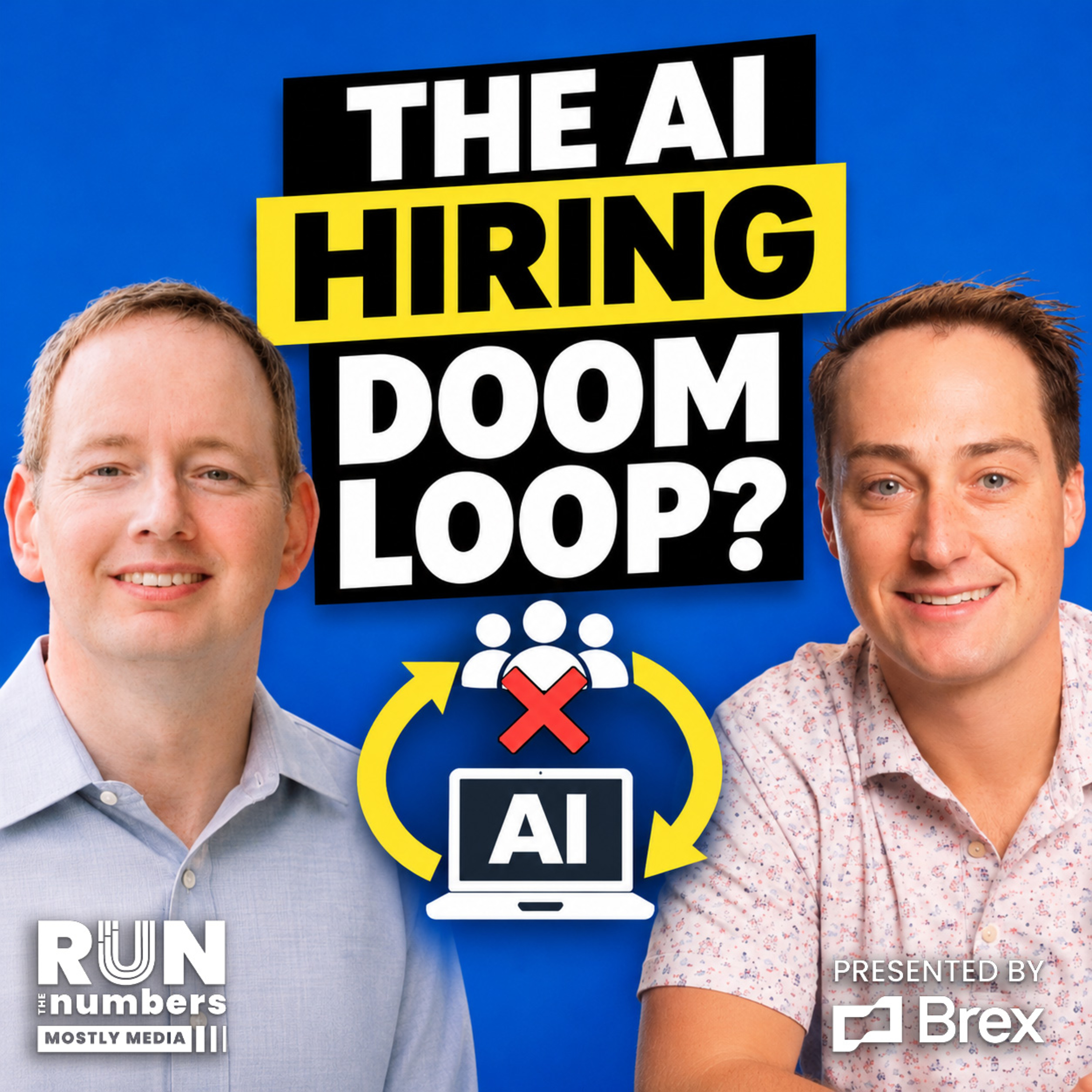
How AI is forcing CFOs to rethink business measurement by introducing “return on compute” (ROC)—treating compute/tokens as a budget line item with definitions, controls, and reporting like CAC/LTV or cloud cost tagging.
finance leaders must communicate and influence with a thesis (not just numbers); leaders need compute vocabulary and controls to prevent surprise bills; budgeting should focus on compute-driven capacity (e.g., revenue per compute) and “frontier convergence.”
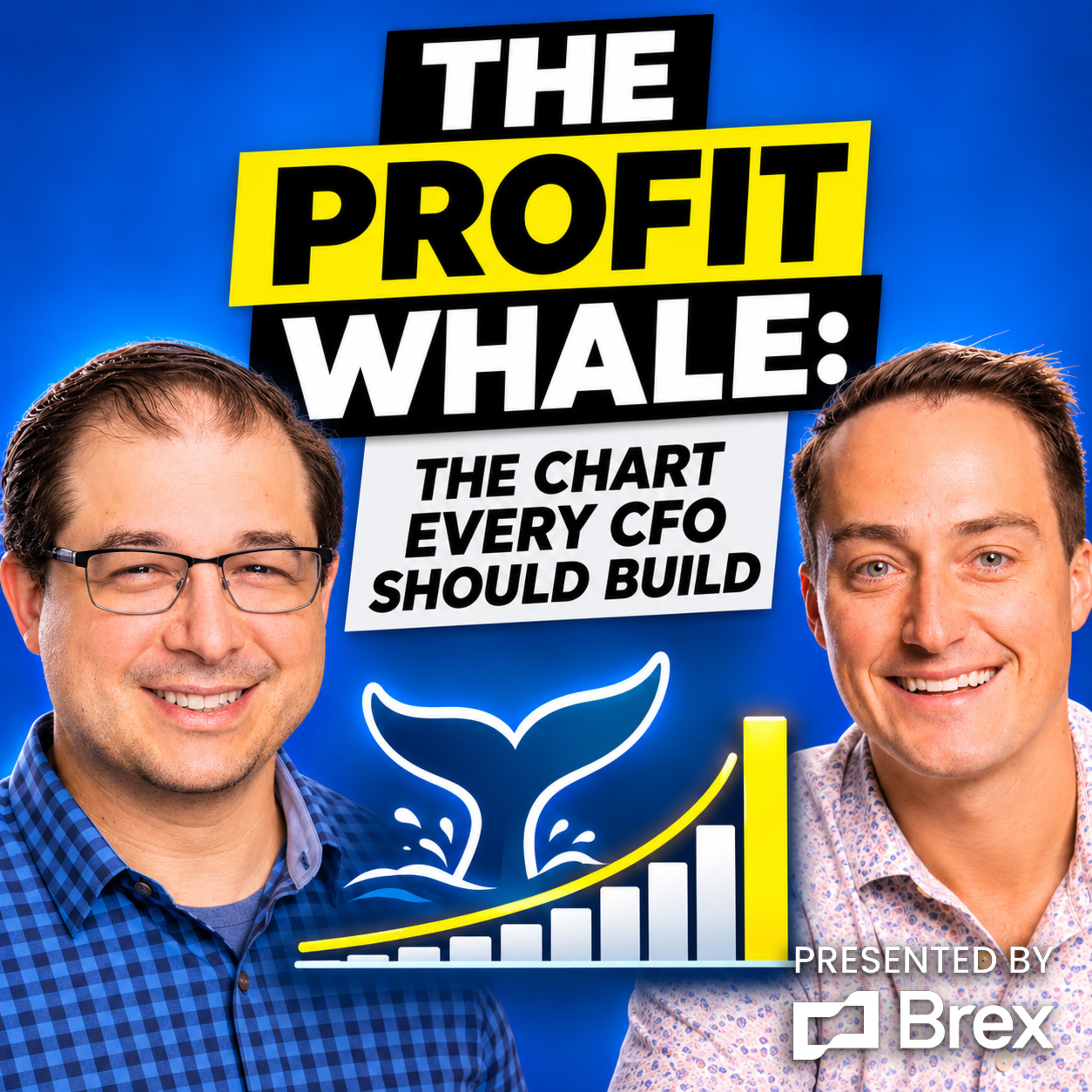
an engineering team surprised by a ~$500,000/month compute bill; cloud-era lesson that easy server spin-up led to uncontrolled spend; Anthropic’s CFO allocating tokens flexibly and contracting for massive compute capacity (multi-gigawatt-scale deals).
Jim Cook—founding Netflix CFO; later CFO of Mozilla; now coaches CFOs via Benchboard; author/newsletter at CooksPlaybooks.com.
Written by AI. May contain mistakes.
Learn about the evolution of financial metrics and the new focus on Return on Compute.
“Once upon a time, there wasn't SAS metrics.”
Jim shares his extensive experience in finance from Intuit to Netflix.
“I always get excited when you're coming on because I just leave energized, like getting your worldview because you talk to so many CFOs.”
Explore the concept of Return on Compute and its implications for CFOs.
“Well, I wanted to bring that up because we've come such a long way when we think about not only returns in the mail, but return on investment.”
Discuss how AI changes the finance landscape and the importance of monitoring compute costs.
“We don't have controls because we don't even have the definition of talking about or this concept that compute costs money.”
Learn strategies for managing compute costs and ensuring accountability.
“lot of things and it says, oh, I made this error.”
Discussion on the disruption in the ERP space and the emergence of Realit.
“And then they start arguing after that, and they never switched off Fable 5 and then a little selector down there.”
Exploring the significance of cloud infrastructure costs for CFOs.
“You are what your gross margin says you are.”
Discussion on the challenges of budgeting in the changing pricing landscape.
“What have you been hearing from your clients around budgeting for something like this?”
Exploration of qualities that distinguish a great CFO, including a framework for assessment.
“the CFO and COO at Front, and she gave me this concept of frontier convergence.”
Highlighting the significance of communication and influence for finance leaders.
“And you have this really eloquent framework.”
Discussion on how to use questions for effective influence in finance.
“And I just want to flag for listeners that this is a cousin to storytelling, but it's very different than storytelling.”
Discover why communication skills are essential for career advancement.
“how to say things seven times, seven different ways.”
Understand the significance of leading discussions with a clear thesis.
“You know, there's so many TED Talks on this.”
Explore how reframing statements as questions can enhance engagement.
“statement or in the direction that they can't see.”
Wrap up with resources and final reflections from the guests.
“The most effective way to engage your kids is to ask them a question and shape their answers.”

Get the gist, explore an idea or ask about something said.
 Claude
On Run the Numbers, what are the key points of this episode?
Searching your listeningAutomatic transcript. May contain errors.
0:00Once upon a time, there wasn't SAS metrics. There wasn't PAC. There wasn't LTV. We got to start talking about return on compute, ROC, ROC, whatever you want to talk about. Strategy is simply a set of choices, path choosing which choice you're going to make and why, and more importantly, which choice you're not going to make. You know what the biggest weakness and the number one thing that helps all other pillars is how to communicate and influence everything else. We need to take all of our strengths and data and learn how to communicate why that data is important. Too many CFOs, including myself, were not afraid to leave with the facts and the numbers and the reports and the budget versus actual and the why.
0:40And here's what I think we should do about it. And a lot of us have this internal imposter syndrome in our head to say, that's not my place. That's the CEO's place. Take that leap. Get uncomfortable. Is this thing on? Yesterday's price is not today's price.
1:06CFOs have spent the last hundred years figuring out how to get more output from people and capital. Well, now we have a new input to worry about. Compute. Today on Run the Numbers, I'm joined by Jim Cook. Jim was the founding CFO of Netflix, later CFO of Mozilla, and today coaches CFOs through Benchboard. So we've seen a few technology shifts up close and personal. And Jim thinks AI is going to force finance teams to rethink some pretty basic questions about how we measure the business. We get into his idea of return on compute. What the hell that actually means? Why your functional leaders need to understand their compute costs just as well as they understand headcount, and how CFOs should think about budgeting when a few enthusiastic employees can suddenly rack up a truly impressive AI bill.
1:52We also talk about how the CFO job itself is changing. GM is a framework for the five dimensions of a modern CFO, and one idea I particularly liked, the best CFOs don't walk into the room armed with numbers. They walk in with a thesis. Because if AI gives everyone access to more data, more analysis and more answers. Having an opinion, damn it, about what it all means becomes considerably more valuable. Here's my conversation with my friend, Jim Cogan. Jim, welcome back to the Run the Numbers podcast. Glad to be here, TJ. It's fun. I always get excited when you're coming on because I just leave energized, like getting your worldview because you talk to so many CFOs.
2:32You've been a multi-time CFO yourself. For the benefit of listeners who maybe haven't listened to all 300 episodes because you've appeared a couple of times. Can you just give the 30 second Jim Cook overview where you've been a finance leader and what you work on now? Started 30 years ago in Silicon Valley, been in finance, stayed in finance, been an operator, but I was lucky enough to be at companies in the very early days, Intuit, first 100 employees, the only finance hire for the CFO. To be there with a company like Intuit, looking back is like, wow, a lot of lessons learned. Spent five years there.
3:05Eventually, we left. Before I left, we had, you know, we were 3 ,500 people in five business units. Did it again with Netflix on the founding team of Netflix, designer of the red envelope, all the logistics way back when, when we were actually shipping discs. Many of your listeners probably don't like, wait, Netflix envelopes? What is he talking about? But, you know, Netflix is a different company now, but, you know, it's fun to be on the starting edge of these companies. Did it again with Mozilla in 2005, launched Firefox 1.0. I was called in to help at that point about six months after they launched.
3:35And we just caught a tiger by the tail. We owned the market for about four years before Chrome came in. And so we went from like zero revenue to 500 million in revenue. And all the learnings of having to scale a company from basically zero to a brand name company. So now I'm taking all those lessons learned and I'm paying it forward with, I've got a coaching practice. I'm an author of coachplaybooks.com. I write my newsletter. You and many others inspired me to start writing. So I've started doing that two years ago. And I'm building as I go. And I'm building a new website as we speak. And more to be named later.
4:07I'm in the mode of sharing all my best ofs with anybody who wants to hear. Jim, my humble brag, instead of like, hey, I have a friend who, you know, played point guard for the Celtics. My brag is I have a friend who invented the red envelope. That's going to last only for a few more years. We should be like, what are you talking about? Me and you have talked about this over a beer before. That was actually a very novel idea to take a subscription packaging and put it around that. Like you have to ship something physical, but like that was kind of the beginning for a lot of companies of thinking about stuff and subscription.
4:36We invented subscriptions. If you really look at e-commerce, there were no subscriptions in 1997 when Netflix started. I had to design a 100 % return rate product, not a one-way shipment. Amazon, if they had a 2 % return rate in 1999, you know, they were losing a ton of money. But we were dealing with the post office and it was a crazy idea, but thank God it worked. Well, I wanted to bring that up because we've come such a long way when we think about not only returns in the mail, but return on investment. And you had this post on LinkedIn recently that just made kind of put me into a mental pretzel just thinking about ROI and then how we frame that in the context of compute.
5:15So maybe you could just take me through what your latest thinking is on ROI in the age of AI. I think the post you read is Return on Compute. I, in turn, listened to a podcast from Krishna Rao, CFO of Anthropic. I'm still a student of the game, learning from anybody I can learn from. And I learned him talking about this new metric that I had not stumbled upon yet called Return on Compute and how he thinks about allocating his resources internally for one of the fastest growing brand name companies of the day, Anthropic. how he needed as a CFO to be really flexible. There's no way he can forecast OPEX on how many tokens he has to give his engineering team and how many tokens he has to set aside for customers.
6:00And there's not enough tokens to go around. And so where is he going to get all this, you know, compute tokens? Where's he going to get all this compute from? So he's out trying to design these multi-million dollar contracts with Colossus, the XAI division of now SpaceX, to take down their entire data center of one gigawatt. And now Anthropic paid something like billions of dollars for 100 % of that capacity. He rattled it off. Krishna rattled it off his tongue. Like, oh, it's return on compute. Like everyone knew it, but he didn't really define it on the podcast. I need to put a pin in this and write about this because it reminds me that as we CFOs and actually executives learn new technologies and new ways of operating, every once in a well, we have to create new metrics around our business.
6:47I mean, this is your whole thing, CJ, mostly metrics. I think this is why you're really interested in it. Once upon a time, there wasn't SaaS metrics. There wasn't PAC. There wasn't LTV. There wasn't the magic, Joel's magic number. We got to start talking about return on compute, ROC, ROC, whatever you want to talk about. When you think about return on compute, Jim, is that at the company level? Is it at the department level? How are you defining this? We all want our leaders thinking about the cost of their business, but we used to think about it in terms of headcount costs and vendor costs and software costs that we would buy and seat costs.
7:26It's now time to start talking about compute costs. At least start defining it as part of the vocabulary of my executive leaders, my department leaders, my CEO and the board, and defining what return on compute means for us because they will change, but just having it in the vocabulary is important, in my opinion. If we're going to put AI agents or explore putting agentic humans into our department, how much is that costing us? How much compute did we need to do that project? Many of the engineering teams, and this is mostly engineering right now, are using compute to code what our engineers used to code for us.
8:03But I'm hearing stories all the time, and I'm sure you are too. I just had one the other day with one of my clients that got surprised by a$500 ,000 a month bill on compute. How do you get surprised by$500 ,000 of compute? And I say to myself, I know because I live through this thing called the cloud and we all moved to AWS. And there were many of us as CFOs that got enamored by we can go faster, we can spin up a server. We're going to be really efficient by operating in the cloud back in 2013 versus operating on-prem. It would take weeks to get a rack and a server and hook up the wires. And now it took seconds to hook up a server.
8:44But guess what? You gave such power to engineering teams. They spun up every server under the block because it was so easy. And then you get this$500 ,000 bill in 2013, which is a lot more than$500 ,000 now. And you're like, how the heck can this happen? And the answer is no controls. We don't have controls because we don't even have the definition of talking about or this concept that compute costs money. I mean, we all know it costs money, but we're defining it by how fast we go or what the quality is. But we also have to start introducing what's the cost of the compute and is it worth it to spend that cost just like any other return.
9:20But it's no longer investments. It's no longer cash or capital. I guess it is. But I think we should start thinking about compute as a line item. I'm starting to think about it as an element within this larger budget envelope, right? Because I remember the first time I read a bill from AWS back in the day, and I had some imposter syndrome. Like, I understood the numbers, but I didn't understand what we were paying for. And the proxy for value required a different frame of mind. And I was like, I'm not technical. Am I qualified to be making these judgment calls? So what did you do about it, CJ?
9:55I'll bet what you did is you learned the definition of the new vocabulary. and then you learned what that definition meant on the bill. And then you put process into place to figure out what that definition, how that definition flows through to people that are actually using it so that you can report on it. See, it starts with definitions and it starts with talking about it and then it starts to become part of the company's vocabulary and then you can start reporting on it. You nailed it. Well, what I did was I met with this engineer, director of platform infrastructure. His name was Patrick back in the day.
10:28Shout out to Patrick. And you said, can you share your screen? Talk to me like I'm a golden retriever. Show me what's on the screen and what this means. And then what I said was, what do we do in the company that makes that number go up? this is where we're at with compute this is where we're at with tokens i'll bet you most executives including me don't even know how many tokens are used for any compute request and in fact i've tried to figure it out and anthropic and open ai and gemini and all the kind of hide that fact almost to the point where i'm starting to wonder if they're kind of gaming the system if they're making their own errors on purpose because claude makes a lot of errors they do a lot of things and it says, oh, I made this error.
11:10Let me recompute it. And the CFO in me says, wouldn't it be fun to program errors to actually be able to predict how many tokens I'm going to use? Because it knew I had to ask to fix its own errors, right? Yeah. The third caller just arrived. It's tinfoil hat CJ. And I have a conspiracy theory too, that sometimes I'll prompt it and it won't give me what I want right away, or it'll purposely give me half of it because it wants me to ask the next question. We need to train all of our employees down to the department level, down to the staff level of what's the value of that request. This is what Christian is doing.
11:42He's giving compute token allocations to his OPEX line, to the development line as a development and to his customers. And he first carves it out in the three buckets, right? My internal company, my development team needs this many to build new features and products at a bare minimum, not a maximum, minimum. Like they can't operate and write feature code without at least as many tokens. The site will go down or they won't get good quality if I don't give my customer, huge customer base, as many tokens. The rest of my internal team has to have a minimum number of tokens so we can get better as a company.
12:19So he starts at that basis. Each of those buckets had to be broken down into sub-buckets and then reported on, right? So we do back in the AWS cloud days. Once you went to that screen, you then started asking yourself, the invoice comes across. I need to tag. I need to tag that project so when it comes across on the invoice, it shows up in my chart of accounts. So then you had this whole tagging process. And there were companies that came along that tagged for you and you could buy software to tag it. But this is what I'm talking about. When you have a new technology, you have to structure how that technology works backwards to your reporting mechanisms inside the company.
12:55Do you think this is a new skill that finance leaders need to adapt to, or do you think it's applying just the same stuff we already know to a different problem? I fundamentally believe it's applying what we already know to a different problem. We've already had to tag cloud costs. Those of us had to create and report on new metrics for CAC and LTV for SaaS. You know, the framework is define the metric, make it consistent and report on it, and then hold your executives accountable to it. This is so new to most all of us that we don't even have a good definition of what compute and token usage is right now inside our company because we don't talk about it this way.
13:32I would have some all hands beer meetings and just hackathon meetings like many of these startups do. And I would just start asking questions like, who knows their usage? Did you even know there was a usage screen inside of Claude? Did you know that the context window on usage is just as important as how big that context window is. Like, I'll bet you 90 % of employees don't even know. They're like, oh, I'm using Fable 5 because it was free for 30 days. And then they start arguing after that, and they never switched off Fable 5 and then a little selector down there. You know, Opus, you know, costs less, and then Sonic costs even less than that.
14:11Make that switch and save our company a lot of money when you're only looking up a stock price indicator, right? Don't use Fable 5 is ask me what Google stock price is today. I got news for you. The ERP category is finally getting disrupted. And if you haven't heard of Realit yet, please pay attention. It's the AI native ERP built specifically to replace NetSuite. And it's already won over hundreds of finance teams. Their mission is to make the zero day close a reality. And they're actually doing it. We're talking teams closing the books at 1.35 PM on the first day of the month. Companies like Windsurf, Mercore, and hundreds of others run their entire finance stack on Realit.
14:46Revenue recognition, close management, multi-entity, native Stripe and Salesforce integrations. Woo! Everything a scaling company needs. They've got 5.0 stars. 5.0. Wow. 5.0 stars on G2. They're backed by A16Z and Sequoia. Heard of them. And CPA-led implementations that get you live in 45 days. That is simply unheard of in the ERP space. If your books aren't running as fast as your business, check out Rillit. Book a demo at Rillit.com slash CJ. That is R-I-L-L-E-T dot com slash CJ. That's me. You are what your gross margin says you are. Sorry, my kids are tired of hearing me yell that at the kitchen table.
15:27Dad, I'm two. I don't know what cloud costs are. Well, I do. And cloud infrastructure is the second largest line on most tech P &Ls. And yet, most finance leaders couldn't tell you how it's priced. And as a CFO, I understand there's a nonlinear impact to your company's valuation when you improve your gross margin. And the path of least resistance is through your AWS or GCP bill. Because like anything you buy, cloud gets cheaper when you buy it in bulk. In fact, you can get the rate down by 20%, 30%, even 60 % in some cases. The flip side is getting saddled with a bunch of capacity you never touch.
16:02Happened to me once, I think I still got some megawatts in the kitchen cupboard somewhere. That's exactly what cloud capital solves. Cloud capital underwrites the risk so you can realize the same savings of a deep, long-term commitment sands the downside. Oh, and it takes no engineering work. Bingo! I've known Edward since back when he was just starting the biz, and it's incredible how much they've saved customers on their cloud bills. That could be you too. So head over to cloudcapital.co, that's cloudcapital.co, and find out how much you could save. Every decision a company makes is inherently a financial decision.
16:39Folks, I've been trying to tell you that for 300 episodes. So it's wild that most finance teams have to spend a week on what already happened. While my favorite movie is Back to the Future, we'd be living in the past. Speaking of movies, here's a terrible plot. Tired accountant chases down a receipt from March and then polices a$20 Anthropics subscription, starring the accountant Ben Affleck. So stop living it. You don't have to play defense on what already happened if you get your system sorted. And Brex's intelligent finance platform clears the backward-looking work. policy enforced at the point of sale receipts matched instantly closed short in two days not weeks what's left is the forward-looking part where to deploy capital how fast you can move what next quarter actually needs because the defense is handled by brex it's time for finance to go play offense throw the ball deep thousands of companies including anthropic coinbase and DoorDash already run on Brax.
17:35Head to brax.com slash metrics to join them. That's brax.com slash metrics. What have you been hearing from your clients around budgeting for something like this? Because the pricing models have changed a lot. Some of it's similar to the cloud era, but I do think that we have these new proxy metrics and ways to capture and measure value. What are you hearing on the budgeting end of things? That nobody knows how to do it yet. We're such at the early stage of this that everyone's trying to figure out how to budget? I've been thinking about this all year. And at first I thought it was going to be similar to a benefits load.
18:08Like, hey, we're hiring someone in the U.S. It's 22 % on top of their OTE, but I think it's going to vary by department and it's also going to vary by role. And we were speaking with Meredith Finn, the CFO and COO at Front, and she gave me this concept of frontier convergence. So the concept is similar to how you would ramp a quota carrying person in sales up to whatever their effective capacity is. You think about, well, an engineer IC, I know that based on my internal team benchmarks, the top decile spends this much amount on tokens. You can come up with these theoretical maxes to ramp people up to over time.
18:48They're not going to get there overnight, but if you play it out long enough, you hope that they get to this efficient frontier where they're doing great work. The assumption underneath all of that is that from a CFO seat, compute is driving more and more of our resources. It's no longer headcount. I'm going to start talking to you about revenue per compute, not revenue per headcount. Oh, say more about that. That's super fascinating. You and I think the same way about it's not different. It's just new. You talk to any CFO today and they'll be like, we're rated on our revenue per head count across our company.
19:23We understand what this is. If your revenue per head count's above$333 ,000 per head, you're doing great. If you're 400 ,000, you've got all these metrics on your site. Where's the revenue per compute use? I'm just making that up. Maybe that's not the right one. What's the compute per head? I think this is a post that you need to write, CJ. You're the mostly metrics guru. I think you need to come up with 20 definitions that we can all cogitate on and everyone picks five. Someone at some point made up CAC and LTV. None of us knew what RAM was in a computer. We had to learn the definition of what random access memory was.
19:57And then that was great. I understood what it was. They didn't understand like 486 or a 386 or a Pentium computer, or even kind of what a GPU is. We learned what the definition was. And then we learned what was better. You know, this is more RAM means this. Otherwise my computer is going to be slower. What are the definitions? What does it mean? What's min max, good, bad? I never got to play shortstop for the Red Sox, but maybe I will coin the next CAC payback period of the AI era. Who knows? There you go. Jim, I want to switch gears a bit and talk about measuring the modern CFO and what makes a great CFO.
20:32I think that there are qualities that separate a good finance leader from a great finance leader. And you have this really eloquent framework. I think it's five dimensions for assessing a CFO. I was hoping you could hit us with those. there's leadership, there's strategy, there's culture and teamwork, communication and influence, and there's setting up what I call decision-making systems or operational excellence. We sit at a very unique intersection being an executive that has to encompass all five of these pillars, and there may even be six. Maybe the sixth one is for late-stage companies, IPO readiness and M &A readiness.
21:14It's how ready are we to be acquired or IPO. Each pillar is unique and have different requirements. There are techniques that you can learn like being a shortstop for the Red Sox. How to set up systems. What are the best systems? How to set up decision-making systems. What does strategy actually mean? What does it mean? I've long debated this. Simplest definition for me is strategy is simply a set of choices, path choosing which choice you're going to make and why, and more importantly, which choice you're not going to make. Strategy is as much about saying no as about saying yes to something.
21:48It's about choosing a direction and explaining why you believe that direction will win. How are you going to avoid the threats along the way and the roadblocks along the way? And saying no to all other choices. It's choosing a path without knowing that that's going to be successful. How many moves does it take to checkmate an opponent? Like, well, I've got a strategy. I'm going to be either aggressive with my pawns or I'm going to be not aggressive. I'm going to do Queen's Gambit. That's a strategy. Might lose, but that's my strategy because I've identified my opponent. So it's choosing a path.
22:21It's decision-making. Decision-making comes underneath strategy. Strategy is choosing a path. And once you're on that path, then you have to choose decisions about what direction are we going to take to get there? I got to get off the highway and eventually I got to get back on this highway. How are we going to then detour around this roadblock. It's a storm's coming. Jim, for the people who are aspiring to the CFO seat, and they're saying that sounds like a lot of stuff, I don't think I check the box on all of them. No one will ever check the box on all of them. That's the thing. This is a game of playing to your strengths and shoring up your weaknesses.
22:54Can you say more about that? Whenever you have to be a multi-dimensional anything, let's use your Boston Red Sox example. You're either probably an infielder or an outfielder. You're either fast or you're slow. These are all the components of winning a baseball game or winning the game of business. It requires these pillars, these components. I'm good at these one or two or three. I'm kind of weak and I'm humble enough to say I'm weak at these. So I'm going to hire people or design systems that will show my weaknesses. Which one is the most important? Because I always get that question. The thing I work on the most with my clients, it probably sits at the top of the other pillars.
23:30It's not obvious what the answer is because, oh, I'm good at numbers and data and I'm a great strategist. I'm a great thinker. You know what the biggest weakness and the number one thing that helps all other pillars is how to communicate and influence everything else. You're good at it. I've become good at it. I didn't used to be good at it. But we as a role never had to practice being good at communicating and influence generally. I'm being very generic about this, right? We were good at numbers. We were good at CPA. We were good at black and white. We were good at right and wrong. We were good at rules.
24:04But they're rules. They're black and white. They're one and zero. They're balancing the books. They're closing the books. but communicating for influence, that's something CMOs and CROs do. If you think about it, they don't do it with a lot of data, which causes us to kind of itch. We need to take all of our strengths on data and learn how to communicate why that data is important. Why we need to do, create a new metric called return on compute. We have to lead with why. There are communication techniques that you can learn from the best. If you work in finance, you know what time of year it is.
24:37I'll give you a hint. It's our Super Bowl. Budget season is here. Woohoo! So how many versions do you think you'll get up to this year? I once got to V147 in the good ol' Excel days. Beat that! Actually, please don't. This is when your planning software should earn its keep. You don't have to choose between either Excel or an inflexible ballooning platform that takes a consultant to change. Abicom brings you the dynamic capabilities you love from Excel while preserving the rigor and governance of an enterprise suite. I met Abicom's founder and CEO, Julio Martinez, more than three years ago. He and his co-founder, Jorge, came out of finance, and they built a planning platform that can run a complex business without becoming another system that requires a babysitter.
25:21Abicom puts your actuals, forecasts, models, and business context in one place, so you can update the plan, run scenarios, and answer, why did this change? In fact, you can even ask it in plain English. You might not even have to spell it right, thanks to AI. That's why I'm so excited about Abacum. Go to abacum.ai slash mostlymetrics. That's A-B-A-C-U-M dot A-I slash mostlymetrics. Or just tell Julio that CJ sent you. That'll probably work too. Remember when pricing was simple? One product, one subscription, one invoice every month. Those days are over. The AI economy is changing how everything gets bought and sold.
26:00We're seeing usage-based pricing, hybrid contracts, and something called a credit. The finance systems built for vanilla subscriptions weren't designed for this. This isn't just a rev rec problem anymore, because outdated revenue architecture can kill a great pricing idea before it ever reaches the market. RightRev lets you recognize revenue in whatever shape it comes in. Whether you're launching consumption credits or testing entirely new commercial models, RightRev gives finance the flexibility to support whatever pricing model comes next. So product teams can keep on innovating, and finance teams can keep pace.
26:33If you're architecting revenue for the AI economy, learn how RightRev can help. Visit rightrev.com slash CJ. That's me. That's rightrev.com slash CJ. A wise man once told me that every startup is really just a loosely functioning disaster. Ain't that the truth? If your startup needs a little extra support, and let's be honest, who doesn't need a little help now and then? You're in for a pleasant surprise with Fidelity. Fidelity Private Shares helps early and growth stage companies stay investor ready with cap table, data room, and scenario modeling all in one place. A messy or missing cap table might not just slow you down.
27:09It could cost you your next fundraising round. VCs are flooded with pitches and if your equity is confusing or missing, they'll move on fast. Fidelity Private Shares gives founders the structure and simplicity to focus on what actually matters, building your company. If you stay investor ready, you don't have to get investor ready. Check out fidelity FidelityPrivateShares.com to learn more. That's FidelityPrivateShares.com. And I just want to flag for listeners that this is a cousin to storytelling, but it's very different than storytelling. Say more. You can use communication to influence people to a certain outcome and to get a group of people who may have different motivations and incentives to agree on a certain path.
27:52That's different than, like, I'm a great storyteller to hopefully raise the stock price. I think what you're alluding to is internally influencing your peers to make them want to go along for the ride and be inspired by it and also believe it's their idea. It's not just something that's being forced down on. What I write about is engaging the people that you are trying to influence with questions, not statements. If you ask the right question, can influence the direction of the conversation to where you actually want to go. versus we're going here and this is why, this is what's going to happen if we don't, here's the data.
28:29Everybody's just like, has all this stuff come over their head and I have to just follow the leader versus like you said, it was my idea. Well, was it really? Or did I just ask you the right question to lead you to my idea? What age did you think you learned this or realize maybe you didn't have the skill down yet, but you realized that you needed to get better at it? I'm going to say, so I started Intuit in 1991. I'm going to say 2010. Oh, shit. That's a while. A lot of my career was kind of pre-social media, mid-90s, really, pre-internet, pre-browser. You didn't need a lot of this stuff. We really were back office people.
29:03So I would say the first 10 years of my career was it escalated and escalated when everything became more visible, people living their lives online. And you realized, man, what I say actually stays with me, the smart and the dumb things that I say. So you realize very quickly that you have to not only be careful what you say, but you can also use that as a strength and say, if you say it the right way, people will remember it. So this is when I really started paying attention to some of the things that I started learning, how to say things seven times, seven different ways. The classic islands of safety and sex talk that you and I have talked about before.
29:42Listeners, that is S-E-C-S. If I say it like that on purpose, why? So you listen to it. It's something that you can say, remember, and use as a framework. These are the kind of techniques that once you study them and learn them, then you can put into practice very quickly. Can you think of a time in your career where you realized that the communication for influencing someone was super important? I remember at like 10 years old watching Ronald Reagan on TV, and he was the master communicator. He was an actor too. He was known pretty much as one of the first presidents who just had this golden tongue of communication, at least in my in our modern day.
30:21I mean, I guess Abraham Lincoln was like that. Yeah, I wasn't there for that. But he wasn't that smart a president. The way he said his words was just like, I think imprinted on me at a very young age that you really can influence people with the words you use. It's just funny because these aren't the skills that they teach you in undergrad, right? These are all the soft skills that become even more important to get you to the next level. And they're not technical at all. Yeah, but you see it all around you every day. You see why your executive peers were promoted or given the raise, or you see the decisions made by your CEO because, you know, that famous FedEx commercial, the way people say things.
30:57Wait, wait, he said the same thing I did. He just said it this way. It's body language. You know, there's so many TED Talks on this. It's a fascinating subject. Jim, something you've said to me that's stuck is that the best CFOs, they don't always lead with the numbers. They lead with the thesis. What does leading with a thesis mean? It's part of how to influence. So it's a great, great question. It means having a point of view. Too many CFOs, including myself, were not afraid to leave with the facts and the numbers and the reports and the budget versus actual and the why. Many of us held ourselves back by saying, and here's what I think we should do about it.
31:33Having a point of view, having a opinion, having a thesis about what the numbers mean and where we should go. And a lot of us have this internal imposter syndrome in our head to say, that's not my place. That's the CEO's place. My place is to just report the numbers. It's the board's place to make the decision. I'm here to tell you, take that leap, get uncomfortable, lead with a thesis. And you know what a thesis is? A thesis is it's an opinion. It could be wrong. Makes a lot of finance people shudder. I don't want to be wrong. The fact that I could be wrong is uncomfortable. So I'm not going to lead with that.
32:03But I'll tell you the one thing I've learned in my career, and if you look around and are honest with yourself and others, it's only the people that have an opinion that are part of the conversation. I've observed this divergence in people's careers where there were a lot of people smarter than me, but they didn't want to put their foot down and say, I believe this or I believe that. They wanted to hedge or they just wanted to present the numbers and let other people come to that conclusion. And it's really just like this minor step because I knew all of these people actually had an opinion in their head.
32:33They still don't want to say it. Well, it's safer not to say it. Totally. You know, you're not going to get judged by not saying it. It's safer to hide behind the numbers. But that's where you really take the next level up in your career is to be brave enough to speak up in the board meeting, to say to your CEO, I'm not sure I agree with that. Say it in a way that gets him or her to hear it so that you're not finding them wrong. you're finding the bits of it that are right and reformulating the risks that you see in the statement or in the direction that they can't see. And sometimes you can do that through questions, I find.
33:12That's the other thing I've learned and I coach and I teach a lot. You could turn any statement into a question. Say more about this because I think it's a subtle reframing, but it's powerful. If you have a thesis and you want people to cut and you have the data behind the thesis, which we normally do, and you want people to end up in an outcome, you have to lead them there. Telling someone to follow you, they will follow you only because of your title. Incentivizing them to go there, getting them to understand why it's important, and getting them to understand how their part is going to play in it.
33:43You can't tell someone to do that. That becomes dictatorial. Many people do, and I did earlier in my career. I'm a CFO, and I'm just going to tell people what to do. But you find that if you ask them a question and you slow down a little bit, and you ask them a question which leads them to step one and ask them a question which leads to step two, that they'll follow along and engage and they'll start asking questions. And then you'll start having a conversation around the outcome that you need to both arrive at, that the company needs to arrive at. That's high level stuff, but I will tell you that coming up with those questions is the hard part.
34:13Building the muscle of turning statements into questions is the work. I used to literally have a couple of pages in my notebook that I would take into executive meetings and board meetings of my favorite questions because I knew I had to ask them, but it wasn't part of my mental muscle. So I would literally casually open my notebook, look down at my notebook. I knew it was effective, but it just wasn't part of my habit. But when I started doing that, I was like, oh, that's a good one. What are we solving for? Wait, Jim, Jim, you teed me up too perfectly for this because our next segment is called Asking Better Questions, brought to you by EY.
34:46Let me tell you, these people at EY, they ask the best questions. This is a very meta question. You got to tell us about the questions that were in that book, Jim. I don't think we have enough time for that, but maybe I'll do my own pitch. I love how you did your pitch in there. I wrote a three-part series on leading with powerful questions on CooksPlaybooks.com, so go check it out. And I listed all the questions that used to be in my book there. So there's not enough time in the day to go through my three-part series. Just give us one or two, just for the people. One already is what are we solving for?
35:16Another one is, you know, why does that matter? who cares? That's a really good one. The opposite side of that is you've got all this data, you know, we're going to hire a bunch of sales reps because engineering is going to launch the product in a month, but you already know that the product is delayed and you know, we shouldn't be hiring the sales reps. And so you could as a CFO say, nope, we're not hiring those sales reps because I already know that the product is delayed. But instead you just say, why are we hiring those sales reps now? Where's the bottleneck? That's another question. But why now forces that person to say, well, because engineering is launching in a month and we got to get our reps lined up and like, okay, that's a good idea.
35:55When's the last time you talked to engineering about their production schedule? Well, I have, and they said this and this. And what would you say if I told you that engineering is delaying by two months? Now you can bring your facts in. And sometimes I get the sense that you would actually know the answer, but you just wanted to hear somebody else's perspective on it. The best questions are when you already know the answer. And that's not Machiavellian, and that's not manipulation. Yeah, I didn't mean it in an evil way, but... No, no, no. But I get this a lot. It's like, Jim, why would you manipulate people when you already know the answer?
36:24Why would you just tell them? Aren't you just beating around the bush? People want to be part of the team, and they want to know why they're doing what they're doing, and they want to be incentive. They don't want to be told what to do, and they don't want to be say, follow me or else. They want to be part of the solution. And the only way to do that is to engage them in conversation. Parents don't engage their kids by do this, do that. I mean, I guess they do. The most effective way to engage your kids is to ask them a question and shape their answers. Where can people find you? If there's somebody out there listening who says, I need more Jim Cook, where can they get the download?
36:55Super simple, seven letters, fits on a license plate. JimCook at Benchboard.com. Benchboard's my company. You can ping me. You can find me also on CooksPlaybooks.com, my newsletter. It's great to spend time with you. I get so jacked up and ready to run through a wall on all this finance stuff. So thank you for carving out time. Well, I'm counting on you to create those metrics for us. The new era of metrics. Run the Numbers is a mostly media production. Yelling an intro by Fat Joe. Artwork by Meg D 'Alessandro. Nothing said on this podcast is intended to be business or investment advice. It's the sole opinion of me, a guy who feeds his dog way too much ice cream and has a history of net operating losses, LOL.
37:34If you like this podcast, hit subscribe and give us five stars. It will take like two seconds and our algorithm overlords love it. Drink water, call your mom and have a great day. Peace.
In this episode of Run the Numbers, CJ welcomes back Jim Cook, a multi-time CFO (Intuit, Netflix, Mozilla) turned coach, author, and newsletter writer. They dig into “return on compute,” the metric Jim believes every finance leader needs in their vocabulary, and why surprise AI bills echo the early days of the cloud. They cover how to budget for tokens, the “frontier convergence” idea for ramping compute spend by role, and why revenue per compute may join revenue per headcount on the CFO scorecard.
—
SPONSORS:
Rillet is an AI-native ERP built for modern finance teams that want to replace NetSuite and close faster. With revenue recognition, close management, multi-entity support, and native Stripe and Salesforce integrations, Rillet helps scaling companies run their finance stack in one place. Hundreds of teams, including Windsurf and Mercor, use Rillet to make the zero-day close real. Book a demo at https://www.rillet.com/cj
Cloud Capital helps you say goodbye to on-demand rates for cloud. Committing more cuts the rate you pay for cloud infrastructure by 20–60%. Commit wrong and you pay for capacity you'll never use. Cloud Capital underwrites that risk, so you capture the savings of deeper commitments without locking in architecture or putting engineers on it. Go to www.cloudcapital.co
Brex is an intelligent finance platform that combines corporate cards, built-in expense management, and AI agents to eliminate manual finance work. By automating expense reviews and reconciliations, Brex gives CFOs more time for the high-impact work that drives growth. Join 35,000+ companies like Anthropic, Coinbase, and DoorDash at https://www.brex.com/metrics
Abacum puts your actuals, forecasts, models, and business context in one place, so you can update the plan, run scenarios, and answer "why did this change?" without rebuilding the story from six spreadsheets and a Slack thread. Connect your source systems, keep models and assumptions aligned, and give leaders trusted answers while decisions are still being made.
Go to abacum.ai/mostly-metrics.
RightRev is a revenue recognition platform built for the AI economy, helping finance support usage-based pricing, credits, hybrid contracts, seats plus consumption, and whatever commercial model comes next. It gives product teams the freedom to keep innovating without outdated revenue systems slowing them down. Learn how RightRev can help at https://rightrev.com/cj
EY works with high-growth tech companies to navigate the messy realities of scaling—from regulatory requirements to IPO readiness. By helping teams get it right early and often, EY lets founders stay focused on building while reducing risk as they grow. Learn more at https://www.ey.com/techstartups
Fidelity Private Shares gives founders the structure and simplicity to focus on what actually matters - building your company. If your startup needs a little extra support (and let’s be honest, who doesn’t need a little help now and then), then you’re in for a pleasant surprise with Fidelity. If you stay investor ready, you don’t have to get investor ready. Check out www.fidelityprivateshares.com
—
LINKS:
Mostly Talent: https://mostlymetrics.typeform.com/to/cLTxtAsN
Jim on Linkedin: linkedin.com/in/cookflix
Benchboard: https://www.benchboard.com/
CJ: https://www.linkedin.com/in/cj-gustafson-13140948/
Mostly metrics: https://www.mostlymetrics.com
—
TIMESTAMPS:
0:00 Welcome Back, Jim Cook
2:56 Return on Compute
5:51 The $500K Surprise Bill
8:25 Do Execs Know Their Token Usage?
10:05 Tagging Compute Like Cloud Costs
12:03 Budgeting for Tokens
13:19 Revenue per Compute
14:45 The Modern CFO Framework
15:50 What Strategy Really Means
17:44 Communication and Influence
22:27 Lead With a Thesis
24:05 Speaking Up in the Boardroom
26:04 Better Questions with EY
28:11 Where to Find Jim
#RunTheNumbersPodcast #ReturnOnCompute #CFO #AI #FinanceLeadership