 Ask ChatGPT


Heidi Robinson, former Food52 CFO/COO, recounts how Food52 (Food52 Inc. plus home-goods brands Schoolhouse and Dansk) moved from a planned turnaround to Chapter 11 after a lender cash sweep, leading to layoffs, a PayPal/Shopify cash scramble, and an auction that split the brands and funded creditor payouts.
Heidi Robinson joined Food52 on Oct 1 as CFO/COO brought in by the lead investor, expecting a ~1-year turnaround. She previously worked in retail/consumer operations and had been a CFO for seven years (plus some investment banking).
She realized within 2–3 weeks the company wasn’t getting straight answers and built a 13-week cash flow showing they’d run out of money by December. A Monday night lender “swept” all cash (bank balance hit zero), triggering legal/operational chaos (clawbacks, payroll/insurance reversals). Chapter 11 was used to buy time, sell brands, and maximize value for creditors.
cash sweep mechanics (ACH reversals, payroll provider clawbacks); repositioning Shopify flows to a dormant SVB account; counting a $200k PayPal balance; filing Chapter 11 Dec 29; stocking-horse bid (~$6.5M) and DIP loan (~$3.5M); Delaware live auction with eight qualified bidders; splitting assets into three lots with backup buyers; waterfall payouts (secured lenders, then professionals/admin claims, then unsecured).
Written by AI. May contain mistakes.
Heidi shares the shocking moment she discovers their funds are gone.
“Did you have anything that you could sell and try to liquidate at a discount just to get some money in?”
Heidi Robinson discusses her role and expectations at Food52.
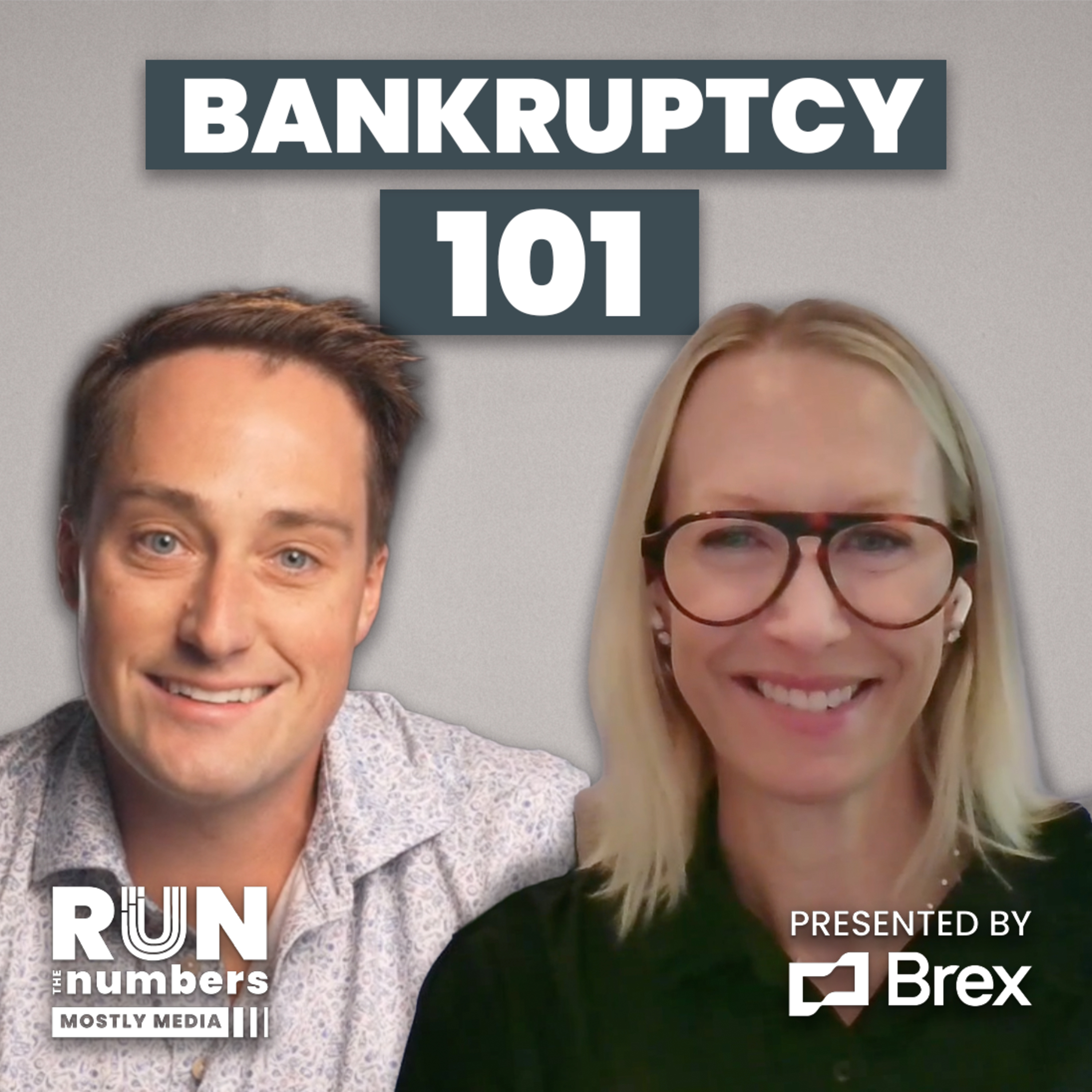
“Today on Run the Numbers, I'm joined by Heidi Robinson, former CFO and COO of Food52.”
Heidi explains how she quickly recognized the company's dire state.
“Heidi, thank you so much for joining me on the podcast.”
Heidi provides context about Food52's diverse operations and brands.
“So I joined October 1st, brought in by the lead investor.”
Heidi reflects on her initial assessments and building financial models.
“There was also a media platform built in partnership with that.”
Heidi discusses the challenges of presenting financial realities to the team.
“So again, I sort of had that gut feeling of something is off.”
Faced with financial distress, Heidi outlines strategies for a potential sale.
“I was really hoping I had an input or an assumption wrong.”
Heidi recounts the moment a cash sweep changed everything for Food52.
“And then we got a little bit of a curveball.”
Heidi explains the quick actions taken to manage the fallout from the cash sweep.
“Because you forget that with working capital and payroll and all the different motions that money takes entering and leaving the building.”
Heidi discusses the financial strategies employed during the crisis, including accessing capital.
“We will get to the PayPal money and that can pay people.”
Heidi explains the steps taken towards Chapter 11 bankruptcy and its implications.
“Did you have anything that you could sell and try to liquidate at a discount just to get some money in?”
Discussion on the objectives of filing for Chapter 11 and the necessary planning involved.
“You have to walk into Chapter 11 bankruptcy kind of knowing how you're going to get out because it's actually quite expensive to do it and go through the process.”
The significance of stalking horse bidders in the bankruptcy process is explored.
“Are you just trying to maximize value at that point, save jobs?”
Heidi describes the roles and importance of various professionals during bankruptcy.
“It's a real pain and it's a distraction.”
Learn about key players in the bankruptcy process and their roles.
“role was still super, super critical and they were awesome.”
Explore the importance of oversight and the U.S. trustee's role.
“And that creditor committee then hires its own set of bankruptcy attorneys and then also their own set of financial advisors.”
Understand the significance of independent directors in restructuring.
“They knew they'd be first to get paid back after a sale.”
Discover how Brex's platform changes financial management for companies.
“Is this is this like a job that somebody can have?”
Learn how Abacum revolutionizes budgeting processes for businesses.
“So how many versions do you think you'll get up to this year?”
Get a detailed look at how bankruptcy auctions operate and strategies involved.
“Because if you think about it, like not everyone continues to market the assets.”
Learn how proceeds from sales are distributed among creditors.
“We might have some balance sheet issues or we might have some whatever.”
Explore the emotional aftermath of a successful bankruptcy auction.
“And so there's the secured lenders do first.”
Learn about the emotional and logistical challenges following a company auction.
“What does it feel like when the auction ends?”
Heidi shares insights on how bankruptcy shaped her views on risk and confidence.
“and go through claims and a lot of court hearings and just filing management reporting with the courts and the U.S.”
Explore the relationship between finance and operations in a business context.
“I don't know if this is going to come across as a weird comment, But I'm somewhat jealous of what seems to be like this immense amount of confidence one would gain from actually going through this experience.”
Heidi concludes her insights on bankruptcy, sharing gratitude and final remarks.
“And you've made so many people smarter on just a topic that not a lot of people talk about.”

Get the gist, explore an idea or ask about something said.
 Claude
On Run the Numbers, what are the key points of this episode?
Searching your listeningAutomatic transcript. May contain errors.
0:00I'm at the kitchen table with my dad. I refresh our bank at zero. And my dad is like, what is going on? And I said, they took it. They took all our cash. It's gone. Did you have anything that you could sell and try to liquidate at a discount just to get some money in? I've grown up like margins are so important. That all went out the window, right? Like, so who cares what the margin is? You just need cash. As long as you can clear the cost to deliver it to the customer. Our dollars were the inventory pieces sitting there. In this case, we needed someone to fund the bankruptcy. It's a great deal, right?
0:34Bankruptcy is this like hidden gem of assets. Like people should buy bankruptcy assets. It's kind of amazing sometimes. There's like a menu of ways to sort of end a company. One would be chapter seven, which would have been just straight up liquidation. That's on Monday night, there's no PayPal account. It's just over, right? and you just liquidate and someone takes over, we're all done too and we're out. With Chapter 11, actually the management, select management can stay. The board of directors stays intact. Is this thing on? Yesterday's price is not today's price.
1:19Today on Run the Numbers, I'm joined by Heidi Robinson, former CFO and COO of Food52. And this is a very different episode. Heidi joined Food52 thinking she was signing up for a turnaround. But within weeks, she realized the company was in far deeper trouble than she or almost anyone else understood. What followed is one of the wildest CFO stories we've had on the show. We talk about what it's like to be the newest executive in the room and have to tell everyone the numbers don't add up. Then one Monday evening, the company's lender swept its cash and suddenly the clock was ticking. Heidi takes us inside what happened next.
1:55Layoffs, trying to make payroll, working through Christmas, preparing for chapter 11, and ultimately sitting in the room as Food 52 was auctioned off. And she explains the part of bankruptcy most finance leaders never see. The restructuring lawyers, bankers, DIP lenders, independent board members, and the surprisingly complex process of figuring out who gets paid when it's all over. It's part finance lesson, part survival story and a fascinating look at what the CFO job becomes when almost every option you have is a bad one. Here's my conversation with Heidi Robinson. Heidi, thank you so much for joining me on the podcast.
2:32No problem. Happy to be here. So our mutual friend, Blake Saunders, he introduced us and he told me, CJ, you've got to talk to Heidi and hear her story because you've had this incredible career operating businesses that I would say are at the intersection of retail, e-commerce, and media. And I wanted to spend most of our time today on your experience at Food52 because it's one of the most fascinating CFO stories I've ever heard. Oh, goodness. Yes. No, Blake's awesome. It was fun to work with him. You joined Food52 expecting to help turn around a business that was maybe struggling a bit. And it seemed like within a couple of weeks, you realized this wasn't the situation you thought you were walking into.
3:13First question here, just to kind of set the scene, give people some context. When did you first realize that the company was maybe in more trouble than everyone believed? Yeah. So I joined October 1st, brought in by the lead investor. And the mandate was always, it was distressed. Like I didn't walk in saying this is, you know, a fresh fundraising round. And this is like all up and to the right. It was a distressed company, but beloved and beloved brands of 552, Schoolhouse, and Dansk. I'd been fans of those brands forever, but it had some hair on it. And it's like, let's improve margins and clean it up and then probably set it up for a sale within about a year.
3:50And the expectation was about a year of runway. As much as we're like data and finance people, you get a gut feeling pretty quickly. Within two to three weeks, I was like, I'm just not getting straight answers. There's a fractional CFO in place and he was passing the baton and he just wouldn't really answer the questions or provide the 13 week cash flow and just all the like basic stuff. And so my suspicions were kind of heightened. And then I just started building the stuff myself and and pretty quickly realized we were in a different state of affairs. And it certainly wasn't a year. So Food 52, there are a lot of hardcore foodies out there and restaurant people.
4:26Can you just describe what I think it was like three kind of legs of the store, right? Yeah. So Food52 Inc. is the overall company, but Food52 was started as a food blog in 2009 and sort of created this beloved community originally around a love of food and then curation, so curating really cool finds from around the world and creating a e-commerce site around that. There was also a media platform built in partnership with that. And then they acquired over time Schoolhouse. Schoolhouse Electric was a kind of heritage homeware, home goods brand in Portland, Oregon, and then also purchased Dansk, which is another heritage kind of Scandinavian home goods brand.
5:05So three different brands under the Food 52 umbrella. Got it. And I wanted to provide that context, too, because you're looking at kind of a conglomeration of businesses that have that have come together, right? Yes. And didn't maybe realize all the synergies that could have been. Very distinct business models. One was based in Brooklyn. One was based in Portland. We actually had a union factory producing lighting. Heidi, you said something that really resonated with me because I also did not come up through accounting. And your first instinct wasn't, hey, I'm right. I got this. It was, I really hope I'm wrong.
5:39Walk me through that moment. Yeah. So again, I sort of had that gut feeling of something is off. I'm not getting straight answers. From there, I sort of built my own information and tried to take the inputs available and put it together. I'd never built a 13-week cash flow myself personally, right? So I come up through, I did a little taste of investment banking. I did a lot of kind of GM merchandising rules in retail and consumer. And then I've been a CFO for seven years, but I've had great teams. And so all of a sudden you're like, I don't know if this team is necessarily giving me the right answers.
6:11I actually have to build this myself and I've never done it. Thank God for Claude. So I called it my Starbucks model and I just went in and took everything I could, built this myself. It said we were out of money in December. This is like the last week of October. And I said, okay, first of all, do I just leave? I'm going to say peace, peace out. It's been real. But, but yeah, what I did was I did two things. I approached sort of the, the fractional CFO who was on his way out as well as the CEO. And I said, here, this is what I found. I, with humility, don't have all the right inputs. I made assumptions.
6:43I'd love to be wrong. And I also concurrently partnered with the associate I'd been working with at the private equity firm and said, you know, you have been in this business for longer. Can you please take a look at this and poke holes? And the long and short of it is, you know, the associate took my model and just made it beautiful. It was so messy. And the formatting was just like exceptional after he took a peek at it. But like at the end of the day, the numbers were right. Unfortunately, right. And so kind of with humility, had to then talk to the board and it started a different course for the business.
7:16I was really hoping I had an input or an assumption wrong. that would have been great. I'd love to be wrong and learn from it. What's it like being the newest executive in the room and also having to be the bearer of the worst news? Yeah, it was really strange. I mean, I give so much credit, first of all, to the people I had to deliver the news to. The CEO, Erica, is just awesome. I mean, we're still super, super close. I think when you go through something like this, you're sort of forever bonded. And the private equity firm, too. This is a big investment for them. And, you know, they had a lot on the line, but they were, without exception, truly lovely to work with.
7:52But also, in some ways, I was here to fix it. Right. So I didn't get us to where we were. I was part of the solution. And so in that way, you know, we were just said we took a beat. We made sure my numbers were right. And then we just kind of got with it. So at that point, did you still think that there was a path to saving the company without Chapter 11? What was very clear is the you have a year, let's fix the margins, let's clean it up, let's, you know, do this and that and position it kind of from a place of strength. So I think that was out the window. So now it was more of a distressed kind of gun to our head sale.
8:27And so with that, we took on, we had two bankers, one looking at special situations, one looking at Strategics Blake, who helped us on the strategic side. And it was like, let's hustle. And so, you know, data rooms and diligence calls and just like 911 on that front. But then also concurrently, we were a business where we could do discounts and generate cash from our inventory. And so very quickly, we then pivoted to leverage the assets we had, which were inventory to generate cash to extend the time to let us get to a sale. And that's the path we were on. And it was actually going pretty well.
9:01And then we got a little bit of a curveball. Then came the cash sweep. So take me back to that Monday evening. Everyone knows this, but it can happen, right? Banks can sweep your cash. Lenders can sweep your cash. If you are in default and you don't have a waiver in place or forbearance in place, you know, you like to think, oh, they wouldn't do that. Relationships like whatever, but they absolutely are within their rights to do so. And I'd never actually heard of this happening. And most CFOs I've talked to haven't heard of it happening. They absolutely can. And what's interesting, and I'll get back to your question is, after this was all said and done, and it was a matter of public record, other people reached out saying the same thing, had done the same thing to them.
9:42So it does happen. And I think we should talk about it more because I think that it is a disservice to other companies and other CFOs kind of not knowing those watchouts. It was Monday night. We were working really closely with this lender. We had had a call on the Friday. We had a call set up for the next Wednesday. Like we were talking to them. We had actually LOIs for the business. We had sales. We had acquirers interested in buying the businesses. I don't know why I was working from my parents' house that day. I think they were dog-sitting our dog or something. I'm at the kitchen table with my dad.
10:14It's like 6.15. And for some reason, I'm on the phone with our lawyers. And I'm multitasking, as one does. And I refresh our bank. You know, I just log in, refresh, and it's zero. And my dad is like, what is going on? in the wild, you know, wild partner, law partners, like what is going on? And I said, they took it. They took all our cash. It's gone. The bank balance said zero. I toggle over to my email and there was a letter that had just arrived that said we are exercising our remedies. We are sweeping your cash. That was the wildest night of my life. So this has never happened to me. And you're the first person I know, like you said, it's not talked about that widely.
10:53That is truly an oh shit moment. So did you refresh it again and be like, is that just a glitch? I mean, it wasn't out of the realm of possibility. And by then we'd been really engaging with our bankruptcy attorneys and exploring a chapter 11 and understood kind of what could happen. It again feels like something that's kind of not done because I'm going to go be the CFO somewhere else, probably not going to work with that bank again. Right. So like it's just from a relationship perspective. What was wild is the mechanics of it. So money was coming in and out because tactically how they were doing it in the back end is like they had to like claw back ACHs and claw back different things.
11:30And so it was going from zero to negative, to up, to down and all around. And so over the course of two days, this was happening and they actually like reversed payments we'd made that were out in the universe. They reversed our payroll and like clawed it back from our payroll provider and reversed our health insurance payment and all this crazy stuff that over the next days we had to figure out. But it was it was wild. Because you forget that with working capital and payroll and all the different motions that money takes entering and leaving the building. Yes, you do have this cash balance, but like it's it's in all these other places out in the ether.
12:04I did not have a full appreciation. You sort of feel like a payroll check done that, you know, did that for the day. But there's kind of 24 to 48 to even longer hours where it's like in this weird clearing moment where it goes kind of out the bank, but not in the other bank yet. And so during that whole period, the bank can claw it back. Was there any path back once the cash was swept or did you immediately know, hey, the game done changed here? We tried, right? Because you have to try whatever you can try. And I think that you can't legally have people show up to work if you don't have money in the bank.
12:41So you have to have at least the amount of money to pay one full day's payroll in your bank account before someone can come to work the next day. We tried to reason with them. We tried to see if the sponsor could put in additional capital. We tried to see what we could do, and they just weren't playing ball. We did compel them legally to let the payroll flow through. We did compel them to make us whole for the health insurance. But other than that, it was gone. So that night, we ended up having a board meeting, nine o 'clock at night or something, kind of emergency board meeting. And I wasn't there for very long, but I have more board meetings in two months at 3.52 than I did at six years at my place before.
13:22And that's where they just grilled me as the CFO. And I was new. Like, how do you pay your payroll? Is it in arrears? Is it this? Is it bi-monthly? Do we need to send an email and fire everyone right now? Literally, if you don't have the money, you cannot have them come to work. When I say chapter 11 and going through bankruptcy was an awesome outcome, like the alternative was that. And that's what I mean when I say that. So how quickly did everything move once the cash was swept? What did you do first? Super fast. So again, we had that board meeting and what saved us from not sending that dramatic email, I was like, there's a PayPal account.
13:57I do not have access to the PayPal account, but I believe there is a PayPal account. It's on our balance sheet. There's$200 ,000 in it. We're going to count that as good. We will get to the PayPal money and that can pay people. So we made sure we could get the ball rolling to access that capital. I also had to reposition the Shopify. So every day people buy things on Shopify, right? The money kind of, again, flows and it goes into that bank's bank account. And there was still a little bit of money they were owed and could keep sweeping. And so we needed no more funds to flow to that bank. So we repositioned the Shopify to flow to a dormant SVB account where I wasn't a signer.
14:35I didn't know the people. So we had to say, hi, nice to meet you, SVB. I'm Heidi. I just started. And we need to use your bank immediately. We need to, I need to be able to sign on it. We need to get going. And they were so awesome and so fast and so lovely. And so we got the Shopify to SVB. We accessed PayPal over time. And but at the same time, even with that amount of money, we realized we could only pay for our full team through Thursday. And this is Monday night at 9 p.m. But we ended up letting go 80 percent of the company that Thursday evening. And then Blake, our mutual friend, was pounding the pavement to try to like see if he could still put a sale together.
15:15Because we still these brands again, they're wonderful brands and incredible people. And so we knew that if we could ideally sell these assets, we could also, we knew we were letting a lot of people go, but hopefully find them homes with an acquirer as well. A wise man once told me that every startup is really just a loosely functioning disaster. Ain't that the truth? If your startup needs a little extra support, and let's be honest, who doesn't need a little help now and then? You're in for a pleasant surprise with Fidelity. Fidelity Private Shares helps early and growth stage companies stay investor ready with cap table, data room, and scenario modeling all in one place.
15:50A messy or missing cap table might not just slow you down. It could cost you your next fundraising round. VCs are flooded with pitches, and if your equity is confusing or missing, they'll move on fast. Fidelity Private Shares gives founders the structure and simplicity to focus on what actually matters, building your company. If you stay investor ready, you don't have to get investor ready. Check out fidelityprivateshares.com to learn more. That's fidelityprivateshares.com. I got news for you. The ERP category is finally getting disrupted. And if you haven't heard of it yet, please pay attention.
16:24It's the AI native ERP built specifically to replace NetSuite. And it's already won over hundreds of finance teams. Their mission is to make the zero-day close a reality. And they're actually doing it. We're talking teams closing the books at 1.35 p.m. on the first day of the month. Companies like Windsurf, Mercore, and hundreds of others run their entire finance stack on really. Revenue recognition, close management, multi-entity, native Stripe, and Salesforce integrations. Woo! Everything a scaling company needs. They've got 5.0 stars. 5.0. Wow. 5.0 stars on G2. They're backed by A16Z and Sequoia.
16:59Heard of them. And CPA-led implementations that get you live in 45 days. That is simply unheard of in the ERP space. If your books aren't running as fast as your business, check out Rillet. Book a demo at Rillet.com slash CJ. That is R-I-L-L-E-T dot com slash CJ. That's me. You are what your gross margin says you are. Sorry, my kids are tired of hearing me yell that at the kitchen table. Dad, I'm two. I don't know what cloud costs are. Well, I do. And cloud infrastructure is the second largest line on most tech P &Ls. And yet, most finance leaders couldn't tell you how it's priced. And as a CFO, I understand there's a non-linear impact to your company's valuation when you improve your gross margin.
17:42And the path of least resistance is through your AWS or GCP bill. Because like anything you buy, cloud gets cheaper when you buy it in bulk. In fact, you can get the rate down by 20%, 30%, even 60 % in some cases. The flip side is getting saddled with a bunch of capacity you never touch. Happened to me once, I think I still got some megawatts in the kitchen cupboard somewhere. That's exactly what Cloud Capital solves. Cloud Capital underwrites the risk so you can realize the same savings of a deep long-term commitment sans the downside. Oh, and it takes no engineering work. Bingo! I've known Edward since back when he was just starting the biz.
18:19And it's incredible how much they've saved customers on their cloud bills. That could be you too. So head over to cloudcapital.co. That's cloudcapital.co and find out how much you could save. Did you have anything that you could sell and try to liquidate at a discount just to get some money in? I've grown up like margins are so important. That all went out the window, right? Like, so who cares what the margin is? You just need cash. As long as you could clear the cost to deliver it to the customer, our dollars were the inventory pieces sitting there. And so as long as we could essentially pay to ship it and still clear, we would do that.
18:57And so we absolutely launched. If you bought anything in December, I hope you enjoyed it. It was 60 % off. So we absolutely drove as many sales as we could and obviously cut every possible expense. Really used lots of features I hadn't used before in banks, like positive pay and like literally no expense could go out without me positively saying yes. So just completely shut everything down so that we had complete control over the cash. It's crazy how just like fast you were thrown into this banking system. You know, I worked at a high growth venture backed startup before, but and I thought that was wild.
19:33This was that was not wild. That was slow moving comparatively. So just calendar wise, now we're heading into the holiday season. Did you have to work through Christmas on this? That Thursday, I believe, was December 18th. So that was also horrible. So pretty quickly, we knew we wanted to pursue a chapter 11, but that wasn't a given either. And we chatted about this before, too. You have to walk into Chapter 11 bankruptcy kind of knowing how you're going to get out because it's actually quite expensive to do it and go through the process. And filing for bankruptcy December 29th. So cash loop 15th, 18th, let everyone go.
20:13Between the 18th and the 29th, we sort of did some superhuman work with a ton of partners. are lawyers and financial advisors and investment bankers. And it was Erica and I, the CEO and I. And we essentially put together a petition for, we filed a petition for bankruptcy. We also found a stocking horse bidder who was an acquirer to buy the business once it emerged from Chapter 11. And why we needed to do that is because we needed actually a loan, a dip loan, a debtor in possession loan to be able to fund the process of bankruptcy that is valuable to an acquirer because then the assets emerge cleaner and in a better position to be bought.
20:54So Blake did a great job. We had one of those initial interested parties ended up becoming our stocking horse bidder. And so over that period of time, we negotiated the asset purchase agreement. We negotiated a dip term loan with them and filed on December 29th. There's so much to unpack here. I want to come back to what you said about having a plan in place because many people have this scene in their head from the office where Michael Scott just walks in and he says, I declare bankruptcy. And they're just like, Michael, that's not how this works. And I have to be honest that like I thought it was kind of just the shield you can put up to almost stall and come up with time to reorganize your assets.
21:34But Heidi, you make it sound like it's the opposite that you already need to have a pretty solid plan before you file. There's like a menu of ways to sort of end a company. One would be chapter seven, which would have been just straight up liquidation. That's on Monday night of the cash sweep. There's no PayPal account. It's just over, right? And you just liquidate and someone takes over. We're all done too. And we're out. With chapter 11, actually, the management, select management can stay. The board of directors stays intact. But it is really, really expensive. And so what I mean by that is it's a very structured court process that involves all sorts of professionals.
22:12And truly, honestly, in bankruptcy, the professionals are who make all the money. But it's lawyers. It's financial advisors. It's a creditor committee who also has their own lawyers and their own financial advisors paid for by the debtor. And so the debtor is who's filed for bankruptcy. So that took a minute to get used to. Hi, I'm Heidi from the debtor. And so basically, you want to go in and say, I'm going to go in and I'm going to sell the business. I'm going to go in and I'm going to shed the bad leases and the debt. And I'm going to then be able to emerge as my same company with my same leadership, but just kind of freed of all of those constraints.
22:45So chapter 11 is super powerful. It does kind of stop a clock. Anything you owe pre-petition goes into different categories. But essentially, you don't have to pay for anything pre-petition once you start the clock on the chapter 11. And so learning all that was fascinating. When you file for Chapter 11, what would you say your headline objective was? Was it to save the company? Are you just trying to maximize value at that point, save jobs? Is it something else? Yeah, I think it depends on each case. In this case, it was give us time to sell the brands, find homes for the brands, find homes for as many people as possible at the brands, and then to recover as much for the creditors as we can.
23:30And creditors in this case were vendors who made products for us. You mentioned a stalking horse bidder. I find this so fascinating. I think the term actually comes from hunting, where they would use a horse to sneak up to get closer to the animal, to hunt it, to shoot it. I don't know how that overlays with this process, but my understanding of a stalking horse bidder is you just need somebody to start the first bid, essentially. Again, I didn't know any of this either. In this case, we needed someone to fund the bankruptcy. It's a great deal, right? Bankruptcy is this like hidden gem of assets.
24:07Like people should buy bankruptcy assets. It's kind of amazing sometimes. So we had a company who's like a very big company who said, all right, I wanted to buy you anyway. Now I basically get to do it for less and I'm going to do it by funding this process. And so what we walked into that December 29th filing with is here's our stocking horse bidder. Here's their bid and here's their loan. And that loan then basically would be the first to be paid back out of the proceeds. And this is actually all public. Like, so their stocking horse bid was about six and a half million dollars. The loan was about three and a half million dollars.
24:42And so at the end of the day, they would just pay three million at the end. Once the process was over, they'd get the business. But it didn't go through like that. So that's what's interesting is you have a stocking horse bidder. And I think nine times out of 10, that just is who wins. And we all go on with our merry day. These assets had value. And I was like, I want to see this thing through if I'm doing this thing. And so Blake, the investing banker, Erica, and I marketed the heck out of those assets. And we really wanted to get to a live auction in Delaware where we could maximize value for the assets, which is what we did.
25:17And the stocking horse bidder, from their perspective, they're probably saying, I either get a discount on something I wanted already or I get the money paid back at an interest rate or something. Absolutely. That is a bad outcome for them because it's like a waste of their time. So they're under every expectation. They want this business. They're getting a discount. And then basically it's like they're paying money and they're paying inconvenience. It's a real pain and it's a distraction. They have to hire lawyers. They have to show up at court in Delaware. But financially, in the end, they're getting a screaming deal.
25:48So they were not thrilled, candidly, that we continued to market the assets because that's not required necessarily. I mean, you have to kind of try, but we like really went for it. But to catch the chase, we doubled the stocking horse bid and were able to really recover a lot more at the end of the day for the creditors. So we're going to get into the auction process itself. But before we get there, there are some characters in the story. And I'm hoping that you can help us understand what their roles were. So you have a restructuring council. Is that just your set of lawyers? Yes. So there's a whole ecosystem.
26:23It's wild. And so we started out with restructuring council out of New York. And they're fantastic. Weill, Godshill is like amazing. They're one of the best restructuring councils around. They do like multi-billion dollar airlines and crazy stuff. And we were like, they thought we were nice and fun. What they did is because we were incorporated in Delaware and that's where we would file for bankruptcy, they put us in touch with local Delaware council. And so we ended up then switching from Weill to Yon Conaway, who are our bankruptcy kind of restructuring council. And their beautiful offices are around the corner from the courthouse in Delaware.
26:58And so we had three partners and all the associates and the, you know, paralegals, a whole crew there. And they were awesome. And they're just pros. I mean, that would be what I would say of bankruptcy professionals because the speed is insane. It's just high stakes decisions that happen, you know, at 1 a.m. And they're just everyone's like an athlete. I mean, it's amazing. So there's the lawyers. And then there's the FAs. So the financial advisors, and that's like in Alvarez and Marcel, we use Nehru. What I'd say is it's somewhat rare for a CFO to stay through a bankruptcy because you probably had something to do with what happened in many cases.
27:35And so, yeah, they normally kick you out. They normally kick you out. So normally an F.A. would come in and really take the reins. Oftentimes it'll be like someone at the sponsor plus an F.A. plus someone at the board. And like it depends where you're going with the Chapter 11 and who ends up shepherding it. So, you know, I think because I was new to the team and had navigated the cash sweep and all the things, I was able to stay. And so the F.A. role was still super, super critical and they were awesome. But I was a much bigger part of that than in other cases where they would have just taken complete control.
28:10And the F.A. is different than the investment banker? They serve the CFO role in many cases. I'd had my little I built it at Starbucks 13 week cash flow that got us to where we knew we had issues. They are like hardcore on Christmas afternoon. You know, I remember being on a Zoom with someone from Meru's, you know, fighting about whether we pay$11 ,000 108 in utilities on this one thing, or is it$11 ,208? And like they care. So it's this granularity around kind of cash that they really help deliver and also strategic advice and all the things. And then there's the creditor committee. So this is fascinating.
28:52So obviously in bankruptcy, on the petition date, you stop paying all these people. So all these people. And so what the court allows is they go to the top people who are owed money and say, would you like to form a committee that basically will make sure that we as the debtor are doing right by the process and recovering as much as possible for them. And so it's called the UCC. And that creditor committee then hires its own set of bankruptcy attorneys and then also their own set of financial advisors. And so it's just there's like a whole cast of characters. And then you have the judge takes a real starring role like in the court of Delaware and then also the U.S.
29:32trustee. and I had to like go under oath and be interviewed by the U.S. trustee around fraud and how we got there and all the things in an open hearing, which was definitely a once in a lifetime experience. You had to go under oath? Oh, yes. I had to like raise my right hand on Zoom and all our vendors were on the call. 100 people were on this call because they want to make sure that nothing fraudulent happened and that's the benefit of I joined like two months before. You mentioned a dip lender. Is that the same thing as a stocking horse bidder? Yes. So it doesn't have to be. Pretend we owed a ton of money to a lender.
30:07They knew they'd be first to get paid back after a sale. They would then fund the process. So like pretend we owe SPV$100 million. They would go be our dip lender to get themselves paid back. Or it could be the sponsor. Or in this case, it was the stocking horse fitter. And then perhaps the most interesting one, the independent restructuring board member. Our restructuring attorneys introduced us to a few candidates to be this independent director. So what happens, especially in a venture-owned business is it's really all insiders on the board. So you've got the founders, you've got management, and then you've got the investors, right?
30:43Well, they all have different incentives and all carry fiduciary duty, but you really do need someone who in this process is independent. And so there's these people who exist who often were restructuring attorneys in their past lives. So our person, Jill, she's awesome. She was an attorney at Weill for many years in the restructuring group. And so she joins us as our independent director. And she's able to do investigations, make calls at the end of the day if there's ever a disagreement. And she's kind of the ultimate non-biased fiduciary. They're expensive, but lawyers are hourly. And so you could also just call her with dumb questions.
31:19And she doesn't charge you an hourly fee. She charges you a monthly retainer. But she was great. She helped shepherd us through that cash sweep. I mean, these people have seen it all. Right. And so while you're sort of freaking out on the inside because this is your first roller coaster, it's not theirs. And so they they really help you. Are these usually people who were past investment bankers, past CFOs, past lawyers? Is this is this like a job that somebody can have? It is. We were introduced to two individuals. One of them was Jill and her background is being a restructuring lawyer and then just a ton of independent board work.
31:55And this is all she does. So she now is just an independent director at a bunch of different companies going through tough times. And then another gentleman who we interviewed had been a CFO and just taken companies through and sort of this was like a third act kind of more retirement gig. Every decision a company makes is inherently a financial decision. Folks, I've been trying to tell you that for 300 episodes. So it's wild that most finance teams have to spend a week on what already happened. While my favorite movie is Back to the Future, we'd be living in the past. Speaking of movies, here's a terrible thought.
32:28Tired accountant chases down a receipt from March and then polices a$20 Anthropics subscription. Starring the accountant Ben Affleck. So stop living it. You don't have to play defense on what already happened if you get your system sorted. And Brex's intelligent finance platform clears the backward-looking work. Policy enforced at the point of sale, receipts matched instantly, closed short into days, not weeks. What's left is the forward-looking part. Where to deploy capital, how fast you can move, what next quarter actually needs. Because the defense is handled by Brex. It's time for finance to go play offense.
33:04Throw the ball deep! thousands of companies including Anthropic, Coinbase, and DoorDash already run on Brax. Head to brax.com slash metrics to join them. That's brax.com slash metrics. If you work in finance, you know what time of year it is. I'll give you a hint. It's our Super Bowl. Budget season is here. Woohoo! So how many versions do you think you'll get up to this year? I once got to V147 in the good old Excel days. Beat that. Actually, please don't. This is when your planning software should earn its keep. You don't have to choose between either Excel or an inflexible ballooning platform that takes a consultant to change.
33:42Abacom brings you the dynamic capabilities you love from Excel while preserving the rigor and governance of an enterprise suite. I met Abacom's founder and CEO, Julio Martinez, more than three years ago. He and his co-founder, Jorge, came out of finance and they built a planning platform that can run a complex business without becoming another system that requires a babysitter. Abacum puts your actuals, forecast, models, and business context in one place. So you can update the plan, run scenarios, and answer, why did this change? In fact, you can even ask it in plain English. You might not even have to spell it right, thanks to AI.
34:17That's why I'm so excited about Abacum. Go to abacum.ai slash mostlymetrics. That's A-B-A-C-U-M dot A-I slash mostlymetrics. Or just tell Julio that CJ sent you. That'll probably work too. Remember when pricing was simple? One product, one subscription, one invoice every month. Those days are over. The AI economy is changing how everything gets bought and sold. We're seeing usage-based pricing, hybrid contracts, and something called a credit. The finance systems built for vanilla subscriptions weren't designed for this. This isn't just a rev-rec problem anymore. Because outdated revenue architecture can kill a great pricing idea before it ever reaches the market.
34:58Right Rev lets you recognize revenue in whatever shape it comes in. Whether you're launching consumption credits or testing entirely new commercial models, Right Rev gives finance the flexibility to support whatever pricing model comes next. So product teams can keep on innovating and finance teams can keep pace. If you're architecting revenue for the AI economy, learn how Right Rev can help. Visit rightrev.com slash CJ. That's me. That's rightrev.com slash CJ. Now we get to the sale. So paint the scene for us. Where did the auction take place? So first of all, bankruptcy live auctions are super rare, which I didn't, I mean, I didn't know any of this, right?
35:38More often than not, it doesn't get to that. And like, there are a lot of incentives for it not to. So the stocking horse bidder really did not want to have an auction, nor did they expect it to get there. Because if you think about it, like not everyone continues to market the assets. We could have just kind of given in and gone home. And so then the stocking horse just gets it and we all move on. So even to like the last week, it's like, should I buy a flight? Should I not buy a flight? Should I buy a flight? So it's in Delaware. So the banker, Erica and I have been working just around the clock to make sure there's demand.
36:12A week before they had to be qualified to enter the auction, the bidders, and we ended up having eight, which is insane. And so we had eight bidders for the assets. And so with each of those, we had to actually pre-qualify them. They had to put money in an account, but also we had to negotiate separate asset purchase agreements with each of them separately and negotiate legal points with all of them and their attorneys. Because what had to happen when we walked into the room, which I'll explain, is they had to be able to walk out owning it. And so for that purpose, we had to pre-negotiate everything.
36:45So we get to the day I fly in to New York and Erica and I take the train to Delaware. And it's like the world's largest conference room in our lawyer's office in Delaware. All the snacks, all the drinks and all the cast of characters, right? So the independent director, our financial advisors, our lawyers, the UCC, the creditor committee, lawyers, creditor committee, financial advisors, each of the bidders and each of the bidders lawyers. and a really nice gentleman I sat next to who was the court reporter. I don't have any idea how those keys work, but it was on the record. And so anytime anyone would say anything, you had to say your name again so that he could write it down or type it.
37:30Was he typing next to you the whole time? He was typing the whole time. I think with AI, this may evolve as a profession, but it was fascinating name because I don't know what he was typing, but the record did get it right. And then sometimes he's a really nice guy. He'd be like, what did she say? Or what's his name or whatever. And so I'd like whisper what the name was and Sophie could get it right. But then we had a ton of people on Zoom to our private equity firm and other people from the bidding parties who had kind of a stake in things. So literally you go around the room. So we had a big strategy because we had three assets.
38:02Okay. We're going to bid them in three lots. Essentially it's like cars here, But you do like all the assets together and then the assets two and then one and then two and then one and then three separately. And like at the end of the day, you put together the best kind of deal. Heidi Robinson, blah, blah, blah, on behalf of blah, blah, blah. My bid is one million dollars. And then there's bid increments. Then it goes around the table. And then at any point in time, someone can stop and say, like, either pass and then they're out and they need to leave. Literally, if you're out, you pass, you walk out, you go.
38:35You're done. See you later. You're done. Or you can ask for like 10 minutes because maybe you need to call an investor, a board member, whatever. And so then they'll have like a pause and, you know, come back and they say, I'm this from that and I up my bid to blah. And sometimes they'll go way over the minimum to try to like anchor it high. And at the end of the day, we did split all three assets apart, sold them to three different buyers. And in each case, we had a buyer and a backup buyer so that if anything fell through, because really you cannot have these fall through. This is our one shot at it.
39:07When they go around the room, is it like poker where someone may try to go a lot higher to screw people off? Yeah, totally. All the games, all the things. It's wild. I was writing down each bid and just like drawing it down and watching it go. To take a step back, how do you go and market a company that's in Chapter 11? Quickly is the answer. But look, I think it's not appealing to many buyers and it is to others. And so like, first of all, you have to qualify the buyer universe and like in terms of do you have appetite to take something inherently messy on? You're going to get it for a screaming deal.
39:44It hasn't been like healthy for a bit. That said, I think the beauty of often these consumer assets is the consumer has no idea, right? We might have some balance sheet issues or we might have some whatever. But like from a brand perspective, we're still producing content. We're shipping lighting. Like, so you're buying an asset that some buyers think it's awesome. And so you just have to do more qualifying. Know that diligence is accelerated. You really have to be like, this is a data room. Like we'd hop on calls and answer questions because you just don't have time to answer pages of diligence questions for every investor.
40:19So we try to put together FAQs, share those broadly. We also just under court oversight had to make sure every single buyer or bidder got the same information. So we had to hold ourselves to a really high standard. So Heidi, you had this stocking horse bidder who I assume thought they were going to get the whole thing. So the outcome is you split into three parts? Yes, they got one of the parts and they paid more than they'd originally bid for all three. It's still a great deal. Everyone wins from a buyer perspective. I think they all got great deals. But yeah, we were really proud of that outcome.
40:51Again, from that cash sweep kitchen table at my parents' house, can people come to work the next day or do we just go splat to selling all three brands, recovering stuff for creditors? Many people were able to stay with the business. So you have this outcome. Who gets paid from the proceeds and how do you come up with the order? Classic waterfall, right? And so there's the secured lenders do first. So we'd actually already paid off the bank. Secured lenders. And then it's professionals. So the lawyers and everything's, I mean, this isn't their first time, right? So everything's escrowed for them.
41:26so that they make sure that they get paid. And then I've learned there's all manner of claim, administrative, priority, secured, general unsecured. And so in that order, it kind of goes along. And all of the secured, the professional, the administrative, and the administrative would be like, your taxes and state and local taxes, those all really get paid in the first couple of months. And then what now can last for a couple of years is sorting through the general unsecured claims. Let's go through the aftermath. So you spend months trying to save a company. You're not sleeping. You're skipping Christmas.
42:01What does it feel like when the auction ends? Is it relief? Is it victory? Is it grief? Yeah, so the auction ends, I think, on a Tuesday one week, and then the following Friday, the sales close. So it felt still very nerve-wracking. Once the money cleared, I'd say I was able to take a deep breath. But then it's just surreal. I mean, it's gone from like burnout to now that's done. But the thing about a chapter 11 process is it is a process. It's a structured process and it actually does not end at an asset sale. So now we have the proceeds of those asset sales. And now we need to figure out what to do with them in the like right way and order.
42:42Ironically, it kicked off a whole other work stream for me. So I got a weekend off and then it was kind of back at it, but in a different way. Which surprised me because in a normal acquisition, the CFO is often one of the first executives to leave, right? Hey, we don't need two CFOs anymore. But in your case, the sale happened and your job was far from over. You were the last person on the boat. Look, like three weeks into this job, I was like, I could either just never put it on my LinkedIn, pretend it never happened and not do this thing. Or if you're going to do this thing, you're going to do it till the very end and like soak up all the learning and all the hard things and do it.
43:18And so I could have left after the sale. And again, that financial advisory firm would have then swooped in and done a great job and taken it the final mile. But I was like, you know what? I'm here already. I think it's interesting. I'm going to truly put a bow on this. And so what ended up happening is we have this cash and then just putting all the controls in place, getting things really, really organized to distribute it to all the right people. and go through claims and a lot of court hearings and just filing management reporting with the courts and the U.S. trustee paying them fees. Everyone gets their money in this one.
43:51Paying bills. I mean, sort of not the most stimulating work, but at the same time, I was pretty cool to like go and bill.com and pay bills myself. I found that very relaxing after what I'd been doing for the last three months. I totally know what you mean, because sometimes it's like this is just an administrative day and I'm going to give my brain a rest. No, it was great. I ended up having a semi-administrative couple months, but honestly, it was like, I will be a better leader probably because I can really, you know, empathize with the issues in NetSuite or in Ville.com or Ramp or whatever.
44:22Heidi, we have these awesome friends over at EY and let me tell you, they really ask the best questions. And so I'm going to try to ask some better questions. The first one I have for you. You've now been through something that very, very few finance leaders ever experience. When you step back, this has changed the way that you think about risk today. On a personal level, I think I have a little PTSD from jumping into a company, thinking something, and then having it turn out to be something else. And so as I, like on a personal level, evaluate my next CFO role, I've definitely been really thoughtful around maybe I start something fractional.
44:59Maybe I, you know, really get to the bottom of the financials in an even more robust way than I did before. So I think that's on the personal side. But look, no regrets. I think having seen the worst possible, worst possible air quotes outcome, you can navigate it. You can learn something from it, get something from it. Having seen the worst from taking a risk, I'm still here. It's all good. I don't know if this is going to come across as a weird comment, But I'm somewhat jealous of what seems to be like this immense amount of confidence one would gain from actually going through this experience.
45:34Like you never want it to happen, but you're like, I did that. And if that's the worst possible scenario, everything else isn't that bad. I don't have the most traditional background. Right. And so I think I've always had a little bit of imposter syndrome around being a CFO just because I don't have that accounting background. And this was like the definition of hardcore. And I'm like, all right, I think we can like shove away the imposter syndrome if I can do this thing. And I had amazing support around me. Do you think that the COO role and the CFO role are converging? At the company before Food52, I was COO, CFO, and then like semantics.
46:09But I was CFO slash COO at Food52. I feel like super passionately about the combo, especially at an earlier stage. I think that if I look at a little bit with where things went off the rails with food 52, it was a disconnect between operations and finance. I think when finance isn't deeply embedded in the business, especially as you're scaling quickly, it makes more sense for it to sit in one one place. I also think it's it's awesome to have that right hand of the CEO. And I think having all of that opt in finance sit in one place makes sense. I think at some level of scale and complexity, it breaks.
46:44But I think early stage for sure. And that's what I was kind of poking at because my outside observation is when bankruptcy occurs, a lot of times it's not a purely financial thing that happened, right? There's a set of operational decisions that led up to that. And then there's a disconnect. Tariffs, sourcing strategy for physical goods. There's all sorts of things. And so having that remit and ability to see both sides of it and hopefully run them together. I think inventory businesses, and I know you have more of a technology audience, but inventory businesses can get in real trouble. I think if a CFO doesn't have a depth of operating experience because inventory is just cash sitting in a warehouse and it can get out of control pretty quickly.
47:25Heidi, I gotta thank you for coming on the show, being so transparent and open about this. And you've made so many people smarter on just a topic that not a lot of people talk about. And I'm actually still helping the liquidating trustee. It's the gift that never ends. Truly, the bankruptcy keeps on going. Thanks, Heidi. Yeah, thank you. Run the Numbers is a mostly media production. Yelling an intro by Fat Joe. Artwork by Meg D 'Alessandro. Nothing said on this podcast is intended to be business or investment advice. It's the sole opinion of me, a guy who feeds his dog way too much ice cream and has a history of net operating losses.
47:58LOL. If you like this podcast, hit subscribe and give us five stars. It will take like two seconds and our algorithm overlords love it. Drink water, call your mom and have a great day. Peace.
In this episode of Run the Numbers, CJ sits down with Heidi Robinson, former CFO and COO of Food52, for one of the wildest CFO stories the show has featured. Heidi joined expecting to lead a modest turnaround and within weeks realized the company was in far deeper trouble than anyone understood. She walks through being the newest executive in the room and having to deliver that news and the Monday evening a lender swept the company's cash without warning.
—
SPONSORS:
Fidelity Private Shares gives founders the structure and simplicity to focus on what actually matters - building your company. If your startup needs a little extra support (and let’s be honest, who doesn’t need a little help now and then), then you’re in for a pleasant surprise with Fidelity. If you stay investor ready, you don’t have to get investor ready. Check out www.fidelityprivateshares.com
Rillet is an AI-native ERP built for modern finance teams that want to replace NetSuite and close faster. With revenue recognition, close management, multi-entity support, and native Stripe and Salesforce integrations, Rillet helps scaling companies run their finance stack in one place. Hundreds of teams, including Windsurf and Mercor, use Rillet to make the zero-day close real. Book a demo at https://www.rillet.com/cj
Cloud Capital helps you say goodbye to on-demand rates for cloud. Committing more cuts the rate you pay for cloud infrastructure by 20–60%. Commit wrong and you pay for capacity you'll never use. Cloud Capital underwrites that risk, so you capture the savings of deeper commitments without locking in architecture or putting engineers on it. Go to www.cloudcapital.co
Brex is an intelligent finance platform that combines corporate cards, built-in expense management, and AI agents to eliminate manual finance work. By automating expense reviews and reconciliations, Brex gives CFOs more time for the high-impact work that drives growth. Join 35,000+ companies like Anthropic, Coinbase, and DoorDash at https://www.brex.com/metrics
Abacum puts your actuals, forecasts, models, and business context in one place, so you can update the plan, run scenarios, and answer "why did this change?" without rebuilding the story from six spreadsheets and a Slack thread. Connect your source systems, keep models and assumptions aligned, and give leaders trusted answers while decisions are still being made. Go to abacum.ai/mostly-metrics.
RightRev is a revenue recognition platform built for the AI economy, helping finance support usage-based pricing, credits, hybrid contracts, seats plus consumption, and whatever commercial model comes next. It gives product teams the freedom to keep innovating without outdated revenue systems slowing them down. Learn how RightRev can help at https://rightrev.com/cj
EY works with high-growth tech companies to navigate the messy realities of scaling—from regulatory requirements to IPO readiness. By helping teams get it right early and often, EY lets founders stay focused on building while reducing risk as they grow. Learn more at https://www.ey.com/techstartups
—
LINKS:
Mostly Talent: https://mostlymetrics.typeform.com/to/cLTxtAsN
Guest: linkedin.com/in/heidilrobinson
CJ: https://www.linkedin.com/in/cj-gustafson-13140948/
Mostly metrics: https://www.mostlymetrics.com
—
TIMESTAMPS:
0:00 Cold Open
2:29 Joining Food52
3:45 Food52's Three Brands
6:14 Building a Cash Flow Model
7:25 Delivering the Worst News
8:09 A Path Without Bankruptcy?
9:05 The Cash Sweep
13:44 The Scramble
18:30 Selling at 60% Off
19:45 Working Through the Holidays
20:10 Filing Chapter 11
21:48 Chapter 7 vs. 11
23:05 The Headline Objective
23:33 The Stalking Horse Bidder
26:17 Meet the Cast29:41 Testifying Under Oath
30:50 The Independent Board Member
35:27 The Live Auction
39:06 Bidding Like Poker
40:50 The Payout Waterfall
44:24 Better Questions with EY
44:41 Rethinking Risk
46:00 CFO/COO Convergence
#RunTheNumbersPodcast #CFOs #Food52 #Bankruptcy #FinancePodcast