Ask ChatGPT

 Run the Numbers
28 Sep 2026 · 50m · 20 chapters
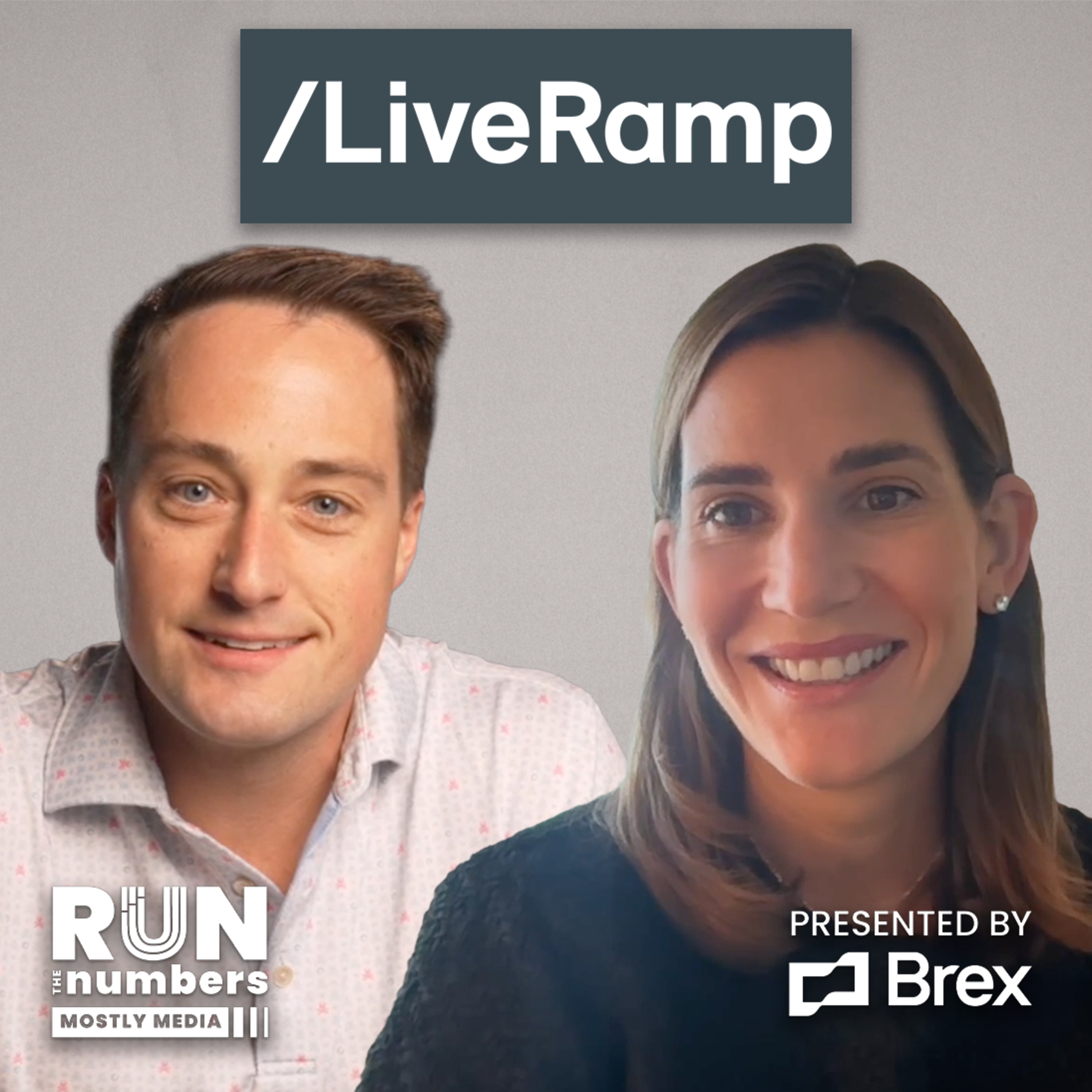
LiveRamp’s CFO Lauren Dillard explains how pricing strategy should be a business strategy (not just margin math), how she rebuilt LiveRamp’s pricing model from scratch, and why storytelling, HR/finance partnership, and talent rigor matter for enterprise change.
Lauren Dillard is CFO of LiveRamp. She previously worked in investor relations, communications, and marketing at LiveRamp, including an interim CMO stint, giving her finance plus influence/communications experience.
Data alone doesn’t drive change; people interpret what it means for them, so storytelling and alignment are essential. Great pricing aligns monetization with customer value, delivery cost, and market direction. Talent must be managed with the same rigor as other strategic assets. Finance and HR should jointly weigh investor/financial health and employee experience.
“People Plus AI” internal AI rollout framing to reduce fears of replacement. LiveRamp simplified 25–30 usage metrics into five “token” based measures (actions against records) and deployed Salesforce Revenue Cloud to streamline quote-to-cash. Sales comp mid-year change failed due to insufficient “why” communication.
Written by AI. May contain mistakes.
Learn how perceptions shape the impact of data on change within organizations.
“One of the biggest misconceptions in business is that if the data is compelling enough, people will naturally come along.”
Gain insights into LiveRamp's technology and its impact on advertising.
“Lauren, thank you so much for joining me on the podcast.”
Explore how LiveRamp helps brands with customer data attribution.
“It's actually super relevant to something me and producer Ben were talking about yesterday because we have ad partners for this show.”
Discover Lauren's unique career journey and the value of diverse experiences.
“And you went through investor relations, communications, and even marketing for a year.”
Learn why internal communication is crucial for motivating employees.
“And marketing gave me the opportunity to get much closer to our customers, really helped me understand how they define value, how they make purchasing decisions.”
Understanding how storytelling can enhance the influence of finance leaders.
“I think one of the biggest misconceptions in business, and it's often held by us finance folk, is that if the data is compelling enough, people will naturally come along.”
Discussing the framing of AI initiatives to mitigate employee fears.
“It's how we approached AI adoption internally.”
Explore the true nature of pricing as a business strategy.
“And many times, at least in the headlines, you read about AI taking jobs.”
Discuss the importance of evaluating commercial models in changing markets.
“landscape, and has even drawn parallels from the shift the industry went through 10, 15 years ago as it moved from perpetual licenses to SaaS subscriptions.”
Learn about the challenges of complex usage metrics and their simplification.
“We had somewhere between 25 and 30 different ways of measuring usage across contracts.”
Discover how a new pricing model aids in automating workflows.
“They mostly have to do with how customers leverage their CRM data across our platform and ecosystem of partners.”
Understand the critical role of communication in implementing new pricing models.
“our deal desk and better supporting our commercial teams, support our customers.”
Learn how LiveRamp approached the redesign of their pricing strategy with input from sales teams and customers.
“And so we selected a group of both new logo sellers and those who look after existing customers and brought them in really, really early.”
Explore the importance of collaboration between finance and HR, and how it impacts talent management.
“and I counterintuitively believe it's harder to go down market because you've built something that is designed for more of a white glove approach, right?”
Understand the strategic approach to headcount requests and the philosophy of organizational design in finance.
“I'm reading my first parenting book, which has been quite the experience.”
Learn how basketball strategies inform organizational design and decision-making.
“And let me tell you, they think a lot about great questions across enterprise risk, audit, diligence.”
Discover the importance of communication in leadership and decision-making.
“They prioritized veterans over younger players and they optimized for winning in that window.”
Explore the value of embracing opportunities and learning through challenges.
“If you could give your younger self advice, knowing what you know today, what would you tell her?”
Understand the tools finance teams use and the impact of AI on operations.
“Next one I got for you, more of a technical one.”
Hear about the most outrageous expense requests from a marketing conference.
“What's the craziest thing you've ever had someone try to expense?”

Get the gist, explore an idea or ask about something said.
 Claude
On Run the Numbers, what are the key points of this episode?
Searching your listeningAutomatic transcript. May contain errors.
0:00One of the biggest misconceptions in business is that if the data is compelling enough, people will naturally come along. And I think in my experience, that is almost never how change works. People don't just look at the analysis. They interpret what it means for them. Great pricing, as you pointed out, isn't about charging more. It's about aligning how you monetize your product with the value customers receive, the cost to deliver that value. and ultimately where you believe the market is heading. Talent can be one of the biggest sources of competitive advantage if you treat it that way and if you nurture it in that way.
0:41And if you truly believe people are your greatest asset, then they should be managed with the same rigor and intentionality. I've joked that simply changing a pricing model is largely a math exercise, albeit a very complicated one that spans many Excel tabs. Bringing it to life, however, is much, much harder. Is this thing on? Yesterday's price is not today's price.
1:18Welcome back to Run the Numbers. My name is CJ. I'm a recovering tech CFO. And on this podcast, I unpack the frameworks and tactics the top CFOs in the world use to get the job done. On today's show, I have Lauren Dillard, the CFO of LiveRamp. Dilly, dilly. Lauren is a true renaissance woman. Within LiveRamp itself, she's worked in investor relations, communications, and even marketing for you. What a come up to the chief financial officer spot. She teaches us why storytelling and influence often matter just as much as technical finance expertise in her role. And Lauren has led the company through a number of transformations, what they level set on before jumping in and then how they communicated that change to the street as they went through it.
2:01And finally, we talk about the partnership between finance and HR. We often say people are our greatest asset. OK, but how do you budget for them? And then how do you incorporate a humanistic strategy into being a finance leader? Lauren was a great guest, and I think you're going to love this podcast. All this and much more right after this. Lauren, thank you so much for joining me on the podcast. CJ, thanks for having me. So maybe it would be helpful just for the benefit of listeners, if you could give the 30-second overview of what LiveRamp does. I think a lot of people have heard of the company.
2:31Maybe they've been following it in the background. What does your company do? So at a high level, LiveRamp provides technology that helps companies use data to deliver more relevant and personalized advertising and do so safely and responsibly. So most companies we work with have valuable data and specifically customer data sitting across many different systems, but connecting it with partners or using it across their ad stack is technically difficult and then has become increasingly sensitive from a privacy perspective. So our platform, you can think of it as providing the infrastructure that allows those brands and their partners to connect and collaborate around that data.
3:17I often describe LiveRamp as the connective tissue of the advertising ecosystem. That totally makes sense. It's actually super relevant to something me and producer Ben were talking about yesterday because we have ad partners for this show. We love our ad partners. And there's always kind of this fuzzy thing, especially around podcasts for attribution. So I can see how that's super valuable for CMOs, especially for the ones who are like, hey, I know 50 % of my marketing budget is spent well. I just don't know which half. Yeah, absolutely. And attribution has quickly become one of the more popular use cases our customers leverage our platform for.
3:54An example I would give there, imagine a retailer, let's say Target. I've got three young daughters. I'm at Target at least once a weekend. It's trying to understand whether advertising on Netflix is actually driving purchases. So back to your comment on attribution. The retailer has transaction data. Netflix has information about who saw the advertising, but neither party should simply hand over its customer-level data to the other. LiveRamp allows both parties to connect those data sets, do it in a privacy-conscious way, measure the outcome, so perform the attribution, but in a way that doesn't expose either party's sensitive information.
4:38That makes a lot more sense than just sending over an Excel spreadsheet with 50 ,000 people's names and addresses and attributes. It sure does. So I had a ball going through your background. You are a true renaissance woman here because most CFOs come up through the controllership or FP &A or banking routes. And you went through investor relations, communications, and even marketing for a year. So I guess my question is, if you reflect on your journey, which move made the least sense at the time but ended up being the most valuable to where you are now? Probably communications. So I think if you had looked at my resume at the time, you probably would have thought I had taken a career detour.
5:20Public accounting, corporate finance, and then communications. IR was a pretty nice bridge between finance and comms. However, I think it could have left you scratching your head. My experience there was probably one of the more valuable experiences I've had in my career because it really expanded the way I think about leadership. In your finance kind of training and especially early in your career, I think finance does a wonderful job of teaching you how to analyze a business. Communications taught me how to influence one. And I learned very quickly that having the right answer isn't enough. If you can't explain a strategy, explain the why behind that strategy.
6:04I call that my why principle. Build alignment and inspire people to act. Even the best analysis, even the best answer can run the risk of never leaving the page it's written on, of never changing anything. I use those lessons every day with our shareholders, with our board, importantly with employees. And they've remained front and center as I've approached and our company has approached several recent cross-functional transformations. I guess at a higher level, I've never really viewed my career as climbing a finance ladder. I thought about it more as building a toolkit. So every role I've had added another tool that I still use today in some way, shape or form.
6:54And I talk about this a lot with my teams and especially the more junior folks on my teams. I talk a lot about experiences, you know, both personally and professionally. I think at the end of the day, we're all just a sum of our experiences. And every experience I've had has made me more prepared for the next one. Marketing is a great example of this. So as you mentioned, I had the opportunity to briefly step into the interim CMO role at LiveRamp during a period where we were looking for our permanent CMO. And marketing gave me the opportunity to get much closer to our customers, really helped me understand how they define value, how they make purchasing decisions.
7:42Today, that makes me a much more commercially minded CFO than I otherwise would be. Lauren, you make some amazing points, especially around the communication bit. And this is my personal observation that a lot of finance people eventually in their career get coaching on how to communicate externally, but there really isn't a playbook on how to learn how to communicate internally to your own employees and how to motivate them while also telling them just how the company is doing? Employees today really value transparency. And I think helping them connect what they do on a day-to-day basis to the outcomes that our company generates, to how those outcomes are perceived and rewarded by investors or the street, I think is really beneficial and helps the average engineer feel like they have the ability to influence how the business is perceived and measured by external stakeholders.
8:44Well, related to that, I know you've said that storytelling and influence often matter as much as technical finance expertise, which is a good reminder for me because I've had so many moments in my life where I'm like, I'm just going to wow them with my numbers here. I'm just going to show them the math. It's going to blow everybody's brains. Can you expand upon that? I think one of the biggest misconceptions in business, and it's often held by us finance folk, is that if the data is compelling enough, people will naturally come along. And I think in my experience, that is almost never how change works.
9:18People don't just look at the analysis. They interpret what it means for them, what it means for their function, their role specifically, and the impact they can have on an organization. And I think that's where storytelling and influence have a really big role to play. Can you think of a time in your career where you knew you had the right answer, but you had to use some sort of storytelling to convey it and get people on board? I'll give a recent one. It's how we approached AI adoption internally. So like many companies, we made a significant investment in AI because we believe it will fundamentally improve how our teams work.
9:59Business case on that one is clear. Check. But we recognized something really important as we were preparing to roll the program out. And it was that if employees heard AI initiative, some would naturally wonder, well, is this about helping me or replacing me? And so we were very intentional about how we both structured the program and how we positioned it. So HR, in partnership with our IT teams, were in the driver's seat for this one. And we called the program People Plus AI because we wanted the name to reflect our intent. The messaging was simple. This wasn't about AI versus people. It was about AI making our people even better and our people making the application of AI across LightRamp more effective.
10:52We really wanted people to take away that we were investing in their careers, giving them new capabilities and freeing them from kind of lower value work so that they had the opportunity to have an even bigger impact at LightRamp. And I think that framing made a really big difference. Adoption wasn't driven because we told people they had to, but rather because they understood what was what was in it for them. It's such a subtle framing, just putting that plus in there. People plus AI. Our wonderful HR team, our people and culture team developed that. But yeah, it was it was subtle, but but impactful.
11:31Every decision a company makes is inherently a financial decision. Folks, I've been trying to tell you that for 300 episodes. So it's wild that most finance teams have to spend a week on what already happened. While my favorite movie is Back to the Future, we'd be living in the past. Speaking of movies, here's a terrible plot. Tired accountant chases down a receipt from March and then polices a$20 Anthropics subscription, starring the accountant Ben Affleck. So stop living it. You don't have to play defense on what already happened if you get your system sorted. Imbrex's intelligent finance platform clears the backward-looking work.
12:06Policy enforced at the point of sale, receipts matched instantly, closed short into days, not weeks. What's left is the forward-looking part. Where to deploy capital? How fast you can move? What next quarter actually needs? Because the defense is handled by Brex. It's time for finance to go play offense. Throw the ball deep. Thousands of companies, including Anthropic, Coinbase, and DoorDash already run on Brex. Head to brex.com slash metrics to join them. That's brex.com slash metrics. Today's episode is brought to you by Anrock, the intelligent tax infrastructure for global commerce. The world be changing.
12:45Companies that took five years to go global are doing it in just one. E-invoicing mandates are landing in every major market, and your team is starting to hand work to agents instead of logging into another app. Anrock's platform runs every tax job, and it's the only tax engine with reconciliation built in. Whether you're selling into your first state or your 40th country, Mr. Worldwide, it's all supported by the same platform. One engine, however you reach it. Agents included. Every tax dollar owed, collected, because Anrock gets the transactions right underneath. Tax stops being an expense and becomes a pastor.
13:20Anrock, built for what's next. Learn more at anrock.com slash rtn. Remember when pricing was simple? One product, one subscription, one invoice every month. Those days are over. The AI economy is changing how everything gets bought and sold. We're seeing usage based pricing, hybrid contracts, and something called a credit. The finance systems built for vanilla subscriptions weren't designed for this. And this isn't just a RevRec problem anymore, because outdated revenue architecture can kill a great pricing idea before it ever reaches the market. RightRev lets you recognize revenue in whatever shape it comes in.
13:57Whether you're launching consumption credits or testing entirely new commercial models, RightRev gives finance the flexibility to support whatever pricing model comes next. So product teams can keep on innovating and finance teams can keep pace. If you're architecting revenue for the AI economy, learn how RightRev can help. Visit rightrev.com slash CJ. That's me. That's rightrev.com slash CJ. I think there's also a subtle message in there around this AI isn't actually all that useful or helpful if you're not here to steer it in the right direction. And many times, at least in the headlines, you read about AI taking jobs.
14:35If it can just come in and snap of a finger, it's going to be better than a human. And there are so many shortcomings with AI that I've found personally in my own work. That's where the magic of people plus AI really comes into focus. I want to switch gears and talk about pricing and commercializing the product. Maybe we can start with pricing. When finance gets involved in pricing, I think, Lauren, a lot of people assume it's about just raising prices or improving margins. What do most CFOs misunderstand about what pricing strategy actually is? I love that you pulled out the word strategy. I think on the surface, it's very easy to think about pricing as primarily a finance exercise or a product plus finance exercise.
15:19But it isn't. I mean, in reality, it is a business strategy exercise. Great pricing, as you pointed out, isn't about charging more. It's about aligning how you monetize your product with the value customers receive, the cost to deliver that value, and ultimately where you believe the market is heading. A pricing effort like the one we just completed at iRamp touches almost every function. You're not just changing a price list. You're changing how the company creates, measures, monetizes value. you. If you do it well, you're helping shape customer behavior. And that's exactly how we approached it at LightRamp.
16:00We didn't start with looking at our pricing list. We started with the customer. We asked ourselves whether our current commercial model at the time was still right for where our customers and our industry were headed. Lauren, you used the word commercial model there, which I love because I think pricing in many ways is a manifestation of your entire business model. It's not one functional exercise. It's how your company expresses the way it goes to market and actually monetizes the product. I can look across our entire organization and every single function had a role to play in bringing this effort to life.
16:36And even those that might not on the surface seem intuitive had big roles to play. Take me into the start of this. What was the reason or the impetus for beginning this huge commercial transformation at Live There wasn't anything fundamentally broken that we were setting out to fix. As an example, we were never a seat-based subscription model. That said, the question, as I mentioned, we were asking ourselves was, well, is this model still the right model for where our customers and our industry were headed, especially in the era of AI? McKinsey, who partnered with us on this initiative, has written extensively about the monetization shift that is happening across the subscription landscape, the software landscape, and has even drawn parallels from the shift the industry went through 10, 15 years ago as it moved from perpetual licenses to SaaS subscriptions.
17:39But I would also say the work started kind of even before that, several years ago, because we were seeing two things. First, there was an increasing disconnect between the value customers were receiving and the cost to deliver that value and ultimately how we were monetizing our platform, which we knew would only be exacerbated as kind of these AI workflows took hold. The second, and unique to Libram, was that over time we had accumulated a lot of complexity. We had somewhere between 25 and 30 different ways of measuring usage across contracts. And it made things more confusing than they needed to be for customers.
18:24So our objective when we started out was to simplify that complexity, lower the barrier to get started with LiveRamp, and create a model that more naturally aligned with how customers consume value from our platform and how we anticipate they consume value from our platform over the next, call it, three to five years. I just want to go back to something you said. There were over 25 different ways to track usage. There were over 25 different metrics that we were metering customer usage against. If you're a RevRec team, if you are a deal desk team, just the amount of additional complexity that introduces.
19:07It was hard to automate many of those workflows for that reason because of the complexity. And so things were more manual than they needed to be. I'm so glad you brought this to the show because a lot of people think on the service, oh, usage-based pricing, it's just going to solve everything. It's like there are also flavors of this where you can overcomplicate things over time. And it's no fault of your own. It's just you flex in order to meet the way customers want to consume. And then over time, you maybe have to come up with a different proxy for value in order to standardize things. But I applaud you for calling that out, that usage-based pricing can have this proliferation of whatever that value metric is.
19:45Again, in the vein of simplicity, our goal was to streamline those, call it 25 different metrics, harmonize them such that we now have five, right? And to your point, those are the five that make sense today. They get reevaluated in a couple of years, but the goal would be not to add five more, but to figure out the five that make the most sense down the road. I'm a huge pricing dork. Do you know what those five are? They mostly have to do with how customers leverage their CRM data across our platform and ecosystem of partners. So there are actions taken when our customers distribute their data into an advertising platform or a media platform.
20:30As they act on those records, they draw down what we call a token. So that is the way to harmonize the five different usage metrics across our platform. For more advanced use cases, and we started today by talking about an attribution use case, the measure of usage might be a query run versus a record of data getting activated. So there are slight nuances depending on the use case and the sophistication of the use case. I would say that the overarching thing is actions against records of data. You're a true pro. I can tell you've had to explain that to the street before. Just a couple of times.
21:09Lauren, something that I often think about when there are different ways to meter usage is that it creates this extra translation layer between, say, your deal desk or customer support desk or your billing team and the end customer. And in many ways, that's another touch point that people don't realize. It's not that there's something ever wrong with the product, but it puts this extra communication strain on an accounting team a lot of times that just like they didn't realize that was going to be part of their day job. We, with historical models, had been placing a ton of strain on our support teams, billing, rev rack, teams downstream of getting the deal signed, as I mentioned.
21:50Our hope is with this new model, we actually simplify their day-to-day versus complicate it further. Adding to something I said earlier is because of the previous complexity, we weren't able to automate as much of the quote-to-cash process as we otherwise would have liked to. And so I think this has given us an opportunity not only to introduce a new pricing model, but to look at our end-to-end quote-to-cash process and think through, okay, now with this new model, what can we automate? What can we simplify for our teams? One outcome of the new pricing model is we recently just deployed Salesforce's revenue cloud tool.
22:32their quote-to-cash tool to simplify that end-to-end workflow. And that's been a real unlock for our teams as well. It feels like a lot of CFOs are getting very intimate with the quote-to-cash process and what CPQ tools they're going to bring in-house. And like you said, pricing can create a ton of complexity downstream, which forces you to do, I would say, like unnatural things in order to complete whatever job is to be done. It's required, I mean, a huge amount of manpower, honestly. I don't think there's, you know, we reduce headcount as a result of getting this rolled out. But I think, you know, there are people who today do things in a very manual way that hopefully with the CPQ tool and more automation, we can free up some of that lower value work and redeploy it against supporting our deal desk and better supporting our commercial teams, support our customers.
23:28This may be an odd question, but was the concept of a token in place before you started this or was that something that came out of it? It was something that came out of it. We had like three or four different words that could have represented what a token is. Right, like a proxy for value. We felt token had potentially a little bit more impact. Like you unlock a token and that felt like really positive. I also think that between AI usage and cloud usage, our customers have become a little bit more familiar with the concept of a token, whereas four or five, you know, 10 years ago, I don't think we would have landed on that same board.
24:10I'm reminded of when people started to use the cloud rather than hosting stuff on site. And it was based on, I think, workloads and basically how many computers essentially you were using. And then with Snowflake, I think that was it was a consumption model, but I think they use the term credit for that. But now with AI, token seems to be the predominant word. Yeah. Lauren, how much of this was a communications exercise? More than people realize. My team rolls their eyes at this joke. But I've joked that simply changing a pricing model is largely a math exercise, albeit a very complicated one that spans many Excel tabs.
24:49Bringing it to life, however, is much, much harder. And I think that's where communication and change management become critical. I mean, that's true of a pricing transformation. It's true of really any enterprise-wide transformation. So people need to understand, back to the why question, why you're making the change, how it better serves your customers, and ultimately why it's good for the business, why it's good for them. And when people believe in the why, alignment and ultimately execution get a lot easier. I will acknowledge, though, that communication alone isn't enough. I mean, earlier I mentioned just how cross-functional this program was, like the tentacles ran deep throughout the organization.
25:38Alignment and ensuring kind of everyone was marching in the same direction and very aware of and working toward kind of the same milestones was really important. I've joked with our head of PMO. I've told him, I'm like, this project helped me find religion on program management because it just would not have been successful without it. Communication can create alignment. Great program management ensures cross-functional execution. And ultimately, to deliver on something of the scale we were trying to deliver on, you need both. Two groups that it's super important to explain the why, but also why this is good for me, I find, are your salespeople internally to motivate them and then your customers also.
26:27We knew this was an entirely new motion for our commercial teams. And we had at the time, we still have a very long tenured group of sellers, people who have been with the company a long time, who are very accustomed to selling in the ways that they've always sold. And so we knew it wasn't going to be enough to tell them we had a new pricing model. We had to help them understand how it would ultimately help them better serve our customers and create more opportunity for them. And then same is true with customers. I think we've been very deliberate with the messaging we've taken to customers and the rollout to customers, especially existing customers.
27:14I think it's here to bring a new model to a net new customer, especially a model with a lower upfront fixed fee. I think it has required far more kind of enablement of our teams to be able to explain the rationale to existing customers and ensure they feel really comfortable with the change as it gets rolled out. And so that has been kind of a whole separate work stream attached to this program. I find ahead of communicating it as this is what's going down to the salespeople, it can be super helpful to pre-socialize it with a small group of them because they can poke holes as to actually customers aren't going to like this or that actually makes a lot of sense.
27:56We call them in a program, commercial or otherwise, like the change agents, the people that can help you drive change among their peers. And so we selected a group of both new logo sellers and those who look after existing customers and brought them in really, really early. And they were great sounding boards. They certainly poked holes. They helped us refine the strategy. They helped us refine how we rolled the communication out to our sales teams, to their peers, and ultimately how we rolled it out to customers. Yeah, because you also have to think, what is this going to feel like when a rep gets a quota on this new pricing plan and they're holding it in their hands for the first time?
28:38How are they going to react to this? We had to help them believe it could result in more opportunity for them. At the end of the day, salespeople, it is a eat what you kill role. They care a lot about their earning potential in a year and they have to feel confident in their ability to hit it. And that was a key consideration in the rollout for sure. One more thing that I thought of when you were explaining the communication cadence to sales and also customers, a lot of pricing moves are made to incentivize net new customers. And that's like always, I think, at the forefront of people's minds when they do this.
29:13And I'm not saying they don't think about existing customers, but it's probably not as top of mind. And that's the part where it's like, whoa, the majority of my business is in this base of revenue. What does it do for them? Are they going to understand this upon renewal? For LiveRamp, 70 % of our new sales in a year are from existing customers. It's also great if you can design a model that both allows us to better serve our existing customers, but then also attract net new customers. And, you know, for us, LiveRamp has historically served, call it the Fortune 500, Fortune 1000. And as we move a little bit down market from the cohort we've historically served, we also knew we needed to bring down the entry point.
30:03And so that was kind of the other key pricing model design change that was more focused on net new versus existing customers. On the market segment you serve, as a CFO, do you find it's harder to go up market or down market? I would say it depends on where you start from. We've always served the largest customers and therefore like our systems and our approach to go to market are all designed in service of the most complicated customers in the world. And I think, so if you start there, then going down market actually requires a fair amount of simplification across both your product stack, your go-to-market, just your overall kind of customer motions.
30:52Moving down market has been harder. However, I think if we started serving that customer base and had built a company around serving that customer base, I'd argue going upstream would be harder. I got news for you. The ERP category is finally getting disrupted. And if you haven't heard of Rilla yet, please pay attention. It's the AI native ERP built specifically to replace NetSuite. And it's already won over hundreds of finance teams. Their mission is to make the zero-day close a reality. And they're actually doing it. We're talking teams closing the books at 1.35 p.m. on the first day of the month.
31:25Companies like Windsurf, Mercore, and hundreds of others run their entire finance stack on Rilla. Revenue recognition, close management, multi-entity, native Stripe, and Salesforce integrations. Woo! Everything a scaling company needs. they've got 5.0 stars on G2. They're backed by A16Z and Sequoia. Heard of them in CPA-led implementations that get you live in 45 days. That is simply unheard of in the ERP space. If your books aren't running as fast as your business, check out Rillet. Book a demo at Rillet.com slash CJ. That is R-I-L-L-E-T dot com slash CJ. That's me. Maximor, get your Maximor here.
32:06Sorry, I just came from selling Cracker Jacks at the ball park. Everyone in finance is adopting AI right now. The problem? It's a dozen disconnected tools. Yeah, one for revenue, one for AP, one for the close. And each one needs training and documentation. And the expertise to run them lives in your head, not the systems. MaxiMor takes the opposite approach. One autonomous finance platform for the whole operation. Order to cash, procure to pay, the close, cash management, and reporting. It all runs on a unified finance context that pulls from your ERP, billing, banks, even email and slack. No rip and replace.
32:44Maximor runs on self-learning agents that learn how your team already works. No prompts to wire, no workflows to build, nothing to document. Every output is audit ready and when a call needs human judgment, it escalates for review. Because the agents optimize, not just execute, and your KPIs keep on improving. One PE-backed customer posted 98 % of transactions straight to their ERP. No error rate. The other 2 % go to a human before posting. You pay only for real outcomes, not seats. See it at Maximor.ai. That is M-A-X-I-M-O-R dot A-I. I talk to CFOs about this topic a lot, and I counterintuitively believe it's harder to go down market because you've built something that is designed for more of a white glove approach, right?
33:34And then you also have your unit economics of how you actually sell that and get it into their hands around that ASP. How self-service, how intuitive is your product interface? Are there product-led growth motions kind of built into the product itself? At LiveRamp, all of that is newer. In the last like handful of years, we've really had to focus there and prioritize there in anticipation, to your point, of being able to serve a slightly smaller customer, but do so in an efficient way where the unit economics still makes sense. Because you can always add complexity. That's not the hard part. And you can always add cost if people are going to pay you more.
34:13But it's like a different equation to go the other way. Completely agree. Lauren, I want to switch gears a little bit and talk about the business partnering approach that you have between finance and HR. I'm curious, where do finance and HR naturally disagree and why are those disagreements actually healthy? I love this question. So first, in my short time overseeing both functions, I've actually found that they tend to agree more than they disagree, at least at LiveRAM. Finance and HR represent different but equally important stakeholders. Finance has a responsibility to investors and to the long-term financial health of the business, whereas HR is far more focused on creating an environment where employees can thrive, where they can do their best work.
35:04I think at times those priorities create trade-offs. That is natural. I think it's healthy. But the magic happens when you can bring those perspectives together and when HR and finance have equally important seats at the table. Some of the best long-term decisions almost are always good for both stakeholder sets. And the third, arguably most important stakeholder set, which is your customers as well. I like how you separated the stakeholders and the timeline because if you run it out in perpetuity, I think they're making the same decisions. But in the moment, some stuff maybe perceived differently or land differently with employees in the moment.
35:47Absolutely. And I think you can even go back to the internal AI rollout example that I gave earlier. I think it's a great illustration of what you just mentioned. It's kind of cliche, but the line, our people are our greatest asset. It gets thrown around all the time. As someone who oversees both finance and HR, what's the most common mistake that they make when they think about talent as an investment? One of the biggest mistakes is that they say, you know, companies can say people are our greatest asset, but they don't manage talent in the way that they manage other strategic assets. Ooh, this is good.
36:26Yes. So, I mean, companies will spend months evaluating a technology investment or an acquisition. I'll use a recent example at LiveRamp. We are renewing our cloud business, and that has been a, call it, 12 to 15 month review process. So a huge amount of time and energy and resources has gone into that decision and similar decisions. And I think we've got kind of a muscle around looking at technology investments through the expected return, the capabilities they create. We think through how we maximize the value of that investment on the other side of making it. Same is true with M &A. But I find that companies spend far less time thinking about areas like leadership development, capability building, whether we're deploying our top performers, our very, very best people against our company's highest priorities.
37:24As somebody who's had the opportunity to now oversee both finance and HR, I think it's such a missed opportunity. Talent can be one of the biggest sources of competitive advantage if you treat it that way and if you nurture it in that way. And if you truly believe people are your greatest asset, then they should be managed with the same rigor and intentionality that every other strategic investment in the business gets managed. It's funny you say that because I'm thinking about times in my career where we spent so much time coming up with our top three to five priorities for the year. But we didn't spend all that much time once we had those baked on who the people were that were actually working on them.
38:05Right. Like you have the priorities, but do you have the organizational design and the capabilities to execute on those priorities and make them successful? And yeah, I think it gets overlooked and I think it's, you know, it's a missed opportunity. I want to talk about the hiring plan and how you've collaborated, I guess, with your finance team and then your HR team. When you come up with that, how do you get to a yes on adding another headcount request? It's a very timely question because even outside of our traditional planning cycle, right now we're being extra disciplined with respect to hiring.
38:45CJ, are you familiar with the book, Will It Make the Boat Go Faster? No, I'm not. A teammate of mine recently introduced me to it. It was written by an individual who was on the Olympic gold medal rowing team during the 2000 Sydney Olympics. The core idea centered on this question that he and his teammates kept coming back to during their preparation for those Olympic Games. The question was, will it make the boat go faster? And if the answer was yes, they did it. And if the answer was no or it was unclear, then they stopped doing it. And that simple question became the filter for every decision that that team made in the years leading up to those Olympic Games, from training to nutrition to travel to minimizing distractions, etc.
39:43I really love the simplicity of that question. We've talked a lot about customers today. At LiveRamp, our customers are our North Star. And so our version of will it make the boat go faster is, does this help us better serve our customers? And with respect to headcount planning, if the answer is an obvious yes, then a headcount request becomes much easier to prioritize. If it's not, I think we challenge ourselves and the business to better understand the problem. What are we trying to solve for? Sometimes the answer to that is another hire. Other times it's more automation, AI, process improvement, org realignment, et cetera.
40:26But we try to always start with the customer. That's amazing. We had to start a book club after that. What's the best book you've read recently? I have three young children. I'm reading my first parenting book, which has been quite the experience. So learning how to get my four-year-old to eat her dinner each night. And the best book I think I read recently was called The Outsiders by William Thorndike. And it's about the art of capital allocation. I read it was one of the early kind of finance books I was introduced to. I love it. I really like it too. not to go on a total tangent here, but like I feel like a lot of finance books are written about investors and how they allocate capital.
41:04But for people in our position, it's how do you make the best risk adjusted bet within inside your own company? During a window where I think a lot of companies in the technology sector and even software sector are getting a lot of pressure from shareholders with respect to deploying capital, like share buybacks as an example. I think it's actually a really great book for any finance leader right now, especially in the technology space to read. And I didn't know the benefit of share buyback, actually. I always thought about it like companies are sitting there. Oh, we don't have another place to put this capital.
41:37So it's a more tax efficient structure than doing a dividend to buy back our shares. But I saw the power over time of doing that on a consistent basis. And these either founding teams or CFOs who said, I just believe in this company so much that if you're not going to buy it at that price, I'm just going to keep buying it up. There's a huge signaling benefit to it, for sure. For our next segment, I want to ask some better questions brought to you by our friends at EY. And let me tell you, they think a lot about great questions across enterprise risk, audit, diligence. They're a smart bunch. So I'm going to ask some smarter questions right now.
42:10This is a bit of a sports analogy here. I know you like basketball. I think you played high school and college basketball, right? High school was the highlight. I played for a state championship winning team during my time at Crandallet High School. But yes, a big lover and player of the sport. On basketball teams, pro basketball teams, they have a GM. GM has a salary cap. Some of them build around two superstars. I'm a big Celtics fan. They did that for a while around Jalen Brown and Jason Tatum. But it ended up being too much money on two players. Other teams will build around depth, kind of like the Knicks did.
42:43Have you developed a philosophy for org design that's similar? My philosophy, and transparently this has been borrowed from our CEO, is that there's no perfect organizational design. Every design has its flaws. Every structure has trade-offs. So my advice is to build the organization that fits your strategy today and be willing to evolve as that strategy changes. I guess to kind of bring it back to a basketball analogy, I think one of my favorite examples comes from Bob Myers and the Warriors, big fan of that franchise. And during Bob's time with the Warriors, the franchise's philosophy never really changed.
43:26They believed in building through culture, developing young talent, thinking long term. But they also recognized that they had a once in a generation championship window with Steph Curry and they made slightly different decisions. They paid the luxury tax. They prioritized veterans over younger players and they optimized for winning in that window. And I love that example because it highlights that leaders don't necessarily abandon their principles when circumstances change, but they recognize circumstances change and that context situational elements can justify a different decision. That's amazing.
44:08And also the power of an org leader like a GM to say within this competitive market, we have a 18 month, 24 month window to really get ahead here. we need to double down or else it's going to pass us by. Lauren, I'm going to take you into what we call our long ass lightning round. What's an example of something you've screwed up on the job before? Could be here or any previous role. We recently made changes to our sales compensation plan mid-year. And we genuinely believe they were in the best interest of our sales team. The changes were designed to help protect their earnings during a period of uncertainty and ultimately kind of put our sellers in a better position.
44:49So we felt we were doing right by our commercial teams. Looking back, where I fell short, where we fell short wasn't the decision. It was the communication. So ironically, after everything we've talked about today, I did not spend enough time on the why. We were so focused on the mechanics. We were optimizing for speed and getting the new plan rolled out that I think we really underestimated how people would interpret it. As a result, the narrative quickly became filled with speculation, kind of wild conspiracy theories. It's a great reminder that leadership isn't always about just getting to the right decision.
45:28It's how that decision gets communicated and humbling, but helpful to be reminded of. If you don't provide people with the appropriate context, they'll come up with their own, and it's usually not the most generous. Leave a vacuum. People will fill it with their own information. Okay. Next one I got for you. If you could give your younger self advice, knowing what you know today, what would you tell her? You are almost never going to feel completely ready for your next opportunity, and that's okay. I had a CHRO early in my career who used to say, look, everybody fakes it until they make it. And I don't know that it resonated as much then as it does now, but if I think back, every meaningful stretch opportunity I've had probably felt a little bit beyond what I was ready for at that time.
46:16My advice to people is prepare, work hard, surround yourself with smart people, ask questions, but trust that if you do those things, you will figure it out. Next one I got for you, more of a technical one. Can you walk us through what tools your finance team uses to get the job done? Our core finance stack is probably what you'd expect for an enterprise software company. We use Workday as our ERP. We recently, as I mentioned, implemented Salesforce's revenue cloud to help manage our CBQ. We recently migrated our planning tool to OneStream. We use Zip for procurement. One tool that I'm most excited about isn't actually a traditional finance tool.
47:01It's AI. We recently, like in the last couple of months, rolled out Cloud Enterprise and Co-Work. I mean, that's been such a fun rollout, but I think we're already beginning to see some really interesting use cases emerge within finance around sourcing, contract review, expense analysis. You know, on that topic, one thing that really caught my attention recently was spending time with the CEO of Campfire AI, an AI native ERP company. And they walked me through a demo and I came away thinking like, oh gosh, this is what the future of enterprise software looks like. We don't own that tool today, but I think it demonstrated the art of the possible in a really cool way.
47:43Last one I got for you. What's the craziest thing you've ever had someone try to expense? Are you familiar with kind of advertising marketing conference CAN. Oh, yeah. Yeah. It happened like a month or two ago. It happens in early, mid-June every year. And as you would expect, every year LiveRamp has a big presence at CAN. And every year, I sift through some pretty interesting expense reports following that conference. But I was on a call with a few commercial leaders, including our chief commercial officer a couple of days ago, and it was on a completely separate topic. But I was joking about this question and I said, And, you know, Bihan, I think I'm going to have to mention the really expensive bottle of champagne that I saw your team try to expense.
48:27And, you know, he like turns white. Our head of commercial strategy like quickly jumps in and he's like, but do you remember the time that that individual tried to expense thousands of dollars of fees off the Asian gambling site? And I was like, oh, I do remember that. That was years ago. I'm like really well played because it gave me great fodder for this. And it saved me from from putting your boss on blast on a podcast. So like quite strategic of him to to raise it. That's amazing. Thank you so much for sharing. Lauren, this has been an absolute blast. I appreciate you coming on the show. Loved our conversation and look forward to being in touch.
49:09Run the Numbers is a mostly media production. Yelling an intro by Fat Joe. Artwork by Meg D 'Alessandro. Nothing said on this podcast is intended to be business or investment advice. It's the sole opinion of me, a guy who feeds his dog way too much ice cream and has a history of net operating losses. LOL. If you like this podcast, hit subscribe and give us five stars. It will take like two seconds and our algorithm overlords love it. Drink water, call your mom and have a great day. Peace.
CJ sits down with Lauren Dillard, CFO of LiveRamp, whose path to the CFO seat ran through investor relations, communications, and even a year as interim CMO. They dig into why storytelling and influence matter as much as technical finance chops, how LiveRamp tore down and rebuilt its entire commercial model — collapsing 25+ usage metrics into 5 and inventing the "token" along the way.
—
SPONSORS:
Brex is an intelligent finance platform that combines corporate cards, built-in expense management, and AI agents to eliminate manual finance work. By automating expense reviews and reconciliations, Brex gives CFOs more time for the high-impact work that drives growth. Join 35,000+ companies like Anthropic, Coinbase, and DoorDash at https://www.brex.com/metrics
Anrok is the sales tax platform that watches your exposure everywhere, automates compliance, and flags risk before it turns into a surprise back-tax letter from a state you've never set foot in. Companies like Anthropic, Notion, and Vanta already trust Anrok to stay ahead of rules that move faster than any spreadsheet can. Talk to a sales tax expert for a personalized exposure estimate at https://www.anrok.com/rtn
RightRev is a revenue recognition platform built for the AI economy, helping finance support usage-based pricing, credits, hybrid contracts, seats plus consumption, and whatever commercial model comes next. It gives product teams the freedom to keep innovating without outdated revenue systems slowing them down. Learn how RightRev can help at https://rightrev.com/cj
Pulley is an equity management platform that lets you issue options, model dilution, and complete 409As without your cap table turning into a spreadsheet disaster. Founders raising, hiring, and scaling use Pulley to keep equity clean and stay focused on building. Learn more or request a demo at https://pulley.com/mostlymetrics
Rillet is an AI-native ERP built for modern finance teams that want to replace NetSuite and close faster. With revenue recognition, close management, multi-entity support, and native Stripe and Salesforce integrations, Rillet helps scaling companies run their finance stack in one place. Hundreds of teams, including Windsurf and Mercor, use Rillet to make the zero-day close real. Book a demo at https://www.rillet.com/cj
Maximor is an autonomous finance platform that runs order-to-cash, procure-to-pay, the close, cash management, and reporting on self-learning agents instead of a dozen disconnected tools. One PE-backed customer posts 98% of transactions directly to its ERP, with the remaining 2% routed to a human for review. You pay for outcomes, not seats. See it at https://www.maximor.ai/
EY works with high-growth tech companies to navigate the messy realities of scaling—from regulatory requirements to IPO readiness. By helping teams get it right early and often, EY lets founders stay focused on building while reducing risk as they grow. Learn more at https://www.ey.com/techstartups
—
LINKS:
Mostly Talent: https://mostlymetrics.typeform.com/to/cLTxtAsN
Guest: https://www.linkedin.com/in/lauren-russi-dillard-25502424/
Company: https://www.liveramp.com
CJ: https://www.linkedin.com/in/cj-gustafson-13140948/
Mostly metrics: https://www.mostlymetrics.com
—
TIMESTAMPS:
0:00 Cold Open
1:18 Intro
1:29 Meet Lauren Dillard
4:48 Lauren's Path to CFO
5:06 The "Wrong" Career Move
7:48 Why Storytelling Matters
9:41 Turning the Answer Into Action
10:33 People Plus AI
14:50 Pricing Is a Strategy Exercise
16:43 Rebuilding a Commercial Model
22:29 Simplifying Quote-to-Cash
23:29 Where the "Token" Came From
28:48 Selling a New Pricing Model
29:27 Balancing New Logos
30:17 Upmarket or Downmarket?
34:17 Where Finance and HR Disagree
36:07 The Biggest Mistake
38:23 Will It Make the Boat Go Faster?
42:27 Lessons from the NBA
44:25 Lauren's Biggest Misstep
46:27 Finance Tech Stack
47:42 Craziest Expense
#RunTheNumbersPodcast #AIforCFOs #FinanceLeadership #MasterworksArt #ContextEngineering