Ask ChatGPT
 Run the Numbers
22 Oct 2026 · 33m · 12 chapters
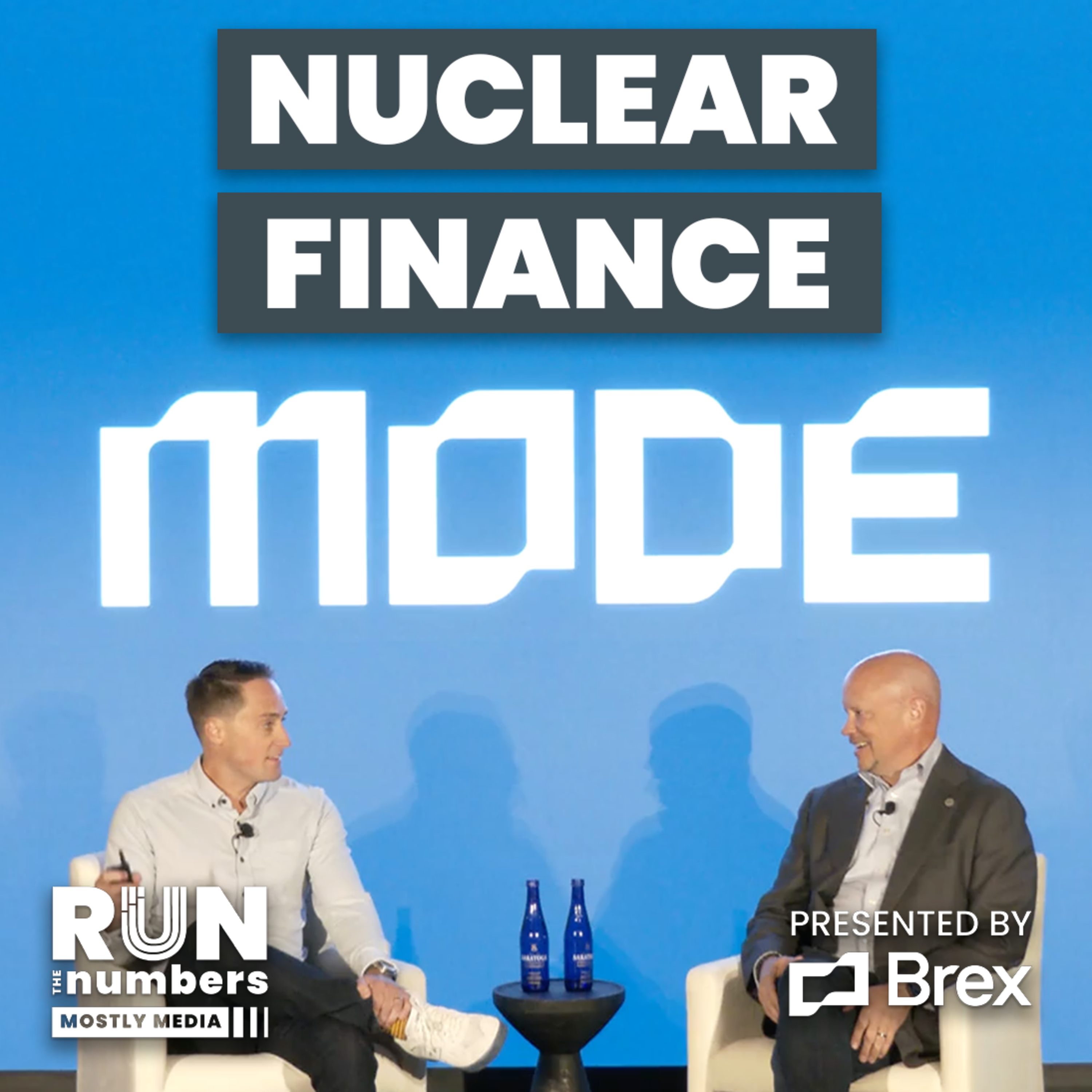
Craig Bealmear, CFO of Oklo, discusses leading a capital-intensive nuclear startup—how to forecast and hire for the future, manage cash vs. P&L, raise billions pre-revenue, and apply lessons from BP’s Deepwater Horizon crisis to leadership under extreme uncertainty.
Craig Bealmear spent nearly 30 years at BP, most recently as CFO for BP’s North America downstream business in Chicago. He then joined Oklo after earlier roles including Renewable Energy Group (acquired by Chevron). Oklo builds liquid-metal sodium fast reactor nuclear power plants and related fuel and radioisotope capabilities.
Nuclear CFOs must focus on cash, regulatory/fuel timelines, and “decision gates” rather than demand forecasting. Capability comes from people, processes/tools, and culture. Hiring should target people better than the CFO, and teams should be planned 6–8 quarters ahead.
Deepwater Horizon leadership calls and cash-generation directives at BP; Oklo’s DOE accelerated permitting and building a radioisotope facility to criticality in 11 months; capital raised via de-SPAC/ATM and cash pillars (cash used in ops, capex, cash on hand).
Written by AI. May contain mistakes.
Learn how leadership philosophy evolves with experience and foresight.
“If I hire people who are better at what they do than what I do, the outcome is better and my life gets easier.”
Explore Oklo's mission in nuclear energy and its innovative approach.
“I didn't know that was a career, but currently it is.”
Craig shares his transition from oil and gas to nuclear energy.
“And one of the books I had read that I loved Chevron REG was the Bill Gates Climate Change book.”
Discuss the unique challenges of financing nuclear projects and managing growth.
“In that job, I went to bed every night worried about demand.”
Examine the regulatory and financial strategies vital for Oklo's success.
“about what's controllable and uncontrollable in your business.”
Learn about Oklo's upcoming projects and regulatory strategies as they gear up to launch a new powerhouse.
“Now, I would like to be a CFO with Bevenu.”
Discover the intricacies of earn-out shares and the importance of clear communication in finance.
“When he tells his career story, he literally said, no, my name's Jake DeWitt.”
Explore the capital allocation strategies Oklo employs for their growth and project financing.
“We've, you know, took an asset live with fuel in the reactor core, generated a controlled nuclear reaction.”
Understand the decision-making processes in a capital-intensive business and the importance of building a capable team.
“cash in the way that you're describing it to communicate progress.”
Learn how to anticipate organizational needs for finance roles.
“What do we think the organization needs from the finance department?”
Explore the challenges of leading finance during the Deepwater Horizon crisis.
“So earlier we talked about building organizations for the future.”
Understand the importance of emotional intelligence in leadership.
“The 30-year-old me was a little bit of a hothead, and I still had that intimacy.”

Get the gist, explore an idea or ask about something said.
 Claude
On Run the Numbers, what are the key points of this episode?
Searching your listeningAutomatic transcript. May contain errors.
0:00CJ: If I hire people who are better at what they do than what I do, the outcome is better and my life gets easier. You know, when I was half the age I am now, I wanted to be the smartest person in the room. Now I want to be in the smartest room. Going back to my definition of capability, don't build for what you think you need today. There were 50 employees at Oakland when I started three years ago, and I just said we're going to probably end this year at 450. Whatever I thought we needed three years ago would not be sustainable. So it's really about thinking about what we're going to need a few years out.
0:30CJ: My leadership team and I, we sit down once a quarter and we forecast out the organization for the next day quarters. Is this thing on? Yesterday's price is not today's price.
0:51Craig Bealmear: Most CFOs I talk to spend their careers worrying about how much demand their business can generate. My guest today has the opposite problem. The world actually needs more of what his company is building than it can currently supply. Craig Bielmere is the CFO of Oklo, a company building next generation nuclear reactors to help power an increasingly electricity-hungry world. After spending nearly 30 years at BP, Craig made the jump from oil and gas to nuclear energy. And it turns out financing the future of electricity requires a slightly different playbook than your typical SaaS business. So me and Craig talk about raising billions before generating meaningful revenue, why cash matters more than the P &L when you're building nuclear reactors, and his philosophy on hiring the finance team you'll need two years from now.
1:38Craig Bealmear: We also get into his experience navigating the Deepwater Horizon Crisis at BP and what it taught him about leadership when literally everything is going wrong. We recorded this one live at BrexMode in Chicago in front of an incredibly rowdy, raucous crowd. So if you hear some extra noise in the background, that's a room full of finance nerds getting wild about capital allocation. I'm CJ and this is Run the Numbers. So I'm CJ. I'm a recovering tech CFO. Now I have a newsletter, a podcast. I didn't know that was a career, but currently it is. So if I see anybody on their phone, I assume you're subscribing to my newsletter.
2:14Craig Bealmear: I'm excited because you function in this space that is integral to everything that's going on with AI. But before we get over our seas, if you're just at a dinner party, how do you explain what OPPO does?
2:28CJ: OPPO is a nuclear power company. We have an integrated platform. We are building, owning, and operating powerhouses. We were building our first powerhouse in Idaho. It's a mouthful, but we are a liquid metal sodium fast reactor technology. And I can go into why that's important in a second. We are backward integrated into fuel. I think if you spend any time in the nuclear space and you look in what's the rate-limited step to selling nuclear power, it's regulatory approval and fuel availability. So we backward integrated into fuel fabrication and fuel recycling because we think that's a good integrated business model.
3:05CJ: And then we are also a radioisotope producer. Part of the reason for that is our fuel recycling technology will generate as a co-product or a byproduct when it's up and running radioisotopes. So these are isotopes that are used in medical treatment, in industrial applications, in aerospace applications. It's cool, though, because I used to work for VP. So I worked for VP for 28 years, predominantly in the downstream refining and marketing bit of the business, making and selling gasoline, jet, and diesel. And then I went to work for a biofields company called Renewable Energy Group, making renewable diesel.
3:43CJ: I'd been at Oklahoma for about eight weeks, and my wife and I are out one night on a Friday. And suddenly my stepdaughter and three of her friends friend me on LinkedIn. And it was because my daughter, Liliana, had been telling her friends about, yeah, a stepdad has got to work for this nuclear power company. It sounds really cool. No one was friending me when I worked at BP. So I think it is cool to be in this bit of the energy sector and in this bit of the energy business. What attracted you to it? Was it the coal factor? I retired from BP, and that's code for I got a severance package. Renewable Energy Group got acquired by Chevron.
4:17CJ: That was there from 2000 to 2022. Got another severance package. And didn't actually know if I was going to go back to work again. And the investment bank who had helped REG with Chevron, they called me up and they're like, hey, I do this company called Elklo. They're getting ready to go public through a D-SPAC process. They need a CFO. Would you be interested in that? Now, as I said, I like to read. And one of the books I had read that I loved Chevron REG was the Bill Gates Climate Change book. We all want more stuff. Most of the stuff we want generates carbon. So how do we solve this dilemma?
4:53CJ: We'd love more power. We want more stuff. But we need to reduce our carbon footprint. And nuclear, I think, is the way to do that. So I kind of got interested in nuclear. But I really enjoyed the Oklahoma co-founders. We are led by Jake DeWitt and Teralyn Cochran-DeWitt, who are our co-founders. They started at Oklahoma 14 years ago. And every time I was in a conversation with them, it was, you know, it was supposed to be a 30-minute check that went for 45. I thought it would be fun and scary to be CFO of a startup. When I started at Oklo on August 1st of 2023, I was the finance organization, which is quite a change having been at the key.
5:33CJ: But I now can say we are putting assets on the ground. We took the company public in May of 2024. I think my finance organization will get the 20-person level at the end of this month. It's been an exciting journey, and there's more fun stuff ahead.
5:49Craig Bealmear: Everybody's talking about models and chips. models and chips, but there are many layers to this stack. And you're at the nexus of where electricity comes into play.
5:59CJ: The United States was, you know, for a long time, we had more power capacity to put on the grid than what we needed. And I would say it's not just artificial intelligence. Everyone brought a phone here. Everyone's got a computer. Goldman Sachs put out a report a couple of years ago that said they're expecting a 2.5 percent per year increase in the math for power and when you do that math it gets it to gigawatts of power probably a third of that is being driven by artificial intelligence but we're driving that industrial use cases are driving that so i think power is at the at the nexus of a lot of what we're trying to do now i think otlo came around at a very lucky time or a very fortunate time in that you know we're building, owning, and operating powerhouses, we can put that power on the grid, or we could put that power behind the meter and sell that directly to the customer.
6:54CJ: And most of our customers, especially Let Us, Switch, Equinix, and a few others that I'm not of the ready to disclose, we've also got contracts that we're working out with the United States military. Most of those customers, they want the clean, affordable, reliable power that nuclear can provide. They we say we'll take that furniture away from you and we'll sell you power through 20 or 30 year power purchase agreements, which is how people have been buying solar power, how they've been buying wind power. So we've got a commercial bottle that customers are used to. What we've just got to get them comfortable with is that the power source is going to renew.
7:30Craig Bealmear: And I want to talk about that backlog and how you think about the business and the commitments there. There is this supply and demand function to all of it. For 30 years,
7:38CJ: is you trying to get a Cooper by gasoline, right? So my last job in BP was the CFO for the North America Dowd screw business here in Chicago. In that job, I went to bed every night worried about demand. Woke up every morning worried about demand because the demand curve are all going one-to-one. And that's the same for jet, the same for diesel, it's the same for biodiesel. In this business, I don't go to bed worried about demand. It's a little bit like we've got unconstrained demand. How do we create unconstrained supply to meet that demand? And I think there's, on the power side of our business, I'm telling you, there's six things we need to work on.
8:12CJ: We need to work on an accelerated regulatory pathway. We need to work on fuel. And those two are nuclear specific. We need to build our supply chain. We need to build our construction capability. If we are putting that power on the grid, we need interconnection. And our business model is capital intensive. So part of my job is making sure that we've got adequate amounts of capital on the balance sheet. And I think we IPO'd at about$10 a share. We've been as high as NIMI. There's a little bit of a sell-off because of what's going on in the AI demand space. But we're training in the low to mid-40s today, which is pretty incredible for a company of two years.
8:50CJ: And I think part of that is clearly it's the demand piece. But on each of those six factors, I can point to things that we've done. It's not that those risk or those constraints have gone away, but we've done something in each one of those or several things make us less supply constraint.
9:07Craig Bealmear: Every decision a company makes is inherently a financial decision. Folks, I've been trying to tell you that for 300 episodes. So it's wild that most finance teams have to spend a week on what already happened. While my favorite movie is Back to the Future, we'd be living in the past. Speaking of movies, here's a terrible plot. Tired accountant chases down a receipt from March and then polices a$20 Anthropics subscription, starring the accountant Ben Affleck. So stop living it. You don't have to play defense on what already happened if you get your system sorted. And Brex's intelligent finance platform clears the backward-looking work.
9:42Craig Bealmear: Policy enforced at the point of sale, receipts matched instantly, closed short into days, not weeks. What's left is the forward-looking part. Where to deploy capital? How fast you can move? What next quarter actually needs? Because the defense is handled by Brax. It's time for finance to go play offense. Throw the ball deep. Thousands of companies, including Anthropic, Coinbase, and DoorDash, already run on Brax. Head to brax.com slash metrics to join them. That's brax.com slash metrics. If you work in finance, you know what time of year it is. I'll give you a hint. it's our super bowl budget season is here woohoo so how many versions do you think you'll get up to this year i once got to v147 in the good old excel days beat that actually please don't this is when your planning software should earn its keep you don't have to choose between either excel or an inflexible ballooning platform that takes a consultant to change abacom brings you the dynamic capabilities you love from excel while preserving the rigor and governance of an enterprise suite.
10:46Craig Bealmear: I met Abacom's founder and CEO, Julio Martinez, more than three years ago. He and his co-founder, Jorge, came out of finance, and they built a planning platform that can run a complex business without becoming another system that requires a babysitter. Abacom puts your actuals, forecasts, models, and business context in one place, so you can update the plan, run scenarios, and answer, why did this change? In fact, you can even ask it in plain English. You might not even have to spell it right thanks to AI. That's why I'm so excited about Abacum. Go to abacum.ai slash mostlymetrics. That's A-B-A-C-U-M dot A-I slash mostlymetrics.
11:25Craig Bealmear: Or just tell Julio that CJ sent you. That'll probably work too. Remember when pricing was simple? One product, one subscription, one invoice every month. Those days are over. The AI economy is changing how everything gets bought and sold. We're seeing usage-based pricing, hybrid contracts, and something called a credit. The finance systems built for vanilla subscriptions weren't designed for this. This isn't just a rev rec problem anymore, because outdated revenue architecture can kill a great pricing idea before it ever reaches the market. RightRev lets you recognize revenue in whatever shape it comes in.
11:59Craig Bealmear: Whether you're launching consumption credits or testing entirely new commercial models, RightRev gives finance the flexibility to support whatever pricing model comes next. So product teams can keep on innovating and finance teams can keep pace. If you're architecting revenue for the AI economy, learn how RightRev can help. Visit rightrev.com slash CJ. That's me. That's rightrev.com slash CJ. For finance leaders, you have to think about what's controllable and uncontrollable in your business. How do you score that?
12:30CJ: We need a permit to operate a nuclear asset. You can get them from the Department of Energy through something called their reactor pilot program. And we have successfully run that gauntlet once for our radio isotaur facility. But that is at best under our influence. You know, we need to make sure that we're getting permit applications in on time, that we're working in partnership with the Department of Energy or the Nuclear Regulatory Commission. But it's their process, you know, that we need to play into. Getting connected to the grid, we are currently in a wonderful process with PGM, which is a power provider, provides a grid network connection.
13:06CJ: They've got their own process. We're playing into it. We submit things, but it's their timeline. Now, on the flip side, you know, raising capital, building out our procuring capability is more hard to manage. And part of the reason we are backward integrated into fuel and fuel supply is we felt like that is so critical to our being able to power houses and power on the grid that we felt was just good business for us to backward integrate into that 50s.
13:36Craig Bealmear: You mentioned you've raised a lot of capital. You are technically still pre-rabbit. You have commitments. You have strong commercial demand for it. It's an investor looking at you. They probably can't rely on the traditional set of metrics that we're used to.
13:47CJ: Yeah. I mean, when I was CFO for Renewable Literacy Group, that was a public company, every quarter was the drumbeat of earnings, earnings, earnings. And if you beat it By a large amount, you've got a small uplift in your share price. So we're not there yet. Now, I would like to be a CFO with Bevenu. And we had done a couple of acquisitions where we've got some revenue on our books. We've now got a lab facility in Idaho Falls that we will start selling small commercial amounts of radioisotopes. Our first powerhouse is due to go live in 2028. So we're still a couple of years away from that powerhouse, you know, putting power on the grid or selling power to Idaho National Labs, which is the primary customer.
14:33CJ: So it's talking about what are we going to do through the rest of the year or in the next quarter on the regulatory front, on the fuel front.
14:42Craig Bealmear: You know, it's not really metric, but I have a friend who likes to say, what's the ratio of things I say I'm going to do and actually perform?
14:48CJ: It's naming Gushad and making Gushad. It wasn't really our miss, but we had a unique element in our D-SPAC where there were these things called burnout shares, where additional shares got distributed to the owners of Oklo before the public. If we hit certain price parties, and we hit those price parties, but we hit them in like a 45-day period. So we had done nothing in the previous earnings cycle toward analysts and investors that this was coming. It's just, okay, so we had a very clear slide. This was the mechanics of the earn-out chairs. This is the triggers. This is what's either has happened or is going to happen.
15:28CJ: We had one analyst, a guy named Jeff Campbell, an actor. We had the formal remarks, and we're doing the Q &A. Jeff goes, you know what I like about you guys? Don't fart around. You laid it out, you know, in a clear, concise manner, and I could understand it. So there's a little bit of even if you do have a miss. The worst thing I can do is hide it because you take the narrative out of your hand and you put it into somebody's hands to improve your fears.
15:56Craig Bealmear: You communicate in a very technical manner. You're also able to take technical things and make them simple. I think there's an art form in that. You're a CFO. Well, even going back to BP, it wasn't a public company job for me as a public company.
16:11CJ: But, you know, with our chief executive officer for the Dallas Spree, a guy named Tufan Ergen-Bilgic, when he came into Chicago to do twice a year performance review, you better understand your business. Accounting is keeping score of inputs and outputs. But it's the business that drives those inputs and outputs. I'm probably naturally furious. I, CTO, Jake DeWitt, he got his nuclear weapons security clearance to work at Ulf's Alamos at age 17. When he tells his career story, he literally said, no, my name's Jake DeWitt. I grew up in New Mexico. I fell in love with nuclear at a very young age.
16:51CJ: It's science fiction, but it was real. I might have heard that at Tyra too, but Jake knows nuclear backwards and forwards. And I think Jake and I are good when we're talking with investors because Jake will go very deep technically, then sometimes I'll chime in with, this is what Jake said. Now, my head of investor relations, a guy named Sam Doan, was employee number three at Oklo. He is a nuclear engineer. And, you know, and I do think it's good when you're creating teams, you know, to think up the makeup of that team and try to make sure you're in a world where the whole is greater than the sum of the parts.
17:27Craig Bealmear: You're a smart guy, but have you gotten better over your career at being the one to ask and down the course? sure.
17:33CJ: I'm 60, right? So it's like, I can't wait to go back to, you know, like, is that a native data application or a layer? I'm going to freak my team out. It is true. I think the question you don't ask is no one knows at all.
17:46Craig Bealmear: Well, there's something we said too about doing a favor for the other people in the room. You have the seniority.
17:51CJ: And sometimes I'll just say, hey, can we have a conversation off one?
17:55Craig Bealmear: You know, so I can maybe go a little bit more deep. Everyone talked about capital allocation. Everyone in this room that was making bigger bets than I think they've made in previous years. What has Billy Capital Instance taught you about capital allocation?
18:09CJ: So we raised about$300 billion from our de-SPAC, but we've raised another$3 billion capital in the last two years. A market had followed one. We had two very successful ATM programs. And part of that was a recognition that we didn't want capital to be a consprate for our business at this stage. Now, our long-term business model is for our second, third powerhouse, and beyond. But we believe, you know, I met as more likely than not going to be our customer for that set the third powerhouse for those units. We think once they're up and running, we will be able to go out and project finance. But the first one, because it's a first of a kind asset, we realized we needed the ability to finance that off of our own doubt sheet.
18:54CJ: So we were intentional in raising the capital and then raising the expectation of what we were going to do. So we had plans for our first radio isotope facility. We had plans for groundbreaking for our fuel recycling facility, which will be in Oak Ridge, Tennessee. But we raised the capital and then talked about those projects as opposed to the other way around. It is interesting being in this sort of hard tech growth company where having capital on your balance sheet is seen as an asset at a strafe. Again, I don't think people are questioning, is there a demand for our product? They're like, I like our growth plans.
19:34CJ: Having capital provides that assurance. The other thing we did, I mentioned that our first radio isotope test reactor went critical two weeks ago. We've, you know, took an asset live with fuel in the reactor core, generated a controlled nuclear reaction. We were able to set it down. Now, our facility in Lockhart, Texas, on Labor Day of 2025, had nothing on it except trees and dirt and rocks. And in 11 months, we permitted the asset through this DOE accelerated permitting process, broke ground, dug a 30-foot pit for the reactor core, built all of the nuclear and non-nuclear componentry, traded up a staff, built operate procedures, delivered fuel, installed fuel, and took the reactor critical.
20:21We did that in 11 months.
20:23CJ: So we did it not only for the opportunity to kind of build out our isotope business, but we can now apply all of those learnings to the rest of our business. an investor event after Labor Day at the site to really start to build out that confidence that our investor base, that we're not just a company on paper anymore, we're actually putting assets on the ground. And our powerhouse in Idaho Falls by the end of this month, so in the next couple of weeks, are digging a 80-foot hole for the reactor. And we're intentionally wanting to make sure that we can demonstrate taking that asset vertical from a construction point of view in the fourth quarter.
21:01CJ: So let's make sure that we can do that.
21:04Craig Bealmear: Craig, something that we bonded over is we're both big cash guys. You've got three pillars for cash management. Can you take us through that?
21:10CJ: So when we're in an analyst call, we talk about our cash used in operations. We talked about our cash used for the deployment of property plant equipment. And we talk about the cash they had on hand. And then internally, it's like with our plans, you know, how much cash do we have on hand divided by a burberry? You know, and how many years till we go out? And we're now starting to also think about not just financing the company at the corporate bubble, but project financing and really making sure that we're considering all of those options and the pros and cons of those options.
21:45Craig Bealmear: A wise man once told me that every startup is really just a loosely functioning disaster. Ain't that the truth? If your startup needs a little extra support, and let's be honest, who doesn't need a little help now and then? You're in for a pleasant surprise with Fidelity. Fidelity Private Shares helps early and growth stage companies stay investor ready with cap table, data room, and scenario modeling all in one place. A messy or missing cap table might not just slow you down. It could cost you your next fundraising round. VCs are flooded with pitches, and if your equity is confusing or missing, they'll move on fast.
22:17Craig Bealmear: Fidelity Private Shares gives founders the structure and simplicity to focus on what actually matters, building your company. If you stay investor ready, you don't have to get investor ready. Check out fidelityprivateshares.com to learn more. That's fidelityprivateshares.com. I got news for you. The ERP category is finally getting disrupted. And if you haven't heard of it yet, please pay attention. It's the AI native ERP built specifically to replace NetSuite. And it's already won over hundreds of finance teams. Their mission is to make the zero-day close a reality. And they're actually doing it.
22:51Craig Bealmear: We're talking teams closing the books at 1.35 p.m. on the first day of the month. Companies like Windsurf, Mercore, and hundreds of others run their entire finance stack on really. Revenue recognition, close management, multi-entity, native Stripe, and Salesforce integrations. Woo! Everything a scaling company needs. They've got 5.0 stars. 5.0. Wow. 5.0 stars on G2. They're backed by A16Z and Sequoia. Heard of them. And CPA-led implementations that get you live in 45 days. That is simply unheard of in the ERP space. If your books aren't running as fast as your business, check out Rillet. Book a demo at Rillet.com slash CJ.
23:29Craig Bealmear: That is R-I-L-L-E-T dot com slash CJ. That's me. You are what your gross margin says you are. Sorry, my kids are tired of hearing me yell that at the kitchen table. Dad, I'm two. I don't know what cloud costs are. Well, I do. And cloud infrastructure is the second largest line on most tech P &Ls. And yet, most finance leaders couldn't tell you how it's priced. And as a CFO, I understand there's a non-linear impact to your company's valuation when you improve your gross margin. And the path of least resistance is through your AWS or GCP bill. Because like anything you buy, cloud gets cheaper when you buy it in bulk.
24:07Craig Bealmear: In fact, you can get the rate down by 20%, 30%, even 60 % in some cases. The flip side is getting saddled with a bunch of capacity you never touch. Happened to me once, I think I still got some megawatts in the kitchen cupboard somewhere. That's exactly what Cloud Capital solves. Cloud Capital underwrites the risk so you can realize the same savings of a deep long-term commitment sands the downside. Oh, and it takes no engineering work. Bingo! I've known Edward since back when he was just starting the biz. And it's incredible how much they've saved customers on their cloud bills. That could be you too.
24:41Craig Bealmear: So head over to cloudcapital.co. That's cloudcapital.co and find out how much you could save. It's fascinating because you can use cash in the way that you're describing it to communicate progress. How do you distinguish between a decision that's reversible versus one that's the commitment? Because you talk about the decision-making process, working towards milestones. I imagine in your business, especially because it's so capital intensive, you may be looking at things like this is a one-way door and this is a two-way door.
25:11CJ: I think about decision gates, you know, and so how much are that you're going to spend in the next gate. And that's probably my BP training, that we had a capital value process where, you know, you're appraising options, you're selecting an option, the two that you're going to go after, you're defining the project, and then you're going to go into execute. I guess if you're in Vegas, that's really where you put all your chips on the table. Really spend time on those first couple of phases of appraising the project and selecting the project because it's low dollars with low risk. Projects in execution that have not gone well, when I saw a few of those in BP, you know, tend to end up with the CFO getting to write off the asset.
25:57Craig Bealmear: You have this definition of capability. I'm hoping you can take a stir.
26:01CJ: Yeah. So I think capability is a combination of people and their competencies, your processes, the tools or technology that enable those processes, and last but not least, your culture. You can have the best tool or process in the world, but if you've got a culture of, I'm not going to use that, I'm going to use the spreadsheet. You've hired a lot of smart finance people over the years. One of the things that's important about the company we're building is one of our co-founders, so either Jake or Caroline, interviews everyone in the company. We'll probably be at 450, 500 people by the end of the year.
26:34CJ: I don't know for how much Walker they can keep doing it. They used to say, Jake and I interview everyone. But I think part of that is they've got to now build out a culture where they don't have to do the interview to maintain the culture. But I think very hard, is this person going to fit in the organization? Are they going to be able to roll up their sleeves? In BP, I do a lot more rolling up my sleeves stuff in Oklahoma than I had to do in BP. So it's like, John, if you think there is something we should have in place from a tax court of you and you can't find it, don't spend too much time looking for it.
27:10CJ: It probably means we don't have it.
27:11Craig Bealmear: I like to hire for people who aren't stuff people. And what I mean by that is people come in, where's my stuff? How do you hire for, let's say, two years, three years out?
27:21CJ: If I hire people who are better what they do than what I do, the outcome is better and my life gets easier. Say more about that. You know, when I was half the age I am now, I wanted to be the smartest person in the room. Now I want to be the smartest person. When you're a big oil and gas company, I spend a lot of time sitting and work offshore, downsizing teams. That was an awful way to spend our time. And I don't ever want to have to do that in OPLOS. I'm very thoughtful about the people I'm bringing on board. One thing that I've kind of put in place with this team is my leadership team and I, we sit down once a quarter and we forecast out the organization for the next eight quarters.
28:01CJ: What do we think the organization needs from the finance department? Like right now, we are aggressively building out our project control area as insured. Because we've got projects in place in all three of those businesses in multiple geographies. two years ago, I didn't know that's where we were going to need to build out the organization. And sometimes people surprise you. Like you bring in somebody into the investment relations team, are you bringing somebody to the procurement team? And they could do more than you ever thought they could. So maybe I don't need that next hire there, but I need that next hire everywhere.
28:37CJ: There's probably just a little bit of my old oil and gas pinch every penny. Hiring people is a cost. Hired people is an investment. So let's make sure we're owning the investments we're making the people. And now we're getting to this fun part of people are starting rotate. I have somebody who's now in accounting and control who's now gone over to internal audit. So part of this thing now too is, well, do we want to hire for that role or do we want to move somebody into that role and back it?
29:05Craig Bealmear: You have visibility of what the rest of the company is hiring. If the company's roadmap changes, I'd imagine you want to change maybe the ratios in your team.
29:11CJ: Bringing in more project control and project scheduling folks is a direct result of where we see the company going. We are now bringing in more people on the finance side with project finance experience because we think, maybe not this year, but going into next year, that's where we're going to start being able to access project finance markets. So it's also part of, going back to my definition of capability, don't build for what you think you need today. There were 50 employees at Oakland when I started three years ago, and I just said we're going to probably end this year at 450. Whatever I thought we needed three years ago would not be sustainable.
29:47CJ: So it's really about thinking about what we're going to need a few years out.
29:51Craig Bealmear: So earlier we talked about building organizations for the future. I want you to take me back to 2010.
29:57CJ: Memorial Day of 2010 was I was at a party on a Sunday, and all the group leaders in BP got a text. we were having a meeting in an hour stop it you're doing join a party so i went into some kid's bedroom to you know join this call and the reason for that call was i don't know if you remember the spill but the first thing they tried to do with the spill is had this containment dome it was going to go over the well and capture the oil well we're going to tell the world in an hour that the containment dome's not working and we don't have a backup solution to stop the label. We finished that call. We then all the finance people, all the finance group leaders get another text.
30:35CJ: We're having a call in 30 minutes. We need to enjoy this call. BP was spending$25 million today on Deepwater Horizon containment cleanup. And BP's Gulf of Mexico oil and gas operation was shut down. That call was, dear finance people, whatever you can think of to generate cash. I called my leadership team together and I said, you know, here's what's going on in the company. So number one, safe, reliable operations should never be sacrificed, but let's make sure we're really important now because we're the cash generation bit of BP. I did say we're going to need to find ways to reduce costs, tighten our belts and generate cash.
31:14CJ: And all ideas are welcome because we didn't be exploring anything. I was scared to death. You learn like, well, whatever I give off in this next conversation, I'm going to get back tenfold. If I give off anger, if I give off fear, I mean, whatever ViD give off, you know, you're going to get back. The 30-year-old me was a little bit of a hothead, and I still had that intimacy. But you kind of learn now, what sort of leader do I need to be in this conversation that I'm about to have?
31:45Craig Bealmear: We've been talking about AI a lot. I wanted to hopefully bring it back to a human moment there around leadership.
31:51CJ: I was in a meeting was where somebody said, today is the least complex day of the rest of your life. Think of the information that all of our phones while we're sitting here relative to the amount of information it is 10 years ago.
32:04Craig Bealmear: Run the Numbers is a mostly media production. Yelling an intro by Fat Joe. Artwork by Meg D 'Alessandro. Nothing said on this podcast is intended to be business or investment advice. It's the sole opinion of me, a guy who feeds his dog way too much ice cream and has a history of net operating losses. If you like this podcast, hit subscribe and give us five stars. It will take like two seconds and our algorithm overlords love it. Drink water, call your mom and have a great day. Peace.
In this episode of Run the Numbers, recorded live at Brex Mode in Chicago, CJ sits down with Craig Bealmear, CFO of Oklo, who spent nearly 30 years at BP before moving into nuclear. They cover raising billions before meaningful revenue, why cash matters more than the P&L, and how he hires the finance team Oklo will need two years from now. Craig also looks back at leading through the Deepwater Horizon crisis.
—
SPONSORS:
Brex is an intelligent finance platform that combines corporate cards, built-in expense management, and AI agents to eliminate manual finance work. By automating expense reviews and reconciliations, Brex gives CFOs more time for the high-impact work that drives growth. Join 35,000+ companies like Anthropic, Coinbase, and DoorDash at https://www.brex.com/metrics
Abacum puts your actuals, forecasts, models, and business context in one place, so you can update the plan, run scenarios, and answer "why did this change?" without rebuilding the story from six spreadsheets and a Slack thread. Connect your source systems, keep models and assumptions aligned, and give leaders trusted answers while decisions are still being made. Go to abacum.ai/mostly-metrics.
RightRev is a revenue recognition platform built for the AI economy, helping finance support usage-based pricing, credits, hybrid contracts, seats plus consumption, and whatever commercial model comes next. It gives product teams the freedom to keep innovating without outdated revenue systems slowing them down. Learn how RightRev can help at https://rightrev.com/cj
Fidelity Private Shares gives founders the structure and simplicity to focus on what actually matters - building your company. If your startup needs a little extra support (and let’s be honest, who doesn’t need a little help now and then), then you’re in for a pleasant surprise with Fidelity. If you stay investor ready, you don’t have to get investor ready. Check out www.fidelityprivateshares.com
Rillet is an AI-native ERP built for modern finance teams that want to replace NetSuite and close faster. With revenue recognition, close management, multi-entity support, and native Stripe and Salesforce integrations, Rillet helps scaling companies run their finance stack in one place. Hundreds of teams, including Windsurf and Mercor, use Rillet to make the zero-day close real. Book a demo at https://www.rillet.com/cj
Cloud Capital helps you say goodbye to on-demand rates for cloud. Committing more cuts the rate you pay for cloud infrastructure by 20–60%. Commit wrong and you pay for capacity you'll never use. Cloud Capital underwrites that risk, so you capture the savings of deeper commitments without locking in architecture or putting engineers on it. Go to www.cloudcapital.co
EY works with high-growth tech companies to navigate the messy realities of scaling—from regulatory requirements to IPO readiness. By helping teams get it right early and often, EY lets founders stay focused on building while reducing risk as they grow. Learn more at https://www.ey.com/techstartups
—
LINKS:
Mostly Talent: https://mostlymetrics.typeform.com/to/cLTxtAsN
Craig on Linkedin: linkedin.com/in/craig-bealmear-a375573
Oklo: https://oklo.com/
CJ: https://www.linkedin.com/in/cj-gustafson-13140948/
Mostly metrics: https://www.mostlymetrics.com
—
TIMESTAMPS:
0:00 Cold Open
2:38 What Oklo Does
3:38 From BP to Nuclear
6:03 The Power Behind the AI Stack
7:47 Unconstrained Demand
12:38 Risks
13:50 Running a Pre-Revenue Company
14:57 The Say-Do Ratio
17:41 Asking the Dumb Questions
18:13 Raising Capital Before the Projects
21:15 Cash Management Pillars
25:05 One-Way vs. Two-Way Decisions
26:11 Defining Capability
27:35 Hiring for Two Years Out
28:07 Forecasting the Team 8 Quarters Out
30:07 Deepwater Horizon
31:46 Leading Through a Crisis
32:19 Wrap Up
#RunTheNumbersPodcast #Oklo #Nuclear #CFO #BrexMode