Ask ChatGPT
 Run the Numbers
13 Aug 2026 · 50m · 29 chapters
Modern CFOs expanding beyond financial reporting into transformation, operations, strategy, technology, and decision-making; using AI to separate signal from noise via “tripwires” (leading thresholds) and keeping humans in the loop for compliance. Also covers diversity as capital allocation and AI for small businesses (“Main Street”) with emphasis on trust, accuracy, and secure workflows.
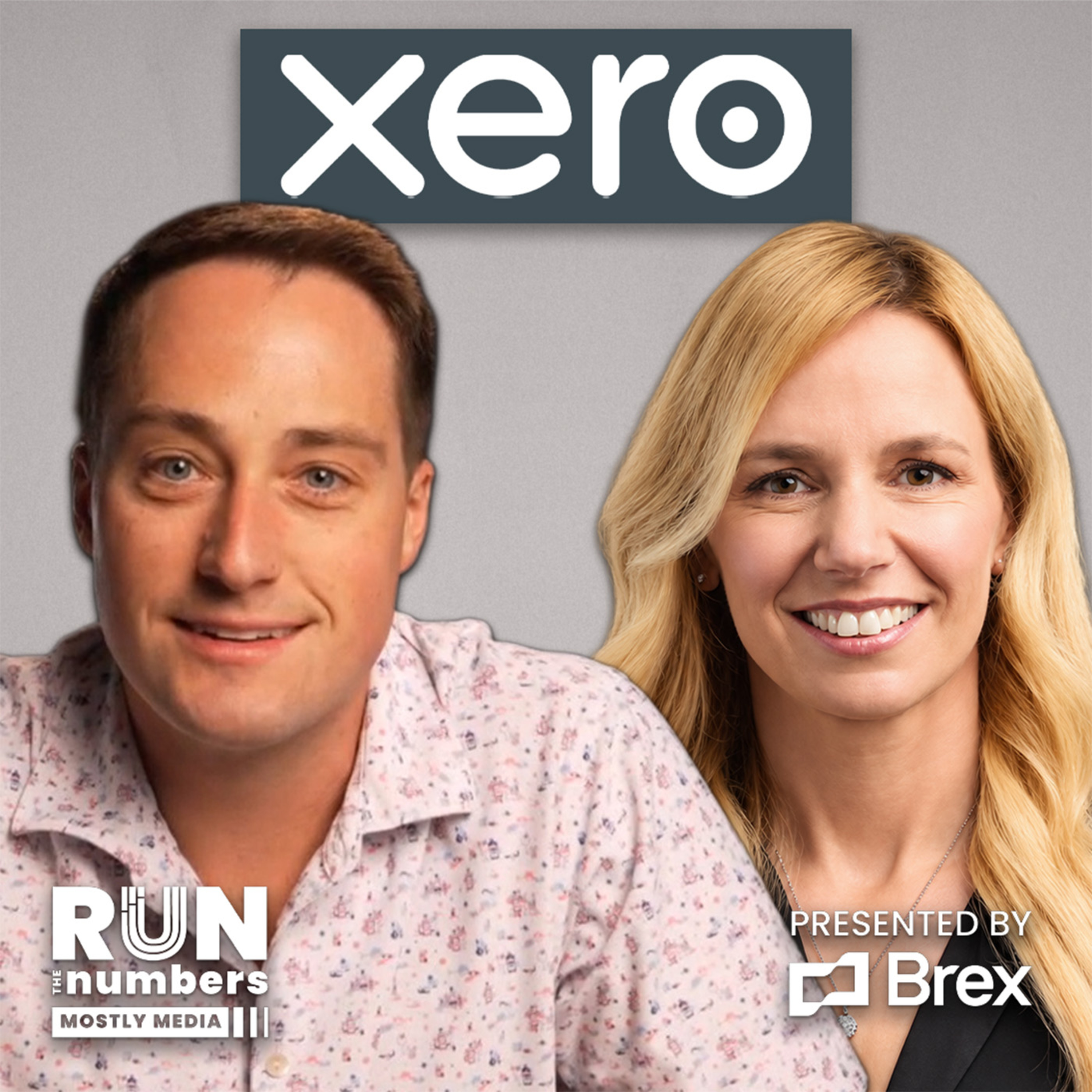
Claire Bramley, CFO at Xero. Background: career leading finance plus cybersecurity, enterprise architecture, IT transformation, operations, and strategy; hired a CISO early in her tenure (25 years security experience). Xero: nearly NZ$3B revenue, ~5M customers, 20-year anniversary; supports small businesses with accounting, payments, payroll, cash flow, compliance, reporting.
CFOs become the CEO’s co-pilot; diversity improves outcomes and customer representation; AI must be trusted and accurate (Xero cites 97% accuracy, remaining items as proposals); tripwires are leading indicators vs KPIs (lagging); use interim “trial periods” (minimum ~3 months) to avoid finance becoming a “junk drawer.”
AI auto bank reconciliation for plumbers/bakeries; UK initiative pushing large firms to pay small businesses within 30 days; retention metric tripwire tied to retention rates; IR scripting using AI while preserving executive voice.
Written by AI. May contain mistakes.
Explore how modern CFOs are expanding their roles beyond traditional finance.
“I think it's very common right now that modern CFOs are increasingly owning areas like transformation, operations, strategy.”
Discuss the impact of diverse teams on business performance and outcomes.
“Hey, are you liking this show right now?”
Meet Claire Bramley, CFO of Xero, and learn about her career journey and responsibilities.
“the show where I interview the world's top CFOs.”
Understand Xero's role in supporting small businesses and its market presence.
“Fun fact, Xero was the first accounting software I ever used.”
Delve into how CFOs are taking on new responsibilities beyond finance.
“We use, you know, our data and, you know, five million customers worth of data, 20 years worth of experience to try and be able to support people like you.”
Learn how hiring experts and fostering collaboration leads to better outcomes.
“So you've been really honest about when you're not an expert in something.”
Discuss strategies for overcoming imposter syndrome in leadership roles.
“High performing teams is very, it's that balance of trust and that balance of capability, experience and expertise.”
Discover the importance of curiosity and asking the right questions as a leader.
“it's not an area that you're the subject matter expert.”
Discussing the expanding responsibilities of CFOs and the importance of organizational design.
“It's if they're in a room with a lot of people and they're going over something that they can tell others don't understand.”
Exploring the necessity of trial periods when taking on additional responsibilities.
“How long should they date with the functional area for?”
Explaining the concept of tripwires in metrics and their significance in decision-making.
“You talked about using tripwires as a part of your planning process.”
Discussing how AI can assist small businesses with administrative tasks and financial management.
“And you live near Silicon Valley and Silicon Valley loves the idea that everyone will soon build their own software with AI.”
Learn about the importance of trust and accuracy for small businesses in finance.
“The last thing the plumber and AI hire wants is like, that's not right.”
Explore the challenges small businesses face with payment delays from larger corporations.
“But if some of my suppliers are small businesses, every payment they receive matters.”
Understand how trust could become a key competitive advantage in AI adoption.
“There are some Fortune 500 retailers out there that we all shop at probably.”
Discuss the shift in personal trust regarding AI and its integration into everyday life.
“start to place their trust in companies and say, you know what, yeah, I am going to use your AI offering tools, etc.”
Discover how Xero builds trust with small businesses through secure systems.
“an operating checking account that they use to run their bakery versus you're running an enterprise company.”
Learn how AI is being integrated into finance workflows for productivity and efficiency.
“If we look at Claire's finance and accounting team today, how are you working AI into your workflows?”
Explore how AI is transforming investor relations and enhancing communication.
“So some of the areas that were very quick wins for us is investor relations.”
Understand how AI helps ensure consistency in financial reporting and messaging.
“So that was the discussion we were having at our last earnings of my IR team.”
Learn how diversity leads to better decision-making and business outcomes.
“You've said that investing in women is simply good business.”
Diversity yields better outcomes and should be considered a sound business investment.
“So you need to surround yourself with that diversity of gender, of experience, of expertise and be curious and listen to that perspective to ultimately get the best outcome and make the best decision.”
Reflect on personal experiences where diversity led to better financial decision outcomes.
“Imposter syndrome is much higher and prevalent in women than it is in men.”
Explore how diverse viewpoints can lead to better financial decisions.
“Can you think of a moment in your career where the group came to a different decision and a better outcome because the room was more diverse?”
Learn about the importance of ensuring every team member's voice is heard.
“So I look at diversity on very many levels.”
Understand the challenges of self-doubt and the importance of pushing through.
“Claire, I'm going to take you into what we call our long ass lightning round.”
Discover how setbacks can lead to valuable lessons and personal growth.
“I have counted myself out like too many times.”
Examine the tools used by finance teams and the need to streamline software.
“When things are going well, the performance is good, everything's going smooth, you kind of coast a bit.”
Learn effective strategies for managing and questioning expense reports.
“and then pulling it together and manually analyzing, modeling, and then creating a nice summary.”

Get the gist, explore an idea or ask about something said.
 Claude
On Run the Numbers, what are the key points of this episode?
Searching your listeningAutomatic transcript. May contain errors.
0:00I think it's very common right now that modern CFOs are increasingly owning areas like transformation, operations, strategy. We are becoming really very much the part B and have moved away from the traditional reporting of the numbers, the reporting of the performance. I view diversity like any other investment decision through a business performance lens. diverse teams challenge assumptions, diverse teams get better outcomes, better solutions, diverse teams are a better representation of your customer. You have a lot of data, especially these days with AI. We have a lot of information. We have to make a lot of decisions.
0:40And so really identifying the signal. Is this a signal or is it noise? What we're doing now is saying, how do you really reimagine the workflow? How can I take humans out of the loop on the areas that make sense? And where do we have humans in the league to ensure that you've got that kind of compliance check?
1:00CJ Gustafson: Is this thing on? Yesterday's price is not today's price.
1:15CJ Gustafson: Hey, are you liking this show right now? Do us a favor and we'll do you a favor. Share a link to the show on Apple or Spotify with your team at work. Drop it in a Slack or God bless you if you have to use Teams, throw it in there too. But send a picture of you dropping the link in to Ben at MostlyMetrics.com. That is Ben at MostlyMetrics.com. Our creative dictator will hook you up with some Run the Numbers swag. Welcome back to Run the Numbers, the show where I interview the world's top CFOs. Today I'm talking to Claire Bramley, the CFO at Xero. Claire's a true renaissance woman. She's taken on responsibilities for areas like cybersecurity, enterprise architecture, IT transformation, operations, and strategy throughout her career stops.
2:01CJ Gustafson: Many of these functions feel daunting to me personally, so I asked her how she looks to build teams that scaffold one's weaknesses and combat imposter syndrome that you may have. I think it's a big lesson for all finance leaders out there listening who are thinking about expanding their operational purview to areas like HR or recruiting or sales ops. We also talk about catering to small businesses because Silicon Valley loves the idea that everyone will eventually build their own software with AI. But Claire talks to the small business owners that Xero has as customers, and that narrative is very disconnected from what's going on on Main Street.
2:38CJ Gustafson: I mean, if I'm a plumber in Ohio or a bakery owner in Auckland, What do I actually want AI to do for me? We talk about that. And finally, we discuss diversity as a form of capital allocation. Please subscribe to our show. It helps us with the algorithmic overlords. Let's get into the interview with Claire. Claire, thank you so much for joining me on the podcast. It's a pleasure to be here, CJ. Thanks for hosting me. Fun fact, Xero was the first accounting software I ever used. Really? Tell me more. How come? Yeah, I was at Veeam Software at the time, and we had an entity in the UK. And so I didn't realize how large of an international presence Xero had at the time.
3:16CJ Gustafson: Is the company going on like 20 years now? That's right. It's actually our 20-year anniversary this year, which is very exciting. And our motto for the year is 20 years old, but just getting started. We're very excited about where we are as a company right now. Not everyone knows Xero, CJ, in the US at least. Anyway, I think in Australia, New Zealand, the UK, Europe, we're very well known. But in the US, not as many people know us. So we are a financial software company that supports small businesses, accounting, payments, payroll, just helping them make life a little bit easier from managing cash flows, you know, compliance, reporting.
3:54Yeah, we're here to just try and make lives of small businesses a little bit easier.
3:58CJ Gustafson: Well, I love that coming from a family of small business owners, now a small business owner myself. A lot of the businesses you support are maybe not on the enterprise side, but people like mom and pop shops. The company itself is huge. I guess I can ask you this since you're a public company, but what's the size and shape of Xero these days? So in total, we're almost$3 billion, but that's New Zealand dollars. So bear with me because I always quote everything in New Zealand dollars. We are growing really, really strongly, though, which is really exciting, both through organic growth and through acquisition growth.
4:28We did a big acquisition last year in the US. Our biggest country is Australia. which is over a billion New Zealand dollars, but still growing at 20%. In total, min$3 billion, five million customers really leaning into AI. We are trying to help small businesses make life easier. And AI is one way we can do that. How do we take the stress out of every day? We use our expertise. We use, you know, our data and, you know, five million customers worth of data, 20 years worth of experience to try and be able to support people like you.
5:03CJ Gustafson: I love that. And we're going to dig into that more, AI for Main Street, because I think you're uniquely qualified to speak to that. I do want to hit on the expanding CFO role up front because it's kind of the story of your career, Claire, because you've expanded your role past what I think is a traditional CFO responsibility set at every company you've been at. I'm curious, What responsibilities have migrated into the CFO office over the last 10 years or so that may have surprised finance leaders 20 years ago? I think I say yes a lot. So I'm happy to help. I'm happy to lean into white space. And as a result of that, I do end up taking on more experiences.
5:42And it's not just me, though. I think it's very common right now that modern CFOs are increasingly owning areas like technology, owning areas like transformation, operations, strategy. We are becoming really very much the heartbeat and have moved very away from the traditional reporting of the numbers, the reporting of the performance, and moved much more towards driving the performance, whether it's through strategy, through operations, through data analytics and insights. I think many of us are really focused on not looking back. We can use that data, absolutely, but how are we helping the company make the best decisions to be able to accelerate growth, to be able to expand margins, to be able to optimize our cash flow?
6:32we're in a great seat, in a great position with a lot of information, knowledge and experience to be able to do that. So you really become that co-pilot for the CEO and key leader on the leadership team to help drive the company strategy, performance and transformation, not just the numbers.
6:50CJ Gustafson: Well, if I have it right at your last company, you went from being responsible for finance to also being responsible for, and this is a long list here, cybersecurity, enterprise architecture, transformation, operations and strategy. So you've been really honest about when you're not an expert in something. Was some of that scary taking on stuff that, hey, I got to actually hire experts here because I'm great at managing teams, but I may not be an expert in, say, cybersecurity? I think you have to think about where you can add value, not pretend to be the expert in all of these areas. What you're bringing is leadership.
7:23What you're bringing is experience. and most importantly your role is to hire really really good people around you who are experts in this area so to your point one of the things I did have to do early on was to hire a new CISO so I spent a lot of time meeting with many many people to make sure that I chose somebody that brought that level of experience brought that level of business operational engagement and that we complemented each other as opposed to me pretending to be a cybersecurity expert. You know, I brought someone in who had 25 years of being a CISO or in that security space. And I think you've got to have the confidence to do that.
8:03You've got to bring in people that are smarter than you, that are more, you know, more knowledgeable on topics and be confident enough to lead. And I think that I developed that over time. That's not something that I can say, you know, you have from day one when you start working. But I think more and more over time, you get that confidence and you realize what great things can happen when you have a great team. I've always said that having a great team around you is the best gift that any leader can have. It's so important to ensure that the sum of the parts is greater. High performing teams is very, it's that balance of trust and that balance of capability, experience and expertise.
8:41And you have to bring all of that together to really drive high performance across the team.
8:47CJ Gustafson: Was there a maybe like an imposter syndrome moment in perhaps cybersecurity or IT when when you realize like I own the outcome here, but I might not be able to really independently verify the answer? I've had many imposter syndromes throughout my career. I've been perfectly honest. Very early in my career where I didn't even apply for jobs because I didn't think I qualified. As you get more experience, as you surround yourself with a network of people who support you, who motivate you and make you realize what you're capable of and get through that over time, you still need to be humble. Like having a big ego for me doesn't make any sense whatsoever.
9:25You have to be curious. You have to ask questions. You have to accept the fact that you're not the smartest person in the room most of the time, that you're not the most experienced or expert in the room. And I wouldn't say I had an imposter syndrome specifically on that particular point, but I definitely have had those moments in the past and learned from that over time. Rather than focusing on the things I can't do, focus on the things that I can do and how do you move forward rather than dwelling on the things that are not within your control.
9:54CJ Gustafson: That's such a subtle mindset shift. And it means a lot to focus on where can I add value and use that to kind of scaffold any weaknesses that might be there. Yeah, I used to have a post-it though. I don't have it. I noticed that I didn't have it on there anymore, but only focus on things where you can add value. Like if you have experts, empower them, make them accountable, make them responsible, trust them, be there to help them, be there to lift them up. Yeah, I really try to ensure that I'm spending my time on areas where I can add value. And sometimes that's team leadership. Sometimes that is talking through problems, focusing on solutions, looking for different paths forward.
10:34You don't have to be the subject matter expert to be able to help someone solve problems. You know, you can just ask the right questions quite often. I find if you ask the right questions to a leader, they'll actually get to the answer themselves, but they just need a little bit of help moving along that journey. And I think for me, that's leadership skills that you can bring to the table, even when it's not an area that you're the subject matter expert.
10:59CJ Gustafson: Do you think you've gotten better at asking questions over time? Much better. It's a fine balance between not asking questions, not being curious, not being open to learn. and asking too many questions. I do like to understand things and I do like to get into the details. So over time, I've got much better at asking enough questions to understand and be curious, but not, you know, overly leaning into asking questions where it's holding things up. It takes longer to make decisions. I think it's really important as a leader to always ask questions and understand what's going on, not to pretend that you know it all, for example, not to pretend that you have all of the answers.
11:41I keep that very much at the forefront of my leadership style to just remain curious and ask questions.
11:48CJ Gustafson: Hey, thanks for listening. We'll be right back after a word from our sponsors. Maximor, get your Maximor here. Sorry, I just came from selling Cracker Jacks at the ballpark. Everyone in finance is adopting AI right now. The problem, it's a dozen disconnected tools. Yeah, one for revenue, one for AP, one for the clothes. and each one needs training and documentation. And the expertise to run them lives in your head, not the systems. Maxamore takes the opposite approach. One autonomous finance platform for the whole operation. Order to cash, procure to pay, the close, cash management, and reporting.
12:24CJ Gustafson: It all runs on a unified finance context that pulls from your ERP, billing, banks, even email and Slack. No rip and replace. Maxamore runs on self-learning agents that learn how your team already works. No prompts to wire, no workflows to build, nothing to document. Every output is audit ready, and when a call needs human judgment, it escalates for review. Because the agents optimize, not just execute, and your KPIs keep on improving. One PE-backed customer posted 98 % of transactions straight to their ERP. No error rate. The other 2 % go to a human before posting. You pay only for real outcomes, not seats.
13:04CJ Gustafson: See it at MaxiMor.ai. That is M-A-X-I-M-O-R dot A-I. Listen, I'm no mathematician. Although that is what my mother-in-law tells people I do for work. My son-in-law is CJ. He's a mathematician. If your finance team expands linearly with your headcount, your leverage is broken. Too many CFOs waste incredible talent on low-value maintenance, manual reconciliation, chasing missing receipts, and policing$30 software subscriptions. Woo! It's the expense police. Run! That's a systems problem. And that's why you need Brex. Brex is an intelligent finance platform powered by AI workflows that handle the heavy lifting automatically, which is a fancy word for without you.
13:49CJ Gustafson: Instead of burning elite finance minds on administrative maintenance, Brex gives your team the leverage to focus on momentum and growth. Thousands of companies, including Anthropic, Coinbase, and DoorDash, already run on Brex. Stop asking your A-level finance talent to do B-level admin work. It's time to get Brex. Head to brex.com slash metrics. That is brex.com slash metrics. Today's episode is brought to you by Anrock, the sales tax platform behind companies like Anthropic, Notion, and Vanta. Here's a fun way to totally ruin a Tuesday. Open a letter from a state you've never set foot in telling you that you owe back taxes you didn't know existed.
14:28CJ Gustafson: Happen to me. because the rules never stop moving. States are now racing to tax AI, digital ads, streaming, really anything new, and they're doing it faster than a spreadsheet can keep up. Anarok handles all of it. One platform that watches your exposure everywhere automates compliance and flags risk before it turns into that nasty gram. That's why thousands of finance leaders trust Anarok to stay ahead. Talk to an Anarok sales tax expert for a personalized exposure estimate at anarok.com.rtn. That is A-N-R-O-K dot com slash RTN. I've noticed this funny thing from some of the best CFOs and CEOs that I've met.
15:08CJ Gustafson: It's if they're in a room with a lot of people and they're going over something that they can tell others don't understand. Even if they understand it, they'll ask the question or ask the quote unquote stupid question to almost bail other people out or do it for them so they feel more comfortable. That was a skill that I learned actually from a previous manager and mentor of mine. And she would always ask the question and say, maybe I'm not understanding this correctly and made it about herself. But can you explain me this? And there was two advantages of doing that. And I have taken that upon myself to use that skill.
15:43First of all, to your point, even if you think you know the answer, somebody in the room may not. So it's an opportunity to talk. But it also is a very aggressive way to clarify something that you think may not be accurate. Rather than coming in and saying, why is this this or shouldn't that be this sort of thing, which can, especially if you're dealing with people lower in the organization, can be a little bit intimidating for people. Saying to somebody, can you explain to me why is a very, you know, much more open and nicer way to ask a question of something that you're looking at and thinking this doesn't make sense.
16:20CJ Gustafson: That's amazing. I want to touch on the expanding CFO role again, because I had this experience at my last company where I was CFO. It was amazing. They gave me a ton of responsibility. There were times, though, that I felt like my department was becoming almost a corporate junk drawer for things that they didn't know where to where to put it or problems that don't have an obvious owner. Do you think that's a risk for the finance department? If you're a true partnership with the CEO, you have a conversation about does this make sense? If there's an opportunity for work to come my way, let's do a trial period.
16:53Let's do it as interim. Let's see if this makes sense. And then sit down and look at the advantages and disadvantages to then decide, you know, is this the right area? It doesn't make sense to me to for me to be running a function or a team if I can't add value. But to your point, just putting it there because there's nowhere else to go. I think it's up to us to sit down and say, is this the right move for the company? Is this the right move for the team? Are we going to get the best out of this team moving forward if they sit in my function? And I think that when you look at organizational design, we should be looking at that all the time.
17:28You know, are we operating in our most effective and efficient way? And sometimes that does mean you need to kind of look at the organizational design and organizational structure. So I think as long as you're having that open conversation, as long as it's not just a reaction to do that and you're doing it intentionally and there's a reason for doing it, I think it's fine.
17:48CJ Gustafson: That trial period is a brilliant idea. How long should they date with the functional area for? The way that you normally do it is when there's a change in leadership or there's a reason why you need an interim person. It needs to be a few months. You know, you need to have connected with the leadership team. You need to have been able to understand and get into some of the details. So I would say a minimum of three months needs to be kind of an interim period. I mean, it can be as long as you want it to be, to be honest. But I think it has to be at least three months, in my opinion. I want to talk about planning and tripwires next.
18:27CJ Gustafson: You talked about using tripwires as a part of your planning process. What exactly is a tripwire? The way that we use it is to say, is there a point of which a certain metric or a certain pin of information gets to a point where it becomes a more material impact? So it's something that's like, OK, let's sit up. Has something changed? We need to dig into this. You can explain most variances. You can explain, you know, why is this trending this way year on year or versus forecast versus budget? There's a there's a reason and a rational explanation for most things. There comes a point where it's like, hang on, this is not just an explanation or a variance.
19:01This is a proper trend. This is actually something either good or bad that we should actually be paying attention to in much more details and not just keep continuing doing what we're doing. We have to stop. We have to pause. We have to look at what this is telling us. I tend to use tripwires to help me give me those signals. Another wise mentor friend of mine talks about separating the noise from the signal. You have a lot of data, especially these days with AI. We have a lot of information. We have to make a lot of decisions. And so really identifying the signal. Is this a signal or is it noise?
19:35And I think that's our job, you know, from finance, from data, from insights to really be like, of all of this information that we have, these are the three to five takeaways or key things that the leadership team should be focusing on. either because they are ultimately going to change the progression of where we're going. We need to make an important decision. Maybe it's not going as well as you're expecting. Maybe it's going better. Maybe a return on investment is actually doing really well. It's like, should we double down on this? So I kind of use tripwires and just have this signals versus noise to really say, are we focusing on the right things?
20:11Things that really make a difference. If we can't get the business to listen and change something as a result, then it's not adding value.
20:20CJ Gustafson: What's the difference between a tripwire and a KPI? Is a tripwire, say, upstream from a KPI? Yeah, KPIs for me tend to be what I would call a lagging indicator. So something that you're tracking against, etc. etc. For me, a tripwire is a more leading indicator, which would give you a signal of something that potentially could be coming. And so it's better to look at it sooner rather than later. Can you think of a tripwire that tipped you off to something before it happened? We had a metric that we were tracking at my previous company, which we were just seeing very small variances to. So wasn't necessarily getting a lot of our attention.
20:58We were tracking it, we were monitoring it, et cetera. But we had a specific metric. We saw the trend actually make a big step change in a positive direction. So again, nobody necessarily thought of it like, oh, it's just a good month, you know, just a good quarter. And then we actually then put that against, we did the modeling, we looked at our tripwise and we said, actually, that was one of our leading indicators to say, if that metric moves by more than three to 5%, so it had been moving one to two percent it's fine that suddenly if that particular metric moved in the three to five percent actually that means that could be a signal it was actually linked to our retention rates suddenly it became a slightly larger variance and on its own it wasn't very alarming but the fact that we'd seen this trend we'd hit this certain level on retention that we were like actually that that is a tripwire we actually went back and did a re-analysis and we did actually make some different decisions moving forward as a result.
21:59Setting those goals and I say metrics up front in advance so that when you're in the day to day, you don't just creep through it. It's kind of like a level that you could easily creep through one month at a time without realizing it. But suddenly you hit a certain level and you're like, actually, no, this is something that we actually need to stop and pause.
22:18CJ Gustafson: So it sounds like a good tripwire has some sort of threshold set to it. Yeah. A tripwire is a threshold basically. Yeah. Either on the upside or on the downside, if you pass that threshold, regardless if the change month over month is small or large, if you get to that threshold, you want to pay attention. You want to stop. You want to pause. You want to dig deep. We could have very easily, if we hadn't set that threshold or that tripwire, we could have easily have just rolled through it. Hey, thanks for listening. We'll be right back after a word from our sponsors. Remember when pricing was simple?
22:50CJ Gustafson: One product, one subscription, one invoice every month. Those days are over. The AI economy is changing how everything gets bought and sold. We're seeing usage-based pricing, hybrid contracts, and something called a credit. The finance systems built for vanilla subscriptions weren't designed for this. This isn't just a RevRec problem anymore because outdated revenue architecture can kill a great pricing idea before it ever reaches the market. RightRev lets you recognize revenue in whatever shape it comes in. Whether you're launching consumption credits or testing entirely new commercial models, RightRev gives finance the flexibility to support whatever pricing model comes next.
23:28CJ Gustafson: So product teams can keep on innovating and finance teams can keep pace. If you're architecting revenue for the AI economy, learn how RightRev can help. Visit rightrev.com slash CJ. That's me. That's rightrev.com slash CJ. Hey, founders and finance folks. You know how early on everything is fast and scrappy? and then suddenly equity gets messy? Spreadsheets break, grant docs pile up, lawyers are sending new forms and collecting fees. It all shows up right about when you're already swamped. Well, if managing your cap table feels like one more frustrating thing on a very long to-do list, you need to know about Pulley.
24:07CJ Gustafson: Pulley makes equity management simple and stress-free. You can issue options, model dilution, complete 409As, and more. All in one place with support from real experts when you need it. So if you're raising, hiring, or scaling, Pulley keeps your cap table clean so you can stay focused on building. Not wrangling spreadsheets. Learn more, request a demo at pulley.com slash mostlymetrics. That is P-U-L-L-E-Y dot com slash mostlymetrics. I got news for you. The ERP category is finally getting disrupted. And if you haven't heard of Rilla yet, please pay attention. It's the AI native ERP built specifically to replace NetSuite.
24:45CJ Gustafson: and it's already won over hundreds of finance teams. Their mission is to make these zero-day close a reality, and they're actually doing it. We're talking teams closing the books at 1.35 p.m. on the first day of the month. Companies like Windsurf, Mercore, and hundreds of others run their entire finance stack on Relay. Revenue recognition, close management, multi-entity, native Stripe and Salesforce integrations, woo, everything a scaling company needs. They've got 5.0 stars, 5.0, wow, 5.0 stars on G2. They're backed by A16Z and Sequoia. Heard of them in CPA-led implementations that get you live in 45 days.
25:20CJ Gustafson: That is simply unheard of in the ERP space. If your books aren't running as fast as your business, check out Rillet. Book a demo at Rillet.com slash CJ. That is R-I-L-L-E-T dot com slash CJ. That's me. I want to hit on something that we started the conversation with, and that's AI specifically for SMB. And you live near Silicon Valley and Silicon Valley loves the idea that everyone will soon build their own software with AI. When you spend time with actual small business owners, Claire, how disconnected is that narrative from Main Street? For the small end of small businesses, there's a big disconnect.
25:58Small businesses don't want to be building software. To your point, we support the bakers, the hairdressers, the people that are running a florist shop, for example. These people want to use AI to help grow their business. Do they want to sit and code software that other companies like Xero that has 20 years of experience, 5 million customers worth of data? Do they really want to sit and vibe code an accounting software or a payment or a paywall software? They don't. They want you to do that. They trust you and trust is really important right now, but they trust you because you're the best to do it.
26:38And you have to you have to deliver. You have to meet their expectations.
26:42CJ Gustafson: Yeah, because if I'm a plumber in Ohio or bakery owner in New Zealand, I probably want more customers. I probably want to spend nights with my family, not reconciling invoices. Like what's your experience with that? The less admin, the better, the less time spent on having to worry about these things, even the less time on chasing payments, raising invoices, paying their employees if they have employees. If we can do that for them, if we can use AI to auto bank reconciliations, for example, is one that, you know, a lot of our customers are telling us is saving them hours. You have all your transactions that come through your bank accounts or all your different, you know, payment systems.
27:25It goes into the Xero software. If we can automatically using AI, using your history, using the models that we have created from everyone else's data to tell you that this is what it looks like. And you just have to kind of glance at it and go, yeah, that makes sense. That is very different from individually having to categorize or confirm a suggested categorization of an entry. Like a planner in Ohio does not want to be doing that. Two things are really, really important. Accuracy, quality of the AI, of the offering we give them. The last thing the plumber and AI hire wants is like, that's not right.
28:04So we pride ourselves on a really high level of accuracy, 97 % accuracy. And that final 3%, if there's a chance that it's not right, we will just make it as a proposal so that they can be confirmed or not. And the other thing is trust. They trust you with their finances. They trust you with your bank account. They trust you with paying their people and you can't make mistakes. You can't mess that up because that just creates lack of trust, uncertainty, creates frustration, creates time. So we pride ourselves at zero on as we use AI and enable them that that trust, that accuracy is at the highest level that it could possibly be.
28:44CJ Gustafson: What's something small business owners worry about constantly that executives and large corporations may underestimate? Yeah, being paid. Like I'm a CFO of a large corporation. I am optimizing my working capital. But if some of my suppliers are small businesses, every payment they receive matters. We have this initiative, actually. I'm from the UK. Hopefully you can still tell I have a British accent. In the UK, Xero has a program with the government in the UK that really pushes companies, large corporations, to pay small businesses within 30 days. Not just on time, but don't pay them fast. We don't want them to be waiting for their money.
29:28They can't survive if people are delaying payments or not paying them at all. So I think working now with small businesses, working in the financial software area, if there's things like that that we can do to help small businesses through our software, but also some of these additional initiatives we're doing, I think it's really important. And I think maybe large corporations who use small businesses kind of forget that. They need this to pay their bills, to pay their mortgage, to pay the loan, to pay if they have got employees, to pay their employees.
29:58CJ Gustafson: Cash flow is oxygen to these companies. It's the lifeblood of their business. And it stinks that they're often the ones who get the screws turned to them and get the short end of the stick. They don't have negotiating power. The biggest companies in the world who have the most cash probably have the longest payment terms. But it's the small companies who need the cash that don't have money sitting in the bank account that have to wait that like 60 days, 90 days to be paid. It is the lifeblood. And so I think we pride ourselves on helping small businesses to manage that. There are some Fortune 500 retailers out there that we all shop at probably.
30:36CJ Gustafson: And people would be shocked to know that many of the companies that partner with payment terms could be like net 180 or net 365. And that's really hard to make a business work. That's really hard. But it's a great opportunity for small business because suddenly you're in this big retailer and the distribution is amazing. But to your point, they've had to pay all of the expenses first. They're still a small business and then they don't get paid for, like you say, hopefully it's not 365 days, but to your point, probably don't get paid as fast as they should, unfortunately. Trust, accuracy, compliance, privacy, you said, they matter more than ever in an AI world.
31:15CJ Gustafson: Do you think we're entering an era where trust becomes actually a bigger competitive mode than the software itself? I think so. Some people are wary still of AI, but they know that they have to use it because they know that it is amazing. I mean, genitive AI and where AI has come is incredible. But if you don't trust it, you're not going to use it or what you're going to use it for is going to be very limited and restricted. So I think as people, especially small businesses, start to place their trust in companies and say, you know what, yeah, I am going to use your AI offering tools, etc. Then they have to fill that trust.
31:55I struggle a little bit with the LLMs where it says, this is AI, it could be wrong. I mean, it's basically what it says at the bottom of the screen, doesn't it? And it's like, do you want them running, you know, connecting into your bank accounts during your analysis? Like start sending invoices, doing payments. I'm like, you have to have a level of accuracy and trust.
32:16CJ Gustafson: Well, where are you at personally with with trusting it? Because I had this realization the other day, two years ago, I was very reticent to upload. I think I was trying to figure out like a mortgage payment, uploading my mortgage to ChatGPT. And the other day I was connecting. I was using the Google connector in Claude to give it access to every single document that I own on my computer, as well as my email. And if you had told me that two years ago, I'd be like, are you crazy? I would never let AI have access to that. So it's just like it's night and day how much at least I've shifted in terms of how much I'll let AI into my life and my documents.
32:52I think we're all getting a little bit more comfortable and confident. I'm still not quite connecting my whole life bank accounts. On the public side, for Xero, we have enterprise versions. I do use AI for work information, but only in our enterprise versions of Claude, for example, and ChatGPT, etc. So I feel much more comfortable with that because it's not going anywhere. It's an enterprise-wide security system. And we have a security team and they've done their work, you know. And so we know boundaries, etc. For me personally, though, I use it a lot, but I use it, I'd still use it on the more generic things.
33:31Like the efficiency for me is optimizing my workday than optimizing my personal things. But yeah, I'm not yet the way of connecting it to all my personal documents, my personal bank accounts, things like that.
33:43CJ Gustafson: For these small businesses, it's actually closer to home and doing it to their own documents if they own the business, right? Like for a lot of these companies, they pay their mortgage one step removed from the bank account. an operating checking account that they use to run their bakery versus you're running an enterprise company. You have all these guardrails set up and it's also its own entity. For a lot of these people, the line between their business and home is very thin. Exactly. And that's where Xero comes in. We come in and say, we are keeping you in a secure system. So data that is loaded within this is not shared outside.
34:21Most of our customers have connected their bank accounts into our software. They trust us that that is protected. And so therefore they feel more confident being able to share additional information. Well, in the process of launching, but announced an offering called ZeroForce, which actually in our secure system allows you to connect more and more to other applications and other offerings. The initial feedback we're getting from customers is they feel like it's in a secure space that I already trust zero. So if you can give me that additional functionality in your ecosystem, they would feel more comfortable.
35:00So that will be interesting. It's coming later in the year, so it'll be interesting to see how that gets used by our customers, both on the small business side, but also the accounting and bookkeepers.
35:08CJ Gustafson: So that's the small business side and the customer angle. If we look at Claire's finance and accounting team today, how are you working AI into your workflows? Many different ways. So we have all embraced it from an internal standpoint. Our first journey was about small moves forward. Like how do I make myself a little bit more productive? How do I speed up the analysis I'm doing? How do I create a nicer, quicker set of reports, you know, and that I can share and everyone can ask it questions. So we were kind of doing those, but I would say they were kind of small, small increments. What we're doing now is saying, how do you really reimagine the workflow?
35:48How can I take humans out of the loop on the areas that make sense? And where do we have humans in the loop to ensure that you've got that kind of compliance check and oversight? So we are kind of figuring out right now, where do humans need to be versus where do they not need to be? And we can just use AI from an end-to-end workflow standpoint. So we're mapping that out across my different functions and teams right now. There's still humans in the loop, but there are some tasks and some parts of the workflow that you're like, actually, if it's rules-based and it's very clear and we can get that 100 % level of accuracy, we don't need the humans to be doing this.
36:27We are looking at that right now. So we're all using like 87 % of my team use AI pretty much on a daily basis.
36:35CJ Gustafson: What's bubbled up so far as a good use case? So some of the areas that were very quick wins for us is investor relations. Loads of analysts during reports. You have loads of benchmarking data. You have what's the sentiment out there? What are the potential questions? How is my script going to be interpreted? Because a lot of it goes through the models. The other one in procurement, you know, when you're negotiating, you're benchmarking, you're doing negotiations, there's a lot of data, a lot of information. So we've got some, you know, quick wins there, I would say. Workforce planning, like headcount planning, estimating, you know, costs and forecasting, etc.
37:12The harder ones are when you really want to look at the whole end-to-end process and how do you automate and reimagine that from an AI agentic standpoint.
37:22CJ Gustafson: I really like the IR angle because there's so much information produced on your company from others looking at the financials. And then it's how do you tell a story that's authentic, but then check on this in terms of how it aligns the sentiment of others. It's finding that balance of using AI to help speed things up and get through things quicker, but not take out the voice of Claire. So that was the discussion we were having at our last earnings of my IR team. It's kind of like, yes, we've leveraged AI, but it also needs my personality, my CEO's personality, our style needs to come through. So we've created Claude skills and chat GPT, you know, things that has Claire's voice.
38:05And when you read something, you can tell, I can tell anyway, whether that is written by AI or not. To use it so much that it takes out the personality sort of thing of the leader. The other thing, though, that was super exciting was as you put that final script through, as you put, you know, as you look at the Q &As, it's like, what questions do you think will get asked? How would that be interpreted by the algo, you know, the algorithms out there in the market in terms of tone and sentiment of, you know, some of our statements, you know, our annual report, our, you know, sustainability report, the script, you know, that we're writing.
38:40There's a lot of data when you do your year end results, you know that like, you know, the amount of reports and data and information. One of the things is like, have we got consistent messaging all the way through? Are we duplicating things, you know, through a big, long and, you know, multiple page annual report?
38:56CJ Gustafson: There are so many instances, you don't do this, but where the CEO and CFO will repeat almost like the exact same paragraph on the earnings call. And AI can call it out like, hey, they already said that. Some things you do want to double down on, but you want to make it very short and sweet. And then you just say, what's the incremental value add? What new thing are you telling me? When you have a very long annual report that goes on for pages, you have one person that writes one section and one person writes the other section and we all review it and read it. But AI can so quickly be like, well, over here you're saying this and over here you're saying that.
39:27CJ Gustafson: I want to switch gears a bit and talk about diversity, specifically as a capital allocation decision. You've said that investing in women is simply good business. If diversity were a capital project competing for funding, how would you build the investment memo for those listening? I view diversity like any other investment decision in the sense of through a business performance lens. Diverse teams challenge assumptions. Diverse teams get better outcomes, better solutions. Diverse teams are a better representation of your customer and a representation of your investors. Like if you only have people like you around you, you will inevitably end up with groupthink.
40:11Like that can't be the best answer. You know, true collaboration is about looking at all the different options and all of the different ways you can approach it and finding the best outcome for the company, for the team, for the customer, for the investor. But if you don't have diversity that comes in to that starting point, how do you know that you've looked at all of the options? So for me, it's not just gender diversity, it's all levels of diversity. It's experienced diversity, whether it's conscious or unconscious, your upbringing, your experiences, the way that you have worked, played, you know, you spend time with your family, activities that you do, naturally, they influence you and your perspective on life.
40:54More importantly, the things you haven't experienced, the things you haven't done, the places you haven't been, the situations you haven't been in means they cannot influence you. So you need to surround yourself with that diversity of gender, of experience, of expertise and be curious and listen to that perspective to ultimately get the best outcome and make the best decision.
41:16CJ Gustafson: I love how you said it's a better representation of your customer set. I've never thought about it that way. We've been talking about small businesses. We have five million customers. How many of those 5 million customers are like me? I don't know. Probably half or at least women, though. Women who come from the UK, that live in the US, that have a finance background. Probably not many. You know, how do you represent that? But the gender piece is key. There are very clear differences between how women approach a problem, how women respond to something than men do. One of the things we were talking about earlier, imposter syndrome.
41:52Imposter syndrome is much higher and prevalent in women than it is in men. So when you're thinking about your customers, when you're thinking about how to get them to use your software, how you're thinking best how you can add value, those differences are important.
42:07CJ Gustafson: Can you think of a moment in your career where the group came to a different decision and a better outcome because the room was more diverse? Earlier in my career, I was in a room of mainly white men and two women, and we were debating financial decision. I mean, it was a more financial meeting, and we were debating a financial decision. And we had made a set of assumptions and modeling assumptions on consumer behavior. And the business had said, this is what we believe the consumers will respond. We had some data to support that, but not much. And then it wasn't me. I'm not going to take credit for it.
42:43But someone else in the room raised their hand and said, if I was going to see that marketing investment, etc., this is how I would respond. Which was quite different, not completely different, but quite different and would have driven a very different outcome if suddenly 50 % of our consumers assumed a different outcome from this investment in this campaign that we were doing. We went away and said, okay, let's model, like from the finance side, let's model 20%, 30%, 40%, 50 % of our customers respond this way versus this way. Does that change our decision in terms of how we would approach, how much we would invest, what path we would go down?
43:22And it did. You didn't even have to have 50 % responding differently. You just had to have somewhere between 30 % to 40 % responding in a different way than we had anticipated. You would take a different path forward. I'm not going to take credit for it because I was there doing the analysis, doing the numbers. It's fairly early on in my career. The good thing is everyone listened. That was the thing. We had a room of people who were listening and paying attention. What's worse, if someone puts their hand up and everyone's like, oh, no, don't be silly.
43:47CJ Gustafson: It sounds like it's impacted how you build your own team today. Completely. So I look at diversity on very many levels. I intentionally don't surround myself with people who are like me. Sometimes I intentionally go for the opposite. it. There's something in the UK called insights and it's all about your energy colors and how you respond to certain situations. You know, I have my energy colors and I always try to look for a team that has a blend and I always ensure that everyone has a voice. Some people are natural extroverts. Some people naturally will put their hand up and speak and some people are not.
44:21And so it's my job as a leader to ensure that those who are naturally sit back and listen and observe and reflect that they are called in and that I hear their opinion and perspective because there's no point having a diverse team who think differently, who have different experiences, who have gender diversity if they don't speak up and if you don't listen.
44:41CJ Gustafson: Great reminder for everybody. Claire, I'm going to take you into what we call our long ass lightning round. So the first question I ask every successful person, you got to give us one thing you've messed up in your career before, some mistake you've made on the job before. Yeah, I would say, and I still do it, not to the same extent now, but second guess my own opinion. Like I don't believe in myself. If I have a view on something or you find a piece of information that tells you something and everyone tells you like the sales team or somebody, everyone tells you, no, it's fine. It's good, et cetera.
45:11Like early in my career, it was a big learning for me. I didn't keep pushing. I didn't double click into it. And it turned out to be a bigger issue than it should have been. Now it doesn't happen on the big things because I've learned from that. But even now, sometimes I'll be like, okay, yeah, that's fine. Not what I was thinking, but okay, it's not a big deal. We'll go with it. And afterwards, I'm like, I should have stuck to my guns on that. I mean, it doesn't ever happen on the big things now because I always follow the data. I'll always dig in. If something's telling me something, I won't give up.
45:41But on the smaller things, oh yeah, let's do this versus this. I'm like, yeah, okay, fine. It doesn't matter. And then afterwards, I'm like, yeah, I was right. I shouldn't have done that.
45:49CJ Gustafson: It's hard though on the smaller things. Like, I think I'm really good at sticking to my guns and the big things but sometimes i just don't have the energy for this to your point how important is this are you going to regret it afterwards if it doesn't you know work out or doesn't go well the regret minimization framework there we go claire if you could give your younger self advice knowing what you know today what would you tell her anything is possible i tell my team i tell myself i tell my kids anything is possible don't count yourself out. I have counted myself out like too many times. No, they're not living for me.
46:21I'm not experienced enough. I'm not good enough. And even though it happened to me earlier in my career, you have self-doubt. I'm not as good as that person. I'm not as good as that person. So to any woman who relates to this out there, believe in yourself. And what's the worst that can happen? That's why I say to my daughter, what's the worst that can happen? You don't get it. You apply, you don't get it. It doesn't matter. Like a no is fine, but not even applying, not putting yourself in the game, not even getting to the start line, well, you're never going to win.
46:52CJ Gustafson: The beautiful thing about having a podcast is I can play that for my two young daughters over and over again. She's 12, just turning 12. She'll be like, no, I can't do it. And I'm like, really? How do you know you can't do it? You've never tried. Just try. And if you can't do it today, maybe you can do it tomorrow try get up try again fail but learn from it keep going and I really hope that I've embedded that into my children into my team you know I see it at work all the time people are like I don't know if I can do that job I'm asking you to do it I believe in you I see something in you trust me as your leader as your manager give it a go we'll support you I think I've learned more in my career from things that have gone badly than things that have gone well.
47:38When things are going well, the performance is good, everything's going smooth, you kind of coast a bit. When it's hard, when it's tough, when you're being challenged, it's actually when you learn the most. My boss thinks that I love, I revel in it. She goes, I think you revel in like this kind of area. And I think she's right.
47:55CJ Gustafson: More of a technical question here. Hard to follow up on the last one. But what tools does your finance team use to get the job done today? Too many is my answer to that. With acquisitions, you know, as a technology's advanced, you tend to have, I think, too much software. So I've got a little bit of a task force right now across, not just finance, across the whole company saying, what are we using? What do we need? You know, how do we reduce the level of software that we've got? The most recent one, actually, that we've rolled out to all of finance and actually the whole company was actually Claude.
48:27I have to say my team say that it's a game changer. I think so too. I use it pretty much every day. Doing some quick analysis, modeling, et cetera, that you potentially would be getting data from different sources and then pulling it together and manually analyzing, modeling, and then creating a nice summary. Claude can do it so fast.
48:47CJ Gustafson: Last one I got for you. What's the craziest thing you've ever had someone try to expense? My philosophy here is if I see something that shouldn't be there, I just call them. You just call them? Because you don't want to put it in writing. Like, I saw this on there and I'm surprised to see it on there. I give people the benefit of the doubt. They'll be like, it's a mistake. That's what they always say. It's a mistake. And I'll be like, okay, I'm just going to send it back to you. Can you fix it? Yeah, it goes back to what we talked about earlier. Sometimes it's not saying you're wrong. It's asking the question.
49:15CJ Gustafson: Can you explain this to me? Yeah, exactly. Can you just explain this? This looks a bit funny. I was surprised to see this. Claire, it's been an absolute blast. Thank you so much for coming on the podcast. Oh, it's so nice to see you. CJ, thanks for hosting me. And yeah, it's been a lot of fun. Run the Numbers is a mostly media production. Yelling an intro by Fat Joe. Artwork by Meg D 'Alessandro. Show is executive produced by Ben Hillman. Nothing said on this podcast is intended to be business or investment advice. It's the sole opinion of me, a guy who feeds his dog way too much ice cream and has a history of net operating losses, LOL.
49:49CJ Gustafson: If you like this podcast, hit subscribe and give us five stars. It will take like two seconds and our algorithm overlords love it. Drink water, call your mom, and have a great day. Peace.
In this episode of Run the Numbers, CJ Gustafson sits down with Xero CFO Claire Bramley to discuss how the CFO role is expanding beyond finance into strategy, operations, transformation, and technology. Claire also shares how she builds teams around her weaknesses, what small businesses actually want from AI, and why she views diversity as a business performance decision.
—
SPONSORS:
Maximor is an autonomous finance platform that runs order-to-cash, procure-to-pay, the close, cash management, and reporting on self-learning agents instead of a dozen disconnected tools. One PE-backed customer posts 98% of transactions directly to its ERP, with the remaining 2% routed to a human for review. You pay for outcomes, not seats. See it at https://www.maximor.ai/
Brex is an intelligent finance platform with AI-powered workflows that enforce expense policies at the point of sale, match receipts automatically, and reduce month-end close from weeks to hours. Thousands of companies, including Anthropic, Coinbase, and DoorDash, already run on Brex. Stop asking A-level finance talent to do B-level admin work. Learn more at https://www.brex.com/metrics
Anrok is the sales tax platform that watches your exposure everywhere, automates compliance, and flags risk before it turns into a surprise back-tax letter from a state you've never set foot in. Companies like Anthropic, Notion, and Vanta already trust Anrok to stay ahead of rules that move faster than any spreadsheet can. Talk to a sales tax expert for a personalized exposure estimate at https://www.anrok.com/rtn
RightRev is a revenue recognition platform built for the AI economy, helping finance support usage-based pricing, credits, hybrid contracts, seats plus consumption, and whatever commercial model comes next. It gives product teams the freedom to keep innovating without outdated revenue systems slowing them down. Learn how RightRev can help at https://rightrev.com/cj
Pulley is an equity management platform that lets you issue options, model dilution, and complete 409As without your cap table turning into a spreadsheet disaster. Founders raising, hiring, and scaling use Pulley to keep equity clean and stay focused on building. Learn more or request a demo at https://pulley.com/mostlymetrics
Rillet is an AI-native ERP built for modern finance teams that want to replace NetSuite and close faster. With revenue recognition, close management, multi-entity support, and native Stripe and Salesforce integrations, Rillet helps scaling companies run their finance stack in one place. Hundreds of teams, including Windsurf and Mercor, use Rillet to make the zero-day close real. Book a demo at https://www.rillet.com/cj
—
LINKS:
Mostly Talent: https://mostlymetrics.typeform.com/to/cLTxtAsN
Guest: https://www.linkedin.com/in/claire-bramley-133b7174/
Company: https://www.xero.com/
CJ: https://www.linkedin.com/in/cj-gustafson-13140948/
Mostly metrics: https://www.mostlymetrics.com
—
TIMESTAMPS:
0:00 Preview and Intro
3:00 Xero and CJ's History With It
4:12 Xero's Size and Scale Today
5:10 The Expanding CFO Role
7:06 Hiring Experts You're Not
8:47 Imposter Syndrome
11:00 Getting Better at Asking Questions
15:04 Asking the "Stupid Question"
16:21 Finance as the Corporate Junk Drawer
17:48 The Trial Period Idea
18:24 Tripwires: Leading Indicators for CFOs
25:35 AI Hype vs. Main Street Reality
26:44 What Small Business Owners Actually Want
28:45 What Big Corps Underestimate
31:10 Trust as a Competitive Moat
33:45 Why the Line Is Thinner for Small Biz
35:12 AI Inside Claire's Finance Team
37:23 AI for Investor Relations
39:28 Diversity as Capital Allocation
42:07 A Decision Diversity Changed
44:45 Lightning Round Begins
46:06 Advice to Her Younger Self
48:49 Craziest Expense Ever
#RunTheNumbersPodcast #CFOLife #FinanceLeadership #AIinFinance #WomenInFinance