Ask ChatGPT

 Science Weekly
7 Jul 2026 · 17m · 6 chapters
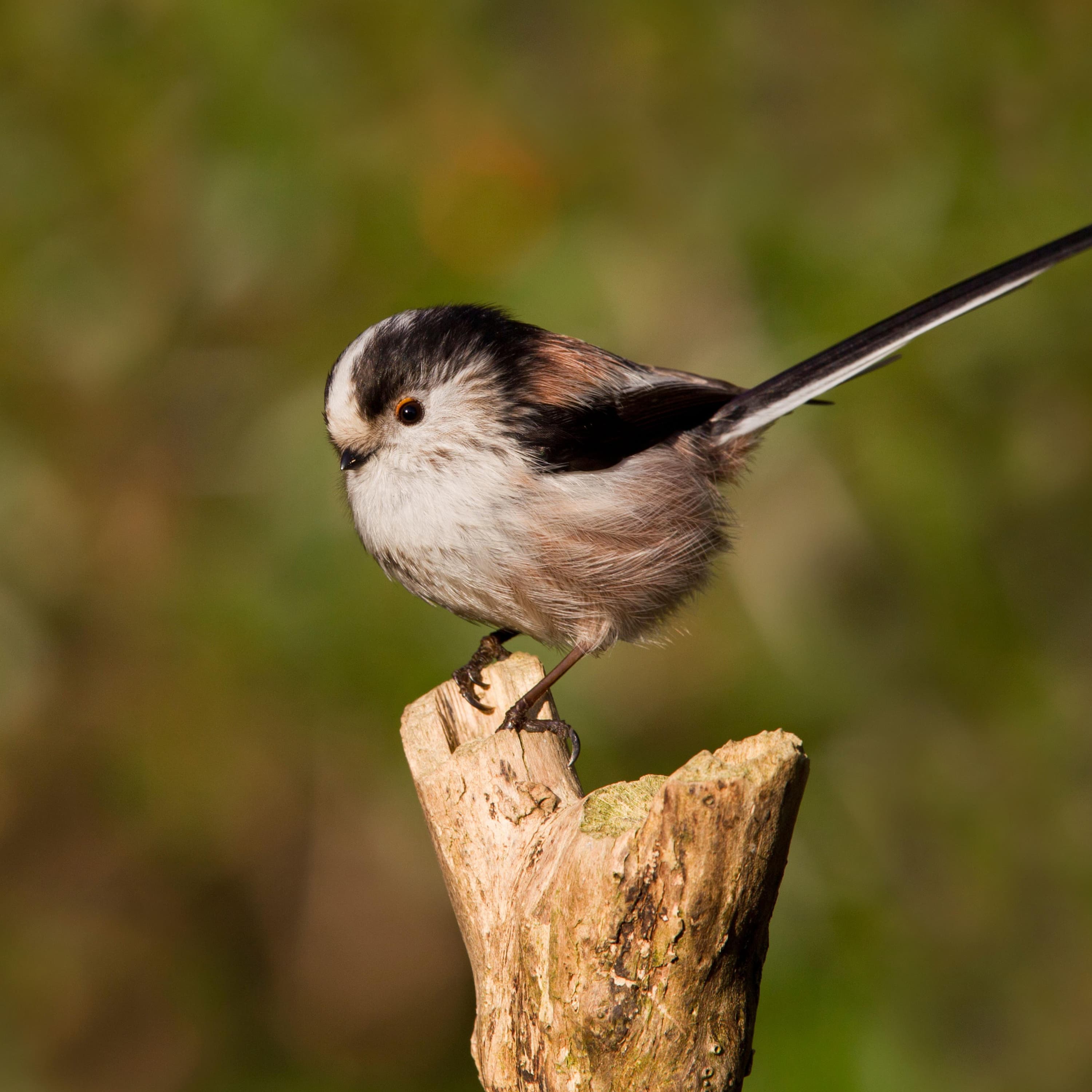
Gen Z birding boom and how “shifting baseline syndrome” makes bird loss feel normal; the episode links declining bird numbers to quieter dawn choruses and argues birdwatching (plus apps and social media) helps rebuild “nature literacy” and care.
Robert McFarlane, award-winning nature writer; co-author of The Book of Birds with illustrator Jackie Morris, discusses shifting baseline syndrome and nature literacy. Jess Painter, youth council member (early 20s), grew up with an ecologist father and became a bird watcher in recent years. Also featured in the field: architecture students Alma and Trixie, teenage boys photographing birds, and Caitlin with binoculars.
Europe lost ~600 million birds since 1980; ~73 million birds lost in the UK since the 1970s; dawn chorus is quieter due to habitat loss, pesticides, cats, disease, and climate crisis. Merlin Bird ID is “Shazam for birds” and fuels citizen science.
Richard Jeffries’ 1880s “every bush… had its songster”; A.S. Packard’s 1860s curlew flock “a mile long”; extinct passenger pigeon skies-darkening migrations; a recreated dawn chorus for 1966/1986/modern using BTO and Cornell/Zeno Canto recordings.
Written by AI. May contain mistakes.
Exploration of the decline in bird populations and its implications.
“As the sun approaches the horizon in the early hours of the morning, birds begin to sing and call to each other, creating a cacophony of sound.”
Interview with Robert McFarlane discussing birding and human connection to nature.
“Jackie Morris, The Book of Birds, a compendium of 49 bird species under threat in Britain.”
Discussing how Gen Z is reviving interest in birding and its significance.
“I sometimes think of it like this, that we have this imagination of ourselves as like these human individuals walking around with this brain in a box on the top of a machine.”
Interactions with young people about their experiences and motivations in birding.
“You can make your own names up for these birds.”
Explores how the RSPB is attracting young people to birdwatching.
“you can be under no illusion that the charity is trying and succeeding in getting young people into birds.”
Jess Painter shares her experiences and the benefits of birdwatching.
“And because social media is a place to be really creative and interpret bird watching in a new kind of way, one that's funny, one that's artistic, one that's just a lot more accessible, it's a really contagious hobby.”

Get the gist, explore an idea or ask about something said.
 Claude
On Science Weekly, what are the key points of this episode?
Searching your listeningAutomatic transcript. May contain errors.
0:00This is The Guardian.
0:30The business phone system built so you never miss a call. Here's what I like about it. All your calls, texts, and voicemails live in one place, so anyone on your team can pick up a conversation, see the full history, and respond fast. No more, wait, who talked to this customer last? And if you're worried about after-hours leads slipping through, Quo's optional built-in AI agent can answer questions and even book appointments while your team's offline. It's the number one rated business phone system on G2, and over 90 ,000 businesses already trust it to stay reachable. Money is on the line. Always say hello with Quo.
1:06Try Quo for free. Plus get 20 % off your first six months when you go to Quo.com slash tech. That's Q-U-O dot com slash tech. Cheers to fall savings at Whole Foods Market, home of higher ingredient standards. This Halloween, share chocolates and candies made without that spooky high fructose corn syrup. Throwing a party? Make it easy with a Barry Chantilly cake, ready to cook pizza, no antibiotics ever chicken wings, and sushi made fresh daily. Fall gatherings never tasted better. Save through November 3rd at Whole Foods Market.
1:51That's the Dawn Chorus, taken by Science Weekly producer Ellie Sands in Bristol earlier this year. When spring awakens, so do the birds. As the sun approaches the horizon in the early hours of the morning, birds begin to sing and call to each other, creating a cacophony of sound.
2:16Except in a lot of places today, the dawn chorus isn't very loud at all anymore. Take the UK. Since the 1970s, we've lost 73 million birds. Species like the turtle dove, the nightingale and the cuckoo have suffered precipitous declines. It's hard to remember or imagine what it was like before. In fact, it's so difficult, the phenomenon has a name, shifting baseline syndrome. The sights and sounds of a degraded natural world feel normal to us and we forget how it used to be. So, based on data provided by the British Trust for Ornithology we decided to shift our baselines back and rebuild the dawn chorus This is what you might have heard 20 years ago if you'd opened your bedroom window at 4.30am
3:21Back in 1986
3:30and here's what could have been waking you up before the alarm clock in 1966
3:42what with habitat loss pesticides disease cats and now the climate crisis there are fewer birds around us than ever before. But spotting them is growing ever more popular, especially among Gen Z. We want to reconnect back with nature. This is a really nice way to do it. So today, as birds continue to disappear, why is birding making a comeback? From The Guardian, I'm Madeleine Finlay, and this is Science Weekly.
4:23Award-winning nature writer Robert McFarlane has recently published a new book with illustrator Jackie Morris, The Book of Birds, a compendium of 49 bird species under threat in Britain. In its foreword, Rob writes about shifting baseline syndrome. So when we sat down to chat, I asked him why he felt it was important. I've become increasingly fascinated by this SPS, shifting baseline syndrome, generational amnesia it's sometimes also called and the kind of absolute numbers of the thinning are that around 600 million birds have gone from europe since 1980 actually and that's a bto rspb and a czech collaboration on that shocking figure three billion in north america and this is simply the number of birds that are no longer present in our skies and so our dawns and springs are quieter and our skies are thinner.
5:16But we sort of don't notice. I mean, birders do, scientists do, but shifting baseline syndrome is this enormously powerful and I think very pernicious psychological mechanism whereby each new generation measures loss from the degraded baseline that it grew up into. And is it something that you personally reflect on in your own life? I mean, do you have experience in your life of feeling this loss of birds? Yeah, I do. I mean, it's partly there in literature. And this is where I think writing and art have a role. It's a sort of activist role almost. Early in the book, I quote Richard Jeffries, a 19th century naturalist, and he has a book called Nature Near London from the 1880s.
5:58And he describes coming in on the train from Twickenham. And he says, every bush, every twig, every clod had its songster. There is just, to us now, unimaginable abundance. And another North American naturalist, A.S. Packard, in the 1860s describes seeing a curlew flock a mile long and almost a mile wide. Our brains cannot comprehend this, right? If we see a two or three curlew, my heart lifts, but my heart also breaks.
6:30Today, a flock a mile long seems preposterous But that's nothing Take the now extinct passenger pigeon In the 1800s, there were so many of them in North America They would darken the skies overhead for days as they migrated The fact that this sounds like something out of a fantasy novel That's shifting baseline syndrome And as well as losing the birds themselves, what also ends up happening is our chance to connect with nature on a regular daily basis. Rob? I sometimes think of it like this, that we have this imagination of ourselves as like these human individuals walking around with this brain in a box on the top of a machine.
7:18And that that's where our self begins and ends. That's kind of Cartesian model. But of course, we're not a pinnacle. We're wired into the wild world. Birds help us remember that. So when I'm in a woodland, spring woodland, suddenly I feel like I've got 20 eyes, which are noticing, you know, the sparrowhawk above. And I've got compound ears as well. I can suddenly hear and I feel expanded. I feel as though I'm part of a web that is far greater than me and far more complex than I can know. And that we live on a living earth. And as bird numbers have continued to fall, each generation has fewer opportunities to have this kind of experience.
7:57So I think Beth Povinelli, who's an anthropologist, she calls it nature literacy. I mean, it's sort of slipping away. And I think that one of the crucial ways of, as it were, greening our future and wilding our imaginations is just that everyday nature literacy and growing it from the early years up. It's not elite knowledge. You don't need the scientific names. You can make your own names up for these birds. But I think learning to hear them, bird song is beautiful and distinct. A lapwing sounds like an old wireless set being twiddled. A nightingale sounds like drops of molten metal being plunged into water and taking form and sound there.
8:38So, yeah, play, write, look, observe, listen.
8:47And this is exactly what Gen Z are doing. They're bucking the trend and taking up birding in droves. What was once niche and old-fashioned has become, dare I say it, cool. One factor in bringing a love of birding back is the Merlin Bird ID app. Developed by the Cornell Lab of Ornithology in New York, it listens to recordings in real time, creating spectrograms with distinct patterns for each bird song that the app is trained to recognise. Put it on, hold it up in the air, and it'll tell you what it thinks you're hearing. It's Shazam for birds. I asked Rob what he made of it. I love it. It's amazing.
9:30I'm terrible at birdsong and Merlin is helping me learn their languages. I think it's one of these brilliant examples of where tech and nature are not opposed. It's also a huge citizen science project because whenever I log on, it's like between 40 ,000 and 100 ,000 people are listening simultaneously. And that's all feeding data back to the Cornell Lab. So it's this brilliant example of how ecology, conservation, individual connection and tech can all work together. And I'm sure it's a way in for a lot of young people as well. And I wondered, why do you think there's a bit of a renaissance going on in birding and young people?
10:08It's so cool. I mean, you've probably got the numbers better than I have, but I think it's above a thousand percent increase in Gen Zers. my children who are in that age group they talk about you know touching grass which is just the need to reconnect and i think we all recognize this we live in this hectic frantic virtualized digitalized world and actually it's about a return to a form of belonging that has been chased and hustled and hassled out of us all i speak to younger birders or birdie people and they just say actually it's about stopping maybe closing your eyes maybe listening try to delaminate sort of unthread the different calls and hear the complexity of conversation and community that's going on around you maybe put your hands down touch the grass
11:04I decided to touch some grass myself and see if I could spot any Gen Z spotting birds. So on a beautifully sunny day, I headed to the Royal Society for the Protection of Birds, the RSPBs, Rain and Marshes, just outside of London. It being a Tuesday morning, I wasn't sure I'd meet anyone below the age of 60 but lo and behold. Okay so I found some young people. So guys what are you doing here today? We're architecture students and we are designing a bird observation centre for one of our year two projects. Have you had a chance to kind of sit and do any looking at the birds yourself? We did just visit one of the heights and it was really nice and they're really like tranquil and like quiet and sheltered and we kind of got the vibe of why people are interested and they like birdwatching.
11:58I think when we started to speak to some of these people and like how they got into birdwatching and why they got into it, it seems like a really special community that really love what they do. And it wasn't just Alma and Trixie. There were two teenage boys there to photograph the birds and I also met Caitlin, decked out in camo with a pair of binoculars around her neck. A cuckoo? That's the cuckoo. Did you hear it? It's a good job we bumped into you so you could tell us what it was flying past us. And so, you know, for those young people who are not yet into birding, what would be your sell to them?
12:36Why would you say that they should get into it? I don't know, it's just really nice. It feels like you escape everything else. I don't think about anything else. Normally I have headphones in or I'm listening to a podcast or, you know, you don't stop. But when you go birding, it's all you're doing, you know, just looking and listening.
12:57Coming up, what is it about birding that's hooked Gen Z?
13:0733 days, 33 episodes, no off switch. From the goals and the glories of the politics and the problems of the World Cup, If you want football analysis from a podcast that's been overanalyzing the game for more than 20 years, this is it. Join me, Max Rushton, and our expert team of football journalists every day of the tournament. Can England end 60 years of hurt? Probably not. Or will this be another year of falling just short? Probably. World Cup Daily, listen wherever you get your podcasts or watch the full episodes on YouTube.
13:37Cheers to fall savings at Whole Foods Market, home of higher ingredient standards. This Halloween, share chocolates and candies made without that spooky high fructose corn syrup. Throwing a party? Make it easy with a berry chantilly cake. Ready to cook pizza, no antibiotics ever chicken wings, and sushi made fresh daily. Fall gatherings never tasted better. Save through November 3rd at Whole Foods Market.
14:09If you've seen any of the slightly unhinged videos on the RSPB's TikTok, you can be under no illusion that the charity is trying and succeeding in getting young people into birds. See how many birds you can spot or just lie in a field and ask why. And did you know that 16 to 24 year olds can now go for free? Please note the RSPB can't guarantee that visiting a reserve will change your life in any way, shape or form will make it exponentially better or worse than it already is. Alongside social media, the RSPB also has a youth council, giving them a seat at the table on environmental issues that will impact generations to come.
14:45I got on the line with youth council member Jess Painter, who's in her early 20s. Apparently, my first word was bird. I don't know how my mum feels about that, but I was really lucky to have grown up with an ecologist for a dad, so I was always encouraged to take notice of birds. But really, I've actually gotten into bird watching properly in the last few years and I'm now proud to call myself a bird watcher in a way maybe I wouldn't have done when I was a bit younger. Jess explained why birding has come back into her life. I think when I'm watching a bird, I'm not thinking about anything else.
15:17I have a break from, I guess, checking my emails, scrolling on my phone. I'm entirely focusing on something. So it feels like a little bit of a treat to myself. And I think it's a chance to get out of yourself and to focus on something external. They're such beautiful, amazing animals. They are a joy to watch. And if you just spend a bit of time to really notice them, you start to notice all these things. You know, even your common pigeon, your jackdaw. I was watching a jackdaw eating, I think it was kebab mayonnaise out of a pot this morning from the window at work. And as soon as you start watching them, it really opens up this whole world.
15:49And it makes a walk to work kind of a treat as opposed to a chore. Avoiding screen time might be a big motivator, but smartphones have also been the way in for lots of birders. On social media and online, I've seen it have this huge uptake. People are really embracing it. And because social media is a place to be really creative and interpret bird watching in a new kind of way, one that's funny, one that's artistic, one that's just a lot more accessible, it's a really contagious hobby. It's really visual. It's really easy to share. Birding has always been a bit of a Pokemon-style gotta-catch-them-all pursuit.
16:26But social media and the Merlin app is gamifying the hobby even more. Feeling invested in the natural world is key to reversing current trends and maybe even bringing back the dawn chorus of the past. Searching out nature or even noticing it on the walk to work is all part of breaking the cycle of our shifting baselines. The more that we know, the more that we kind of care. I think there's so few opportunities to look at the world and think, my gosh, that is amazing, that is beautiful, that's wonderful, that's worth fighting for. I think it's difficult because a lot of the news we get about nature is often really negative.
17:03And though there are loads of brilliant, exciting success stories, it's hard not to feel a little bit hopeless in that respect. Nature degradation in the UK is obviously a huge thing. But actually, if we can see the positive stories and if we can see the animals around us, we want to protect them and we care about them. It's such an important resource in our lives for our mental health, for our understanding of the world around us. So bird watching is a way of experiencing nature in the natural world with joy at its heart. And it always makes me feel so much better when I go out and do some bird watching.
17:41Thanks to Robert McFarlane, Jess Painter, Alma, Trixie and Caitlin. The Dawn Chorus was recreated using data provided by the British Trust for Ornithology and sound recordings submitted to the Cornell Lab of Ornithology and Zeno Canto by James Kennelly, Peter Kennelly, Mark Lewis, John Lowe's and David Darrell Lambert. You can listen to our recreated Dawn Chorus across the decades on theguardian.com where environment correspondent Sandra Lavelle has written a fantastic article on the loss of birds and what it means to us. And if you'd like to support The Guardian, you can purchase The Book of Birds by Robert McFarlane and Jackie Morris from guardianbookshop.com.
18:27And that's it for today. This episode was produced by me, Madeleine Finlay. It was sound designed by Joel Cox. And the executive producer is Ellie Bury. We'll be back on Thursday. See you then.
18:44This is The Guardian. you