 Ask ChatGPT


Indoor air pollution from household cleaning products, fragrances, and “deep clean” influencer habits; whether volatile organic compounds (VOCs) and fine particles (PM2.5/PM10) harm health.
Rebecca Seal, a food and health writer for The Guardian; wrote about allergies and then investigated chemical exposure in indoor air.
Spraying and mixing products aerosolizes chemicals that linger or get stirred up; indoor air can become an “invisible fog.” Evidence is early and exposure varies by household, but higher exposure groups show clearer harm.
Cleaning-industry and factory workers face acute and long-term respiratory, eye, and skin effects (asthma-like symptoms, sore eyes, worsening contact dermatitis/eczema). Small children are more vulnerable due to proximity to the ground and higher breathing rates. “Green/natural” products and essential oils can still contain VOCs. Advice: ventilate (open windows ~30 minutes, even daily), use less product (sponge/wipe instead of spraying), follow labels.
Written by AI. May contain mistakes.
Discussing the popularity of cleaning influencers and their impact on cleaning habits.
“When it comes to air pollution, we usually worry about the outside.”
Rebecca Seal shares her background and interest in household chemicals.
Exploring what indoor air pollution is and how it's not well understood.
Discussion on the chemicals in cleaning products and their potential risks.
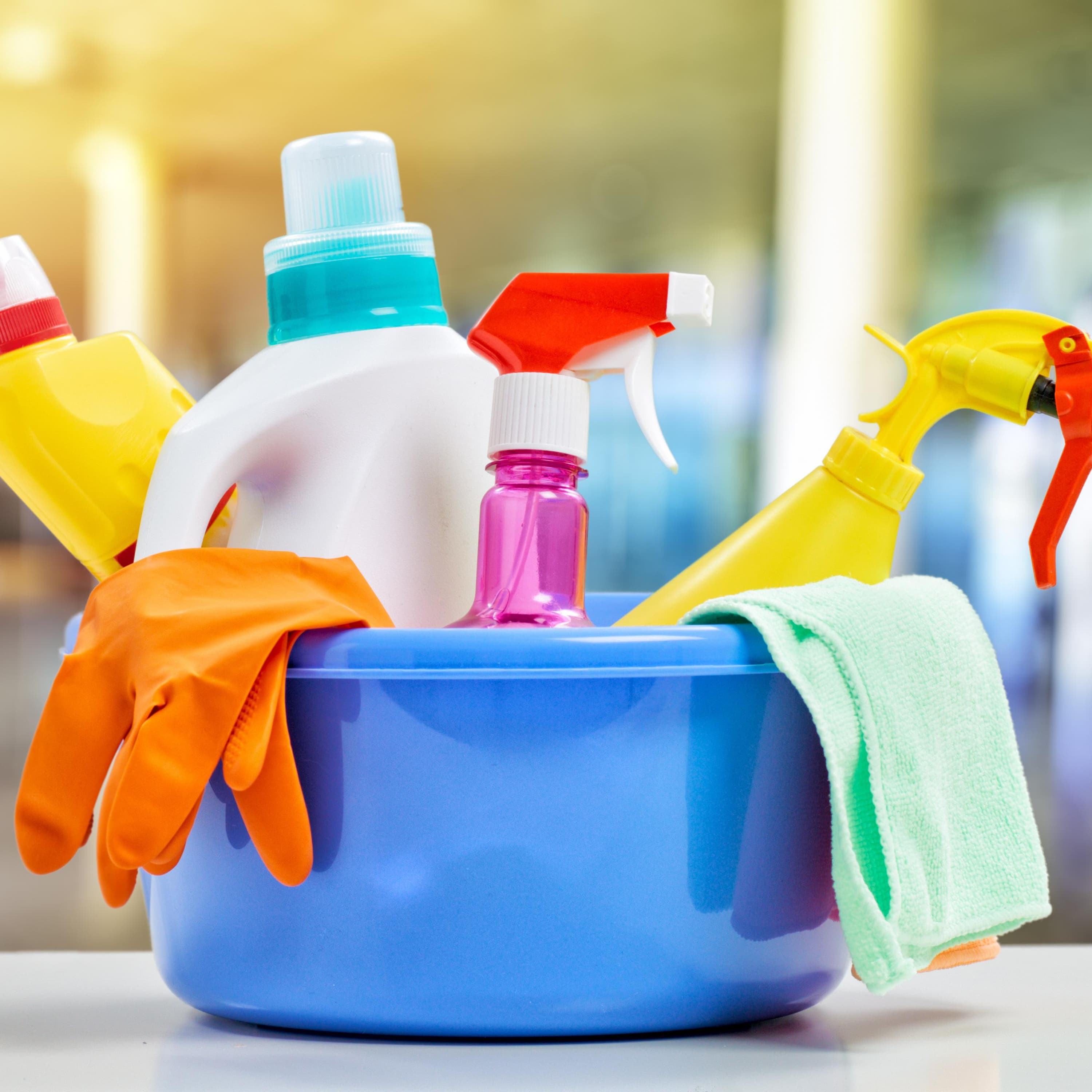
“cleaning products, you know, because of our sort of anxieties around viruses, we have sprays and foams and wipes.”
Identifying sources of harmful particulate matter in the air.
“of personal care products, scented candles, incense sticks, room fragrances, whether that's plug-in or using essential oils.”
Highlighting how children are more susceptible to indoor pollutants.
“So PM2.5 and PM10 are kind of best known, as it were, as things which come from pollution that we're more familiar with, like vehicle exhaust pollution or pollution from industry and factories.”
Explaining how we are exposed to harmful chemicals in our homes.
“Well I was going to ask how these chemicals end up or can end up inside us how we kind of ingest them what are the different ways that we might end up with some of the things that you've been describing inside us?”
Discussing concerns over the use of cleaning products and marketing claims.
“You know, we come in from the outside, and we are kind of enveloped and enclosed and protected from what might be going on in the outside world, sort of metaphorically and physically.”
Examining the health impacts of long-term exposure to cleaning chemicals.
“But what evidence do we have about the health impacts that then that might have?”
Analyzing how cleaning products are marketed and their actual effects.
“And when you say serious effects, what kinds of things are you referring to there?”
Debunking the myth that natural cleaning products are always better.
“And so the chemical load on our bodies is inevitably far higher.”
Learn about the complexities and risks of household cleaning products.
“But both chemicals are still potentially hazardous.”
Explore practical tips to minimize risks while cleaning your home.
“So just take the lid off, wearing gloves, splosh a bit on a sponge, wipe everything that you want to wipe, then wipe it again with water.”

Get the gist, explore an idea or ask about something said.
 Claude
On Science Weekly, what are the key points of this episode?
Searching your listeningAutomatic transcript. May contain errors.
0:00This is The Guardian.
0:33When it comes to air pollution, we usually worry about the outside. But what about the air indoors? Over the past few years, social media influencers with extreme cleaning habits and a huge array of products have become very popular. Come and spend the day with me and today we are doing the full deep clean. First we're going to remove everything from the bathroom so it's a nice blank canvas for us to clean. Step number two, mop your walls and ceilings. So I like to use a floor cleaner that's quite highly scented. If you are wondering why I'm always in my pyjamas it's because I use a lot of bleach and yeah I got a side of bleach in my clothes so I get dressed, I drop the kids off, I come back, I'll get back in some pyjamas and I'll clean.
1:14And as we try to emulate them, making our homes look clean and smell nice, scientists are asking what's all that spritzing and spraying doing to our health? so today on science weekly where does the evidence stand on indoor air pollution and is there a good argument to put down the mop and chill from the guardian i'm madeline finley and this is science weekly
1:53Rebecca Seal you're a food and health writer and you recently wrote for The Guardian about the chemicals in our homes what made you want to look into this? Well I wrote a book about allergies which originally sort of triggered my interest in all of this and I started to think about the ways in which we're exposed to potentially harmful chemicals in our daily life and then once I started looking into the way that that happens in our indoor air my interest was really piqued because it's not a particularly well-known topic and it's also not hugely well researched and we've got a much clearer understanding of what outdoor air pollution does to our bodies and brains but we're only really at the beginning of getting to grips with it in terms of indoor air pollution.
2:42And since the pandemic, so many of us are using more of our cleaning products, you know, because of our sort of anxieties around viruses, we have sprays and foams and wipes. But at the same time, as you've kind of said, there is this concern around what these products might be doing to us. And so I guess the first thing that would be really good to understand is what is in these products that people are actually worried about? That is a really difficult question to answer because although there are specific chemicals that scientists are studying, there is actually a real lack of understanding around what individual cleaning products actually do have in them.
3:24Not everything has to be put on the label. But we're talking about volatile organic compounds in particular, which are released by both synthetic cleaning products and natural or green cleaning products. They're also released by a lot of personal care products, scented candles, incense sticks, room fragrances, whether that's plug-in or using essential oils. And then you also get the reaction of chemicals with each other to form new particles or chemicals when they're in the air around us. And then we're also talking about two kinds of small particle called PM2.5 and PM10. And they're absolutely tiny particles that can get really quite deeply into our lungs.
4:06They're getting as far as the blood, and in some cases into our brains. And the big question is what that then does to our health. And the PM2.5 and the PM10, where are those ones coming from? Are they from our cleaning products or are they kind of entering the air from elsewhere? Both. So PM2.5 and PM10 are kind of best known, as it were, as things which come from pollution that we're more familiar with, like vehicle exhaust pollution or pollution from industry and factories. But actually they come from lots and lots of different things. So they are released when we burn the toast. They're released by frying, grilling, cooking at high temperatures.
4:50but they're also released by cleaning products themselves and then they can be stirred up by doing things like dry dusting. We all exist in a little cloud of our own personal pollution. So as we move through the world we stir up pollution which is already present but we also shed it in terms of fibres from our clothes and the products that we've been using on our skin and hair. I think another thing that is really important to say is that small children are much more vulnerable and we do have evidence of that. We do understand that from blood and urine studies which have been done of small children and babies and that's really because they spend so much more time near the ground where pollution settles and collects and also because they put their hands in their mouths much more than adults do and because they have a breathing rate which is different to adults and means that they breathe more in of what is inside our homes.
5:48Well I was going to ask how these chemicals end up or can end up inside us how we kind of ingest them what are the different ways that we might end up with some of the things that you've been describing inside us? The primary route is breathing them in so when we spray products whether that's a personal care product like hair spray or a cleaning product you're inevitably aerosolizing that product and that feels like they're getting where we want them to get but actually it just means you're misting a certain proportion of them into the air and they stay suspended in the air for a bit and then they fall but smaller particles will potentially linger in the air or be stirred up again as you move through the space.
6:34And then you breathe them in, or they come into contact with your skin, whether it's because you've touched something that they're on, or because they're in the air, and then they make contact with your skin. And I think that we consider our homes to be like a safe haven. You know, we come in from the outside, and we are kind of enveloped and enclosed and protected from what might be going on in the outside world, sort of metaphorically and physically. but I think what we need to accept is that because we're using so many more chemical products within our homes and fragrances and you know cooking and thinking about better insulation and trying to keep the warmth and heat in our homes as well we're kind of creating an invisible fog for ourselves that we're all to a greater or lesser extent sort of marinating in.
7:35Rebecca, there are so many different chemicals and we're mixing them in different ways and using them at different amounts. So the research on this is very early days. Some experts do point out that if we are using these products moderately in well-ventilated spaces, according to the manufacturer's guidance, that there's reason to think that that shouldn't be a problem there is concern around extreme practices things that you might see from cleaning influencers so using lots of fragrance products excessive use mixing lots of different products together and as you said there's evidence that volatile organic compounds and PM2 particles can make their way inside us.
8:25But what evidence do we have about the health impacts that then that might have? It is completely fair to say that because we each have a completely different mixture of these chemicals within our homes, our levels of exposure are extremely variable. And that does make it really hard to study. Where it's slightly easier, is that you can see that people who already have long-term health conditions are more vulnerable to harm from these products, from high exposures to these products. And we can also see that people who are occupationally exposed are much more vulnerable too. So we know, for example, from lots of studies on people who work in the cleaning industry and from cases of people who work in factories producing cleaning chemicals, And obviously those people are exposed to a much higher level than we are domestically.
9:20But we know that that has acute effects and long term effects that are really serious. And when you say serious effects, what kinds of things are you referring to there? So things like damage to respiratory health. So a higher chance of asthma or asthma like symptoms developing. Ocular symptoms, so sore eyes, things which are happening only on the days when they're working. so you can really clearly tell that it's work related. Skin conditions, worsening of contact dermatitis, things like eczema being made worse or kind of starting not having had it before. One great study showed that you can measure a kind of cognitive decline, a cognitive deficit within about four hours of quite high levels of exposure to air pollution.
10:11and then sort of smaller long-term studies have looked at the kind of long-term health implications and it does seem as though there's the beginnings of an association between like I say things to do with cognitive decline and brain health but that's much more early days. So when we're looking at the body of evidence for this you've got the long-term studies that are showing some links and associations and then when it comes to some of the more direct effects the respiratory issues, maybe things like skin issues, eczema, that's in people who are much higher exposed to these chemicals, as you say, somebody whose occupation it is to clean.
10:49And so when it comes to the kind of levels that we might be experiencing the home, you know, you're doing your weekly clean, right now, the evidence isn't there to say, that is bad for you. So we might not be able to say that it's bad for us with the evidence that we have now. But I think we can definitely say it's not good for us in the way that the marketing suggests that it is. So we are marketed products all the time that allow us to disinfect our washing machine. You can buy antibacterial window cleaner, which I find baffling, like who is licking their windows? And we're all using many, many more different sort of highly specialized products.
11:28And so the chemical load on our bodies is inevitably far higher. And, you know, the scientists who I interviewed for this piece you know you've got frank kelly who runs the well home study at imperial college francis pope who is a professor of atmospheric science nicola carslaw who studies the effect of human made chemicals on the body and they're all sort of jumping up and down and saying why isn't anyone paying attention to the evidence that we do have the other thing that i think will emerge really soon which will be helpful in this area as well is a really good standard for indoor air quality.
12:04At the moment, we don't have the same ways of measuring and assessing indoor air quality as we do for outdoor air quality. So it's very hard to judge whether air quality in a home or a classroom or a workplace is good or bad. And, you know, we're indoors for 80 to 90 % of our time. So the air that we have is critically important to our well-being. I just think we need to look quite hard at the products that we're being taught by marketing specifically to use and how many of them we're using and ask ourselves whether they're really necessary, whether they're helpful and whether they might cause us some form of long term harm.
12:51And if so, let's just cut back on them.
12:59coming up green and natural cleaning products are sold as the solution but are they really any better
13:17well Rebecca talking about being taken in by marketing I had absolutely been taken in by the marketing that we shouldn't be using sort of harsh chemicals in our homes and we should be using natural so-called natural so-called green products but actually I was surprised to read that there's a lot of complicated evidence around those too. Yeah, so the studies that have been done looking at some of these products, and again, the market's so big, it's really difficult to do broad studies looking at absolutely every product. But the studies that have been done have suggested that green or, quote, natural products are pretty much just as likely to have at least quite large quantities of volatile organic compounds in them.
14:03and things like essential oils for example are really volatile right that's why they distribute into the air and we often mix them with other chemicals to make them more likely to disperse through the air that we breathe and fragrance our rooms and so we've definitely been sold this idea that if something says eco on the packet then it's going to be in some sense better for us but an essential oil to use them as an example is an extremely chemically complicated item even though it's derived from natural sources and a lot of the chemicals that we use that are synthetic in cleaning products and personal care products and fragrances are actually chemically identical to their natural cousins it's just that it's easier to make them from a petrochemical or to synthesise them in a lab than it is to get them from a lemon, say.
15:00But both chemicals are still potentially hazardous. It doesn't matter where they came from in the first instance. So if somebody did want to take the precautionary principle, what should they do? Because you do still need to clean your home. There are bacteria and viruses that might be harmful to us that we want to get rid of. You don't want those piles of dust around. so what should people consider doing if they do want to reduce any potential risk? Open the windows. That allows for a good exchange of air to take place and those chemicals that are there in your cleaners will be removed. So open your windows for about half an hour after you've cleaned or during when you're cleaning and actually quite a few of the scientists I spoke to advocated for doing that every day in your home.
15:47Anyway, the other really important thing, I think, is that we just don't need to spray as much stuff. So just take the lid off, wearing gloves, splosh a bit on a sponge, wipe everything that you want to wipe, then wipe it again with water. There's still a certain amount that will kind of evaporate up off your surfaces, but that minimises the stuff that's swirling around in the air that, you know, like I say, we don't fully understand, but we are beginning to understand is probably not the best thing to get into our lungs. And Rebecca, I don't want to put words in your mouth. And, you know, I have no personal motivation for you saying this, but sounds like perhaps we could consider cleaning our homes slightly less.
16:30Yes, absolutely. So we clean our houses between 18 and 22 percent more than we did before the pandemic. and we buy literally billions of pounds worth of cleaning products in the UK every year like let's just not use quite so many products and that you know saves us all money as well and maybe let's just not be taken in by the marketing that suggests that everything has to be fresh and fragrant and spic and span at all times because it doesn't do less is the kind of advice I can get behind. I'm all about it. I'm all about that. Thank you so much. My pleasure. Thank you for having me. Thanks again to Rebecca Seal.
17:14If you're looking for something to listen to next, then I'd like to recommend Monday's episode of The Guardian's Audio Long Read podcast is taking a look at how timber might be an answer to the environmental challenges of concrete and how engineers are trying to find ways to build modern houses and cities without huge emissions. Just search for Audio Long Read wherever you're listening to this.
17:44That's it for today. This episode was produced by Helena Selby. It was sound designed by Joel Cox. And the executive producer is Ellie Bury. We'll be back on Thursday. See you then.
18:02This is The Guardian.