 Ask ChatGPT



Backlash against hyperscale data centres (especially in Scotland) and what it could mean for AI’s hardware buildout.
Ayesha Down, The Guardian’s global technology reporter; has covered community resistance to proposed data centres in Scotland, including sites near Glasgow (Lanarkshire), Ochtertool (near Edinburgh), and Larbert.
AI needs massive hardware, but local communities oppose data centres due to environmental costs (including backup generators), water use concerns, noise/heat effects, grid strain, and lack of transparency. The UK has designated data centres as critical national infrastructure, limiting leverage for locals, though pressure is pushing for more requirements like environmental impact assessments. AI demand for “compute tokens” is real, but benefits may not justify the local harms; AI hype isn’t matched by proven outcomes like cures or climate solutions.
21–24 hyperscale proposals in Scotland; a Buckinghamshire/Bedfordshire case cited as potentially comparable to ExxonMobil’s fossil-fuel carbon footprint; a Larbert plan with ~200 diesel generators; Slough data-centre “dull hum”; grid connection queues lasting years.
Written by AI. May contain mistakes.
Discussion on the backlash against data centres and implications for AI.
“Cancer cures, superintelligence, an age of abundance.”
Exploration of proposed data centres in Scotland and public reception.
“Ayesha Down, you're The Guardian's global technology reporter, and you've been covering the backlash against a number of potential data centres in Scotland.”
Community opposition to data centres and environmental concerns raised.
“Why is it that there are so many data centres being proposed in Scotland?”
Insights into the negative impacts of living near data centres.
“And what's happening in Scotland certainly isn't an isolated case.”
The challenges of electricity demand and infrastructure for data centres.
“On the other hand, it's not always easy to live next to a solar farm, for example, or a biscuit factory.”
Discussion on the significant environmental impacts of data centres.
“there's a grid queue that is, I understand it to be years long.”
Challenges communities face in regulating data centres and voicing objections.
“It's horrible and disastrous for kind of the local communities living there.”
Discussion on the potential benefits and demand for data centres.
“But are there reasons why you would want one?”
Explore the complex relationship between AI demand and its societal impacts.
“Now, I would say that the caveat there is that the people who want more compute are probably not the same people in OctoTool or in Larbert who are living next to the data center.”

Get the gist, explore an idea or ask about something said.
 Claude
On Science Weekly, what are the key points of this episode?
Searching your listeningAutomatic transcript. May contain errors.
0:00This is The Guardian.
0:30Washington Wise. This podcast is brought to you by Thompson Reuters. The best don't just do their work. They change what's possible. Cases won, audits completed, jobs saved. Behind every one of those moments is a professional who needed to get it right and did. Thompson Reuters builds the technology that sharpens insights, speeds up decision-making, and powers the outcomes that matter. So when professionals act, the impact is felt by everyone. Be a changemaker. Visit tr.com forward slash changemakers.
1:07AI companies are promising us an exciting future. Cancer cures, superintelligence, an age of abundance. But to have world-shifting software, you need a lot of hardware. Ginormous steel and concrete warehouses filled with water and energy-hungry computer chips, servers and cooling systems. And it seems almost no one wants to take the deal. Around the world, people are saying, not in my backyard. So today we're asking, what does the growing backlash against data centres mean for the future of AI. From The Guardian, I'm Madeleine Finlay, and this is Science Weekly.
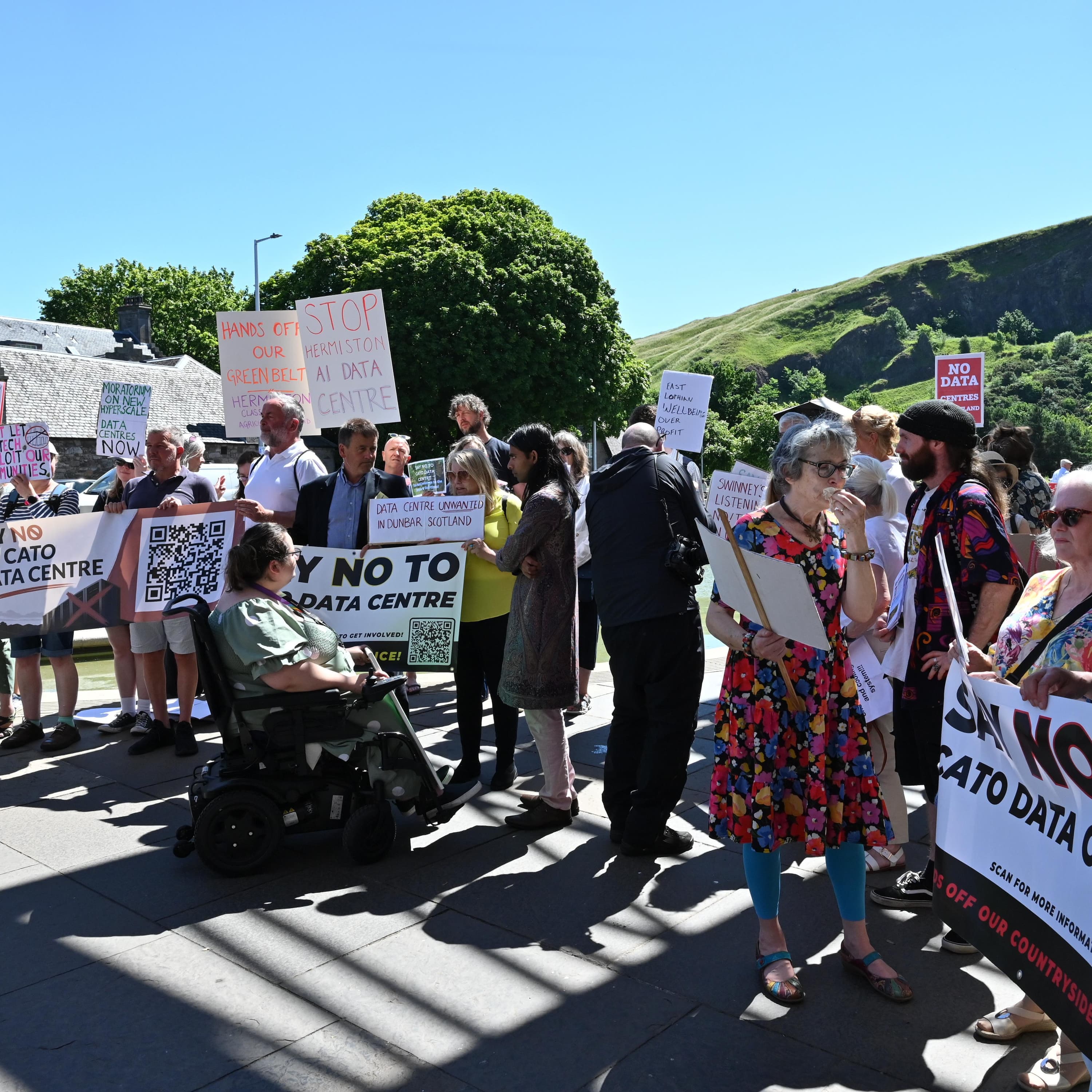
2:05Ayesha Down, you're The Guardian's global technology reporter, and you've been covering the backlash against a number of potential data centres in Scotland. So tell me where these have been proposed and what the reception has been? There are, I think, somewhere between 21 and 24 what are called hyperscale data centres. That means really big data centres in the planning pipeline right now in Scotland. Now, that might not cover all of them because some of them haven't made it to planning yet. Some are just a drawing and a twinkle in someone's eyes. But I've been to one outside of Glasgow in a sort of rural area called Lanarkshire.
2:48There's one, you know, across the water from Edinburgh in a village called Ochtertool, mostly in this sort of central belt where there's a lot of renewable energy production. And this has been something that's very recent. It's happened in the past months. There's been an upswelling of resistance to these data centers, where now you'll see basically old-fashioned, I mean, kind of social media groups, Facebook groups with thousands and thousands of people just saying, screw that. We don't want a data centre here. And that resistance is kind of everywhere. It's to almost every data centre that's now currently being proposed.
3:21Why is it that there are so many data centres being proposed in Scotland? What is it about Scotland that makes it a good location for these things? Basically, there's not a lot more room in England, which hasn't stopped people, but there's not. And it's believed that Scotland has a lot of cheap renewable energy and a lot of water. And so you UK authorities have sort of explicitly encouraged data centre developers to move to Scotland. And so what are the main reasons that people are opposing this? You said hyperscale, so I'm getting a feel for the fact that these are going to be pretty big. These are, I mean, if you look at the drawing of the wine and octa tool, you'll have like this sleepy Scottish settlement, stone houses, and then you see like looming over the horizon.
4:05And it's unclear to me, like some of these are architectural drawings, some of these are local interpretations of architectural drawings, like just a massive building looming over town. And so what are people objecting to? Well, campaign groups are pointing out the environmental costs, pollution. I mean, some of these have like gas or diesel backup generators. Their water use, what people think their water use will be. But then there's just also kind of a sense that these are very big developments. No one really agreed to them. They're coming at this moment of sort of increasing fear and tension around AI and what that's going to mean.
4:45They're coming at this sort of moment where we have these U.S. tech tycoons who dominate the world stage. And I think people are seeing them as sort of much more than, you know, a building with computer chips in them. They're a symbol for tech and for a future that no one agreed to sort of being thrust upon them. And what's happening in Scotland certainly isn't an isolated case. There's growing backlash against these data centres really around the world, isn't there? Everywhere. Yeah. I mean, we hear of potentially planned protests in Spain, in Latin America, certainly in the US. Yeah, growing scepticism and I'd say growing fury.
5:37And at the heart of that fury, there are all the different reasons why, if you are living near a data centre, you might not want that there. And first, I want to talk about the experience of living near a data centre, because I've seen videos online, first off, of people talking about how noisy they are, or the kind of constant noise that comes from them. So I want to be careful to not oversell this, not because there aren't these effects, but I think because data centers like symbolize a lot. So yes, I've been to data center parks in Slough, for example. You do hear a low, dull hum. It's audible from the street.
6:17They also, and this is sort of emerging research, but it looks like they may create kind of a heat island effect. They may make the town you live in hotter. Oftentimes, how they kind of get planning permission, how they get permission to connect to the grid, they kind of go in like any other development. But, you know, they'll need extra infrastructure. And so there's a fear that data centers might use electricity, drive up the price, and even in the case of a blackout, get electricity before other customers such as homes or hospitals could. All of these are really real fears. On the other hand, it's not always easy to live next to a solar farm, for example, or a biscuit factory.
7:01So it's not just data centers that have these problems. But yeah, the physical effects are very real. And on the point of electricity, one of the things that I was reading about was some of the data centers having to build their own energy infrastructure alongside the data center so that they would have enough. These developments are many times bigger of a far greater scale than sort of any kind of previous data centers that were built in the last decades. Their size is classed in terms of power. So a big data center is not like a data center that's the size of a skyscraper. It's described in terms of its electricity consumption.
7:41Right now, people are talking about data centers that would consume a gigawatt of power. And this is equivalent to kind of just less than the energy consumption of a million homes. in most of the U.S., in the U.K., in Western Europe, the grid is an organic thing that has grown up over decades. It's creaky. In some places, it's strained. And so in the U.K., there's a grid queue that is, I understand it to be years long. Like, people have to wait years for a connection. And that's just because there's no way the grid was designed to handle this kind of development. And so in a kind of in order to take a shortcut, yeah, often data centers are coming in and it's there's not a lot of transparency here.
8:28They don't always have to say this to local authorities, but with plans to sort of generate backup electricity in their in their own backyard. Now, how much of a backup that is versus how much is that just the plan? And it can amount to hundreds of diesel generators, gas connections, which could be environmentally catastrophic, and which is taking place not through any kind of centrally planned, like this is how we're going to marshal our resources, but just basically through pushing things through local authorities.
9:06And that point about the environmental impact, this is one of the reasons why data centres are so unpopular. I mean, recently, our colleague, environment reporter Pippa Neal, revealed that two data centres in Buckinghamshire and Bedfordshire might have the carbon footprint of fossil fuel company ExxonMobil over a year in the UK. I mean, that's so shocking. Yeah. And that's not the only example. There are tons of examples like that. There's a data center right now being planned in Larbert that I think is going to have something like 200 diesel generators, which is sort of the equivalent emission of like thousands, I think, of idling cars.
9:49So there's carbon emissions, but there's also like nitrous oxide. It's horrible and disastrous for kind of the local communities living there. It's certainly not what they want. And I think a big point about that is that this is a choice that we're actively making when so many of us are kind of, you know, here in the UK, we've had a drought. We're kind of looking towards the future and thinking, gosh, we really need to take some action. And a choice to make a data center seems like going in the opposite direction. Well, I think the important thing is it's not a choice we're making. It's actually a choice that big tech companies are making, and they're kind of allowed to make because companies building them don't really have to be that responsive to local communities.
10:34I mean, they submit planning applications. Planning authorities decide. Local communities can submit objection. And so it's sort of like the tech companies have found a place in the system where they can kind of carve a path towards dominance, carve a path towards reshaping the world a little bit more to be like what they want. And there's not really that much of a mechanism there for people to object it. Well, Aisha, I did want to ask about this. I mean, we know the UK government has designated data centres critical national infrastructure, whatever that means. So they obviously are keen to push ahead.
11:12Are there any obvious levers that people can pull to try and stop a data centre being built in their backyard? I think what we see is a lot of planning objections and then you see protests and the protests are starting to work, at least in Scotland. Like, I think Scottish parliamentarians are kind of responding to overwhelming pressure to kind of put in place more requirements. And I mean, in particular, like a directive that data centres might have to file an environmental impact assessment. So the answer is there's not that much right now that people can do, but as pressure mounts, there may be more mechanisms put in place.
12:00Coming up, could the backlash to data centers put the brakes on AI?
12:14This podcast is brought to you by Thompson Reuters. The best don't just do their work. They change what's possible. Cases won, audits completed, jobs saved. Behind every one of those moments is a professional who needed to get it right and did. Thompson Reuters builds the technology that sharpens insights, speeds up decision-making, and powers the outcomes that matter. So when professionals act, the impact is felt by everyone. Be a changemaker. Visit tr.com forward slash changemakers.
12:48Now, we've obviously been talking through the reasons why you wouldn't want an AI data center. But are there reasons why you would want one? I mean, why are these being pushed forward? What they can offer people is measured in terms of compute. So if you're very online and you're reading right now about sort of people using ClodCode or OpenAI's Codex agent, they'll talk about like compute tokens and the idea that, you know, you use these tokens to get your Clod agent to do certain tasks. You know, maybe everything from book you restaurant tickets to like set up a website for you. And a token represents sort of an amount of work that that agent is going to do.
13:30and all of that comes down to basically computing in data centers and what people have been saying kind of on the internet in these very online circles is that compute like these tokens the cost of getting this ai agent to do work has gotten more expensive and more constrained and that's because there's not enough data centers there's not enough chips there's not enough kind of infrastructure already out there to support the demand that people have. Now, I would say that the caveat there is that the people who want more compute are probably not the same people in OctoTool or in Larbert who are living next to the data center.
14:13And what compute is being used for is sometimes extremely silly. In April, there were stories of people encouraging their employees to like max out their token use and running up bills in the millions of dollars and not really increasing the revenues of their companies or doing anything meaningful with that. So the tech companies will say, there's definitely more demand for the things that data centers support, but then who's it helping? Do we think that building all these hyperscale AI data centers is going to lead to a cure for cancer or climate change as sometimes we were told it will? All of that's badly evidenced.
14:56And the discussion around it is sort of, you know, hype on one hand by the AI companies and fury on the other hand by local communities. Ayesha, sometimes it can feel like, at least from my point of view, that AI is almost like a runaway train. It's going. Do you think this growing backlash against the hardware will put brakes on that train? Yeah, I do. As a tech reporter, you spend a lot of time asking, you know, how has AI changed people's lives? And I don't think we've seen convincing data on our desk that AI tools have become essential to the revenue or profitability of kind of any major businesses that we cover here in the UK.
15:46So while AI hype has become sort of the furniture of our lives, if it's gone tomorrow, what will have changed? Right now, I'm not sure how much of the texture of our lives is different. What I would say, though, the money is very real. And by that, I mean the money that's being poured into this massive infrastructure build out that kind of underpins the entire U.S. stock market right now. It is the only reason I think that the U.S. economy has grown. And when you talk about runaway train, you read earnings, and the earnings show that these companies are recommitting to plowing more and more hundreds of billions of dollars into AI.
16:34And when they say they're plowing that money into AI, what they mean is that it's data centers full of semiconductors. If like the brakes were put on that train somehow, that would have very big impacts on all of our lives. It wouldn't necessarily be sort of whether we use the chatbots and how we feel about them. It would just be people's retirement portfolios. So they'll try certainly to continue to put data centers up everywhere.
17:05Well, Aisha, it's been very interesting. Thank you so much. Thanks for having me. Thanks again to Aisha Down. You can find all our reporting on data centres on theguardian.com. And before you go, if you're interested in what our AI future could look like, then definitely come along to our live event at the London Podcast Festival on Thursday 3rd September at 7pm. To mark the return of The Guardian's chart-topping podcast series, Black Box, I'll be in conversation with science editor Ian Sample and Black Box host Michael Safi on the topic of Season 2, how our relationship with chatbots is reshaping our minds.
17:48It's set to be a fascinating discussion, so to join us you can get your tickets via the link in the episode description. And that's all from us today. This episode was produced by me, Madeleine Finlay, Josh and Chana and Jacob Liebenberg. The sound design was by Joel Cox, and the executive producer was Elizabeth Kassin. We'll be back on Tuesday. See you then.
18:35Washington Wise is an original podcast from Charles Schwab that unpacks the stories making news in Washington right now and how they may affect your finances and portfolio. Listen at Schwab.com slash Washington Wise.