 Ask ChatGPT


Whether collagen supplements are worth it, and why wellness claims are hard to evaluate.
Dr Zan van Tulleken, an NHS doctor, honorary professor, and author of Make Me Well, who investigates evidence in the wellness industry.
Collagen is real and declines with age, but supplement claims (fewer wrinkles, less joint pain) are not supported by strong independent evidence. Industry-funded studies appear to bias the literature; when those are removed, the effect vanishes or becomes too small to notice. Mouse studies suggest collagen is digested into peptides that may reach skin and signal collagen production, but overall human benefits look negligible.
alleged fraudulent research “paper mills” and selective publication; collagen’s waste-product origins (meat/fish by-products processed into gelatin/collagen); extreme price markups (about £15/kg wholesale to ~£300/kg retail).
Written by AI. May contain mistakes.
Dr. Van Tulleken discusses the confusion around collagen supplements and the challenges of evaluating their effectiveness.
“Zan van Tulleken, you are a doctor, you're an honorary professor and you've written this book, Make Me Well, a quest to understand the confusing world of wellness.”
An exploration of what collagen is, its role in the body, and how it declines with age.
“Yes, so I took lots of collagen and for a while I was quite persuaded that collagen was doing me good And I was persuaded it was doing me good because there are many doctors and scientists who take it and recommend it.”
Examining the claims made by collagen supplements and the scientific evidence supporting or refuting them.
“And also, as we get older, our collagen gets worse.”
Collagen studies show benefits, but industry-sponsored research skews the results.
“Well, I was going to ask, how well studied is it?”
Discussion on the difficulties of evaluating wellness claims and the impact of industry sponsorship on research.
“But if you then remove the studies that are sponsored by the collagen industry, the effect vanishes.”
Exploring the historical roots and economic motivations behind the collagen supplement industry.
“And often the influencer telling you this stuff will look like it's come from, you know, a householder who just wants to share the good news about their collagen supplement.”
How collagen supplements are marketed and sold, highlighting their profitability and value extraction from by-products.
“So we talked about what collagen is in your body, but what is collagen in a supplement?”
Explore why people are attracted to wellness promises without evidence.
“you can get that from any animal carcass.”
Discuss how the lack of data enhances the appeal of wellness products.
“There's like a sprinkling of magic that draws us in.”
Learn about the benefits of pursuing hobbies and creative activities.
“And there is this increasing pressure of personal optimisation that we all feel.”
Examine the negative impact of manipulative wellness trends.

Get the gist, explore an idea or ask about something said.
 Claude
On Science Weekly, what are the key points of this episode?
Searching your listeningAutomatic transcript. May contain errors.
0:00This is The Guardian.
0:13Wrinkles. As we hit our 30s, they start appearing in the mirror. It's a time when our own production of collagen, the stuff that keeps our skin springy and tight, begins to decline. and if you believe the skinfluencers, this is where supplements come in. But do they work? Are the tablets, gummies and powders really worth the money? And why is it so hard to figure all of this out?
0:47Today, Dr Zan Van Taleken helps us wade through the evidence. From The Guardian, I'm Madeleine Finlay and this is Science Weekly.
1:03Zan van Tulleken, you are a doctor, you're an honorary professor and you've written this book, Make Me Well, a quest to understand the confusing world of wellness. And I want to know why, Why do you think it is so confusing? Why is it so hard to figure all this out? You know, a simple question like, should I take collagen, which we'll talk about in a minute, getting to the bottom of that feels like a Herculean task. Why? Why is it so difficult? When I started looking into a few of the supplements, some very strange things happened. You go looking and there are many, many scandals and stories about paper mills.
1:45So these institutions that produce fraudulent scientific research for publication. And I thought, well, I wonder if I could find this for myself. And within 15 minutes, I was WhatsAppping with some scientists in Iran who for 1500 quid would fake some research. For another 1500 quid, they'd put it in a journal and give it some citations. So that's part of it is fraudulent research. There is also just failing to publish studies that don't give the results that people want. And everyone wants a positive result. Newspapers want it. Scientists want it. The general public want it. People don't like engaging with negative results.
2:19There's industry sponsorship of studies and there are unregulated claims on social media. And I think all of this means that if you are a member of the public just trying to figure out what you should do, you are overwhelmed with extravagant claims that you could never be expected to unpick or detect on your own. I mean, it took me three years to write the book. And this is why I was so pleased when I picked it up to see a chapter on collagen Because this was something that we were really in the weeds of trying to make sense of And I thought, oh great, Xander's done it for us But I have to ask first, have you tried it?
3:02Yes, so I took lots of collagen and for a while I was quite persuaded that collagen was doing me good And I was persuaded it was doing me good because there are many doctors and scientists who take it and recommend it. And I don't just mean people who are selling it online. I mean friends of mine who do sports medicine, who run clinics, who are, you know, professionals, who say, you know, I take the collagen. I think it probably works. The claims around collagen, there are many claims. But the big ones are joint pain and sort of creakiness and stiffness and wrinkles. And, of course, like everybody else, I would like fewer wrinkles and I would like less joint pain.
3:37and so when I embarked on this I not only wanted it to work but I thought it probably did work. So I think the place to start off in unpicking the evidence and the claims is understanding what collagen actually is. So collagen is the most abundant protein in the human body and it does extraordinary things. It is an amazing protein so if you grab the flap of your ear or the tip of your nose, that cartilage is collagen, your bones are flexible and strong because they have collagen through them. And in fact, almost every cell in your body, every organ is held together with a collagen matrix called the extracellular matrix.
4:15So you are, you know, we think of our bodies as sort of skeletons with organs and skin wrapped around us. In fact, we are a very fine, delicate scaffolding of collagen on to which cells sit and communicate with each other and understand their position and their role in the body through their position on collagen. So there are many types of collagen. It can be strong, tough, elastic, stretchy. And if you want to picture a collagen molecule in your head, think of a braided rope of proteins. It's important to say collagen is real. It's not a fad. And also, as we get older, our collagen gets worse.
4:52So your wrinkles are caused by your collagen beginning to sort of fail and not be renewed at the same rate as effectively. And similarly, your joints, part of the reason that our joints get creakier and our tissues get less elastic is because of our inability to renew the collagen effectively. So this is not a kind of completely made up area of science.
5:25and so we obviously make it in our bodies it begins to decline as we age is it something that even before it begins to decline that we need to eat to have enough in inside us So this is the core logic of the collagen supplement industry, is that since your collagen is important and since it does start to fade a bit as you get older, if you eat collagen, it will go into your body and replace it. Now, the objection to that for a long time has been that when you eat protein, it is chopped up by your digestive system into individual amino acids. So all proteins are long chains of chemicals called amino acids.
6:08And when you eat it, it gets broken down into amino acids. And then those amino acids can be used as the building blocks for your own protein. So you can eat any protein and turn it into collagen and you can eat collagen and turn it into any protein. So at that point you think, oh, well, the whole collagen story falls apart. But no, there are mouse studies where they look at collagen digestion and they find that, in fact, your digestive system does not completely chop up the collagen into individual amino acids. It chops it into little peptides. A Zempic is a peptide. Insulin is a peptide. Oxytocin is a peptide.
6:41Peptides are short chains of amino acids that can be signaling molecules. And so there is research that follows radiolabeled peptides from eating collagen into the skin of mice. And they find that the peptides land in the skin of the mice and seem to stimulate collagen production in the skin. And this is sort of very understandable, right? Collagen is very important. And if you get injured, you get a cut or a bruise or, you know, you get a blow to your collagen. Little fragments of collagen will be drifting around and you think, well, maybe the body would have a detection system for broken collagen.
7:14and that would stimulate it to repair itself and make more collagen. So it starts, the collagen story starts to gain a little bit of traction then. And indeed, there are lots of studies that show this phenomenon and then start to show benefits of collagen. Well, I was going to ask, how well studied is it? Because it sounds like there have been a lot of studies of it. I think this is the nightmare for anyone approaching the wellness industry. And one of the very big problems the wellness industry generates is a huge quantity of what we could call science in that it is put into scientific journals.
7:52It is called science and is done by people who are employed as scientists. But it is not science in that it is not an independent quest for truth. I don't want to sound grandiose, but I mean, science is terribly important. Like we all benefit from scientific progress. And if science becomes a marketing exercise, that's very bad. Now, if you put all the collagen studies together, you find benefit. you find that it does good. But if you then remove the studies that are sponsored by the collagen industry, the effect vanishes. And actually, if you go and even look at the studies themselves, which is exhausting to do because there are a lot of them, what you find is these effects are very, very small.
8:31Although the headline might say collagen studies shows improvement in wrinkles, the reality is if we're sitting across from one another, we wouldn't notice a particular difference. So first of all, you find that the industry studies are contaminating the literature to the point that they seem to be giving a very poor answer. And it is worth saying, in writing Make Me Well, this happened over and over and over again. And what it means is that for an ordinary person, and I don't mean a person who doesn't have a medical degree. I mean someone who just is going about their life, who isn't employed to analyse data.
9:04It is essentially impossible to evaluate this. I had an advance. I had time. I have a university position, which means that I can use the library and get the papers for free. Just to read the papers would have cost me£10 ,000 probably for collagen. So, yes, what the data say, long run for a short slide here, but basically what the collagen data say, if you look at them properly, I think, is that there is no effect of taking collagen. Wow. So after all that work. Right. Right. That's where you landed, that there isn't an effect of collagen according to the claims that you might hear from the supplement industry.
9:41It's not going to make me less wrinkly. It's not going to make you less wrinkly. It's not going to stop your joint pain. Now, there will be people listening who have spent a lot of money on collagen and who are either feeling annoyed at me because I'm saying they're wasting their money or will feel like they've been made mugs of. I mean, I should say I do not want anyone to feel foolish. I was into this as much as everyone else. I have loads of pictures through my research of the book as I was taking photos going along of me toasting people with my collagen shots and all these things. I mean, it's very seductive.
10:10I wanted it to work and you are not a mug for believing because the industry doesn't say here's an industry funded study. They bury that very deep. It is hard to detect. And often the influencer telling you this stuff will look like it's come from, you know, a householder who just wants to share the good news about their collagen supplement. And the collagen industry, I mean, it is massive. It's so huge. And so you can totally understand why, you know, so many of us end up buying collagen supplements because it is this constant influence. But I'm really curious about the history of the collagen supplement industry.
10:50So we talked about what collagen is in your body, but what is collagen in a supplement? The collagen industry is not really an industry in itself. You're right, it is a massive industry, but that industry is the meat and industrial fishing industry. Collagen is a small part of extracting value from a carcass. And the history, the real history of collagen goes back to, say, the mid-17th century, when you have large abattoirs really getting going for the first time. And the problem if you're running an abattoir, slaughtering a lot of animals, or you're killing a lot of fish, is that you're left with a lot of what the industry calls by-product.
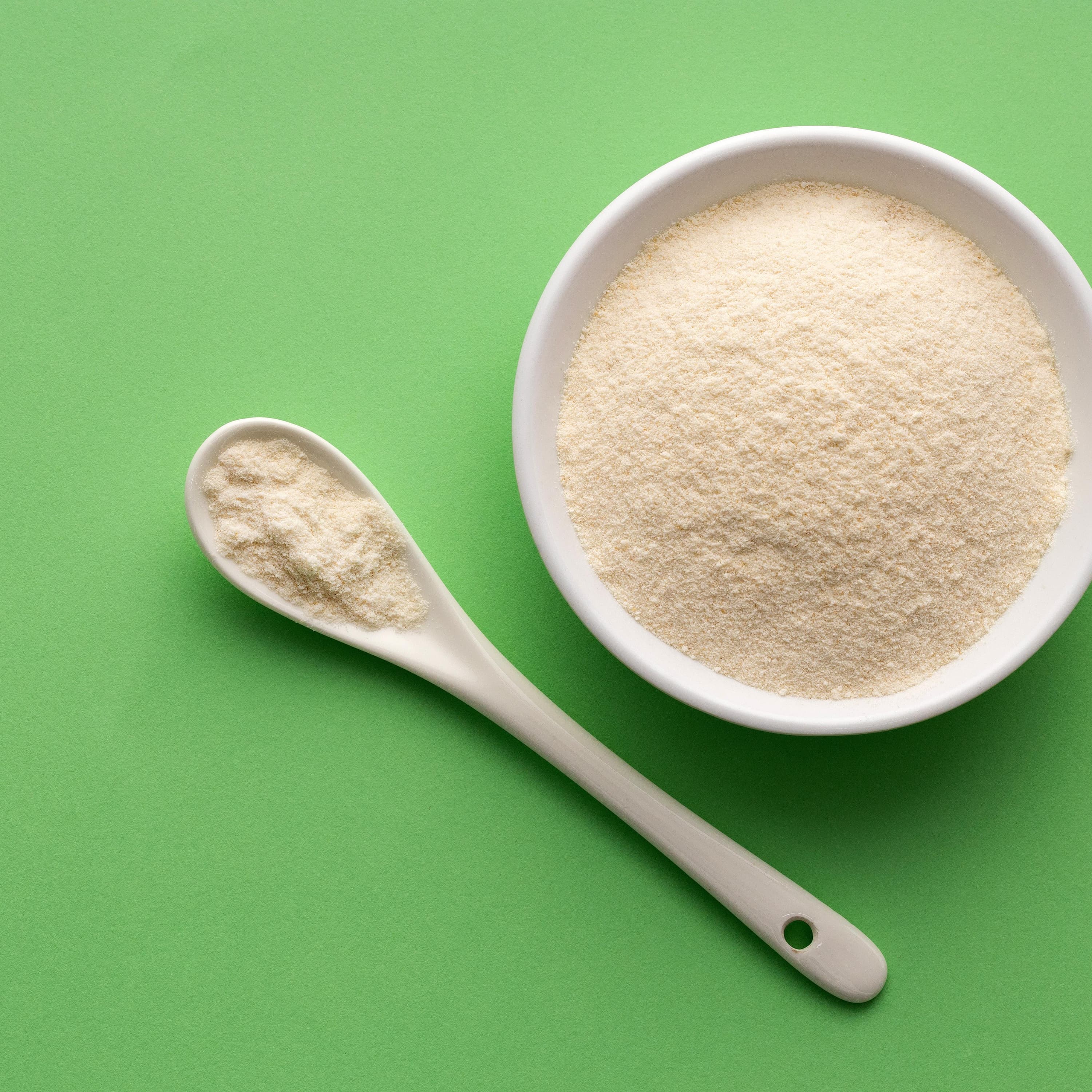
11:27Hooves, skin, tails, ears, bones, spines, fish heads, fish scales, fish spines, all of that stuff. if you want to extract value from a carcass of course you can do some leather and some dog food you can then take all the bits of the animal that contain collagen and you can steam them with hydrochloric acid it's an inexpensive process and out the other end you get collagen or you get gelatin and the jelly that goes in your trifle and the collagen in your supplement is essentially chemically almost exactly the same your chicken stock is wobbly because it has gelatin in but that's you know your body will treat it as collagen it is is essentially strands of collagen molecule and so the industry made x-ray films gel capsules gummy sweets they put it in a filler for diet foods you know for a long time they're just trying to get rid of this stuff but the markups for those things are very low the margins are very small once you start selling it as a luxury beauty product the markup is unbelievable so if you go onto the wholesale market and you buy collagen as a wholesale thing, it's about 15 pounds a kilo.
12:34By the time that hits the high street with a sort of an influencer's name attached to it, it will have gone up to around 300 pounds a kilo. So that is the kind of markup that drug dealers make, right? That's a sort of Pablo Escobar level of like, that's a serious markup. And they haven't done anything other than put it in a packet and put a sticker on it. They haven't added preservatives or flavourings, colorings. Very often there is nothing else. And they'll say pure collagen. It's like, yeah, it's pure collagen. It's pure industrial waste that you're taking. There are two ways of thinking about collagen.
13:07One is to look at all the evidence and go, what does it say? But the other thing is to go, the massive industry that deals with the waste products of the meat and fish industry, it seems a little too good to be true that all the byproduct they can't get rid of turns out to be a cure a side effect free cure for problems that affect every single person on planet earth and then why are they marking it up 300 if you believe in collagen just make some chicken soup right so i'm not against collagen sorry anyway sorry well i was gonna say if you sort of still feel like you want some collagen technically you could eat some jelly i am i am so in favor of getting your nutrition from food if you are keen on collagen and you really believe it works and it works for you.
13:51I would also say you are getting massively ripped off. If this is something that you feel helps your joint pain, don't let me tell you it doesn't. I think collagen is completely safe. But if you're spending 300 quid on the high street, I would say if you're eating meat at home, you can get that from any animal carcass.
14:13Coming up, why are we drawn to the promise and magic of wellness, even when there's no evidence.
14:28Zand, I think this speaks to a wider point in your book that I reflect on a lot because, you know, when we're reporting on the wellness industry, this point comes up in our podcast that very often we end up saying you can do this with a healthy diet. Yes. But there is something so tantalising about a pill or something extra. There's like a sprinkling of magic that draws us in. And, you know, having written this book, being a doctor, I wonder why is that? The magic is not there once you have the data. And this is why when you go to your GP and you get a drug and your GP goes, well, you know, what this drug will do is reduce your chances of having a heart attack by 6 % over 10 years.
15:17You think, oh, well, this is not exciting. The wellness industry is selling stuff that doesn't have data, and that is its appeal, I think. The lack of evidence is what makes these products exciting, and I feel it too. When I went to China to talk about really modern high-tech supplements, I felt the thrill of it as well. These molecules that I'd studied at medical school that are now being synthesized and offered to us for longevity. And the minute that trial comes out, we'll move on to something else. The minute we study it and go, oh, it does nothing, which I think is the way the data look. But until then, you could believe it's a magic pill.
15:52So I think the lack of knowledge, the hope, the uncertainty, that is the thrill. And the data is what kills the excitement. We do all want to be well, Zand. Of course we do. Yes. And there is this increasing pressure of personal optimisation that we all feel. I wonder, having written this book, have you chosen to do anything differently? The place the book lands actually is some really lovely research, a lot of it from my colleagues at UCL, looking at people's engagements with the arts, with culture and with hobbies and crafts and things they love. And I was so thrilled that there is evidence that this stuff is really meaningfully good for you in an important way.
16:41so part of it is that it is good for you to take up a new thing or pursue a thing that you love and try and master it good for your body good for your brain good for your social world learn a language an instrument bird spotting mixed martial arts whatever it is that you want to do pursue that with enthusiasm and it does seem like that is going to be good for you at least you'll enjoy it and that will be good in its own self and even just engaging with the arts does seem to have a benefit on people's health. So I was very thrilled to find something that wasn't just eat your greens, that actually, even if you're not eating your greens and doing a lot of exercise, if you can find the thing you love, join a choir, get some dance lessons and get better at it.
17:24That's a really meaningful way of making your life better, looking outwards a bit more of sort of engaging with the world. So yes, I don't feel grumpy or pessimistic about wellness, but I do think that this category of wellness that's sciency financialized and manipulative is really really bad for people that they're they're most vulnerable
17:51i like that the zand guide to supplements hobbies arts relationships i do yes oh that would have been i wish why don't you tell me that oh i could have used that six months ago that's a great I'll do it for the paperback. Well, thank you so much. It's lovely to talk to you, Madeleine. Thank you. Thanks again to Zand van Tulleken. His book is Make Me Well, a quest to understand the confusing world of wellness. And you can purchase it from The Guardian Bookshop by going to guardianbookshop.com.
18:28And that's it for today. This episode was produced by me, Madeleine Finlay, and Ellie Sands. It was sound designed by Joel Cox and the executive producer is Ellie Bury. We'll be back on Thursday. See you then.
18:46This is The Guardian.