Ask ChatGPT


 Science Weekly
20 Aug 2026 · 16m · 9 chapters
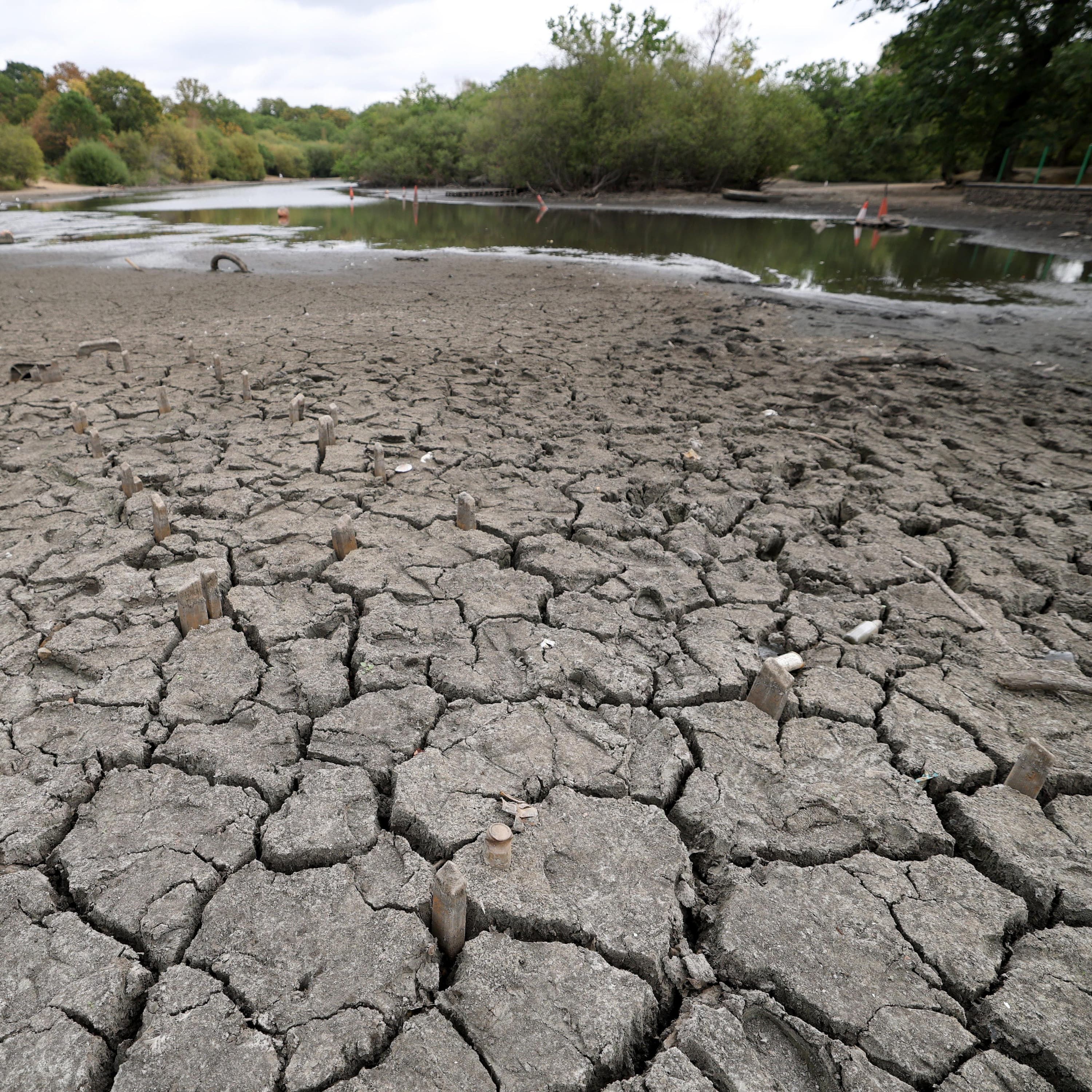
Europe/UK drought after an exceptionally hot, dry summer; whether incoming rain will replenish reservoirs; risks of “weather whiplash” (drought and floods); and what to do at water-company, government, and individual levels.
Dr Anna Murgatroyd, hydrologist at Newcastle University; explains reservoir storage, infiltration, and drought planning.
Reservoirs average ~60% full vs ~80% expected; reservoirs have “dead storage” so remaining water may be unusable. Rain forecasts likely won’t refill supplies quickly—weeks/months of persistent rain are needed. Intense downpours may cause runoff/flooding without recharging groundwater.
Southeast Water in Kent restricting supplies; potential escalation to standpipes not seen since 1976. No new reservoirs built since 1992; Haven’t Thicket Reservoir in Hampshire and eight more in the pipeline.
Written by AI. May contain mistakes.
Discussion on the severity of the drought and its impact on water resources.
“Dr Anna Murgatroyd, you're a hydrologist at Newcastle University.”
Exploration of strategies companies can utilize to manage water shortages.
“and reservoirs get to that point you've described where you really can't take anything else out, What are the kinds of things that companies can do?”
Discussing the type of rainfall needed to effectively relieve drought conditions.
“Okay, so we need rain for a prolonged period of time, but presumably we also don't want downpours because of the drought, you know, our ground is so dry.”
Examining the possible scenarios and consequences of inadequate rainfall.
“swinging quite wildly between really dry hot conditions to very wet conditions and both of which are incredibly destructive.”
Analyzing water management practices in the UK compared to European countries.
“It's quite an extraordinary picture, you know, to imagine that there could be standpipes.”
Discussing individual actions that can help conserve water during droughts.
“When we do need to preserve water, what kinds of things should we be doing?”
A light-hearted ending discussing the relief and excitement of anticipated rain.
“and then once you go outside things like rainwater harvesting using water butts if you have a garden rather than using your mains water supply will make a big difference also.”
Explore how the UK is adapting to rising temperatures and heat waves.
“It's more of an adapted country, I guess, because people are used to those higher temperatures.”
Discussing the recent rain and the hope for manageable weather conditions.
“It's going to be a really fascinating discussion, and you can join us at the London Podcast Festival at King's Place in London on Thursday, the 3rd of September.”

Get the gist, explore an idea or ask about something said.
 Claude
On Science Weekly, what are the key points of this episode?
Searching your listeningAutomatic transcript. May contain errors.
0:00This is The Guardian.
0:30Washington Wise.
0:36It's happening. After an exceptionally hot, dry summer across Europe, rain is coming. It feels like an odd thing to celebrate here in the UK, but we're in desperate need of some precipitation. Reservoirs are running low, hundreds of wildfires have broken out and some of our most ancient oak trees are dying
1:08So what happens when the rain hits? Will it be enough? And how do we better prepare for next time? From The Guardian, I'm Madeleine Finlay and this is Science Weekly
1:29Dr Anna Murgatroyd, you're a hydrologist at Newcastle University. So how bad has this year's drought been? How little rainfall have we had in comparison to normal years? Yeah, important question. So the drought comes after several months of below average rainfall. We've had exceptionally low levels of rainfall from April through to May, a bit of rain in June and then we've had our driest July on record in England and Wales and what that means is that we've had in recent months these dry conditions cascading to our water resources and our reservoirs are now averaging about 60 % full which is far below the 80 % that we would expect this time of year.
2:13It's not unusual for reservoirs to sort of dip that low especially towards the end of summer but what we would expect is for the rains to start come in and to actually replenish them. So certainly in the south and the southeast where our reservoirs are getting sort of below 60 % storage is the time where we're starting to worry. And the key thing to think about is reservoirs aren't like a square bucket, you know, they're often quite tapered. And so the lower you get, the less water that you end up with. And the reservoirs, not all the water can be used. So there's this thing called dead storage right at the bottom, where once you hit that, you can't take any more water from it.
2:53So it can be quite deceiving if people look in reservoirs and think, oh, there's still some water left in, we're okay, when actually we might be hitting those critical water levels where you can't take any more out at all. Anna, even if we have a few weeks of rain, if we end up with a dry September as well, and reservoirs get to that point you've described where you really can't take anything else out, What are the kinds of things that companies can do? A few different things. There are water transfers that exist already between water companies. So water companies, provided the donor company has the water to share, then water can be shared via water transfers.
3:34And if that's not the case, and given that much of the country is in this drought status, I don't think there'll be much water to share around. then we're looking at moving water across larger geographic boundaries. So where we have regions with more of a water surplus, so at the moment that's the northwest and the northeast, it might be that water is moved in big tankers around the country. But again that is really is the last resort if water levels have become that low. The issue comes when we have a combination of persistent dry weather combined with really hot heat because we see low rainfall supplies but also really increased demand and so it's not implausible for our reservoirs and our water stocks to get back to normal but it will require a good amount of rainfall.
4:27Okay Anna some cooler temperatures and a bit or at least quite a lot of rain is required. We've been told that rain is on its way. There was rain where I was overnight. So how much are we expected to get? So the forecast this morning seemed to imply that we're going to get showers across the country, which is great. Hopefully that will provide a bit of respite for people who have been suffering from the heat over the last couple of months. But the rain's not really going to be enough to refill those reservoirs. So unfortunately, the rain won't solve all the drought problems imminently. It's going to take weeks, if not months, to get back to that new level and new norm.
5:10Okay, so we need rain for a prolonged period of time, but presumably we also don't want downpours because of the drought, you know, our ground is so dry. Yeah, absolutely. So the ground, it's a popular picture in the media at the moment, ground is really cracked, is dry, it means that when we do get quite intense rainfall, that rainfall just doesn't infiltrate into the soil and into the sort of surface, subsurface level water. And so it's flowing over the ground so quickly that it doesn't have chance to permeate into the ground and eventually make its way through to our rivers. So it's very difficult to capture that level of really intense rainfall.
5:56what we're very good at in this country is having that sort of drizzly wet persistent rain which takes a lot longer to work its way through our system and we can actually harvest more I wouldn't be surprised if in places where we see heavy downpours we get surface water flooding and which again just seems so counterintuitive when it's been so hot and so dry recently and so again like I said what really is required is persistent rain that means that our ground gets a little bit wetter. It means it can hold more water and rather than that sort of fast overflow where the water just can't be stored for any use at all.
6:33So as a country we could be looking at having drought and floods at the same time? Absolutely. It's this term weather whiplash that's being coined by colleagues and academics which essentially means that we're sort of swinging quite wildly between really dry hot conditions to very wet conditions and both of which are incredibly destructive.
7:06And Anna, if we don't get enough rain in the next couple of weeks, which it sounds like unfortunately, we probably won't, what might happen next? I mean, we've seen southeast water in Kent, you know, limit supplies to a lot of their customers. The taps ran dry the last week. So is this something we could expect elsewhere? Yeah, that's possible. So a lot of our water companies are restricting water use by a lot of their customers. That's likely to persist. So there are escalating levels that water companies can take. So host pipe bans are the sort of more easily accessible things but if things get really bad we might see things like standpipes in the streets and what that means is that people won't have access to water in their homes they'll actually have to go out of their homes and access water which is tankered in we haven't seen that widely across the country since 1976 so we had an incredibly big wide-ranging drought in 1976 50 years ago in fact but that hasn't happened to the same level and so hopefully fingers crossed we can avoid those impacts happening because it would be catastrophic.
8:21It's quite an extraordinary picture, you know, to imagine that there could be standpipes. And I think a lot of people, even the idea of that, the prospect that that could possibly happen, a lot of people might feel very frustrated because we still live in a very wet nation. It rained throughout winter and a lot of people will be asking themselves, well, why didn't we manage our water better? You know, these droughts now are coming more frequently. Why aren't we better prepared for them? Yeah, that's a great question. We, in this country, I think there's this preconception or misconception that we're a very, very wet country and we have historically, but we've also always experienced droughts.
9:05So there are several droughts on record that have impacted our agricultural supplies, our public water supplies, our environments. so droughts aren't new but what we are seeing is that we're getting more frequent droughts and perhaps more intense droughts with a large magnitude larger wide-ranging impacts now what companies have to plan for these big droughts they have to plan for what we call a one in 500 year drought so a drought event of a really big magnitude but the issue is that it takes time to implement these big plans and so it takes time to build new reservoirs it takes time to build desalination plants and so there's a bit of a lag from investments being made to actually reaping the benefits of those.
9:53Yes because it's funny you mention the reservoirs because we always hear about you know this this stat that no new reservoirs have been built since 1992. clearly there's a real lag in terms of the infrastructure we need versus the infrastructure we actually currently have yes that's right and unfortunately yes since 1992 we haven't had any new reservoirs built it takes an incredibly long time to get reservoirs any new infrastructure through a planning process but what we are seeing is that there's now more of a push to building this new large infrastructure because we are in real time seeing the negative impacts of that low investment.
10:37And so over the next 10 years, whilst new infrastructure is being built, and we know that it will be built, there's one new reservoir being built in Hampshire, Haven't Thicket Reservoir, and there are eight other reservoirs that are in the pipeline to be built. Whilst they're being built, we need other measures to try and sort of bridge the gap between low supply and increased demand and those things will look like new demand management measures so installing things like water meters and trying to reduce leakage which is the amount of water that's lost through our water supply system drinkable water before it reaches the household
11:18coming up how can we be more like our water-conscious european neighbors
11:54And so on the side of the water companies, fixing leaks, getting this infrastructure, you know, in the ground started. But what about on the individual level? When we do need to preserve water, what kinds of things should we be doing? Yeah, great question. And it's probably not news to anyone, but things like taking short showers, taking fewer showers, which I appreciate is really difficult in a heatwave when taking a shower or having a bath is a way to cool down. But being more mindful of your water consumption. Another thing to do, and this is particularly relevant for new builds, is installing more water efficient technologies.
12:35So installing water efficient dishwashers, shower heads, for example, can make a big difference in the amount of water that you actually use during a shower. And quite modern bathrooms might have things like rainfall head showers that are lovely to stand under, but actually use an incredible amount of water. and so being mindful of that water consumption and if you are making new purchases of appliances using or purchasing more water efficient technologies is certainly a good way forward and then once you go outside things like rainwater harvesting using water butts if you have a garden rather than using your mains water supply will make a big difference also.
13:14And clearly we need to think more carefully about our water resources we are going to be facing more droughts in the future. Are there any countries that we could look to that are doing it kind of better than us at the moment? Yeah, that's a great question. I mean, several of our European neighbours who are very water-centric seem to avoid this problem quite well and navigate a problem looking over to the Netherlands who do experience similar weather and climate conditions to us. Water is right at the heart of their policy and planning. And so they deal very well with floods and also droughts.
13:51Water consumption is also considerably lower in many European countries. I think there's just a different attitude and behaviour towards water usage. If there's water scarcity in somewhere like Spain, people know how to deal with it. They just use less water. It's more of an adapted country, I guess, because people are used to those higher temperatures. I think the thing in Britain is that we are not used to these incredible heat waves that we're getting. I mean, places are hitting 35, 40 degrees and our infrastructure isn't built to cope with that. So people have to adapt in a certain way. And if we don't have the support to actually provide that sort of buffer between those really, really hot conditions, then people will do whatever they need to do.
14:40finally Anna I'm not sure I thought I'd ever be saying this but when I looked out the window this morning and I saw uh that the ground was wet and it seemed like it had rained a kind of thrill of excitement ran through me um are you looking forward to finally getting some precipitation where you are yeah absolutely I think it was everyone breathed a sigh of relief when it was a bit cooler and people didn't have to commute on incredibly well the tubes are still very hot but very very hot conditions um i i hope that it's we don't see why spread flooding i hope that there is a way that we can sort of manage the next couple of weeks especially if we do get really intense rainfall um but only time will tell with that dr anna murgatroyd thank you so much thank you for having me
15:33thanks again to dr anna murgatroyd you can keep up to date with all our reporting on theguardian.com and before you go i wanted to tell you about an upcoming science weekly live event to mark the return of the guardians chart topping podcast black box ian sample and i will be in conversation with host michael saffy about the subject of the second series how our relationships with AI chatbots are reshaping our minds. It's going to be a really fascinating discussion, and you can join us at the London Podcast Festival at King's Place in London on Thursday, the 3rd of September. To get your tickets, click on the link in the episode description for today.
16:18And that's it from us. This episode was produced by me, Madeline Finlay, and Josh Unchana. The sound design was by Joel Cox, and the executive producer is Ellie Bury. We'll be back on Thursday. See you then.
16:50Decisions made in Washington can affect your portfolio every day. But what policy changes should investors be watching? Washington Wise is an original podcast from Charles Schwab that unpacks the stories making news in Washington right now and how they may affect your finances and portfolio. Listen at Schwab.com slash Washington Wise.