Ask ChatGPT


 Science Weekly
22 Jul 2026 · 23m · 8 chapters
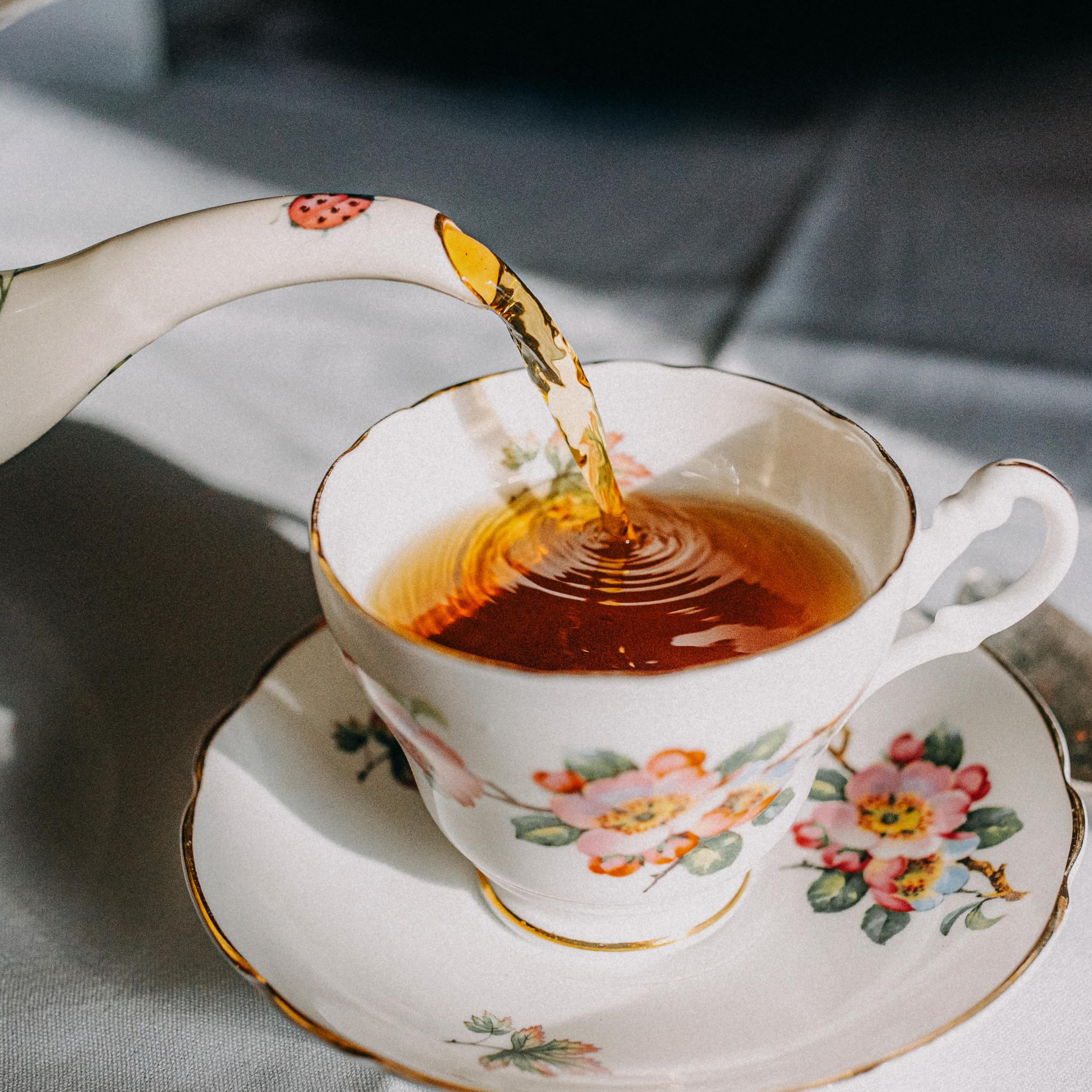
Scotland’s Balmoral Hotel sells an “all-Scottish” tea list, allegedly tied to tea entrepreneur Tam O’Brien. Tea growers suspect deception: plants weren’t truly grown in Scotland, yet were marketed as such. They report concerns to Food Standards Scotland, which investigates possible fraud using chemical “geographical fingerprinting” of tea leaves.
Nicola Davis (Guardian science correspondent) hosts. Professor David Burson (University plant sciences; woody plants; studies trace elements like aluminium in plants; develops tea origin authentication method). Stuart Wilson (Food Standards Scotland investigator; former police detective inspector, crime scene manager, firearms officer; leads food-crime probe).
Tam bought ~40,000–50,000 plants from Italian supplier Paolo Zacchera (~£2.50/plant) but sold to growers (~£12.50/plant), claimed Scottish cultivation, and the Balmoral’s tea samples chemically cluster with overseas teas, not Scottish estates.
Balmoral tea list; “Dalry Scottish White Tea” sample; hotels/retailers including Dorchester, Fortnum & Mason, and Mariage Frères; lab ICP-MS elemental analysis after acid digestion.
Written by AI. May contain mistakes.
Discover Richard Ross's experience at the Balmoral Hotel and the tea deception.
“If you haven't heard episode one yet, scroll back to yesterday in your podcast feed.”
Explore the investigation into Tam O'Brien and the authenticity of Scottish tea.
“After firing off an email to report what they'd discovered at the Balmoral the tea growers decided to do some further sleuthing of their own.”
Learn about the scientific methods used to analyze tea samples.
“They actually did things like go in and book the Scottish tea experience at the Balmoral and then they surreptitiously collected that.”
Learn how mass spectrometry can analyze tea samples.
“It looks like one of those really old-fashioned photocopier sites.”
Explore the origins of tea plants supplied to Tam O'Bran.
“We were quite shocked, but on the other hand we were almost relieved because it started to allow us to unravel some of the stories behind the plants that we got.”
Learn about the efforts of Stuart Wilson to investigate Tam's operations.
“And it wasn't only the tea growers who were beginning to discover more about what Tam had been up to.”
Examine the evidence against Tam O'Bran and the fraudulent tea claims.
“which would provide supporting evidence to the fact that the tea plants they were buying were claimed to be 100 % Scottish.”
Investigate the mysterious background of Tam O'Bran.
“And if the whole thing had been based on lies who was Tam, really?”

Get the gist, explore an idea or ask about something said.
 Claude
On Science Weekly, what are the key points of this episode?
Searching your listeningAutomatic transcript. May contain errors.
0:00This is The Guardian.
0:30The business phone system built so you never miss a call. Here's what I like about it. All your calls, texts, and voicemails live in one place, so anyone on your team can pick up a conversation, see the full history, and respond fast. No more, wait, who talked to this customer last? And if you're worried about after-hours leads slipping through, Quo's optional built-in AI agent can answer questions and even book appointments while your team's offline. It's the number one rated business phone system on G2, and over 90 ,000 businesses already trust it to stay reachable. Money is on the line. Always say hello with Quo.
1:06Try Quo for free. Plus get 20 % off your first six months when you go to quo.com slash tech. That's Q-U-O dot com slash tech.
1:18Hi, it's Madeline here. The Science Weekly team is on a break. so for the next few weeks you'll be hearing a selection of our favourite episodes from the past year. Today is the second episode from our investigative series, A Scottish Tea Mystery. If you haven't heard episode one yet, scroll back to yesterday in your podcast feed. Enjoy.
1:45Nicola Davis: Hi, I'm Nicola Davis, a science correspondent here at The Guardian, and this is the second episode of a special Science Weekly miniseries, a Scottish tea mystery. Episode 2, The List.
2:04Nicola Davis: If you've ever visited Scotland's capital, Edinburgh, you will have seen the Balmoral Hotel. It is a vast, imposing building that sits right above the train station in the heart of the city. A great clock tower marks the Edinburgh skyline, overlooking the busy shoppers making their way up and down Princes Street. Today, tourists will often visit the Balmoral to see the room where J.K. Rowling finished writing the Harry Potter series. One day, a few years after drinks journalist Richard Ross had started up his own tea plantation, he found himself in the city and decided to pop into the Balmoral.
2:47Nicola Davis: He got wind of something fishy. The Balmoral Hotel, perhaps one of the most obviously prestigious hotels in Edinburgh, was selling an all-Scottish list of teas in their tea room. Having your tea in the Balmoral would be a big deal. It's iconic, like Claridge's in London or the Plaza in New York. Afternoon tea is served in the very grand Palm Court restaurant A table set with pristine white tablecloths and fine china under a large central dome By this point Richard had taken over from TAM as chairman of the Association of Scottish Tea Growers Which renamed itself Tea Scotland As you might imagine, it's a pretty small world and so everyone knows, or knows of, everyone else I had a look at the list which was sitting on a lectern at the entrance to the tea room beautifully bound, over multiple pages all divided into different sections of the different styles of tea and each of the teas with this nice, sort of attractive, quite flowery name and a little description of a hundred words or so about the geographical location, some of the specifics of the area where it had been grown.
4:08And, you know, some of the wording, it clearly was very specific to some of the people I knew. You know, I knew where all the Scottish tea plantations were. But I also knew that those tea plantations hadn't actually produced any tea yet because their plants were so young. So I took some pictures of the list on my phone, circulated it to the other growers And understandably, the owners of those plantations got quite kind of irate about this.
4:40Nicola Davis: They were pretty sure they knew who was behind the list. Tam O 'Bran. The maverick who'd persuaded them to start their plantations, sold them their tea plants and charmed the media into giving glowing coverage to this exciting new industry.
5:02Nicola Davis: But over the previous year or so, he'd become prickly and elusive, avoiding their calls and emails. He'd left an Italian grower with a massive unpaid bill, and now it seemed he'd been secretly selling their Scottish tea to Scotland's most famous hotel. Except the growers knew whatever tea this was, it wasn't theirs. So they began to wonder, if this tea was a lie, what about all the tea Tam was selling to other shops and hotels? The idea that he was maybe doing something that was a little bit unethical transformed into us feeling that this was something that was really deception and fraud.
5:55So at that point we sent an email to Food Standards Scotland and their criminal investigation division.
6:06Nicola Davis: After firing off an email to report what they'd discovered at the Balmoral the tea growers decided to do some further sleuthing of their own. They wanted to prove that the tea they'd seen on that list didn't come from their plantations. And that led them, and eventually me, to a small office in an unassuming building a short drive from the centre of the granite city, Aberdeen. Which is where I met David Burson, Professor of Plant Sciences at the university. Softly spoken and friendly, although clearly as sharp as a tack, David led me into one of the lecture rooms beside his lab to chat. My background is in plant science research and I work primarily on woody plants, so shrubs and trees, and I'm very interested in the way that those plants interact with soils and microorganisms.
7:04Nicola Davis: He's also interested in plants that hyper-accumulate elements from the soil, especially aluminium. And it just so happens that's exactly what tea does.
7:17Nicola Davis: I asked David to take me back to when he came across an advert on an online message board connecting academics to commercial operators. I responded to a request that came from a group of Scottish tea growers who were interested in developing a method for authenticating the geographical origin of their tea. At the time I didn't know why they were interested in that but I took it as an opportunity to develop some work on tea which I had been hoping to do for some time. He got stuck into the literature. The tea growers needed something that was only sensitive to the growing environment not the species itself.
7:57Nicola Davis: After all, there isn't such a thing as a native Scottish tea plant. We did consider looking at DNA but the issue with DNA of course is that it's dependent on the origin of the material. We needed a method that was sensitive to the growing environment, the conditions where the tea plants were actually growing, and that is independent of their genetic origin. So something that reflected their surroundings, what they were taking up in the soil, that was what you were looking for? Yes, especially the underlying geology, which gives rise to variation in the chemical composition of soils, and it's the chemical composition of soils which gives the geographical stamp of origin.
8:39Nicola Davis: The idea works like this. The chemical composition of soil is dependent on where in the world it is. That's because what's in the soil is influenced by the type of rocks that lie beneath. Elements in soil from somewhere in China might be at very different concentrations to what you'd find in a sample of soil from somewhere in Ethiopia. And the tea plants passively suck all these elements up from the soils in tiny amounts, which can then be detected in the tea leaves. It's like a geographical fingerprint. We ignore elements like nitrogen and phosphorus, which are typically added by growers in fertilisers.
9:22We're interested in micronutrients and elements sometimes called trace elements, which are present in most soils and which are taken up passively by the plants. So it's things like melidinum, lead, arsenic, selenium, cadmium, nickel, things that are present in very tiny concentrations in plants and which we can pick up using precision instruments.
9:52Nicola Davis: So with his method in hand, the next thing David needed to do was create a kind of reference data set. The first thing I did was collect samples of tea from each of the estates within the network of growers that had approached me and we found very quickly that there were variation between those growers themselves so we could identify individual estates within Scotland based on the chemical signatures within their tea. The next step was to determine whether as a group the Scottish-grown teas were different from overseas teas in general. So this required me to work with an importer who gave me about 100 samples of imported tea of known location.
10:38And the Scottish-grown teas clustered separately in a statistical ordination sense to the overseas samples.
10:47Nicola Davis: Once David had developed the method and created his two reference data sets, It was time for the Scottish tea growers to come clean about what they really wanted testing. Tea supposedly grown or sold by Tam O 'Brien. So they gave me samples which they had themselves bought, which was labelled as if it was Scottish grown, but they at the time, and they were clear about this with me, they were concerned it wasn't grown in Scotland. Not only had they bought Tam's tea from the shops, the group had embarked on a little subterfuge to gain some of the samples. They actually did things like go in and book the Scottish tea experience at the Balmoral and then they surreptitiously collected that.
11:38Nicola Davis: At this point in our meeting, David turned to a big cardboard box that had been sitting next to us, stuffed full of plastic packages. Yeah, it's probably true that some of these samples are a bit smaller than they were when they first arrived, and there's plenty left if you would like to have a cup of tea. Refusing David's kind offer, despite the rarity and price of some of the teas he was now unpacking, I asked him to show me an example of what he was sent by the tea growers. So taking, for example, this package of tea that's got on the label Dalry Scottish White Tea, which was produced, I think, in 2016 and part of the original set of samples that the tea growers of Scotland acquired.
12:22So it is one of the products that highlighted their concern because it's a very large packet, 250 grams.
12:29Nicola Davis: And this was grown by Tam O 'Brien, that was the issue here? That was the marketing of it, yes. So we have to prepare that for analysis. So the first step is to grind it into a fine powder. And I have some examples of that here too. And you can see it has to be very, very finely ground in order to be prepared for the next stage. So it looks more like sort of cinnamon or something. It's that fine, isn't it? Yes. It's a very, very fine powder. Indeed, they all look very similar, except they have slightly different colours once they're powdered. The next stages happened in a laboratory down the corridor from where we were sitting.
13:08Nicola Davis: So David and I donned our white coats and headed in. Oh, look, lab coats. Excellent. This takes me back. On the lab bench were tubes of clear liquids into which the powdered tea had been transformed using hot acids and hydrogen peroxide. It's called the digest. So this is what a digest looks like and you would be forgiven for thinking that was just a vial of water. It does look completely clear. So they then go into this container in batches, as you can see. And then there's a robotic system that sucks up a very small sample from each one, feeds it into the ICP-MS that actually does the analysis, which is this machine here.
13:59Nicola Davis: It's this very large-looking sort of... It looks like one of those really old-fashioned photocopier sites. And that's your mass spectrometry machine where you can, by using mass, you can work out the concentration of different elements within your solution. Yes, it contains the mass separation and the detection. And then we get outputs in the form of spreadsheets. And so, with the tea sold by Tam O 'Bran turned into colourless liquids and fed into the mass spectrometer, David ran the experiment. Which database would this tea match? The cluster in Scotland or the international group?
14:43Your call has been forwarded to an automatic voice message system. A missed call doesn't feel like anything. No red flag, no notifications screaming at you. It just disappears into your call log. And nine times out of ten, that was someone ready to hand you money. That's why today's episode is brought to you by Quo, spelled Q-U-O, the business phone system built so you never miss a call. Here's what I like about it. All your calls, texts, and voicemails live in one place, so anyone on your team can pick up a conversation, see the full history, and respond fast. No more, wait, who talked to this customer last?
15:19And if you're worried about after-hours leads slipping through, Quo's optional built-in AI agent can answer questions and even book appointments while your team's offline. It's the number one rated business phone system on G2, and over 90 ,000 businesses already trust it to stay reachable. Money is on the line. Always say hello with Quo. Try Quo for free. Plus get 20 % off your first six months when you go to Quo.com slash tech. That's Q-U-O dot com slash tech.
15:54Nicola Davis: While the tea growers had been doing their sleuthing with David, Richard Ross was getting to know Paolo Zacchera, the Italian nursery man who'd been supplying the tea plants Tam claimed to be propagating from to produce hardier Scottish plants. So I had a long sort of email correspondence with them where we found out little by little these nuggets of information about the fact that really all the plants that we had been supplied had come not from a propagation in a greenhouse in Perthshire, but almost direct from the shores of Lake Maggiore. The growers had believed that they were buying plants with a better chance of survival in Scotland than your average tea plant, that at least one generation had been grown in Scottish soil and especially selected by TAM to be more viable.
16:43We were quite shocked, but on the other hand we were almost relieved because it started to allow us to unravel some of the stories behind the plants that we got. So by being in contact with Paolo, he was able to say, well if you bought it in 2015 then I know that those plants were ones that probably came from my own plantation. And then the later ones, once he'd established that there was clearly a market for tea plants in these cooler climates in Britain, he started to go out and look for better plant material that would be even better suited to the colder conditions of Scotland. And he'd gone to Turkey and had sourced some seeds from Turkey.
17:26The Turkish tea growing areas can be really cold in the winter. You can get snow, a lot of low fog and high rainfall.
17:34Nicola Davis: A bit more like Scotland. A bit more like Scotland. Much more like Scotland, yeah. And so that explained why some of your colleagues had thriving plantations and others not so much. Exactly. And it wasn't only the tea growers who were beginning to discover more about what Tam had been up to.
18:00OK, so my name is Stuart Wilson. I am an investigator within the Scottish Food Crime and Incidents Unit who are part of Food Standards Scotland. And our responsibility is to make sure that we investigate any allegations of criminality within the food sector.
18:17Nicola Davis: On a beautifully sunny day this autumn, I met up with Stuart in his offices in Aberdeen, in a building not too far from David's laboratory. He was strikingly tall with a wry sense of humour. Before joining Food Standards Scotland, Stuart had been in the police, a detective inspector working on murder cases, a crime scene manager, even a firearms officer. But at the start of 2019, he turned his investigative prowess to tea. Coincidentally, around the same time Richard got his nasty surprise at the Balmoral, alarm bells were ringing among authorities about Tam O 'Bran's wee tea plantation. There was questions raised over some of the media articles which had been published in 2014-2015.
19:10Nicola Davis: Some of those articles, including mine, noted Tam was producing tea that was being sold to hotels and shops. But he hadn't registered himself as a food business with the local council. When they dropped by to find out what was going on, Tam claimed all the processing and drying needed to turn the leaves into the final product you and I would drink was actually being done by a company in Fife. The position from the company in Fife was that they only dealt with the finished tea leaf themselves, which left the question as to how the tea leaf was actually then turned into a finished tea. So they also contacted Food Standards Scotland and essentially married up both pieces of intelligence together to start the investigation proper.
19:58Nicola Davis: Stuart began by going around all the hotels and companies that had purchased tea from TAM. We knew from the media articles that tea was being sold in some hotels. The Balmoral Hotel in Edinburgh, the Dorchester in London, Fortnum and Mason in London, Marriage Frey in Paris and two or three others. So let's go to them and identify what they bought or what they thought they bought and how much they'd paid for these tea types. So there was a couple of them where there may have been a non-disclosure agreement was signed between the wee tea plantation and the hotel. Let me just say here, it is very unusual for a hotel buying tea to sign an NDA.
20:35The next aspect then was to look at the tea growers and recover evidence of their transactions, which would provide supporting evidence to the fact that the tea plants they were buying were claimed to be 100 % Scottish. Now that came to a head when we were contacted by a chap from Italy who told us that he was engaged with Tam O 'Brien over many months and years from around about the 2014-2015 time and he had sold him upwards of about 40 ,000 or 50 ,000 plants.
21:07Nicola Davis: Yes, that's Paolo. Now, he was buying the plants for£2.50 per plant, but we now know from the invoices from the growers that Tam O 'Brien was selling them for£12.50 per plant to the growers. It's a good return. Goodness me. A great return and made him lots of money.
21:26Nicola Davis: If that was the tea plants, what about the final product? The tea being poured into delicate cups in fancy hotels around the UK. Luckily, the Balmoral still had samples of the tea leaves that had been sold to them by TAM. The next aspect was to identify, right, so we've got the tea leaves here. What can we do with these leaves in terms of proving the providence or authenticity of the tea being Scottish? And who did Stuart end up reaching out to? Well, the person who had recently become an expert in geographical authentication of tea. Professor David Burslam. This time, David used officially collected samples from Stuart and the Food Standard Scotland team.
22:12They supplied me with samples from the same set of Scottish estates and a few others as well, where their geographical origin was known and was recorded by them. And they supplied me with a set of samples which they didn't tell me a great deal about, for very good reasons, it wasn't explicit where those unknown samples came from. I was asked to analyse those samples, to make a judgement on whether they were distinct chemically from the Scottish-grown samples and whether there was any evidence that they were more similar to the overseas library of reference samples that I had already.
22:54Nicola Davis: So once again, David ran the experiment and compared the elemental fingerprint of the mystery samples to the ones from the Scottish growers and the international teas. In most cases, the unknown samples that were supplied by Food Standard Scotland clustered within the group of overseas teas and not among the Scottish grown, authentically Scottish grown teas. What were you thinking when you saw the results, when you saw the mystery sample results? First of all, I was concerned. There appeared to be some evidence in support of the idea this was a fraud. So like everyone, I was shocked by that. So I made sure that all our lab processes were double-checked before I agreed that this was relevant to the case.
23:43Nicola Davis: David might have been shocked that it suggested fraud, but he may not have been surprised, because it was exactly this result he'd already presented to the tea growers using the unofficial samples they'd provided. I well remember the evening where I was with them and presented that, And, well, we were all very concerned. It clearly supported their concerns that he had not been grown in Scotland and justified their complaint to the Food Standards Scotland. Evidence was piling up against Tam. He'd bought 50 ,000 plants from Paolo, leaving him in the lurch for the last batch. He'd sold them on to growers for a greatly inflated price, all while telling them he'd cultivated the plants in Scotland.
24:31Nicola Davis: And the experiments had proved the tea products he was selling as Scottish grown also didn't come from Scottish soils So where had it come from? And if the whole thing had been based on lies who was Tam, really? There were claims that he was a multi-millionaire There were claims that he'd invented the bag for life There was one, I think, where he said he had worked in bomb disposal Yes And this was the same with how he described his past as well. The more you heard the story, the more you realised that the different stories never quite added up. That's tomorrow.
25:11Nicola Davis: A Scottish Tea Mystery was reported and presented by me, Nicola Davis. It was produced by Madeleine Finlay. The sound design was by Joel Cox. And the executive producer was Ellie Buey.
25:29This is The Guardian.