Ask ChatGPT


 Science Weekly
30 Jul 2026 · 16m · 9 chapters
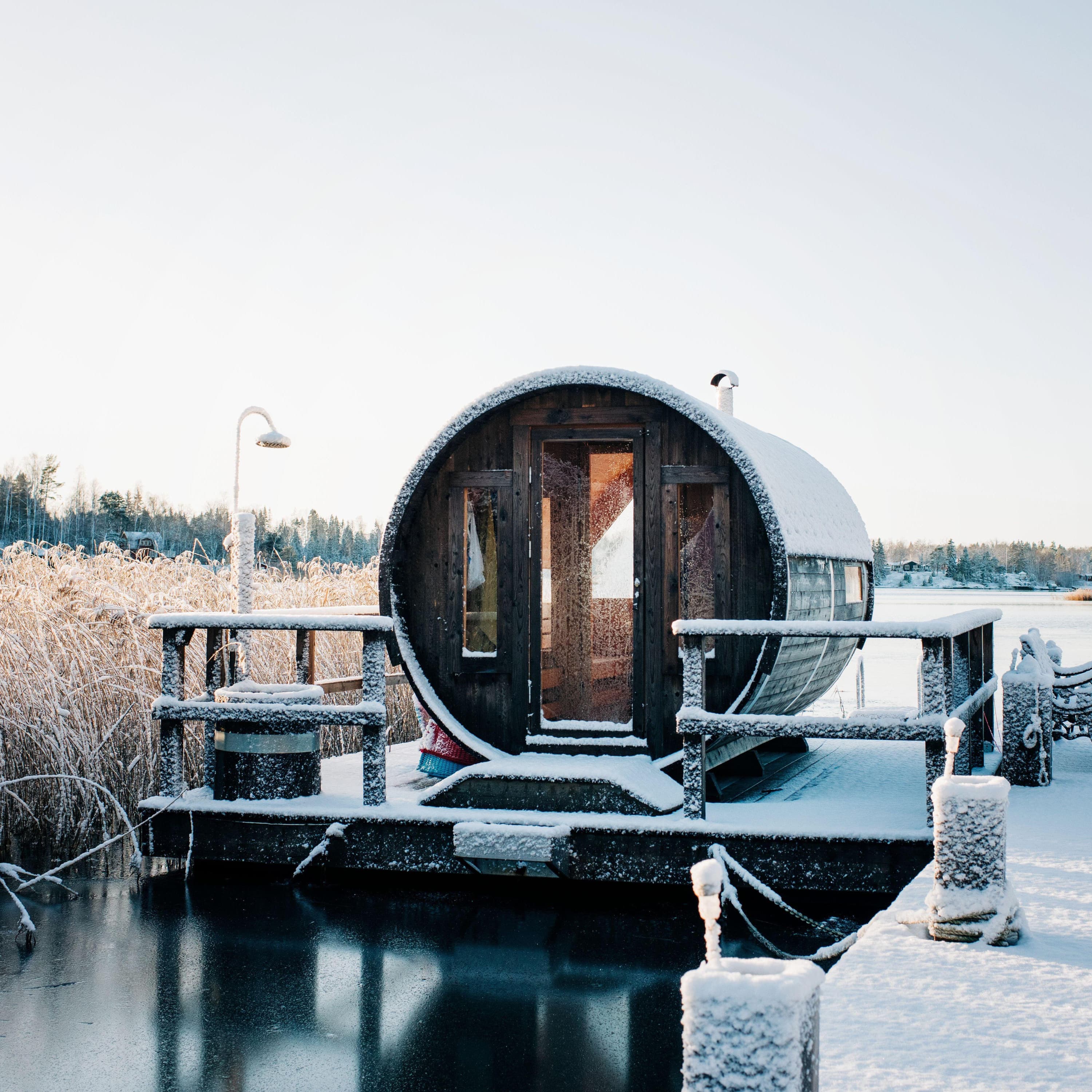
Whether hot saunas, cold-water immersion (10–15°C), and alternating “contrast therapy” have health benefits, and what the evidence actually shows.
Ian (Science Weekly co-host, not further identified in transcript). Dr Heather Massey, Associate Professor at the University of Portsmouth’s Extreme Environments Laboratory; leads/participates in research including a randomized controlled trial on anxiety and depression.
Gold-standard large randomized trials are limited; evidence is mixed and often observational. Sauna may correlate with lower risks of coronary heart disease, cardiovascular disease, and hypertension; possible mechanism: vasodilation, improved heat exchange, and effects on blood vessel elasticity. Cold water triggers a “cold shock response” (gasping, rapid breathing, heart rate/blood pressure rise, stress hormones). Cold water correlates with some mental health and blood markers, but immune/“cross-adaptation” claims are unproven.
Finnish sauna use (4–7 times/week) linked to lower high blood pressure risk over ~25 years; cold shock response reduced ~50% after 4–5 immersions, lasting ~7 months. Alternating hot/cold has limited supporting data; hydration and slow acclimation are cautioned.
Written by AI. May contain mistakes.
Exploration of how sauna and cold plunge practices are spreading beyond Finland.
“I spoke with my co-host Ian and Dr Heather Massey of the University of Portsmouth to find out.”
Discussion about typical sauna temperatures and physiological responses.
“From The Guardian, I'm Madeleine Finlay and this is Science Weekly.”
Insight into how the body reacts to heat in a sauna, including vasodilation.
“And then depending on how long you stay in, your core body temperature will start to rise gradually from 37 degrees C as normal up to around 39 C.”
Explanation of the body's cold shock response and its implications.
“Yeah, I mean, I'm maybe one of the few people who does it without talking about it very much.”
Evaluation of the scientific backing for health benefits of saunas and cold plunges.
“like to see for any health benefits of saunas or cold water immersion.”
Discussion on the mixed research findings regarding cold water immersion's health benefits.
“Some studies find correlations with cold water immersion and improve symptoms of mental health issues like depression and anxiety.”
Exploration of the theoretical benefits of alternating sauna and cold water exposure.
“We've been talking about each of these separately, but you often have sauna and cold water exposures together.”
Advice on incorporating sauna and cold water immersion safely into routines.
“Ian, another thing I wondered was whether these things are good for us simply because they're pleasant activities.”
Learn essential safety tips for engaging in cold water immersion.
“And individuals are able to maintain that reduction in cold shock response for about seven months.”

Get the gist, explore an idea or ask about something said.
 Claude
On Science Weekly, what are the key points of this episode?
Searching your listeningAutomatic transcript. May contain errors.
0:00This is The Guardian.
0:30any science behind it. I spoke with my co-host Ian and Dr Heather Massey of the University of Portsmouth to find out. Enjoy. The Finns do it best, taking off their clothes and getting hot and sweaty together. In saunas, of course. And when the warmth gets overwhelming, time to plunge into a freezing lake. Or an outdoor bath. Or maybe even a bucket of cold water splashed over you.
1:12And these days, it's not just the fins hitting the saunas and cold plunge. In the UK and plenty of other countries, people are increasingly taking up the habit and getting a shot of relaxation and adrenaline. If you talk to any of those people, you'll no doubt be told why it's unbelievably good for the body and the mind.
1:37So we just had to ask, is it? What's the scientific evidence that hot and cold immersion can improve your health and well-being?
1:50From The Guardian, I'm Madeleine Finlay and this is Science Weekly.
2:01Ian, we wouldn't be a Guardian podcast if we didn't talk about saunas and getting into cold water, plunging, swimming at some point. And to be honest, I'm shocked and surprised that it's taken us this long. Before we talk about what these things can do for us, what kind of temperatures are we actually talking about?
2:21Madeleine Finlay: The temperatures can vary a lot for both. But let's start with saunas. I mean, for your traditional Finnish sauna, you know, those classic wood-lined room with a burner in the corner or a heater, you're looking at 70 to 100 degrees Celsius. So it's obviously pretty toasty. As for cold water immersion, again, huge variability as to what people class as cold water here. But we're going to focus on temperatures between 10 and 15 Celsius. I mean, ice baths, plunge pools can be as cold as a few degrees, as can rivers or leidos in the winter. And of course, some people will swim in polar waters and those can actually go sub-zero thanks to the salt content.
3:05Madeleine Finlay: But that's obviously pretty risky. Starting with the sauna, which I'm far more partial to, what happens to the body when you're sat in those nice warm temperatures? Well, the first thing you'll notice is that obviously your skin and your hair start to heat up. And then depending on how long you stay in, your core body temperature will start to rise gradually from 37 degrees C as normal up to around 39 C. Now, your body has to respond to that rise in temperature to ensure it doesn't overheat. People will probably be aware that your blood vessels expand or dilate. This is called vasodilation. and that improves blood flow to the skin and your heart rate also increases.
3:50Madeleine Finlay: So you get this boost to your circulation. At the same time, you start sweating and when that water evaporates off your skin, it helps you to cool down. So if you think about your blood vessels opening up a bit more and allowing blood to get to the surface of your skin, it's improving how well it can do heat exchange. So it's helping you to cool down. Even though your heart is pumping faster, the dilation of your blood vessels usually leads to an overall drop in your blood pressure but after a while it's going to depend on things like how often you have a sauna and how hot it is you are going to start feeling uncomfortably hot and you'll need to get out to cool down that's really interesting so that drop in blood pressure even though your heart's beating faster is probably why when sometimes i come out the sauna i feel a little bit dizzy let's go on to cold water immersion now.
4:39I know this is more your bag, Ian.
4:41Madeleine Finlay: Yeah, I mean, I'm maybe one of the few people who does it without talking about it very much. At least I try not to talk about it very much anyway. Look, I love both of these, especially having a sauna after a really cold swim. But, you know, cold water immersion, as you'd expect, your body, of course, reacts differently because there's different threats that it has to respond to. People have probably heard of the cold shock response, which has triggered in water below around 15 degrees Celsius. Dr. Heather Massey is Associate Professor at the University of Portsmouth's Extreme Environments Laboratory, and she explained a bit more.
5:20Cold shock response is that response you get when you initially go into the water. So you start to experience a gasp, rapid breathing and also a big increase in your heart rate and blood pressure. There's a big increase in stress hormone responses as well. So that's your adrenaline, noradrenaline, cortisol responses too. So is this when you get into cold water why you feel absolutely buzzing after?
5:46Madeleine Finlay: Exactly. And that does seem to be due to this release of things like noradrenaline just coursing through your body. And those things are released pretty damn rapidly and in large quantities when you get into cold water, you feel that response pretty profoundly.
6:08So Ian, sauna and cold water immersion both have a really long history all around the world, but is there any scientific evidence that sitting in a hot room, dipping into a tub of cold water is actually good for us?
6:23Madeleine Finlay: Well, it's quite interesting actually, because there isn't the sort of gold standard data from large randomized controlled trials that we'd really like to see for any health benefits of saunas or cold water immersion. There are a lot of small studies and these take all sorts of different approaches and they show some correlative effects to some health markers but it's quite hard to really infer from those things any kind of robust evidence or robust proof that if you do these things then these are the benefits you can expect to see. But here's Heather with some of the benefits that sauna has been linked to.
7:01All of this research has looked more at observational data and mostly in men and they found some signal towards those individuals that sauna more regularly, they may live longer or they may be healthier towards the end of the study than those that saunered less or didn't sauna at all. That includes things like coronary heart disease, cardiovascular diseases, hypertension. Some of them take into account lifestyle factors such as the amount of exercise they do, their food intake, smoking, alcohol consumption and others haven't at this stage. So there's a real mixed bag of evidence.
7:40Madeleine Finlay: One of the possible reasons you might have better heart health after saunas is that there are some studies that suggest that the blood vessels become more elastic because you're sort of exercising them, you're getting this vasodilation. So there's a theory that these frequent sauna sessions will keep your heart healthy for longer. I'm definitely predisposed to believe that evidence, but let's move on to cold water because you're going to have to persuade me here. Is there any signal for any health improvement? Well, again, the evidence is pretty mixed on this. Some studies find correlations with cold water immersion and improve symptoms of mental health issues like depression and anxiety.
8:18Madeleine Finlay: But really, those studies haven't been large enough. Heather's actually involved in a randomized controlled trial focused on anxiety and depression. And the results from that should be out later this year. So it's going to be really interesting to see what that finds. Regular cold water swimming can improve blood pressure and fat levels in the blood for people who are in good sort of general health. But obviously, if you have a heart condition or other medical issues, you really need to talk to your GP before you start going into cold water. I hear cold water swimmers making all sorts of claims about the benefits cold water swimming has on the immune system.
8:54Madeleine Finlay: And I'm sure that there may be something in it, but I'm not convinced. But this is what Heather had to say about immune function and cold water. There is some research looking at inflammatory markers and some changes in those inflammatory and immune markers. But what we need to know is, does that actually change our health profile? Some people look at the cross-adaptive effects, where if you are able to adapt to one stressor, and I would suggest that cold water immersion is definitely a stressor, there may be physiological adaptations which are general, which allow you to adapt to other forms of stressors.
9:32Right. So the theory goes that by physiologically stressing the body, you can potentially prepare it for other stresses. But this is something the jury is out on.
9:47Madeleine Finlay: Yeah, that's right. And that seems to be a reasonable idea, but again, one that really needs to be fleshed out properly in scientific studies. We've been talking about each of these separately, but you often have sauna and cold water exposures together. You get in the sauna, you get in the cold tub, you go back in the sauna. is there any particular benefit to alternating between hot and cold? There is a whole branch of sports therapy called contrast therapy that uses this technique of sort of hot then cold water immersion but again it seems like the data to support doing that isn't sort of brilliant.
10:23Madeleine Finlay: Heather said there isn't any research into alternating sauna and cold water immersion that she knows of but again there were some things to bear in mind. What I would really caution about is particularly we're going between the two environments, you keep yourself well hydrated because going into a sauna and also into the cold water will dehydrate you. Move slowly when you are moving in and out of the cold water and make sure that you're doing it to the point where you are happy doing it and not overextend your stay in either the warm or the cold.
11:02Coming up, what you need to know before you start a sauna or cold plunge routine.
11:16Ian, another thing I wondered was whether these things are good for us simply because they're pleasant activities. I mean, talk to anyone and they will say it's nice to sit in a sauna and relax. you can find innumerable Guardian journalists who love cold water swimming. So is there a psychological aspect at work here?
11:37Madeleine Finlay: I think there massively is. And there is this theory that works with soreness and cold water immersion, that the effects of being in a group and being surrounded by like-minded people, possibly you're in nature, and also that you're going through a sort of an ordeal together in some sense, which is kind of bonding, that might have wider impacts on your mental health. And it's certainly distracting. I mean, you're not going to be thinking too much about work woes when you're in three degree water or what have you. If you're in a sauna or in an ice bath, you just can't really do anything else except think or meditate or talk.
12:17Madeleine Finlay: You know, so it's pretty restful and it's very sociable. It's actually a pretty good way to switch off. And I think there may be a good chunk of placebo effect going on as well. I'll take that placebo effect. I mean, I really like, particularly with saunas, it's like enforced relaxation. As you said, you can't really do anything else. But look, how often do you need to use a sauna or do cold water immersion to get any of the potential benefits that you've been telling me about? So research, funnily enough, from Finland, where they would tend to know about saunas, they found that men who did saunas four to seven times a week had a lower risk of high blood pressure than those who only went once a week.
12:59Madeleine Finlay: And the study used data over nearly 25 years, and they adjusted for sort of lifestyle factors like smoking and alcohol, but not for whether the people who only went once a week simply have more busy or stressful lives than those who are able to find more time to use the sauna. So with a study like that, you never know whether people who go to the sauna every day have really nice lives which are not very stressful where they are allowed and capable and very easy for them to go to the sauna every flipping day and that sounds like a very nice calm life to me whereas most people I'm sure wouldn't be able to fit that kind of thing in so it's very hard to say that the sauna is responsible for this because it's not that kind of study for cold water immersion Heather said that while there isn't any research that she's aware of, there are quite long-lived effects when it comes to the cold water shock response.
13:53Individuals, if they repeatedly immerse themselves in cold water, they can reduce their cold shock response, so that's the breathing and the changes in heart rate, by about 50 % with only four or five immersions. And individuals are able to maintain that reduction in cold shock response for about seven months. What we don't have evidence of is if the potential benefits have that same time course as well. Okay, so it does get easier the more you do it. And for anyone who wants to give sauna or cold water immersion a go, is there anything that they should bear in mind?
14:30Madeleine Finlay: Well, let's take cold water immersion first. I mean, you've really got to make sure that you're fit and healthy before you get into cold water. And what you really want to do, I would say start with warmer water swimming outdoors sometime between say May September October if you're in the northern hemisphere one mistake people make is thinking that they'll be fine because they're a strong swimmer but the cold shock can still really catch you out if you're not acclimatized. That uncontrolled breathing that you get during that cold water emotion may mean that you aspirate you breathe in water and start that process of drowning.
15:07Equally your heart is having to work quite hard and for individuals with any underlying heart condition this is definitely not necessarily a good thing to happen.
15:16Madeleine Finlay: And then there's the usual sensible precautions that go along with any time you go into a body of water you know have your wits about you avoid alcohol drugs what have you make sure you know how to get out before you get in and don't do it on your own. I think that's really nice advice do it with friends if you can persuade them Ian, thank you so much. You're welcome. Thanks again to Ian and to Dr Heather Massey.
15:47And that's it for today. This episode was produced by Ellie Sands. It was sound designed by Joel Cox. And the executive producer is Ellie Bury. We'll be back on Tuesday. See you then.
16:11The Guardian