 Ask ChatGPT



How memory works and how scientists can manipulate it—by activating, erasing, or suppressing specific memories in rodents—and what ethical, therapeutic uses might look like in humans.
Steve Ramirez, associate professor at Boston University’s Centre for Brain and Memory; author of How to Change a Memory (shortlisted for the Royal Society Trivedi Science Book Prize). He studies hippocampal engrams and memory manipulation.
Memories are enduring brain changes (“engram”), but the active cells shift as memories are recalled. Internal brain state cues (e.g., caffeine, intoxication, sleep deprivation) affect recall. Hippocampal damage can block access while older memories may remain.
Optogenetics in mice to activate a specific hippocampal memory (a ~200-micron targeting error initially prevented success). 2009/2012 work erasing fear memories by killing specific amygdala cells; later “bidirectional switches” allow turning memories off or inhibiting emotions while preserving details.
Written by AI. May contain mistakes.
Discussion about the nature and types of memories.
“that it still wakes you up at night cringing?”
Defining memory and discussing the concept of engrams.
“Now when I think about memories there are so many different kinds.”
Exploration of how the brain stores and accesses memories.
“or zooming in all the way to genetic changes that are in response to an experience and the answer is probably a bit of all of the above and in the book you often describe that enduring change in the brain as an engram.”
Understanding how memories physically change in the brain over time.
“cues, it's because our internal cues aren't necessarily matching up to it.”
Discussion of groundbreaking research on activating memories in mice.
“So how is it that memories are stable in the brain?”
Exploration of the implications of being able to erase memories.
“I'm so happy you're excited about this because it still feels pretty sci-fi and like something that is just kind of unreal to say in one breath, oh yeah, we can artificially activate memories.”
Discussion on the potential and ethics of manipulating memories for health benefits.
“Well, it's interesting you raise the film Eternal Sunshine of a Spotless Mind for anyone who needs their engram on that one jogged.”
Delving into how memory manipulation can improve well-being and personal identity.
“Steve, it's extraordinary to me that we're able to deconstruct memories in the brains of rodents and that may well be possible in human brains too in the near future.”

Get the gist, explore an idea or ask about something said.
 Claude
On Science Weekly, what are the key points of this episode?
Searching your listeningAutomatic transcript. May contain errors.
0:00This is The Guardian.
0:31So when professionals act, the impact is felt by everyone. Be a changemaker. Visit tr.com forward slash changemakers. Why can't we get AI to production? Our competitors are all ready. How do we keep data secure? When do we actually see ROI? All this talk about AI, but talk doesn't transform businesses. AWS AI cuts through the noise, making AI easier to securely deploy and scale With ready-to-use agents and the broadest set of AI tools and services, you can build, buy, or partner your way. Stop overthinking. Start building. AWS AI is how.
1:18Do you have a memory of something you did that's so embarrassing, so mortifying, that it still wakes you up at night cringing? If you could, would you delete that memory from your brain forever? In mice, neuroscientists are able to remove memories, artificially activate them and even implant false ones. And the more researchers understand about rodent recall, the closer we get to being able to shape our own. maybe even one day bringing back long-forgotten scenes from our past.
2:04So today, what we know about memories and how to manipulate them. From The Guardian, I'm Madeleine Finlay and this is Science Weekly.
2:22Steve Ramirez you're an associate professor at the Centre for Brain and Memory at Boston University and you've written a book How to Change a Memory which was shortlisted for the Royal Society Trivedi Science Book Prize this year. Now when I think about memories there are so many different kinds. There's the sort of memories that I replay like a scene in my mind from my past. There's the memories of bringing to mind a fact or a stat. And then there's the memories that I don't even think about, say, when I come into the office, I have to remember where my desk is. And so the first question that I wanted to ask, how would you define a memory?
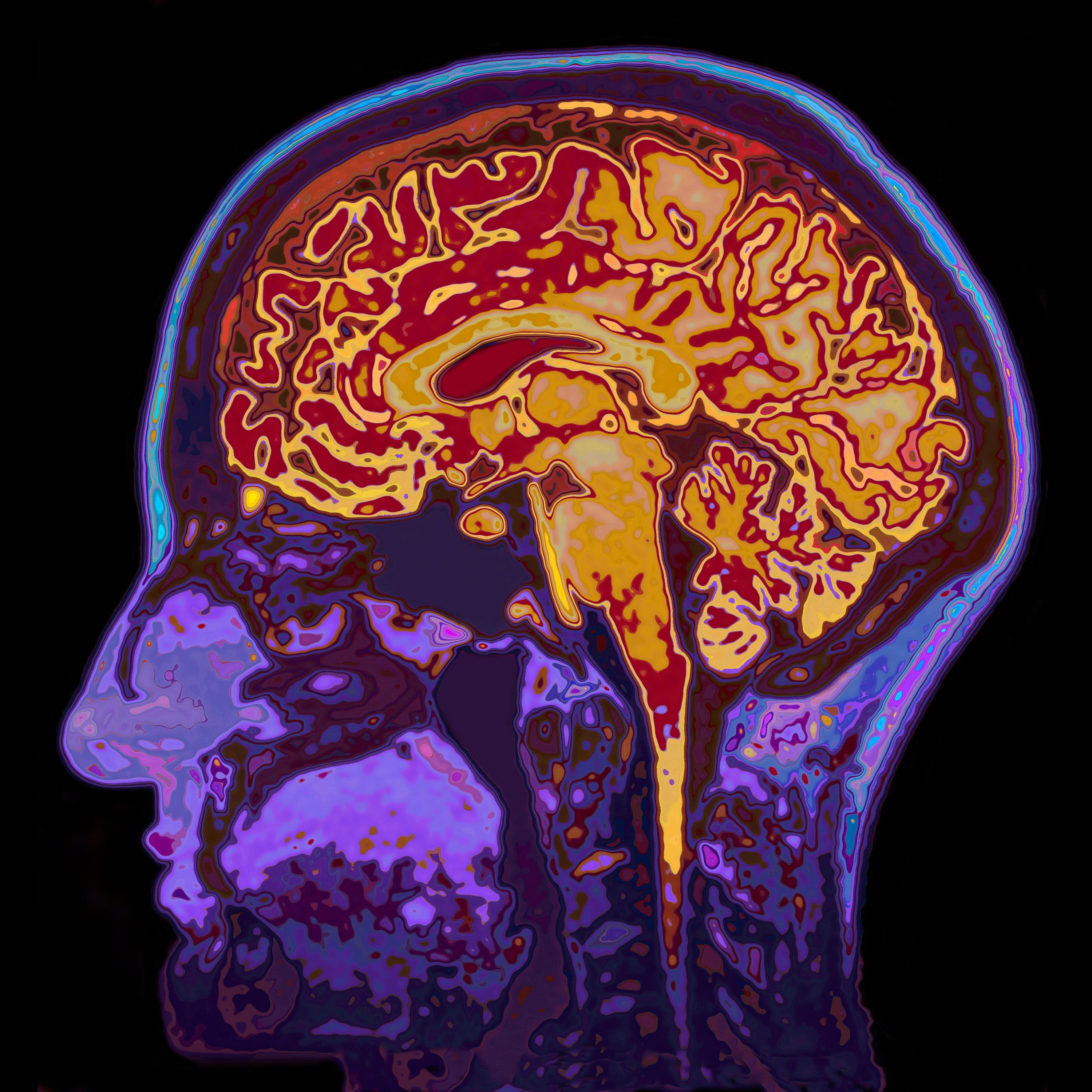
3:07How to define a memory, it kind of depends on who you ask. I'd like to think of it as a memory is experience leaving some enduring change in the brain. We know that memory will change everything from your DNA to the structure of the cells that the memories are going through, to the connectivity between brain cells, to the activity between brain cells that make this kind of symphonic-like music that end up equaling memory. so we think of it as an enduring change in the brain that experience imparts but the level that we think is the true building block of memory is one that is in my opinion still a bit of a mystery to the field but is it at the level of millions of cells interacting and producing the symphony or zooming in all the way to genetic changes that are in response to an experience and the answer is probably a bit of all of the above and in the book you often describe that enduring change in the brain as an engram.
4:05So maybe you can tell me what an engram is. Yeah, yeah, yeah. So an engram in a sense is sort of the holy grail of what we think of when we think of memory, because it's the idea that experience leaves some kind of change in the brain. And that when we recall a memory, those changes are re-accessed somehow to bring that memory back to life. So we think of an engram as the totality of an individual memory and all of its physical components in the brain. I have always wondered, how do our brains know what memories to bother storing and what memories to throw away or, you know, what memories we're not able to access?
4:44Because so often I'm like, I must remember that. And then I don't. And some things I remember and I'm like, why do I remember that? I'm so glad you asked. We certainly don't No, but I have some ideas and the field has some ideas. There's a phenomenon called state-dependent memory, which is this idea that whatever quote unquote state you're in, so like let's say a caffeinated state. I had a double espresso before this, so I'm in a slightly more caffeinated state right now. I am much more likely to recall the details surrounding this conversation if in a few years I come back into the room and it's us and I'm in a caffeinated state because that internal state is as much of a cue as the smell of a muffin in a bakery that will make me recall a memory of the past.
5:33Likewise, the memories that you form after three shots of tequila, you're much more likely to remember those the next time you have three shots of tequila. Or the memories that you form while sleep deprived, you're much more likely to recall them while sleep deprived, and so on. So I think that a lot of what we're trying to recall in Kant, even though we have the external cues, it's because our internal cues aren't necessarily matching up to it. There was this one wild study that recently came out less than a year, I think it was about a year ago. The idea was you go into the lab and you look at a screen and the screen applies like a Snapchat filter on you to de-age you.
6:12So let's say I go into the lab, I am 38 years old and I get de-aged to 15 and there's an avatar on screen of my face and I kind of got to move around with it a little bit so that I embody it and start thinking that it's me. Suddenly I'm a bit more back in that 15 year old Steve state. If the experimenters ask me about memories around that epoch of my life, I'm much more likely to recall more about those experiences and more memories around 15 year old Steve because I was de-aged and brought my internal state back to that. So I want to do the experiment of de-aging myself back to two years old, right?
6:48And trying to match the internal cues with the external cues to see if you can bring memories out of infantile amnesia or things like that. Experiments like that lead me to kind of a hot take that I have, which is that our brain encodes so much more than we give it credit for.
7:10And so a memory engram, once we've formed that, what happens to it? It's a great question because the cells that are active when we make a particular memory are not the cells that are reactivated when we recall the memory largely. Over time, as we recall a memory again and again and again, we're constantly modifying a memory with bits of new experience. Our brain is inadvertently sketching in new details into that memory and then restoring that memory for later use. So at some point, the physical identity of the cells that were active when I made a particular memory, such as the memory that I'm making right now here, when I recall the memory tomorrow, a subset of the cells that are active right now will presumably be active to help make this experience reanimate in my head.
7:59But if I recall this memory a thousand times and let the passage of time happen, like let's say I come back here in five years, I would speculate that the cells that are active in five years when I'm back here are not at all the cells that are active right now. So how is it that memories are stable in the brain? Because I have a stable memory of the guardian, let's say. And yet the cells that make up that memory are constantly shape-shifting. We know that the information is maintained somehow, but the brain kind of moves the goalposts on us every time we recall a memory. The fact that memories can physically move in our brains the longer that they're in there, it makes me think of somebody, say, with Alzheimer's.
8:41They may not be able to form new memories. So, for example, where they're currently living, but they might be able to remember things from their past, like the lyrics to their favourite song from when they were 15. or, you know, the kind of example where somebody hits their head and they know who they are, but they won't recall the past two weeks. Memories exist, I think, almost like a chain of dominoes. And then when we break an area like the hippocampus, it's like we take out one of those dominoes and the chain reaction of recollection stops. Another way I think about this too is that I think of memories as books in a library and a librarian is the hippocampus, which helps us access those memories.
9:23So when the hippocampus is damaged, this could be due to Alzheimer's or stroke or an accident. The books are still intact. We still have the memories of our past experiences, but the librarian that we need to access those books is now not intact. So on the one hand, that means that we have an accessibility issue, that we can't retrieve those memories of the past anymore. On the other hand, and the reason that I'm cautiously optimistic about where our field of memory is going is that at least in rodents, which share an evolutionarily conserved hippocampus with humans, it's one of the, to be honest, biggest success stories of the past decade and a half in neuroscience, in my opinion, which is that whether it's due to Alzheimer's or Parkinson's or brain cancer or addiction or sleep deprivation, or the one kind of amnesia we all share, which is infantile amnesia, that we don't remember what we were doing really before we were three years of age, more or less.
10:20In every single one of those cases, we've been able to artificially retrieve a memory that was thought to be lost. So that to me is pretty amazing. And it at least leads me to believe that memories might actually be a bit more unbreakable than we previously thought. But the process that might be a bit more easily breakable is the process of accessing those memories.
10:51That idea that we can even pinpoint a memory, see a memory in the brain is quite extraordinary. And this takes us on to the real game changing research that you did, because you were able to pinpoint and activate memories in mice. So tell me about this. I'm so happy you're excited about this because it still feels pretty sci-fi and like something that is just kind of unreal to say in one breath, oh yeah, we can artificially activate memories. That sounds like something that should only be possible in Hollywood or in movies, right? So the experiment was we found the cells in the hippocampus that held on to one particular memory.
11:32We tricked just those cells to respond to brief pulses of light. So it's a technique called optogenetics so that we could find cells and activate them with lasers, the same lasers that a PlayStation 5 uses or an Xbox uses, for example. We place the animal in an environment where they have no reason to recall any particular memory. They're just exploring. But we shoot light into the brain to activate the subset of cells that held on to the memory that we had given the animal the day before. And one out of the five animals that we were running in this experiment showed evidence of recalling the memory.
12:09So we thought that that is potentially amazing. And after a boatload of troubleshooting, what we found out was that the area of the hippocampus in that one animal that showed evidence of recalling a memory was about 200 microns off from where we had initially intended to activate these cells. So it was about a 200 micron mistake or maybe the width of a piece of paper that was the difference between being able to successfully artificially activate a memory or nothing. So we repeated the experiment and lo and behold, it really began working. I've got to say there is nothing like a serendipitous mistake in science.
12:49And so you're able to artificially activate a memory. But what about turning one off? What about removing a memory? Are we able to do that? Yeah. You know, I make the joke that if mice had Hollywood, eternal sunshine was possible in 2009, like almost 20 years ago, right? So Sheena Jocelyn's group at the University of Toronto and SickKids Hospital was the first group in 2009 to go into the amygdala, actually, and find the cells that were involved in processing an emotional memory. So the feeling of what happened. And rather than tricking those cells to respond to light and to activate them, they actually tricked those cells to undergo cell death after the memory had been formed.
13:37And what they saw was that by getting rid of those cells, they selectively got rid of only that memory that they had given the animals that was funneled into those cells. So their paper, Selective Erasure of a Fear Memory, was the first demonstration of being able to, with pinpoint accuracy, find one memory in the brain and erase it. Now we have what the fancy term is, we have a bidirectional switch on memory, meaning we can turn memories off on a whim or activate them basically leisurely in rodents. The big question now becomes why. Well, it's interesting you raise the film Eternal Sunshine of a Spotless Mind for anyone who needs their engram on that one jogged.
14:23Jim Carrey's character discovers that his ex-girlfriend played by Kate Winslet has had all her memories of him erased. And then he decides whether or not he wants to remove his memories of her. I think what that film gets us really to reflect on is whether you would want to totally remove memories. And actually, there's this kind of halfway house where perhaps you would want to keep a memory, but you might not want to experience and feel the emotions of a memory. So is this something that researchers like yourself are looking into, how we kind of still have the information connected with the memory without having the emotion?
15:08Definitely. And there's been loads of work, thankfully, now since 2009 and 2012 showing that we can go into the brain and say, we don't want to erase a memory. We just want to temporarily inhibit it. So, for instance, during high instances of anxiety, for instance, that we can find cells that are involved in a negative experience that are maybe a bit too hyperactive and just gently turn the volume down on their activity to suppress the emotional gut-wrenching feelings, even though the memories of what happened are still intact. So in a sense, we can very realistically deconstruct the entirety of a memory down to its components of the details of what happened, the emotions surrounding that experience, and find the cells that build each of those components and then either break them apart if we think that they're problematic in some capacity, or reactivate them to see what that tells us about the brain and memory.
16:05Coming up, how manipulating our memories could be good for our health.
16:32is a professional who needed to get it right and did. Thomson Reuters builds the technology that sharpens insights, speeds up decision-making, and powers the outcomes that matter. So when professionals act, the impact is felt by everyone. Be a changemaker. Visit tr.com forward slash changemakers.
16:57Steve, it's extraordinary to me that we're able to deconstruct memories in the brains of rodents and that may well be possible in human brains too in the near future. There are certainly plenty of sci-fi applications but let's talk about some of the ethical ways you could do this science. In what circumstances might you want to be able to manipulate memories? The short of it on my end is that this kind of research has to have an ethically bounded goal, such as restoring health and well-being back to an organism. And I think of it as, for instance, one side of the coin would be trying to suppress or erase, if the person elects to, components of a traumatic experience that might be debilitating our day-to-day grind.
17:49On the other hand, we could also say maybe someone living with generalized anxiety or depression, if there was a way of targeting certain positive experiences and turning the volume up on those to restore that sense of positivity. In rodents, again, we can do this now with the press of a button, essentially. I hope that what this does with humans is that we're not going to be doing optogenetics and lasers in the human brain anytime soon. And I don't think we have to, because in order to activate a memory, I can just ask you, like, how was your day yesterday? And then through the non-invasive magic of language, a memory or memories come back entirely.
18:30That's the basis of cognitive behavioral therapy. So if we combine that with drug-based therapy and knowing what we know about how memories are modifiable and they can be reconstructed and warped even, that we can do that in a way that is beneficial for the individual. The active act of recalling a positive experience, for instance, decreases our blood stress levels. It gets our heart rate back to a stable baseline faster than as if it was a neutral or negative memory. It activates our brain's reward circuitry, makes us temporarily a bit more creative as well for reasons that we don't yet know why.
19:07And I think this is a basis for things like gratitude journaling, which are so beneficial for us. You know, when we think of the list of things that are healthy for us, exercising and going out into the world and socializing and so on and so forth, I'd like to think of memory as part of that list with positive memories in particular being very biologically potent. Steve, I love that idea because, you know, very often I'm doing something and, you know, know, it's really pleasant. I'm somewhere nice. I've got a beautiful view. And I think, I've got to remember that. I've got to remember that. And then I don't, it's gone.
19:43You know, I would say my personal librarian is on a constant holiday. I don't know where she is. Yeah. On strike. And so it's, you know, it's quite exciting, this idea that perhaps we would find ways to be able to access those positive memories again. But you finished the book talking about how our memories change and how we update them and how that means that perhaps our identities change too and we're always going through this this sense of reshaping our minds and ourselves and I'd love to get your reflections on that you know what it really means to us to know that our memories are not this kind of stable library I think of this as we are all our own version of the ship of Theseus, where the idea is that there's a ship, there's planks that we're constantly removing and replacing.
20:36At some point, we have enough old planks that we can build a new ship out of them. And then this begs the question, which one is the real ship? Is the real ship of Theseus the one that we built out of the rotting wooden planks or the new ship that has the planks replaced? For the sake of our understanding of ourselves and our identities, I think with every experience and every memory that we have. We're slowly chipping away at some of those planks on our own ship. And sometimes there's really big planks that we need to chuck away because we're intentionally trying to change ourselves, better our daily routines, get a better night's sleep, working out or things like that.
21:12On the other hand, there, I think, are some stable planks there that might remain forever. And then that is what we consider our core, like who we are fundamentally as people. I like to think of it as it's pretty empowering because it means that depending on the kinds of memories we make and depending on the kinds of memories we recall, we can pick and choose a little bit of how we steer the ship at least. So I try to make it a point to at least enrich my life with as many positive experiences as possible because I know I'll remember them fondly. Steve, it's good to have it from a neuroscientist.
21:51Make happy memories. Thank you so much. Thank you. This was a pleasure. Speaking of happy memories. Thanks again to Steve Ramirez. His book is How to Change a Memory. And if you'd like to support The Guardian, you can get it by going to guardianbookshop.com. That's it for today. This episode was produced by me, Madeleine Finlay. It was sound designed by Joel Cox. And the executive producer is Ellie Bury. We'll be back next week. See you then.
22:29This is The Guardian.
22:39This podcast is brought to you by Thomson Reuters. The best don't just do their work. They change what's possible. Cases won, audits completed, jobs saved. Behind every one of those moments is a professional who needed to get it right and did. Thomson Reuters builds the technology that sharpens insights, speeds up decision making, and powers the outcomes that matter. So when professionals act, the impact is felt by everyone. Be a changemaker. Visit tr.com forward slash changemakers. You're either all in on this model or maybe you're building with another. You're either speed or is it security?
23:16You're either custom or are you ready to use? Or you're AWS AI. With hundreds of models, ready to use agents, speed and security built in, you don't have to pick a side. You can have them all. How will AI revolutionize your business? AWS AI. It's out.