Ask ChatGPT

 Science Weekly
3 Sep 2026 · 14m · 8 chapters
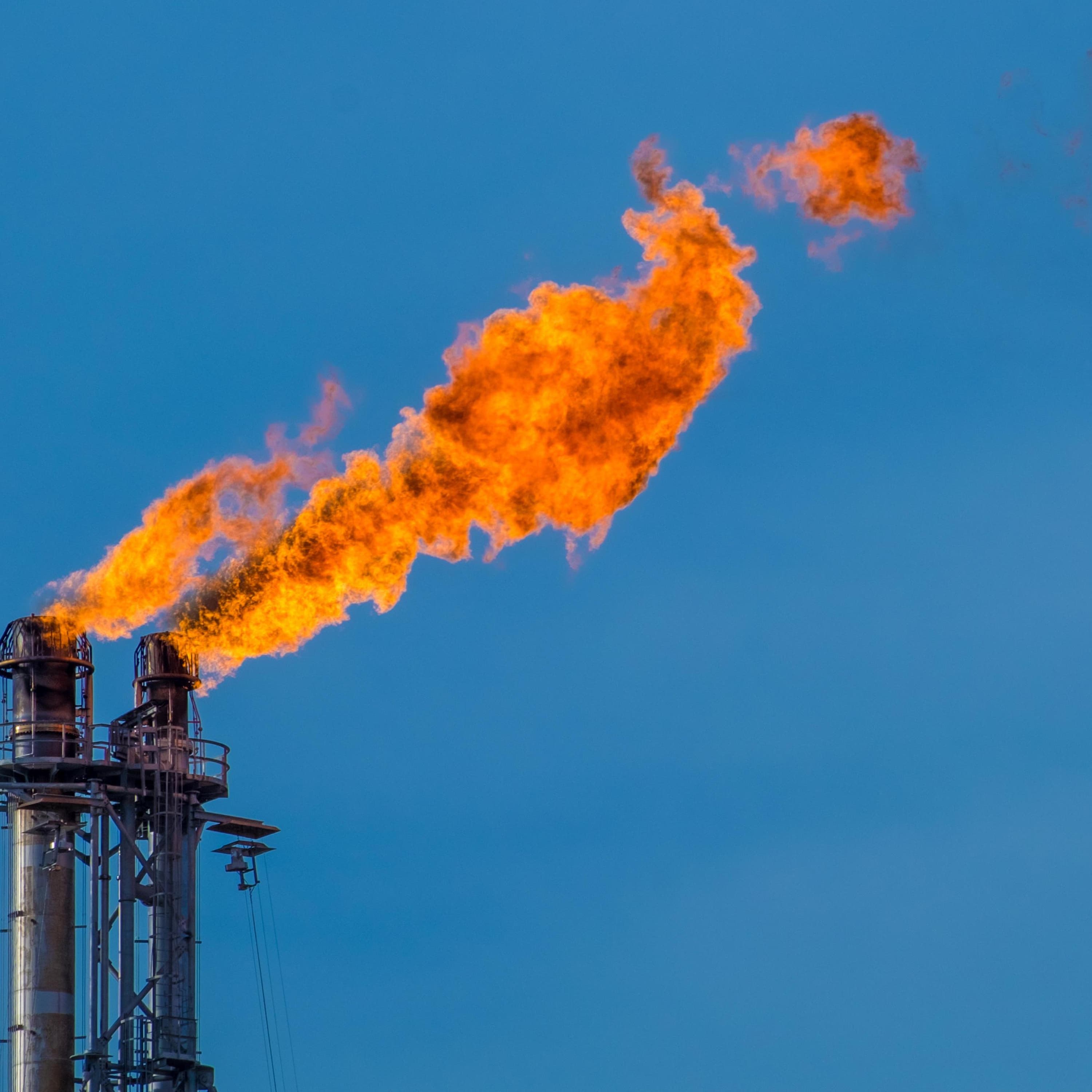
Methane is a far more potent greenhouse gas than CO2, and satellites helped The Guardian identify over 1,000 “mega-leaks” in 2023. Fixing leaks can rapidly slow warming—called a “climate emergency break.” After reporting, Turkmenistan and others began acting.
Damien Carrington, Guardian Environment Editor; previously reported on methane leaks using satellite data and interviewed experts and UN monitoring sources.
Mega-leaks come mainly from oil and gas (and some coal) facilities; leaks can be deliberate venting or accidental from aging infrastructure. Turkmenistan’s two main gas fields’ methane equaled the UK’s total greenhouse emissions. Turkmenistan fixed eight leaks via the UN’s MARS program (AI + satellite monitoring).
Turkmenistan’s Ashgabat impact; a Pennsylvania leak described as sounding like a jumbo jet; the US paused engagement under Trump; Kazakhstan/Argentina/Oman fixed leaks; Mexico engaged after a major offshore leak.
Written by AI. May contain mistakes.
Discover how methane significantly contributes to global warming and its sources.
“Damien Carrington, your Guardian Environment Editor, and you're joining me today to talk about a rare good news story about the climate.”
Explore the massive leaks identified globally and their implications.
“And that's the other thing that's really infuriating about this.”
Learn about Turkmenistan's unprecedented methane leaks and their consequences.
“They've got some very big oil and gas basins which are being exploited by the frackers, so they had a lot of leaks there.”
Understand whether countries are aware of methane leaks and their responses.
“It was followed up 150 times around the world.”
Discover the efforts made by Turkmenistan and the UN to address methane leaks.
“But the satellites are the same things that have been the eye in the sky, the things that meant they've had no place to hide.”
Examine the actions of other major emitters and their leakage issues.
“They're really talking to the UN all the time.”
Explore how journalistic efforts are influencing climate change actions.
“And just finally, Damien, you've obviously had a lot of kudos from plenty of people in the climate world for the impact that you've had in Turkmenistan.”
Reflect on the progress made and the ongoing challenges in addressing methane emissions.
“So only a few years ago, maybe 10 years ago, the maximum temperature could have risen to five degrees or something.”

Get the gist, explore an idea or ask about something said.
 Claude
On Science Weekly, what are the key points of this episode?
Searching your listeningAutomatic transcript. May contain errors.
0:00This is The Guardian.
0:12What if I told you there's something far more potent than carbon dioxide that's heating the planet? Methane. 25 % of all global warming today is down to this one gas. And around the world, mind-bogglingly massive leaks of the stuff are finding their way into the atmosphere. But after The Guardian revealed where these leaks were coming from and who was responsible, the country with the biggest mega-leaks has now taken action.
0:49So today, a breakthrough on methane that could be the start of us pulling the climate emergency break. From The Guardian, I'm Madeleine Finlay and this is Science Weekly.
1:09Damien Carrington, your Guardian Environment Editor, and you're joining me today to talk about a rare good news story about the climate. And it's focusing on methane, this potent greenhouse gas that traps 80 times more heat than carbon dioxide. We do not want to be spewing this stuff into the atmosphere, but in 2023, you showed that that is exactly what's been happening. So tell me about this. So the game changer here was satellites, right? So methane, as you mentioned, is a potent greenhouse gas. It's the same gases we use in our homes. It's natural gas, fossil gas, whatever you want to call it.
1:50And there were a lot of leaks. But until satellites, maybe the last five years or so, satellites started getting really good at spotting these. And what happened in 2023 is that I had been in touch with a company called Kairos and they had been using satellite data. And what we revealed was more than a thousand mega leaks of methane all around the world. Now, a lot of them are coming from oil and gas facilities, some of them deliberate, some of them just due to aging infrastructure. But these things are kind of crazy. Like a big one would be the equivalent of millions of gas-guzzling SUVs running all at the same time, or a coal-fired power station.
2:25And sometimes this is just like one leaking, corroding pipe, right? And that's the other thing that's really infuriating about this. And the reason I got really interested in it is that you can have an incredibly fast impact on the climate crisis. You can reduce global heating really rapidly because methane disappears in the atmosphere quite quickly just by fixing some pipes and some wells and some valves. And that's why a lot of people in the climate world call it the climate emergency break. And we really need to pull it. And where exactly were the mega leaks coming from? What kind of countries were these being seen in?
2:57The focus was mostly on oil and gas, some coal as well, leaks from those facilities. And therefore it comes largely from fossil fuel producers. So the USA was a massive one. They've got some very big oil and gas basins which are being exploited by the frackers, so they had a lot of leaks there. Algeria came up, that's a really big gas producer. Iran and Venezuela, which are also oil and gas producers and not necessarily in the business of having great infrastructure. China through a lot of coal mines and the Russian Federation. But the big surprise was one country that I'm not sure I'd ever really thought about, and that was Turkmenistan.
3:36So Turkmenistan is this former Soviet republic. It's authoritarian. It's effectively a dictatorship. It's very secretive. It's very small. But it was off the scale when it came to these mega leaks of Misan. And did Turkmenistan just have a few huge leaks or were there lots of different leaks going on? There were lots and lots and lots of leaks and they were very big. So what was the initial impact this had, particularly on Turkmenistan? So I did a second story about Turkmenistan very specifically. And in that story, I revealed that their emissions, just from their methane from their two main gas fields, was the same as the entire greenhouse gas emissions of the United Kingdom.
4:17And the UK is quite a big emitter in the global picture. And one of the experts I was talking to there called it mind-boggling and infuriating. Anyway, this story kind of went mad. It was followed up 150 times around the world. And it made a big impact in Ashgabat, the capital. I had various sources there who told me that the story had become, quote, notorious within, you know, the kind of government there. I got denounced as an agent of the foreign governments, you know, trying to denigrate the great republic of Turkmenistan. And in time, I was told that the reporting that we'd done and that international focus on Turkmenistan, which, you know, normally just bumbled along very quietly selling a ton of gas to China, really made a difference and was, quote, the critical step in making them engage with the UN and the European community and various others.
5:06And did Turkmenistan know that these leaks, I mean, do all the countries know that these leaks are happening? You said it's kind of corroding pipes and things like that. Are they aware? So it's a mixture. And of course, we don't know, right? You'd have to go ask them. But the satellites are the same things that have been the eye in the sky, the things that meant they've had no place to hide. But in the past, there was certainly deliberate venting of methane. Sometimes when you produce oil, there's some gas that you don't really want. You can't be bothered to collect it. Maybe you're a long way from a pipeline or something, so they just vent it.
5:35A lot of the time, it was just leaks, I think. In some cases, I'm sure the companies would know about it. We did some reporting from Pennsylvania, and a local there reported one of these leaks as sounding like a jumbo jet taking off. There was so much gas pouring out of the pipe, so pretty hard to ignore that. In other cases, they're probably rather remote, and maybe they didn't know about them. They do now.
6:07Well, as you say, everything got much, much harder to ignore after your reporting. It's been three years. What's happened since? So the good news I was able to report, and I was very happy to, you know, you always want to report good news as a journalist, is that Turkmenistan had fixed eight leaks. And that was a result of a UN monitoring program, which is called MARS, or the Methane Alert and Response System. So they use AI to monitor more than a dozen satellites. And then they double check the data with humans, obviously. And when they've identified a leak, it notifies the country and then waits for response.
6:41And some countries do respond, which has to include details from on the ground and also a plan for fixing it. And then the UN monitors the situation. and if over a period of months that leak has been plugged and doesn't reappear, then the UN picks it up as a successful mitigation in their words, so a successful plugging of the leaks. And that's the eight we saw in Turkmenistan. Dealing with any methane emissions is obviously really great news, but give me the context for Turkmenistan in terms of these eight leaks. How difficult is it to deal with these leaks? How far has Turkmenistan got to go?
7:20There is a long way to go. The UN called it a breakthrough, an amazing first step in terms of just showing that these things can be notified and then plugged. However, just in the last year, the UN alerted Turkmenistan to 192 leaks. But they are engaging the Turkmens. They're really talking to the UN all the time. And so I think we'll see more and more progress as time goes by. in terms of how easy these things are to fix it varies some of them are literally just on the spot repairs you go out there there's some valve you've got a bit of kit and you just fill some you know nuts and bolts it's that easy and that's why it has been infuriating that these things have continued for a long time in other cases it does require a bit more planning maybe some equipment ordered sometimes some funding is required but yeah one thing to say is that in some cases in quite a few cases when you fix these leaks you're catching more gas so you're making more money right um i think in turkmenistan's case they had so much gas it's such a rich field they didn't care they had all this aging soviet era infrastructure and they just you know it would cost a bit of money to repair the pipes or the valves or the wells or whatever it was and you know it just didn't really seem worth it coming up who isn't plugging their leaks
8:42I felt like I was cheating. It was an overwhelming feeling of guilt. The first chat GPT generation have finished their studies. Some never really started. I can't lie, I still do not feel like any of us should be getting that degree. Black Box, The Chatbots, a new series from The Guardian investigates about the strange things happening between AI and us. All episodes coming soon. Search for Black Box wherever you get your podcasts.
9:15Damien, what about the other big emitters that you mentioned? Have they done anything to stop their leaks? Well, so the big one is the United States. So they're the second, not far behind Turkmenistan in terms of having these kind of mega leaks of methane. and under the Biden administration they had started engaging a little bit with Mars and had fixed one leak. Unfortunately under the second Trump presidency that has just come to a crashing halt and they are not engaging at all not responding to any alerts and not really doing anything about it and we will definitely be shining more of a spotlight on the United States.
9:51Elsewhere the big ones Algeria started to engage quite small scale at this point but it is a big leaker. Places like Iran and Venezuela you think have probably got a lot on their plate at the moment and may not be the first place we see action or responsive even to media pressure. There is some good news. So Kazakhstan, Argentina, Oman are all countries that have fixed leaks in recent times. And in terms of engagement, Mexico, where just recently there was an absolutely titanic leak from one of the offshore facilities. They've had a repeated problem with that. They are engaging properly with the UN along with Azerbaijan, Brazil.
10:26So, you know, there's definitely movement. And as I say, it comes back to these satellites. There's no place to hide. And just finally, Damien, you've obviously had a lot of kudos from plenty of people in the climate world for the impact that you've had in Turkmenistan. And I wonder how you feel about seeing this impact that your reporting has had, because I can imagine covering the environment as you do, it must often feel like you're just sort of shouting into the wind. Yeah, I mean, listen, it's a pleasing one. I'm not going to try and hide away from that. In journalism, it's not often that you get to see a fairly clear link between the work that you've done and impact on the ground.
11:08And in this case, you know, pretty big scale stuff. Normally, you don't really hear about it, even if you are having an impact. And that's because, you know, companies and politicians don't turn around and say, well, thank you, Guardian, for making me do that thing I didn't want to do. That doesn't happen very often. Yeah, no, it's a good one. And as I say, it's nice to have some positive news in a field, which is generally rather poor. But I think we should probably maybe leave on an upbeat note, which is that not just the media, obviously, but, you know, all sorts of people around the world, government, companies, campaigners have made a difference, right?
11:40So only a few years ago, maybe 10 years ago, the maximum temperature could have risen to five degrees or something. Now that's seen as very unlikely. It's more likely that we're on track for about three. Now, three is really, really bad. In the Northern Hemisphere, we've had an incredibly hot summer. We've had the Nepal tragedy. We've had incredible rains in Asia and so on. And that's about one and a half. However, we are making some progress. Journalism is certainly helping with that, I believe. But one way to go. Well, I have no doubt that this success is going to spur you on to name and shame a few more people and hopefully, you know, get that hand on the climate emergency break.
12:20So, Damien, thank you so much. Yes, thank you. We definitely have a couple of countries in our crosshairs when it comes to methane. So watch this space. Thank you.
12:36Thanks again to Damien Carrington. you can find all his reporting at theguardian.com. You can also watch this and all our episodes on YouTube. Just search for Science Weekly and hit subscribe. And if you happen to be in London this evening, why not come along to the London Podcast Festival to join me and Ian Sample as we chat to the host of chart-topping Guardian podcast, Black Box, Michael Safie, about the topic of the new series, how AI chatbots are reshaping our minds. It's going to be such an interesting conversation, so just search for the London Podcast Festival to find out more. Hope to see you there.
13:20That's all from us. This episode was produced by me, Madeleine Finlay, and Jacob Liebenberg. The sound design was by Joel Cox, and the executive producer was Ellie Burie. We'll be back on Tuesday. See you then.
13:39This is The Guardian.
14:05Or does he just own a ladder? Listen to your home. Go with Thumbtack. Upload a photo or voice note and we'll diagnose your project and match you with the right pro for the job. Thumbtack. We know homes. Hire the right pro today.