Ask ChatGPT

 Search with Candour
9 Nov 2026 · 1h 14m · 39 chapters
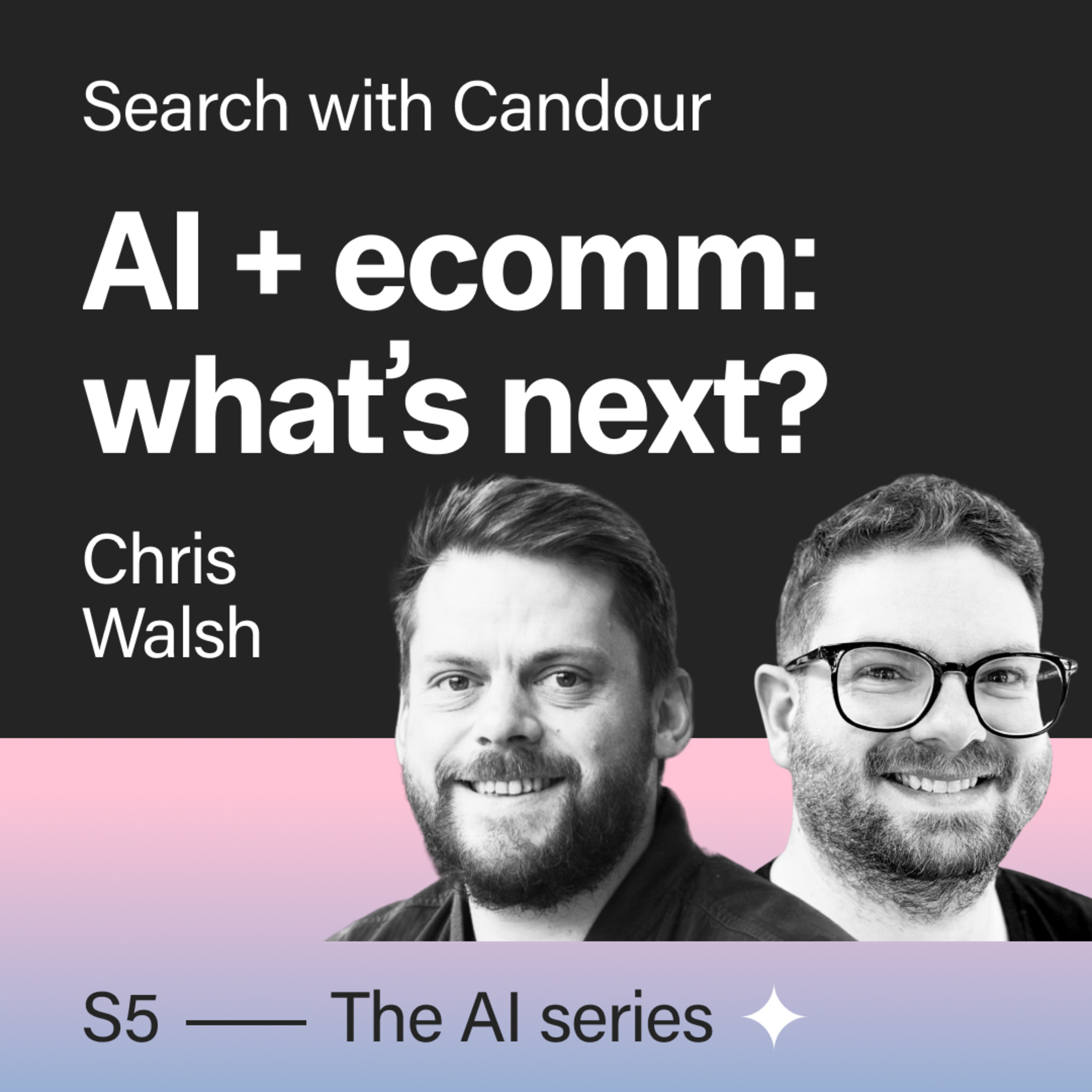
IDHL’s “State of AI Search” study on how AI search referral traffic affects e-commerce transactions—specifically whether AI-driven sessions convert at higher rates than traditional Google search, and what that means for brand strategy, measurement, and seasonality.
Chris Walsh, performance director at IDHL. Background: 15+ years in search marketing for major UK agencies; formerly known as “Chunky Dubs”; Norwich music production graduate.
Written by AI. May contain mistakes.
A discussion on how AI search is affecting e-commerce transactions and what data reveals.
“And I'm joined by Chris Walsh from IDHL.”
Exploration of the changes in consumer behavior and the evolution of e-commerce driven by AI.
“How many transactions are happening through AI search?”
The hosts share their previous interactions and the importance of their professional relationship.
“And now Chris and the team have actually got some data to look into how trends, behavior is changing and all that kind of thing.”
Discussion on the data study conducted on AI search's effect on transactions and its implications.
“My guest this week has worked in search marketing for over 15 years for some of the largest search marketing agencies around the UK.”
Review of significant findings from the data, including transaction growth and insights on user intent.
“I think we're at a level of data maturity around LLMs and AI search where we can actually come to some meaningful conclusions at this point in time.”
Analysis of the relationship between session volumes and transaction rates in AI search.
“I suppose one of the kind of pieces of that though is being pragmatic around what kind of prompt universes we're actually talking about here.”
Insight into how user intent differs between AI search and traditional search, impacting transactions.
Discussion on how AI search prompts influence user decisions and the implications for advertising.
Learn how brand clarity influences audience perception and intent in search.
Discover how search behavior differs between traditional and AI-powered search.
“And that makes our lives as search marketers actually quite easy because the query modifiers have commonalities to them.”
Understand the impact of seasonal trends on e-commerce and search strategy.
“I think travel is a super interesting one for us where we're seeing the seasonality of travel being really, really highly affected now in LLM behaviors and in referral traffic from LLMs, et cetera.”
Explore how to maintain entity clarity for brands operating in multiple markets.
“A byproduct of that clarity and that evergreen strategy is when you will have greater visibility, greater sentiment, greater, I guess, ownership or market share within peak periods.”
Explore the discussion on whether brands should create separate websites for transactional and informational content.
Learn about the importance of validating different aspects of a brand's identity in the eyes of search engines.
“But it's how do you actually validate those things, right?”
Understand how site structure and clarity can enhance e-commerce SEO and customer trust.
“It was like, you're over-complicating that, mate, was my thinking.”
Discuss strategies for e-commerce businesses to adapt their planning around seasonal product demand.
Examine how AI search impacts consumer behavior and the types of queries made compared to traditional search engines.
“There's hundreds of products in the drafts here.”
Unpack the difference between demand and discovery in search queries and explore their implications for marketers.
“Because I often think of that in terms of comparing how you would search in Google versus how you would search in LLM.”
Explore how query volume dynamics are evolving across platforms, not just Google.
“everywhere and that query volume is growing quicker in other places than it is in Google but Google query volume is still growing.”
Examine the relationship between impressions, click-through rates, and perceived demand.
“or Google's declining because it just fundamentally isn't.”
Discuss the challenges and expectations of data transparency from Google and its impact on SEOs.
“That was one of my favorite episodes we did.”
Delve into the evolving landscape of advertising data and Google's priorities for advertisers.
“That is what makes Google over a quarter of a trillion dollars a year.”
Investigate the implications of lacking prompt data in advertising and its effects on analysis.
“And it was kind of, do we think Google will give us more data?”
Discuss trends in subscription models and their impact on user experience and monetization strategies.
Analyze changing value exchanges in digital platforms and their implications for content creators.
Review a recent legal case that highlights the nature of the publisher-Google relationship and expectations.
“If indeed there is still an opportunity across all these platforms to be an organic result, right?”
Discussion about Google's legal issues regarding traffic agreements with publishers.
“I think is hilarious in how blunt it is and how like, yeah, you're not wrong, kind of accurate it is.”
Exploration of the implications of AI search on traffic to publishers' content.
“I know we're often a bit of a tangent, but I think this is still very relevant when it comes to what we're seeing in the shift of AI search.”
How agencies can help clients navigate changes in digital marketing strategies.
“I mean, Giga don't tend to listen to regulatory bodies that much.”
Discussing the role of data in improving SEO and marketing strategies.
“I think that's been a huge focus for us in terms of...”
Sharing actionable tips and recommendations for listeners to improve their marketing.
“And I guess that just comes back to that guide piece, right?”
Discussion on useful tools and insights for search marketers.
Sharing personal music and book recommendations outside of SEO.
“I think that's a good couple of recommendations.”
Information about upcoming events and networking opportunities for listeners.
Learn about the importance of network data in understanding search trends.
“insights and things you can get from actually looking at your network data.”
Explore strategies for making informed predictions about the future of search.
“actual strategies for looking at things like forecasting and looking at what might be happening in the industry.”
Discover how to track and attribute traffic from AI search using GA4.
“you can do now and some common pitfalls to avoid as well.”
Uncover how AI is influencing digital PR strategies and tactics.
“you're doing it for your website or whether you're doing it for clients as well.”
Anticipate upcoming episodes with notable guests discussing AI and search technology.
“digital PR team and how that shifted and the kind of things you should be doing and you should in 2026, heading into 2027 as well.”

Get the gist, explore an idea or ask about something said.
 Claude
On Search with Candour, what are the key points of this episode?
Searching your listeningAutomatic transcript. May contain errors.
0:00Chris Walsh: Do users actually convert at higher rates in AI search compared to traditional search? And what does the growth in transactions from AI search mean for you and your business? These are the questions I'm looking to answer on this week's episode of Search with Canada. And I'm joined by Chris Walsh from IDHL. I think we're at a level of data maturity around LLM and AI search where we can actually come to some meaningful conclusions at this point in time. I mean, I think one of the key takeaways was session volume obviously growing quite quickly in terms of referral traffic from their lens, but transactions from those sessions growing even quicker.
0:34The value exchange was, I give you content, Google, and in exchange, you're going to give me traffic. And that was a value exchange which worked for everyone. It worked for audiences because audiences got good content. It worked for content generators because they got traffic, which they could then monetize into either sales or advertising revenue. and it worked for Google because they're drawing all those users to their search engine, which then they can then turn into their own advertising revenue. The fabric of that commercial model is breaking down, not just in LLens, but in search engines as well.
1:09Chris Walsh: Hello and welcome to this week's episode of Search with Candor. I am Jack Chambers-Ward, your host as always, and we're still in season five, all about AI search. This week I am joined by Chris Walsh and we're going to be talking all about how AI search has affected e-commerce. How many transactions are happening through AI search? The team at IDHL and Chris did a fantastic study looking into a lot of data from this kind of thing. And it is a really, really interesting combination of statistics and data that Chris and I get into over the next hour or so. I think there's a lot of telling stories and statistics that will hopefully give you some insights into what you should be thinking about when you're thinking about e-commerce, combining that with AI search.
1:57Chris Walsh: I've actually known Chris for a little while. I moderated his speaking at Brighton SEO a couple of years ago, and we've been friends ever since. And it was really nice to have Chris on the show to actually sit down and have a conversation and really get into some data around how e-commerce is shifting and the growth of transactions and people buying stuff through AI platforms. Of course, we've seen a lot of that discussion from ChatGPT and Google and adding all of these shopping features to AI search. And now Chris and the team have actually got some data to look into how trends, behavior is changing and all that kind of thing.
2:33Chris Walsh: it's a very interesting conversation and I think you'll really enjoy it and find it very insightful if you haven't already though before we get to my conversation with Chris please do like and subscribe if you're watching on YouTube give us a like give us a rating give us a comment if you are watching or listening on Spotify and give us a rating on Apple Podcasts or wherever you are listening to this I hugely appreciate every comment and I reply to every single comment no matter what platform you're commenting on had some really nice feedback and some really nice conversations in the comments recently about AI search and conversion rates and all this kind of discussion about strategy and tactics and it's really really cool to get a chance to talk to you guys and and have these kind of conversations in the comments so if you do have any questions for me or the guests or any requests for upcoming episodes or anything like that please do let me know in the comments down below okay without any further ado here is my conversation with Chris Walsh all about transactions and e-commerce and how that is growing in AI search.
3:40Chris Walsh: My guest this week has worked in search marketing for over 15 years for some of the largest search marketing agencies around the UK. He's a fellow Norwich boy, a music production graduate and is formerly known as Chunky Dubs. He is the performance director at IDHL. Welcome to Search with Candor, Chris Walsh. good afternoon i don't know when this is getting released good afternoon good morning hi jack it's morning right now so we'll say we'll stick with the morning mate how are you man how are you very good i'm very good how are you yeah doing all right thanks i'm excited to have a chat it was really nice uh when you guys reached out and i was like i know chris because i moderated and introduced you at Brighton SEO last year.
4:24Chris Walsh: So I was like, I recognize Chris's name straight away. And I know you and I had a few chats. You know, we caught up and had a few chats in Brighton. It's lovely to sit down and have a chat with you because we've got some pretty juicy stuff to talk about, right? Yes, absolutely. Yeah. I know you and the IDHL team have done a state of AI search study, which you very kindly sent over. And there is some pretty interesting data. I know you and I were talking before we started recording about obviously how much the industry is changing how we're handling it as agencies and things like that and i think credit to what you and the team have done there when it comes to that study of picking out interesting bits of data and how you know they affect us at the moment what was kind of the thought behind doing that study now and kind of getting the data and and getting a kind of broader scope of the whole thing, I guess.
5:20I think we're keen to run some data around this at this point in time. I think we're at a level of data maturity around LLMs and AI search where we can actually come to some meaningful conclusions at this point in time. I think as well, there's been a lot of theoretical chat around AI search and LLMs in our industries and start to ground that into data is a really useful exercise for us as an agency, for our clients and for what we do. And one of the things we really wanted to focus on as well was largely a lot of the conversation on LLMs is one of discovery, which is obviously a hugely important part of how users use those types of platforms and their kind of overall journeys.
6:07But I think there's also kind of a real kind of transactional opportunity for brands as well in LLMs. I think starting to focus on some of that data and that opportunity was something we're really keen to explore as an agency.
6:18Chris Walsh: Yeah, the transactional stuff, as I mentioned to you earlier, I think it's a particularly interested thing to get into because I feel like so much of that conversation has been focused around how the informational side of things has been shifting, right? Obviously, the way users are searching, the shift towards a more conversational style when we're using LLMs compared to traditional search. But actually, the transactional side, for me, is where the juicy stuff happens. There's a phrase Mark has said a few times in terms of the divergence and diversification of search. There's still the same money being spent online.
6:56Chris Walsh: People are still buying stuff online. It's not like people are suddenly, oh no, we're all going to go to the high street. People are still buying stuff online. Just because fewer people are using Google doesn't mean they're not buying stuff. So the money is there, which means exactly as you said, we're starting to get that data now we've been what 18 months ish or so with things like chat gpt search ai mode all this kind of stuff i we're in that phase now like you said where we can start getting that first bits of year-on-year comparative data all this kind of stuff i know you guys did a pretty broad study across was it 20 industries seven different brands 70 different brands 100 and something yeah for yeah yeah updated to actually come to some meaningful insights um but yeah i mean i think one of the key takeaways was this and we all know we were chatting about this before was session volume obviously growing quite quickly in terms of referral traffic from lms but transactions from those sessions growing even quicker um which certainly feels like a reflection of the intent of some of those audiences which live within LLMs and that is kind of high intent transactional sessions to our client sites.
8:16I suppose one of the kind of pieces of that though is being pragmatic around what kind of prompt universes we're actually talking about here. If we're talking about audiences who are actually fundamentally referral traffic direct from LLMs, the types of prompts and the types of answers which are surfacing and then therefore driving that traffic will be kind of more high intent in their nature i know we're going to talk about it a bit more but there is obviously a much much larger piece at play here which is fundamentally not going to be driving those sessions um but yeah i think like yeah it feels like a big opportunity and certainly for certain pockets of our clients certainly e-commerce we're seeing some pretty incredible growth in terms of actual kind of transactional revenue from these platforms
9:04Chris Walsh: yeah some of the data a couple of bits i've pulled out as kind of the the key numbers was uh so this is over a 30 month period as we mentioned across multiple different containers across multiple different industries and brands transactions rose by 553 percent yeah and that is an enormous number slightly lower but still pretty impressive ai attributed revenue grew by 312 percent and also as you mentioned earlier comparing that to the session side of things that increased by 392 percent yeah so it's it's obviously it's huge increases across the board right but i think that transaction increase stood out to me rightly as you said just there where it feels like there is certainly a shift towards more of a i would say more focused intent i guess a higher intent clearer intent kind of search would you agree is that is that kind of data overall i do think it's always important as well by the way to contextualize percentage increases because you know 500 increase from one to five is probably like okay we've now got five transactions great but it's still a 500 increase but i think we are actually seeing a lot of our clients data now but there is a uh a significant enough amount of kind of session and transactional data there for those uplifts to be commercially meaningful uplifts kind of thing and not being one to five kind of thing and in terms of that intent i think one of the interesting developments is certainly kind of how llms navigate into more advertising environments and what that means is how both users behave but also what that means in terms of the types of answers which those llms provide and there's actually really interesting talk uh here i come from a chap called harold emir he's from similar web and his it's basically a load of analysis into how many prompts typically users have within a conversation with an llm and how quickly that will move into kind of higher intent prompts and higher intent answers and i think that's something we're seeing increasingly with our clients is where even if a uh a conversation with a large language model starts in a relatively kind of discovery part of the phase that that that conversation can quite quickly build into intent and actually lms often will give you kind of prompts back to drive that intent say you might kind of go and prompt an lm around okay i'm near the end of my pcp on my car and starting to evaluate my options are something very very broad very information i don't know what i really want to do and quite quickly it might start saying oh do you want me to recommend some dealers near you kind of thing um and often if you say yes the answer will be quite indicative of a serp in a search engine where it's a list of dealers near me with links to their websites right and and i think that potentially can only increase as they try and evolve these into more advertising platforms because in effect, if they want to make these viable advertising platforms, they do need to actually create some demand intent within these platforms alongside that kind of discovery intent.
12:28Chris Walsh: Yeah. I think that's a really interesting point where you have the, I guess like you said, the prompts leading you through that journey. That journey, yeah. That is not what you would have traditionally in search. You don't get that reply in the same way, right? You would get results and maybe you would go to an article or click through or whatever. Maybe you would get a top 10 dealers near you or whatever. But for me, I think that's an interesting thing to point you in a certain direction. And, you know, credit where credit's due, that can be very helpful. However, that could also lead you in the wrong direction as well.
13:09Chris Walsh: Actually, no, I wasn't looking for that sort of thing. and you've been led down a path and i feel like i'm not heard many people talk about that kind of thing where you know we talk so much about search intent from a human perspective but how much are those prompt replies actually influencing driving to go in a specific direction and driving that influence yeah that's a really interesting thought yeah no absolutely i think um that's probably only going to continue and actually hopefully like as those advertising platforms evolve in llms we get more data to understand actually what those prompt universes actually look like how people are actually behaving what kind of impressions and sessions we're getting around different topics and i think the real focus for us with a lot of our clients there though is like you said it's like okay well sometimes i'll give the wrong recommendations or like sometimes it says the wrong things about our brand or our clients or how we want to be perceived and actually that kind of clarity of what you want to be as a brand what you want to be known for is like more important than ever because that's what then actually gives you the building blocks to sort of start to create that entity clarity and start to really kind of drive that tone which then can kind of build that kind of higher intent around topics and products which you actually want to be known for and have a certain kind of perception of those to your audiences and indeed in large language models.
14:46Chris Walsh: Yeah, I think there's been that kind of broader discussion where typically AI search traffic is clearer on its intent, is higher intent by default than traditional search traffic because you tend to go through that process right you're having conversations you're going through that oh yeah but what about this exactly yeah yeah you go through that process i i've totally been i i think of the way i can't kind of use llms and ai searches is very comparative searches if i don't like you if I don't really know what I want for example I was trying to find new lighting for the podcast studio here yeah I wanted something that well I was talking to our creative director because I use one of the meeting rooms when we record in person I was like if we can find studio lighting that doesn't look like studio lighting it looks like a nice lamp but is directional enough and bright enough and I can control so I can have it studio lighting but I don't have to pack the whole down a packet up again how the hell would you do that on a google search like nice looking lamp that also works yeah for a podcast studio i guess like so i i was trying to think like how on earth am i going to search for this thing and it's like i don't know and i often find myself going for that kind of comparative search of like i'm looking for this kind of thing what what would you recommend give me five examples give me 10 examples of things like you said it ends up almost looking like a little bit of a sub but i find i often get like tables and stuff yeah it includes like here's comparing all the different details and stuff like that which is obviously pulling from things like product feeds and things like that yeah have you found that kind of thing when it comes to that kind of specific searches i think for me that says pretty high intent but it's not that direct transactional stuff it's still in that research stage right yeah yeah but i mean i I think there's something which I spoke about, actually.
16:50The talk at Brighton Machine Moderator was this kind of, this like, almost like how LLNs collapsed that kind of funnel, which we'll also use to, and particularly when we look at Google query behavior and how audiences interact with Google is, we're all really, really highly trained on how to engage with a search engine. And that makes our lives as search marketers actually quite easy because the query modifiers have commonalities to them. So if it's kind of higher funnel intent, it's often what is queries kind of thing. As we move down to more transactional intent, it's product names, it's buy, it's location modifiers.
17:26But actually, our audiences are all highly trained in what modifiers to put into a query to get the results they want back. When you think about how kind of users interact with a better lens, it's much more divergent, right? The way you are going to ask ChatGPT or have a conversation with ChatGPT is different to myself. However, the topics remain the same if we're both trying to have a conversation around the same topic.
17:57This kind of thing of you can have quite broad, unqualified intent, which actually an LLM will unpick that quite quickly and get to the bones of what it is you actually want and start making recommendations on that.
18:11Chris Walsh: Yeah, I think that is often where I find the discussion around using personas to try and understand prompts. I think what works better for more traditional search compared to obviously now we're getting, not even getting into the personalization of search because that is an inevitable thing that is increasing massively, obviously, even as we get things like search intelligence and tying in what you searched on Google Maps, what's in your Gmail, what's in your calendar is now affecting the search. But using me and you, Chris, as an example, both from Norwich, both work in SEO, both like music, like we have a bunch of crossovers.
18:54Chris Walsh: In theory, we could search for a bunch of similar stuff, right? But you're totally right. The way we would search for something would be different. And I, like from the data I've seen, from the conversations and kind of thinking through in the way that I search, it would have been more similar five years ago because again like you said you and i having worked in this industry for a long period of time and being you know users of the internet you kind of know how to google something do you know what i mean yeah you know the the little tweaks yeah but that's not the reflection of us have been search marketing professionals that's just a reflection of us like my dad's 71 he knows how to google stuff right yeah exactly even a similar way to other people in terms of the type to query modifiers he would use to get the types of results he wants in a totally unconscious manner it's not a conscious behavioral thing to be like oh i need to do this and think about that it's just we all just know how to do it right yeah and i think that is what i find most interesting in terms of the kind of queries like you said the the prompt universes we're thinking about now that is diverging massively even as i said you and i cross over in a few interests quite a section of our background like vaguely in like career and all this kind of stuff like we're in the working in the same industry all this kind of stuff on paper our personas would cross over in a event but the way you and i would word something you have far more far better knowledge for you know your electronic and dub music compared to my heavy metal or whatever you know that kind of thing right yeah the way we would say if you're looking for music equipment you would search a different way than i would because i may be looking for a guitar thing whereas you're looking for you know dj equipment or whatever it is right yeah yeah in theory on paper in as a persona you and i look similar but i think those are growing more and more divergent by the way we search for things and the way that things and i think some of the stuff i found interesting as well which i've not really seen from any other study was the seasonal side of things as well yes yeah you guys brought in some seasonal data which i don't think i've seen in any other study where it came to obviously seasonal stuff as we talk about this in e-commerce and again that is something that is so affected by the person who is searching oh am i looking for a summer outfit am i looking for travel stuff am i going on holiday am i doing this doing that that kind of thing how do you think that i guess the the seasonal nature of all and the conversational nature of it how much do you think that affects our kind of thinking and our kind of planning for e-commerce stuff do you think we because i know having conversations with a lot of e-commerce clients over the years some of them really focus on seasonal stuff you kind of have to for certain industries right yeah has that has that shifted do do we need to rethink that at all when it comes to AI search compared to traditional SEO?
21:56I think to... Yes and no. I think travel is a super interesting one for us where we're seeing the seasonality of travel being really, really highly affected now in LLM behaviors and in referral traffic from LLMs, et cetera. For me, the question here is, one, thinking about how different large language models and platforms work. they all work off different knowledge bases. And so the way perplexity surfaces and comes to its answers is actually really, really different to ChatGPT, which is really, really different to Claude. And so there's a question there of like, if we are trying to ultimately influence those knowledge bases to appear more frequently with better sentiment within those answers to better understand how each of those individual knowledge bases are what they actually are.
22:53And then when you think about those knowledge bases, how all of our citation algorithms actually differ quite largely as well in terms of where they put emphasis across institutional citations, community associations, lifestyle citations, whatever it is. And then actually how that's incredibly different, not just by vertical, but often by category. So again, using travel as an example, if we look at the Citation universe, which is driving our luxury clients, that is so, so different to maybe a fly and flop cheap beach holiday kind of thing. despite the fact that they both are travel operators, both trying to influence being visible in the same platform kind of thing, which is a totally different ballgame to SEO 10 years ago where, broadly speaking, regardless of vertical category, etc., your off-site tactics and strategies may be quite comparable kind of thing.
23:50So I think that's one area is how we need to think about the different platforms and what you need to be doing in terms of influencing those knowledge bases over time. But I don't think it's quite as simple as like, oh, you just need to plan your content this many months in advance of your peak to be visible in the LLN for a topic. I think it goes back to this kind of actually having more focus and clarity on what you want to be known for in the first place and how you want to be perceived around those topics as a brand or as a product which you have as a brand. and that's an evergreen strategy.
24:28That's not necessarily a seasonal strategy. A byproduct of that clarity and that evergreen strategy is when you will have greater visibility, greater sentiment, greater, I guess, ownership or market share within peak periods. And actually, if you can understand that, if it's like, right, okay, if I'm a travel company, what I really, really want to be known for is our multi-center Thailand breaks. Well, that's what we need to focus on in terms of our entity clarity as a brand and how we're perceived by our audiences and LLMs. I think the real challenge for this actually is how brands can navigate being almost multifaceted in terms of what they're known for.
25:15So like an interesting example of this actually is we're working with a finance client who has really really great share of voice across lms and search engines for bad credit terms and bad credit topics within those spaces and they're very very established in that space but their broader commercial ambition as a business is to move into more kind of prime lending spaces so i kind of competing with banks now the question with them is one of like is this and or is this or like if we want to give an llm entity clarity of what that finance brand is can they actually be both the prime lender who is comparable to a bank and also the bad credit lender or actually do we need to provide that can you only really have entity clarity to be one thing as a brand I think we can do both by the way we're working on that client as to how we can create content strategies and separate citation strategies which allow them to have enough separation in terms of those areas to have genuine clarity and propositions which make sense to be visible in both those areas but again that's probably a challenge which we didn't used to have with search engines where it's maybe a little easier to gain traction and gain like keyword visibility across multiple product sets or multiple audiences through kind of content creation or the right site structure etc which is now more complex and harder to do in AI environments.
26:53Chris Walsh: Yeah I think entity clarity is such a great way of wording it because I've heard so many people obviously we were talking about brand as the big buzzword for like a couple of years now it was i think was the the previous season of this show where we had everybody's talking about brand everybody's talking about brand it's like over the last you know 18 months or so it's been brand brand brand and so much of it has been like yeah that's marketing welcome to marketing yes this isn't even digital marketing this is like yeah a hundred years ago get people to talk about the thing that you do i'm like yeah no shit yeah marketing what are you talking about of course you want your customers to talk about your products nicely like who doesn't but the way you put it there i think is it gave me a couple of uh things to pull on there and a couple of ideas because i've had conversations with clients before about is it diluting the brand or losing that clarity in terms of yeah chris is known for this jack is a podcaster and is known for this and do I want to be known as a podcaster and an SEO and a voice actor and a bass player and all about like like how many different things do you want to be known for and I weirdly it's going to sound like weird I saw an Instagram reel this morning where a guy was giving SEO advice on a podcast I'd never heard of and I was like I'm very skeptical of this and he suggested creating separate websites for transactional and informational stuff so like essentially you would have an econ brand and if you're doing like thought leadership type stuff you publish that on a separate site even a separate subdomain or something on a completely separate site so you like sub brand it in a way to i guess in theory to to tie it to what you were saying there gain that clarity and division between the two sides of things of like so are you an advisor about financial stuff or are you a provider of lender services and da da da da right that kind of thing yeah yeah and i i'm not sold either way i this is literally me me saying i saw this on instagram this morning like i have not seen any data for this or any the guy seemed very convinced but funnily enough dudes on seo podcast talk a load of bollocks and welcome to the show everybody like i just because i saw it on instagram doesn't mean it's true i thought it was an interesting thought though and like you said you mentioning that clarity and having your brand clearly standing for one maybe two things and like you said so many companies we work with you know i'm sure you've had the similar experience you're mentioning there with the finance client of like you're really known for this thing and you do really well yeah but our commercial focuses on something different else why have you had those kind of conversations about you know with the brand teams of do we need to segregate this out do we need to separate it here do this thing like how that clarity is kind of no more focused what i would say on that there is like using your example of like yourself as a person you can be multiple things right you can be an seo I am a multitude, yes.
30:01Yeah, yeah. A person is just one thing. But it's how do you actually validate those things, right? So if you say, right, I'm an SEO, I'm a podcaster, and I'm a bass player, we are doing something right now that validates I am a podcaster because we are doing a podcast, right? And whether it's search engines, LLMs, they can understand that. they can look at that and say okay here's a bunch of stuff which validates for jack when he says i'm a podcaster this validates that that this provides entity clarity here's all these other third party citations saying hey go look at this podcast i'm not saying this is the truth but maybe i'm a bass player maybe there is not so much validation of that as as in terms of anymore i haven't been about it a few years mate yeah honestly yeah so uh that's not to say that you are not a bass player But that is to say that if you wanted an LLM to say, hey, Jack's a podcaster, an SEO, and a base player, you probably need more entity validation of that element topic, right?
31:05So it's not that you can't be multifaceted or that they can't understand that. It's just that you need to validate those things. So I think you'd probably, I mean, for a practical sense, I kind of, yeah, what the guy who talked about was saying around stepping out into more clear structures around separate domains and stuff. but I think you can probably be less explosive in terms of how far you need to go.
31:30Chris Walsh: It was like, you're over-complicating that, mate, was my thinking. I was just like, I have worked with e-commerce brands for nearly 10 years at this point where I did a whole thing. Was it my, it was SEO in 2024, I think, was my like, you should be doing informational content for your e-commerce brand and proving you know what you're talking about. like you know even post-purchase stuff of like customer retention stuff of this is how the how to care for the product now all this kind of stuff right and i think separating that off to me would maybe even like i don't maybe dilute's not the right word but i would almost want to see that connection like oh yeah it's the same company that sold me the things you're breaking is advising me to keep the thing longer and you know because so many brands would just be like oh yeah it wears out after a year so you can buy a new one actually no they're looking after me they're looking after the customer they want me to keep this thing and that kind of i see that as a trust signal personally so i i was interested to get your take there and i think i agree with you it's kind of that feels a bit over complicated and like you can use a subdomain mate you can use a you can use a like there's much easier way to do it than like here's a separate entire publishing arm of our brand.
32:44It's still this foundational stuff around just thinking around site structure, internal linking structures, etc. to create from a technical point of view, clarity as to what content relates to what and the purpose of that different content. And that's where and this is not an A, I think, again, this is still foundational things. That's where things like schemas and everything become really, really important is giving machines the signals and the structure to understand what the hell you're actually trying to be perceived about yourself and about your content and how those things relate to one another um so i think yeah there's probably much easier ways to think about like site structures or thinking structures or use of things like schema to create greater clarity of how content or how propositions relate to one another or or indeed are separated from one another yeah definitely and going back to the
33:40Chris Walsh: seasonal stuff we were talking about you mentioned not having to do a significant kind of like oh we need to be doing this certain months in advance like an old e-commerce client of mine and you always had i think they did it's almost like two-thirds of their annual revenue at christmas time it was like yeah by far and away their biggest thing so it was as soon as we said oh hey can you start you know making changes to the website that stops in september yeah we are not touching anything from september until january because we are focused on this thing i'm like right okay that's good today and when it comes to you know we we mentioned earlier how all these different ai platforms are pulling from different sources obviously we have things like training data so i hadn't really thought about this and again like i said until i saw the the study talking about seasonal transactions and seasonal e-commerce data for ii search i was like hold on a minute if you've got training data that is not necessarily as fresh as a traditional serp would be usually usually google's pretty pretty hot on crawling new stuff and getting it there if you're if you're good and big enough and you've been indexed and all that kind of stuff do you think that you know the nature of llms pulling from for an older data training data and things like that does that mean we have to shift the way we think about seasonality do we need to be trying it further in advance or just think about it evergreen or like is there a change that needs to be made there yeah and i think it is thinking about everything but just to be clear i think you raise a good point that we're not talking about an advertising strategy here where it's like okay like look if we're running media services for a client obviously we're going to be doing lots of kind of pre-planning or peak pre pre-peak planning around what we want to be doing but fundamentally it's like we advertise in peak whereas much like any kind of organic strategy but you do need to compound that visibility over time so it's not a case of sort of saying to a client oh okay oh yes it's christmas next week we should probably think about how we like make sure you keep on the lens right the equivalent of buying the present in the garage on the way home um but like fundamentally if we know that um that that's kind of more of an evergreen strategy for me where that maybe is slightly more nuanced is if you're working with like a retailer who has specific categories which have real kind of peak intent around those categories which where that kind of intent and that demand does not exist in other times of year and then maybe we want to be thinking about how we're actually planning those contents and how we're ensuring that we're kind of building up into those peak periods but um you know i guess it's i guess it's just that kind of prioritization things that if you're working with someone who has a very very large product category loads like tens of thousands of SKUs you can't be proactively optimizing or proactively working across that at all times so you do need to be thinking about how you actually then plan in practically to build to to the right products in in the right times yeah I think that that was kind of where my thought process is going in terms of you know working with e-commerce clients and thinking about I had I remember having a conversation with a client I think it's two or three years ago now where they would essentially turn off or like i think it was on woocommerce they would put it into draft essentially like oh it's a christmas product put it into draft like you know that 404s right like yeah yeah it's not an it's not an evergreen strategy they were pretty pretty uh like young in their experience with seo and stuff so we i we had this conversation i was like something i would never think to look at was like the drafts in the back end of WooCommerce and WordPress.
37:39Chris Walsh: And I was like, hold on a minute. There's hundreds of products in the drafts here. Are they old? Are they? And they're like, oh no, we'll turn them back on in a couple of months. And I was like, whoa, hold on. Put them on now, make sure you have them. Even if you're not like, as you were saying there, like have that site structure and things like, from my experience, adjusting the main nav being a thing of like, oh, now in the main navigation, it has a Christmas section. Those pages are always live. They're always there. You still find them in search stuff. You're not de-indexing them or 404ing or 301ing or 410ing or anything.
38:15It will bring in the prominence into the now. Exactly.
38:19Chris Walsh: Especially you're not losing all the backlinks and all the trust and authority you've built previously. It's like, oh, suddenly this new page has come out of nowhere. Actually having that stuff all year round, even if you make it less accessible when it's not relevant, for me has been a big thing and this is not even talking about ai search this is like i said this was a few years ago before ai search was a big thing for me that makes the most sense as well to again make sure you're in that long-term planning process where you're always kind of in that evergreen always kind of thinking strategically and not just like as you said flip-flopping yeah yeah and i think even if you have a product which has very high seasonal demands we think about the kind of less around ship like visibility or share voice but more around kind of a sentiment and salience of that product then we want that sentiment and salience to be positive and correct at all times of year like yes it's more commercially critical but it's strong in peak trading periods but it needs to be right at all the time kind of thing yeah definitely definitely something else i wanted to kind of again getting into the data here because i think the the numbers we talked about earlier in terms of the the growth of ai search versus the growth of organic search yeah when i was talking earlier and you also touched on it as well the the way we search changing how much of it do you think he's i guess cannibalizing traditional Google search in a way, or is it people are searching in a completely different way?
40:00Chris Walsh: Because I often think of that in terms of comparing how you would search in Google versus how you would search in LLM. Am I doing that instead, or is it the only way I could have done it? Is it a brand new thought, and I couldn't have done that in Google? Do you think we're seeing an element of cannibalization, or is there – this is just an expansion of the total query set, I guess. Yeah, absolutely. I think this is like the absolutely critical question here is how you separate demand and query volume and how those things are not one of the same. So just because there's more queries does not mean there's more demand.
40:38There was a McKinsey study report recently kind of looking at how many interactions customers made to make a booking decision on a holiday and how that's increased 50%. I think that's a really, really good example that there's 50 % more queries, but that does not actually mean there's any more demand it just means that people are making more queries to make the same single purchase and where so there's that which is like okay just because people are searching more searching more places doesn't mean there's necessarily more actual commercial demand around a product or around a category and but i think there's also the where there potentially is when you think about that cannibalization is the difference between discovery and demand.
41:30And our sense is that actually Google still holds a lot of demand intent in terms of queries, but maybe has been losing some of that discovery intent to other places. And not just a lens, but social search, et cetera, et cetera. but Google query volume is still growing so it's not like Google is shrinking I think there's just an explosion of query volume everywhere and that query volume is growing quicker in other places than it is in Google but Google query volume is still growing. I think one of the things that's really interesting to do is to look at like AdWords query reports, because I think that really starts to unearth and validate the kind of those changing queries within Google.
42:28And certainly something which we see with a lot of our clients is just how much more qualified those queries are, because that person has been doing research already elsewhere. so that by the time they end up on a search engine, the query itself is so qualified, so specific, because they kind of know exactly what they want at that point, kind of thing. So that's not that those places are cannibalizing one another. It's just that those things are maybe happening in more places, as it were. And I do think that there's this kind of almost this fallacy around, oh, Google's dying or Google's shrinking or Google's declining because it just fundamentally isn't.
43:16Query data is growing there, but it's just changing. I think the other really key part here, particularly from a Google perspective, is the relationship between impressions, click-through rates, and then ultimately demand. That's kind of made for reflection, right? like behavioral change and but it's also a reflection of cert change itself and but i think a lot of people again mistake that for changes in demand just because your click-through rates have gone down um or just because you're getting the last last click attributable revenue in your ga from that thing does not mean necessarily mean a decline in in demand um And so, yeah, the measurement piece is kind of key, really.
44:10Chris Walsh: Yeah, definitely. I think that obviously that's something we've all been dealing with over the last few months is that, I guess, a lack of transparency from Google's side of things in terms of data we're seeing. We just have a beta generative AI report with just some impressions and that's it, good luck. Yeah, I still would stress that's quite a big step forward in terms of what we... It's better than nothing. Yeah. But like, I think obviously there's a great quote I had. We did a panel last year. That was one of my favorite episodes we did. And John O. Alderson had a great talk about a section about how we've gotten complacent and greedy with the amount of data that we get from.
44:57Chris Walsh: Yeah. As an industry, they don't owe us anything. They have no responsibility to give SEOs or businesses this data at all. They could just not give us anything and they can do whatever they want, essentially. They are under no obligation to give us click data, give us accurate anything really. And obviously, there's been a big shift with consent and cookies and all this kind of stuff that means we've lost a lot of the more specific data we had with Universal Analytics a few years ago, right? Yeah. So we're losing user data in that way as well. So it's more anonymized. But with the level of transparency, I think you hit on something there really interesting in terms of that demand.
45:43Chris Walsh: When it comes to click through rates, obviously, we're not seeing that directly in Search Console. But you can do a lot of interesting stuff in GA4 to better understand how it's being attributed. Where's that traffic coming from? And like you said, understanding where the key events are happening. And I think you touching on the AdWord side of things as well. Having ads data, and I think that's something that is massively underappreciated as SEOs, is like Google cares what the paid people do a million times more than what we do in organic. Because they make them all the money. Paid have the sway.
46:28Chris Walsh: If something happens in Google Ads, if there is a shift or a new thing or they're testing something, it'll often happen in the paid side of things before it trickles down to us mortal, mere little organic search people. Because that's where the money is, right? That's the driving factor. The money makes the world go around. That is what makes Google over a quarter of a trillion dollars a year. like i think the interesting dynamic with that though is fundamentally google's motivator in terms of the data they share with advertisers is what and is going to drive the most amount of advertising revenue through google exactly and sometimes the answer to that question is to share more data with advertisers increasingly though there's lots of areas where the answer to that question is share less data with advertisers if we share less data then we can have our own black box ad campaign types where fundamentally we have more control as to the ad revenue which has driven through those campaign types and so there's a there's a tension there in terms of what they want to be providing advertisers and therefore what is useful data for us from an organic perspective and i know we've chatted about this briefly beforehand but i think that extends into like uh certainly open ai as well but like their advertising platforms are just so limited now in terms of how you can manage those campaigns and what data you're provided but they're going to have to provide advertisers more data in their in their in their ad platform and that's going to be super exciting for for us in terms of what that gives us in terms of right now like the reality is from measurement points of view we have no we have no actual data on what prompts people are putting into these llms and we have no idea of things like the volume of of actual like search volume if you like all of that is we're having to do through and corrugative analysis in in kind of other areas and try to try and understand that and then try and understand those impacts but i think in the end we will have more of that data yeah definitely i think that is a really interesting point to like you said there is a i guess a tipping point in that data transparency for the paid side of things that you said actually makes people spend more money which is exactly what google open ai being all these different companies want to do at the end of the day that is the important bit and if it is going to drive more revenue through advertising it is massively in their interest to do that whereas i'm kind of going back to the the jonno argument of like they're under no obligation to give that to the organic side of things but i think the interesting thing you pulled out there that i hadn't even thought about is if we get paid query data that is still query data yes you would if you if you get query data on a paid platform that is pulling through prompts and stuff, we'll get actual prompt data the first time.
49:34Chris Walsh: And when I was having a conversation, I think it was the dinner before Search Norwich, it was me, Adam Gent, Dixon, and Arnett Hellman, and we were having a chat about this kind of data transparency and the layer of it all and all this kind of stuff. And it was kind of, do we think Google will give us more data? Do we think that the ads will provide us more data? and obviously there was a recent study that basically kind of proved that open ai is using its own index contrary to what we thought is using bing's index like a year or so ago and also i will all kind of agree i can't remember who said it was like there's no way they're not tracking prompt data like they would be yeah they definitely do and they say like you know they say hell yeah we're not doing this with ads but like you are yeah yeah it's so fundamental to that side of the business and like you said the from what i've heard from yourself and a couple of other people who have been doing uh open ai ads is it's terrible and and like it's like ads were 10 years ago it's not up to scratch like the actual ads themselves look like gdn ads from like 2012 they're like pretty ugly but but that will evolve right that that will evolve um yeah hopefully yeah i mean yeah it has to yeah exactly uh there was an interesting thing there's a it was before opening i launched the actual ads platform and kind of confirmed it all you know because obviously sam altman did like we'll never have ads on our platform yes you will there's millions and millions if not billions of dollars to make you will definitely have ads um and funnily it was arna who brought this up on the on a in a talk before was maybe we have a almost like ad free paid version and then like you get with streaming services prime etc yeah like every five searches you get an ad and it is a big display ad type thing that is a big intrusive youtube style you can see making it bad poor user experience to try and drive you into a subscription model basically there there's a word of this in shitification it is a is a huge thing as part of subscription services and part as as technology grows and tries to make more money they make a good thing they get a bunch of people then they make it worse to make more money because people are with then willing to pay to make it okay again yeah like i've had youtube premium for a long time now years and years at this point because i was watching so many sort of like long form video essays that like two three hours whatever and it's like oh there's 10 ads an hour i was like that's i'm not watching 40 ads while i'm then playing in the background while i'm working it's like it's worth the money to get rid of this stuff like you sneaky bastards yeah you convinced me to pay to go ad free but that is a that is a legit monetization thing that is that is how a lot of these platforms work i'm intrigued to see if any other platforms play around with different models and if if anybody will try and be a bit experimental and try something different like the number of searches and then it triggers an ad or something like that i i don't know how viable i'm sure smarter people than me have done the analysis and that probably sounds like a dumb idea but i if if it was me and obviously it's not i am not a i'm not a tech billionaire but i would be experimenting with different options and trying different things if the ads are so crap now try something different try something new try a different format or something like that and see what happens i'd be intrigued to do that myself but yeah definitely evolve in chat but i think it's interesting this is like really better conversation and i think this conversation loads of the interest this is really a conversation that around the value exchange of the internet as a whole but like google that whole value exchange was an advertising model and then from an organic point of view the value exchange was i give you content google and in exchange you're going to give me traffic and that was a value exchange which worked for for everyone it worked for audiences because audiences got good content it worked for content generators because they got traffic which they could then monetize into either sales or advertising revenue and it worked for google uh because you know they're drawing all those users to their search engine which then they can then turn into their own advertising revenue that kind of whole commercial model is the fabric of that commercial model is breaking down not just in lms but in search engines as well right and that's going to be a really interesting evolution because actually back you go loads of different ways like we say in terms of subscription models as a gent it becomes more of a thing to do these models maybe look at commission base but they're almost turn into kind of like affiliate or aggregator type models.
54:53There's a load of different ways that could evolve in terms of the actual commercial fabric of all of these different platforms, which is going to have massive impact on what we need to do in terms of how we then want to be visible organically in these places. If indeed there is still an opportunity across all these platforms to be an organic result, right? I think it's naive to say in all of these platforms that there will always be an opportunity to be that answer to your audience without having to pay for it.
55:25Chris Walsh: Yeah, exactly. I don't know if you've seen the, because there was Penske Media had sued Google over losing traffic from Google AI overviews. And a couple of days ago at time of recording, the judge dismissed that case. Have you seen this, Chris? Yes. Yeah. And I've gotten, I literally just, I'm about to do a talk at a web conference that has this in. So I have this freshman, I might have the article on another tab. You mentioned there the nature and the transactional nature of our relationship with Google. Yeah. The quote from the judge, I think is hilarious in how blunt it is and how like, yeah, you're not wrong, kind of accurate it is.
56:10Chris Walsh: So they have, the judge said Penske failed to show there was any actual agreement through which Google promised to sell them any specific amount of traffic or any traffic whatsoever. There was no communication between Google and the publishers. And this is the quote, from which mutual assent to engage in a transaction could plausibly be inferred. They're like, okay, so there's no formal agreement. This bit is the killer for me. Plaintiffs have pleaded only that they have an expectation that Google will send them search traffic if they make their content available for free. But expectation is not an agreement.
56:43Chris Walsh: It is simply a general search engine works. Yeah, kind of. I found it really interesting. I know we're often a bit of a tangent, but I think this is still very relevant when it comes to what we're seeing in the shift of AI search. That argument of like, we have lost a bunch of traffic and you're stealing our content and presenting it for free. and then i don't know who their legal team was or whatever it was but why the argument of like it's heavily implied that they should be giving us traffic i'm like who thought that was a good argument yeah on earth surely there are such better ways of wording this and the the one of the closing statements was merely encanting the phrase historical course of dealing cannot plausibly convert two parties independently to conduct in a contract publishers should keep their content open to crawling because doing so serves their own independent interest in search traffic not because they struck a bargain with google and it's like yeah kind of like that you're not wrong but obviously we now are some countries are being given options to opt out of ai features as well right yeah i've already kind of been pushing for that me haven't they in terms of like how yeah yeah european commissions and there's been quite a lot of serp changes across various european countries and like you said the uk the the dmca of the yeah the dma the digital markets act and the competition and markets acts authority have done a bunch of stuff as well trying to put a bit more power to the shares and push exactly give us more visibility and data around how that content is being used and surfaced in these areas and what that means, et cetera.
58:32I mean, Giga don't tend to listen to regulatory bodies that much.
58:38Chris Walsh: They're not known for it, are they, really? No.
58:44But I think whichever direction, I know we spoke a bit about, oh, well, just do good marketing, but there is kind of a truth to that right at the moment it's like as as things change like just do really good make really really great content for your audiences make sure you're being cited and validating those things in other areas make sure you have sort of technical foundation so all of those things being understood and you kind of can't really go too far wrong from there I think that's been a huge focus for us in terms of... We spoke a bit off-air, actually, I think, around the changing age of landscape and the market and what clients need and how it's been a challenge, I think, for a lot of agencies in terms of how we actually proposition go into market and how that value is changing for agencies.
59:37And that's been definitely something we've worked on loads at IDHL. And I think we're really focused on two areas in the geo and search base, which is how we guide clients. We've worked for 20 years where our value proposition in SEO has been, we're going to grow you. And we still need to grow our clients, but actually a lot of the value is in guiding and navigating change. And then the other area being data and how we can use data better with clients. And I think that's one of the reasons, just going back to the report, why we thought it's a really good time to start publishing this data, which we have, is that when we talk about these things like query data, for example, or we talk about having enough of session data or cross-traffic to make meaningful insights around AI search and what that means, if you're a single brand, unless you're like Nike, you don't necessarily have that volume of data to be able to really make action or make decisions.
1:00:40And I think that's increasingly something which agencies will have as a value proposition for clients. It's just like, well, actually, look, we've got an MCC with all this advertising revenue going through it. So we have loads more data to make decisions around that. We've got this many GA4 containers which have millions and millions of AI referral sessions in them and tens of millions of organic sessions. And that is valuable. And that is something which single entity brands and in-houses teams don't necessarily have kind of thing. And I guess that just comes back to that guide piece, right? It's like to actually guide our clients and actually be able to try and understand this.
1:01:19Like you do increasingly need quite a lot of data to be able to think about those things in a meaningful way.
1:01:27Chris Walsh: Yeah, definitely. I had a brilliant point to wrap us up and we can head into our final section, which is the recommendations. Yes. kickings off with one actionable tip you recommend for the viewers and listeners to start doing today chris you know you sent me this question and forgive me jabs i wrote down three didn't i but i saw 23. you can do three that's a bonus value right there yeah yeah i think we've spoken about this later it's like ignore the noise and focus on fundamentals that is like absolutely key right now is just like there's so much noise just try and like block that out focus on fundamentals i think like the second would be and we spoke about this as well as how we think about organic as more of an operational challenge not a channel challenge so how we work with brand teams how we work with things like you know all of these different operational things businesses do like our roles are as much about stakeholder engagement now as they are about knowing how to write good schema and and and do technical smart stuff and i mean the final one which we literally kind of the conversation rounded around towards the end was how measurement needs to be a huge priority.
1:02:36I think that's one of the things coming out of our report is how that kind of almost dark traffic and unattributed stuff, how we measure that back through into direct, into brand and the impacts then, the causal impacts, not just correlative impacts and where that needs to be a priority. So there would be my three recommendations, yeah, measurement, focus on stakeholder relationships and just focus on fundamentals beautiful beautiful next uh tool or a piece of software that you think deserves a bit more attention so i put up obsero so i'm like sure a lot of people are like familiar with like loads of lm tracking tools in the market there's a lot of them around there's a lot of them around um we've been using loads of them i really really like Observer is like really really brilliant for citation and sentiment analysis but they've been doing some really really cool features around e-com specifically as well which make our clients get loads of benefit from so if you're not aware of Observer I think that's a really good tool to look at in the LLM space and then the second tool or maybe like data thing I'd encourage search marketers start looking at more is things like Kantar TJ audience insights so and maybe the types of tools and data which media planners have historically used, I think are becoming far more important for us as search and geo-professionals to understand so we can actually understand our ICPs better and actually understand where they live.
1:04:04Chris Walsh: Absolutely, absolutely. I think that's a good couple of recommendations. I'll put links for everything in the show notes, and the study and everything as well, so you can go and check all that stuff out. Last but not least, Chris, what have you been enjoying recently? not seo not geo related what you've been up to what you've been enjoying so uh i think you asked about films but podcast bands so band recommendation and recommendation i'll put a bit of story to a band called wolfpack do you know a wolfpack oh i know wolfpack mate absolutely yeah so they're like the first band ever to sell out madison square garden as an unsigned artist which is like i think immediately makes them quite cool.
1:04:44But my wife and I saw them, but just toured the UK for like the first time in six years. We went to see them in London. Then we were down in Cornwall camping afterwards and I bumped into a chap on a beach in Cornwall wearing a Wolfpack T-shirt. So we chatted loads about the gig and that was great. So I loved them as bands. People should check them out, but that was a very nice interaction to chat to a man about them on a beach in Cornwall as well.
1:05:07Chris Walsh: They're phenomenal live. I've never seen them live. I've seen clips live, but it's just unbelievable. Yeah, and everybody go watch their YouTube, Madison Square Garden gig, because it's just amazing. They're really, really fun. It's that virtuosic instrument stuff all happening at once, and it's just great. They remind me, I don't know if you know Snarky Puppy? Yeah, I've just got a ticket to go see them in Manchester. Because that's going next year, so next April, I think. but they ask for birthday next year so hey nice my wife's taking me um but yeah yeah similar very yeah very virtual yeah the bass player of all the play is a chap called joe dart yeah um the name is uh deceiving me but maybe you can find a link and put it in the show notes he plays in like a irish kind of folk funk like folk band as a side project and they're really worth checking out as well.
1:06:09Like really super cool. It's like all these like legendary Irish folk musicians playing with these amazing American session musicians. I saw them in these recently and that was great as well.
1:06:22Chris Walsh: It's called The Ollum. The Ollum, yes. Yeah, lots of L's. Yeah, three L's. I didn't misspeak. Three L's. Three L's. Yeah, yeah. But yeah, that is phenomenal stuff. like yeah i i got into being a bass player that's how i got into both back and stuff joe dart's brilliant and michael from snarky poppy is just an absolutely incredible bass player i like i've never been much of a fusion guy or a funk guy like i'm mostly rock and metal and punk and that kind of thing but when i kind of understood the musicianmanship i was like this is like insane yeah these guys are pretty serious yeah yeah yeah so that'd be like my music recommendations nice I'll put a link to a live performance of Vulpec in there for sure what else have you enjoyed anything else any other bits and pieces we wrap up here being holiday into reading lots of books Humankind I think that was my book recommendation don't know if you've ever read that no I've not no it's it's like a bit of a I suppose you need to be open to reading a bit of a like political manifesto on like how we could be a better world so it's a bit kind of lectery from that perspective but i think it's basically a look into how inherently people are kind people are good and how we can do more of that which i think in current times is good stuff to be absorbing into your brain yeah we need that right now man for sure yeah yeah so that and you'll feel better about the world momentarily excellent i'll put that in the show notes as well folks you will need some some hope to look forward already there's a link to that book people absolutely i'll stick that in the show notes folks you can go and check out some wolfpack go and read some humankind and if you want to go and follow chris where can they follow you chris and they keep up with what you're doing yeah i'll be linkedin um idhlagency.com and one of the big things we've got coming off actually we're doing a a big event at sowerhouse in manchester on the 20th october which i'm chairing and which is looking at the kind of convergence of brand and performance marketing channels and how we measure those things so like the super interesting extension of conversation we've had today jack and uh yeah so anybody who's in around manchester come say hello i would love to chat and hopefully like hear what other people are doing so yeah that'd be where i'm next kind of in person doing some cool stuff in a couple of weeks excellent lovely i'll put links for everything in the show let's go and follow chris go and check out what the guys at idhl are doing like i said you're doing great work with your studies and and a lot of stuff you guys are doing so appreciate you coming to have a chat yeah great chat nice one thanks jack
1:09:17Chris Walsh: and that just about wraps us up for this week's episode thank you once again to chris for joining me and thank you to you for watching or listening wherever you're watching or listening i hugely appreciate you guys who stick right to the end and come and hang out with us every single week like i said at the top of the show if you haven't already please do subscribe we are doing new episodes every single monday all about ai search whether it's talking about the technical side of things, talk about the strategic side of things. And we've got some fantastic discussions coming up over the next few weeks.
1:09:46Chris Walsh: I've already got the next few episodes recorded. And next week, I am joined once again by Mark Williams-Cook back here in the Candor Studio. We're going to talk all about what Mark has been up to recently. It's been a little while since Mark and I have caught up and we get into what Mark covered in his Brighton SEO talk about network data and the kind of insights and things you can get from actually looking at your network data. It sounds really techie and kind of difficult, but it's actually really interesting and really insightful. If you did miss Mark's talk at Brighton SEO, this is a great conversation.
1:10:18Chris Walsh: We also get into Mark's conversation about the topic he's covering in his MozCon, which is making bets on the future of search and how to make good bets about what could be happening in the future of search and actual strategies for looking at things like forecasting and looking at what might be happening in the industry. And we also get into a few other things, including the recent patents that we've been discussing about AI overviews, the generative search feature thing that Google released, and lots of other fun things with Mark and I next week. The following week after that, I am joined by one of my favorite analytics specialists and experts in the business, Kyle Rushden-McGregor.
1:10:57Chris Walsh: I'm going to get into a really, really great discussion about GA4, Data Studio, a little bit a tag manager and how you can be better tracking and attributing traffic from AI search. This is a really nice companion piece to the episode I did with Bengu Sarasa Dinsha, I think it was about a year ago or so, where we talked about kind of where we were and the state of tracking GA4 data for AI search. And now Kyle and I get into a lot of discussion about what we're hoping from the future, what you can do now and some common pitfalls to avoid as well. I'm planning to do a GA4 like all-star super panel discussion not too far in the future as well I'll have Kyle Bengu and plan to get returning guest Dana DiTomaso on the show as well because those three people are basically my go-tos if I have any issues with GA4 and I have any questions and they are full of insights and brilliant ideas and just thoughts about how to use things like reports and explorations and how to do things right and get off to the right start whether you're doing it for your website or whether you're doing it for clients as well.
1:12:04Chris Walsh: And the following week after that, I'll be joined by our head of search, Tabby Farah, finally making an appearance on the show. I've been meaning to get on the show for a very, very long time. I'm going to get into a lot of digital PR discussion, how that relates to AI as well. And it's been a bit of a theme on the show where I feel like I'm just kind of shouting, that's just good marketing. This is just marketing 101. It all feels a bit like the old school tactics and strategies are coming back around and being more relevant than ever and that is very much happening in the digital PR space as well.
1:12:36Chris Walsh: Tabby brings a topic that is essentially how AI is making PR more retro again and what you need to do about that. We get into a lot of the strategies and tactics that we've been doing here at Candid with our digital PR team and how that shifted and the kind of things you should be doing and you should
1:12:57Chris Walsh: in 2026, heading into 2027 as well. So those are going to be the conversations and episodes coming up over the next three weeks. I have plenty more amazing insights. I'm working on some very, very big guests coming up later on, possibly towards the end of this year, if not the start of 2027. I've got some potential very big guests. We're talking like heads of companies, CEOs, people who have written the actual papers and patents for these kinds of technologies around AI search and LLMs. And so hopefully some really interesting and insightful conversations coming up over the next few weeks there as well.
1:13:36Chris Walsh: So stay tuned for Mark, Kyle, and of course, Tabby over the next few weeks and plenty of other amazing episodes and insights coming up later in the year and into 2027 as well. Thank you once again for joining me. Have a lovely week and I will see you next week.
1:13:55Thank you.
Chris Walsh joins Search With Candour to discuss how AI search is affecting e-commerce and whether AI search users convert at higher rates than traditional search.
IDHL’s State of AI Search study shows rapid growth in AI referral sessions, AI-attributed revenue, and transactions from AI search. So what does this mean for ecommerce businesses?
Follow Chris:
Website: https://www.idhlagency.com/
LinkedIn: https://www.linkedin.com/in/christopher-walsh-43056834/
The state of AI report: https://www.idhlagency.com/state-of-ai
The Great Convergence:https://insights.idhlagency.com/the-great-convergence-idhl
Humankind by Rutger Bregman: https://www.amazon.co.uk/Humankind-Hopeful-History-Rutger-Bregman/dp/1408898934
Chapters
00:00 AI Search Conversion Questions
01:09 Introduction
03:40 Welcome Chris Walsh
04:40 Why Run the Study Now
07:48 AI Transactions Outpacing Sessions
10:35 How LLMs Build Intent
12:28 Prompt Journeys and Influence
15:13 Comparative Search Examples
20:42 Seasonality and Knowledge Bases
26:54 Entity Clarity and Brand Focus
33:38 Evergreen Seasonal Strategy
39:29 Is AI Cannibalising Google
40:06 Demand vs Query Volume
41:17 Discovery Shifts Beyond Google
43:22 Clicks Impressions Measurement
46:05 Paid Data Transparency Tension
47:41 OpenAI Ads Prompt Data
51:09 Subscription Models Enshittification
53:41 Internet Value Exchange Breaking
55:26 Publishers Lawsuit Reality Check
57:49 Regulation and Practical SEO
59:17 Agency Value Data Guidance
01:01:27 Actionable Recommendation
01:03:03 Tool Recommendation
01:04:13 Fun Recommendations