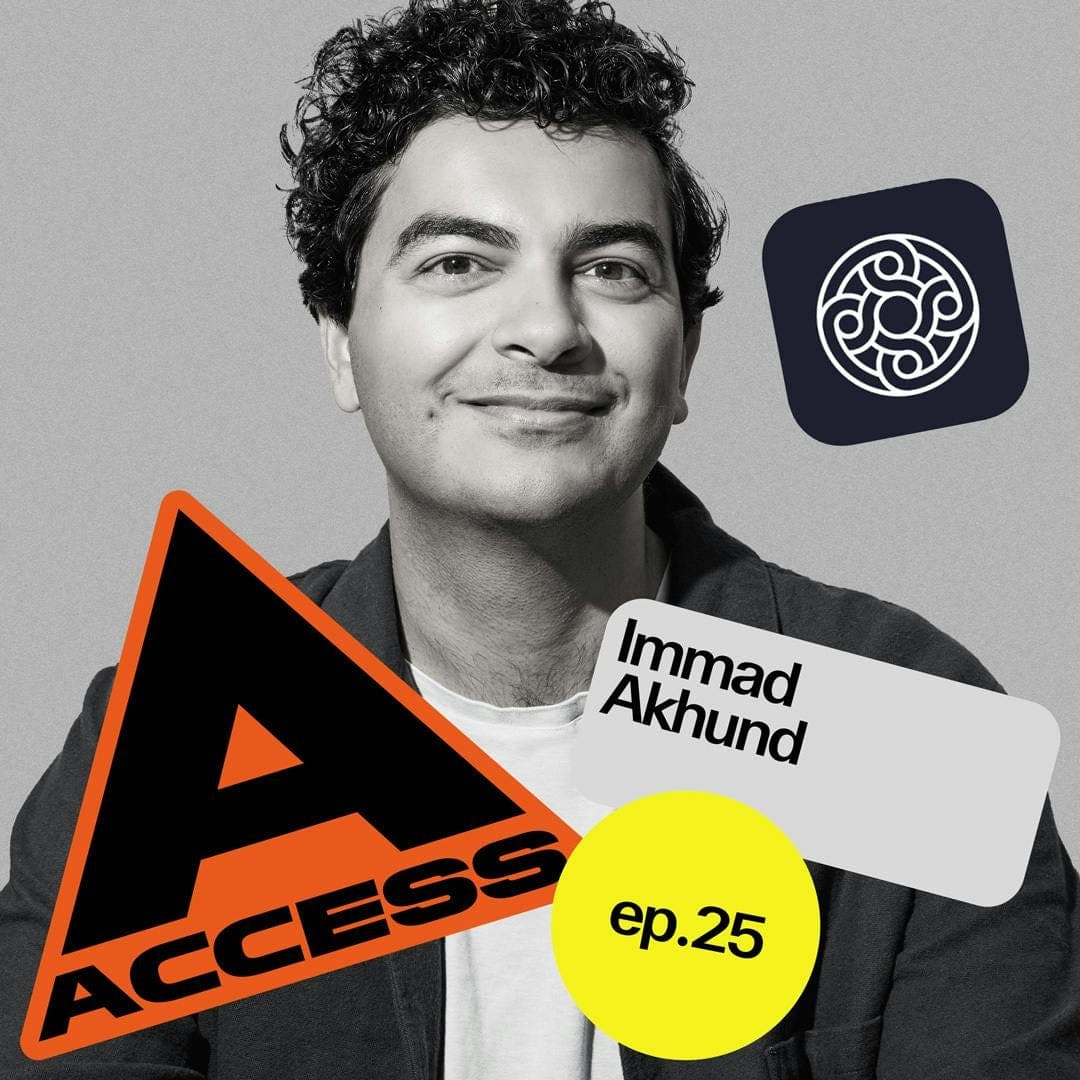

In short
The episode mixes tech-culture updates (South by Southwest shifting away from pure tech, NVIDIA’s GTC “nerd Super Bowl” keynote) with a deep interview on Mercury’s CEO, Ahmad Akkun, about whether AI will “eat” banking and how Mercury is building AI-native banking via natural-language “Insights” and Claude connectivity (MCP).
Guests
Ahmad Akkun, CO of Mercury (fintech/banking). Backgrounds mentioned: Mercury’s sponsor-bank model; Akkun also discusses his side hustle as a VC and his podcasting approach. Hosts: Alex Heath and Ellis Hamburger (Vox Media / Access).
Key claims
- South by Southwest is now more futurism/brand marketing than product launches.
- NVIDIA’s dominance is driven by scarce GPUs; Jensen Huang’s keynote is unscripted and highly technical.
- Banking is hard due to legacy integrations and regulation; Mercury partners with sponsor banks and later applied for a bank charter.
- Mercury aims to build trust through polished onboarding, customer advocacy, and (eventually) direct regulation.
- Akkun says AI won’t replace banks; Mercury will integrate AI interfaces while “holding you to” banking responsibilities.
Notable examples
- Mercury Insight launch: generative-art output from transaction data; “Mercury MCP” for Claude data access.
- “Peanut butter and jelly delivery” as Mercury marketing (PB code name turned into a real-world campaign).
- Zelle limitation: fintech can’t do it without bank rails; charter would enable more features.
- Credit card points critique: points are often a merchant/issuer bet that people won’t redeem.
Written by AI. May contain mistakes. Listen to the episode to check what was said.
Chapters
Tap a time to open that second in VOCamera Troubles and Family Time
0:45 to 3:25
Discussion about camera issues and reflections on childhood movie-watching habits.
“I'm Alex Heath here with my co-host Ellis Hamburger.”
Travel Adventures and South by Southwest
3:25 to 6:55
Insights from travel experiences and observations from South by Southwest 2023.
“especially during spring break and TSA government shutdown.”
The Changing Nature of South by Southwest
6:55 to 10:43
Exploration of how South by Southwest has evolved from a tech show to a brand marketing festival.
“and schmooze the CMOs, convince them why they need to get in front of the elite audience for access.”
Jensen Huang's Keynote Experience
10:43 to 12:15
Recap of Jensen Huang's engaging keynote and the atmosphere at NVIDIA GTC.
“And just the world revolves around him, man.”
NVIDIA's Rise and Market Influence
12:15 to 13:20
Discussion on NVIDIA's transformation and its influence in the tech market.
“Can you take us back to before the AI boom, what NVIDIA was doing?”
The Power of GPUs and Jensen's Impact
13:20 to 14:01
Exploration of Jensen Huang's status as a key figure in tech and GPU distribution.
“And so, of course, when he comes over, it's like, you know, thank you, Jensen.”
NVIDIA Keynote Insights
14:01 to 16:01
Discussion on the significance of NVIDIA's developments and market influence.
“He came over and was like, when I invest in you guys, he knew the exact market cap number and it's up 300 % since then.”
Transition to Interview
16:01 to 16:40
Light-hearted banter about internet issues leading to the upcoming interview.
“Well, Alex, your internet is sputtering to a halt.”
Peanut Butter and Jelly Delivery Strategy
17:16 to 19:10
Ahmad shares a unique marketing strategy involving peanut butter and jelly delivery.
“For the last 10 years, everything in American politics has basically revolved around one man.”
Crafting Unique Marketing Experiences
19:10 to 21:28
Exploration of creative marketing ideas and their impact on branding.
“But honestly, it was like one of my favorite days of the last 12 months of working at Mercury.”
Show all 44 chapters
Poker Culture in Tech
21:28 to 24:22
Discussion on how poker has become intertwined with tech culture and networking.
“I've never been to South by Southwest, which is kind of weird.”
Gambling and Financial Literacy
24:22 to 28:00
A dive into the relationship between gambling, financial products, and personal finance.
“And I think that generally speaking, tech doesn't like golf as much or at least like, I mean, it's golf is doing its thing.”
The Limitations of Traditional Bank Accounts
28:00 to 28:30
Discover the frustrations of conventional bank accounts and the desire for better business tools.
“But, you know, bank accounts, like, until Mercury have been pretty stupid.”
Introducing Mercury Insight
28:30 to 29:24
Learn about the new Mercury Insight product and how it aids business owners in decision-making.
“I need agentic reasoning helping me understand how much I should bring to the table.”
Unique Marketing with Generative Art
29:24 to 30:26
Explore the creative marketing strategy using generative art based on transaction data.
“And it was a pretty quick decision and I have not regretted it.”
Challenges in Fintech Development
30:26 to 31:38
Understand the complexities and challenges faced in building fintech solutions.
“but we made you a watercolor of a squirrel.”
The Journey to Becoming a Chartered Bank
31:38 to 32:49
Delve into the process and significance of becoming a chartered bank for Mercury.
“We actually just applied to be a chartered bank, but we only did that after we reached a pretty massive scale.”
Building Trust with Customers
32:49 to 34:16
Discover effective strategies Mercury uses to build trust with its customer base.
“I don't think people fully appreciate how unique and difficult that is.”
The Role of Celebrity Endorsements
34:16 to 35:38
Examine how celebrity endorsements influence consumer trust in tech startups.
“But we will say like, yeah, step number one, send us all your money.”
Enhancing Onboarding Experiences
35:38 to 36:37
Learn how Mercury focuses on a seamless onboarding process to enhance customer satisfaction.
“Especially initially, there was like trust by proxy.”
Balancing Costs and Quality of Service
36:37 to 37:42
Explore the trade-offs between service quality and membership fees for customers.
“So you build the trust by having this polished product.”
The Importance of Customer Commitment
37:42 to 38:58
Understand why Mercury emphasizes committed users for providing high-quality service.
“have more than$400 million using Mercury.”
Future Plans for Financial Products
38:58 to 39:56
Get insights into Mercury's future offerings, including a credit card and enhanced services.
“And on business, obviously, people who set up businesses, maybe not Alex, but they tend to have higher balances and they're using it actively.”
The Debate Over Credit Card Points
39:56 to 40:49
Discuss the pros and cons of credit card points and the philosophy behind Mercury's approach.
“You got to spend money to make money, as they say.”
Simplifying Rewards for Customers
40:49 to 42:00
Explore how Mercury aims to simplify reward systems for credit card users.
“Personally, I don't I thought it's, it's hard to actually figure out exactly what percentage of people like love points and hate points.”
Credit Card Benefits and Philosophy
42:00 to 43:15
Explore the value of credit card rewards and consumer behavior.
“So if you look at the Chase Sapphire Reserve, they got DoorDash, they got StubHub, they got Lyft, they got the$300 travel credit.”
Integrating AI with Financial Data
43:15 to 44:36
Discuss how Claude integrates with Mercury to enhance financial insights.
“When will I be able to talk to Mercury and my Mercury data securely via Claude?”
AI's Impact on Banking
44:36 to 45:49
Examine AI's influence on banking practices and customer service.
“that I think AI just accelerates that, right?”
Future of Banking and AI Integration
45:49 to 47:57
Discover the potential future where AI takes a central role in banking interactions.
“We have Alex's little poker card that we're going to spin up.”
Stable Coins and Currency Trust
47:57 to 50:48
Analyze the relevance of stable coins in today's banking ecosystem.
“But COVID happened, and suddenly all the bank branches shut down.”
The Safety of Digital Assets
50:48 to 51:42
Discuss the challenges of managing personal digital assets securely.
“And I think like speaking of onboarding and craft, I mean, I was experimenting with a lot of that stuff like years ago, you know, during the crypto boom, just to see what was going on.”
Investing Insights from a CEO's Perspective
51:42 to 54:30
Learn how being an investor influences the management of a tech startup.
“I think it's always fascinating to, to talk to CEOs who also invest a lot.”
AI in Hiring Processes
54:30 to 56:55
Evaluate how AI could transform hiring criteria and processes in tech.
“it is the kind of thing that if you're deeply curious about this stuff and you're just interested in where tech is headed, it's really fun to get to actually like also place bets, I would imagine.”
Investment Criteria and AI Evolution
56:55 to 57:58
Discuss the changing criteria for investing in AI-driven technologies.
“Well, the hallucination rate was a huge factor for a while with this stuff.”
The Future Role of Humans in AI
57:58 to 59:07
Consider the evolving role of humans in an increasingly AI-driven workforce.
“like I don't think humans should do things that like AI can do over time at least.”
Delight in Product Design
59:07 to 1:00:22
Examine the concept of delight in product design and its human element.
“So, you know, when I look at engineering today, it's like, yeah, the basic stuff that everyone could do anyway, and it's just a race of who could do it faster, like the AI could just do it for you and very fast.”
AI Impact on Employment
1:00:22 to 1:02:01
Analyze how AI is reshaping employment and company structures.
“And I think one of the things that I don't know, maybe could be an interesting thing to think about.”
Growth and Automation at Mercury
1:02:01 to 1:03:24
Learn how Mercury balances growth and automation in their operations.
“I mean, so many people just, I think, took Dorsey's framing of this is to get ahead of what's coming with AI.”
Teaching Financial Responsibility to Kids
1:03:24 to 1:04:38
Discover strategies for teaching financial literacy and responsibility to children.
“And like, you know, it's, it's actually hard to keep up with all of our growth, even with the people we have.”
Investment Education Through Real Experience
1:04:38 to 1:07:30
Explore how real investment experiences can teach children about money management.
“like the rest of the company, which I think is like also a little ironic.”
Building Accessible Financial Tools
1:07:30 to 1:09:51
Discuss the importance of creating accessible financial tools for managing money.
“It was one of the examples that they gave.”
AI Predictions in Betting
1:10:11 to 1:10:56
Explore how AI can analyze personal behaviors in betting decisions.
“Alex's OpenClaw instance is going to say, Alex, I see you betting money on the Lakers.”
Building Financial Interfaces
1:10:57 to 1:11:36
Discover the potential of AI in creating seamless financial product interfaces.
“I think you know the direction you have to go, which is like the charter and building all the full lending capabilities and Zelle and all those features.”
The Role of Product Managers
1:11:37 to 1:12:16
Understand the evolving role of product managers in tech startups.
“I think there's just the right way to do PMs, which is like, you know, very kind of customer centric and they're part of the team and they're not like kind of dictators running the show.”
Transcript
Automatic transcript. May contain errors.0:03Immad Akhund:If we do the best thing for customers, people will gravitate towards us and I don't have like a fear around it. There's just so much to banking. Like it's not like Claude is going to go build a bank.
0:13Ellis:We're going to hold you to that, Ahmad.
0:14Immad Akhund:Yeah, you say that. Don't give him an idea. This week on the show, Ellis and I chat about how South by Southwest isn't a tech conference anymore, Jensen Huang's nerd Super Bowl at NVIDIA GTC, and Ellis's obsession with old school Nvidia graphics card box art. Of course he is. Then we're joined by Mercury's CO, Ahmad Akkun. We chat about his side hustle as a VC, whether AI will eat banking, if credit card points are a scam, and tech's poker culture versus the gamblification of everything. Welcome to Access.
0:50I'm Alex Heath here with my co-host Ellis Hamburger. Ellis, how's it going, man? Good to see you.
0:55Ellis:You too. I'm good. I am hopefully looking good because I resolved a very embarrassing camera problem that no podcast co-host should ever experience. I could not figure out why I could not align my eyeline with the camera. So it looks more like I'm looking at you. And the problem is that no matter where I put my camera, it always seemed like it was too zoomed in. And do you know what the problem was? You were zoomed in. The camera was too zoomed in. I was on the 50 millimeter focal length, I did not realize that this camera Vox gave me zoomed. And ever since the beginning, I have been fully zoomed, which also is not very flattering for the shape of my head, right?
1:33Yeah. I mean, I thought you were a camera guy. Every time I see you, you've got a different camera. So I thought you understood that cameras zoomed.
1:40Ellis:That's why this is embarrassing. I'm being revealed to be a poser. Access is a safe space. How's it going otherwise? I've been traveling. I haven't been in LA the last several days. Everything good? While you've been traveling, I've been enjoying my daily rewatch of Moana with my kids. I think we're getting into the approaching triple digits, I would say. I think what's interesting about it is that as much as we talk about screen time being a problem these days, it's like we all grew up watching the same Disney movies over and over and over again. Why is that not part of the same conversation?
2:19Ellis:I think most of us who watched Aladdin 100 times turned out fine. And it's not like every single second of that movie is some ethical moral lesson. You know what I'm saying? I think if that were to literally be on an iPad today, we'd be like, oh my god, my child is watching the same video 100 times in a row. But because it's Disney, all of a sudden we give it a free pass. So yeah, long story short, I think my firstborn may have learned a bit more from the Cocomelon songs about brushing your teeth as maligned as they are, then our second born is from watching Moana for the 50th time. That's my soapbox.
2:53I've not seen Moana once, which I need to rectify. It's great.
2:57Ellis:It's actually great. Yeah. Well, I have not had time to watch anything. I've been on the road, road worrying as I tend to do. It's first at South by Southwest in Austin, Texas, and then at the Church of Jensen, NVIDIA, GTC in San Jose. I actually did a day trip from Austin to San Jose, where I did not even check out of my hotel in Austin. I left my suitcase there and I flew from Texas to California in one day on Monday and would not recommend it, especially during spring break and TSA government shutdown. It was a long day, but everything actually logistically went perfectly. And I felt like I hacked life a little bit.
3:43Ellis:Wow. I was going to say, I mean, even the travel pro-iest of the travel pros, you know, can't squeeze past. I mean, was clear open or TSA pre-check a bit more open? Cause I mean, I saw like, Oh yeah. You got to do touchless ID, TSA touchless ID with clear is the ultimate hack. I think I saved about an hour at Dawson airport that morning. Um, with that, that's So flying, you know, 5 ,000 whatever miles in a day and still going back to the same hotel is quite a time warp, especially when you're going to GTC, which is its just own unique universe. But first, South by, you haven't been to South by in a while, right?
4:28It was what, over a decade since you've been?
4:30Ellis:It's been a while. And I was going to ask how many PR guy viruses have you brought for show and tell? Oh, so many. everyone is a brand strategist you must have a great immune system the the immunity to thought leadership that i have built up over the years is so strong because everyone is a thought leader everyone's a strategist everyone's a podcaster futurist i was on a panel where someone said a futurist with a straight face and i almost laughed uh i probably shouldn't have but yeah Yeah, South by is an interesting thing, man. Like it's not a tech show anymore. I mean, tech brands come, but I would say like the coolest tech, quote unquote, tech brand activation was Yahoo this year, right?
5:15Which kind of says a lot about the state of things. South by used to be where really cool products launched. I mean, Twitter, Foursquare, like back in the day, it was actually kind of at the vanguard of tech and culture. Now it's at the vanguard of futurism and brand marketing. But as a film and music festival, it's actually quite good in Ascendant. What did Yahoo do that was so impressive? They took over a local outdoor saloon type space and had square dancing and really good local barbecue, open bar, all that stuff, of course. It was good to catch up with Landzone, the CO there, a source of subscriber.
5:59And, uh, Emily Sundberg was there doing a Q and a with him and they had a nice mix of, of creators and tech people. But yeah, I mean, I mean, South by is just, uh, you know, it's, it's not where the big companies show up like they used to. Um, and you've got kind of a new crop of, uh, more AI native or younger companies, um, shout out superhuman, which had me come and talk on a panel about taste in the age of AI as a, as a creator, which, which was, which was fun to be a part of. Uh, and then I did a panel with 10 cent, uh, on the future of gaming, which was good. But, um, yeah, man, the main thing at South by was, was podcasting.
6:38And so it was nice to hang out with, uh, with our Vox media familia. We had a, we had a little party with a bunch of other pod hosts who were in town, uh, got to see the case swish, the one and only Kara, who's given us a lot of love with feed drops and pivot, and some of our other hosts and schmooze the CMOs, convince them why they need to get in front of the elite audience for access.
7:05Ellis:Well, it makes a lot of sense that the panel was about taste because no one's talking about taste anymore. And South By is always a few months behind. Hey, I'm in the hyperglocal think circle that is setting the trend. As we learned in the last episode, I am the tastemaker. If you say that, you're not a tastemaker. If you say you're a tastemaker, you're not. That's my rule. Well, I'm undoing that rule. Okay. I guess you have more followers for the time being, but since I got back on the podcast, I'm rapidly gaining on you. And so when I have more half years or bots anyway. That's true. Mine are pre-Elon bots.
7:45Yeah.
7:45Ellis:So there was a moment early in my career where I passed my boss's follower count and that it definitely got awkward. Oh, yeah. Right. Like the power dynamics change. So we'll see how that feels when that happens again. Well, we'll have to cross that bridge when we get to it. I then got to go from South by to Nvidia, as I was saying, to see Jensen, which was my first time seeing a Jensen Wong keynote. I don't know if you got to read my write up of it, but it is a unique experience, man. Well, so how long did he go? How long is long? Like two and a half hours. And he doesn't have a script. He just kind of freewheels it.
8:28I mean, he has his slides, the next slide, but there's no script. He doesn't, he doesn't prepare and it's clear he doesn't need to because it's all in his head. Like he is the LLM of NVIDIA. And the amount of acronyms that man was spitting at the audience and like highly technical language was incredible to watch. The mastery he has of his domain. But then also just the fact that, you know, this was at the SAP Center in San Jose. And, you know, there's like 30 ,000 people in here to watch this like two and a half hour, highly technical, you know, acronym heavy keynote. It just, it was in stark contrast to say Apple, right?
9:07Where, and this is where a lot of the keynotes have gone, I think, especially out of the pandemic, thanks to Apple is that they're just these pre-recorded on rails things. I mean, in Apple's case, they literally gather you to watch a video, the same thing that they stream online for everyone. And I actually really appreciated the realness of Jensen just getting up there and shooting it from the hip for two and a half hours straight. And he was making jokes. And like there were moments where things, the transitions didn't work right. And he had to stop and start and, you know, just think on the fly.
9:43And it's like, okay, no, this is like worth going to see in person. And obviously, like NVIDIA is the most important company in the world right now. So there's also that. But he is just a one of a kind. I would say the closest thing that I've seen from like a tech keynoter to like what Jobs used to be. There really isn't anything else like it anymore.
10:01Ellis:I guess I need to watch the footage then because there aren't many who can do the El Jobzo. But I mean, I feel like this is just another reminder, as we are reminded constantly by Elon, that the ultimate scarcity is actually being funny. And just being able to like make a crowd laugh. Yeah. And I feel like there's that, you know, unifying theory of Elon that all he wants is to be funny and just to like be liked. And I think that's probably where all these CEOs and founders have found themselves arriving at. They have the yacht, but like the final apex of being the renaissance man that they aspire to be is being able to actually do stand up comedy, which is really freaking hard.
10:40Ellis:Right. And so I think it all tracks or even just being able to feel like you can own people. for two and a half hours. Yeah. And just the world revolves around him, man. I mean, it was obviously his conference and everyone was there, but he was just talking about how involved he was in everything from like, there was this hilarious pregame, you know, they kind of like are turning this into like a Superbowl. I mean, that's what it is. It's like nerd Superbowl, but in terms of, you know, there's a pregame where they're all ESPN style, like sitting at a desk before. And I tweeted this, but all the AI CEOs that Jensen Hand selected to be on the pregame commentary bench were all wearing all black with sunglasses.
11:20He was talking about like all of the sponsors. There were over 400 sponsors. I mean, everyone just wants to be close to NVIDIA. That's some sponsor delusion. Everyone was thanking him, like even during the pregame, like the CEO of Open Evidence was like thanking Jensen for the GPUs. And I actually was I was at the Nebius booth that afternoon doing some interviews. And Jensen did his kind of walk through the expo floor with his entourage and to see, you know, everyone from Michael Dell to like the founder of CoreWeave to the Nebius folks just kind of enraptured by his presence. He was literally signing badges like he was text Taylor Swift expected to see him like sign a forehead or sign a chest or something.
12:04But he was signing literally pretty much anything presented to him. He signed chips. He signed parts of the booths that he was walking by. Jensen the God, I guess.
12:16Ellis:Can you take us back to before the AI boom, what NVIDIA was doing? Because I feel like this all happened just so spontaneously. They were a gaming company. Yeah, that's what I'm saying. Like, or does he say kind of in retrospect that this was all part of the plan? He did give a shout out to the gaming business and the gaming chips at the beginning was like, this is this is the thing that built this house. And I thought that was cool to see him like throw that back. But yeah, man, he NVIDIA was kind of toiling away in obscurity. I mean, they were obviously super important as a chip maker for gaming, but you can see it in their stock price.
12:59I mean, they were just flat. And then when ChatGPT came out, it was just off to the races. He is the kingmaker of the tech industry. Whatever he touches goes up. Stock go up. You know, Nebius, I was there and like Nebius is a great example. It's this like CoreWeave competitor. And since NVIDIA invested in them, their stock is up like 300%. And so, of course, when he comes over, it's like, you know, thank you, Jensen. Like you're literally like, you know, making me money. And he has that thing that everyone wants.
13:32Ellis:How many dude bros even know that the G in GPU is for graphics? Yeah. He has the thing everyone wants and they can't get, which is more GPUs. And who he decides to give them to can make your company or not. And he, I think, is very much enjoying that Kingmaker status. I could feel it not just in the keynote, but in observing him interacting with the partner booths on the expo floor while everyone was taking selfies. He came over and was like, when I invest in you guys, he knew the exact market cap number and it's up 300 % since then. It's just too bad. It's just too bad. What? Because I'm a lot more interested in all of the old NVIDIA graphics card box arts, of of which I have a whole book than stock prices.
14:26Ellis:Oh, here's an NVIDIA right here. The NVIDIA GeForce 4 Asylum. Wow. You just had that? This is what excites me. You just had that running around. Yeah, I just had it. Wow. I told you I'm a tastemaker. It has become super financial. There were people day trading during the keynote I saw, And then there are just a ton of analysts and investor types there. I mean, NVIDIA is the economy in a lot of ways. So I understand the focus. But even in the Q &A that Jensen did, where he literally just takes questions for like three hours straight from creators and press, people were asking about specific stocks.
15:05And yeah, man, the tech is still important, but it does feel like the money has really started to overtake things.
15:13Ellis:Bring back graphics cards. Yeah, the only other like headline news I would say is NVIDIA getting into the inference game and expanding what its chips can do to better handle running AI versus just training it. But everyone kind of knew that was coming. So there weren't any like huge surprises. But I guess the only real surprise was he brought out a AI powered Olaf on stage at the very end to hang out with him. And then this keynote was literally so long that they had to do a musical recap of it for like four minutes. And it was Jensen sitting at a fire, like a campsite with a bunch of humanoids playing music and singing about what he talked about.
16:00Ellis:Amazing. Well, Alex, your internet is sputtering to a halt. And so I think it's about time to cut to the interview. Is that why you were taking so long to respond? Because I'm super delayed? Yeah, there's literally like a two second delay. Dave, do you think we should be concerned? Dave, who's the problem?
16:17Immad Akhund:Alex is the problem.
16:18Ellis:Shit.
16:20Immad Akhund:No question.
16:21Ellis:Everyone, that's our producer Dave on the mic. No, they're not going to hear me. They're not going to hear me. No, we're keeping this. We're keeping this. I need people to know Alex is bad at tech. Wow. I wouldn't blame Alex per se, but yes, something's with your internet or your computer. Weird. Well, with that, we're going to roll our interview with Imad Akunt.
16:56Ellis:Thank you.
17:16Ellis:For the last 10 years, everything in American politics has basically revolved around one man. And as a political journalist who came of age during Donald Trump's rise in 2016, I've had a front row seat. I am officially running for president of the United States.
17:34Immad Akhund:It's going to be only America first. America first. Thousands of supporters of President Trump stormed the U.S. Capitol building. But is it possible to talk about politics without talking about Donald Trump? That's the question I'm going to ask in our new show from Vox.
Read the full transcript
17:55Ellis:The idea of like a post-Trump or not exactly Trump-focused show can exist because he's not really driving any agenda items. It really does feel like so reactive. You know, I think this Iran thing is also going to cause a big split in the GOP. So far it doesn't among like people who say they're MAGA voters are still with Trump. But like for the first time, you see on a major issue, open opposition from the start of this war. I'm Estet Herndon and welcome to America Actually.
18:26Ellis:Welcome. What's going on, Ahmad? It's good. It's good. I'm excited to be here. How are you? We're solid. You're a podcaster as well, aren't you? Yeah. We all got the mic set up. I mean, I feel like we have a lot to learn from you. I feel like there are a lot of growth hacks out there today for podcasts and companies and startups, many of whom I work with. But I have not heard about peanut butter and jelly delivery as a growth hack before.
18:53Immad Akhund:I'm not good at my podcast. I just have fun talking to people I meet and friends. That's my main kind of vibe in the podcast. I'm not very good at promoting it.
19:03Ellis:Hey, that's our vibe too. Tell us about the peanut butter and jelly delivery though. How did that work as a growth strategy?
19:09Immad Akhund:You know, with these marketing things, you never know if it's just like you're just out there in the rain delivering peanut butter and jelly for no reason or whether it's actually going to drive usage. But honestly, it was like one of my favorite days of the last 12 months of working at Mercury. It was just kind of fun to get out there and deliver tasty food and talk to customers. Where did that idea originate, I wonder? Kind of like a convoluted in-joke. basically like you know for a while we were working on this product but we hadn't launched yet so we'd call it PB and that was like the code name and you know someone connected PB to peanut butter and then we had this like jar that all the team got with like peanut butter in it but like instead of ingredients it was like all the features and yeah it was like this kind of funny uh funny jar of peanut butter.
20:02Immad Akhund:And then so peanut butter was like a thing happening. And then we were like, oh, like we were this year, we're trying to do like more creative things and more in person things with marketing. So we're like, oh, it'd be cool if we just went around SF and delivered peanut butter and journey sandwiches. So it came from my co-founder, who's like way more creative than I am.
20:19Ellis:Classic situation of startup code name actually becoming part of the product. I love it, though. I mean, I'm just so fascinated. Like I've been doing marketing and comms for a very long time. And people look at inactivation like that. And they're like, well, what's the KPIs? What's the conversion on the peanut butter and jelly sandwich? How much time can we save by cutting off the crust versus not? And it's like, no, I feel like the best storytellers just kind of feel it out, right? And know that some of this stuff can't quite be quantified. Yeah.
20:52Immad Akhund:I think actually with marketing, you want to do things that are weird because there's so a there's so much noise out there uh that like you know you do something and like basically no one's gonna listen uh but if you do something that's kind of interesting and it stands out like you can have a 100x higher impact so i'd rather do like 10 things and they're all like kind of fun and interesting and maybe nine of them like fall flat but one of them is like a big viral head or whatever and lots of people hear about it and it's kind of aligned with the brand And speaking of marketing, the brand was activated at South by Southwest this last weekend.
21:28I was there in Austin. Were you there? I wasn't there.
21:31Immad Akhund:I've never been to South by Southwest, which is kind of weird. You've never been? Okay. I've been in the startup ecosystem for 20 years. So I feel like every year I'm like, oh, maybe I should go. If you want to be hounded by branding and comms consultants for four days straight, it's a great place to go. Why did you go? I had a couple panels. Why did you go, Alex? Vox Media, who distributes this podcast, had a bunch of stuff, podcast stage there. And I was there with the Vox fam. And it's the good time to rub shoulders and do deals. Did you go to the Mercury thing we were doing there? I think we were giving away some stuff.
22:11But you guys were giving away Casios and Aeropresses and really cool stuff it looked like.
22:17Immad Akhund:Yeah. One of our themes this year is to talk about craft. So part of the peanut butter and jelly thing was very well-crafted peanut butter and jelly. It was like coconut peanut butter and the jelly was mango-flavored. So that's why it's like Casio and things like that. Things that are well-crafted, regardless of how simple they are. Also, Ahmad, I've been waiting to see if you remember that we've met before. Do you remember how we met? no idea i feel like this might be a trick question yeah no we played poker together we sat next to each other and played poker at co2 a couple years ago oh that's cool i can't i can't
22:58Ellis:remember who played better alex still remembers your tell though so we're gonna know if you're
23:03Immad Akhund:lying on the podcast today amon okay that does seem familiar you had the co2 east meets west thing yeah okay nice yeah yeah are you are you a regular player i feel i i have a game that i play like i mean in theory once a month but we get around to it like every two months but i feel like that's pretty fun like the ko-2 ones i feel like everyone takes it like a little too seriously like i i you know i mostly pay poker just to like have an excuse to sit with people and chat with them not to like try to make money uh what are you talking about i thought as a founder you just have to win everything or go home crying i mean i feel i feel shitty if i don't win but like that's not the point of it like i'm you know i'm competitive but like that i yeah i want to play these games to have fun i think you did well i don't think we got in any heads up situations now that i'm remembering but yeah i remember i really can't remember this guy plays um it's interesting how poker has become uh such a part of like tech culture i don't know if it's the all-in guys or what but i feel like i'm seeing poker games at conferences and just like house games happening in sf in new york and like the tech scene like constantly do you feel like that's always been the case or is it a relatively new phenomenon i think it's always been the case like i mean even even when i first got here in sf in 2007 i used to arrange like poker games so it's like it's a thing uh i just feel like tech in general has become like a little bit more like a showy thing over the last year there's just a lot more money in it there's a lot more you know things uh just like yeah in 2017 even it was kind of a small industry and now it's just a big big deal across everything uh so i think like there's these little characteristics of it like
24:47Ellis:have become bigger i mean it makes perfect sense to me that founders would like poker because it It is a combination of like bravado and showmanship and understanding of probabilities that is going to be able to like maximize your output. Yeah, that's true.
25:04Immad Akhund:There is something geeky about it. And I think that generally speaking, tech doesn't like golf as much or at least like, I mean, it's golf is doing its thing. So I feel like you need some social kind of networking thing, right? If it's not golf, then is it going to be like poker or what else would it be? You don't need to be fit for poker, so I think that helps. Do you have a crazy poker story? I don't think I have a crazy poker story. I mean, I've been in my fair share of things where I should have won and haven't won, but I don't know how crazy they get. What's your crazy poker story? I don't know.
25:40You do meet so many interesting people. You meet random celebrities, obviously tech people.
25:47Immad Akhund:um oh i did go to a co-to another co-to event where they were also doing poker and i sat next to steph curry uh for like a solid one hour i talked to him while i was like poker that was pretty cool how was he how did he play he was okay i don't think he was like that good but he wasn't bad it didn't like blow me away uh i think i did pretty well in that game uh this is a few years ago but it was just it was just fun to talk to him like just you know sitting next to him and just shooting the shit kind of thing. So I wasn't as focused on poker.
26:15Ellis:Well, I have a pro level podcast segue, which is that I feel like, you know, gambling scene, especially with like the mobile games and DraftKings and FanDuel and all the prediction market stuff. I think you could argue that they are one of the very biggest problems for like personal financial independence and literacy. And now you're building that type of product.
26:38Immad Akhund:Oh, this is a great segue, Aless.
26:40Ellis:You really nailed that. I told you. How do you feel about that stuff philosophically? Because it's kind of funny to me to think that like, all right, we're going to build all these personal banking products that are trying to solve this mission or this big idea around helping people get control of their stuff, whether they're independent or solo, or sorry, or in a couple, like some of those videos you've been making. I mean, are you going to participate in this side of the story for financial literacy and banking independence?
27:11Immad Akhund:Yeah, I hope so. I personally really dislike gambling. I think poker is fun. Poker is not gambling. That's what we tell our wives. I mean, I never bet more than a recreational amount. But I have friends that have lost their lives or have family members who have fallen into gambling addictions. It's a serious issue. And I don't, you know, a lot of tech, like, unfortunately, you know, whether it's Polymarket or DraftKings or whatever, like, encourages this stuff even more, which I've never been a fan of. Yeah, I would love for, you know, I guess, like, at a basic level, like, Mercury, both on the business side and the personal side is, like, you know, a utility product, right?
27:57Immad Akhund:Like, it's, like, banking. Everyone needs it, both on business and personal. But, you know, bank accounts, like, until Mercury have been pretty stupid. Like they don't do anything for you, right? Like it's just like, if anything, they kind of get in the way of your life. So yeah, I would love for us to kind of help people run their business better. So we actually just launched literally today this product that we call Mercury Insight.
28:20Ellis:Okay, so I know that Insights has natural language questions you could ask. So maybe Alex, now that he's a user, he could say, am I up or am I down? I need PDFs. I need insights. I need agentic reasoning helping me understand how much I should bring to the table. on my, should I bet or not? Because you could spin off cards with certain amounts of money, right? It's like, honey, it's only 250 tonight. You literally can't spend anymore. Or is it all cash, Alex? Is it all cash? You have to do cash, but I mean, Mercury will see the ATM. Mercury sees that ATM transaction and I'd definitely tag it. So yeah, I should ask.
29:01I'm kind of scared to. But yeah, Ahmad, I am a DAU. When I went independent in September, I spent about 15 minutes looking for a bank. And Mercury seemed like the simplest and the best from a cost perspective too for a solo person like me. This is for your business, right? Yeah, for my business. And it was a pretty quick decision and I have not regretted it. It's actually a legitimately good product. It's rare we have COs on where one of us like, I don't know if it's that rare actually, but it's nice to have someone on and it's like, oh yeah, no, I'm a DAU.
29:44Immad Akhund:Nice. You should check out the Insights launch we just did today. We have a fun little kind of creative marketing thing with it as well. We actually work with this generative artist. And basically how it works is we kind of plug in the transaction data to this generative art thing. and it makes like a different piece of unique art for every customer based on the data. It's just kind of fun. And it's like got like funny things, like there's a lot of international transactions and I put a globe there and there's like, there's a lobster that shows up. I can't remember why the lobster shows up. But anyway, we have a fun little podcast about it.
30:23Ellis:Says Alex, your newsletter revenue sucks, but we made you a watercolor of a squirrel. Exactly. At least it looks pretty. I mean, why is this so freaking hard? I mean, I feel like even back when I was at The Verge, I remember covering that startup, like Bank Simple. And it's obvious that there's a lot of complexity, especially with actually being the bank. But why has this been so hard for anybody to do, to just make something that's better, especially for consumers, which I know you just launched?
30:58Immad Akhund:I think there's like two aspects to it. number one, it's just much, much harder to build fintechs than it is to build pure software things. Is that a burn to all the other software?
31:10Ellis:No, no, no. I'm open to it.
31:13Immad Akhund:All my previous startups were software startups. It's so simple to just build some software. Well, yeah, with fintech, you've got to go integrate into these back-end legacy systems. Why is it just this? It's literally like SFTP files going back and forth with a ton of exception cases. So it's just like these complicated legacy systems. And then, yeah, you have all of the regulations around it that also make it tricky. And it has been hard to be a chartered bank. So the way Mercury works today is we partner with two sponsor banks. We actually just applied to be a chartered bank, but we only did that after we reached a pretty massive scale.
31:47Immad Akhund:And we raised a 3.5 billion valuation before we were like, let's go get a bank charter. So yeah, you have to work with sponsor banks. It's actually relatively recent where there has been enough sponsor banks out there. They've built enough tech on top of the sponsor banks that you can even do something like Mercury. When Mercury launched, we were the first neobank to have wires. Yeah. Bank Simple did not have wires. They also worked with sponsor banks. So that sounds simple, but obviously you can't run a business on a bank that doesn't have wire support right like that's just like a basic requirement for uh business banking uh so you know we we had to push pretty hard to like find someone who would do it and we were probably the first people that that kind of got it working end to end uh yeah fintech has only recently reached the kind of scale that like we can kind of get you know get enough funding to kick these things off the the products are good enough in the back end and and you know enabled people like mercury to the The charter thing is fascinating.
32:50I don't think people fully appreciate how unique and difficult that is. I guess to go back to our earlier conversation, it kind of reminds me of getting like a gambling or like a casino license or something in a state. It's equally political and regulated and difficult. And there's just a very, very finite supply. And what does that basically unlock for you? It lets you do the whole stack yourself. Is that it?
33:16Immad Akhund:Yeah, whole stack ourselves. I mean, the biggest thing for us is delivering the best customer experience. Certain things are really hard to do as a fintech. We don't have Zelle support. Zelle only works with banks. It does not work with fintech. So we'll be able to do Zelle. We do very little lending right now. It's much easier to do lending. I mean, it's still not easy, but once you have the low cost of capital of being a bank, you can really provide lending at scale. so yeah mostly own the experience end to end deliver the best kind of customer products uh also i think it'll build trust with customers right like right now if you go to mercury.com there's a lot of disclaimers everywhere and we have to really explain to you like you're actually banking with someone in arkansas that you don't know or something yeah i've seen this on other banks it's like another thing yeah yeah most vintechs have that uh but i think like people will should trust us more if they see that we're like directly regulated.
34:10Immad Akhund:And the hardest thing about Mercury is that trust element, right? Like it's like we have this kind of internal joke. I guess it's not funny, actually. But we will say like, yeah, step number one, send us all your money.
34:22Ellis:That's how Mercury works. We all know the best way to build trust is making someone a peanut butter and jelly sandwich. Or you're me and you don't have money yet and you just started your business and you can start and build your Mercury from zero. And then it's a little bit de-risked from the trust perspective.
34:36Immad Akhund:Yeah, it's a little easier when you're small and you're just starting out. But it's still like, you know, you're still trusting us with money. You know, there are lots of options out there that, you know, there's been banks that have been around for 100 years. So like, you know, we're definitely like on the trust side, we have to like win that trust over time. And I think the bank charter would help us do that as well.
34:54Ellis:Well, so what do you think are your best tactics to build that trust? I work with a lot of startups on their storytelling and writing. And I've come to believe that they're really... I think in this case, there is something you could say to increase the trust. But if you are a tech startup, do they even believe you that you are an actual bank? You know what I'm saying? And I've kind of gotten to the point where saying trust us just kind of doesn't do anything. And it's more about even doing a commercial with Steph Curry. It's like, all right, well, if he and his manager must have vetted this thing.
35:27Ellis:And it's like, no wonder celebrity endorsements are such a big part of product commercials for new companies and whatnot. I mean, how are you thinking about that? Yeah, there's probably like three elements to it, right?
35:40Immad Akhund:Especially initially, there was like trust by proxy. You know, we had Andreessen Horowitz as one of our first backers. And actually, we did have a bunch of celebs as backers as well. We had the original founder of Silicon Valley Bank as an investor in Mercury. So, yeah, you get like trust by proxy. we had Serena Williams one and yeah we had a few other ones uh so there's like this trust by association which is like oh yeah if all these people think it's good uh that must be good uh the second one which I think is like actually like slightly unintuitive and I didn't even think about this but you know how polished the product is especially the initial experience like yeah Alex just went through the onboarding process you know we have like spent so much freaking effort in the onboarding process to make it like very easy to like upload the right files and like you know when you upload your formation docs or it'll tell you if you've uploaded the wrong kind of file and and you know we try to get like people uh that account within within like a few hours if we can uh so making that experience like super smooth as you you know we want people to say like wow that was actually like amazing because like the alternative is you have to like walk to a or drive to a bank branch and like sit in the line for two hours and talk to some someone who doesn't understand your business and try to get a bank account that way.
36:54Immad Akhund:So you build the trust by having this polished product. And then the third thing is you really want our customers being proponents for Mercury. So even today, 60 % of our customers come from their friends and communities telling each other about Mercury. So I don't know where, Alex, you kind of researched this, but if you look at X or Reddit, you know, Mercury comes up often, people recommend us there. Or if you ask your friends, they will be recommended. So, you know, having like that customer love where you've done right by a lot of customers, both product and customer support and things like that, goes a long way to like build that trust as well.
37:33Immad Akhund:But it's definitely like, it's like a boulder, you got to keep pushing it uphill, right? Like we, you know, when we first started, if you raised a million dollars, you would be like, Oh, my God, I'm not gonna leave ahead. Now we have several customers that have more than$400 million using Mercury. So yeah, we keep pushing that boulder and we keep building that trust over time. Here, here, I needed to receive a wire to my LLC the day that I set my account up, or at least like initiate it. And I was just like, I need something that will get me from zero to making this happen in the least amount of time as possible.
38:05And I actually tried some of your competitors and in onboarding, it just was confusing or it didn't work, or there was like some kind of hiccup that I couldn't figure out. And it feels like that does matter, especially when you're onboarding like someone like me who's just like a one person entity.
38:23Ellis:Here's a barrier, though. I know you're trying to ostensibly make things more transparent with the membership fee. But that also creates, you know, a hurdle to jump over for a lot of people. How are you thinking about that trade off?
38:36Immad Akhund:So the business account is completely free. The personal account is actually we just made it. So if you have a business account, and you get the personal for free, but we do charge for it if you do not. Was it$250 a year or something? Yeah, it's$240 a year, so$20 a month. We'll probably experiment with this over time. Our main thing is we want to provide a super high-touch, high-quality service. And on business, obviously, people who set up businesses, maybe not Alex, but they tend to have higher balances and they're using it actively. and like you make money through various things. You can definitely, and I've talked to a bunch of like other neobanks that have done this.
39:19Immad Akhund:You can end up with like a consumer product where you have millions of customers that have like hardly any money in there. They're hardly using it. And it just costs you like a ton of money to service that. So that's the main thing we're looking to avoid on the personal side. It's not, I mean, obviously we'll make some money on it, but it's actually to make it so like, hey, are you really, really committed to this product? Are you actually going to use it rather than like, you know, to sign up and like put some money in it and then forget about it kind of thing so it's more about that than like actually like using the subscription service for uh to make money uh but it also means that we can provide like this really really kind of high quality product right like we have great support around it we have really high yield savings account uh we're gonna launch a credit card at some point it'll be an amazing credit card so like we really want to make that product really amazing and they're making it amazing and like high touch does cost money and we want to make sure those customers are committed to it.
40:12You got to spend money to make money, as they say.
40:15Ellis:Yeah. I mean, it's kind of silly. I think with the upmarket approach, a lot of those folks do really care about the airport lounge or the edit by Chase Sapphire Reserve with a whole lot of disclaimers on it. Is that kind of the motive behind doing the credit card thing? Or do you think all of that is kind of BS? And like, actually, it's a less stressful life to just get cash back on everything and just let it be. Because I'm certainly on Reddit trying to maximize my points. And I feel stupid.
40:47Immad Akhund:You are your points guy. I hate points. Personally, I don't I thought it's, it's hard to actually figure out exactly what percentage of people like love points and hate points. I think it's like, I actually think probably like, like people love points are like these really loud people where they're like, Oh my god, you can get points and did you get this guy you know like that kind of thing and people who hate
41:05Ellis:points don't talk about the fact that they hate it mostly i think do i sound like that yeah great
41:13Immad Akhund:so so i suspect a lot of people just don't want to bother with this stuff and they just want to get like a reasonable cash back and not jump through hoops like i have a bunch of safe chase sapphire points i can never freaking figure out how to spend them uh i can help you with that after if you want yeah but i don't want i don't want to think about it i just want to like either either give me money or just get out of my way. It's like you have to book it like 300 days in advance to get like a business. I don't know. It's so confusing. I hate points. Dave Portnoy has a million Amex points famously and has never spent them, which I also love.
41:44Yeah. I mean, that's probably a problem for AI to help solve how to spend your points well.
41:48Ellis:I was actually going to ask Claude about that this morning, but I forgot. Thanks for the reminder.
41:51Immad Akhund:The answer is they don't want you to spend those points, right? Well, of course not. That's the trick. Like they're making money on people by like all those points that you never spend it. and it's just free money for them. Exactly.
42:02Ellis:So if you look at the Chase Sapphire Reserve, they got DoorDash, they got StubHub, they got Lyft, they got the$300 travel credit. My calculation in my mind is that if I'm using it all, then I'm clearly getting an added value because that's their whole bet is that no one's using it. And so... Yeah, they want you to spend the money, pay the yearly fee and not use the rewards. That's the ideal thing. So is this going to be a part of your credit card philosophy? Because I mean, this could be a storytelling lever to say, listen, like, yeah, the credits can, the points can be fun and this and that, but like.
42:37Immad Akhund:Yeah, we want to make it simple. And yeah, we're going to just give you the money and not make you think about it. I do think there's like a world where AMLs make sense for people who like travel a lot. And maybe we'll have a AML program at some point. But yeah, the rest of it is, I think it's like a hack to like make money from people. If you can somehow get every airline on there and be the first credit card to have every major airline alliance, because, you know, Amex only has some and Chase only has some, that would be huge. That would be AGI for finance. I'm guessing that's like hard to impossible, but sure.
43:13We'll try, Alex. Something else, Ahmad, while, you know, when we have CEOs of products we use on, we'd like to, you know, just ask them to build things for us. When will I be able to talk to Mercury and my Mercury data securely via Claude? Yeah, you can do that already.
43:28Immad Akhund:You can do that already. So A, the Mercury Insights launch has it built in inside. So you don't need to go to Claude. You could just like, just log in right now. Alex, click on Insights on the left-hand side and you can talk to it. So that's... But what if I'm doing like financial planning, tax planning and Claude and I want to pull in my Mercury data? Yeah, so then we also have a Mercury MCP. So if you go to Claude and I don't know, I should really know this, but there's a place in there that you can like add MCPs. Yep. So that's actually growing super fast. We only launched that a couple of months ago.
44:02Immad Akhund:People really love it. So you can pull in all that data and you can plug in whatever other data you have. So that's growing. People are using that. Yeah. I mean, that's partly what kind of drove us to build it directly into the product because obviously like there's geeky people like you that want to learn what MCP is and do it themselves. But other people just want to, yeah, just be able to like pull that data directly into the AI directly in Mercury. But I do think this is one of the interesting things to think about that banks are already so far behind that I think AI just accelerates that, right?
44:39Like I can't, I assume no other,
44:41Immad Akhund:I haven't actually researched it, but I assume none of the big banks have like an MCP server or know what that means. I would doubt that Bank of America is on MCP. So how do you feel though about giving over the interface essentially to Claude in this case via MCP. I assume it can also plug in the chat, but is the SaaS apocalypse coming to banking or how do you feel about that? I think at the end of the day, like do great things for customers, right? Like I think this mindset of like fear is, yeah. If we do the best thing for customers, people will gravitate towards us and I don't have like a fear around it.
45:19Immad Akhund:I think that idea of then, yeah, there's just so much to banking. Like it's, it's not like Claude is going to go build a bank.
45:26Ellis:We're going to hold you to that, Ahmad.
45:27Immad Akhund:Yeah. You say that don't give him an idea, but, but there's just like the depth of features is, is really deep within Mercury. And there's, yeah, certain things where you do want to like talk to it. And there's certain things where you want to click around, right? Like if you're, if you're looking at graphs and you're like, you know, adding a user, like, yeah, there's a set of things where like talking is the right interface and a set of things where like actually like uh you do want to click around and like see the information and like a densely packed kind of way uh but yeah we keep building things and you know as long as we're doing good things by customers i think we'll we'll succeed i don't i don't see it as a threat thank god i'm in insights and it's telling me i'm making more money than i'm spending which i wasn't actually aware of until now um oh good problem solved
46:22Ellis:Well, here's what we need to do with MCP. We have Alex's little poker card that we're going to spin up. And whenever he's up, his eight sleep bed is going to be the perfect temperature. Whenever he's down, it's going to go to 100 degrees and make him sweat and actively punish. And I think there's going to be a little Pavlovian loop there to help Alex play better. Just no interest. I know you're saying we'll just got to build the right product and it'll be fine. And I mean, you do have the benefits of being in a heavily regulated space, right? Like you're going after a charter and it's, you know, you're right.
46:55I don't think Anthropics is going to go for a bank charter. But they probably do want to absorb a lot of the, even this in science announcements today, you know, they probably would like for a lot of that to be happening in Claude. And you've got the connector to kind of make it happen at the data layer. So is this just kind of early? Everyone in tech is, you know, figuring this out and going like, what do we give to the AI? What do we keep? and it's just early and therefore it's fine to do both? Or do you think that that will change at any point?
47:23Immad Akhund:I mean, you can kind of think about what's the potential end result, right? The end result might be like, I've got this AI in my ear and it's just running my life for me, right? And it's like, if I want to buy a car, it negotiates it for me. And if I want to get a mortgage, it sets it up for me and all that kind of stuff. I think the benefit of being a startup and being creative is you can actually try to write that, right? I think most things that have gone wrong since Mercury has launched have helped Mercury, which is maybe a morbid way to say it. But COVID happened, and suddenly all the bank branches shut down.
48:00Immad Akhund:And how would you get a bank account? And Mercury was there, right? And every year, something crazy happens in the world, and Mercury ends up doing well. and I think like when you're on the side of the future and where the future is going you you know you do well if you try to fight the future eventually like maybe you can hold that line for a little bit like you know maybe you you're some sass app and you're like refuse to give api access and you you try to block like you know computer use agents from like using you and like you do all this stuff and like you know at the end of the day like the ai is just going to act like how a human acts like you just can't block that forever I think a better move for that That's our SAP is to go like, okay, you know, how do we enable this AI?
48:42Immad Akhund:How do we build our own agents to interact with people? And like, that's like, you know, try to, yeah, when I, I'm also an investor, but when I, when I think about Mercury or when I invest in people, like I want to go like, does this future exist in 10 years time? And like, I think the future is this, like the future is like AI is going to be a big part of like how people interact with all services. And, you know, maybe in that world, like every other bank, like tries to block it and Mercury is like, sure, let's just do it. and like everyone has to use Mercury. And, you know, like I think the alternative is like you're trying to fight the future.
49:14Immad Akhund:And I think, A, that's just not going to be possible. But B, I think you're going to like lose out on the opportunity when you try to fight the future.
49:23Ellis:Is there still, speaking of the future, are there any narratives going around about, you know, whether it's with stable coins or being able to have a custodial, you know, wallet of your funds that's completely within your control? Or is that kind of passe at this point within banking world?
49:39Immad Akhund:I think there's like strong use cases for this. Honestly, I think if you're in the US and you want to do things with US dollars, it's not that useful, right? Like you can get a Mercury account pretty quickly. You can send money between people same day. You can get cards spun out. Like it's just a pretty good system. I think if you're in, I don't know, Turkey or Argentina or whatever, right? Like, you don't necessarily trust your local currency. if you want to do any sort of international stuff like you want to like contract with people and like do remote work or whatever it is like you need to be able to operate outside your kind of local currency and that's where I think like stable coins and like wallets have done like well and I think they'll continue to do well and there's you know Stripe acquired a company called Bridge that's done a really good job of enabling a lot of those players so I think there's a place for it.
50:36Immad Akhund:But yeah, I think in the basic like US dollars, US ecosystem kind of world, I think stable coins actually like add a layer of confusion rather than like make it better for customers right now, at least.
50:49Ellis:Yeah. And I think like speaking of onboarding and craft, I mean, I was experimenting with a lot of that stuff like years ago, you know, during the crypto boom, just to see what was going on. And while it sounds nice philosophically, to be able to, you know own your shit and have it on you that's also like incredibly scary you know like i perpetually hide things from myself and lose things and as cool as the tony fidel ledger wallet looked and as much as i love the tagline which was trust yourself which is one of my favorite taglines i'm like i'm literally gonna lose this thing and then there goes the nest egg and so you know whether it's with the fdic or otherwise it's like you want to have that safety that.
51:31Immad Akhund:And like when you, you know, when you swipe a card, right, like you can go complain about something if they don't deliver the service, right? Like what happens in the world where you like own your wallet and you send them money and they just disappear? Ahmad, it's, it's rare that we have founders on who are as prolific investors as you are. I think it's always fascinating to, to talk to CEOs who also invest a lot. We had Dylan Field was one of our first guests and he's also a very active angel. And you've invested in what hundreds of startups, you have your own fund. How does that intersect with running Mercury?
52:05Do you find that that gives you a unique vantage point or alpha in how you run the company because you're seeing all these new ideas and meeting all these really interesting founders building the future? Or how does that, yeah, does it affect Mercury at all?
52:19Immad Akhund:Yeah, 100%. I mean, I think investors are kind of like the superstars of the tech ecosystem. So like everyone wants to kind of talk to them and like aspire to be them because like, I guess you need them. So our initial Mercury customers were investors, things I'd invested in. That's still obviously the case. A lot of my invest portfolio companies are Mercury customers. I also think like, you know, for me personally, you know, especially as your company gets bigger, you're, you know, you're CEOing, right? Like you're hiring execs, you're doing all this stuff that like takes you away from like what it's really about in terms of innovation and building product and things like that.
52:58Immad Akhund:So, yeah, I, you know, now like everyone, I invest a lot in AI. So, yeah, I have like a chip company that I invested in and I know like, yeah, you don't know like a lot about it, but investing is kind of fun. Like especially like for every one company you invest in, you might talk to five other companies and like, you know, I've done like one vision startup. So I've talked to probably like five vision startups. So you end up just knowing a little bit about a lot of things. And generally, people doing new things are doing it at the edge of what's possible, right? So to go back to showing you the future, right?
53:30Immad Akhund:They're telling you, like, oh, you know, like I literally had this conversation yesterday where they were like, oh, yeah, this barely works right now. This is a C-stage company. But they were like, imagine how good it's going to be in 10 years time. And I was like, okay, obviously, they're selling me. It'll be really good in one year's time. but I do think like startups are like you know always taking risks doing new things and like entrepreneurs when you invest in them can really show you what's like what the future is going to be like and they can like help go like oh yeah this is like yeah this is what it'll be and I need to get on get on top of it kind of thing also just gives me a lot of energy I feel like I have this like idea that like you know what is not limited is time but what's limited is energy uh like i think like you know you can just keep going if like if everything you do is kind of fun and it gives you energy you can just like do it for 24 hours right 18 hours i definitely relate to the energy of learning a little bit about a lot of things as a journalist my entire adult life there is a lot of intersection with the patterns uh that a vc goes through day to day um and it is it is the kind of thing that if you're deeply curious about this stuff and you're just interested in where tech is headed, it's really fun to get to actually like also place bets, I would imagine.
54:46Ellis:So talk to us about like what you're looking for in the companies you invest in, in how they're using AI at this early stage. And talk to us less so from like the product building point of view. But I mean, you brought up hiring executives. I feel like I've known a lot of executives historically that are frankly god-awful at hiring. And it seems like a ripe opportunity for AI to help establish what are the actual criteria we need to be looking out for this role? What type of questions are we asking? How can we involve people more in teasing out better reviews, especially on panels for hiring and whatnot?
55:26Ellis:Have you seen AI come into that part of the process yet with the companies you're investing in?
55:30Immad Akhund:Yeah, I feel like hiring is not something that's changed too much. I think one part of it that is changing, especially if you're hiring engineers, is how do you judge someone when they can do any coding challenge very quickly and perfectly? So you have to kind of... Yeah, I've seen coding challenges are getting way more complicated and people are asking for like, give us all the prompts you use to build this thing. and then like maybe you ask them a bunch of questions about like how does it work and like, you know, why they made choices they did. Outside that, I'm like, I'm wondering whether AI would be good at this yet.
56:09Immad Akhund:Like I feel like AI isn't always great at judgment.
56:11Ellis:Well, you need to create a criteria or a rubric, I think, and then it can be good at it.
56:16Immad Akhund:I don't know. There's just like a, there's just a thing about like when you put a box in it, people will like learn how to cheat the box and like it's part of like being a good hiring person is to try to really get underneath the hood and learn the unique experiences. But I was saying, even a year ago, something like insights wouldn't have worked. AI was really bad in numbers. And now it's actually pretty good at reasoning about numbers and things like that. So yeah, I think even what I'm saying here could easily be wrong in six months' time or a year's time. I can imagine in a year's time, you would not trust a human to run a hiring process.
56:55Immad Akhund:you'd be like, of course. Well, the hallucination rate was a huge factor for a while with this stuff. I mean, I imagine for insights, your hallucination rate for that needs to be zero, right? Yeah, and it needs to not try to make up numbers, but actually look at real numbers and reason about them. But yeah, to come back to your question around investing in AI, it's actually kind of funny because AI just changes so much that the criteria you use to invest every three months is like completely different, right? Like to give you an example, yeah, there was a bunch of accounting software like a year ago, everyone was like super excited about like, hey, accountants have lots of humans and like, yeah, I could do this.
57:36Immad Akhund:You know, there was this kind of bloom of like 10 plus like startups that raise like seed or series A kind of.
57:41Ellis:Isn't that sad? Lots of humans is the problem statement for tech builders.
57:48Immad Akhund:Well, it's a combo effect, right? It's like lots of humans and labor shortage, which we have in accounting and we have a few other places as well. But yeah, I mean, in general, like I don't think humans should do things that like AI can do over time at least. Like, you know, because at least right now, AI actually does like relatively mundane things. And like these, you know, it'll be better for an accountant to like give you tax advice and like really give you thoughtful business advice rather than like click there. And like, is this transaction a travel transaction or is this a meal? Like, you know, like going like one by one categorizing things.
58:22Immad Akhund:like that's no one's having fun doing that like we should have the the machine do the non-fun but i have to get my books in order for my uh my cpa um can i just prompt mercury to do that for me yet or when do we get to that point as part of the insights thing we're auto categorizing all the transactions i think we went back and auto categorized everything in the last 18 months as well so uh check it out uh there's we're always improving things uh but i think we'll have it all categorized for you. So you should be able to just hand that over.
58:51Ellis:Well, so what do you expect your employees, your human employees to be doing? Let's just say even a year and a half, like where is that leverage do you feel like for them?
59:03Immad Akhund:Yeah. I mean, as I said, AI is moving so far, so it's hard to like predict like where's the leverage. I mean, right now I think like humans are the main place where you get like judgment and creativity and like it's AI is much more like, you know even like i used to be an engineer right like i think i'm like a pretty good engineer but 90 of the time when you're engineering like you're just writing the like road things you're like oh i have to create this file and i have to create this function and this function has to do this and it's just like very basic stuff like and like actually if you're a better engineer you can just like type a little faster and do it a little faster but like it's not like you're like adding that much creativity to like the you know the thing that's going to do the basic thing that like everyone every engineer knows that you have to do when like a web page is hit or something like that.
59:46Immad Akhund:So, you know, when I look at engineering today, it's like, yeah, the basic stuff that everyone could do anyway, and it's just a race of who could do it faster, like the AI could just do it for you and very fast. And, you know, all the actual workers and like thinking about the problem, thinking about customers, thinking about architecture, and kind of guiding the AI. So, yeah, I think the same thing applies to lots of different functions, right? Like, I don't think I don't think the AI is going to come up with the PB and jelly idea, but it can probably like write the spec and like, you know, eventually go find the truck and like all that kind of stuff.
1:00:22Ellis:And I do think this is like a very important conversation that I personally feel like working with founders all day that one of the main jobs I feel like I'm doing with storytelling with a lot of these companies I work with is trying to get specific about this future. And I think one of the things that I don't know, maybe could be an interesting thing to think about. I know you talk about your criteria not being a minimum viable product, but being minimum delightful product. And I think delight is kind of something that only a human is able to evaluate unless we evaluate delight as nice, juicy buttons, which I think are just a subset of delight.
1:01:03Ellis:I don't know. Is that something that only humans can do in your mind? For now.
1:01:06Immad Akhund:I think for, I would say, that human touch and delight in creativity, all of that, it is for now a domain of humans. It's really hard to tell where the technology goes in the next few years. But I mean, even as the technology is a super powerful, right? Like I think there's a ton of work that doesn't involve like the delight part of life. And there's just a lot of stuff out there. And like that by itself will be disruptive, right? Like, you know, Mercury is growing really fast and we're doing a lot of stuff. So like, you know, I think we'll continue needing humans. But like, you know, we saw block, which they weren't growing very fast.
1:01:49Immad Akhund:and they were like, hey, actually, we just don't need 40 % of people that work anymore. I'm sure it's not just AI, but that's kind of scary, I think. Thank you for saying that. They weren't growing very fast. I mean, so many people just, I think, took Dorsey's framing of this is to get ahead of what's coming with AI. And it's like, no, Block had more employees than its competitors, and it was growing slower. like that's and i think a lot of companies are kind of like whitewashing their layoffs with ai when in reality they overhired in the pandemic or they're just not structurally uh doing well regardless of what's happening with ai uh and i wish more people just said that i think there's an enablement factor to it though like i think like there there is a element of you know that you can do more with ai and that does enable people who aren't growing they need to like reduce cost to go like okay you know we'll we'll use ai more aggressively to like outsource some of this work that humans were doing uh but you and your position like mercury is growing very fast like you said you're constantly expanding i'm sure you're hiring a ton like it's not rational for you to just go uh and you're very plugged in on ai but you're not going to just go i'm just going to preemptively lay off half my employees yeah yeah uh yeah and it really does come down to like, you know, we're profitable as well.
1:03:13Immad Akhund:Like there's, there's, there's so much work to do. Like we actually act across almost every world, we actively hiring, right? Like we're going to grow the team by like 20, 25 % this year. But at the same time, we will like try to automate as much as possible. And like, you know, it's, it's actually hard to keep up with all of our growth, even with the people we have. So, you know, if we can make that life a little easier, that'll be good. I was talking to Gustav, the Kosev Spotify the other day, and he framed it in a way that I thought was good, which was our roadmap is always longer than what we're able to get done at any given moment.
1:03:44And until that gap has fully collapsed, there's going to always be opportunity to do more with AI. Like AI is not replacing things. It's not replacing humans. If anything, we're just going to add more to get our roadmap done because yeah, like that gap is still there and maybe we'll get to a point where ai can just like fill that roadmap in for you but it
1:04:07Immad Akhund:doesn't seem like we're getting there anytime soon yeah i actually feel like product builders whether it's engineers or designers or pms you actually need even more off with ai which is like a little ironic because i'm like uh yeah i look at like our sales team and i'm like oh my god if i just had like two engineers i could just work alongside the sales team they could like deploy so much ai to like speed them up get leads better you know there's just so much you can do with ai that you actually need more engineers and more people who can like use it actively to be deployed across like the rest of the company, which I think is like also a little ironic.
1:04:41Immad Akhund:So you have kids, right, Ahmad? Yeah, three, 14, eight and one years old. So full spectrum.
1:04:48Ellis:Oh, wow. So you're back at square one a little bit. I have a two year old and a five year old. And I think we all know that it's a good thing to do to teach financial responsibility, literacy. How are you thinking about that? I feel like even the age old example of something like allowance, I think was so powerful for me to start thinking about earning or having some scarcity with my money and being even more deliberate about it. I remember having a Visa bucks card. Do you remember what that was? No, I wasn't born. I didn't grow up in the US. It was something that your parents could load money onto.
1:05:30Ellis:And it was like my favorite thing ever. And I would know exactly how much I had. And I would go, you know, buy video games and then sell my old video games. And to some extent, you could spin up cards now with Mercury and give your kids, you know, specific amount of money or whatever. How do you feel like that's going to look for kids growing up? How are you doing it?
1:05:48Immad Akhund:Yeah, I'm a really big fan of like giving kids access to kind of real money uh so with my younger kid my 80 year old uh i try to do with cash because like you know digital money is like a little abstract for her so you know give her like physical pocket money and if she wants to like spend something i'm like okay you know you can pay for it uh it's actually kind of funny uh like as soon as i introduced that this is about like a year and a bit ago she stopped spending money i was like like she you know before she'd always asked me to buy her things and then when i was like okay you know now you have your pocket money like you can buy your own things and she was just like doesn't ask for things anymore which i thought was like hilarious uh with my older one uh yeah she has a you know one of my in my personal bank like uh for mercury personal i have a account for her and i load it up with uh with money uh and one thing that i did that i thought was really good for her and i haven't done it with my younger one yet because she's a bit too young for his advice i set up uh i used eat rate for this because Mercury doesn't have it yet, but I set up like a custodial account for her.
1:06:50Immad Akhund:And then I gave her some starting money. I'm like, hey, you know, what are your favorite products? Like, what should you invest in? And she did invest in like a bunch. And then I actually told her to invest in Coinbase, which is the best stock she's invested in because we did it like right at the bottom of the 2022 kind of Coinbase stock. But I think that's been really good for her to like, you know, see it and it's already been in there for a few years. So she's seen like the value of compounding and stuff like that. But yeah, giving real access to money and getting them like, I've tried to explain compounding to her like lots of ways, but you know.
1:07:22Immad Akhund:I still don't understand it, Ahmad. Can you break it down for us? If something goes up by 10 % every year, then in a hundred years, you could have a shit ton of money. That's the pitch. Claude can do this now. It can visualize. It was one of the examples that they gave. Claude recently added the ability to do visual generative responses, like charts and diagrams. And one of the examples... You're a real Claude person, huh? I'm very Claude. Is there a chat GPT love? I mean, I use both. I use it all, but it's really started to hook in for me. But compound interest was one of the top examples they had in the blog posts, like a visual diagram.
1:08:01So Ellis just prompted.
1:08:03Ellis:Well, I think the thing that just kind of breaks my heart is that there is so much we could do to make financial and investment literacy more accessible. But that still doesn't change the fact that just so many people these days don't even have the money to invest. They're just living paycheck to paycheck. You know?
1:08:20Immad Akhund:I mean, I did, you know, it's not the best name, but like Trump accounts are like kind of a good idea, I think, right? Like every kid born 2025 and after starts with$1 ,000 in an investment account. And they're like, you know, by the time they're 18, they've like seen this, like hopefully grow over time. And they've been part of that journey. And it gives them a lump sum, but also gets them into investing early. So yeah, I think that's big.
1:08:49Ellis:Well, do you see it as part of your role building these products as they expand to investing and maybe eventually thinking about helping you get a picture of your future to try and help people make what you believe are good decisions? Like for example, hey, you've been day trading a lot. and I know that's fun, but the S &P is up 17 % this year and that's pretty hard to beat.
1:09:09Immad Akhund:Yeah, I mean, really, even buying individual stocks is mostly a bad idea. Every now and then, I talk to someone who's like... That's what I'm saying.
1:09:17Ellis:Can you turn that into a tool tip?
1:09:19Immad Akhund:Yeah, I think we can. But at the end of the day, people are people and they do have fun investing and they have these ideas around it. So yeah, I think overall, the product will always treat them as adults and give them information and let them do what they want to do. I don't know if I'd want to be like, oh, you're moving money into DraftKings. Are you sure that's a good financial decision? I feel like that might be a little frustrating, but I think the other side of it is like, yeah, make it super easy to make the right choice. And your paycheck comes in, it automatically gets distributed to the Mercury.
1:09:57Immad Akhund:The personal banking side already has this Mercury Invest product that's just like, it's very simple. Or it's just like put in S &P or government T-bills and don't overthink it, which honestly is like what 99 % of people should probably be doing. And everything else is like not the correct thing to do.
1:10:14Ellis:Alex's OpenClaw instance is going to say, Alex, I see you betting money on the Lakers. But according to your chat transcripts, you've done 86 % less research than the average Lakers better. So maybe bad idea? Yeah. Yeah, no, that would definitely be the case considering I know nothing about basketball. But yeah, where should we land this? Ellis, do you have any zingers to land us? We can always just ask him out to ask us some questions. With the three minutes we have left. You got any feature requests, Alex? Well, knowing that I can already connect to Claude is great. Not really. I mean, I think you guys have done such a good job with the simplicity of the interface.
1:10:56I think, yeah, I mean, I actually haven't turned on the personal yet, but I'm going to. I think you know the direction you have to go, which is like the charter and building all the full lending capabilities and Zelle and all those features.
1:11:11Ellis:Don't let PMs destroy your product, Ahmad. Because there's so many opportunities for incremental growth in a financial product, right? You could add 100 buttons.
1:11:21Immad Akhund:yeah yeah well actually yeah that's one of the benefits of like ai interfaces right there's no buttons uh and you can actually have like a lot of products behind the scene which i think is like interesting world to think about when it comes to interfaces that you could have like way more features but they're like gonna show up at the right time and they're like kind of automated rather than like you have to click buttons for it uh but yes yeah i used to be very anti-pms actually for the first basically 80 people we had no PMs and then we wouldn't call them PMs for the next 180, like until we get to 180 people, we'd call them like business leads or like some other term.
1:11:59Immad Akhund:But eventually I came to love PMs. I think there's just the right way to do PMs, which is like, you know, very kind of customer centric and they're part of the team and they're not like kind of dictators running the show. But yeah, it is dangerous to have the wrong kind of PM.
1:12:15Ellis:Awesome. I think we're at time. Thank you so much for joining us. This was a ton of fun.
1:12:20Immad Akhund:Yeah, this was really fun. Yeah, I didn't know what to expect. We just did it. We did it. Let's go. Thank you.
From the publisher
Alex and Ellis break down why SXSW no longer feels like a true tech conference and how events like Nvidia’s GTC have become the new center of gravity for the industry. They talk about the growing spectacle around Jensen Huang, the shift from product-driven moments to marketing-driven ones, and what it says about where tech culture is headed.Then they’re joined by Mercury CEO Immad Akhund to talk about building one of the most important fintech companies for startups. They discuss how Mercury approaches banking differently, the challenges of serving founders, competition in fintech, and what it takes to build a trusted financial platform in the AI era.
Follow ACCESS on Instagram:
https://www.instagram.com/accesspodcast/
Follow Alex:
https://sources.news/
https://x.com/alexeheath/
Follow Ellis:
https://meaning.company/
https://x.com/hamburger
ACCESS is produced in partnership with the Vox Media Podcast Network.
Learn more about your ad choices. Visit podcastchoices.com/adchoices