In short
The episode explains what Alzheimer’s disease is (vs dementia), how diagnosis is made, what biomarkers and amyloid/tau-targeting drugs can (and can’t) do, and what lifestyle changes may reduce risk. It also highlights caregiver burden and what families should watch for.
Guests
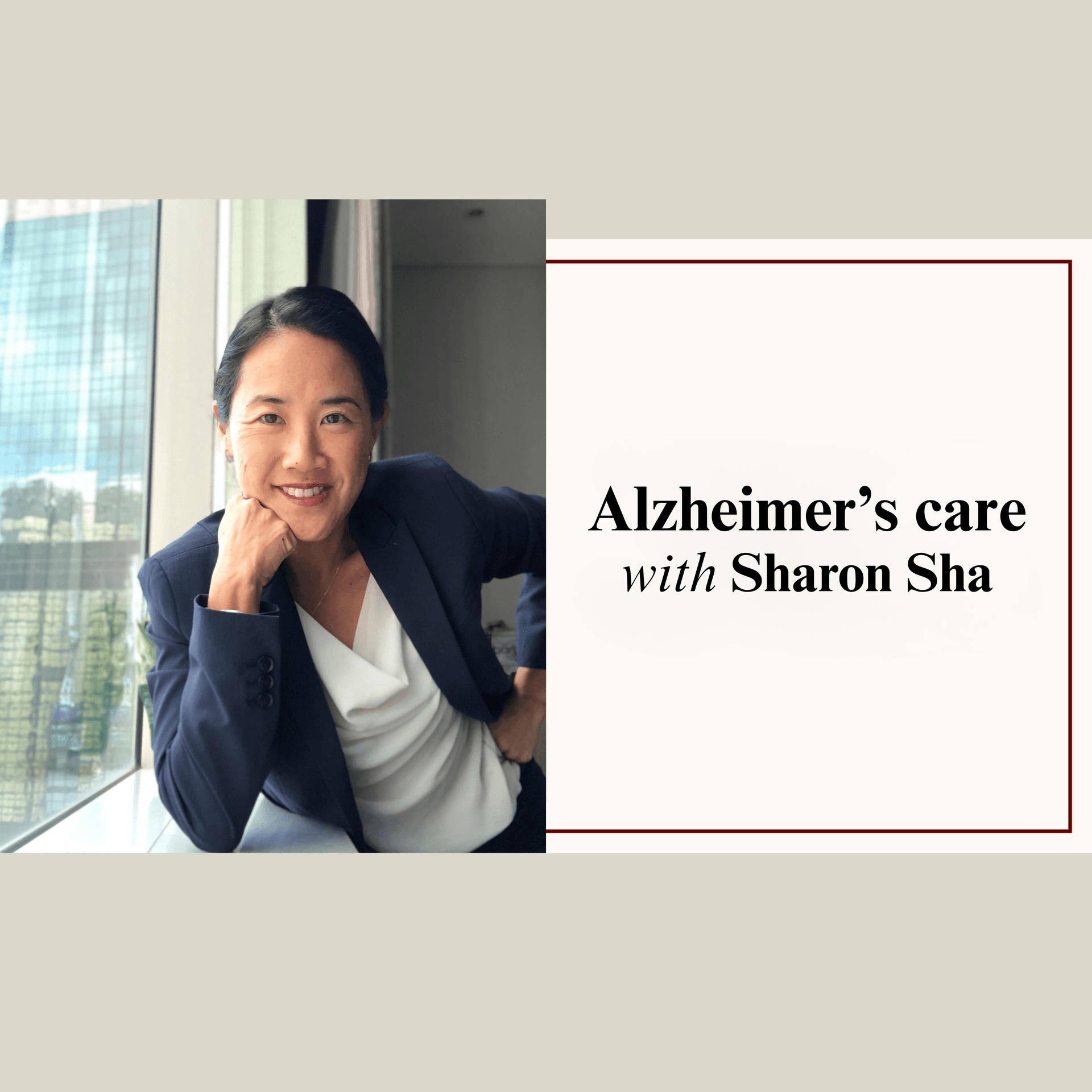
Dr. Sharon Shah, clinical professor of neurology and neurological sciences at Stanford Medicine; specializes in caring for patients with Alzheimer’s disease. Also referenced: Stanford Medicine’s Mike Gracious (discussed earlier in the episode).
Key claims
Dementia is a broad umbrella defined by cognitive decline that reduces independence; Alzheimer’s is the most common dementia type. Normal aging may slow processing and slightly reduce recall, but shouldn’t eliminate the ability to live independently. Diagnosis uses history, collateral input, cognitive testing, MRI, blood tests (e.g., thyroid/B12), and sometimes PET/blood/CSF biomarkers. FDA amyloid-removal drugs slow decline (not cures) and typically add ~5–7 months; side effects include brain swelling/bleeding requiring MRI monitoring. Risk can be decreased by managing vascular risks, staying mentally/socially engaged, exercising, sleeping well, and maintaining a healthy diet.
Notable examples
Dr. Shah’s clinical stories (e.g., an 80-year-old doctor mailing chocolates for his wife’s care; a 59-year-old man whose family moved back to Korea as symptoms progressed quickly). Her pivotal small trial giving “young plasma” to Alzheimer’s patients, reported as safe/tolerable with trends toward cognitive and independence improvement; mechanism hypothesized to involve youth-associated protein signatures. Caregiver guidance includes seeking respite (hiring help/day programs) and watching for progressive, consistent memory changes noticed by others.
Written by AI. May contain mistakes. Listen to the episode to check what was said.
Chapters
Tap a time to open that second in VOUnderstanding Alzheimer's Disease
0:45 to 3:30
Discussion about Alzheimer's genetics and personal stories from Dr. Shah.
“And it was really interesting to get a sense of what we know about how this disease develops in the brain.”
Innovative Research in Alzheimer's Treatment
3:30 to 7:20
Exploration of a clinical trial involving young blood and its implications.
“and families from prevention to as the disease advances.”
Distinguishing Dementia from Alzheimer's
7:20 to 11:00
Clarification of the differences between Alzheimer's disease and dementia.
“But it really did catapult a lot of interest in the field and in my sort of career.”
Diagnosing Alzheimer's Disease
11:00 to 14:01
Overview of the diagnostic process for Alzheimer's disease and related conditions.
“And of course, it should not be to a point where we can't live independently.”
Assessing Cognitive Function
14:01 to 14:40
Learn how cognitive function is assessed in patients showing symptoms of Alzheimer's.
“We want to make sure they're on that same age match control comparison.”
Communicating Alzheimer's Diagnosis
14:40 to 16:56
Understand the challenges and strategies in communicating an Alzheimer's diagnosis to patients and families.
“But let me just take you sort of from where we are now.”
Stages of Alzheimer's Disease
16:56 to 19:28
Explore the stages of Alzheimer's and what they mean for patient independence and care.
“And Sharon, in a typical patient, I know there probably is no such thing, but what would the stages of Alzheimer's disease look like?”
Supporting Caregivers
19:28 to 22:48
Discover the importance of caregiver support and resources for managing Alzheimer's care.
“those guardrails for treatments, and how do we support someone, whether they're living independently or thinking about hiring help or moving.”
Understanding Alzheimer's Pathology
22:48 to 27:31
Gain insights into the underlying pathology of Alzheimer's and the role of new treatments.
“patients and fail means to look into early on, because the patient may even love that opportunity.”
Reducing Alzheimer's Risk Factors
27:31 to 28:00
Learn about modifiable risk factors and lifestyle changes to potentially reduce Alzheimer's risk.
“OK, so is there anything people can do to prevent Alzheimer's in the future?”
Show all 14 chapters
Understanding Alzheimer's Risk Factors
28:00 to 30:06
Learn about the risk factors for Alzheimer's and lifestyle changes that can help reduce them.
“Age is one, but we can't change our age.”
Recognizing Symptoms in Elderly Family Members
30:06 to 31:25
Discover how to identify potential signs of Alzheimer's in elderly relatives.
“So those are some of the main factors besides the sleeping well and that balanced, healthy diet.”
Coping Mechanisms for Healthcare Professionals
31:25 to 34:19
Explore strategies for healthcare professionals to cope with the emotional toll of Alzheimer's care.
“So Sharon, if for those of us that have elderly family members, what should we be looking out for?”
Hope in Alzheimer’s Research and Clinical Trials
34:19 to 36:27
Learn about advancements in Alzheimer's research and the hope they provide for patients.
“And that daily exercise gives me a little bit of my meditation, if you will.”
Transcript
Automatic transcript. May contain errors.0:06Sharon Sha:Welcome to Health Compass. I'm your host, Maya Adam, Director of Health Media Innovation at Stanford Medicine. There have been a lot of developments in what we call biomarkers. So these are markers of the biological pathology where we can do blood tests and see, or spinal fluid tests and see neurodegeneration or inflammation. So that's really exciting in terms of developments of ways to diagnose this disease.
0:39Sharon Sha:I had a fascinating conversation with Stanford Medicine's Mike Gracious about the complexities of Alzheimer's genetics. And it was really interesting to get a sense of what we know about how this disease develops in the brain. Now, I want to zoom out and talk about what an Alzheimer's diagnosis means to real people and their families. And for that conversation, I'm privileged to speak with Dr. Sharon Shah, a clinical professor of neurology and neurological sciences. Sharon, thank you so much for joining us today. It's a pleasure to be here. Thank you for inviting me. You know, Sharon, I always ask my guests to share a story that's meaningful to them.
1:29Sharon Sha:It can be, you know, what drew them to this field of medicine or a milestone discovery or something else that sort of has shaped your career as a physician who specializes in caring for patients with Alzheimer's disease. Gosh, so I put some thought into this and I couldn't pick one. so you're going to have to edit out if I talk too long. Okay. When I think about what drives me as a physician and researcher, there's no one patient, but there are stories like the 80-year-old doctor who sends me chocolates every holiday by mail as a thank you and appreciation for taking care of his wife. And every time I receive them, I think, gosh, the postal cost for this is more than the chocolates.
2:23And I feel guilty because I don't have more to offer him and his wife in terms of treatments. It's the 59-year-old man who's so young that his son is the same age as mine. And his wife said they're going to move back to Korea for more support because he's had to quit his job and he's progressing so quickly. It's those patients who are in their early 60s who are really hoping for a cure. And they send me an email. These two men, they send me an email. There's two separate patients almost every month about some article that they just read and said, hey, what do you think about this treatment? Is that right for me?
3:04So it's these patients that pull at my heartstrings that motivates me to see patients, but also to offer them more. Right now, we have a lot of developments, a lot of exciting developments in this field, but we still need more in terms of a cure, in terms of prevention, in terms of offering treatments that really can help patients and families from prevention to as the disease advances. So those are sort of my personal clinical stories, but I also have one that's related to sort of a pivotal time in my career, if you want to hear that.
3:44Sharon Sha:I'd love to. so relatively early in my career and I think a lot of probably yourself too is serendipity and it happened to be that you know I've been still you know motivated um to find a a cure for patients and I've been wanting to do clinical trials since the inception of joining faculty at Stanford um and it happened to be such that I had an opportunity to lead a clinical trial in which we gave young blood to patients with Alzheimer's disease. And you can imagine that that really stoked a lot of interest and condemnation from media and researchers alike. The idea of blood transfusions is not new, but this is young plasma that we were giving to patients with Alzheimer's disease in a small clinical trial to see if it was safe and tolerable.
4:40And what we found in this small number of patients is that not only is it safe and tolerable, as we would expect, was that there were trends for cognitive improvement in the patients who got it and trends for improvement in independence. And so that stoked a wide range of media interest. And it threw me into sort of the limelight, so to speak, with press, but also some recognition in the research community. And so that sort of, I think, was a pivotal time in my career that gave me more opportunities to expand my research and more recognition of what I do.
5:18Sharon Sha:Wonderful. And I'm just curious, this wasn't one of the questions I had prepared to ask, but Sharon, what was the mechanism of action, do you think? Yeah, you know, I think, well, one, we all sort of think, is there a fountain of youth? You know, is there something in young people that could be helping heal older people? So this was off the work of Tony Weiss-Carré in which he connected the circulatory systems of young and old mice. And he found that the old mice had improved memory and had synaptic sort of regenesis. So the neurons sort of growing better. And so that prompted this research. So the thought in terms of mechanism action, the thought is that in the young blood, there may be a protein signature.
6:11or maybe not just one, but several proteins that may be relative to youth, relative to healing, potentially helping sort of the neurons be healthier or even take care of themselves.
6:25Sharon Sha:Wow. And what's happened with that work? Is it ongoing? I knew you were going to ask that. So this was several years ago, and I don't even remember when this was published. so the company that funded the research continued to to work on this project with a proprietary plasma so so sort of plasma fraction if you will so you can it makes a lot of sense and there are a lot of ethical questions that came from the press about whether it was worthwhile to use the young to heal the old right so to have something and isolate what's in that blood would be the next step. And that was part of not only Tony's work, but the company that was funding that research.
7:08And then that company, I think, got bought by a big transfusion company. So then that work was going on externally. So I think the work is ongoing, but I don't know the next, the current steps thus far. But it really did catapult a lot of interest in the field and in my sort of career.
7:28Sharon Sha:Very exciting. Sharon, I want to back up a little bit and talk about some definitions. I feel like I hear Alzheimer's and dementia used interchangeably. Can you tell us if there's a difference between the two and whether one can have one without the other? Yeah, that's like the number one question that I get from patients and families. So thank you for that question. Um, so when we see, when we use the term dementia, the way I describe it is that it's a cognitive problem that, uh, causes decline in independence over time. So if it involves memory or other aspects of cognition, such as executive function, so the multitasking, planning, organizing part of the brain, or language, or other aspects of thinking, that can impair your ability to take care of yourself, living independently, holding down a job, doing your laundry, your shopping, your cooking, paying your bills.
8:27So all of that sort of encompassed with this term dementia, and there are several kinds of dementia. So Alzheimer's disease being the most common type of dementia among all age groups, we tend to equate the two. But Alzheimer's disease is one type of dementia. Lewy body dementia is another one. Robin Williams made that one famous. Vascular dementia, we now call it vascular cognitive impairment. So when someone has had strokes in the brain leading to this decline in cognitive function and independence. Frontal temporal dementia, Kreutzfeldt-Jakob disease, chronic traumatic encephalopathy, what we hear about in football players with the head injuries.
9:05So there's several different kinds and dementia is that umbrella term that we use.
9:09Sharon Sha:Okay. And, I mean, we all expect to some extent to lose our capacity to remember things as we age. Where is that line between normal memory loss and a pathological process? Very good question. And this came up a lot when we had our presidential elections and we saw some older candidates. And we think about, well, what is normal aging? You know, and I think a generation ago, we used to always think, oh, that's grandma. She's getting older. She can't remember. That's normal. And I think we used to think that was normal because the prevalence of dementia and Alzheimer's disease is so high as we get older.
9:54We're more likely to get Alzheimer's disease, maybe one in three, one in two people above the age of 80 or 85 have a type of dementia or Alzheimer's disease. So it's just more common. But that's not normal. So what's normal is that we might have slower processing speeds. So we're not thinking as quickly. We may not be able to hold as much information in our head, what we call our working memory. So what I used to like to compare to people is if you're of my age, you know, when we used to dial a telephone, even a rotary one, and I say, I'm not going to write down the phone number. I'll remember it.
10:29That working memory of seven digits is average, so to speak. But as we get older, maybe it's going to go to six digits, but it doesn't go to zero. Same thing with what we're able to recall. So we call our episodic memory, what we would recall at a later time. It shouldn't go to zero. We should be able to remember the conversation that you and I have. But maybe as we get older, it's all the details. Maybe if it's 10 components of our conversation, maybe it gets to nine or eight, you know. So the change over time should not be drastic. And of course, it should not be to a point where we can't live independently.
11:03We can't take care of all the components of running a household.
11:09Sharon Sha:So when a family comes to you, what are sort of the typical steps to this diagnosis? yeah so and i like how you asked whether when it's a family that comes to see me so oftentimes we ask for a family member a loved one a friend someone who knows the patient well enough to give us some collateral information and we don't i often try to make sure that i build that rapport with the patient to say you know no one's right or wrong here you know but if i'm going to forget I'm not going to remember that I forget until, say, my family member tells me, you forgot. So I think it helps to have the collateral information from family or someone who loves you to give support to understand and the insight.
11:59So we typically ask a series of questions about how long the symptoms have been going on, what the symptoms are. I think examples are always key because it helps me think about what part of the brain is working and what part of the brain is not working is the way it should. And we ask about, you know, how their independence is. That functional independence is what we use as criteria for dementia versus not dementia. And then typically we would ask, you know, about other medical conditions. If someone has a sleep problem, for example, we want to address that. We don't want to give someone a diagnosis because they have sleep apnea and they're not sleeping well and that's contributing to their cognitive dysfunction.
12:42We're looking at medications that they're taking because things like opiates, benzodiazepines, other types of medications could affect cognition and thinking. Typically, we need to make sure that we're not missing other things. So a picture of the brain. So an MRI is really the gold standard to ensure that there's no strokes, no bleeds, no other things. And then in the expert hands, looking at the MRI can help us compare what we might expect for a normal brain of that person's age versus atrophy or brain shrinkage in a pattern that we might expect with a certain disease. For example, in someone who has Alzheimer's disease, we typically see atrophy or shrinkage in the part of the brain called the hippocampus where that helps us form new memories.
13:30And you can see then, oh, if someone has memory problems, we're going to look carefully at the hippocampus and see if there's any damage or atrophy in that part of the brain. We do blood tests to rule out thyroid problems, a B12 deficiency because those can be fixed and addressed. and then you know we can't diagnose anyone without doing a cognitive test so we need to make sure that we're assessing their cognitive function in the clinical setting we typically do a screening test and if we need to do further testing we can refer them for a formal neuropsychological battery which is a probably an hour or two of tests that can compare their cognitive function against age matched controls with similar education just like you asked from the beginning someone is they're getting older, what's normal?
14:15We want to make sure they're on that same age match control comparison. And depending on where they fit in these sort of tests, we might do further tests. And we might get into this a bit later with the questions you have, but we have a lot of developments in the Alzheimer's fields in the past couple of years in terms of blood tests and PET scans and things that in the right clinical indication, we may also add those.
14:40Sharon Sha:I can't wait to hear more about those. But let me just take you sort of from where we are now. Say you have somebody, you know, a patient that you're pretty sure this is, you know, Alzheimer's disease. Can you tell us a little bit about how you approach communicating that to a patient and their family? You can imagine it's quite difficult, you know. giving someone a diagnosis that seems like it's terminal, whether it's cancer or dementia, any type of dementia, I want to make sure I give them the time to ask questions and understand what I'm saying. So like you started off with, what's the difference between dementia and Alzheimer's disease?
15:24I usually start off with some definitions so that they understand what I'm talking about. Oftentimes people come to me at an earlier stage. So what we didn't talk about was mild cognitive impairment. And mild cognitive impairment, I often say, is just what it sounds like. There's a cognitive problem, but it's mild enough that you're living on your own. You can do all these household chores without problems, or maybe a little more time, or maybe with a little bit of support. And oftentimes, people come to me in that stage of disease, mild cognitive impairment. So I'm not often jumping into, you have dementia, and this is the diagnosis.
16:05Oftentimes also in that earlier stage of disease, people have some insight into their difficulty. They may be able to recognize, oh, I think I have a bit of a memory problem. As the disease advances, there may be less insight and awareness of the difficulties, which makes it a lot harder to give that diagnosis. And I often then include the family members in this discussion so they can help support with the questions, with the diagnosis, with safety parameters, treatments, etc. But I think along this way, it's not first time I see you, I've given you a diagnosis of Alzheimer's disease. I think I try to set the stage.
16:45And usually there's a one clinic visit, we do a test to try to think about what may be going on, consider all the options, do the tests, and then come back where I've laid the groundwork for potentially what may be coming.
17:00Sharon Sha:And Sharon, in a typical patient, I know there probably is no such thing, but what would the stages of Alzheimer's disease look like? What would they have to expect? Yeah, well, if you look on the internet, and a lot of patients and families do, they'll say, oh, there's six stages of Alzheimer's disease. What does that mean? You know, I think that's a little bit easier for people to grasp because we don't often say, oh, you're in stage four, this means this, you're in stage six, this means X. Oftentimes I kind of say, well, you know, this may be part of normal aging. And I put it in that parameter.
17:36This looks like it's in this mild cognitive impairment category. You're noticing a problem. We're recognizing a problem, but you're still relatively independent. If we now say, oh, this is in the dementia stage where we say you're needing more help to support all the tasks that you need to do to run your household, We might then subcategorize that into mild, moderate, and advanced type of dementia. And I think for most people, that's a little bit easier to digest because some of those are little semantics, but it's not going to change the treatments that we provide. It may help support the family and understanding by getting some of the psychosocial support that a lot of families need.
18:20But that's sort of, I think, a little bit more comprehensible for patients and family.
18:25Sharon Sha:I'd love to hear more about that, the support of the family, because I can imagine that that's a huge burden and that that also is something you have to address. Yeah. And so even though the one patient is my patient, I often tell them, you know, this is a family that I'm taking care of. and as much as sometimes the patient comes to me it's often a family member a loved one that sort of drag them in to see me in the first place because they're recognizing something that the patient isn't as aware of or doesn't recognize the severity so we have that discussion and at different stages of disease and as we said earlier the the stage really is hinging upon independence.
19:15So if there's less independence as the stages of disease advance, then it requires more support. And that typically comes from families. So as you're insightfully asking about, the family really needs to be there to provide those safety parameters, those guardrails for treatments, and how do we support someone, whether they're living independently or thinking about hiring help or moving. And that's not something we talk about in the first clinic visit. It's the relationship that we have over time where we can then modify. It sounds like this is happening now. Have you thought about X? Have you thought about getting more help?
19:56Have you thought about what it would look like if you needed more help? How would that come about for you? What would you want? So we have to have those discussions and thinking about it as time goes by and as the symptoms change.
20:14Sharon Sha:And are there established resources for the caregivers to, I mean, to support their self-care as they care for their loved one? So for, I mean, it's a good point. For self-care, I often have to remind them, meaning the caregiver, the loved one, they need to take care of themselves. And as a mom myself, I used to sort of sacrifice my time and sleep and eating to take care of my children, especially when they're very young and they need more help. But as we all know, we're not as present if we haven't taken care of ourselves. So if we haven't slept, We have less patience. You know, we're not fully cognitively sharp either.
21:04You know, so a lot of the perception and value that we give that loved one can be even better when we've taken some respite for ourselves. But that's not always feasible. So as much as I can, I would encourage that family member to find ways to give themselves respite, whether it's hiring someone or having some routine. and even though they might say, oh, we don't need it right now because they feel so devoted or they might feel that that's their responsibility. But a lot of times outsourcing to someone else for some activities might actually be better for both of them. And that's where I think that caregiver is more willing to accept it.
21:51If they feel like it's all on them, they might feel guilt and trying to take time for themselves, but understanding that you both probably had, if I'm thinking about spouses here, you both probably had lives of your own and then came together at the end of the day to talk about your day. Oftentimes it actually makes the relationship better when you're both doing something and you come back and be there for each other to have a conversation or just appreciate each other rather than being the caregiver and supervisor of that other person. But to get to your question in terms of established resources, there are not a set of standard resources.
22:30And there are some that we tend to refer patients to, like the Alzheimer's associations, but there's so many other ones, depending on the local area, whether they're support groups or hiring caregivers or day programs and senior centers and things like that. Those are all things that I would encourage patients and fail means to look into early on, because the patient may even love that opportunity. Right.
22:56Sharon Sha:Okay, Sharon, I want to switch gears a little bit and talk a bit about the kind of understanding in your field about the underlying pathology. I had a fascinating conversation with your colleague, Mike Gracious. Yeah. And he was telling me about some of the available treatments that target the amyloid plaques. And he said that there's sort of somewhat of a split in the field in that some people believe they're more helpful than others. How do you feel about those types of drugs? And do you use them? Yes. So I love Dr. Gracious. He's fantastic. If you search on the internet, you'll see publications by him and editorials about how he does not think that those types of drugs are as beneficial.
23:43So he's a little bit more or further along on that spectrum. I would say I'm not a big proponent. I'm not rah-rah about it. But in someone who leads clinical trials, I'm a lot more open about new drugs and new mechanisms. I'm also a lot more familiar in how they experience with these drugs because I use them in clinical trials. So I was one of the early experts in understanding the side effects and being able to manage it. I think if I was someone who wasn't part of the clinical trials, I'd be a lot more reticent. So in answering your question about the pathology, we tend to think about two proteins that build up in the brain.
24:24One is the amyloid plaques, as you mentioned. The other is the tau tangles, so made up of tau protein. And those were critical to the pathology and diagnosing Alzheimer's disease, pathologically speaking. But we're recognizing further and further that there are other components to pathology, whether it's neuroinflammation, neurodegeneration. They're a little nonspecific, but they're still part of the disease process. And so we are there have been a lot of developments in what we call biomarkers. So these are markers of the biological pathology where we can do blood tests and see or spinal fluid tests and see not only the amyloid and tau levels in those fluids, but potentially markers of neurodegeneration or inflammation that may also go along with the disease.
Read the full transcript
25:16So that's really exciting in terms of developments of biomarkers and ways to diagnose this disease. In terms of the treatment that you're asking, it's really exciting that we have opportunities potentially to remove amyloid and then potentially then slow down the disease process. What we haven't had in the past is a drug that we say is disease modifying. So if the progression of the disease is a regular steady slope, this might actually attenuate that slope in a way that we have not had before. But I think what's really important when I counsel patients and families, because they say, there's a new drug, I want that.
25:53You know, there's things to be aware of. As a new drug, you know, we don't have a lot of long-term data about how that can be beneficial. They might think it's a cure. It's not a cure. It's to slow down the disease process. You're not going to notice improvement. It's just that there's less decline over time. And on average, these two new drugs that are available that are FDA approved, on average, buy someone an extra, say, five to seven months of time in that disease stage. So it's not like I'm cured forever. I'm going to stay stable in this. It's buying you a little bit of extra time. And then each of all these, this class of drugs have side effects that are more concerning than the typical pills that we have been using in Alzheimer's disease in the past.
26:42And that's brain swelling and bleeding. It's, it tends not to be symptomatic. And most of the time it resolves on its own, but it requires a lot of monitoring with MRIs. And some, there are very few, but there are some can be fatal and very serious that requires hospitalization. So it's not without its own caveats and requires a great deal of oversight and discussion with patients and families about, is this right for you? Do you want to go through this? I tend to compare it to, say, early days of chemotherapy. You know, it's not just one treatment and you're done. You need to have the oversight.
27:17It's a regular sort of care system. We involve our social worker when we talk about this with patients and families. And with the early days of chemotherapy, it's not the fix, but it's buying you a little bit more time. And this is what we have. So it's exciting. And there's going to be new iterations as time goes by, too.
27:35Sharon Sha:It's fascinating. OK, so is there anything people can do to prevent Alzheimer's in the future? Are there any things that you do or that you recommend that other people do to prevent this? Absolutely. So I would not say, I can't say prevent completely. I would say decrease our risk. And so we have risk factors. We know what the risk factors are. Age is one, but we can't change our age. I can't, I talked about young blood, but we can't stay young forever. So we can't change our age, but we have certain modifiable risk factors. So we can't change our age. We can't change our genes. But some of the modifiable risk factors, lifestyle measures is basically what you're asking.
28:21You know, so we know that low education is a risk for developing Alzheimer's disease and other types of dementia. So keeping your brain active doesn't mean they go need to get another degree or do the Sudoku, you know, or crossword puzzles. But keeping your brain stimulated is helpful. I feel like I'm stimulating my brain talking to you in the work that I do. similarly vascular disease whether it's high blood pressure high cholesterol diabetes smoking all of those are risk factors so by not doing any of those or taking care of those that really helps decrease the risk and what i really love telling people to do because this really is there's so much data now supporting this is exercise um and it really you know telling patients and families all the time you got to exercise exercise exercise people really want to take a pill if we could bottle exercise, everyone would do it.
29:16But there's so many benefits to exercise besides the fact that it improves vascular disease and makes your heart better. There's something that's creative when we're exercising that potentially may be helping those neurons stay healthy. Some people hypothesize it's BDNF, so brain-derived neurotrophic factor, but we don't know. We get endorphins that happen when we exercise. There are other things that might be fertilizing our brain when we exercise. Helps you sleep better. Helps you feel better. You know, and if you can join that with socialization, which is the other thing I talk about, we all recognize during the pandemic when we're isolated, we felt worse cognitively, we got worse.
29:59So if you can combine the exercise with socializing and keeping your brain sharp, then you're really knocking three birds out with one stone. So those are some of the main factors besides the sleeping well and that balanced, healthy diet.
30:12Sharon Sha:Yeah. So it sounds like what you're saying is that if we just do the things that will generally support our health, we will simultaneously be reducing our risk of getting Alzheimer's disease. Yes, yes. So it's just sort of whatever your parents told you when you were growing up, you got to do, you got to do it, you know, but it really supports your brain health. And you don't have to wait till you're 50, 60, 70, 80. more likely you're going to benefit if you have a lifestyle of this from a young age and keep that up and i think it's so much easier to maintain um if it's part of your routine and your lifestyle your entire life but it doesn't also mean that it's not too late so if you were never like that do it now it might even be more critical if you were never like that you know yeah so it became so this is what i do now i try to exercise i told you earlier i jumped in the pool i swam quickly while I had time.
31:07It's because I needed to practice what I was preaching, but it does make me feel better. But I also try to tell people, give yourself a little bit of grace that if it didn't happen today, you know, target one thing and then tomorrow do it again.
31:22Sharon Sha:Interesting. Okay. So Sharon, if for those of us that have elderly family members, what should we be looking out for? yeah it's a really good question i hate to say one thing like oh if they have memory problems you know because everybody's a little different and everybody might have um symptoms that could be part of normal aging too so i think if we're seeing a pattern and we're seeing a pattern that's consistent and progressing that might prompt attention to go seek out a health professional to look into this more. So for example, and it doesn't mean that you have to look for this thing, but if we are noticing memory problems, for example, we'd say, hey, she told me that story, you know, and you know, my mom will tell me the same story over because she really wanted to.
32:11But if other family members, other friends are noticing, if it's getting worse, and you before used to say, notice it once a week, but now it's because you only talk to each other once a week, but now it's every day, that consistency might prompt more attention so that we could potentially intervene and get it diagnosed and checked up.
32:32Sharon Sha:I'm curious, other than the sort of physical activity, do you have specific things that you do, both to protect yourself mentally, but also to kind of cope with what I imagine is a very taxing job at times? Thank you for that question. You know, I was thinking about this when, yes, I was in the pool, but when I was thinking about the story that you were asking me for, and because the story that I told you about these different patients are pulling at my heartstrings, and though it motivates me, it does make me sad. And whether someone's young or in their 80s, 90s, and they've had their whole life, it's still striking to see the changes in a person and how it affects their families, seeing that loved one change because they're not the same and they don't recognize it.
33:30So I don't have a catch-all. I remember telling one of my trainees once, you need to find something that grounds you because it is hard to see. The trauma that we see gives us our own sort of trauma. We see this from the pandemic that we saw emergency workers, critical care workers, dealing with sort of what was called PTSD because they were frontline. And we never recognized physicians and people in the healthcare professional as sort of frontline before until we saw so much death. So to see someone lose sort of their personality, their independence, what makes them who they are is sad. not only for me, but also for the family members.
34:18What I try to do is appreciate my own family, appreciate my health. And that daily exercise gives me a little bit of my meditation, if you will. I would love to meditate more, truly meditate, but it does help me process. And I just let myself cry sometimes and grieve for the families that I saw that I had to be strong for.
34:45Sharon Sha:Well, I just, I'm so grateful that we have you at Stanford, you know, so thank you for everything that you do. I just have one or two more questions for you, Sharon. What is it that gives you hope in this field? Yeah, I think the clinical trials that I've been part of and feel very lucky to be part of gives not only me hope, but the hope that I can share with patients. That's how I can translate the research that I do directly to the clinic. When I was thinking about what kind of research I wanted to do when I was a trainee, the basic science and something under a microscope was too distant to me to be able to say, hey, we have this drug.
35:36This may actually work for you. And I think because we've had sort of hit a critical threshold where there have been developments in drugs, we're seeing interest in the field so much more to say, yeah, we have these drugs, but that's not sufficient. So there's so many people saying we need more, not only reiterations of this to be safer, but different mechanisms. So to target that tau or the neurodegeneration, let's think about inflammation. How are we going to target that? And so many people are interested in this area. So I feel very lucky. And so much has changed in the past even five years that's collaborative, that's supportive, that's inclusive in getting this work done.
36:18That gives me so much more hope for being able to find something for my patients and families.
36:26Sharon Sha:Well, Sharon, I really think that we've learned so much today. I've taken notes. I've had my brain stimulated by you. and I just, it's inspiring to hear about your work. So thank you so much for making the time to be with us today. Thank you for having me, I appreciate it. Thank you for listening to Stanford Medicine's Health Compass podcast. If you like what you heard today and want to keep up with Health Compass, you can subscribe on Apple Podcasts, Spotify, the Stanford Medicine YouTube channel or wherever you listen.
37:05Thank you.