In short
Stanford Medicine Health Compass - Episode Summary
Episode Title
S3 Ep5: Can protecting neurons change the future of glaucoma care?
Host and Guest
- Host: Maya Adam, MD
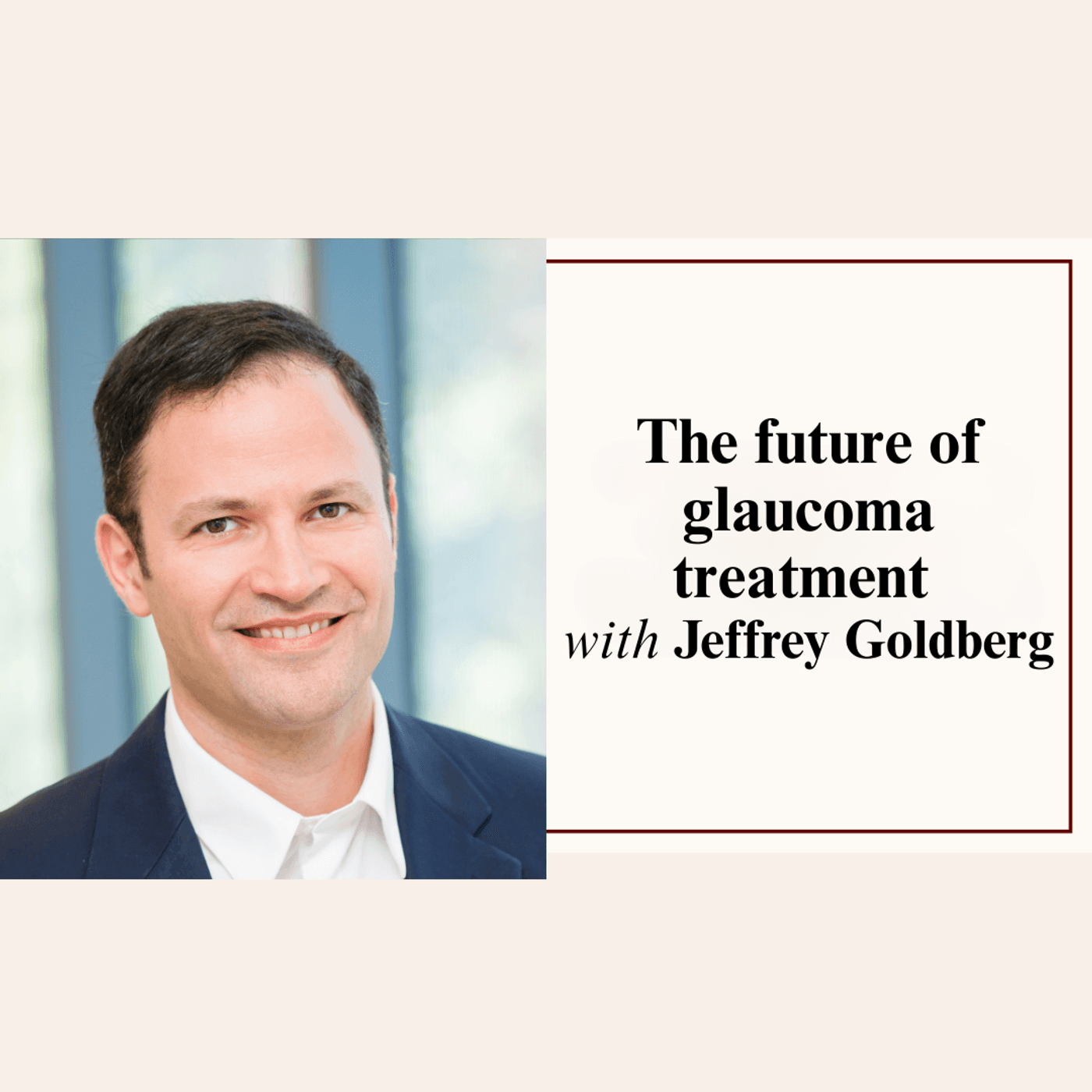
- Guest: Jeffrey Goldberg, Physician-Scientist, Stanford Medicine
Episode Description This episode discusses the serious implications of glaucoma, often referred to as the "silent thief of sight," and explores Jeffrey Goldberg's research aimed at not just slowing its progression but actively protecting and strengthening the neurons responsible for vision.
---
Key Topics Discussed
Understanding Glaucoma
- Definition: Glaucoma is a neurodegenerative disease that damages neurons connecting the eye to the brain, leading to vision loss.
- Statistics: Over 76 million people globally suffer from glaucoma, making it the leading cause of irreversible blindness.
- Symptoms: Often asymptomatic in early stages; patients may not be aware of their condition until significant vision loss occurs.
Risk Factors
- Primary Risk Factors:
- Increased Eye Pressure: Commonly associated with glaucoma but not definitive; up to 50% of patients have normal eye pressure.
- Aging: Higher risk as age increases; glaucoma can affect individuals at any age, but most cases appear later in life.
- Genetic Factors: Family history significantly increases risk (20% for those with affected parents).
Diagnosis and Screening
- Screening Guidelines: Recommended for individuals with family history or over age 50, typically during routine eye exams.
- Diagnosis Methods:
- Measuring intraocular pressure.
- Examining the optic nerve.
- Visual field tests to assess peripheral vision.
Current Treatments
- Primary Treatment Strategy: Lowering eye pressure.
- Methods:
- Prescription eye drops.
- Laser therapy.
- Surgical options for advanced cases.
Research and Innovation
- Goldberg's Focus: Developing therapies that protect the neurons themselves rather than only lowering eye pressure.
- Research Approaches:
- Investigating molecular and cellular pathways affecting retinal ganglion cell survival.
- Exploring neuroprotection and regeneration of optic nerve fibers.
Challenges in Translation to Clinical Practice
- Research to Real-World: The journey from laboratory findings to clinical trials involves careful consideration of safety, the selection of patient populations, and rigorous testing phases.
- Phases of Clinical Trials:
- Phase 1: Initial safety testing.
- Phase 2: Assessing efficacy in a larger group.
The Future of Glaucoma Care
- Hope for Patients: Although there is significant unmet need, ongoing research holds promise for new treatments in the future.
- Advice for Aspiring Researchers: The field offers emotional and intellectual rewards, with a strong emphasis on collaboration and innovation.
---
Key Takeaways
- Glaucoma is a complex condition that requires a multifaceted approach for diagnosis and treatment.
- Current treatments focus on pressure reduction, but emerging research aims to protect and regenerate neuronal function.
- Understanding the neurodegenerative aspects of glaucoma is essential for developing effective therapies.
- The pathway from lab research to clinical application is slow yet crucial for patient safety and treatment efficacy.
Closing Remarks Jeffrey Goldberg highlights the dual role of being a clinician and a researcher, emphasizing the emotional rewards of patient interaction alongside the intellectual stimulation of scientific inquiry. The episode concludes with a call to action for continued research and awareness around glaucoma and its impacts.
---
For further insights, follow the Stanford Medicine Health Compass podcast across various platforms.
Written by AI. May contain mistakes. Listen to the episode to check what was said.
Chapters
Tap a time to open that second in VOUnderstanding Glaucoma and Its Impact
0:46 to 1:49
Overview of glaucoma, its prevalence, and its effects on vision.
“Even with early diagnosis and excellent care, some patients continue to lose vision.”
Jeffrey Goldberg's Journey in Medicine
1:50 to 5:00
Jeffrey shares his personal story and journey into ophthalmology.
“personal or their professional lives that sort of led them to where they are today.”
Pressure and Challenges in Vision Care
5:01 to 6:10
Discussion on the pressures faced in ophthalmology and patient care.
“of the way in which we experience the world.”
Explaining Glaucoma to Patients
6:11 to 8:02
Jeffrey describes how he explains glaucoma and its degeneration process.
“And I think coming to peace with that and just being the best you can for your patients is how we have to approach that.”
Risk Factors for Glaucoma
8:03 to 10:38
Discussion on the risk factors, including age, pressure, and genetics.
“Those are the photoreceptors that let you see at night and in the day and dim light and bright colors.”
The Sneaky Nature of Glaucoma
10:39 to 12:12
Exploration of glaucoma's subtle onset and its impact on vision.
“some people get glaucoma and some people don't.”
Screening Guidelines for Glaucoma
12:13 to 14:01
Jeffrey discusses the importance of screening and guidelines for glaucoma.
“And in fact, when you do community surveys, where you take, let's say, everyone just walking into the grocery store and screen for eye disease, including glaucoma.”
Understanding Glaucoma Screening and Treatment
14:01 to 17:43
Learn about the importance of eye screenings and current treatments for glaucoma.
“As we need reading glasses, you know, again, you might go in and just have a checkup that way.”
Research on Neuronal Protection in Glaucoma
17:43 to 20:50
Discover ongoing research aimed at protecting neurons in glaucoma patients.
“that said it's a significant fraction of patients who even with the best care even with the eye drops the surgeries getting their even with getting their pressure down they still progress.”
Challenges in Translating Laboratory Findings to Trials
20:50 to 22:58
Understand the complexities of moving research from the lab to clinical trials.
“So in general, what would you say about sort of which ideas are most likely to make it from the lab into clinical trials?”
Show all 15 chapters
Detailed Process of Conducting Clinical Trials
22:58 to 28:09
Gain insight into the phases and considerations of clinical trials for glaucoma therapies.
“have to get into in order to really make progress in glaucoma.”
Phased Clinical Trials for Glaucoma
28:09 to 29:28
Learn about the different phases of clinical trials in glaucoma research and the importance of patient safety.
“We often talk about trials happening in phases, you know, a phase one study that's going to be a first in human, really focused on moving slowly, checking very carefully for safety.”
The Challenge of Patient Expectations
29:28 to 31:20
Explore the tension between scientific progress and patient urgency in glaucoma therapies.
“I can imagine that sometimes you become impatient, maybe, when it seems to be moving more slowly.”
Career Insights for Aspiring Researchers
31:20 to 33:55
Discover valuable advice for young researchers considering a career in clinical science and ophthalmology.
“And, you know, I sometimes say to patients that we're in a tough middle spot right now, because 20 years ago, we would have just said, hey, you're going to go blind.”
The Innovative Field of Ophthalmology
33:55 to 35:28
Learn about the innovations and collaborative nature of the field of ophthalmology.
“It's very innovative, first of all, broadly speaking.”
Transcript
Automatic transcript. May contain errors.0:06Jeffrey Goldberg:Welcome to Health Compass. I'm your host, Maya Adam, Director of Health Media Innovation at Stanford Medicine. We actually have a lot of really amazing candidate therapies, pathways, genes and molecules and also cells that we can look at treating as potential treatments to help people. in glaucoma.
0:36Jeffrey Goldberg:More than 76 million people worldwide are living with glaucoma, and it's the leading cause of irreversible blindness. Even with early diagnosis and excellent care, some patients continue to lose vision. Glaucoma is a neurodegenerative disease that damages the cells carrying visual information from the eye to the brain. Because that damage happens slowly and often without early symptoms, it's known as the silent thief of sight. Many people don't realize they have it until vision loss is already advanced. Jeffrey Goldberg is working to change that. As a physician scientist at Stanford Medicine, he's developing new approaches aimed not just at slowing vision loss, but at protecting and strengthening vulnerable neurons.
1:34Jeffrey Goldberg:Today, we're talking about why that shift matters and what it could mean for patients. Jeffrey, thank you so much for making the time to join us today. It's really a pleasure to be here, Maya. So I always like to start by asking our guests to share a story, something from either their personal or their professional lives that sort of led them to where they are today. Do you have something to share with us? Well, I have to say, I feel like I've had quite a bit of serendipity that has helped, you know, and certainly a few moments of naivete as well that have led me to where I am today. I came to Stanford actually as an MD PhD student in the medical scientist training program years ago.
2:28And I knew I had an interest in neuroscience for my undergrad studies and wanted to study something related to the brain, big picture questions, you know, why do we sleep? How does memory work, consciousness, you know, the things that attract us into neuroscience. And it was the year actually that Christopher Reeve, the actor, had his horseback riding accident and was paralyzed from the neck down. And there was a big burst that year into research in regeneration in the central nervous system. I joined the lab of Ben Barris, a professor then who's unfortunately now passed away. Ben was a fantastic mentor.
3:14And we studied regeneration in the central nervous system, albeit in the optic nerve, where his studies were really focused in the retin and the optic nerve. And because it was that era, I went through my entire PhD, opening every lab meeting, every lecture with a discussion about how the optic nerve was a really great model system for the spinal cord, for spinal cord injury. It had all the same central nervous system, neurons and white matter. And it wasn't until I got to the very end and was transitioning back to medical school that again, like I naively realized that the optic nerve is also a really good model for the optic nerve.
4:03We have diseases in the optic nerve that I was almost blithely unaware of all of those years. And so when I came back to medical school, the portion where you rotate among the different areas and decide what area you want to specialize in, I was really attracted to ophthalmology. And knowing that I wanted to be a clinician scientist, knowing that I wanted to spend a significant portion of my career doing the research that relates to the diseases that I would see in the clinic, knowing that we had enormous unmet need in ophthalmology and diseases, which we can talk about. I veered into ophthalmology and really haven't looked back since.
4:49It's been a really, for me, fantastic decision and a fantastic area of research and innovation and clinical care for me.
5:00Jeffrey Goldberg:Jeffrey, vision is such a critical part of the way in which we experience the world. And I wonder what it's like to work in such a high stakes field. Yeah, there's pressure. There's pressure in every area of medicine. The New York Times did a poll some years ago, a few years ago. And after death, vision was the next most important thing that people in this poll, in this particular poll, you know, said was next most important. And so, yeah, there's a lot of pressure. We are blessed that, you know, a lot of situations, you know, the eye and the rest of our body can heal itself. And so we're fortunate as doctors and as surgeons when that happens, but we have a lot of unmet need in ophthalmology and a lot of diseases where people lose vision and we can't make it better.
5:59And there we have to fall back on hopefully being great doctors to our patients and helping them through that process. So, So, you know, there's pressure, but there's pressure in lots of areas of medicine. And I think coming to peace with that and just being the best you can for your patients is how we have to approach that.
6:21Jeffrey Goldberg:Okay, speaking of pressure, I'd love to move into a discussion about glaucoma. And I have to tell you, I have two parents in their 80s, both of whom have glaucoma. And my whole adult life, they have said to me, keep an eye on your pressure. You must get your pressure and your eyes checked because we both have glaucoma. So I have always, it sounds like maybe incompletely or inadequately understood this disease. So I'm really looking forward to learning from you today. Can you tell us more about how you describe glaucoma to patients and what it's like to have glaucoma? Yeah, sure, of course. Yeah.
7:05So first of all, probably the most important thing to point out is that glaucoma is not just a disease of having high eye pressure. And we commonly think about it that way because it is one of the screening tools that when you go get your eyes checked with an eye doctor or an optometrist, getting glasses. It's part of the exam that's part of the screening for glaucoma. But glaucoma is actually a neurodegenerative disease. And just like we have other neurodegenerative diseases, for example, in the brain or spinal cord, you know, Alzheimer's leads to specific neurodegeneration of the neurons and pathways that are involved, for example, in memory, cognition.
7:53Glaucoma is a neurodegenerative disease, and there it just happens to be specific to the neurons that connect the eye to the brain. So in your retina, you have rods and cones. Those are the photoreceptors that let you see at night and in the day and dim light and bright colors. And those connect through interneurons in the retina to retinal ganglion cells. They're the neurons in the retina that collect all the visual information, and their fibers run down. They make up the optic nerve that carries all of the visual information from the eye to the brain. And they're the cells that degenerate in glaucoma, which is actually the number one cause of irreversible blindness in the world.
8:41And glaucoma actually has two major risk factors. One is increasing eye pressure, but about half the patients in the world with glaucoma have it starting with normal eye pressures. The second major risk factor for glaucoma is actually increasing age. You can get glaucoma as a baby or a child, but most glaucoma accumulates as we age. We don't diagnose glaucoma just based on the pressure because, as I said, we would miss half the patients with glaucoma. We actually have to look at and measure the structure and the function of the optic nerve, which we can see in the back of your eye when we do your eye exam.
9:25That's how we diagnose glaucoma. Then once we decide that a patient has glaucoma, then we get into the treatments, which include reducing the eye pressure in various ways. Okay.
9:41Jeffrey Goldberg:You mentioned as risk factors, increasing pressure and age. What about genetics? Am I at greatly increased risk by having two parents who both have glaucoma? Yes. Depending on the population that you study, about one or two percent of people over a certain age, let's say over age 50, will have glaucoma. But if you have a primary family member, a parent or a sibling with glaucoma, then that risk increases from about 2 % to about 20%. So it's about a tenfold increase in risk. So there's clearly a significant component of genetics that plays into glaucoma and your family history. But it's not like if you have a parent or even two parents with glaucoma that you're 100 % going to get glaucoma.
10:38There are other factors that we don't really understand why some people get glaucoma and some people don't. And also, by the way, why some people get like kind of a really bad, aggressive form of glaucoma that damages their vision quickly. And others have a very light, slow version of glaucoma that they can handle throughout their lives without a significant loss of vision.
11:03Jeffrey Goldberg:And Jeffrey, is it a bit in some ways, are there parallels to like hypertension where this is something that is damaging, but we don't feel it happening? Yes. You know, you don't feel your eye pressure. The one exception is if your eye pressure goes up all of a sudden, very high, as happens in thankfully unusual situations called angle closure or acute angle closure glaucoma, if it's just creeping up a little bit over a lifetime, and it's just kind of running a bit high, putting you at higher risk, we don't feel that at all. Well, the other thing I'll mention is that glaucoma tends to damage your peripheral vision first, and then over time comes in and pinches off the center of your vision.
11:53And of course, people can go completely blind from glaucoma that way. But between not being able to feel that your pressure is high, and also often not noticing when your peripheral vision is down a bit earlier in the disease, glaucoma is actually called the sneak thief of sight, because patients really don't know. And in fact, when you do community surveys, where you take, let's say, everyone just walking into the grocery store and screen for eye disease, including glaucoma. You'll find, again, a few percent of patients have glaucoma, people have glaucoma, but only 50%, only half of them knew.
12:35So half the people with glaucoma are walking around and don't even know they have it because it's sneaky that way. You don't notice early in the disease.
12:46Jeffrey Goldberg:So what are the screening guidelines? Is there an age or is it, if you have genetic risk factors or how do you decide who to screen? You know, we do tell people that if you have it in your family, get screened earlier. It doesn't hurt to get a checkup even in your 20s. If you have 50 something year old patients, parents who have glaucoma, one or the other has glaucoma or certainly siblings, definitely get screened. But because age is a risk factor, if you're pretty normal in your 20s or 30s, you don't have to necessarily get the full bore checkup every year. Most people will come to an eye care checkup at some point in their 40s or 50s, either because they needed glasses even before then.
13:39About half the people in the country need glasses. You know, you're nearsighted or farsighted or have a stigmatism, just a regular need for glasses. And when you go in for glasses, they'll do some of that screening, look in your eye, check the pressure. Also, as we get older and start to need reading glasses, you know, I use those too. As we need reading glasses, you know, again, you might go in and just have a checkup that way. And so that screening will get done. And at some point, hopefully anyone over age 50 has gone in for a screening exam for their eyes at least once. And again, if you're all clear at that stage, you don't have to make that an annual event, especially as you're younger.
14:26Jeffrey Goldberg:And Jeffrey, that screening is a measuring of the pressure as well as something else or just a measuring? Yes. It really should include a measuring of the pressure because, again, that is a significant risk factor. And we'd want to know that, you know, you'd be treated differently if you had high pressure. Even if you have high pressure and nothing else, you might be a good candidate for treatment to prevent glaucoma from starting. And then also looking at the optic nerve. So, again, when we examine into the back of the eye with our lenses in the clinic, we can see the optic nerve head. And the optic nerve, when it's degenerating from glaucoma, has some very typical examination findings that any ophthalmologist or optometrist should be able to screen for in those screening exams.
15:18We can also now do testing in the office and there are laser imaging scans that can be done to take a picture of the fibers around the optic nerve head and in the center of the retina that are a very effective way to screen for glaucoma. And of course, testing your peripheral vision, which is the best way truly is to get what we call a visual field test. And that's an exam where one sort or another, we show lights into your peripheral vision. And, you know, you push a button if you can see the lights. And that allows us to screen for whether you have any peripheral vision damage that would be indicative of glaucoma.
16:00Jeffrey Goldberg:And then you mentioned prevention. So if one were to be picked up early, what sorts of, what are the options for preventing this disease from progressing? Yeah. So right now, our only real treatment modality for glaucoma is to lower the pressure, right? One of those two main risk factors. Now, if we could reverse aging, that might help too, but we don't have a treatment for that just yet. And you'll have to cover that on a different podcast. But we do have treatments to lower pressure. We have very simple to administer laser therapies that can lower the pressure in the eyes for years. We have topical eye drops that patients can put in their own eyes at home on a daily basis.
16:50Those are also very effective at lowering pressure. Obviously, especially eye drops sometimes come with side effects, and some patients can tolerate them, and some patients less so. We do have more advanced procedures, including surgical procedures that can lower the eye pressure. And so for patients who are progressing more severely, or the drops aren't enough, or the drops or the lasers aren't well tolerated, not working well enough for that patient, we can move them on to surgical procedures. So we do have quite an array of treatments to lower the eye pressure. and just like lowering your blood pressure can help protect you from heart attacks lowering the eye pressure can help protect you from glaucoma progression that said it's a significant fraction of patients who even with the best care even with the eye drops the surgeries getting their even with getting their pressure down they still progress.
18:01So we still have significant unmet need in glaucoma care.
18:07Jeffrey Goldberg:And that's kind of where your work comes in. Can you tell us a bit about what you're working on right now? Yeah, sure. Absolutely. So all of that pressure lowering, it turns out the pressure is regulated in the eye by producing fluid in the front part on the inside of the eye, and it drains out also in the front of the eye and so all of our drops and lasers and surgery are all directed at the front of the eye but the neurodegeneration is in the optic nerve which we can see in the back of the eye and of course the retinal ganglion cell neurons which which blind the inside of the retina also in the back of the eye and none of our therapies today none of our FDA approved therapies today for glaucoma, directly target all of that neuronal and nervous system degeneration that's happening in the back of the eye, in the retina and the optic nerve.
19:08And that's the work that we do in my lab and in our clinical research, is really, first of all, studying to try to understand what's leading to the degeneration. What are the molecular and cellular pathways that are regulating whether retinal ganglion cells survive or whether their axons get injured or degenerate or why their axon fibers down the optic nerve don't regenerate normally. Why it's, and again, this brings us back to the same thing in spinal cord injury leading to permanent paralysis, why is optic nerve degeneration, as in glaucoma, why does that lead to permanent blindness? Why is there no regenerative capacity in our central nervous system for adult mammals, including humans?
20:02And so those are the questions that we're studying, and we're breaking those questions down into really molecular and cellular level questions, because that's the level that as we make our discoveries, we can then propose new therapeutics that target those genes and molecules and cells to try to keep the neurons alive or promote regeneration of the optic nerve. So in the laboratory, we're studying this using cell models and animal models, preclinical models. It turns out animals get glaucoma too. And so So if we could learn how to treat the animals, then of course, we can take those winning therapies and bring them forward into humans.
20:49And then in the clinic, we're trying to bring that forward into clinical trials and really take the advances from the laboratory and test them in patients in clinical trials.
21:03Jeffrey Goldberg:So in general, what would you say about sort of which ideas are most likely to make it from the lab into clinical trials? And can you also tell us a bit about what it's like to sort of shepherd an idea through that process from, I mean, what does it take scientifically? What does it take emotionally as a physician scientist? Yeah, those are two good questions. Let me take them in order. First of all, we actually have a lot of really amazing candidate therapies, pathways, genes and molecules, and also cells that we can look at treating as potential treatments to help in glaucoma. in glaucoma and other neurodegenerative diseases we talk about a few things we talk about neuroprotection so that's how do we keep the neurons alive despite the insults of glaucoma
22:07regeneration those injured axon fibers going down in the optic nerve how do we signal them when they're injured to actually regrow and refine the area of the brain we also talk about neurorecovery or neuroenhancement? How do we take a sick but not yet dead neuron and give it the booster shot that it needs to fire on all cylinders again and thereby retain or even restore vision in patients? And we're making progress on developing candidates and discoveries and all of those, but it's very hard to predict which ones will in the end work or will many of them work in humans. And that's because they really span many different areas of biology that you have to get into in order to really make progress in glaucoma.
23:02For example, the immune system plays role and we have immune cells including macrophages microglia that that live in the nervous system including in the retina in the optic nerve that react we have glial support cells that work closely with the immune system cells astrocytes for example that also react to the neurodegeneration and these cells we've discovered in the lab and others have contributed greatly from other labs over these last years to understanding how these other cell types are reacting and contributing to the negative environment, call it reactive gliosis, and of course the reactive immunity, contributing to the neurodegenerative process.
23:58And we have therapeutic agents, candidates now that we can show in animal models, animals that get glaucoma, that we can prevent the animals from developing worse glaucoma and actually show neuroprotection in these preclinical models by targeting those. So we have like the immune system and the support cells. Then it turns out that the vascular cells and blood flow almost certainly plays a significant role. We know that as patients are losing vision from glaucoma, the blood vessels are kind of drying up, the capillaries are going away. Some of that is reactive. If you don't have as many neurons, you don't need as many capillaries to feed them.
24:42But there's a lot of evidence that if we could increase and improve blood flow, we could also improve sort of the metabolic, the metabolism of the neurons. And thereby kind of give them that booster shot that they need. And then, of course, very exciting is all the progress we're making in understanding what's happening in the neurons themselves, in the actual degenerating retinal ganglion cells. But there again, it spreads across many different areas of biology. For example, there are signaling molecules that are normally the survival and growth molecules. We call them trophic factors or neurotrophic factors that normally help keep neurons alive.
25:25And they're still there in glaucoma, but giving more of them helps the neurons survive even better. So we can give more of those signaling molecules. The metabolism inside the retinal ganglion cells, things like the mitochondria that regulate the sort of energy powerhouses of the cells, but they also coordinate a lot of signaling inside cells, including the signaling of neurodegeneration and cell death itself. They also are trafficked up and down the axon fibers in the optic nerve. So keeping them healthy and doing molecular and gene therapies to boost your mitochondrial function is another approach that is looking very promising and really deserves translation.
26:14So will one or more of these successfully translate into being human therapies, we're only really going to find that out as we do human testing, right? Because the animals with glaucoma are only going to be so similar to humans with glaucoma. So we have to, and that really comes to your second question, which is, how do we try to translate the advances in the laboratory into advances in the clinic? How do we bring that forward? And there's a lot of additional work that has to go into that translation because, you know, we can't just take gene therapies out of the laboratory and start injecting human patients, right?
27:03We have to really be careful about safety. We have to be careful about preparing the therapeutics in a fashion that's, you know, in clean rooms and sort of appropriate for human use so that we minimize the risk to patients. We have to be very thoughtful about how invasive is this therapy and should we start with totally blind patients because this is a high risk that we're not sure if it's going to work? Or do we think that this is already, we think this one's going to be pretty safe right out of the gate and also this one might work better, This new therapy might work better on mild to moderate patients who aren't as far damaged as our most severe patients are.
27:52And therefore, we should select that other population, maybe the mild to moderate population for those initial trials. So we really have to constantly think very carefully about risk, benefit potential. And then we've got a warm up. We often talk about trials happening in phases, you know, a phase one study that's going to be a first in human, really focused on moving slowly, checking very carefully for safety. Then once we have six or 10 or 20 patients under our belt and we're developing some confidence in the safety, then we can move on to next phase trials. Sometimes we say phase two trials or proof of concept trials where we might test 20 or 40 or 60 patients in a trial.
28:40And really start looking for signals of efficacy. Is this actually working to improve vision or at least protect the further degradation of patients' vision in these trials? So anyway, it's a very thoughtful process. It's a whole different team. Every week I have my lab meeting with the lab members who are doing all of the, what we call wet lab research, the molecular, cellular, preclinical models, all of that work. But every other week we have a totally separate lab meeting with our clinical research team, the postdocs and clinical research coordinators and faculty who are engaged in the human subjects research as well.
Read the full transcript
29:26Wow.
29:27Jeffrey Goldberg:I mean, what a fascinating process. I can imagine that sometimes you become impatient, maybe, when it seems to be moving more slowly. But I hear you completely about the need to move slowly for safety. Yeah. You know, I appreciate from the patient's perspective more than anything that the pace of science is never going to be fast enough for patients who are losing vision or have even already lost vision and, you know, really want therapies today. another example of that is in stem cell research about a third of my lab works on stem cell research you know when you're very late in glaucoma your retinal ganglion cells have died we can't regenerate the optic nerve unless we replace the retinal ganglion cells and really do retinal ganglion cell therapy like where we do a cell therapy to transplant and we're working on that in the laboratory, it's really not ready for human testing in a safe and appropriate way yet for glaucoma.
30:38In other fields, we are starting to see stem cell therapy move forward. It's not quite ready for glaucoma. We have a few more scientific problems to solve before we really move that into human testing just yet. But I share the story. When I was growing up, my mother had a little cute little sign outside one of the bathrooms. And it said, remember how long a minute is depends on which side of the door you're on. And I appreciate that as fast as we're trying to move, it's hard for the patients because they really wish that there were the vision restoring treatment for them available today and proven today.
31:23And, you know, I sometimes say to patients that we're in a tough middle spot right now, because 20 years ago, we would have just said, hey, you're going to go blind. There's nothing we can do. That's it. 20 years from now, I'm predicting we're going to say, hey, we've developed these treatments. They work. We're going to be able to protect or even restore your vision. But we're in this middle zone right now where we've got great possibilities, great hope for that future, great candidates that we're starting to test and we haven't solved everything yet. So we're in this sort of hopeful middle period where it's sort of a, you know, and unfortunately we have to say, hang on a sec, we're almost there, but we're just not quite there yet.
32:13Jeffrey Goldberg:Fascinating. What advice would you have for younger researchers entering this field or thinking about choosing a field, would you recommend it? Would you say, I don't recommend this to anybody? I mean, tell us what your thoughts are there. I would certainly recommend it. First of all, the career as a clinician scientist, I have just found to be such a wonderful career. You know, we have Stanford undergraduates and even the medical students who rotate through the labs and the clinics. And, you know, I like to point out that the combination, again, at least for me is wonderful because, you know, as a clinician, we get a lot of short term emotional positive feedback.
33:03Our patients are grateful. We can really do something to help them. You know, every week you have that emotional gratification. And that complements perfectly the life as a scientist, where the emotional arcs of positive feedback, you know, getting that study done or having a successful clinical trial, those take years, you know, to bring about. But the intellectual stimulation is constant. Every week, we've got a new idea, a new approach, let's try this. And so as a clinician scientist, You know, you get regular positives on the emotional side and on the intellectual side. So even just generally, I would say it's a wonderful career for people who are thinking about that, that career path within medicine as a clinician scientist.
33:54But I will say within glaucoma and even more broadly ophthalmology, ophthalmology is a great field for a few reasons. It's very innovative, first of all, broadly speaking. You know, the first tissue transplants were in ophthalmology for cordial transplants. The first FDA approved gene therapy. First FDA approved AI, autonomous AI in ophthalmology to help diagnose your eye disease off of pictures of the inside of your eye. First use of lasers in medicine. We've had a lot of firsts. You know, it's a field of early adopters. So it's a very innovative, you know, exciting field in general that way.
34:36And yet we've got great unmet needs, glaucoma, macular degeneration, diabetic retinopathy, other diseases that are so traumatizing to patients because of the vision loss that we don't have solved yet. So great opportunities to step into a field and contribute innovation as a scientist or a clinician scientist. So absolutely fantastic, fantastic. I would strongly recommend. And also I will say ophthalmology tends to be a pretty friendly field, very highly collaborative. We have a lot of highly collaborative projects in my lab across the department and across the field of ophthalmology. And so that also makes it, you know, a wonderful, a wonderful place to work.
35:27Jeffrey Goldberg:Wonderful. Well, I can feel your excitement as you speak about this field. And I think what you have that's so refreshing and helpful is the ability to really translate what you're doing so that everybody can understand. And that's so generous of you. We're very grateful for your time, Jeffrey. And many thanks for joining us on the podcast. It's really my pleasure, Maya. Thanks for having me. Thank you for listening to Stanford Medicine's Health Compass podcast. If you'd like to hear more conversations like this one, you can follow Health Compass on the Stanford Medicine YouTube channel or any podcast platform you use.
36:11Jeffrey Goldberg:Stay well and see you next time.