In short
Stanford Medicine Health Compass Podcast Notes
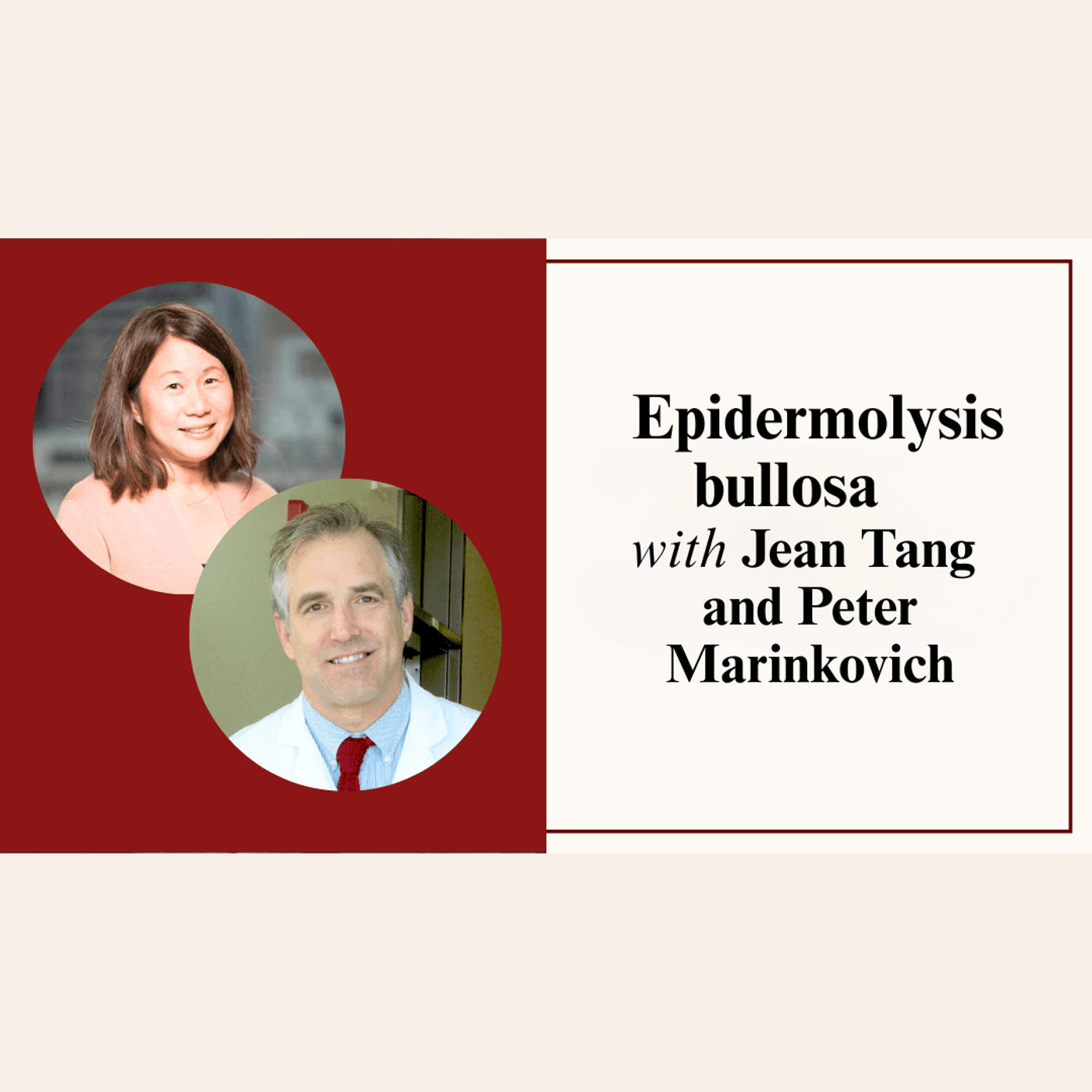
Episode Summary Title: S3 Ep1: How have researchers turned decades of work into real hope for families living with epidermolysis bullosa? Host: Maya Adam, MD Guests: Dr. Jean Tang and Dr. Peter Marinkovic
This episode explores epidermolysis bullosa (EB), a rare genetic disorder characterized by fragile skin that blisters easily. The conversation focuses on the emotional and physical challenges faced by patients and their families, as well as the promising advancements in gene therapies developed by researchers at Stanford.
---
Key Concepts and Discussions
What is Epidermolysis Bullosa (EB)?
- Definition: A rare genetic disorder causing skin fragility.
- Symptoms: Blistering from minor friction, leading to painful wounds.
- Metaphor: Often described as "butterfly skin."
Patient and Family Experiences
- Daily Challenges: Managing pain and extensive wound care, which can consume hours each day.
- Emotional Toll: Families experience immense stress and helplessness regarding their child's suffering.
- Community Support: Organizations like EB Research Partnerships and DEBRA provide resources and community, including camps for children with EB.
Traditional Management of EB
- Palliative Care: Focuses on wound care and pain management.
- Treatment Techniques: Wrapping wounds, using topical and oral antibiotics, and dealing with severe complications like skin cancers and esophageal problems.
Advances in EB Treatments
- FDA-Approved Therapies:
- Gene Therapy: Significant progress includes three FDA-approved treatments, one developed at Stanford.
- Methodology: Involves taking a biopsy of the patient's skin, correcting the gene, and grafting new skin onto affected areas.
- Impact: Reduced wounds and pain, dramatically improving quality of life for patients.
Key Interviews Dr. Jean Tang
- Personal Motivation: Her experiences with patients have fueled her dedication to genetic medicine.
- First Patient Encounter: Remembered as a transformative experience that highlighted the disparity of life outcomes due to genetic mutations.
- Research Focus: Studies the mechanisms of EB and develops novel therapies.
Dr. Peter Marinkovic
- Background in Dermatology: Has a strong desire to combine clinical practice with research.
- Patient Advocacy: Notable patients like Lee Lacey have impacted research funding and awareness.
- Research Evolution: Outlined the timeline of developing gene therapies, emphasizing successful clinical trials.
Future Directions
- Research Opportunities: The use of CRISPR technology aiming for potential cures.
- Awareness Initiatives: Documentaries and outreach efforts to educate the public about EB.
---
Key Takeaways
- EB is a complex, painful condition that profoundly affects patients and their families, requiring extensive management and care.
- Significant advancements in gene therapy offer hope for long-term relief and improved quality of life for affected individuals.
- Ongoing partnerships between patients, families, researchers, and advocacy organizations are crucial for advancing treatment options and raising awareness about EB.
---
Conclusion The episode emphasizes the transformative potential of gene therapies for patients with EB, showcasing the resilience of families and the dedicated efforts of researchers at Stanford. The importance of community support and continued research is highlighted as essential for improving outcomes in rare diseases like EB.
For more episodes and information, follow the Health Compass podcast on the Stanford Medicine YouTube channel or your preferred podcast platform.
Written by AI. May contain mistakes. Listen to the episode to check what was said.
Chapters
Tap a time to open that second in VOUnderstanding Epidermolysis Bullosa
0:45 to 2:00
Overview of epidermolysis bullosa (EB) and its impact on patients.
“The children affected by it are often referred to as having butterfly skin.”
Dr. Jean Tang's Journey in Medicine
2:00 to 6:00
Dr. Jean Tang shares her personal story that led her to focus on genetic medicine.
“Tang, thank you so much for joining us today.”
First Encounter with EB
6:00 to 7:50
Dr. Tang recounts her first patient experience with epidermolysis bullosa.
“somebody else who was wild type and how unfair this was and how I wish we had better treatments.”
Traditional Management of EB
7:50 to 10:00
Description of the traditional palliative care management for EB patients.
“when they are born, because as they are born, as they're handled by the nursing staff and physicians, even grabbing onto the child and carrying the baby, you know, will develop blisters.”
Social and Psychological Support
10:00 to 12:10
Discussion on the importance of social and psychological support for EB families.
“So Jean, what does the traditional management look like?”
Recent Innovations in EB Treatment
12:10 to 14:08
Overview of new FDA-approved therapies for treating epidermolysis bullosa.
“They're causing pain as they're doing the wound dressing changes.”
Innovations in EB Treatment
14:08 to 17:30
Learn about groundbreaking therapies for treating epidermolysis bullosa, including gene therapy advancements.
“tell me a little bit about recent innovations in treatment for this disorder.”
Impact of Patient Experience on Research
17:31 to 19:59
Discover how the experiences of EB patients shape research priorities and motivate scientists.
“And obviously, if you have a family history, our genetic counselors and physicians, you know, ask you to start prenatal testing, but Most, you know, individuals do not have a family history of EB.”
Messages of Hope and Courage
20:00 to 22:09
Hear inspiring messages about hope and resilience from those affected by EB and their families.
“form an incredible partnership to try to work hard and bring the therapies to them.”
Raising Awareness for EB
22:10 to 24:20
Learn about initiatives like a documentary that brings awareness to the struggles and hope surrounding EB.
“And that during this period of discomfort, whether it's long training, difficult experiments, difficult results where we can't get published, we also grow too.”
Show all 23 chapters
Future of EB Treatments
24:21 to 25:49
Explore the optimism surrounding future advancements in treatments for epidermolysis bullosa.
“What is it that gives you hope in the times when you face those challenges of being a scientist in this field?”
Dr. Marinkovic's Journey in Dermatology
26:25 to 28:00
Listen to Dr. Marinkovic share his journey into dermatology and research in epidermolysis bullosa.
“Peter Marinkovic, who is also a physician scientist in the dermatology department at Stanford Medicine.”
Introduction to EB Research
28:00 to 28:44
Learn about the journey of a researcher focusing on epidermolysis bullosa (EB).
“And he had just discovered this protein called collagen 7 and was trying to figure out what, you know, what medical application it's involved with.”
Meeting Lee Lacy: A Patient Advocate
28:44 to 29:59
Discover the impactful story of a patient who advocated for EB research funding.
“He actually went up to Capitol Hill and advocated for the need for more research for EB.”
Balancing Lab Work and Patient Care
29:59 to 31:23
Explore the interaction between clinical practice and laboratory research in EB care.
“I've heard that you've said in the past that you're a lab rat at heart, but you also love seeing patients.”
Celebrating Gene Therapy Approvals
31:23 to 32:58
Understand the emotional impact of successfully offering new treatments to EB patients.
“And what is it like when you are talking to a family about the potential discoveries that you're making in the lab?”
Chronology of Scientific Discoveries in EB
32:58 to 34:12
Learn about the timeline of significant gene therapy advancements for EB patients.
“And if I know that I did that, then I'll feel good about my career.”
Developing Gene Therapy Vectors
34:12 to 37:54
Discover the complexities of developing gene therapy vectors for EB treatment.
“identify the genes and then devise vectors.”
Comparing Ex Vivo and In Vivo Gene Therapy
37:54 to 42:00
Examine the differences between ex vivo and in vivo gene therapy approaches for EB.
“So Peter, as I understand it, and please correct me if I'm wrong.”
Innovative Therapies for Epidermolysis Bullosa
42:00 to 43:35
Learn about the advancements in epidermolysis bullosa therapies and their efficacy.
“have to send the cells off for manufacturing or do a lot of manufacturing.”
Challenges in Rare Disease Research
43:35 to 45:28
Understand the unique challenges researchers face in studying rare diseases.
“You know, I can imagine that there are special challenges doing research in such a rare disease.”
Government Incentives for Rare Disease Therapies
45:28 to 46:51
Explore how government funding changes support rare disease research and therapy development.
“And so the waiver could be very valuable.”
Patient Perspectives on EB Management
46:51 to 47:52
Hear about the personal motivations and experiences of clinicians working with EB patients.
“How do you see them both working to help EB patients manage this disease?”
Transcript
Automatic transcript. May contain errors.0:05Welcome to Stanford Medicine's Health Compass Podcast. I'm your host, Maya Adam, Director of Health Media Innovation. The good news is now there are three FDA-approved therapies to treat the skin of EV kids and adults. One of them was developed here at Stanford. This is Stanford homegrown science that has achieved successful clinical trials and now is in the hands of patients.
0:42Today, we're talking about a condition often described through metaphor. The children affected by it are often referred to as having butterfly skin. Epidermolysis bullosa, or EB, is a rare genetic disorder that makes the skin incredibly fragile. Even small amounts of friction can create painful wounds, and for many children and their families, those wounds can shape nearly every daily activity. But EB is also a story of extraordinary courage. It's a story about the strength of patients who navigate these challenges every day, the devotion of the families who care for them, and the scientists and clinicians who've spent decades working to find better treatments.
1:35Today, we're speaking with two clinician researchers who've really helped drive progress in this field. Our first guest is Dr. Jean Tang, a professor of dermatology at Stanford Medicine, whose research focuses on rare genetic skin diseases. In the clinic, she's deeply invested in improving the lives of EB patients and their families. Here's our discussion. Dr. Tang, thank you so much for joining us today. Thanks, Maya. It's a pleasure to be here. I always start by asking my guests for a personal story, something that either from your personal life or from your professional life that has really been meaningful in setting you up to be where you are today.
2:24Jean, would you mind sharing a story like that with us? Yeah, I think it's so important because it's the stories in the why that makes us so passionate about what we do in research. I remember when I was a medical student rotating in dermatology, I was always attracted to genetic medicine. I did my MD-PhD at Stanford with Gil Chu and we studied nucleotide excision repair. And the whole time I was working with patient cells and I never met a patient with this genetic disease. I was working on a disease called xeroderma pigmentosum. and in my interviews I ran into this professor at UCSF named James Cleaver and he said well you have some time off before you start residency I just found out about this village in Guatemala and I think they have this genetic disease why don't you go out there and check it out and so like some naive ding dong I flew took a small plane to Guatemala met this family and this entire village that had a founder's effect.
3:36And these kids all had the same mutation in xeroderma pigmentosa. What was crazy was that, you know, with this kind of mutation, the skin is incredibly sun sensitive. The skin ages, freckles, and these young kids develop melanoma and other skin cancers at an early age. And because this was rural Guatemala, there were very few medical doctors and facilities. And so these kids basically lived in dark huts the entire time, trying to hide themselves from the sunlight. And the families were coffee growing families, and they just sold plots and plots of their land to try to pay for medical care for the children in the city.
4:29And they all thought that maybe this was a curse that was placed on the village. And for me, this was incredibly moving because one, there was only a single base pair mutation between myself and the, you know, individuals affected and look how different our lives are. And secondly, it showed me how to single genetic mutation basically brought down the individual, the entire family, and the entire community. And so that really motivated me to really study genetic medicine. I initially thought I loved just the science, but then slowly also realized the huge humanistic impact a genetic disease would have on the family and on the entire community.
5:19And Jean, tell me about the first time you met a patient with EB. What was that experience like? Yeah. So the first time I met a patient with EB, which stands for epidermolysis bullosa, was when I was rotating in dermatology. And it was a young woman with fragile skin, no hair, you know, mittenhand deformity, which means that she had so many blisters and scarring that she didn't have normal digits and it was completely fused. And I thought to myself, again, a single base pair mutation separates her life and the trajectory of her life from somebody else who was wild type and how unfair this was and how I wish we had better treatments.
6:13And in a patient with EB, the only treatments at that time, while there were no FDA approved treatments. It was all palliative care. And because these EB individuals have such fragile skin, all we could do is basically wrap their skin in gauze and in different wound dressings and basically waited for them to develop blisters, lance the blisters, treat the large wounds. And many of the individuals that are severely affected will eventually develop skin cancers, aggressive skin cancers in the wounds, and many of them pass at age 20 or 30. And so I remember thinking like, you know, how terrible this disease was and how I wish we could do something to help her.
7:03I can imagine that that is one of the most distressing and also in some ways motivating things for someone with your skill set to really throw themselves in. How does EB usually present? At what age and with what symptoms? EB has a lot of different subtypes. So I'll specifically talk about one of the most severe subtypes. It's called recessive dystrophic EB. And these individuals lack wild type collagen 7. And collagen 7 is almost like a staple that staples the top layer of your skin to the bottom layer of your skin, the dermis. And so we know that a baby has EB when they are born, because as they are born, as they're handled by the nursing staff and physicians, even grabbing onto the child and carrying the baby, you know, will develop blisters.
8:04And certainly there are blisters and wounding from birthing. So usually it's now a genetic sequence test, maybe a skin biopsy. And it is incredibly traumatic for the baby because EB not only affects the skin strength of your outside skin, but you also have epithelial cells and skin cells in your mouth and in your GI system. And so the babies, as they try to breastfeed, as they try to nurse on a bottle, will develop blisters in their mouth such that they can't even feed. So you can only imagine how terrifying this is for a family with a baby with EB who can't feed, who's crying constantly from pain and, you know, your pediatricians tell you that, you know, this is a genetic disease that is incurable and your baby's going to have it for life.
9:08And the saddest part sometimes is as a physician and researcher, I often get emails and phone calls from really desperate families who, you know, just point blank will ask me, can I give some of my skin to my baby? So they will, you know, won't have the pain and their skin can heal. I wish it was easy as that, but it just shows the pain and the desperation that these, you know, family members have. And Maya, I know you have kids. So as a mother, it is unimaginable to think about the present and the future development of your poor child. Yeah, absolutely. So Jean, what does the traditional management look like?
10:05I know you're working on some novel therapies, and we'll get into that later in the episode. But traditionally, how is it managed? The traditional management of EB is all palliative care. So when the baby or child falls, you open up the blisters, you drain it, and basically wrap it up. You use topical antibiotics, oral antibiotics to prevent infection. Because the epithelial or skin lining is damaged and scarred, oftentimes they can't eat normal food, so they have to have a G-tube in their stomach to pump nutrition and food in. And they often have to have esophageal dilations where you break up the strictures and the scarring so they can actually swallow some food.
10:53They also have corneal abrasions, so the epithelial lining of their eyes get damaged. But the skin with the large wounds, You know, if you see any pictures of these kids and adults, they look like mummies. They are just wrapped head to toe from these bandages. And the idea is just to provide some sort of protection. So when they walk and if they stumble, if they accidentally scratch themselves too hard, they're not introducing more blisters and more wounding. And in terms of the standard of care, once the wounds are open and the dressing is stuck on, you know, it is torture. But the parents have to take the child, put them in a bathtub so the dressing soak.
11:49And they slowly, slowly unwrap the dressing while the child is protesting in pain. And just, you know, the worst part is while the parent is trying to care and take care of the skin and their child, in fact, they're there, you know, the child would naively views them as their torturers, right? They're causing pain as they're doing the wound dressing changes. Jean, I can imagine that there must be a role here for social support and psychological support for these families. How does that play into the management? Yeah, such an important question. What we always say, EB is the worst disease you've never heard of because it is an ultra rare disease.
12:37But thankfully, there are EB patient foundations. One of them is called EB Research Partnerships. Another one is called DEBRA. And so they have conferences and now online support groups where, for example, Deborah, if you have a baby born, automatically they put you in touch with a nurse who knows about EB. They put you in touch with other families that might have a similar type of EB as your child. So and as the affected patient gets older, there are communities. There are camps where EB kids get together and try to do some sports or activities that their skin can handle. So there is a community, and they talk a lot about the psychosocial trauma of not only the child and the affected individual, but the entire family, because this is all consuming.
13:41The wound dressing changes, the pain medications, the anti-itch medications, just a wound dressing change will typically take about two to three hours a day. So oftentimes a parent, if the family is still intact, oftentimes one parent has to not have a full-time job in order to just take care of the child. It sounds unimaginable. tell me a little bit about recent innovations in treatment for this disorder. So the good news is I spent some time telling you about how terrible the disease is and how inadequate the standard of care is. The good news is now there are three FDA-approved therapies to treat the skin of EB kids and adults.
14:38One of them was developed here at Stanford, And what I always love to say is, you know, this is Stanford homegrown science that has achieved successful clinical trials and now is in the hands of patients. And so one of the treatments is one where we take a small biopsy of the individual's skin. We use a retrovirus to put in the wild type gene, grow out the patient's cells with the right gene. and then 25 days later bring the patient to the operating room, clean up the wounds, and our surgeons can sew the new genetically corrected skin on their wounds and finally heal some of these giant huge wounds that have been present for years.
15:27And so far, the results were published this year and the drug is FDA approved. and now LPCH, our Packard Children's Hospital, is now delivering this gene therapy skin sheet to a number of our EB patients. That is just one therapy that took a long time to develop, but it has reduced the wounds, it has reduced the pain and the itch, and it's transformed the lives of some of our patients. One of my favorite patients is a young woman, and for the first time ever, she got to go to prom, And that was a big deal. And she looked beautiful and fantastic and more confident because she wasn't in pain and, you know, she wasn't oozing.
16:13The wounds weren't oozing. They weren't smelling. And she didn't have all of this dressing on. So that was one therapy that was recently improved. Also at Stanford, my colleague Peter Marinkovich helped develop a topical gene therapy approach called Vyjuvec. And that has worked also for wounds as well in EB. And then another company developed an anti-inflammatory gel that also promotes EB wound healing. The most exciting part is now we are in the era of CRISPR-Cas9 correction. And so we have grants and projects where we're working with world-class scientists to basically correct the genetic defect in the patient's stem cells and one day offer a cure.
17:06Is there any way to test for this pre-birth to know that a child is going to have this when they're born? Yes. Oftentimes the mutation is random. You know, there was no family history of it. because EB is an ultra rare disease, it is not on the standard panel of prenatal testing. And so it is a surprise and shock when a family has a baby with this. And obviously, if you have a family history, our genetic counselors and physicians, you know, ask you to start prenatal testing, but Most, you know, individuals do not have a family history of EB. Jean, tell me about how your experiences in the clinics, I mean, you've just shared the most powerful, just breathtakingly sad impressions that you've seen in your clinical time.
18:05How does that inform the research questions and the hours that you spend doing the science? I've been lucky. I've gotten to know a number of EB patients and watch them grow up and the families. So the way they inform our research is one where, you know, they are willing to donate the skin, willing to get sequence analysis, willing to participate in digital app natural history studies. So we generate large amounts of data where we have a patient registry all across the U.S. where we know the EB patient's mutation, the severity of their disease, and that makes clinical trials and the application of future therapies all the more possible.
18:59So the science, You know, their suffering motivates the day-to-day, you know, hard work we put in lab. But I have to also say that there is incredible courage, incredible tenacity and bravery that we witness on the part of the patients and their families. And it is that hope and courage that really inspires us, right? If they can do the difficult work of living day to day, feeling like, you know, other kids at school get to participate in research and you're left out. And that in the evenings, you know, you have to do these terrible wound dressings and you don't get to be a normal kid. If they have the courage to find optimism, to find joy in other small things and that their families can smile and tell us about their Christmas holidays and their plans, then we certainly can form an incredible partnership to try to work hard and bring the therapies to them.
20:07We are also very fortunate that, you know, the EB Foundation has attracted a number of stars. So one of them is Pearl Jam, Eddie Vedder. And so they have donated their resources and used their stardom to shine the light and raise money for our research. And so occasionally they will put on free concerts where the patients and families and the scientists will come. And we have this incredible community of creative artists that are encouraging us, that are using their music, you know, their documentary filmmaking to sort of make sure that we're not alone, that the individual patients, you know, feel like maybe some part of the world understands what they go through.
20:57And then as scientists, we're just super excited because we're hoping that all of the genetic medicine and our research in this specific rare disease, EB, awakens the world to show them how important science is and how important that all of our wonderful hard work and knowledge can really be applied specifically to one day curing a patient. That's inspiring, Jean. if you were able to give a message to the world, people who had never heard about this condition or had no idea what living with this condition was like, what message would you want to give? I would say I want to give a message of hope, inspiration, and courage that, But, you know, you see incredible amount of suffering and pain, but in the mixture of all of that, there still can be hope, positivity, generosity, and love that is, you know, transcends the amount of pain.
22:11I would also give a message to the scientists and especially the young trainees, the young scientists, the graduate students and medical students, you know, in this difficult funding environment, you know, we need to see encouraging stories where we make a difference. And oftentimes science is difficult. Being in academics is challenging. We can never have growth and comfort. And that during this period of discomfort, whether it's long training, difficult experiments, difficult results where we can't get published, we also grow too. And that through these challenges, if we keep on working hard, not only will we meet success individually, hopefully, you know, we will bring something to fruition for patients and families.
23:09Don't give up. Jean, can you tell me, are there any efforts underway to sort of raise more general awareness about EB? Yes, we are really fortunate that, as I was mentioning, when there's this incredible partnership between patients, families, the patient foundation and organizations, and incredible creative artists, the word is going to get out. Because now there's a documentary film about EB and about our science. It is called Matter of Time. It features this concert made by Pearl Jam and Eddie Vedder and this conference of where patients and families and researchers and advocacy partners all come together.
23:55So I'm really excited. It's a really beautiful, touching movie that basically talks about the difficult disease, but still provides a lot of hope and inspiration at the end. And so the film was picked up by the Tribeca Film Festival. It'll stream in February, and I can't wait for you guys to watch it. We'll definitely keep an eye out for that. Thanks for letting us know. Jean, last question. What is it that gives you hope in the times when you face those challenges of being a scientist in this field? I think what gives me hope is the fact that we have made such incredible progress in 10 years, and that in 10 years, an ultra rare disease like EB has three FDA approved treatments.
24:49We are lucky because we have built an EB registry, a strong EB community, and we are lucky to have EB foundations support our research in a time when maybe federal, government, and other grants have been really difficult. and what gives me hope is that I have seen a mechanism where we can get new medicines to these rare genetically affected patients and that mechanism is a partnership between the families, the patients, the researchers and the foundation to raise money and to really move whatever we find in the lab into the patients as quickly as possible. So I see the roadmap, I see the mechanism, and I'm hoping that this roadmap can be applied to other rare genetic diseases, you know, beyond EB.
25:50Jean, I want to thank you so much for all this work that you're doing. As a parent, it is heartbreaking to hear about this and to imagine what these families go through. and just to know that there are clinician scientists like you that are working on this every day, it brings me certainly a sense of comfort. I know we need many hundreds of people like you to be doing this work, but I'm so grateful to you for all your efforts and thank you for making time to speak with us today. Thank you, Maya. It's been a pleasure. Our next guest is Dr. Peter Marinkovic, who is also a physician scientist in the dermatology department at Stanford Medicine.
26:33Peter's career has been central to the evolution of EB treatments, from early gene therapy concepts to clinical trials that have truly changed lives. Here's our conversation. Dr. Marinkovic, thank you so much for joining us today. You're welcome. It's My pleasure to be here. Peter, I start usually by asking my guests to tell me a little bit of a story about how they ended up on this path towards the career that they're in today. Do you have something you could share with us? Yeah, sure. You know, I always knew I wanted to go into dermatology and do research ever since I was in the military, actually, as a medic.
27:17And I got tasked with doing a lot of dermatological types of things like sewing lacerations, treating infections of the skin and things like that. And so I knew I liked dermatology. And in undergraduate, I was doing some work in research in the area of the basic membrane. I was actually studying mammary epithelial cells as they migrate and the collagen that they produce as they migrate. And so I thought, yeah, this could be really applicable to the skin. And so as I finished medical school and then was looking around for, you know, dermatology opportunities, I came across this lab, Bob Bergeson, who is at Oregon Health Sciences University.
28:04And he had just discovered this protein called collagen 7 and was trying to figure out what, you know, what medical application it's involved with. And so after that, I started my derm residency and I thought, well, I really want to align my research and clinical interest together. And for that reason, I chose getting into bolus diseases, especially Eperomyces bullosa. And, you know, I've been doing it ever since. And Peter, can you tell me about the first time that you met a patient with EB and what that was like? Yeah, I remember very well there was this patient up in Oregon, and his name was Lee Lacey.
28:49And he was a really dynamic person. He actually went up to Capitol Hill and advocated for the need for more research for EB. And at the time, there was a senator from Oregon, Mark Hatfield, who was a big advocate, medical research advocate. And with the help of Lee, they were able to secure funding for the National EB Registry, which helped to kind of lay the foundation for the epidemiology of EB, which we kind of used as a way to then further the research. It was a huge benefit for the EB community. and after I became established here at Stanford in the mid-1990s, I actually started to become an investigator and participate in the National EB Registry.
29:48So Lee Lacy was quite an amazing person and he kind of showed me that EB patients, even though they have disabilities, that so many of them, don't let their disability stop them from what they're trying to do, what their goals in life are. I've heard that you've said in the past that you're a lab rat at heart, but you also love seeing patients. And I would love to hear from you how those two roles interact in your career. Yeah, well, you know, I'm kind of a nerd, science nerd, and I'm kind of like a basic membrane matrix biology kind of nerd. And so I've always enjoyed this area. And I try to find ways that this area intersects with important areas in the clinic.
30:42And I love seeing patients. It's so wonderful. I mean, sometimes your experiments in the lab don't go so well, but then you go off to clinic and the patients kind of see, oh, what's the matter with him? He's a little down and they try to cheer you up or vice versa. Sometimes your clinic, your patients aren't doing so well and you're frustrated and, but you get in a lab and you make a great discovery and it perks you up a little. So I find that I love being in the lab, but being in the clinic is also so complimentary and it's great to be able to have, I feel very fortunate to have the opportunity to be able to do both.
31:25And what is it like when you are talking to a family about the potential discoveries that you're making in the lab? What is that experience like? Oh, gosh, it's so satisfying. You know, like, after the first drug, Vyjuvec, became approved, you know, the very first gene therapy for EB in 2023, it just was such a great experience to be able to go into the clinic and be able to have something to offer these patients. So for so many years, we've been just kind of saying, well, in a little while, we should be able to have something and, you know, go talking at conferences where patients were listening and just trying to say, well, you know, we discovered, you know, laminin-332 binds to Collisin-7, but you can see in their faces, they're saying, well, yeah, that's great, but how's that affecting me?
32:24But it's so satisfying to actually be able to go into the clinic now or to these conferences with the patients and be able to explain to them that we do have something that can help to correct your skin. And it's just wonderful. It's just, it's like, it's what I want. When I look back at my career, I don't care about how much money I made or what kind of position I achieved academically. I just care. I want to be able to know that I made a difference in these patients' lives. And if I know that I did that, then I'll feel good about my career. That's wonderful. Well, we're so grateful to you for the work you're doing.
33:09Peter, can you tell us a bit more in terms that, you know, our audience will understand about these major scientific discoveries that are being made in EB research? Sure, yeah, yeah. I can kind of give you a little chronology. Okay. So when I first got to Stanford in 95, I was recruited by this person, Gene Bauer, who, a very dynamic, amazing person, who assembled the team, me and Paul Kavari and some other researchers. Later on, Tony Oro and Gene Tang came a few years later. And then we were all working together on trying to develop gene therapy for EB. And, you know, another group was like working on mutations in Philadelphia, Yoni Uito and his group.
34:02And Gene said, well, let's not worry about the mutations. Let's focus on the therapy. And so with that in mind, we all started working together. We had to, you know, identify the genes and then devise vectors. And right around, it took a number of years, but in the mid-2010s, we were able to come across this very nice system where we were able to put the collagen-7 gene into keratinocytes, and then we could graft those keratinocytes. First, we grafted onto mice, showed that it worked well, and then we started moving into the clinics. And one member of our team, Al Lane, kind of helped to lead, like write the IND, and helped us to be able to move this from the lab into the clinics.
34:52And I was helping out both on the lab side as well as the clinical side. And then we grafted the first few patients and we published the first paper in JAMA, like around 2016 or so, with all of our team together. And by that time, Jean Tang had come along as well and she was really making some great contributions. And so then at that point, it was such a great achievement because we realized this was the very first demonstration in clinical trials of gene therapy for dystrophic EB. So then at that point, we licensed it to Ambiona, and Ambiona is, they took a little while to be able to transport it from like our operation in Stanford over to Cleveland, and they had to build a facility and do everything.
Read the full transcript
35:44And while that was happening, I learned of another opportunity of a different gene therapy from this group called Crystal Biotech. And they were just a small group at the time I started working with them. But they had this vector that had the collagen 7 gene and a herpes virus vector. And this vector, everybody knows herpes infects skin cells really well. And also, we know that herpes, if you get it, that it'll go away, but it'll come back a few months or a few years later, and you can never get rid of it. And that's because the herpes has been able to show that it can evade the immune system.
36:28And so if it's a disease like herpes, you know, it's a bad thing if your immune system can't clear the disease. But if you make the vector so that it can't replicate, and then instead just put a gene in it and then all the virus does is it just touches a cell and inserts a gene. It's actually really great as a gene therapy vector. So I saw potential in that and I started working with Crystal from the preclinical level and then we led the phase 1-2 and then we led the phase 3. All of this done here at Stanford and then we were able to get this therapy approved. And then after that, then Abiona was able to finish the Phase III trial and Gene Tang, I was helping on that trial as well all the way from the beginning, but Gene Tang was taking the lead on that as I was working on this Veitchevac.
37:27But we were both working on this Abiona product, and it's now called ZivaSkin together as well. And we got that approved a couple of years later in earlier this year, 2025. So now we have the two major, two gene therapies in basically the first two gene therapies for skin disease across the field of dermatology. And it's both for, both of these are to help our dystrophic EB patients, which is, it's been a great journey, great story. Incredible, incredible story. So Peter, as I understand it, and please correct me if I'm wrong. You take a small biopsy of skin from an EB patient, and then you mentioned vectors.
38:15You use a vector to insert the corrected DNA into the cells of the biopsy, and that then allows you to grow a larger piece of skin that can be transplanted into the patient? Yeah, that's one of the technologies. And so, yeah, maybe this is a good opportunity to kind of contrast how each of these two technologies work. Please do. Dr. So there's a concept of in vivo and ex vivo gene therapy. With the ex vivo gene therapy, we do exactly what you described. We do a biopsy of the skin and then we grow the skin cells up. In the case of this abiona vector, we use keratinocytes. And then from the patient, the patient's cells.
39:04And then we expand the keratinocytes. And then we use a different kind of virus called a retrovirus, which inserts the gene into the chromosome of the patient keratinocytes and basically just puts the gene in that was missing in these patients. And then these cells are grown up and then they are arranged in little sheets about the size of a credit card. And then in the trial, we took about six of these sheets and then we put it across wounds of these dystrophic EB patients. And we did this in the operating room under general anesthesia. And then after we put the grafts on, we wrapped them really well so they didn't fall off.
39:52And then we hospitalized the patient for a week. And then after the hospitalization, then these grafts had taken and basically stuck firmly to the skin. And then later we were able to show through biopsies and demonstration of wound healing that we're getting good collagen expression and good wound healing effects. So that's the first technology. What I described before was ex vivo gene therapy, where we're using like what we call integrating virus, a retrovirus. And it has a little bit of a safety issue in that it can cause this disease called insertional oncogenesis, which means it can potentially cause cancer.
40:33So the virus inserts randomly into the chromosome. And so if it inserts near like a gene that controls cancer, like an oncogene or a tumor suppressor gene, it potentially could actually trigger cancer. And so we feel that it's safer to do it with the grafting, because if there is a cancer, we can cut it out and remove it. So we feel there's a good measure of safety in the way that we're carefully approaching this. But what you don't want to do, though, is you don't want to just sort of inject the retrovirus into the bloodstream and have it go everywhere because then the risk of the insertion of oncogenesis is like out of control.
41:16You know, you can't control it. So there's another type of a virus which is called an epistomal virus that doesn't insert into the chromosome and it doesn't have any cancer risk. And that's like what the herpes virus does. And so with the crystal technology, it utilizes what we call in vivo gene therapy, that the vector is safe enough to put right onto the bodies, into the body. And in this case, we're putting it on the skin. And so it's a lot easier in that instead of having to do a biopsy, you don't have to do a biopsy on the patients using this in vivo gene therapy approach with the herpes virus.
41:58You just put it right onto the wound and you don't have to send the cells off for manufacturing or do a lot of manufacturing. And you don't have to take the patient to the operating room under general anesthesia, where these patients, you know, they have fragile airways. So you need to be careful about doing it well. We do it really well. We do all of this work with the grafting at Stanford very well, because we have a lot of experience with it. But it's a learning curve. So with the ex vivo, you don't have to do that. You You just take the patient to the clinic, drip it onto the wounds, and then cover the wounds up overnight with some plastic wrap.
42:39And so technically, it's much easier. You don't have to hospitalize the patients either. And it's also off-the-shelf type of a therapy where you can make larger amounts of the material and have sort of a reduction in cost because you can make it in mass amounts. And so it's less expensive than with the cell growth. You have to do every patient is actually their own manufacturing run. So you can't really get what we call economy of scale reduction in cost. So these are sort of the differences. Bottom line, though, is both the therapies work well. They both give durable correction of the skin. Both of them, to me, I've worked with both of these things for many years.
43:30I find them to be equally efficacious and equally durable. And in the context of this grafting technology used at Stanford, it's also both of these things are both very safe technologies. Amazing. You know, I can imagine that there are special challenges doing research in such a rare disease. How is it different to do research in a rare disease versus a more common disease? Well, one thing is probably less competition. You know, you have like, you know, cancer, for example. It's just so many people working on it. And there's so much competition, people vying for funding and things like that. Whereas rare disease, there's competition for sure, but it's not quite as much.
44:21And I think also the idea that, you know, people with more common diseases, they get, you know, up until recently, they've gotten so much more benefit and people working on their disease because it's so more common, there's more potential for drug companies to make money. But, you know, rare diseases, up until recently, the drug companies wouldn't make so much money because it's such a small market. And so that was a problem for a long time, you know, in the poor rare disease patients. If you have a, you know, if you have a epinomyces bullosa and it's the pain that you're and the suffering you're getting from it, it doesn't matter whether there's a million other people that have it or even just one or two other people, the pain is still the same.
45:17And so it's just, in a way, it's not fair for, you know, these rare patients to not get the same attention and effort being put in to develop therapies for them. But there was some changes in the government funding a few years ago, this thing called the pediatric waiver, where the government allowed, in order to encourage more research on rare drugs, they developed this where if you were able to develop like a gene therapy, for example, for a rare drug or a rare disease, then they would give you this pediatric waiver. And so the waiver could be very valuable. It could be like worth up to 100 or 200 million.
46:07And so this was a really great financial incentive for companies to get involved, like Abiona and Crystal and others as well. And so I think even though our technology that we're doing here at Stanford and other places has evolved and matured to the point where now it's like an explosion of new studies coming out for the EB patients, which is great, that contributed. But also this change in the funding from the government also, I believe, has led to this rapid growth in therapies for EB patients. They've kind of combined well together. So, Peter, we have these two new Stanford-grown therapies for EB.
46:57How do you see them both working to help EB patients manage this disease? Well, you know, I do a lot of clinical work seeing the EB patients. I see all the adult EB patients here at Stanford, and I also attend all of the pediatric dermatology clinics. And then I interact with patients at meetings and things like that too. So I would say every time I come in contact with these patients and see, you know, what they have to go through, it inspires me to, you know, first it makes me frustrated, like, you know, why did these patients have to go through this? And it's sad, but it inspires me to go back in the lab or back in the clinical trial areas and try to do something to help their lives.
47:50That's what keeps me going. Well, we are so grateful to you for all the work you're doing. And thank you so much for making the time to come and speak with us about it. We wish you all the best and all the success in the world. And thank you again. Yes, my pleasure. Thank you for having an interest in what we're doing and in these patients. And I hope that we can further show this problem that these patients have and raise the awareness. So I think it's a good thing. So thank you for doing this. Absolutely. Thanks, Theda. I hope I've been able to give you a small window into the science, the care, and the hope that's shaping the future of EB.
48:38The contributions of these scientists have helped transform what's possible for patients living with this disease. Thank you for joining us on the Health Compass podcast. If you'd like to hear more conversations like this one, you can follow Health Compass on the Stanford Medicine YouTube channel or on many of your favorite podcast platforms. Be well and see you next time.
49:08Thank you.