 Ask ChatGPT

Written by AI. May contain mistakes.
Lenny shares his struggles with pain and the medication he's using.
“And you were discussing the toughness of the brown meat on the bronze turkey last year.”
Jessie and Lenny discuss dental issues and veneers, revealing personal anecdotes.
“Because I'm getting my veneer changed because my darling sister knocked it out when I was seven and has never dealt with the dental bills, but I have to have a peg of a tooth.”
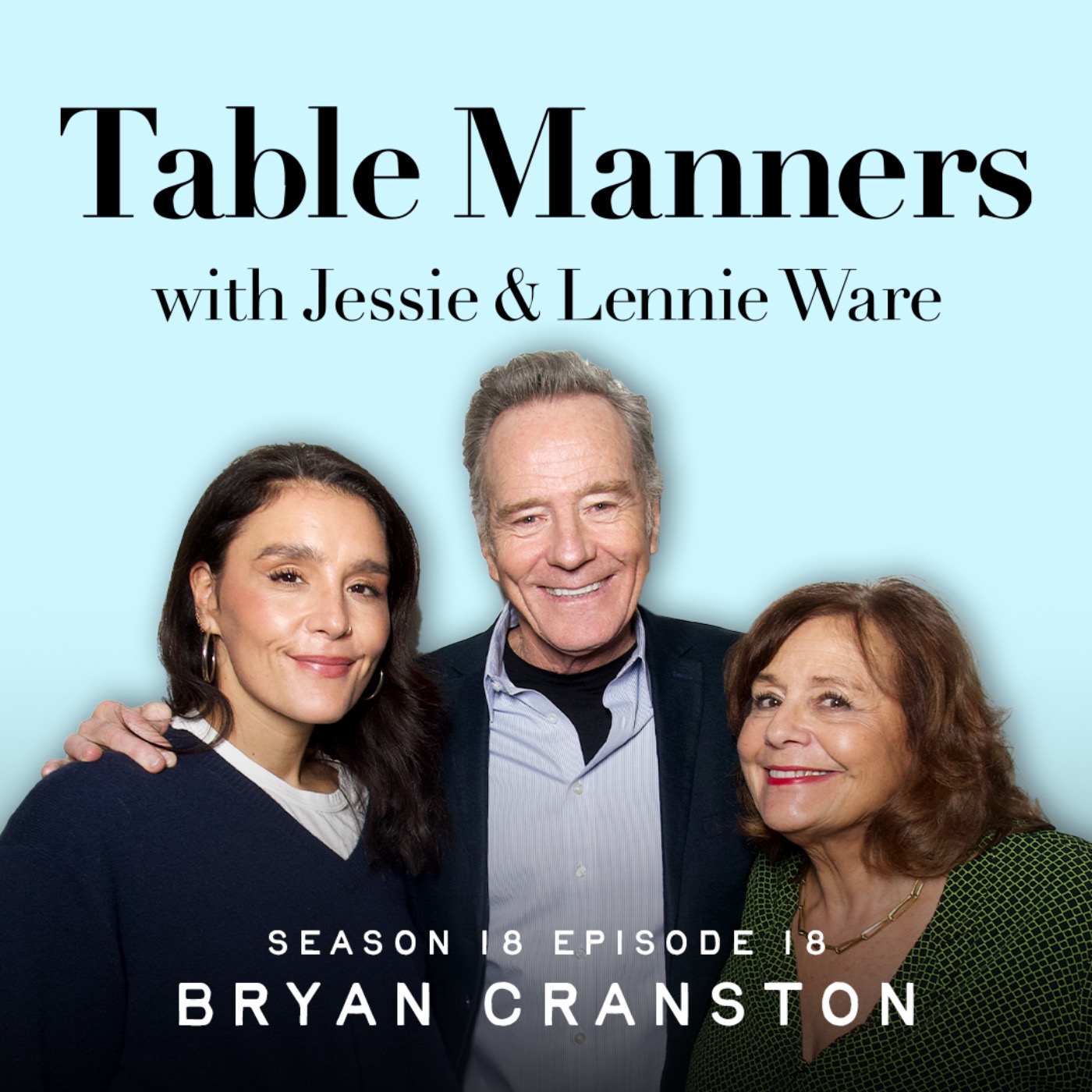
Jessie and Lenny introduce their guest, Bryan Cranston, highlighting his acting career.
“And we got to see him at the Wyndham's Theatre performing in All My Sons with the most stellar cast I think I've seen on stage in years.”
Bryan discusses his theater experiences, including performances and routines.
“You are Really dashing The voice is giving Fruity It's giving Leah It's giving Joe It's giving, yeah It's giving, like Did you have a late night last night?”
Bryan talks about the challenges of theater and the impact of audience experiences.
“And the water, you don't have drains like we do.”
Bryan shares insights on fostering a positive environment among cast members.
“It really cuts to the chase of it, yeah.”
Bryan reflects on his experiences with iconic actors and their influence on him.
“I'm sure you probably just want to get on set after, maybe have a break, and then it'll be that thing that you'll feel maybe the need to not be up and be a night owl for the next six months.”
Bryan discusses taking control on set and managing relationships with co-stars.
“I see how he behaved coming to work with Joy.”
Bryan reflects on his real-life experiences as a father and its influence on his acting roles.
“You know, there are other roles, whether it's Ibsen or Odets or more Miller to do, like Death of a Salesman perhaps or something.”
Bryan shares nostalgic stories about his childhood meals and family dynamics.
“Think of all the population of the world.”
Bryan recounts the effects of his parents' separation on his childhood and feelings of security.
“Like not very high quality airplane food.”
Bryan discusses the complexity of relationships in his family, including his mother's struggles.
“Was that because he was trying to fulfill this kind of need to be an actor?”
Discussing the impact of parental relationships on childhood experiences.
“and there was an old photograph of my father holding up my sister when she was a year old or something.”
Exploring the role of cooking in family life and personal experiences.
“And it wasn't love, but that's what she thought and she was immature.”
Brian shares his cooking skills and his wife's signature dish.
“Okay, let's talk about a hero dish from your wife.”
Bryan discusses his tequila brand and the bond with his co-founder.
“And we're now, you know, like the fourth largest mezcal company.”
How Bryan adapts to different roles and the importance of authenticity.
“And because when you watch a character as a chef, for example, if they're not handling the instruments, if they look like they're tentative or something, it's like, I don't believe this.”
Bryan shares insights into comedic roles and personal anecdotes.
“So did Seth Rogen approach you with that character or did you kind of create it together?”
Detailing the dishes Brian would choose for his last meal.
“If this was a glass of wine, that's what it felt like.”
The hosts discuss their favorite meal options, including fish, pasta, and dessert.
“Maybe a little swirl clump of linguine pesto.”
A light-hearted conversation about favorite ice cream flavors and memories associated with them.
“I would probably go for something like a creme brulee.”
Bryan shares his nostalgic memories of working at an egg ranch during his childhood.
“Before we let you go, can you give us a nostalgic taste that can transport you back somewhere?”

Get the gist, explore an idea or ask about something said.
 Claude
On Table Manners with Jessie and Lennie Ware, what are the key points of this episode?
Searching your listeningAutomatic transcript. May contain errors.
0:03Hello and welcome to Table Manners. I'm Jessie Ware and I'm here with Lenny. How are you Len? got a pain in the bum. Oh. Periformis syndrome. Okay. Yeah. My bum is strapped up. Ooh. I'm on strong painkillers. Ooh, you're high. No, not at all. Perfect for this guess. Not at all. But I have taken drugs. I will do the heavy lifting today, Lenny. Okay, done. You just look at me. Okay. And I'll do it. What sign shall I give you? Well, just go. A Paddington look. What's a Paddington look? A long, hard stare. Ooh. Don't you remember that from the film? No. I gave him a long, hard stare. I am thinking about how incredible your memory is, Lenny.
0:42You were just talking about how, we were talking about what you've made today. Yeah. And you were discussing the toughness of the brown meat on the bronze turkey last year. Yeah. I don't remember. Jessie, you can recall every single meal we've had. Yeah, but I don't. When we go out. But I think maybe you've got the superpower now. No, you think I've got it? What are we eating today, Mum? We're doing Nigella's lemon chicken with orzo. one pot lemon chicken with ozol. Perfect. Yeah. Lovely. I thought it's a miserable old day. I was going to do something else, but it required me to go outside and barbecue it.
1:16And I thought, no, not doing that. So it's all prepared and it's all done. I've just got to do the veggies. And then you've done a... I've made a chocolate cake that's supposed to be gooey in the middle. Let's hope it is. And crispy on the outside, let's hope it is. and it's just made with butter, chocolate and sugar and eggs. I've got a little bit of a lisp today. Why, darling? Because I've got a temporary tooth on. Because I'm getting my veneer changed because my darling sister knocked it out when I was seven and has never dealt with the dental bills, but I have to have a peg of a tooth. So at the moment I'm lisping.
1:54My veneer came out when I was in Los Angeles. No, it didn't. Oh, yeah. Jill, the dentist, asked of how the tooth was. The veneer came out. I was in Belle's Bagels. I wasn't eating a bagel. I was eating a pastrami sandwich. It came out to Hannah's Horror. And I had to go to... Did you have your glue on you? No. I found a dentist in Eagle Rock who was very interesting cars. And he drove a Porsche. And I'm not surprised because it was£300 to get the veneer fixed. So if you have a few veneers done, he's probably paid off the Porsche within two weeks. Was Chrissie Teagan in the waiting room with you?
2:31No, she wasn't. Oh, right. Her veneers come out. They pop off. Don't tell me this because my veneer hasn't come off for like... When did I get it done? Did you ever have it? Has it ever come off? No. Oh, you see, mine comes off all the time. Well, anyway, I've got this tampon. This is very interesting for everyone, but it could go at any time. Yeah. The bite is weird too. I have got toothy pegs upstairs. What? It's called toothy pegs and I bought it during lockdown. What is a toothy peg? It's a glue to stick your veneer on if it comes off. And I've got about four packets of it upstairs. And you just didn't have one on you when you were eating a bagel?
3:06Okay, I will take one of those. But anyway, enough of our teeth. We've got an amazing guest on today. He's acting royalty. Yeah, he's an iconic actor, I think. And we got to see him at the Wyndham's Theatre performing in All My Sons with the most stellar cast I think I've seen on stage in years. It was brilliant. Everyone in that cast. And I really want to talk to him about that. Brian Cranston is coming on. You will know him, of course, from Hal as like the most useless father in Malcolm in the Middle or Walter White from Breaking Bad. Quite an incredible father, goody term baddie. He always plays a dad.
3:45Your Honor, he was the judge, wasn't he? I couldn't watch that. It was very stressful. I found that quite sad. And now he's playing a dad. What's his name in All My Sons? How? Joe Keller. Joe Keller. did you do it for producer Alice's dad played Joe Keller who Brian is playing on the West End and it's how did they fare Al the acting performances did they really take different your dad had a similar approach to Brian Cranston okay I love that so yeah we've got Brian Cranston coming up I've heard nothing but wonderful things about him I'm really looking forward to chatting to him about food and family but you may have to I'm really I really feel like Shola Amas.
4:27Can you do your whistle still? Yes. Thank God. When am I going to need to do that? You might start this week. Sorry, Al, that was really unfair. Yeah. When will I need this? I don't know, but just checking. All the nativities are done. You're the only one in our family that can do it. And I'm very proud of you. Thank you. Brian Cranston coming up on Table Manners.
4:54Brian Cranston looking very dashing I am? You are Really dashing The voice is giving Fruity It's giving Leah It's giving Joe It's giving, yeah It's giving, like Did you have a late night last night? Are you okay? No, I'm fine You know, when you're doing theatre You become a night owl and I eat dinner about 10.30 at night. Where did you go? To Jay Sheiky around the corner. We went to Jay Sheiky's last night. Did you? Some friends are in. It's just around the corner. It's of course. What was the order? Fish. What did I have? Yeah. Of course. I had a nice Dover sole. Oh, lovely. A little broccoli and a couple chips, I think.
5:37Their Dover sole is particularly good. It's really nice. Yeah. Really nice. a little glass of white wine with it just to take the edge off. How long does it take you to kind of settle down? Yeah, not be. Well, the adrenaline is pumping pretty significantly throughout the play and the emotional component of it at the end of the play is, you know, it takes it out of you, but not right away. You know, the adrenaline will fall off a cliff after about two hours. and then I better be home in that case. And then go to sleep. It's almost as if I was a fighter in a ring and my legs get wobbly. K.O., yeah.
6:22I can't keep my eyes open. So I usually have a routine. I go home. I have a little something. Are your family here with you? Well, my wife is staying with me at times, and then she goes home. She's from Southern California as well. She's enjoying the weather then. This is like it's too cold for her. It's raining in LA too. Excuse me. I've just got back from LA because my other daughter lives there. It rained every single day for 10 days. It's very unusual for that to help. And the water, you don't have drains like we do. The water kind of comes down like a river. You can't actually get into your car.
6:57It comes down. You think Noah's going to come in his ark soon. It's an awful place to live. Yeah. So your routine, you go, you'll maybe see friends, and then you just go to bed after that straight away? or do you have to read something or go in a sauna? Yeah, I usually will see some friends right after the play and I usually don't go out because it becomes too much time, too much. And so once in a while, like last night was a rare occasion, I'll go out, I'll greet some friends who ever came to see the show that day, talk with them for 30 minutes or so, then go outside, I'd greet the fans who have come to see the play, and I do that on every play I do and every performance after evening show.
7:47And I do it because they are happy to see the actors come out, and I want to regenerate the excitement of theater. I want to make sure that generation after generation gets excited about going to the theater because especially in the United States, it's become so commercialized and so elite that only the wealthy can go. It's expensive. It's really, really tough. It's expensive here. And if you have a bad experience, if you're new to theater and you pay the money to go see it and it's a bad experience. You think I'm not bothering. That's it. I'm never going again. TV and stream everything, yeah.
8:35Have you done any Arthur Miller before? No, no. This was the first one. But he's such a beautiful writer. Suttling and stunning. It really cuts to the chase of it, yeah. When you, I presume you got offered the part because you're Brian and you're brilliant, did you know the other cast? Was everyone cast at that point or were you kind of the beginning of the casting? No, I was the first one. So were you involved in who else was cast? Were you able to have an opinion on that? Yes, although I trust Ivo van Hove, our director, so implicitly, and I realized that that's really his position. But he wanted to run the names of the people that he liked by me.
9:19And I would either say, oh, yes, or I don't know their work or whatever, but I didn't put the kibosh on anyone. The cast is sensational. Everyone in that cast. Everyone is brilliant. The most generous kind of performances. You feel such an ensemble. You feel like a cast on stage. Everyone's looking after each other. And it was really exciting to watch everyone's performances, how they fed off each other. It was electrifying. Well, I can honestly say that that's the same tenor that is happening offstage as well. It's a good group of human beings, very respectful. I take out my cast before we start.
10:04At the very beginning of rehearsal, I want to take out the cast and I want to talk to them about what we could establish. Not essential, again, but what kind of family can we create here? Because, and I think it's age-related too, At this stage of my life, I want the experience offstage to be as rewarding as it is onstage so that you look forward to going to work, seeing these people, laughing about something that happened the night before. Or, oh, is it possible? Can you delay your entrance a second? Can you? Is it? Can we? Oh, yeah. Okay. Yeah. Let's try that tonight. and you're constantly talking about little incremental improvements.
10:55Will you move this production to New York? Come to this house. Come to this house, yeah, we'll get the whole street in. But will you move it to New York? I don't know. Maybe? Well, there's a possibility. Okay. There's conversation about that. I think it would do brilliantly. Well, beyond that, it's... It's whether you can be doing Joe for another year. Yeah, it takes it out of you. It's both invigorating and intervening. Yeah, yeah. It's really an incredible experience because you are inspired by it and knackered by it. I'm sure you probably just want to get on set after, maybe have a break, and then it'll be that thing that you'll feel maybe the need to not be up and be a night owl for the next six months.
11:45But how exciting that you can do both. Well, I joke that after doing a play for, we were doing this play for four months. And after doing that, I need to go off and do a movie so I can relax. Yeah, yeah. Because in the movie business and television business, it's bits and pieces. We're doing little bits, little pieces every day. In theater, if you've selected well and you've chosen a play that inspires you, motivates you, challenges you, because otherwise, why would you play? It's every single performance. There's no bits and pieces. Every single performance, there's a gut punch and a mental draining and you're fully engaged and it's exhausting.
12:38When you talk about taking the cast out, talking about what you need and want and feel, did someone teach you that? Did you get inspired by someone who had maybe had that kind of father figure role to you? Growing up, when I was 23 years old, I started working in this business. And I'm about to be 70. So it's been a while. And there are certain actors along the way who I've really watched. James Garner was one. Dick Van Dyke was another. And more recently, Tom Hanks. I've done three projects with Tom. And the way he conducts himself with his company, with his cast and his crew, I made a mental note.
13:29And it's like, okay, if I'm ever in that position, and this goes back 35 years that I worked with him first. What was that on? We did a thing together called From the Earth to the Moon, which was about astronauts going to the moon back in the 60s. and I played the second man to walk on the moon, Buzz Aldrin. Then his movie, he did his movie called That Thing You Do. I loved that. Which was a sweet film. I had such a crush on all of them. Yeah. That I know all the games you play. Yeah, I love that. Were you in that? I was in that. But a very small role. Very, very small role. It was about the band.
14:11Yeah. I see how he behaved coming to work with Joy. every day getting the work done, I saw also that, oh, if you take it upon yourself, as you were indicating, to be the parent, the father of this organization, whatever, you can set the table for how you want others to comport. And I went, oh, so it's there. If no one takes it, there's a vacuum. When I did Malcolm in the Middle, Frankie was 12 years old. Jane Kaczmarek was not the type of person to take control of a situation. So there was an opening. And I thought, oh, I really felt there's a vacancy here. Someone has to fill this. And I was third in line on that show.
15:08And I was like, I should probably step up and kind of organize things. And I did. And I went, okay. Now, years later, Bob Odenkirk, who was on... Yeah, Saul. Well, he was a star of Better Call Saul. Yeah, Saul. I took him out. He wanted to say, well, I'm about to star in my own show. And I said, Bob, you know, for years, I kind of resisted taking control of things. And people, fans say, oh, you're a star. You're a television star. Oh, no, no, no, no. I'm just an actor. No, no, no. and spending so much energy trying to push back, push back. And someone just said, just say thank you. And from that point on, I went, oh, you're a television star.
15:58Oh, thank you. And that's the end of it. So the energy savings was enormous. And I went, oh, there are different ways to just kind of manage your life. Right. So you're going to be 70, which is, it's all right once you get there. You hate getting there, but once you know... Oh, how do you know you're not there yet? I'm way over there. So is there a role that you'd really love to do that you feel you've still got the breadth to do and that you, I don't know, Shakespeare or something that you would like to do now? Well, Lear is something that's always been there. I'm now very much within the age range of King Lear.
16:45You know, there are other roles, whether it's Ibsen or Odets or more Miller to do, like Death of a Salesman perhaps or something. But, you know, it's funny, you mentioned that I'm kind of a father. Well, I'm a father in real life. Yeah. And that's the roles I get too as the type of person that I am. How many children have you got? I just have one. One? Yeah. And she is an actor in her own right. Well, I know. You do. Because I managed to watch The Pit that hasn't arrived here yet, strangely. But it was on the... Is your daughter in The Pit? She's in The Pit. Which is supposed to be incredible.
17:25She is incredible. She stands out as one of the really engaging actors in it. So when she said, Dad, I want to be an actor, did your heart sink? or did you go, okay, because your father was an actor? Yeah. So did it kind of feel like... And his father was an actor. So it's kind of a family biz. And when you think of it, it is much more common to go into your family business than not. Think of all the population of the world. If your family is fishermen, that you're a fisherman. Yeah, yeah. It's a family business. What it is, it's a family business. So this shouldn't be any different. And we knew early on when she was about 11 or so or 12, we thought, oh, here we go.
18:14Here we go. She's going. We do need to talk about food a bit. Oh, OK. And let's bring it back to growing up in California. And we will eat. It's coming. We will eat. It's coming. California, who was around the dinner table and what were you eating? OK, I was born in 1956. so by the time that I was able to hold a fork and knife on my own it was the 1960s and we had no money at all so the size of that pot you had yeah it's coming back out don't worry anytime you saw a pot that big that held you know gallons and gallons of substance you knew that mom was making something that we were going to eat for the next four days.
18:58Okay. That was it. It was like a stew. Batch pizza, right. Okay. Or chili or something that was something that you ladle in and have to chunk of bread, you know, soak it. And that's what you ate for lunch and dinner. Was she a good cook? No. In retrospect, I realized that my mother was not a good cook. Okay. But when you're a child, you really don't know. Did you know your mom was a good cook? I probably didn't appreciate that I loved food, but I definitely felt like mum was quite adventurous. I don't think we appreciated the level of effort that you put in. Okay, thank you. So I'm putting that out there.
19:38Thank you. Yeah, very nice. My mother was not a cook. She was an actress who met my father in 1951, 52, on a television show that Betty White was the star of. and they met and she wanted to continue being an actress. But in those days, in the 50s, women really felt that pressure. You are either going to be a professional woman or a mother, a housewife and mother. And you had to choose. She chose to be a housewife and mother. And always, for decades after that, always went, I wish that wasn't the case. I wish I didn't have to choose that. that and because my mother wasn't a very good cook we too also wish that she didn't have to choose that we could and by the way in the 1960s it was the advent the newest thing came out called tv dinners oh okay and they were aluminum trays sectioned off with different plane food Like airplane food?
20:44Like not very high quality airplane food. Were you excited about TV dinners? Yes. Everyone was, right? Yes, because it was kind of new and different and it wasn't mom's cooking and we couldn't tell the difference. Now, my mother actually was a pretty good baker, however, because her father was a professional baker and made cakes and cookies and things like that. And so she was able to do that pretty well. You've talked about your grandparents kind of stepping in to look after you. Was this when your dad left? Yeah, okay. Were your grandparents good cooks? No. Oh, okay. No. My grandfather could bake and he could make bread and he could make cakes and cookies and things like that.
21:30That must have been a lovely scent, smell of the house. When he did that, but when my brother and I, when my parents split, actually my father left the family when I was 11. And we went off to live with my grandparents for a year on like a small farm, like four or five acres. We had duties on the farm. We had to kill chickens and then dress them and cook them and pluck them and gut them and do all that, and ducks and things like that. It was a very hard learning experience for a kid from the city to go to this farm and have my very German grandparents go, come on, this is how you do it. And we were kind of intimidated by him.
22:21And he was a no-nonsense kind of guy. we slept either on the floor in the living room during the winter or on the patio during the spring and summer was that because there wasn't enough space not enough space it was a one bedroom one bath house and the bathroom was for my grandmother we went outside we showered yeah did a lot of wild wheeze okay and where was this this was in a rural area in san bernardino county called Yucaipa, which is an Indian name, but it's a... So in California still, yeah. It sounds quite tough. Was it quite like a... Life lessons were learned there, and was it a fun time for you?
23:07Or I guess you were maybe wondering where your dad had gone, and there was a lot of things going on. A lot of confusion going on. At 11 years old, all of a sudden you don't see your father anymore. And I didn't see him again until I was 22. Did you fall out with him? You were disappointed in him. Did you even get the chance to fall? I suppose. I don't even know. I mean, it was like he was just gone. And he didn't try to keep in touch? No. Was that because he was trying to fulfill this kind of need to be an actor? Yeah. I think, you know, parents are always teaching us. Parents are always teaching their children.
23:46In the best case scenario, it's how to be. What is a good family? What is a respectful, loving environment? That's not exactly what I had after age 11, but it was dichotomous because from the time I was very young to about 9 or 10, it was really great. my parents were in nucleus and and they they coached and my mother was a a team mom and we did sports and we and she made our halloween costumes and it was very very great wholesome until it wasn't i mean it and to us it kind of fell off a cliff we didn't realize what was happening oh i'm sorry yeah yeah so your mom lived with your grandparents as well no okay no my mom Mom and my little sister lived, ironically, with my father's mother.
24:47Oh, okay. Because we got foreclosed on. Our house was... Oh, God. The poster was put up on the door. The bank is taking... It's terrifying as a child. You know, it's less terrifying. Well, those things are all internalized, though. They'll come out later. They've come out in my work later. Okay, they've caught you up. This is my own therapy. This is very good. Doing what I do is my own therapeutic experience. And going to therapy and trying to ask the questions, why do I feel this? Why do I feel that? What is going to be a harmonious relationship for me and my partner going forward? How do I do that when it was such a terrible experience with my parents?
25:36So as I was saying, under the best circumstances, your parents are living by example. They're not telling you this is how you should live, but they're just living it. And hopefully it's loving and respectful and warm and you go, that's what I want. And that's what I knew and that's what I was raised with. With me, it was a little different. I look at my parents and the overwhelming emotion that I have whenever I think of my parents now is just sadness. It's just sadness that they've both kind of wasted their life. My father was very ego-driven. I'm going to be a star. I'm going to do this. I'm going to do it.
26:19And my mother was a lovely, sweet, fun, immature person who was like the character from a Tennessee Williams play, always depending upon the kindness of strangers. She always loved the idea of male attention. And so once my father left, she dated, she married. She was married four times. My father was married three times. That must have been so confusing for you. I don't know. I guess it was. But maybe even though it sounds like your grandfather was quite stoic and kind of, well, like kind of no nonsense, did you feel secure in that environment? Completely. Okay. Completely. My brother and I, he's two years older than me, we went to our grandparents' little farm to live for a year, kicking and screaming.
27:13We didn't want to go at all. Why would we go in the middle of nowhere? and sleep on the floor. What's going on? By the time it was my mother had set herself up and we were going to go back to live with my mother, we didn't want to go. It was like having consistency and discipline and knowing the parameters of where we need to operate in was something we didn't have for many years. Did your sister's experience, have you talked to her a lot about that? Was hers kind of as secure as yours? No. She was with your mother. She got the worst of it. She was five years old when my dad left. She didn't remember him at all, only through pictures.
27:59I remember she looked at a picture once, and there was an old photograph of my father holding up my sister when she was a year old or something. And I remember my sister saying, oh, yeah, I guess I did have a father. She didn't remember him at all. And she had to endure my mother's life of flirtation and dating men who were really kind of less than people. She was an alcoholic. Your mom. Yeah. And she seemed to attract not only alcoholics, but she seemed to attract men who were a little less able than her so that she could run the show. Right. Okay. So she was spending her time developing relationships with all these men to get the attention of them to fill the hole that is lack of love.
29:04The love she wasn't getting, she was getting attention and she thought that was love. And it wasn't love, but that's what she thought and she was immature. Oh, my goodness. God, mom. Showstopper. Come on. Wow. Look at that. Gorgeous. Delicious. It's like, yeah. That won't be coming up on you when you're being Joe later, I don't think. No, no. Light, you know. No, no. This looks gorgeous. Wow. What a treat. It's just a one-pot chicken thing. Beautiful. Thanks, Mom. Thank you. So you do this in one pot. This is just, everything goes in one. Oh, this is so good. It's really good. I'm so pleased. You can give him a little takeaway box so he can have it later.
29:52Talk about a hug.
30:03Do you cook, Brian? I don't. Primarily, the way I was raised is that, unfortunately, food in my house was something that you needed to do. It was a task as opposed to... To a joy. Yeah. I think that's why I don't... I mean, I can cook, but I'm not that keen on cooking, to be honest. Really? Yeah. But enjoy your food, Brian. Yeah. Enjoy it. You don't enjoy it. I mean, the assumption is, of course, you do. I enjoy cooking. I enjoy cooking as much as you. I love it. So you don't cook. No. So you must eat out a lot then. Or is your wife a good cook? My wife is a good cook, but she's not a confident cook.
30:49Okay. She tends to find something like four or five dishes that she knows how to do well and stay with that. Okay, let's talk about a hero dish from your wife. What's her name? Robin. Robin. The thing that she will make more than anything that is really good is a piece of fresh salmon. Oh, I love you. Yeah. with lemon and parmesan or something like that. Oh, great. Lovely. And to get a crisp on the outside kind of thing. And maybe some potato dish, but small, and always with asparagus or broccoli or something like you have here. We ask everybody, Brian, what their last supper would be. So you're going to a desert island for a very, very long time, and you're allowed your last supper.
31:38I'm about to die. Well, you choose. Do you want to die or do you want to go to a desert island? Which one do you fancy? You mean a slow death or a quick one? I don't know. Like, wow, we're really, you have to think like, you're going method on me with the last meal. Starter, main, dessert, drink of choice. Okay. My partner from Breaking Bad, Aaron Paul. Yeah. And I have our own... Tequila. Mescal. Oh, mescal, sorry. And we're coming out with a tequila. So we have a company called Dos Hombres. Dos Hombres. Dos Hombres. And we're now, you know, like the fourth largest mezcal company. Where is it?
32:17In Oaxaca, Mexico. Oaxaca. Yeah. It's like champagne fronds. Oh, so all of them are made around there? Yes, it has to be. Okay. Is that because there's expertise? Very much so. Okay. And like a chef, our mezcalero has a recipe. Mescalero. I like that name. Are you mescalero? Gregorio has a family recipe. He's a third generation mescalero. His son is going to be the fourth generation mescalero. And it's about how you treat it, even in the plant stage. You know, where we make this in Oaxaca, there's a lot of natural fruits. And so the bats and the bees that cross-pollinate our plants from the fruit trees and stuff.
33:05So there's a sense of a fruity foundation. Not sweet, but just like, what is that? It's a fruit. So it's a hint. It's kind of like wine. Who got into tequila? Were you both into it and that was why you were like, hey, we should both do this? And was it around Breaking Bad time? He got me into it. Okay. Was it whilst you were filming Breaking Bad? Three years afterward. Okay. Basically, we missed each other. We really did. three years from six years of being together constantly. You were like father and son. I mean, it was so intense, that relationship. Yeah, there is a father-son thing, but our personal relationship is just really, really close friends.
33:49Tequila-drinking buddies that, you know, shoot the shit. I love his kids and his wife is phenomenal. And actually, right now, he's in Paris with his family. And so my wife and I are going to go over to Paris on a couple days off. Nice. Spend a couple of days with him. So he got you into the tequila and then you liked the kind of siphon, you know, the sight, what you call silent. Like you liked all that and it felt quite representative of Breaking Bad and you two back in the cooking room. It was really because we missed each other. And men, we're stranger beings than women. Women are really smarter than we are.
34:32Thank you for acknowledging that. No, it's true. When women miss each other, you make a point to see each other, have lunch, go for a walk, go for a hike, do something, but you bond and talk. Men feel that we have to have some kind of reason. A reason to me. Reason. Yeah, like playing football or, yeah. Or going to see a football match. Yeah, okay. Or we've got, so are we going to play golf? What are we doing? Oh, let's start a business together. That'll give us reason to say. That was a good idea. It's crazy when you think about it, but that is truly why we started Dos Hombres, is because we missed each other.
35:13But it's been very successful. It's been very successful. It's a lot of fun. It opened me up to a new world of business that I wasn't aware of, which is very, very much up the alley of an actor, because we always step into positions that we don't know very much about, and we have to learn if my character is a chef. Okay, I really, I have to figure out. And because when you watch a character as a chef, for example, if they're not handling the instruments, if they look like they're tentative or something, it's like, I don't believe this. I don't believe that they are who they are. So you really have to learn that as well as possible so that you can pull it off before you move on to the next thing.
36:02Before getting all of your Last Supper, I do, you know, you're talking about learning. You did take some mushrooms, didn't you, when you played the TV exec in the studio, which also is one of the best things on telly, and your character. That was such fun. Crazy. Well, I look for opportunities. If I've been doing more dramatic roles, I look for opportunities to do comedic roles. That was quite a comedic opportunity. If I'm doing television, I've done enough television. I look for theatre, I look for films. So I keep moving so that the audience and people in the industry don't think of me as one way or I do one thing.
36:47So did Seth Rogen approach you with that character or did you kind of create it together? He approached and he said, I'd like you to play my boss in this series. I read it and I laughed out loud. It's very funny. Very funny. And chaotic. And he and his partner, Evan Goldberg, they create an environment that encourages you to just go off and go crazy. So quite a lot of improv. Oh, yeah. Even though it's like one takes and it's kind of... We go off. I mean, there are certain responsibilities that one will have in bringing up any information that is plot necessary in a scene. aside from that say whatever go go go go and we're like bouncing all over the place I'm throwing things at him I pitched him the idea I said what if my character who's a studio head what if he's not in his 60s anymore what if he's actually 82 years old but he's had so much plastic surgery oh my god he's been pinched and pulled so much so he said i love that idea so we went with it that wasn't your hair like like dyed it was it was fab well i said this guy is so egocentric that i went to the customer i said i want to wear a body girdle oh my god and i have this body girdle that i wear that you just looks very svelte yeah yeah squeezes very swell I don't know if they called him over here, but there was like a, it's not a jumper, but underneath, we called him Dickies.
38:27And it was like a little turtleneck collar. And you just wear the collar. And just the collar. Is that what you were wearing? Yeah. So you wear the turtleneck, but you don't wear it as a whole jumper. Yeah. That's so funny. It's an odd piece of... It's like a false collar. Yeah. So he wore that and he wore, you know, shark's tooth and all these kind of toxic masculine kind of iconography. But you did take mushrooms because in the last episode, I don't want to give it away too much. Well, yeah, there's lots of drugs being dealt out. Lots of drugs. But you microdosed on mushrooms. Maybe that's helped my dad.
39:09I had never done that before. Have you got any on you now, Brian? No, I don't. I don't really do any drugs, anything. But I'm in Las Vegas shooting this crazy show with Seth Rogen, who is known to be an imbiber. Yep. Pineapple Express. Yeah. And we're all going to see the Grateful Dead at the Sphere in Las Vegas. Are they still going? Yeah. And I thought, I think God is telling me something. Now's the time. Now is the time. So I got Catherine O 'Hara. I said, Catherine, are you going to do it? She goes, I think I might do it. I might do it. I go, I'll do it with you. We'll do it together. And Ike Barinholtz, who had some mushrooms, I said, we said to Ike, Ike, you got to promise us because we've never done this before.
40:02Be kind. Don't, don't. He goes, I assure you, you will be absolutely okay. I promise you I won't mess you up. So how did you feel when you took them? If this was a glass of wine, that's what it felt like. Oh. Like you drank a glass this size. You needed a couple more. This size. You relaxed. Chunks. There was nothing. So it's not like cocaine. It's not like you're kind of feeling alive. Well, I don't know. I've never done cocaine. Did Catherine feel? She didn't do it. Oh. She chickened out at the last minute. Well, I think you need to take more next time. Really? Yeah. Okay. Right. Last supper.
40:38I think we've got Dos Ombres as your drink. Starter. My starter, while I'm very partial to salads, and being from California, fresh vegetables, fresh lettuces, that's always been an important part of our lives. I love soups as well. And again, it depends on the season. And if it's fall or winter, I'm having a starter of soup, whether that's a lentil, could be French onion, could be a potato leek. No, I don't know. French onion's a bit farty. Is it? Oh, I don't know. Well, that's for your after dinner walk. That's what that's used for. Farty after dinner walk. With each stride. That's you. I love that.
41:33So French onion. Okay, we're going Lentil right. Okay. Mains. Well, a nice chicken is really so clean. And I mean, what you served here was just phenomenal. I would probably have fish though. Okay. I love this. I thought Lenny's chicken was about to be named as your last supper. And then you made a swift turn. Yeah, I mean, I take this very seriously. It's the last supper. Jesus there, Brian. Jesus. Okay, what's your fish? I really do love salmon. And then vegetables, fresh. It's quite light. Oh, yeah. Yeah. Yeah, but. But are we going in on the dessert? I would have a side of pasta. Okay, well, that's okay.
42:17I think that's allowed. What kind of pasta? Are we going saucy? I would probably do a pesto. Oh. Maybe a little swirl clump of linguine pesto. It's comfort food, isn't it? Yeah, it is. It is. I'm just moving this away. Beautiful. It was wonderful. Mum, that was really brilliant. Really, really good. Come on, let me get this. Let me get yours. So, Mum, you've just brought over a delicious looking chocolate cake. What is... Do you want to introduce the chocolate cake? I don't really know what it is. It's kind of a gooey chocolate cake. Like a tort, would we call it? I don't know, darling, what you'd call it.
42:53But I'm going to try and make it look nice. How big a bit? No, no, not too big. Yeah, thank you. Thank you. Do you avoid anything before being on stage? Most things. Like it will affect kind of the old voice? I think... A big piece of chocolate cake before you're about to go to the window? Yes. Thank you. Tastes lovely. Do you want cream or creme fraiche or berries? And there's berries there. I like berries. I'm not much of a cream or creme fraiche person. Oh, okay. You're raw dogging it. Okay. Yes, please. Thank you. But I'll try a little bit and see what that's like. So we've got salmon with a side of pesto and fresh vegetables.
43:31Now, how are we going to end the meal? I would probably go for something like a creme brulee. Yeah. Something. But you don't like cream much, Brian. But, you know, it's a custard. Creme brulee? Yeah. It's burnt cream. But it's custard, Jessie. But it's still loads of cream. But you make it with eggs. All right, guys. Or a clump of ice cream. I love ice cream. What's your favorite ice cream? No, but what's your flavour? I would, I'm really... Clotted cream. I think something like a caramel nut. Like pralines and cream. Haagen-Dazs, the best. Maybe a coffee with a little fudge in it or something.
44:13Ooh, that's a nice idea. Little strands of fudge and coffee. Jenny's do a monthly... I love Jenny's. Hannah's got one. What's Jenny's? Jenny's ice cream. The ice cream. Hannah's got one on the next daughter. To her house, her flat. And this month, this banana cream ice cream. Yeah, that would be good. Before we let you go, can you give us a nostalgic taste that can transport you back somewhere? Or smell. Scent. Let's go with scent. Scent. Sorry. God, this is going to sound terrible. But I'm going to say it, and no one else on this podcast will ever say this. Okay. I can guarantee you that. Oh, God.
44:53Chicken manure. Chicken shit. Oh, where'd you get that from? Okay. Going back to the earlier conversations, my dad leaves the family. My mother starts drinking. We split up. My brother and I are going, what's happening? Where are we going? You're going off to live with your grandparents on this little farm. And he happened to, and this little farm, he had three acres or so. Next door to him was an egg ranch. a huge like 12 acre egg ranch with rows and rows and rows and rows of chickens in cages dropping their eggs and the guy Danny Teeter who was the owner of the egg ranch he gave my brother and I jobs I was 12 years old and he was 14 and he gave us jobs after school and on the weekends collecting eggs we drove the little mechanical carts around and stacking eggs We would take the eggs into a little house that we would put the eggs one by one onto like an egg car wash.
45:56It would go through and wash the egg. And so we're collecting eggs. We fed the chickens at night once every two weeks. We would dress up in dark clothes and we'd have cages on top of our Cushman carts. And chickens would get out of their cages and they wouldn't know where to go. so they would roost on top of the cage. And we'd come by and we'd go about halfway down.
46:25We'd put them in the cage and then find another cage for them to go. And then we'd sell the eggs through Danny, through tourists who are going up to an apple orchard kind of resort area that was further up the road. It was such a warm respite. It was such a different feeling from the confusion and despair that we were feeling. And it gave us that parameter of, hey, go to school, do your homework, come home, you have a job. Pay this in cash. And we were like, oh, it was a business that we started to have. And it really changed things. So by going over there nearly every day, we got used to the smell of chicken shit.
47:13and it didn't affect us. It meant we related that smell to that enterprise and the idea that someone trusted us with a job and respected us and listened to us when we said this needs to happen and that. And it was just... So it's positive because I was starting to regret making chicken today. It was a completely positive thing. And part of that was when they've lived the end of their chicken-laying, egg-laying lives, it's time to eat them. And my grandfather and I would chop the heads off chickens and do the whole thing. So it was a full chicken relationship. A full chicken relationship. It was a very foul childhood.
48:02Very good, very good. Brian, thank you so much for coming on. It's been such a pleasure to meet you. Thanks, Jess. Thanks, Lange. Good luck with the rest of the run. And we can't wait to see you do King Lear, maybe, you know, in a few years. I would like to do that. I think it's essential. Yeah. Thanks, Brian. Thank you.
48:32Brian Cranston is fabulous. Just wonderful. Loved chatting to him. appreciated how open he was in the conversation he was really wonderful the voice is like velvet oh just gorgeous and he just makes you relax doesn't he very warm person he should in the podcast or yeah very stories tell stories he's very warm person the food was delicious good loved it thank you pleasure i know your back's hurting it's fine my tooth hurting a bit too Is it hurting? Yes, it is. It shouldn't be hurting, Jess. If you haven't managed to go and see All My Sons in the West End, then fear not because the National Theatre are recording one for the NT Live, which will be available in cinemas in April.
49:16Thank you to everyone for listening and we'll see you next week for another episode of Table Miners.
49:32Thank you.
Hosted on Acast. See acast.com/privacy for more information.