Ask ChatGPT
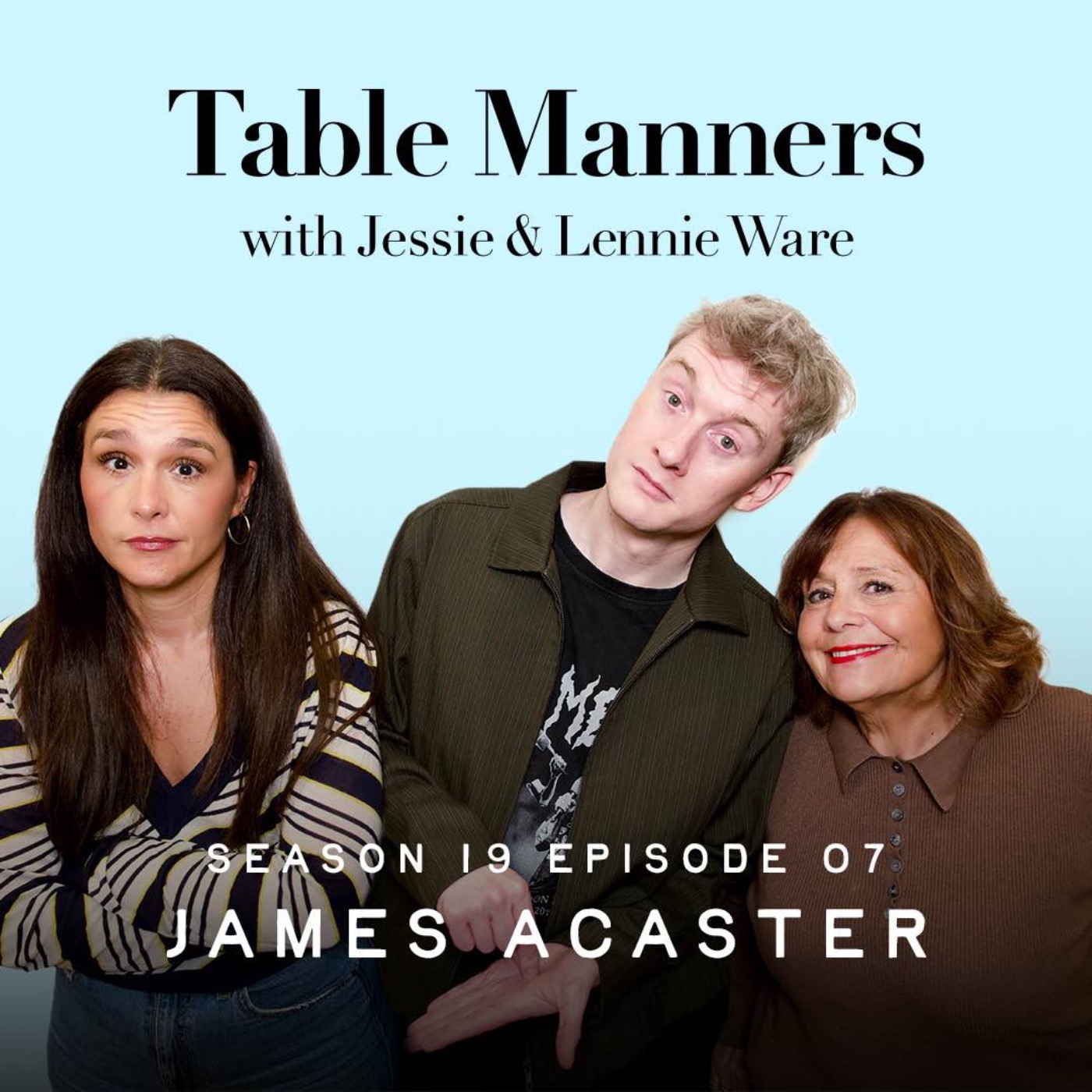


Table Manners hosts playwright/screenwriter James Graham to discuss his career and themes, especially how his work tackles current issues and “old institutions,” plus his personal background (growing up in Nottinghamshire mining country, twin sister, food anxieties, workaholism/therapy) and his views on masculinity, loneliness, and the power of shared storytelling (theatre/football).
James Graham is a British playwright and screenwriter, OBE for services to drama, known for major stage and screen projects. He wrote Dear England (National Theatre → West End; later a TV four-parter) and Punch (transferred to West End and then Broadway; Tony/Olivier recognition mentioned). He also wrote the musical Tammy Faye (Almeida).
Gareth Southgate’s “project” is misread as merely “woke/woolly,” but is actually about strength through vulnerability and team culture. Punch is framed as restorative-justice hopeful masculinity. Theatre and football create synchronized emotional connection that counters loneliness.
Dear England’s football narrative (Southgate, England squad, Sweet Caroline); Punch’s “one punch” case and Jacob’s restorative-justice journey to PhD/TED Talks; Tammy Faye’s tolerant faith and AIDS-patient inclusion; Ink (Rupert Murdoch) with Danny Boyle and Guy Pearce.
Written by AI. May contain mistakes.
Discussion of playwright James Graham's accolades and notable works.
“If you don't know who James Graham is, you may have heard of the hugely successful play that was at the National and then transferred to the West End called Dear England, which was all about Gareth Southgate's kind of...”
Jessie shares her culinary creations for the day, including salads and cakes.
“But I don't think I left my starter to rise for long enough.”
James discusses his play 'Punch' and its impactful story about masculinity.
“Why are you being like, no, you're a big deal.”
Talk about adapting 'Dear England' into a television show and its significance.
“The great thing about TV and then the sad thing is about you sort of hand it up to like TV gods and things like that.”
Discussion on how 'Dear England' attracted a diverse audience and its cultural impact.
“OK, so you're on to talk about Dear England, which we both watched at the National Theatre.”
James shares insights about Gareth Southgate and his influence on the play.
“Like the most Gareth Southgate thing he did was that he obviously was a bit nervous about having an actor play him and he didn't really think he was worthy of a story.”
Discussion about Harry Kane's portrayal in the show and his significance as a role model.
Discussing Harry Kane's impressive football statistics and his role as a positive male role model.
“or everyone's just really enjoying the impression.”
Exploring the hosts' personal experiences and connections to football and Nottingham Forest.
“Well, isn't Nottingham, isn't Torquem and Dean from Nottingham?”
Revealing insights about the upbringing in a mining village and its impact on personal development.
“But so who was around the dinner table and what were you eating?”
Discussing family dining habits and the significance of shared meals during childhood.
“Jessie, there's nothing in the oven, is there?”
Talking about school experiences and the dynamics of family relationships.
“And again, I don't think my nan was like a massive cook, but on the things that she did, like those kinds of puddings or those school dinners, she just had her...”
Exploring the unique experiences of being a twin and sibling relationships.
“It was something like psychologically about it.”
Sharing experiences of food anxiety and the types of meals served during childhood.
“And then I remember one day I thought he poured in fat milk and didn't like it, but it was the right milk.”
Discussing the evolution of cooking skills and the significance of fresh ingredients.
“Yeah, any addiction, I guess, is filling some kind of hole in your life, isn't it?”
Examining the challenges of workaholism and its effects on personal life.
“I guess when I realised it was a problem is because my behaviours and certainly...”
Learn how James Graham structures his mornings and the importance of work time.
Discover James Graham's cooking inspirations and favorite dishes.
“Yeah, I like going to the gym, I like running.”
Explore the cultural significance of dining alone and theatre traditions.
“And it's a roasted cauliflower with grated raw cauliflower, pomegranates, pistachios, hazelnuts, and loads of other herbs.”
Understand how theatre fosters connection and combats loneliness.
“That feeling is very similar to going to a football.”
Analyze Gareth Southgate's approach to building a cohesive football team.
“He is the one who fixes the penalty curse.”
Learn about the creative process behind James Graham's play about football.
“And I think that story of resilience, like as a young man, there's so many negative stories about young men at the moment, aren't there?”
Explore the intersection of culture and football in James Graham's work.
“But there's something about a play, particularly for the National Theatre.”
Discover the significance of the Dear England letter and its impact on football culture.
“They had a clock that was counting down to the third tournament.”
Explore the complexities and collaborative nature of writing a musical like Tammy Faye.
“and it made me realise he's the state of the nation playwright we needed.”
Learn about the challenges faced during the Broadway run of Tammy Faye and insights on failure.
“I wrote the, you call it the book, but the script, which is sort of how you structure the story and the dialogue.”
Hear about the emotional struggles and lessons learned from artistic failures.
“I think you could bring it back to none.”
Listen to a humorous kitchen disaster story and aspirations for cooking.
“to get right which is your favourite musical?”
Discover the joy and narrative experience of tasting menus in fine dining.
“What sort of soundtrack do you like to listen to?”
Explore the connection between food and storytelling in dining experiences.
“So the extended nine-course meal, particularly when you get the pairing wines.”
Delve into the nuances of whiskey tasting and the romantic stories it evokes.
“I feel like I deflect because I have had loads of issues with intimacy and things like that.”
Discover how food, especially chocolate cake, can evoke personal memories.
“So the misconception about water and whiskey is it dilutes it.”
A wrap-up of the episode highlighting the culinary discussions and insights shared.
“He was the most unlikely person to give a tasting menu as well.”

Get the gist, explore an idea or ask about something said.
 Claude
On Table Manners with Jessie and Lennie Ware, what are the key points of this episode?
Searching your listeningAutomatic transcript. May contain errors.
0:03Lennie Ware: Hello and welcome to Table Manners. I'm Jessie Ware. It's a beautiful day in South London. You look fabulous. I like the red. Do you? It matches my lips. Or my lips match the jumper. It's good. It's working, honey. Yeah, it's good. We are so excited about the guest today.
0:18Jessie Ware: I can't wait. I think I've seen probably at least more than half of his plays that he's written or been involved with.
0:26Lennie Ware: So we have the phenomenal James Graham, who is a playwright, a screenwriter. He's the national treasure. He's got an OBE. I know. For his services to drama.
0:37Jessie Ware: Yeah.
0:37Lennie Ware: He is one of our most cherished and celebrated playwrights in Britain and just kind of around the world too. He's incredible.
0:45Jessie Ware: He addresses current issues. That's what I love about him. And old institutions.
0:51Lennie Ware: If you don't know who James Graham is, you may have heard of the hugely successful play that was at the National and then transferred to the West End called Dear England, which was all about Gareth Southgate's kind of... Vision. ...reign and vision with the England squad and how he really turned things around for us. He's also made musicals, Tammy Faye, which was hugely popular at the Almeida. House, he...
1:16Jessie Ware: I didn't see House. I did. he tackled parliament and people voting voting in the house sherwood sherwood the nottingham drama which is so good yeah punch which i think won best punch won best new play i think and has transferred from young fit to the west end and then it went to broadway mom it's gone to broadway
1:37Lennie Ware: he's just incredible i think he's absolutely amazing and he's coming over now i am on food to duty i know so i've made because it's really nice weather i've made two salads one is from the brilliant book jerusalem by yotam otolenghi and sammy tamimi and i've made this i've never made it before but it was quite straightforward it's fennel and chicken and chilies and basil and mint and all these beautiful herbs and then you make this um cooked orange saffron honey sauce which kind of almost tastes like marmalade so you griddle the chicken and it's got this kind of sweet orange um dressing but i think it will cut through with all the herbs and the chili so i've done that and then i've done this roasted cauliflower pistachio and pomegranate salad which is from otolenghi simple and um was it simple i mean for otolenghi it was quite simple and then I've got a bit of a sad loaf.
2:40Jessie Ware: What happened, Jess? I think I over-proofed it yesterday. It's not the proofing.
2:45Lennie Ware: It's the cooking. No, no, no, it's not that. No, the dark is fine. I don't mind that. Oh. But I don't think I left my starter to rise for long enough. I think I was too keen to use it yesterday. You actually know that, do you? I'm starting to understand Helen the starter.
2:59Jessie Ware: And you've made two puddings. Well, I made a cardamom and pistachio cake yesterday and it does have a kind of caramelised almond and sugar topping with butter on the top. But I wondered if it felt a bit hard and felt like a giant biscuit and I thought I'm not going to let myself down. So I got up this morning and I've made a Lisbon chocolate cake from the New York Times. Yeah, what makes it Lisbon? I have no idea. Someone tasted it in Lisbon. Oh, okay. And so it's basically a chocolate cake but kind of very limited. it's like butter, cocoa, chocolate and corn flour but no flour and eggs. That's the cake and then it's got a chocolate mousse on the top.
3:43Jessie Ware: So making the ganache was a trial I can tell you.
3:47Lennie Ware: Oh really? Anyway it looks all right and let's hope it works. James Graham coming off on table manners.
4:00Lennie Ware: James Graham. Hello. We're so excited to have you. Why are you being like, no, you're a big deal. I love you guys. You're the biggest deal. No one will know who I am. Shut up. Like, playwrights are so anonymous and rightly so. Okay, no, we're Tony nominee, Olivier Award winning. That's true. Makes kind of the best dramas on television. Right to play every other day. Yeah. Sure. Congratulations on Punch. Thank you. I went to see it. I know you did. I remember. I think I went just after the press night or just at the end of previews. At the Invict? Yeah. Yeah, thank you for coming. And that was one of the most arresting first halves I've ever seen of any play.
4:38Lennie Ware: He was unbelievable. David, yeah, he was brilliant. It was like, I didn't know him and I felt like he's set up now. I'm sure he was acting before and doing very, very well, but that was a defining role for him. Yeah, he got nominated as well, but I'm so glad you got to see it. It's one of those stories that you come across very rarely that like I can never like talk about it but like nearly bursting into tears. It's like such a moving story of this guy, Jacob, real guy from Nottingham who on a night out, you know, lads, gangs, drink, punch somebody and without meaning to killed them with a one punch.
5:11And it's just that rare story of, it's a story about masculinity and men in the criminal justice system that ends really positively. And basically what happens is the parents reach out to him and go on a journey of restorative justice where basically like the mother forgives him for killing her son and saves his life, like decides she's going to help him. And now he's got a PhD at university. Done TED Talks. Now he's done TED Talks. He goes into prisons and saves other young lads. I haven't seen it yet. I will go. I'm going to turn it into a TV drama so you can give it a whirl.
5:42Lennie Ware: How does that work with like who plays who? We don't know. Right. The great thing about TV and then the sad thing is about you sort of hand it up to like TV gods and things like that. But no, I'm loyal to that cast and I will fight for them to the ends of the earth. Speaking of TV gods, you are a bit of a TV god anyway, but you've just made your amazing Dear England into a TV show. And that's why you're coming on today, even though we have been wanting you for a very long time, haven't we? I know, you're really patient. I don't know why I keep fucking up and not coming on. I'm so sorry.
6:12Jessie Ware: Because I want to list all the ones I have seen. And I forgot to mention Ink, which I absolutely adored about Rupert Murdoch. We're just about to release that as a movie. Are you? Yeah, Danny Boyle. Who's playing Rupert Murdoch? Wow. Guy Pearce, an Australian actor. Oh, perfect. Oh, yeah, that's right, Memento. Memento, yeah, yeah. Neighbours, yeah, sure. Neighbours, correct, yeah. Rupert, perfect. Yeah, well, Danny Boyle, who's directed the movie, he really wanted a proper Aussie to play Murdoch, so to imbue that authenticity. But who did I watch play it at the Almeida? You were the scene about Bertie Carville.
6:45Bertie Carville. He won, like, an Olivia Natoni for that, yeah. He was sensational. He was great, yeah. He's in the film as well, playing a different part. But, yeah, so it's fun.
6:52Lennie Ware: God, you don't stop. Well, Ink was like eight years ago, and it took me so long to get that screenplay right. It took me ages. It was in development hell, but not in a good way. Just in development hell, in my head. No one was sharing the hell with me. I just couldn't crack it. Do you ever collaborate with people in the writing room, or is it all just you? Writing just me, yeah. But the joy of being a playwright or screenwriter rather than a novelist is really collaborative. You go into a rehearsal room, and there's actors, and there's directors, and there's a set designer, Or like on Dear England, there's a choreographer.
7:24So in the script, I just get to go and now they do some penalties and hand that over to somebody. And then they work it out. And it's great.
7:30Lennie Ware: And Es Devlin did the lighting, who is just so incredible. Yeah, Es Devlin. She did the set and the lighting. Sorry. She did the set, which. OK, so you're on to talk about Dear England, which we both watched at the National Theatre. Thank you for going. Such a pleasure.
7:44Jessie Ware: I think we were there the second week. It was so wonderful.
7:48Lennie Ware: My husband, who hasn't always gone to the theatre, who I'm like, you're coming to the theatre with me, it was like the perfect entry point for him. I think it was your Christmas present. Your mum got us tickets and we went. And, you know, by, is it the first half, we're all singing Sweet Caroline or whatever. But Sam was like, oh, OK, this can be the theatre. Fine, great, thanks. He then tells his brother to go. So it did bring in a different kind of national theatre audience. But that was always the hope and dream, and that's got nothing to do with me. that it's just like the hope was by telling a football story that a non-traditional theatre crowd would come and see him why are you so humble of course it's got everything to do with you you decided to tell Gareth Southgate's story and how he transformed the England those lads aren't coming to see me they're coming to see because it's a story that they care about about football and I know I came up with the idea and all that
8:32Jessie Ware: you see I think people came because it was a James Graham play and there were lots of old fuddy-duddies there and then they were on their feet all going sweet Caroline at the end which was amazing such a beautiful energy
8:43Lennie Ware: in the room like it was so amazing and I'm so happy that it's been so successful.
8:47Jessie Ware: And we cheered for every favourite footballer that came. I know.
8:51Lennie Ware: Yeah, Marcus. Harry. It was so special. And then, you know, Joseph Fiennes was phenomenal. Yeah, so he's playing in the TV drama as well, which is great. Which we watched two episodes. Oh, I didn't know that. Oh, my God.
9:01Jessie Ware: Yeah, I watched last night.
9:02Lennie Ware: And it's got a different energy, of course, because it's not a play that's done in two hours. Yeah, right. It's a four-parter. It's a four-parter. And also, no, you're right. Like, it wasn't, I didn't find that really easy as well because the joy of the stage plays, it's theatre. so there's like an abstract language to it whereas telly is so naturalistic that's right
9:20Jessie Ware: but also the football's different so you actually see matches which for me is thrilling because I love football whereas it was more choreographed and your imagination it was a dance so it was a more serious it was more serious in some respects because you address things like racism and yeah you do but not as I don't feel it was as in depth. You didn't get the emotion quite, maybe quite as much. I guess on telly, there's something about the lens. Yeah. You feel more interior in the actor's head. Yeah, you can see their face. I loved it on stage for what Ez and Rupert and the director, people did that because it felt like you were in a stadium.
10:01Yes. You were dancing and cheering. And then TV just had to have a different grammar. You had to find a different quality to it.
10:08Lennie Ware: But I do think you honoured the stage play because it was quite bombastic. with Estedlin's design. With the kind of big, there was big sound effects. Great sound, yeah. And I feel like you did that in the TV show without kind of giving too much away. It's captivating and it's very exciting. It's exciting. I hope so. I just find it a bit like punch. I find the story so moving, but also it's like a really hopeful story. I think Gareth Southgate's project and loads of people have different views of the England manager and that's their right. and it's everyone's England. It's not just mine. But I think what he did to transform the culture of that team and those young lads.
10:51Jessie Ware: Have you met him? I have, yeah. What's he like? Is he as gorgeous and sincere and kind? All those things. Like the most Gareth Southgate thing he did was that he obviously was a bit nervous about having an actor play him and he didn't really think he was worthy of a story. He hadn't won a trophy. So he thought, well, why are you doing a play about me? But also because he's Gareth Southgate, even though he sort of hated it, he helped me do it because he thought, well, I want to help you. So he brought me to St George's and I got to meet all of his team. And we've stayed in contact since as he moves on to the next phase of his life and works out what he wants to do.
11:31So whether or not he'll ever watch it, I totally get why. Has he never been to see the play? No, family have, kids have, his mates have. He's just never seen it. And I get why. I think because the idea of people watching him, watching himself, that's just not who he is. But he can watch it on iPlayer, can't he? He can, but even if he doesn't want to, I would totally get, like, would you watch an actor playing you if they did the biopic? When they do the biopic? I don't know.
11:53Lennie Ware: I love you. Of course I will. The song says they're gorgeous. Natalie Cassidy playing Jessica. Just doing this now.
11:58Jessie Ware: But did you get the approval of all the actors? The real people. For the real people. No. Oh, so Marcus didn't have to approve who was playing him? No, it's a really good question. It's like a, I think about this all the time, actually, like what the moral responsibility is when you're doing a real life story. And like you want to respect them and you don't want to, you know, there's loads of laws. You can't just destroy someone's character because you don't like them. But equally, you need the distance as well. Like they can't endorse it because they've got to both defend them and prosecute them in a way.
12:30You've got to celebrate them, but you've also got to go, what did Gareth Southgate get wrong? Was he good at this or was he bad at this? Do you agree with him? so we never saw an endorsement from the FA or the place because I have a public responsibility to not be doing I mean they do quite a lot now sadly don't they all these musical films coming out about bands and artists and it's the estate that control them and you just think that's
12:51Jessie Ware: like Harry Kane because he's Sam's favorite well I feel like you portrayed him slightly
12:57Lennie Ware: differently yes in the tv show yes yeah he was different in the tv because there was a lot of discussion about whether it was kind of slightly too comedic but i feel like you've definitely
13:07Jessie Ware: gone away from slightly yeah he's yeah he seems sharper more was that accidental just because of kind of a little bit i mean i i think the actor um will close he won an olivia water playing it and i i think he just nailed it but i think something does happen in a theater where when people are laughing like a thousand people are laughing i think i i didn't feel this but i think sometimes people thought oh god am i laughing at him rather than with him and we tried to tell that story like he had a whole scene in the play where he goes i know people take the piss out of my voice and they think i'm not very smart and i'm not a normal leader in the sense that he's not fireworks he's very thoughtful he's very decent kind man i think he's one of the greatest captains england have ever had because he carries with him a kind of nobility um that is quieter than beckham or rooney but i heard some people think that they thought just by being in a room where or everyone's just really enjoying the impression.
14:03So on telly, we just wanted to make sure that because it's not that after, that you get in his head a little bit more. Can we just big up, Harry?
14:09Jessie Ware: Because last night was probably one of the best...
14:11Lennie Ware: Did you watch the match last night? No, I mean, I saw the score. It was amazing football.
14:15Jessie Ware: He scored his 59th goal of the season last night.
14:19Lennie Ware: It's unbelievable. And his top goal score now, England, of course, yeah, he'd be rooting his records during our story. It's extraordinary. He's one of the greats. He's extraordinary, yeah. But it's not just his performance. I maintain... It's what he represents. How many male role models do the lads have now? He's just a good man. I just think that's brilliant. Who do you support? Nottingham Forest. It is Nottingham Forest. But I have to hold my hand if I'm one of them fair weather people. I dropped out for a lot of my teenage years. And when they started doing better, I did come back to it. And so I have to hold my hands up for that.
14:53Do you like football? I've always loved England. I don't know what it is. It's possibly like I was quite a shy introverted kid. And, you know, I was a theatre kid. I did ice skating. I wore tights and sparkly things. Were you good at ice skating? I was pretty good.
15:07Jessie Ware: Well, isn't Nottingham, isn't Torquem and Dean from Nottingham? Great heritage, yeah. I skated on the ice.
15:13Lennie Ware: Were they the people that you were, like, looking at? Oh, my God, yeah. Yeah. But obviously that wasn't a traditionally masculine thing. And there's issues, like, when you're working out your sexuality. And I was just not that blokey kid. I hated PE. I felt so nervous in PE. so wrongly I had a resistance to like club football week by week which I completely got over now I was at City Ground a couple weeks ago um I saw Farris beat Spurs 3-0 at Spurs Stadium at the Tottenham Stadium so I love it now but I always just had a bit of a love-hate with weekly football so you grew up in Nottingham oh we get right yes we're going in therapy yeah good can you get the wine up for Christ's sake we're going to talk about feelings I'm going to need lubrication
15:59Lennie Ware: whilst producer Alice opens the wine grew up in Nottingham Nottinghamshire mining village in the north
16:07Jessie Ware: how far away from Nottingham about 40 minutes on the bus where was your nearest M &S M &S? for your food shopping and your underwear it was Iceland and Safeway I couldn't believe when I moved to London M &S did food I remember thinking, I thought they just did bad shirts. Not good shirts.
16:26Lennie Ware: Are you kidding? We love M &M. I love it now. Where do we have from? Probably Debenhams. Debenhams. But it was like Mansfield was my biggest town. In Mansfield. It was a big mining town. Yeah, yeah. Well, they were all closing down when I was growing up. So that was informed, I think, about my politics. Well, an informed Sherwood. Yes. Which we'll talk about later. But so who was around the dinner table and what were you eating? It was, I've been thinking about this because of coming on. I was just going to own it. like we didn't sit around the dinner table we sat with it on your lap teledinners well that's how you've got so interesting drama lovely i mean yeah and i don't know whether like it's not um definitely wasn't like across the but like it's a working class upbringing in a mining town but then i knew um mates who always sat at the dinner table and they were very proud of that but for some reason that just wasn't in our so i'd yes it was it's what neighbors in coronation street my dad with my parents divorced my dad um lived close to nightingham and he uh worked for the local council.
17:21And what did your mum work? Mum did loads of jobs. So when I was going, she worked in the local pub as a barmaid. And then she worked in a warehouse where I got my first job. And then she worked as a receptionist in a primary school. She was always doing, and then worked in a shop in the weekend. She was always doing loads of jobs.
17:37Jessie Ware: And they were just the two of you? And I had a twin sister who lived with me. Oh, wow. You've got a twin. You've got a twin. I've never realised that. Her name is Laura. Laura. She loved drama as well. We did plays at school together. And then I've got an older brother, Richard, who has come into the film world as well. He's an editor.
17:54Lennie Ware: And I know Richard. I didn't know that. Because he went out of Harriet, my friend. So I've been in France with Richard at weddings. He never told me that. Oh, well, obviously you didn't leave an impact on him. No, yeah, yeah. But he was lovely. He probably just wanted to keep you to himself. No, he was very lovely. He's very sweet. And I remember him being quite intense when we were both drunk. And I quite, I enjoy intensity. So it was great. Let's see what happens. And cheers. Cheers. Thank you so much for having me. Are you kidding? We are such fans. Congratulations. Bless you. That's really cool.
18:22Lennie Ware: Cheers, darling. My friends over... I can't believe I'm here. Oh, please. I can't. I don't care. But my friends... Oh, who are your friends? They're obsessed with me. You should have brought them over. No, no, no. I need something. I need some stances. Okay.
18:34Jessie Ware: Jessie, there's nothing in the oven, is there?
18:36Lennie Ware: No, no, no. Okay, fine. No. So I've also realised that I've done something with loads of herbs. So there is the worry that we're all going to get it in our teeth. So we just have to be honest with each other. Yeah, yeah, absolutely. If we've got it, because there's potential. Great.
18:50Jessie Ware: So when you're eating your food on your lap, watching telly, what were you watching? Soaps, like curry, Emmerdale, EastEnders, Neighbours. Is that your favourite? It was when I was growing up. I don't watch it much now, just because of time. But I loved the rhythm of it, like the rhythm of that life. You come back every evening and see what happened next. I was obsessed. Like, oh, my God, like when we went on a holiday, and like holidays were in a caravan in Mansfield. we would go to a field and be there for two weeks in our same town in your same town how sweet I remember the was it the 92 Olympics we just watched it in a field I could like see my house and we was like pretending we're on holiday oh how sweet whenever we go away I get all my neighbours to record the soaps on the VHS tapes and then come back and watch them for hours the VHS
19:37Lennie Ware: omnibus oh yeah oh my god the omnibus I'd watch that after watching it in the week oh I love it what were you eating on the telly it was like this is no shade unlike my family but it wasn't like a cookie house it is now um i think that's changed culturally in a lot of these places but at the time sometimes microwave dinners but always um like my vegetables was often mushy peas in a tin um but then sunday dinners were massive like sunday rose that was huge i used to love that who came for that again i'd just be family and i had a group with a stepdad who was the local window cleaner um who he started cleaning our windows then started cleaning them on the inside they had the cleanest windows in the village for some reason I was like this is interesting and then he just stayed um he's very sweet um so my stepdad my sister my brother and my mum yeah what was your roast of choice did your mum change it up we always change it but I remember actually when my um my grandma was alive my mum's mum she was the school dinner lady um and she was so At your school?
20:38No, at a different school locally. But there was just something about... And again, I don't think my nan was like a massive cook, but on the things that she did, like those kinds of puddings or those school dinners, she just had her... I can't remember what it was, but her particular way that used to really stress my mum out. So I think it was equivalent of having Gordon Ramsay in the kitchen when my nan was there. And it was only like roast chicken or roast beef. She had an opinion on that. Yorkshire puddings and roast veg, but yeah, she had an opinion. You're not like me at all. No, not at you at all.
21:07My mum could always sort of feel her, like, what are you doing with the veg in that? Like, she would just feel the pressure of the school dinner lady.
21:13Lennie Ware: Did it end up in a fight? Just passive aggression, really. Oh, okay. Which is very healthy. Didn't let it out. No, push it down. Let it stay there for 20, 30 years. I think it's what Dear England's about, pushing those feelings that I'm not talking about them and just hoping that I'll be okay. How is it being a twin? I didn't notice. Obviously, why would you? Because you don't know any different, do you? I sometimes forget I'm a twin. like after I go I've got a sister she was born on the same day as me do you look alike? no she's blonde she's the only blonde in our family I was very I don't think she'd mind me saying this when she came out she was quite big and then I flopped out after I was absolutely tiny if I hadn't blinked they'd have thrown me away then they put me in an incubator for weeks while she went home and started driving so she was I was very very small and very wee growing up
22:09Jessie Ware: So were you quite thin growing up? I was tiny yeah I did have an anxiety about food I was very very skinny all the way through my teenage years which I used to hate now I'm like god I wish I was skinny now You have to put in just to stay the same Did your mum worry about you eating? No but I think I was a bit indulged again no blame but like I was I like those things I don't really like to diverge so I remember when I go to a friend's house um I would get really anxious about what they would serve me and and there's a bit we there's a bit of a like on my dad's side of the family there was that uh culture he's like parents of if you don't finish you keep going you keep going no so you have it the next day and the next day and the next day oh my god yeah and I get like I totally get why but I remember this awful day I used to be anxious about milk for some reason.
23:04You didn't like it. It was something like psychologically about it. And breakfast again, breakfast was just cereal growing up, Cocoa Pops and Frosties. But it had to be semi-skimmed milk if it was too fat. You didn't like it. And my dad used to tolerate this. And then I remember one day I thought he poured in fat milk and didn't like it, but it was the right milk. and he changed it and he gave me my brother's, which was the wrong milk. And then I tasted the wrong milk and realised my mistake. And understandably, it was like, I'm sick of this. And I had to finish that bowl of cereal. It took me about four days.
23:42And I used to know in the morning, I have to come back to it and look at it. I was just a very, yeah, I was just like a very nervous kid.
23:49Jessie Ware: Do you still speak to your dad? Yes, I love him. He's gorgeous. I'd give him the wrong milk on this cereal.
23:55Lennie Ware: Was it just because they were like, you're not wasting food? I think, yeah, I came from a really good place. Like, I'm so glad that I was, in the polite way, would be, like, encouraged to, like, face my fears and try new things. And eventually I did. Now, I love food now, but that only came because I needed to give my head a bit of a wobble and, like, address my fear around it. And that only happens by facing it.
24:18Jessie Ware: What was your favourite meal when you were little? It would have been, I loved an English breakfast and loved the roast dinners. like curries and things but like meat definitely meat so vegetables one of my first jobs um was on the till it's uh my local supermarket um and just because i hadn't really grown up with many fresh vegetables in my life uh i remember the first day i'd see things coming down the conveyor belt and i hadn't a clue what they were and obviously you have to get your sheet out and go that's a butternut squash i'd never seen a butternut squash in my life or every definitely every courgette went through as a cucumber um so i had to just i had to just like sort myself out and go there's all these opportunities and there's all these my mum ever cooked broccoli or courgettes i mean it was kind of exotic yeah i think that has really changed we had peas or we had carrots right yeah but most most of the best came out of the freezer and that's really changed now this there's i'm like my mum's got all these cookery books and it's it's really exciting and a big long cook is one of my favorite things with my friends um taking five six hours so can you cook yes I mean my friends would say no but I definitely can um I just need to protect the time like you have to protect the time don't you and I that's what I struggle with I'm I'm a diagnosed um like workaholic and I will easily choose working on that script over looking after myself um and it takes it's taken like friends and family to tease me out and go and cook like that's spent that a Sunday afternoon let's cook a little bit of dinner so I've heard you're a workaholic and you say you're diagnosed does that mean you're getting you've been in therapy yeah and deal with it yeah and I've I used to feel so um anxious about talking about it because there's something about um I guess there's a perception and I get where it comes from that as addictions go it's a bit made up like just it's not um the chemical addiction of alcohol or drugs or surely you control how much you work.
26:20Jessie Ware: It must give you some endorphins. It's the same thing. It's like running or something. Yeah, any addiction, I guess, is filling some kind of hole in your life, isn't it? It's like a vacuum because you're not dealing with something. It's definitely chemical. But the dopamine hits I get from... I guess when I realised it was a problem is because my behaviours and certainly... I noticed I was lying to my friends about, in the exact same way you go, oh, I haven't had a drink today, or I've only had one glass. I would say, and I got up at a normal time, and I hadn't, I got up at like three, or I'd work through the night.
27:00And you go, why am I lying? That's interesting. I must know the pattern is unhealthy. And you start to be an absolute chaotic mess in the same way you would if you were doing drugs, or people would look at you going, are you okay? that looks like you're wearing yesterday's clothes or you look really you look really shit um so it's the same the it manifests in the same way you just have to get over the shame with people going it's basically a humble brag in it you're going oh i'm so successful i'm working so much we're quite happy
27:28Jessie Ware: that you are because of the of the prolific but that's interesting isn't it i've realized it's the only that's not helpful but it's the only addiction but no it's great i love it but it's the only addiction where um everyone wants you wants you to carry on because it's so yeah yeah but so what is your day like for someone who works very hard there's no normal day which is brilliant what time do you get up um i'm not gonna lie uh no um it's got later like i've i've realized that i love sleep i really like sleep as i've gotten older so i would try i do like working early there's something psychological about feeling like you're ahead and there's still definitely something about not growing up in the arts world and parents having proper jobs there's something about going i need to tell myself it's a proper job i can't like waft around the house do 500 words in the afternoon i've got to work um so 6 37 oh that's quite early yeah and try to do you have coffee first coffee yeah make a little um french press of coffee um i'm not a coffee snob at all but I do um yeah big old pot of coffee which I'll get through breakfast do you forget to eat no I don't forget but um it's just um I don't wake up massively hungry uh but then when I'm like with friends like if I stay with some friends and things I'd love it I have a big old you like full English English or like a lovely yogurt granola fruit honey that's great it I intellectually the idea of i've got like i'm quite lucky i've got like a nice garden here in london um and intellectually i understand that what would make me dead happy would be to protect 30 minutes in the morning where you go out with a lovely bowl of fruit or something and sit out there and not doing something just like be in your head yeah um and every morning i find myself at my computer with my coffee but like just doing that um so you don't have your breakfast Do you stop for elevenses or do you go out and exercise?
29:33Yeah, I like going to the gym, I like running. But the amazing thing about being a playwright or a screenwriter is people drag you out of the house because you've got stuff to do. You've got to be in a rehearsal, you've got to be on set, or you've got to go to some auditions. You're not like a novelist, you can't put yourself in a log cabin and do 500 words a day. So most of my life actually is in meetings. I've got to really protect the work time, which is also possibly why I get up at six in the morning. But I'm so grateful for that. I'm so grateful that most of my days are surrounded by other people making the work rather than just being in my own head.
30:09Jessie Ware: And do you work always in the same place? You like to work in your study or at home? I move around quite a bit, actually. Upstairs I've got a little office or in the garden or in my kitchen. Oh, so you take your laptop everywhere. Yeah, I move it around. But most of the time you get like 12 minutes between the things So you wouldn't be in a cafe or on a train. The number of lines I've written between Stockport and Crewe. It's not like, it's not romantic, but you just got to do it.
30:34Lennie Ware: So what we have here is chicken with saffron and honey and orange dressing. Chili, basil, coriander's in there, mint and fennel. It's from Jerusalem, the cookbook. Amazing. That's otolenghi and sami tamimi. Lovely. And then this one is also an Ottolenghi, but it's from his Ottolenghi Simple. And it's a roasted cauliflower with grated raw cauliflower, pomegranates, pistachios, hazelnuts, and loads of other herbs. That doesn't look simple. I mean, it's Ottolenghi Simple. That's why they called that the cookbook, Ottolenghi Simple. Great. And then there's some bread if you want some. How gorgeous.
31:09Lennie Ware: Thank you. So please help yourself. I do like a bit of kick, like a chilli. Okay, good. Thank you. I can't be the first to serve. Yeah, you're the guest. Yeah. Here we go. Oh, God. No pressure. Try to do that MasterChef bite with you. Oh, my God. Mmm, lovely. Okay, good, right. Morning, I'll come to the summer. Mmm, God, the orange. It's good, isn't it? She's zesty. Yeah. She's zesty. She's zesty, but also spicy. It always amazes me how something can be so light and yet full. Mmm. That's that book, Jerusalem. Right. One of the best cookbooks.
31:42Jessie Ware: I think it's one of the greatest cookbooks of all time.
31:44Lennie Ware: Sammy Tamimi and Yotan Motolenghi are incredible, so it's all them, it's not me at all. This is the thing that would have freaked me out as a kid. Really? Just all the bits, like all the complicated bits in it. I wouldn't know what to do with it. Now I love it, but I had to train myself. Well, then you kind of were in the land of loveys and you had to kind of go out for dinners all the time. Oh, yeah, and you had Jay Sheiky's and the Ivy. You had to just sort yourself out. Do you have like a tradition of somewhere that you go post a show opening? Even though I just joked, Jay Sheiky. I've never been there.
32:18Lennie Ware: I love it. I mean, I didn't know it was a thing. But because of where it is in the West End. Yeah. It's kind of between a lot of theatres. And I was very, it's going to sound like a humble brag, I was very lucky. One year I had two plays on the same street, St. Martin's Lane, which they should have renamed. Which one's from? James Graham's Passage or something. That sounds weird. I love that. I'm going to go down James's Passage. Go down James Graham's Passage. I wish. I love that. It was at the Noel Coward and maybe you saw Ink at the Duke of York. No, I saw Ink at the Almeida. We moved down there, so I was sort of between those two theatres.
32:56What I really love, because I often eat alone, because I'm working, what I've discovered I love is if you can sit at a bar on a high stool, face away from other people, but face the kitchen or face a barman, it's a lovely way to eat on your own. I discovered that in New York, I think, when I was working out there, because you're there for months and months and months on your own. New York's a great place to be on your own. And they just have a culture of, yeah, sitting at a bar, even in a pub, sit at a bar. And I love that. So, yeah, for some reason, Jay Sheik is on the last night of any run of a play in the West End.
33:33I go there and...
33:34Lennie Ware: Do you go on your own? Go on my own. I like a moment on my own. Often I'll go there with friends or loved ones or cast members, but that's a moment when I just sort of go on my own and tried to, very unusual for me, take the moment of going. So that was nice. I had a play in the West End. That was good. Well done. And have a little whiskey and champagne or some oysters. And then, yeah, go see the West End. Do you like oysters? That's a beautiful tradition. Yeah, very inconsistent for someone who's worried about food. Someone who's struggled with your cornflakes. Yeah, exactly. Frosties, no way.
34:06What a slimy thing that's alive down your throat. Yeah, that's great for some reason. But I think it's the ritual of it, like the ceremony and the sharing of it like yeah you're doing something together which i like yeah it's great it's what theatre is they do they're just beautiful to me because it's one of the last things that you can only do in proximity with other people it doesn't work without other people um and i'd never so i thought about that a lot during lockdown why theatre is amazing and actually why i think in any conversation about ai and the future theatre's going to be fine like it survived 2 ,000 years and it's going to keep going because and I think a younger generation is coming to the theatre because of that because we've become more atomised and entertainment and culture is shared privately.
34:50That feeling is very similar to going to a football. And celebrating together is just a human need. There was a study, I think it was University College London that did a study of people's heart rates when they sit in a theatre and something happens in the 10th minute when everyone's heart rates start to line up. And it only happens about, I think it's something specifically about watching a story. So it doesn't happen necessarily with classical music or if you watch and share a story together in the same space. That's amazing. I know, it sounds really cheesy and sentimental. It's romantic. But I think we have to hear those things and remember those things because we are becoming more unconnected.
35:27And it always takes me that a younger generation, the biggest problem is loneliness. And you think, how can we, with all these devices in our pocket that are designed to connect us. And young men in particular are lonely. Can't bear it, really can't bear it.
35:41Jessie Ware: But it's not real connection, is it? Yeah, exactly. Yeah, like social media. So you have the exhaustion of having to perform and narrate your own life rather than... Like, this is the Gareth Southgate thing, and this is why... And he wouldn't characterise it as this, and I think he wrongly has perceived his experiment, his project was wrongly perceived as being, like, woolly and woke and progressive. because it's about feelings and vulnerability but actually it was all about strength like men being stronger by sharing the things that they're all sharing and actually talking about it he identified that before him we had this golden generation of players that just couldn't sync up couldn't be a team and they've spoken about that like Gerrard and Rooney they were just like we just didn't trust each other we didn't like each other we didn't know each other and we didn't know what England was that we had a very clear club identity yeah rituals and symbols and history and legacy and story and then they turned up at England and they were just told to go and play and Gareth just recognized immediately that what you have to if you're going to trust each other if you're going to take risks if you're going to be creative you have to know each other and like each other and that's not weak that's sort of like to go I'm scared are you scared is about the strongest thing anyone can do and I find it so amazing and I try to celebrate that in this TV drama because I do think he's mischaracterised as being, he did it people think he did it because it was just nice, it was the nice thing to do, it was the nice thing to do but also it worked, they became a better football team and we've had a series of better results in 150 years it's like extraordinary but you did that by like his story for a young man of resilience like what he went through when he missed this penalty in 1996 which is where we start and then 20 years later he comes back and it's him, it's so like as a writer, how did I get lucky enough to find this story?
37:32He is the one who fixes the penalty curse. England had never won a World Cup penalty shootout. And he's the one who walked into this room and went, I think we have a problem. They didn't even practice penalties before him.
37:42Lennie Ware: I mean, that was mad about the timing. Yeah. That the Germans, who were the best penalty takers, took seven seconds. Yeah, three times as long. And we were the fastest. We were the fastest in the world. We didn't practice them. We didn't talk about them. And like classic, let's just pretend they don't exist. And it obviously didn't work. And he used his own trauma to go, I think we have a problem. How are we going to fix that? And I think that story of resilience, like as a young man, there's so many negative stories about young men at the moment, aren't there? The manosphere. The manosphere. And do we perpetuate a crisis of masculinity?
38:14But I keep saying there's a crisis of masculinity. But him going, how do you behave as a young man if something bad happens to you? Or if you fail? Do you get angry, resentful, blame the world? Or do you use it to come back better next time? and I can't think of a better example of a guy who just went, let's just like come back better and do that together. I think it's so gorgeous as a story.
38:34Lennie Ware: When did it come to you to make the play? I was at a pub, which is all the best ideas come from. I was in a pub garden watching, it was Russia 2018, the first World Cup. I think it was Columbia, Columbia, England. When it went to penalties. When it went to penalties and they for the first time ever won. But even before that, I think I was watching in the second half and I remember hearing people talking about it and me agreeing. they just felt different we had fallen out of love with our players and the age of like tabloids and wags and bad behaviour and I think some of that was really unfair on those players but this was a younger generation the youngest team we'd ever put out since I think in the 1920s and they just felt good, they felt like good men and I thought that's, I just was really curious about how somebody, I remember the age of the waistcoat and he was presenting a kind of English gentleman thing 2016?
39:252008. He took her in 2016. And that was, 18 was his first World Cup. I remember like speaking to my mum on the phone and she was going, I just like them. I don't know why. They just feel like good men. And I thought, how do you go into any workplace and change like the culture of it? Especially football, which is, you know, traditional and old. I just found that really curious. So basically, I remember calling them, calling the FA. You have to be really bullshit and just like call, call prime ministers and say, I want to do a play about you. And they were really kind. And they said, we get offers a lot.
39:59We get documentary offers and things, which we always turn down. But there's something about a play, particularly for the National Theatre. They thought that's interesting. But they basically said, can you wait? Because it's a three-act structure. And Gareth had in his head this three-act structure, beginning, middle and end. You were like, that's music to my ears.
40:16Lennie Ware: I can wait. Absolutely wait. We were only in Act One. So Gareth had the idea for the three acts. He basically, one of the main things that he identified, and I think this is applicable across our national life, in football he identified that one of our problems was we just chased the quick fix. A new manager arrives, get the plays on, and just like try and find this. And we as fans were as responsible for that problem because we were going, we need to win, win now, rather than going what the Germans did. Do you remember when the Germans lost to us 5-1? Yeah. I think in 2000.
40:51Jessie Ware: Everyone had socks with 5-1 on. Yeah, yeah. From to Sainsbury's, yeah. It was a great moment, not for the Germans. And so traumatised were the Germans by losing to us that badly. They engaged on a decade-long project of renewal. They called it Das Reboot. And in a very German way, when this can happen again, we can't lose to the English this badly. So they took a decade to root and branch.
41:15Lennie Ware: Yeah, and they started a really young, inexperienced, yes. They changed the training programme. They changed how they organised the sport. That was because they lost to England. That's kind of amazing. I know. So they're welcome. And then 10 years, they come back and they win the World Cup again. And we never do that in any part of our national life, even in our politics right now. And we don't allow for it to happen. We don't go, this is going to take a decade. But imagine if we'd done that 10 years ago. Energy policy, housing, anything would be okay now. And we just never have the courage to go this way.
41:45Jessie Ware: Because people want quick fixes. And again, why is it really? Because things are really bad. So we want it to turn around very quickly. But what you need to do, what you need to do that successfully is have a really good storyteller. Gareth was a really good storyteller. He said, this is going to take time. We might not win the first one, but we have to win the third one. So they had a clock. It's in the drama. They had a clock that was counting down to the third tournament. Just so the players went, calm down. We don't have to do this tomorrow.
42:12Lennie Ware: So when he wrote the Dear England letter, were you just like, thank you. Seven. I mean, honestly. It's a work of art. Like, put it in the loo. It's a beautiful piece of... It's gorgeous. And I'd just read it. And I'd already decided to do the play by then. I'd already spoken to the team. I'd spoken to the National. They'd said, can you wait? And it was going quicker than they imagined. So I think their plan was to get to the semi-final in the Euros that we hosted. And they got to the final. And then the plan was meant to get to a final in Qatar and win that. And obviously, spoilers, it didn't happen.
42:46Yeah. doesn't matter we were on our way to winning um so they were ahead but that letter i don't know disrespect to previous england managers but when you read the language in it and like just treating us as grown-ups and going like things like why do we care so much why do we behave the way we behave he talked about conduct which i just love and it's why i don't necessarily understand why some of his um detractors particularly on let's say the small or see a conservative side of things that would prefer a different strategy. Don't celebrate a patriotic Englishman going, it's not just about results, it's how you conduct yourself, it's how you behave as men on the pitch, and as fans, and as women, and as families, and everyone.
43:31It's how you behave. He wrote that, and I just thought it was so beautiful. But what he also wrote, I think the sentence is, and it made me realise he's the state of the nation playwright we needed. I think the sentence is Wyatt Mattison which is every football match when England plays it sees itself we are all part of a collective that sees itself into the national consciousness the head of an England football manager saying that but the national consciousness that what we're all doing in any part of our lives is contributing to a story and making new memories that we share for each other and the fact that he described that as being that's why I'm here he wanted to make new memories for people I just think it's so beautiful.
44:22Lennie Ware: I'm interested, with somebody you work so hard and fast, but also with such amazing output. That was so lovely, thank you. Oh, good, pleasure. Writing a musical. Yeah. How was that for you? Because you've got to wait for someone like Jake Shears to no doubt Jake's one of the best writers, but an Elton John. You're kind of waiting for that bit of it. Was it quite frustrating? Or did you kind of understand patience? You learn a lot about yourself because you're not in control of everything. And that's great as well. Because you're sharing the... Tammy Faye we're talking about.
44:57Jessie Ware: Which I'm so annoyed I didn't see.
44:59Lennie Ware: I wish you moved it to the West End. Yeah, so we did really well at the Almeida. It did incredible in the Almeida. And then did not do well at Broadway. I know, it was probably... But it's, and I'm really sorry about that. I mean, thank you. Explain what Tammy Faye's about. Maybe that's why it didn't do well on Broadway. Possibly. I've thought about it a lot. I don't think I've completely understood that moment. But like in a Gareth Southgate, Pippa Grains, where I try and go, well, what was that? Like failure is an important part of your life. And what was I in control of? What can I learn from it?
45:30What was I not in control of? Was it always destined to fail? So Tammy Faye was a musical. I wrote the, you call it the book, but the script, which is sort of how you structure the story and the dialogue. Jake Shear is an amazing friend of yours, like Scissor Sisters guy. He wrote the lyrics and Elton John, which is amazing. This is an incredible trio. It was really lovely to spend time with these people who I just admire and adore. He wrote the music and so yeah, the rhythm of that is I worked a lot with Jake directly on the story. So you go, here's how I'm going to shape the story of this televangelist who, despite coming from that world of sort of right-wing Christian America, found a really beautifully tolerant, progressive version of her faith, whereby she was the first person, I think, to have an AIDS patient on her evangelical show.
46:20And she really celebrated him and celebrated gays in the church, and the church turned against her. And she was this incredible figure of defiance and celebration, like a beautiful woman. It was also very complicated. She bankrupted loads of people, and she said she didn't know all the money she was taking in on excessive glamour and houses and cars and really lovely meaty complicated stuff um ripe for a musical and it's also elton's world like that gospel stuff so it just felt felt great so you i would work on the story and how i would shape it you would say here's i'd say to jk i think it's the next scene so what's the song what is a song what's my work what's your work he'd write lyrics i'd go back and forth it was great i'm really collaborative and then you get an email from out on who's then written the music and you click it and it's the feeling when you know you're like maybe the second or third person hearing a new album doing song in the world i just absolutely loved it so it was different and you have to really leave your ego at the door like basically no one gives a shit about the book writer people come to music cause for the for the songs and so what you're in the service of is is that and it's kind of yeah they come for the story they do but i don't think they think of it in those terms and and rightly so you just go, I'm here to serve this story and to serve this music.
47:34And it went really well in London.
47:36Lennie Ware: It went amazingly. It was sold out. It was sold out. We couldn't get a ticket. Casey Brave and got an Olivier Award for it. It was amazing. Yeah, we couldn't get a ticket. And I was supposed to go on the last night and I was sick or something. No, we were sick. Oh, you were sick. Covid broke out in the company. That's what happened. We had to cancel it, yeah. And then you go to Broadway and it gets taken off quite early. Really, you have to own it. and the other thing we don't talk about two months it was probably less than two months it was one of those that will go in the history books where it goes this went it was bad did you feel it happening when you were there?
48:14Lennie Ware: were you like what's going on? I knew something was wrong either the mood wasn't right or there were challenges as well again it's no one's fault but we were in a really big theatre possibly too big and we had to fill that. I also think there was understandable questions about, even though Jake is American, it was a British transfer of an American story. And I understand like American audiences, it was a very difficult moment in America at that time. We opened during the election in 2024, the second election of Trump. Very violent time in America, very upsetting time. And I think our culture in this country um is more is especially when it's our stories you go this is when you go to the theater you go we need to we need to look at this and address it and i guess there was a problem a bit of a british transfer telling an american story it's a very difficult time for america and i get that and i really respect that and for some reason you have to go was it slightly the work was it my work was it the and was it the wrong time was the wrong place but for some reason it just didn't take and you have to respect that, you have to just own that and try to learn from it but it's definitely not the audience's fault, it's definitely not the theatre's fault.
49:29Lennie Ware: I think you could bring it back to none. Would you bring it back to the West End? Or does it feel a bit raw still? It'd be really brave to go we're going to try it again and that has happened. Shows have failed and then come back and have been brilliant. Les Mis got the worst reviews. Oh really? It really died in its first run in Stratford. one stars, two stars, and it's been running for 20 years. So you can learn from it. And Merrily We Roll Along, I think, didn't really do what it did. Yeah, maybe, yeah. It was Sondheim, wasn't it? And then it's just had this huge moment on Broadway with Jonathan Graff and Daniel Radcliffe, and now they're making it into a movie with Richard Linklake.
50:08Lennie Ware: So I would like you to bring it to the West End.
50:11Jessie Ware: But also, you could take it back to the Almeida for a second run and then move it on slowly. I think the work that Jake and Alton did, I think, is really beautiful. And that's what you, of all the men at Convocated, feelings you have when you have um something doesn't work and like the thing i don't think we've ever come to talking about like is humiliation i was embarrassed i was like really yeah you like want you know what i think i'll fuck off what do you know it's easy for you to
50:36Lennie Ware: say mom because your name is another one on the i know but i think i would have and you feel responsible for a cast and you feel a company about an especially it's really hard if you're in that world as an actor. People had their first Broadway job, they moved to New York. I felt the company really, really heartbreaking. Of course you go, what could I have done if I'd have fixed that, if I'd have done that? I know there's not much I could have done, but you feel the public embarrassment of it because of course you want people to think you're good at your job and what you're doing. Can we fast forward into Punch has gone to Broadway and it's done very, very well.
51:11Ink went to Broadway and that was lovely. So yeah, I don't know why my plays, but musicals are hard musicals are famously hard expensive and hard would you ever do another one? without a doubt I'd dive into it immediately really? even with the potential for failure and I think only it's about only four musicals have made the money back this century they're really really hard to get right
51:31Jessie Ware: which is your favourite musical? I love Les Mores I think the music's beautiful do you? yeah I mean it's romantic and it's very 80s I'm going to see
51:40Lennie Ware: Into the Woods tonight Into the Woods is a gorgeous thing I've heard it's amazing at the Bridge Theatre and I love oh god it was like blood brothers growing up for me oh yeah it's not true living on the never never oh my god yeah really great loved that yeah yeah I just I love them because they are unapologetically emotional like they're just about big feels I'm gonna start asking about some food stuff okay yeah you've got to think about your last supper yeah starter main pud drink of choice yeah you can think about this for a bit thank you I knew it was coming
52:13Jessie Ware: Yeah, but I also, you cook, do you? Enough. When he remembers to eat. It's my future ambition to really put out time to cook more. So do you have people around for dinner? Very, very rarely. But my future ambition, I've just done my kitchen up and it's ready. It's ready to be a host venue. And I'm really looking forward to it. So what's your meal that you could cook? I have a trauma I need to get over, which is, I remember when I first moved into my place and I wanted to get the neighbours round. And for some reason I decided to cook this. I'd had it in Poland, this Polish soup.
52:50Lennie Ware: The sour soup. Yeah. The rice sour soup. It's got like a sausage and an egg. Yeah, it's delicious. It's like a... Yeah. That's really left field. It's really left field. It was probably a really hot day. But I had it in my head and it takes like four hours, something of like really slow. Why did you do that? Because I'm stupid. And it ended like this. You have to straight... You have to strain it at the end, I think, because of all the onions and herbs. And I heard the door go, and my neighbours were arriving. And I went, OK, great, I'll just strain it. And I put the colander in the sink and poured it into the colander.
53:28There's nothing underneath. And I remember it was going, and I saw it go down, and I remember just putting it down, having a moment, and then answering the door. I said, hi, welcome in. I'm so sorry, there's no food. I just poured it down the sink. and I could tell they knew I wasn't lying because of the state. Like clearly food had been made in my kitchen and I just poured it down the sink.
53:48Lennie Ware: Oh mate, that's so Bridget Jones of you. And I remember just sitting down and Bridget's going and then answering the door. Oh mate. I think the sausage and egg was still in the sink. So what did you have? I think I ordered delivery, yeah. I'm so sorry. It's okay.
54:02Jessie Ware: And you've never cooked again. Never cooked again. So I'd like to overcome that trauma somehow. So one of my questions I'd like to ask because I was thinking about people having music on in the background. What sort of soundtrack do you like to listen to? Again, it's really naff and sentimental. I love film scores, they're instrumental. Do you? And like Max Richter or Philip Glass. And I think because they're connected to narrative and because you might know the narrative. I saw a ballet at the Opera House that Max Richter wrote about Virginia Woolf. Oh, wow. Really beautiful, really beautiful.
54:36So anything that's just stirring and epic. or, you know, Hans Zimmer and all that stuff.
54:41Lennie Ware: It's quite, it's like quite, yeah.
54:43Jessie Ware: It can be intense. Yeah, because you have to think about soundtracks for your theatre and your plays. Sometimes, yeah, and that's the gorgeous thing when you get to work with people who compose so they compose for Dear England. I'm working with someone called Daniel Pemberton at the moment on my Ink film. When they've interpreted your story and they come back with this score, and I think for Dear England, I remember the moment they went to this huge church, a city I think in Europe in Hungary and they have an orchestra and they're playing it and you go and that's a really lovely moving thing I mean I know this is second nature to you but when someone's interpreted your story and translated that into a different language and like a score that's really beautiful I love that
55:23Lennie Ware: Last Supper come on this is probably a cop out but the reason why I'm going to say it is given my previous younger version of self that was quite frightened about food one of my discoveries is a group of friends. We try to protect a weekend every year. We will go to some random European city and make sure it's not Paris or Rome. Went to Linh and we went to Helsinki and Krakow. And one of the things we do... Sour soup, was that because you did... That was the soup. Oh my... Yep. Great weekend then. Great, yeah. We discovered... I discovered that I love tasting menus. Oh, you do? Which is so strange.
56:02So the extended nine-course meal, particularly when you get the pairing wines. And I think because of the story, the theatre, where you're going on a journey, and there's normally some kind of narrative. I went to this place, is it Relay, in Copenhagen? And it's got a story, and it's from the local region, and it's all local ingredients. So I think going on a journey like that, so partly because I think it would delay my death by having a nine course taste too many that's three hours but something about the rhythm of that nine dishes paired wine could be anything I don't mind if it's forage Norwegian stuff or if it's a sumptuous Polish food the theater of the story and just taking your time and every course you have a 10 minute break and you chat to your mates and you take a photo and you're not you're not actually fussed about what you're eating you like the story behind yeah and the you're doing the right job then aren't you james absolutely you would hope yeah and also again like theater it's what you share like the collect the
57:05Lennie Ware: collective okay so tasting menu we're not going specific on the food i don't think so well drink what drink are we doing so paid wine so start oh wow yeah okay so but i'll hand that to the guards slash sommelier so it's up to them but i guess you start on a little blush maybe or some champagne some beers move through the white into the red are you finishing on a whiskey yes which whiskey you finishing on i love whiskey too what should i like it quite peaty yeah me too and smoky oh let's go do a whiskey tasting together it's my favorite thing i never remember yeah i'd love to do that i love it i love it i love it i love whiskey so much because i'm just saying the same things over and over again but because of the story of whiskey no no disrespect of vodka or even wine like fine but what six months whereas whiskey like I think to be called single malt it has to be a minimum of 12 years but when you get like a single malt that's 21 years 28 years the idea that like three decades ago some people put this in a cask and wheeled it into a warehouse on a mountain and it just sat there quietly and then you get to taste it and with a single malt like on like a blend which is often like hundreds of whiskeys poured together to make a blend And a single malt is just the product of that distillery at that time in that place.
58:19Lennie Ware: You are such a romantic, James. I feel like I deflect because I have had loads of issues with intimacy and things like that. And as I've said, relationships. It was, I think, my ability to then deflect romance onto something else like a whiskey or a moment in our political history. I love all that. But I'm sure it's because I do it less in my personal life. Well, I would love to drink whiskey with you. That would be great. And maybe just get quite drunk as well. Yeah, yeah. Great, perfect. We're not spitting it out. No. No, no, no. We're having snacks with that. Well, the purist would say no. No.
58:53You can't take the whiskey. Do you have ice? No, no, no. There's no shame. I don't know why I did that.
58:58Lennie Ware: I like a little of water. Well. Oh, God. Is this good or bad? So what's amazing about that is. I just lost my day. No, no. You're bang on. So the misconception about water and whiskey is it dilutes it. It doesn't. It enhances it. This is really romantic. it makes it know itself more oh stop i love it like just by with a little encouragement it opens itself up and it's the best version of itself just like our james graham just like what gareth southgate did to the england football team oh my god that was profound and poetic and beautiful and i feel like we could finish on that but we still got some more questions that's right
59:35Jessie Ware: so i've made something called a lisbon chocolate cake and i don't know why it's called that are
59:41Lennie Ware: Are you sure it's not from Lisboa, Nuno Mendes' cookbook?
59:44Jessie Ware: I don't think so. It sounded like a Jewish man that had made it first, but he'd been to Lisbon. So it's basically a cake with chocolate mousse on the top.
59:53Lennie Ware: Have you gone to Lisbon for one of your friend's getaways? It's so good. I've never done Portugal at all. Oh, my God. I love Portugal. Would you like some? Of course I would. Tell me how much. Slither. Slither, less. Yeah. Thank you. Pussy. What did I talk about? My food trauma. Yeah, wow, Mum. Don't food shame. That's big, but I'm not excited.
1:00:14Jessie Ware: Yeah, you don't have to eat it all.
1:00:16Lennie Ware: Oh, shut up. Yes, Mum. Mum, I want half of that because I'm going to have dinner in about two hours. Thank you. That looks amazing, Mum. Look at that, half and half. Really beautiful.
1:00:30Jessie Ware: Let's see.
1:00:30Lennie Ware: Let's see. Who knows? She's good. She's good. There we go. Thank you. All right, come on, James. Do the taste test. Okay. No pressure. Let's do the MasterChef bite. Yeah.
1:00:44Jessie Ware: I've never made it before. What do you think? There's a lot going on. It's melting.
1:00:53Lennie Ware: Moist. It's moist, deep, confident. It knows itself. It's not shy. That's really good. Oh, God, beautiful. That is good, Mum. I like it. Mm-hmm. Mm. I love the... It knows itself. the powder on the top gives that lovely texture I think that's a winner but was it a faff? yeah enjoy every mouthful joke
1:01:19Jessie Ware: it was a faff but not a terrible faff
1:01:21Lennie Ware: before we let you go thank you for my pudding what is a nostalgic taste that can transport you back somewhere happy or sad definitely not a Polish soup I would can it be liquid? is that a big food like yeah like whiskey yeah whiskey just puts me in a which one i would say like an aisle of whiskey like a pt one so you've got things like like a volina froid um it makes me think of my family makes me think of my dad he was a big whiskey drinker and still is um and i enjoy those moments of having it with him as a of age young man and talking about the world um makes me think of scotland and i'm like my first ever play was at the edinburgh festival and and I still to this day, my tradition is at the beginning of every first play, first preview, the first night I'll sit in the back with a whiskey.
1:02:17So it's not really a treat, because I have it like every day, but it does do a memory thing.
1:02:22Jessie Ware: Do you always have one before you go to bed? No. No, I just do cat. I'm kidding. No, but I do, I always have one on the very first preview of a play.
1:02:33Lennie Ware: Thanks for being on the podcast. Thank you so much for having me. You've been amazing. I really love speaking. Thank you. thank you for coming to see my plays I don't take that for granted no
1:02:40Jessie Ware: I see everything thank you
1:02:56Lennie Ware: I love James Graham so much I mean he's the most modest person I think I've ever met
1:03:01Jessie Ware: the humility of the man
1:03:03Lennie Ware: he's so talented yeah and like the romance of like We've never had somebody give a tasting menu. He was the most unlikely person to give a tasting menu as well.
1:03:13Jessie Ware: But also, he was romantic about the whole setting and how he would eat it and the rhythm of it and everything. Mum, I gave him my number. I said, we're going whiskey tasting. Good. I thrust it in his hat.
1:03:25Lennie Ware: Yeah, I could see that. Yeah. James Graham, what a star, modest star and brilliant man and just writing incredible pieces of theatre and stories for us to all devour. Dear England is on BBC and you're going to love it. It's our story of the England football team and Gareth Southgate being such an absolute genius. And a gent. And a gent. Dear England starts on BBC on the 24th of May and you all have to watch it. Even if you saw the play, which loads of you did. And I defy you to not have sweet Caroline in your head forevermore. Thank you, James, for coming on. I thought the recipes were really good today.
1:04:08Lennie Ware: Yeah. Such an easy salad to do, even for Ottolenghi standards. Yotam Ottolenghi and Sammy Tamimi's Jerusalem cookbook, still brilliant. And it's this grilled chicken salad that we've never done before. And then the cauliflower one was lovely too. Fabulous. I do feel like I've got herbs everywhere in every nook. I was trying to move them around with my tongue. Me too. Yeah, but it wasn't very successful.
1:04:29Jessie Ware: I still am. I really needed a toothpick. Your chocolate mousse was great.
1:04:33Lennie Ware: My Lisbon, it wasn't chocolate mousse, it was Lisbon chocolate cake. Okay, it was a chocolate mousse cake. Okay, fine. Thank you, James, for the wine. My cheeks are flushed and we'll see you next week.
This week we have the fantastic James Graham joining us for lunch! James came by to talk about his award winning play, Dear England coming to the BBC. Over lunch, we covered everything from growing up in a Nottinghamshire mining village and telly dinners, to the huge Sunday roasts his family loved. We also chatted about Gareth Southgate, turning football into theatre, his love of musicals, the Polish soup disaster that put him off hosting, and his very romantic passion for whisky. James was such a thoughtful guest, we are such fans of his work and we absolutely loved having him at the table. Dear England is coming to BBC iPlayer and BBC One later this month!
Listen & watch Table Manners here - https://tablemanners.komi.io/
Follow Table Manners on:
Instagram - https://www.instagram.com/tablemannerspodcast/
TikTok - https://www.tiktok.com/@tablemannerspodcast
Facebook - https://www.facebook.com/tablemannerspodcast
YouTube - https://www.youtube.com/@TableMannersPodcast
Hosted on Acast. See acast.com/privacy for more information.