 Ask ChatGPT
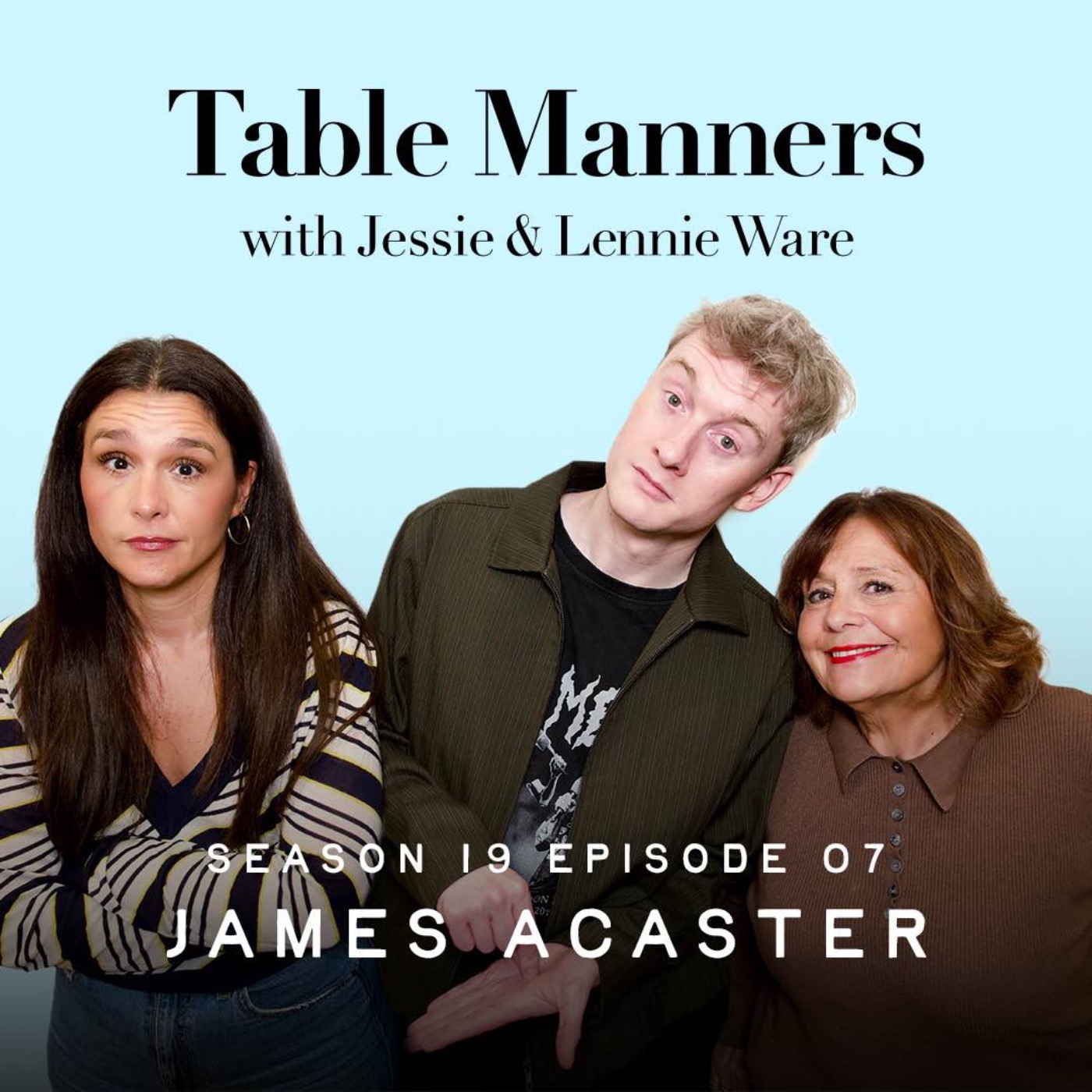
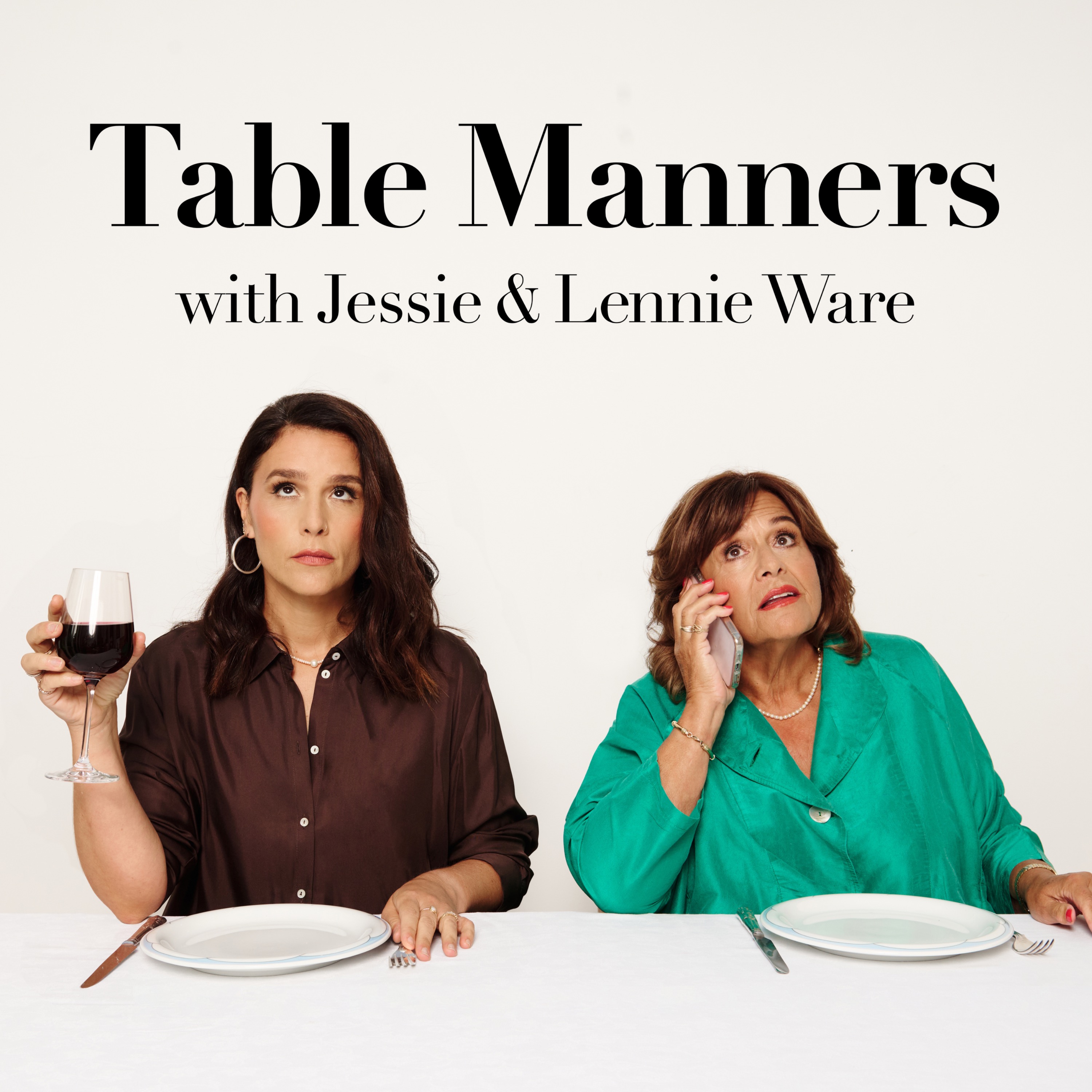

Host: Jessie Ware
Lennie Ware (Jessie's mother)
A podcast about food, family, and everything in between, featuring guests from music, culture, and politics. The show is recorded at Jessie’s dinner table, encouraging candid conversations and sharing personal stories.
Written by AI. May contain mistakes.

Get the gist, explore an idea or ask about something said.
 Claude
On Table Manners with Jessie and Lennie Ware, what are the key points of this episode?
Searching your listeningAutomatic transcript. May contain errors.
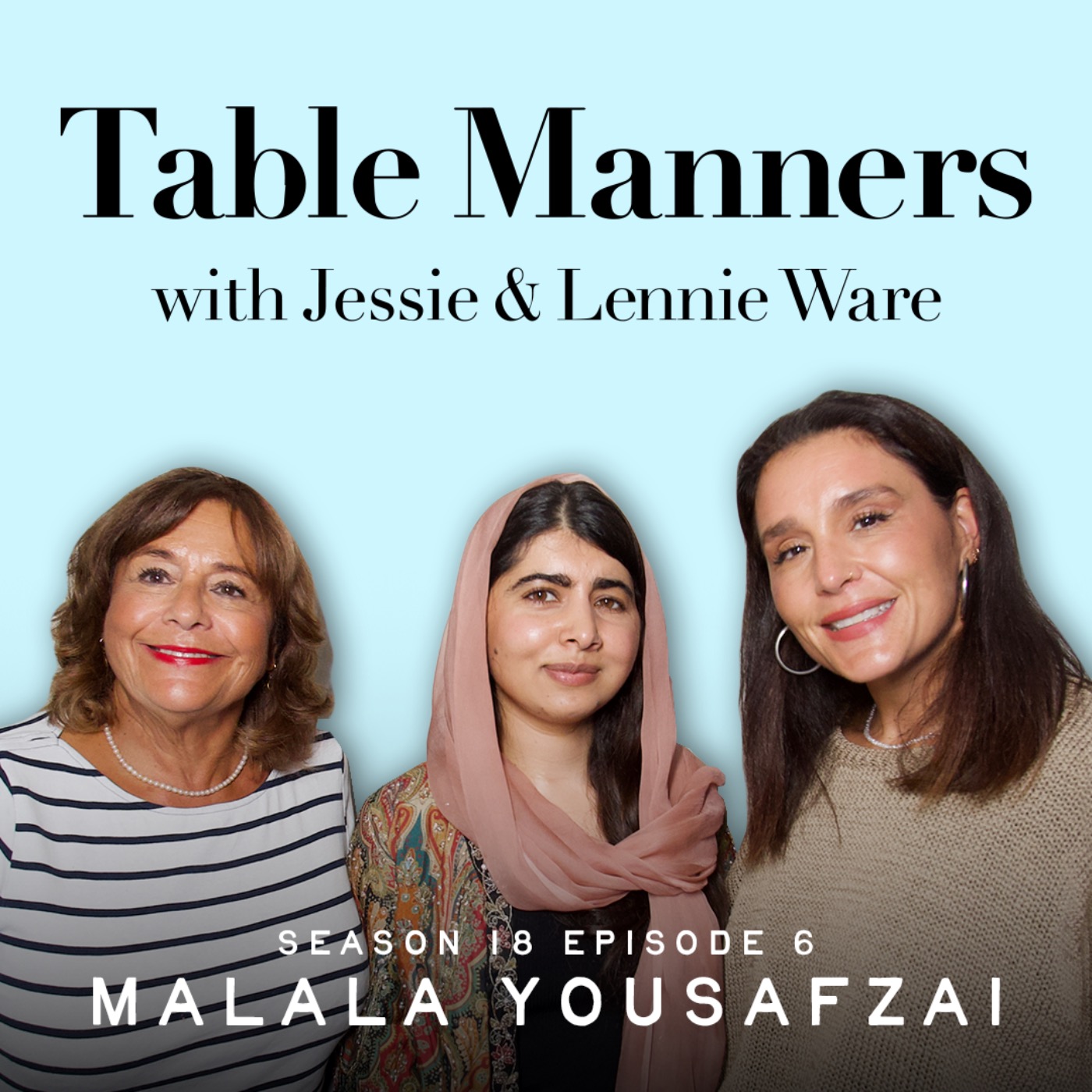
0:03Hello and welcome to Table Manners. I'm Jessie Ware and I'm here with Mum. We're in New Cross and I'm so thrilled to have this person coming over to my house. It feels very, very, well, it's an honour. We've got Malala coming over, the Pakistani educational activist who was protesting from the age of 11 about the Taliban taking away the rights of girls and education in Pakistan. And when she was 15, the Taliban came onto her school bus, asked who Malala was and shot her in the head. The next thing she remembers is waking up in Birmingham where she had been flown over and her whole family had come for her to be saved and that's where she carried on living.
0:50She, I wouldn't say thrown into activism because she... She's always been a strong advocate for female education. But I think from that horrendous incident she then became world famous and also a symbol for female education and female rights she won the Nobel Peace Prize at age of 17 the youngest winner I think she's carried on being a huge advocate and activist for female education particularly in the face of the Taliban which is stopping girls going to school and still is going on in Afghanistan yeah girls are not allowed to go to school they're not allowed to develop their education at all and she has set up the malala fund to open schools for girls and to expand their horizons and education malala's coming on today to talk about her new memoir it's called finding my way i absolutely loved reading it it's about well she talks about coming over here as a young girl and kind of restarting her life and missing all her friends back in Pakistan.
2:01But also, it's a very much a coming of age memoir, her time at Oxford, the highs, the lows, it's about mental health, falling in love, friendship, relationships and trauma. I think, you know, we look at Malala and we see her giving these incredibly important speeches and campaigning. She is being offered prizes. She is doing the work and I think what was so beautiful was to learn more about Malala the person the young girl the girl that is making mistakes at Oxford the girl that is not knowing how to date who knew what a great dancer she was her love of hip-hop and her adoration of Taylor Swift well I can't wait to talk to her about this and of course food so I am cooking something that I've never cooked before, but I trust this brilliant chef.
2:56It's Easter Belfridge, and it's her new cookbook. So I wanted to give it a little shout out. It's Fusayo, and it's inspired by Brazilian recipes. And it's a spatchcock chicken that has a spice that I've never heard of called uricum. And I'm really sorry. Have you heard of it? No. Anyway, it's a bit of that. It's a load of peppercorns. You marinate it in yogurt and a bit of curry powder and overnight and then you put it in this peppercorn coconut sauce with some tomato paste this garlic and ginger and I mean so many twists of pepper so I hope she likes pepper and you do it in the oven for about 40 minutes I've got a big bird so it's going to take a bit longer and I've done it with your onion rice with chicken stock and then a slaw from another recipe that Easter has in her book.
3:45I got the mandolin out again, Mum. Did you wear your gloves? I didn't. But you managed not to take any fingers off? I'm okay. Okay. And actually, it's a beautiful piece of equipment when used right. And then you've made pud. Yeah. What have you made? I've made a cake. She likes mangoes. She talks about mangoes a lot in her book. So I thought, I'll give the girl mangoes. So I've done a mango Mithai cake. Mithai is a term used for Indian sweets. Oh, wow. So it's got the cake mixture has chopped cashews and chopped pistachio and cardamom in it. Yeah. That's in the cake. Then there's saffron cream and cardamom in the cream and mango.
4:31Great. There's someone here. Malala's just come through. So Malala coming up on table now.
4:44Malala, thank you for coming over after quite a wild night out last night, maybe. You won an L-Style Awards. Yes. What was the award that you won? Inspirational Icon. How many Inspirational Icon Awards have you won thus far? Quite a few, but I think I was in the company of amazing people, including Riz Ahmed. We love Riz. Riz has been on the podcast. And Zadie Smith. Oh, amazing. So I was like, I have to just meet them and spend time with them. Firstly, just want to say I loved your memoir so much. I feel like it should be made into a film. Oh, are you going to consider it? I don't know. You make films.
5:23You've already made one with Janice Lawrence. That is true, but I am only a small part of it, as you would know. The production world is very different. So yeah, if anybody's interested, why not? It really felt like we got to know you and it felt like a coming of age memoir. And I loved learning about you maybe not always waking up for every Oxford lecture, sleeping in your friends, Hen and is it Anisha? Anissa. Anissa, Hen, them all having to wake you up. Was it Yasmin's in there? Yasmin, Cora. Yes, it was my exam. It was my first exam at Oxford and they woke me up like 15, five minutes before I had to get there.
6:07It was insane. I think the outside, well, the public presume, you know, you've been given this kind of godly saint persona, which you are amazing. You're inspiring. You're incredible. But I did quite like hearing kind of the mistakes that Milana makes too. Yeah, and this was the whole reason why I wanted to write this book, Finding My Way, because I was 15 and I was labeled as an icon. I was receiving many titles from the attack to the Nobel Prize. But in all of that, I was still 15 year old and I did not know myself. so this book is me reintroducing myself and what this journey has been like for me in the past 10 or so years I talk about my college life how I initially struggled but I made my way to make friends find love and make mistakes I never thought mental health would be a topic I would be talking about but that affected me many many years later after that act and I talk about silly moments, mistakes, how I nearly failed my first year exams to how I got ghosted by my first crush.
7:20Tarek. That's all part of the book. Tarek, where is Tarek now, do you think? We don't know. Why? Can we find him? I'd love to find Tarek. Where are you? And why the hell did you ghost Milana? Because he was probably drug dealing. Well, no, this was... I think he was. I'm wondering if there is enough evidence, you know, we should not judge people too. No, we shouldn't. Said he was on his phone a lot and he had more than one phone. He had a lot of phones. He was always getting in trouble. And this is what my friends were trying to explain to me that, can't you see it? It's pretty obvious. And I said, no, but have you heard it from Tarek's perspective?
8:00He's really struggling. Nobody's giving him the academic support and we need to talk to the principal. I did not realise I was actually advocating for him. I had not spent that much time on any advocacy then advocating for Tariq. Was he good looking? Yes, obviously. Well, I thought you found him good looking, but objectively, did everyone else say, Malala, what are you doing? He's not that great. No, as you can see in the book, nobody brought that up. So he was good looking. Nobody was disagreeing on that. I feel like me and you have similar tastes. Have you been watching the summer i turned pretty yes i knew you would be a wee team comrade of course yes of course from the start we knew he was the one we knew but i'm kind of thinking in my head i was imagining tarik kind of brooding a bit like comrade but you took him out the bell town was he more okay season one conrad okay fine okay let's go to gilmore girls is he a bit like um what's it milo venter what's do you watch gilmore girls i've seen some episodes i feel like that's your autumn thing that you need to enter into now it has many many seasons so I'm like you're fine but the bad boy in it I think can everyone clarify I think his name's Jesse and then he plays the dad and this is us have you watched this is us I have not okay you've got so much that I need to pass on we need to yeah but um but yeah I loved the image he is he is like um Edward from Twilight he is a bit like Conrad from season one yes summer I turned pretty he's that mysterious guy yes you know he's there but he's not there you feel like you want to be with him and and and he he is the one for you but somehow he's not present and you do not know him he does not share much of himself it's just crazy it's hard to describe it but that's who he was I feel like he was maybe a ghost you know it's like a ghost something in my imagination drifted in and then drifted away but I love that because you know as you would read in the book I just never thought I would be loved and I could love a boy.
10:02There were cultural reasons behind that. I just thought in our culture, you're just supposed to get married and there's no concept of dating or having a boyfriend. And then along with that, because of the attack, my facial nerve was damaged. So I was a bit self-conscious and I thought, oh, you know, like it's all about work and like nobody should love me. Whatever, you know, we're still young and I was still a teenager. So all of those thoughts are in my mind. And so when I saw Tarek, I was just thinking like, it's okay. It's okay to love somebody in your imagination. I can control myself outside and be focused on the work, but nothing can stop me from this short phase of being in love.
10:40And I love that. But I also love how you became the agony aunt to all of your girlfriends that were having boy troubles or, you know, relationship troubles. And you just say it how it is. and they were like, you were kind of the oracle and they would come to you for advice. And I just, it was a really beautiful picture that you painted of sorority and friendship and learning about yourself. I loved hearing about you just being so intrigued by people on a hangover, being like I'd never seen someone on a hangover. Never, ever, ever. I just thought that was the craziest scene I would ever experience in my life.
11:19They were like lying on the floor and I had to drag them in the corridor and take them to their room. I thought this was the most insane thing I would ever be doing in college. I was not prepared for that. But also nobody would remember anything the day after. Oh, but you remember that. I would have a whole experience, a story, and they would just say, I don't remember what happened last night. But that was part of their college life and I just got to see it. Do you think when you arrived at Oxford, everyone had an expectation that you were wise, mature, all of those things. So you had so much to live up to.
11:55And then they had to get to know the person that liked Taylor Swift and Cardi B and hip hop. Yeah, and who didn't know how to stir the tea the right way or... Which way is the right way? I still don't really know. Who told you this? So I was just, and I took the teaspoon, I was just like stirring it this way. And then she was like, no, you don't stir it this way. It's like back and forth and you don't touch the sides. I didn't know that. Was this a posh mate of yours? Very posh. Yeah. It was Anissa. It was Anissa. Okay. She always had something to say about how I was like talking and etiquettes and, you know, how you stirred your tea.
12:29So she was an interesting character, you know, sort of a bit mean. But then in the end, she also was there for me when I needed help. And she made me realize how I needed to stop thinking about Tariq. and I just could not like help a guy who did not want to help himself. Is she the one that dressed you up for club night? Yes. Was this the 80s aerobics night? Yes. When you got completely wrong when they turned up for you and you were like, what were you in when you were going to this kind of, it wasn't Freshers' Week anymore, this was like second year or third year, was it? Like later in first year, I think.
13:04Okay. Yeah, I mean, I had just no clue. I was like, what does this even mean? This is my first night with college students at a club. And they were like, no, no, no. Like a club night is very different than you think. So yeah, you know, just like bright yellow, like mustard color top, which was, you know, cropped. And they said, OK, we can wear something underneath that so you feel comfortable. And they put some glitter on my face and a lot of makeup. And then I put on sunglasses so that that could just hide my identity a bit. and I realized so many people didn't even recognize me at the club which was nice so I was like hey like it is me I took off my you know my cap and like my sunglasses which was fun.
13:49And also you stayed to the Biswaraan they were exhausted your friends were like we can't go as hard as Malala in the club. Yeah initially I was so scared to go I just had no idea if I could even stay there for five minutes and then as soon as I was there I just enjoyed the company of my friends And I just felt like I was a college student. At school, I had a very different experience. I had only one friend this whole time because the school had introduced me to the girls before they had met me. So in their mind, it was this icon or some sort of activist they had heard of in the news. Everybody was hesitant to approach me.
14:28I was also really scared. I did not know what to say. I felt like I could not follow, you know, the trendy conversations and catch on the phrases that they were using. So I would just, you know, read a book. I was just reading at lunchtimes. But in college, it was a restart for me because I knew everybody is new in first year and they're all trying to make friends. So I said, it's okay if I'm a bit creepy and if I'm overdoing it, but I will go and say hello to everybody. and I will make as many friends as I can. I mean, I'm very aware that your life in rural Pakistan with your girl, you had such good friends there.
15:09And you must have missed them so much when you arrived in Birmingham. And it was so hard to keep in touch, really. My friends in Pakistan were a way for me to reconnect with my old life, with my previous life before the attack, because I did not remember what happened during the attack. and somehow I was in a new country and I just could not connect the two worlds and friends was a way that I could remind myself of my childhood and my time at school how we used to like giggle during recess time and we used to play badminton or you know how much we loved our school time that you know we love to dance in our classroom sometimes listen to music and and those memories would stay with us forever.
15:57So whenever I felt that I was missing home, I would call my best friend. Can we talk about your childhood and talk about some of the food memories you have growing up in Pakistan? And can you paint the picture for us? Who's around the dinner table and what was something that you were eating a lot of? So we did not have a dinner table. Okay. We first had a dinner table in Birmingham when we moved to the UK. Before that in Pakistan, we had always eaten on the floor. So there's a mat that you put on the floor and then you all sit around it and it's called Dastar Khan. The mat is called that. And you know, everybody's around and the food is in the middle and you are just sharing it.
16:40It's all about sharing. I remember breakfast with my brothers and my parents in the morning and I could never finish my egg I just hated egg and my parents would force me to eat it but I could never finish it and but I loved my mom's rice and chicken it was my favorite dish in the world and to this day I can have it anytime it's what's special about it it's just like plain white rice there is not much spices in it but somehow it just smells so good and it just it has this taste to it that I can't describe as simple as it is it is delicious and just maybe because my mom's hands have cooked it and and the curry it's it's chicken curry um you know with a tomato sauce um and and yeah and just pour it on the on the rice and uh you have like a delicious meal this was like my perfect meal any time I could have.
17:41Were you a fussy eater? I was a very fussy eater growing up. I hated a lot of things. Yeah but then if I compare myself to that past version of me I'm very different now. Like I could not have aubergine and like vegetables and like if I can list down a million things that I could not imagine eating and today I can eat everything. You also do. You You talk about that in the book and part of your mental health journey and dealing with some of the PTSD from the attack and self-care. You talk about this notion of self-care. You kind of would have been like, no, no, no, no, no, before. And then taking it quite seriously.
18:29And that to do with diet as well. And like nourishing yourself in a different way. Yeah. So when I had a panic attack at Oxford, and that was because of this exposure to bong with friends. Of course, you know, it's college life and everybody is trying something and like smoking weed is so normal there. But I had never heard of bong. I did not know what it was. I took one puff and I coughed. But on the second attempt, I thought it couldn't do much harm. But I felt it just all went into my body. And that moment was the craziest moment I could ever live in. Because even though I had forgotten about the attack, I felt like I was reliving it, that I could see the gunman that I could feel like I am I'm sort of killed again.
19:17And, and I could not process if I'm in reality or not, if this is happening all over again, which was a very difficult moment. But it not only affected my sleep and, and you know, my physical health and how I did not feel present, it also affected my diet. For days, I just could not eat normal. I was constantly drinking tea. And then the most I could do was just eat french fries. That's it. It was difficult to like, get that appetite. And then I was later told that I'm anemic as well. And of course, if you're not eating properly, like you would become anemic as well so it is connected I think diet is everything and then so I realized that in my mental health journey I not only need to prioritize therapy and all the other support that I need but also my diet so I am more into fitness now I exercise yeah I've heard running for over an hour I'm really I'm really jealous and yet also very impressed congratulations I am also impressed because I never thought this would be me where do you run I just run on a treadmill do you find it boring on a treadmill that I guess it's harder maybe to be harder to run outside I can run outside but I think it can be a bit steep like it's just unpredictable what the road would look like outside so I think I do it as a cheat code where you know I at least on a treadmill I know it's flat and it's not that hard what are you watching or listening to when you're running so um in the beginning I was not listening to any music while running I know I know people I told it to a friend because they asked me and they thought I was weird I said oh like so do people have to listen to music when they're in the gym or running they said yeah so then recently I did try and I realized yeah it's like very helpful if you're listening to music.
21:12There's Qawwali music. Qawwali is traditional music from South Asia, like India, Pakistan, and it's basically connected to Sufism as well. The songs are 20 to 25 minutes long. So 25 minutes long, what are they about? It's about connecting to God connecting to your inner self. It's about spirituality and that you know, you don't have to look for for God anywhere else. It's within us. It's within you. And it's about being kind and being, just being more human. Are you religious? Yes. I mean, like I grew up in Pakistan. Islam is the religion there. Yeah. And but because I was not aware of any other religion, so I just could not understand how was my faith different than other faiths.
21:59But when I came to the UK, and I had a bit more exposure and learned about other faiths, I realized that at the center of all of these faiths is a similar message about being good, being good to each other, being good to our climate and environment, taking care of each other and just having a sense of morality. Like that is the main purpose, more than the, you know, the practices and the rituals and the prayers, like that is the essence of it. I think if you don't have that, then it's empty. It doesn't carry as much for you if you are just simply about the rituals and the practices. That's what I have learned.
22:39So for me, religion is still a big part of my life. The other reason I am focusing on staying close to my religion is because the people who try to attack me, the Taliban, they have misused our religion. They have misused Islam. Even right now, when they have taken control in Afghanistan and they have banned girls and women from learning public life, sports and any political participation, they're using the religious narrative. They're using the cultural narrative. so I want to stay connected with my faith because I want people to know that that I am a reflection of the faith that the women who are from those communities are a reflection of the faith not these extremists they cannot claim to be the ambassadors of the religion they're completely misusing it you do not find any verse that says a girl cannot be allowed in school or you can stop a woman from work like it's just complete nonsense that they have promoted because of their misogynistic views so I think you know more of us from our faith need to stand up to that and uh and I think it's up to people how they interpret it and how they define it so yeah are you connected with anyone in Afghanistan is there a kind of well you you're not going to say but I mean I just wonder if there are any links there that you can support women who are fighting over there too you you were you say in the book that you had to when when the Taliban were taking over you had to evacuate try and help because you do have the Malala fund there and organizations yeah yeah so the Taliban now and then have taken control of different parts of Pakistan so you know we were based in Pakistan they took control of our town from 2007 till 2009 but they had been in power in Afghanistan in the late 90s and then again now they're back in power for the past four years.
24:34In Afghanistan, we were supporting projects. We were giving grants to local activists who were providing teachers training, who were reaching to girls in the most marginalized communities. And of course, there were so many challenges girls were already facing, from cultural norms to just lack of teachers, lack of good female teachers. So we had quite a few activists who were doing this incredible work. But when the Taliban took over, they had to hide every piece of proof that they had worked for girls education they had to hide everything the taliban were getting into their offices they were searching for evidence on their laptops they were beating them up they were threatening them so we had to evacuate all our activists as soon as we could and i'm so glad that everybody's safe now we um i think to this date we have saved more than like 300 education activists and their families but they're still doing the work they have not stopped are they in Pakistan now?
25:30They're in different countries. Some of them have found their permanent residence. They're in different countries. And they continue to do the work. They are leading a campaign to ask world leaders to hold the Taliban accountable. And in the international system, these things get these big jargons and it doesn't make sense to people. Even to myself, I was like, wait a second, we have all of these conventions and we talk about human rights. when a group like the Taliban take over and they announce more than 100 decrees in edicts and they prevent women from work education and systematically oppress them like what does that mean so Afghan activists and other human rights activists are calling world leaders to recognize this as a gender apartheid they're saying that it is a form of an apartheid which is against women because you are born a woman you are a girl you have a different life if you're born a girl in Afghanistan, you cannot have an education, you cannot dream of ever doing work, you cannot have any political participation, and you are punished for it.
26:35That's the most important thing. It's those who are in power who are supposed to protect you are actually taking away your rights. So we need a better international system that can actually provide protection for women. And when groups like the Taliban take control, that we can hold them accountable. And I see this important not not just for women and girls in Afghanistan, but for women everywhere. There is no guarantee that women are safe in any country against such oppressive regimes that are controlling women's bodies, women's rights, and that are taking away women's rights as human beings.
27:10Well, yeah, even in more sophisticated countries, that's happening. I think just the way we're seeing the world right now, I'm like, I'm doubting if any, you know, like on the one hand, And I'm really proud of the progress. And I sit down with people and they're doing incredible work. And they are in like every part of the world from Tanzania to Brazil to the UK. But then you also are witnessing this backward movement where people are taking away women's rights. And it's everywhere. Like, you know, you hear about misogyny even in the UK. You hear about how, you know, the government officials where it's just men only in the room.
27:48And they're talking about women's bodies and what women's rights should be. like this is completely shocking that decisions about women's futures and bodies are made in their absence so we need to rethink about it in the context of every country and that's why like when I think about an issue in Afghanistan when I think about the situation of women in in Gaza or in any part of the world I think it should matter to all of us not just for the sake of like solidarity we need more of that but also because of what does it mean for our commitment to gender equality. I mean I saw that you've committed quite a lot of a huge donation to Gaza as well like for like relief the Malala Fund did didn't they?
28:29Yes. Yeah which is amazing it feels really trivial now to ask you about some food stuff so I'm really sorry because you speak so brilliantly and I could listen to you all day. But you do travel the world you must try food all over the world yeah i mean i have tried food in nigeria i have tried jello fries i've tried food in ethiopia and lebanon jordan i love middle eastern food i've tried food in brazil and mexico and food in mexico is not the mexican food you find in a restaurant in america it's so different i was like so where's you know the burritos that i know they're like no no you're gonna get something more delicious than that and I have never found the same food that I had in Mexico or in Brazil it's it's delicious it's so different it's it's the ingredients it's the smell it's the it's the taste and it's also the people it's the people on the table and I love that the most because they have a story about everything they have a story about why these tomatoes are so important why this kind of flower is so important there's a whole history how they had like struggled for it there's a history of fight for justice and it's somehow also associated with women's freedom and women's independence how women were fighting for for for their equality and I love that even though I can't cook but I love all those conversations and I love the food can you really not cook no I can't if you can read you can cook okay I think so here's a little secret about me and my cooking journey.
30:04So when I was a kid, I knew that if I learned to cook, I will be expected to cook forever. And that was also a nice thing on your CV for you to get married. So there were many reasons then why I did not want to learn to cook because I just did not want to be considered for marriage. Then also at home, I had two younger brothers. I had no sister, but two younger brothers. And I knew they will never learn to cook because that's the environment we grew up in. in my whole life in Pakistan, I had never seen a man cook. It was always, always women. There were male chefs in Pakistan. Not in all, like the villages and the places I come from.
30:44Like I did not come from a big city. We were from, you know, the mountains. We just, it's so common, like it's expected. And like my father is celebrated for being a feminist dad, that he never pressurized his daughter. He was always with her. That is fine. But I think, you know, and we both recognize it, the missing parts. Like I never saw him cooking. And he never thought about it for the boys. That, you know, was he thinking about teaching the boys how to cook so they can be the better next men? Well, are they cooking now? You know, they live in Birmingham. Do they both still live in Birmingham?
31:19Your brothers? Yes, yes. And have they learned how to cook? So the little one, yes. Because he came to the UK when he was eight years old. And somehow for him, you know, this was just a new culture that he was growing up in. So it was, he had plenty of more time. So he cooks now and I'm so shocked that he can cook now. But you get people running all the good restaurants, the Pakistani restaurants here, like in Tuting. And they're all male. That's another problem though. I think that's also a problem in itself, that when it comes to making money and when it becomes a job, then men are like, oh, you want a chef?
31:58I'm there. But you want to cook, just to cook, then you have to do it for free. It's unpaid labor and you do it at home. So then it's a women's job. Does your husband cook? He doesn't cook. He can't cook. How do you eat Malala when you're at home? He was never taught how to cook. And that's what happened. He makes reservations. He makes reservations, yes. So who cooks at home? He gets the delivery and everything. What do you do at home? You just put things in the microwave. Yes. So basically, when we got married, that's when I realized that, oh, you know, I don't have my mom here cooking for me and I can't rely on restaurant food or, you know, these deliveries.
32:36So my husband and I were like really worried what we were going to do. So then, but he's like quite practical. So he has committed to learn to cook one day because I said to him, I said, I will never learn how to cook before you. I love you. The moment a woman learns to do, like if she decides to cook before, then everybody says, oh, you cook, you know, you make delicious food and it's better when you make it and I can't make it like you. I was like, no, I'm going to get trapped in this. So I want you. Even with darling, how do you pronounce his name? Asar. Even with darling Asar, would he, I don't believe he would ever trap his free thinking Malala who he celebrates.
33:18It's true, but I think it's just how I grew up. Yeah, fair enough. And it's the fear that I carry with me. It was the same fear I had with me when I was thinking about whether to get married or not. And I was like, Asar is the perfect guy. He thinks better than me about how women should be treated in marriage. And I thought like he is not that stereotypical guy. To be honest, he's like way ahead. And somehow in my mind, it's just all of these thoughts are floating. And I could not convince myself that it would be the marriage that I dream of. It is better than that. I'm so happy. But it's OK for us to have these worries because that's the reality we face.
33:58We cannot dissociate ourselves with it. That's how we grew up.
34:11OK, sorry. I'm not going to put this on a bowl. I just think we may as well just keep it in there. Do you mind it being in the debate? Okay, fine. It's actually a Brazilian dish. Oh, nice. My friend has a new cookbook out, and she's brilliant, and Easter Belfridge, and I thought, well, I'll try it. So it's like a kind of coconut peppercorn chicken thing with some rice. And so hopefully... Do you like spicy? I like spicy, but not too spicy. Me too. I can't have too spicy food. My stomach has changed. I think the whole, you know. If you were having Nando's, what would you have? The mild or medium?
34:57Medium. Medium. You're a medium Nando's person. But I am very open to mild. Because some people can't have mild. They're like, you know, it has to be like medium and above. But I'm like medium and below. Me too. Mum, I'm actually going to ask you to kind of serve it, if that's okay. If you give me the right inclement so you're able to do it. A sharp knife, darling, and a fork. There you go, Mum. Thank you. Milada, tell me how much you would like to eat chicken-wise. I can eat a lot of chicken. Okay. Whilst mum cuts up some of the chicken, do you mind doing that? Thanks, mum. No. Appreciate you.
35:31Do you want me to put sauce on for you? Yeah, and that should be enough. And the rice. Oh, why have I got some? I need to get some servings, mum. Let me just do the sauce. I'll get you some. Don't worry. we haven't seen our kitchen well i i was we usually ask everyone everyone's favorite um item in their kitchen what would be your most used item in your kitchen malala it's the microwave microwave fridge okay so what would we find in your fridge always if we were coming over what would always be in the fridge so definitely milk some berries yeah and like yogurt yeah bread and then boxes of food what like leftovers no so we have found this service that delivers food that you just put in the microwave prepped like yeah yeah yeah it is easy because you know technically i can cook and it takes me three minutes to just put in and it's healthy and and considered yes um this is a coleslaw okay um and then there's some onion and coriander and lime if you want some of that um i wanted to talk about your mum you did it you did an instagram post about how you know lots of people know a lot about your dad yes and less about your mum and that your mum and your relationship has been um how should i say you know it's uh complicated a bit complicated Yes.
37:04But I did think that there was a really important and quite beautiful bit in the book where you talk about your mum. And I think I'm right. Your mum bringing home a young girl. Yes. To live with you. Yes. Who you now realise was pregnant. Yes. Who had been raped at the age of 13. and your mum, because it was so frowned upon, that she would be pregnant and then unmarriable in your area? Yeah, and it's just the fact that if she became a mother... Without being married? You have no idea how many girls have been killed for that. So it is about not just life and death because of the fact that a girl is pregnant at such a young age and that has a huge risk to her health, but also that if the family or if like men in the family find out they kill them in the name of honor so my mom knew that there was just no future for her there was this was the only way out for her to save her and I did think it was a really powerful moment in the book because you kind of you you had kind of more empathy and understanding of your mom your mom had been brought up in a very different well I mean you have a shared culture of course but you spent a lot of your time from the age of 14 15 in Birmingham and and whether it was your mum being very worried about the fact that you had been photographed coming back from rowing practice wearing jeans yeah but you still had your Still got your jeans on, Milana.
38:51Yes, always. But I did think it, can we talk about your mum a bit more and how writing this maybe helped mend your relationship maybe a little bit? I always thought my mum would never understand me and I was always mad at my mum that she had a problem with what I wore and she was always worried about how my family members, my cousins would react in our village. Even though we were miles away. yeah but somehow that culture was just coming back and influencing my life yeah so when my mom saw that picture of me wearing jeans she was so mad at me she's she said like why do you always cause trouble now I have to go and explain it to people and I and I can't and my mom also had you know and it's not just that one incident it's like again and again my mom would say why are you wearing this?
39:46Why are you wearing that? Wear something more traditional. She also was very, you know, she also had an opinion about like everything, my marriage and so many things. That when... She was adamant that your husband would have to speak Pashto. Yeah. So, you know, we speak different languages. He speaks Urdu and Punjabi. Our mother tongue is Pashto. So my mom also had a problem with that. And I said to my mom, I told my mom that it's about me and him, like we are marrying each other he does not have to meet the criteria of everybody else in the family but for my mom it was just also about the pressure that she faced growing up and it helped me reflect on what her childhood was like what had she experienced and for her you know the things that they had to fought for were just as simple as not being married off to a horrible man And if they're beaten, that the family will actually support them rather than telling her, go back to your husband.
40:49Or when a girl is raped, that people don't blame her, but they actually save her and stand with her. So when I think about all of these things, and when I was reflecting on the story that, you know, my mom had saved a girl's life who was raped and, you know, she helped her to get an abortion. I could understand where she was coming from. and I knew that for her it was a bit she could not process why I would cause trouble just by wearing jeans where there were other bigger problems to be worried about but you know at the same time I would try to explain to her that of course things were different in her time but we always have to take a stand for the things that we believe in otherwise things will remain as they are.
41:35But I understand my mom more. I knew what her life was like when she was young. And I asked her what her dream life was. And she simply said to marry a good guy who could respect her. And she could live in the city and enjoy delicious food, kebab in the rain, and drive in a car. And that was just all she was saying. And I tried to rephrase my question and say, But mom, like, no, what did you want to be and what was your dream? And there was no answer. She wasn't allowed to have a dream? And just for a second, I just thought, like, maybe she just grew up in an environment where they could not even picture it.
42:16And for them, the most ambitious dream that they could have was being with a husband who was nicer and not horrible. I was thinking, Malala, you inherited this crown, really, that you have to wear. And it must feel very heavy sometimes, this responsibility that you have. Because it's like you've got global responsibility for female education now. You're the pinnacle of everyone's hopes that you can put things right in a way. I received these titles and recognition at a very young age. if you compare the average age of the nobel peace prize winners they're in like their 60s and 70s and they have already been presidents and prime ministers they have been activists their whole life yeah that i just could not even compare my life with any of them to figure out a way how i am supposed to live mine.
43:18I was still 17 when I won that. And at 17, you're figuring out what subjects to study and you want to make friends, you want to feel loved and you want to find the love of your life. You know, you want to gossip sometimes maybe or just talk about anything, talk about astrology and I felt that I was assuming that after this recognition I somehow have to live a different life and and the life that's portrayed of these activists in media in our textbooks um you know sort of the mother Teresa or you know Nelson Mandela or like the Martin Luther King Jr journey but you know we also you know about them like we just know very little about their personal lives and and I was sort of I felt stuck between that that you know what is the expectations what is how am I supposed to live my life and then I realized that you know there is no right or wrong way there there is no written way you have to write it yourself and and I have to be a person of my age I have to be and and I felt like at times I was acting like somebody much younger than my age because I thought I was reliving it.
44:40I would enjoy every moment with my friends if we were talking about comparing the star signs of our, you know, crushes or if we were complaining about our homework assignments because this was part of my everyday life and I could not dissociate myself from that. so at college I felt like I was in a safe zone and it was a good way of escapism from the work life and I felt like I you know I was just like switching between these these different words of like work and then what I was seeing publicly to then this college life and what made it different in college was the friends because they treated me as a friend and nothing else nothing more nothing less to them it was it was just their college college buddy I know that you had terrible PTSD and because of the horrific injuries you suffered is there some way of rationalizing that terrible incident in that it's given you this platform that somehow it can mitigate against the horrificness of that how horrible it was because actually you became Malala this world-renowned activist who has such a purpose in life that some of us would never ever have so I have been asked this question many times do I wish my life was different do I wish this had never happened or would I have wanted to live in Pakistan forever and I used to say yes because you know who wants to be attacked who wants to to face all of this trauma but in these years I have been reflecting on the impact I have had.
46:23And it's not just about, you know, my story being unique, but me highlighting to people that the story of me as a young activist is actually not a unique story. There are incredible girls and young women activists out there. We need to give more support to them. So to look at how many students, how many girls we have reached through the work of Malala Fund to look at how there has been more financial commitment towards girls education, how secondary education has become part of the UN Sustainable Development Goals. And I can just, you know, keep on adding more to the list. And when I think about the school that we're supporting in our village, Shanglai, Pakistan, where more than 700 girls are studying right now.
47:10The first class graduated from that school. Oh, congrats. And it has redefined the future of girls for that whole village. Girls dream differently now because they know they have a school, they can complete their education. We have created a pathway. And when I think about all of that, I feel like, yes, you know, I would not pick a different path for my life. this was somehow the right path it had pain it had difficulties it had trauma but when I think about how I you know with the support of the people I change the direction and the focus and I can now impact so many girls I'm grateful for it do you need more sauce no no it's a plenty of sauce it's delicious delicious by the way it's so good I will make this again it's gorgeous it is stunning.
48:06It's quite tasty. It's delicious. It's hot. Do you find it hot? I mean, there's not enough. You haven't got to the end. I'm telling you there's a kick at the end. There's 200 twists of pepper in there. Okay. Along with the peppercorns as well. I know, I really had to work hard at this, Malala. I just want you to know. My wrists are exhausted. But no, I think I would do this recipe again. Feaster. How many times did you see Taylor Swift? oh just once only once have you been to the oasis concert yeah it was so good wasn't it it was so good i went to see it in dublin it was amazing yeah did you wear a bucket hat of course it was it was you have to do you does everyone wear a hat i actually didn't and i felt very left out okay i didn't have any how did you get in milana just looked me up and down and went Call yourself a fan.
49:07So we've got the dessert. It looks beautiful. What is it, Mum? It's a Mithai mango cake. Mithai, I think, means Indian sweet. Yes. Or it's sweet, Indian for sweet. Yes, India, Pakistan, or South Asia. And because Malala likes mango, that's why I made it. Let's hope it tastes really good. It does look good, but you never know. I can't stop looking at it. I've been staring at this the whole time. Okay, last supper. Starter. Starter? Hash browns. I think hash brown would be good. Okay. I know it's odd. I think it's... No, are you getting them from a particular establishment? I think it's from college.
49:52Okay. Oh, what, from the lunch hall? Yeah, it's the dining hall. It's a buffet kind of option and I would always choose hash brown. I love that. Okay, so we're starting with hash browns. Where are we going after that for your main? For my main, I'm going to have my mom's rice and curry. It's basmati rice. It's delicious. And then the curry is chicken curry and I love the sauce. I just love the mix of the two. Can I ask about your grandma who you speak about so beautifully in the book? Abai? Is it Abai? Abai. Does that mean grandma? Yeah, it's a nickname for grandma. Was she a good cook? She was a good cook, yes.
50:38What's a memorable dish that your grandma made? It was always some chicken curry with bread made from maize flour. I don't know what's it called. Is it corn flour? Is it different? Yeah. It was like that flour, there would be spinach, like a dish with spinach and sometimes meat. She loved making chicken and just fresh yogurt. So they had fresh milk from, because my grandfather and my uncles had cows and buffaloes. So yeah, fresh milk and then fresh yogurt and fresh cream. It's delicious. Okay, so we've got hash brown, your mum's chicken and rice, pudding. Where are we going? I am not so picky about pudding.
51:28Why? Because you like them all? I like them all. I love chocolate cake and all of those things, but I love any kind of cake. But my safe choice would be mangoes. I'll just take mangoes because mangoes make me happy, so happy. and this is a perfect dessert by the way the one you have made because this is really good it's like everything i want it's like cream and a cake and it has mangoes in it it's not too dry that's lovely it's gorgeous it's amazing can you taste the cardamom i can't i can't at all i think two spoons would have been you are asking the wrong person i feel like i'm in The MasterChef show right now.
52:09What can I do? I'd love to see you on Celebrity MasterChef. No, I wouldn't. Or Celebrity Bake Off. I'd be really interested to see what happened. And then Drink of Choice tea. I love it. English breakfast tea, always. Yeah, that's my favourite. I have so loved meeting you and chatting. And I loved reading your books so much. Me too. Can I ask you, before we let you go, what is a nostalgic taste that can transport you back somewhere? There are a few. I remember this memory, spending time with my friends, where they would have bread from the day before, that they would heat up the next day, and they would have this tomato paste together with mint and a bit of salt.
53:08And they would have that bread with that tomato sauce or something. And it was not like a dish that your family would make for you. It's just like when girls would get together, they would sort of pretend like it was their own meal. We would not have it as a meal, but just the fact like, oh, is there any leftover bread from like last night? Let's heat it up and let's get some tomato and like, you know, mash it or mix it up with mint and a bit of salt. and let's just have it as our own meal and like pretend we are good cooks or something. And these are your friends back in Pakistan? Yes. I love that.
53:46Yeah. Have you ever tried to make it since being in the UK? No, and I have this, I hope I can cook one day. That is my dream, to be able to cook one day. I think it's a skill everybody should have. We should also be rethinking about how we see cooking being associated with gender. it should not be girls and boys everybody should be cooking because it's a skill it's like cleaning using how to use your dishwasher and you know anything like if you want to live a life of independence you should be able to do these basic things so I'm so glad like we're redefining these things and but yeah I love the eating part much more than the cooking part and I love everybody who can cook and who can make these delicious meals for us do you do karaoke I'm so bad at karaoke which one would you choose which is your best song then love story by Taylor Swift I can sing that funny I did that with my daughter on holiday and I love it because my best friend Muniba and I used to sing it together in Pakistan and I will have this memory forever in my mind where after the Taliban were removed from our town And we went on this school trip and we were in this beautiful part in the middle of the mountains with a waterfall behind us.
55:09And we went and stood on this big stone and we said we wanted to sing a song. And we started singing Love Story by Taylor Swift. I don't know how we had so much confidence that we managed to sing it in front of so many people. but for us it was a way of expressing ourselves and there's nothing more precious to girls who can be themselves live and enjoy a moment and let themselves feel free thank you Malala such a lovely story thank you thank you I wish you all the best with memoir I'm sure it's about to be a really busy time for you going and promoting it but thank you for taking the time to do this podcast it's been such a pleasure to chat to you and just to kind of get to know you even more and I appreciate how open you've been in the book but also today so thank you yeah thank you but I'm not leaving you till I finish my dessert no you're absolutely not I know you're trying to end it but we're gonna go do love story in the other room I'm gonna put it on
56:29Well, that was fun. That was so gorgeous. Malala, I love you. And also, I'd like to go to a Taylor Swift concert with you. And also, I'd really like to play paddle with you. She was fantastic. She was just wonderful. She's so young. You forget she's only 28. I know. total honour to have Malala on Table Manners she loved the food the food was good it was fabulous I need that book you are fantastic, that's Fuzayo I'm really sorry if I'm not saying that correctly it's probably Fusion because A-O in Brazilian is a na-on sound and it's probably Fusion but spelt the Brazilian way darling but it's out now I think and it was the Spachcock chicken kind of coke with dende coconut and peppercorns it was really delightful gorgeous and the coleslaw was really nice with it and that's from another recipe in her book so i'd say go and get the book yeah and that cake was excellent did you like it she was very happy about the mangoes yeah i just thought she loves mangoes that girl yeah yeah i'd say we did quite well well done lennie malala's book finding my way is out now and it's really wonderful it's a Lovely book.
57:49So go and read it. And you can also watch Bread and Roses, which she executive produced with Jennifer Lawrence, which is about three incredible Afghani women. I want to know more and more about Malala. I love her. I think what she's doing with Malala Fund is amazing. And I feel really, really honoured that she came over. If only she could sort the world out. The Malala way. She's trying. Yeah. We'll see you next week.
58:20Thank you.
Hosted on Acast. See acast.com/privacy for more information.