Ask ChatGPT
 The Art Angle
15 Oct 2026 · 36m · 21 chapters
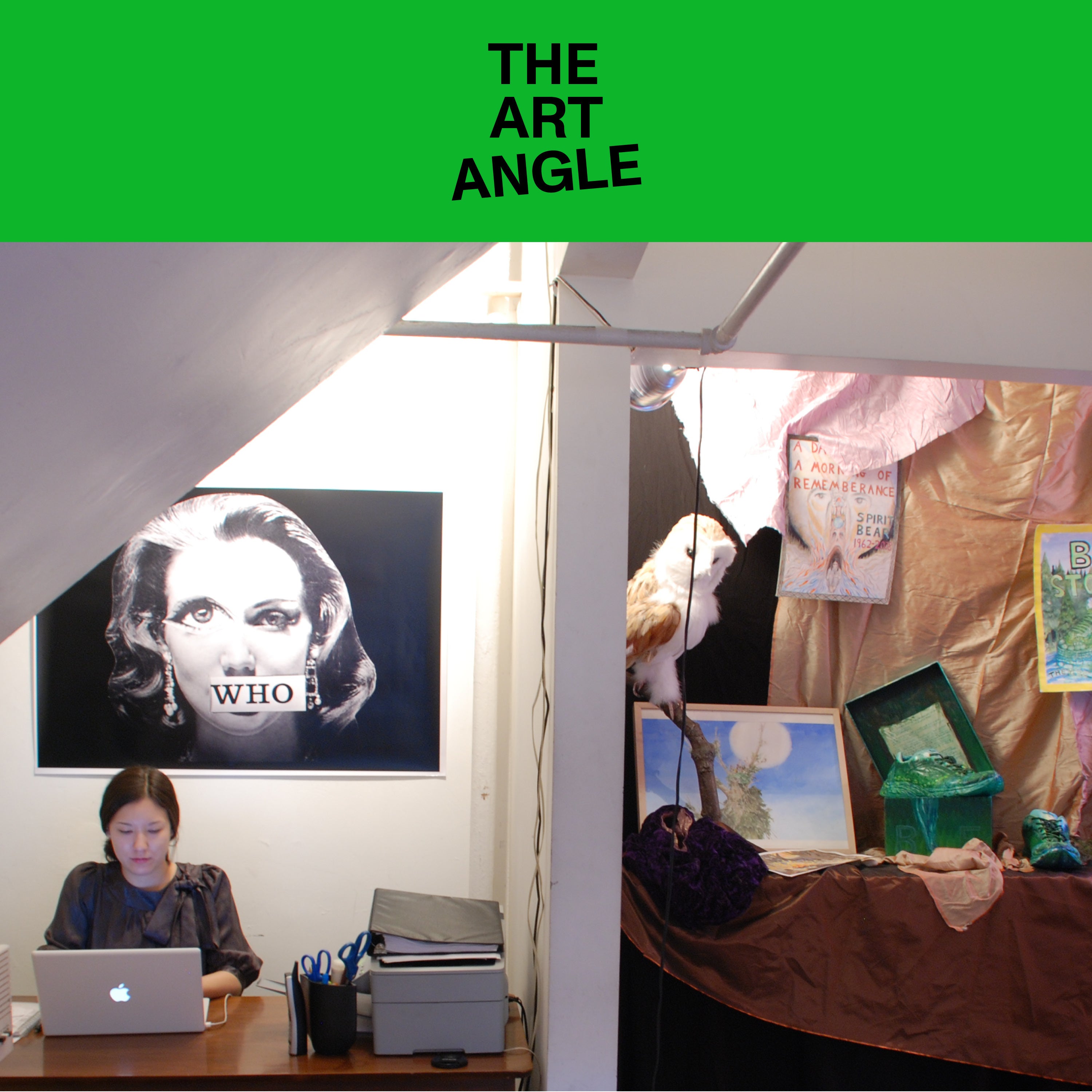
The episode profiles Guild and Greischkull (2003–2009), a young, artist-run SoHo gallery, and how its founders built a public, commercial space without backers—then closed in 2009 amid market collapse and rising rent. It also discusses the Cooper Union show (41 Cooper Gallery) revisiting the gallery’s history and ongoing community impact.
Sarah Vanderbeek, a Cooper Union graduate and artist/educator (taught in New York public schools; later teaches at Pratt). She co-founded the gallery with Anya Keeler and her brother Johannes van der Beek.
They had “no business experience” and “no backers,” learned sales by opening exhibitions, lived in the gallery to save money, and prioritized long-form dialogue over transactions. They served alcohol early (Tanqueray-sponsored), used MySpace for openings, and relied on artist/collector networks and shared mailing lists.
group shows including “Mute” (international sound art), window performances, NADA’s first Miami art fair, and the “Human Faces of Monument” project (with Sarah Charlesworth’s 1988 idea realized in 2008).
Written by AI. May contain mistakes.
Learn about the vision of creating a supportive art space for community engagement.
“This space should not just be a private studio space, but should be one that supports our peers and engages with the public and these legacies of artists occupies of artists occupies in the public.”
Discover the exhibition at Cooper Union showcasing Guild and Greyskill's history.
“at Cooper Union in the East Village, where an absolutely thrilling group show is on view through October 31st.”
Sarah discusses the founding of Guild and Greyskill and community involvement.
“Sarah Vanderbeek recently came by the Artnet offices to discuss how she and her colleagues built Guild and Greyshkill as young artists in New York.”
Learn about the origins of Guild and Greyskill from its founding artists.
“Sarah, thanks so much for coming on The Art Angle.”
Discover the significance of the name Guild and Greyskill and its inspirations.
“and Johannes and Anya were dating at the time, but it was actually Anya and I that came up with the idea and then brought Johannes in.”
The artists discuss their evolution from studio space to exhibition space.
“Some people will know, others will not know.”
Discussing the ambitions behind turning Guild and Greyskill into a gallery.
“was we took over this space on Worcester Street and Anya gilded our name on the front door.”
Understanding how they professionalized their gallery and made it successful.
“Was it, let's show our friends, let's show our work?”
The challenges and strategies of selling art in a pre-digital age.
“I also want to talk about we had no backers.”
Exploring the importance of community and personal connections in selling art.
“but should be one that supports our peers and engages with the public and these legacies of artists occupying spaces in these areas in Manhattan that were in transition.”
The challenges and benefits of being both an artist and a gallery operator.
“Well, as I shared, we did not have business knowledge, nor any experience working in galleries, let alone even programming.”
Exploration of how artworks transition from private studios to public exhibitions and the civic role of artists.
“And I think the good thing is now I feel like that's opened up more and people can have a consistent practice and also present programming, even run commercial enterprises, such as the places like Gordon Robichaux.”
Discussion of early exhibitions and the importance of peer networks in the art community.
“when the gallery was closed in August, using the gallery space as my studio, as well as my kitchen table in the Lower East Side, because at that point, I'd been able to move back into my apartment.”
Highlights of memorable exhibitions and the focus on artistic vision over commercial success.
“I want to make sure that we really capture the kind of really interesting things you did.”
A deep dive into an important exhibition that explored representation and featured notable female artists.
“And so it was important to me with the current show to bring in a collaborative work with B.”
Reflection on the importance of art fairs for networking and community engagement within the gallery's history.
“So yeah, this is a space that can create community and it's grown over the years, clearly with children and new friends and people joining the mix.”
Discussion of financial struggles and decisions that led to the closure of the gallery in 2009.
“We were also increasingly exhibiting our own work, but we had someone come in who had just lost a lot of money to Bernie Madoff's Ponzi scheme as well.”
Learn about the financial struggles and emotional toll of managing a gallery.
“we were actually also paying market value.”
Explore how artist expectations have evolved in relation to gallery support.
“That also felt like this had reached an end point.”
Gain insights into practical advice for young artists considering gallery spaces.
“in this world where real estate is expensive, you know, you do it in your apartment, you borrow some space, whatever.”
Discuss concerns and optimism regarding the future of art spaces in the city.
“And so my advice is I really appreciate the itinerant form.”

Get the gist, explore an idea or ask about something said.
 Claude
On The Art Angle, what are the key points of this episode?
Searching your listeningAutomatic transcript. May contain errors.
0:01This space should not just be a private studio space, but should be one that supports our peers and engages with the public and these legacies of artists occupies of artists occupies in the public.
0:21I'm Andrew Russeth, and this is The Art Angle, a podcast by Artnet News.
0:33If you're in New York this month, I have to insist that you make it over to the 41 Cooper Gallery at Cooper Union in the East Village, where an absolutely thrilling group show is on view through October 31st. The exhibition looks at the history and continued residence of Guild and Greischkull, a storied gallery that operated from 2003 to 2009 in Soho. It includes work by more than 70 artists, famous and obscure, younger and older, like Mariah Robertson, Dana Schutz, Sarah Greenberger-Rafferty, Ryan Johnson, B. Wurtz, Ryan Muller, and Valerie Haggerty. Some exhibited at the gallery and others were part of its extended network.
1:15The show was organized by Guilden Grayskull's three intrepid artist founders, Anya Keeler, Johannes Vanderbeek, and Sarah Vanderbeek, at the invitation of Adriana Farmiga, the dean of the Cooper Union School of Art, and Yuri Maznig, its associate dean. All five have work in the show. Sarah Vanderbeek recently came by the Artnet offices to discuss how she and her colleagues built Guild and Greyshkill as young artists in New York. We talked about how they made ends meet. Spoiler alert, it was not always easy. Why they decided to pull the plug and the advice she would offer to someone starting a space today.
1:53It's a conversation about a brief moment in time that I think gets at issues that many artists, curators, and dealers are confronting as New York becomes increasingly expensive and as its art scene in some ways becomes more and more averse to risk. Sarah, thanks so much for coming on The Art Angle. Thank you for having me. So the show at Cooper Union is such a thrill. It's such a pleasure. It transports us back to this incredible gallery that three artists started, you being one of them. It also shows us just an incredible community of artists, many of whom continue to work today. To start out with, I was hoping you could take us back to that moment.
2:32Why did you all get together to create Guild and Grace School? Thank you. Thank you for this opportunity to talk about the gallery and the exhibition and to revisit that origination was an exciting stretch of our imagination and memory. So the gallery was founded by myself, Anya Keeler, and Johannes van der Beek, my brother. and Johannes and Anya were dating at the time, but it was actually Anya and I that came up with the idea and then brought Johannes in. Anya and Johannes are now married. So it's also an interesting family triangulation. It's two siblings plus a couple. And it was exciting and I would say unique, I think, that basically she and I began to meet and think about being artists that had graduated from Cooper Union.
3:20We were looking for a continued sense of community and infrastructure and even facilities. And Anya's godparents, Charles Leslie and Fritz Lohmann, provided us kindly with the space, which was the impetus for thinking about first being a more communal studio project, but then evolved into public programming and then over time became more of a gallery model, but always an artist-run gallery model that we named Gildan Gray School. And we should confront it right away. Explain the name. Some people will know, others will not know. Well, I would say that the name is representative of the three of us.
3:59I think I was interested in the idea of a guild, you know, an artist's guild and the tradition of that. I think Johannes talks about it being inspired by his studies at Cooper Union. He was still a student there about a particular kind of European, I think it was even a Victorian language of the Schloss. So somehow we came up with gray school as a combining of words that some of it was a sense of also coming into a historic space in Worcester Street and wanting to create a name that was both fun about community, but also a sense of somewhat of the ridiculous too. But what we didn't realize was that it also very much sounded like He-Man's Castle, Greyskull.
4:45And that also tracks with our age and our youth as well. So the other important thing that I thought was really beautiful was we took over this space on Worcester Street and Anya gilded our name on the front door. Yes. And so it also looked like a space that maybe existed that we were returning to and reactivating. And that space, as we'll talk about in a little bit, was once occupied by American fine arts. Yes, yes. I mean, the kind of the legend of that space over so many years now. And now it is part of the Leslie Lohman Museum that shows queer art. Incredible. What you're describing, that hunger for community, that desire to keep the kind of art school dialogue going, I feel like so many people encounter that and it's so hard.
5:30And then to also pile on top of that to say, not only should we be working here in studios, but we should be showing here. When you decided to turn it into an exhibition space, what was the ambition? Was it, let's show our friends, let's show our work? What were you thinking along those lines? The first year of programming at Guilden Gray School was all group shows. And that's in part why we also chose to do a large exhibition about the gallery at Cooper Union. We built studios in the basement. So the lower level was basement studios that included those who had studied at Cooper or were still engaged there, like my brother.
6:10But there were also other artists who were friends of mine from lower Manhattan that were working and aiding in contributing to the space in different ways. So I'd say the exhibition program was a mixture of our different friend groups and peer groups. And I had also returned to New York from London. So I had lived in London for a few years and had friends that were working as curators and artists there. So there was a touch of that community coming in, too. I see. Our third exhibition was Mute, curated by Lisa Rosendahl, who I knew from London. And it was entirely international artists addressing sound as an art form.
6:47Wow. I mean, what strikes me is that it's on the one hand, okay, it's the traditional, let's do a group show, let's get the friends in dialogue, but so ambitious. I mean, international artists to do sound. We should point listeners to, there is a great conversation that the three of you had that's a text that I think will appear in a book eventually. It's available at the Cooper Gallery. But you point out, you took it very seriously from the start. Let's make sure we're doing printed matter. Let's make sure we're trying to make sales. Can you talk about how you pulled it off, professionalized this gallery and made it work?
7:18Well, it was entirely learning through doing, which was an ethos that we all had from Cooper Union, but also past practitioners and projects. So just to say learning through doing also comes from Dewey and the Black Mountain College approach to experimental pedagogy. We had no business experience. I also want to talk about we had no backers. Incredible. And the real gift that Charles and Fritz gave us was trusting young people to have access to a commercial space in Soho that Lower Soho was still actually in transition. Across from us was a working factory. This is such a key point. Galleries had to some degree moved to Chelsea, but it was still not like Hauser & Wirth and Chanel and J.Crew or whatever, quite to that degree.
8:07And we were very close to Canal Street. And our closest pier, and I know we're getting off track of why and how we decided to take the gallery in this direction, but our closest pier was Jeffrey Deitch. And up the street was the Wooster Group and the Drawing Center. So we had these interesting dynamics of connections to contemporary artists through Jeffrey Deitch, but then also a long history of experimental practices with the Wooster Group and Lower Manhattan's tradition that we're building off of as well from our knowledge through Charles and Fritz, but also through our father, Stan Van Der Beek's post-war existence in Soho and the Lower East Side.
8:47So all of that came together to think that this space should not just be a private studio space, but should be one that supports our peers and engages with the public and these legacies of artists occupying spaces in these areas in Manhattan that were in transition. Soho was definitely pretty far along in its transition to another type of place that didn't even have many art spaces at that time. The other important thing that came about and how we evolved was conversations with the artists that we were working with. And they really wanted a consistency and a sense of support and something more than just exhibiting.
9:26They wanted what we would describe now as representation. Yeah, yeah. And so I think the other thing that was important that we learned from not so much Colin DeLand and American Fine Art, but Danny McDonald, who was managing it after Colin's death, was the importance of having a space where artists felt like they could come and gather and stay and sort of talk through ideas. but that also encouraged collectors and curators and those that are interested in learning about the artists to come and be in the space and take time to understand more about the program. And lastly, what was really important to me about this was I graduated art school.
10:04I had been in London. I'd returned to New York. I was figuring out my own practice. I was working as an educator as well as running the gallery. You were working up in the Bronx, right? In public school. Yeah. You're doing a lot. And I was living in the gallery to save money. too. I share this with my students now because, you know, it was learning through doing in every aspect and also trying to accomplish something on very limited means, yet doing it with as much care and quote unquote professionalism as possible. Well, yeah, I want to drill down on that. I mean, this is pre-social media. This is pre so much of the modern infrastructure of how art gets sold for better or worse.
10:45How were you making sales? I mean, were you cold calling collectors? Were you emailing? How'd you do it? Well, as I shared, we did not have business knowledge, nor any experience working in galleries, let alone even programming. So it's an incredible feat that we learned the process of selling work by opening exhibitions. And then also by learning from some of the artists we were showing with who had begun engaging with commercial galleries, and were able to tell us a little bit more about the process. We also had friends who worked at galleries that were sharing their mailing list with us. Wow, okay.
11:19Which I think now, you know, everyone is very proprietary about their information. That's interesting. Then they were directing people to us. That's great. There was much more a sense of sharing contacts, clients. So the first artwork we sold was actually to another artist. Wow. So it was beautiful that that sale allowed us to pay the rent for the next month and do the next show. And that's when we began to see that sales could be a component of our approach. I don't think when we did the first show, we thought about that. What we were doing, we were definitely at this bridge point. We were still photographing everything on film and four by five transparencies.
11:58Did you have a website at the start? Not at the start. Not at the start. Okay. We would also send JPEGs. Sure. But we did have certain clients who would only view things in slide form still. And, you know, we'd have to send packets. We then quickly learned I was engaged with the New Art Dealers Alliance pretty early on, you know, generating PDFs and all of these forms that I think now are fairly common to the ways that art is disseminated. But so much of it was about the in-person conversations. That's really where most of the activity happened was people coming to visit us, us taking them through the show and really spending a great deal of time.
12:37It was far less transactional than it is now. I think it's much more about long-form dialogue with those. And those that would consistently support the artists through different projects and exhibitions, as well as consistently support our program. So I do want to speak to Susan and Michael Hort were incredibly supportive throughout our time. Incredible collectors, yeah. As well as Jerry Spire. Wow, sure. And I'm also thinking of Andrew and Susie Cohen, who I still stay in close touch with. And these individuals also, given they were all going to different galleries, educated us as well about the larger art field.
13:17So it was a back and forth. It was really reciprocal. I'm so curious about this dynamic of you being working artists at the same time, running a space. You're also working a job. But that dynamic of showing friends, trying to get your own work shown, what was that like? Did you get a sense that the gallery was helping build your career, for lack of a better term, or was it hurting it? Did you think about that? How were you thinking about it? it did nothing, I'll say, but help my education and development of my practice as an artist. We were often told by artists, collectors, curators, it was very challenging to do both or that you couldn't do both.
14:01Right. Kind of prohibited in some way. Yeah. And I think the good thing is now I feel like that's opened up more and people can have a consistent practice and also present programming, even run commercial enterprises, such as the places like Gordon Robichaux. Incredible. Yes. But for me, I always talk about the gallery as, in a way, my graduate experience. I learned so much from seeing artists begin with an idea in their studio and bring it to exhibition form to interface with curators and collectors about the work. And then to also understand how work goes from the very personal space of the studio to the more vulnerable space of public exhibition, to then on to perhaps other lives in museum collections or institutions or private collections.
14:52But the way I feel we were able to achieve this was purely the endurance and stamina that is provided by youth. I don't know if I could do it now in the same way. You know, we could work all day in the gallery and go downstairs at six o 'clock and work in our studios for another six hours. Then I could go back upstairs and crash in the gallery and wake up at 6.30 in the morning to go up to the Bronx to teach. And all of that came together though, to really help form my sense of my civic role as an artist in the larger community. And I teach this to my students. I think it's really important to support your community and give over space to other artists and their practices.
15:35I continue that with a new organization I'm a part of, Soft Network. But the big challenge for artists is you really just want to be in your studio all the time working on your work. So it's figuring out a balance of generosity and support, and then also feeling like your own practice is still getting the time and attention and refinement of ideas that is needed. So the first few shows were designed around our practices. The first group exhibition was designed around Johannes' practice, the second around Anya's. And then actually when it came to the third, I decided to give it over to a curator because I was still figuring out my work.
16:11Sure, sure. My first exhibitions connects to thinking about peer groups. Mirabel Martin kindly included my work in one of Rivington Arms' first exhibitions. I think it was about the third show. Also, Esme Watanabe, who went on to work for us as a director, she was working at Bellwether Gallery and included my work in a group exhibition there, you know, coming to the basement studios to look at the work and include it. And then finally, Rachel Uffner was working at D 'Amelia Tarras and also came to the basement studios and brought the two partners to see my work. So it became a fluid space. And I created my first exhibition when the gallery was closed in August, using the gallery space as my studio, as well as my kitchen table in the Lower East Side, because at that point, I'd been able to move back into my apartment.
17:00Ah, I love this. I love this. And so fun to hear the names of some of these incredible galleries that have closed. I mean, Rivington Arms, someone has to get those photos online of those exhibitions. And Rachel, of course, continues to thrive and do incredible things. You use the term civic role for an artist. I just want to flag that too. I think that is such a under-discussed aspect of it. Yes, I do believe in that. And I mean, we were, for lack of a better term, a commercial gallery space. But the great thing about commercial gallery spaces, they're free and anyone can come in. And we tried often to invite others to come in and do programming, a lot of times with educators.
17:40So we were trying to permeate the exhibition space to be something that was more outward thinking and thinking about its role within the larger community. I think I got the civic thinking a lot from my work within the public school system in New York with Dreamyard as a teaching artist there. But again, also from our father, Stan Vanderbeek, and his community of artists, such as Charlotte Moorman, who was a huge inspiration to us with the avant-garde festivals of bringing art out into the city and that art could be anything. I included a piece of ephemera from Shigeko Kubota, who sadly I was not aware of her proximity to us at the time when we were running the gallery.
18:23It was really later, but she was the first video curator. She was creating dialogues in new media and working as an artist that was programming against all odds in a way. And given that it was a new form, she was a woman working at a time that media was just beginning to open up. That was important to me to show some precedence and also to understand that even in thinking about our gallery now, there are areas that we were aware of and those that we learned afterwards that we connected to just through a kind of lineage of thinking about the role of the artist.
19:05that's one of the things i love about the show at cooper it's people you showed but it was also people who were stopping by the gallery i was reading roberta smith's great column about your final show and she said that marilyn minter was in there i think it's you or maybe it's johannes or anya who say you know we put marilyn in here because she signed the book for every show You know, it's this really this sense of people supporting each other, interested in each other. I want to make sure that we really capture the kind of really interesting things you did. So after those first three group shows that you kind of set the tone, you get the dialogue going.
19:39What are just other memorable moments that you've been revisiting as you've done the Cooper show? Well, it's interesting that over time, we realized we fell into a pretty similar rhythm of how we used to work. My brother and I worked together on our father's archive, so we have a little bit more of a continual dialogue. But Anya and I, and then Anya, Johannes and I haven't worked together since we closed the gallery in 2009. I think some of the memorable moments, the opening exhibition was very full with people. And that was because I had friends who were using nascent social media, such as MySpace.
20:18Wow. My friend Glenys McDarris, who was a club promoter, put it on MySpace, and that brought a huge group of people down that we filled the block. Cool. Holland Cotter was the first person trying to get into the show, and he is a true treasure and remarkable. Pounds the pavement. I mean, he's always there. Amazing. The other things I think of are we did a lot of performances that were up in the windows that we built a kind of platform so people could stage things out to the street. We opened about a week before Taxter and Spangman. And so we had a lot of overlap. And I remember them being very present around as well as James Fuentes.
21:00These are all important people that came back in memory, but are also consistent friends and supporters. Yes. A show that really stands out to me and connected to Sterling was Kirsten Stoltman and Amanda Ross-Ho. And they did this show called Vaginal Rejuvenation that was amazing because they used all these past works and collaborated and basically did everything possible to make this as non-commercial, like, as you could. And we loved it. And Amanda is in the exhibition now. I point to that because never in the programming were we thinking about sales or the commercial aspects. We were always thinking about the artist's vision.
21:38And so we did show a lot of collaborative work, which, again, doesn't tend to sell well. No, no. And so it was important to me with the current show to bring in a collaborative work with B. Wurtz and Ryan Mueller. Great piece. And Kite and Alicia B. Wormsley, who have cosmology scape, to point to that history of our engagement with artists that were interested in either consistently collaborating, like Bea and Ryan, or like Amanda and Kirsten, where they did it once. Another show I do want to bring up that is actually also something that's very present in my current work was an exhibition I organized called The Human Faces of Monument.
22:15And it was looking at an intergenerational group of female artists who were thinking about representation of primarily the body, but representation in general and considering its complications, its nuances and its complexities. And for that exhibition, I worked closely with Sarah Charlesworth to realize a new work. Yes. That she had the original idea in 1988. This piece is called Figure Drawings. And so she had the idea in 1988. We had these dialogues about the exhibition. And she decided to realize it in 2008, so 20 years later. Really in admiration of her and her practice in general. And it was the anchor point of the exhibition.
23:02and I'm currently exhibiting with it at the SCAD Museum of Art with my own work as well as Sarah's and Laurie Simmons and Sarah's daughter Lucy Charles Friedman. So I've been really thinking about the resonances of that exhibition and the gallery's legacy as it continues to operate within my own practice and it's been beautiful confluence that these two projects are going on at the same time. So the important thing about that exhibition was not just working with Sarah to create this work she'd never been able to realize. But as a young gallery, we helped her with the production of it, which was a big leap and was really wonderful to be able to do that.
23:38The other thing that was important about it was Sarah invited all of her peers. For an artist such as myself, who was working in photography, was most of my idols. So I also included Sarah Greenberger Rafferty and Anya Keeler, who are my peer group, and also Dana Hoey, who was their professor, but also May Wilson, who was a self-trained artist. So we touched on a lot of different areas of practice, but Laurie came, Cindy Sherman came, the other person who was in the exhibition who came was Martha Rossler. So this incredible gathering of forces within the media and image making and really the New York community of, you know, sort of the recent past that had formed the present that we were in at that time.
24:25Right. So yeah, this is a space that can create community and it's grown over the years, clearly with children and new friends and people joining the mix. I love that. I mean, early on you said it was a commercial space, but yes, you were taking some real risks. You point out in the books conversation that you usually served alcohol, which is a dying art. And so you were generous in that way. You were making mailers, you were sending them out. Did you ever do art fairs? I realized I don't know this. Oh, yes. You did. You did. What was that Yes, we all mourned the end of serving drinks at shows because it made it really fun.
24:59It made it more like a party. People hung out. We were luckily sponsored the first couple shows by Tanqueray. So we had cocktails. The other thing I'd say is that that then quickly went away and we pretty much had canned beer. Got it. After that. Still great. Still. And we did our first art fair through NADA. NADA's first fair. in Miami. We didn't even know exactly what an art fair was, but I said we should do it. And so we'd been operating two months and we went down and did it. My dear friend, Taisa Skolsky came with me. She didn't work for the gallery. She was actually working in fashion with Rachel Comey, but she kindly came and aided me in running this booth, installing the booth.
25:47And we then went on to do the armory as well as some European fairs. It was never of the most utmost importance the way it is now. It seems to become part of the exhibition schedule of a gallery. But it was really important for us to meet new people. And also, we always packed our booths full. They're similar to the salon style of the wall in the exhibition. It was really about trying to get as many people in there. And when we did the armory for the first time, we had the smallest booth possible. And it was an ongoing rotation and an ongoing argument as to who was going to be shown and when amongst us.
26:26But we did it, but we also definitely alienated some of our neighbors. Because it was a constant flow of different artworks and changeover that now most people, you know, sort of do a kind of like one or two changes. It's become a very different beast. Yeah, as you were saying. 2009 you close obviously that's the moment when the financial market had had the crash because of the real estate bubble there was real retrenchment in the art market why did you decide that that was the moment to call it quits well thinking of the art fair time i very much remember we did the not affair in december 2008 by november we had an understanding that things were changing quite significantly and quickly.
27:14We were also increasingly exhibiting our own work, but we had someone come in who had just lost a lot of money to Bernie Madoff's Ponzi scheme as well. So we had a number of markers that were showing us that it was going to be very challenging to maintain this operation during this time. We were still entirely dependent on sales sort of on a month-to-month basis. We also had multiple staff members that we needed to support them, and we were concerned we were going to be able to do that. So after the fair, we gathered to think if we could continue this forward. In 2009, we were still struggling with the question, but we realized it just wasn't going to be feasible.
27:54I do want to point to that Charles and Fritz were incredibly generous with what we paid in rent, but by the end, we were actually also paying market value. And in Soho at that time was$10 ,000 a month, which was a lot for us to meet as well as... Even today for a young gallery, that would be a struggle. Yeah. It was a great big space. The last year I worked, I didn't take a salary to ensure that we stayed able to pay our directors, as well as it was really important to us that we paid all of the artists on time. We knew it was critical to them being able to sustain their lives and practices. So we did a big show as well to help raise support for the artists.
28:36And in this closure, it was very difficult to tell friends that we were closing and not able to provide them with this space anymore. I think we went through a mourning process for quite some time. But I think now I am grateful for the time that we did it and that we did it in a way that was able to be along the lines of our experiment and grow and progress at a certain rate that we wanted to. but we were also beginning to feel the pressure that we needed to meet certain criteria of what shows could provide for artists. And it was getting beyond our reach and means and, you know, our infrastructure.
29:14So there was also a struggle of like, we can't really progress any further beyond this place, but we also need to meet our rent and all of the requirements of keeping a commercial operation going. That also felt like this had reached an end point. And that's so interesting in terms of you're doing kind of multiple shows with an artist and they really want a larger infrastructure. Yes. Yeah. I think for certain artists. Sure. Other artists, they were very happy to remain in this realm of working with artists and kind of on the terms that Gildan Gray School could provide. Yeah. Other artists, you know, had galleries in other cities and locations where they're beginning to experience that kind of infrastructure of a larger, more commercial gallery.
29:57Right. There's a publicist. There's a fair schedule. Yeah. And I think, again, that's a window into where we are now with the difference between gallery spaces and what artists even expect of a gallery relationship. that is, for me, a concern because I do think there's an imbalance. And I think there is also a need for spaces where artists can be figuring things out in real time in the public realm and not feel some of that need to also make everything commodified, to circulate in the larger market. Because a lot of it was also works that sometimes you were like, this is almost ephemeral. You know, it exists for this presentation and then, you know, goes on to other forms.
30:40Yes. I'm so glad you're bringing this up because something I am really interested in is you've, of course, done it. You've done the gallery at this very intriguing transitional moment as the art market booms and then collapses. You're also teaching now at Pratt. So you're talking to emerging artists, young artists who are trying to make their way. My sense is that you get out and about, too. And so we still see people do project spaces, right? It blows my mind. Even, or commercial galleries as well, in this world where real estate is expensive, you know, you do it in your apartment, you borrow some space, whatever.
31:12I'm curious about advice that you would give people for young artists listening or any artist listening who just says, you know, I kind of have a community. Maybe I could do something. What would you advise them about opening a venue? Well, that's what's been great about doing this at Cooper Union too. The primary audience is students. And my former student, you know, graduate of Pratt MFA photo, Cleo, aided us in doing the interview because she's interested in doing programming. It's a great interview, yeah. And she created a show in an apartment gallery. I am really admiring of projects like Benny's Video.
31:48Carriage Trade, I think, really takes the idea of the group show that we were exploring and continues to... He's incredible. It just keeps going. It's just, yeah. So I see moments of this happening, but I know none of it is easy. And so I try to be pretty transparent with the young artists I'm teaching. That's why I say, you know, the way I did it was by living in the gallery. I also talk about how the way I can have a studio now is the kindness of my studio landlord accepting artwork in exchange for rent sometimes. Got it. Like it continues. Even though I moved through life, that same sort of precarity and instability that an artist's life has that we had then feels very familiar now as I'm, you know, 20 years into And so I talk about that too, that I think something I didn't realize as an artist when I graduated was this sense that you would be sort of always in this kind of trajectory of more and more stability or more and more resources.
32:46And I've really come to learn that's not the case at all. And that's not the case for many. and just learning to be in the comfort and camaraderie of that, but also understanding that you're often calling upon your network of friends or even like my spouse, Matthew Dippel, helping to support my ability to do this project and do this project of my artistic practice. And so my advice is I really appreciate the itinerant form. We really valued the consistency of the space, But I think that that pressure of the rent and the space makes it very challenging to sustain an operation as artists also doing multiple things.
33:28Yes. So many of the artists in the show, we also wanted to point to that they're sustaining their practice while also working sometimes full-time jobs or working as educators or doing interesting different roles that aid them in their ability to keep their practice going while also figuring out a way to live and work in the city. Someone asked me, oh, you know, does this exhibition a sign that you all are going to do this again? And I can't repeat this because this is like broadcast, but there were many explicatives used to vehemently say no. Because, you know, it really was of a time, both of my life, I think of my community and also where the city was.
34:12And I'll be honest, in the last few years, I've really questioned whether I could continue to live and work here. It's become so challenging. I'm concerned about the young people that come here and want to remain here, but the pressures to remain here are almost insurmountable. I have turned, though, with Mamdani's administration to one of optimism and hope that really, if you had asked me before him becoming mayor, I would have said, I don't think it at all is possible. And now I actually see, again, more civic support of this role and the potential down the line of change that could encourage more of these types of spaces again.
34:54Yes. Amazing advice and clear-eyed and sobering. And I was going to ask if a sequel could be in the works or some other project, but you've answered that very definitively. And so that might be a good note to end on. Sarah, thank you for coming on and sharing your time and expertise and congratulations on a beautiful show. Thank you. That means a lot coming from you. And I'm really grateful for this dialogue about our exhibition, about our practices and about Gilden Gray School's ongoing legacy. Go see the show. Thanks, Sarah. The Art Angle is produced by Sonia Manalili with contributions from Ben Davis and Caroline Goldstein.
35:31Thanks for listening and see you next week.
If you are in New York this month, I have to insist that you make it over to the 41 Cooper Gallery at Cooper Union in the East Village, where an absolutely thrilling group show is on view through October 31. The exhibition looks at the history and continued resonance of Guild & Greyshkul, a storied gallery that operated from 2003 to 2009 in SoHo. It features work by more than 70 artists, famous and obscure, younger and older, including Mariah Robertson, Dana Schutz, Sara Greenberger Rafferty, Ryan Johnson, B. Wurtz, Ryan Muller, and Valerie Hegarty. Some exhibited at the gallery, and others were part of its extended network.
The show was organized by Guild & Greyshkul’s three intrepid artist founders, Anya Kielar, Johannes VanDerBeek, and Sara VanDerBeek, at the invitation of Adriana Farmiga, the dean of the Cooper Union School of Art, and Yuri Masnyj, its associate dean. All five have work in the show.
Sara VanDerBeek recently came by the Artnet News offices to discuss how she and her colleagues built Guild & Greyshkul as young artists in New York. She spoke with Andrew Russeth about how they made ends meet (spoiler alert: it was not always easy), why they decided to pull the plug, and the advice she would offer to someone opening a space today. It’s a conversation about a brief moment in time that I think gets at issues that many artists, curators, and dealers are confronting as New York becomes increasingly expensive and its art scene in some ways becomes more and more averse to risk.