 Ask ChatGPT

A round-up of major European art-world events across London, Paris, and Rome, focusing on Frieze/Freeze and Art Basel Paris amid protests, plus notable auctions and gallery/institution shows.
Margaret Kerrigan, London-based news editor covering art market developments. Katya Kazakina, Art Detective columnist based in Rome, reporting on fairs, auctions, and museum exhibitions.
London’s Freeze week felt “back” in energy but not fully “back” economically; sales were uneven, with blue-chip and emerging pockets active. Art Basel Paris proceeded despite unrest, but logistics and safety concerns led to exhibitors emptying booths early and uncertainty about compensation. Paris still showed strong liquidity at top auctions (e.g., Sotheby’s).
London Invitational (Chancery Rosewood); Paraiso dedicated to Latin American art; Freeze Masters $6.5M Jan Bruegel (Hauser & Wirth); Pilar Coriand landscape works sold out; Gagosian–McGreet show with lines. Art Basel Paris: $100M+ Modigliani nude (Pace); Hauser & Wirth emptied by Friday; Sotheby’s 45-minute bidding war for a Schlumberger Monet. Rome: Pantormo exhibition (130 works) and PM23 pairing Ewa Juszkiewicz paintings with Valentino gowns.
Written by AI. May contain mistakes.
Discussion on the highlights and overall sentiment during Freeze London.
“To talk about it all, I'm joined by Margaret Kerrigan, our London-based news editor.”
Insights into the various satellite fairs and their reception at Freeze London.
“Well, I think it was a it was a pretty decent freeze week for London, all things considered.”
Highlights of the Freeze Masters art fair and notable sales.
“Walk us through what was interesting, what worked, what didn't work with the satellites.”
Analysis of the market trends post-Brexit and the performance of auctions.
“I mean, I think she hit the nail on the head.”
Discussion on the performance of Christie's and Sotheby's during recent auctions.
“And, I mean, I think that, again, we're seeing movement in some areas.”
Learn about the differing strategies and performance metrics of major auction houses.
“And he offloaded a bunch of work and that brought in like more than a third of that total.”
Discover the standout gallery shows and exhibitions in London.
“Before we jump to Paris, any final thing you would like to highlight?”
Explore how the art crowd in Paris reacted to concurrent social protests.
“And I think we all probably had an experience of looking at Instagram and reading the newspaper and seeing that just as people were arriving in Paris, there was massive mobilization.”
Examine how protests influenced the atmosphere and activities at art fairs.
“But again, I wonder how weather, you know.”
Hear about instances where dealers faced dangerous situations during protests.
“Yeah, because somebody I was talking to a dealer and he said, like, I asked, is this a bubble?”
Follow the unfolding chaos at Art Basel Paris due to protests and unplanned changes.
“and we had that comment from them that they are looking and watching.”
Discussion of dealers' skepticism and safety concerns at Art Basel.
“So, you know, I think, like, how are they going to figure out, like, how are the exhibitors going to be compensated?”
Exploration of auction dynamics and significant art sales at Sotheby's.
“And after I published, you know, the column, you know, I got interesting responses from a couple of people.”
Insights from a smaller art fair and emerging artists discovered.
“So the point that people were making is that this is not a situation of lack of liquidity.”
Discussion on notable art exhibitions, including Krasner's works.
“They sold all of them from$3 ,000 to$6 ,000.”
A deep dive into the exhibition focusing on Gustave Fayet's art collection.
“But then one other thing that I kind of made a flag before, And that was very, just very interesting, very boutique, tiny gallery, very beautiful old master gallery right next to the interior ministry on this square.”
Description of the Dan Flavin show at Gagosian's airport location.
“And so there's just a gigantic room of Gauguin.”
Katia shares her experiences and highlights from her time in Rome, including notable art exhibitions and cultural insights.
“One thing, if I have to mention, is extraordinary Pantormo exhibition here.”
The hosts discuss their desire to experience Italian art and culture, reflecting on Katia's exciting discoveries.
“Katia's digging deep on the Italian art world, the Italian museum world, Rome specifically, but maybe a little bit further afield and they should be in touch.”

Get the gist, explore an idea or ask about something said.
 Claude
On The Art Angle, what are the key points of this episode?
Searching your listeningAutomatic transcript. May contain errors.
0:28Beautiful, beautiful works. First, Freeze London and Freeze Masters alighted in Regent's Park, and a bevy of satellite fairs opened all over the British capital. There were big league openings and auctions and a great deal more. Then the art crowd decamped for Paris for Art Basel right after large-scale protests in the city and around France gave way to looting and police clashes. Student protesters shuttered the Louvre for a day, but the fair went ahead as planned, with some 200 exhibitors offering work at the Grand Palais. With another protest looming at the end of the week, the fair decided to cancel its weekend run, closing on Friday evening.
1:08To talk about it all, I'm joined by Margaret Kerrigan, our London-based news editor. Hi, Maggie. Hey, Andrew. And I'm also joined by Katya Kazakina, who writes the Art Detective column and who is currently based in Rome. Hi, Katya. Hey. Thanks for coming on. So much has been going on. I can't even believe it. It's truly, truly in many ways unpresented. It's been whirlwind. It's been wild. We're going to go chronologically to kind of track the journey that many in the art industry went on. So we'll start with you, Maggie. Talk us through London during freeze. What happened? What were the highlights?
1:50What should we be sad that we missed? Well, I think it was a it was a pretty decent freeze week for London, all things considered. I don't there's been a lot of talk over the last couple of months about how, like, we're so back after Brexit, which I'm not really sure that's true. Like, we may be finally finding stability after Brexit and whatnot, just in time for, you know, politicians to start looking for ways to get us back into the EU. But I think overall the sentiment was pretty good. I mean, it was like it was good weather. The people seemed excited about things. I think the real energy came from, I mean, it was just that there was a lot of new stuff going on.
2:32There was a lot of new satellites this year, which made it feel kind of fresh and fun, like things were happening. There's been some interesting kind of galleries opening in London as much as there have also been some galleries shuttering. So I felt like it was kind of like a new mix this year, which really livened it up a little bit. Yes, reading your coverage, it was so exciting to see, oh, as someone who is not familiar with, I wasn't familiar with a lot of the satellite fares, a lot of the things that were taking place. Your colleague, Joe Lawson Tancred, wrote a great rundown of those. Maybe let's start there.
3:08Walk us through what was interesting, what worked, what didn't work with the satellites. I think the I mean the standout at least in my opinion and from most of the folks that I've spoken to is we everyone loved London Invitational which was an offshoot of Dallas Invitational which started just a couple of years ago in Dallas. It's this really small boutique fair hosting a hotel. It was at the Chancery Rosewood here which I'd actually never been to. That place is so nice. Like honestly it's one of those hotels that when you walk in like the air feels different. It's just like really crisp and clean air.
3:42and they just had a really outstanding presentation it was just a handful of galleries they were set up in different rooms on the third floor and the rooms were stunning the art was actually really cool it wasn't kind it was like very high quality art and installed in very fun ways so like everyone was raving about that to the point where I think that like they've probably got a waiting list for doing it next year like everyone wanted to be a part of it so kudos to them. I will also say, like, when I was there during the VIP day for that, which was, like, right after the opening of Freeze the next day, there's been a lot of talk about Americans skipping London for Paris, but there were Americans at London Invitational, which I thought was, you know, maybe to be expected given that it was rooted in Dallas, but yeah, strong crowd there.
4:33and I think you know there's there are a couple other fairs that had popped up were really interesting that I'm and I'm I'm not going to say this I think correctly because I'm not a great Spanish speaker you can ask my high school teacher about that but there was a new fair that was called Paraiso Paraiso which was entirely dedicated to Latin American art people said it was really great lots of very cool artists that they hadn't known before I would think is kind of capitalizing on that trend. Like some of them were maybe slightly more historical or older, may have been overlooked, but it was all very, it's happening in a moment for London where there is a lot more attention on Latin American art right now.
5:12There's like a new Latin American art foundation. So there's, I think, people's awareness of it is shifting and just hit right at the right moment. The kind of stalwart satellite fair was minor attractions, and they had moved into a bigger hotel this time because, and like fair play to them because they should have, because the last one, it was really hard to navigate and I got a little claustrophobic in the last hotel they were in. But it didn't seem to like really strike the right notes this time. I think a lot of people went to it because it opened before freeze. So it was a little bit of a nice table setter.
5:41But no one really had like a wow experience there. They got some good Instagram photos, but no one was like, oh yeah, I definitely want to go back, you know? So I think maybe it was one of those things where it's tough to crack that nut when you scale up and I'm not sure they quite did it this year. Got it. Got it. And then talk us through the big one, the big kahuna. Freeze London, Freeze Masters. What were people talking about? What was selling? Freeze was great. Joe did a great report from that. I mean, I think she hit the nail on the head. She talked to an advisor who kind of said, you know, there were some, what do they call them, like heat pockets?
6:17Not hot pockets. Heat pockets about like what was selling. Like it's not like it was gangbusters at every booth, but plenty of booths were doing fairly well. I mean I think the big news the biggest sale that was at least reported out of it was the 6.5 million dollar Jan Bruegel that was at Fries Masters. Hauser and Wirth brought that and it was they did the same thing that they did last year where they compared more historical works with more contemporary works at their booth and some more modern things and kind of like brought in contemporary artists to curate a small selection of more historical works for their masters booth people just love that like that's so of the zeitgeist right now.
6:56And the Bruegel, you know, it's cool to see that kind of work. At Freeze London, I mean, I think there was a lot happening. The people, I would say that the work didn't seem overly challenging. Most people that I talked to weren't like, oh yeah, like I saw something that really blew my socks off. But there were some emerging galleries that were doing pretty well. Jaira Hai brought a really interesting kind of like sculpture of this headless dog that had very prominent teats on it that people were really crowded around. And she said that sold out very quickly. So I think it's kind of just like, you know, little things that kind of got in there and gotten, you know, gotten people's minds, got a lot of attention.
7:34One of the big boos was Pilar Corius, who Joe rightly pointed out had not done Freeze London for a couple of years because she had been doing Art Basel Paris and kind of putting her time and money there. But she came back with a three-artist presentation of a bunch of landscape works, and they were all kind of, I mean, maybe we can distill this a little further at some point, but they were sort of surrealist-inspired landscape works, a little bit trippy, a little bit alien, a little bit overly lush, and everything sold out on the first day, and they were very enchanting. And there was a subset of them that had very fun animals in them, which I think people also enjoyed.
8:16So really interesting. I mean, this case of people returning to freeze that I think Joe highlighted, as you pointed out, a few more even. The mood was good, it sounds like. And what is your sense of what's generating that? It's the good weather. Is the economy? Where's the energy coming from? Oh, it's such a good question. I think it's vibes right now. I'm not really sure that, like, everyone has decided that they're going to put a brave face on it. And I do think some things are improving. Maybe things haven't crashed out as hard. We're seeing a little bit of a rebound. The auctions did fairly well in London.
8:56And, I mean, I think that, again, we're seeing movement in some areas. It's just not across the board with the market, which I think is kind of the case everywhere. You know, you're seeing very, like, high-level blue-chip material doing well. You're seeing some activity among the emerging sector, like, just folks moving. Like, there was this new gallery that Heidi from Berlin that closed their Berlin location and moved to London, which just seems like one of those things, like, why would you do that? But it was a very cool space. And, like, she was basically like, well, let's try it out. Like, I've got a lot of clients, you know.
9:32There's been a lot of talk about buyers vacating London because of taxes and things like that. And it doesn't seem like there's been a lot of doubt cast across the reporting, that kind of economic reporting that's been coming out over the last couple of years. Yeah, and I think people are just getting out a little bit more. I mean, if anything, the big show in London was the Gagosian-McGreet show. And there was literally lines out the door for that. So clearly people, you know, are interested in getting to things, seeing things, being a part of it. But I wouldn't say it's like fully back. And that was another case of historical work being paired with contemporary, right?
10:13Can you tell us a little bit about that show? I mean, on Instagram, it looked incredible. And you previewed this also for the site. I have to say, I mean, I think it's just one of the coolest shows I've been to. Not only because of, I mean, they got a ton of loans for this. Like some of the Magrits that are there are just on loan from private collections. Others are for sale. They won't tell you which. At least they won't tell me which. Excuse me. And then there's just so many really wonderful artists that they ask to participate and even create some new works. I mean, like maybe artists you wouldn't think of as surrealist artists.
10:54Like there was a great David Hammond's piece of like flies on a screen, but you get up close and it's just little zippers. And it's just like such a great embodiment of that like Magritte, Trompeloi thing. Like it was it was just a fun exhibition. And I think it also like made people look at maybe some contemporary art and more conceptual art that they would have been like whatever about in a different way because it was positioned in this canon of surrealism in some way. And I'd also say, like, they went all out on exhibition design, which I think really changed the shape and the feel of the gallery.
11:26It felt very, like, cool and a little bit sexy inside. It wasn't just, like, a white room, you know? They put up all of these, like, curtain-like wall coverings. So, yeah, I think that, like, that's, it's clearly, they hit the moment on what I think people were really valuing is, like, a very distinct experience. You know, it's interesting. You were saying this, and it made me think almost like it sounds like it's like Magritte Aenoux, sort of a similar approach to what Cezanne Aenoux exhibition in Paris that we saw, and we can talk about it later. I think you're so right. I mean, and I think that's why Paris does like really well, which I know we'll get to when we get to Paris.
12:11But like, there's so many great historical and contemporary juxtapositions that like Paris has been really hitting, both Art Basel Paris, but also its institutions. And I think people are like, oh yeah, that's clearly what's resonating with people. yeah and also maybe not maybe it's a little bit too early to jump but i want to not forget there was a show in uh in paris that also echoes what you were talking about that interest in experience but also in again not it's not really new i think for collectors to look at old masters in the context of contemporary art and feel like it's been going on forever right but there is kind of a moment right now where perhaps because old masters and, you know, just seem so undervalued compared to contemporary and modern, that there is real value there.
13:03Like, I saw a really cool show in Paris. I'll tell you later. Good preview for Paris. Before we sign off London, I have a final question, which is, and it's kind of a two-parter, tell us about highlights from the auctions, how they went. And then just a final sign off of anything that you kind of wish had gotten more play. And I will say, I'm so jealous you got to Heidi because that seems like such an exciting development. Okay, so auctions and things generally that, yeah. The auctions, I think we're doing pretty well. I mean, Christie's brought in a ton this year. They brought in 337.5 million across their London auctions, which is just leaps and bounds above last year, but that was due in large part.
13:48It wasn't really an apples to apples comparison because they had the Monsoon collection from the collection of Peter Simon, who founded the Monsoon and Accessorizes brands. And he offloaded a bunch of work and that brought in like more than a third of that total. So I think it's not really like, it's not fair to say like, oh, you know, the headline stats was like, you know, Christie's brought in like 112 % more or something like that than last year, but it's really not the same kind of sales. I mean, what we did see there is that like single owner collections continue to hit it out of the park.
14:21And we've been seeing that across the board in multiple locations over the last year. I think the London auction houses have been doing that pretty well. Like Sotheby's has really jumped on that train with the Joe Lewis collection earlier this year and whatnot. So I think they're really finding those key moments that they can bring stuff to market in the UK and have it really make sense for the UK market, because the UK market isn't exactly like playing like it used to. Sotheby's brought in about$90 million over the course of the week, which is obviously a lot smaller than Christie's. They didn't have any single owner collections.
14:50They're really gearing up for the Blackie collection in November, I think. Like that's really where they're putting all of their manpower right now. So, I mean, I think it's kind of, it was just kind of interesting to see the two biggest houses, very different approaches to the sale week this time around, but both performed fairly, fairly well. and we're, you know, doing better. I think Sotheby's said that their result was the highest since 2018. So it kind of does echo the fact that we are on the upswing in London because the UK market really did crash out for a while. But didn't Sotheby's also last year had a really big collection in London?
15:30Well, actually, you know what I'm thinking? I'm trying to remember. I can't remember off the top of my head. I don't think it was a super big collection for the October sales, but they did bring the Carpitas collection ahead of the September rather than October. I see. I see. Yeah. I was wondering if maybe that those figures also affected the totals, you know, but that was earlier. Right. Yeah, the Sotheby's folks have been pretty specific when I've talked to them over the last year that they are looking for different ways of reaching the UK audience. That they're trying to plan sales at slightly different times or capitalize on specific names or moments.
16:11But it's interesting, like, we see it time and time again. Like, if House that gets the biggest collection of the season, you know, those figures always reflect those collections. And so, like, on the one hand, yeah, it's kind of a comparing apple. I don't know if it's fair to say, though, comparing apples to apples. You know, they got, you know, this guy, you know, this collection. Christie's got it, and Sotheby's didn't this time around. Yep. Nice. Before we jump to Paris, any final thing you would like to highlight? Or lowlight you would like to address? Highlights and lowlights. I would say, I mean, there was a ton of really great gallery and institution shows on in London this year.
16:56Like, I actually think that that really helped contribute to the mood. There is a Baselitz show at Ropak, which was kind of on my radar before this. And I feel like people talked about it during the week, but it kind of got, it wasn't always the, like, top thing. But it's open for a while longer still. And I think if you're in London, you should go see it because it's some really major Baselitz loans. And it's very cool to see them up close and personal. Nice. Nice. Good rec. Good rec. Okay, so the weekend's in London. The art crowd moves on. And I think we all probably had an experience of looking at Instagram and reading the newspaper and seeing that just as people were arriving in Paris, there was massive mobilization.
17:44the manifestation calling for school reform in the budgeting, protesting around income inequality in Paris, and then all of a sudden very quickly gives way to real distressing imagery in the streets of Paris and indeed around all of France. And that kind of sets the mood coming in. Katia, let's jump into it. I mean, when you were talking to people, to what degree was the art crowd thinking about those protests as the week? And we should almost do a TikTok here because you were reporting as the week went on. And it was Tuesday, very, very buoyant, very positive mood at the avant-premier preview at the Grand Palais.
18:27And then as almost hour by hour, the art people kind of realize, oh, there's another protest coming. But talk us through what you thought about how the art world responded. It was really striking because I got to Paris from Rome on Wednesday. And, you know, you, of course, you know, covered the avant premiere, which was great. And everybody on Wednesday was so excited by it. I think everybody, I think mostly people were still kind of basking in that success of that three-hour opening. and what I heard was like everybody was there, all the right collectors, all the right advisors. There were sales that either happened or started and got completed the next day.
19:15And on Wednesday, like I almost, it was a beautiful day. It was great. But again, I wonder how weather, you know. I think it really does matter. It does matter. And to Maggie's point also, we'll get to it a little bit later on, amazing institutional shows. in Paris. I mean, it was just, it was every museum was pulling out all the stops. And yeah, so you really felt that even come Wednesday, the sun is shining through and we are happy to be here. Yeah, people were happy to be there. And I felt like such a downer. I was like, well, what about the protests? And so in my mind, the way I approached it, I was trying to figure out whether protests of the previous weekend disrupted any art trading activities.
19:59And people were saying like not not really you know the opening when whichever plan they happen the dinners happened you know i talked to ivan worth and he said that you know on saturday luckily was one day where they didn't have anything planned and he just went um he happened to have been on the right bank of sand and watching you know jenny holzer uh at night installation the light installation on Musee d 'Arcay. And he said, all of a sudden, there was this mob behind us and it got like scary and they got out of there and they went home. But that was kind of the extent of it. I mean, people, some people got themselves caught in these protests and walked through them and they think they were very disturbed, but nothing really, nothing that I've heard of.
20:54And then it almost like, I don't know, it almost like switched because I think earlier in the day, there was an account on Instagram that called for... On Wednesday, yes. On Wednesday, that called for to take... Let's go to Grand Palais on Saturday and let's take back the Grand Palais. And I think that as the day went on, more people saw this post. This post probably got shared a lot. And then there was, I think, the news that the protesters were definitely looking at the next Saturday and that they may have gotten official we for permission to do it. And so then, but like people really didn't want to think about it.
21:43Like they really were like, it really felt like such a bubble. Hard to believe the art world would put itself in a bubble amid massive protests around income inequality. But it did indeed happen. Yeah. I mean, your your report, which you wrote the headline, shout out Katya, you referred to the glass bubble being. Yeah, because somebody I was talking to a dealer and he said, like, I asked, is this a bubble? And he says, yeah, it's a bubble. We're like in this big glass bubble and we're like standing underneath this gorgeous glass ceiling. It's like a big glass bubble. And people really were, like I said, reluctant to discuss the reality of the purchase.
22:20And then, you know, all the dealers who really had big, you know, expensive pieces, I think they were the first to sound the alarm, I think. And tell us about some of those works, because, yeah, there was really astonishing material here. They really brought, like, the top galleries brought extraordinary works. I mean, of course, you know, Andrew, you reported first about the 100 million plus Modigliani nude at Pace, De Dona, and Schrader. That was the most expensive work of art at the fair. And I feel like maybe at any fair that I've seen. Right, unusual to see something at that. Maybe at Tefhub sometimes, but I can't really recall any other work of this value ever at a fair.
23:05And that was amazing. And, you know, Emmanuel Dedon told me that there's no way I'm leaving this. Like, if I'm taking this painting off this wall, like, if I'm not leaving it here. And so that was the first, because I was discussing with people, like, what's going to happen? And they said, well, there's a rumor that the fair will close earlier on Saturday. And then I was like, wow. And then people said, well, you know, like, if it closes on Saturday, they're not going to reopen most likely on Sunday. And I was like, what? Like, I just know, I just felt like I just couldn't get it through my head because I've never experienced anything like this.
23:46I've covered a gazillion Art Basils. And it was just like, it seemed really inconceivable that this could happen. But then the more I took to the logistics of, like, they were not going to leave these paintings here. Like, Aquavilla Gallery was like a museum show. Incredible booth! Gauguin and Cezanne. Bernard and Picasso. I know that Bernard, oh my gosh. Beautiful, beautiful, beautiful works. You know, the Picasso,$45 million Picasso. So they're like, no, we're taking it off. We're not coming back. Like, that's done, you know? And so that was Wednesday. Baden-Hol Kareem, the director of Art Basel, and I asked him, you know.
24:28His first one, his first Art Basel Paris as director. Right, his first Art Basel Paris. And I said, you know, you're not going to like this question, but what are you going to do? And he was like a deer in the headlights. He's like, we are in discussions. There's nothing we can say right now. and we had that comment from them that they are looking and watching. But, you know, logistically, it takes a couple of days to take down a show like this. So they really were under pressure and it felt like they were deciding, right? Like it felt very real and the situation on the ground just felt incredibly fluid.
25:03And the deal is just nobody knew what the hell was going to happen. Yeah, yeah. I mean, and then to fast forward, you break the news. The announcement goes out immediately. Katia, you get the story on the website. And a couple dealers really start exiting, right? I loved that by Friday, Hauser & Wirth had essentially emptied their booth, right? There were a couple pictures left. Yeah, there were people sending me these pictures. I was busy writing the story, but everybody started sending me these pictures of the empty wall and the empty walls. And of course, the booth had been just the day before full of art.
25:44There was Bradford and there was this Baselis that supposedly sold for around$10 million. What Baselis sells for$10 million? I had to look up Baselis auction record, but I don't think it's anywhere near$10 million. And then there was another Richter and empty walls. But three paintings by a French artist. And they were up for the gallery. I loved it. The spin was thick. They were like, this is a spotlight. Spotlight on this artist. Special experience. I saw a great Instagram comment about Hauser's blank walls by the end of Friday. That was basically like, now that is Swiss efficiency for you. Just get out.
26:32But people were like, I didn't end up using it in the story, but like people were offended by it, kind of. Like they were like, this is offensive, like that there was nothing. It was so obvious, you know, whereas what people told me about this Warner booth, that they also emptied everything out, but they installed photography. So it looked like a presentation. There were no empty walls, but they also took everything down, like everything down. The 8.5 million Richter, all the beautiful corner of Ruth Asawa's, the Kusama's, whatever they had was gone. Truly evocative of our times in so many ways.
27:14Business is done, we're fleeing, we're going back. But also, interestingly, several dealers told me that they didn't mind that. That they do all of their business in the first, as we know, in the first two, three days. and all the principals were gone. Right, right. And they weren't even hiding it. They were like, yeah, I'm here day one, day two, not day three, I'm done. I'm out of here. And so in a way, those last two days, those are the days for Art Basel, right? Like this is when the most ticket holders, not the VIPs, but actually paid ticket holders come in and it's really great for their brand.
27:55Everybody's taking pictures next to Jeff Kuhn's corks and next to this medigliani or whatever under the glass ceiling. And that was just not done. So, you know, I think, like, how are they going to figure out, like, how are the exhibitors going to be compensated? Everybody's very skeptical. Everybody's like, what? Art Basel compensates you? Forget about it. Nobody's expecting anything. Like, some dealers told me that they think that, especially for people who are, most galleries participate in more than one, that maybe they will be credited somehow potentially going forward. But what about the ticket holders?
28:33I don't know. Right, right. It's a mess. Right, right. Could I ask a question of both of you since you're both on the ground? I just wondered if there were other smaller galleries, if they had felt differently about it? Were they happy to kind of pack up early? Did it affect – because they're sometimes slogging out a little bit longer on the sales front. Yeah, yeah. I mean, the couple of dealers I talked to did well. And people like in this situation, everybody is just concerned about safety, you know, because safety of the staff and safety of the works that they brought. So I feel like there was like nobody was happy about it necessarily, you know, in honesty, you know, maybe.
29:17But, of course, it's very important to figure out. I think there is a lot of nuance. And after I published, you know, the column, you know, I got interesting responses from a couple of people. And I think it's important to really, I think, for us to go back and to talk to more dealers of different kinds, because we did focus mostly on the biggest ones. But, you know, I did hear that the sales maybe were not as strong. You can't argue like they send you this long list of sales and, you know, they're like more than 300 sales. so individuals so it seems like it's a lot right? Big numbers definitely higher numbers than even at Frieze, right Maggie?
30:00Because you said that that was the Bruegel, that was the top lot here I don't know what for example the de Kooning sold for, right? Supposedly eight figures, so over ten and then This is a Gagosian, yeah, that great orange picture late at de Kooning Gorgeous gorgeous so it was a big number and then you know the basel you know hauser had those figures so you know big numbers but beyond that like people were telling me that um a lot of work was available like that that was interesting to hear and i feel like we just need to dig into it a little bit more yeah it's a story we'll continue uh to watch because as you said the fallout is dramatic And my sense is, yes, so many people come to these fairs.
30:48They do the ground floor first. They check out the high value stuff. And then these advisors tend to span out to the satellites, to the upper floor of the Grand Palais where the more junior galleries are. And it would have to hurt them. Before we sign off Paris, I know, Katia, you were, I mean, truly, you were pounding the pavement, you were pounding the keyboard, covering the fair. I think you then got out a little bit. You got to the auction, the big auction where Monet happened at Sotheby's. And I think you got a little bit to institutional shows. So let's just maybe uncork a few highlights there before pushing on to our third stop in Europe.
31:24Okay, super quickly. So the point that people were making is that this is not a situation of lack of liquidity. And you really saw that at Sotheby's because there was this beautiful Monet from the Schlamborger collection. And it was a 45-minute bidding war. They were – it was exhausting. That's a very long bidding war. My ideal auction is 45 minutes. I could not believe that. I could not believe that when I read that. This will not end. And I posted on Instagram, I was like, this will never end. Editing Katia's story, I was like, is it a typo? Is this correct? It was correct. It will never end.
32:06It was, you know, and it was great because kind of people around me were saying that, you know, there was a French representative of Sotheby's bidding probably for someone who wanted to keep this painting in France. It had been in France before. And then there was this, you know, representative from China who was, you know, just not giving it up and ended up winning it. And it was so funny. She ran out right after Hammer fell. And I was like, congratulations, where are you going? She's like, I'm catching a flight back home to Beijing. Wow. Yeah. I love it. Right there. So, yes, it was packed with people.
32:47There was standing room, like tenfold. Like, there was just so much money. Six people competing for it. Like, you know, you really, you see there's a demand for these top quality works from top quality collections. I also managed to go, because I messed up my flight, return. I was going to leave on Friday before the protest, but I didn't. And so I ended up running over to the post fair. It's a tiny fair. Great little show. Great little fair. In the Marais where everything was boarded up, you know, all the luxury stores because of previous weeks protests, there was so much damage there. Of course, we all saw that.
33:26So all the stores were boarded up. But, you know, there were people, Chris Sharp, the dealer who founded this fair, you know, lovely, like really wonderful experience, not overhung, like very international. And I actually, you know, price points were so low. Like there were works for under a thousand euros. And those booths sold out. I mean, okay, there were like four works in the booth, maybe, or six. You know, it was a very, very tiny show. But, you know, it was very interesting. I discovered for myself, Andrew, you probably know that gallery, Kayoko Yuki from Tokyo. Yeah, phenomenal space. Wonderful presentation.
34:08I had a discovery of this artist. His name is, I'm going to butcher, maybe Munihiro Yoshimura. Do you see them? Those figurative paintings. I think possibly another star is born. I don't know. He's great. They sold all of them from$3 ,000 to$6 ,000. I feel like a sweet spot. There were so many sales at that fair. Not maybe every booth, but there were a lot, a lot of sales at those low price points. So people wanted to buy art, right? Yeah. Yeah. And then, what did you ask if I got out somewhere? I went to see the Susanna Noe show. I saw Krasner's show at Gagosian. Yeah, shout out. I'm glad you brought that one up.
34:50Krasner was incredible. Incredible. I mean, you know, given that this major retrospective of Pollock and Krasner's on at the Met, a previous episode of The Art Angle, people can tune into and listen. Mary Gabriel talk about that with Ben Davis. But you kind of think, okay, are there enough good pictures out there to sustain a gallery show? And those were, I think, on par with, largely on par with the Met show. I mean, astonishing paintings. Yes, really, really great, great installation. Beautiful display and great works and exciting. Like, it was exciting to see a show like this. And, you know, and Susanna knew, I feel like, oh, well, that was just a blockbuster show, obviously.
35:32you know, four museums, great French museums coming together. It was like a marathon. It was very massive, extraordinary work of, exhibition of how artists around Cézanne responded to his work, starting with Gauguin and his starting with all the Impressionist artists. That was great. But then one other thing that I kind of made a flag before, And that was very, just very interesting, very boutique, tiny gallery, very beautiful old master gallery right next to the interior ministry on this square. You know, where the Phillips had their pop-up space, so it was right next to it. And it's called the gallery space is Perron, I think.
36:20And like a three generation of old master dealers. And this art advisor, curator, Valerie Cueto, who is in New York and in Paris, she kind of went in there and like totally, she added like a lot of mid-century Italian, like Cunellis. And I don't know if there was Fontana, but there were like a few Cunellis pieces. There were like some contemporary Roman architect, kind of gold ground little paintings that were like 2 ,500 each and sold like 20 of them. And there was this incredible royal blanket from, I don't know, 17th century. It must have been like 10 feet tall by like 6 feet wide, which was woven with silver threads and adorned with these coral beads.
37:07It was absolutely smashing. It was used as a blanket. It was an artwork, but also... No, it was a blanket because they had like old, like antique furniture and they had old master paintings, old master objects of decor, chairs. And this blanket was a million dollar blanket. It was no joke. Sign me up. Oh, my gosh. They were selling some of these things. some of these really but again like you know i think clearly there is a sense right now again like let's put contemporary work in the context of this uh historic work and really um you know and and move and move the inventory like three generational inventory it was well i think it's so interesting what you pointed out too i'm glad you reminded me of philip's pop-up in paris because Because I thought it was really interesting because obviously we've written about for a couple of years now the expansion of the auction scene in France.
38:10And this was kind of Philip's first foray really into getting into this week. And they're known for their contemporary art sales. But this was a 20th century with some 21st dropped in, which was really interesting for them. And Stathabes, of course, also had an apartment decorated in the same kind of historic, contemporary way. So, you know, I love those installations. Like for me, I really, really love that stuff. Like there was like this bone figurine from first century AD, a Roman carved, like this little thing. It was like 2000. Unbelievable. Let's go. Let's go. I wish I had some disposable income.
38:51Truly, truly. No, the galleries, the institutions were just, everyone was playing their best hand, playing the A game. The two that I want to quickly shout out before we move on to your residency in Italy right now is the show at Fondation Louis Vuitton is just so pleasurable. It is Gustave Fayet is the focus. It's this artist collector. He came from a family of wine merchants, big money, inherits money, and then, of course, at the turn of the century, becomes obsessed with modern art. and I talked to a dealer at Basel who said, you know, I plan to spend an hour there. This was before the Grand Palais opened and I ended up spending about three hours there.
39:37And so you really, I mean, you could spend all day there. Gargantuan show, massive research project, the most fun I've had in a long time. Basically, he collected about 750 artworks in his life and they have meticulously reconstructed his transactions, the works, some works. So this is a man who he bought a ton of Matisse and then within the span of a few weeks decides to sell it off. Kind of sours on Matisse, realizes he can make some money on it. And next to most of the paintings, they have the descriptions about when it was purchased, when it was sold. And so it's just this incredible understanding of or look into one person's way of navigating the art market.
40:20Of course, every collector you talked to in Paris also loved it because like here the collector is the protagonist. Fayet was also an artist of a reasonable accomplishment. But anyway, he owned he owned almost 200 Gauguin's throughout his life. And so there's just a gigantic room of Gauguin. He was obsessed with Redan. So there's a gargantuan gallery of Redan. So fun. And then the other one I want to shout out is at Gagosian's airport location, the giant airplane hangar. There's a Dan Flavin show, which is just it's like you're walking into a new branch of Dia. Incredible. There are nine light installations.
41:00They are these. They're called the European Couples. Very early in his transition to doing fluorescent light sculpture. And just beautiful. They're all in corners. There's, of course, so much space. Four of them come from my personal hero, Heiner Friedrich's collection, who was one of the co-founders of Dia. And then, as if this is not enough and beautiful enough, you walk behind one of the walls into kind of not quite a private area, but a little interstitial space. And there are two Kirchners on the walls. And there's a little kind of mini, mini, mini show about how Flavin was obsessed with Kirchner.
41:35And they're quite good Kirchner loans. And it's just, I mean, it's like flexes built atop flexes. and so if you're flying in on your private jet you can get right there uh if you're if you're flying in and grab one to go with you right grab one to go boom they'll make it happen it's just oh it's heaven so those are my two plugs um we we should transition now we should jump to vroom can i turn on the light because it's actually it's getting dark i feel like i'm gonna do it do it do it i mean honestly perfect transition okay all right transitioning to rome it is almost too perfect we have been watching the sun set on the tiber as we've been doing this in your room you've just turned on a light katia tell us what you're up to you're stationed in rome what's what's on the agenda oh my god i i just i'm pinching myself every day um it's extraordinary so basically you know i'm here you know looking at a lot of art meeting a lot of people and um looking at seagulls fly by, etc.
42:40One thing, if I have to mention, is extraordinary Pantormo exhibition here. Oh, so jealous. Oh my gosh. First ever, right? First ever outside of Florence. Important asterisks. Extraordinary works, 130 works in total, more than 80 by Pantormo. Of course, Pantormo was a great mannerist painter. Those vivid pinks and blues and purple shadows and things like that. And so 80 Pantormos, I didn't even realize there were 80 Pantormos. It's just a feast. It's in this space that used to be, it's on one of the seven hills of Rome. It's called Scureri del Quirinal. And it's the former stable, horse stable for the popes.
43:37So this was like a massive space and, you know, just loans from like chapels in Florence outside of Florence from all the major museums in Europe and in Italy. I mean, it's such a flex. It's just incredible, incredible, incredible show. So that was great. And then on the other side of spectrum, there was a very cool exhibition at the new foundation formed by the late fashion legend Valentino and his partner. It's called PM23. And what they did was they paired paintings by Ewa Juszkiewicz, a young Polish artist who is represented by Gagosian, with Valentino's historic gowns. Sumptuous. Italian pleasure, front to back here.
44:37Honestly, amazing. And, you know, great other exhibitions I saw in the Contemporary Art Museum in Rome here. A wonderful haunting show of Miriam Khan, a Swiss painter. Very interesting. You know, she also was someone, right, like who kind of came onto into prominence. Like, obviously, she's been working her whole life. But, you know, we've started noticing her works in the market. you know her figures and was such a like it was just great to see her work from her early days of like as a street artist to now and uh really understand incredible career arc amazing and and so and so our listeners should know you will be there for in rome in the eternal city for the foreseeable future for no no just two weeks i'm trying to try to build it up but yes you'll be You'll be in the near future.
45:32So if people have stories in Rome, they should tell you. Yes, please tell me. Anything. Katia's digging deep on the Italian art world, the Italian museum world, Rome specifically, but maybe a little bit further afield and they should be in touch. Yes. With that, I will say it's painful to be in New York as we look at even the backdrop of Katia's apartment looks quite lovely. I know I was thinking about googling flights to Rome I was like can I get there? Can I go now? Can you get there? Sign me Yeah Be easier Oh man I mean it's really I'm just gonna shut up Because I can't Like what I saw today Just like blew my mind So like I just have never seen anything like this Other than the Hermitage Wow I saw a villa Unlike anything I've seen before You're living the great beauty My favorite movie I really feel like I'm going through great beauty The great beauty of Rome The best movie And the lunches at the American Academy of Rome You can tune into Katia's Instagram To see the lunches Her kale Oh my gosh Well that's the perfect Kale is always a nice moment to end on with a podcast So we'll call it there Maggie Thank you for signing on from London And Katia thank you late night Signing on from Rome Super fun We'll be together again soon.
47:00The Art Angle is produced by Sonia Manalili with contributions from Ben Davis and Caroline Goldstein. Thanks for listening and see you next week.
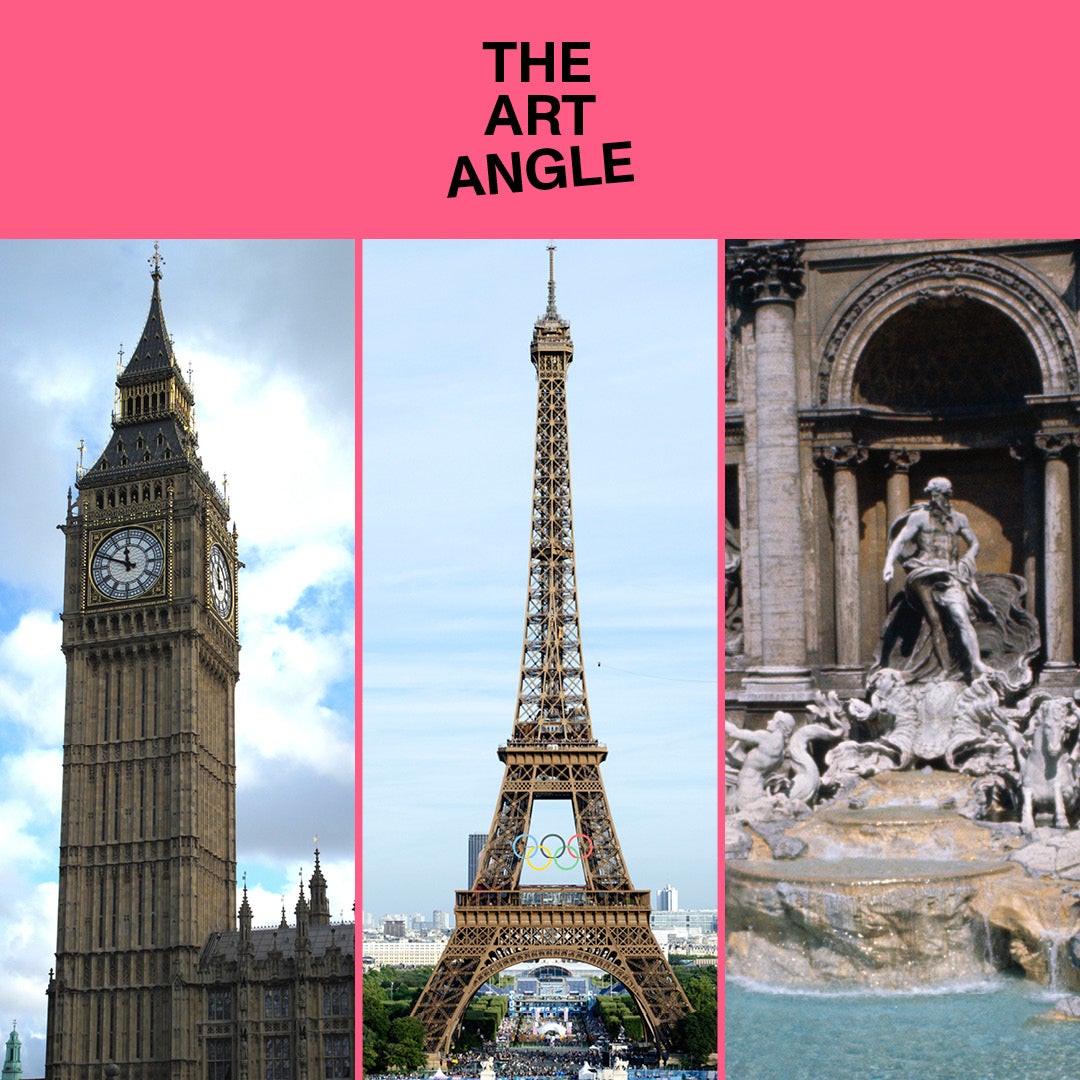
It has been a whirlwind few weeks for the art industry in Europe. First, Frieze London and Frieze Masters alighted in Regent’s Park, and a bevy of satellite fairs opened all over the British capital. There were big-league openings, auctions, and a great deal more.
Then the art crowd decamped for Paris for Art Basel, right after large-scale protests in the city and around France gave way to looting and police clashes. Student protesters shuttered the Louvre for a day, but the fair went ahead as planned, with some 200 exhibitors offering work at the Grand Palais. With another protest looming, the fair decided to cancel its weekend run, closing on Friday evening.
To talk about it all, Andrew Russeth hopped on The Art Angle with Margaret Carrigan, our London-based News Editor, and Katya Kazakina, our Art Detective columnist, who is currently based in Rome.