 Ask ChatGPT


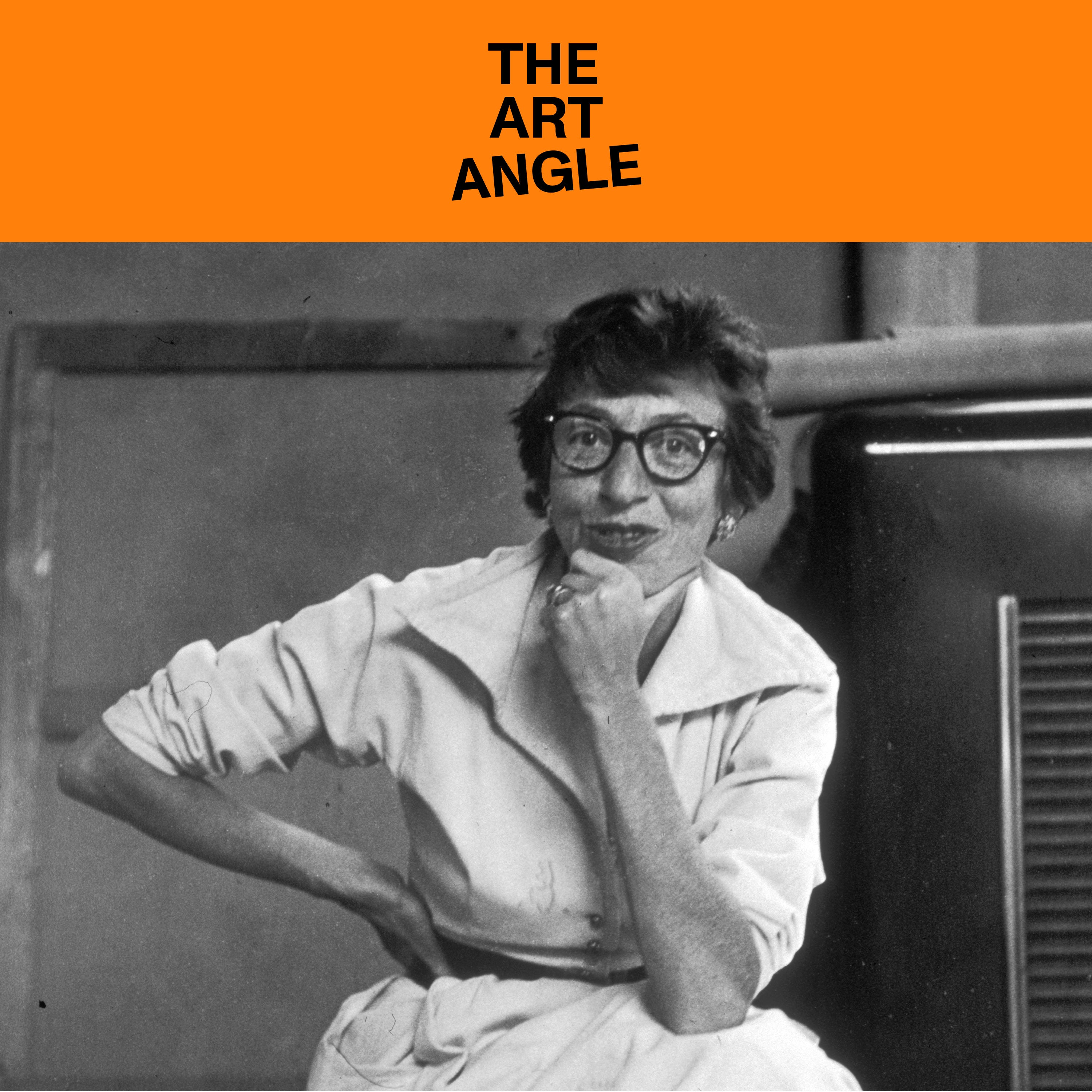
The Met’s “Krasner and Pollock, Past Continuous” and how Lee Krasner’s life and work function as a dialogue with Jackson Pollock’s—arguing for a “rebalancing” of her reputation and for reading their art together rather than as separate myths.
Mary Gabriel, art historian and author of Ninth Street Women (2018), about Lee Krasner and other women of Abstract Expressionism; she joins from the west coast of Ireland.
Krasner (born 1908, Brooklyn; Jewish immigrant family; father ran a fish/produce stand) “created herself” with little early encouragement; she was a fierce organizer and activist in Depression-era artist circles, later turning decisively to abstraction. Pollock’s fame long eclipsed her, but museums now show her variety and experimentation as central. Their partnership included managerial support, artistic exchange, and mutual influence, especially during their 1945 Long Island move.
Krasner at MoMA’s 1929 show (“like a bomb going off”); a National Academy of Design protest (tearing drapery off a model); WPA artist programs and union protests; Krasner introducing Clement Greenberg to Pollock; Pollock and Krasner working “in sync” in an East Hampton farmhouse; Pollock’s 1956 car crash and Krasner insisting Greenberg eulogize him.
Written by AI. May contain mistakes.
Learn about Lee Krasner's early involvement in abstract art.
“Before anyone even thought there was an abstract art movement in the United States, before that was even a possibility, she was among a group of maybe 10 people.”
Discover the significance of the Krasner and Pollock exhibition at the Met.
“I'm Ben Davis, and this is The Art Angle, a podcast from Artnet News.”
Meet Mary Gabriel, author of 'Ninth Street Women' and expert on Krasner.
“Having just returned from the exhibition, I was inspired to talk specifically about Lee Krasner, who she was, where she came from, and what makes her art unique and lasting.”
Explore Lee Krasner's background and her influence on abstract expressionism.
“Well, we're crossing time zones for this one.”
Understand the challenges Lee Krasner faced as a woman artist in the early 20th century.
“There was no one supporting them financially.”
Learn about Krasner's development and determination to create art.
“I mean, if there was an egg and out of it popped Lee Krasner and she says herself, I created myself.”
Discuss the impact of the Museum of Modern Art on Krasner and her contemporaries.
“Because she was known, or something you note in your book, is that she was known as someone who really spoke her mind.”
Examine the significance of the Works Progress Administration for artists like Krasner.
“And then, so when the Museum of Modern Art opened, I mean, these, you know, young men and women went there and actually got this unbelievable education.”
Learn about Krasner's activism and her role in the artist union.
“government has supported artists, you know, for moments in its history.”
Explore the dynamics of Krasner's relationship with Jackson Pollock.
“They occupied buildings, you know, demanding that their funding not be cut.”
Explore Lee Krasner's contributions to the art community and her relationship with Jackson Pollock.
“It was just that she went from that big group, which that sort of role she played lasted really until the start of the war, until 1941.”
Learn about Krasner's artistic evolution and her impact on abstract expressionism.
“And, you know, but she had the strength of character to say, okay, let's do it.”
Delve into the complex relationship between Lee Krasner and Jackson Pollock.
“Greenberg was absolutely on the fringe of any kind of art.”
Learn about Lee Krasner's first encounter with Jackson Pollock and her impact on his artistic journey.
“Again, this wasn't like the - There wasn't a gallery, yeah.”
Discover how Lee Krasner and Jackson Pollock influenced each other's artistic styles and careers.
“Yeah, well, that's what this Met show is going to be so great, because we'll be able to see.”
Explore the complex dynamics of Lee Krasner and Jackson Pollock's relationship, including their struggles and mutual support.
“I mean, he has expanded greatly, but hers was much smaller.”
Examine the lasting impact of Lee Krasner and Jackson Pollock as a couple on the art world, highlighting their joint contributions and challenges.
“And I think it's easy to dismiss them as, you know, kind of a who's afraid of Virginia wolf type situation.”
Explore how artistic couples navigate challenges and their creative processes.
“And in this case, he definitely didn't work in a vacuum, nor did she.”
Discuss the historical discrimination faced by female artists, particularly wives.
“You know, you're the little lady who has a hobby, you know, in her little room next to her sewing machine.”
Understand how Lee Krasner's unique style challenges public expectations.
“You know, I think you're absolutely right.”
Consider the importance of context in understanding artists' work and lives.
“Lastly, abstract expressionism in its day was just a quintessential object of formalist art criticism.”

Get the gist, explore an idea or ask about something said.
 Claude
On The Art Angle, what are the key points of this episode?
Searching your listeningAutomatic transcript. May contain errors.
0:01Lee Krasner: Before anyone even thought there was an abstract art movement in the United States, before that was even a possibility, she was among a group of maybe 10 people. You know, all of them we know now, de Kooning, Arshel Gorky, you know, those kind of people, Stuart Davis, who were hanging around with each other.
0:21Megan Fox: I'm Ben Davis, and this is The Art Angle, a podcast from Artnet News. One of the major museum events of the fall is called Krasner and Pollock, Past Continuous at the Metropolitan Museum of Art in New York. It brings together 120 artworks by two of the titans of 20th century American painting, Lee Krasner and Jackson Pollock. The two famously were a couple, and this show claims to be the first to look at their artworks specifically together as a dialogue. Jackson Pollock was and is known as the indispensable abstract expressionist. His expansive style of drip painting made by throwing paint across a canvas on the ground caught the media and the public's imagination in the early 1950s.
1:04Megan Fox: The sensation around these paintings remade U.S. art. For many years, Krasner's reputation was in his shadow. Pollock died tragically in a car crash in 1956. Krasner lived on until 1984. and the Met show illustrates how she continued to experiment. These days, museums are featuring Krasner's inventive and varied paintings as much as Pollock's. A rebalancing, this show seems bound to continue. The title of the show even comes from a collage painting by Krasner from the 1970s. Having just returned from the exhibition, I was inspired to talk specifically about Lee Krasner, who she was, where she came from, and what makes her art unique and lasting.
1:47Megan Fox: And so I reached out to the art historian, Mary Gabriel, author of the very engaging 2018 bestseller, Ninth Street Women, Lee Krasner, Elaine de Kooning, Grace Hartigan, Joan Mitchell, and Helen Frankenthaler, Five Painters and the Movement that Changed Modern Art. She joins me today. Mary Gabriel, thank you for joining me on Art Angle.
2:09Lee Krasner: Thank you so much for having me. I'm really thrilled to be here. And where are you calling me from? I'm in Ireland. I'm on the west coast of Ireland.
2:17Megan Fox: Phenomenal, phenomenal. Well, we're crossing time zones for this one. And I have right here my review copy of Ninth Street Women, which begins actually with the story of Lee Krasner. It's the very first part of the story. The first chapter is called Lena Lenore Lee. So actually, why did you begin this book about the women of abstract expressionism with her?
2:46Lee Krasner: Because it all starts with Lee. In fact, one of her friends in Long Island at the end of her life said, you know, at the beginning there was Lee. And that's really, that's really the case. The book, you know, is structured so that I'm talking about five artists and Lee was the elder, the elder statesperson of the art movement. Born in 1908, right? 1908, right. And she, you know, at the beginning, before anyone even thought there was an abstract art movement in the United States, before that was even a possibility, she was among a group of maybe 10 people. You know, all of them we know now, de Kooning, Arshel Gorky, you know, those kind of people, Stuart Davis, who were hanging around with each other and basically just there as sounding boards to each other, offering moral support in an absolute void because there was no one else paying attention to them.
3:37There was no one helping them.
3:39Lee Krasner: There was no one supporting them financially. There was just the desire to do something on a canvas that nobody had done before. So they were talking to each other.
3:47Megan Fox: Yeah, it was a pretty rarefied priesthood, and she was the one woman in that order, I guess, or that sect.
3:57Lee Krasner: There were others. I know that's really the way it's come down. And it is true to a great extent. But there were others like Mercedes Matter was right in there too. But kind of in the commitment to art level, Lee was in it heart and soul as much as these guys were, the big guys of the movement.
4:20Megan Fox: And it was a pretty marginal thing to be an artist in general, even more marginal to be a woman practicing art. What is Lee Krasner's origin story?
4:30Lee Krasner: That's what's so amazing, too. I mean, if there was an egg and out of it popped Lee Krasner and she says herself, I created myself. There was nothing in her family background that would have indicated the Krasner line was going to produce a great artist. she had no encouragement. She said she didn't even know when she was a kid what the word art meant. But by the time she was 13, she was already committed to it. I mean, her first, I guess in those days, people had to say when they went to high school, I want to follow a certain path. And her path was this thing called art. And from the age of 13 until she died in 1983 or 1984.
5:11Lee Krasner: That was, that was her life. And so, yeah, she had absolutely no training, no, you know, no incentive beyond this bizarre desire to create.
5:25Megan Fox: Jewish immigrant background from, from Russia, from Russia and out in Brooklyn. Is that right?
5:32Lee Krasner: Brooklyn. Right. Yeah. Her father had a fish and produce stand. And I think she was the first of the children to be born in the States.
5:43Megan Fox: And maybe it's that sort of hardscrabble background that gave her the kind of strength to make her own way. Because she was known, or something you note in your book, is that she was known as someone who really spoke her mind. You have a quote from one of her teachers from early on, a note about her that says, this student is always a bother. She insists on having it her own way.
6:07Lee Krasner: Yeah, yeah, absolutely. I mean, she could have done anything and we would have probably known about Lee Krasner, but she chose art as that's why we're talking about her in this context, but she was one toughie. And, and I think, you know, if she had been anything less,
6:23Jackson Pollock: any less strong, she wouldn't have made it because, you know, as you say, to be a man, to be a male artist in the 20s and 30s and 40s, you know, when very few people thought of Americans as artists, if you didn't have a European connection during the Depression, when, you know,
6:42Lee Krasner: the last thing anyone was thinking about is a career in art. It was such a, literally an abstract concept. And then to be a modern artist, to be a, you know, an abstract artist, I mean, And the deck was entirely stacked against her and all of her friends. So, yeah, the fact that she was the strong, fierce warrior that she was, you know, pulled her through.
7:06Andrew Goldstein: And then when she met Pollack, pulled him through.
7:09Megan Fox: So that's the other piece of table setting I wanted to do is the U.S. art world in this time period is 100 years ago, literally. Yeah. When she's just stepping into it, is a backwater. I mean, and sort of knows, thinks of itself as a backwater. Like the United States just doesn't have an art scene. Art is viewed, particularly modern art, is viewed as this foreign entity. I mean, there's armory shows in the 1910s that scandalized the American public. And modern art was just a very, just like an alien object. And to be into it was like an extreme niche interest, right? She's very influenced by the Museum of Modern Art opened in 1929, and that's like a big revelation for her, correct?
7:53Lee Krasner: That's for her and for all of them. That was like the graduate school for all of these people. Because prior to that, the only thing they had to go by was the Armory Show in 1914. Then some kind of art magazines, but they were in French and in black and white. And so, you know, what are you going to do?
8:11Megan Fox: It must seem very exotic.
8:12Lee Krasner: It definitely was.
8:15Andrew Goldstein: And then, so when the Museum of Modern Art opened, I mean, these, you know, young men and women went there and actually got this unbelievable education. And the director, Alfred Barr, I think on a certain level, he knew what he was doing was so radical that he had to rush the programs through, you know, one show after another quickly.
8:37Lee Krasner: Yeah. So as not to really alarm the patrons, the people who were footing the bill for the museum. To keep them off balance? Exactly. And he was, because he was shoving some very radical stuff, you know, along this pipeline of art in New York. And these artists were absorbing it.
8:53Andrew Goldstein: And so once they absorbed it, then for any artist, the question is, what do I do? You know, where do I go? And this little group started, you know, trying to figure that out.
9:03Megan Fox: Oh, I love the story in your book about how she goes to the 1929 Moma's show, which to be for people, it's not the moment of today. It was like a rental. It was a rental space. And, and a fairly like, yeah, again, neat, a niche and like an exotic thing. She saw that show. She says it was like a bomb going off. Nothing hit me harder until I saw Pollock's work. And she goes back to art school, and they do kind of a protest performance kind of.
9:37Lee Krasner: Yeah, yeah, because it was a classical school, the National Academy of Design, I think it was called. And, you know, they had a model, you know, posed as it would have been if we were a Greek sculptor, you know, centuries before doing it.
9:50Jackson Pollock: And these kids had just seen, you know, the wildest art they had ever seen in person, which is so critical. You know, it's one thing to look at it in a book. It's another thing to be face to face with it. And they went and tore the, you know, the drapery off the model, put clothes on the model, which was radical. And the teachers stormed out. I mean, this was literally a mini revolution.
10:11Megan Fox: It's amazing. It's amazing. And yeah, that happens in 1929. Like really, I guess, speaking of revolution, right on the cusp of the Great Crash. And she is still discovering herself when the bottom falls out of the U.S. economy. And is one of those artists that survived because of the Works Progress Administration's artist programs.
10:37Lee Krasner: And that is so amazing when you think about it. I mean, the U.S. government has supported artists, you know, for moments in its history.
10:46Jackson Pollock: And this was the most important. If that moment when Roosevelt provided funding so that men and women on an equal basis could get the same pay to make art.
10:59Lee Krasner: I mean, it was wonderful because not only did it provide artists in New York, let's say, with a paycheck and then a community to not just a paycheck, but almost more important. they got to meet people they wouldn't have, you know, other artists, so that this little nucleus of 10 people grew into 20, 30, 40, 50. But the other thing is, is that it created an appetite for art, because suddenly, you know, art was worthy of federal investment. And so people who might not have paid attention to American artists, well, for one, nothing else was happening because there was a depression. So if there was free entertainment, courtesy of the federal government, people would go see it.
11:39Andrew Goldstein: And so it really, it was a birthing moment for the whole art movement in the United States. And to think that the U.S. government was responsible was really remarkable and wonderful.
11:50Megan Fox: Yeah. You talk about how her very first art job was like drawing fossils for this kind of make work thing. And then working on murals, which people always talk about how the scale of mural making that goes on to influence the scale of abstract expressionism. But I was also just really struck in the book as a chapter of her life I didn't know about about her role in the artist union. So there is out of this moment of when artists suddenly conceive of themselves as not just dilettantes but actually workers of something to contribute. They start organizing around these government assistant programs.
12:36Megan Fox: And she was right at the center of that. People looked to her as a central organizer in the artist union, correct?
12:42Lee Krasner: Yeah, yeah, yeah. A big wheel, one of them called her. Yeah, but I mean, it makes sense when you think about her personality. You know, she's not going to sit quietly on the sidelines if she sees that there's work to be done. And the other thing about Lee that's really important is she was a real rescuer. You know, if there were people in need, not that she was a touchy-feely kind of nurse type, but if there were people in need, she was going to fight for them if she thought their cause was worthy. And so here was a whole community herself among them, these artists who were in need. And so she got right in there and she was an organizer of protests.
13:17Lee Krasner: And these protests got kind of hairy at times, you know. You know, these artists were thrown in jail. They occupied buildings, you know, demanding that their funding not be cut. And they made it into a performance piece.
13:29Jackson Pollock: There was that one episode where they all show up in a court, you know, and start, instead of saying their actual names, they identify themselves as the names of famous artists.
13:40Lee Krasner: And, you know, that's a hilarious scene and the judge finally catches on and throws them all out with a warning.
13:47Megan Fox: I think she said her name was Mary Cassatt, right? Yeah, Mary Cassatt, yeah, yeah.
13:51Lee Krasner: But, yeah, she said there weren't many women to choose from, so she chose Mary Cassatt. But she was an activist. And I think that, you know, she remained an activist her whole life.
14:02Andrew Goldstein: It was just that she went from that big group, which that sort of role she played lasted really until the start of the war, until 1941.
14:13Jackson Pollock: And then her focus became a very small group, which was herself and her future husband, Jackson Pollock.
14:21Megan Fox: Well, you know, I was reading it and you talk about how, you know, she always got put on the committees. People would be like, I don't really, the guys, I don't really want to do that. He's the one to do the committee work. And yeah, she was really doing the nitty gritty of organizing. And this is something that I think happened and happens a lot to women. They put it in a kind of like, we're doing, you're doing the chore work. and I just I think about that I guess we'll talk about it a little later but when it comes to Jackson Pollock and her relationship with him and how she kind of becomes his doing his like professional his manager essentially
15:04Andrew Goldstein: well yeah you know it's funny because
15:06Lee Krasner: it's interesting you should say that about when the guys would say Gorky would say man the barricades and you know we'll have Lee Krasner organize it you know he's in for the drama she's in for the work and I mean that's her
15:19Andrew Goldstein: whole life and that's how she approaches her art too she's not in it for the career, the spotlight the fame, she's in it for the work you know that's what she's a very pragmatic individual whether it's on an artistic level or you know in this instance where these artists are doing all kinds of crazy protests so that's her you know that's who she is and I think that I think that she I don't think that that's a negative in any way. You know, I think that's absolutely a positive for her. I mean, that's one of her strengths. And so she used it however she could for whoever she could, including herself later.
16:00Megan Fox: When Krasner met Jackson Pollock in 1942, is that right?
16:05Andrew Goldstein: 41 they met.
16:06Megan Fox: In 41 they met. She was actually a little bit better known than he was. You talk about how, I mean, she was, people often described her as one of the most talented artists in the room, like right from the get-go. Yeah. Like saying, you know, like people meeting her and being saying, this is the student, you have to have a scholarship to work with Hans Hoffman. Yeah. How did her early style develop in this period, you know, the pre-abstruct expressionist period?
16:37Andrew Goldstein: Yeah. When you think about, okay, let's say she started studying art when she was 13. By the time she went to Hoffman's school, she was…
16:45Megan Fox: Hans Hoffman, the guru of… He's a European who comes with this European pedigree, and he's the guru of abstract painting.
16:56Andrew Goldstein: Right. He had a school in Europe, in Paris, and in Munich. Then he opens his…
17:01Jackson Pollock: He gets kind of locked out of Germany, and he opens a school in New York. And he brings the Europe that they saw in the museum that they read about in French magazines to a studio on 8th Street and says, here are the secrets I'll teach you. And these people were just wildly enthusiastic. And he was an excellent teacher.
17:21Andrew Goldstein: So by the time Lee joined, I think it was really late, like 37 that she started studying with him, 1937. So she was 29 years old.
17:30Jackson Pollock: by then she'd had a full classical training in art you know working with models working models as in plaster casts and stuff working from human models she'd had that whole training and she walked into his studio and he literally tore it up he you know one of the famous episodes was she had done a drawing and you know as an art student when you do a drawing you know you're you're practically sweating while you're doing it you're it's so intense because you want to do it write. Not write as in correct necessarily, but write the way you want it to look. And so she had done this thing, her first drawing at Hans Hoffman School, and he sat down at her easel, tore the bottom of it off, and put that torn piece on the top as if to say, you know, we're going to start from scratch.
18:17Andrew Goldstein: And, you know, but she had the strength of character to say, okay, let's do it. And so very quickly she learned, he basically taught cubism. And so basically, and so she very quickly learned how to translate her work through a cubist lens. And her drawings were unbelievably strong. It took a little bit longer for her paintings, but soon, let's say maybe three years or so, she was doing kind of Miro-type paintings, you know, very colorful, but beautiful, you know, absolutely 100 % right on, beautiful art. It wasn't earth-shattering, you know, it wasn't revolutionary, but it was damn good.
19:01Jackson Pollock: And that's where they all were.
19:03Andrew Goldstein: At that time, de Kooning's stuff was, he was doing these kind of strange, mournful-looking men. And Gorky was still struggling around, too.
19:12Jackson Pollock: So she wasn't at a lower level than any of them. They had all absorbed their European lessons, and now they were ready to go that next step.
19:22Megan Fox: Well, yeah, the scale, I mean, Jackson Pollock does, you know, his work is a breakthrough for a lot of them in terms of the sense of his. Not for a long time, yeah. But, yes, not for a long time. But, on the other hand, Hans Hoffman, you paraphrase him in the book saying, Jackson Pollock was not my student. He was the student of my student, Lee Krasner. Right. So that lineage passes through her. Right. She joins the American Abstract Artist Group, which is a small priesthood, in 1940. How much of her move into that, the government art programs were winding down because of the war. and also there's a political aspect she was disillusioned a little bit with the political activity she'd been a part of and this is a very common path for those abstract artists actually because the um the uh the communist party which was very influential in the artists union insisted on social realism as the only gospel and there was just a lot of political debate i mean these were very political times yeah very scarring bruising debates how much of her turn to just full abstraction was connected to that background.
20:32Andrew Goldstein: It was absolutely connected to that because she was of the mind, which, you know, the abstract artists were that social realism or
20:42Jackson Pollock: socialist realism, you know, painting these, you know, factory workers or laborers or whatever, was just propaganda. That you could be political without having to depict anything representational. Just the act of creating an abstract painting in that environment was a revolutionary statement, that I as an individual have something to say. So that really did, she soured entirely on the whole Artist Union, John Reed Club movement and went to the American Abstract Artists, where a lot of Hoffman students were. And from that moment on, it was abstraction for her. I mean, she had learned abstraction at Hoffman's.
21:24Jackson Pollock: She was definitely his disciple. But there was no turning back once she left that other, that broader group.
21:31Megan Fox: There's a little bit of a pivot point in that they were all drawn to Leon Trotsky, who is the dissident, the dissident communist exiled. And he was made a big play to the artist to say, you know, actually, revolution is on the side of imagination and not on the side of painting, painting reality, but creating with the imagination. Yeah, that's so fascinating.
21:59Andrew Goldstein: Yeah, isn't it? It's really, there are these markers, these influencers or kind of philosophers along the way. Trotsky was one at a pivotal moment, this artist named John Graham, who was a crackpot crazy man.
22:13Megan Fox: That's the first show where she meets Jackson Pollock. He's organized by this, yeah, like you said, interesting figure, a philosopher, a weirdo.
22:22Andrew Goldstein: I mean, everybody should know about him because his book was like a catechism for these artists, you know, saying, you know, my favorite line of his, if someone says to you, you know, they've just done an abstract painting and someone says to you, well, is that a horse or a house or a person? You say, no, it's a painting.
22:39Lee Krasner: I mean, that's just such a great line.
22:42Andrew Goldstein: And, you know, he talks about the values and he wouldn't speak to anyone if they made money off their painting. And, you know, he was their, you know, talk about guru. He was their guru.
22:51Jackson Pollock: I mean, Hoffman taught a certain kind of art and a certain lesson from early 19th century, early 20th century Europe. Graham taught this intermediary message, which was, you know, OK, this is where we go from here.
23:05Andrew Goldstein: And yeah, and Trotsky on political terms, he was the one to in her library until her death. She had a book by Trotsky, you know, so. Yeah.
23:15Jackson Pollock: And in fact, a letter that Trotsky wrote to the New York artist saying, you know, what you had referenced before. The path is not propagandized.
23:26Megan Fox: And then, of course, the other thing I took away from your book is those who know this history will know that in terms of producing its own intellectual theory, the big figures are really two major critics that you associate with abstract expressionism. Harold Rosenberg and Clement Greenberg, both of whom started out as Trotskyist intellectuals around the small magazine scene. And basically, Lee Krasner is pivotal to both actually introducing them to Hans Hoffman's work and turning them on to art and introducing them. You know, I think she introduced Greenberg to Pollock, if I'm not correct. Yes, she did.
24:09Andrew Goldstein: She did as a matter of fact. Well, Pollock, I think Greenberg saw Pollock's work at Peggy Guggenheim's. But yeah, I mean, to roll back up for a moment,
24:20Jackson Pollock: Lee met Harold when she was waiting tables at a club in the village. And the thing she remembered about him most was that he didn't tip. And this was during the Depression. So she was really angry, but not angry enough that she didn't hang around with him. So he gave her a really valuable lesson in politics. And that's where she learned about Trotsky from him. she then in turn gave him a really valuable lesson about art because he had so little to do. He dropped out of law school to become a poet. He said he was going to be the greatest writer since Dostoevsky.
24:52Lee Krasner: But obviously nobody was hiring Dostoevsky during the Depression. So what he did instead was paint, which was a little bit weird when you think about what he did with the rest of his life.
25:01Andrew Goldstein: And so he would go to drawing classes and things and he became part of Lee's circle. And then she introduced him to Hoffman in his school.
25:11Jackson Pollock: Greenberg was absolutely on the fringe of any kind of art. He had been a customs official and a failed poet. He was accused of plagiarizing the only poem he had ever published. And he wanted to be a great man in some way. It's just that he didn't know how yet. So he made his way into the art world after he met Lee at a party that a relative of Harold Rosenberg's had. Such was the society in those days that it was a giant web. And Lee said, you know, okay, I'll introduce you to some people. And she did. And she introduced him to Hoffman School. And that was really Greenberg's education. And from there, he always felt he then spoke the language of artists and felt really fluent in that language.
25:55Jackson Pollock: And in fact, in those days, you know, if there wasn't an American art scene, their newspapers and magazines didn't feel they needed an American art critic. So he had the feel to himself when he decided to write about art. I mean, nobody was doing it. And so he became the voice on American abstract art.
26:15Megan Fox: Yeah, and his exposure to Hoffman, she links him into this, and then he basically writes this philosophical narrative that allows American art, the kind of American art that this group was creating, to basically hypothesize itself as the direction that history was going. Because it really had this philosophical, almost political quality to their... And propagandistic. Yeah. She was a good salesman. I think we should get into her relationship with Jackson Pollock. It's the subject of this show. You have an op-ed in the New York Times about Lee Krasner and this show. In it, you quote the painter Charlotte Park.
27:01Megan Fox: Lee was her own woman before and after Pollock, but not during. What do you mean by that? How did the two meet? How did they affect each other?
27:09Andrew Goldstein: Yeah. Yeah, there was. She bookended his life. I mean, she lived so much longer than he did. He was on the scene for such a short time, you know, such is his impact that we think he's kind of is abstract expressionism.
27:22Jackson Pollock: But he was actually there for a very short time because his life was so short. They met in 41. They'd actually met before, but it was a drunken episode. Oh, yeah.
27:30Megan Fox: It's actually awful to read about. He just sounds like a real jerk.
27:33Jackson Pollock: Just a jerk.
27:34Lee Krasner: Total jerk. Charming. But so she met him in 41 because John Graham, who we were talking about a second ago, was having a show at a furniture store of really big French artists.
27:48Jackson Pollock: You know, Matisse, Brock, you know, people that, once again, you know, they'd only seen in the museum.
27:54Megan Fox: Isn't it a million gallery show? Yeah. Oh, I didn't realize there was a furniture store.
27:59Jackson Pollock: Yeah, it was a furniture store.
27:59Megan Fox: I guess that was the times it was. Exactly. Again, this wasn't like the - There wasn't a gallery, yeah.
28:05Andrew Goldstein: So he wanted to show eight Americans. And so Lee became one, and she knew all the other ones. It was de Kooning and Stuart Davis, I think, and de Kooning's girlfriend at the time, and a couple other people. And a guy named Pollock, who she didn't know. I mean, she knew them all because the circle was so small. So she, being Lee, not having a drop of fear in her bloodstream, she knocked on his door of his studio on 8th Street when she found out where he lived and invited herself in and saw these paintings. And she was absolutely floored by how good they were.
28:43Jackson Pollock: Because Lee at that time, I think it was Greenberg who actually said it, had the best eye for painting in the United States, aside from John Graham, who had organized the show. And she said that it was, she felt, she literally felt the earth move when she saw these paintings. And a lot of times, retrospectively, people have said, oh, that's not possible because he wasn't doing Pollock's. The stuff he was doing at that time was pretty fantastic. I mean, de Kooning was very rudimentary. You know, I mean, you could look at de Kooning's stuff and say, I've seen this before. And Lee's stuff too. I've seen this before.
29:18Jackson Pollock: And even Gorky's stuff.
29:20Andrew Goldstein: Pollock, even though it was not the Pollock we would come to know, was doing things that combined so many different elements. It was indigenous symbolism. It was surrealistic. It was French, you know, French kind of not French modernism, but kind of like a, you know, 18th century French stuff. He combined it all successfully in these incredible paintings that weren't about anything but the symbolism. And so she was really moved and floored.
29:54Jackson Pollock: And, you know, the rescue in her comes out and says, who do you know? Who do you hang around with? And at the time, he was a student of Thomas Hart Benton, who was, in Lee's mind, you know, the worst of the worst, because he was Mr. Social Realism, you know?
30:09Megan Fox: Yeah, doing big murals of, you know, wagon trains and cowboys.
30:14Andrew Goldstein: Yeah, but yeah, it just wasn't where she thought Pollock should be going. So she took him under her wing and said, I'm going to have you meet some people and let's get you going. And not too long after that, this mutual admiration they had, which he did have for her in his own Pollock ways,
30:35Jackson Pollock: that you're a damn good female painter.
30:38Lee Krasner: But, you know, coming from Jackson Pollock, who wasn't the most socially skilled individual in the world, that was something. And the evidence that he respected her was that she was the only one he would really talk to about his work.
30:52Jackson Pollock: You know, even Clement Greenberg, who later became a sounding board for him, said Pollock would talk to Lee about art and only talk about his art when Lee was in the room. So she was essential. She was eyes and ears that he needed to bounce his ideas off of and his work off of. So it started from there.
31:15Megan Fox: He does break through, becomes, you know, the Herald is America's Great Painter, kind of opens the space where all these other artists can be discovered. How did they influence each other? I mean, stylistically.
31:31Jackson Pollock: Yeah, well, that's what this Met show is going to be so great, because we'll be able to see.
31:37Andrew Goldstein: It's an interesting kind of dance they do.
31:40Lee Krasner: So Pollock was doing these sort of symbolic, you know, abstract paintings, still recognizable things.
31:48Jackson Pollock: And Lee was struggling to break free of what she'd learned from Hoffman and become more like Pollock. Not paint like him, but use the idea that what's inside you is what you should be painting. You don't have to look at something and paint that. So she started trying to work in that direction, but she just couldn't do it. She said she painted mud for three years. So he was making these advances and did so with her support. You talked about her being a manager. That's what she did. She signed the contracts, right?
32:23Megan Fox: Yep.
32:23Jackson Pollock: She made it possible for him to worry about nothing but what he was doing on campus. I mean, that was basically their deal. And in the meantime, she was struggling with her own. So then when they moved to, maybe we'll get back to what's happened in New York, but they moved to Long Island in 1945 after the war. And because Pollock was the minor attention that was coming his way, and it was still very minor. was way too much for him to handle. So the temptations of booze and hanging around at night, you know, roaming the streets, howling like a crazy person, you know, she was just interfering with his work.
33:04Jackson Pollock: So she thought to save him, she had to get him out of New York. So, and to save herself because she was spending all of her time babysitting him. So they moved to Long Island and it was there where she then broke through. And those paintings she did at that moment, If you look at a page and you didn't have Lee Krasner or Jackson Pollock underneath those paintings, you would say, who did what? You know, who did the first drips? Who did the first, you know, dribbles of paint? Because they were both doing that. She always said he broke through first in that sort of method. You know, maybe she was just being kind.
33:44Jackson Pollock: Maybe he did. Who knows? But because the years are the same. So you don't know, did this happen in November and that he did this? Did she do this in November and he did this in December? It's not clear. But the fact was they were working in sync at that moment because they were so close to each other. You know, they were in this crazy old farmhouse in the middle of nowhere because East Hampton in those days was not populated by artists. That's for sure. And they were working with each other, for each other, alongside each other. And it shows in their work. And it's really fascinating. they diverge after that but but just to get back for quickly to what you asked about Charlotte Park and the before and after yes I think what she was referring to is that
34:33Jackson Pollock: before Pollock Lee was an incredibly social animal you know she was in the middle of everything she was in the middle of the scene and during his life she had to become very focused on him and then her own work. So her world was much smaller. I mean, he has expanded greatly, but hers was much smaller. And then after he died, she could once again become this creature, this gregarious, you know, strong, incredibly... Explore herself, yeah.
35:03Andrew Goldstein: Yeah, explore herself, right? So I think that's what Charlotte was talking about. But I don't think it's entirely correct because that period when she was with Pollock, she was herself. I mean, she didn't do anything that she didn't want to do.
35:17Jackson Pollock: And, and I think she was often annoyed when people suggested that she was sacrificing herself. Yeah. In a certain way she was, but she never stopped being who she was. She never stopped her work. Yeah. I mean, I, it's,
35:30Megan Fox: it's, it's complicated because their relationship was not a happy one in many, many ways. I mean, was a drunk uh they're they were horrible to each other in many many ways um and but on the other hand i mean she really deeply believed in him and she she was a tough lady like there's a quote in your book where she's like yeah he took from me but he gave me a lot too and you know you can read that in different ways as as uh justifying a bad situation but also i think particularly for artist of that generation and for her she really took pride and it's like you know I am I am my own I am he is a great artist and I am a great artist alongside him and this is part of that
36:15Andrew Goldstein: and she really thought that there were two Jackson Pollock's she was living with one was Jackson Pollock the man
36:24Jackson Pollock: the very flawed impossible man the other was Jackson Pollock the artist who she thought was possibly one of the best artists, definitely that America had ever produced. And she really felt she needed to protect Batman from the other Pollock, who was in many ways out to destroy him. He had such a self-destructive streak.
36:44Megan Fox: He did. And I mean, I'm sure most people listening know, but he died very tragically in 1956. She was having an affair.
36:54Jackson Pollock: He was having an affair, yeah. He was having an affair,
36:56Megan Fox: and he was spiraling and she goes to Europe to get away from that. He's writing him very plaintive letters, talking to him about the arc she's seeing, but also just almost begging for a response from him. And he dies in a car crash in 56. She gets the message from Clement Greenberg, has to come back. It's a major moment. In the show at the Met, they have all the telegrams from artists and supporters to her.
37:33Megan Fox: And it's very striking to me. He died in the car with two women, including Edith Metzger, who also died. And at his funeral, she was insisting that Clement Greenberg give the eulogy. and Clement Greenberg said, well, he killed this woman. I must mention that. And she said, I don't want that to happen, but it's you, Clement, because you're the great art critic or no one. And so no one spoke at his funeral.
38:07Andrew Goldstein: Yeah, isn't that amazing? But, you know, this idea that their marriage was unhappy, I think that, I don't know if I agree with that, I mean, I think it was really difficult. You know, she said, there's a great quote. She says, yeah, it was bad. Big deal. I loved him. He loved me. I think that she was a difficult person too. And I really think that there were moments there. There was one anecdote she tells about when they were sitting on the back step of their house, you know, in East Hampton, looking out over the water and not talking.
38:50Jackson Pollock: just sitting there. And she said, she really cherished moments like that. She actually almost banked them against what she knew were going to be the volatile, you know, the crazy, the fights, the screaming, the madness. She said, those moments, you know, were what I cherished and they pulled me through and they made it worthwhile. And I think they had, I think they, I mean, I think there was a much more of a partnership there than we in retrospect
39:21Andrew Goldstein: recognize. And I think this med show will show that, you know, he was a mess. She was a mess in many ways, but together they kind of worked it out. You know, I think they were, they were both screamers, you know, they were both fighters, but that's who they were, you know, and they were both artists, and they both created, and they created works that together, in that nutty little shell of that Victorian house and barn, changed the history of art. And I think it's easy to dismiss them as, you know, kind of a who's afraid of Virginia wolf type situation. But, you know, people who knew him, talk about him as being really gentle and loving.
40:04Andrew Goldstein: And I just was reading an anecdote last night from a letter that's never been published anywhere about from an art gallery and a woman who was an art dealer and she said
40:12Jackson Pollock: Pollock really knew he you know screwed up and wanted to apologize to Lee and he knew that she liked a certain pot he saw at a store and so he was looking everywhere for that pot because he really needed to make it up to her he loved her he knew what she did for him and she loved him so
40:30Megan Fox: I think we have to keep that in mind too yeah well in some ways I don't I mean I think you get too bogged down in the biographical stuff too because they're people of their time and you know the past is another country and uh and uh it's certainly you know their creative influence on each other is certainly part of the story and the the their relationship is part of the myth but i mean um in a certain sense uh i think you need to uh you know understand the history but but but also like put it in its perspective. You, in this, in this op-ed for the New York Times, you say there are people who criticize this show for putting them together.
41:16Megan Fox: Now, I think you actually might argue that at this point in art history, this is more the Mets excuse to show Jackson Pollock than it is their excuse to show Lee Krasner. I don't think so. You don't think so? Okay, well, go ahead. No.
41:28Lee Krasner: All right. I really don't think so. I think the interest in Lee Krasner is so great.
41:32Megan Fox: Well, that's what I mean. I think the Lee interest in her is so great at this point that it almost doesn't eclipse him. But, I mean, I think it's almost like they would have to have her in order to show him.
41:44Andrew Goldstein: And I think it's really only right. And, you know, I think artistic couples are really fascinating because we have – I mean, Jackson Pollock is a prime example. We have this romantic idea of an artist going off alone and working with their demons and struggling with the canvas and all that's true. But they don't work in a vacuum. You know, there are people around them. And in this case, he definitely didn't work in a vacuum, nor did she. And I think to see them together, it's really important for us to understand their work that way. That's how they live. That's how they create it. And I think it's important for other artists to see because there are a lot of artist couples out there who are having a hard time.
42:24Jackson Pollock: It's difficult being an artist and it's difficult being two artists in one household because there are so many ego problems involved and there's so much financial struggle and the hardship is great.
42:35Andrew Goldstein: You know, you want it to be all nurturing and creative, but it's not. It's really damn hard. So I think to see this show and to see a celebration of an artistic couple who went through hell and came out the other side, you know, with a few bruises, is really going to be fun and important and really educational and enriching. You do talk about in the op-ed the historical prejudices against married female artists.
43:06Megan Fox: What do you mean by that phrase?
43:08Lee Krasner: Well, it's just the oldest story in the book.
43:09Jackson Pollock: Germaine Greer wrote this unbelievable book called The Obstacle Race, which tells the history of women in art. And she devotes much of it to this story of there was a great artist, but she was married to this other great artist. So no one ever knew about her. And the thing is, is that to be a wife, you know, the name wife, the word wife implies lesser, you know, implies helpmate, implies, you know, the person kind of, you know, behind the scenes, keeping things going.
43:39Andrew Goldstein: And I think that that has haunted women in art, you know, literally for centuries. I mean, it is literally for centuries. It's been, it's bad to be a woman. It's worse to be a wife. You know, if you're a wife, you are the little lady who paints on the side when you're not
43:57Jackson Pollock: cooking. You know, you're the little lady who has a hobby, you know, in her little room next to her sewing machine. I mean, there's that famous headline of Frida Kahlo when Diego Rivera is painting his Detroit
44:09Megan Fox: industry murals. It's the headline for the paper that says, wife of artists also paints.
44:14Lee Krasner: Yeah, exactly. Well, there was a show in 1951, Sidney Janis, who was arguably the biggest dealer at that time, had a show of American and European husbands and wives.
44:25Jackson Pollock: But he called the show Man and Wife, Artists, Man and Wife, not Husband and Wife or not Man and Woman, but Man and Wife.
44:37Lee Krasner: And Lee Krasner and Lane de Kooning were in it with Pollock and Willem de Kooning. And, you know, what was that all about?
44:44Jackson Pollock: I mean, the cynic in me says it was that Janice was trying to sell the men's work by making them seem better, you know, because automatically people coming in are going to say, well, the wife is a real, you know, which they did.
44:55Lee Krasner: I mean, reviews said, oh, yeah, she's trying to paint like Pollock. You know, no, she was painting like Lee Krasner.
45:01Megan Fox: So I have two more questions that are sort of on the place of this art in history. So one is, yes, there's certainly historical discrimination against Lee Krasner, although recently there's actually much more fascination in these, you know, partly triggered by your book, Ninth Street Women, the story of these female artists from that time. But I think about Pollock is, and one of the things that led him to become such a media sensation is that he just has this very signature method, the drip method. And that produced a space where, you know, the other abstract expression is Mark Rothko was the squares guy and Barnett Newman was the zips guy.
45:43Megan Fox: And a thing that you see when you look at Lee Krasner is that she doesn't really have that thing. I mean, I think you can tell what her thing is. So how much do you think her place in art history, good or bad, relates to that fact that she's a little more of a slippery artist?
46:02Andrew Goldstein: You know, I think you're absolutely right. But I just find, I mean, as an artist, okay, so Pollock was the drip guy. But toward the end of his life, he didn't want to be the drip guy.
46:12Megan Fox: He started doing paint.
46:14Andrew Goldstein: Yeah, it killed him. He started doing paintings that he was doing in the early 40s when he met Lee. He was going back to those. But people didn't want that. So if you want to satisfy the public, you give them what they want. But no artist, no real artist just wants to satisfy the public.
46:32Jackson Pollock: They want to satisfy themselves. They have a compulsion to create. And the public be damned is what the headline should be. And so Lee, bless her heart, wasn't creating for a public. She was creating for herself. She wasn't thinking she was going to get a show because she wasn't going to get a show.
46:52Andrew Goldstein: You know, Pollock was the one who was showing. So she just did what she wanted to do and followed whatever path, wherever it took her. And I think that it is harder for the public to digest because they like it wrapped in a neat little bow. But art doesn't come that way. And, you know, if you look at, I mean, look at Andy Warhol. You know, we only think of him as doing the Maryland's and things, but my God, his range was unbelievably diverse, including completely abstract paintings toward the end of his life.
47:19Jackson Pollock: So I think it's a public problem, not an artist problem that Lee did. You know, I don't think she should be condemned for changing her style. And I don't think it's a weakness on her part. I think she's an actual, true artist who has a passion for creating. And when she finished one series, she went on to a new one.
47:42Megan Fox: Lastly, abstract expressionism in its day was just a quintessential object of formalist art criticism. You know, it is the object. And you could argue how much it's really formalist if you've got Clement Greenberg there putting it at the end, telling this big story about how it's the end of you know all of history was leading up to this but really i mean our criticism from that day is just all about you know pure experience like these narratives of walking through how the color over here is balanced against this one and a lot of like emotional words you know i fell on my i wanted to fall on the floor and and and worship the painting and stuff like that um and in some ways yeah very much against uh some of this biographical uh reading and today's style is very like this show um like like most contemporary art shows really is sort of semi-autobiography is semi-biographical it's like half tells like you're saying it puts them in their context tells the story of their art through their relationship and the relationship through their art what do you think she would have made of that oh i think
48:50Andrew Goldstein: she would have been all for it because she said her work was autobiographical, if anyone cared to decipher it. You know, these people were just normal individuals. You know, they were nice. I mean, they were just anybody you could. They were so largely working class Americans struggling with the same things everybody does, going to the grocery store. There was nothing about them that reflected what was written about them.
49:17Lee Krasner: You know, the way they were written about was alien to how they lived. And in fact, we come back to Harold Rosenberg and Clement Greenberg on that. Greenberg wrote the formalist version. Harold Rosenberg warned very early on against that. He said, you take this art out of context and don't describe who these people were and the fact that they had just been through the depression and the war and no one's going to ever understand
49:41Jackson Pollock: their work truly. And I think that that's where we are now. We finally caught up with Harold Rosenberg's idea that there's a story that these artists are telling, and it may not be something you can read on the canvas.
49:55Andrew Goldstein: But once you learn about their lives and what they were doing, you come back to that canvas. And it's such a much richer experience. And I mean, for myself, if I go into a museum and I see Ali Krasner now, you know, it's a dialogue now instead of
50:11Jackson Pollock: a one-way ticket. You know, she's talking to me from the, the canvas is speaking to me.
50:15Andrew Goldstein: Now I'm having an exchange with her. And that truly is what it's all about.
50:20Megan Fox: Well, Mary Gabrielle, thank you so much for talking to me. It's a fantastic story. And I'm really happy to have you here to talk about it.
50:29Lee Krasner: Well, I'm so thrilled to talk about it. And I'm thrilled to be able to talk about it on the eve of this Met show, which is really going to be great.
50:35Megan Fox: Yes, yes. People should go see the Met show. It will be open when this comes out. When this comes out. That's it for this week's episode. The Art Angle is produced by Sonia Manoli with contributions from Ben Davis and Caroline Goldstein. Thanks for listening and for watching. I will see you next week.
51:10Thank you.
51:44Thank you.
One of the major museum events of the fall is called "Krasner and Pollock, Past Continuous," at the Metropolitan Museum of Art in New York. It brings together 120 artworks by two of the titans of 20th-century American painting: Lee Krasner and Jackson Pollock. The two famously were a couple, and this show claims to be the first to look at their artworks specifically together as a dialogue.
Jackson Pollock was, and is, known as the indispensable abstract expressionist. His expansive style of drip painting, made by throwing paint across a canvas on the ground, caught the media and the public's imagination in the early 1950s. The sensation around these paintings remade U.S. art. For many years, Krasner's reputation was in his shadow. Pollock died tragically in a car crash in 1956. Krasner lived on until 1984, and the Met show illustrates how she continued to experiment.
These days, museums are featuring Krasner's inventive and varied paintings as much as Pollock's. A rebalancing, this show seems bound to continue. The title of the show even comes from a collage painting by Krasner from the 1970s. Having just returned from the exhibition, Ben Davis was inspired to talk specifically about Lee Krasner, who she was, where she came from, and what makes her art unique and lasting. And so we reached out to the art historian Mary Gabriel, author of the very engaging 2018 bestseller, Ninth Street Women: Lee Krasner, Elaine de Kooning, Grace Hartigan, Joan Mitchell, and Helen Frankenthaler, Five Painters and the Movement That Changed Modern Art.