 Ask ChatGPT

History and future of website/net art, from mid-1990s experiments and activist net culture through institutional canonization, dot-com/9-11 shifts, digital preservation challenges, and later commercial models (URL sales and NFTs).
Michael Connor, longtime director of Rhizome (nonprofit digital art memory institution). Rhizome preserves/distributes digital art history and supports commissions; works without a physical space, often via partnerships and New Museum events.
Early web art treated HTML pages as cinematic and community-forming; artists were often politically savvy, resisting Silicon Valley “California ideology.” Institutions pulled back after dot-com bust due to presentation/maintenance problems. Preservation is central because software is “obsoleted,” requiring emulation/containerization and dynamic web archiving.
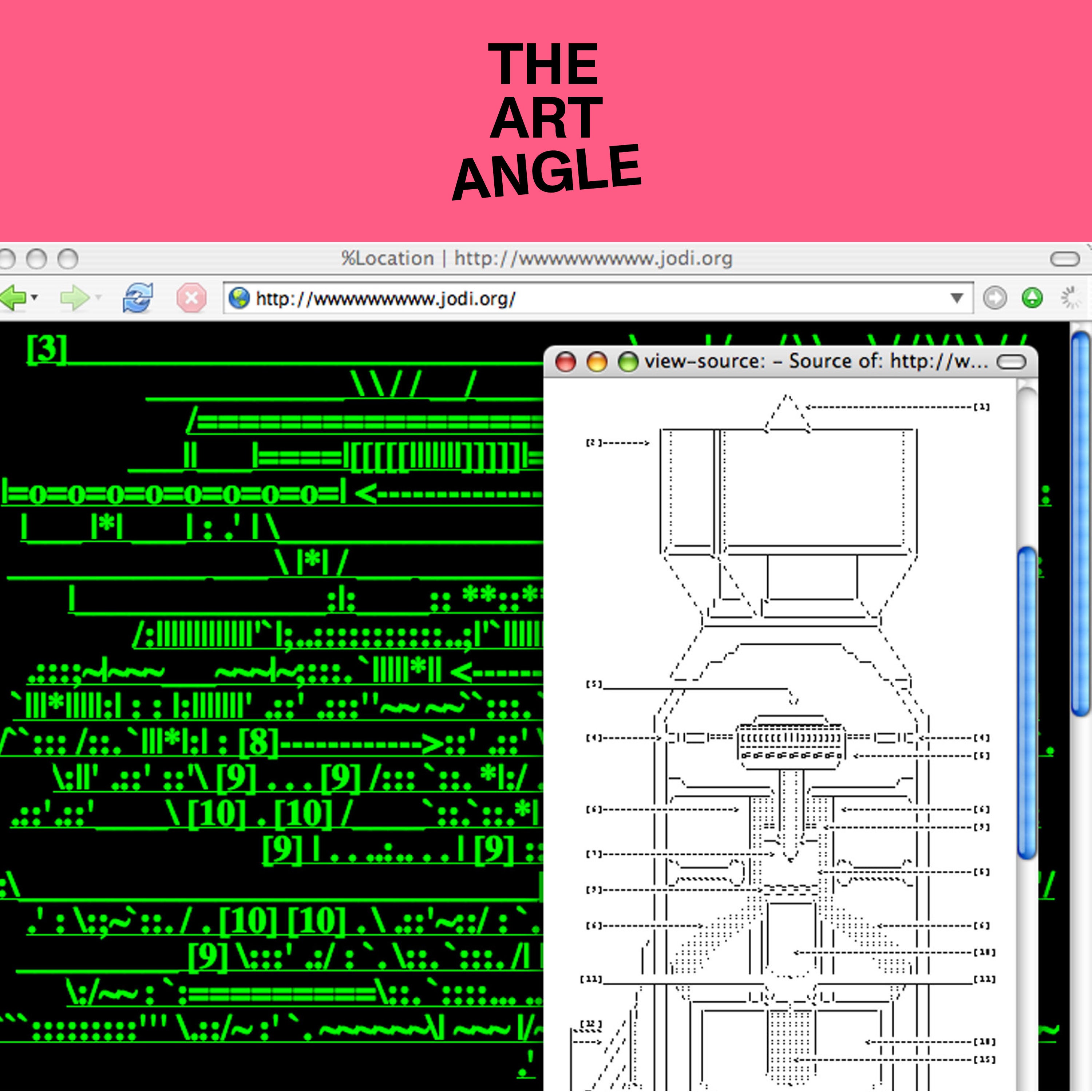
Janet Cardiff’s Eyes of Laura; Jody.org (hidden atomic-bomb diagram); Heath Bunting’s Project X chalk URLs; The Thing/The Dungeon (Julia Scher); Ricardo Dominguez/Electronic Disturbance Theater Floodnet (DDoS-like virtual sit-in); Olya Lealina My Boyfriend Came Back from the War; Documenta 10 and Whitney Biennial internet art lounges; Raphael Rosendahl/Neen URL sales; Kevin McCoy & Anil Dash’s early blockchain prototype (2014) tied to NFT origins.
Written by AI. May contain mistakes.
Exploration of Rhizome.org's founding and its role in digital art history.
“It's not a new question, but it's far from a settled question.”
Discussion with Michael Connor about Rhizome's mission, history, and art preservation.
“I wanted to dig in with him to get the history of art online and all its chaos, and to ask him where he thinks it might be going next.”
Analyzing the transformation of the internet and its impact on digital art in the 90s.
“We also have a kind of longtime affiliation with the new museum where we do many of our events here in New York.”
Understanding the excitement around the webpage as an artistic medium in the 90s.
“websites as art, that now has 30 years of history, that Rhizome has taken upon itself to be the ambassador for, but has this interesting relationship to the institutions of the art world.”
Exploring the creative experimentation and the underground culture of early web art.
“So this kind of spirit continued with the web a little bit, but the web was a little more public.”
Examining the political dimension of early internet art and its activist roots.
“Like that is glitch art sort of comes out of this moment where it's just like there are these moments the internet breaks, but they have this kind of artistic energy of their own.”
Discussing the influence of Eastern European artists and geopolitical shifts on net art.
“So it could be like the Mexican president's homepage.”
Explore the connection between early net art and the geopolitical changes in Eastern Europe post-Soviet Union.
“A lot of the early net art has a connection to Eastern Europe, right?”
Discuss how the dot-com boom and bust affected the perception and visibility of internet art.
“You know, there was this moment when the art world was like, this is the new thing.”
Analyze how the mainstreaming of the internet changed the nature of digital art and its audience.
“I think that is, in a way, the same tendency.”
Delve into the challenges of curating and defining digital art in today's internet landscape.
“I mean, I guess I think of the jogging, you know, do you know what I'm talking about?”
Examine the importance of preserving digital art amidst rapidly changing technology.
“I think you really saw that just as a parenthetical at the gala that you threw, where just the number of digital artists there and people talking about the importance of preservation was very striking to me.”
Learn about the strategies for preserving dynamic internet art and the role of URLs.
“When something is running on a dynamic website with YouTube embeds, we create a stable, interactive copy of that so that when YouTube changes, the website doesn't break.”
Explore the evolution of the commercial aspect of web art and URL sales.
“They were making what they called single serving websites.”
Understand the rise of NFTs and their impact on digital art ownership.
“Well, back in 2014, we were working on the next edition of our annual conference, 7 on 7.”
Discuss the speculative market for digital art and its consequences.
“And then it kind of crashes with everything else.”
Examine the potential for collaboration between digital art and traditional galleries.
“because then we start to buy it into something that can become overhyped very easily.”

Get the gist, explore an idea or ask about something said.
 Claude
On The Art Angle, what are the key points of this episode?
Searching your listeningAutomatic transcript. May contain errors.
0:00People were really excited about the webpage as sort of an artistic medium in some ways, as a kind of extension of a sort of cinematic experience, but also as like a kind of community formation or a place for kind of making things that could be circulated widely and connect people around the world.
0:21I'm Ben Davis, and this is The Art Angle, a podcast from Artnet News.
0:31What does it mean to make art on the internet? It's not a new question, but it's far from a settled question. From very early on in the history of the World Wide Web, artists leapt in to start experimenting. And very shortly after that, the organization Rhizome.org was born, dedicated to digital art and becoming one of the most important advocates and keepers of its history. Last week, Rhizome celebrated its 30th birthday with a gala that brought together the lights of online art, present and historical, and an art show, Websites, Websites, Websites, showing web-based work by Lorna Mills, Raphael Rosendahl, Maya Mann, Kim Essendorf, Luke Shannon, and many other names you either know or should know.
1:14I thought this was the perfect time to talk to Michael Connor, longtime director of Rhizome. I wanted to dig in with him to get the history of art online and all its chaos, and to ask him where he thinks it might be going next. Michael Connor, thank you very much for joining me. Thanks, Ben. Good to be here. This is a very busy week for you. What with it being Rhizome's 30th birthday and all, how are you feeling? I'm a little tired, but feeling really good. Well, I really appreciate it because despite you being tired, I felt like there's not going to be a better time to do this. And readers may not know this, but one of my first writing jobs when I moved to New York back in 2004, was for rhizome.org.
2:01You know, I wrote these tiny little pieces for you back then. NetArt News. NetArt News, yeah. It's a totally different era of the site, different era of the internet. Tiny little 50-word pieces. I think I wrote one about this art project called Eyes of Laura by Janet Cardiff. It's a website that still ranks as a top art experience of all time for me, if people want to look it up. Oh, that's wild. I actually don't know that work. Oh, look it up. I mean, I think it's one of those things that we'll talk about that has maybe been a little bit lost to the internet history and needs a little bit of preservation.
2:39But, yeah, we have a lot of history to cover. So maybe for people who don't know, just to get us going, just explain what rhizome.org is. Well, that's a good question. Rizom is... There's some philosophical subtlety to the answer to that. Well, we do a lot of things. You know, we're a nonprofit digital art organization celebrating our 30th birthday, and we've really consolidated our mission around being, number one, a memory institution for digital art. So we keep alive and distribute and share and curate and teach about the history of digital work, including net art, software art, and related forms.
3:19And then we're also kind of a platform for experimentation, a platform for artistic commissions and collaborations and projects, publishing about them. So we kind of look to the past and to the future. And we do all of this as an organization without a physical space of our own. So we work in partnership with other institutions and also online, doing stuff mostly in New York. So sometimes we have events or sometimes we support exhibitions in other places. We also have a kind of longtime affiliation with the new museum where we do many of our events here in New York. So we have kind of a rhizomatic structure in some ways.
3:56Ah, I see. I see. Yeah, the term started out back in the day as a, what do you call it, a listserv, something like that? Yeah, it was a mailing list started by artist Mark Tribe back in 1996. He tells the story of attending some events. He was studying abroad in Europe, I believe, or he was in Europe at the time, and was at a panel in Amsterdam and, you know, just kind of looked around the room and realized that there was this incredible community forming of people that were living in different places and needed some connection. And so he saw it as a really important opportunity to create a space for those people to share resources and develop a kind of shared language around this and be able to share their work without mediation.
4:39because institutions were only beginning to respond to the burgeoning kind of growth of this field that happened alongside the public internet. Yeah, and of course the internet allowed that in a new way, but maybe that even wasn't obvious back then. Because, I mean, for the younger listeners, like this was not an era when everybody was online, correct? No, certainly it was much more limited. I mean, the internet, you know, has its origins in the late 60s as a U.S. military project and, you know, has existed in more specialized places. Like throughout the 80s, you could access it and access things by text over bulletin boards and email, things like that.
5:19But it was really in the 90s that the web browser, the idea of the web, the HTML page, the invention of that really created a new level of public interest. But that took time to grow. The first web browser that supported images wasn't until 1993. In the mid-'90s, people were still buying CD-ROMs to have interactive experiences on their home computer. The web was kind of a little bit more of a utilitarian place for people that really wanted a certain kind of information or community. So, yeah, I wanted to use the opportunity to look at this art form, websites as art, that now has 30 years of history, that Rhizome has taken upon itself to be the ambassador for, but has this interesting relationship to the institutions of the art world.
6:08So what did art look like at that moment? Like, what were digital artists doing? Where were the ideas coming from in that 90s context? Well, I mean, in the founding moment of kind of web-based art, the mid-90s, so let's say 1994 to 1998 or so, people were really excited about the web page as sort of an artistic medium in some ways, a kind of extension of a sort of cinematic experience, but also as like a kind of community formation or place for kind of making things that could be circulated widely and connect people around the world. And also, I think, very conceptual gestures. There were a lot of people that saw this medium as something that presented a different kind of philosophical set of questions about what the artwork might be, where it existed, and how people might respond to or understand it.
7:01Yeah, it's interesting to think about the internet at that time in the 90s, where it's almost like, now the internet's everywhere, but almost then, the internet was like an alternative space itself, you know, where it was like a niche, where like certain niche obsessives assembled, right? Yeah, it did have that feeling, a kind of underground quality. There was a project in New York City called The Thing that started a little before the web really became prevalent. So it was a bulletin board. You would dial in from a phone line, you know, you'd be basically calling another computer from your computer and you could access different files.
7:37And it had this kind of like subcultural aspect. There was a room within The Thing that was run by Julia Scher. Okay. Yeah. And it was called The Dungeon. So it was like people like exploring like sort of S &M themes in a text-based chat room. New York City artists, but also artists in other places. And there was a local quality to it because you were making a phone call, which would cost more money if it was long distance. So this kind of spirit continued with the web a little bit, but the web was a little more public. So I would say you found something like a similar kind of energy in maybe an artist like Heath Bunting, who did a project called Project X in 1994, where he would basically write a website URL in chalk on the sidewalk.
8:22And so people would find this kind of graffiti and then visit the website and then they could tell people where they had seen it. It was like connected to like street art. It was this way of like bringing the offline and online together. But this was in a time where Google did not exist. So finding a website was a bit of a challenge. People would buy a book that had like different websites listed in it and like type the address into their browser and things. Yeah, I feel like in that like mid-90s moment, there's a lot of just play with the website as a form. Like maybe the most cited artwork from that era and group is Jody.org.
8:56And they created a piece in 1995 that has a name. It's like www.jody.org, which is kind of just a labyrinth. It's like going into some sort of like clicking it through a riddle. Yeah, I think in its original iteration, it may have had a rotating cast of homepages. I think the starting point was green gibberish text on a black background. And I think it would be blinking. So you'd look at this page and you'd be like, this is nothing. Like, what is this? And of course, because it's the 90s, we probably know something about the web because it's this new medium or this new context you're exploring.
9:36So you would check the code to be like, it looks like they have a bug. I'm going to fix this. And you'd look at the code. And in the code, you would see that the code was actually a text-based diagram of an atomic bomb. So it's like hidden. It's like actually like you have to know how a website works and then it like unlocks an artwork essentially if you do. Exactly, yeah. And it's a glitch-based work. Like it's interested in the quality of experiencing a website that's just wrong and messy and broken. But then also there's another piece of it behind, which is sort of like thinking about the code as the medium or the code as the place where the message is.
10:11And the extent to which that's accessible to the human and the computer in different ways. Yes, and I remember that the idea of the glitch became artistically important, right? Like that is glitch art sort of comes out of this moment where it's just like there are these moments the internet breaks, but they have this kind of artistic energy of their own. Yeah, I mean, I feel like whether or not people necessarily said the word glitch, I mean, one of the first things people want to do with a computer is to break it. Yeah. Yeah. Even something like, you know, the people that would kind of crack video games and put like graffiti inside or you can really see the edges of it once you've like pushed it to its limit.
10:48Which was partly because it was an era where you still kind of had to know some things in order to find these spaces like you were alluding to. I feel like this era was also the era of the emergent commercialization of the space. You know, the 90s become the dot-com boom, which crashes in 2000, 2001. and there's also in the earliest era kind of a political or activist vibe around this scene as well correct yeah there's a couple ways of thinking about that i mean people often describe that era as utopian which i would say is a little bit incorrect because why well because i think that there's a implication that the artists were naive about where all of this was heading but i I think actually, if you look back, many of them were very savvy about what was going on and where it might lead.
11:41And they were making work that was trying to demonstrate an alternative or express resistance to that. Oh, yeah. They talked about, I mean, the California ideology is part of the history. They're against the California ideology, by which they meant the Silicon Valley's image of the Internet, which now seems like, you know, very prophetic in certain kinds of ways. Yeah. And so the activist side of it, I mean, there were amazing figures like Ricardo Dominguez and Electronic Disturbance Theater. Ricardo had kind of come out of Critical Art Ensemble, which was a group that was making very critical work about technology.
12:15And before that, he was in Grand Fury AIDS activist group in Florida. And Ricardo was really connected with the Zapatista movement in Mexico. And the group decided to make a project in solidarity with the Zapatistas, which was a virtual sit-in. So you would go to this webpage, and it would start reloading like a target over and over again. So it could be like the Mexican president's homepage. You could sit there, type it in, and you'd be on Floodnet, but it would be kind of loading that page in the background. So the idea being that you could, through a kind of coordinated action, bring that website to a crashing halt.
12:53Today we'd call this a distributed denial-of-service attack. Oh, I love this. I love that story. I love how the DDoS attack started as an art project. I mean, what a thing to remember. Yeah, Ricardo's really brilliant because he says that if you try to do like a very direct political action, you just meet resistance. But if you do something poetic and artistic, you know, artistically speaking, you tend to confuse people. So they don't know quite how to respond except to like maybe consider your position in a different way. So he was like a kind of more direct political side. I mean, many of the Nodders knew each other.
13:28I'd said they had a kind of a loose sense of standing for like an alternative kind of form of art or a kind of cultural production. And a lot of the artists at the time were kind of using the term net art with a dot in the middle. And they would kind of meet up at gatherings, often in Europe. There was a sense that they were kind of a part of a movement, I think, together. You know, Mark Tribe talks about that, the founder of RISOM, about how in that time there was a sense of like something really changing in the art world, something changing in culture. and that these artists were expressing a new way of making work and sharing it.
14:03A lot of the early net art has a connection to Eastern Europe, right? Yeah, it's interesting because this was in the period after the end of the Soviet Union, of course. And there was an incredible excitement about the opening up of communication between the Soviet bloc and the West. Just civil society in general was very activated. Indeed. And that was fueled in part by Soros kind of bringing a lot of computers to Eastern European organizations. So artists like Olea Lealina and Alexei Shulgin made their first net art on a computer donated by Soros Foundation to a cinema club in Moscow. So there's this interesting moment geopolitically that has to reckon with the war in the former Yugoslavia, the Balkan War.
14:49And that was kind of an important moment, you know, this kind of connection being also something that, you know, was very complex, I suppose. Yeah, one of the most important works, most cited works of early internet art is by Olea Lealina, My Boyfriend Came Back from the War, which is actually an attempt to use HTML as a storytelling device or art device to kind of capture an experience of, I don't know, dealing with the interpersonal aspects of both technology and geopolitical stuff. Does that say it in an elegant way? Yeah, I mean, she doesn't say what war he came back from in that case, but she was living in Moscow.
15:27It could have been like one of the wars in Chechnya. It's an incredibly evocative piece with these black and white images. So it's only black and white, no grayscale, which means that for a low bandwidth internet connection, you can actually deliver an image, which was not that easy back in the mid-90s. But even so, it would kind of load slowly. And so that piece, you would click through these different frames that subdivide, and they kind of load in this deliberate way. For Olya, that was a part of the experience of the work, that it had this temporal-like aspect. And she continues to slow down the connection when you visit the website.
16:01Oh, that's amazing. I was reading your interview with her in preparation for this, and I thought it was very interesting her talking about how just even the fact that the colors were deliberate choices in it was like a new artistic thing, that there was in certain parts of the early web, it was kind of gospel that the user got to pick what fonts and colors the webpage rendered in. So it produced a whole different way of thinking about where the art was. And then she was figuring that out in that work. Yeah, totally. So the late 90s, to skip ahead a bit, really saw the art world pick up on this energy.
16:40And there was a certain kind of canonization of internet art. I mean, the first big show that had internet art in it is Documenta 10 in 1997, which had, I think, a web art lounge and 10 projects in it. The 2000 Whitney Biennial had nine internet artists specifically framed as such. And I was reading that history and just being really struck how that's not the case anymore. You know, there was this moment when the art world was like, this is the new thing. I think the New York Times said of that, Whitney Biennial, this is the first new medium welcomed into the museum since video art. And then very much not the vibe now.
17:20You know, you go to one of these big shows and there's not a web lounge for digital art projects. What happened? Part of it for sure was the dot-com bust. I was at South by Southwest Interactive in 2001 and people were like, that internet thing, is that still going? there was like really a sense that the whole project of the internet had sort of failed. And I was like, I don't think that's really the case. You know, the hype is gone, but what's left behind actually kind of was more interesting because of the hype being kind of peeled away a little bit. And so that was when you started seeing like a kind of independent web beyond like the net art scene of people developing blogs and, you know, online comics, just different kinds of independent cultural production that had a little more visibility outside of the dot-com boom.
18:07So I think institutions backing away mirrored the dot-com bust and the kind of prevailing sense of negativity that surrounded it. But I think I will also say that presenting websites in a gallery is kind of difficult. And so the problems did mount up a bit for institutions that made these efforts. And, you know, it can be very expensive and time-consuming, and there can be all kinds of unintended consequences, such as people finding porn while they're in the gallery by going onto their own website. Oh, one of my favorite anecdotes is about the 97 documento where they're talking about how they were thinking about how to present it.
18:46And then the curator is just having a ton of anxiety that if you had a computer there where people were checking the art, that they would just start checking their email. And it would take away from the experience of the show. And now with people's mobile devices, that feels so relevant and contemporary. Just that problem of trying to figure out how you get people to focus on a thing, on a digital work of art. That's absolutely true. And I think at some point, I think the conversation became, well, people can just look at this at home, which is interesting because now that message is no longer landing.
19:17Like no one's looking at these websites at home. It's really hard to actually find anything. And everyone's kind of trapped in social media silos. We all are kind of like looking for relief from our notifications. And there's a kind of solace in finding a computer in a gallery where you can just experience a thing without having it be in the midst of a very attention engineered environment.
19:46the thing about the dot-com crash tracking that rise and fall is very interesting to me and maybe we'll come back to it but my hypothesis was it was actually the mainstreaming of the internet internet stopped feeling like a special thing and became part of people's everyday lives what was the subsequent history of this, you know, websites is art, web art, as the internet just became everything? I think that is, in a way, the same tendency. Like when people would say people can look at this work at home, it didn't feel special to present a website in the gallery because of that ubiquity. In terms of what was happening in culture at large, you know, the period around 9-11 was a real kind of juncture for net art and for internet culture as a whole.
20:33And in a way, what the dot-com bust represented was the failure of the business model that people had kind of imagined for the web, many people, which was that you would put things on there, put content on there and sell them. So if you wanted to create cultural experiences on the internet, there would be like a market somehow for that. But what happened after 9-11 in that period was that there was a shift more towards cultural businesses on the internet focusing on data collection. So then, you know, this was the period where everything kind of reorganized around the customer being the product, where you would be given an experience for free and they would find more and more sophisticated ways of understanding who you were, collecting data and selling things back to you.
21:17So I think that in that context, artists begin to develop like kind of powerful ways of inhabiting commercial platforms as they started to kind of grow up. And this is a period like after 9-11, I kind of do associate with a sort of enthusiasm for blogs. Artists by like the mid-2000s, they really were like very excited about the blog as a kind of social medium before the platforms took all of that over. Yeah, it's interesting because I guess at a certain point, being online is more like being an artist and that you have to know how to do things. It's like a process of making. And then afterwards, because it becomes more commercialized, more user-friendly, it becomes more like being a consumer.
21:56And I guess a lot of the images become more about consuming images. I mean, I guess I think of the jogging, you know, do you know what I'm talking about? This project from 2009 to 2014 or something like that, that's Tumblr-based, I think. And it's kind of like a project of internet surrealism. Yeah. Before Tumblr, artists were making what they would call surf clubs. So you would set up a blog with your friends and you would post and create a conversation among you and share things back and forth. And because you'd built your own blog, you could do crazy things to it. There's an amazing one called Screenful by Abe Lincoln and Jim Punk.
22:31And they would change the way it looked like every month. They wanted to make like a stadium rock blog, like the biggest canvas imaginable. So every piece of this is like colors and pieces of code and animation. It's just a collage. But it's actually a blog underneath all of that. That's kind of like the most extreme example of how far you could push a blog into just being anything you wanted. And then, of course, Tumblr starts to organize that in a different way. And as an artist, what you get and what the jogging used really effectively is the ability to have like a network effect. So it's not just you and your friends, but you and your friends are sharing and creating a conversation.
23:10and then millions of other people might start to latch onto it because they're all within this platform sharing things together. So it's kind of a constraint and a capture, but an expansion of audience. Yeah, Brad Trammell, who is one of the artists behind The Jogging, wrote an essay called The Accidental Audience, which is about the experience of making these weird images on Tumblr and then having them discovered by people who didn't know that they had an artistic origin and suddenly we're having this whole other reaction to them and how that changed the experience of art. I wanted to ask you this very elementary question about the process of curating digital and internet art, which is, when is it art for you to a certain extent?
23:56What is art on the internet? Is it defined by a tradition? Is it defined by being self-conscious? Is it just creative stuff on the internet? Because there's a ton of creative stuff on the internet. How would you even pick which is the artistic stuff? I was actually looking back. There's an amazing email from the Reism email list where an artist duo called Thompson and Craighead posted a link to a website, which I think was sort of displaying a kind of feed of Google searches. And Alex Galloway, who was then the editor of Reism, immediately wrote back, like, how is this even art? And I think that in a way, it's a very like opt-in category.
24:34The status of it being art is kind of conferred on it by someone making it and claiming it as that, or by someone who finds it and is like, this thing I recognize as art. So then the question becomes, like, what do those people mean by that category? I think we recognize, like, maybe that it could be an aesthetic experience or a kind of intent that sits outside of other cultural forms that wants to be in conversation with other things that other people are calling art. It's one of these socially produced categories where it's more interesting to sort of ask, like, what happens when you call something art as opposed to not calling it art?
25:09Yeah, well, I mean, I suppose there's an argument to be made that that makes the work of curation even more important because, I mean, there's so much stuff, you know, any way you could put a lens on it to think about it as something that's not just happening once but needs to be sustained over time is very important. I think you really saw that just as a parenthetical at the gala that you threw, where just the number of digital artists there and people talking about the importance of preservation was very striking to me. How do you think about preservation? To me, that's one of the other major problems, and it's one something Rhizome has a particular specialty in, is as a conservator of digital art.
25:47And this is a medium that is technological, which means it uses the latest technological networks and can reach the largest possible audience, but also for that reason, You know, you're always getting an update popping up on your computer and the platforms are always changing. And that's a huge problem for digital artists and for digital art history, correct? Yeah. Our digital preservation director, Dragon Espen Shad, likes to say that software doesn't just become obsolete. It is obsoleted. So there's a decision that gets made to move one product out of existence and usher another one in. And, you know, and there's a reason for that, which is that it causes us to update our devices.
26:32It wants us to, like, you know, acquire a new software product. So there's all kinds of things that drive this march of progress, which often gives us tools that are different, but not necessarily better than the ones that were obsoleted in the past. And so within digital art and within digital culture as a whole, really, because a lot of the things we do do cross over into like not necessarily capital A art, but like a means of accessing the material culture of the recent past becomes very difficult. And that kind of creates a dissociation. Like how do we connect with like how we got here, who we are, if we don't have like a way to refer to the recent past?
27:11And I like to say that the past should be a resource for the present. These things that came before us should be available to us in some way for thinking about and helping us make decisions that resemble those or diverge from them, that allow us to more intentionally choose our course. But very practically, for Rhizome, and other digital preservationists, I mean, it's an entire field, that this means, what, finding emulators for old hardware, recreating the experience of websites that no longer exist and archiving them in some kind of way? Yeah, there's a number of, I guess, different problems, but our focus at Ryzam is on software preservation and emulation is a big part of how we maintain legacy software, as well as sort of dynamic web archiving and network preservation.
28:00We do things like when an artist is running a project that has server-side software, we containerize the server so that it doesn't need constant updates. When something is running on a dynamic website with YouTube embeds, we create a stable, interactive copy of that so that when YouTube changes, the website doesn't break. Dynamic web archiving and software preservation, which has a lot of different elements, are a big focus. So what we don't focus on as much is things around storage and file management, which others have more of a specialism in. We do a little bit of data recovery, which is also something that comes up quite a bit when artists have old computers that break and need to be kind of captured.
28:41So this show that was up during Art Week called Websites, Websites, Websites was like a mini tour of different eras of internet art. But it was also a selling show, if I'm correct. I wanted to ask you, how did the commercial side of web art develop? Raphael Rosendahl, who's in that show, gets credit with the idea of selling URLs. Everything else could be replicated, all the images, all the code, but the URLs were the unique thing. Is that right? You know, that actually goes back further. Oh, okay. Even in the late 90s, artists were talking about selling an artwork via the URL. Rafael made it famous with his website sales contract, which was like a very kind of clear and explicit way of stating ownership terms around the transfer of a website.
29:29Rafael kind of came of age as part of this movement called Neen, which was founded by Mayueda and Miltus Minetas. They were kind of responding a little bit against the like more conceptual political vibe that NetArt had developed. They were making what they called single serving websites. or actually I don't know if they used the phrase, but it would be like a website designed around a single concept. So one was like jesusswimming.com, and you go there and it's just a crude animation of Jesus swimming endlessly. So Raphael was a part of it. He was like the wunderkind of Neen. And then a few years later, he started making the websites much more explicitly with the idea of the sale being a part of an intention.
30:09And so the show, like Sofia Garcia, the organizer, came to us with this concept, and she made the whole thing happen. She's part of an organization called Artics Code. She brought in two co-curators, Benoit Poop and Vienna Tokyo. And so Rizome's role was to support the preservation and conservation in preparation for a sale of those websites. One of the reasons it's interesting to me, and we're skipping a lot of internet history here. There are books and books. Rizome's done great work writing and telling and preserving this history. If it intrigues folks, people should check it out. But a part of the recent internet and digital art history that I think we'd be remiss to ignore because Rhizome has a part of it is the rise of the NFT as a concept.
30:54So, which some people in the audience will definitely know and be interested in. So what was Rhizome's role in that? And how do you assess that moment? Well, back in 2014, we were working on the next edition of our annual conference, 7 on 7. Yeah, where you pair an artist with a technologist to see what kind of comes with a collision. Yeah, and they basically get kind of a day to work together, and then they present the results the next day. So we knew, Heather Corcoran and I, that Kevin McCoy and Anil Dash, Kevin's an artist, he's part of an artist duo with his partner, Jennifer. And Anil's, you know, technologist, kind of a pretty wide-ranging background.
31:36But we knew they were both interested in how artists could use the blockchain. as a way of transferring ownership. You know, an evolution, I guess. Which was not a business cliche at that time. It was sort of like the early internet, was a weird, specialized thing. And it wasn't also an unknown concept. It was something that people talked about. In a way, the blockchain originated as an IP management or media management tool and then became a currency. It was sort of like in the air a little bit, but Kevin and Neil got together. They made a prototype of what that could look like, and then they presented it in a very public way, which made it a notable origin point for this type of way of selling work on chain.
32:17And so Kevin in the conference sold an animated gift to Anil for, I think,$3. The rest is history, yeah. Yeah, and Kevin went on. He founded a company, Monograph. He was a member of New Ink, where Rizome's in residence. Anil was like a little more of a background partner, but he spent several years really trying to make Monograph work. So by 27 - As a way to sell unique to solve a problem, which is to be clear, Digital art is free. People access it for free. So for digital artists, and it's part of the reason why there's slow uptake in the art world, there's not really an object to sell. So there are a lot of people doing very creative work that don't have a way to support themselves.
32:53It's true. And it's not just that there's not a way to sell it, but it's someone else is making money from it now. Right. I think that was a specific pain point that led to this form of experimental sales seeming especially interesting. Now we're in the age of social media and artists are making work that suddenly goes viral and is traveling all over the world and there's just no money in it. As opposed to doing something which is like practice for yourself and your audience, there's another entity involved that's extracting. And so Kevin and Anil were both interested in artists reclaiming that sense of ownership.
33:29And so that's what led to that prototype. You know, by 2017, I thought that the whole project had been tried and failed. Yeah, yeah. I remember meeting the founder of Superair and I was like, are those NFT things still going? I'm not sure I used the term yet, but yeah. And then along comes the pandemic. Everything goes wacky. And for a brief hot moment, digital art is the hottest thing in the world. It's like the center of a speculative fury like no other. And then it kind of crashes with everything else. And then, first of all, what do you make of the moment we're in now? For a second, the idea of unique digital art suddenly was very important and the center of the conversation.
34:16And then now I think it still has a bad odor for some people in the art scene. What do you make of that rise and fall story? Well, I love a bust, as in the dot-com bust. What's left becomes interesting. When the boom happened, I would say it was extremely confusing for Rizo. because we were doing this for so long and we were kind of viewed as such a tiny corner of the art world, even though we knew we had a big community and audience. And so this sub-niche within the art world, which is already kind of a niche, that was like a perception. And then suddenly digital art becomes so ubiquitous. It's on all the talk shows.
34:54All the dads at Daycare are like, hey, so what NFTs should I buy? And I'm like, the idea of art as like a speculative exchange medium. It would be funny if so many people hadn't lost money and if that wasn't so sad. But I think, you know, at the end of the day, like investing in art to make money is really rare. It's very rare that it's successful for people. You need to buy art because you want to build a collection and you want to express patronage. You want to like kind of express your preferences to your friends. If you're trying to make money from it, it's like such a very particular thing to try to do.
35:29Well, that's what I always say to people during that. you know, moment of frenzy, I'd be like, okay, so now you can buy and sell digital art as a unique object. Congratulations, you're to the point where every struggling painter starts and most of them never leave. So artists I know who are digital artists who are deeply immersed in the digital art scene have been selling me on the idea of the reconfiguration. And as I understand that, that's that after the NFT crash, a lot of the dumb money left, but there are digital collectors whose imaginations were fired by that time who stuck around. They still want to support artists.
36:08The rhetoric of that time was very much like, digital art is going to replace the IRL art world and we can just trade things online. That the new kind of mindset is actually more focused on art institutions, on the value actually of taste making and the fact that you need some, I guess, gatekeepers, for lack of a better word. And so that basically the idea people are pitching me is that there are people who are interested in museums specifically, in like digital art being in museums. And they want to support that. They may not be interested in the gallery scene, actually. They may think that digital art can replace a certain part of the art market or become its own art market, but that they are interested in institutions.
36:55And I find that reconfiguration idea very interesting. But I don't know if it's true. What do you think? I mean, there's some truth to that. I would be cautious for packaging it as too much of a moment because then we start to buy it into something that can become overhyped very easily. But I will say, when you look at the commercial art market now, you see these galleries have been like ignoring digital art for years and years for the most part. And so there's not trust between the existing communities that is very strong. And also commercial art galleries are in such a hard place. I guess the question is sort of like, what's the value proposition that they're offering to like people coming from the digital art side?
37:41It's not so much that the digital art collectors and artists are trying to sort of do their own thing and create their own world, I think they would prefer to have a little more integration and connection. But I think the relationship has not been historically very beneficial to digital art. And in the present, it seems like digital art looks more like a solution to problems facing the commercial art sector than anything else. I think that we're going to start seeing more hybrid kinds of galleries that are coming from the digital scene that expand into more traditional art forms. Well, it's interesting.
38:13It sort of repeats this story that you told earlier about the dot-com crash and digital art finding new pathways after that, web art sticking around and just mutating into a new form. So lots more work for Ryzum to do, lots more history to unfold. Michael, thank you very much for talking to me. Thank you, Ben. This was a pleasure. That's it for this week's episode. The Art Angle is produced by Sonia Manalili with contributions from Ben Davis and Caroline Goldstein. Thanks for listening and see you next week.
What does it mean to make art on the internet? It's not a new question, but it's far from a settled question. From very early on in the history of the World Wide Web, artists leapt in to start experimenting, and very shortly after that, the organization Rhizome was born. Dedicated to digital art, it quickly became one of the most important advocates and keepers of its history.
Last week, Rhizome celebrated its 30th birthday with a gala that brought together the luminaries of online art, both present and historical, and an art show titled "WEBSITES WEBSITES WEBSITES!" showing web-based work by Lorna Mills, Rafaël Rozendaal, Maya Man, Kim Asendorf, Luke Shannon, and many other names you either know or should know.
This was the perfect time to talk to Michael Connor, longtime co-director of Rhizome. Ben Davis speaks with him to get the history of art online in all its chaos, and to asks him where he thinks it might be going next.