 The Art Angle
22 Oct 2026 · 51m

 Add vo to ChatGPT or Claude to ask about everything you hear
vo listened to this episode to put together the overview and transcript, so there may be the odd mistake.
The episode uses Isaac Butler’s book The Perfect Moment: God, Sex, Art, and the Birth of America’s Culture Wars to explain how late-1980s/early-1990s “culture wars” over the National Endowment for the Arts (NEA) became a template for today’s polarization. It argues that compromise fails against bad-faith opponents and that the arts lost because the right organized more effectively.
Isaac Butler is the author of The Perfect Moment and previously wrote The World Only Spins Forward (about angels in America). He reports on NEA history and the culture-war battles.
The term “culture war” was popularized by Pat Buchanan (1992) and framed as a sequel to the Cold War’s end. Religious-right activists and AIDS-era LGBTQ art activism converged, making the NEA a proxy target. Funding threats and lawsuits are coercive tools that reduce free expression.
Pat Buchanan’s “civil war” speech; Jane Alexander and NEA panel funding; “Piss Christ” by Andres Serrano (crucifix in urine); Mapplethorpe’s S&M controversy; David Wojnarowicz attacks; ACT UP protests and the first national TV gay kiss; the NEA’s near-elimination under Clinton but survival in a compromised form.
0:04There's been no meaningful effort to organize American artists into a serious constituency that will fight back against the right. And sure enough, now the NEA lies and tatters.
0:41her programming by Republicans. And for many observers, this is all very alarming, but also gives the sinking feeling of having seen this story play out before. You often hear that we are living through a return of the culture wars, the turbulent period of very public, very bruising battles over decency in U.S. art in the late 1980s and early 1990s. In many ways, what happened back then set the template for the debates today. This is a story told in the recently published book, The Perfect Moment, God, Sex, Art, and the Birth of America's Culture Wars. In it, author Isaac Butler digs through the 80s and 90s battles over the NEA and its various set pieces.
1:24And Butler joins me today to go through this history and to ask what it can tell us about the present. Isaac Butler, thank you for coming on The Art Angle. Oh my God, it's such a pleasure to be here. Thank Thank you for asking me to do this, Ben. So let's just start for people who might not know with the most general thing. Where does the term culture war come from? Yeah. Oh, boy. That's a big question. But, you know, one of the sort of clearest places it comes from is this author, James Davison Hunter, writes a book in 1991 called Culture Wars. And actually, the subtitle is very helpful here.
1:59The Struggle to Define America, right? So he's trying to figure out in around 1991, like, why are we arguing about everything from sitcoms to photos, sculptures? You know, why are these having the same level of heat, shall we say, that, you know, like school busing integration had? You know, why is this like that? And that's what his book is about. But the term is actually, oddly enough, popularized by Pat Buchanan. In 1992, Pat Buchanan did very, very well, terrifyingly well in the New Hampshire primary against sitting president George H.W. Bush. Yeah, so the firebrand, firebrand populist, right?
2:46Yes, firebrand populist, you know, syndicated columnist, kind of very pugilistic guy who had been part of a Reagan speech writer and then had gotten, you know, sort of progressively more and more right wing. And for people who thought George Bush was too conservative or too liberal, too liberal. Yeah, yeah, yeah, absolutely. And so he ran a kind of not serious, like he wasn't expecting to be the nominee, but he was trying and sort of, I guess you could think of it sort of like Bernie Sanders and Hillary Clinton, right? He's trying to pull the ticket to the right on key issues. And interestingly enough, his platform includes things like building a wall with Mexico and using tariffs to, you know, enforce American dominance over European allies.
3:32Right. It's a very, very familiar agenda to us now. So the Bush administration, the campaign is trying to buy him off and get him to support Bush at the convention. And they offer him this like prime time slot. And he gives this kind of startling, disgusting speech that you can go Google right now. I mean, it's tame compared to anything Trump says any day of the week. But it was really unprecedented where he was basically saying, you know, this is a civil war and we have to win. And he says, we are in a culture war as important as the Cold War was. He compares it to the cultural revolution in China.
4:16And he says, you know, that's why the Buchanan brigades, which is what he called his populist sympathizers, the Buchanan brigades have to go and support Bush because of cultural issues, even though they disagree with him about all this other stuff. And so that becomes what we what we call this period, you know, and that is why my book is really focused on the 80s and 90s and not the 60s, because there have been cultural conflicts throughout the history of America, because we are always fighting to define America. America does not have an official culture. It doesn't even have an official language.
4:51Right. So there's always going to be those kinds of struggles. But this was the first time that someone looked at what was going on and said, this is a culture war. Yeah, the main battle is in, I guess, cultural issues, quote unquote. And it does fascinate me because it does happen right at the end of the Cold War. 89, 92 is the fall of the Eastern Bloc in the Soviet Union. And when you look at that Pat Buchanan speech, he really is like, he is like, this is the sequel to that, or this is a logical continuation of that. Like, we had the evil empire of communism, and then it's like that energy kind of like migrates in onto artists, essentially.
5:29as the new enemy. Yeah, well, I think that a big reason for that, which I discuss a lot in the book, is that the Cold War was also the time of this thing that we call the bipartisan consensus, which is that both parties roughly agreed with each other about a lot of things. To give you one example, we weren't going to go nationalizing a bunch of industries, but we did believe that government had a place in intervening in the economy. And what that intervention looked like and how much it was, There was difference in that between the parties, but it wasn't really that one party was like totally free market and one party was totally regulatory.
6:06It's also the case that the parties were less ideologically aligned because of Jim Crow and because of the gradual, you know, the gradual gains of the civil rights movement. There were a lot of conservative Democratic Southerners and liberal Republican Northerners. In the 60s. In the 60s. In the 60s and 70s. Yeah, yeah. Yeah. And even into the 80s, I mean, Reagan really begins that really starts to end under Reagan. And by the time you get to the end of the century, it's over. You know, Gerald Ford is is is talking to Nelson Rockefeller about being his running mate. Nelson Rockefeller is more liberal than than many Democrats when he's when he's on that ticket.
6:42Right. So so so it's that kind of ideological chaos in the party, along with this thing called the bipartisan consensus, helps unify us in a lot of ways. Now, there's all sorts of problems with that. I'm not saying that was a good thing. I'm just saying there was a lot of broad agreement about what government was for, what the arts were for, what culture was. You know, there's a reason why we have a mainstream and a counterculture, right? We don't really have a counterculture anymore because there's no mainstream. And so a lot of that was because we needed to be unified as a nation to fight the evil empire.
7:21So when you no longer have that enemy, there's no longer any reason actually for people to support this bipartisan consensus. And the bipartisan consensus have been suffering a lot of stab wounds over the decades from both the left and the right. And then finally, as the Cold War is ending, there's just like no point in having it anymore, really. Yeah. And I mean, I guess we're going to talk a lot about the National Endowment for the Arts, or NEA in this podcast. And I mean, product of Kennedy and Johnson, but I mean, a lot of people may not know that Nixon, who was considered kind of a right-wing extremist in his day or a very hard right president, he gave the NEA like its biggest boost ever, I think, in terms of its budget.
8:05I mean, there was a consensus around the government supporting culture. Absolutely, in the same way. You know, and also, you know, Nixon signed on to the creation of the EPA. Right. So Nixon, one of the things that Nixon was trying to do, in part because Democrats controlled Congress. Right. Is that he's trying to kind of buy off center liberal voters and lawmakers and stuff like that to, you know, at least hear him out by supporting some of their priorities. And not only that, you know, the consensus greatest chairperson of the NEA, Nancy Hanks, is a Nixon appointee who everyone loved and was very good at playing the political game and getting the NEA the funding that it needed.
8:51So, yeah, it had a lot of bipartisan support. And part of that also, you know, some of this just comes down to tactics is that the endowment's kind of rabbi in Congress was this Illinois congressman named Sid Yates who was on the Appropriations Committee. And historically, even late into the 21st century, because my dad was an Appropriations Committee staffer, the Appropriations Committees are far more bipartisan than anything else in Congress because their enemy is the other House of Congress. So the appropriators are fighting to get their priorities in Congress, and then the Senate appropriators are fighting to get their priorities.
9:29And they're going to duke it out in the negotiations when those bills go through their reconciliation process. So there was lots of Republican support for the NEA in Congress because they were like, yes, Sid Yates wants that and he's going to get the money that I need for an airport. And so I'm happy to support the arts. Like it just it just wasn't that huge a deal in part because the amount of money we're talking about is very small. It had an enormous impact on American arts and culture. But the NEA's highest budget adjusted for inflation. So in today's dollars was half a billion. Yeah. You know, pennies on the dollar for the taxpayer.
10:03Depending on the dollar, you know, there's a congressional hearing where Jane Alexander holds up an envelope with two postage stamps on it. And this is back when postage stamps were under 30 cents. Right. And she goes, this is what the average American taxpayer pays to support the arts. What are we even doing here? What were the founding ideals of the NEA for people who don't know? Yeah. I mean, the NEA is it is to me one of the greatest things the federal government is the federal government at its best, to be completely honest. And if you go, you can Google it and read it, should you feel so inclined.
10:38The founding legislation of the NEA is actually a truly beautiful document. Here are some of the things that it talks about. That it is not enough for military might and economic superiority to, that's not what makes a great nation. That's not enough to make a great nation. What makes a great nation is also the great arts and culture that it produces that will stand the test of time, that will communicate the spirit of the nation around the world and through the eras, right? That the arts are an absolutely vital part of having a well-educated citizenry and well-rounded citizenry because otherwise people just care about material things.
11:20They just care about making money. They just care about, you know, sort of self-involved pleasure. And then one that resonates with me a lot right now, and I think might resonate with you and your listeners, so that we can be masters of our technology, not its slaves. And at that time, they were, of course, thinking about the atomic bomb, right? That's what they were really thinking about was that so we can be we now have the power to destroy the world. We have to be wise stewards of it. And then also TV is coming into everyone's living room, stuff like that. But now you hear that and you think AI, you think Instagram, you know, you think my kid is depressed and anxious because they're on their iPad all the time.
11:55You know, it's that kind of stuff. But another thing that's really important is that they believed that the Soviet model and to a certain extent, the Western continental European model where the government really decides what culture is. It's very hands-on in its funding of culture. And of course, in the Soviet Union, it's even more hands-on because they're like jailing people is bad. And so it has this thing called the hands-off or the arm's length funding model, which is to say bipartisan experts make the decisions on who gets the funding, not employees of the federal government. It uses a panel system, and the government has no say over the content of the work once it's approved, and that they don't use content guidelines originally.
12:47That's one thing that changes over the course of my book. And a lot of the funding – and this actually I think is really wonderful. This was a force multiplier for the NEA. It's a lot of public-private partnerships. So if you're an individual and you get funding, then you just have the funding. If you're an institution or an organization, you get funding, you're actually supposed to do that through matching grants. And so then it encourages those organizations to go and find donors and build their donor base. And then suddenly the NEA is giving, you know, 10 bucks. It's giving more than that, but for easy math, right?
13:18It's giving 10 bucks, but it's a five times challenge grant, right? So if you can raise that$10, you get another$50 or whatever it is. So that was a little incoherent, but you know what I mean. It's matching and challenge grants, which helps build a community around those arts. It was really, really smart in its design. So I think you've already alluded to this, but yeah, the political winds changed in the 80s. the it's really like the rights 1960s i guess you could say uh so the two the two big pieces uh that i think of prehistory that we've yet to talk about and maybe you could just touch on briefly are it the the 80s are really the rise of the christian rate is very important to the ronald reagan's rise to power and then on the other hand you have um the aids crisis and the activism around that, which of course, um, is very important to the art world or is, is, is very, you know, there's a lot of connections between the actives around that and the art world.
14:25Yeah. So the religious right has its kind of coming out as a political force in the seventies. Um, and it's very controversial within the Republican party, what to do with these, you know, wackos. I mean, a lot of people in the Republican party are like, these are wackos. We should have nothing to do with them. They're going to turn off more mainstream voters. We're And two people who very prophetically saw that actually they were the key to the Republicans staying in power were Ronald Reagan and Senator Jesse Helms of North Carolina, who were incredibly tightly aligned. Helms broke with tradition and endorsed Reagan when he ran against the sitting President Gerald Ford in 76.
15:03And he was really instrumental in bringing the religious right, which he had helped build. I mean, the moral majority was like co-created by a staffer of his that he sent to go get it created. You know, his operatives were all over that network. He really saw that they could come into the fold and they could blunt Jimmy Carter's advantage in the South. and he was one of the people who helped broker that kind of odd marriage because you think, oh, well, you're an evangelical. You're going to support the evangelical candidate for president whose name is Jimmy Carter and not the divorced ex-union chief, ex-union president from California.
15:46Head of the Actors Union. The only president to have ever been ahead of a union is the neoconservant himself. Exactly. Who's from that den of sin that is Hollywood. and he helped broker that relationship and bring them into the fold. And, you know, one interesting moment in that that is not in my book, because it can't include everything, it would be too long, is, you know, one of the oppositions they had was to George H.W. Bush being vice president because he was pro-choice, basically. And he had to have a sit-down with Jerry Falwell in which he promised to be anti-choice in order to get the religious right to sign off on him on the ticket.
16:24But, and this is really important for the story of my book, Reagan kind of ignores them once he's in office. He doesn't really give them anything. They have a list of demands or the list of things that they expect him to have done by the time he leaves office. And he doesn't do jack shit. I mean, he really does almost none of it. For example, Sandra Day O 'Connor getting on the Supreme Court is a big problem for them because she's going to vote to protect abortion rights, you know, stuff like that. So they don't really get what they want from him. And that makes them really angry. They run a primary campaign against Bush in 1988.
17:02And then after that, they begin agitating to build their power within the Republican Party. And the way they do it is with culture war is by attacking the arts. And so one way of reading my book is that it is the story of how the religious right took over the Republican Party using the arts as a proxy. Because and then the other thing that's going on is the AIDS crisis, which I doubt your listeners need a lot of explanation of what the AIDS crisis was. But, you know, it really swept like a scythe through the American arts. I mean, it was killing people left and right because the American arts have long been a haven for the LGBTQ community, for outsiders, you know, et cetera, et cetera, and so forth.
17:47When I was writing my first book, The World Only Spins Forward, which is about angels in America, and we were interviewing people about the AIDS crisis, they'd be like, oh, yeah, there was this play I was in and literally everyone died. You know, it's like I'm the only person in that cast who's still alive, you know, like there was a lot of stuff like that. so it's um and to this day like the red ribbon symbol that the red ribbon symbol you know is product of artists you know uh and actor and actors doing uh trying to get some symbolic awareness going yeah a time when no one wanted to even say the the the name of the disease well i mean reagan didn't say until like 1986 or 1987 right so the the to give an example of the bad part of the bipartisan consensus, the lives of gay people and people with AIDS were totally left out.
18:36It just like the first gay kiss on national television is an act up protest on the evening news. They stormed the set of, I want to say it was Peter Jennings. I don't have my notes in front of me. And they did a kiss in. That was the first gay kiss on national television. So, you know, So the American arts is responding to this thing because it's like there are only two places where the subjectivity of people with AIDS can be aired freely, the streets and the arts. And so people are going into those places. Act Up is heavily involved in the arts protests. Artists make up a huge number of Act Up members, you know.
19:14And so the other thing this becomes a proxy war is that the religious right does not want that community having a voice at all. And so a lot of their objections to the arts, some of it is that it's blasphemous or whatever, but some of it is just this is giving voice to the perspective of gay people or people with AIDS. And I don't think that is a legitimate perspective that should be heard out loud in the public square. And so I'm going to do anything I can to crush it. And the NEA was a very convenient target for doing that. So I think we should just get into that because, and I mean, people should read your book.
19:49You really just go through these battle after battle that happens. It really does kick off in the late 80s. I kind of thought of it as a Reagan thing, and there's percolations. You go into the prehistory. But really, it is under George H.W. Bush, this becomes headline news, some of these battles of art. And to this day, when people talk about the NEA, a certain kind of people, it's very easy to demonize the NEA. It's just almost like the first thing they'll say is, oh, that's about the NEA associated in their head with Andre Serrano's Piss Christ and other blasphemous arts. Right. You know, it's interesting.
20:38The religious right, two things kind of converge. The religious right is trying specifically through this media advocacy group called the American Family Association to kind of rein in the permissiveness of American culture. And one of the problems they have is they keep going up against these corporate behemoths, you know, like. And so that reaches its apotheosis. And I discuss this in the book with the fight to try to stop the last temptation of Christ from being released. Yes. Martin Scorsese's. Yeah. Last temptation of Christ. And it doesn't work. Depiction of the life of Christ. Yeah. And then immediately after that, they seize on, they decide to run that play with government-supported arts.
21:17And what happens is, you know, the government caves a little bit to them to try to, like, be, like, a kind of reasonable compromise. And like bullies everywhere, they sense a weakness and they go after it again and again and again. Right? So Universal basically told them to pound sand, right? But the NEA under George H.W. Bush, even some Democrats in Congress were troubled by the arts, so they were worried about there being too much controversy. And so they kind of were like, OK, well, we'll have a committee review this, et cetera, et cetera, and so forth. And that was just a show of weakness in the same way that if you're in a school hallway and a bully says, you know, get out of my way, loser, and you get out of his way, he's going to ask you for your lunch money the next day.
21:57But the specific work of art that you're talking about that kicked this off is a photograph called Piss Christ by a then extremely obscure photographer named Andres Serrano who made – when I interviewed Andres, he estimated his annual income was$5 ,000 a year off the book's working construction. And he – the NEA helped fund – they funded like half of this annual award given out by a museum. The other half, a third, excuse me, the other two thirds came from private companies. And so a panel gave this money to this museum. And then a panel from the museum gave this money to a whole bunch of artists.
22:36Serrano was one of them. And one of the photos in his portfolio that toured as part of this exhibit is Piss Christ. And if you've never seen the photo, it's worth looking it up right now. Because it is an absolutely stunningly gorgeous photograph. If it didn't have that title, you'd say this is a profound work of religious art. It is so compositionally gorgeous. It's this kind of murky, disturbing picture of a crucifix in this like yellow, orange, brown, glowing kind of otherworldly zone. It turns out what it actually is, is a wooden and metal crucifix that Serrano had in a plexiglass tank that he built filled with his own urine.
23:20And it was part of a series that he was doing of trying to make photographs that didn't look like photographs using unconventional materials. So another one of them is one where he bought beef blood at a butcher and filled a tank with it and took a photo of it. And it's the first monochrome photograph. Do you know what I mean? It's the first kind of Ellsworth Kelly as a photograph, I guess you could say. And I'm so happy to be on a podcast where I can make an Ellsworth Kelly reference. You sure can, yeah. Bonus points, really. Yeah, exactly. So Serrano, you know, Serrano did that and then he called it Piss Christ.
23:53Now he claims, whether you want to believe him or not, it's just a descriptive, all my titles are descriptive. It's a crucifix and my piss. It's called Piss Christ. I think that part of the work's power is the juxtaposition of the name with the image, this blasphemous name with this beautiful image. And Serrano, one thing that sort of was not discussed in this controversy at the time is Serrano was raised Catholic. He is part of a long tradition, like Martin Scorsese with Last Temptation of Christ, or Graham Greene with the power and the glory, of Catholics playing around with the symbols and images of their upbringing that they have a conflicted relationship about to kind of work out those feelings in their art.
24:37And I think it's a deeply powerful, and I would call it a deeply powerful work of religious art. But in part because the photo wasn't on display anymore, the religious rite was able to turn it into this big thing about, oh, it's, you know, he dunked Christ. It's about desecrating Christ. Yeah. Incidentally, it's one of the things I really took away from your book is actually almost all of the major confrontations around the NEA involve some Catholic artists. So artists who are raised Catholic. David Wojnarowicz was raised Catholic. David Wojnarowicz, Robert Mapplethorpe, even Chris Opheli, I think.
25:15Chris Opheli, Karen Finley, Tim Miller, John Fleck. So three of the NEA four. Andre Serrano, Robert Mapplethorpe. It's almost every single artist in my book. Martin Scorsese, yeah. Yeah, exactly. Exactly. Yeah. It's quite interesting. What do you make of that? Is that just because Catholicism has a different relationship to images and in a Protestant-dominated country, it's a little bit of a foreign language. Is it also Pat Buchanan was appealing to blue-collar Catholics that was part of the Reagan realignment? to? I think it's a few things. One of them I should say is that there's a wonderful book by Paul Ellie called The Last Supper that is about Catholic artists during the AIDS crisis, basically.
26:00It's sort of a prequel. It's not really. Our books came out like four months apart from each other, or maybe like six months apart from each other, that is about this very specific thing. And Paul is Catholic. And it's a really beautiful examination of this very question of Catholicism in American art during the AIDS crisis. He has a wider lens. So it's, you know, there's Andy Warhol in there. There's Keith Haring in there. There's, there's a lot of other artists. And I, if I remember correctly, it sort of ends with Serrano. So unintentionally I'm picking up his baton and taking it in a different direction, almost like a, an exquisite corpse.
26:33Right. So, so that's one thing I would really recommend people read that book. I mean, after you've bought mine, obviously. But the other thing I would say is one way to read my book and to read this history is it's a fight between Protestants and Catholics about how one appropriately uses religious imagery. And that's an argument they've been having since literally the Reformation. And this is just the latest version of that fight. You could write a history of Protestants and Catholics fighting about images, you know, and it would start with Martin Luther and it would go all the way to the present day.
27:08It would be much longer than my book, but it would include this exact, you know, my book could be a volume in that history, even though I don't overtly get into it that much, in part because, again, it's like you have to keep focused on, you have to keep your eye on the ball, I think, as a nonfiction writer, because there's just endless numbers of rabbit holes to dive into. So you go through in the book, and I don't think we're going to have time to get through the nitty gritty. Really, you should read the book for the nitty gritty of just the back and forth over Serrano, over Robert Mapplethorpe's S &M photos, over David Wannerobis, which actually they attack him for a catalog essay, not even the work in the show.
27:47And then later for a retrospective. Yeah. Yeah. I mean, there's just, there's way too much history. I do want to leave people with some of the lessons you draw from that history. And you've already alluded to one. I mean, you note this pattern of administrators and museum directors and arts advocates kind of trying to broker a compromise between these in a culture that's become more and more polarized and saying we'll offer you this we'll offer you a little bit of a little bit of what you want you know we'll reign in the art a little, and in exchange, hopefully, you'll lay off. And you seem to take away the lesson that that never works.
28:36I don't think it works when you are dealing with people who are operating in bad faith. Right. You know, I also think that we have a mistaken understanding of how compromising the American political system actually worked when it worked. And we saw Obama make this mistake again and again and again. I was thinking a lot about Obama when writing this book. Most political compromise in the history of the United States is actually horse trading. It is actually, you know, it is not, Ben, you want to bomb six countries. I want to bomb zero countries. And we compromised to bombing three countries, right?
29:12That is not how compromise actually works in the American political system. Most of the time in its history. What it actually is, is that I have a thing I care about. You don't actually care that much about it. So you're going to give me it. And in exchange, I'm going to build an airport in your hometown and name it after you or, you know, whatever it is. It's like that kind of stuff. Actually, a brilliant example of this is the Tony Kushner, Steven Spielberg film, Lincoln, where they're trying to buy off congressmen to vote for the 13th Amendment by offering them patronage positions in the administration.
29:43Right. Like you could be the post office director of Wilmington, Delaware, you know, because you're you're leaving office anyway. So just vote for this thing. That is actually how it works. The way that Sid Yates protected the NEA was not compromising with people. It was holding up grazing rights for Western senators, knowing that they didn't care about the arts, but they cared about the grazing rights. The corn for porn. They call it porn. Corn for porn. I'll give you corn subsidies, you lay off on the... Yes, exactly. Jesse Helms, who I got to say, Jesse Helms was a monster, but he was a genius and very funny, called it corn for porn.
30:20Game recognized game, Jesse Helms. Anyway, the, so yeah, so that is actually how it worked. When you are dealing with people who want to destroy you or, you know, whatever it is, there isn't a way to compromise with that. Or just mobilize their base. because one of the other things I take away from everything is that there's what it's supposedly about, which is like we're really concerned about corrupting the innocents and women and children might see sexually graphic images of gay sex. And then there's like the more motivating thing. This is great fundraising. Great fundraising. This art, it looked like it was made to shock.
31:04It shocked when you took it out of context or, you know, who knows? You know, the context doesn't matter. I mean, but, but, but, but, you know, great fundraising tools for these organizations. I got asked a lot. I've gotten asked a lot if I, if I believe that any, that the, that the, how much legitimate offense taking did I think was really going on, you know? And my feeling is from the lay people who are lighting up the congressional switchboard because they've been, they've been told to be upset about this. They were legitimately upset. I mean, I think they were being manipulated in the way that like Facebook manipulates people.
31:36It's kind of a similar thing. but like they were legitimately upset. Jesse Helms would show those Mapplethorpe photos to anyone, man, any man at the drop of a hat. And there's lots of moments where in people's memoirs and stuff where he would sort of giggle gleefully and get the book out in his office and be like, oh, this is a really bad one. You gotta look at this. He wasn't offended. Come on, he was having the time of his fucking life. Do you know what I mean? And there's lots of other ways that I think it was totally visible then and that people saw that these folks were not acting in good faith, right?
32:09If you are across the table from someone who is acting in good faith, there is room to compromise and figure out something that can satisfy both people. But when you're dealing with bullies who are acting like the mob going around saying, you know, nice arts endowment, it would be a pity if something happened to it. You know, like giving them a little bit is just signaling weakness. And we see that today very specifically with trans rights. Like we're just watching, like if you read my book and you look at what the state of play with trans rights over the last couple of years, it's the exact same thing.
32:40The Democrats are like, oh, we're getting the shit kicked out of us, you know, on this issue instead of trying to figure out some sort of rhetorical strategy to neutralize it or to just be like, you know, it's whatever we're going to, we're going to do a trans athletes and kids sports ban or, you know, trans bathroom ban or these little things. And they're not little. They're the tip of the spear and they lead to bigger and bigger and bigger things. So now what's happening is even in solidly blue states like Colorado, gender affirming care for children is being taken away. And that's going to lead to people killing themselves.
33:14There's lots of evidence that when kids cannot find gender affirming care, when it's been taken away from them, it greatly increases their risk of dying by suicide. So what's happening now, because we compromised on kids in sports, is that kids are going to kill themselves, right? Like, I mean, that's what's going to happen. So I feel very firmly that you have to find a strategy other than legitimizing their point of view and compromising to them to solve this. And it's difficult because right now the difficulty is that the right will pick a fight over literally anything. I mean, Miller Lite. There was like a two-day fight about Miller Lite and whether it's the true beer of the working class or whatever, you know?
33:59And so then also knowing which of these fights to ignore or not is very difficult. I have to say, Isaac, the other lesson I took from your book very strongly is, however, that there's a tendency to appeal to kind of like we are on the right. We have more, you know, the First Amendment on our side. And, you know, this is demagoguery and ignorance. And it sort of appeals to intellect and rhetoric. And to me, reading your book, it looks like this is about who's better organized. And you say at one point, it's like the arts advocates were like waking up and realizing that this other side had a 30 year head start on like organizing people into huge blocks that could like flood the zone with.
34:49Yeah. I mean, I will say there's a there's a group that doesn't exist anymore called NAO, the National Association of Artists Organizations, that for most of the action of my book was run by this wonderful woman, Charlotte Murphy. And NAO knew very early on, because NAO had been trying to organize the arts community for a long time, that they were just totally outflanked. Right. They just knew they were fucked. They were doing their best to try to rally people as quickly as possible. But they knew that they were being outspent. I mean, the religious right, which actually in the 80s was not a large group of people.
35:19but they, they commanded a lot of money and those people were very politically active and they were very well organized and they were embedded all over the United States. It was, it was like a highly organized network of people. And the American arts has just never been that. And, you know, one of the things Jane Alexander, who I admire greatly said to me was that, you know, or the Jane Alexander and her staff that I interviewed, who's the final chair of the NEA during this period. You know, we were hoping that over the next few decades, a meaningful constituency would be organized around the arts and we could rebuild the NEA.
35:55And the exact opposite happened. You know, the Americans for the Arts is a fucking joke. Like, I'm sorry, but having followed them for a very long time, you know, like they're a fucking joke. They have accomplished absolutely nothing. You know, they have not organized the arts in any meaningful way. What they have done is made sure that the big institutions continue to get their funding, You know, and that National, what is that, National Arts Advocacy Day, you know, that the right celebrities will show up on that day. There's been no meaningful effort to organize American artists into a serious constituency that will fight back against the right.
36:28And sure enough, now the NEA lies and tatters, in part, as a result of that. Yeah. And then you I mean, another thing, you know, in the book, I think is important. The other reason that the background of the AIDS crisis is important is because you say in the book, you know, that ACT UP was the secret rocket fuel to the extent that there was an effective fight back. It was that there were AIDS activists who had experienced sit-ins and symbolic protests and were able to like. to rally the forces. There's a couple of moments where there's widespread protest and it works. Just like, I mean, you'll notice in my book, there's one chapter where three different groups of people decide to fight back and they all win, right?
37:07And there's one moment where the NEA chair, it has to do with the Todd Haynes movie, Poison, where he's like, there's nothing wrong with this movie. Go fuck yourself. I'm going to screen this movie for the press and they'll see there's nothing wrong with it. And the controversy goes away like that. You know, like, and there's a counterfactual that keeps me up at night, which is when this Andre Serrano business started in 1988, you know, if they had just sort of been like, you know, you guys represent like five people who are very loud, but like you're not actually important and I don't really give a shit that you're upset.
37:40I'm like, I'm sorry you're upset about it, but it doesn't really matter. How would that have turned out, you know? Because every time that we've fought back against them, not every time, almost every time that we like mounted a really serious effort and did not take their point of view seriously, we won. Right. Again, I think that comes back to organization. Organization is a force multiplier. And I do think that some people, looking back at this history, I wouldn't say this. I think people remember it as an alarming time. They remember it as setting a precedent. I'm not sure everybody sees it in the way you see it in the book, which is you do think that despite the fact that NEA survived this crisis and a little bit of pressure got taken off when Bill Clinton was elected in 92, but you're actually pretty critical of the endowment under Bill Clinton and of Jane Alexander, who was his NEA head, correct?
38:47I have a lot of conflicts about that time because I do think that we have to take seriously something which I actually didn't take seriously until I reported out this story, which is that the NEA actually really was on the chopping block. It was it was actually was it going to survive or was it going to die? And it was only at the last minute twice, two times over the you know, during the Clinton presidency, it almost gets eliminated entirely. and it gets rescued at the very last minute due to incredibly concerted organizing on Jane Alexander's part. The endowment would not continue to exist without her.
39:24I think she did something incredibly heroic in figuring out how to protect the endowment. I really do, and I try to sing her praises in that. However, it is also true that the only way for the NEA to survive would be in a very highly compromised form. Its budget was slashed to ribbons. It was legally required to remove all of its individual grants, except to jazz masters, which, you know, that's like a lifetime achievement award and to literature. The reason why the literature grants survived for authors is a very funny, which is, um, a Republican congressman's wife was like, you know, I'm a big fan of literature and, you know, Ralph Regula, don't you come home if you haven't saved these grants basically and he and he that's what it come down to yeah and he and jane alexander and a couple of other people literally took out their phones and whipped the vote on the during a party like they ran into each other at a party he told her this they whipped the votes they saved it you know um i think that jane if you read her memoir or talk to her also has the same conflicts i do do you know what i mean that that that the only way for it to survive was in this compromised form.
40:31And the thing that they thought was like, well, this gives it a chance to live so that we can build it back into what it was. So that was a gamble they made. And the NEA supported all sorts of good work over the next couple decades, right? A lot of it's more conventional than to my taste, but they did a lot of important work, a lot of folk art preservation work, a lot of Shakespeare work, a lot of arts in the schools work. And it's absolutely important. It just no longer was the organization that had been envisioned when it was created in the sixties. And the vision of the sixties was a better version of that organization.
41:06I don't think anyone who worked at the NEA in the nineties would disagree with my saying that honestly. And Jane and I have corresponded since the book comes out and certainly I don't think she's offended by it, you know, um, not to, I don't want to speak for her, but, uh, so my, so I, I am critical and I am ambivalent. That is absolutely true. And I also don't know that there's another way that the NEA would have survived that time. I think the real tragedy is what happened over the ensuing years when an arts constituency failed to form. And now the Rubicon has really become crossed where in order to get money from the NEA, well, there's a lawsuit about it and stuff, but in order to get money from the NEA, you know, you have to essentially do a loyalty oath with the president, you know?
41:49So, yeah, I mean, just the Cold War era NEA was about, was founded partly to show that America could handle experimental stuff and stuff that existed didn't necessarily have to justify itself because it was great for the economy or something. And you have very moving passage in the book of, you say, many of the people I spoke to for this book told me how vital the process of being on an NEA panel was. During the 80s and 90s, people from all over the country came together for a few days to look at slides, argue about the worthiness of various projects and work together in a spirit of the common good.
42:24And that created a sense of just national interest in experimental art that was lost. You say that when the 80s culture wars break out, I forget who it was, but someone says, you know, the upshot of this will be that it's going to be the national endowment for nice art. And basically you say that will happen, right? Yeah. I mean, a former NEA chair says that. And he actually puts it a little more strongly. I mean, He doesn't quite say it. He says something like, well, it's sort of like, you know, it's not worth anything if it's the National Endowment for Nice Art. I actually, I might even be a little more moderate than that in that I think the last 20 years showed that the NEA did lots of good stuff.
43:05It just was a conservative organization that had a conservatizing effect on American arts. But, yeah, absolutely. Absolutely. Because whether or not you officially have to fund non-controversial stuff, basically that's what it becomes. I mean, one of the lessons of my—the other lesson that I learned writing this book is how coercive the power of funding is. I mean, and that's a thing that we then saw—I should say my book was about half written when Trump won in— Second time, yeah. Second time. And so—and he really knows that, right? Because he's using lawsuits and pulling funding to get people to do things.
43:46And that is a lesson that maybe maybe the Republican Party had learned that earlier, but they really see how well it works during the events of my book, because if you threaten someone's funding, you know, does the First Amendment protect money? you know so so it's like there's less constitutional scrutiny over it and you know um you can just really intimidate people by threatening to take away their funding away it's just for understandable reasons like as much as i'm critical of large arts institutions because they often won't even fight for themselves um you know when you've got like hundreds of people on the payroll you do have to worry about things like money you know like that is a thing you have to worry about i understand You know, they take those obligations seriously.
44:32Where am I going to how am I going to pay for the health care for my museum guards or, you know, whatever it is. And so you can do a lot when you threaten people's funding. And we see that the way that Bush got not Bush, that Trump got all of those universities and law firms to bend the knee over totally frivolous lawsuits that they would have won in court. which is why i think that that's why i wanted to emphasize this piece about um the organization because to some to some extent i think yeah just that is the more important piece that it just are you organized to to fight when the fight when the fight happens um last question do you know that do you know that union saying don't mourn organize i think about that a lot right don't mourn organize i mean i do think that is a thing that i wish we had learned by 2001 do you know what i I mean, like, I wish people did a lot of mourning, you know, they lost the NEA was not what it was.
45:26And there was a lot to mourn. But people were exhausted. I mean, that's the other thing is like, if you think about the people who are members of ACT UP, they have been fighting nonstop for over a decade. You know, like at some point, it just you just don't have the fight in you anymore, you know. And especially, you know, the thing that really ended the culture wars was the war on terror, you know, really swept those off. They became, you know, and it was very weird to be like, oh, yeah, we should be organizing the arts right now when like we're trying to stop the Iraq war at the same time, you know, so so it was a very difficult period to try to organize anything.
46:03so the last question i really want to ask you is your book begins in a very intriguing place for me which you say that the original inspiration for it was not the trump um uh all these many new controversies new culture wars for trump but was the cancellation or the rescheduling of a show by the artist philip gustin in uh 2020 which was actually rescheduled because of concerns about racism, that anti-racist activists might object to some imagery that was inspired by the KKK. But, you know, it's not defensible to say that it's a racist image, really. But people were worried about those sensitivities.
46:47It was a very charged time and moved that show. And that, you say, is what inspired you to write the book. You say, I dreamed up a version of the book far angrier and more didactic than this one directed mostly to my friends on the left. What would you have said? Yeah. I mean, that was a book that was about using specifically the story of the NEA four. I actually wasn't originally going to do the culture wars. I just wanted to write about the NEA four because they were all so left wing. And so, you know, like they were all part, they were all activists. They were all people that, um, activists on the left can really identify with, you know, and they're very, to me, those four artists are, are extremely heroic in what they did.
47:25And it changed their lives in many ways for the worse to have been a part of that thing. And they were very brave. And you have like a Supreme Court case. And I always love those Anthony Lewis books, like Gideon's Trumpet and Make No Law. And I was like, I could do an Anthony Lewis book. Isn't that great? And because I always like to find models for the kinds of books I do. So this one is, you know, culture, this one is a military history of a nonviolent conflict, right? So it would be really specifically aimed at reclaiming free expression as a leftist value. that would be it's like real purpose and like that's what we're doing and I don't actually care about moderate or right-wing readers I don't know it's like it's like that's what we're doing and it would be like a little angry about what had been going on over the past couple years and what I had experienced as a college adjunct and you know what all my friends who were in publishing were telling me and it would just be much more about that and I turned away from that for my my editor at the time who edited my first two books and is a dear friend named Ben Hyman.
48:25He was like, he didn't object to that. He just said, I don't think this is a fully baked idea yet. I think you're really passionate about this, but you haven't figured it out. Why don't you do some more research and see what happens? And then I was like, I just was like, oh yeah, the better story is the arc that ends with the NEA 4 is the culture wars. That's way more. It's actually way more interesting to me than the other thing I wanted to write. And also I was like, and also it's like, okay, this Gustin thing is annoying. You know, some of the stuff I had to deal with as a college professor is annoying.
48:59Um, it's not the same thing as the, but they're going to destroy the NEA again. Yeah. It's not the same thing as the very serious material consequences that are happening as a result of what the right is doing. And so to treat those things as equivalent, They are both bad. They are both, um, uh, they are both anti-free expression. I'm not saying that I'm not defending it. You know, I'm not saying that the left doesn't have a free expression problem. It just pales in comparison to, you know, what's going on on, on the right. And, um, yeah, so that, that was kind of, that was kind of what I was thinking, honestly.
49:37Well, maybe there's a sequel. Maybe there's a sequel, yeah. The Perfect Moment 2. Electric Boogaloo. Yeah. Well, Isaac Butler, there's so much more to talk about, but people should just read the book, The Perfect Moment. Thank you so much for talking to me today. Thank you. Thank you so much for having me. I love ArtNet, and it's just great to be on this podcast, so thank you. That's it for this week's episode. The Art Angle is produced by Sonia Manalili with contributions by Ben Davis and Caroline Goldstein. Thanks for listening and see you next week.
It is not a happy time to be an arts advocate in the United States. The last year has seen the real threat of eliminating the National Endowment for the Arts, and the spectacle of the head of Smithsonian’s National Museum of American History hauled in front of Congress to be publicly grilled about her programming by Republicans.
For many observers, all this is very alarming, but also gives the sinking feeling of having seen this story play out before. You often hear that we are living through a return of the “culture wars,” the turbulent period of very public, very bruising battles over decency and public funding for the arts from the late 1980s and early 1990s. In many ways, what happened back then set the template for the politics of today.
This is the story told in the recently published book, The Perfect Moment: God, Sex, Art, and the Birth of America's Culture Wars. In it, author Isaac Butler revisits the various battles over the National Endowment for the Arts from of the ‘80s and ‘90s. He joins Ben Davis today to go through this history, and to ask what it can tell us about the present.
Images:
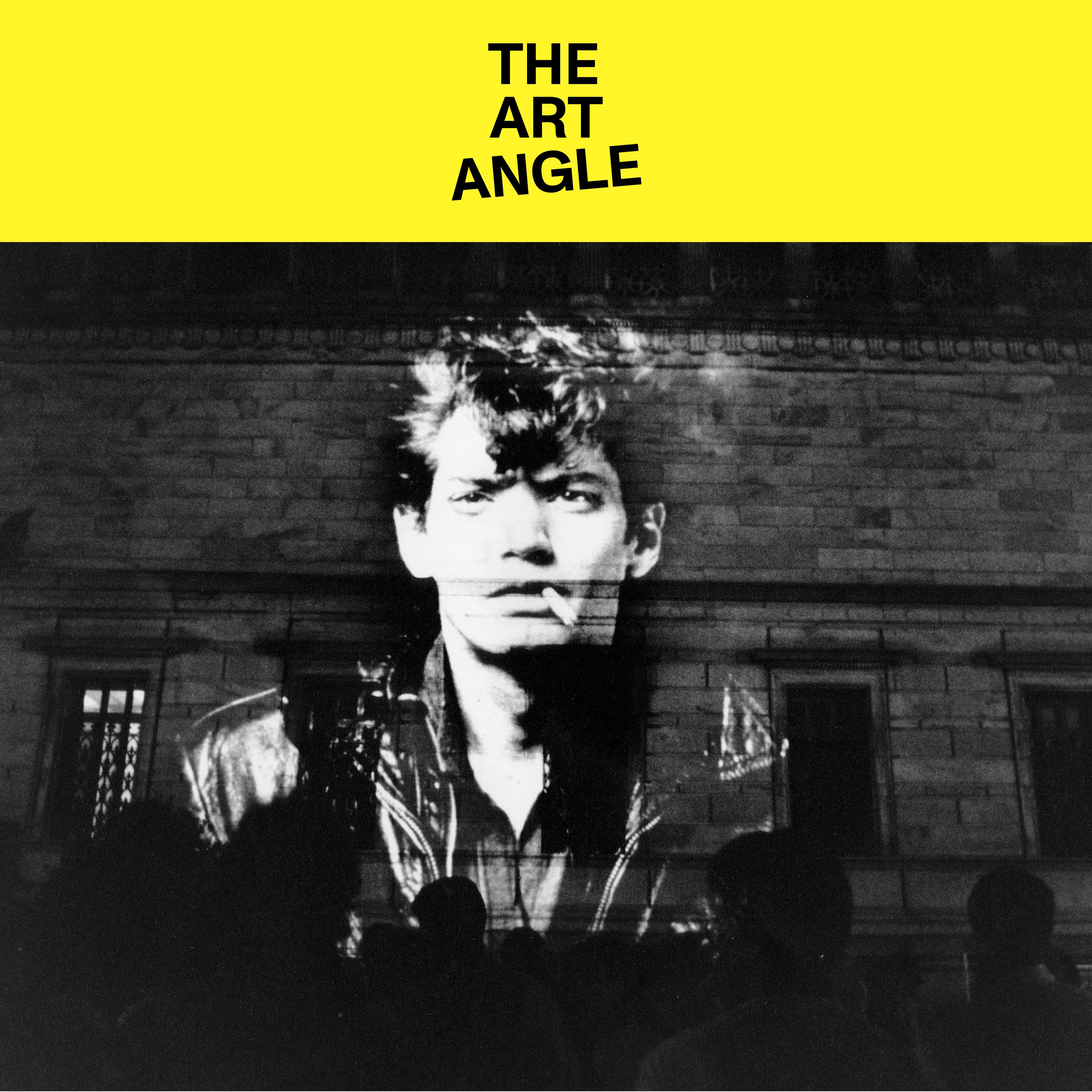
Projection of a Robert Mapplethorpe self-portrait during a protest at the Corcoran Gallery of Art. Photographed June 30, 1989 in Washington, DC. (Photo by Carol Guzy/The Washington Post via Getty Images)
Christians protest outside the Ziegfeld Theater in Manhattan, at the portrayal of Christ in Martin Scorsese's film 'The Last Temptation of Christ', New York City, 13th August 1988. One of the placards reads: 'God Damns Blasphemy'. (Photo by Barbara Alper/Getty Images)
Andres Serrano, Piss Christ, (1987). Courtesy Andres Serrano.
Scan the code with your iPhone camera
Listen in the app.