In short
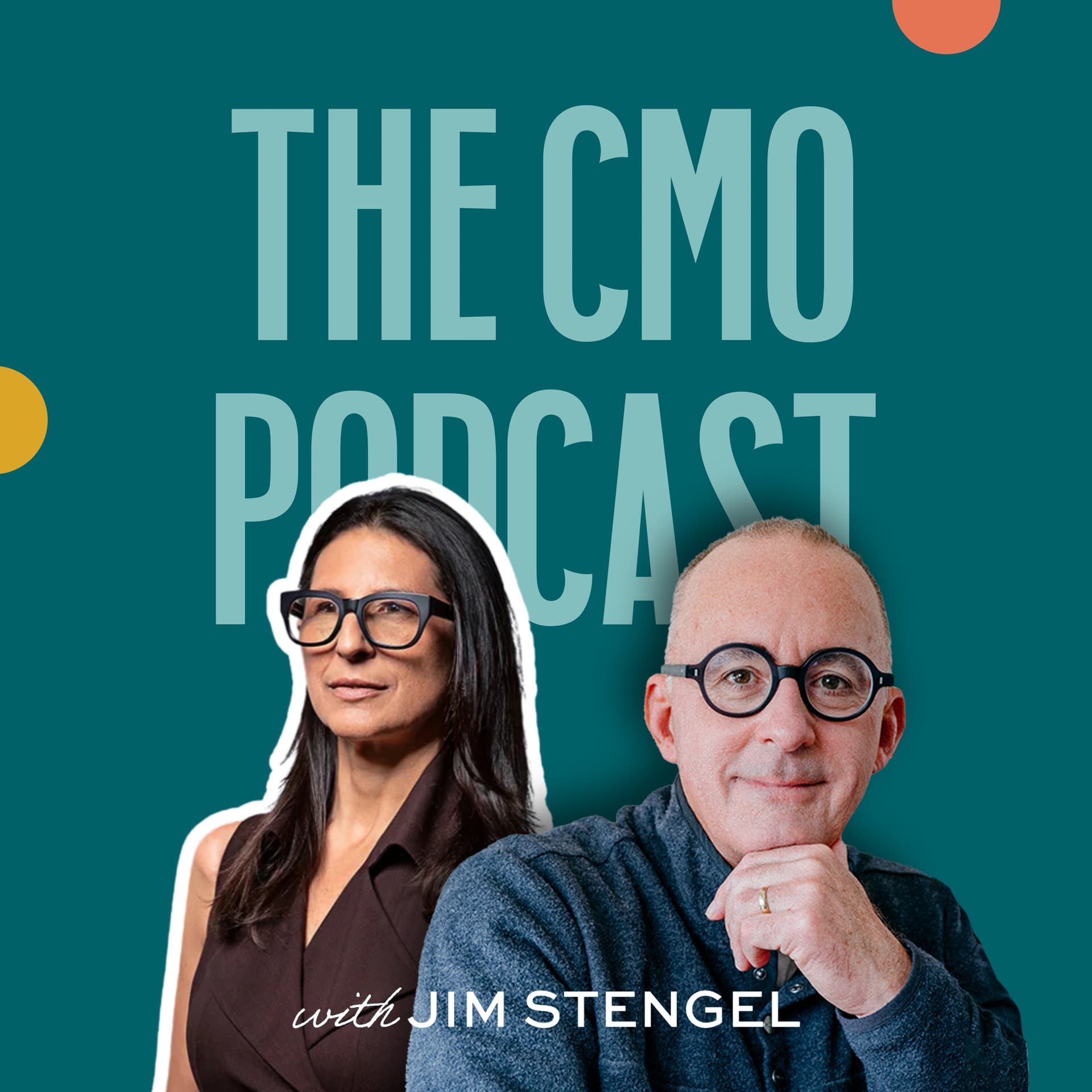
The CMO Podcast - Episode Summary
Episode Title
Colin Kelton (Vanguard) | Building a Lifetime Career
Host
Jim Stengel
Guest
Colin Kelton, Global Chief Marketing Officer at Vanguard
---
Episode Overview In this episode of *The CMO Podcast*, Jim Stengel speaks with Colin Kelton, the Global Chief Marketing Officer at Vanguard. Colin shares insights from his remarkable three-decade career at Vanguard, discussing the importance of purpose-driven leadership and how a long tenure at a single company can shape both an individual's career and the company's culture.
---
Key Themes and Discussions
Colin Kelton's Unique Career Path
- Long Tenure: Colin has worked at Vanguard since 1990, illustrating a rare career path where he has held various leadership roles, culminating in his appointment as the first Global CMO in 2018.
- Accidental Marketer: Colin describes himself as an "accidental marketer." His initial roles were not in marketing, but over time he adapted and grew into the position.
- Vanguard’s Growth: Under Colin's tenure, Vanguard grew from $43 billion in assets to over $10 trillion.
The Importance of Purpose
- Vanguard’s Mission: The company’s mission is to "take a stand for our investors, to treat them fairly, and to give them the best chance for investment success." Colin emphasizes that this purpose has been a guiding principle throughout his career.
- Cultural Impact: Vanguard’s mission profoundly impacted Colin’s engagement and dedication to his work, emphasizing how purpose can enhance employee loyalty and performance.
Leadership and Development
- Focus on People: Colin discusses how leadership at Vanguard is not just about achieving business results but developing people and fostering mentorship.
- Jack Bogle's Influence: The foundational values instilled by Vanguard's founder, Jack Bogle, remain significant in shaping the company’s culture and approach to leadership.
Reinvention and Growth
- New Challenges: Colin highlights the importance of accepting new roles and challenges, such as his stint as CEO of Vanguard Australia, which provided him with unique insights and experiences that benefitted his career and the company.
- Technology in Marketing: He also discusses the necessity of evolving with marketing technology and integrating new tools to stay relevant in a changing landscape.
---
Key Takeaways
- Mission and Longevity: A career anchored in a clear mission can lead to exceptional longevity and fulfillment within a company.
- Leadership Beyond Results: Effective leaders cultivate talent and prioritize mentorship, which contributes to a healthy organizational culture.
- Embrace New Opportunities: Taking on diverse roles can lead to personal and professional growth, making for a well-rounded career.
---
Conclusion Colin Kelton’s journey at Vanguard showcases the importance of aligning one’s career with a strong mission and purpose. His insights provide valuable lessons for current and aspiring CMOs about the significance of leadership, personal development, and embracing challenges that come with each new role.
---
Additional Notes
- The episode encapsulates a candid discussion about the marketing landscape and the evolving role of CMOs in today's business world.
- Colin's experience offers inspiration to those considering a long-term career at a single organization, emphasizing that such paths can be fulfilling and impactful.
Please feel free to share this summary with fellow marketing professionals or anyone interested in CMO leadership insights!
Written by AI. May contain mistakes. Listen to the episode to check what was said.
Transcript
Automatic transcript. May contain errors.0:00Hey, it's Jim. I'm here with Matt Spiegel, EVP of True Audience Growth Strategy at TransUnion. That's quite a job title, Matt. Yes. Welcome. Thank you. So tell me about your company and why it matters for our audience CMOs. Well, listen, Jim, the challenge of the day is that there's so much information about consumers out there and the challenge is most companies don't have all that information. You have some purchase history, you maybe have some web history, but you don't have a full picture of customers. We're working really hard across on a suite of identity products, of audience products and measurement products to bring a holistic view of customers to marketers.
0:31So when CMOs work with you, what light bulbs go off for them? So Jim, we help brands bring clarity from chaos. We help them understand a picture of their customers with a 360-degree view in order for marketers to make bigger, more strategic bets. Well said, Matt. Learn more at transunion.com slash clarity. That's transunion.com slash clarity. Hi, it's Jim. Joining me is Matt Spiegel, EVP of True Audience Growth Strategy at TransUnion. Matt, we talk a lot on this show about building brands that people love, but that starts with understanding them, right? Jim, absolutely. Every customer ultimately has a story, but most brands are only going to see part of it.
1:07At TransUnion, we really focus on helping marketers connect those dots across devices, across channels, across platforms, with the goal of helping marketers see a full person behind the data. That clarity is gold. That is special. So how do you do it? Ultimately, we put together the pieces of information that help you predict behavior, help you personalize messages, prove the impact of every marketing decision at the end of the day. And our marketing solution suite gives brands the visibility and confidence to invest smarter and ultimately grow faster. So if you want to turn data into understanding and understanding into growth, visit transunion.com slash clarity.
1:42What if the smartest marketing play is not to move forward, but to zoom out? Deloitte believes the most powerful move a CMO can make is to look beyond the next step and see the broader perspective. That's what the Deloitte CMO program is for, a place to gain fresh perspective and connect with leaders who've stood where you stand. Together, Deloitte will help you see the bigger picture so your next move isn't just fast, but right. Learn more about the CMO program at cmo.deloitte.com. First brand you remember making an impact on you as a young boy? Nike, you know, a kid in the seventies. And it's like, I wanted that swoosh and it made me faster when I was eight years old, right?
2:20You put on that new pair of, you know, Nikes. And like, I remember running down the sidewalk after I was like, oh my gosh, I'm that much faster, you know? Hi, I'm Jim Stengel. I've helped hundreds of major brands discover and activate their purpose. Because when a brand's purpose is clear, compelling and authentic, profit naturally follows. Each week, I welcome the CMOs, the chief marketing officers of your favorite brands to speak to how their job is so much more than marketing. These leaders share their inspiration and challenges along with how they try to build a full, healthy, and happy life in and out of the office.
2:57And it's that energy that reaches everyone they touch. And we're glad you're here to feel that energy and to learn from these remarkable leaders. So here we go. My guest today on the CMO podcast is Colin Kelton, the global chief marketing officer at Vanguard, the 50-year-old investment management giant founded by legendary investor John Bogle. Vanguard is a pioneer in asset management with a unique investor-owned company structure. It has a simple and powerful purpose, to take a stand for our investors, to treat them fairly, and to give them the best chance for investment success. My guest is one unusual CMO.
3:34He started with Vanguard in 1990, his first job coming out of Penn State, and he never left. Colin has held a number of positions at Vanguard, including being the chairman and CEO of Vanguard Australia. In 2018, Colin was appointed as the first ever global CMO for Vanguard, and in January 2024, Colin added chief communications officer to his responsibilities. This conversation was recorded in person at Deloitte University in Westlake, Texas on the occasion of the 10th annual NextGen CMO Academy. Here's Colin. Colin, welcome to the CMO Podcast. We're here in person at Deloitte University, looking over a beautiful lake.
4:15It's very hot outside. Now, this is your first time here, right? It's my first time at the CMO Academy. It's not my first time at Deloitte University. Okay. So I was here with the CDAO Academy. This sounds much more exciting. Totally. But they wanted a chief data officer and a CMO on stage at the same time talking. So we came down to two Vanguard crew members came down to do that. Super. Well, welcome back. Thank you. So earlier today, you and I did the same thing. We were, I think, two hours in a room and about every half hour, new next generation CMOs came and sat at our table four or five at a time.
4:50That's right. And we talked about deep stuff. So reflect on that. What was on their mind? What kind of things did you talk about your tables? One, it was a really great group of people. And because of that rotation, you get lots of different industries. And you find out, you talk to someone who's from Nissan, you find out she's loved automobiles her entire life and she's wound up in Nissan. It's like, wow, that's amazing. One of the great things about something like this is when you're in your own world, you think like, oh my gosh, marketing, all this sort of stuff. And it's like all the, people have all these questions, value of marketing and all this.
5:25And it's like, you feel like, oh my gosh, what's going on? And then you come to this and you realize everyone has the same issue. Everyone's having the same questions. They're getting challenged. They're like, you know, you need to make sure you're good friends with the CFO. Yes, that's every company, all this. So, you know, it's a lot of that, like proving value, working on brand, thinking a little bit of AI, but actually not as much AI as I thought we were going to get. Someone who just rotated into marketing was in the business. So how do you do that? So, you know, there was a wide range. Any stories that you told about your career that were interesting for them?
6:00Yeah. You know, I've been at Vanguard for 35 years and I call myself a little bit of an accidental marketer. And I was asked in 2010 to run part of Vanguard's marketing organization. And maybe I had a marketing class at Penn State. I'm not. It was a long time ago. It was a long time ago. Might have been an eight o 'clock class. I blew off. I don't know. But, you know, the answer back then was, you know, the business, you'll figure out marketing. That told you a lot about Vanguard and marketing thought in 2010. It's completely different now. And so I've told that story a bit and also told the value of like, look, no matter what you know and what job you're in, hiring people who are incredibly smart and really know their stuff, whether you know your stuff or not, is incredibly important.
6:43That's been a bit the key to success. So that was 15 years ago. So what's the biggest change in Vanguard marketing since 2010? Honestly, the biggest change in Vanguard marketing since 2010 is the importance of marketing at Vanguard. How'd that happen? Well, part of it is just a bit of a maturation of the business. And Jack Bogle is this legendary founder of Vanguard. Sure is. And Jack worked at Vanguard until almost his dying day. And he had an office in the building. He'd stop me in the halls. And he's like, Colin, I can't do his voice. He had this incredible, booming voice. And he'd say, why are we spending so much money on marketing?
7:19And I'd be like, Jack, you were the best marketer we ever had. He was out there railing against the industry. Creating content. He was creating content constantly and amazing content. A great writer, a great, you know, fantastic of speeches. I'm like, Jack, we're just trying to replace you. And that's what we're doing with all this. But Vanguard has been in business now for 50 years. We're a company now where it's like we have been a disruptor. And now we get copied a lot and people are doing what we're doing. And so suddenly, you need to really work hard to get your message out there. And it's incredibly important for us to do that.
7:54And that's a bit of the change. Now, you're an unusual dude, right? 35 years at one company, unusual career path up to chief marketing and communications officer. You went to Penn State many years ago. You came to Vanguard shortly after that, back in 1990, I think. That's right. So you're a young kid. What was it about Vanguard back then that attracted you? Because you studied - Economics. Economics. The thing that attracted me to Vanguard in 1990 was a paycheck. Honestly. I was 21 years old. I had no clue. Vanguard was very small, never heard of it. My first job out of college was a stockbroker.
8:27College roommate and I answered this ad. It turned out that they lied in the ad. They said it was salary plus commission. It was just commission. We were 21. We're like, oh, we'll figure that out. Oh my. Like, you know, and like my net worth was my graduation money, you know, so a couple hundred hours, life was dwindling down. And I went to my high school economics teacher, who was my lacrosse coach and a mentor. And he's like, there's this small firm in Valley Forge, you know, go look at that. And I got a job at Vanguard on the phones, you know, answering phone calls. I just, Jim, I just got a job and it was the most fortuitous thing ever.
9:01You know, the company has skyrocketed in my career. I've done things that I never would have thought I've done. My friends, my wife was from Vegas. Everything has revolved around that firm over, and I just literally just got a job. I was only 15 years old when you joined it, right? Yeah, yeah, yeah. So a relatively new company. $43 billion in assets the day I started. And today? $10 trillion, I think. It's like, we don't even... The market moves every minute and$43 billion goes one way or the other. And back then Jack Bogle would say, I'm not sure where the next billion's coming from. I think we're done.
9:38And we would celebrate billion dollar milestones. So what was that first job like? So you were working phones. I was working phones. That's a hard job. It is a hard job. And coming from a stockbroker job that you're not getting paid money, like I got handed this look of people selling boats at this brokerage company. And it was like, call all the people in here. Because either one, they're rich enough to own a boat or they're going to sell a boat and they're going to have some money. That was the leads. And I got to Vanguard and I started taking phone calls and it's like, everyone called us. And I'm like, wait a minute, what's going on here?
10:08It's like, well, we're really good at what we do and they want to put their money here. And that perspective just said, this is the easiest job in the world. Like people are calling, asking to send money to some post office box without, you know, pre-internet. And so it was a great learning experience. I learned a lot about the clients. Everyone was 21. So it was a fun place to be. Seemingly everyone was 21. Yeah. Jack Brennan, who was the president of the firm at the time, was I think 36. So, you know, something like that. So it was a great learning experience. So you're telling us this in many ways, but commit yourself to a company for 35 years.
10:45I mean, what's kept you there? Certainly what kept me there in the beginning was the people. It was just hired great people, friends. And there was a dedication to the employees, which we call crew members at Vanguard. And, you know, back then someone would leave, a friend would leave the company for like$1 ,500. They'd get$1 ,500 somewhere else they'd leave. Almost all of them either came back or tried to come back. So it's like, huh, okay, something's going on here. But the longer I was there, I figured out the mission orientation of the company. And that's when it really hit me. You know, you don't really get that when you're 21, or at least I didn't get it when I was 21.
11:21But, you know, after a couple of years and I realized what we were really doing here and really making a difference in people's lives that you stick with the mission. And the people are still great, but it was really the mission that kept me there 35 years. In that 35 years, is there a role that you found particularly defining for you? There was probably two. At one point in time, I started a new department because this thing called an IRA, it was decided that was going to be a big deal. There was some, I think it was 1998, there was some law that was passed that really expanded the rules for IRAs.
11:55We better be really good at this. So I started this on my own department. It's like I hired all the people. I created the training for it. I went to the telecom team and said, we need an 800 number for us and all this stuff. So that was pretty defining. The other is from 2015 to 2018, I was the CEO of our Australia operation. And that was just an amazing experience and one that I will never be able to replicate. Well, tell us about that experience. I mean, why were you chosen? There's a couple of things, I guess. So one is, you know, when you're, when you have a whole group that's 10 ,000 miles away, you've got to pick somebody that you really trust to be there because especially there, you know, we're awake when everyone else is asleep.
12:38And so, you know, you really have to trust the person that is running that operation. So I'm sure that was, that, that was part of it. Certainly they were investing in my development for sure. You don't just put somebody in that role that you think is like not that great or, you know, maybe tapped out. And, you know, I feel like, you know, the ability to hire, train, coach, develop people that far away that, you know, many of them have come back to the U.S. to work. You know, there's more Aussies living in Malvern, Pennsylvania right now than you could imagine because, you know, people have come back.
13:09I think that was part of it as well. But it was just, it was like running a little mini Vanguard. When you take yourself back to being moved there, your wife went with you and your kids. My wife and kids. My first general manager job at P &G was in Eastern Europe. So I was a marketing director and then big shift in responsibilities. So I look back and think about that a lot. Like, how do you enter a situation like that? Get off to a good start? Because for me, it was a new country, a new level. Right, right. You know, new responsibilities, new team. Yep. So how did you go about getting off to, do you feel like you got off to a good start?
13:44I thought I got off to a good start. Two things that were very beneficial was one, Australia is a very easy place to live. It's easy. Yeah. Easier than Eastern Europe in the 90s. I'm sure easier than Eastern Europe in the 90s for sure. Other than figuring out how to drive the other side of the road, it's pretty easy. Aussies are pretty happy. It's a great place to be. The weather's amazing. The other is, it was Vanguard. So I got there and I don't know if you were working for the same firm. A lot of things we were doing was familiar. It wasn't like I was like, I don't really understand what's going on here.
14:15On the other hand, there's a different tax code. There's a thing called superannuation there, which is compulsory retirement as opposed to you can choose to do 401k or not. There's different things happening. Property investments are huge there. Everyone has two, three, four, five properties. It's crazy. I really, Jim, immersed myself in what are we trying to do here for the Australian consumer. But the other is half of Vanguard there supporting Vanguard in general. There's a big investment operation there. And it's part of our global investment operation. So we're trading stocks and bonds 22 hours a day.
14:54And the people in Australia are trading on different parts of the day for the US and for Europe. And the same thing in the US, same thing. So I had to learn that. There was a 100-person IT organization, but that wasn't doing Australia IT. We wouldn't have enough work for 100 people to do, but they were doing Vanguard work. And so I really also just learned so much more about Vanguard and lots of different operations that paid dividends when I came back that wasn't necessarily all because of Australia. They just happened to be there. Yeah. Yeah. So what do you think the difference was that you made when you left?
15:31We always like to say we made a place better and I'm sure you did. I like to think I did. A couple of things, we, myself and my team, we really kind of doubled down on ETFs, which ETFs were taken off in the US. We weren't quite getting there yet in Australia. So by the time I left, we were number one in ETFs in Australia. So that was big. We had a retail operation, which is kind of like you just opened up an account, but it hadn't been going very well and hadn't been invested in. Literally, you needed a fax machine to do business with us. And it's like, I don't know where you - Let's start there.
16:06Let's start there. Like, you know, no one had one of those. We had one, but no one else did. So we reinvested in that. And then we got into the superannuation business. So, you know, I helped start that. It was, by the time we actually got into it, I was gone. I actually then served on the board of the superannuation business when I came back to the US. It was kind of my penance for, you know, having to start it. It's like I did board meetings at midnight. Yeah. And, but it was a great thing. So I think those couple things, you know, I'd like to think I left the woodpile higher.
16:46Everyone seems to be chasing the next big thing, the fastest answer, the quickest win. But great CMOs believe the real power isn't in the speed. It's in stepping back to see the bigger picture. That's why everything Deloitte does in their CMO program, from their industry-leading capabilities to their connected network of CMOs is designed to help you zoom out and gain fresh perspective. Deloitte will help you see the bigger picture together. Learn more about the CMO program at cmo.deloitte.com.
17:19And then seven years ago or so, you were the first global CMO appointed. That's right. So again, another pioneer in a way. So why did Vanguard feel it needed a global CMO seven years ago. Part of it goes back to what we were talking about before. It was just becoming that much more important. My boss at the time, who was actually my boss again, had this kind of sprawling operation and marketing was part of the operation. But one of the things that he would say, he was struggling a bit with like, there's a lot to cover just with marketing. And it's almost like he needed dedicated staff meetings, dedicated time.
17:55And eventually there was a realization that Like we need one person running all of this. That was really the impetus for it. It's like, let's pull all that together under one person. You can kind of look over and look over the whole thing. And that kickstarted it. But then, you know, over the subsequent years, we did a lot of work on hiring new people and, you know, upgrading the technology. So just that focus allowed us to do a lot more with marketing over the last seven, seven years or so. Do you feel like the brand is one brand everywhere you do business? Yeah, I do feel like it's one brand.
18:30I think it's, you know, the world's pretty small. And whenever there's news about Vanguard somewhere, anywhere in the world, you do have to think about, is that a positive or a negative for other parts of the business? So 100%, you have to really think through that. Some of our competitors run the businesses very separately. We don't run the businesses very separately. We think of it as Vanguard. and a reputational hit one part of the world can be easily a reputational hit in another part of the world. And when it comes to investments, at the end of the day, we have one investment group and they're doing all the investing.
19:08So, yep, there's some funds or ETFs that are available in a country that's not available in the US and largely that's tax issues or whatever else. But for the most part, it's all Vanguard. There's not a separate group. So you have to think of it that way. Where did you start when you were appointed the first global CMO? What were your steps? I mean, what did you do in the first couple of weeks? There were a couple of things that, you know, I thought through. So first of all, like getting to know the team, I'd been gone for a couple of years. So getting to know the team and, you know, some of the team had turned over.
19:36So you come back from Australia, this was your job. Come back from Australia and this is a job. So I've been gone three and a half years. You know, when I say gone, like I did that flight a lot. Like Qantas loved me for a while. Like I was spending a lot of movies, lots of books, Lots of movies, lots of books, lots of red wine on, you know, and no internet, which sometimes is a beautiful thing. Yeah. 17 hours and no internet sometimes is, you know, can be life altering. But really learning the team and figuring out what the organization was after. And at the time, we were a bit in a bit of a price war with some of our competitors around ETFs.
20:10And the first couple months was really spent on a project to reduce the price pretty substantially on a number of our investment products. That was the initial focus. And I got into that and pretty much in a deep way. And we came out with a number of price cuts that really, you know, kind of I think knocked our competitors a bit on their heels and almost stopped all the price wars because like, all right, well, hold on. Like, we can't compete. That's the thing that, you know, immediately pops up. And then there was lots of strategy that we have to do after that. Big project to come back to. Yeah.
20:44Pricing's tough. Pricing is tough. And, you know, especially in our world where, you know, the margins could be pretty thin and look, scale matters. And as we grow, we were able to decrease prices. And, you know, Jack Bogle and then Jack Brennan, his successor, really worked hard at pricing. And, you know, Jack Bogle would say, you get what you don't pay for. and investments, that's a hundred percent true. If you don't pay us a dime, you keep the dime. So you're 10 cents richer. So your priorities when you came back to the US and took all in this role, pricing was a big piece of it. Today, what do you work on?
21:21What are your priorities today and how much have they shifted since those early days? After the pricing, a couple of things that we did is I turned over almost the entire team. So that was a fair amount. And some of that rotating rotation culture. The other is, and it'll get to what we're doing now, is we invested in the marketing technology stack. So we did a big project and every, there's a bunch of different marketers that work for me and they all had their own tech stack. It wasn't a marketing tech stack, it was a marketing tech pile of, you know, that's what it was. You know, in my previous role, I'd contributed to that because I was like, I, you know, I'd go buy something just for my marketing group.
22:03And we had like three instances of emails and a couple of data sort, like all this, it was a mess. And we convinced the organization to give us a fair amount of money to replatform all the marketing technology. And by changing out the people and investing in technology, we now sit here. And if we hadn't done that, we wouldn't be able to do things we're doing with AI right now because those things sit on an Adobe platform or we work with this company called writer. We do a lot of work. It integrates with a lot of the stuff that we currently have. We would never be able to, that we'd be so far, we'd be so far behind.
22:40So that's a big part of it. But the other part of it, kind of the pure marketing is, you know, we have a new CEO that came in a year ago doing a great job. And, you know, one of the things that he's, that he and his team have done is really focus the organization in a couple of places. And a couple of those places are things we're not really known for. We're huge in fixed income. We have about$2.6 trillion of fixed income and no one knows it, which is amazing. So it's like we're doing a lot of fixed income work. We started working on cash replacement. A friend of mine who just retired from Vanguard not long ago started work on, it's not all about a money market mutual fund.
23:18There's other things to do with your cash and started this big product. So we're now big push into cash. as, you know, if you follow the investment world at all, you'll see like private equity and private credit are trying to get more and more into the retail business. So we're doing a lot of that. And we're not known for that. And again, it gets back to like why marketing? It's like, well, you know, there's not many ways to get known for something other than spending some marketing dollars and doing it well. Yeah. Now, you know, I think most of our listeners have a general understanding of who you are, right?
Read the full transcript
23:46You have 50 million customers or something. So you're a big brand. You've been around 50 years, but I'm not sure they all appreciate how much of a disruptor you have been and continue to be. So I'd like you to talk a bit about not just the history of that, although it's important starting with your founder, but how you keep that going. Yeah. You know, it's an important part of your legacy. Right. Right. Right. And it's one thing to start it, but to keep disrupting for 50 years and to keep that in the culture, that's, you know, that's delicate. And Jack Bogle, who started the firm, was actually fired from his job.
24:16He was working, he was the head of Wellington, he was fired. We're very close. Vanguard and Wellington are kind of, you know, we worked very close together, but he was, he was fired in a bit of a, uh, hustle at the boardroom. And he basically came back and said, you know, what if I distributed your products? I'll start a small company. And no one thought there was any power in that. It's like short, you know, I'm short changing a lot of things. And he started the small company called Vanguard. But one of the things, and he wrote his college thesis about this is the cost of investments really hurts the investor.
24:47And in 1976, he started the first index fund. And that was one of the first disruptors that Vanguard did. And Jack would say, don't bother searching for the needle in the haystack, buy the haystack. That's what he would say. And it fit with, you could do it low cost, you could be diversified. It fit with a lot of the things that he pushed. And so, you know, that was the first disruptor. That's obviously, you know, and many people probably have index funds in their 401k. They don't really know exactly what they've got. Everyone's got indexed enough funds in the 401k. And that's all because of Jack, what Jack did.
25:25That plus the cost. So Jack and his successors, Jack Brennan, Bill McNabb, Tim Buckley, they all have done work to really push down the cost of investing. That was another big disruptor. We went no load. So therefore, no commissions. That was another big disruption. We moved all our fixed income in-house. I'm getting a little wonky here. That was a disruptor. So there was all these disruptors that came along. I'd say others were doing it as well, but our website was disrupted. And I remember, you know, it's like, you know, we should have a website and be like, I guess, you know, back then you didn't know.
26:02Or a mobile site, you know, and many others were doing it as well. But, you know, anytime then a company as big as Vanguard's doing something, you're almost disrupting as soon as you did something. And so there's been several of those, you know, across the board. And one of the latest, although we've been at it for since I guess 2015, is really disrupting the advice industry. And we have two things at Vanguard. One is we serve individual investment advisors outside of the company, and we work really hard and we're dedicated to them. But we also have an in-house advice function, and we lower the cost of advice because that was a place where it was incredibly expensive to get advice.
26:48And one of the main things we saw at the time was, why did someone leave Vanguard? And so one was they died. It's like, okay, we can't do too much about that. We should worry about their kids. But another was like, we didn't give advice. And someone one day opened up their 401k statement and like, wow, that's a heck of a lot of money. I better not screw this up. I need advice. And they go get advice, but we didn't give it. And we started giving advice. So we've disrupted there as well. You have lots of frenemies, right? Yeah, for sure. Frenemies. And also like, look, you know, Jack Brennan would say this a lot, like you don't want to be the best house on a condemned block.
27:22Like you want strong competitors and you want the investment industry to be really respected. And, you know, so, you know, we, we work closely with, you know, some of our competitors on things like cybersecurity and other things or legislation to, you know, to kind of bolster things for, for investors. Yeah. Yeah. So how do you feel about, or how do you think about benchmarking? You know, how do you know your marketing is working best for you? You know, how do you feel about your competitive set? I mean, how do you just think about that? We don't set dollar targets. People do vote with their money, but we don't have any, any targets.
28:00Like we need to bring in, you know, X number of dollars, like go after that and do whatever you can. You know, we have to set certain budgets and, and, you know, growth is one of those things we're probably, you know, it's, incredibly important. But when we sit here and look at things such as what's our customer satisfaction, how are our funds and investments doing, how easy are we to work with, do we have most of what people want? Although we don't offer everything, there's things that we will not do because we don't think that they're good investments. You're not going to find the triple leveraged gold fund.
28:35And so we are a bit territorial in what we will. will offer. And those are a bit the benchmarks. Those are KPIs. Yeah. From a high level.
28:54We all want to stay ahead of the digital curve. And IAB, the Interactive Advertising Bureau, invites you to do just that at the 2026 IAB Annual Leadership Meeting in Palm Springs on February 1st through 3rd. If you're a qualified consumer brand or agency leader, you can access free passes and travel vouchers. And for everyone else, you can take$500 off your ticket with code, all caps, ALMCMOPOD26. This is your chance to join a three-day gathering of the industry's brightest minds and boldest voices shaping the year ahead. You'll hear agenda-setting conversations, candid fireside chats, and dynamic breakouts on the topics that matter most, from AI and commerce media to measurement and addressability.
29:38This year's lineup concludes everyone from Kevin Bacon and Bozema St. John to creator Remy Bader, along with leaders from Forbes, Major League Soccer, General Motors, and Meta. Visit IAB.com slash ALM to learn more and check out the link in the show notes to register and receive$500 off your ticket.
30:00I think your company purpose is pretty amazing. And I think it's obviously linked into your culture. So I just want to read it. It's very simple. to take a stand. It's a very strong statement for our investors to treat them fairly and to give them the best chance for investment success. So talk about that and how people internalize that, how they activate it. What's the role of it in daily life at Vanguard? Each of those things, and it's funny, I'll hire people and you're hiring someone and you're kind of salesy while you're hiring them, right? And I always bring people back in X number of months later and say, is it real?
30:38Like we said all this stuff and I've been there for so long now, I think it's real. It's like, is it real? Is it really about the client? And are we really dedicated to you, the employees, or were we just blowing smoke? And like, oh my gosh, it actually is real. And so, you know, it's, you know, I think that that's part of it, but that take a stand does mean to stand up for the investors. And it is all about the investors. Like we are owned by our investors. There's no outside owner. So no one else makes money. Like we get paid, of course, but there's no outside family or outside stockholders.
31:15There's no share price. We're not making money for anybody but the investor. And that was a bit, that's the secret sauce of Vanguard. And I remember talking to Jack Bogle once and he one marveled that no one copied Vanguard, but there's no money in it. There's like no one would still, because there's no money in it. And Jack himself said, you know, he said to me once, it's like, Colin, if I had known how much money was in this, I might've thought about it a little differently. You know, but in the back, you know, you just wouldn't think of that. So, you know, take a stand for that. It's like the investors are the ones that benefit no matter what we do.
31:50You know, give investors the best chance for investment success. Really, you know, it doesn't guarantee investment success because, you know, not everything is in our control, But we worked really hard of having amazing investor professionals that really know their business and take smart risks and stay very true to the actual investment. And so we take all that incredibly seriously. And I would hope most crew members can recite that. It's written all over the place. It's a bit like the Johnson & Johnson pledge type of thing, but within Vanguard. And it has stood the test of time. We haven't come back and said, oh, we got to rewrite that mission statement.
32:28Very powerful. I was interviewed the Apple head of marketing at the Can Lions Festival this year. And he talked about how Steve Jobs was still very much alive at that company. Yeah. People still talk about him. The principles through which he managed are still there. Their brand led leadership. And so talk about Jack and how his spirit kind of is still in the company. Yeah. You know, Jack would say, and we have this award at Vanguard called the Award for Excellence. And he said, even one person can make a difference. It's like single out one person and they can make a difference. And a lot of that still is very, very relevant.
33:05We just celebrated our 50th anniversary. And we did a lot of work. We dug up old footage of Jack Bogle, but also Jack Brennan, who really, it was the two of them partnering. Like Jack Bogle started the firm, but Jack Brennan was the one that really made the firm actually a firm that was going to last. And so those two together are the ones that really, you know, really made the company what it was. So you knew them both. Knew them both. And Jack Brennan was very focused on leadership as well. Like we, you know, and then his successor, Bill McNabb, did a lot on leadership. And, you know, Jack Brennan wrote a book on leadership that is still in the firm.
33:48And, you know, you as an employee and you as a manager, you need to be great at your job, but you also need to be a great boss. And if you're not a great boss, if you're not a great manager, you're only going to last so long and you're not going to make it in the firm. You know, because we said, you know, you can get somebody to do a great job, but, you know, you have to also do a great job for the people who work for you. And you've got to focus on both of those things and those things ring true still to this day. What were they like as leaders? Both very visionary, both very motivational, very different, you know, two very different, very different leaders.
34:24Jack Bogle would be out there very much railing against the industry, as I talked about. And, you know, in the press a fair amount, Jack Brennan was very focused on Vanguard itself and inside, you know, the hiring of people and how important that was. The leadership capabilities, lowering costs, being great. Jack Brennan's the one that really gave Vanguard a taste for IT and technology. And Jack Bogle probably would not have done a website. Of course, it's way back when and you don't know. But back then, it was like, why do you need a website? You shouldn't be trading all day. You should buy and hold.
35:03It's like, well, Jack Brennan's like, people still need to see their assets and whatever. So they were both incredible, incredible leaders for their particular roles. You shared with me before we started that you're retiring. That's right. And your successor hasn't been named or made. And it's public that you said we can talk about this. So what's that been like? Is it weird? Is it nostalgic? I mean, you're still there. I'm still there. And we're working through the succession. It has been a bit weird, but look, 35 years is a long time. By the time I'm done, it'll be 36. It'll be sometime next year.
35:40And at some point in time, as much as I love the place, it's like, maybe go do some different things. Give it to the next person. At some point in time, I still walk around the halls and feel like I'm 21 years old, but I'm not. People look at me as like, who's this guy? He's been here forever. And so it's actually pretty liberating. And look, you feel great about the company. You feel great about the work. And so that feels great as well. Like, you know, to, to leave it in that, you know, in the state it's in feels, feels just great. And, you know, I've been there now for, you know, 35 of the 50 years and there's only been one or two years where there were rough years.
36:21And it's more because the market was really rough. There wasn't a Vanguard part that was rough. It was, you know, the market was just, you know, 2008 was a rough year. Yeah. And so, you know, it's, you get a couple of those, but other than that, it's been, you know, it's been quite a trajectory and quite a ride. How are you thinking about life post Vanguard? You know, I have many thoughts. I have lots of people now. It's like, oh, you know, you should do this, you should do that, you know. Be careful. Well, yeah. Yeah. And so look, I'm not going to do nothing for sure. You know, I've only ever worked in a private company.
36:54I have no corporate company experience. So, you know, maybe a corporate board, I'd love to, you know, that would be a great experience. I've been there 35 years. I think, you know, someone would want me to help them on something, you know, some consulting work for sure. And, you know, I've learned the whole, and I guess, you know, everybody who's in the stage, you know, uses this word. It's like, what's your portfolio going to look like? It's okay. Right. So, you know, what's that portfolio life? But, you know, while I'm retiring from Vanguard, I'm certainly not done. I'm not going to work full time anywhere, but, you know, I feel like I've got a lot to offer.
37:24And after, you know, this much time at that company, I feel like I, you know, I have some stuff that I can off for some people. So I'm looking forward to it. Well, good for you. I did notice that you're super involved in lots of organizations in the Philly area. So I'm sure this will give you some freedom to spend a little more time on some of those things. But this sense of civic commitment and involvement, where does it come from? Is it from your family? Is it from Jack? It's actually from Vanguard. It's from Jack. It's actually more from Jack Brennan. So Vanguard was very involved at the time when I first started.
37:58No longer we do our own thing with United Way. And, you know, giving back was always part of being an employee at Vanguard and really inculcated that. And, you know, so now after 35 years, it's like, yes, you absolutely do. So we do, we do a big fundraiser every year in the firm and we have our own foundation that we give money. And, you know, for me, it's also personal as well. It's very education-based and, you know, know, I'm a really big believer in education. My mom was a teacher. My sister's a teacher. I took those tests in high school and it's like, Colin, you're going to be a teacher. It's like, I'm not going to be a teacher, but it's like, you know, teaching is incredibly important.
38:33And, you know, I think education is the big, you know, a big change agent, obviously. And so I do a lot around education, but it really came from Vanguard saying like, we're incredibly successful. We're incredibly fortunate. We can give back. And we, we talk about that constantly. Very strong culture. Very strong. Yeah. Yeah. Very strong. But yet, you know, one of the benefits that we get is when you hire people from the outside, you know, they come in, they change it a little bit, they add some stuff to it, but they're also attracted to the culture. You know, it's why, you know, they appreciate - I suspect your attention's higher than the industry.
39:05Yeah. I would think it's pretty high for sure. So when you were at Penn State, what was your dream back then? Did you have any idea you wanted to be in financial services? I had no clue. I didn't know. I said my mom was a teacher. My dad was a cop, although he had retired from the police force soon after I was born, and he just did some odd jobs. And so we had no investments as a family. We were lower middle class. There was nothing. My dad would sometimes, my friends know this story, my dad would get a bill in the mail, and he'd remail it back to himself. He'd drive somewhere on the way to work and remail it because he didn't want to see it sitting on his desk.
39:43So it's like, if you put it back in the mail system, it would five more days to get back to the house before you have to pay the bill. I had no idea what I wanted to do. And even when I got to Vanguard, I really didn't know what I wanted to do. I think kids these days are so much better off. There's so much more information out there. And you can do so much more work to figure out what you want to be from a business perspective. Yeah. How did Penn State change you? Four years there? Four years at Penn State, it was a great place. It was, you know, it's a bit like heaven on earth. And, and I was actually a, I was actually an engineering major when I started, which, you know, for some people at Penn State is like pre-business because engineering is, you know, there was a, I didn't do so well and I had to, I had to change my major and I worked really hard to graduate on time.
40:29And a couple of years later, I realized like, what the heck was I thinking? Like take another year. I should have taken another year. I should have taken another semester. Like that was, that was crazy. But, you know, I think that college and all colleges, and I, you know, I've, I have one kid that just graduated and other who's, who's in school. And it's like, you just do a lot of growing up and out of your parents' home and different people. And, you know, Penn state is obviously a huge place and you get exposed to a wide variety of things with an amazing football team. So that didn't hurt.
41:06Hey, everybody. This is Andrea Sullivan, the CEO of Vive, and we produce the CMO podcast and are so excited to have partnered with Jim Stengel for so many years. Wanted to tell you a little bit about something that could be right for you. Vive is a program for entrepreneurs and business leaders who want to get more out of their life and become their best and happiest selves, both personally and professionally. We have a 12-month program that allows people to meet up with some of the best business leaders out there and additionally experts in the wellness sector so that you can learn how to nurture yourself.
41:41So we teach things around sleep optimization, meditation, all those good things as well. Please reach out to us at podcasts at vibe.co to get more information. That's P-O-D-C-A-S-T-S at V-Y-V-E dot co. Thanks for listening to the CMO Podcast and hope to talk to you more about Vibe.
42:05You know, we're here at DU. This is an incredible training experience all these next-gen CMOs are going through. Can you think about your career? Was there something that you went to or experienced that had an outsized impact on you? I think probably getting my MBA. So I got my MBA from Drexel University, which is in, as you would know, it's in Philly. And I did at night. And I know a lot of people eventually figure this out, but when you go back to graduate school, you just have a different perspective. You know, when you're an undergrad, you know, you might get a B in something and feel like nailed it.
42:39And it's like, all right, time to go out. When you're in grad school, you just relish the information and really like, you know, I took classes and you get truly, truly interested in what that information is. It's just different than undergrad. And so I think that that was really, you know, that was probably the thing to answer your question that was really a bit - Why did you do the MBA? I did the MBA, not curiosity. Like I did the MBA, it was pretty selfish to start, you know, and some - Salary increase. Well, not just salary increase, but someone said to me, look, if you're going, and this is still true, if you're going for a job and you're in a dead heat with somebody, but they have their MBA and you don't.
43:20And that's the reason. Do you want that to happen? And it's like, no, I don't want that to happen. So that was it. And then I got there and it's like, oh, I actually am learning a lot of different things. I'm getting exposed to this. I was a liberal arts econ major. I never had a finance class at Penn State, but obviously in Drexel, I had plenty of finance classes. So you get to learn that much more. And when you're at a firm like Vanguard and other firms as well, and you spent all your time with people from Vanguard. It was great to go somewhere and speak to people at different organizations.
43:51It gave me an appreciation for Vanguard, but I also learned about different orgs. You get the same thing here at DU when you've got somebody who working for Nissan sitting next to somebody who's working at a fiber optics company that you never heard of. It's in the B2B business next to someone who's from State Street. And it's like, it's just an amazing, it's just an amazing couple of days where you can kind of make some great contacts and learn different things. First brand you remember making an impact on you as a young boy? Well, the first brand I remember distinctly is Tang. So, I didn't drink Tang.
44:23My little sisters love Tang. And, you know, for those of you who are like, what the heck is that? So, it was - Remember that? It was the orange juice, the astronauts. Yeah. So, it was a powdered form of orange juice. No, we had it too. Yeah. So, I remember my sister is drinking Tang and loving it. And I wanted regular orange juice. Personally, Nike was probably the one. You know, a kid in the 70s and it's like, I wanted that swoosh and it made me faster when I was eight years old, right? You put on that new pair of, you know, Nikes and like, I remember running down the sidewalk after I was like, oh my gosh, I'm that much faster, you know?
45:00What was your sport back then? Actually, I swam. I swam as a kid. When I got to high school, I played soccer and lacrosse as well. so I did three sports but swimming was the one that I did you know since I was uh since I was were you good enough to do it in college I was not good enough to do it in college you still swim so I still swim yeah swimming is one of those things now you figure it's like you know it's easy on the knees it's easy and it's one of those sports you can do I ride a lot I run a lot I was doing tries there for a while but you know I like the I like the variety but swimming is one of those things where it's like I love jumping in the pool and yeah that's great yeah who's been the most influential mentor of yours at Vanguard over these years?
45:39It's hard to pinpoint one person, Jim. I've been close to a number of the CEOs at Vanguard just over time. Jack Brennan made a big impression on me. Bill McNabb left a big impression on me. Tim Buckley, who's a close friend of mine and was the CEO for eight years, left a big impression on me. But there's been a number of leaders that have impacted me. So, it's really hard to input one person. And I, you know, I think that that's a bit the, that's Vanguard. That's the culture. You don't have to find the one single person who's going to be it for you because there's actually a lot of people that are going to impact you.
46:19And I also think, I don't know if you've seen this experience, had this experience, like, you know, there's different mentors for different times and different mentors for different experiences. And, you know, it's okay to have a mentor who's, you know, very important for a period of time and maybe not forever. And, you know, somebody else is going to mentor you, you know, from then on, but you need, you need that person to go to somewhere. So who's been the most inspiring person in your life? I mentioned him earlier. I think the high school economics teacher, lacrosse coach, he was also a history teacher.
46:51And so I wound up going to Penn state and I wound up majoring in economics, minoring in history, wishing I was good enough to play lacrosse there. And he was just someone who really was the first person that really talked about character counting and how important that was. And his name was Reed Watson. He was this legendary lacrosse coach. And there's people, there's still Reed's boys. And he really was, he was a tough competitor, but he really held you to a high standard for sure. Teamwork was a big thing with him and he really instilled that. Somebody one day at lacrosse practice, I'll never forget this, somebody really upset him.
47:32I don't know what it was and they must've been showboating. So suddenly it's March. So we're not outside playing lacrosse yet because it's too cold and snowy. And he comes in and he puts a stepladder underneath a basketball hoop and he goes up the ladder, puts a board on top of the basketball hoop, and it puts a bucket of water on that. And he comes down and he's talking about teamwork. And it's like, if any of you and somebody, somebody must've been show, but I think that you're more important to the team. I want you to walk up that step ladder. I want you to put your fist in the pail of water and pull it out.
48:08And the hole that you leave behind is how much I'm going to miss you when you're not on this team. you know i must have been 15 then so i'm a lot older now i still remember that that story of like yeah the hole you leave in the bucket of water is how much i'm gonna miss you right not at all it's very dramatic it's very dramatic very dramatic i don't know who knows where he got that from i'm not sure he made that up in the moment but he was somebody who was you feared him and you respected him and you want to still remember very vividly yeah 100 well will penn state win the national championship in football this year.
48:41They're ranked number two as we record this. Right. Look, Penn State won the national championship in my freshman year. So I was spoiled. Is that the last time? No, they think they won it one year. They won it once after that. I'd see Joe Paterno walking around campus. Everyone had Joe Paterno sightings back then. I don't know. I'm frustrated. I, you know, that inability to win that one big game is just dogging them. But, you know, Drew Aller, like, you know, has been talking with Arch Manning, who's been talking about one of the best quarterbacks in the country. And, you know, we've got some, a couple of amazing running backs.
49:19We'll miss Abdul Carr, who's, you know, playing for the Jets, unfortunately for him. But, you know, but look, look, we also have, you know, we can root for the Eagles as well. And, you know, it's a great thing when you got Saquon. Phillies are good. Yeah. Phillies look good. You know, Saquon, you know, it's great to have those two things. So it's good. What do you think? I hope. This is the year. This has to be the year. And if it doesn't happen, I think there will be repercussions. I think you're right. And you went to Franklin and Marshall, right? Yeah. But I went to Penn State for graduate school.
49:49Oh, is that right? Yeah. And met my wife there. Oh, wow. And met P &G there. Oh, is that right? So I have a lot of loyalty to Penn State. Changed my life. Yeah. It's amazing. And the two big things. Well, But what I, you know, P &G was very defining for me. Obviously my wife. Right, right. 42 years married. Yeah, that's a fantastic place up there. We had a great two years there. Oh yeah, I'm sure you did. It's the best. We have to end this with we are. Penn State? Inside joke, sorry about that. Thank you, Colin. Thank you so much. That was great. That was great, really good. That was my conversation with Colin Kenton.
50:21Three lessons from this one for your business brand and life. First takeaway, Colin is a unique case. having spent his entire career at one company. And his tenure shows how mission and culture should be the key anchors for your professional journey. What really stands out is how much Vanguard's mission shaped Colin's path. Longevity wasn't just about climbing the ladder, it was about staying connected to a purpose bigger than himself. As Colin says, the longer I was there, I figured out the mission orientation of the company. And that's when it really hit, really making a difference in people's lives.
50:56Second takeaway, leadership is much more than achieving business results. At Vanguard, leaders are measured not only by performance, but by how well they develop people, foster mentorship, and carry forward the principles of Jack Bogle and Jack Brennan. Colin put it simply, you have to be great in your job and you also need to be a great boss. If you're not a great manager, you're not going to last very long. And my third takeaway, say yes to new stretching assignments. Colin's story is one of reinvention, whether it was serving as Vanguard's first global CMO or leading operations in Australia.
51:32Each new role gave him a fresh perspective and made the company stronger.
51:40That's it for this week's episode of the CMO Podcast. As always, I would be grateful if you shared our show with your friends, along with subscribing and leaving a review on Apple Podcasts, Spotify, or wherever you listen. The CMO Podcast is a Vive original production. The views and opinions expressed by podcast speakers and guests are solely their own and do not reflect the opinions of our sponsors or its personnel, nor do our sponsors advocate or endorse any individuals or entities featured on the episodes.
From the publisher
Not many CMOs can say they’ve had just one job their entire career, but our guest this week can say he can. Joining Jim is Colin Kelton, the Global Chief Marketing Officer at Vanguard, the 50-year-old investment management giant founded by legendary investor John Bogle. Vanguard is a pioneer in asset management, with a unique investor-owned company structure. It has a simple and powerful purpose: To take a stand for our investors, to treat them fairly, and to give them the best chance for investment success.
Colin’s story is unusual in today’s world. He started with Vanguard in 1990, fresh out of Penn State, and he never left. Over the years, he has held a number of leadership positions, including Chairman and CEO of Vanguard Australia. In 2018, he became Vanguard’s first Global CMO, and in January 2024 he added Chief Communications Officer to his responsibilities.
Recorded in person at the Next Gen CMO Academy at Deloitte University, this conversation explores Colin’s remarkable journey, what it means to lead with purpose, and how a lifetime at one company can shape both a career and a culture.
---
This week's episode is brought to you by Deloitte.
See Privacy Policy at https://art19.com/privacy and California Privacy Notice at https://art19.com/privacy#do-not-sell-my-info.