In short
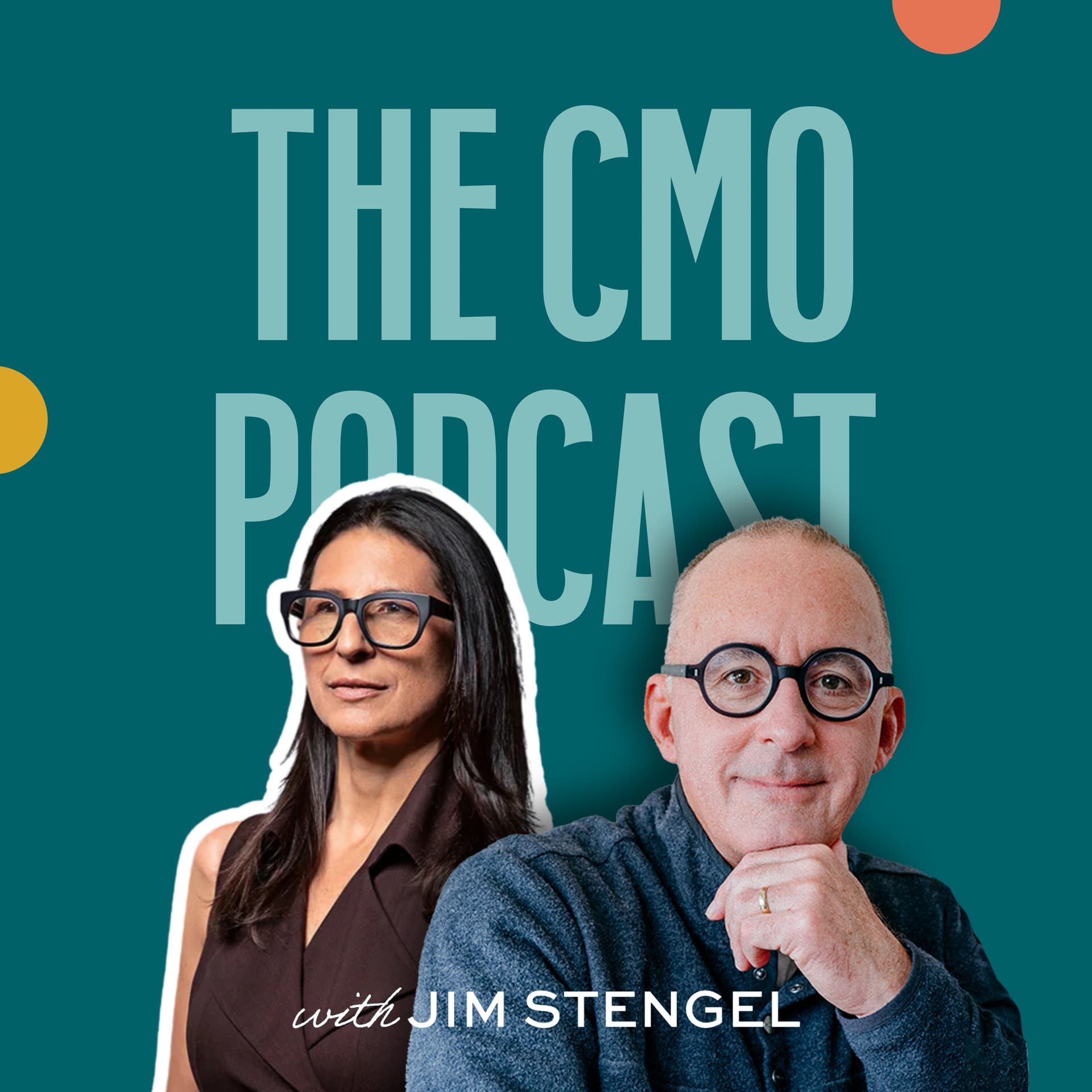
The CMO Podcast: Episode Summary - Erin Newkirk (Former Caribou Coffee) | Building Brands (and Teams) That Spark Chain Reactions
Podcast Overview
- Host: Jim Stengel, former CMO of Procter & Gamble
- Guest: Erin Newkirk, former Chief Brand & Marketing Officer at Caribou Coffee
- Topic: Building brands and teams that create meaningful consumer experiences.
Episode Highlights
Guest Background
- Erin Newkirk:
- Former CMO at Caribou Coffee, overseeing brand strategy for over 850 locations across 11 countries.
- Career spans from Fortune 500 companies to startups, emphasizing building brands that evoke emotional connections.
- Previous experience includes working at Kaplan, General Mills, and founding Red Stamp, a mobile-first lifestyle brand.
Key Concepts Discussed
- Grounding and Mindfulness:
- Erin starts each day with reflective practices: journaling, meditating, and drinking coffee, which sets a positive tone for her work and impacts her leadership style.
- Brand Purpose:
- At Caribou, the mantra is “Together, we create day-making experiences that spark chain reactions of good.”
- Emphasis on operationalizing core values into behaviors that guide hiring, training, and performance.
Insights on Leadership and Team Culture
- Creating a Positive Work Environment:
- Encourages a culture of fun and ownership among team members.
- Engages employees through creative initiatives, such as a drink bracket competition leading to tickets for the Vikings game.
- Learning Through Experience:
- Discusses the importance of high-profile assignments (e.g., Brand Champions program) that develop critical skills and insights into the marketing function.
- Curiosity and Creativity:
- Acknowledges the influence of her father, a writer in advertising, on her creative journey.
- Values curiosity as a driving force in her career and encourages it in her teams.
Brand Positioning and Strategy
- Differentiation in the Coffee Market:
- Focuses on quality ingredients and meaningful customer interactions to build loyalty amidst competition from major coffee brands like Starbucks and Dunkin’.
- Develops products and marketing campaigns that resonate with Gen Z and Millennials by addressing their needs and preferences.
Takeaways for CMOs and Marketers
- Importance of Daily Grounding:
- Incorporate reflective practices to enhance leadership effectiveness and decision-making.
- Say Yes to High-Profile Projects:
- Seek assignments that challenge you and enhance your skills for long-term career benefits.
- Know and Be True to Yourself:
- Self-awareness is crucial for effective leadership and creating a positive team culture.
Closing Thoughts
- Erin's journey and insights provide a framework for CMOs and marketers looking to foster a meaningful brand presence and cultivate a thriving organizational culture. Her emphasis on empathy, community, and creativity offers valuable lessons in today’s competitive landscape.
Episode Sponsorship
- The episode is sponsored by Deloitte and Best Buy Ads.
Note: For more details, visit the [CMO Podcast](https://www.cmopodcast.com) webpage.
Written by AI. May contain mistakes. Listen to the episode to check what was said.
Transcript
Automatic transcript. May contain errors.0:00Hi, it's Jim. Joining me is Matt Spiegel, EVP of True Audience Growth Strategy at TransUnion. Matt, we talk a lot on this show about building brands that people love, but that starts with understanding them, right? Jim, absolutely. Every customer ultimately has a story, but most brands are only going to see part of it. At TransUnion, we really focus on helping marketers connect those dots across devices, across channels, across platforms, with the goal of helping marketers see a full person behind the data. That clarity is gold. That is special. So how do you do it? Ultimately, we put together the pieces of information that help you predict behavior, help you personalize messages, prove the impact of every marketing decision at the end of the day.
0:37And our marketing solution suite gives brands the visibility and confidence to invest smarter and ultimately grow faster. So if you want to turn data into understanding and understanding into growth, visit transunion.com slash clarity. What if the smartest marketing play is not to move forward, but to zoom out? Deloitte believes the most powerful move a CMO can make is to look beyond the next step and see the broader perspective. That's what the Deloitte CMO program is for, a place to gain fresh perspective and connect with leaders who've stood where you stand. Together, Deloitte will help you see the bigger picture so your next move isn't just fast, but right.
1:15Learn more about the CMO program at cmo.deloitte.com. Hey, it's Jim. I'm here with Matt Spiegel, EVP of True Audience Growth Strategy at TransUnion. That's quite a job title, Matt. Yes. Welcome. Thank you. So tell me about your company and why it matters for our audience CMOs. Well, listen, Jim, the challenge of the day is that there's so much information about consumers out there and the challenge is most companies don't have all that information. You have some purchase history, you maybe have some web history, but you don't have a full picture of customers. We're working really hard across on a suite of identity products, of audience products and measurement products to bring a holistic view of customers to marketers.
1:50So when CMOs work with you, what light bulbs go off for them? So, Jim, we help brands bring clarity from chaos. We help them understand a picture of their customers with a 360-degree view in order for marketers to make bigger, more strategic bets. Well said, Matt. Learn more at transunion.com slash clarity. That's transunion.com slash clarity. What's the first brand that you remember making an impact on you? It's Lincoln. Lincoln Mercury. Not only because... I don't think we've heard that yet in seven years. Well, the fact that my dad, I mean, he really talking about like eating your dog food or whatever the saying is.
2:24I mean, I wrote in it every day with my dad. He was always the one who took us to school. So it was just a really big brand. I was surrounded by it. Hi, I'm Jim Stengel. I've helped hundreds of major brands discover and activate their purpose. Because when a brand's purpose is clear, compelling and authentic, profit naturally follows. Each week, I welcome the CMOs, the chief marketing officers of your favorite brands, to speak to how their job is so much more than marketing. These leaders share their inspiration and challenges, along with how they try to build a full, healthy, and happy life in and out of the office.
2:58And it's that energy that reaches everyone they touch. And we're glad you're here to feel that energy and to learn from these remarkable leaders. So here we go. If you live in Minnesota, you know there are two things that keep you going through the long winters, a good pair of boots and a great cup of coffee. For years, that coffee often came from Caribou, where my guest today, Erin Newkirk, most recently served as chief brand and marketing officer, helping guide a beloved global coffee house with more than 850 locations across 11 countries. Erin left Caribou Coffee shortly after we recorded this show to start her own training and coaching company.
3:35Erin's story stretches far beyond coffee. Her career spans Fortune 500s, startups, coaching, and everything in between, always with the same ambition to build brands, businesses, and breakthroughs that spark movements people can feel. She began her career at the test prep company Kaplan, earned her MBA from Indiana University's Kelley School of Business, and honed her brand chops at General Mills, shaping icons like Cheerios and Pillsbury. Then she leapt into entrepreneurship, founding Red Stamp, a mobile first lifestyle brand that reimagined personal connection and scaled to millions before it was acquired.
4:08Today, Erin brings that same energy to her work as an advisor and board member, partnering with founders, executives, and mission-driven ventures, including Modern Well, Omnia Fishing, and TurnSigny, an award-winning service providing 24-7 real-time legal assistance. And today's conversation is extra special. We record it in person at the Best Buy Studios in Minneapolis as part of Best Buy Ads partnership with this show. Here's my conversation with a leader who believes in grounding herself every day and helping others grow along the way. Erin Newkirk. Erin, welcome to the CMO Podcast. I sort of feel like we're old friends.
4:44I agree. I agree. We met last night, which we'll talk about in a minute. So you met a friend here at the Best Buy Studios. I did. Oh, just in the walk-in today. Yeah, I came to see you in the makeup room. Yes. And you're going off with this. So tell me about the friend. Well, it's very Minnesota to run into a front of the Best Buy studios, mostly because I feel like this is one big love fest. This town has so much love for each other, for the brand, for the city, for there's just a lot of love. I walked in and I saw on one of the visitor passes that the host was named Meg. I will, Meg B, we'll just say Meg B.
5:17And I asked the marketing team here at Best Buy if it was the same Meg B that I know. And it was, and so she did a drop in. Our kids grew up together. They were best friends when they were babies. So it was actually a really nice reunion. How old are the kids now? 20. Not babies. 20 and 21, not babies. Nope, off doing their thing. Yes. As it should be. As it should be. So Empty Nestor, which we talked about in the panel yesterday, we won't go there quite yet. So you were going to bring me a caribou cappuccino with an extra shot, but the shop, so you gave me a card so I can enjoy the coffee at the airport on the way out.
5:49Well, you like it hot. I do like it hot. Yeah. Nothing worse than like a tepid cappuccino. Agreed. Agreed. We're all about the experience. So you'll have a great experience at the airport. Well, what's your favorite? Favorite drink? Does it depend on the time of the day? Yeah. Time of the day? Is it time of the day dependent? It is. I mean, you've talked to a lot of people in coffee, so you know everyone has their own answer. And I also know that you're a fan of coffee. I am. It really does depend on the day. It depends on the season. I am team hot, which means I drink hot drinks. You know, that's not what the cool kids do anymore.
6:18There's a lot of cold drink consumption and coffee. I love our crafted press. It's made with cold brew instead of espresso. So it's like a latte, but a little lighter and a little more interesting. Sounds good. Yes. And then you can top it with all kinds of fun things. Like right now I'm digging our pumpkin cold foam. I love our espresso whip topped with cinnamon. I feel like that's for my trainer because, you know, I'm always supposed to eat more cinnamon and turmeric and all the things. So we met at this dinner last night, okay, which was great fun, right? And we had a bunch of CMOs around the table, some other people, and laughter stories.
6:51So what about the dinner last night? Was there anyone you met or an insight you heard or a conversation we had that has stuck with you? I mean, lots of conversations. I think that marketers in general, you know, it's one of the loveliest functions in any company because we lead with our hearts. We're not afraid to talk about our hearts just as much as our heads. And we also talk about gut. So it's really an interesting group of humans. I loved everyone at the table. I've actually had the fortune of meeting a lot of different people. But I think one of the things that was really interesting, one of the themes was the idea that we were all there to say, okay, how can we help each other in this pursuit of marketing?
7:28And so there were already, you know, emails exchanged and text exchange and around some of the initiatives. There's a lot of love for how we can actually help and grow in community. And I think that's really what's been in my head a lot since we last spoke. Like what are we all doing in community? Not only with the cities that we serve, but also our teams, a lot of team love and a lot of guests love, a lot of consumer love. How can we not only grow top lines and watch bottom lines, but really just overall, you know, think of all the abundance and how we can build into everything that's happening in the world to make it a better place.
8:05Very Minnesota. Back to what makes this region special for business and brand marketers. Yes. And that keeps coming up. It does. Well, and I think that there's also a lot of wonderful corporations here that really train you to think about others. So it's not only just the people themselves, but, you know, starting at General Mills, I learned from the best of the best and how to actually grow a brand. So I think that businesses invest a lot in their people, which is really wonderful. Well, I met you last night and learned two things about you, two people that have been very influential and important in your life.
8:40I didn't know your dad before last night was a writer in advertising and worked on the Lincoln brand, which is crazy. So I want to talk about that. And also we talked about Mark Addix, who was a mentor of yours. He was CMO at General Mills when I was CMO at P &G. We did a lot of visiting, benchmarking, sharing. We didn't compete in anything. We both really valued people and marketing. So I thought he was an extraordinary CMO and a great friend when I was at P &G. So could you talk about those two people and the impact they've had on you in terms of how you view life, your work, brands? Yes. I mean, absolutely.
9:18You know, one of the questions I know that you oftentimes ask in your podcast is what's the first brand that you remember? We'll get to that. Well, for me, it's intertwined, I think, with my father. He was vice president, lead creative on the Lincoln Mercury account. He was on the writing side. So I grew up as an agency kid. You know, my Sundays were spent in the art department, probably messing with people's supplies. And I apologize. I've apologized for 30 years. I'm going to keep apologizing for it. But, you know, we would run around, we would go to different ad shoots. And I mean, it was always exciting in the world of advertising.
9:49I remember, you know, listening and hearing my dad come in at two in the morning when there was a deadline. And, but also at the same time, being able to make it for my softball games at 4 p.m. because he would, you know, come home for that and then go back to work. So I learned so much from my father about creativity and just the beauty of, of marketing, how you can actually tell great stories and the work that you do and make people feel the things that they feel. So he was a writer. He was a writer. What drove him? I mean, was he, did he love words? They love commerce. They love working with people.
10:19I mean, what was. Yes. He, well, he grew up in Hollywood actually. He was the son of a extra, you know, an actress who was an extra in many different roles. And he grew up actually working at RKO for part of the time. And then he went into the Navy, dropped out of high school actually, because he hated math. So there's a true creative for you, right? And went into the Navy and very quickly went from photography in the Navy, in RKO pictures to being recruited to be a Naval aviator pilot. So then he went back and got his GED and the Navy trained him and he had to learn math because he was flying planes off of aircraft carriers in World War II.
10:59You know, he did a lot of different things. I think his biggest driver was curiosity. And, you know, growing up in Hollywood, left a mark. So after the Navy, he went back into California, wrote for Peter Gunn, if you remember that TV show forever ago, went to USC film school. So he actually not only finished high school, but went back and got his master's. He was a pretty incredible human, and he just was really curious. And I think that's one of the reasons that curiosity is one of my drivers. I'm kind of seeing insights into your career path, which we'll talk about in a bit. What campaign do you think he was most proud of?
11:33One point in time, he worked with Saul Bass, who was probably one of the most incredible designers of his generation before us. And he did a lot of work for AT &T. In addition, you know, before he actually made the leap to Young and Rubicam and worked on Lincoln Mercury. but anything that he could do to, he always talked about, so maybe it's not a particular campaign, but he always talked about the importance of being able to bring things back to the product, but in a way that really moved people. So anytime he worked on something, you know, he would point out in the reel, like, do you see that?
12:06Do you see where we did that, where we actually showed the live action in front of the, you know, X, Y, and Z. So I think it was really more about the moments than it was the overall campaign. And I really think he loved them all. Yeah, yeah. So Mark Addix. Mark Addicts. General Mills. Tell us about that. What a wonderful man. I mean, actually, you can't really work in Minnesota without being somehow involved with the work of Mark Addicts. And even in quote unquote retirement, you know, he's at the Walker Art Center. He is creating benches for people as they walk around the lake so that, you know, he noticed from his walks that he would see older people walking and struggling to make it on the lake.
12:45And so he just decided to like, you know, bring benches to the lakes. I mean, he is really a wonderful human, also with a big heart and also with an incredible knack of telling stories and at the same time growing top line sales. I think he was one of the best in the business. And I know he had a lot of respect for you. So right back at you with the big hello. What's the biggest leadership lesson that you feel he left with you? I thought you were maybe going to ask this question when we were talking about Mark. And I remember sitting down with him at General Mills in marketing, brand management.
13:18There was a lot of conversation. You were either really good at the P &L and forecasting and some of the harder work, the more finite work that went into marketing, or you were on the creative path. And one of the things that he said to me is, Aaron, you have the ability to do both, so you get to choose which one you want to do. He said, but don't undervalue how important creativity and making people feel is to this process. And so don't shortchange yourself. Don't feel like you need to go into the forecasting meeting being the smartest, you know, person with the best spreadsheet. He's like, tell the stories that need to be told.
13:53So again, it goes back to storytelling, but I was able to work with Mark on probably the most important piece of work that I ever did in my career, which was help build the brand Champions program where we actually got to help General Mills marketers learn about marketing and how important it is in the business. And so it was like a masterclass with Mark Attucks for a year, this rotation was, and I learned lots of lessons from him. Fantastic.
14:24We all want to stay ahead of the digital curve and IAB, the Interactive Advertising Bureau, invites you to do just that at the 2026 IAB Annual Leadership Meeting in Palm Springs on February 1st through 3rd. If you're a qualified consumer brand or agency leader, you can access free passes and travel vouchers. And for everyone else, you can take$500 off your ticket with code, all caps, ALMCMOPOD26. This is your chance to join a three-day gathering of the industry's brightest minds and boldest voices shaping the year ahead. You'll hear agenda-setting conversations, candid fireside chats, and dynamic breakouts on the topics that matter most, from AI and commerce media to measurement and addressability.
15:09This year's lineup concludes everyone from Kevin Bacon and Bozema St. John to creator Remy Bader, along with leaders from Forbes, Major League Soccer, General Motors, and Meta. Visit iab.com slash ALM to learn more, and check out the link in the show notes to register and receive$500 off your ticket.
15:31Now, you have a mantra at Caribou that Caribou at its best is a day-making, in quotes, experience. So I want to start, what's a perfect day-making experience for you personally? Personally. Well, I start out every morning making sure that I ground myself and do the work that I need to do so I can show up for my team in a way that's responsible and measured. And so for me, it starts with a cup of coffee, truly. I mean, it did before I worked at Caribou as well. I believe that coffee is pretty magical. But sitting down, brewing the perfect cup, sitting down, meditating, journaling, and thinking about my day.
16:08What are the three things that I need to do? What am I grateful for? I mean, simple practices like that. So today, what did you write down in that journal? Oh, well, I mean, obviously it was about this. Yeah. I sat down with a cup of obsidian, which is my favorite caribou dark roast coffee. I love it so much. And I did a short meditation, really mostly breath work, actually, just thinking through things that I wanted to make sure that, you know, we covered today, but that I thought through a thoughtful answer so that I would remember everyone that I wanted to remember and remember all the things that I wanted to remember.
16:42So that's what I learned all about. Really? Good, actually. I think so too. Oh my goodness. My father, Mark, my coffee, all the important things. So seeing Meg, all the things. So this idea of a kind of a day-making experience, how do you operationalize that at this large company? Because that's your kind of corporate purpose in some ways. Well, our purpose statement is together. We create day-making experiences that spark chain reactions of good. So you just talked about it personally for you, but how do you scale that in a way that's relevant? That's not hokey. Yeah. So talk about that. I will.
17:13I'll talk about it in a couple of different ways. We not only have a pretty ambitious purpose statement, but we talk a lot about our core values and we operationalize our core values, which is hugely important and not very often done. So we actually attach real behaviors. We attach hiring. We attach training. We attach performance around those core values. That's the start, right? But really, we need to also empower our teams to be able to make decisions in the moment. So someone's not happy with their coffee. Well, we have a make good for that, right? There shouldn't be really at the end of the day, if we take care of our team, our team will take care of our guests.
17:47Our guests will take care of our communities. And that's really where the chain reaction comes in and the work that we do. So these values, we don't have to go through them all, but is there one that is like particularly central to you? I don't think you're going to be surprised by this. Make fun happen is probably my big one. I think that there's all kinds of time to be serious and sometimes fun actually isn't a laugh. It's just more of a good feeling that people have at the day, you know, at the beginning of the day or the middle of the day or the end of the day. When I approach the work that we do with the team, I do think about how can we make this more enjoyable and educational at the same time.
18:21I'm pretty nerdy. So, like, for example, we work with the Vikings and we were able to gift tickets to our team. And so instead of just handing over the tickets or doing a raffle or anything else, we did a whole drink bracket. And so as a team, we went through and said, okay, what drinks do we want to nominate and put in the brackets? And then what do we want to try and what do we want to test and what do we want to see? And so we had taste tests and we did all sorts. That's the kind of stuff I'm talking about. At the same time, educating my team on the drinks so that we're staying close to the stores and what the drinks are.
18:51And at the end of the day, you know, being able to give someone four tickets to the Vikings. And it was a pretty awesome experience. I think it's very profound what you say. I interviewed the Apple CMO at Cannes this year and we talked about making work enjoyable. Well, I mean, at the end of the day, if your team isn't creating something that they're having fun with, that they can't wait to do, to execute, to conceptualize, how are your customers going to feel? Right. If you're doing boring marketing, you're going to have bored customers. It's a really good point. Yes, exactly. So I really do think we undervalue that thought.
19:22Is a team energized, having fun, can't wait to work on something? If they're looking at their initiatives they're working on, if they're not all interesting, something's wrong. Right. Right. Well, and the other piece of that is one of our other values is taking ownership. And I think that's really important too, because when you even pair that together, making fun happen and taking ownership, you actually start to see people having pride in what they do. You know, I, we talk a lot about balance in this world, you know, work-life balance and boundaries and, and not to say that those pieces aren't really important, but at the end of the day, if you're not feeling fulfilled, right?
19:53Like that's what I want my team to feel is fulfilled. Like where they feel like they've made a difference. They've been able to do something really powerful. Now you have an amazing career journey. Interesting one, right? We're going to read through this because it's so good. You studied journalism at Drake. Correct me if I'm off on any of these. Went to Paris to study at the Sorbonne. MBA from the Kelly School at Indiana University. Started your career in marketing education and test prep at Kaplan. Worked in classic CPG with General Mills. Started a company called Red Stamp that you actually sold.
20:23You worked at another startup, Bright Health. You continue to advise several startups. and you're now the chief brand and marketing officer at Caribou. And you're still young. I think it's actually the makeup because I don't know about that. But no, yes. So what does this career path say about you? I mean, when you were talking about your dad, it kind of reminded me of your career path. Yeah. You know, I lead from a place of curiosity and creativity and connectedness. And so for me, I try not to hold too much stake in the outcome. and over. I just really try and maximize the moment. And so I really didn't actually have plans to come out of the startup world after I sold Red Stamp and started working with these great purpose-filled companies.
21:07And I know you're a big purpose person, so you get that. But I met with the CEO at the time of Caribou and we started talking about the work to do at Caribou and how much goodness there was and what a purpose-filled company it was. And I was like, okay, I think I want to do this. So I didn't actually go through the official process. It was more of a conversations over coffee, which I feel like are so powerful. So my career has been that. It really has been a bunch of hard work. Don't get me wrong. I work really hard and I have an amazing spouse who I should probably list among the greats of my father, Mark and Chris, because it all works together when it works together.
21:41And you can't necessarily project out in five years and 10 years and 15 years, at least I found it's more, how do I want to feel on the daily? What do I want to accomplish this year? What good do I want to do? How can I give back to myself and my family? So that's how I've made my career decisions. When you were studying journalism, do you think you wanted to be a writer like your dad? I did. I actually, here's my, I mean, this is the thing. I wanted to be a creative. I wanted to be exactly like him. And I realized, you know what? I'm not creative enough to be a creative. I'm nerdy enough to be in marketing.
22:12I also had, in addition to my major in journalism, I minored in sociology and English. So I've always had an interest in humans and how humanity works. And that really was what led me to marketing. How do you keep your energy high for all of this? Because you have a demanding job. You're still advising startups. You have a child, a husband, you have full life. So how do you keep your energy level where you'd like it to be? You know, for me, it's about mindfulness. I really do believe in grounding myself Creating openness in my thought process So when I start to feel burned out or I start to feel pressured I think to myself, okay, i'm not going to ask about why this is happening I'm, actually going to ask myself what am I supposed to learn from this?
Read the full transcript
22:56And that has always pushed me forward as well So it's just for me. It's mindfulness. It's mindset lots of water lots of coffee And just surrounding myself by people who have big hearts of that career path that I rattled through which experience there was the most developmental for you? For sure, working at General Mills and working with Mark on Brand Champions. I mean, it was... And the Brand Champions is a training program. It is a training program. It is. And it's something that all marketers went through. Rumor has it, it's still alive today, 20 plus years later. It was a pretty pivotal experience.
23:29And it was really, it was an experience for marketing so that marketers could then give back to the brands and the consumers that they serve. As a newly minted brand manager, I was able to work with the CMO of a huge company, right? Fortune 500 company. And the work that we did was really relentless and on a very tight timeline. We had daily meetings with our CEO and chairman. So we were constantly coming up with one-sheeters to pitch every single day. So it was grueling. It really was. This is pre-kids. I learned so much from that. I learned so much about speed. I learned so much about impact.
24:05I got to study a ton of brands. We looked at a lot of P &G brands, which is how I knew that you and Mark were tight. It was an incredible experience. I mean, demanding, but the fact that your CEO is asking about this every day, that's a strong statement of what he or she values. Yes, 100%. I mean, everyone was involved, the full C-suite. It was pretty powerful, actually. I mean, I would say that the other, I mean, career experience that I also learned from, I think, and actually from Brand Champions is when I was like, I think I actually belong more in the startup world than the corporate America world.
24:38How'd you have that aha? The fact that we were going off script so much for the Brand Champions program. I mean, the fact that we were doing these daily one pagers. I mean, that just didn't happen in the early 2000s in CPG land in corporate America. And I loved the urgency and the passion behind the subject matter. And then I started to look at where I felt like I could make an impact for other working moms and other working women in particular. That's the persona that we had for the startup of Red Stamp. Because I realized that the busier I got at work, the more in demand my time was and the more scarce my time was outside of work.
25:18And so it was really an interesting point of doing these case studies, these one-pagers every single day, handing them in and then saying, okay, what am I passionate about? What do I feel like is a big need in the world to solve? And that's how Red Stamp was born. So working on the brand champions led you to starting a company that you sold. It was based on an insight that you got from working on brand champions. Yes. It's amazing. Yeah. So say a bit about Red Stamp so people know what the company is. Yes. It was sunsetted in 2015. So it's been a hot minute since it's been around, but yet I'm still young.
25:51So according to Jim. According to me. So Red Stamp was a modern day social secretary. It was a correspondence engine that started actually on the World Wide Web and then transferred to mobile once the smartphone was introduced. Once Apple came out with that, it changed everything. And we realized that the way that we could serve our key consumer, our persona of the chief household officer was to move to the phone. so that it was not so much about beautiful cards and stationery and holiday birth announcements, all those things that you could do from your computer, but rather around these big moments, but how could we elevate the every day?
26:28So Red Stamp was about thinking, wishing, inviting, and announcing on the daily from your smartphone. People thought we were crazy, but no one would ever create important correspondence from your phone. But we realized that's where your photos are. As you sit on the sideline of a soccer game or whatever, That's the kind of work that the chief household officer was doing. So it was about meeting her needs, about making relationships stronger, and really rolling with the times of how do we do that? So every year we would ask ourselves, you know, in the beginning when we started, it was about paper cards on the web.
26:59And then, you know, every year we would ask and eventually it transferred to mobile where the photos were happening, always on correspondence engine. And how do we take that and make that into something that's really special? What did you learn about yourself in that process? I learned how much I loved marketing. Actually, I was co-founder and CEO and also CFO and, you know, did our taxes. I did all of the things and I yet learned how much I loved marketing, which is why I went back into marketing once I sold the company. But I think I, there was so much learning that was involved with it around how to do business, what makes for a strong business, how important insights are, how important it is to not only go through an annual planning process like a robot, but actually really feel into it and get out there and be in the persona.
27:46Yeah. I learned, I learned, it's almost like asking like, how did you know when you met your spouse or there's just, there's so much learning that's just like intuitive and ingrained and it's so vast. I don't want to bore you and I don't want to bore those. No, no, no, thing. The fastest answer, the quickest win. But great CMOs believe the real power isn't in the speed. It's in stepping back to see the bigger picture. That's why everything Deloitte does in their CMO program, from their industry-leading capabilities to their connected network of CMOs, is designed to help you zoom out and gain fresh perspective.
28:30Deloitte will help you see the bigger picture together. Learn more about the CMO program at cmo.deloitte.com.
28:40You do have a mantra, build with heart, scale with soul, spark movements that matter. So tell us the origin story of that. Who or what influenced that? I think ever since I was younger, I've been a very heart led human. And through the different paths that I've taken through, you know, corporate and startups and whatnot, I really believe in the whole idea of win-win or win-win-win. And the fact that everyone can have a place at the table for everything that we do. It doesn't have to be, you know, brand or performance. It doesn't have to be team or guest. It doesn't have to, you know, you get that.
29:16So for me, really, the building with heart is around taking all of the opportunities and the hopes and the dreams of the team, of the guests, of the community and saying, okay, what exists here? What can we do with this? So working through the constraints that exist in business and putting your heart into it and then being able to take it and say, all right, well, what's scalable and repeatable, right? Because it doesn't fly if it's just a really good idea that works really well in one store or, you know, on one shelf. So the scaling piece is really important just to make sure, again, it's scalable, repeatable.
29:48If you ask my team, they would be like, yes, Aaron, we know scalable and repeatable. That's important. And then I think that at the end of the day, we're human and we are strong and people want to feel. and it's a time where we're feeling a lot of feelings. So how do we create really containers for people to live their best lives? It goes back to their wants and needs and dreams and jobs to do and how do we fulfill that? Now, if I had your team in the room here and I asked them, what does that mantra mean to them? What do you think they'd say? That's interesting. Well, I think it depends on who you ask in the team for sure just because we have so many great initiatives going on right now.
30:24But I think that they would for sure talk about the scale and more repeatable piece and the fact that, you know, as we go through great creative, what does great creative look like? And, you know, so they would repeat that process for the work that we do. But I think that probably the number one thing they would say is, I see people, I see process, and I see platform in there. And that's how I've really structured the team when I think about these types of things. Like, how can people influence it? How important is the process and what process are we following? And then what are the platforms that we're going to be able to execute it on?
30:52Sounds like General Mills training. Right? You think so? Oh, yeah. I mean, there's so much that goes back to that for sure. Are those annual operating plans that we put together? Man, they were, it's like a bootcamp, but yeah, it was really great training. So you've been CMO for five years, very competitive and dynamic category, but you seem to be holding your own, right? I think you're the third largest coffee brand in the U.S. right now. 850 locations. So how are you doing it? And what could we learn from you? You know, you're competing against Starbucks, Dunkin', the local houses, Nespresso, everything.
31:28and you're finding a way to grow. So what's the playbook? What could we learn? It's hard to be differentiated in this category. It is, absolutely. But it's more important than ever to be differentiated because household penetration in coffee is vast. For us, it's about doing what we do really well, which is an amazing product. I mean, we use real ingredients in everything we do. So melting real chocolate chips into every mocha, that really goes back to the craft there. We make every experience a meaningful one with our purpose statement. And we do it all at a really great value. And so I think for us, it's not about necessarily, I mean, of course we benchmark and look at the competition, but it's really leaning into what we do best.
32:12And it's making people feel amazing when they come to the store based on what they buy, based on the interaction they have, based on how much they spend. And it's the basics, but it's important when you're differentiating to lean into the good, I think, instead of actually looking out there and saying, okay, what is that person doing? I'm going to chase that. What is that person doing? I'm going to chase that. Has it been hard to scale? My experience with Caribou, I joined the month before the world shut down with COVID. So it's been an interesting last five and a half years in scaling. It's not really hard to scale once you have great playbooks.
32:41I would say that the big piece is staying back to the people, process, and platforms. We try and create great playbooks for our teams to operate from so that it's not so much a, hey, do this. And this goes back to some of the core values work and we're talking about taking ownership. But it's more of a, here's a playbook for what to do when a competitor builds a coffee shop right across the street. Here's a playbook for construction, which in Minnesota is another thing you should know about Minnesota. It hasn't come up yet as we have two seasons, winter and road construction. But it's really empowering our teams to do great work and for us to support them through playbooks.
33:15And, you know, again, leaning into why Caribou, what makes Caribou great, the combination of those teams has been really successful. Now, you seem to be doing well with Gen Z and Millennials, right? And that's every brand wants to be there. What are you doing that would help other CMOs learn from what you've been doing? Listening, a lot of listening and a lot of problem solving and thinking through what is it that, you know, these different groups want, need, you know, what are their dreams, what are their jobs to do? So going back to the consumer insights piece, you know, I think that we've done a really good job creating products that they love.
33:51Coffee or, you know, same benefits of coffee with energy drinks and some of the other work we've done, refreshers, you know, we definitely want to make sure that we have the right products for our guests. But we also do it in a way that should feel really inviting and interesting. So about a year ago when we launched Energy Drinks, I'll give an example. We knew that we were entering a whole new category and we wanted to do something that was true to Caribou and true to Gen Z and millennials who were drinking more of the energy drink base. So we thought, okay, what's true to Caribou? What happens at Caribou?
34:23Well, a lot of first dates, a lot of situationships happen at Caribou. And we were about to introduce this new drink that would be a perfect pairing for some of these Gen Z. We also knew that dating shows were huge, right? Love is Blind, you know, all of the different dating shows. Love is Blind was filming here in Minnesota at the time, and they were just wrapping. So we said, what if we did our own, you know, dream date? What if we did our own dating show? And so we brought in Hannah Berner, who is an amazing Gen Z comedian. She really is so talented. And we had her host dating series where we found singles.
34:55We matched them up. We ran a TikTok slash Instagram campaign. And we had a huge successful launch of our product because it was really about meeting our guests where they're at, staying true to the brand, what we can do at Caribou. And it was a dreamy connection. That's real marketing innovation. So how do you build the culture that comes up with ideas like that on a scalable way? And repeatable. Yeah. You know, I think it goes back to creating playbooks instead of actually creating scripts. thinking through, okay, what are we trying to do here? Really grounding ourselves. So similar to some of the life principles too, but really grounding ourselves in what are we trying to accomplish?
35:31Who, what, when, where, why, and how, right? It just comes back to that simple, simple questions. Yeah. And framework and then digging deep into that and then letting the team have a lot of fun with it and come up with ideas, have meetings where actually ideation happens. You know, emails are great for covering off. You can route things and make decisions and we have processes and platforms for that. But meetings for us are pretty sacred in the sense that, you know, we get together and we sit around the table, usually over a cup of coffee and we hash out great ideas. It's old fashioned and it works, right?
36:01It is old fashioned. That's how your dad did it too. That's true. That's true. Any insights in your organizational design? You've been there five years. I'm sure it's shifted. Shifted a lot. And you're, you know, your brand is growing. You're growing among emerging consumers. Are you doing creative things? So how do you design the structure, the processes, the culture to be sure that happens? We have a couple of different teams within the brand and marketing team. And the brand and marketing is really important, too, because not only are we marketing our brand, we're building a brand at the same time.
36:35So that's very intentional. Within the brand team, we have digital experience, consumer insights, guest relations, marketing, creative and corporate communications. And so what's important about that is we think about our corporate messaging just as much as we think about how we're marketing it. So, again, that internal, external. And everyone comes together on the regular basis to talk about, okay, this is the work that we're doing, you know, with our overall objective, our team objective, to take the business objectives and translate them into signals, for lack of a better word, to our key stakeholders.
37:14So we know who it is that we're working with when, and then every team that's under that umbrella that I talked about is really focused on that one thing. We share, you know, we have, again, probably back to my General Mills days, but we have a matrix where we look at, you know, by team, what are we doing to win hearts, to drive feet? Both things are really important. Yeah. It's brand new performance. Yes. Better way to say it, actually. Yes, yes.
37:45Hey, everybody. This is Andrea Sullivan, the CEO of Vive, and we produce the CMO podcast and are so excited to have partnered with Jim Stengel for so many years. Wanted to tell you a little bit about something that could be right for you. Vive is a program for entrepreneurs and business leaders who want to get more out of their life and become their best and happiest selves, both personally and professionally. We have a 12-month program that allows people to meet up with some of the best business leaders out there and additionally experts in the wellness sector so that you can learn how to nurture yourself.
38:20So we teach things around sleep optimization, meditation, all those good things as well. Please reach out to us at podcasts at five.co to get more information. That's P-O-D-C-A-S-T-S at V-Y-V-E dot co. Thanks for listening to the CMO podcast and hope to talk to you more about Vibe.
38:45So let's flip to the creative brief. Okay. And we talked about this in the beginning, but I want to come back to it. You love working in Minnesota. Yeah, I do. Talk more about it. What is special? What could other regions learn from this? I came here in 1999 thinking that I was going to be here for, I don't know, a year or two, right? I was doing the CPG gig and learning all the things. And I, you know, I'm still here 26 years later. It's our home. This is where we raised our family and our child. And it's an important place, dear friends and family. I think it's because of the fact that people here care and they care about each other.
39:22Maybe it's the cold weather and the fact that we're indoors so much. But you know what? When it's nice out, we're outside a lot too. So I just think it's actually one of those places where people care about each other and they care about their neighbor. It starts with that. And then I would say too, obviously the brands are pretty sweet. And the companies that come here. Yeah, but that comes from the people, right? It does, it does. So it starts with the people value and the brands and companies will come out of that. You know, when I was doing my startup, it was really interesting because there were not a lot of women in technology in Minnesota.
39:50And certainly none of them were focused on B2C. We were really focused on the consumer or the chief health officer. So I did actually go to New York quite a bit. And what was interesting about being in New York at the time is that I was the person from Minnesota So that was interesting for the New Yorkers. But that was a pretty vibrant, wonderful culture as well. And I do actually think there are a lot of similarities between Minnesota and New York, which is probably too long of a tale for this right now. But it's a very creative, vibrant culture here. Yeah, I think. And you share that with New York.
40:18Yeah. Okay. What campaign or initiative in your career has been most meaningful for you? There's been so many. But, you know, I'd be remiss to say it wasn't Red Stamp because I feel like that was, you know, I spent over 10 years of my life building that brand, building that company. And we did some really cool stuff. Like one of the things that I'm most proud of with that was competing and winning at South by Southwest for a hot new startup and a hot new app. The fact that we were able to move so quickly to mobile, the fact that we were able to really withstand Apple coming in and out, some of the other greats, I won't name them by names, either entering the category and leaving and or sniffing around.
41:03The fact that we were seen as not only an app, but really a solution and a movement, so to speak. The work that we did there was really cool. And we did it with such scrappiness. And scrappiness, it was kind of amazing. So just taking those awards that we won and really spinning them into something was a lot of fun. What are you reading, watching, listening to for inspiration these days? It's a great question. I am a fan of business books. I feel like the cool thing to do is to say I'm not a fan of business books. But like I look at Brene Brown, for example, and the fact she's coming out with a new book.
41:40I love the intersection of humanity and work. I think there's a lot to be learned there. So, you know, anything that speaks to emotional intelligence or core values and work, Adam Grant, et cetera, I'm a big fan. You're a podcast listener? Well, of course. I listen to the CMO podcast. I love it. Wasn't a leading question. No, no. I, you know, I, I, I, yes, I dabble in podcasts, but I also really try most of the time when I'm listening to podcasts is when I'm in the car and I actually really just try and carve out time for music and like just rocking out my car, right? Like refreshing my brain.
42:11So I like live music. I try to keep it pretty diverse. Um, for me, it's like the killer's spoon, you know, what would we call that music? I don't know, but cool kids in the room. What would we call that music? Rock. Rock, I guess. Indie rock. Indie rock. Yeah. That's what, that's what the sidelines saying. What's the first brand that you remember making an impact on you? It's Lincoln, Lincoln Mercury. Not only because. I don't think we've heard that yet in seven years. Well, the fact that my dad, I mean, he really talking about like eating your dog food or whatever the saying is. I mean, he drove it.
42:48We talked about it. It was, we went to the Renaissance Center in Detroit on the regular back when, you know, Lincoln Mercury and Ford was in charge of the Renaissance Center. I mean, I rode in it every day with my dad. He was always the one who took us to school. So it was just a really big brand. I was surrounded by it. So what brand or leaders do you admire right now for their creativity? when you do some benchmarking, when you think about who's doing what. I know you look at brands in your category, of course. Right, right. I mean, if I mention some, it's not that I'm ignoring others. I think anyone who's really staying true to who they are as a brand is pretty amazing.
43:26Like I look at what Athleta has done and within a bigger corporate culture with the B Corp focused on women, I think that's pretty impressive. I just got their latest catalog and I'm like, man, they've even upped their game on the designs because originally I would shop there because it was B Corp and, you know, company by women, for women within that larger structure. We know how difficult that is to work that, but they continued up their game. I have a question that I'm borrowing from a fellow Twin Cities CMO, Dave Schneider from Red Wing. This is his favorite question. So we're asking of all guests while we're here in our Twin Cities tour, what's the greatest risk you'd take if you knew you couldn't fail?
44:04Okay, well, I have to say one thing because I really believe you only need to succeed one more time than you fail. So I'm a pretty risk accepting person. I also feel like there's no such thing as failure. There's only market fit. So I tend to charge into things and then figure it out as I go along. So what is the one thing that I would do if failure was not really an option, basically? Well, I think I would just travel around the world all the time, 24 seven. I mean, I think I would just figure out a way to make it work where I would create different homes within different countries. Where would you go first?
44:38Italy. I just really love the food. I know, and the scenery. But, you know, I mean, we were just in London and Edinburgh this past year. And I mean, that was so fun, just being in Edinburgh and walking around. Yeah, so I just, I really have a love of the world. And I think that there's so much to be learned from other cultures, so. Who's been the most inspiring person in your life? You know, I would have to say my son. Life hasn't always been easy for him. He is someone who really has a lot of grit. And I admire that a lot. And I think about him a lot in situations where, you know, I feel like I've had a much easier path.
45:14And I think what he's done with his and what he continues to do with his is really inspirational. Minnesota grit. Minnesota grit. Born and raised. Yes, that's right. Erin, did you have fun? So much fun. I knew I'd have fun with you. Yes. From dinner, meeting you at dinner last night. This is going to be a fun interview. Yeah, you got to make fun happen. That's the thing. Anywhere you go, right? The headline for the show. Thank you. Oh, thank you for this. Oh, it's been a great joy. And thank you for all the lessons. Oh, thanks. Yeah, very profound. Oh, thank you. Oh, my gosh. Okay, I feel like now I can just, I don't know, go home.
45:46Take the rest of the day off. Take the rest of the day off, yeah. Go have one of those cold foams. Thanks, Jim. This is really great. Thank you. That was my conversation with Erin. Three takeaways from this one for your business brand and life. First one, the importance and meaningfulness of daily grounding. Erin wakes up in the morning, spends reflective time, grounds herself, meditates, has a great cup of coffee, and thinks about what her impact will be that day. We simply do not build enough time for reflection into our daily lives. Second takeaway, say yes to high-profile assignments. Erin talked about the power of being on the brand champion project while at General Mills, reporting to the CMO and the CEO, having daily meetings with the CMO and the CEO.
46:33She said it was tough. It was demanding. But she talked about it several times in this show. It helped her develop skills that have helped her throughout her entire career. And third takeaway, know yourself and be true to yourself. This woman is a wonderful human being. She has the mantra she shared on this show. She knows who she is, what she stands for. She shares it with her team. She knows what she's good at. She knows what she's not great at. And this is one of the key traits that has made her such a wonderful and effective leader. Third takeaway, know yourself and be true to yourself. We hear that a lot on this show, but Erin really embodies that.
47:09She has a mantra. She shares it with her team. She knows what she's great at. She knows what she's not great at. She's a great leader, a self-aware leader, an effective leader. And it was a wonderful, wonderful chance to get to know her better.
47:48nor do our sponsors advocate or endorse any individuals or entities featured on the episodes.
From the publisher
If you live in Minnesota, you know there are two things that keep you going through the long winters: a good pair of boots, and a great cup of coffee. For years, that coffee often came from Caribou, where Jim's guest this week, Erin Newkirk, most recently served as Chief Brand & Marketing Officer, helping guide a beloved global coffeehouse with more than 850 locations across 11 countries. Erin left Caribou coffee shortly after we recorded this show to start her own training & coaching company.
Erin’s story stretches far beyond coffee. Her career spans Fortune 500s, startups, coaching, and everything in between, always with the same ambition: to build brands, businesses, and breakthroughs that spark movements people can feel. She began her career at the test-prep company Kaplan, earned her MBA from Indiana University’s Kelley School of Business, and honed her brand chops at General Mills, shaping icons like Cheerios and Pillsbury. Then she leapt into entrepreneurship, founding Red Stamp, a mobile-first lifestyle brand that reimagined personal connection and scaled to millions before it was acquired.
Today, Erin brings that same energy to her work as an advisor and board member. partnering with founders, executives, and mission-driven ventures including ModernWell, Omnia Fishing, and TurnSignl, an award-winning service providing 24/7 real-time legal assistance.
Recorded in person at the Best Buy Studios in Minneapolis, here is Jim's conversation with the leader who believes in grounding herself each day—and helping others grow along the way.
---
This week's episode is brought to you by Best Buy Ads.
See Privacy Policy at https://art19.com/privacy and California Privacy Notice at https://art19.com/privacy#do-not-sell-my-info.