In short
The CMO Podcast - Episode Summary
Episode Title
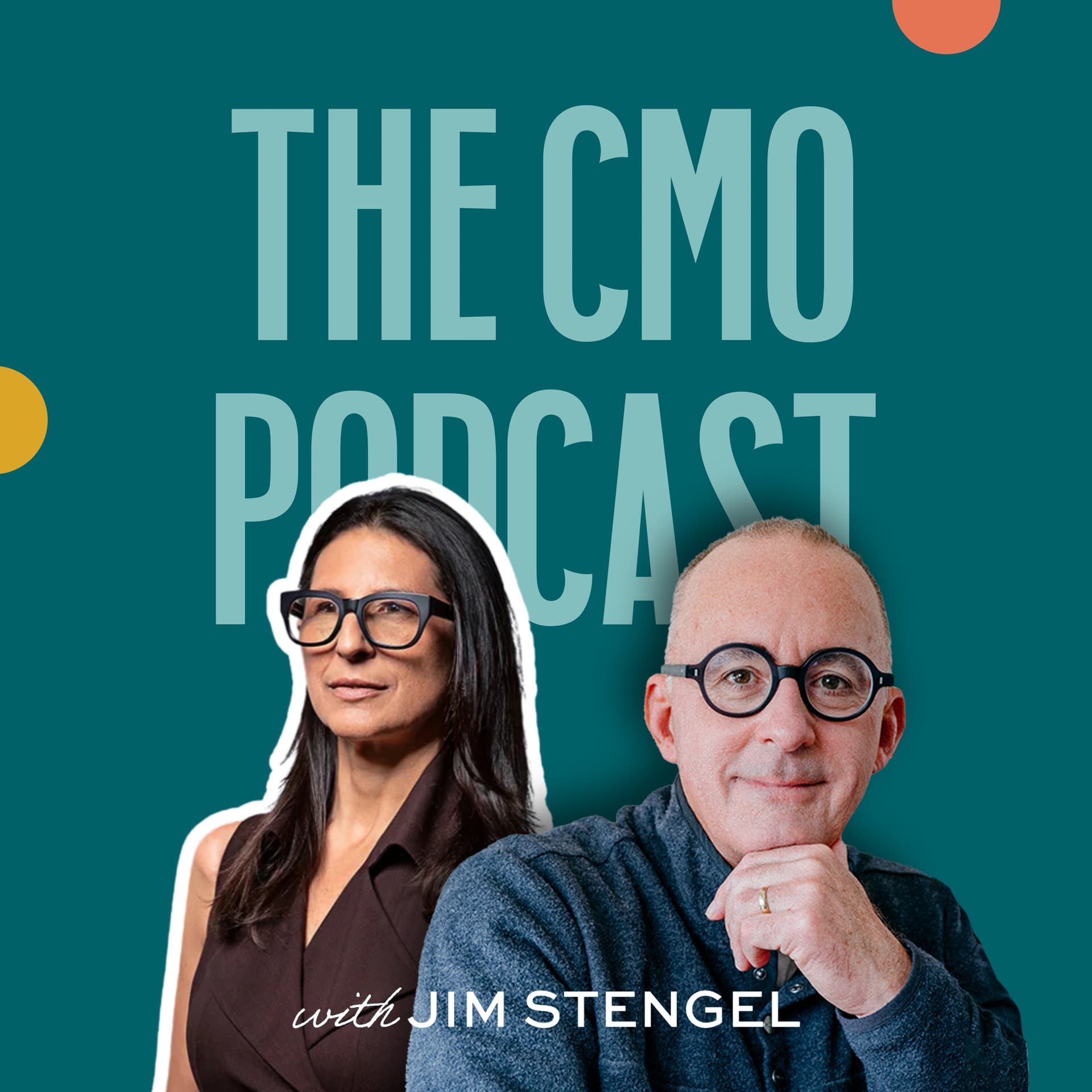
Julie Haddon (NWSL) | Reshaping the Future of Women's Soccer
Overview In this episode, Jim Stengel interviews Julie Haddon, the Chief Marketing and Commercial Officer of the National Women's Soccer League (NWSL). Haddon discusses her journey, the growth of the league, and her vision for the future of women's soccer as they kick off a new season.
Key Points
Introduction to Julie Haddon
- Former VP of Global Brand and Consumer Marketing at the NFL.
- Became the first-ever CMO of the NWSL two and a half years ago.
- Background includes a degree in journalism and experience in tech and entertainment (e.g., DreamWorks Animation, eBay, Twitter).
Growth of the NWSL
- Impressive growth metrics since Haddon took over:
- Attendance: Doubled fan attendance at matches.
- Expansion: Two new teams joined the league, with more anticipated.
- Media Deal: Secured a historic four-year media deal worth $240 million, significantly increasing from a previous $4.5 million deal.
- Team Valuations: Increased substantially.
Key Milestones
- Proud of the following achievements:
- Record attendance during matches, notably the San Diego Wave vs. Angel City game in September 2022.
- Launch of NWSL+, a direct-to-consumer platform.
- Substantial increase in viewership, with a 285% growth.
Marketing Strategies
- Campaign Launch: Newly introduced campaign "Just Watch" aimed at showcasing rising stars in the league.
- Focus on bold and innovative marketing strategies that resonate with diverse audiences.
- Emphasis on the significance of player marketing and branding.
Creative Collaborations
- Haddon mentioned the importance of creativity, both within her team and through partnerships with creative agencies.
- Plans to leverage a unique approach to marketing, moving away from traditional agency models to a more freelance, collaborative strategy.
Personal Philosophy
- Haddon emphasizes the importance of having a vision and taking initiative, informed by her experiences at the Women's World Cup in 2019.
- Advocates for a learn-it-all mindset rather than a know-it-all attitude, continuously seeking inspiration from diverse sources.
Challenges and Growth
- Haddon acknowledges the challenges of being a first-time CMO, particularly in balancing quick growth with organizational capacity.
- Focus on developing young talent within her organization and fostering a culture of collaboration and innovation.
Takeaways
- "Don't F* with Your Swing"**: Embrace and leverage your strengths rather than conforming to external pressures.
- Learn-It-All vs. Know-It-All: Continuously seek to learn and adapt, as demonstrated by Haddon’s own practices of keeping a notebook for thoughts, reflections, and ideas.
- Focus on People: Prioritize talent development, team dynamics, and stakeholder engagement to build a robust organizational culture.
Conclusion Julie Haddon’s insights into the growth of the NWSL highlight the importance of strategic creativity, collaboration, and a people-centric approach in achieving long-term success in sports marketing. The episode serves as an inspiration to marketers and leaders in fostering growth and innovation in their respective fields.
---
Sponsors
- Deloitte: Supporting CMOs with insights and industry connections.
- StrawberryFrog: A marketing agency contributing to the dialogue on strategies within the episode.
- Adobe: Enhancing creative processes in marketing.
Additional Notes
- This episode of The CMO Podcast is an engaging exploration of the evolving landscape of women's soccer and the pivotal role marketing plays in shaping its future.
---
For further insights, listen to more episodes of The CMO Podcast available on various platforms.
Written by AI. May contain mistakes. Listen to the episode to check what was said.
Transcript
Automatic transcript. May contain errors.0:00Hi, everyone. It's Jim. I have Matt Spiegel of TransUnion with me. Matt, I want to start with what do you love about your job? Yeah, it's a great question, Jim. You know what? I love the fact that I get to be out at events and conferences and working with clients to really think about how marketers solve problems that matter at scale. The job of a marketer is as challenging as ever, and we get to do some interesting things to make their job easier. When you work with a client, where do you get the most satisfaction? You know what? I think seeing ideas come to reality. We ultimately are an enable of great marketing.
0:28So we don't do creative. We don't do media planning. We provide the data, the identity insights, the measurement tools that make great marketing possible. So when we get to see the end product sometimes later, it's really cool to see. Well, super to have you here. Super to be a partner. Thanks for joining us today. Thank you, Jim. So if you want to turn data into understanding and understanding into growth, visit transunion.com slash clarity. What if the smartest marketing play is not to move forward, but to zoom out. Deloitte believes the most powerful move a CMO can make is to look beyond the next step and see the broader perspective.
1:00That's what the Deloitte CMO program is for, a place to gain fresh perspective and connect with leaders who've stood where you stand. Together, Deloitte will help you see the bigger picture so your next move isn't just fast, but right. Learn more about the CMO program at cmo.deloitte.com. Hi, everyone. It's Jim. I'm here with Matt Spiegel, EVP of True Audience Growth Strategy at TransUnion. Matt, you've spent your career helping marketers understand people through data, and that's harder and more important now than ever. It really is, Jim. There's really just so much information out there, and unfortunately, it's often disconnected.
1:35Marketers typically see fragments, maybe a purchase here or a click there. But what they really need is clarity, true full picture of who their customers are, and ultimately how to reach them. Well, tell me how your solution strategy comes in and helps CMOs and their teams bring clarity to chaos. Well, Jim, we ultimately do that with a 360 view of the customer. And so it's about ultimately combining data, truly trusted data, identity resolution, which is a deep analytical problem, and measurement that actually helps understand performance. So ultimately, we work hard to help marketers move faster, to deepen their insights, and to ultimately make every dollar work harder.
2:11We believe strongly that when you truly understand your audience, you can build a real brand and real relationships with customers that last. Where were you when I was a CMO? I don't know how to answer that. Learn more at transunion.com slash clarity. That's transunion.com slash clarity. What's the first brand you remember making an impact on you as a young girl? You know what? Pepsi was a really interesting brand growing up. I remember watching them as their product evolved, as their flavors evolved, and as their packaging evolved, and as their cultural connectivity evolved. But I think those categories of things were really impactful to me, and especially given how much media they spent back in the day.
2:50Hi, I'm Jim Stengel, and I help major brands find their purpose and activate it, and the profits follow. For seven years, I was the global marketing officer for Procter & Gamble, where I oversaw the marketing of hundreds of brands. You may not know it, but the CMOs, the chief marketing officers of all of your favorite brands, are trying to connect you with your favorite products and services through purpose. And on this show, I delve into how they do it. This month marks the opening of a new season for the red-hot NWSL, the National Women's Soccer League. Our guest today is the chief marketing and commercial officer of the National Women's Soccer League, Julie Haddon.
3:28I have known Julie for many years, going back to her years at the NFL as VP of Global Brand and Consumer Marketing, before joining the NWSL as its first ever CMO. Great CMOs are growth drivers, and Julie has indeed done that with her team. Julie has been CMO for about two and a half years, and the growth rate is staggering. Double the number of fans in attendance at matches, two new teams joining the league with more coming, a four-year media deal worth$240 million. The previous media deal was for three years for$4.5 million. And team valuations are increasing massively. Julie was a journalism major years ago at Indiana University in Bloomington, and also a softball player, before launching a career in tech and entertainment that is epic.
4:11DreamWorks Animation, eBay, PayPal, Twitter, Zynga, SoFi, the NFL, and now the NWSL. This is my conversation with a CMO who had a vision six years ago in France that she could help shape the future of women's soccer. We'll talk about that. Here's Julie. Julie, welcome to the CMO Podcast. I think the last time I saw you in person was at a San Diego Wave match in 2023 at the start of your first full season as CMO and Chief Commercial Officer. You were so excited about the potential of this league. And now, two and a half years later, it's been an amazing run. Records of all types have been broken.
4:51We're at the start of a new season. So I want to start with what record or milestone or event are you most proud of in these past two and a half years? Wow. Well, where do I begin? I mean, it's been a long two and a half years. I remember being at that game with you, which was the San Diego Wave game, I believe, that broke the all-time attendance record. And that was in September of 2022, where Angel City was playing up against the Wave. And we had just put a program together with the content correspondents on the pitch. And we were really excited doing a bunch of new things. And yeah, that was a game.
5:30But it was a sellout. Lots of young women, young girls. It was so fun. Yeah. I think what's exciting is we're finding a lot of new audiences who come, people show up because they just love the sport. It's not fans of women's sport. It's fans of soccer that happen to be played by women. And yeah, that was an exciting match. And it broke the record, of course. Then the following year, then the following year. Every year there's been new records broken and attendance and viewership. So, yeah, I'm really excited about that. I'm happy to talk about any of those things. The media deal that you have done versus the past, it's night and day.
6:05So that has to be one thing you and your team are just very happy about. And I think it's a start. It's only the start. But the numbers versus where you were before are like, I don't know, up 100 fold or something like that. Yeah, there's been a lot of records that have come over the past few years, but the media deal, historic, it was the highest valued, biggest growth in media. We went from one broadcast partner to four, our historic domestic deal had 160 matches that went from where we just were on CBS to CBS and then added in ESPN and Ion and Prime Video. We launched a direct-to-consumer platform called NWSL+.
6:44So that was a real big, exciting moment. And in doing so, we were able to top our all-time viewership record. So third straight year in 24 was we had over 2 million fans for the first time watching and in attendance, I should say. And then what we saw was also a growth in viewership was 285%. So that was thrilling for us all at the league to watch. Now we're at the beginning of a new season. We just talked about that. I'm going to one of the early games for the San Diego Wave. What are you most excited about this year as a fan? Well, I think what I'm excited about this year, you know, we just launched our new campaign just yesterday, it debuted, but continuing the momentum of what we saw happen at the end of 24.
7:27So when I think about 24 with attendance, you know, our metrics were up as I referenced on viewership, but over the past year, we've grown 47 % season. And then we keep getting over 10 ,000 fans which break new records, 65 % increase from 23. And over 10 ,000 fans in 24, 13 clubs recognize that moment for them and growth. So we've had eight clubs that had their highest ever attendance. And it continues to get more and more loud for fans to show up and have the entertainment and the sporting value of what this league gives. But it's also the moment of seeing how players are coming to life as household names.
8:05And we're working on that. So I'm probably most excited about our player marketing campaign. And we just launched a campaign yesterday as a reference, it's called Just Watch. It's just kind of taking a leap off of what was last year and the year before we had a campaign called We Play Here. And so part of We Play Here was about how we introduced the league to new fans. So many of the players around this league also play on national teams and the best players in the world make their home inside the NWSL. So what we did with We Play Here was we had a moment to introduce fans to this league. You know, when you look at the World Cup in 23 in Australia, you look at the Olympics in 24 in Paris, so many of these national team stars make their home inside NWSL.
8:49And what I love about Just Watch, it's a natural progression to take these veteran players that have been part of this league, but focus on some of the rising stars that show up. And, you know, it's unapologetically bold. It's got a swagger to it. We've got incredible, like, you know, artists named LaTosha who did the soundtrack and she's a female rapper that has been very innovative. She's blockchain. In fact, for the first music distribution and independent artists auction music visuals. So it's a lot of like innovation coming together with sport. And I really love it because we are doing things that show up with, like I said, the boldness of what these athletes deserve and the best in the world that do play inside this league.
9:31So you'll see in the spot, you know, she reinterpreted the single called Who I Am. And it's this high energy kind of anthem piece that goes like, watch me move, watch me fly, watch me rule, watch just you watch. And it's kind of this rallying cry that kind of what I love is the brand vibe in it, but it's also about ultimately getting fans to tune in. Now, you talked about the creativity, innovation that you and your team are doing. Do you work with a partner in that? Do you have a creative partner or do you do this pretty much in-house with your team? I think my team's happy. We do have a creative partner because when I first joined, I came up with We Play here and I think they would rather have me be the CMO than the art director and the copywriter.
10:16But, you know, as we built a really innovative approach to how we're doing our marketing in terms of, you know, we put together a freelance group in 2023, 24 to instead of having a big traditional agency model, we kind of hired a producer from here, a writer from here, or a director from here and had a very DIY approach to like getting this out there for our first season. And this year we brought in a group that's brand new actually called Free Agency. Somebody used to work for me at the NFL, who's the principal of it and a creative director that I actually met when I was at the NFL and was looking at hiring and ended up, he went to a tech company.
10:55And what I love is we've got a really good art and science duo with these two leads that have come together. So we are working with them. We're also working with a new media agency. We've hired Known, who's got some really great ideas and already we're showing up in Times Square and the reach is out there and the way that we want to see our media. And we have a new PR firm too. So we basically really are at a place where, along with the growth of this league, the growth of new ownership, the growth of the momentum of viewership, attendance, we have really leveled up a lot of the things that were almost what got us here in 23 and 22 are now what's going to take us there in 25 and beyond.
11:35What an exciting time, Julie. Pretty exciting. What a good decision to take the role almost three years ago. And I kind of want to talk about the road to this role. And as I was doing my homework on you, you mentioned this somewhere, I can't remember where it was, but you believe that the road to this role started back in 2019. you were at the Women's World Cup somewhere in France. You probably went to the Cannes Lions and added that trip on to your trip to the Cannes Lions. And you went in and you noticed not a full stadium, empty seats, no merchandise for sale. And you had this awakening and you even wrote something down in a notebook about what you might do in your future career.
12:14So could you tell us about this little pledge or commitment you made in the notebook and go back six years and tell us that story. That's sort of embarrassing that you found that story. I said it in a keynote for an ad group recently, but it's funny. I found it recently for that exact moment, and I showed it to the group of women that were in the New York Advertising Club. What happened was we had a spot that was part of Can Lion, I guess it was June 2019. It was the Super Bowl spot, which was a really fun one, the 100th anniversary, where a bunch of the players were tackling each other in this mayhem in the ballroom with the NFL ad, right?
12:51The NFL ad with Marshawn Lynch and the cake and all these incredible players. Yeah, it was great. And that ad was up. Our team went over there. While we were there, I was doing a panel of all things with Mike Malvihill, who, as any of you guys know, Malvi, he's a data savant, rating savant, numbers guy. He's a wonderful, smart, incredible human. And at the end of the panel, he said, hey, a bunch of us are going to the World Cup tonight. And it was in Nice. I already knew because I'm a big sports nerd and knew that there was soccer just about a half hour away. I'm like, what part of all in do you not need to know?
13:28I'm in. Let's go. So got over there. And it's true, Jim. I walked in the stadium. It was, I believe, probably about 12 ,000 people there. England was playing Japan. And here we were, the best upper pinnacle, top tournament in the world for the most premier athletes in their sport. And it was completely shocking how empty it is. I took a photo of it. I'm happy to show if you want to see it in your notes here. But I remember saying, what the hell? Like, I could not believe it. And I was shocked because then I wanted to buy merch, to your point, and walked out there to try to find trucks or find vendors to take some stuff home to the kids.
14:08And there was nothing. There was just one little kind of kiosk. And I just came back and about a month later, I was on a trip to Microsoft and I was flying to Seattle and I have a book that I write down thoughts in. And I just remember writing, I have to make the world a better place for women through sport. It was like this mission came to me and I said, I'm obsessed with trying to figure out how when you're lucky when you're at the NFL, the stadiums are never empty because it is such an incredible product and it's well attended everywhere around the U.S. and now globally. And this to me did not translate when I was at the stadium.
14:45So it kind of became the beginning of, well, what does that look like? And a few months later, a recruiter had called about a position at the NWSL. And what was funny at that time was I didn't even know that there was an NWSL. I remember thinking, I just watched the World Cup. 1.2 billion people watched it on TV. And yet, did I know that there were clubs inside the U.S. where these players that were playing played? And I think that's actually why We Play Here was concocted at that moment, was realizing that we don't, if I don't know, and I work in sports and I read all of the trades, and I'm very connected with all the broadcast partners from my job at NFL at the time, I knew that there was a gap.
15:27So it became a bit of a mission for me to figure out the right way to get engaged. And I became an owner of one of our clubs, Chicago Red Stars invited me in. I invested some money into that. And then about a year later, our new commissioner was hired and I ended up talking to her. It was like this, we called it this Besherit moment where we spoke on Easter for about a couple hours. And at that moment, I knew that was going to be my next job. Wow. Great story. Also, in my research on you, people keep referring to you as an ideas person. And I'm putting that in quotes. So we're talking about the notebook, which you carry around to put ideas in.
16:03So could you talk about why you have that reputation? And what else do you do to nurture yourself and your creativity to keep fresh on your ideas, writing down notes? I do the same thing. I keep a book with me, too, and jot things down. What are some of your other rituals, habits, inspirations that keep you fresh and vibrant with your ideas? Yeah, that's a really good question. And I'll go back to eBay where I used to work years ago. And one of my colleagues at the time, she said this about me and I had no idea what she was talking about because to me, it's just me, right? Like, I just think everybody thinks my ideas are my ideas.
16:42But when I hear others talk about what I come up with and that it is a gift and it's to me, again, it's if it's what I do, I don't realize that. And her name is Emma McGill. And she said to me, she said, you're the most strategically creative person I've ever met, meaning that what I will come up with is often I spend time listening to the strategy and being able to connect it. So while I'm proud of being an ideas person, I'm even more proud that they're strategically connected to a business problem that needs to be solved. So when I think about like NWSL and we play here, the strategy wasn't was the big challenge was the disconnect of people knowing that the best in the world do make their home inside the NWSL.
17:26And yet my mother still referred to my job as the WNBA for soccer. right? So if that was the challenge of how do we make people know what this league is, we start with the players and we start with understanding the connectivity to the global game into the local markets. And I think about that a lot. And I think about the strategies that anchor the creative, because ideas are easy to come up with. It's like, do they work? And are they effective? And do they drive results? That really matters to me. So I would say that as much as I didn't know what she was talking about 15 plus years ago at eBay, she always used to say, you know, we would go hire an agency to come up with and pay half a million dollars to what you just came up with in 15 minutes in this meeting.
18:10And again, I don't know any other way. I just think what I do to nurture myself is I listen and I learn and I bring in all different pieces of culture in my decision. I find inspiration from all these different ways of, you know, unexpected way. But I often find inspiration from just watching and listening and learning. I tend to think of myself as a bit of a learn it all instead of a know it all and try to get smarter on things that I'm not, not smarter than. In fact, I'm really, and this isn't to be corny bullshit. It's like, literally, I love hiring people smarter than me that can inspire and teach me because I think that is where you always continue to be fresh.
18:48I'm not an expert in everything and hardly to that fact. But when you're worth other people that are really experts in what they do and their craft, it doesn't matter if they're an actor or writer or a filmmaker, it's like they could be a media planner, they could be a SEO diva, they could be a baller of all things to do with paid search. Anything that I can learn from, I'm always evolving. And I really love it being able to work with such great young talent.
19:22Everyone seems to be chasing the next big thing, the fastest answer, the quickest win. But great CMOs believe the real power isn't in the speed, it's in stepping back to see the bigger picture. That's why everything Deloitte does in their CMO program, from their industry-leading capabilities to their connected network of CMOs, is designed to help you zoom out and gain fresh perspective. Deloitte will help you see the bigger picture together. Learn more about the CMO program at cmo.deloitte.com.
19:56Has it been harder to be an ideas person as you've gotten more senior and you're hiring the organization? You have more people reporting to you. The job is also about people development and hiring and strategy and leadership team and owners. Because I hear some CMOs say that, you know, they often when I ask about their favorite job, they hearken back to when they were a brand manager or they ran a division of something. It's important we keep the creative juices going even as we get senior. But how do you think about that? Well, I think that that implies that the creativity comes in actual, what we would assume is traditional creativity, writing, advertising, design, platforms, programs.
20:36I find I get to use a lot of my creativity still in how to develop people. So I have an employee that is struggling that doesn't understand how to get from X to Y. The creativity comes in play where I'm helping them understand where the gap is and how we get through that gap. Like the saying of like the only way forward is through it or the only way to proceed is to just go through it. It's like one of the things that I'm working on with one of these people. And then another example would be how we find creative ways to get things done. and when there may be blockers in the way? How do we find creative ways to sell?
21:14How do we find creative ways to help broadcasters help promote us more? So it's not so much in what often becomes a traditional creativity. I find it in different ways to lead, to manage and show up. But yeah, I mean, there's always the fun part of being able to ideate and brainstorm. I think the worst job in the company is probably the person who has to work for me, who's the VP of marketing, because I'll come in and I'll give her ideas. I'm like, well, what about this? What about that? But the great thing is, is I do show up with, I would say my team would say, this is a fair amount of humility.
21:47So they have the comfort to be able to say, that's not what they believe they want to do. And I have the ability to say, okay, then run with it and just go forward. And sometimes as a leader, I'll find myself having to pull in something that I think is really off strategy. but you know, I try not to get too involved if somebody else that's their job now and giving them the green grass to run and build. But, but yeah, I, I do always love those days and they, they still pull me in for a brainstorm or two, Jim. I'm not, I'm not that hidden. Now your career path leading to this role is somehow perfect as we look back on it.
22:23DreamWorks Animation, Twitter, PayPal, eBay, Zynga, NFL for five plus years. So as you look back on all of that. What of all those experiences do you draw on most in your work now? I mean, the NFL may be the obvious answer, but I'll let you say that. When you say that, I'm like, who are you talking about? Oh, you're talking about me. It's pretty wild. I just, again, I don't think a lot about the past, but you bring about that question. And I think what's interesting is there's three concentric circles that have kind of come together for the different walks of the career. I started out entertainment and you mentioned DreamWorks, for example.
23:01And entertainment, what I love about what you get from the entertainment world is the absolute ultimate of storytelling and creativity. And what I brought from the tech world is the incredible amount of detail to metrics, data, efficiency, ROI, everything that you get from incredible tools and platforms and learnings and behaviors of what comes from the tech world. And then, you know, that would be being part of early SoFi or early Twitter or even eBay, to your point, Zynga. And then I think we throw the third concentric circle together in this would be sports. And, you know, I think what sports brings is just like the rabid, avid fan bases, the white hot electric rivalries and entertainment that comes from what is real time happening every week and the competitive nature and the dynamicism of a different kind of entertainment.
23:52So I think being at the center of all these, to your point, it's really been incredible because we are science and we are entertainment and sport, right? At the end of the day, that's where we kind of come together as a league. We're also startup. So we're early. I wouldn't say we're startup, but we're 13 years old. So a lot of that is pulling on things that I learned from when, there were less than a dozen people at a SoFi, for example, when nobody heard of it, or when Twitter was early on branded internally by Jack, we called it a multi-platform agnostic communication channel. And that was in 2008 or something like that.
24:30So it was really early back in the days. And I think that's probably what I pull in most in my job is being early in something, but pulling in from the experiences of the sports and entertainment world. You know, I do think one of the best parts about being at the NFL is nobody does it better. Nobody does sport better. It is a phenomenon. It is the best sport in viewership and in revenue and in commercial and in passion and avids and fan base is just massive. And so being able to be part of that and learning from that school, if you will, gave me the absolute best education I could ever get in sport.
25:08And so being able to pull it in and marry it with startups and tech and early days, it does feel like it's a perfect, again, intersection of all these three spaces. Is there a boss or colleague along the way that's had an outsized impact on you in that very interesting career journey that you have been on? Wow, there's so many of them. It's like asking which kid I love the most. Two in particular I could think of along the way, not speaking of current people right now, because there's an incredible amount of inspiration I get right now in the ownership groups that have come in that I get to work with every day or the commissioner or some of the new people that are joining the league now.
Read the full transcript
25:45But I would say along the way, in the past decade or so, I had a boss. You guys all probably know Gary Briggs because he's a legend. And Gary Briggs was probably my first boss that really understood that you don't have to form fit people into what they are. You have to find a place to put them on the field and let them play their best role or their best position. But Gary gave me one piece of advice that I think about all the time. And if it's okay to swear on your show, I'm going to share it. It came about joining eBay from DreamWorks. And I was right out of working on Shrek and Ants and Madagascar and Sinbad and a bunch of CGI feature films, because that's what I did at DreamWorks Animation.
26:27I joined and here was this company that was the early days of the internet. And it was a lot of people that had the path of consulting HBS to Bain or McKinsey and then into early days of tech. And so I came in and the first thing I thought was, oh, I've got to get my PowerPoint game on. I've got to go start acting like I'm a consultant. And Gary wanted me for what I did. And he said, Julie, in my review, he wrote, don't fuck with your swing. And I thought that was a really interesting piece of advice that I often share with younger people when I talk to my team and others. is that, you know, be the best of what you do better than anybody because there's nobody else who does what you do.
27:05So why would I try to become something that I'm not? And I hear that a lot. So I think he was a wonderful mentor as him become a wonderful friend. The other person that I look back on, and it's very pertinent to my job now, is when I was in college, I was part of the softball team, NCAA Division I team at Indiana University. And there was a coach there named Gail Blevins. And I think what Gail taught me about as a coach, in some ways, this is your CEO or your leader when you're in your teens and 20s. And we often learn from our coaches. And she taught me a lot about resilience and discipline and how to get your ass kicked and keep moving on.
27:46And so I really think she's one of the foremost people that influenced me as well, both between work and early formative days. Let's talk more about your CMO and chief commercial officer at the NWSL. Two and a half years in, you're the first person with that job title. So there was no predecessor. So where did you start? It was basically your job to create, I guess, in many ways. So tell us about your onboarding two and a half years ago and how you formed, designed, created the role that you are sitting in right now. Well, the first role was I was the first ever CMO. So I started in August of 2022.
28:27And they just said, bring in this marketer. The board and the commissioner realized we're at the time that we had to start building our brand and thinking about revenue and viewership. So I joined the company. And I remember talking to Jason Nottie at Adweek was saying, you're the first ever CMO. What do you think? And I said, this reminds me a lot about the early days of Twitter because early days of Twitter, there were 875 ,000 users at the time when I was working there. And I knew that this was going to be something that the brands would connect with. And we had one brand was Southwest Airlines and a celebrity was a fine frenzy.
29:02And I had this vision, like, how can we make this a tool that brands will use? And so literally what I did at Twitter was I went from brand to brand, ad agency to ad agency, and I was trying to get them to sign up. It was a bit of a strange role. It was a little bit of like consulting with brands, consulting with sports and celebrities. But at the time, it was really early. And it wasn't until the debates that year with McCain and Obama, where they started integrating Twitter into real-time television. That's how long ago it was. And so I remember talking to Jason Nauti in this interview. And I said to him, you know, I felt like the NWSL was going to have its hockey stick moment like Twitter, because there's oftentimes I'm in things that are very early and people think you're crazy, but I just knew this was something that I wanted to tackle.
29:53So my dream, when I joined the NWSL, I sit in my office, there was nobody else on the team. There were, I don't know, 20 people in the company. And I looked outside and there was a cactus plant, this cactus that just was like old and decrepit and sitting there waiting for it to be thrown away. And I joked with my manager at the time, this is our commissioner. And I said, Jessica, this is my first employee. So that became the joke was I had a cactus was my first employee. And so what came from that was a year of just building and experimenting and trying all the different ways that we grow by telling the stories of our clubs and our players and breaking records and merchandising these wins, if you will.
30:33And really we leaned heavily on social that were the The first two employees I had were social and one person that was a designer from the NFL that came over. And so that was the early days in early 2023. And as the year progressed, we started seeing how the importance of working with brands helps build our brand, right? This ecosystem, if you will, of more brands that know about us and our partners. We had a great suite at the time, early partners with us like Ally and Nationwide and CarMax and Delta. and how do we work with these partners to help build the NWSL brand and add value to the partners that want to be connected with our fan base.
31:10So the more that happened, the more we started realizing that there is this co-marketing connectivity of how we raise the game together. And so by the end of that year, we started seeing that there were some real important intersectionalities between commercial and revenue. And as many of you know, from listening to the show and different people you've interviewed, Jim, marketing and commercial are often at head, sales and revenue are at odds, head to head. And in this case, we wanted to embrace it because, you know, the best marketing people have revenue mindset and the best revenue people understand the complexities of marketing.
31:46And so we decided to put it into one roof. So at the end of 2023, we moved it and we kicked off in 2024 with one unified group and it became marketing and commercial operations that I had the opportunity need to step in and build and lead. And what's really great is I get to talk to CMOs all day long about ways that they want to build their brand. And again, that strategic creativity piece of it is I'll listen to some of their problems and I'll be talking to, you know, one brand is an issue around loyalty and retention. And another brand is having some challenges with differentiation and what their North Star is.
32:22And immediately in these meetings, I'll listen to them and I'll talk to them. And I'm like, ah, so this is what you're solving for. And they're like, oh my God, that's actually our brand guidelines. That's our, you know, that's the strategy work we just landed on. So that's like the most ultimate form of flattery is when we could be solving what the brand needs, as well as helping what we do to grow our fan base. So, you know, it's a long way since the cactus days, but you know, we've got a team. It's, it's gosh, I want to say it's half the company now is, is under the marketing and commercial operations team.
32:52We have now a revenue head. We have a marketing head. Like I said, the worst job in the company is to be the CMO's marketing VP, but we joke about that affectionately. And I think we're off and running. We put licensing and merch together with consumer products in one head, with one group with us as well. Broadcast is in the group because all of these are fan touch points. So, you know, if you're building a great product on the pitch and we're showing it through television and all of the delivery of our game, and then we're turning around and we're able to monetize that with great sponsors and great partners that are part of our ecosystem.
33:26You know, we just welcomed last week, for example, Elf for our beauty partner. And, you know, Corey is an incredible marketing machine. We get the opportunity to work with Corey and her team and the agency, and we're going to build some great stuff together that's going to help benefit reaching our fan base, which is, you know, young early adopter men and women. And I know she's excited about the Gen Z, Gen Alpha, millennial audience that we will bring to her, they're going to come up with really exciting ways to focus on our game and our players.
34:03We all want to stay ahead of the digital curve, and IAB, the Interactive Advertising Bureau, invites you to do just that at the 2026 IAB Annual Leadership Meeting in Palm Springs on February 1st through 3rd. If you're a qualified consumer brand or agency leader, you can access free passes and travel vouchers. And for everyone else, you can take$500 off your ticket with code, all caps, ALMCMOPOD26. This is your chance to join a three-day gathering of the industry's brightest minds and boldest voices shaping the year ahead. You'll hear agenda-setting conversations, candid fireside chats, and dynamic breakouts on the topics that matter most, from AI and commerce media to measurement and addressability.
34:48This year's lineup concludes everyone from Kevin Bacon and Bozema St. John to creator Remy Bader, along with leaders from Forbes, Major League Soccer, General Motors, and Meta. Visit iab.com slash ALM to learn more and check out the link in the show notes to register and receive$500 dollars off your ticket.
35:10So everything looks great from the outside. Everything seems to be clicking and working and you've had a wonderful two and a half years. Is there anything that's not working? Anything you're struggling with? Oh, there's always something you're struggling with. Ask me which day. But I mean, I think probably the biggest thing is that because I'm not a patient person, I think that my brain goes very fast and I process information at a speed that is quick, I will see opportunities and I will want to go for them. And then I realize like we have to be patient. We have to say, all right, just because the NFL could do this or eBay could do this, we're not yet ready to do that, right?
35:49Like we don't have a team of hundreds of people that can go implement this or budgets or resources. So often my biggest struggle might be, if you will, the proverbial, my eyes are bigger than my stomach. And that doesn't stop me from challenging and trying, but every once in a while, that's probably one of the biggest challenges is I have to be patient and I'm, I'm not great at it because, you know, my superhero skill and my kryptonite would be that I probably, you know, see around corners, meaning I will have a really strong sense of intuition on where something's headed and knowing that I might have to take people along with me who don't see that or have different ways of looking at it because their superhero skills are not aligned with what, what, you know, mine is.
36:34And by the way, that's not necessarily a positive. Sometimes it's terrible. Don't go ever see a movie with me, Jim, because I will sit next to you and be that annoying person that says, it's the son that did it, or it's the boyfriend that did this. You know, I'm the annoying person that reads the first page of the book and I'm like, I need to just get to it faster at the end of it. But in fairness, I think that's probably also the biggest challenge. But you know, what's nice about the NWSL is that because we're a culture of, you know, challenger brand DNA and disruption, it's never really frowned upon.
37:03It's also like, oh, that's Julie being Julie, or that's the team being big because we'd rather have aim too high than not aim high enough. With all the opportunities ahead of you, and you're still in the early chapters of this league, and it's so positive and so fun and so inspiring. Where do you personally focus? You've built a team now, You have a lot more people in your organization. You brought commercial together with CMO. So of all the things you could focus on, and there's a lot, when you think about your week, your month ahead, your year ahead, what are the things that you put at the top of the list?
37:36At the top of the list, 100 % it's people. I would say what I was going to do early on in my career. This is funny. My mother still reminds me about this because she worries about that I work too much, like every good Jewish mother does. But she tells me, you're working so hard. What about the time you wanted to be a teacher? Because I think in high school, I told her I was going to be a teacher. I think about one of my passion areas is really developing young talent. What's so exciting about the NWSL, we have a lot of really young people that are in their first or second jobs in their career who want to be part of this because, again, it's a bit of a startup DNA.
38:13We have the challenger brand ethos. So, you know, I really do enjoy working with people who haven't necessarily figured things out yet and helping them get there and helping coach. It's kind of like being a teacher in a way is to help develop the young talent. And I spend my time thinking about that. And I continue to spend my time thinking about how we can be the best league in the world and raising our game, you know, and trying to balance the appetite and the stomach ratio. but I do really like the people side of this. And it's not just the people side inside my team in our league. It's the people side in the clubs because all of our, you know, different clubs, we have 16 now, they're all hiring people.
38:57They're all looking for talent. They're all looking because, you know, to raise their game because all of us together are how this is going to work, right? Like the power of the NWSL at the air and the ground and the fans that go become fans of Angel City or fans of Washington or fans of Chicago, whatever club they're fans of, they're coming in because they love the players. So I do think part of this is also working closely with the clubs and the players themselves. I mean, these young athletes who are, you know, first time ever getting contract deals and endorsements and seeing how important building their brand is and their personal growth.
39:32It's such a treasure to be able to kind of impact it, like I said, at the air and the ground. You have such a learning mindset. You've been in this job since the summer of 2022. How are you, Julie, a different leader now than you were when you walked into this role? I would say I'm probably more hands-off now that I have been in a role where I have to, you know, going from where NFL, where I was leading a team, but very, you know, we had agencies, our ecosystem was much bigger in coming in and realizing that in the beginning, I had to build a lot of this until we got to a place with our team. I'm trying to be a little more like thinking about the future instead of actually doing necessarily writing copy and doing the campaign stuff we did early on when it was just a handful of folks in my cactus.
40:20I want to return to your career path. You studied journalism at Indiana University in Bloomington. You played on the softball team. You then went into Silicon Valley Entertainment, finally sports. Back then when you were a softball playing journalism student and your mom thought you wanted to be a teacher. What were you thinking about back then in terms of what you do when you exit at IU? That's such a great question, Jim, because I literally was just talking to my 17-year-old son about this last night. So he's a junior in high school and he's not sure what he wants to do in that pressure when you're going into SAT time and college time.
40:56And when I think about what I wanted to do back then, I knew kind of the blocks of what it was. I knew that it was going to be something in a space with people and creativity and building things. I knew that it was not going to be a desk job where I don't talk to people or I don't get opportunities, you know, that would be orienting towards, I would say, creativity and entrepreneurship and building. I mean, even when I was at the NFL, one of my favorite parts of this was when Tim joined and the ability to say, we're going to go, you know, get younger fans and take this helmet off strategy and start trying to find new muscles into building.
41:35Tim was the CMO at the time at the NFL, just for listeners. Yeah, thank you, Tim Ellis. And before that, I was hired by Don Hudson, who was the CMO. And both Tim and Don had a real focus on growing our fan base. So there was a real entrepreneurial, exciting part of that job to building a new muscle at the NFL. And so I think about, it was never for me when I was looking into my career saying, I'm going to be a CMO one day. I knew the general skill sets of the things I liked, you know, the flavors I liked and honestly, the flavors of things I didn't like. And I often say that to students when I go around and speak to colleges or even my employees, like getting closer to what it is you want is equally as important as knowing what it is you don't want because you'll find your way there.
42:19It's like sometimes the litmus test of no, no, no gets you closer to the yes. Yeah, for sure. Now, you talked about the NFL a couple of times this interview, which I knew you would do. You were there five plus years. You joined in 2016. Just a remarkable run in every possible way. And it is the ultimate sports league on so many levels. What do you feel now that you're away from it a couple of years? What is the business lesson, the marketing lesson that isn't talked about enough when we talk about the NFL? Wow. Where do we begin? And I could spend an hour talking about the incredible things that are coming out of there.
42:58I think the part that is so apparent is just how connected with culture the NFL is. I mean, it's like bigger than any holiday of the year. And I don't think when I was in it, I saw it because it was just my work, right? And then you step back and I just went through watching the Super Bowl and seeing like the whole roadblock of Monday following, whether it's in traditional media, digital media, social everywhere was what happened at the game or what happened with those advertising spots that came out of it. I mean, we talked actually, right? I mean, it was the last Tampa Super Bowl, Jim, when I was on this podcast last and we were talking about the Lombardi spot that we did.
43:39And that was right in the heels of coming out of the pandemic, right? It was January 21, if I recall, January, February of the last time we did this. And I think the part that is so incredible is how connected to culture in everyday life the NFL has become. And I don't see it when you're there, but when you leave and you see it as a fan, it's just incredibly humbling to think I was lucky enough to be a part of it. Maybe that's an obvious lesson. I don't know, but I do think they're in every conversation. That's what I mean. They're in every conversation, every conversation. You meet someone new in a bar or restaurant street for your spouse, partner, friend.
44:21The NFL comes up in the first five minutes in some way. A hundred percent. And it's so cool. I really think that's so cool to have been part of it. I think it's the biggest enterprise in America, in the world. It's global now. And I I just love watching the growth I'm so proud of. I look at the teams that are playing overseas now, and so many of my friends are still there. And I share on how these wins are happening along the way. And I'm just really proud. I mean, I feel like, again, pinch me that I was part of it because I've learned so much, you know, as I went from one football to the other.
45:04hey everybody this is andrea sullivan the ceo of vive and we produce the cmo podcast and are so excited to have partnered with jim stengel for so many years wanted to tell you a little bit about something that could be right for you vive is a program for entrepreneurs and business leaders who want to get more out of their life and become their best and happiest selves both personally and professionally. We have a 12 month program that allows people to meet up with some of the best business leaders out there and additionally experts in the wellness sector so that you can learn how to nurture yourself.
45:39So we teach things around sleep optimization, meditation, all those good things as well. Please reach out to us at podcasts at five.co to get more information. That's P-O-D-C-A-S-T-S at V-Y-V-E dot co. Thanks for listening to the CMO podcast and hope to talk to you more about Vibe.
46:04Now let's flip into the creative brief. Now you love sports, I know that, but you're also a self-professed movie and word nerd. So I'd like to hear the origin story of being a movie and word nerd? I mean, it goes a long way. I've always been somebody that just loves words. I have a funny joke with a couple of my friends who are complete nuts about music, and I will not like any of their music if I don't like the words, right? Even in my taste of reading, I read a lot. I love playing word games. I very much like my favorite wind down is Words with Friends or the Wordle New York times or you know things like that that make me calm down or find hobbies or habits or distractions or entertainment i just love things that involve words but it's also like poetry and how music is that and so i tend to like more about the word part of it than the the noise of the music or the the orchestral or the score or the arrangement or whatever it is if the words suck i'm not into the song.
47:05You lose me at the first minute. So that's a bit of a nerd thing in me. I also really like grammar. My team will talk about this, but it drives me crazy when there's typos and things. Like I'll even be at a restaurant and I'll see that they say Caesar salad with the way A-E interspersed with E-A. And I'm like, no, no, you know, this is spelled wrong or collectible with Able instead of Ible. It just, there's certain things. It's a quirk, But I do really love the construct of, again, how language comes together and words. It's just always been a thing of mine. Is that from your mom, your dad, an early teacher?
47:44What do you think the root of that is? I don't actually have any idea. I think it probably has something to do with some OG of listening to A-tracks with my dad in the car. And it was always some Joni Mitchell, John Denver music or something that had a really good poet, a good songwriter behind it. which got me into the appreciation of it. And then I'd go in my mom's car and it was always some disco or something to do. And I preferred being in my dad's car with the 8-tracks and my mom's with the music, which had words I didn't understand. I mean, you know, a lot of that 80s music, like the words are just nuts.
48:19Yeah. How about movies? What's the origin of that? Oh my God. I mean, I think it had to do with, I was a little filmmaker when I was a kid and always making movies on high eight or super eight, you know, having had the privilege of being part of the sausage making out of DreamWorks and working even early at a division of Blue Sky Studios got bought by Fox. And I just have always gone to movies at festivals and for hobbies. Again, similar. I think it's the art of really getting inspiration and stories. Academy Awards is a national holiday at my house, much like Super Bowl. I see everything. I do the ballots.
48:53I just love, love the sitting in a theater. And again, just like sports, what's kind of fun about these businesses is that you're connected by something. So being at a movie at the Park City Egyptian Theater at midnight and seeing during Sundance, I don't know, it was one movie I think was called 21 Hotel Rooms. I'll remember seeing this. It was a late night movie. Went by myself, sitting next to somebody. And by the end, we were talking about the movie and sharing our Twizzlers. We were just having the best time because we were both really engrossed on where a story takes you. And it's such a singular moment.
49:28You watch a show or you watch movie. It's just a journey you have with that experience. And you have to find other people to talk about it with because you're not necessarily talking in a big movie theater with 300 other people. So that's what's fun. I'm hooked on severance these days. You probably are too. If you love words and you love movies, it's crazy. Oh, my favorite show lately is I'm loving White Lotus. I think Mike White is a genius. Yes, he is a genius. I need to meet him one day. He's like, when he did the show and it was about corporate America, it was such a really interesting kind of spin on a struggle of this woman going through what was like a bit of an office space meets quirky, tragic comedy.
50:10It was called Enlightened, I think was the name of it. But Mike White is just such a genius. I think one of the best shows out there. Oh, my God. His perception about people, his understanding of humanity, his understanding of relationships, his understanding of story. It's just the character development. I mean, you spend like the first episode and now we're, I think on episode three, maybe. And I am just so taken by how he can develop characters and you know them. You like, it's almost like, I wonder what goes on in his mind. Now that's a guy, that's a guy. What's the first brand you remember making an impact on you as a young girl?
50:44Oh my goodness. You know what? It's probably like embarrassing to admit this one, but I loved Sony. I thought the fact that like the Walkman came out and the cool way it was like delivering music to us, I thought they were so innovative. And I love that. And then I also I used to collect wacky packs. So I always kind of loved brands as a young kid, too, and found, you know, spoofs on them. Hilarious. But I also thought the Pepsi was a really interesting brand growing up. I remember watching them as their as their product evolved, as their flavors evolved and as their packaging evolved and as their cultural connectivity evolved.
51:21But I think those categories of things were really impactful to me. And especially given how much media they spent back in the day. And we talked about being such a part of pop culture. They kind of wrote the book on that. Absolutely. Yeah. Yeah. I mean, that's one of the things I loved about being able to work with Dawn Hudson, too, given she was a legend in building Pepsi and her experience there and becoming friends with some of the folks that we got to work with at the NFL. And even now, we talk quite a bit with different brands. So I always think about what, you know, the years of the pressure to constantly evolve and innovate along the way that they have brought with them.
51:59Who's been the most inspiring person in your life? My dad, hands down. My dad, he passed away from COVID in 2021. And what I loved about my dad, he played up until he was 79 years old. He played and started playing in five softball leagues. But he, by the time he was in his late 70s, he was only able to play three. and he had moved from shortstop to catcher. So they would pinch run him. He had lost his talent, shall we say, as the age went on, but he still played in leagues with 25 year olds and people that were like a third his age. And he was a practicing attorney and he was a phenomenal supporter of me.
52:37And when I was a kid and I wanted to play little league, when girls didn't play little league or girls didn't play baseball, we had to get relegated to play softball. Instead, Instead, he was always telling me, basically, go for it. Just go for your dreams and never kind of talked me out of things and always would try to find the way to connect me to what I loved. And I'd say for sure he was the biggest influence. And I know that probably sounds cliche to reference a parent, but incredibly supportive. And I would say in everything I did when I went left, when everybody else would go right, he was always there.
53:12What was his counsel to you when you played at IU in softball? I'm sure he saw many games. Oh, he used to bitch at me. I have a moment that I remember specifically. We used to joke for many years, he just called Hinsdale because it was actually in high school. And we were on our way to like a state tournament. And the bases were loaded and we were up by 12. And he always used to tell me I should never be the kind of person that tries to get a home run, just deliver the singles and get the people to score, which is probably why I have the, you know, very strong team player ethos. But he was coaching at the time.
53:47He was on third base and I was stepping into the plate. And because it was the sixth inning and we were going to win by a mercy rule anyway, he looked down at me and I was walking into the plate in the fence. It was really not that far. It looked very attainable. And he told me you should never go for that. You would be, you know, a selfish player. But he looked at me and he gave me this kind of like nod. And as I stepped in the batter's box, that meant like, let's effing go. and I just banged it. And I remember seeing the joy as I ran around for a space and I saw him jumping up and down because I cleared the fence and made a grand slam with bases loaded.
54:22And, you know, whatever. It was a non-consequential extra four wins, but it was that moment of just feeling it and knowing that like I had the liberty and the freedom to just crush it and go with the full support. Don't fuck with their swing, right? Came back to that. Absolutely, absolutely. Go for it. I did not. It was a pretty good one, Jim, I have to say. It was probably clear at 300 feet. Oh, wow. Julie, that's a good place to end it. Really beautiful story. Thank you for this. What a gift in every possible way. And so nice to connect with you. Thank you. Thank you. I'll be at the San Diego Wave home opener if you're out there.
54:55All right. Let's go. We're going to open our season this weekend. We've got an ABC game on Saturday. The Kansas City Curtain are playing Portland Thorns. I wouldn't be a good CMO, CRO if I didn't give a good plug here. But I mean, I think we're really excited for the season ahead. And it's an absolute pleasure to be here with you. Thank you. That was my conversation with Julie Haddon. And it was a great one. Three takeaways from this one for your business brand and life. And we have to start with this one. Don't fuck with your swing. What a great thought. Julie talked about a boss years ago who told her, be comfortable with what you're great at, leverage it, understand your strengths, and don't change with the wind.
55:34Don't fuck with your swing. Second takeaway, Julie is a learn-it-all versus a know-it-all leader. And you heard that come to life in many different stories in this show. And I love how she keeps a notebook for reflections, ideas. And frankly, if she wasn't carrying a notebook and making time for thought and learning, she wouldn't have landed at this job at the NWSL because of the note she made when she was at a soccer match in France several years ago. So third takeaway, when I asked Julie what she's focused on right now with all the opportunities ahead of them, she quickly said, the people, focus on the people.
56:09We hear that a lot in the show, but we have to keep reinforcing it. That's our role as a leader. And Julie does that brilliantly, not just her team, but the people who work in all the franchises, the players and the fans. Focus on the people.
56:26That's it for this episode of the CMO Podcast. If you found this helpful and entertaining, I would be so grateful if you could share our show with your friends. And I would be super happy if you subscribe so you can be updated as we publish new episodes. And if you really want to help, leave us a five-star rating and a positive review on Apple Podcasts or wherever you listen. The CMO Podcast is a Vive original production. Episodes of the CMO Podcast are produced by Vive. The views and opinions expressed by podcast speakers and guests are solely their own and do not reflect the opinions of our sponsors or its personnel, nor do our sponsors advocate or endorse any individuals or entities featured on the episodes.
From the publisher
This month marks the opening of a new season for the red-hot NWSL–The National Women's Soccer League. Jim's this week is the Chief Marketing and Commercial Officer of the NWSL, Julie Haddon. Jim has known Julie for many years, going back to her years at the NFL as VP of Global Brand and consumer marketing, before joining the NWSL as its first-ever CMO.
Great CMOs are growth drivers, and Julie has indeed done that with her team. Julie has been CMO for about 2.5 years and the growth rate is staggering; double the number of fans in attendance at matches; two new teams joining the league with more coming; a four-year media deal worth $240 million–the previous media deal was for three years for $4.5 million. And team valuations are increasing massively.
Julie was a journalism major years ago at Indiana University in Bloomington, before launching a career in tech & entertainment that is epic: Dreamworks Animation, eBay, PayPal, Twitter, Zynga, Sofi, the NFL, and now the NWSL. Tune in for a conversation with a CMO who had a vision six years ago in France that she could help shape the future of women's soccer.
---
This week's episode is brought to you by StrawberryFrog, Deloitte and Adobe.
See Privacy Policy at https://art19.com/privacy and California Privacy Notice at https://art19.com/privacy#do-not-sell-my-info.